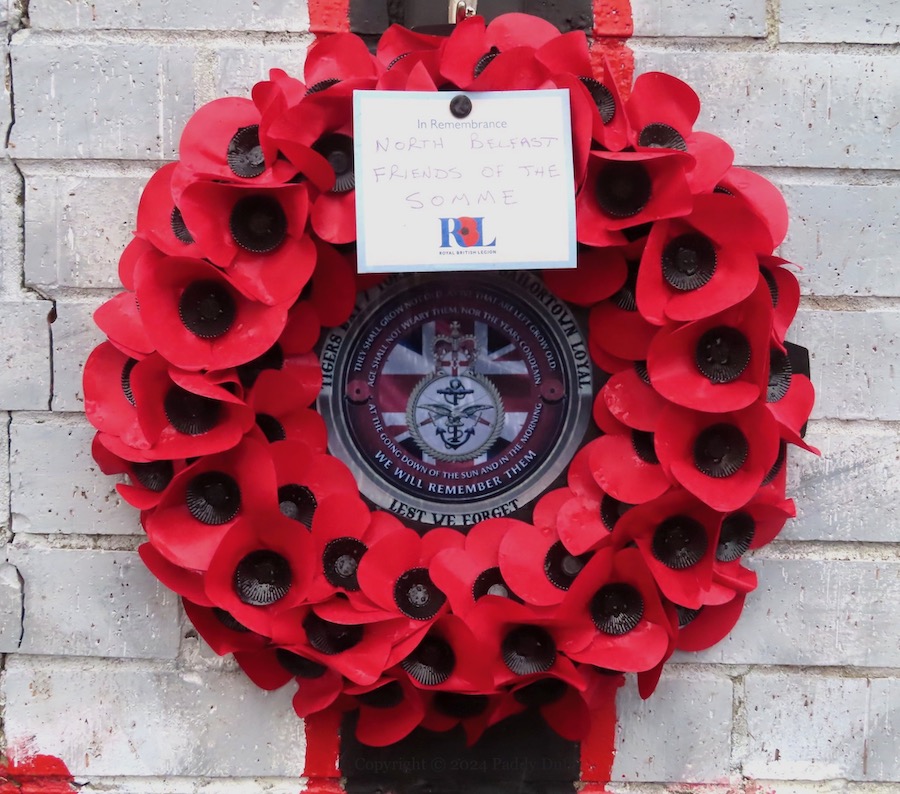
The rosette at the centre of the poppy wreath shows the UK armed services badge (with the crown overlaid by the Ulster Banner) surrounded by a verse from Binyon’s ‘For The Fallen’ and “Tiger’s Bay – York Street – Sailortown loyal”. That group’s Facebook page is private and no home-page seems to be available for ‘North Belfast Friends Of The Somme’.
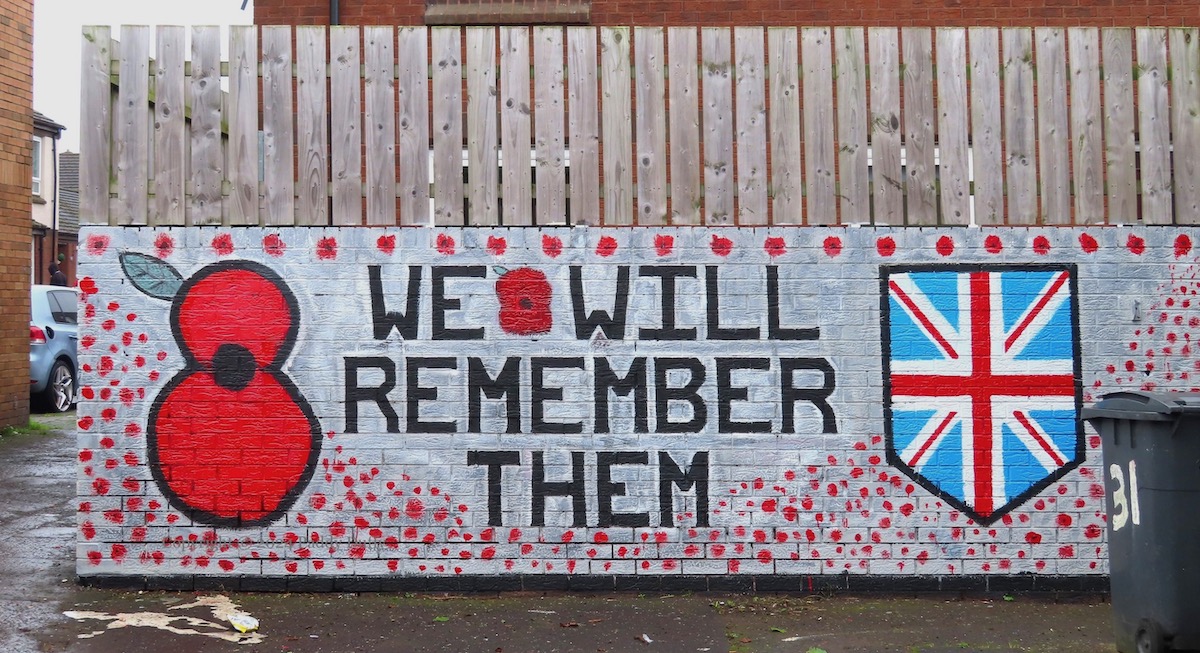
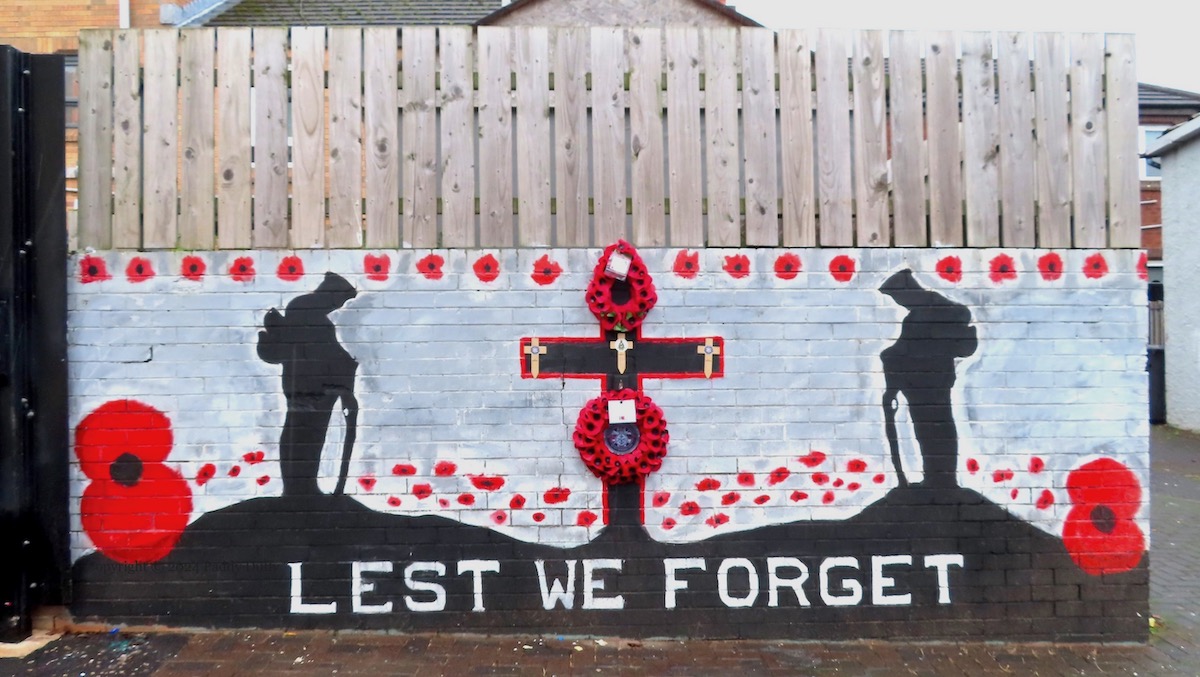
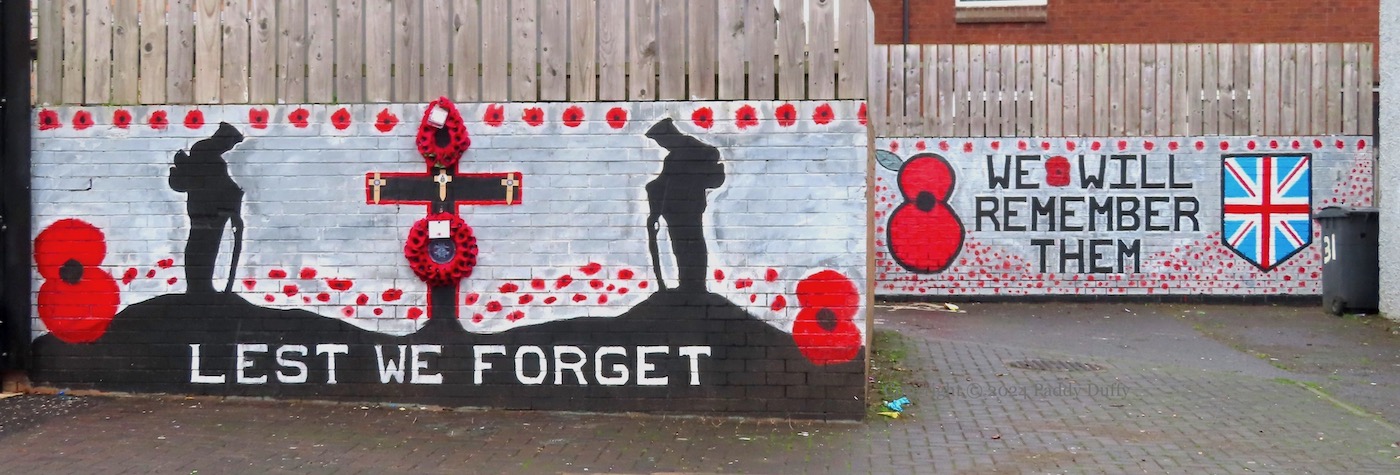
North Queen Street, Tiger’s Bay, Belfast, at the old Lewis Street.
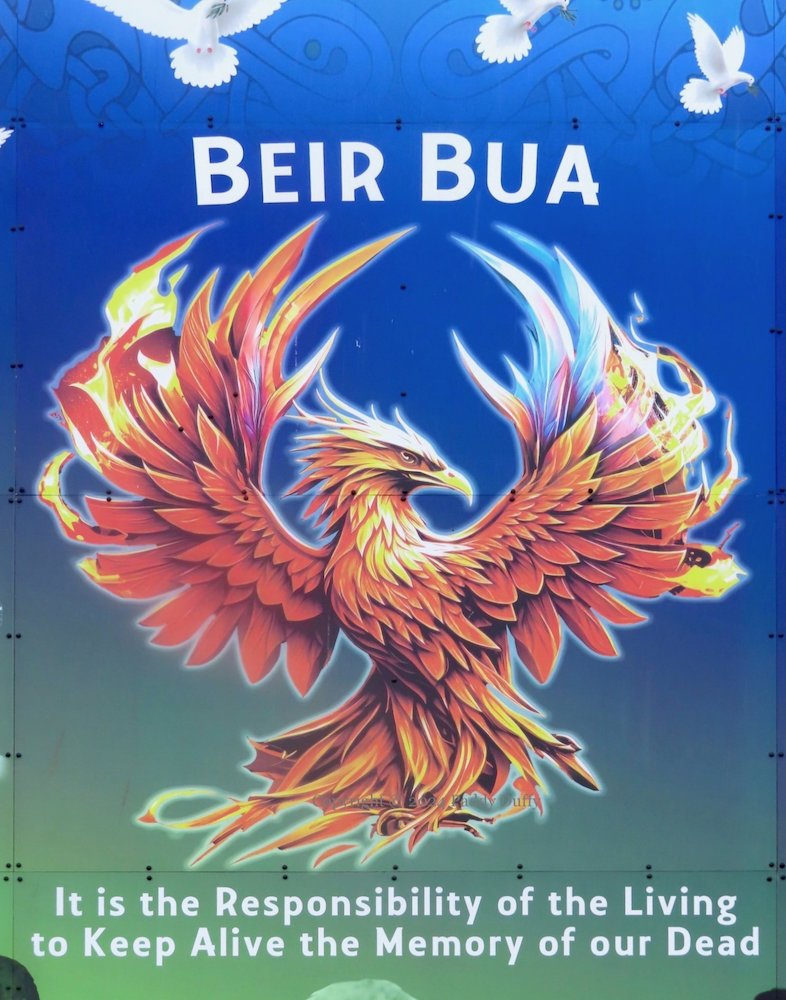
“Beır bua – It is the responsibility of the living to keep alive the memory of the dead.” This is the second ‘Working Class Heroes’ piece in Ballymurphy. The other, from 2014, features Tommy “Toddler” Tolan, who appears here to the left of the phoenix.
The plaque on the right reads “This mural was unveiled by Johnny Doc and Maureen Tolan, 5th November, 2023.” There is video of the launch on Facebook, which contains a reading of the names of all the people pictured from the 1m 57s mark onwards.
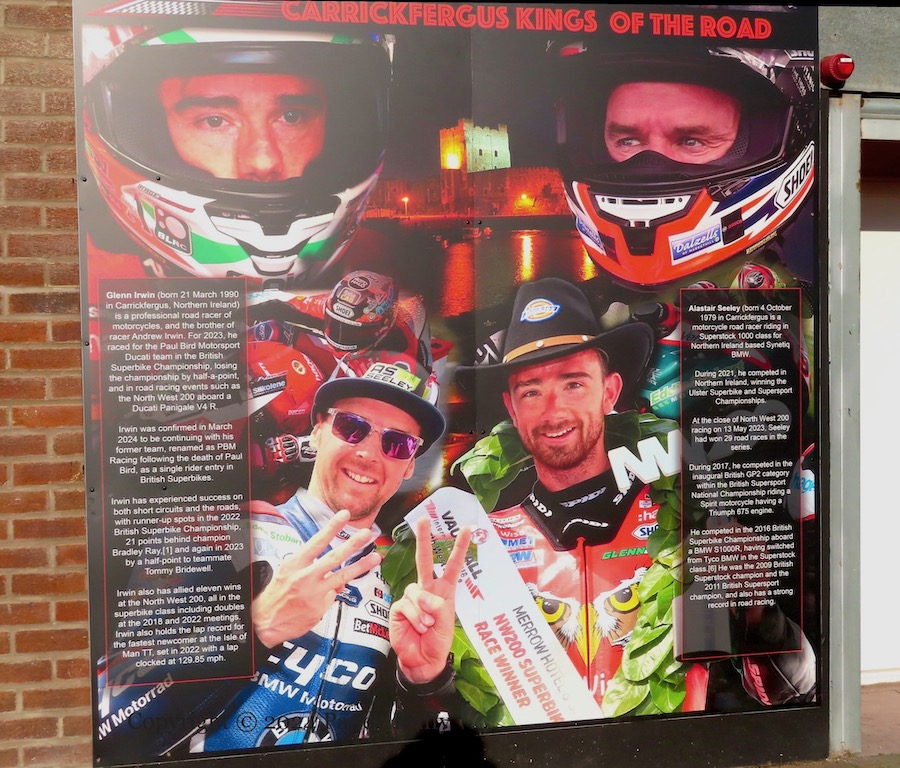
These two motor-cycling “kings of the road” are Glenn Irwin and Alistair Seeley, both Carrickfergus natives. The verbiage on either side comes from Wikipedia: Irwin | Seeley.
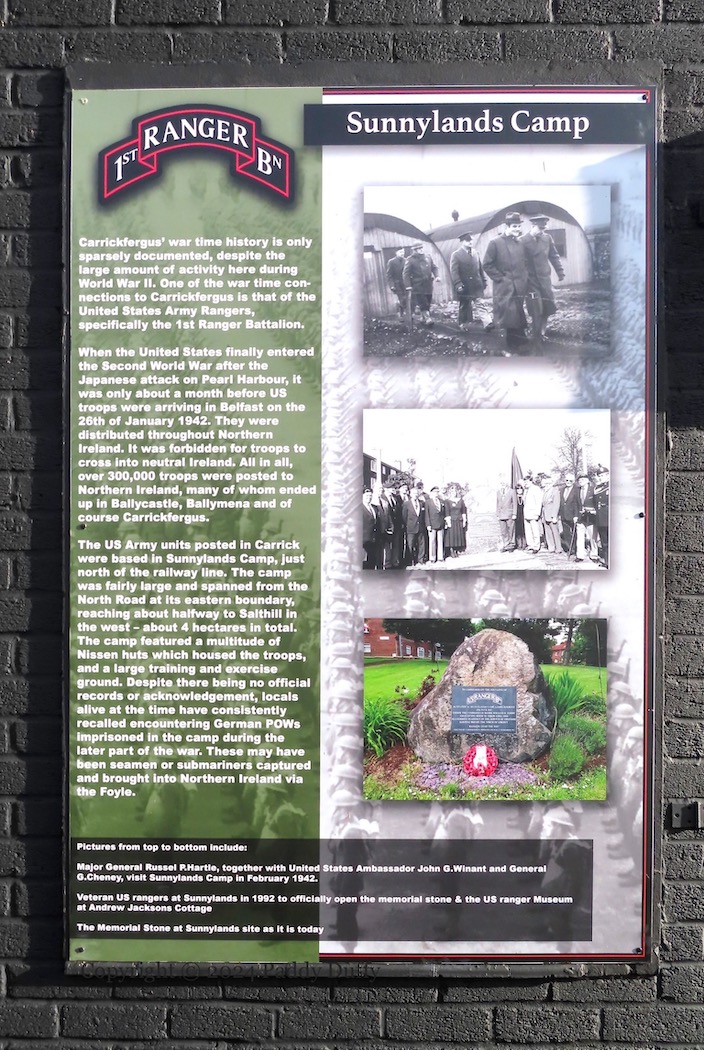
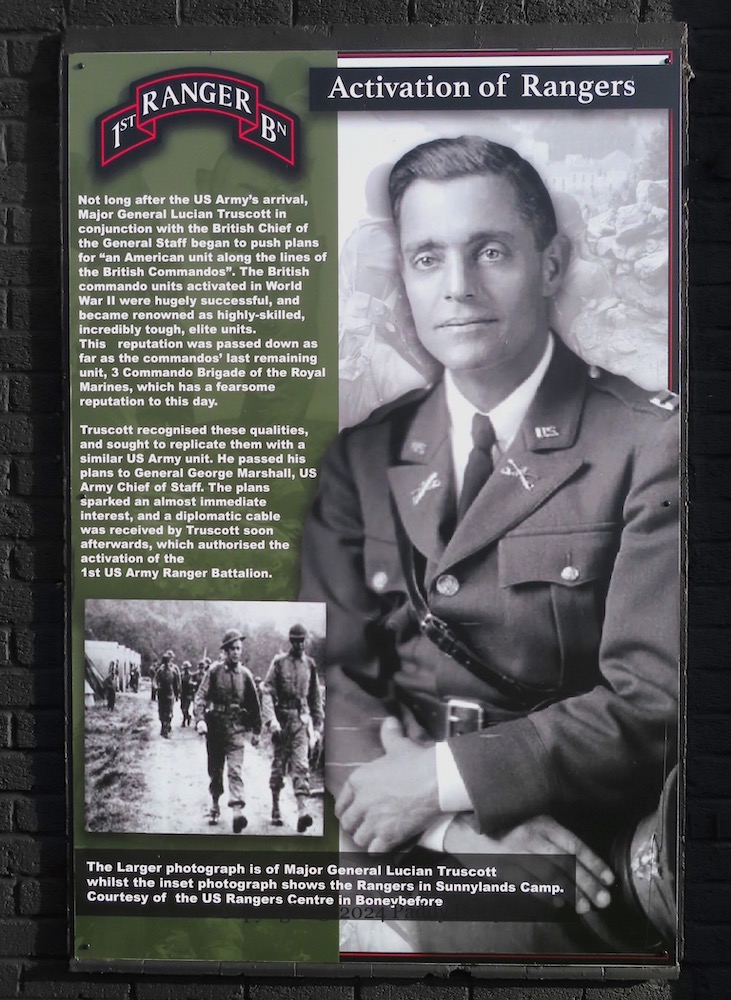
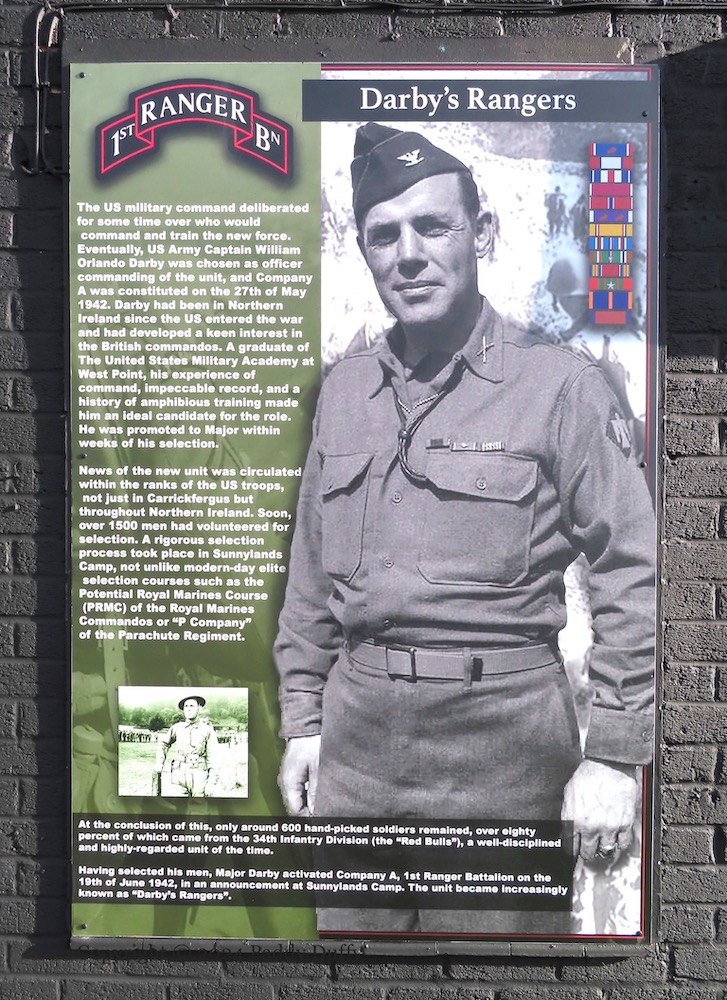
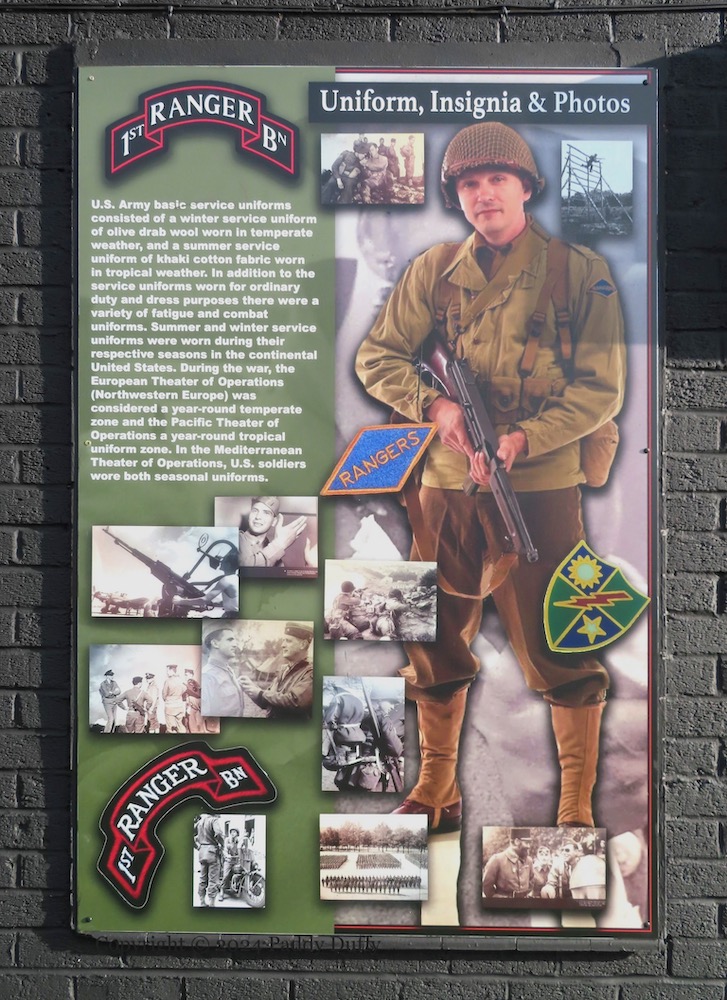
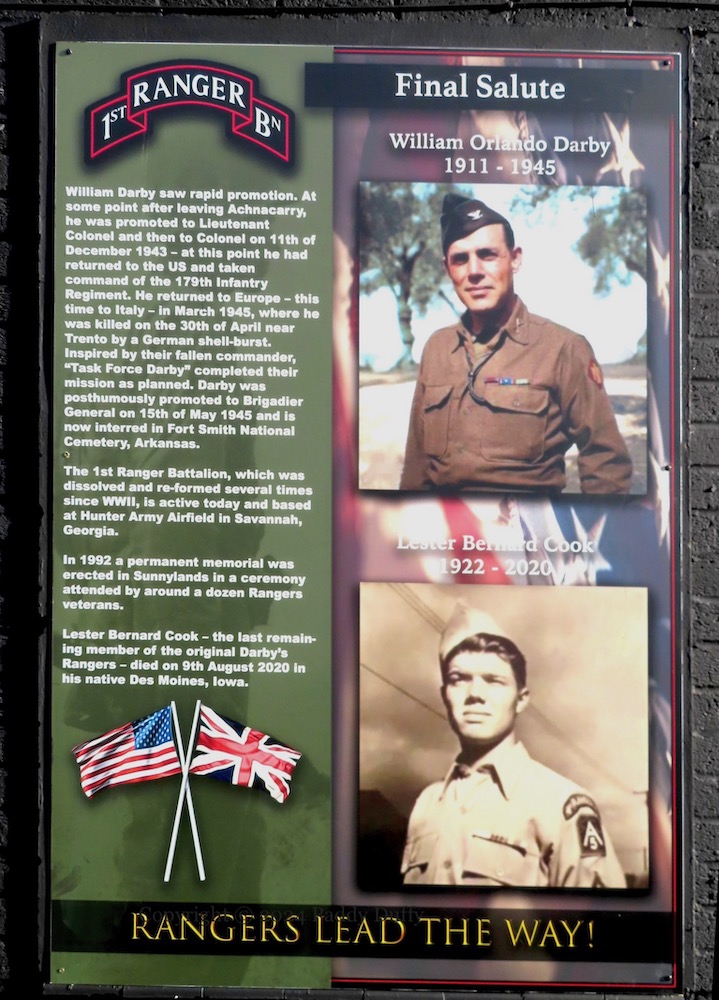
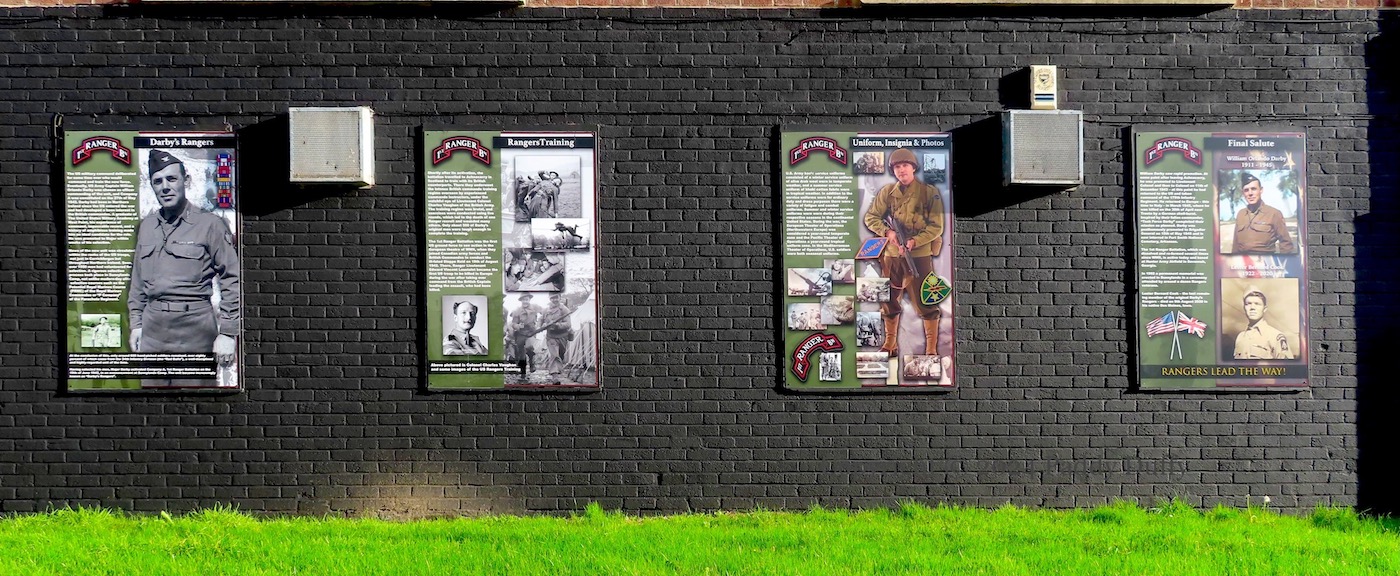
After its entry into World War II on the day after the bombing of Pearl Harbour, (December 7, 1941), troops heading to Europe were stationed in Northern Ireland. The army’s 1st Ranger Battalion — an elite, special-operations, infantry unit — was formed on May 27th, 1942, and 600 soldiers, mostly from the 34th Division, were chosen from 1,500 volunteers by Captain (and then Major) William Darby (WP); Darby is shown in the third board. The unit was activated on June 19th, 1942, at the Sunnylands Camp in Carrickfergus (Wartime NI). The Rangers trained with British commandos at Achnacarry, Scotland, before seeing action (WWII Rangers) – the commando monument there was featured in a Red Hand Commando mural in Rathcoole.
These informational boards are on the side of the Sunnylands shops. There is also a memorial stone (Atlas Obscura) at the junction of Sunnylands Avenue and North Road, where the gates to the camp were located.
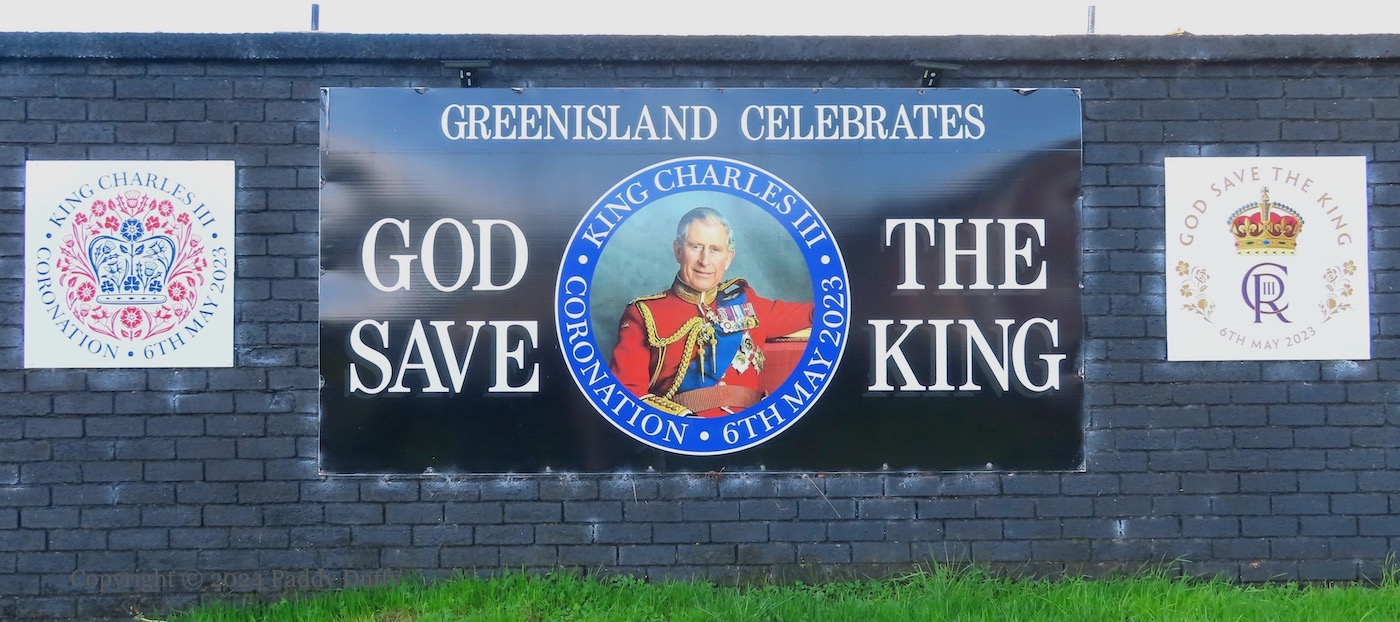
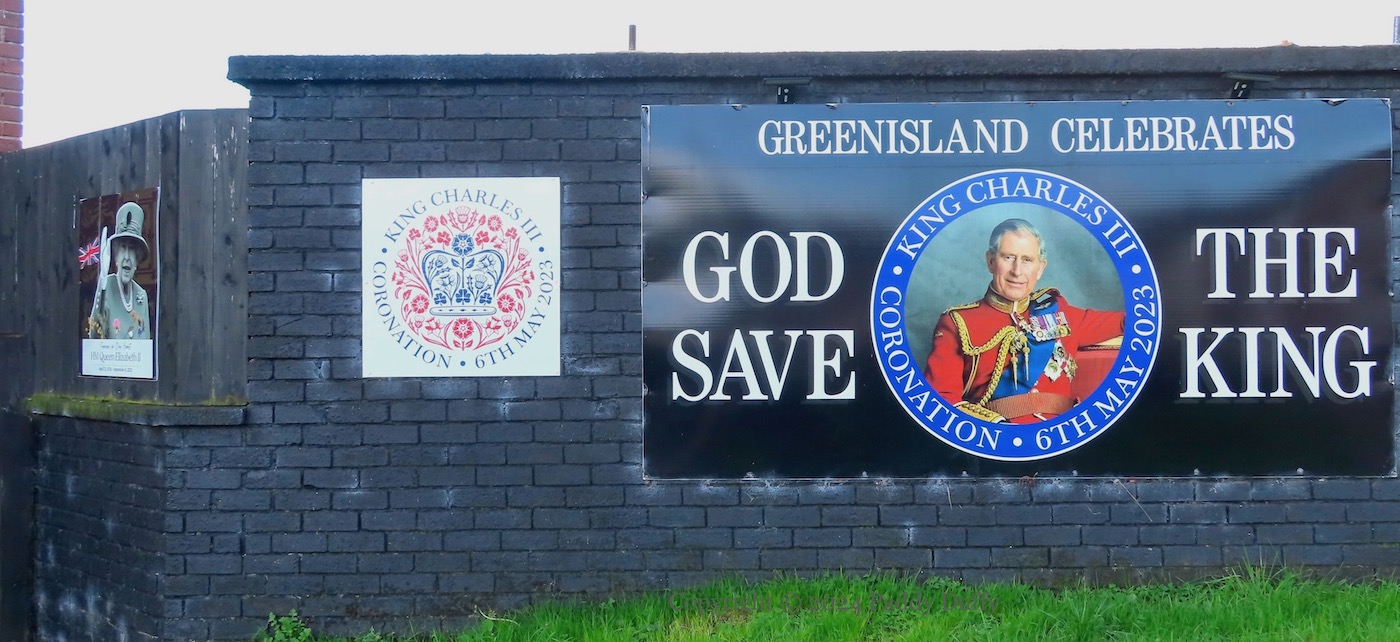
“Forever in our heart: HM Queen Elizabeth II, April 21, 1926 – September 8, 2022” and “Greenisland celebrates King Charles III, coronation 6th May, 2023.” Charles assumed (“acceded to”) the UK throne immediately upon the death of Elizabeth in September, in order to maintain the monarchy’s unbroken rule; it was not announced until the morning of the 10th (WP) and the coronation ceremony took place eight months later.
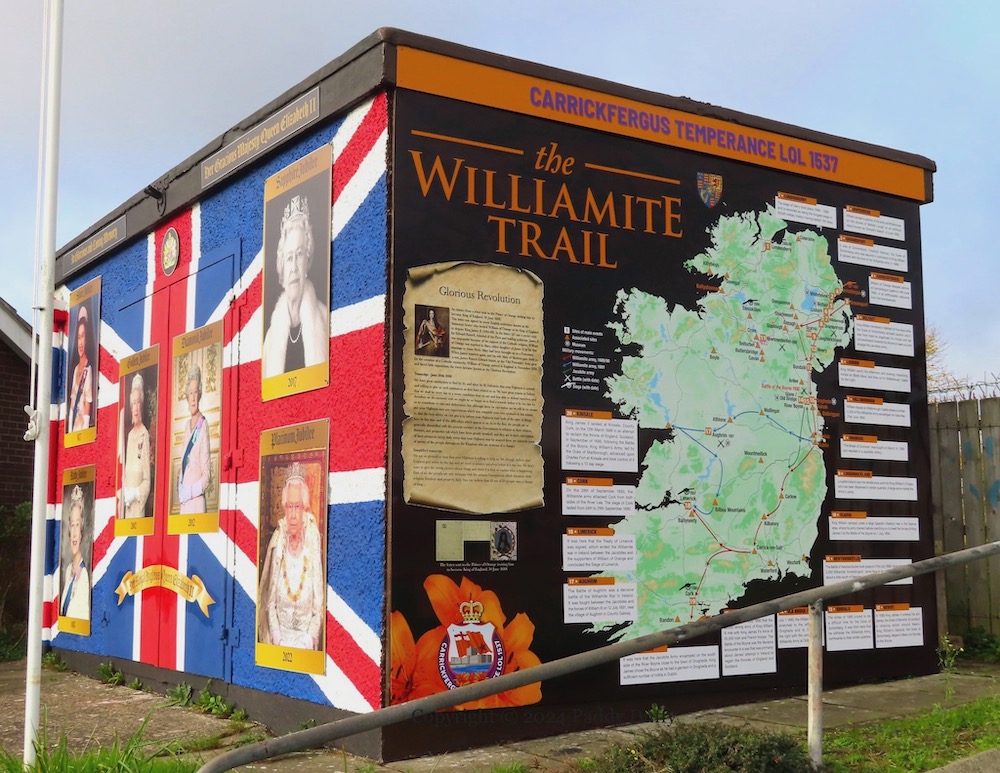
The story of William in Ireland has been a recent favourite in PUL displays (e.g. Newtownabbey | Carrickfergus | Shankill); this version is novel in adding a letter from June 30th, 1688, both in transcription and facsimile, under the heading of the “Glorious Revolution”. In it, the “Immortal Seven” tell William, the Prince Of Orange, that 95% of English people want a change in monarch. William arrived in England in November, 1688, and in Ireland in June, 1690.
The Williamite Trail (from October) joins an earlier tribute (June) to Elizabeth II on the years of her silver, ruby, gold, diamond, sapphire, and platinum jubilees (1977, 1992, 2002, 2012, 2017, and 2022).
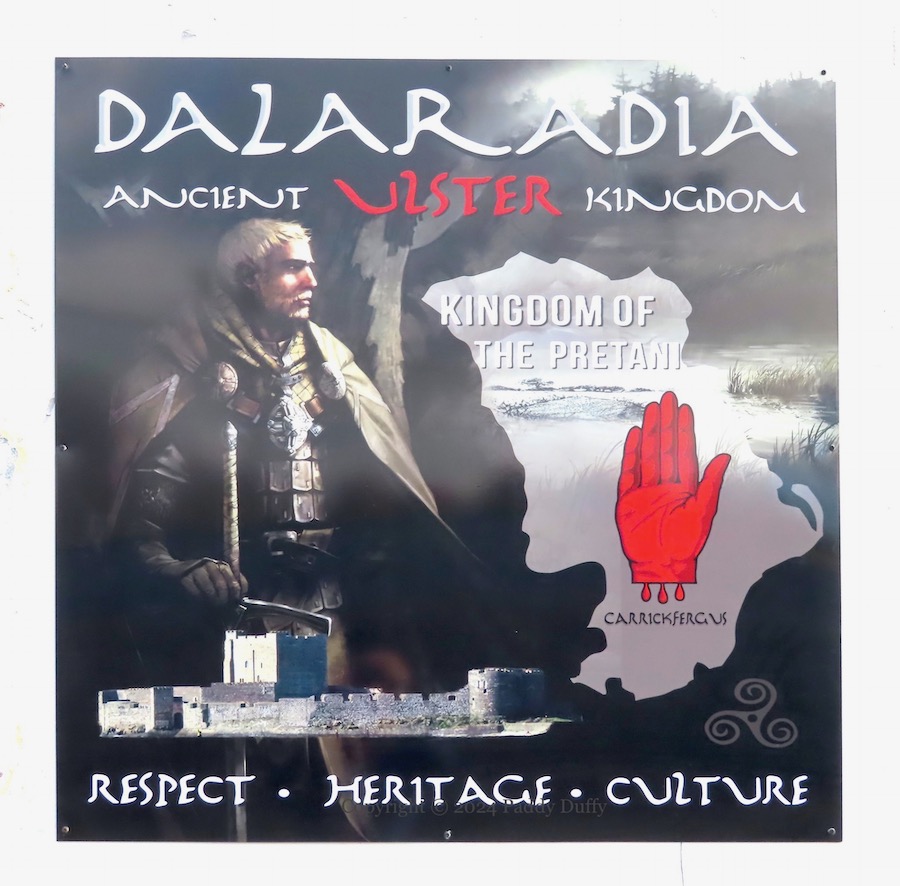
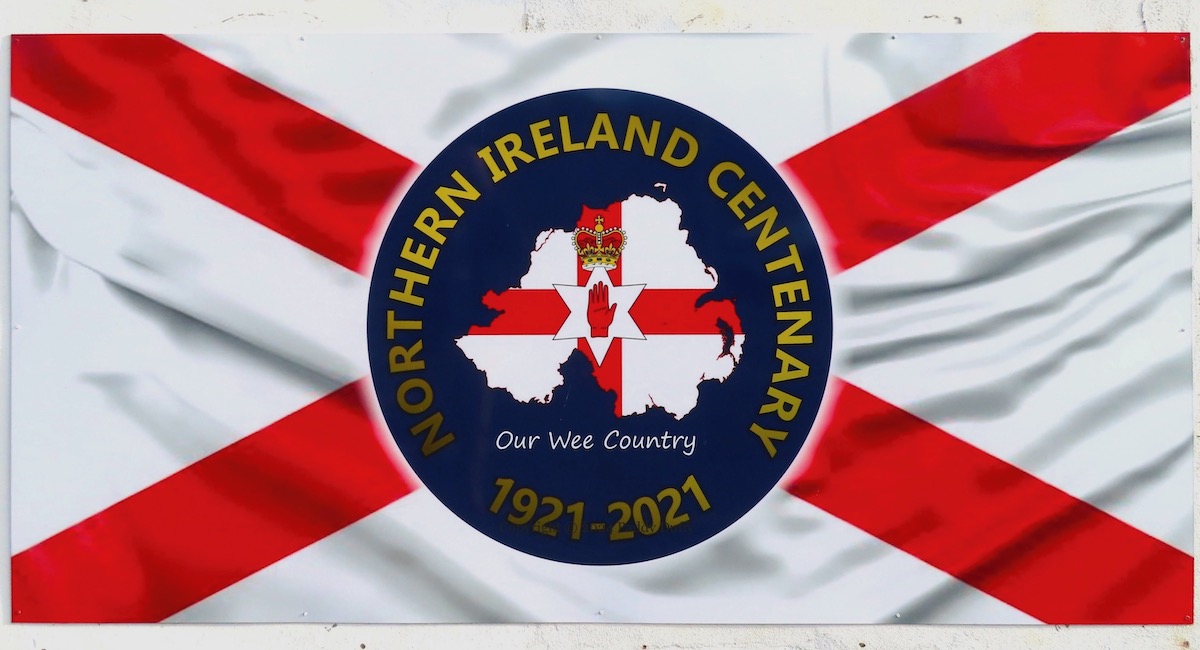
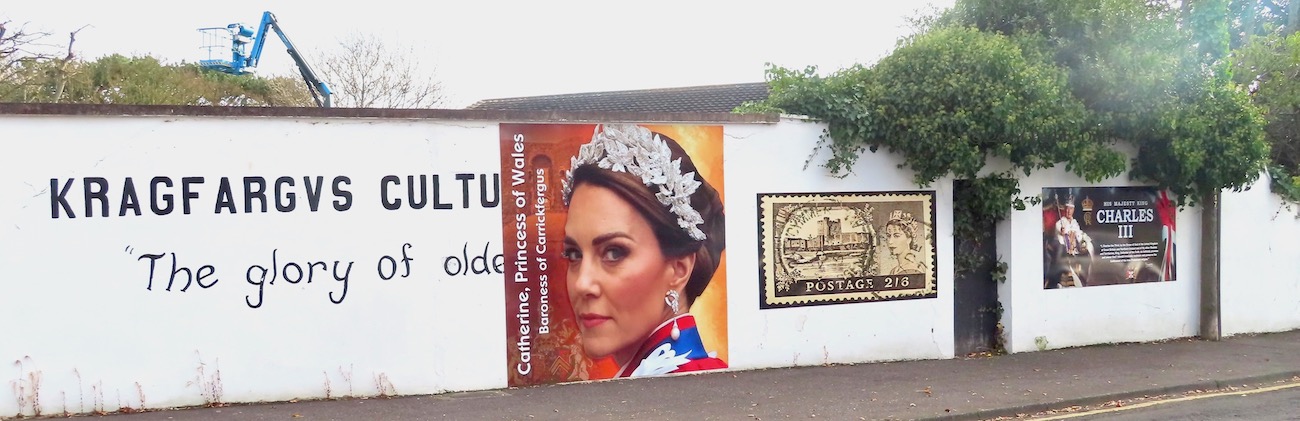
This entry updates the images seen in Kragfargus Cultural Corner, which now includes a portrait of Catherine (“Kate”) Middleton, Princess Of Wales and Baroness Carrickfergus (no “of”), alongside the tribute to King Charles III. The other person with a castle is Mr Tayto, who appears in the montage of famous faces on one of the NI 100 boards (fourth image).
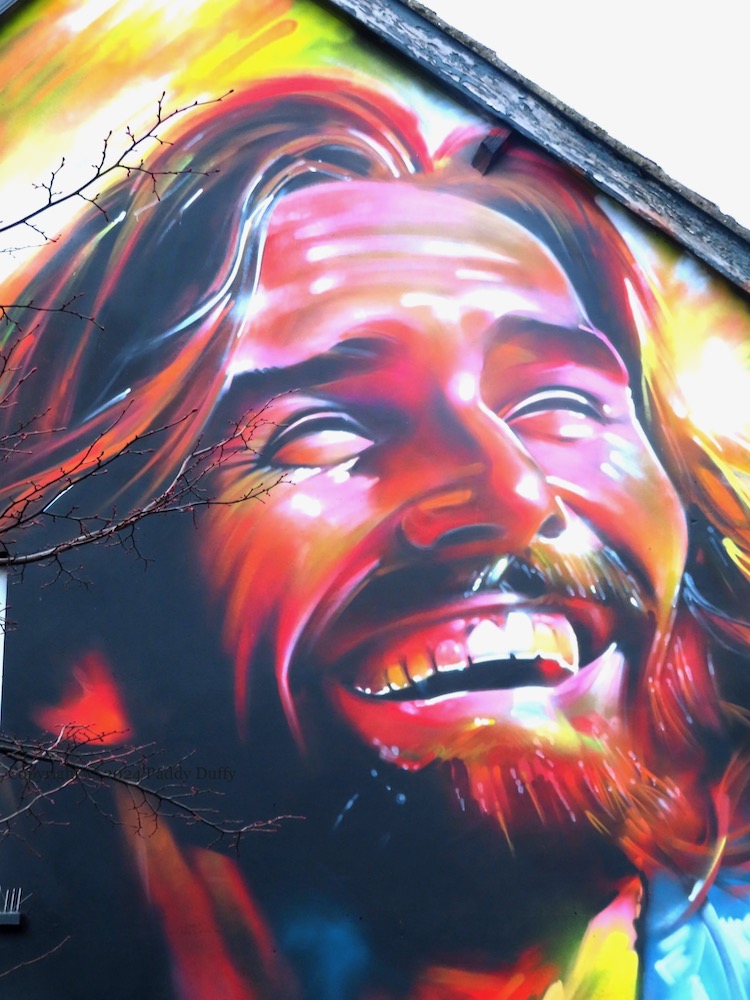
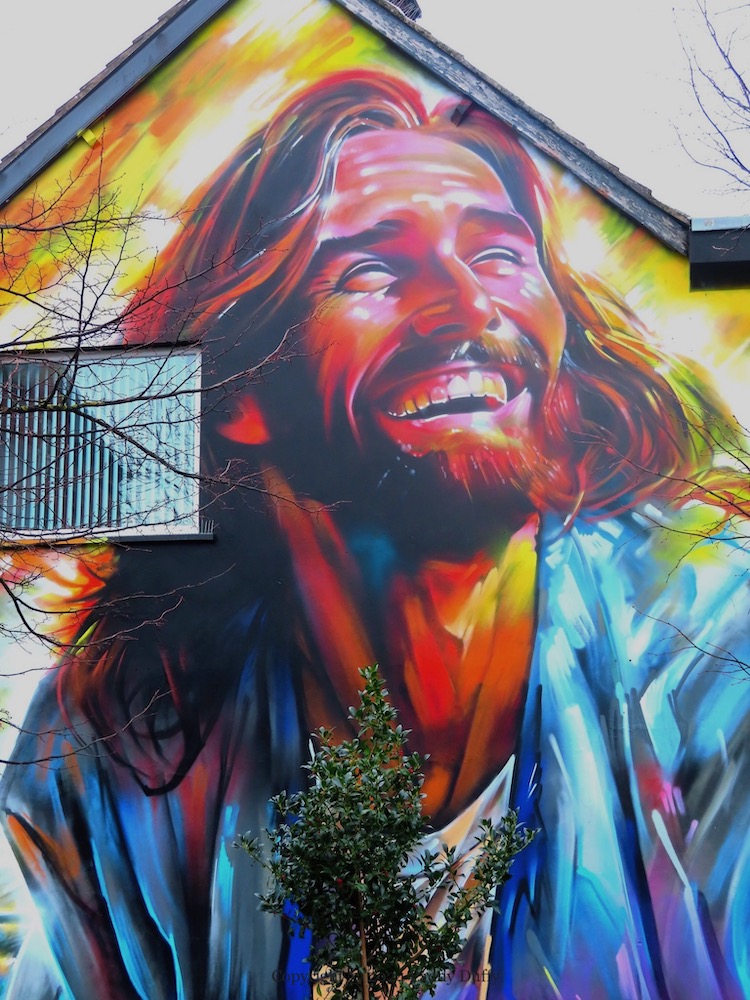
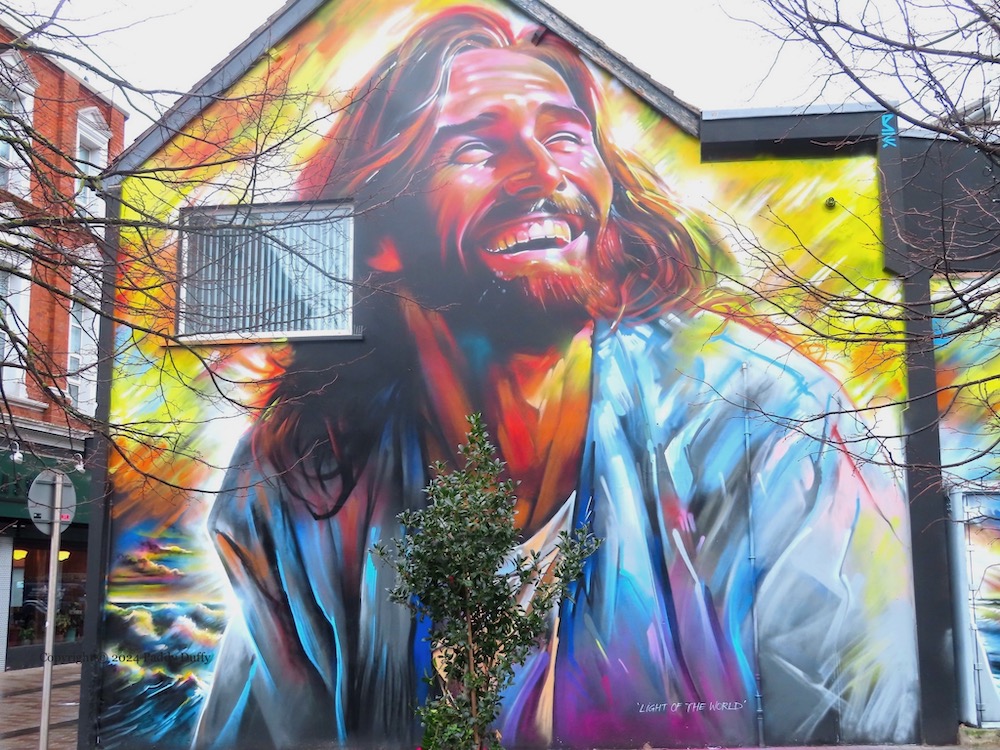
This is a second piece of street art by Dan Kitchener (web) in Bank Square, next to his painting of fast cars (Fast Enough So We Can Fly Away?): a painting of Jesus Of Nazareth for Hope/Crown Jesus Ministries (web).
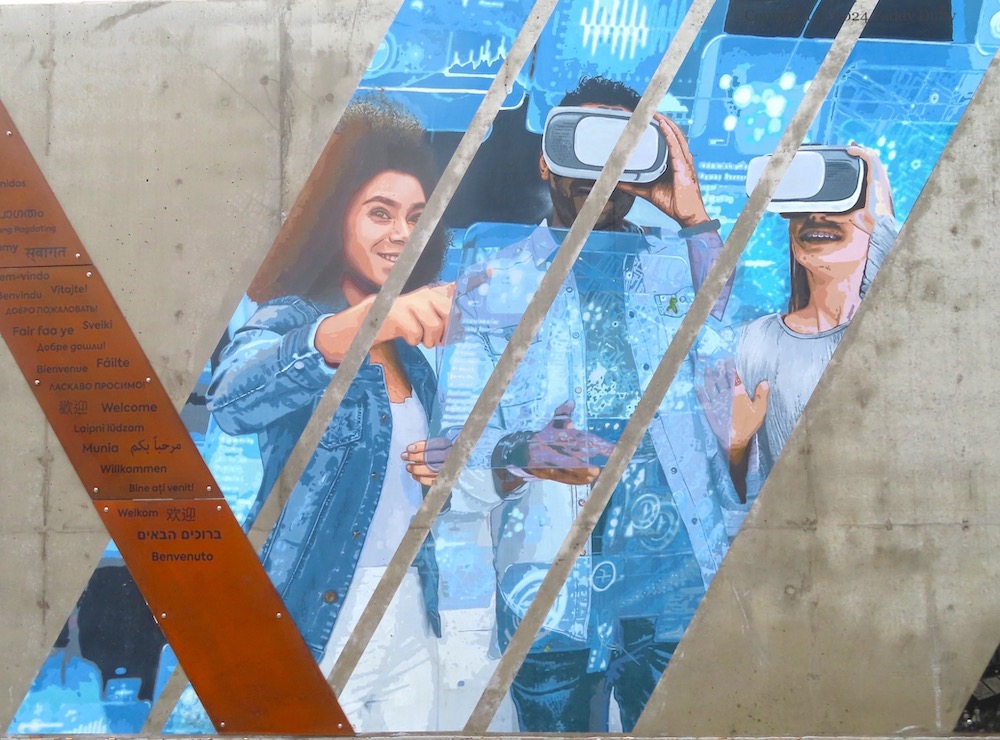
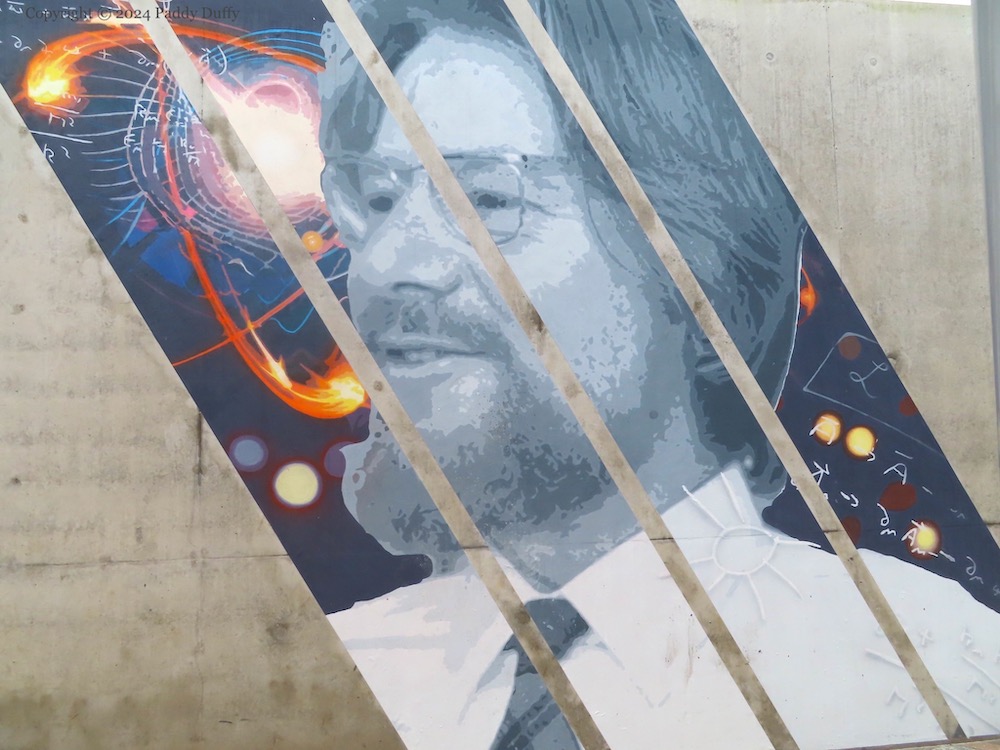
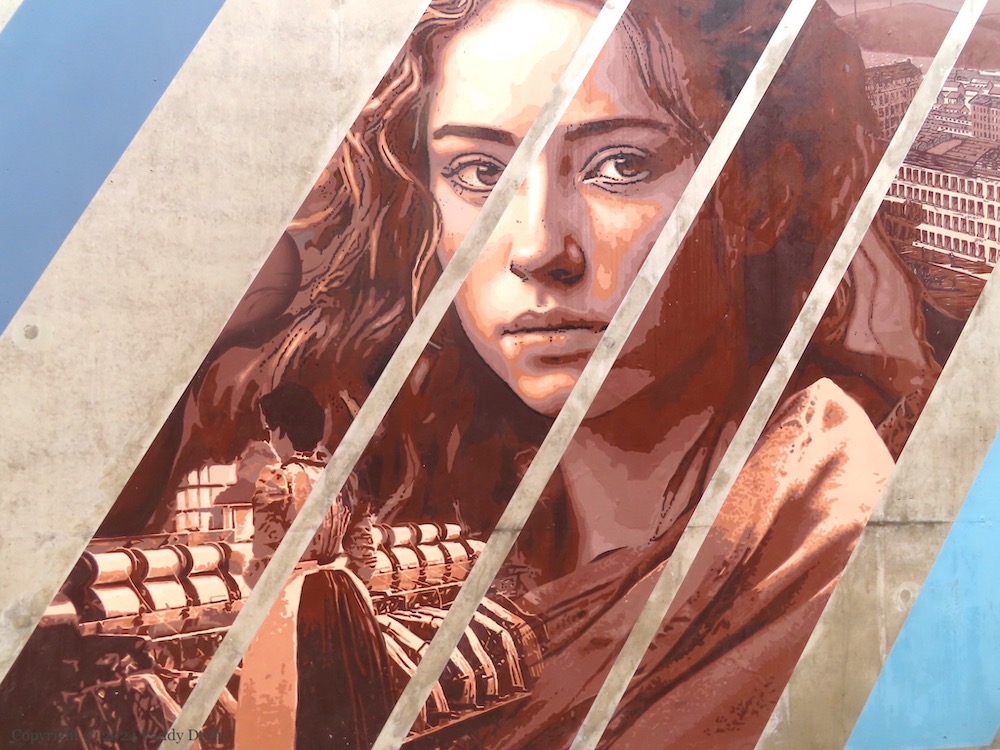
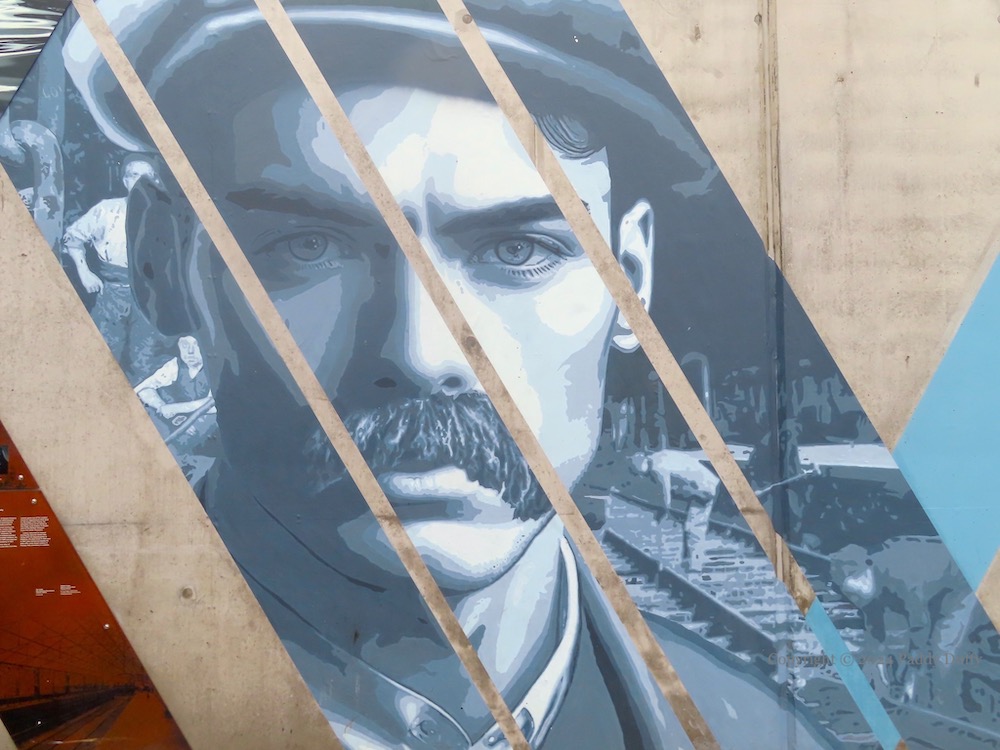
The new Grand Central Station opened at the beginning of September, replacing both Victoria Street train station and the Glengall Street bus station. The artwork outside the station (shown here) was completed by Dee Craig (Fb), depicting the rail-yards and mills of old Belfast, and physicist (and Belfast native) John Stewart Bell (WP).
One knock-on effect of the new station was that the tracks begin west of the Boyne Bridge and it is due to be dismantled – see Battle Of The Boyne Bridge.
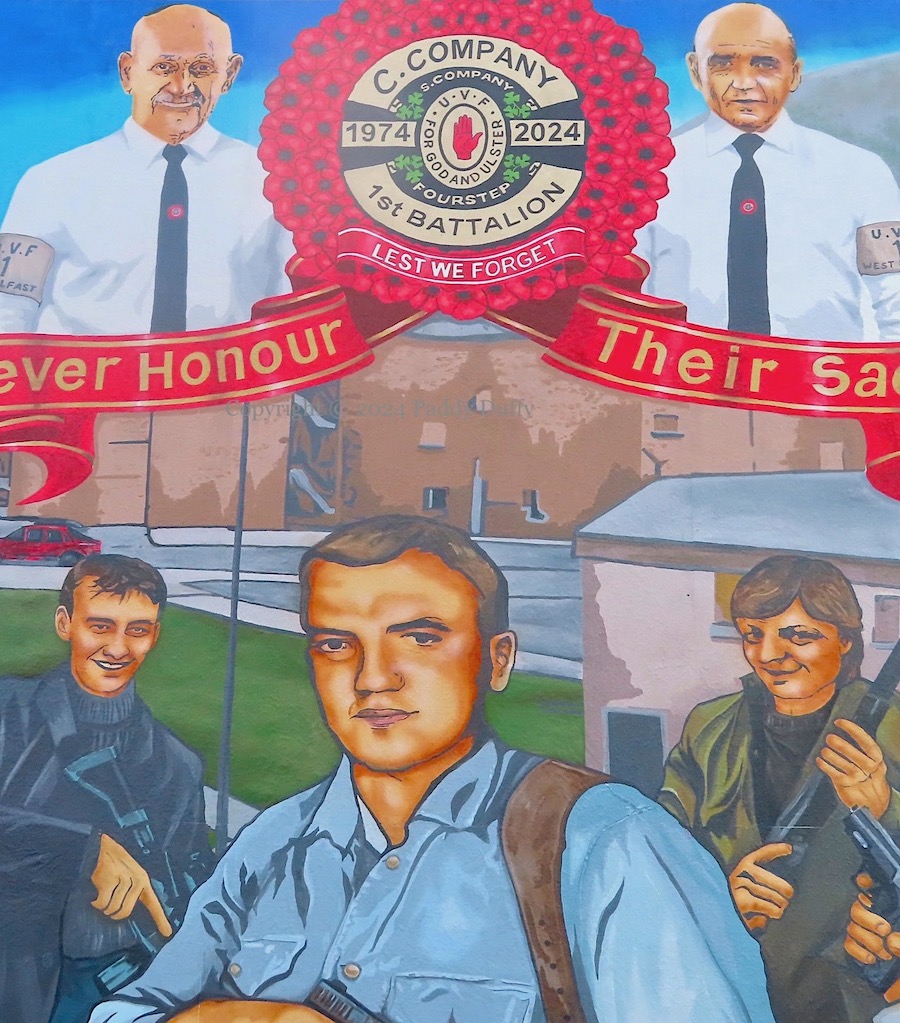
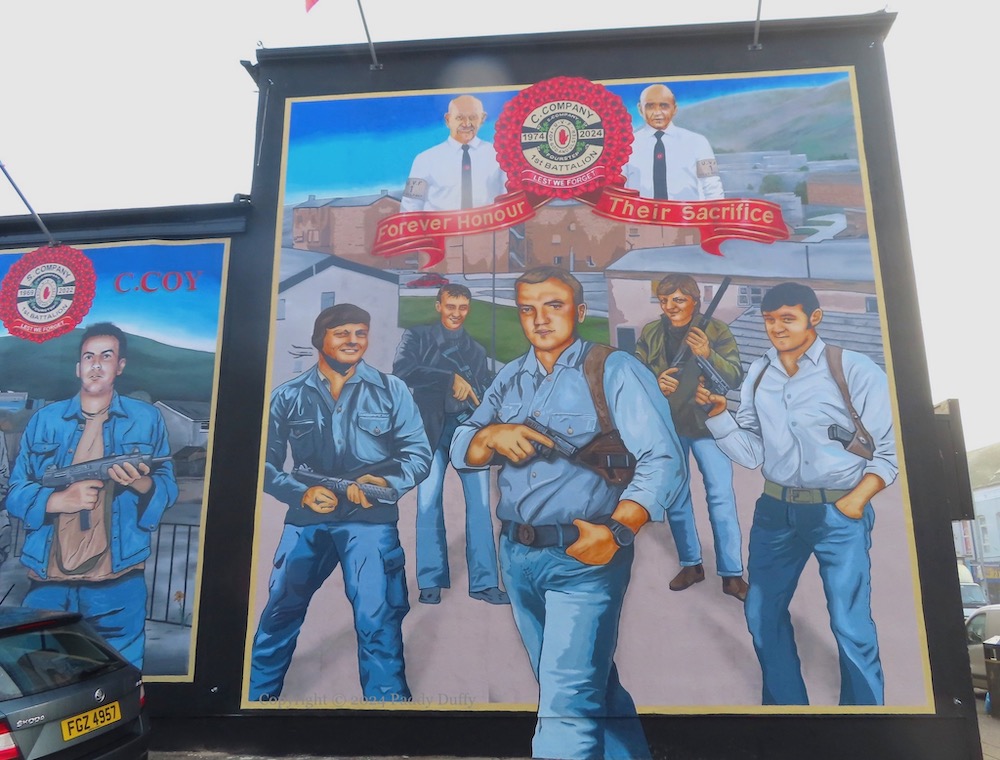
This is a new mural to UVF volunteers (l-r) Robert McIntyre, William Hannah, James McGregor, Robert Wadsworth, and Thomas Chapman, who were killed between 1973 and 1978. Compared to the previous mural, the volunteers generally present a more relaxed appearance, lacking their jackets and parkas, though still brandishing a wide variety of weapons.
It is not clear who the two gentlemen in the top, wearing vintage UVF arm-bands, are.
Carnan (or “C. Coy”) Street in the Shankill. For the mural to the left (to Joe Coggle and Paul McClelland) see S. Company, C. Company.
Prepped for the launch:
July 7th: The plaster was taken back to the brick and then re-plastered and painted before the mural was added.














 Paddy Duffy Collection