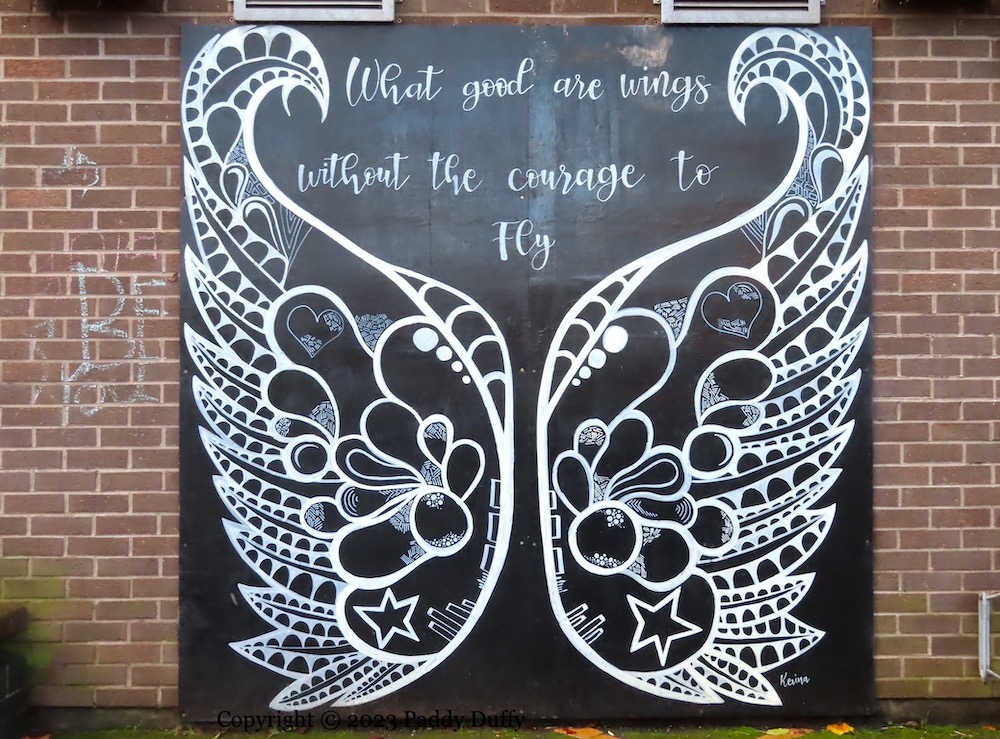
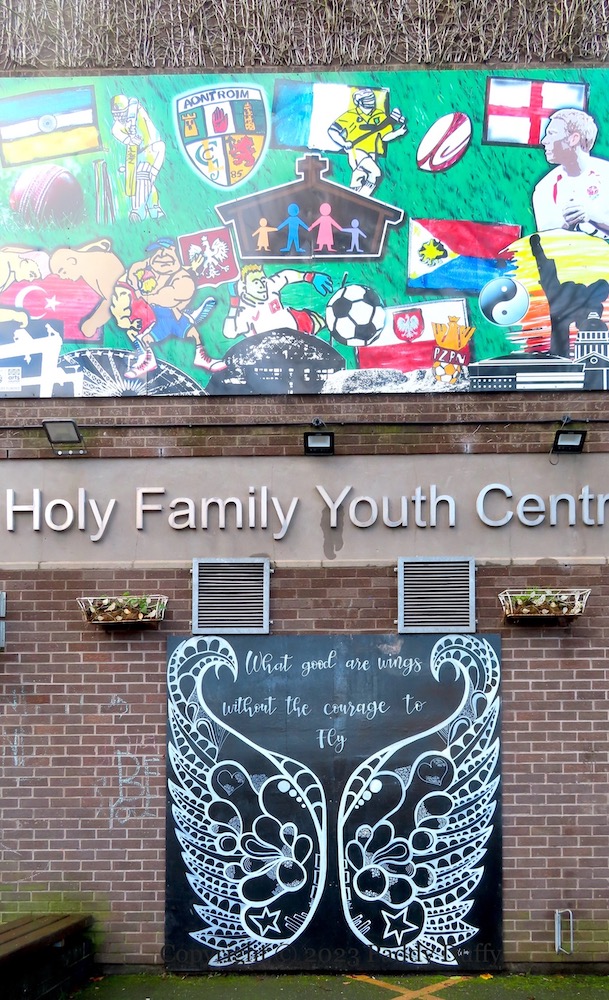
“What good are wings without the courage to fly[?]” Inpsirational art aimed at young people at the entrance to Holy Family Youth Centre (Fb) on the Limestone Road, north Belfast. The upper piece includes the flags of India (upside down), Ireland, England, Turkey, Poland (with crest), and the Philippines.
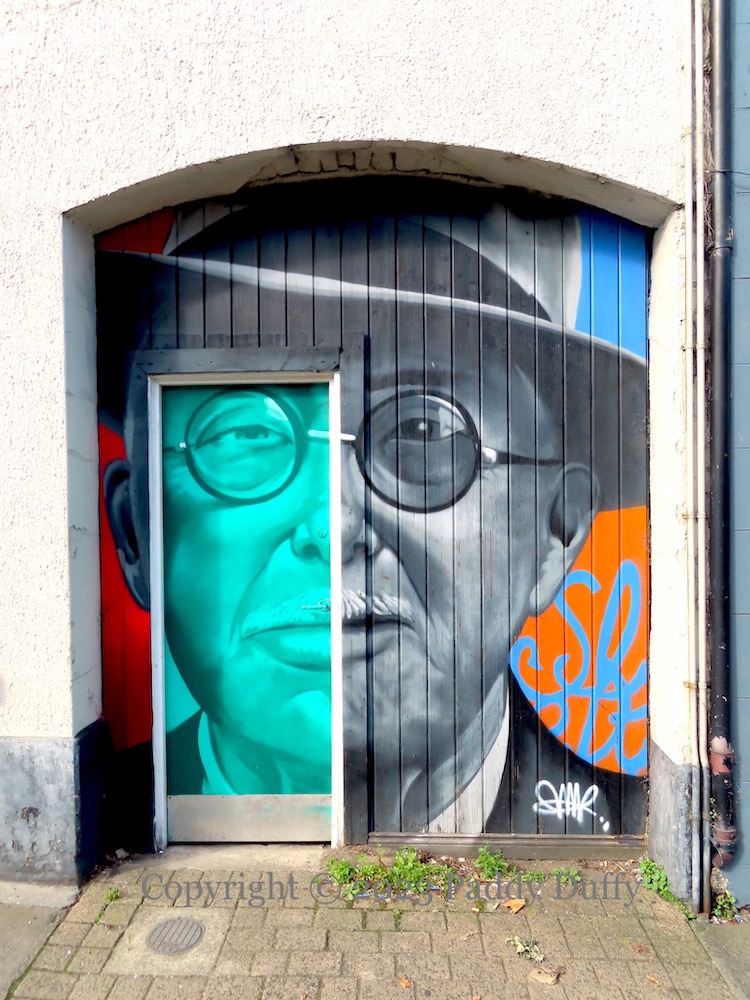
Local storyteller Hugh Dillon in Castle Street, Ballycastle, by JMK (Jonny McKerr). The original photograph, of Dillon in Leyland Road, Ballycastle, in 1956 and is available at Dúchas.
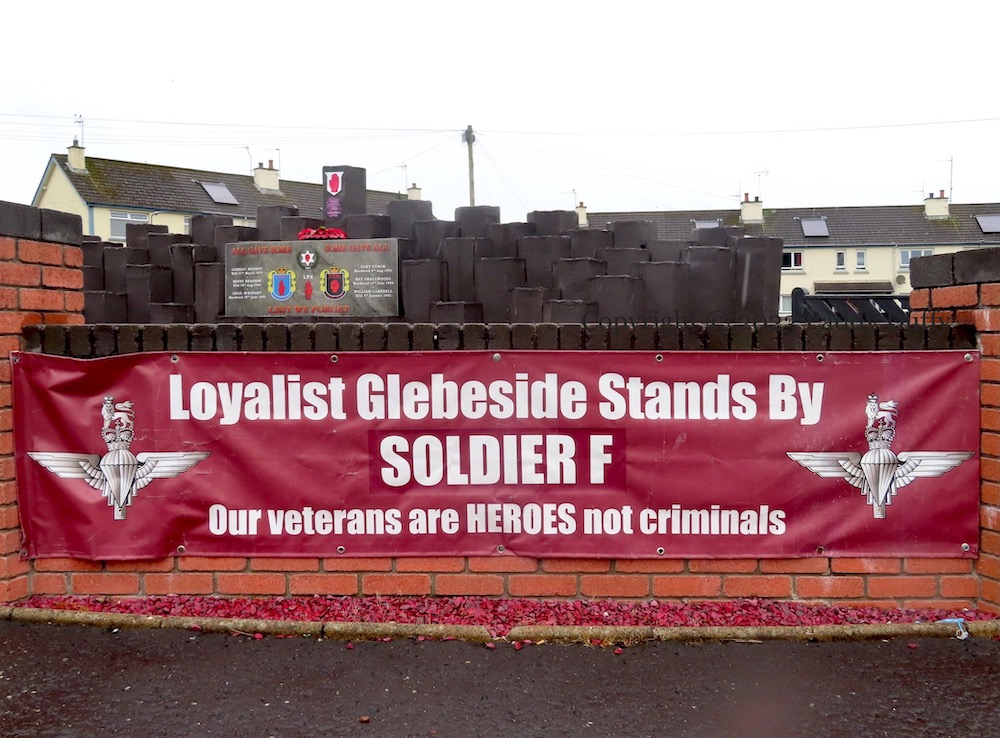
“Loyalist Glebeside Stands by Soldier F – Our veterans are HEROES not criminals.” Despite the support of Ballymoney loyalists, a court in Derry ruled in mid-December that Soldier F would stand trial on two murder charges and five attempted murders (BBC | BBC video), ahead of the forthcoming implementation of new legislation that would exempt former British Army personnel from prosecution (see Bill Of Shame).
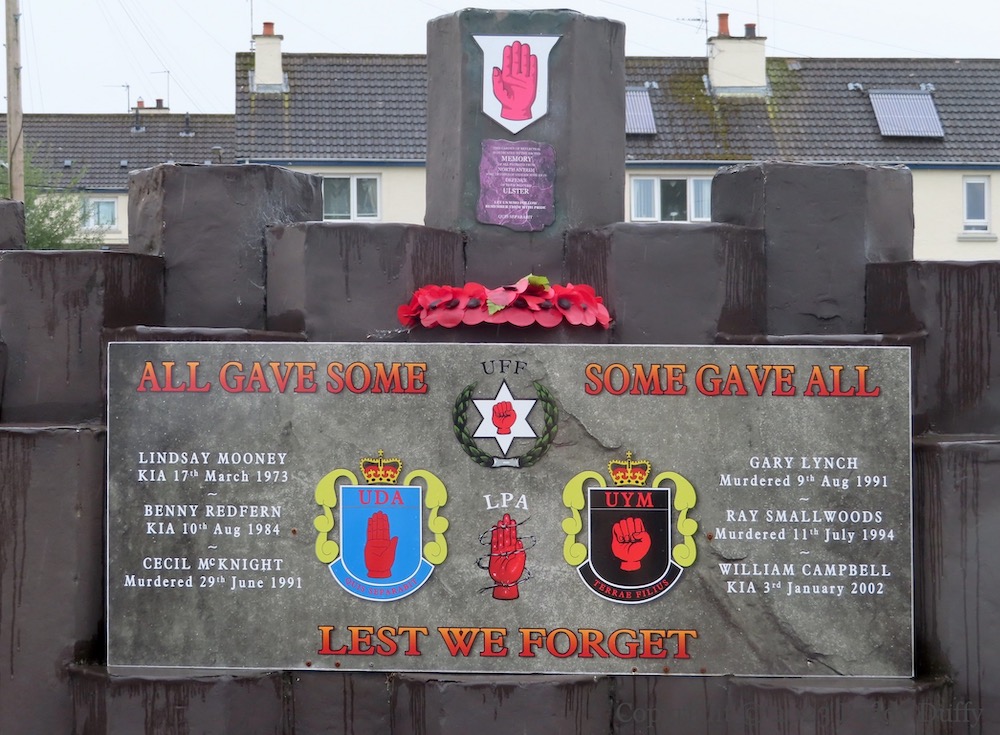
The tarp is next to the Causeway-style UDA memorial in Alexandra Avenue: “This garden of reflection is dedicated to the sacred memory of all patriots from North Antrim who in times of danger rose up in defence of their beloved Ulster – Let us who follow remember them with pride. Quis separabit. Lindsay Mooney, Benny Redfern, Cecil McKnight, Gary Lynch, Ray Smallwoods, William Campbell.”
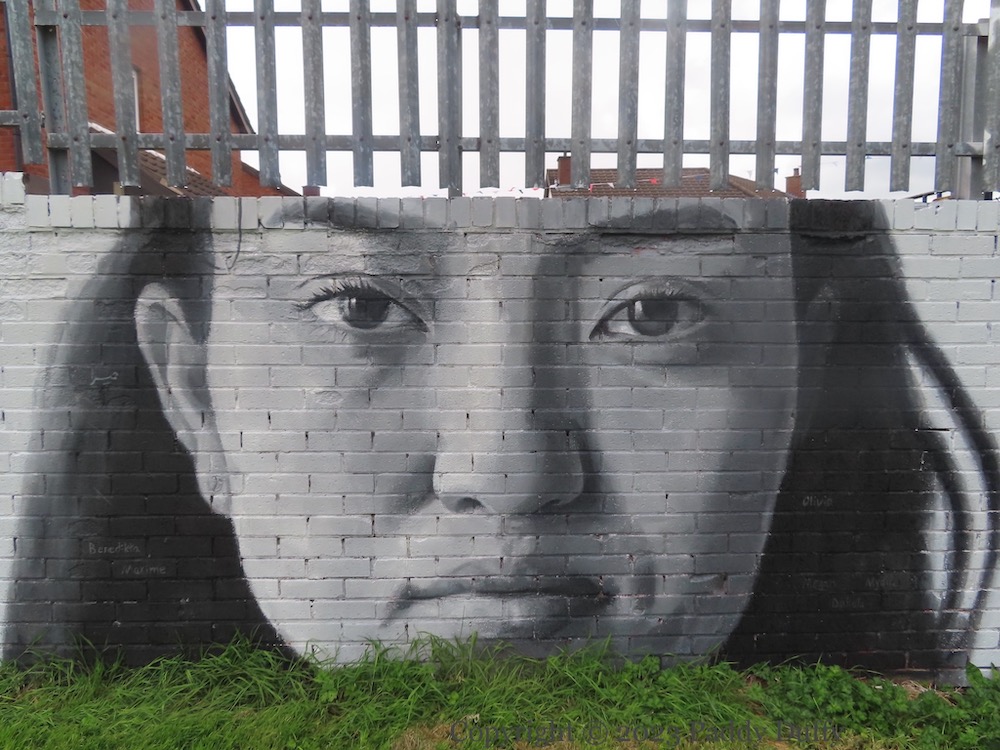
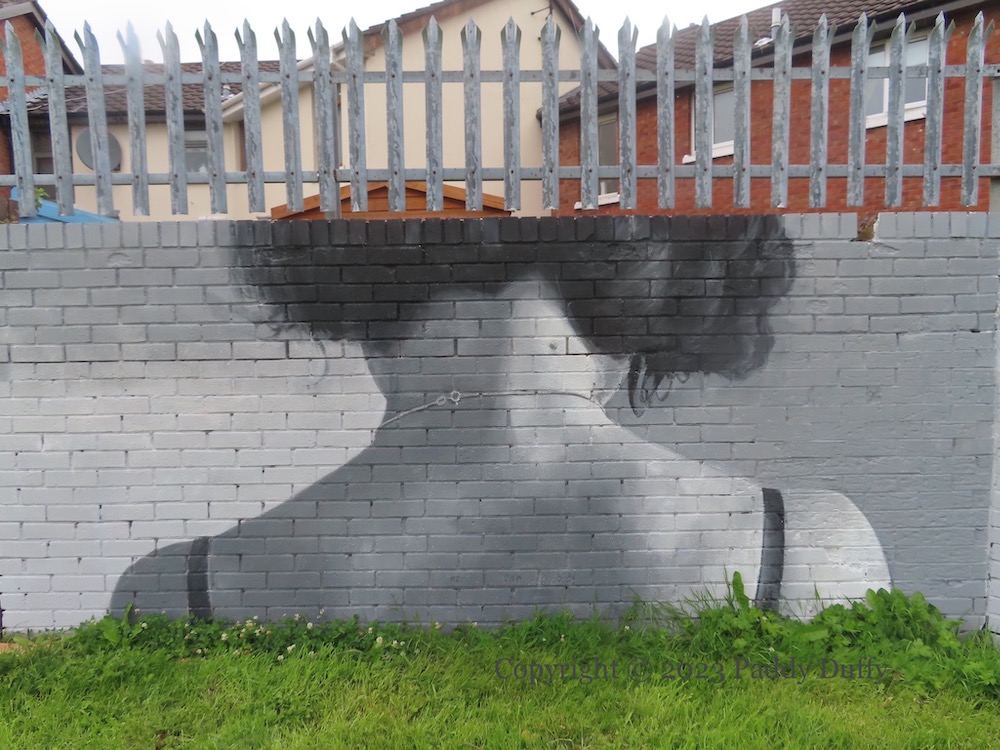
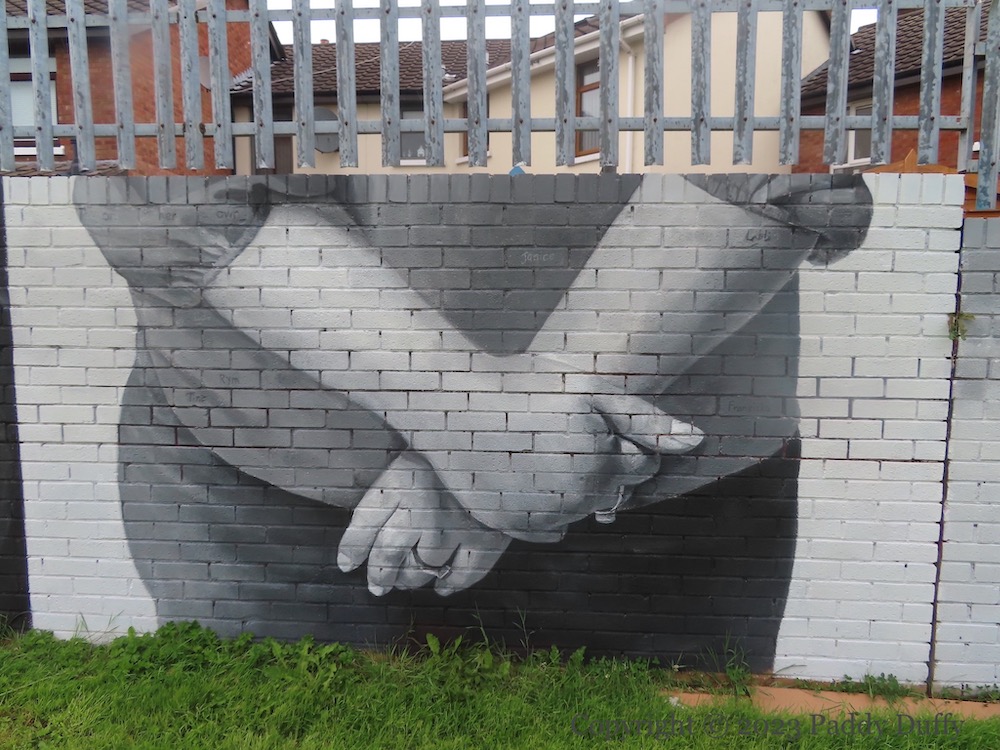
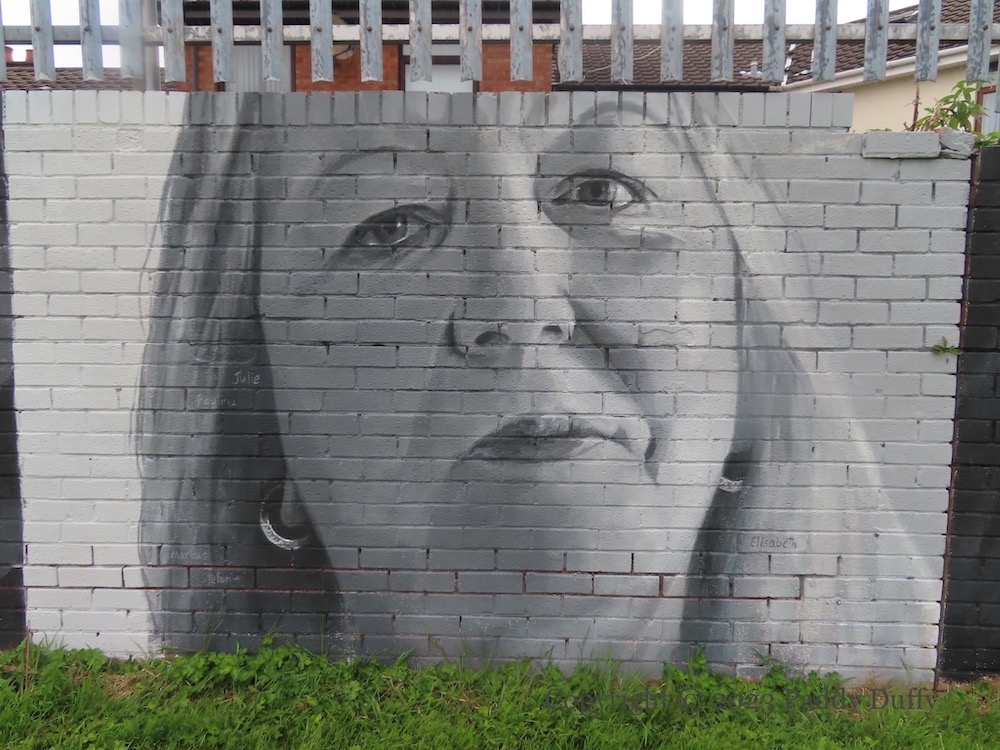
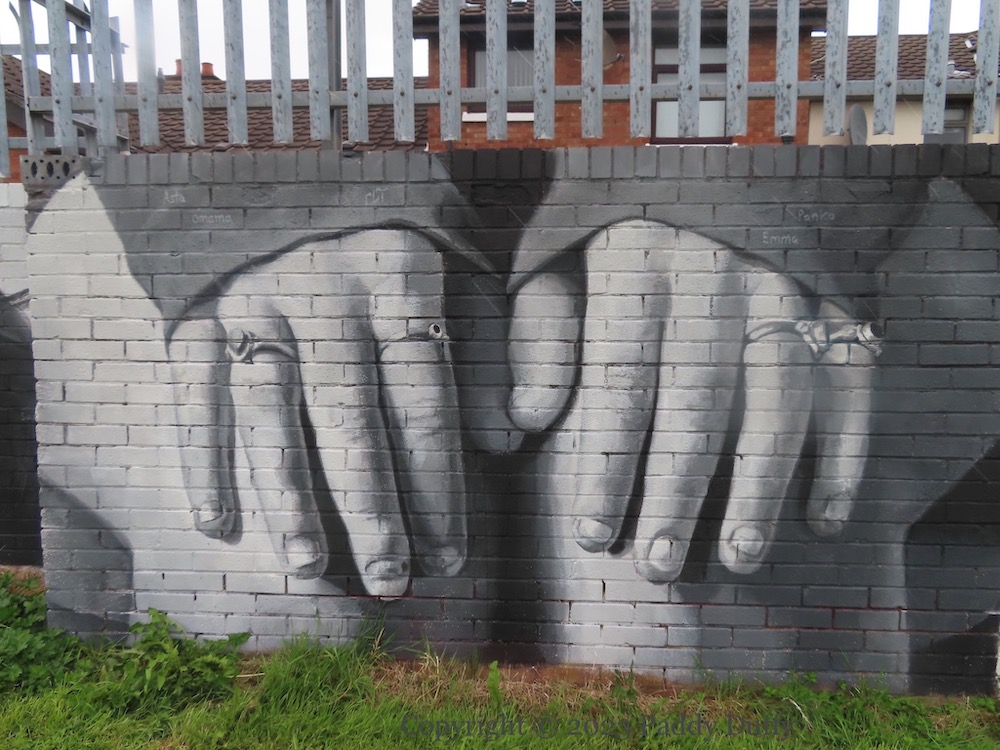
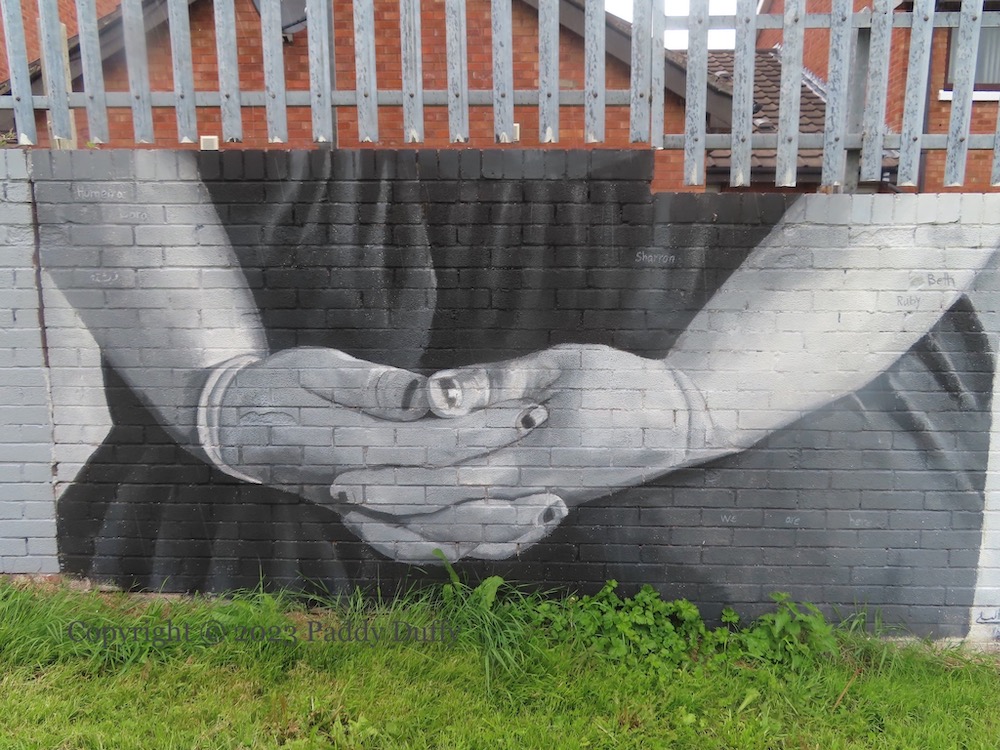
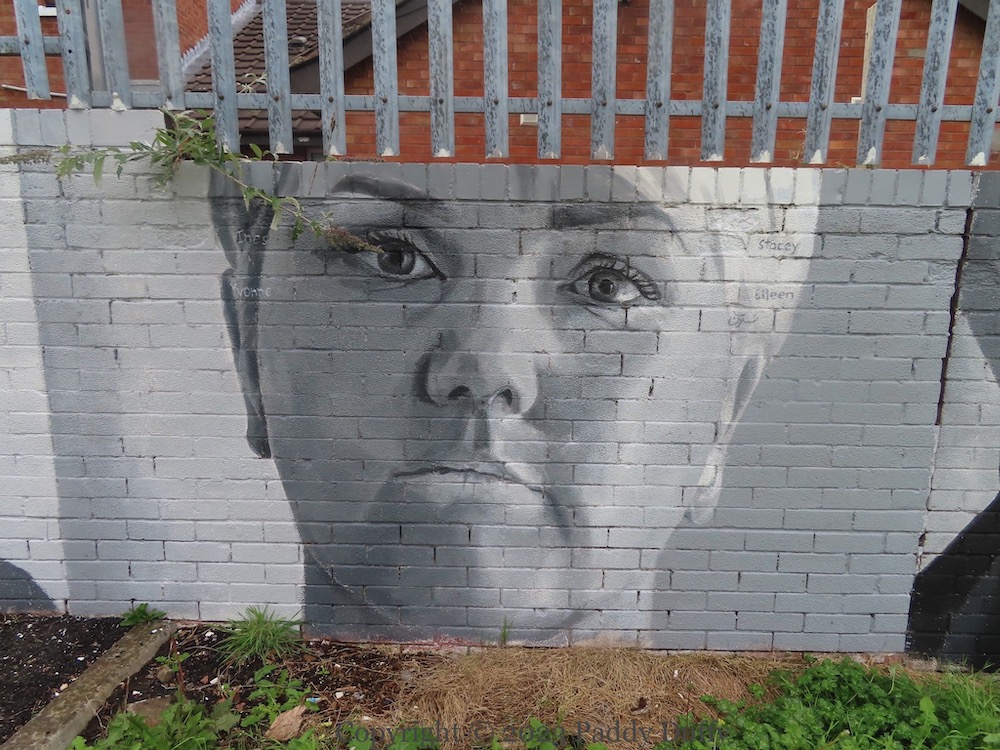
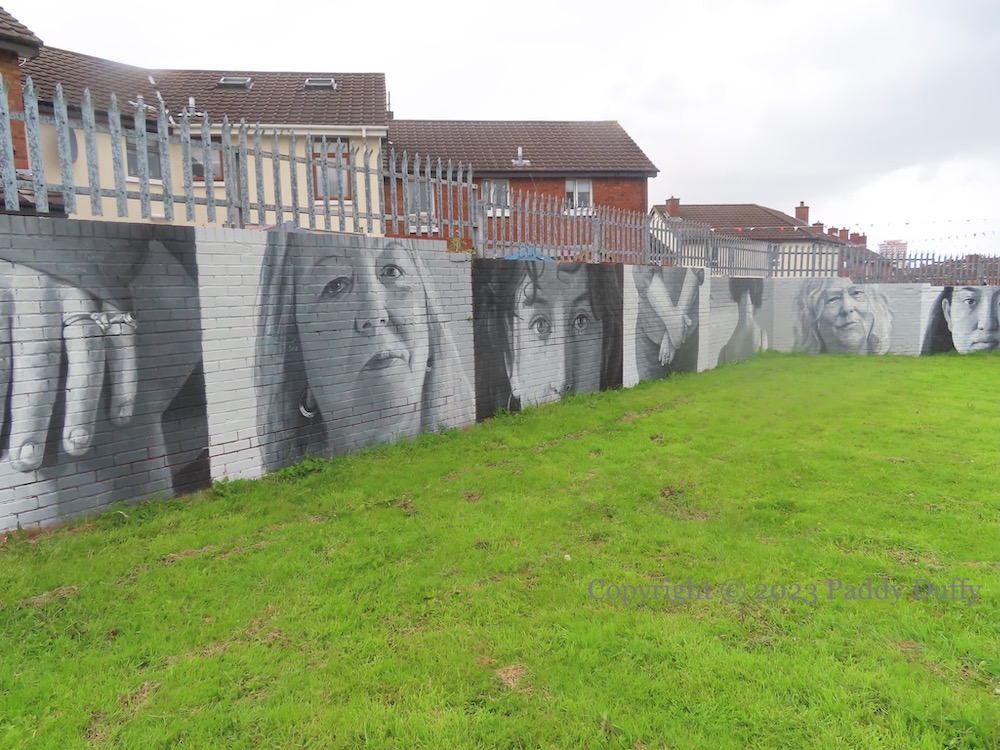
The bodies, faces, and limbs of seven women – Homcira, Maria, Leyli, Rym, Clara, Julie, and Stacey – are presented in eleven panels by Iranian artist Leyli Rashidi Rauf (web), currently at ArtEZ University, Netherlands; some students from the university’s International Masters Artist Educator Programme were working out of the Shankill Mission this summer and put on an exhibition of their work in June. (Alternatives Fb | ArtEZ Fb)
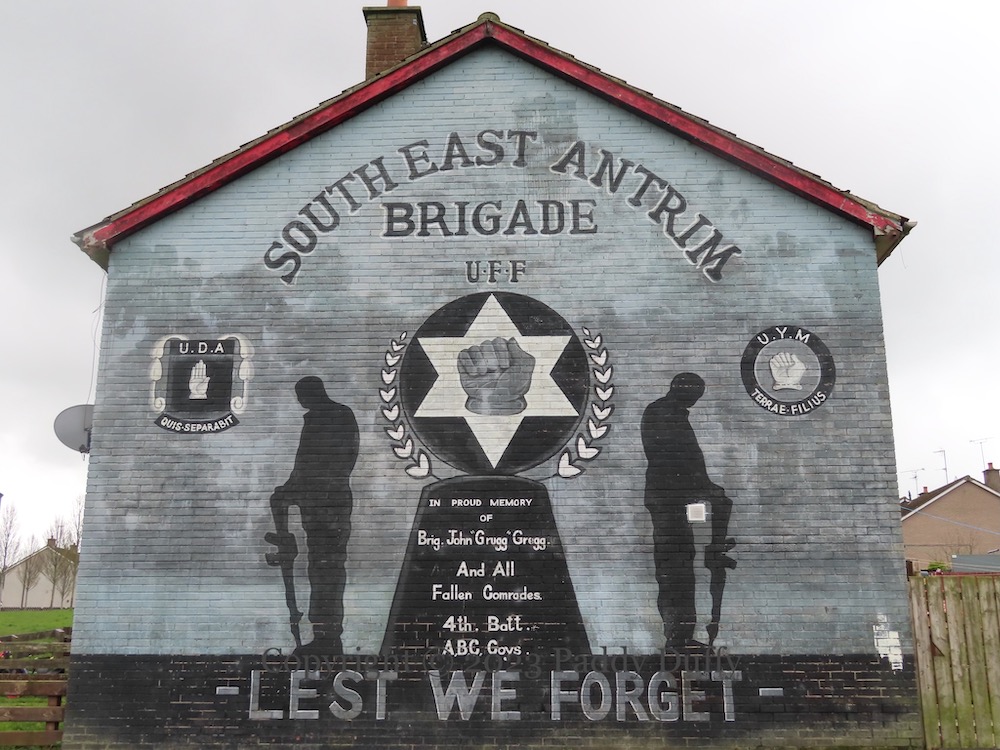
“South East Antrim Brigade UFF. In proud memory of Brig. John “Grugg” Gregg and all fallen comrades. 4th Batt. A B C Coys. Lest we forget.” Gregg is known for the attempted killing of Gerry Adams and for being killed on the orders of Johnny Adair, which led to the expulsion of Adair’s company from the lower Shankill (WP).
Orkney Drive, Ballykeel 2, Ballymena. Seen previously in 2010: M05987.
Above is a trio of boards on a wall behind the Antiville community centre, softening (somewhat) the very aggressive set of six UDA boards next to it.
The experts’ best guess is that the gentleman on the white horse (on the right of the painting) is James Scott, Duke of Monmouth, at the siege of Maastricht in 1673. Scott was commander of the English forces fighting with the French during the Franco-Dutch war. It’s not clear, thus, what the connection is to the Antiville area of Larne or the wars fought in Ireland over the English crown. It was painted by Jan Wyck, who also did a painting of the Battle of the Boyne. On either side (as shown below) are a portrait of Queen Elizabeth II and the English version of the Royal coat of arms of the United Kingdom.
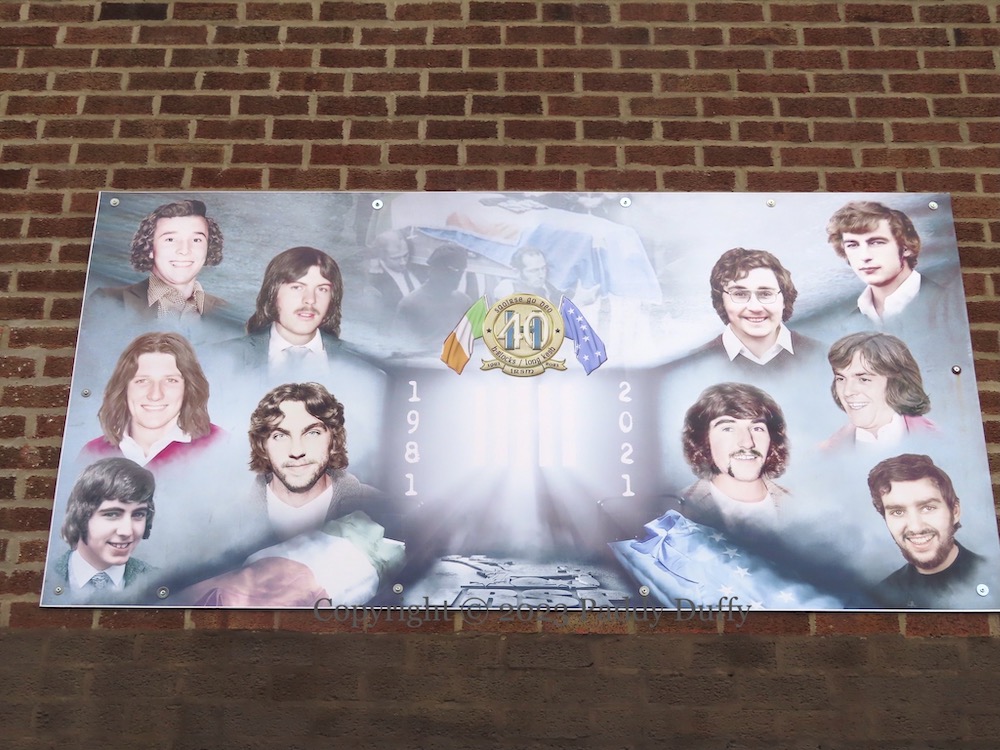
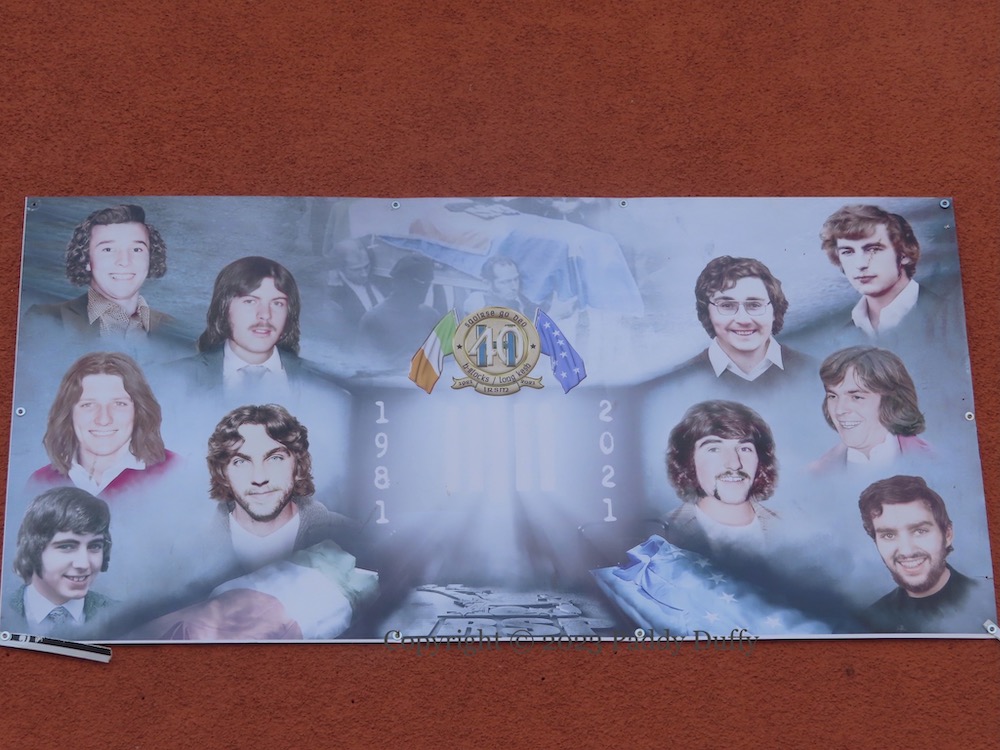
“Saoırse go deo.” INLA volunteer Kevin Lynch went on hunger strike on May 23rd, 1981. He would die 71 days later, on August 1st. His funeral is depicted in the top part of this IRSP/IRSM board commemorating the 40th anniversary of the 1981 hunger-strikes. The Tricolour (for the IRA) and Starry Plough (for the INLA) are used as blankets on the prison beds.
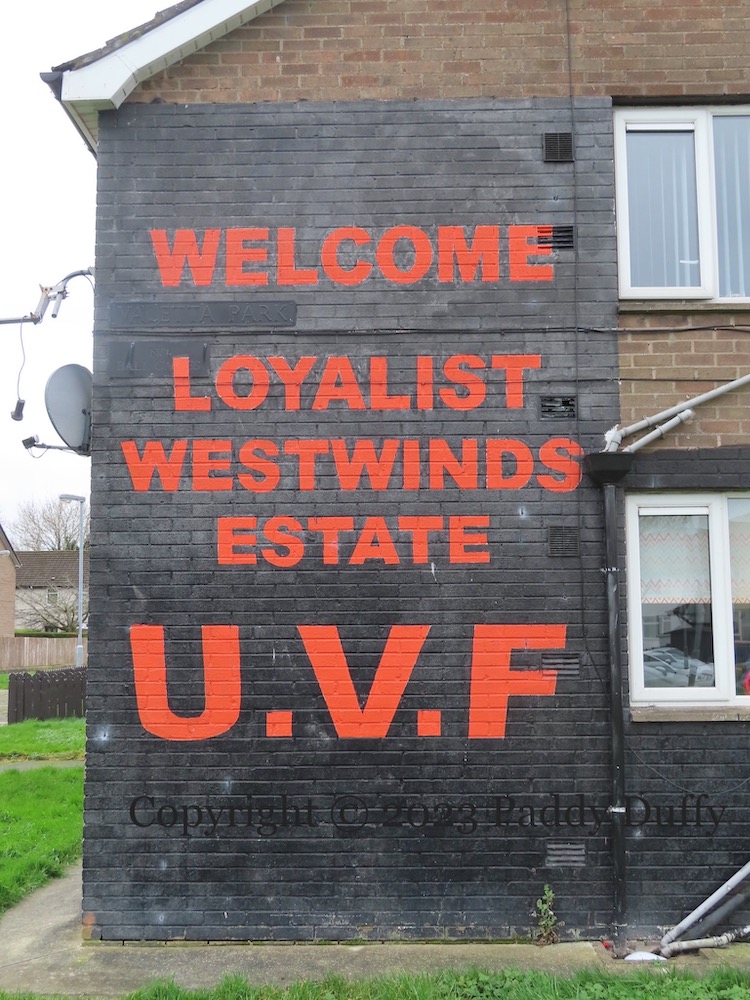
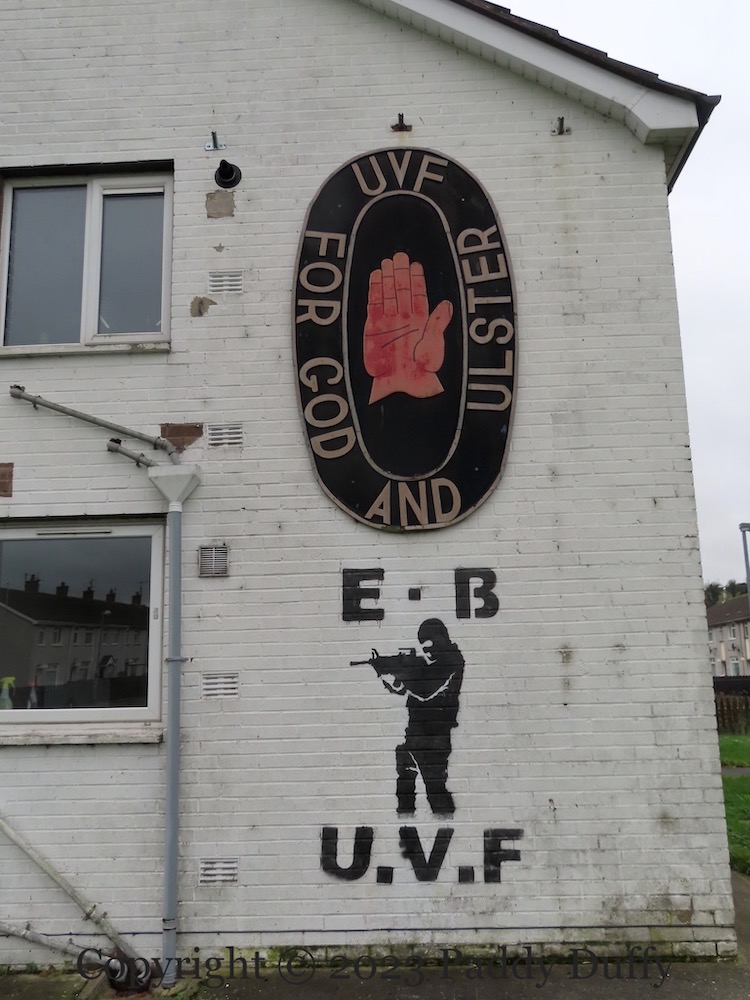
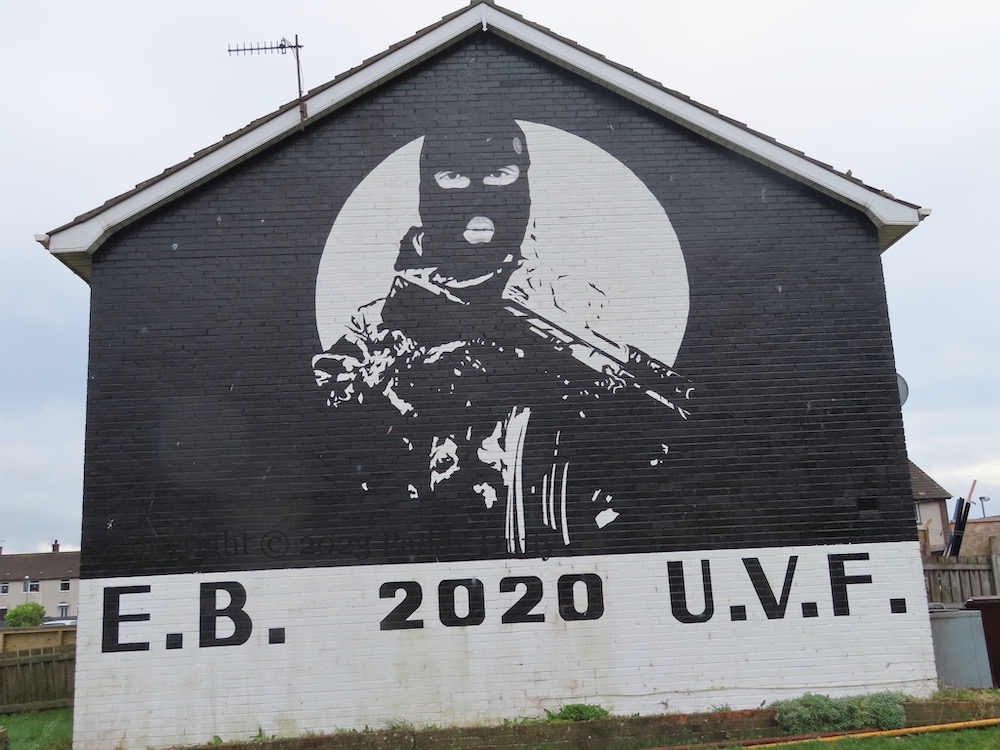
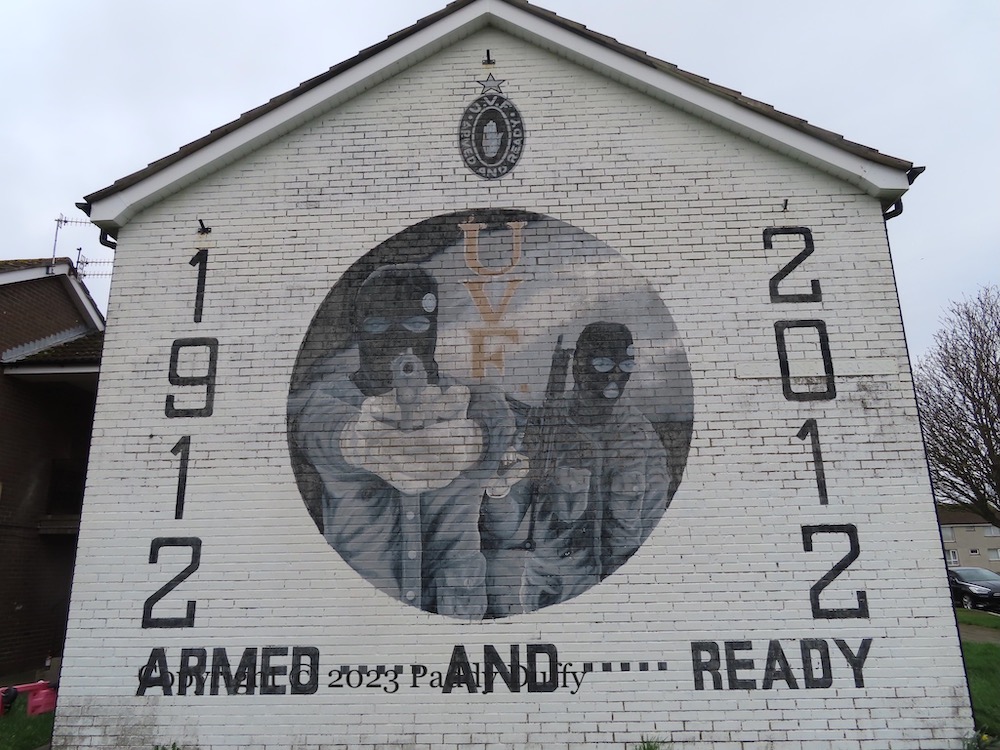
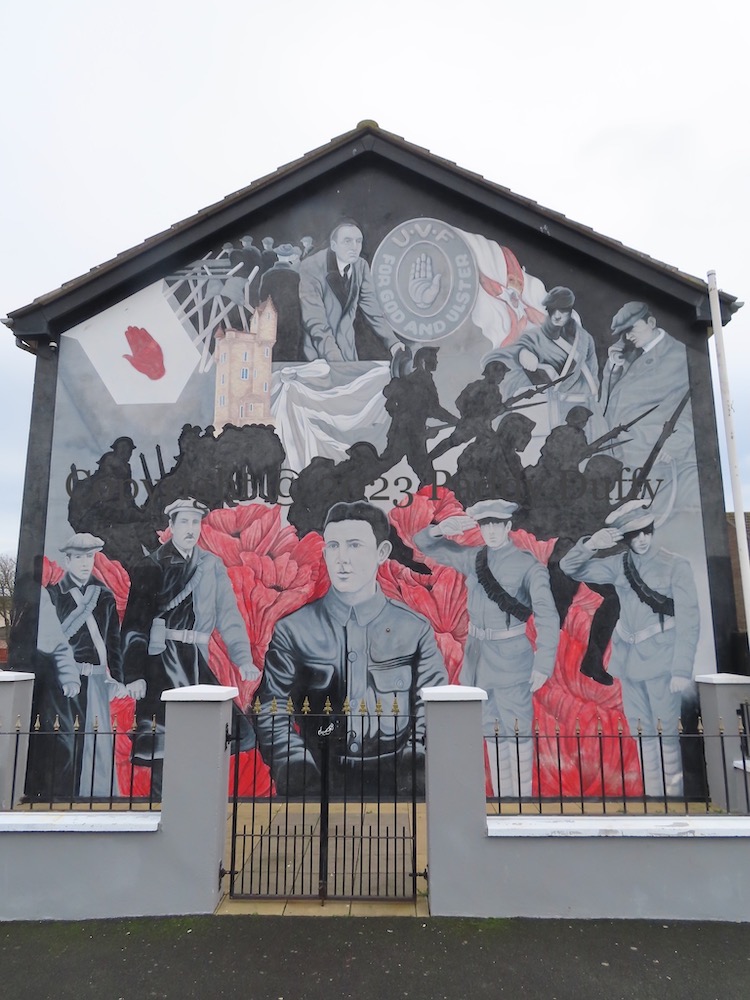
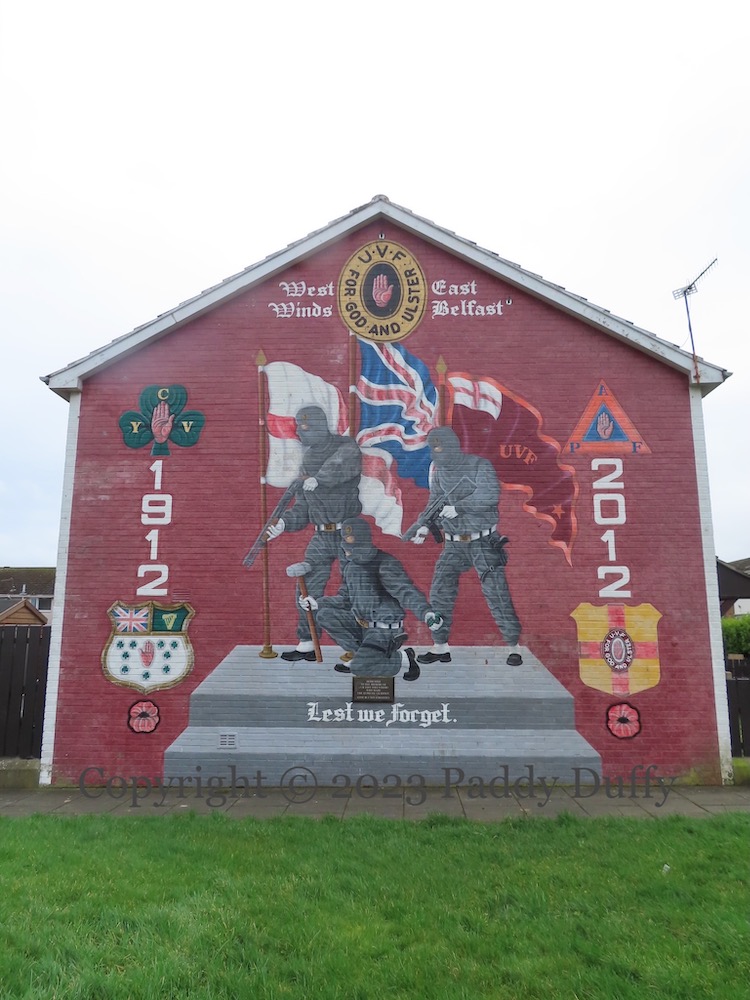
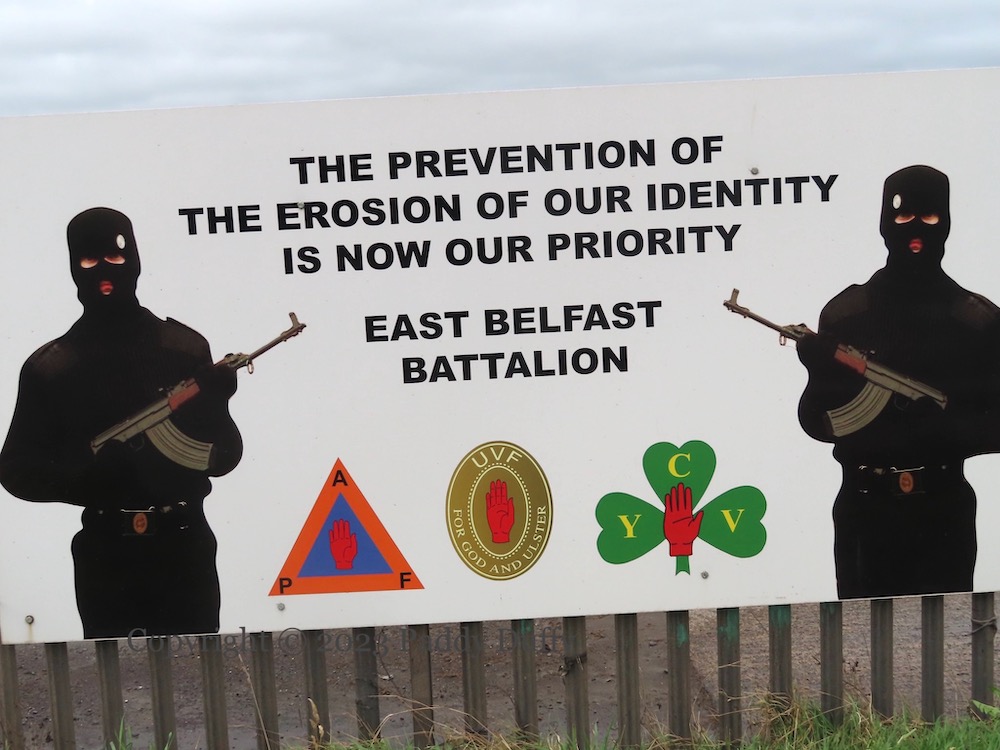
Here is a gallery of UVF stencils and boards in the Westwinds estate. Despite being in Newtownards, the UVF here is allied with the East Belfast brigade, rather than the North Down brigade – see Belfast Live for background.
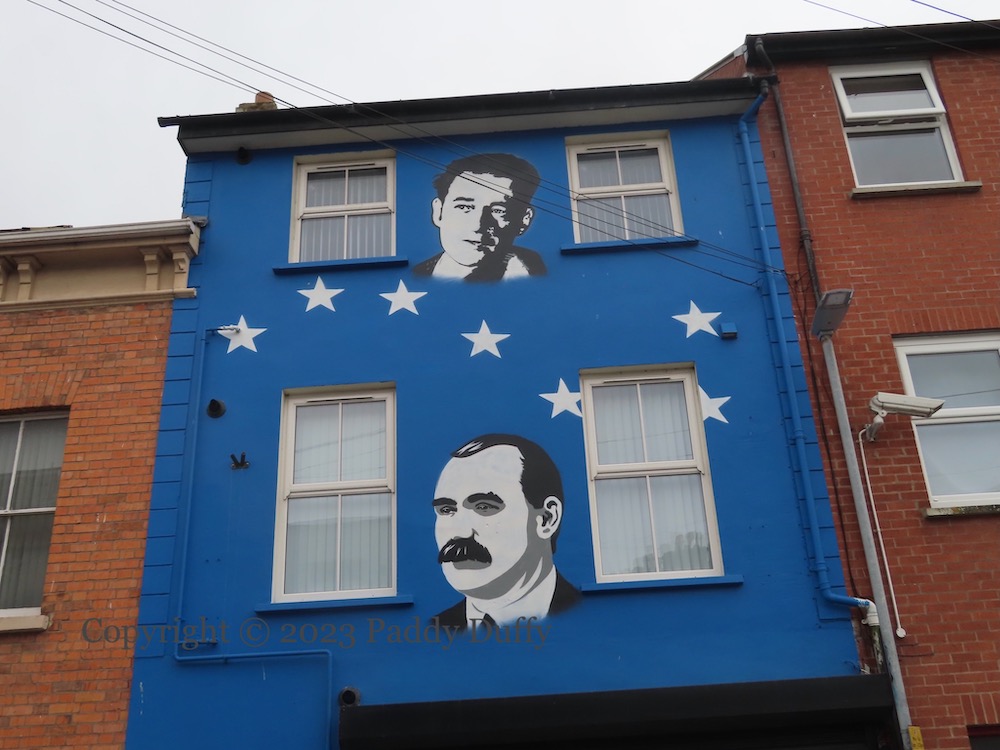
“A free Ireland will control its own destiny from the plough to the stars.” So James Connolly is said to have explained the significance of “the plough in the stars” (Ursa Major) as a symbol of Irish revolutionary socialism. (Though no source is given for the remark. See From The Plough To The Stars for more.)
Connolly and Seamus Costello, heroes of the IRSP (web) are painted on James Connolly house in Chamberlain Street, Derry, which is also home to Teach Na Fáılte, the Republican Socialist Ex-Prisoners group.







 Paddy Duffy Collection