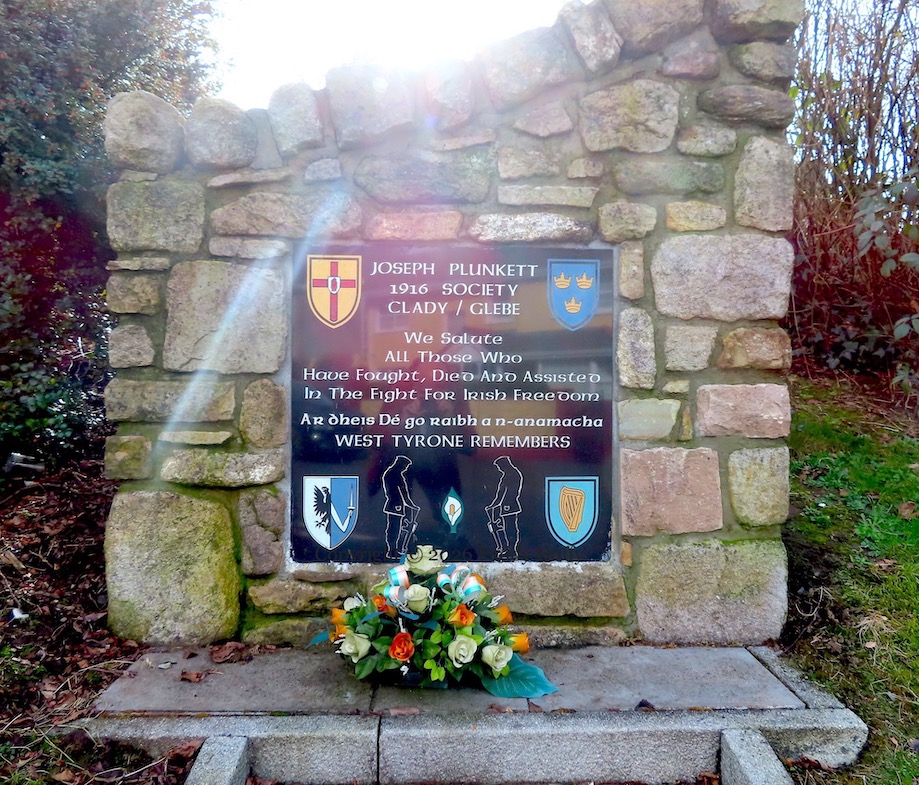
“We salute all those who have fought, died and assisted in the fight for Irish freedom. Ar dheıs Dé go raıbh a n-anamacha. West Tyrone remembers.”
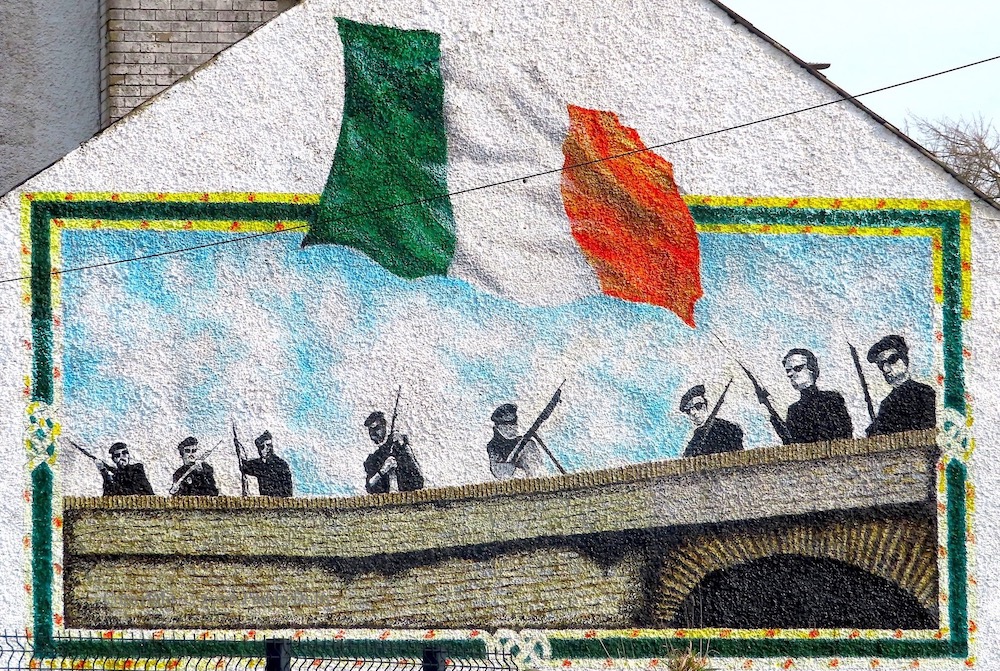
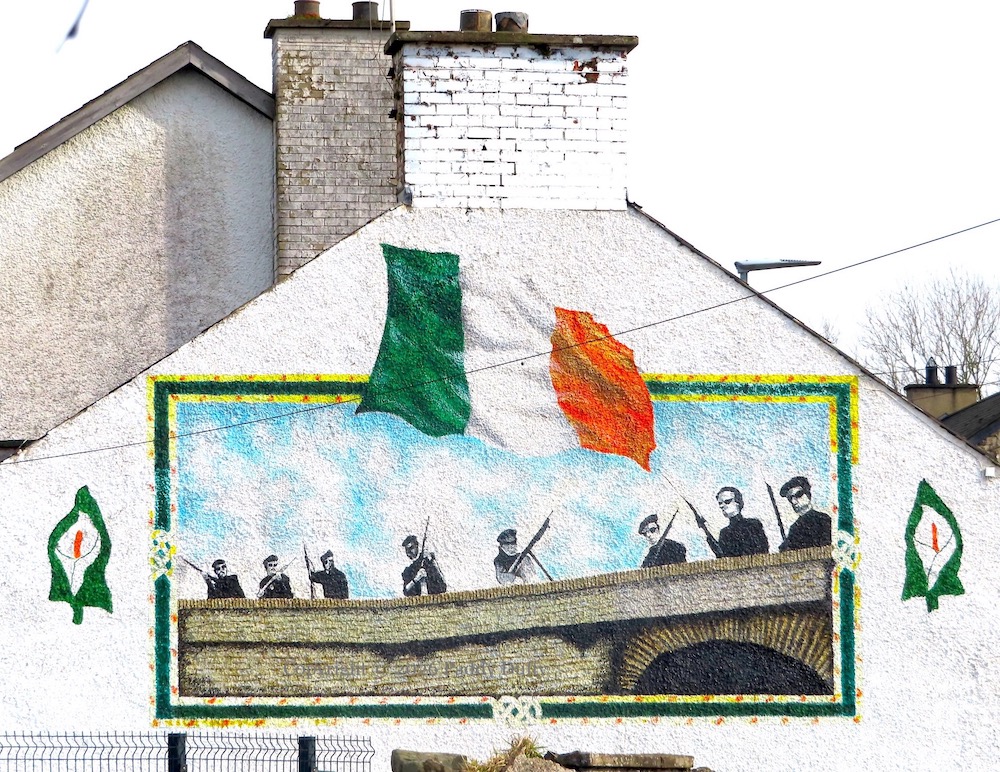
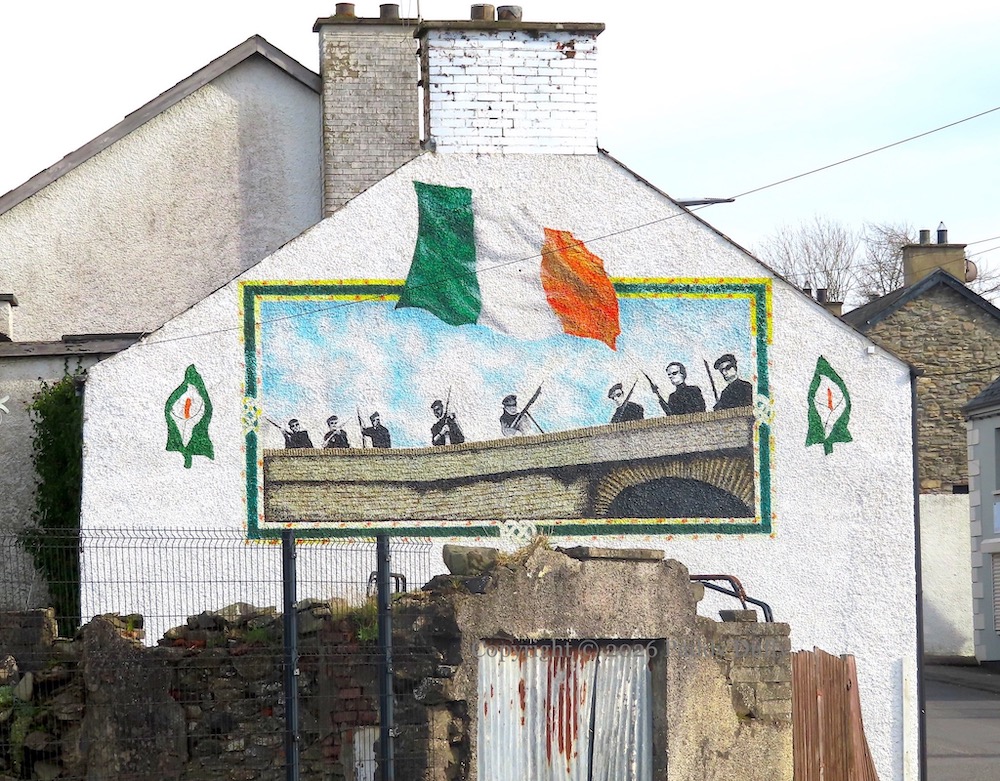
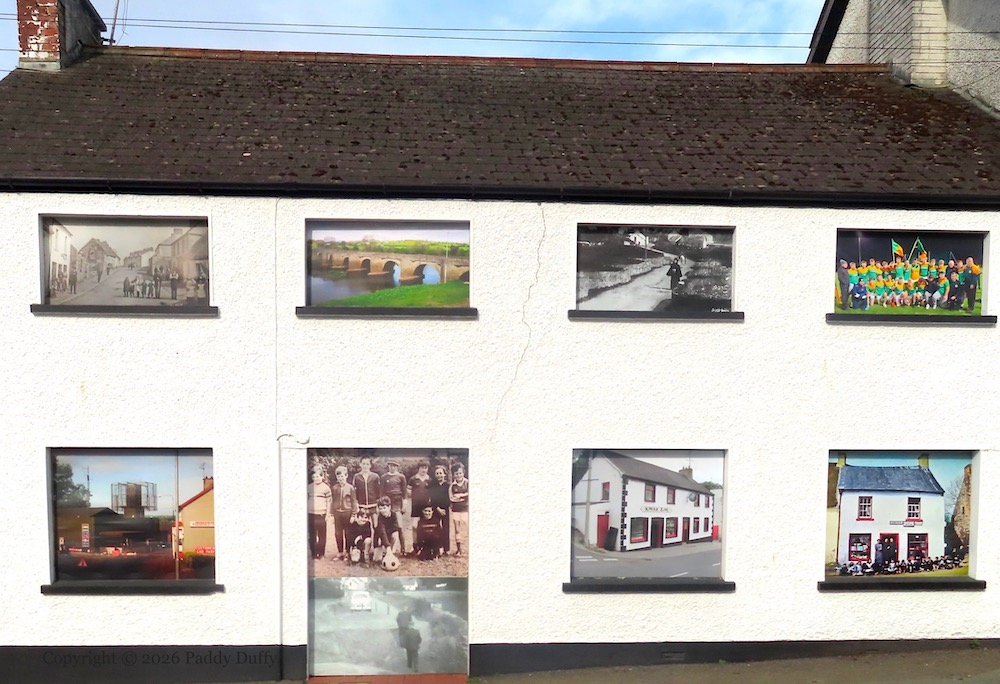
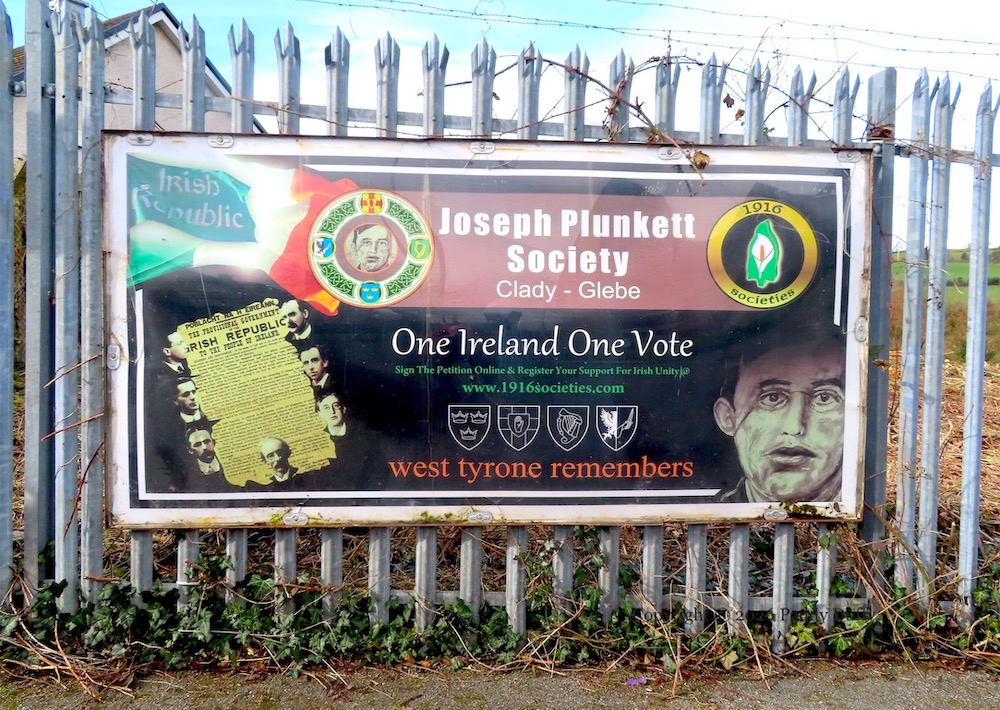
Above is a recent (2025-06) mural painted in Clady of IRA volunteers c. 1971 defending the bridge a stone’s throw outside the town, to prevent it from being blown up by the British Army. A history of the bridge, and the photograph which the mural reproduces, can be found at The Pensive Quill. The work of painting the mural and refreshing the window-boards of the building has been undertaken by the Joseph Plunkett 1916 Society Clady/Grebe (Fb).
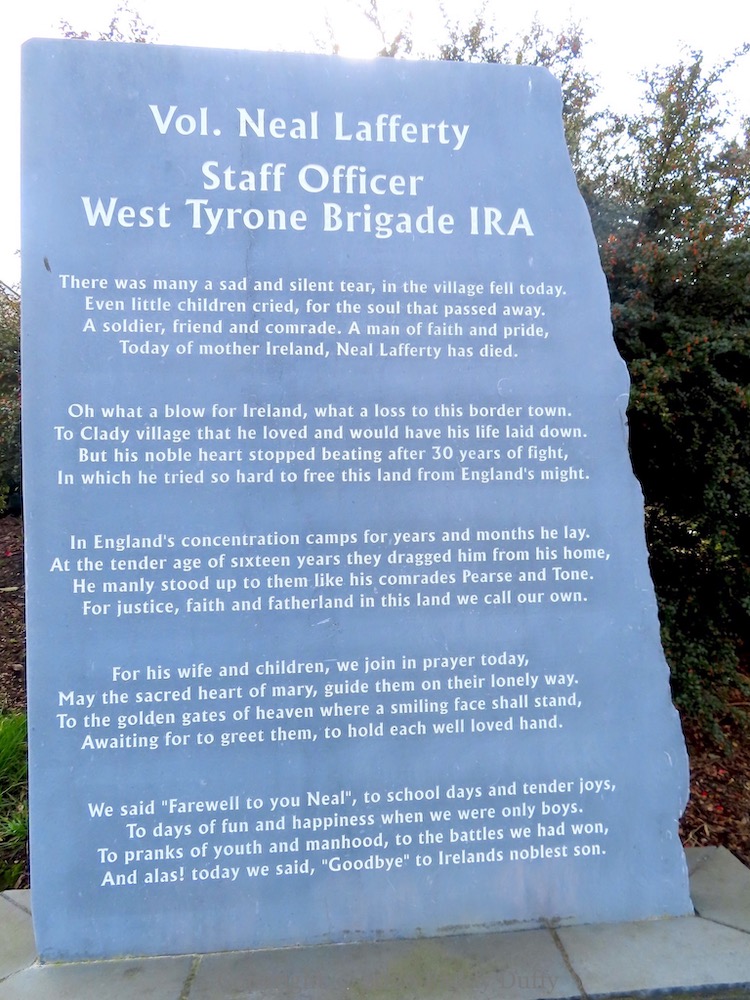
The two monuments, to volunteers generally and Neal Lafferty (d. 1975) specifically (Fb), stand together at the junction with Cluney Gardens. There is also a memorial to James McPhelimy (d. 1988) on the other side of Urney Road, and one to Jim McGann (d. 1973) on the bridge.
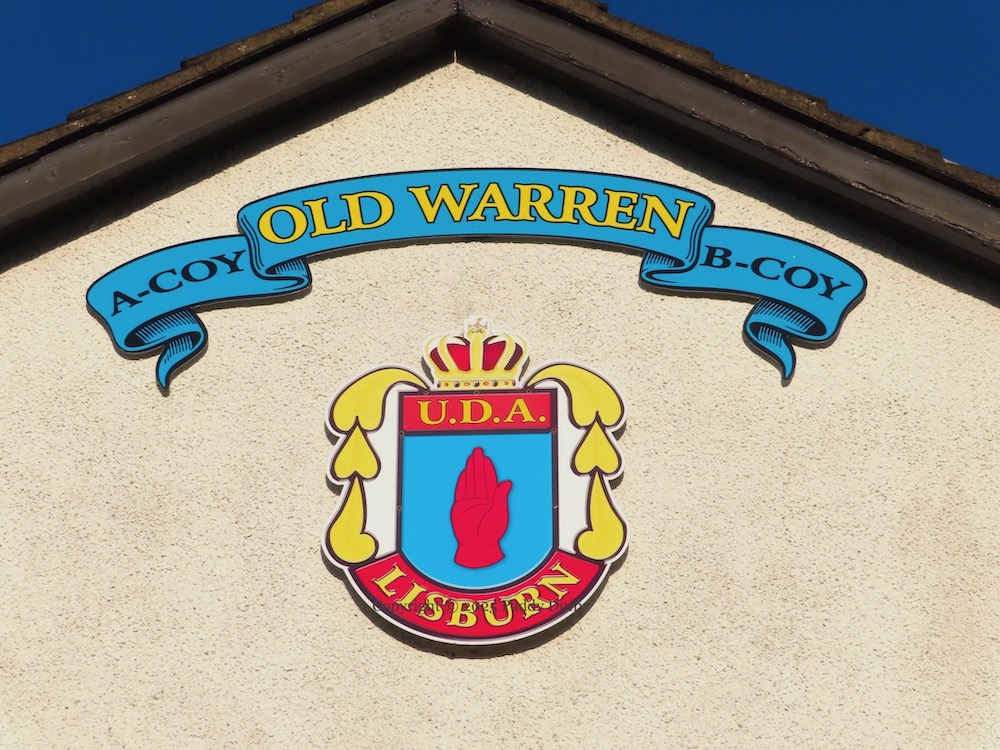
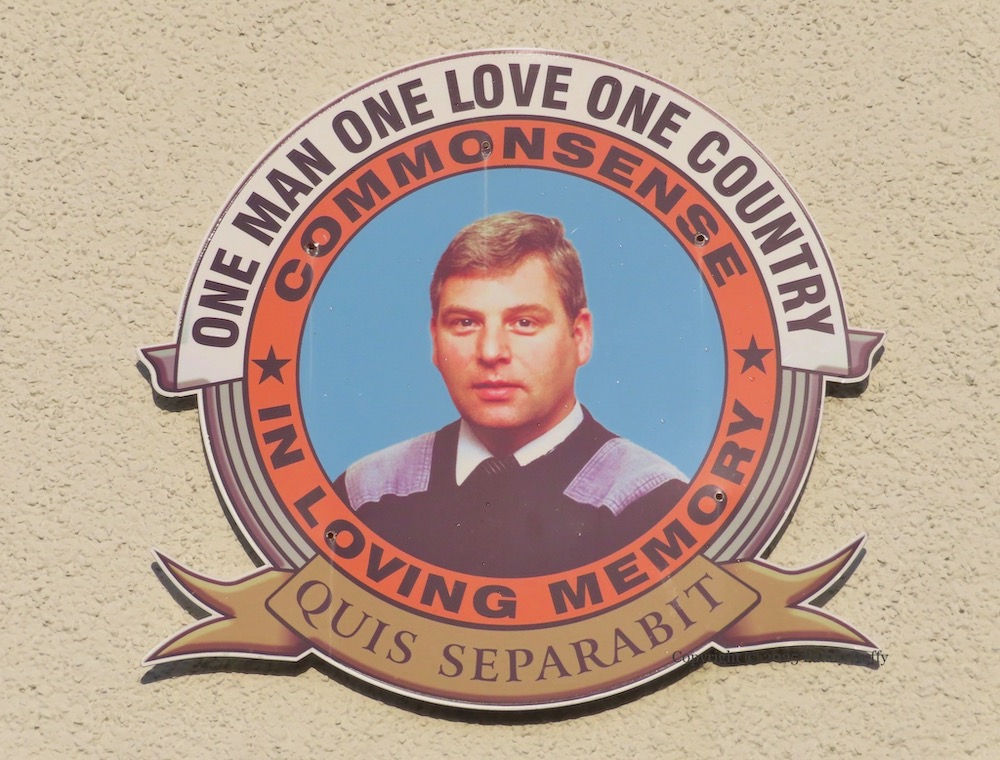
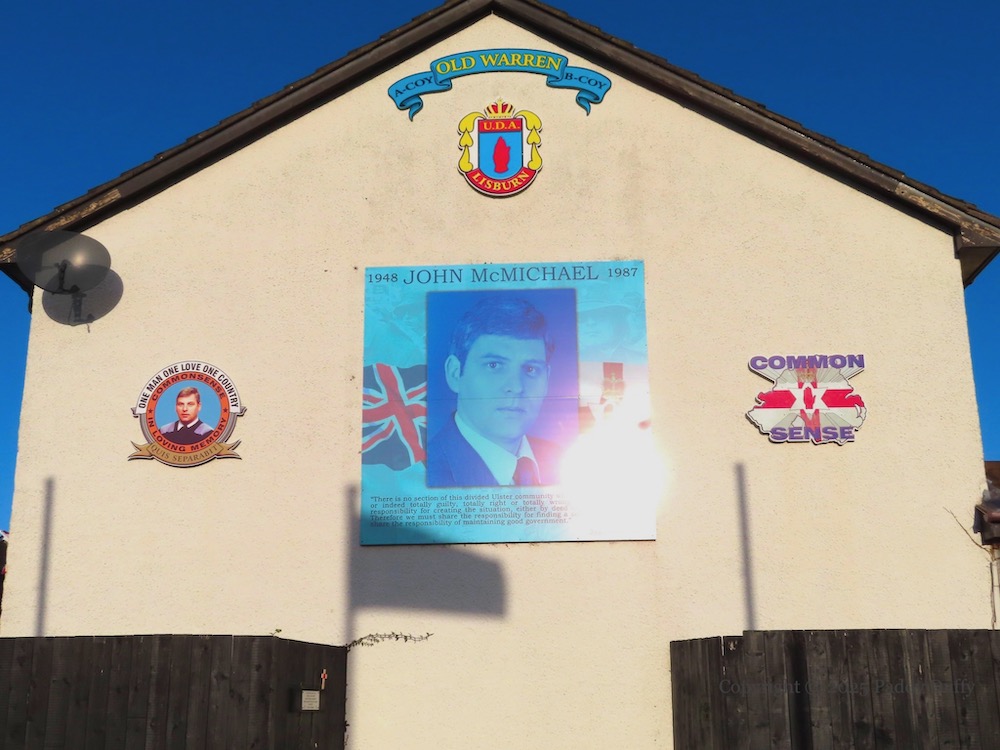
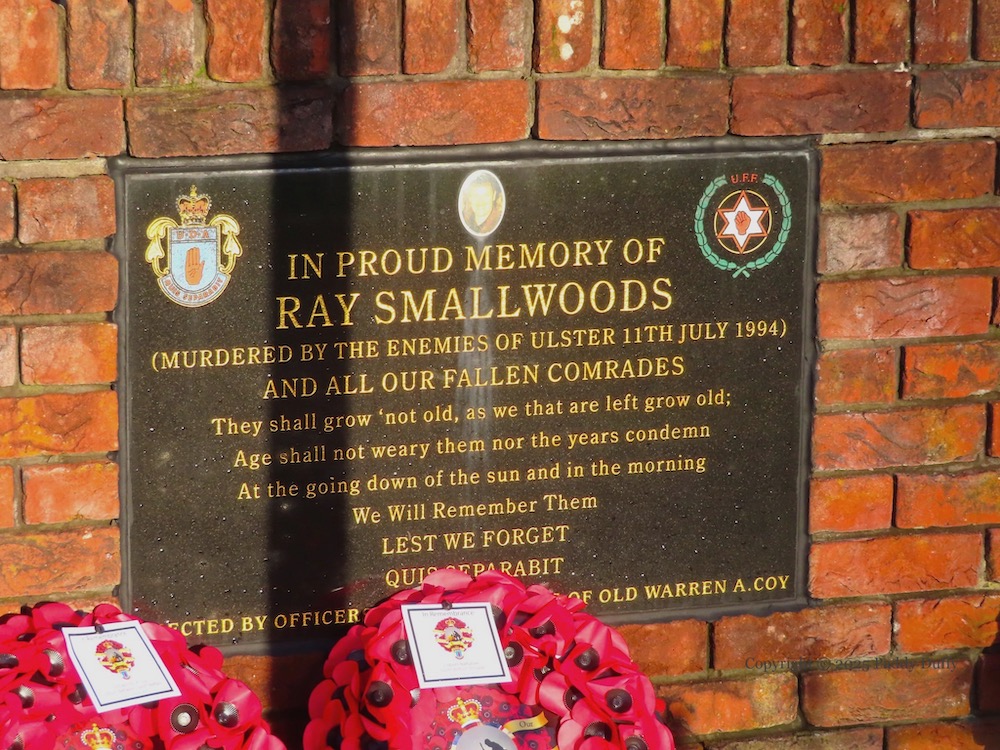
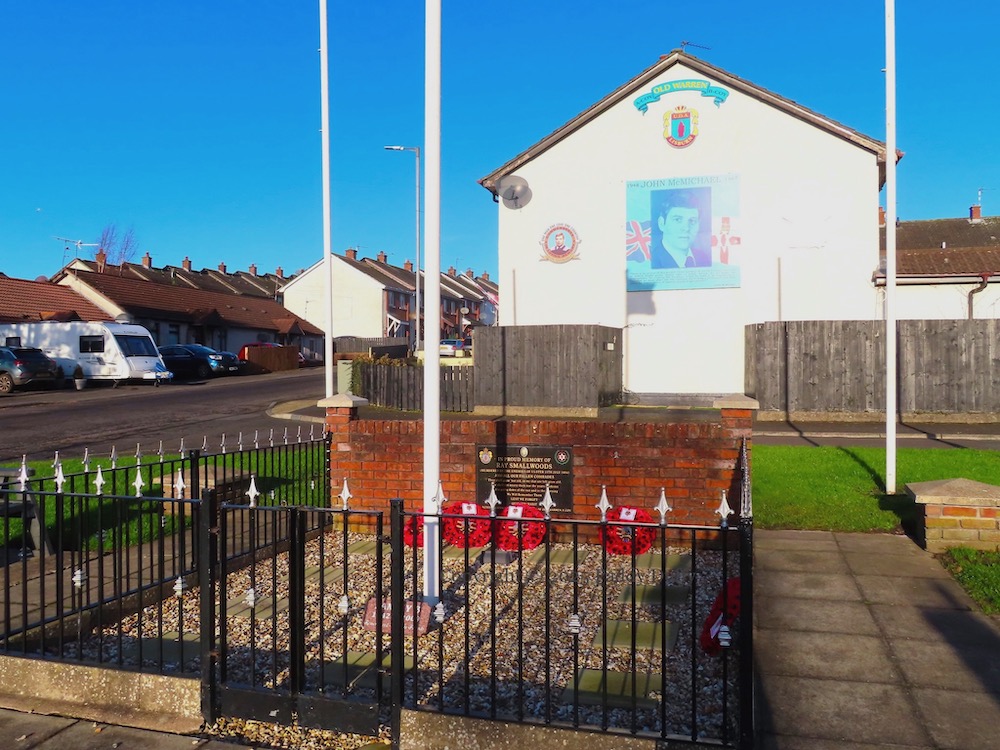
This entry updates 2023’s John McMichael, with close-ups of the smaller boards, in the apex and to either side on the main board, as well as of the stone to Ray Smallwoods, which reads, “In proud memory of Ray Smallwoods (murdered by the enemies of Ulster 11th July 1994) and all our fallen comrades. [For The Fallen] Erected by officers and volunteers of Old Warren A Coy.” Smallwoods was killed by the IRA in the garden of his home in Donard Drive, Lisburn (WP).
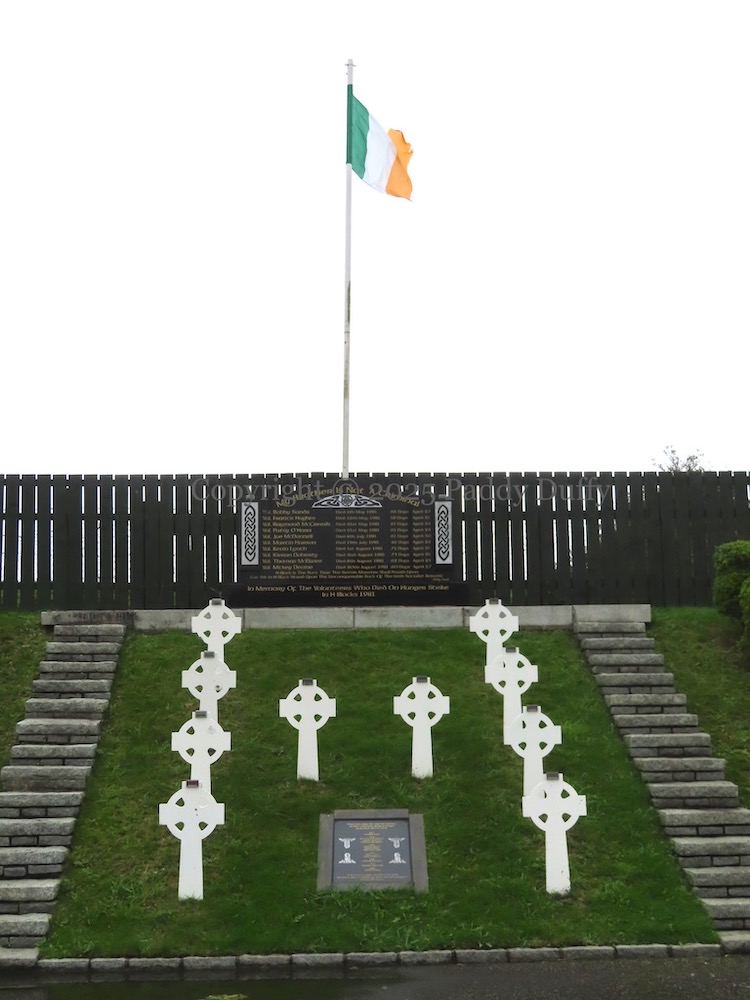
The brothers in question are Raymond and Brian McCreesh, from Camlough, Co Armagh. Raymond is third in the list of the ten deceased 1981 hunger strikers on the large stone at the top of the slope: “In memory of the volunteers who died on hunger strike in H-Blocks 1981.” The quote along the bottom reads, “H-Block is rock that the British monster shall perish upon for we in H-Block stand upon the unconquerable rock of the Irish socialist republic – Bobby Sands”; the source of the quote in unknown.
The lower stone reads “These men made the supreme sacrifice for their country by dying on hunger strike from 1917 to 1976: 1917 Thomas Ashe; 1920 Michael Fitzgerald, Joseph Murphy, Terence McSwiney; 1923 Joseph Whitty, Denis Barry, Andy Sullivan; 1940 Tony Darcy, Sean McNeela; 1946 Sean McCaughey; 1974 Michael Gaughan; 1976 Frank Stagg. “It is not those who can inflict the most but those that can suffer the most who will conquer” – Terence McSwiney.”
The final image is a call from “Independent Republicans Armagh [Fb]” to commemorate Dessie Grew and Martin McCaughey, who were riddled with bullets fired by the SAS as they moved weapons near Moy, Co Tyrone, in 1990 (RN | youtube).
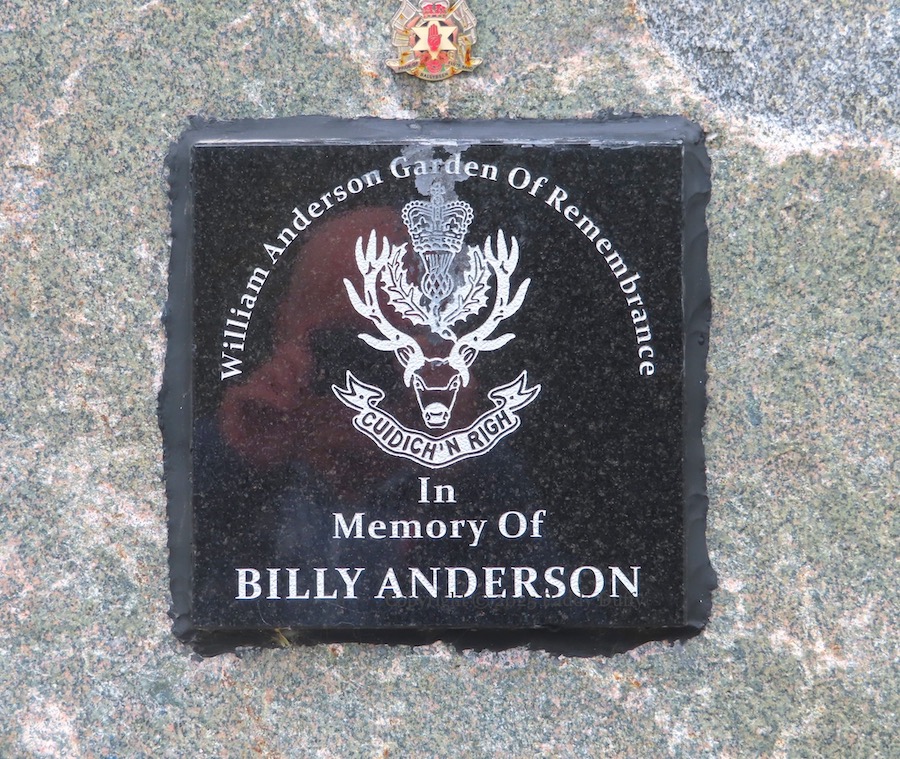
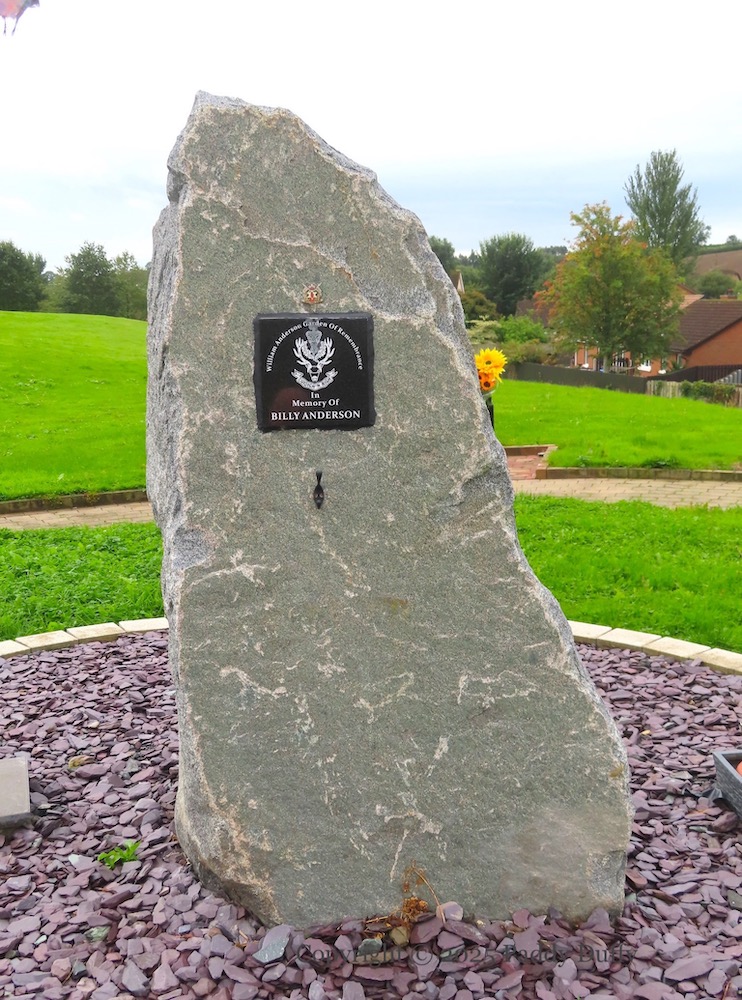
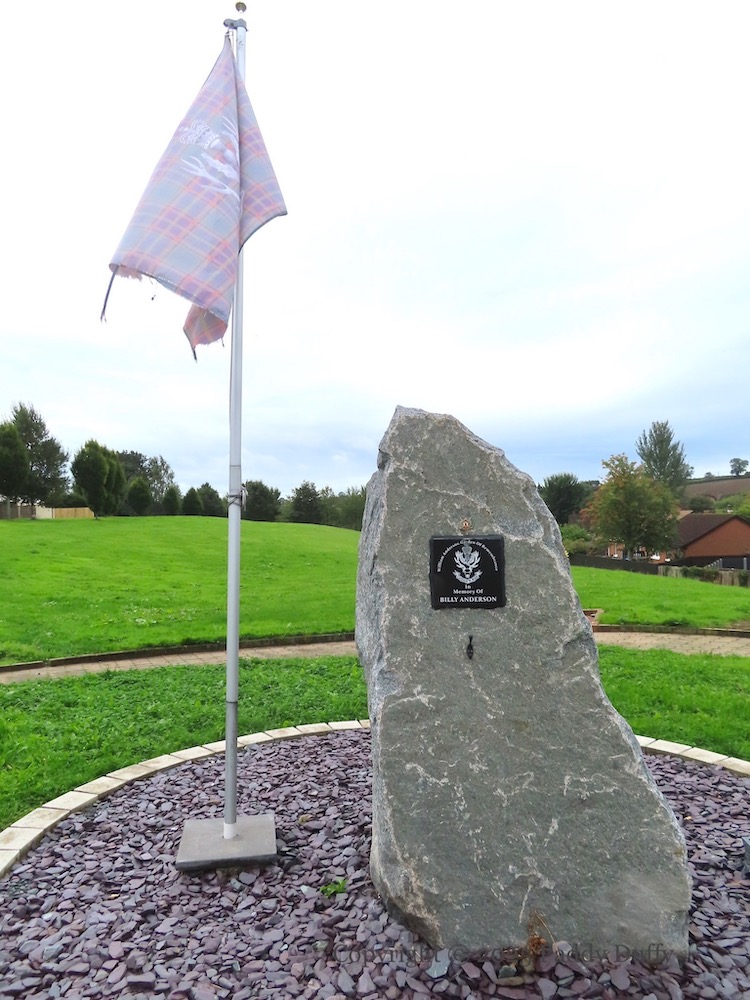
“William Anderson Garden Of Remembrance – In memory of Billy Anderson”. Billy “The Brick” Anderson was a member of the Pride Of Ballybeen flute band (Fb) – there is a small version of the band’s emblem above the black plaque in the image above.
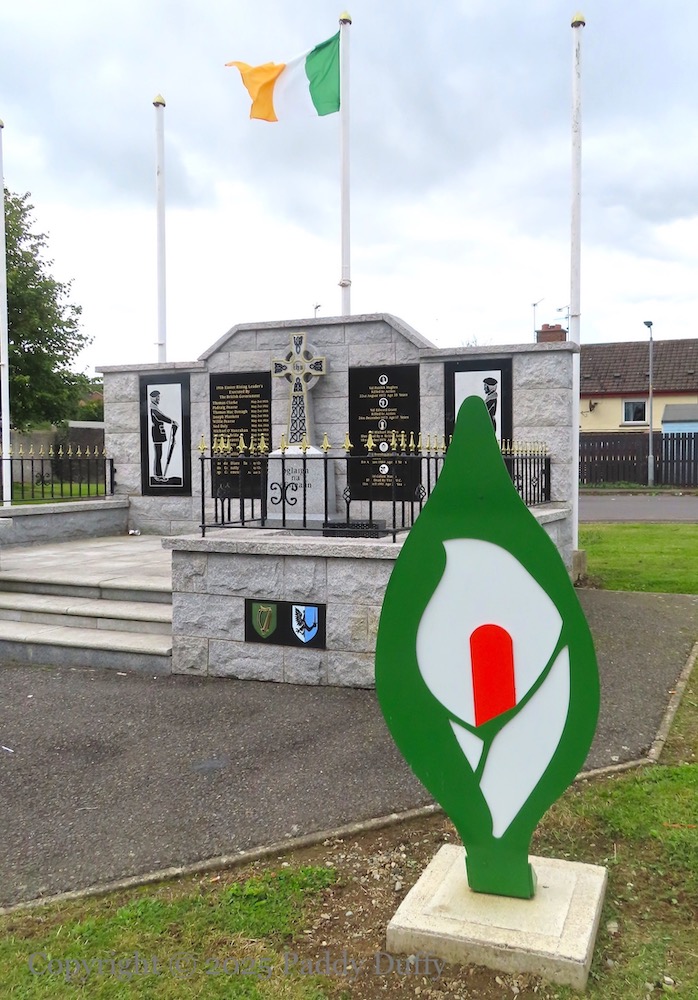
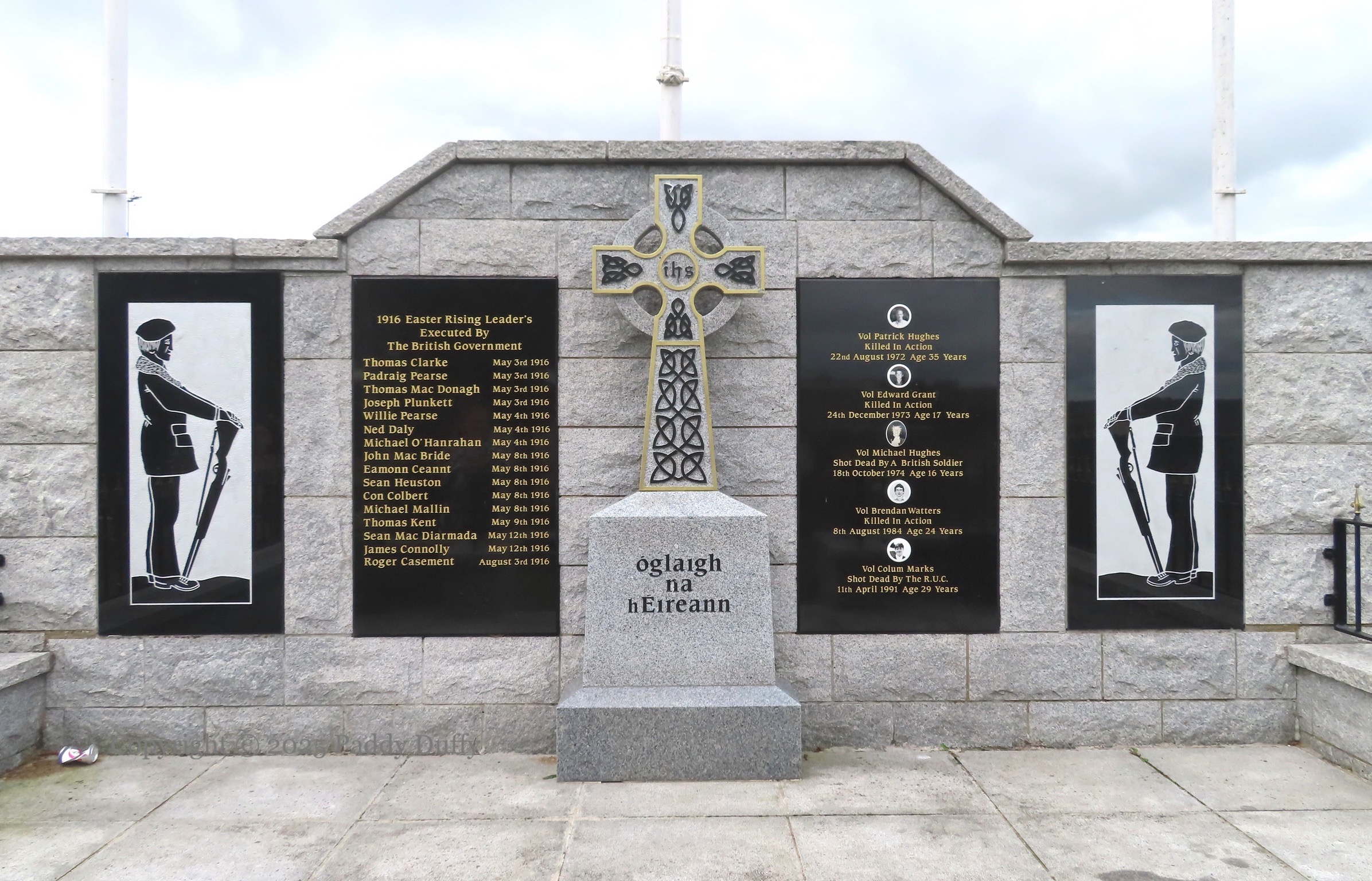
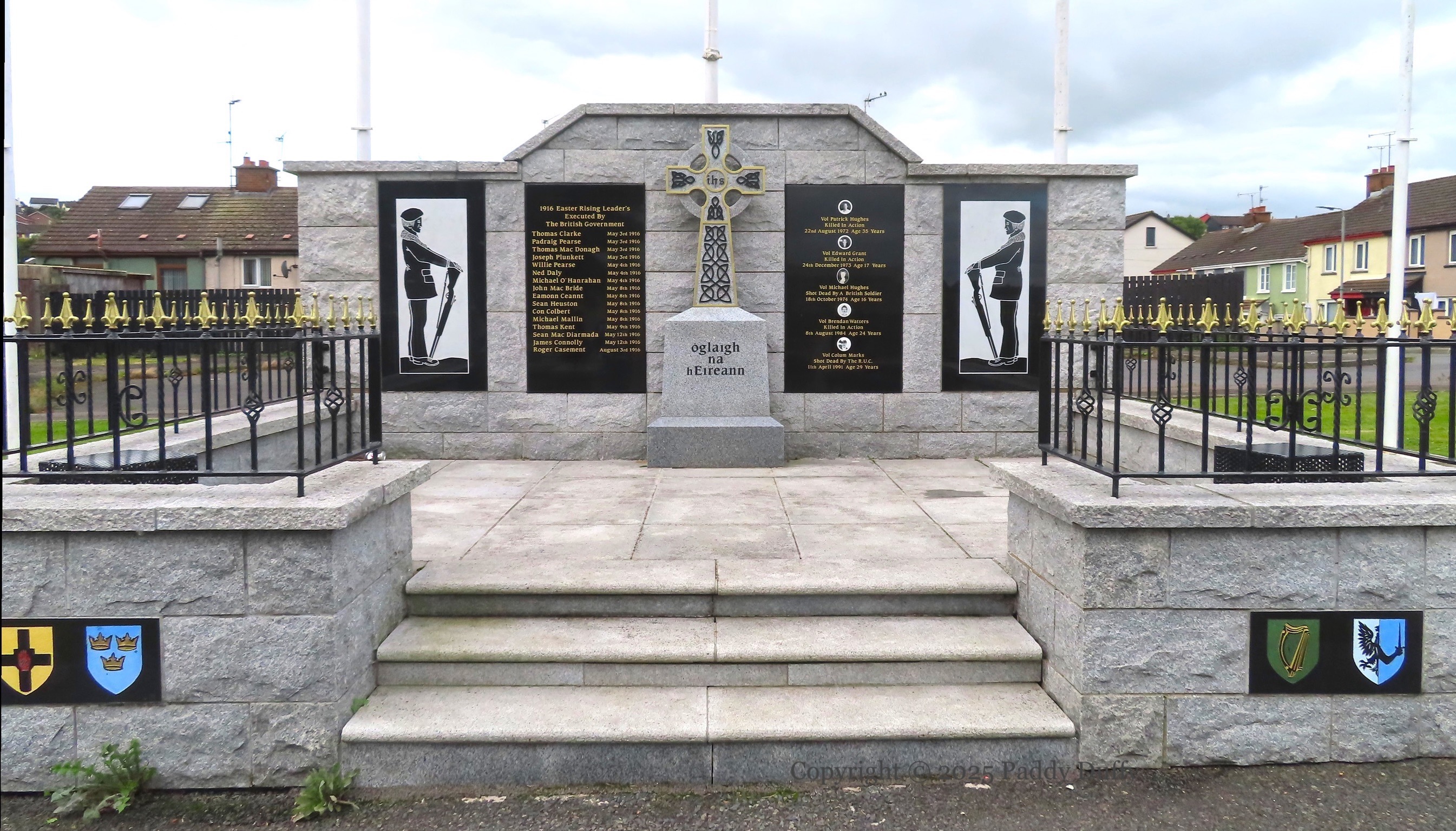
On the left of this Newry memorial is a list of the “1916 Easter Rising Leaders executed by the British government: Thomas Clarke, Padraig Pearse, Thomas Mac Donagh, Joseph Plunkett, Willie Pearse, Ned Daly, Michael O’Hanrahan John Mac Bride, Eamonn Ceannt, Sean Heuston, Con Colbert, Michael Mallin, Thomas Kent, Sean Mac Diarmada, James Connolly, Roger Casement.”
On the right are five members of the local Óglaıgh na hÉıreann: Patrick Hughes, Edward Grant, Michael Hughes, Brendan Watters, Colum Marks.” Michael Hughes/Mıcheál Ó hAodha is commemorated at the western entrance to the estate and the plaque also mentions the death of his father, Patsy, and the death by premature explosion of his friend Eddie Grant in 1973. Brendan Watters likewise died by premature explosion (UPI). There is a memorial stone in Downpatrick at the spot where Colum Marks was killed.
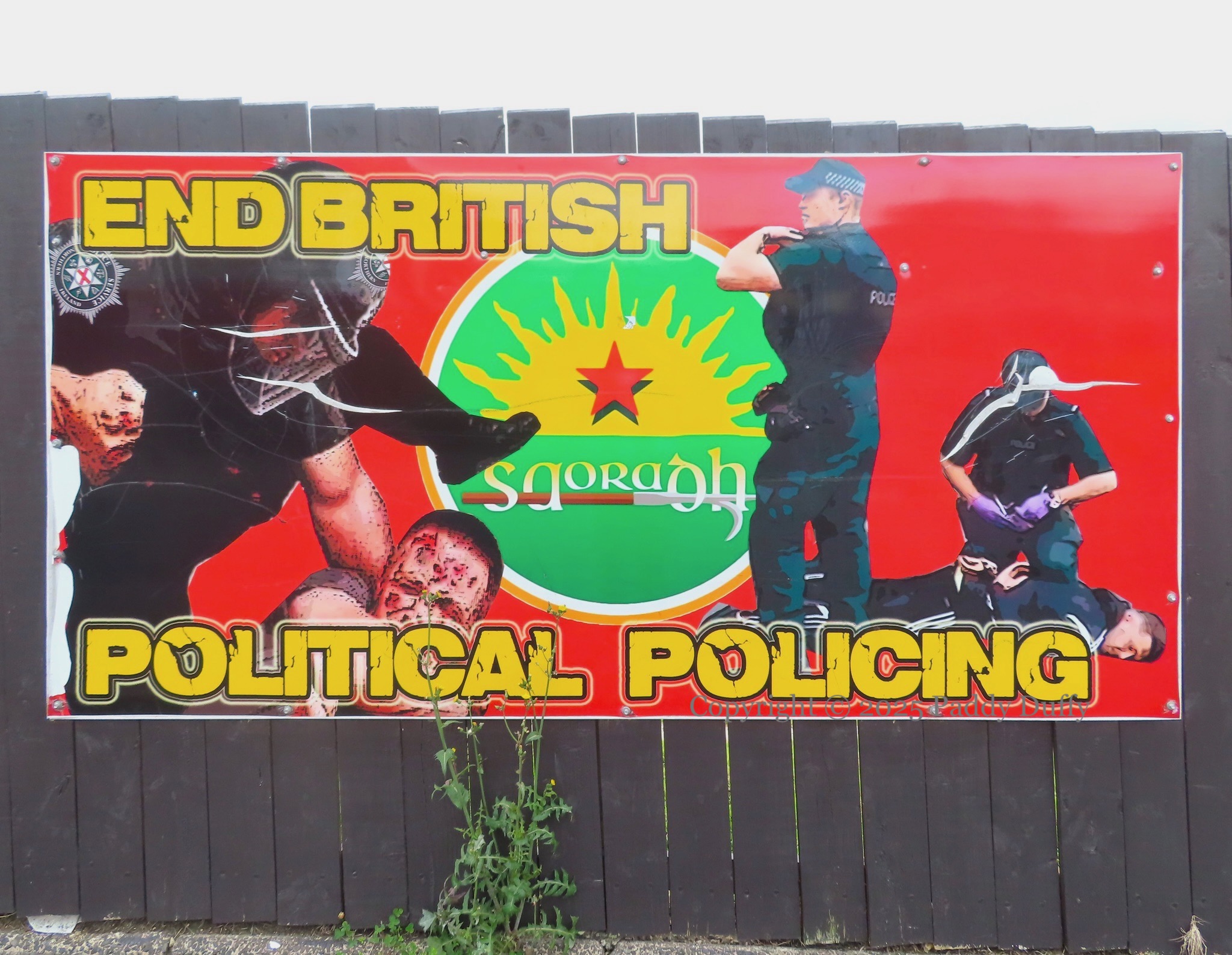
Included last below is a Saoradh (web) board: “End British political policing”.
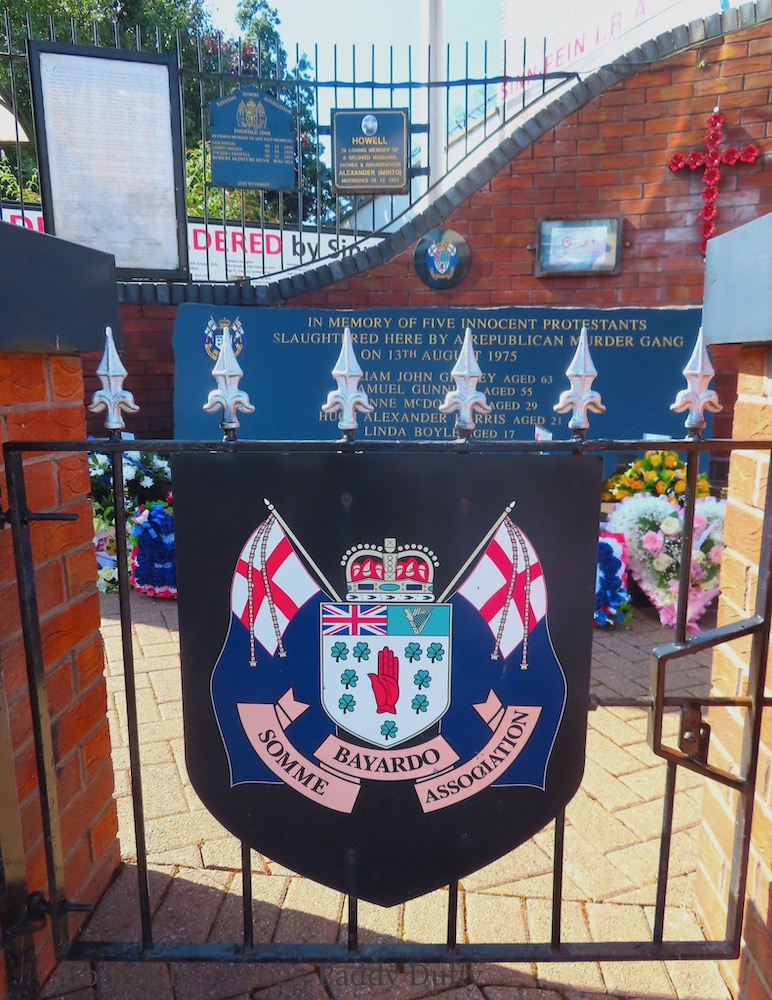
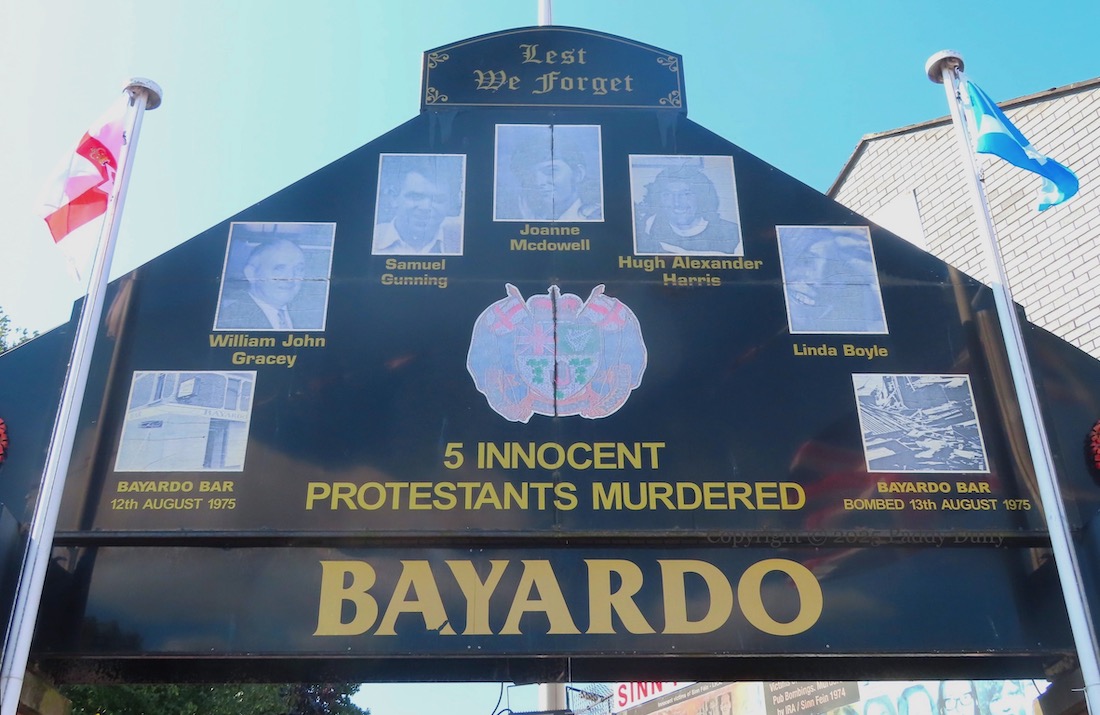
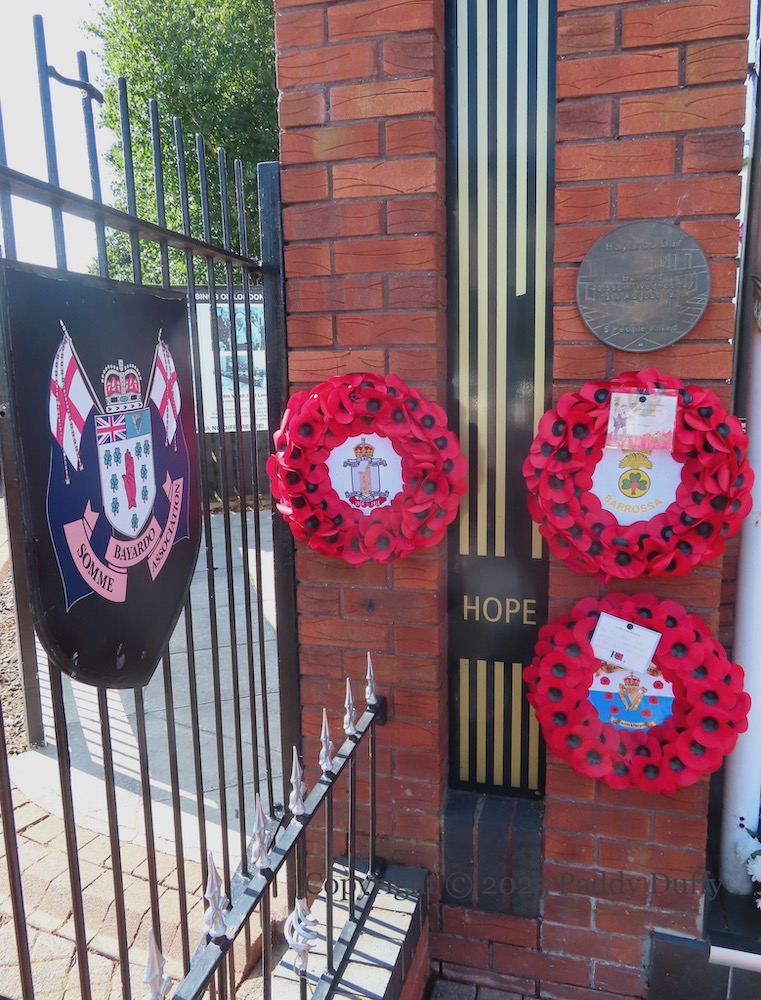
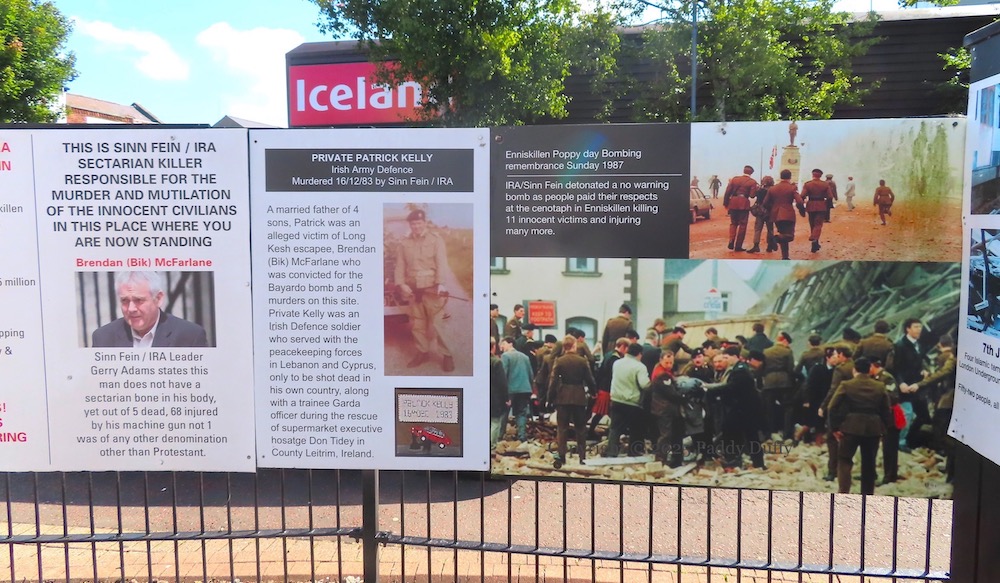
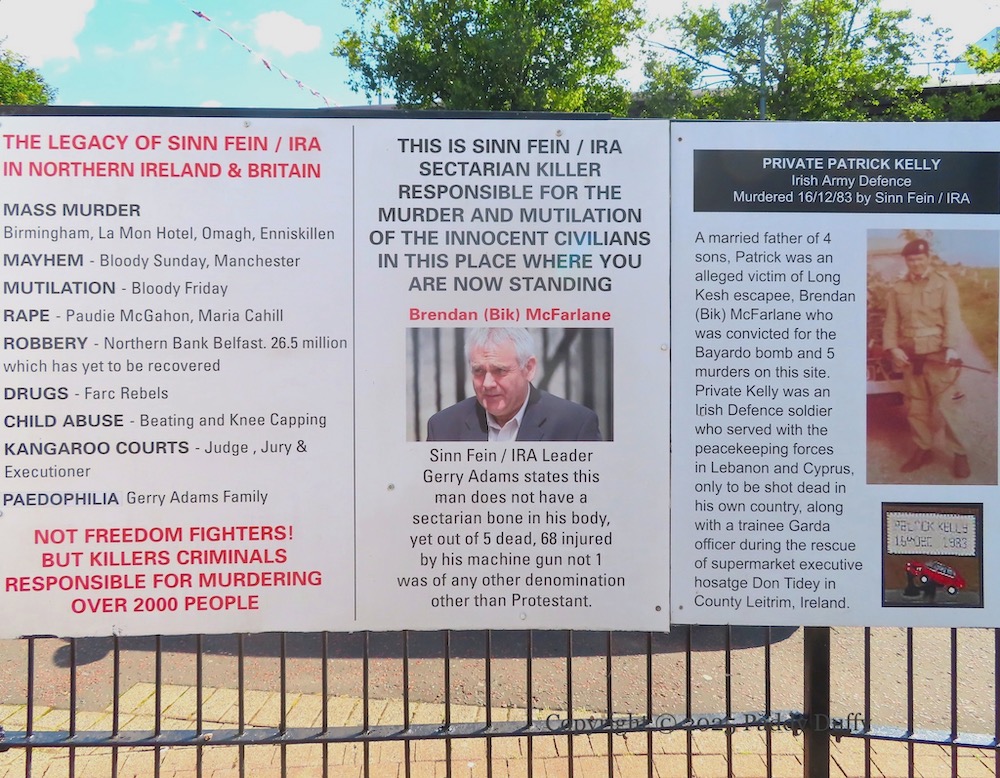
Wreaths are laid at the Bayardo Bar memorial on the Shankill Road on the fiftieth anniversary of the attack, which involved the shooting of two people at the door and the bomb being left at the entrance, which caused the deaths of a further three people: “In memory of five innocent Protestants slaughtered here by a republican murder gang on 13th August 1975. William John Gracey aged 63, Samuel Gunning aged 55, Joanne McDowell aged 29, Hugh Alexander Harris aged 21, Linda Boyle aged 17. Erected by the Bayardo Somme Association. “A forgotten atrocity”.” Fifty other people were injured in the attack.
Here is an opinion piece in the BelTel claiming that “republican communities … have been far more active not only in memorialising violent events impacting upon them, but also campaigning for the truth about those actions … the lack of balance in how the past is being investigated here has created a one-track, green-tinted narrative”.
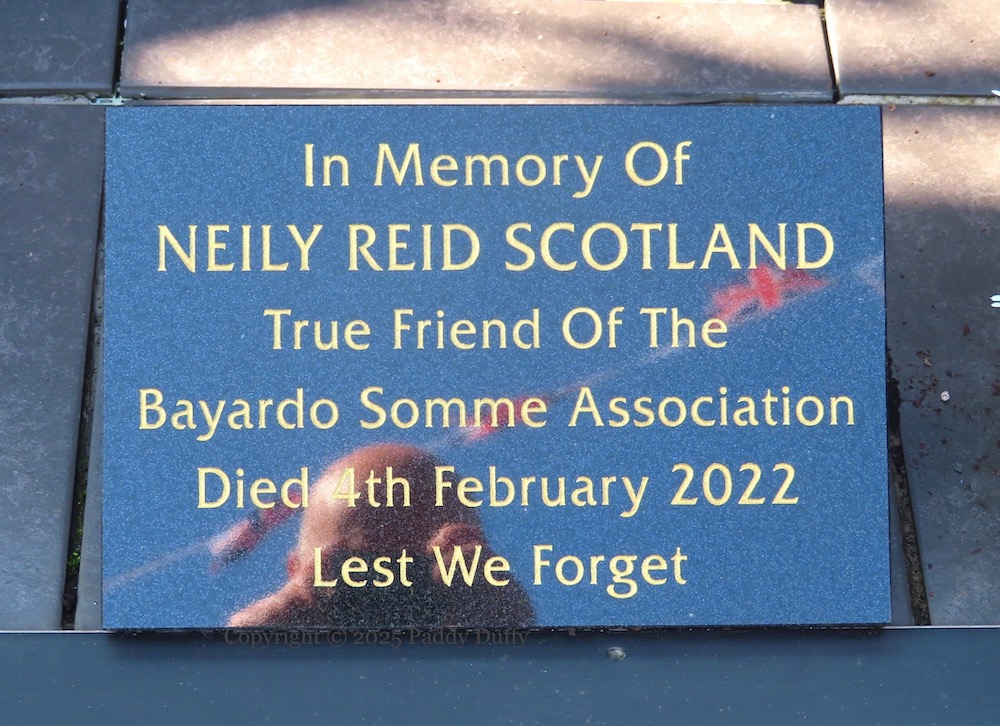
See also: the memorial in 2023. Included here are close-ups of two recent plaques, one “In memory of Neily Reid Scotland, true friend of the Bayardo Somme Association, died 4th February 2022. Lest we forget.” and the other “In memory of Billy Boyce, loyal friend of the Bayardo Somme, died 19-12-2018. Lest we forget.”
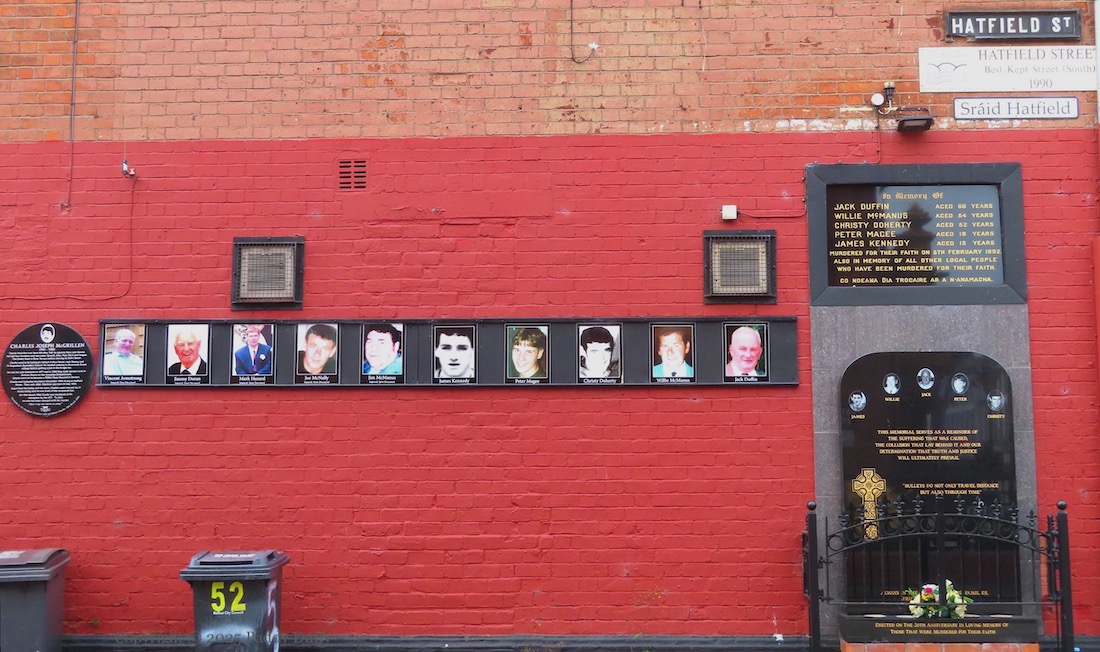
“Bullets do not only travel distance, but also through time.” Five people – Jack Duffin, Willie McManus, Christy Doherty, Peter Magee, and James Kennedy – were shot dead by the UDA in Graham’s betting parlour in February 1992. Their portraits, along with portraits of five others who are “injured, now deceased” – Vincent Armstrong, Jimmy Doran, Mark Hazard, Joe McNally, and Jim McManus – have been (permanently) added to the memorial in Hatfield Street.
The plaque on the far left is to Charles Joseph McGrillen, shot by the UDA/UFF in 1988 at his work in Dunne’s on the Annadale embankment (Sutton). (For a close-up, see the Seosamh Mac Coılle collection.)
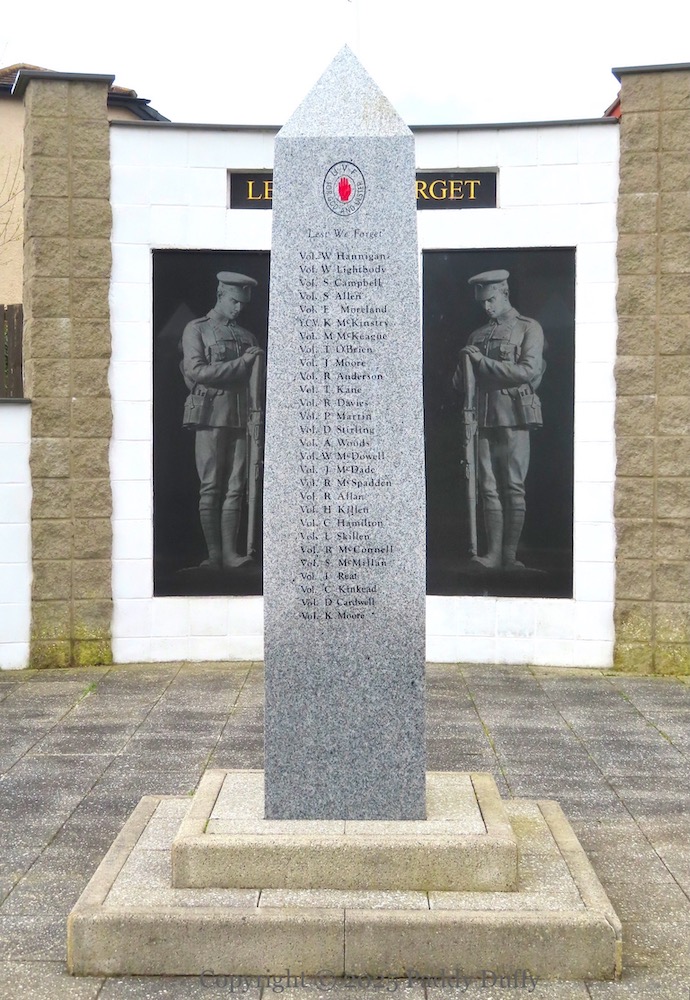
The uniforms of the graveside mourners are from WWI and the image on each side is JP Beadle’s Attack Of The Ulster Division (Royal Irish) at the Battle Of The Somme in 1916, but the names on the pillar (in the image immediately below) are from the modern UVF. Little information about any of those listed is available on-line, but ten of those listed were also on a plaque in Abbot Crescent, which was similarly in front of a 36th Division mural.
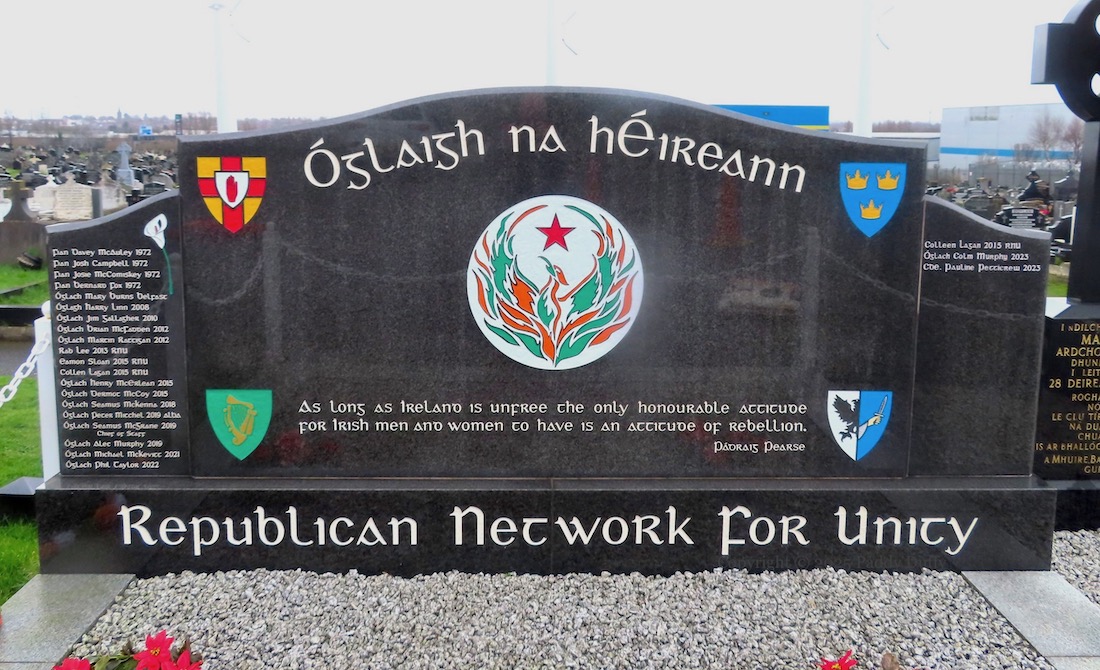
“”As long as Ireland is unfree the only honourable attitude for Irish men and women is an attitude of rebellion” – Pádraıg Pearse”. Pearse wrote the lines in July 1913, in an essay for Irish Freedom (Cartlann), though with “revolt” rather than “rebellion”.
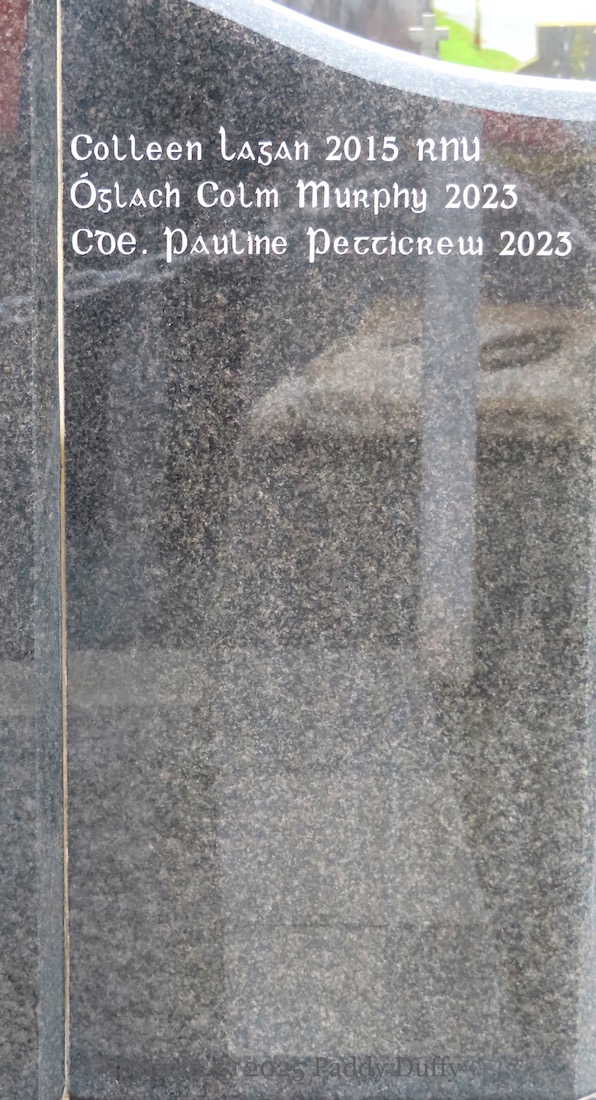
The stone features the phoenix and the lily, and the crests of the four provinces of Ireland. It was unveiled in 2023 and an image of it was used in an RNU board on the Falls Road.
Among the volunteers listed are the four Ardoyne Fıanna who died in 1972 (commemorated in Ardoyne) and Michael McKevitt, founder and (alleged) chief of staff of the RIRA/Óglaıgh Na hÉıreann (WP) who died in 2021.
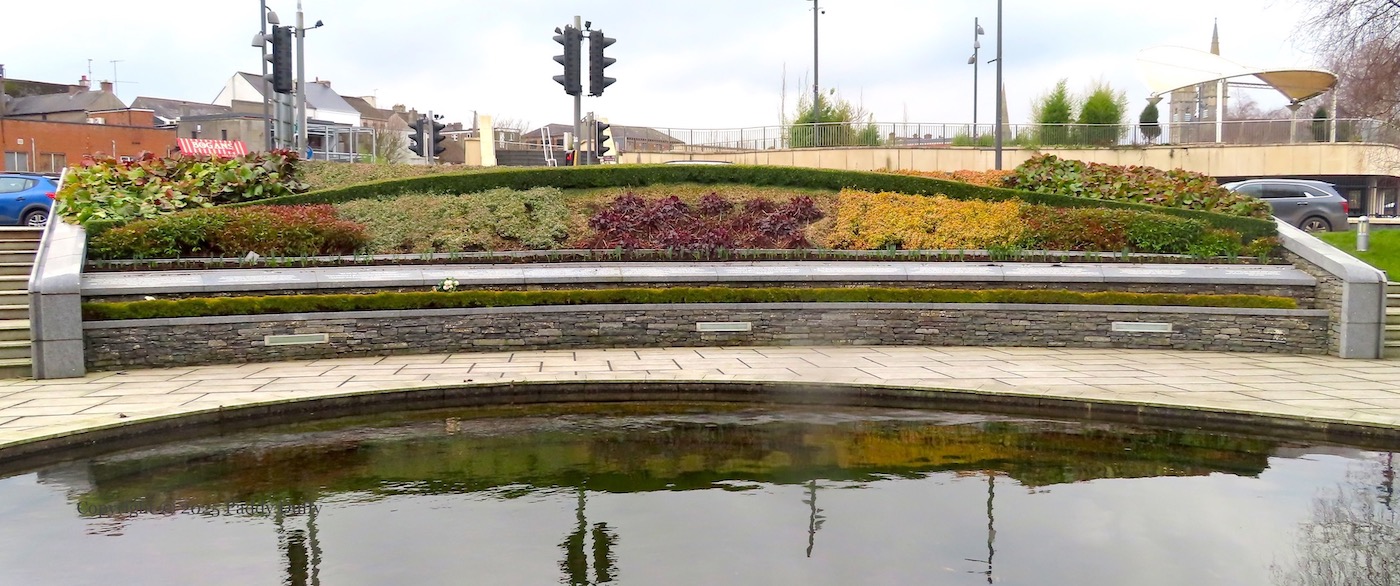
This memorial to the victims of the Omagh bombing is in a green-space along the Strule river about 300 metres (WP) from the spot where an RIRA car-bomb exploded on the afternoon of 15th of August 1998, killing twenty-nine people and injuring more than 200 others.
The garden was opened on the tenth anniversary, in 2008 (replacing a smaller obelisk). It includes 31 mirrors on poles (including a set of unborn twins in the number of deceased) which are part of a reflective system that sends sunlight towards a crystal pillar in Market Street that marks that spot of the bomb (Troubles Archive).
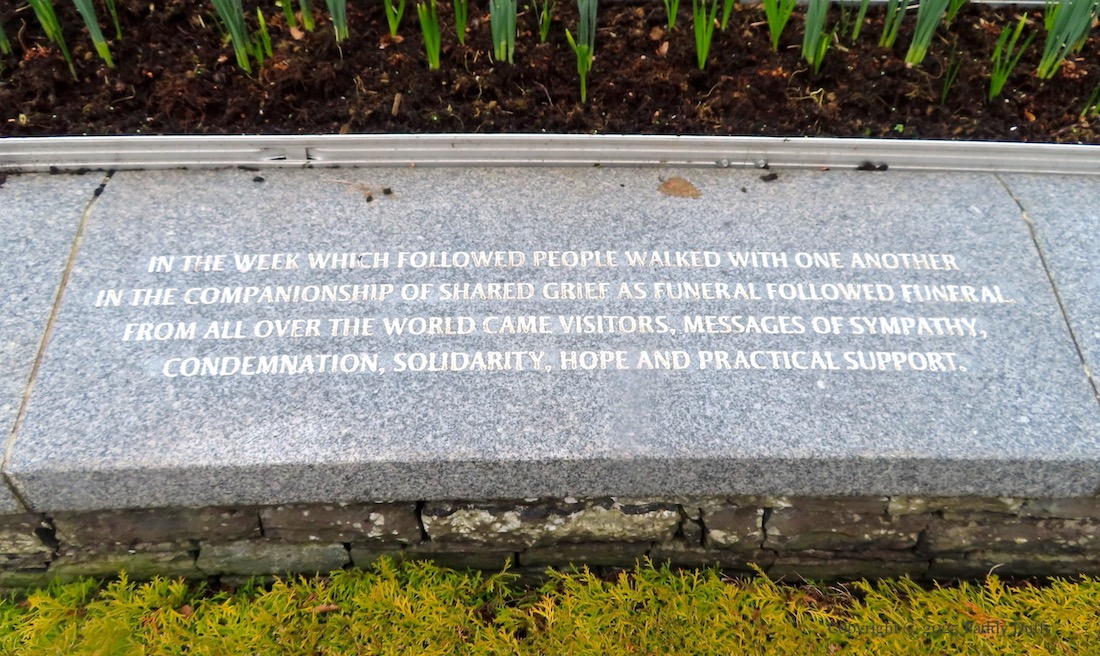
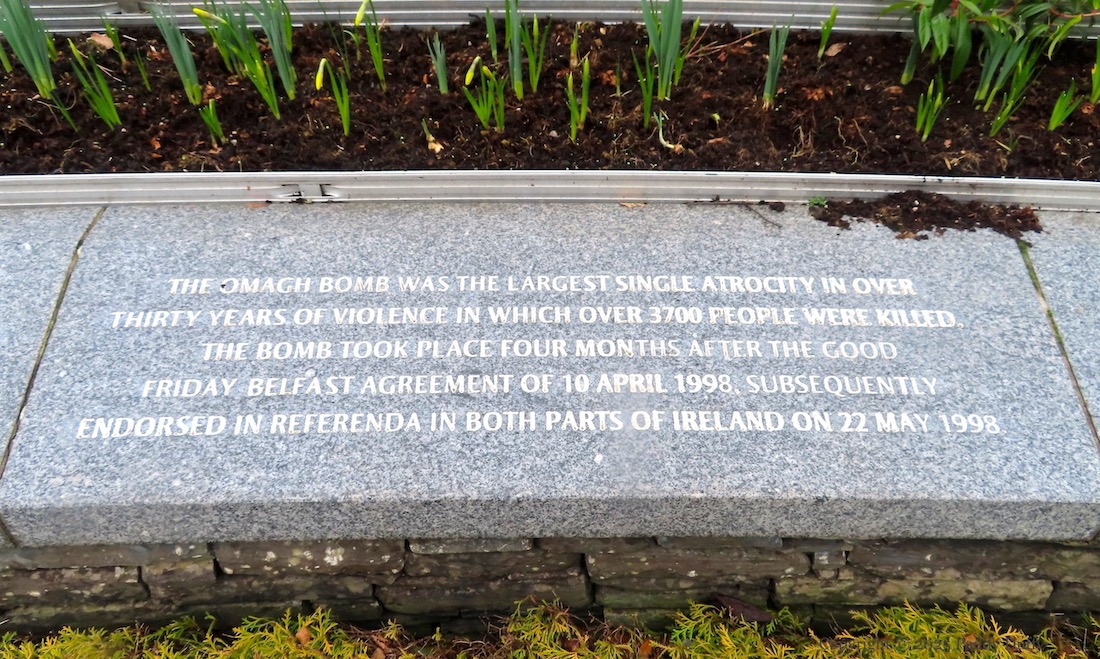
There are also a series of engraved stones on an arc around the pool that tell the story of the day and its aftermath, as well as naming the dead:
“Weather wise it was one of the best days that summer had seen. Ordinary people were doing ordinary things on an ordinary day. In one fateful moment all this was changed forever. Time stood still, futures were obliterated, loves were shattered, hearts were broken. In the carnage, emergency personnel and many ordinary people reached out, helped the injured, gave hope to the dying and held the dead. That evening a great silence descended on the town. In the week which followed the people walked with one another in the companionship or shared grief as funeral followed funeral. From all over the world came visitors, messages of sympathy, condemnation, solidarity, hope and practical support. The Omagh bomb was the largest single atrocity in over thirty years of violence in which over 3700 people were killed. The bomb took place four months after the Good Friday/Belfast Agreement of 10 April 1998, subsequently endorsed in referenda in both parts of Ireland on 22 May 1998. In the years that followed people Omagh and elsewhere sought to rebuild their lives, their families, their community, and to create a new future. Regardless of the past, every new days dawns as a gift laden with its own possibilities, as the morning sun banishes the darkness of night.”
One of the stones reads “Bear in mind these dead/Coınnıgh ı gcuımhne na maırıbh seo/Tened en cuenta a estos muertos – (John Hewitt)”; two of the victims were Spanish.
Drumragh Avenue, Omagh
“Saturday 15 August 1998 at 3.10 PM. To honour and remember the 31 men, women and children who were killed, the hundreds injured and those whose lives were changed forever in the Omagh bomb. ‘The light shines in the darkness and the darkness has not overcome it’ (John 1.5)”
“To honour and remember 31 people murdered and hundreds injured from three nations by a dissident republican terrorist car bomb. (Omagh Support And Self Help Group)”





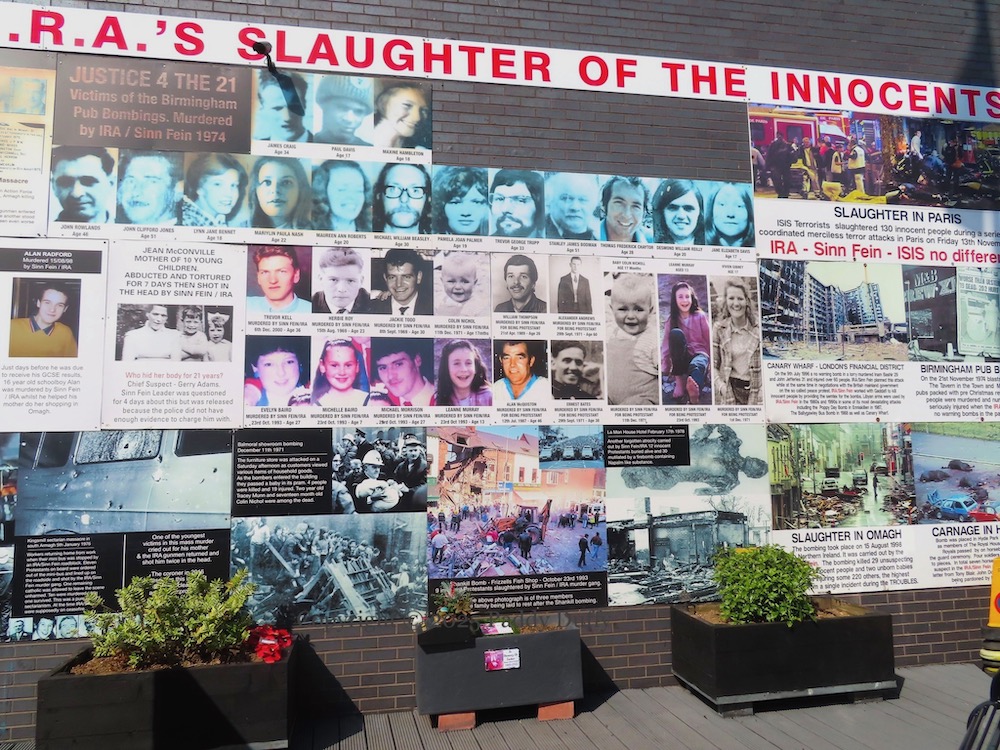
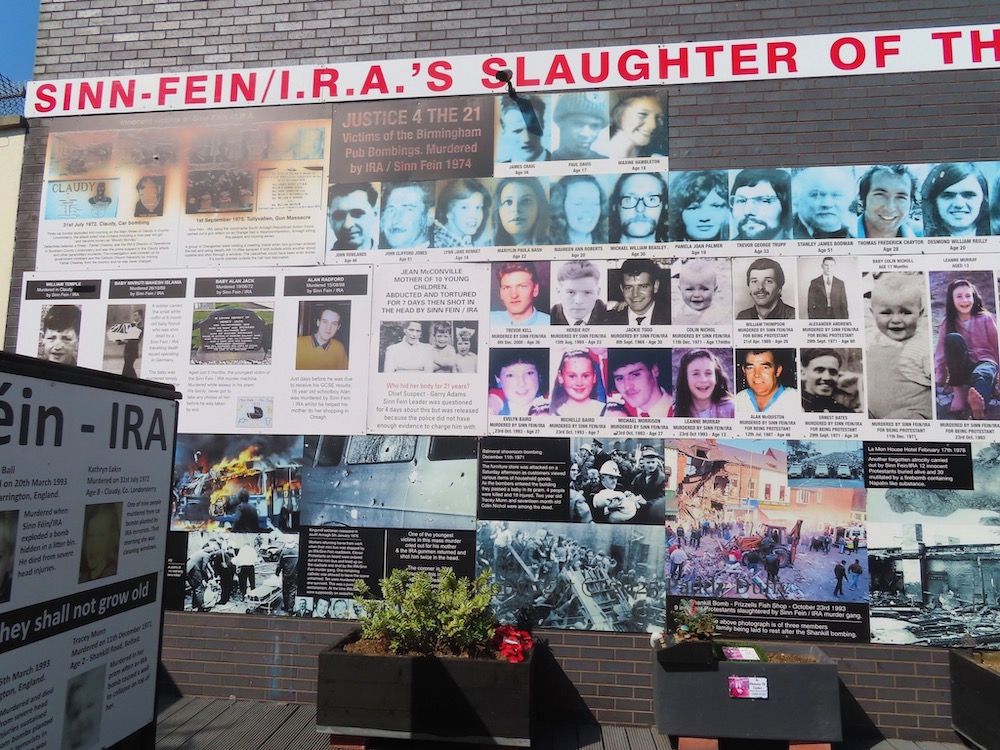
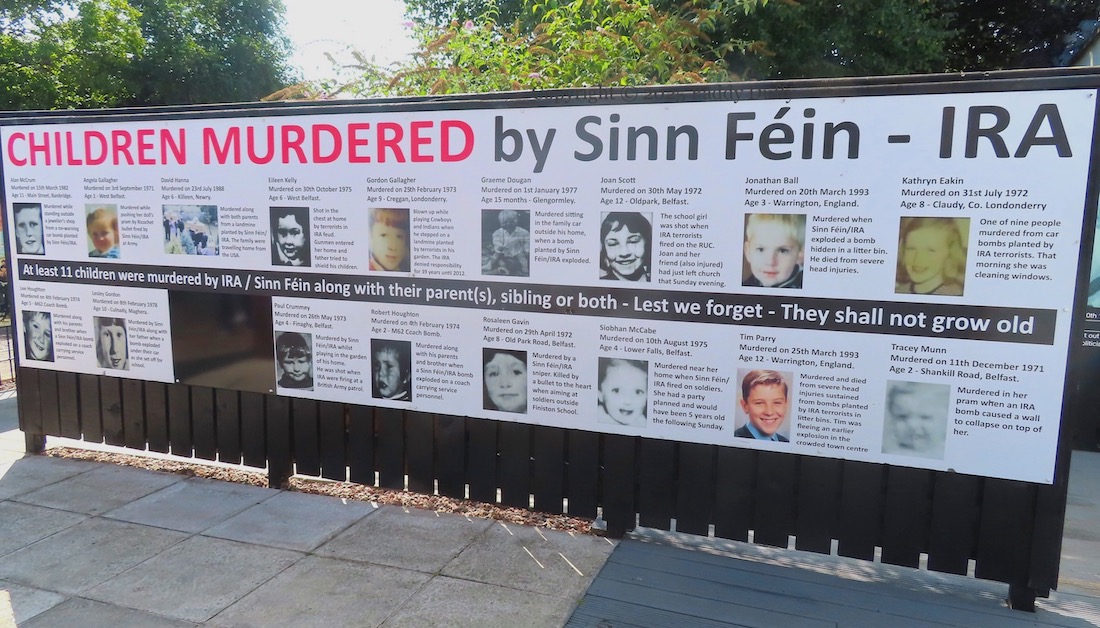
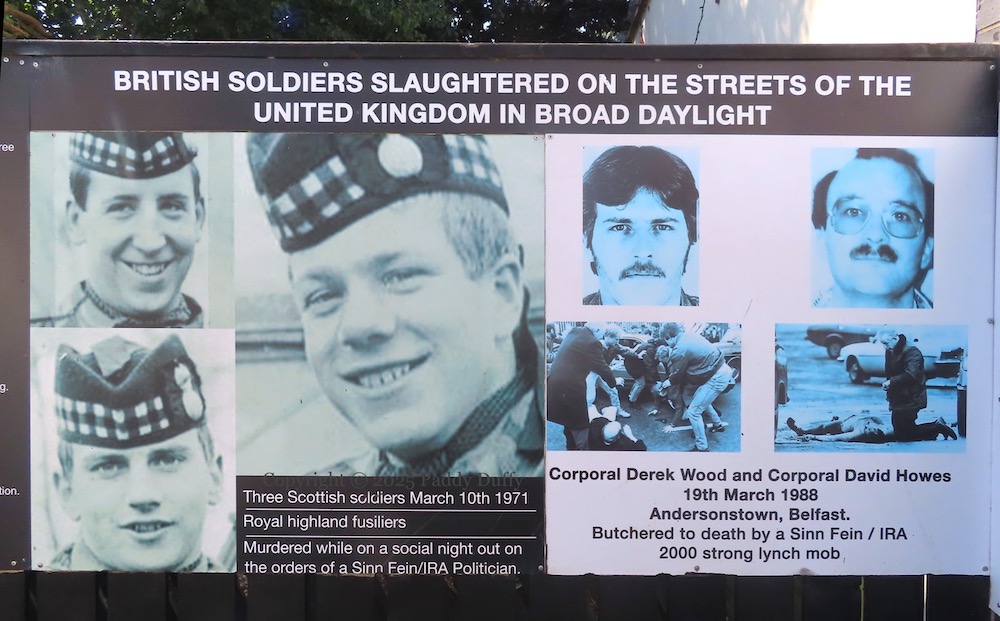















 Paddy Duffy Collection