Old Ulster’s Battle Cry

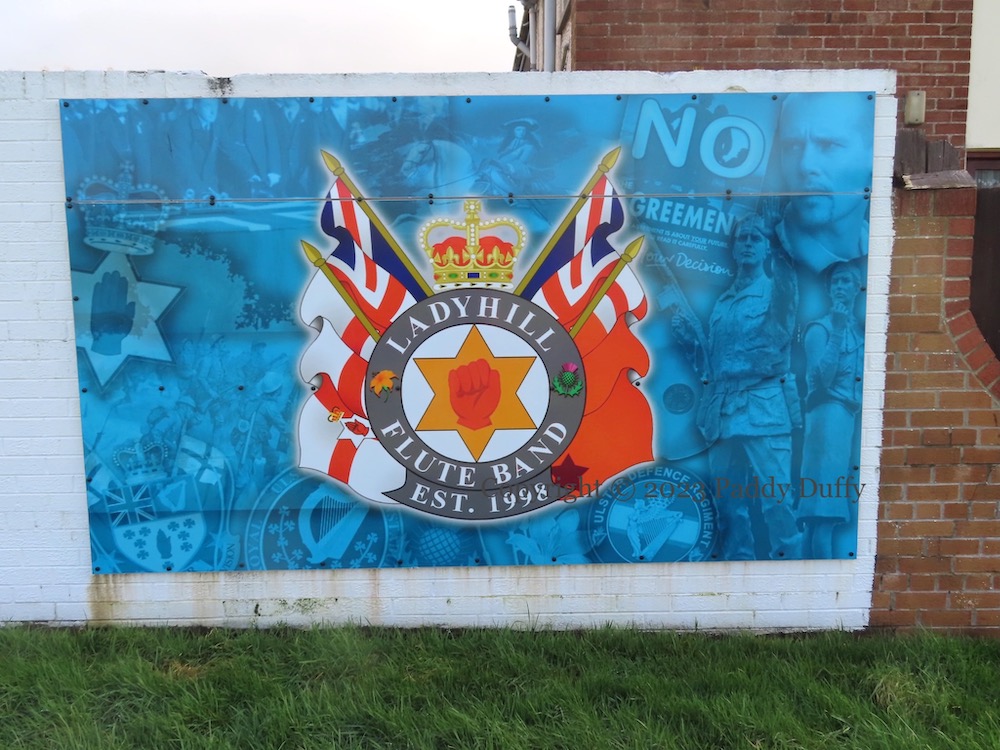
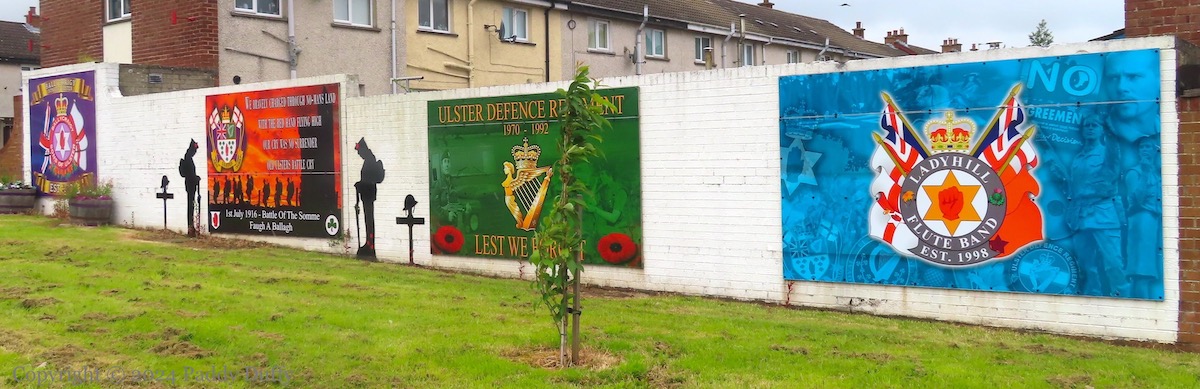
“‘We bravely charged through no-man’s land/With the red hand flying high/Our cry was ‘No surrender’/Old Ulster’s battle cry.’ 1st July 1916 – Battle Of The Somme. Faugh a ballagh.”

“No surrender” was the cry against the forces of James II as they marched on Derry on December 7th, 1688, a moment celebrated by members of the Orange Order, Royal Black Institution, and Apprentice Boys, and from there, possibly shouted on July 1st as the 36th Division, formed from the Ulster Volunteers, attacked Schwaben Redoubt from Thiepval Wood (Irish Times | History Ireland).

The red hand is the emblem of the 36th (Ulster) Division and the shamrock stands for the 16th (Irish) Division, which was not in action on July 1st (the Battle Of Albert) but at the Battle Of Ginchy and Battle Of Guillemont in early September (Long Long Trail). (See also various Messines 1917 murals: Killed Wounded Missing | Comrades In Arms | We Are The dead | Brothers In Arms | Messines 1917

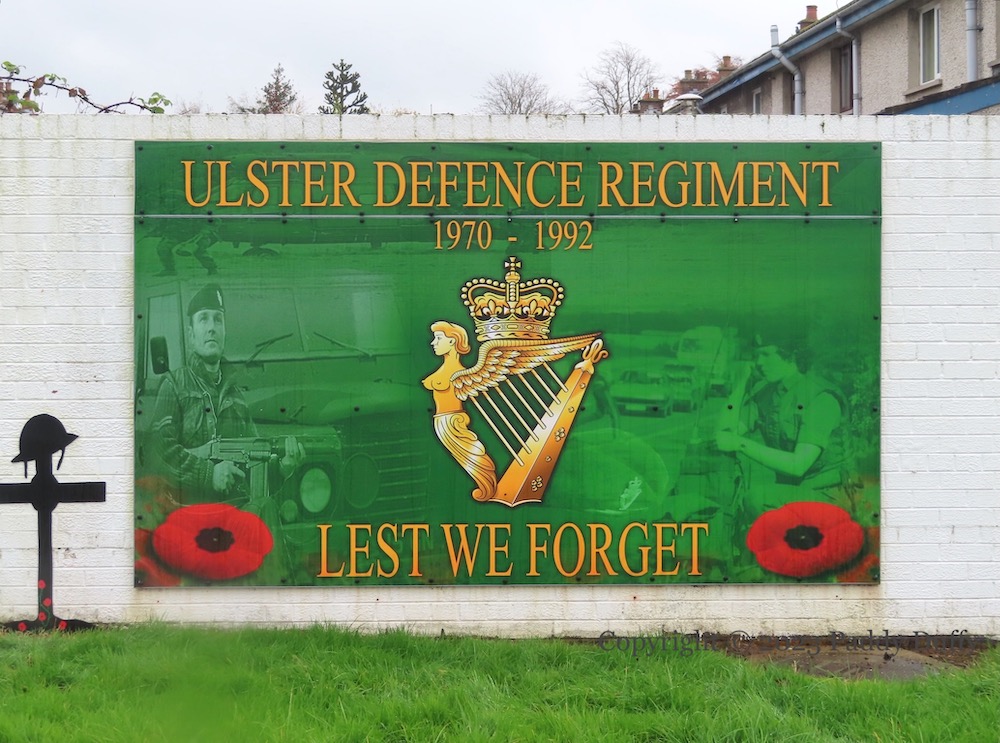
“Faugh a ballagh” is also included; of the regiments who supplied battalions for the 36th Division, only one – the Royal Irish Fusiliers – used that motto, the 9th battalion of the RIF was raised from the Armagh, Monaghan, and Cavan Volunteers. The motto of the Royal Irish Rifles (who supplied 8 of the 12 battalions of the 36th), and later of the UDR, was “Quis separabit”. “Faugh a ballagh” was the motto of the Royal Irish Rangers and is the motto of the current Royal Irish Regiment.

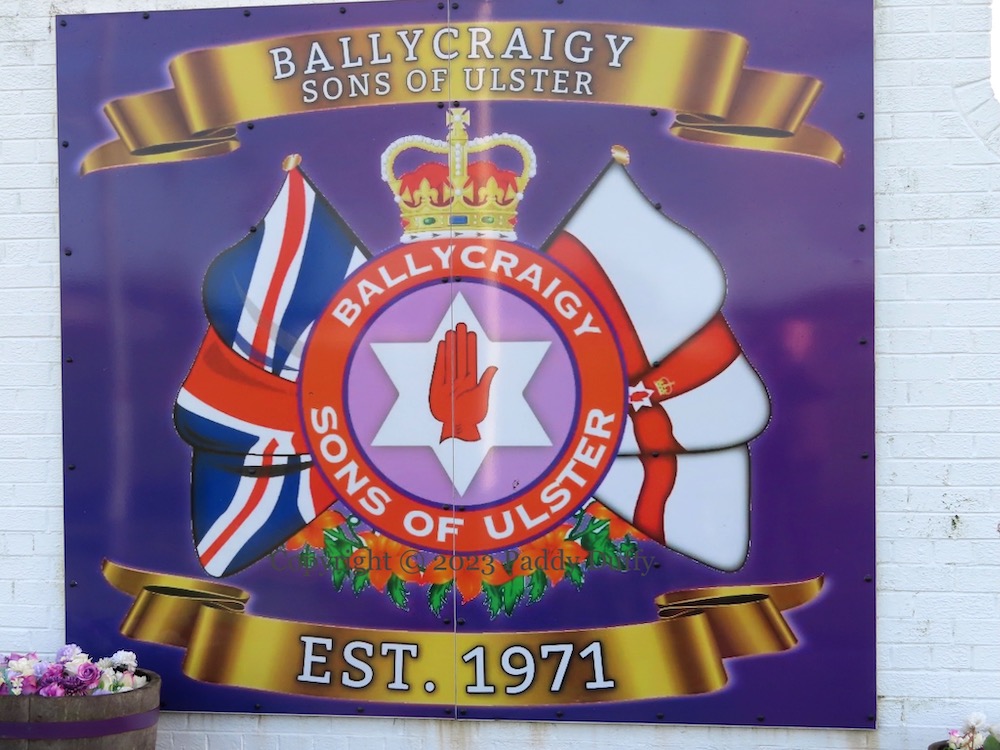
The military boards are flanked by boards for two local flute bands: “Ballycraigy Sons Of Ulster est. 1971” (tw) and “Ladyhill flute band est. 1998” (Fb).

Update 2024-06: Silhouetted graveside mourners have been added to either side of the Somme board – see the final two images.

2023-11: with silhouetted graveside mourners and helmet on cross

2024-06 wide shot:
Click image to enlarge
Copyright © 2023 Paddy Duffy
T01990 T01989 T01988 T01992 [T01991] T01987 limetree close
2023-11: [T03270] T03721 [T03722] T03723 [T03724]
2024 wide shot: [T04793] T04794
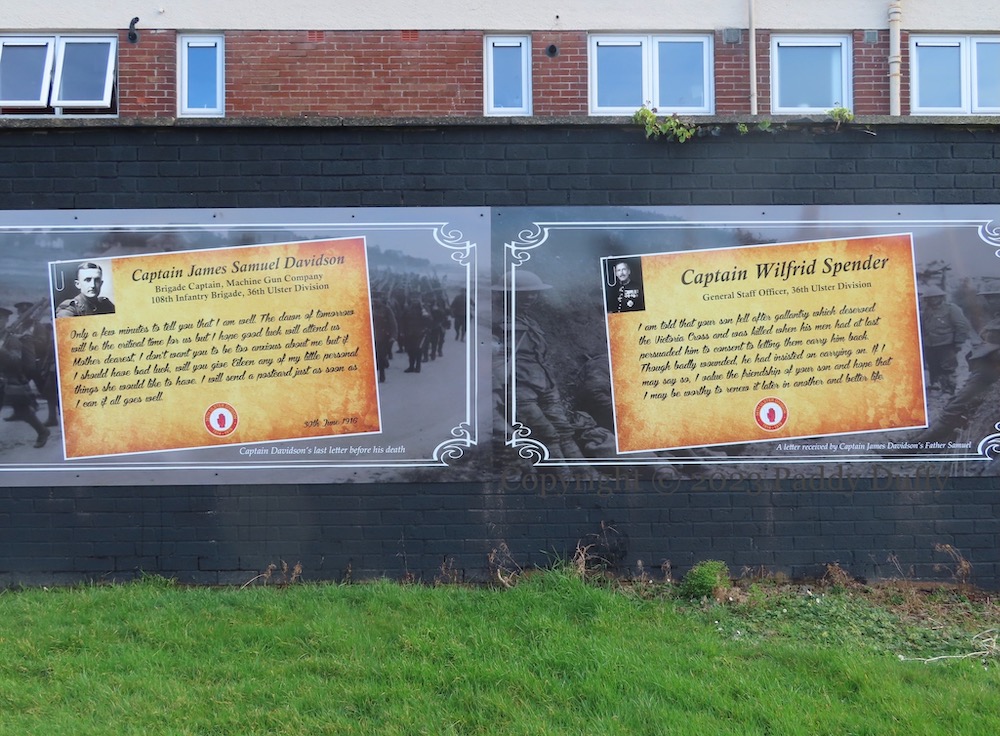
Only A Few Minutes

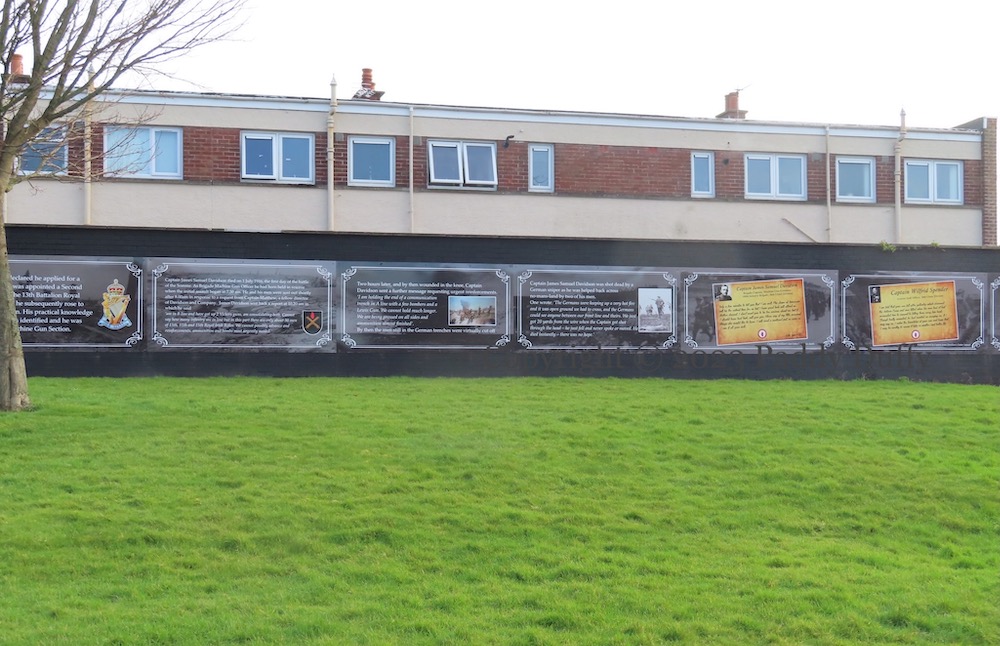
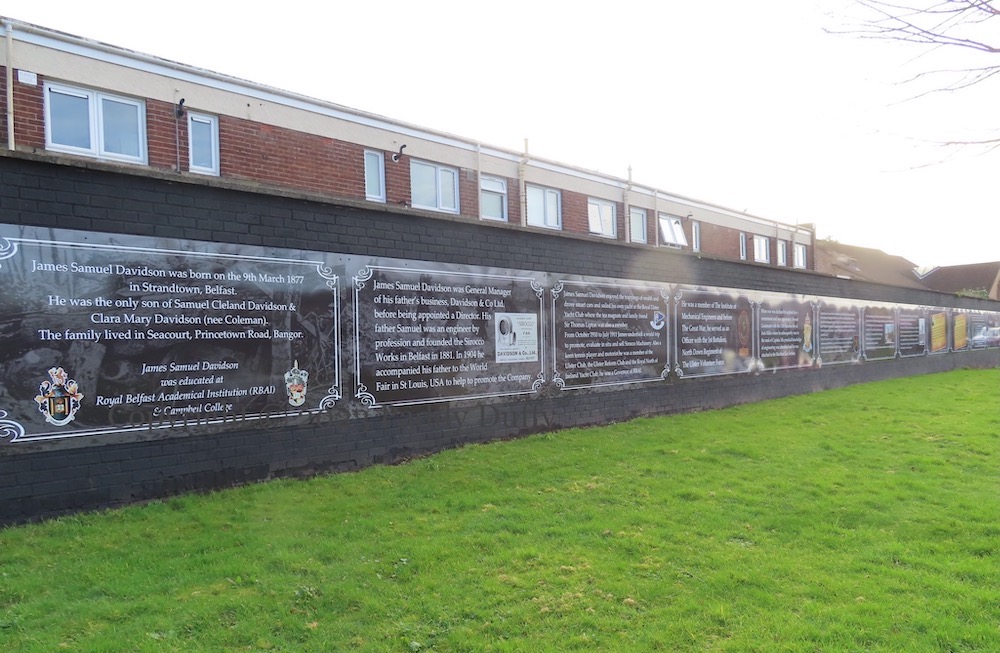
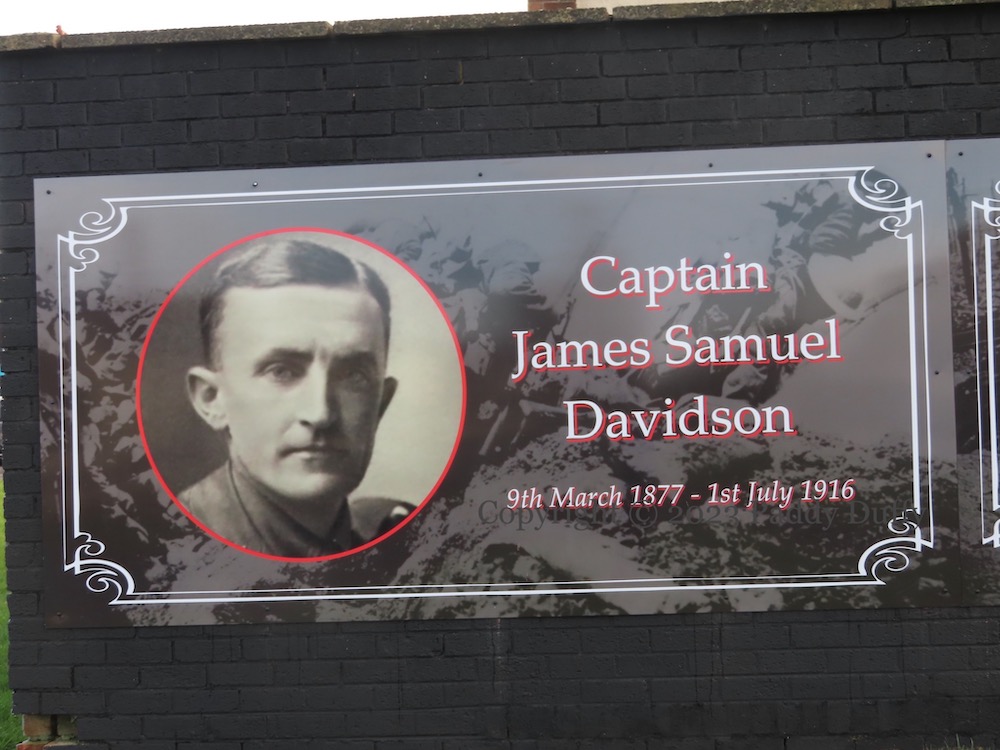
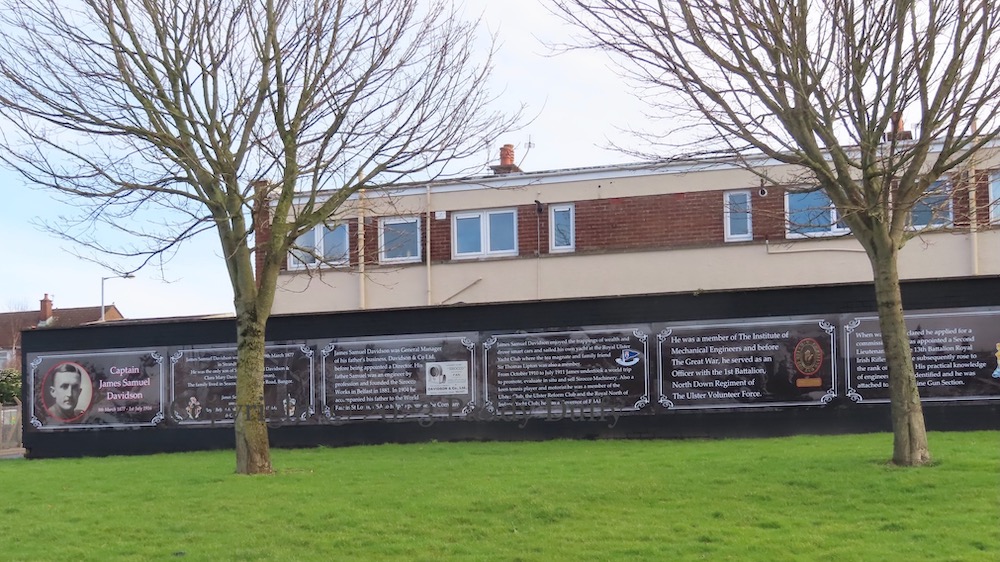
The day before he met his end, Captain James Samuel Davidson, Brigade Captain in the machine gun company of the 108th infantry brigade, 36th (Ulster) Division, wrote to his mother, “Only a few minutes to tell you I am well. The dawn of tomorrow will be the critical time for us but I hope good luck will attend us. Mother dearest, I don’t want you to be too anxious about me but if I should have bad luck, will you give [fiancée] Eileen [Rogers] any of my little personal things she would like to have. I will send a postcard just as soon as I can if all goes well.”

Staff Officer Wilfrid Spender wrote to the family at Seacourt, Bangor, “I am told that your son fell after gallantry which deserved the Victoria Cross and was killed when his men had at last persuaded him to consent to letting them carry him back. Though badly wounded, he had insisted on carrying on. If I may say so, I value the friendship of your son and hope that I may be worthy to renew it later in another and better life.” He had initially been shot in the knee and was shot again while being carried back.

Before the war, Davidson had been a director at Sirocco and a member of the North Down battalion of the Ulster Volunteers.

(Military Images | Men Behind The Glass)

12 panels in Clanmorris Avenue, Bangor.

Click image to enlarge
Copyright © 2023 Paddy Duffy
T01964 T01962 T01963 T01965 T01966

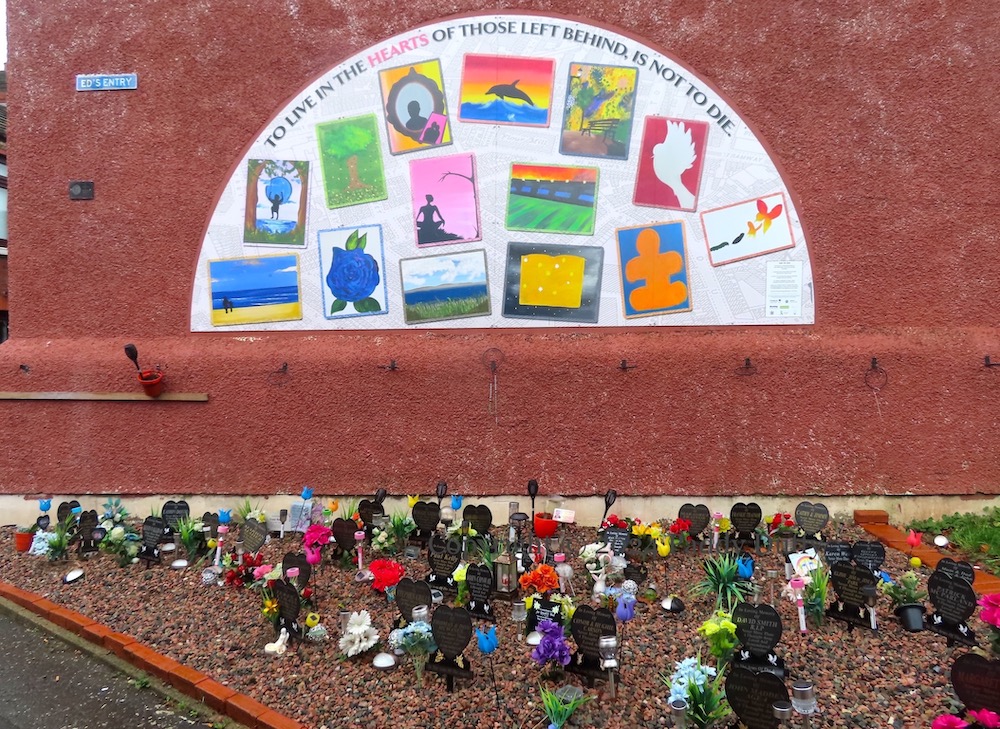
Gone Too Soon

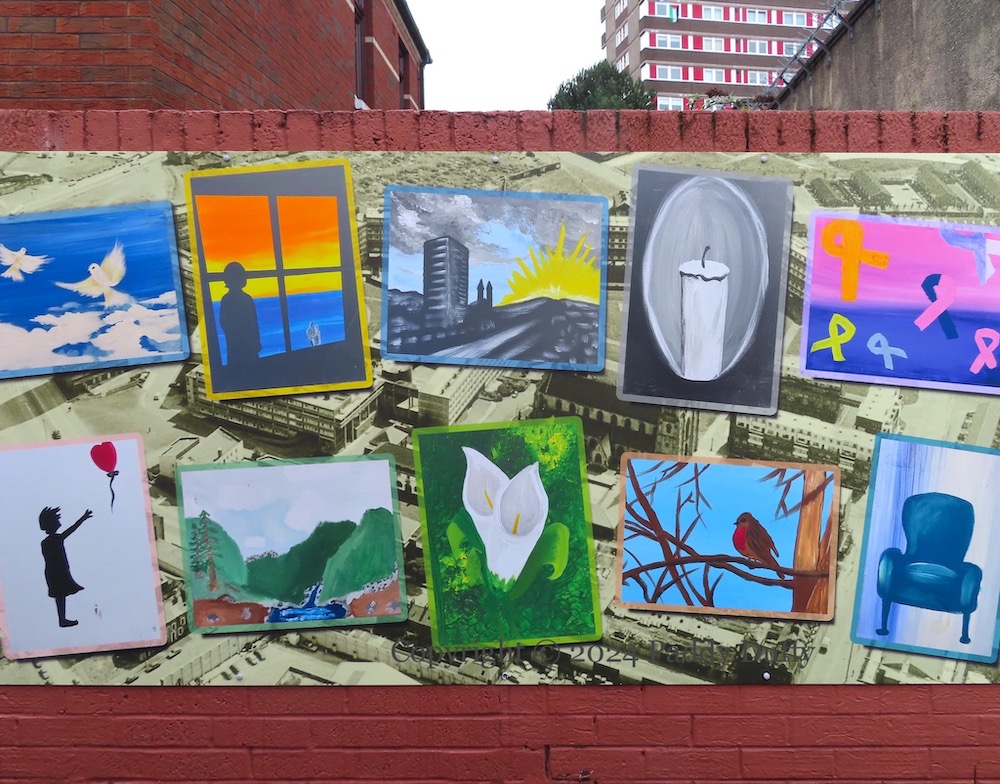
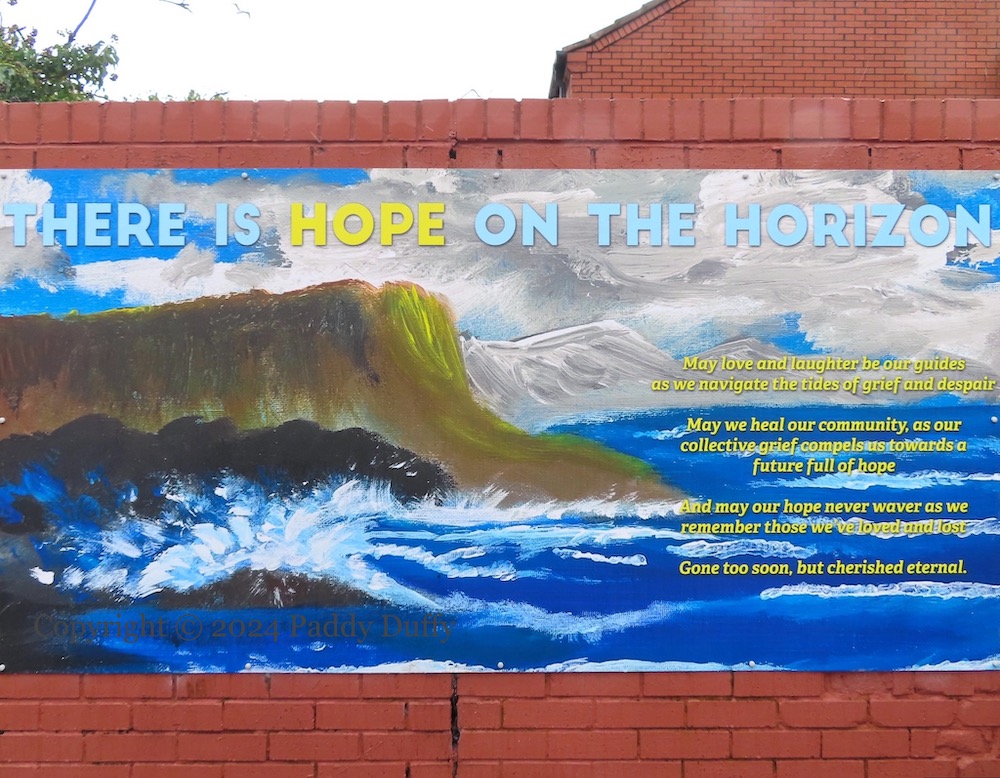
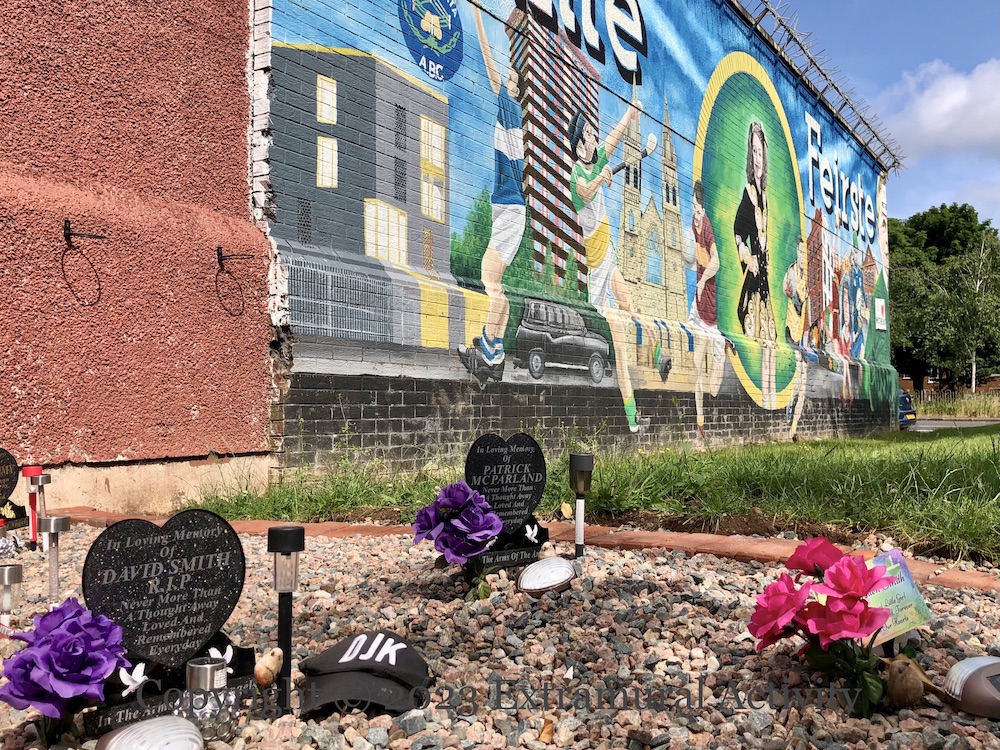
“To live in the hearts of those left behind is not to die.” Above is the main piece in a new (2022-11) memorial garden next to Fáılte Feırste Thıar dedicated to young people from the Divis area who have passed away (Belfast Media). There are two smaller pieces on the opposite wall and one next to the alley (immediately below), and together they form the space for a memorial garden. “There is hope on the horizon: May love and laughter be our guide as navigate the tides of grief and despair. … Gone too soon, but cherished eternal.”

With support from Peace IV, Belfast City Council, and the Housing Executive.

Click image to enlarge
Copyright © 2023 Paddy Duffy
T04005 [T01606] T04004 T04002 T04003
X12667 X12665 [X12666] courtesy of Extramural Activity

A Citizens’ Assembly

The Citizens’ Assembly is a group of 99 randomly-chosen Irish citizens, plus a chair, that considers large-scale issues over the course of months. It began in 2016 by taking up the Eighth Amendment on abortion, the “pensions timebomb” fixed-term parliaments, voter turnout and referendums, and climate change – it is not restricted, like its predecessor the Constitutional Convention, to constitutional issues (WP). The 2020-2021 Assembly considered gender equality and biodiversity loss.

Sınn Féın called for an Assembly on Irish unity at its November (2022) Ard Fheıs (Irish Examiner | Derry Journal | youtube panel) and Belfast City Council passed an SDLP motion to recommend that the Taoıseach form an Assembly (News Letter); in December, the Dublin City Council approved a measure calling for an Assembly to consider the topic (SF).

“The Irish government should establish a citizens’ assembly on Irish unity/tıonól na saoránach ar aontú na hÉıreann.” Sınn Féın’s preferred outcome of such a process is given at the bottom of the board: “#Time4Unity/Am d’Aontacht”. The images show the board in south Belfast (Cromac Street).

Click image to enlarge
Copyright © 2023 Paddy Duffy
T01865

Spared To Testify To Their Glorious Deeds

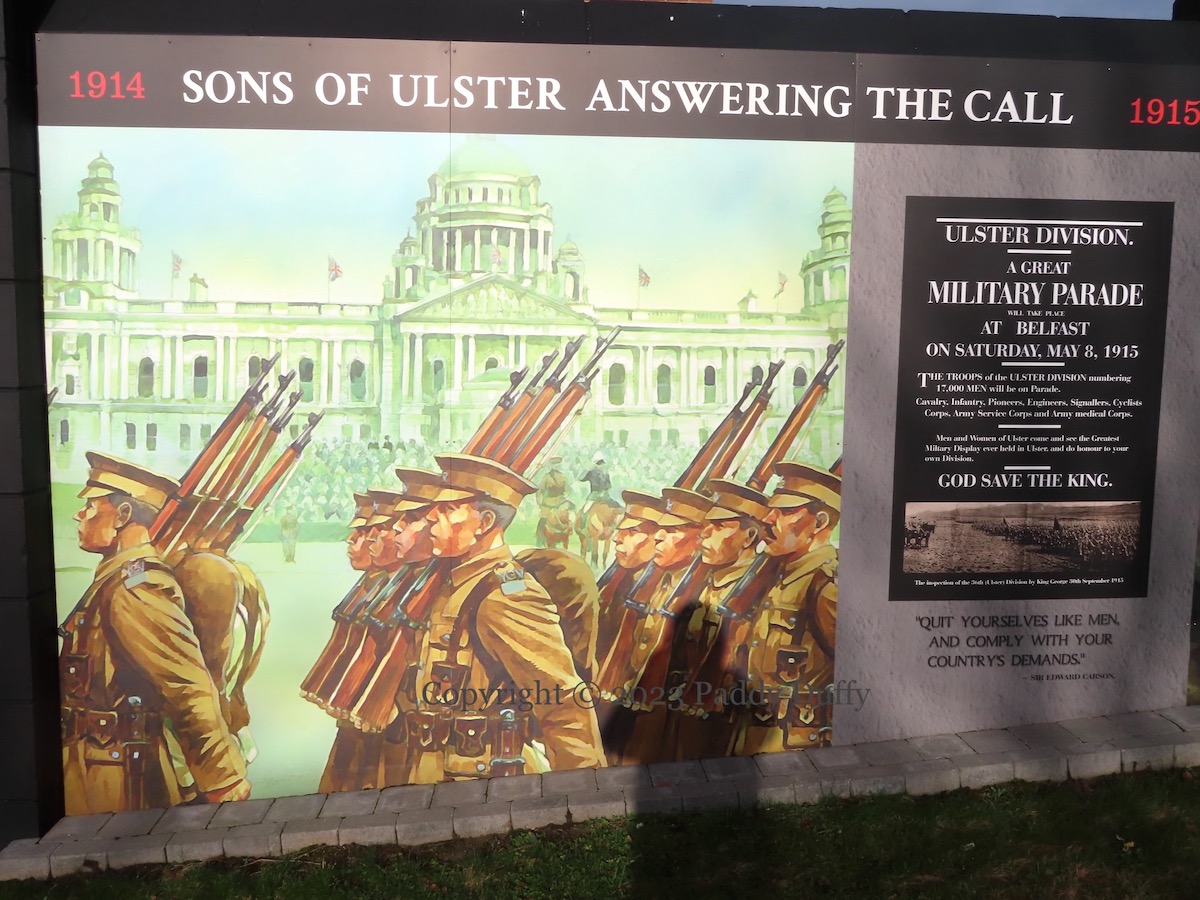
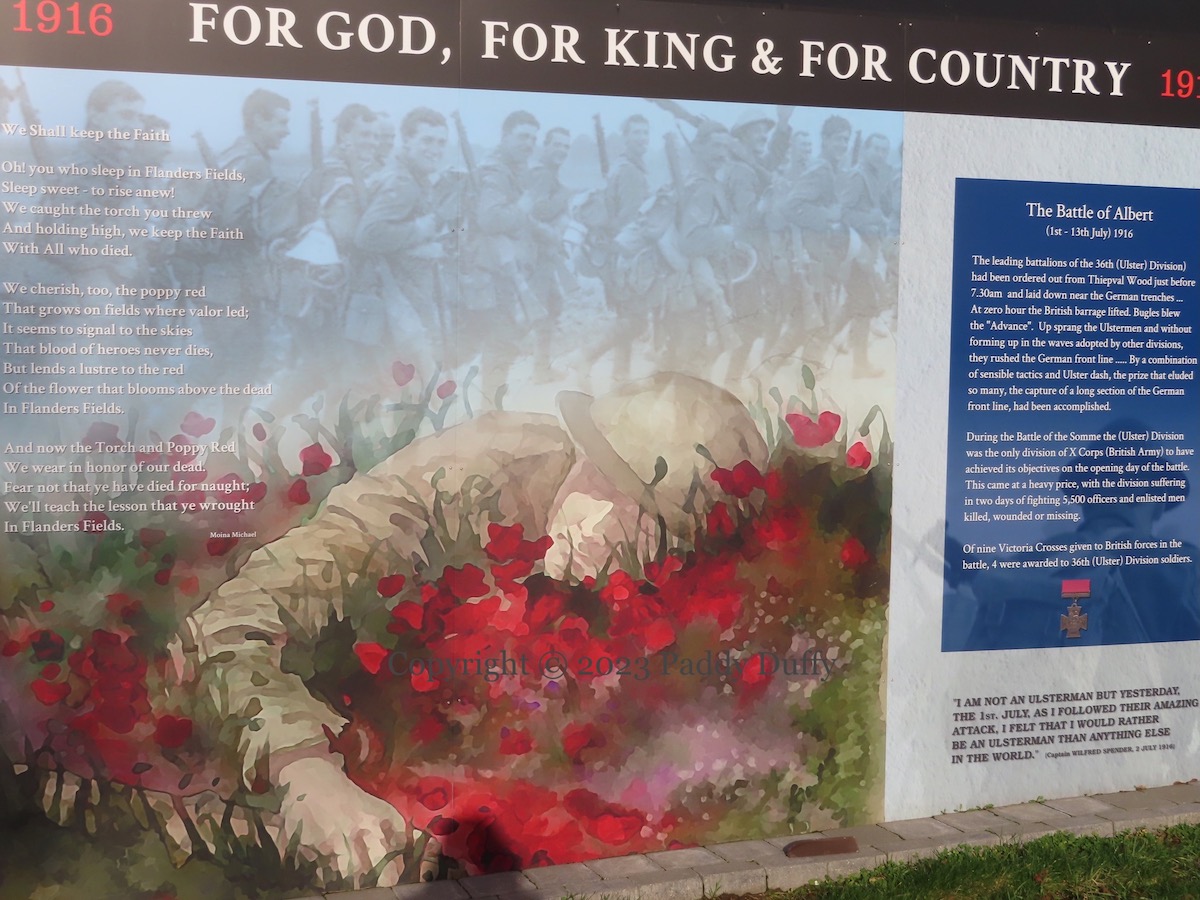
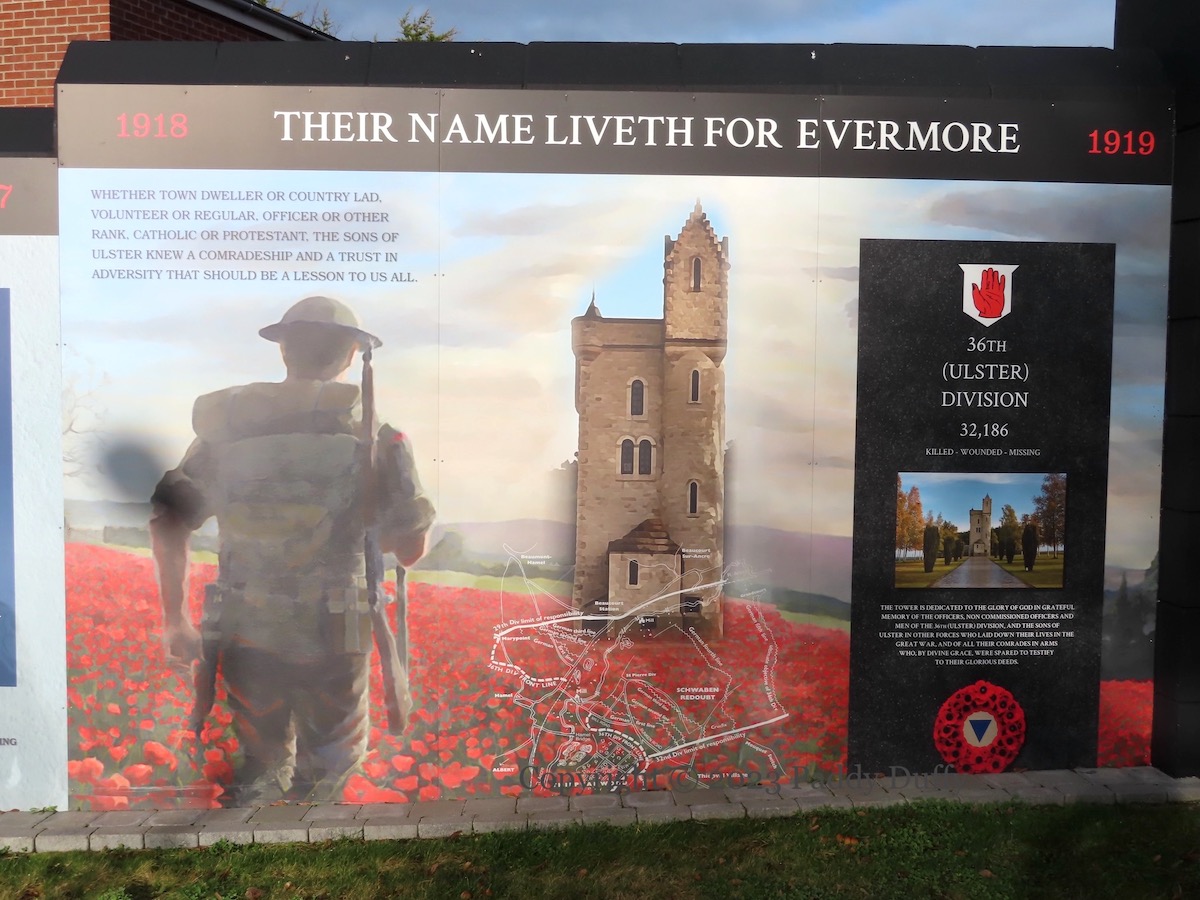
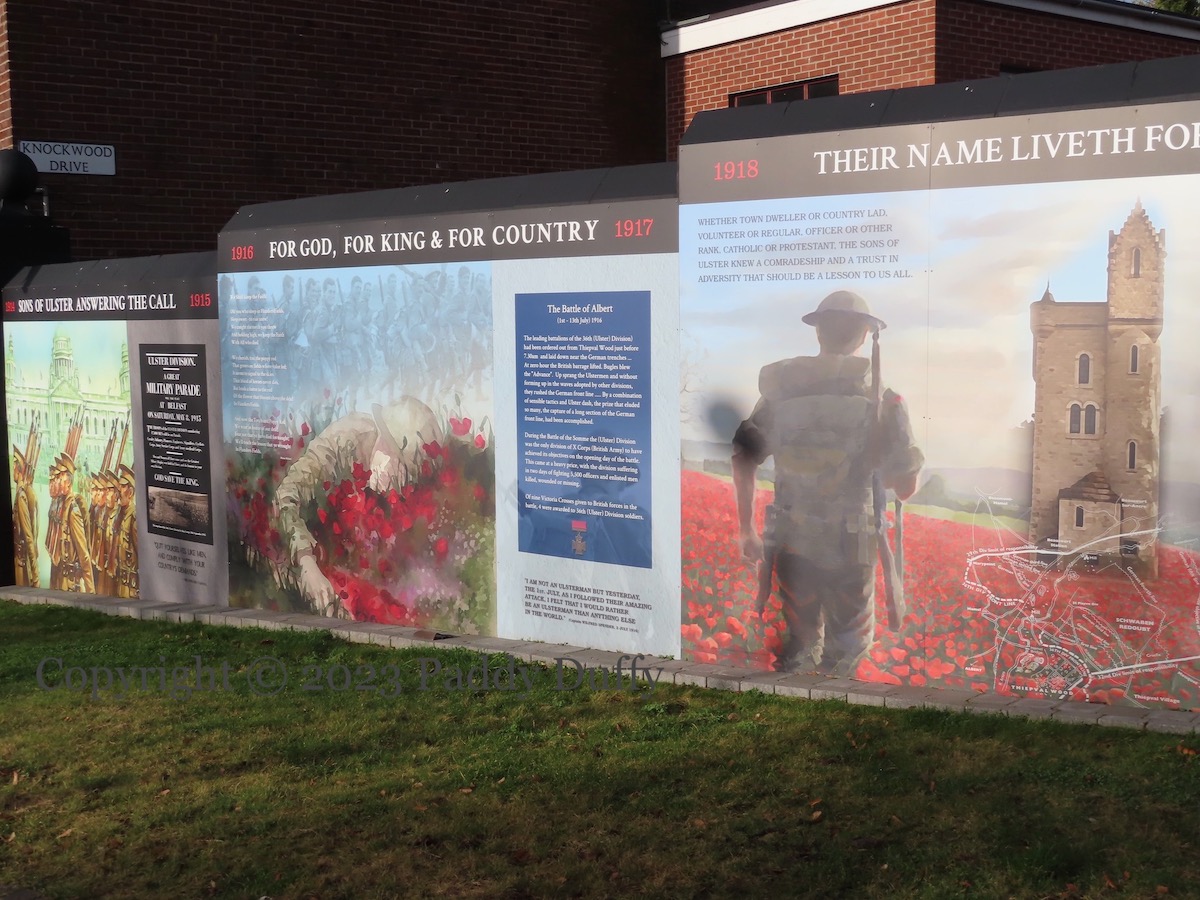
A history of the 36th (Ulster) Division in three panels along Knockwood Crescent in east Belfast:

1914 – Sons Of Ulster Answering The Call – 1915: “Ulster Division – a great military parade will take place at Belfast on Saturday, May 8, 1915. The troops of the Ulster Division numbering 17,000 men will be on parade. Cavalry, infantry, pioneers, engineers, signallers, cyclists corps, Army service corps and Army medical corps. Men and women of Ulster come and see the greatest military display every helf in Ulster, and do honur to your own Division. God save the King.” The original poster can be seen at Wartime Memories. “‘Quit yourselves like men and comply with your country’s demands.’ – Sir Edward Carson.” With a picture of “the inspection of the 36th (Ulster) Division by King George [V] 30th September 1915.

1916 – For God, For King & For Country – 1917: “The Battle of Albert (1st – 13th July) 1916. The leading battalions of the 46th (Ulster) Division) had been ordered out from Thiepval Wood just before 7.30am and laid down near the German trenches … At zero hour the British barrage lifted. Bugles blew the “Advance”. Up sprang the Ulstermen and without forming up in the waves adopted by other divisions, they rushed the German front line …… By a combination of sensible tactics and Ulster dash, the prize that eluded so many, the capture of a long section of the German front line, had been accomplished. During the Battle of the Somme the (Ulster) Division was the only division of X Corps (British Army) to have achieved its objectives on the opening day of the battle. This came at a heavy price, with the division suffering in two days of fighting 5,500 officers and enlisted men killed, wounded or missing. Of nine Victoria Crosses given to British forces in the battle, 4 were awarded to 36th (Ulster) Division soldiers.” With quotes from Wilfrid Spender (see I Would Rather Be An Ulsterman), and the poem We Shall Keep The Faith by Moina Michael. Please get in touch if you can identify the photo of soldiers going off to war at the top.

1918 – Their Name Liverth For Evermore – 1919: “Whether town dweller or country lad, volunteer or regular, officer or other rank, Catholic or Protestant, the sons of Ulster knew a comradeship and a trust in adversity that should be a lesson to us all.” “36th (Ulster) Division 32,186 killed, wounded, missing. The [Ulster] tower is dedicated to the glory of God in grateful memory of the officers, non commussioned officers and men of the 36th (Ulster) Division, and the sons of Ulster in other forces who laid down their lives in the Great War, and of all their comrades in arms who, by divine grace, were spared to testify to their glorious deeds.”

Click image to enlarge
Copyright © 2023 Paddy Duffy
T01895 T01896 T01898 T01897

The Men From Ballyclare

The Men From Ballyclare & District was launched without the board along the fence/wall in front of the mural. The original post shows “UDA reserved” graffiti on the wall to the right. In 2021, there was some South East Antrim lettering to the right – see A0835. (For the SEA UDA in Ballyclare, see previously the companion WWI mural and 100 Loyal Men. Also, Belfast Live | Bel Tel.)

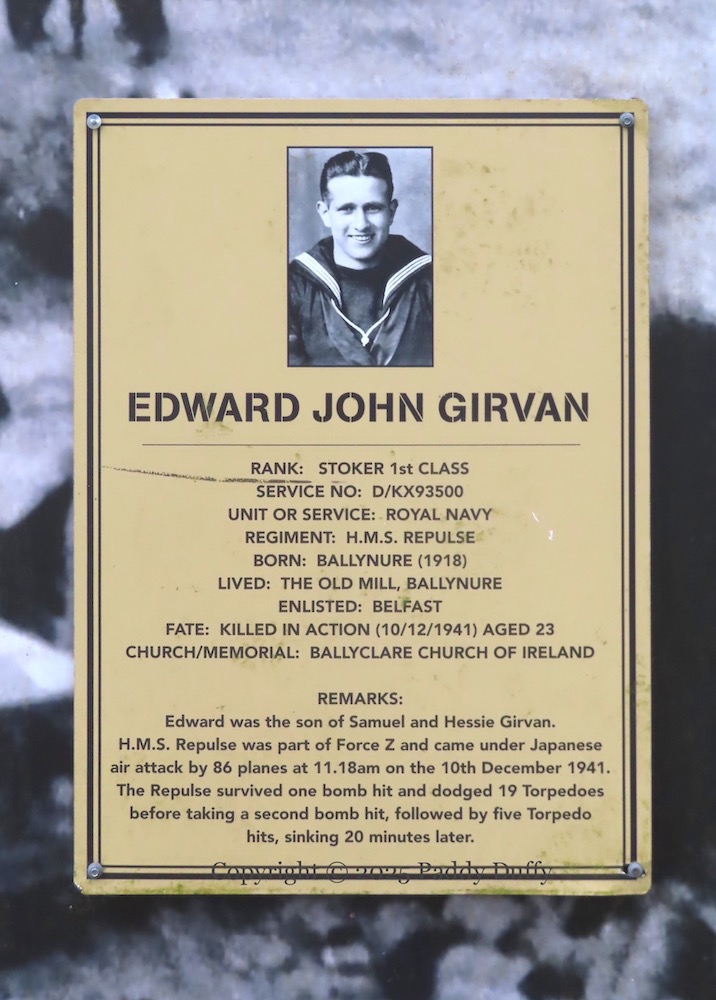
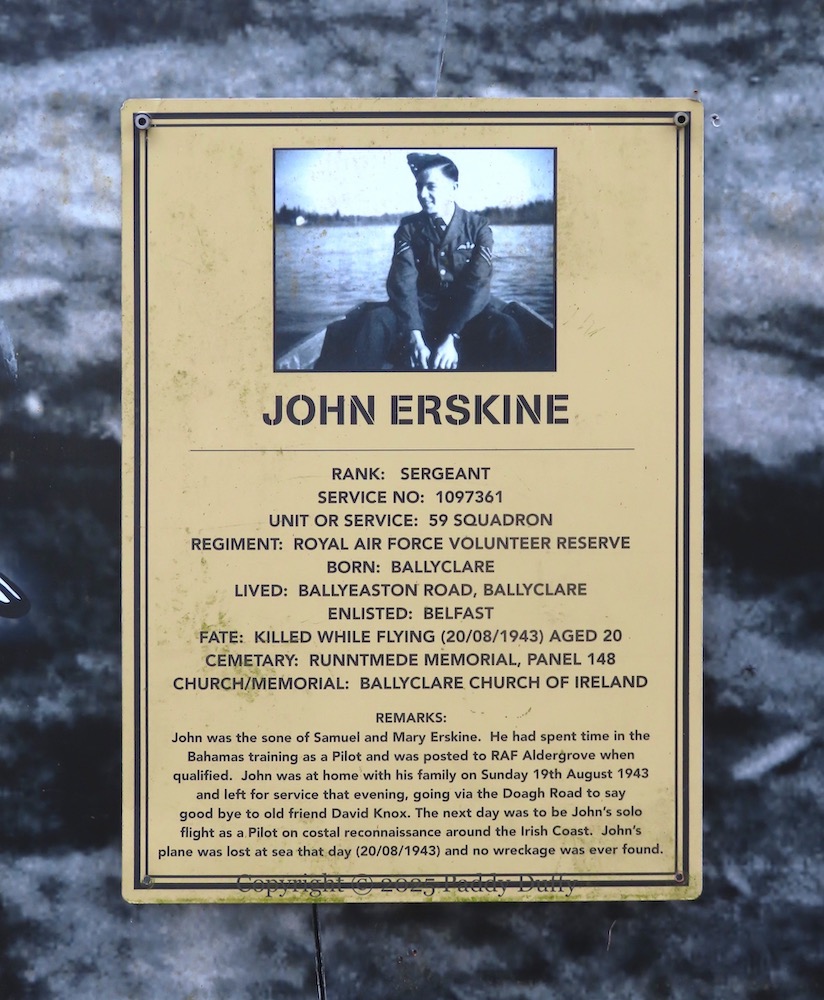
There is now a long board along the front. The two info plaques profile Edward Girvan and John Erskine, whose portraits are also featured in the larger mural, and between them are the emblems of the branches of the British Army: Merchant Navy, Navy, Army, and Air Force.

To the right of and out of frame in the image above, there is a Union Flag painted for the 75th anniversary of VE Day – see Street View.

Erskine Park, Ballyclare

Click image to enlarge
Copyright © 2023/2025 Paddy Duffy
T01817 [T01818]
T07246 T07245

Resistance Becomes Duty

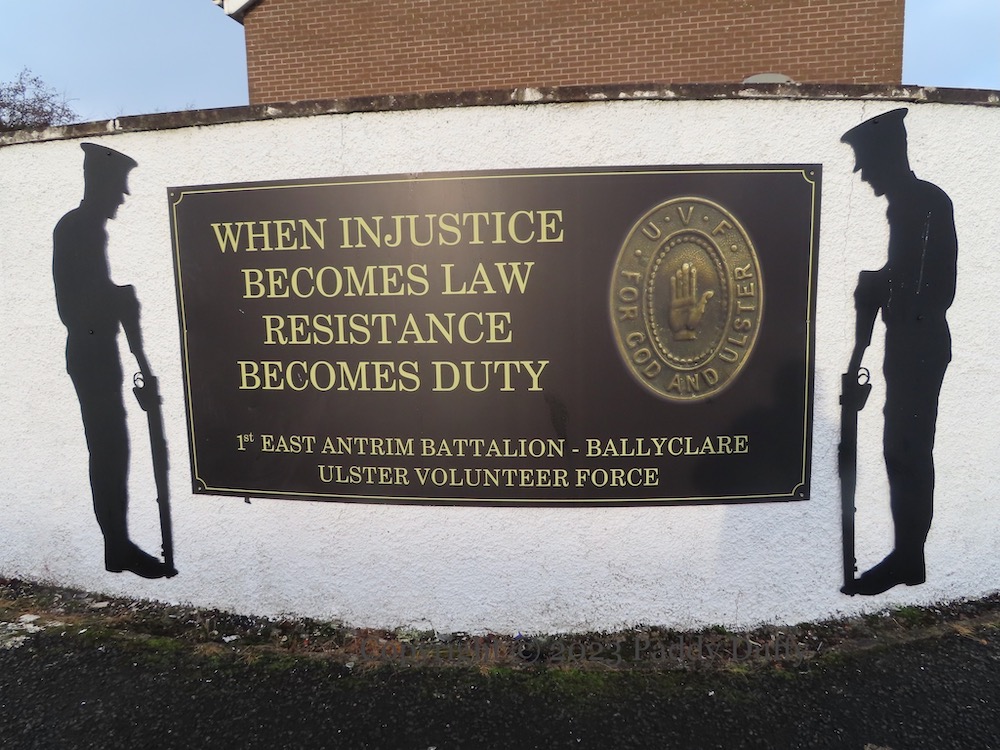
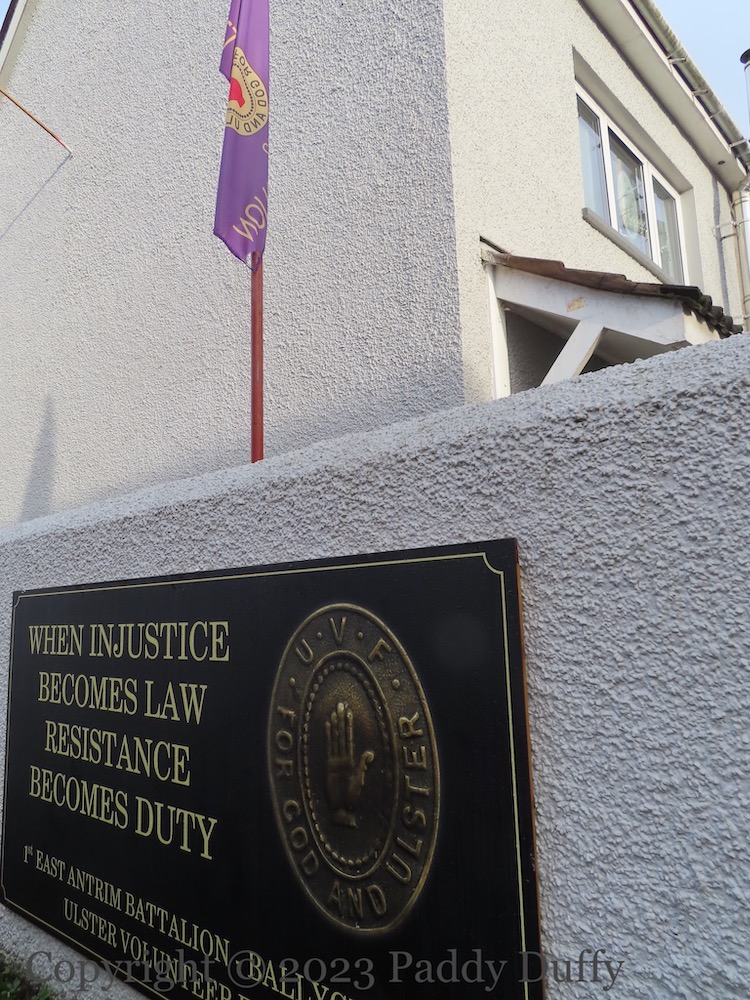
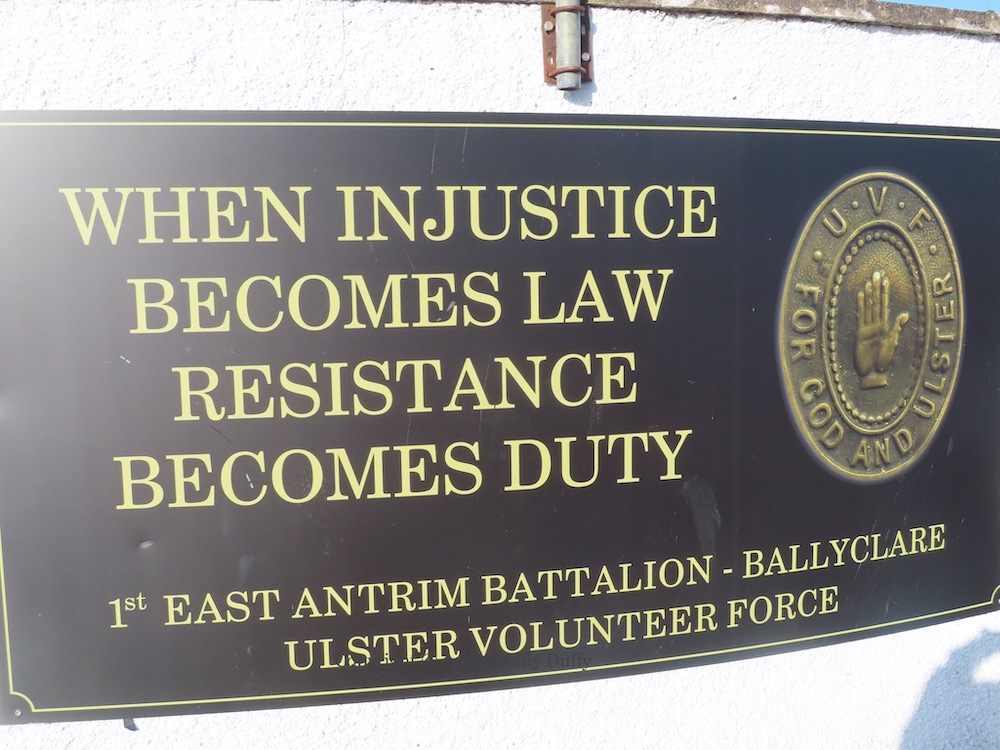
The phrase “When injustice becomes law, resistance becomes duty” is commonly but spuriously attributed to Thomas Jefferson (Monticello). It is used here by “1st East Antrim Battalion – Ballyclare – Ulster Volunteer Force” in the Grange and Erskine Park estates (Ballyclare) to protest Brexit and the NI Protocol. The graveside mourners, however, belong to WWI.

Previously on the gable in Erskine Park: The Heaneys.

The one shown above is next to the 3rd batt/1st batt memorial – see Lest We Forget.

Click image to enlarge
Copyright © 2023 Paddy Duffy
T01803 T01825
T03687 [T03686]

To The Very Death

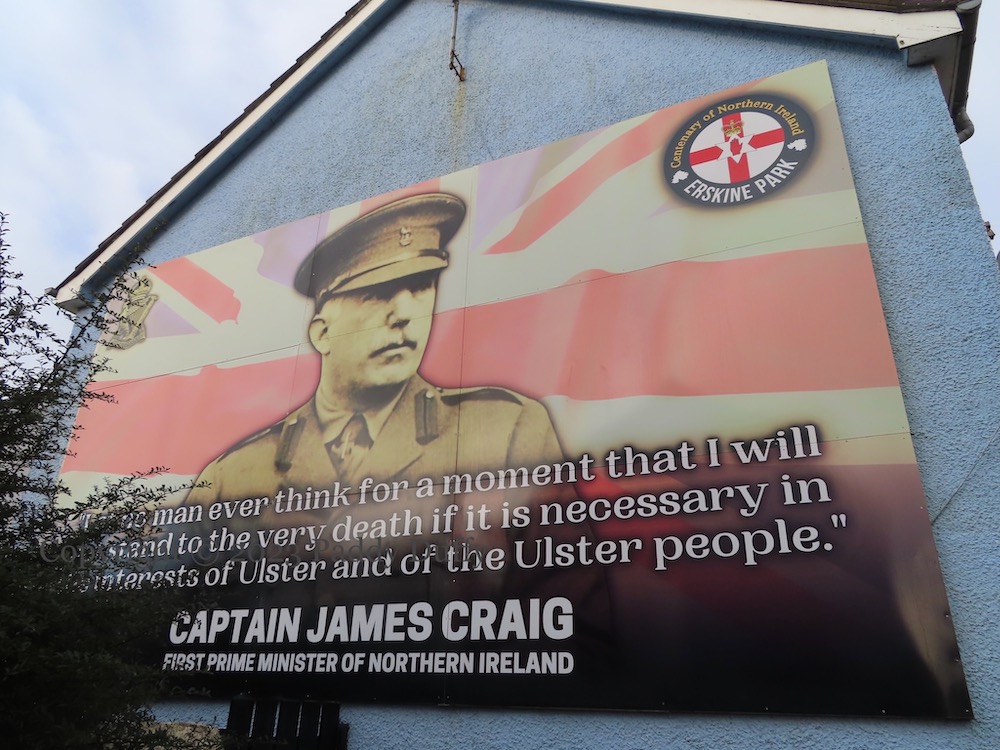
“‘Let no man ever think for a moment that I will not stand to the very death if it is necessary in the interests of Ulster and of the Ulster people.’ Captain James Craig, first prime minister of Northern Ireland.”

To go with the fighting words, Craig is shown here in military uniform – though he was a young man when joined the Royal Irish Rifles and served in South Africa for two years (1899-1901), with the Imperial Yeomanry and the Imperial Military Railways. As the politician who was instrumental in the Ulster Volunteers and the creation of Northern Ireland (and prime minister until his death in 1940), he is usually shown in civilian clothes – see e.g. Floreat Ultona | Ulster Welcomes Her King & Queen | Because He Loves What Is Behind Him.

The source of the quote is unknown – please comment or get in touch if you can say what it is from. It’s also not clear what uniform Craig is wearing – the cap badge is the ‘lion on crown’ used e.g. by officers of the Devonshire yeomanry; it is perhaps a officer’s dress uniform for the Imperial Military Railways (though see the IMR pouch badge). Craig was also assistant adjutant to the 36th Division (DIB).

Erskine Park, Ballyclare

Click image to enlarge
Copyright © 2023 Paddy Duffy
T01815

The Comrades

Ballyclare Comrades football club – whose motto is ‘Nihil nisi optimi’ [nothing but the best] – was founded in 1919 by members of the local Great War ‘comrades’ association. That heritage is used here for the Ballyclare Protestant Boys flute band. In the centre, between images from WWI, the flowers of the four ‘home nations’ are joined by orange lilies, and in the shield are the lion and the unicorn from the coat of arms of the UK.

“To Flanders fields some men in our town were sent and along their way many would repent their priority goal to keep Ulster free that we may have freedom both you and me as part of Great Britain they fought and died and their names we will remember and remember with pride. Lest we forget. Comrades from Ballyclare. Nihil nisi optimi. The Comrades.” “Ballyclare Protestant Boys Est. 2004”

Next to 1921-2021.

Click image to enlarge
Copyright © 2023 Paddy Duffy
T01805 [T01806]

1912-1921

“When Ulster men are proudly glad of the land where they were born/And when England’s cry for help was heard we told them have no fear/For across the flanders fields we send our Ulster Volunteers.”

These are just a few lines from the song First Of July Morn and are used here to recall how the Ulster Volunteers – formed to fight against the imposition of Home Rule – became the 36th Division in WWI, and suggest that the British government should continue to support the Northern Ireland state beyond its one-hundedth anniversary and the current impasse over the NI Protocol of Brexit as a reward for loyalty.

The song’s alternate titles “England’s Treachery” or “Englishman’s Betrayal” give a better feel for the attitude of the whole thing: that England betrayed Ulster by having “sold away” the three counties of Donegal, Cavan, and Monaghan, and that “Ulster men” should “never more be led away, to fight in foreign lands/Not to die, for someone else’s cause, at an Englishman’s command” (youtube). The application to the current situation would then be that loyalism cannot rely on the good nature of the English and should ready itself for “perfidious Albion” to (try to) give away the six counties as well.

“Ballyclare says no to a Irish Sea border.” “Loyalist Ballyclare will never accept an border in the Irish Sea.” “The Belfast Agreement has been broken – the deal’s off.”

Ballynure Rd/Main Street, Ballyclare, next to The Comrades.

Click image to enlarge
Copyright © 2023 Paddy Duffy
T01807 charlie freese the broken covenant