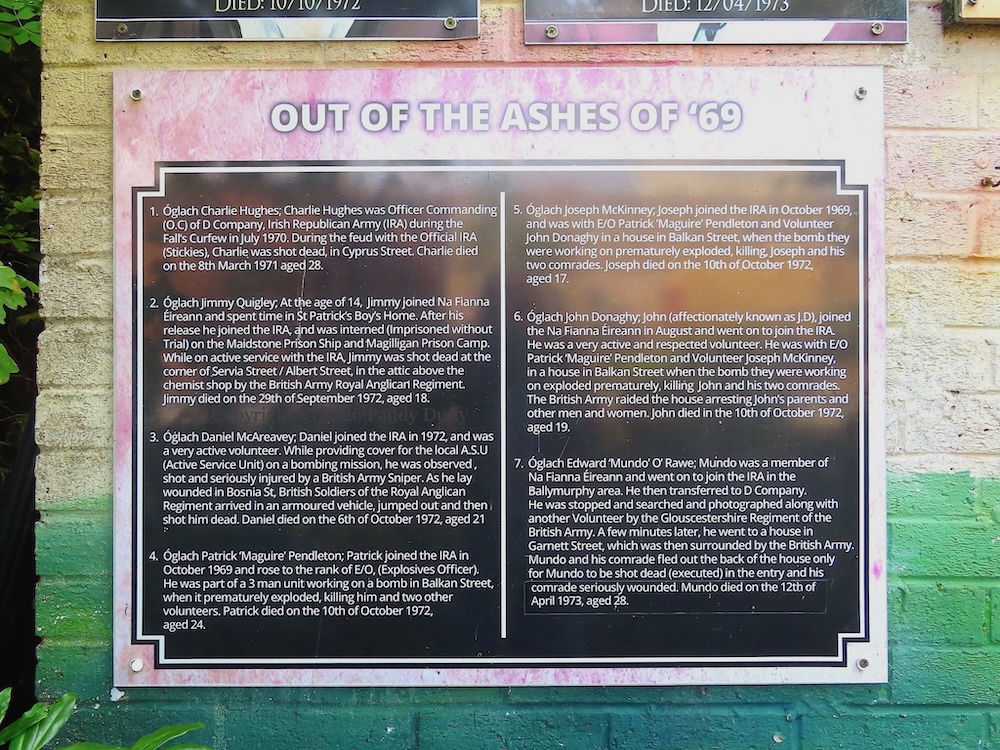
These are close-ups of the boards along the bottom of the D Company IRA board next to the Falls memorial garden. The two information boards at the extremes give brief biographies of the fourteen deceased IRA volunteers whose portraits flank the large map: Charlie Hughes, Jimmy Quigley, Daniel McAreavey, Patrick ‘Maguire’ Pendleton, Joseph McKinney, John Donaghy, Mundo O’Rawe, Michael Marley, Teddy Campbell, Martin Skillen, Bap Kelly, Billy Carson, Pat McBride, Paddy Loughran.
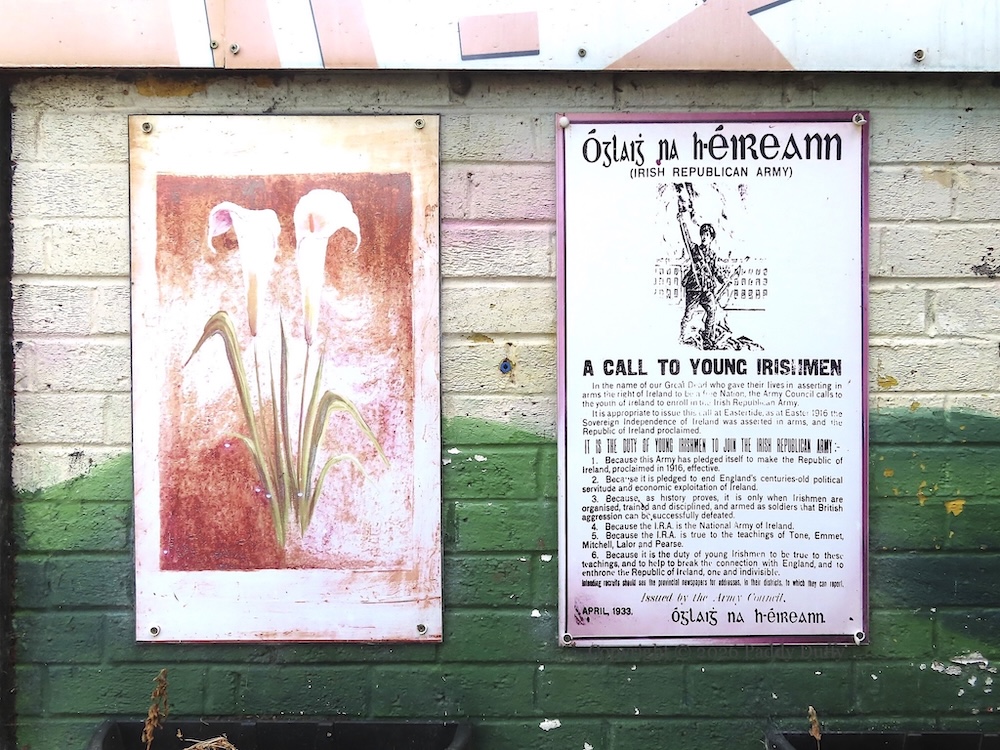
On either side of the large central plaque are two pairs of small boards. On the left are the Proclamation and the old information board (“Out Of The Ashes Of ’69”); on the right are an image of lilies and a reproduction of an “April 1933” “Call To Young Irishmen”, giving six reasons why they should enlist in the Irish Republican Army/Óglaıgh Na hÉıreann. The call came in response to sustained economic hardship in the country and Fıanna Fáıl’s wins in the general elections of 1932 and 1933. (Here is a pdf of the poster. And here is the IRA manifesto of 1933 (pdf).)
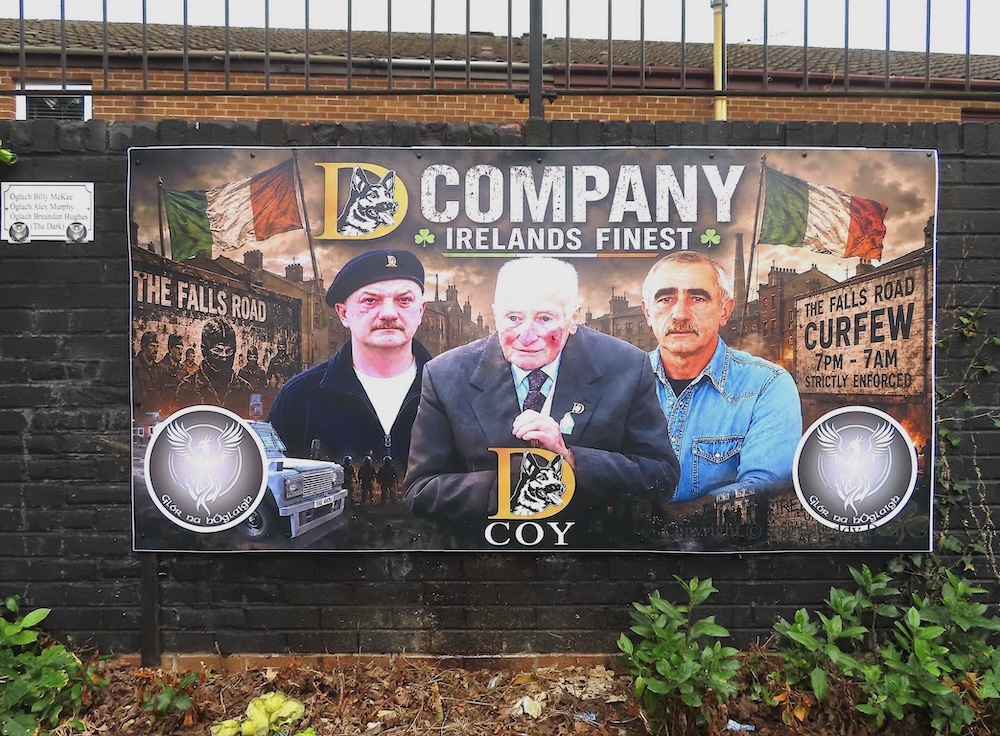
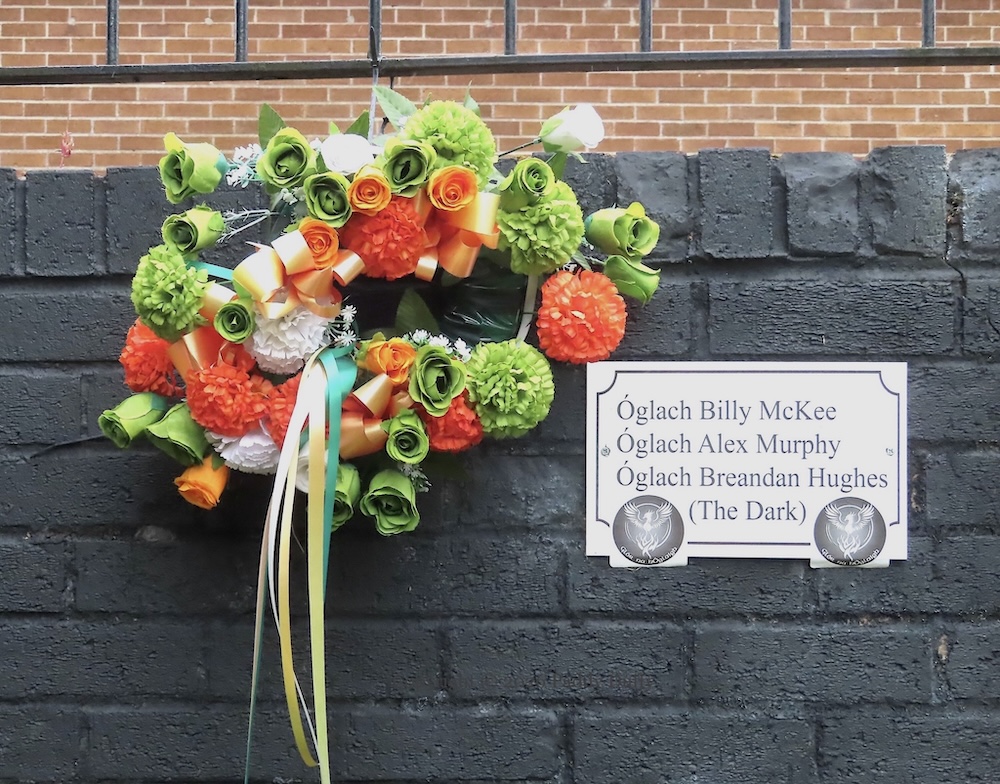
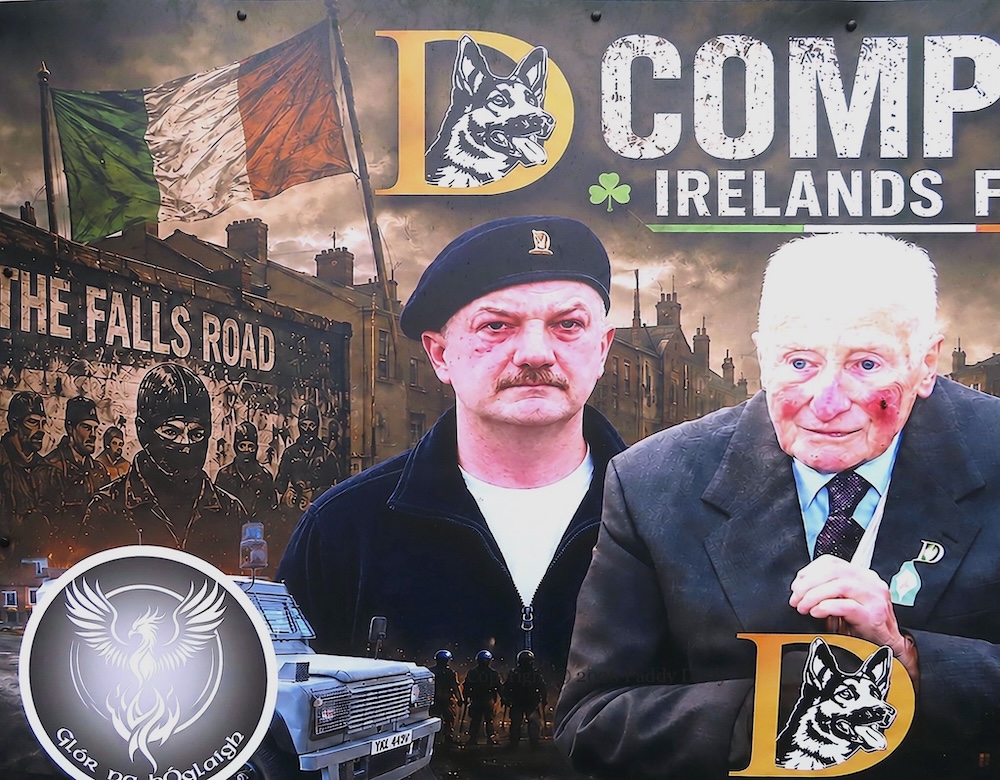
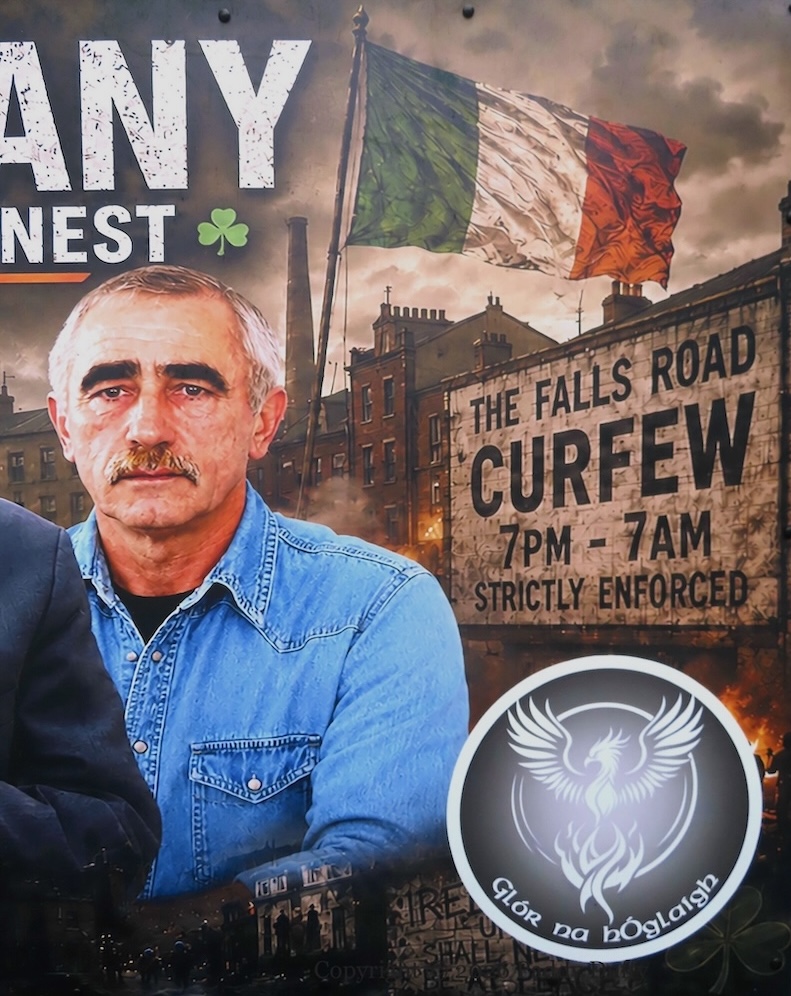
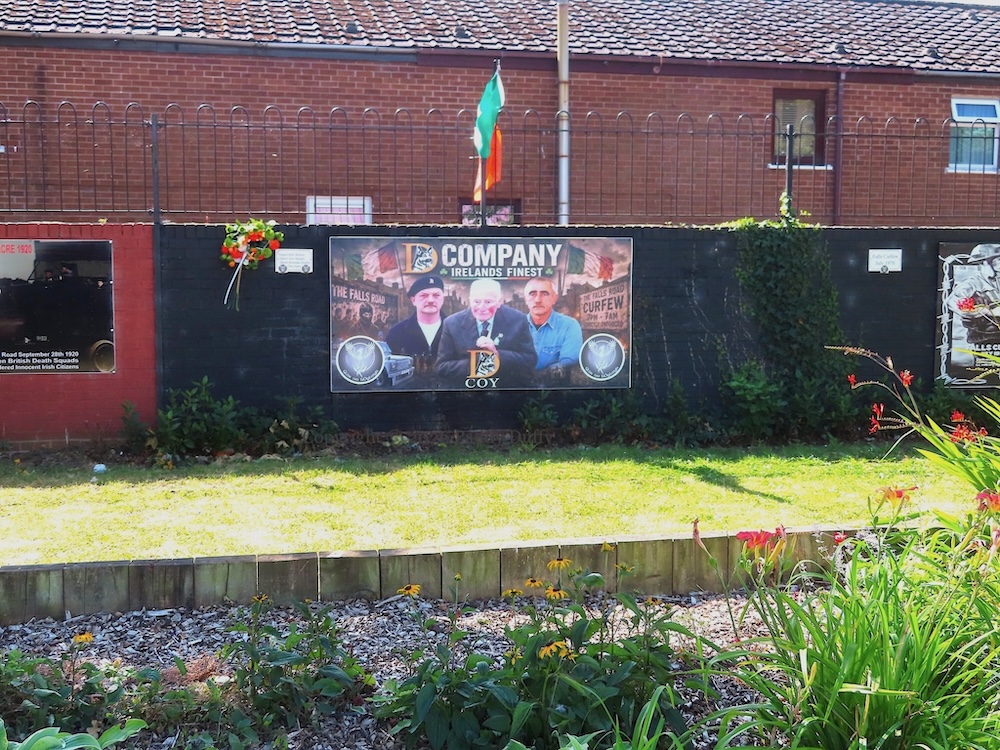
“Óglach Billy McKee, Óglach Alex Murphy, Óglach Breandan [Brendan/Breandán] Hughes (The Dark)” are featured in a new D Company board on the anti-Agreement wall below the Falls Garden Of Remembrance.
In the bottom corners is the emblem of Glór Na hÓglaıgh (Fb), a new (March 2026) “revolutionary republican socialist political party”, associated with Óglaıgh Na hÉıreann and feuding with the RNU.
As in the previous board, Alex Murphy is included (on the left); Murphy was sentenced to life imprisonment for his role in the killing of the two Signals corporals (Wood and Howes) in 1988 (UPI). He was released in 1998 under the provisions of the Agreement and died in 2019 (Pensive Quill). (The D Company board on the International Wall (Visual History) features Kieran Nugent rather than Murphy.)
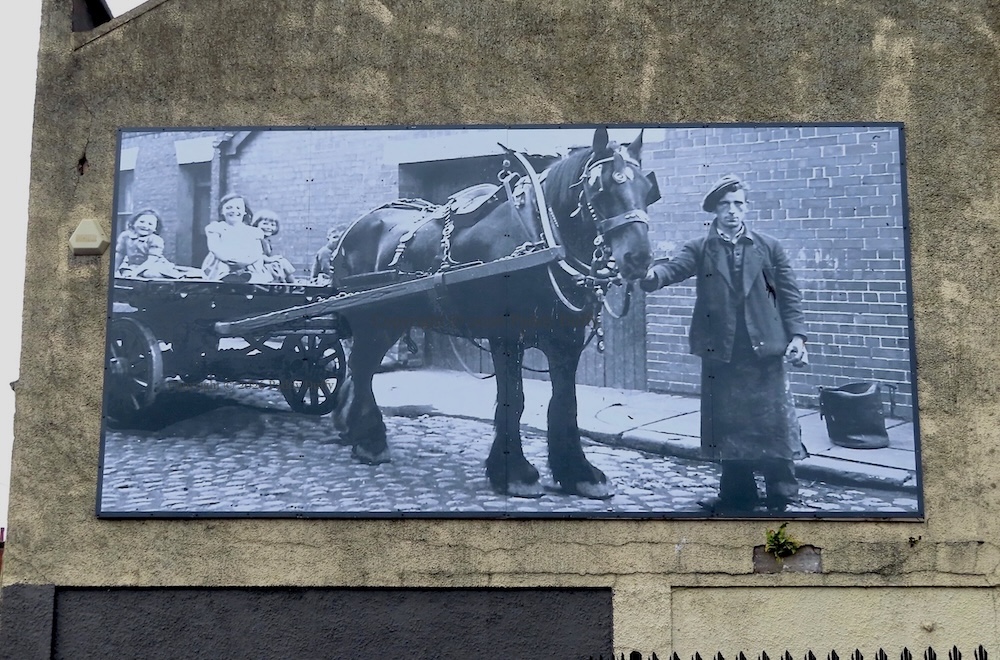
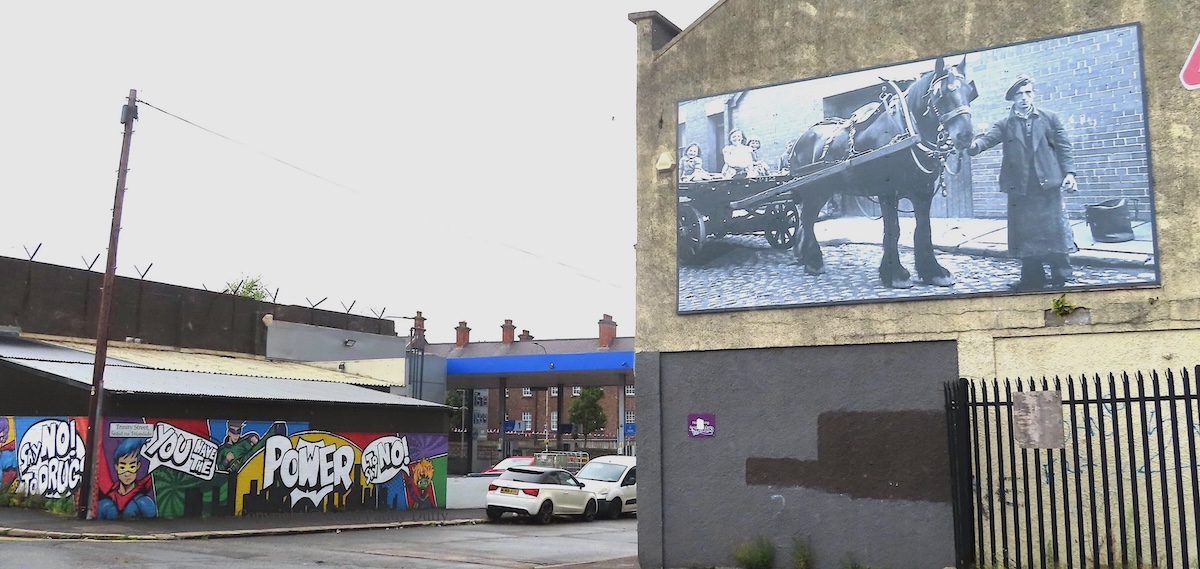
This photo of children taking a ride on a coal cart joins more than a dozen others depicting life during the 20th century in Carrick Hill – see Old Carrick Hill and The Tea Bar. Here is a Belfast Forum thread of people reminiscing about the various items that used to be delivered by horse-drawn cart.
For the anti-drugs art on the left of the wide shot below, see You Have The Power.
(lower) Regent Street, Carrick Hill, west Belfast. A new archive featuring recordings of local people opened earlier this month in the Carrick Hill Community Centre (Belfast City Council).
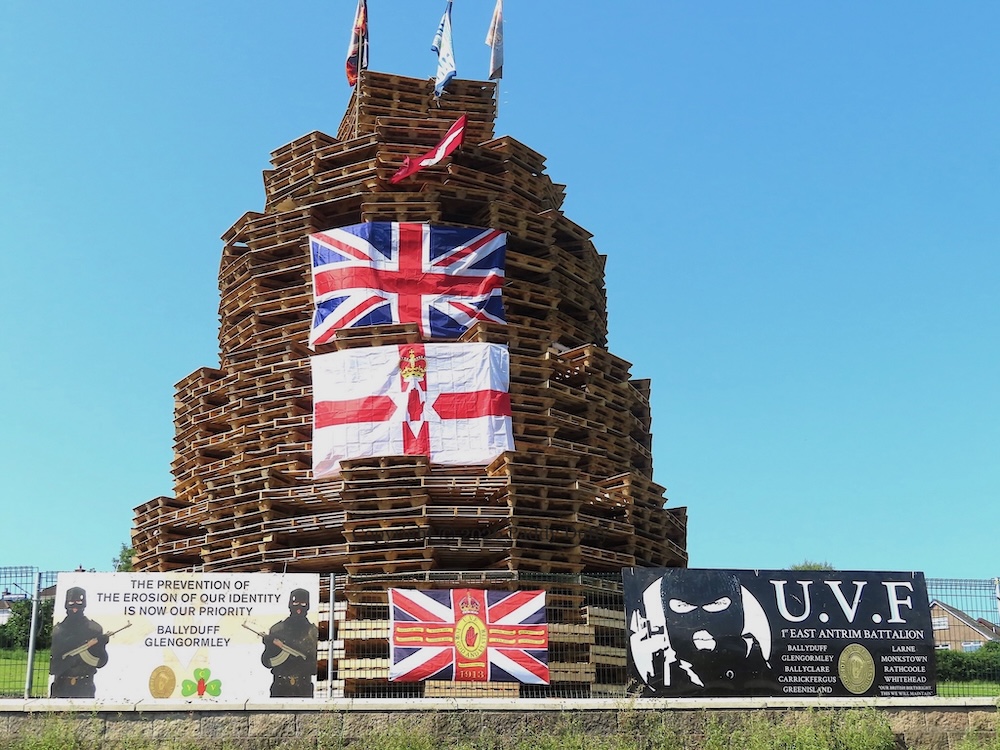
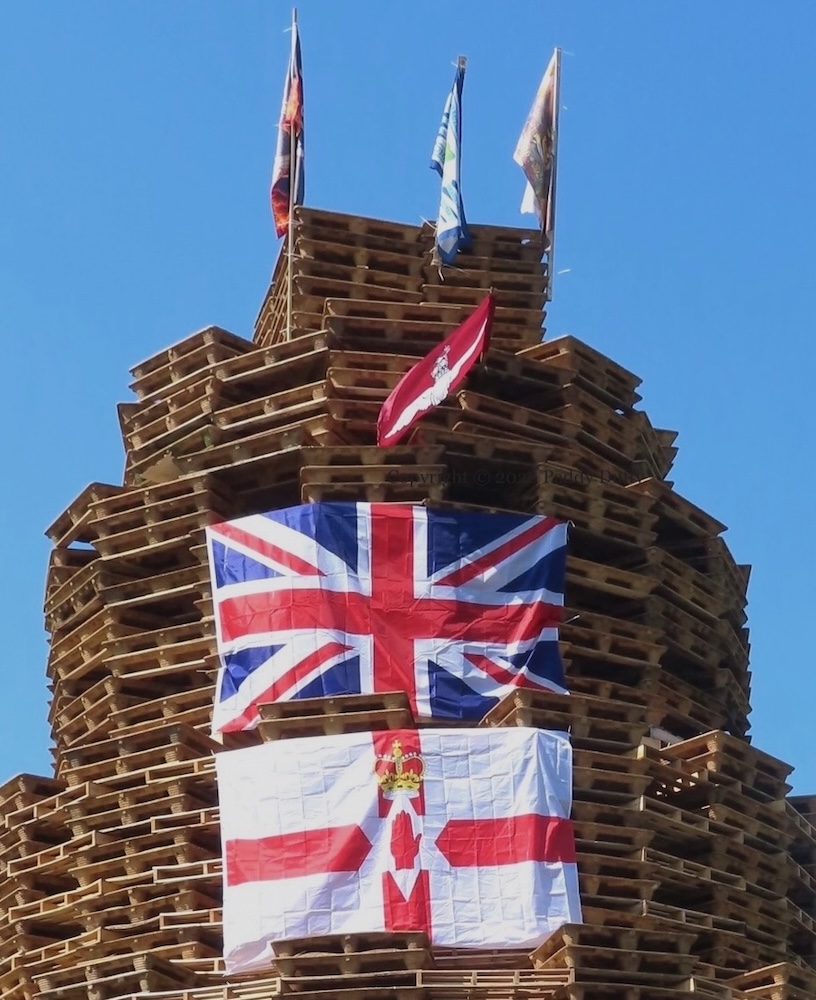
Various flags are flying or hanging on the Ballyduff bonfire prior to their removal and its incineration, including the flag of the Paratroop regiment. On the fencing in front are two UVF hooded gunmen boards and an Ulster Volunteers (1913) flag.
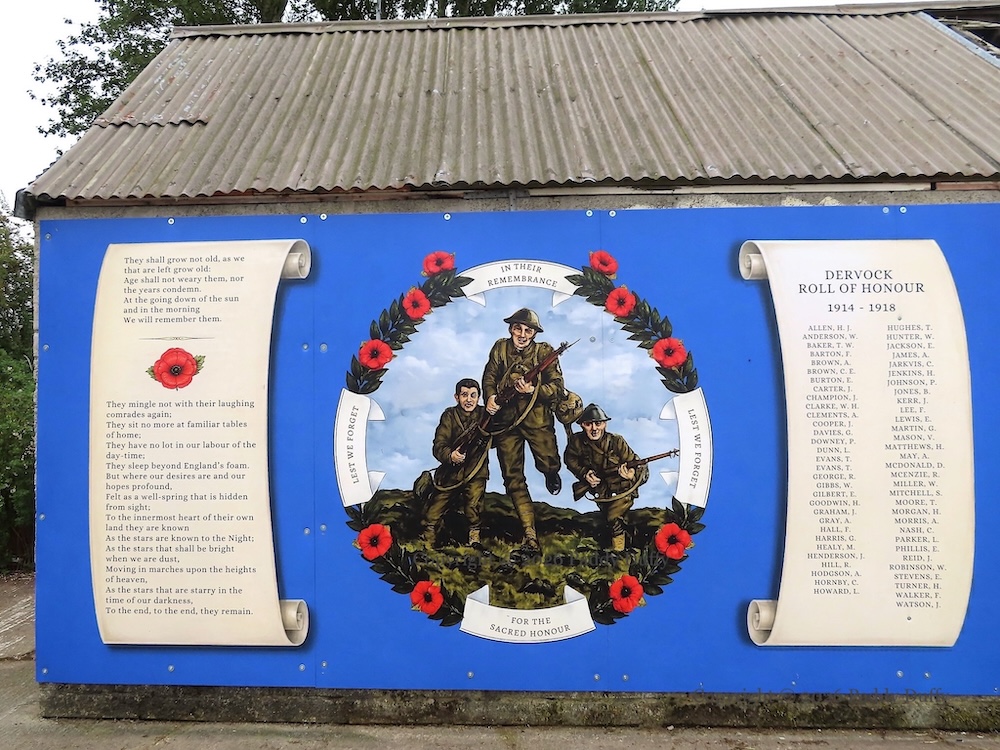
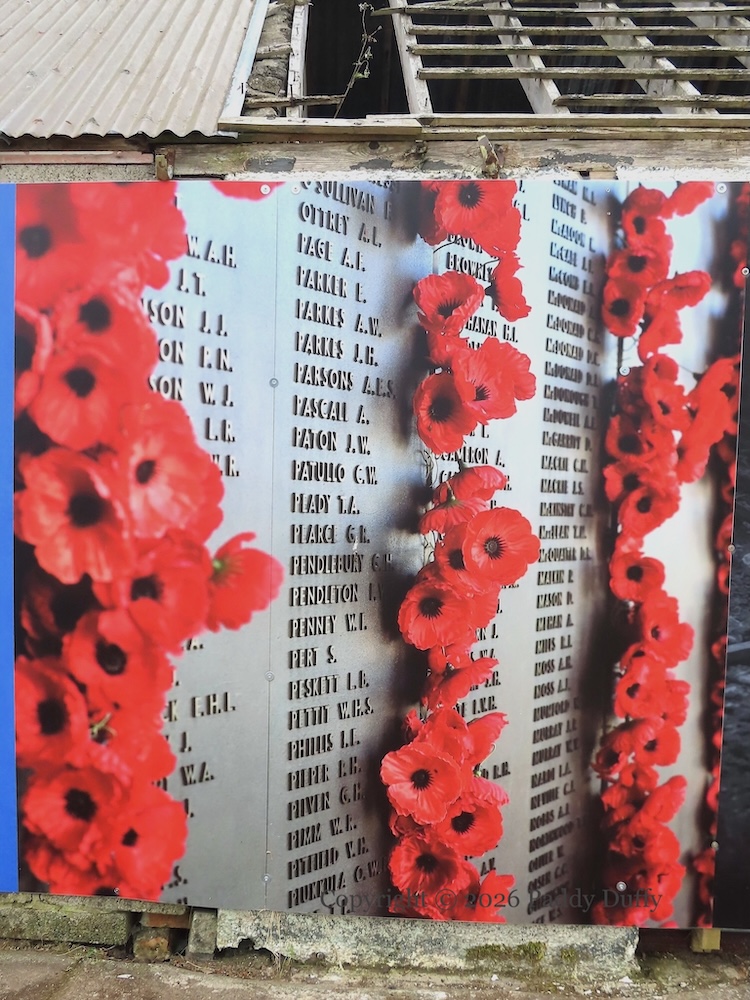
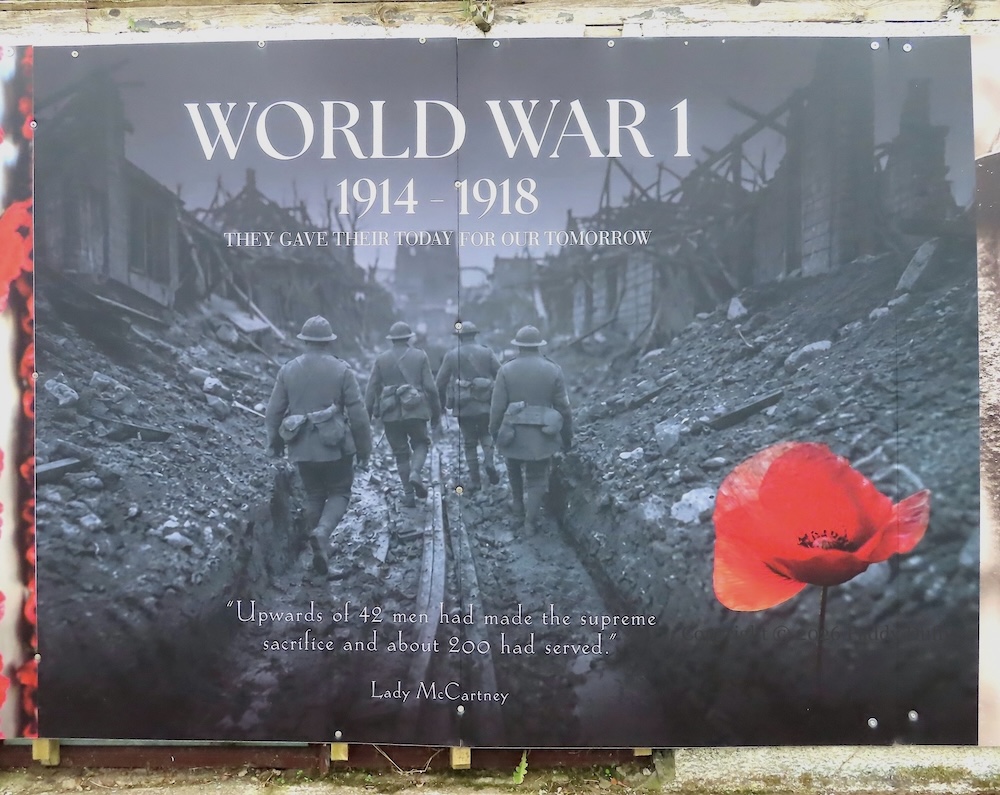
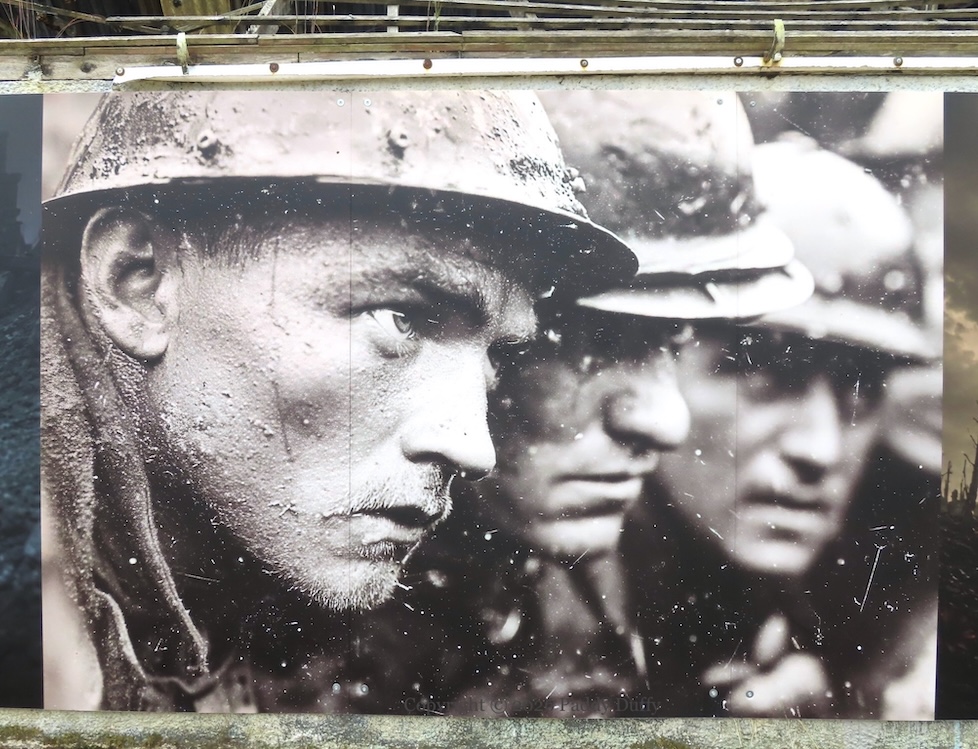
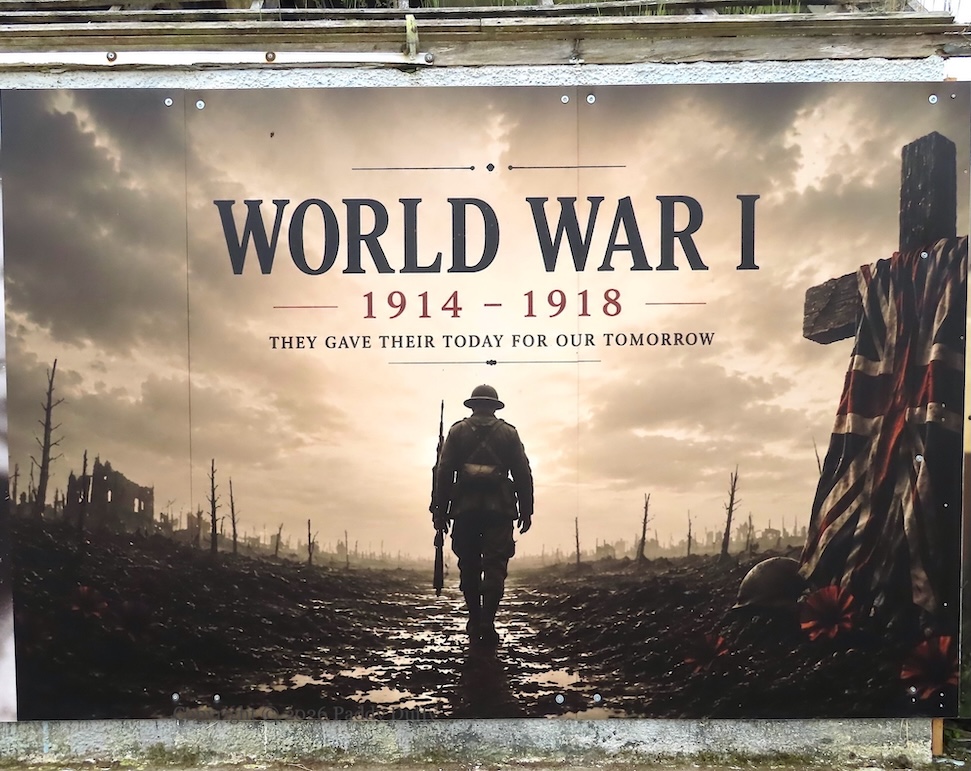
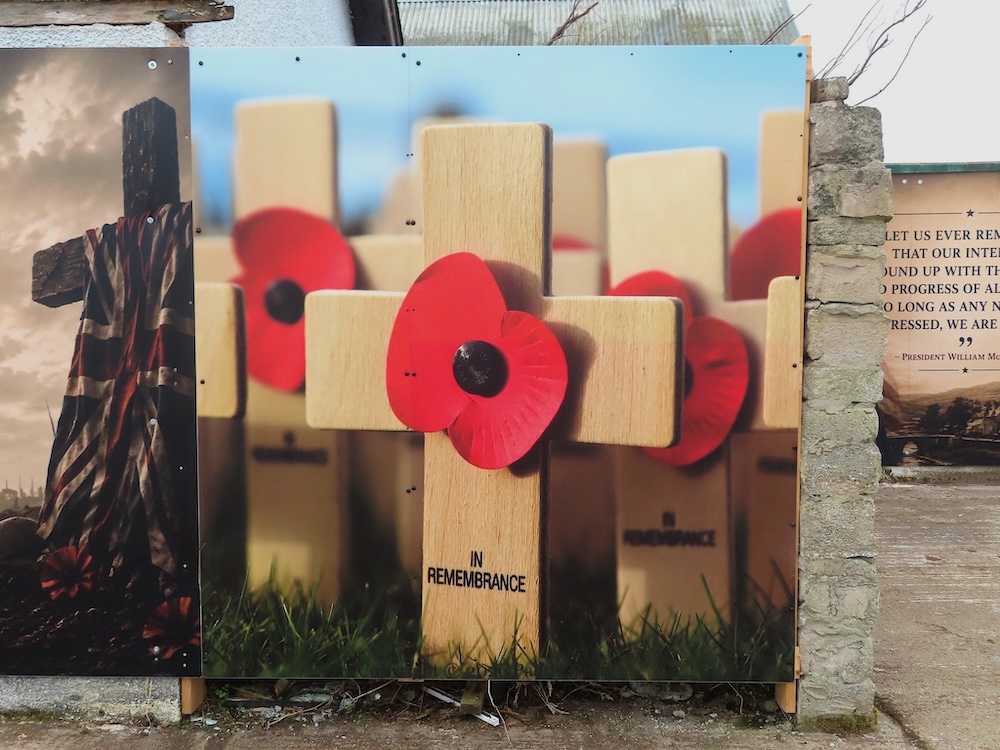
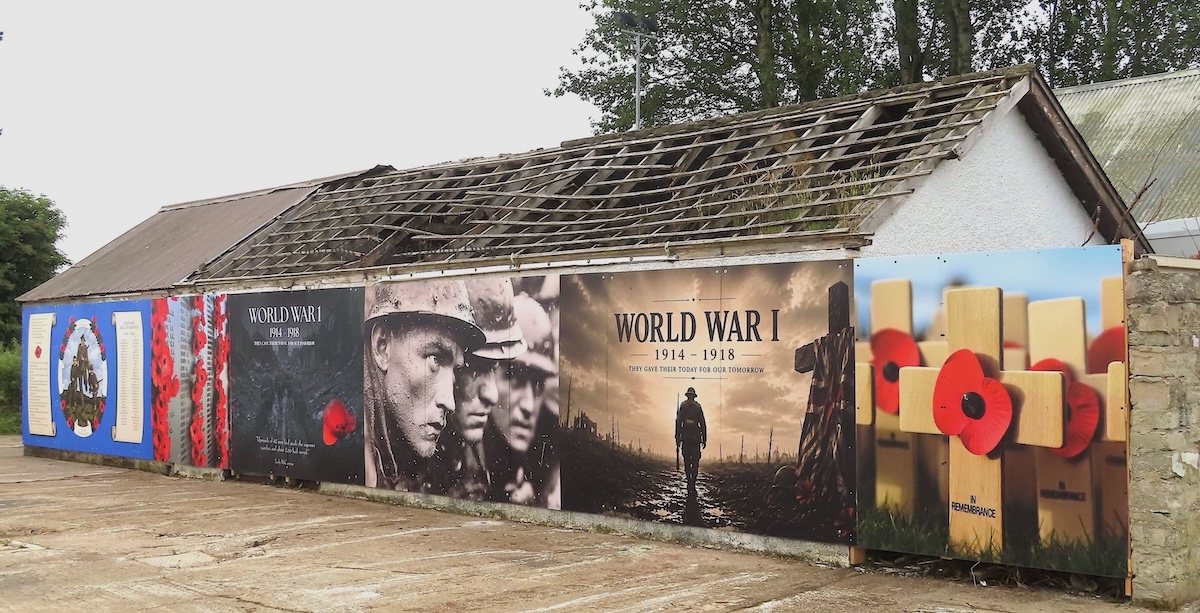
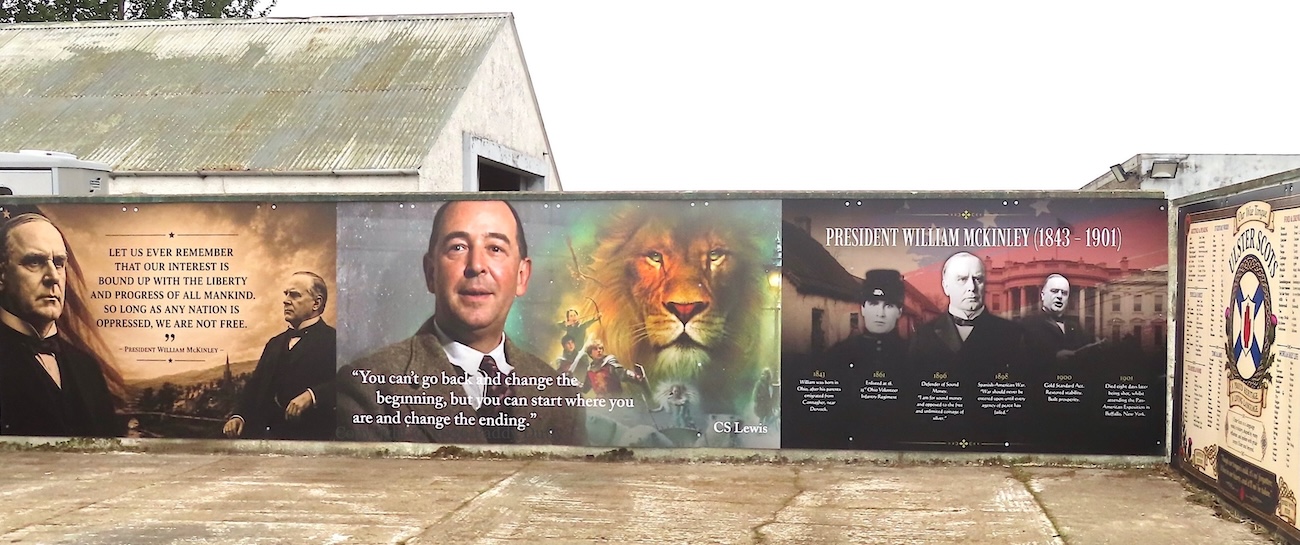
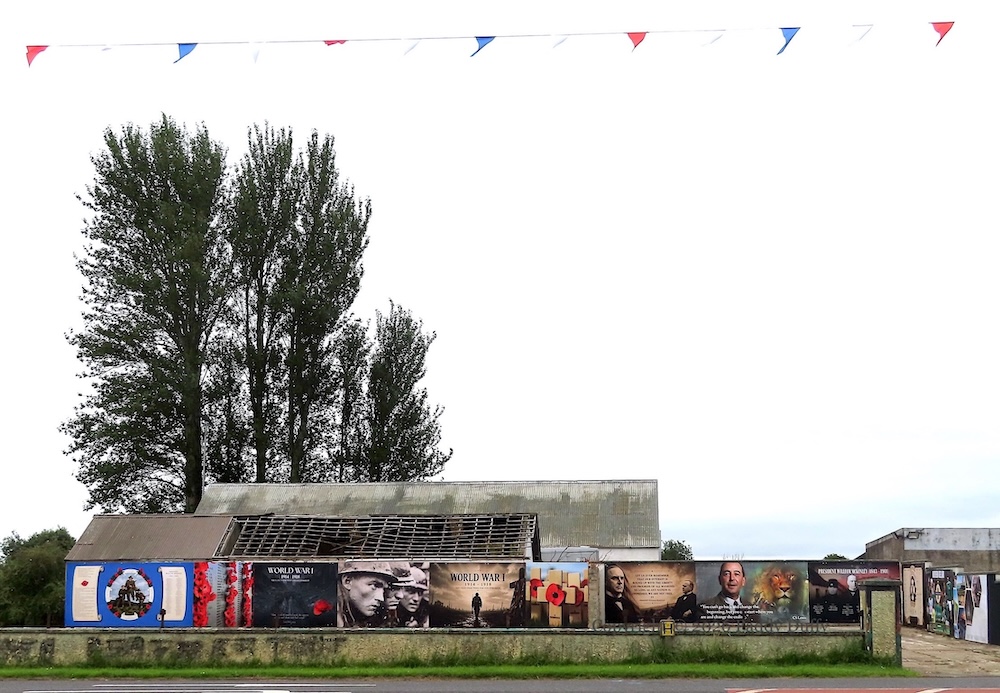
The left-hand part of this large installation in Dervock is given over to six boards commemorating the First World War and the locals who served and died in it. Sixty-two names are listed on the “roll of honour”, including the “Upwards of 42 men [who] had made the supreme sacrifice” from the roughly 200 who served – as noted by “Lady McCartney” (perhaps at the opening of the Dervock War Memorial Institute – Larne Times & Weekly Telegraph, 25th December 1922). (For the Institute, see Ulster War Memorials, which also gives a (very different) list of Dervock dead.) The central image was long ago a mural in the centre of the village – it can be seen in the plates to Bill Rolston’s Politics And Painting and as image 24 in volume one of Drawing Support.
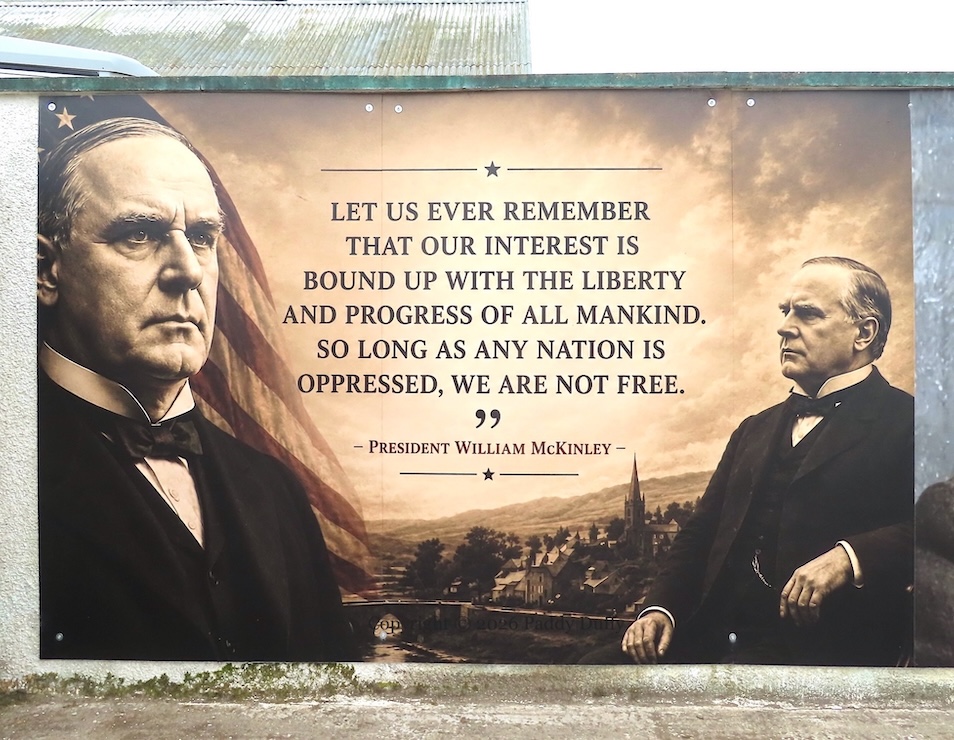
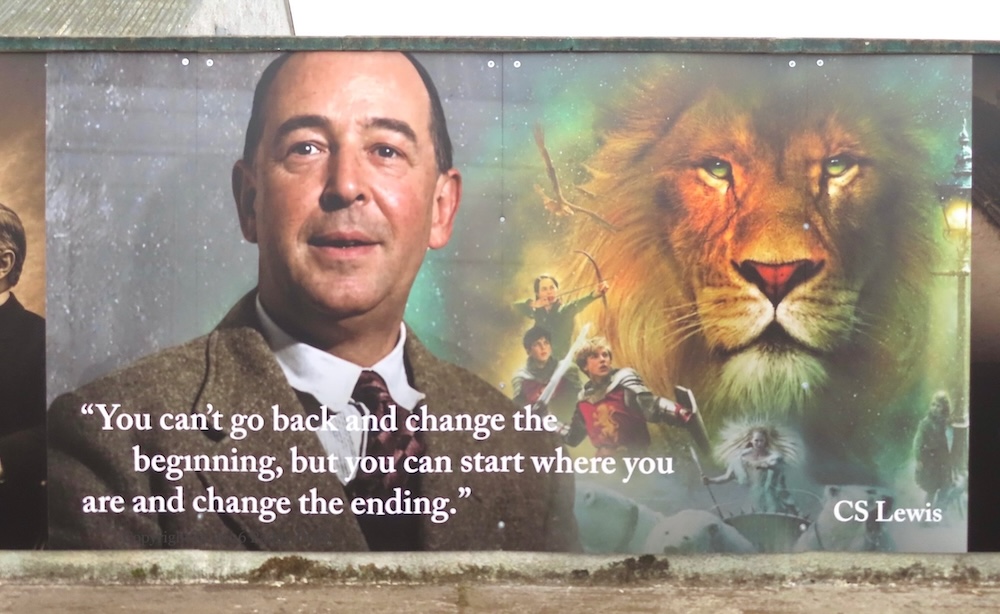
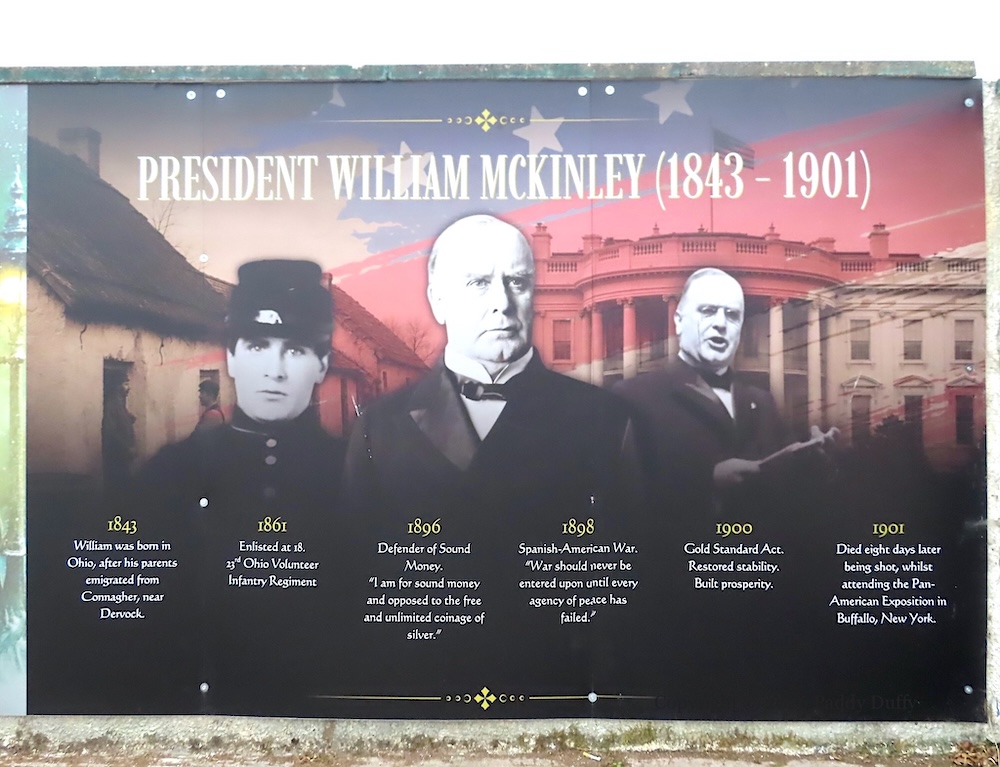
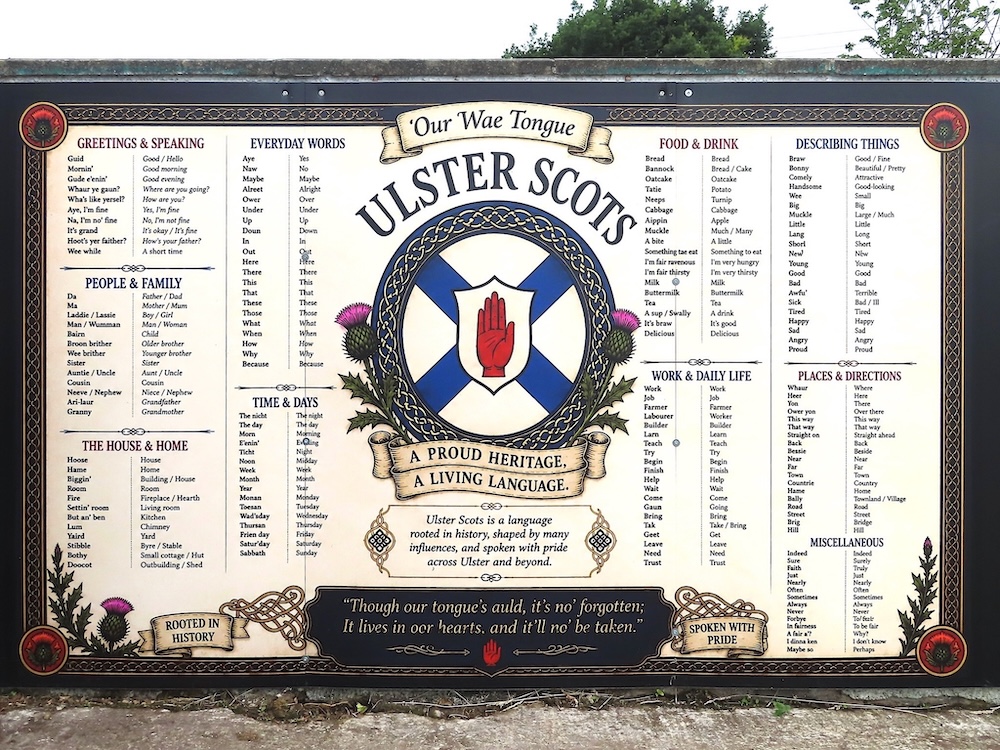
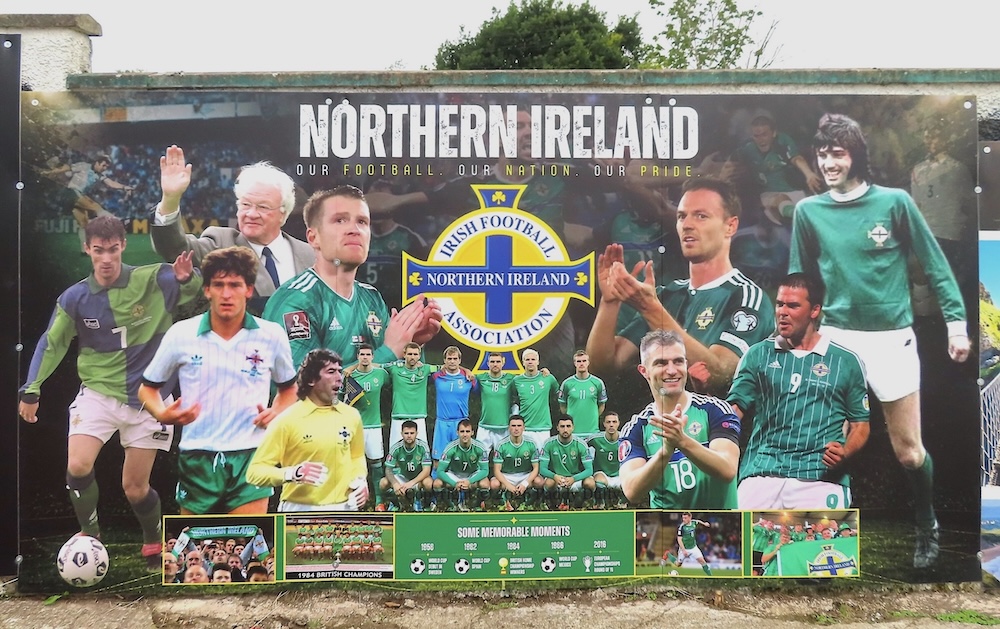
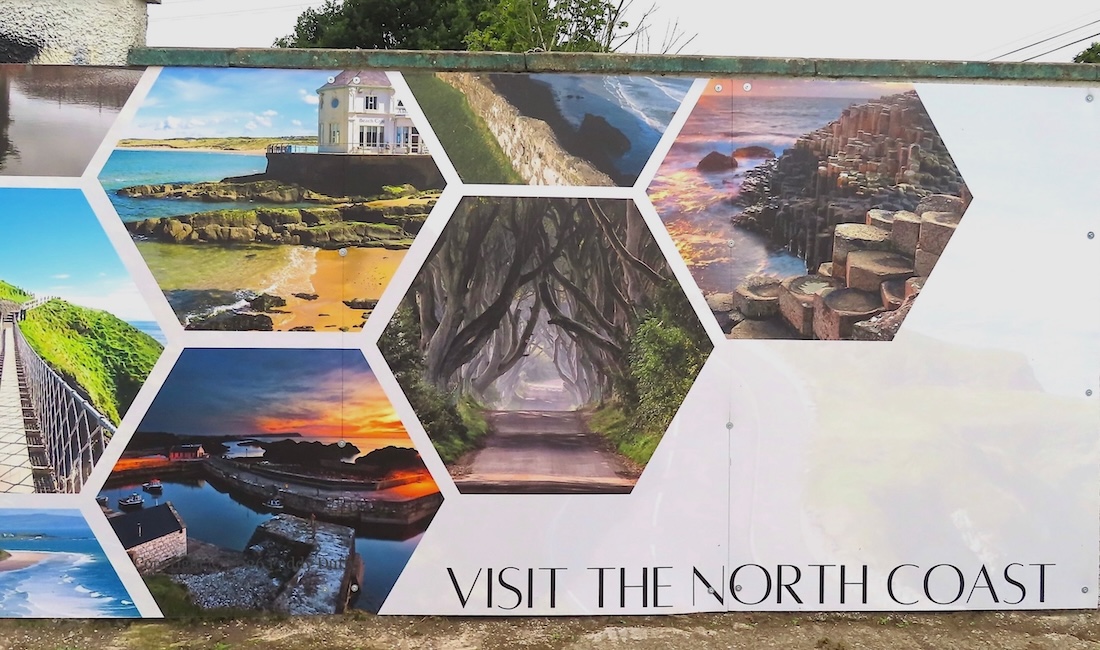
The right-hand part contains two boards about William McKinley, one to CS Lewis, one providing a small dictionary of Ulstèr-Scots words (“Our wae tongue – a proud heritage, a living language.”), one listing “memorable moments” of the Northern Ireland soccer team (“Our football. Our nation. Our pride.”), and one inviting people to “visit the north coast”.
There is no record (on-line, at least) of McKinley saying or writing, “Let us ever remember that our interest is bound up with the liberty and progress of all mankind. So long as any nation is oppressed, we are not free.” And only one of the quotations in the bio can be verified:
“President William McKinley (1843 – 1901). 1843: William was born in Ohio, after his parents [perhaps his great-great-grandfather] emigrated from Connagher [Conagher], near Dervock. 1861: Enlisted at 18. 23rd Ohio Volunteer Infantry Regiment. [The American Civil War] 1896: Defender of Sound Money [i.e. the Gold Standard]. “I am for sound money and opposed to the free and unlimited coinage of silver.” [“sound money” was a campaign slogan; the remainder can be found in the Republican policy platform of 1900] 1898: Spanish-American War. “War should never be entered upon until every agency of peace has failed.” [From the first inaugural, 1897, and so not in response to the Spanish-American War; Congress declared war despite McKinley’s reticence] 1900: Gold Standard Act. Restored stability. Built prosperity. 1901: Died eight days later [sic, “after”] being shot, whilst attending the Pan-American Exposition in Buffallo [sic] New York.”
See also: the Visual History page on Ulster-Scots murals.
CS Lewis did not say or write, “You can’t go back and change the beginning, but you can start where you are and change the ending.” (CS Lewis)
Knock Road, Dervock, with support from Causeway Policing And Community Safety Partnership (Causeway PCSP) and the Causeway Coast & Glens borough council’s Good Relations team. Unveiled July 2nd, 2026.
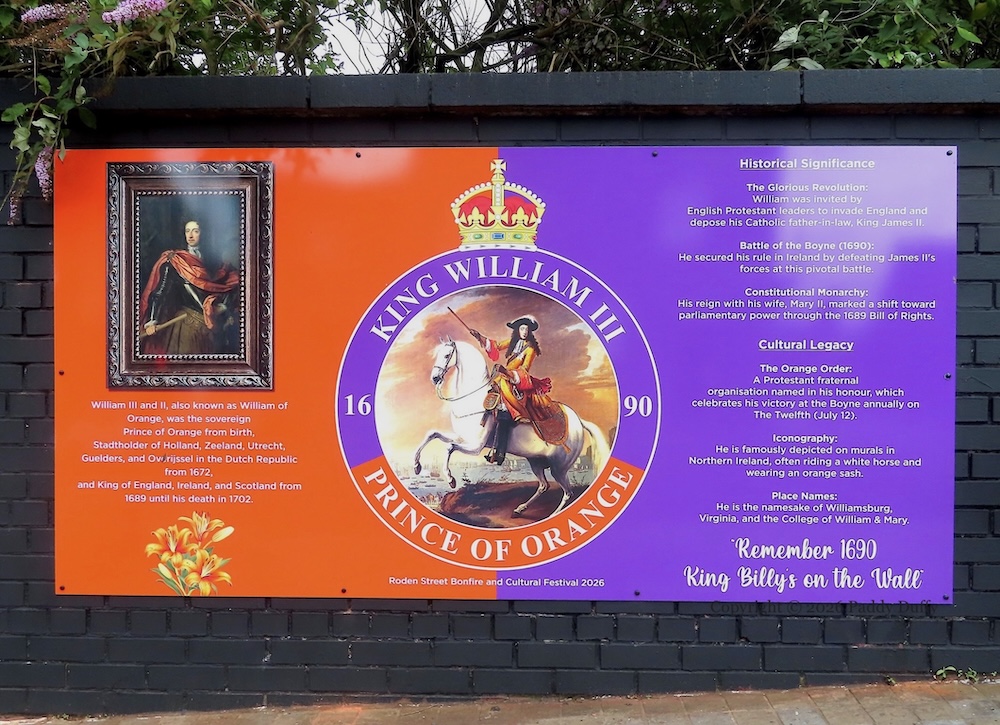
The “Roden Street Bonfire And Cultural Festival 2026” has events every day this week, leading up fireworks and the lighting of the bonfire on the Eleventh (Fb). This new board, at the Donegall Road end of Roden Street, was unveiled on June 28th (Fb video).
“William III and II, also known as William of Orange, was the sovereign Prince of Orange from birth, Stadtholder of Holland, Zeeland, Utrecht, Guelders, and Overijssel in the Dutch Republic from 1672, and King of England, Ireland, and Scotland from 1689 until his death in 1702.”
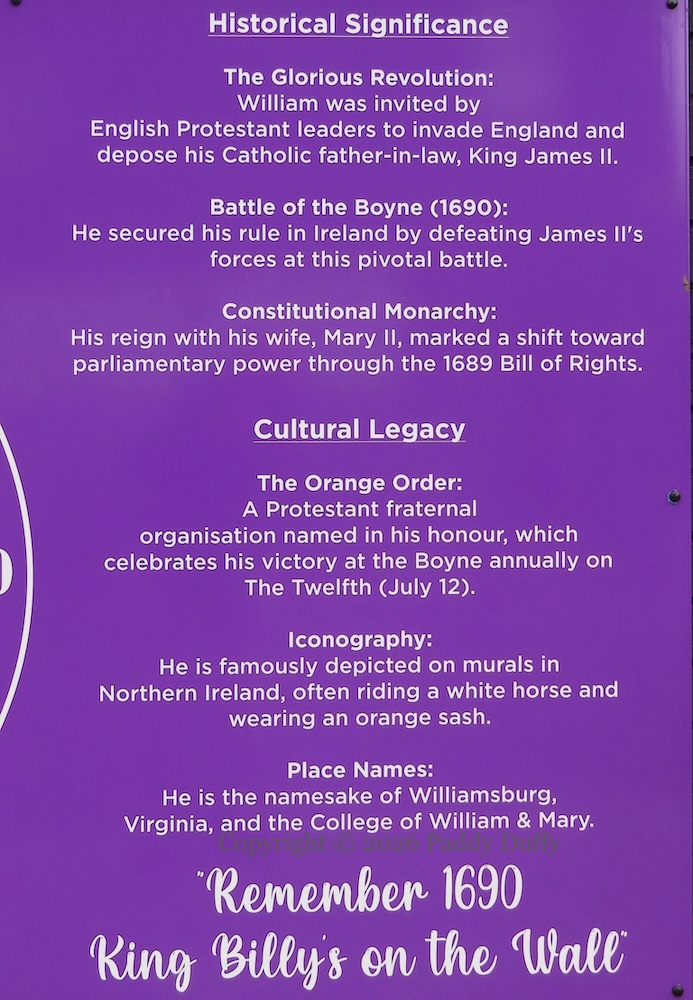
“Historical Significance. The Glorious Revolution: William was invited by English Protestant leaders to invade England depose his Catholic father-in-law, King James II. Battle of the Boyne (1690): He secured his rule in Ireland by defeating James II’s forces at this pivotal battle. Constitutional Monarchy: His reign with his wide, Mary II, marked a shift toward parliamentary power through the 1689 Bill of Rights. Cultural Legacy. The Orange Order: A Protestant fraternal organisation named in his honour, which celebrates his victory at the Boyne annually on The Twelfth (July 12). Iconography: He is famoulsy depicted on murals in Northern Ireland, often riding a white horse and wearing an orange sash. Place Names: He is the namesake of Williamsburg, Virginia, and the College of William and Mary. ‘Remember 1690 – King Billy’s on the Wall [youtube]'”
The portrait of William on the left is by Godfrey Kneller and part of the collection in the National Gallery Of Scotland.
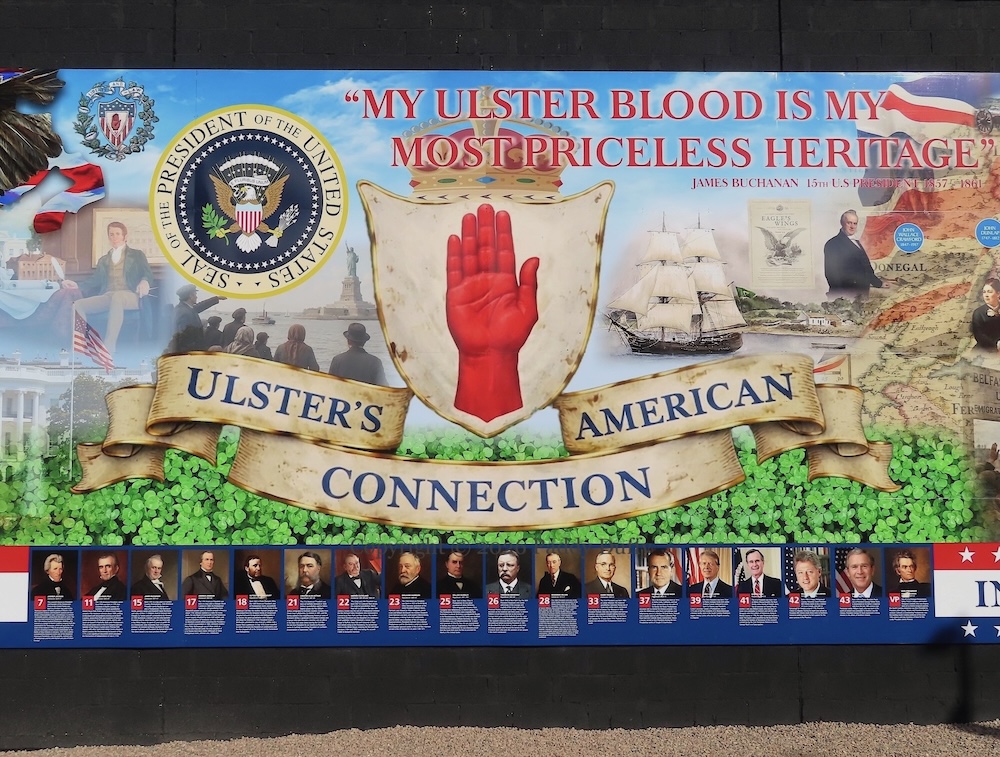
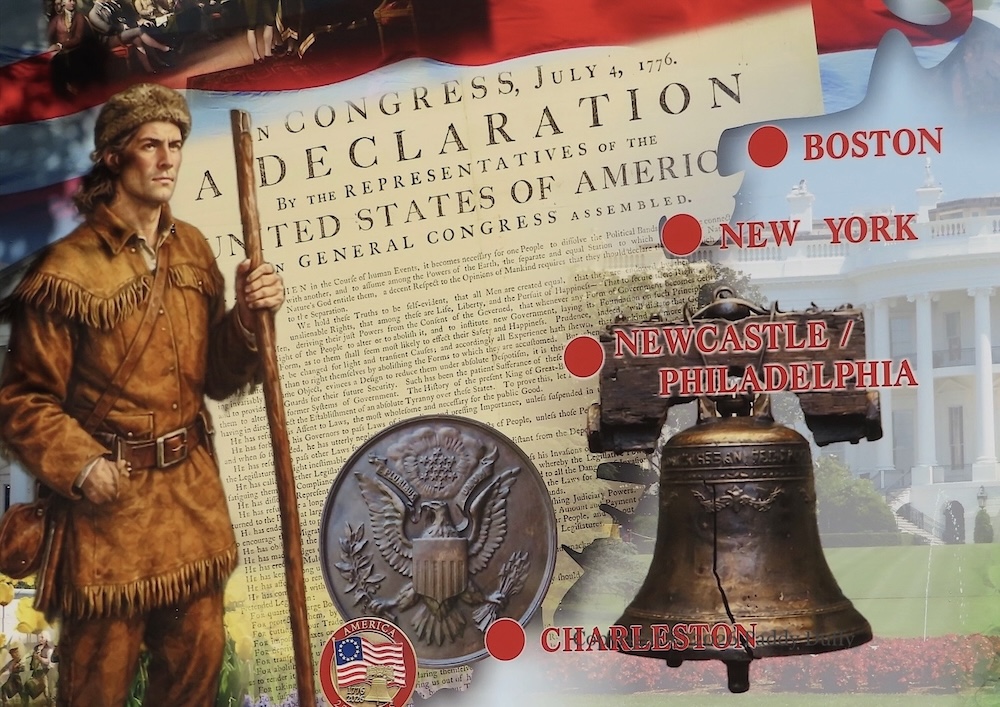
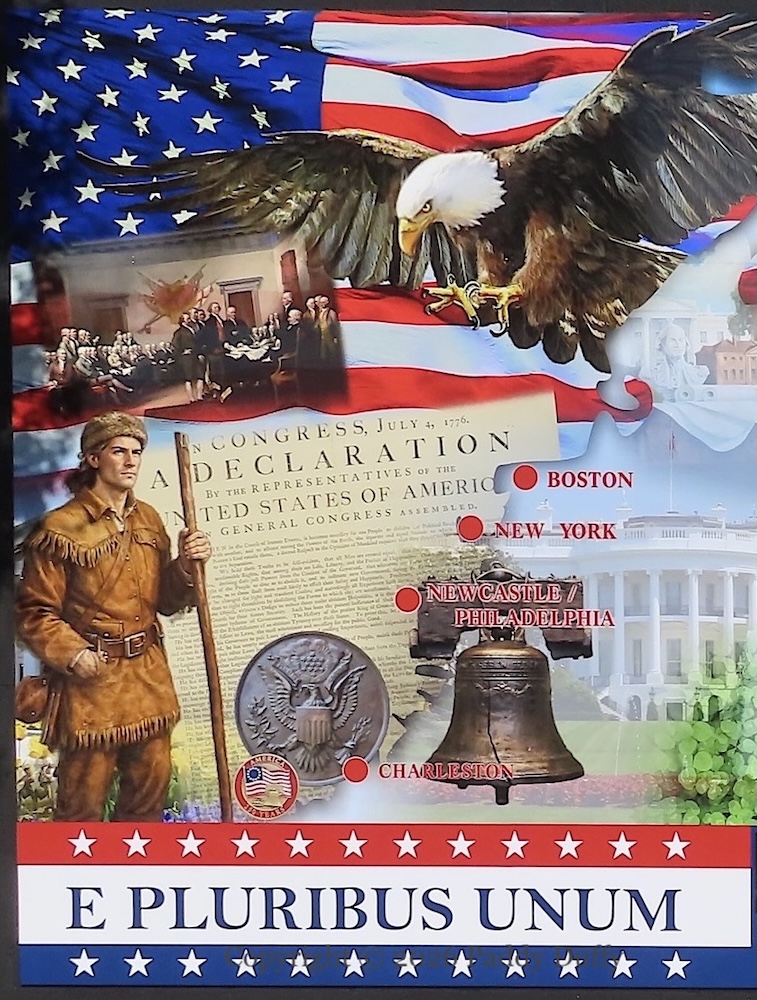
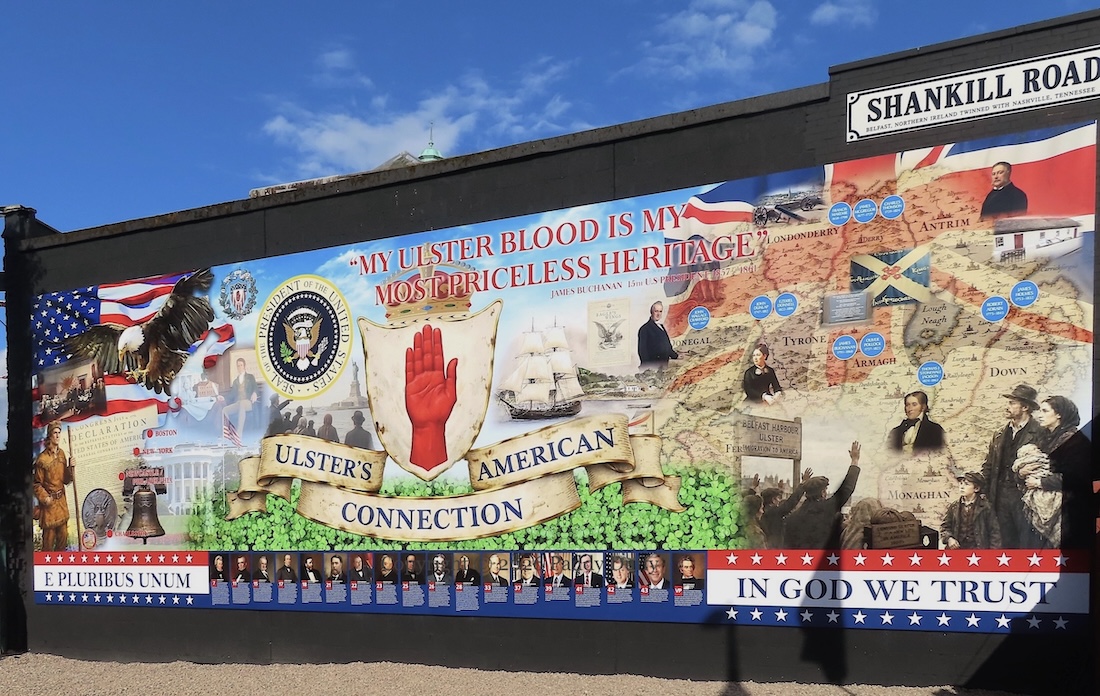
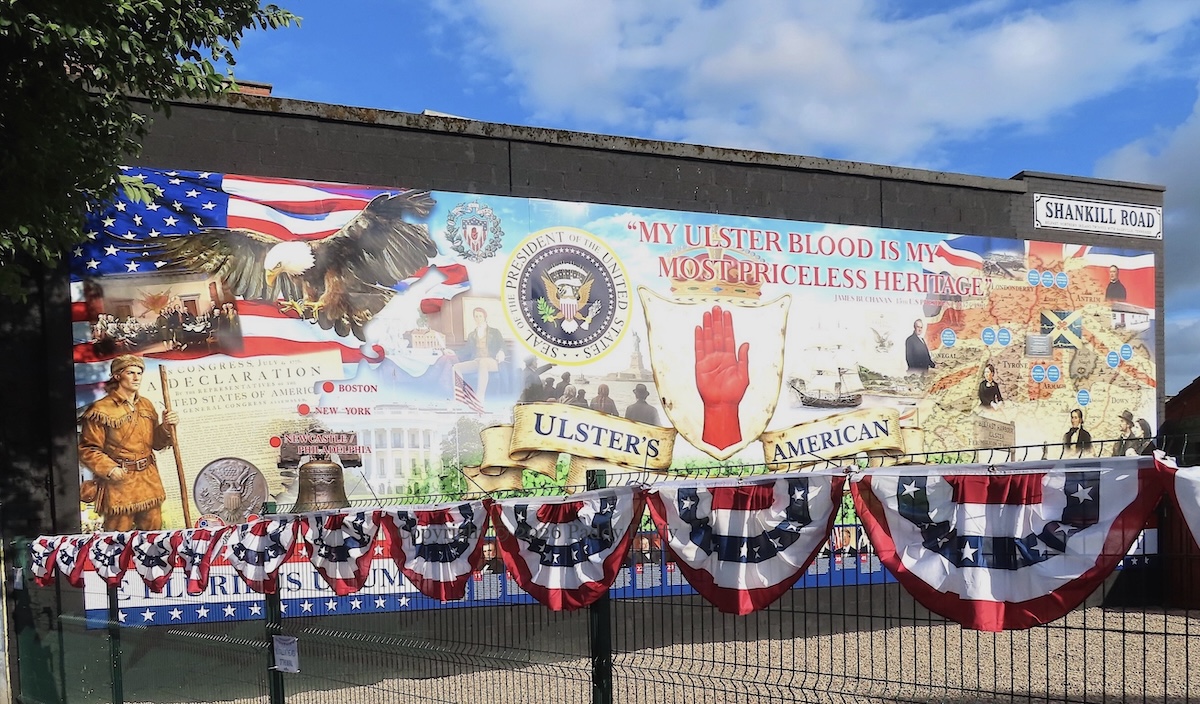
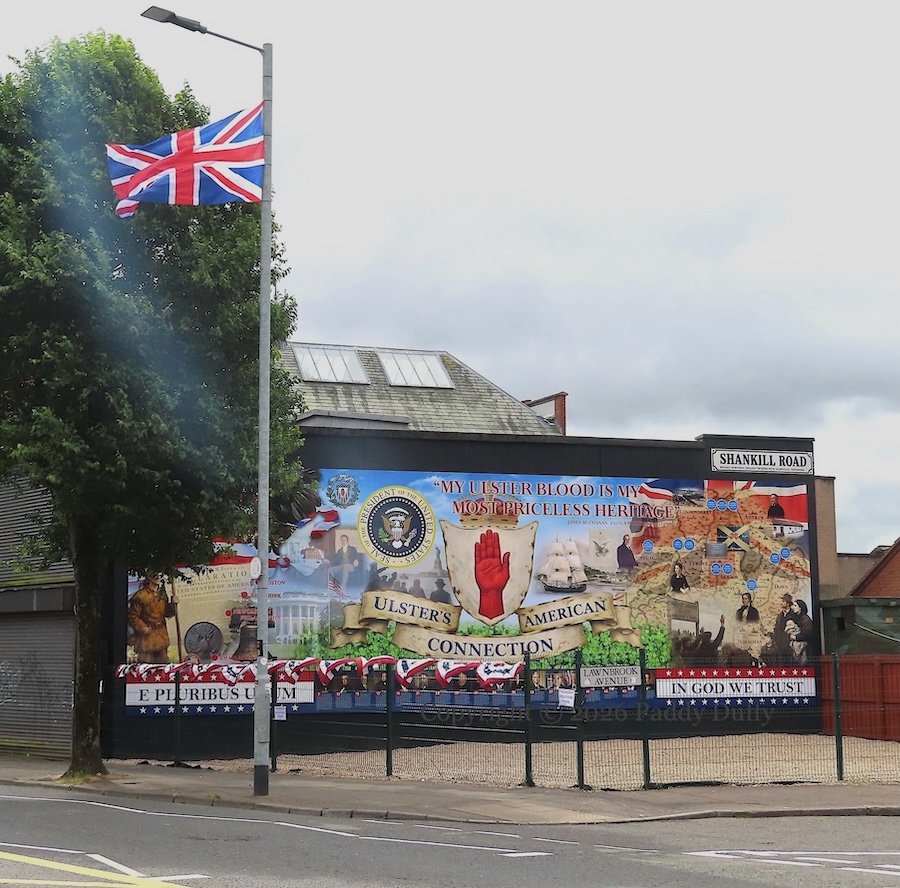
The United States Of America celebrates the 250th anniversary of its adoption of the Declaration Of Independence today, July 4th, 2026. In the Declaration, delegates from the thirteen (former) colonies set out their reasons for voting to overthrow British rule on July 2nd, noting twenty-seven grievances against the reigning monarch, George III of Great Britain And Ireland. At the time, the American Revolution was ongoing, and the Continental Congress meeting this time in Philadelphia was soon compelled to move to Baltimore, Maryland; the permanent Congress was not established until 1781.
On the left of the board, various symbols of the eventual United States Of America – John Trumbull’s painting ‘Declaration Of Independence’ (image at WP) and a bald eagle upon a Stars And Stripes formed by an outline of the eastern sea-board (which for an unknown reason lists New Castle (not “Newcastle”) alongside Philadelphia), the Liberty Bell, an “America 250 years” pin, the Seal, the Declaration, and a trapper or frontiersman who represents the westward expansion of European Americans – including the Scotch-Irish (Ulster Sails West) – across the continent.
The “liberty and law” emblem, with the red hand against the stars and stripes, surrounded by a garland of thistle and shamrock, is unknown.
The seated gentleman is James Hoban, a Catholic from Co Kilkenny, who studied architecture in Dublin and (after emigrating in 1878) designed the White House – a three-storey model (later reduced to two) is on the desk behind his quill – and (in the framed picture behind him) the Charleston (South Carolina) court-house.
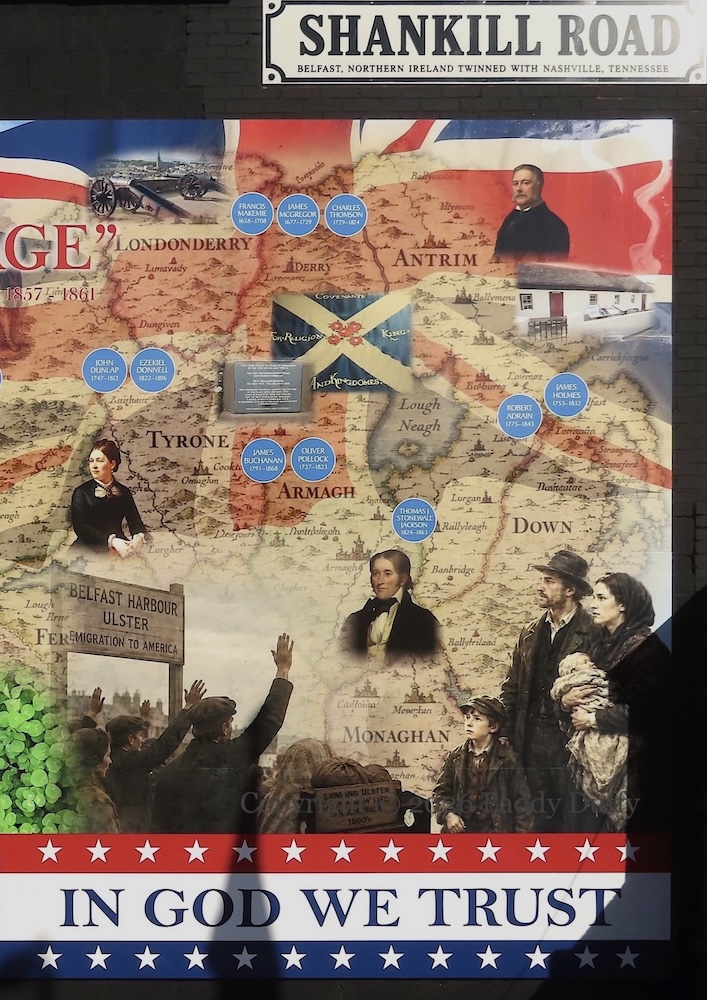
In the centre is a quote attributed to James Buchanan, “My Ulster blood is my most priceless heritage”; for confusion over the quote see James Buchanan. Buchanan is also pictured (next to the word “Donegal”). The Great Seal was designed by Charles Thomson, originally from Maghera. He was also a signatory to the Declaration.
The crown above the red hand is probably the Tudor Crown, destroyed in 1649 (WP). A bed of shamrock supports the title banner.
The Ulster-Scots lineage of seventeen presidents (plus vice-president Andrew Calhoun) is presented along the bottom between the mottos “E pluribus unum” and “In God we trust”. (The Ulster-Scots Agency has a pdf of the Presidents.)
On the right, the poster marked “Eagle’s Wings”, under the Buchanan quote, also appears to come from the Ulster-Scots Agency. It is actually about the Eagle Wing, the ship pictured to the poster’s left (as imagined by water-colour painter Dan Parsons) that undertook the first voyage of Scots-Irish to North America in 1636. The journey was not a success: the roughly 140 dissenters returned to Ireland and some went to Scotland to avoid continued persecution (Presbyterian History.)
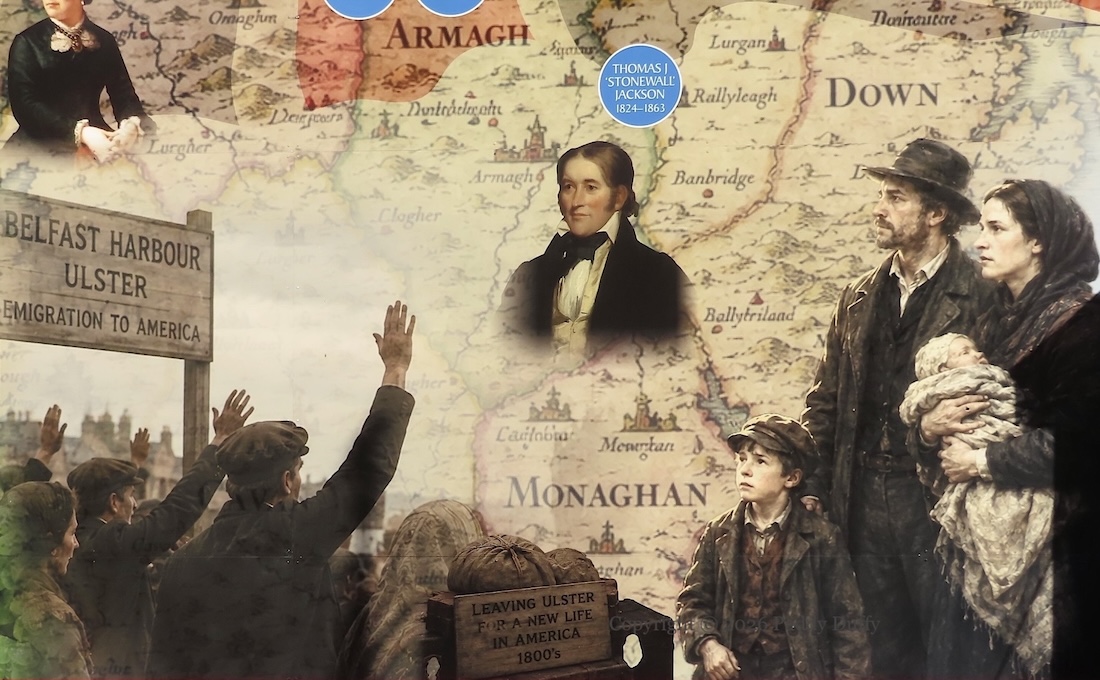
The ‘Blue Plaques’ of various notable figures are superimposed upon a period map: John Wallace Crawford, Francis Makemie, James McGregor, Charles Thomson, John Dunlap, Ezekiel Donnell, James Buchanan, Oliver Pollock, Thomas J ‘Stonewall’ Jackson, Robert Adrain, James Holmes. The portraits are of James Buchanan, Teddy Roosevelt (above Andrew Jackson’s ancestral cottage in Carrickfergus), Davey Crockett, and an unknown female figure (comment/get in touch if you can identify her).
The gravestone is to the Rev William Martin, a Reformed Presbyterian (Covenanter) minister, who led a contingent of 1,000 people in five ships in 1772 to Charlestown, South Carolina (Reformation History | History Ireland). The flag is the flag of the Covenanters (WP).
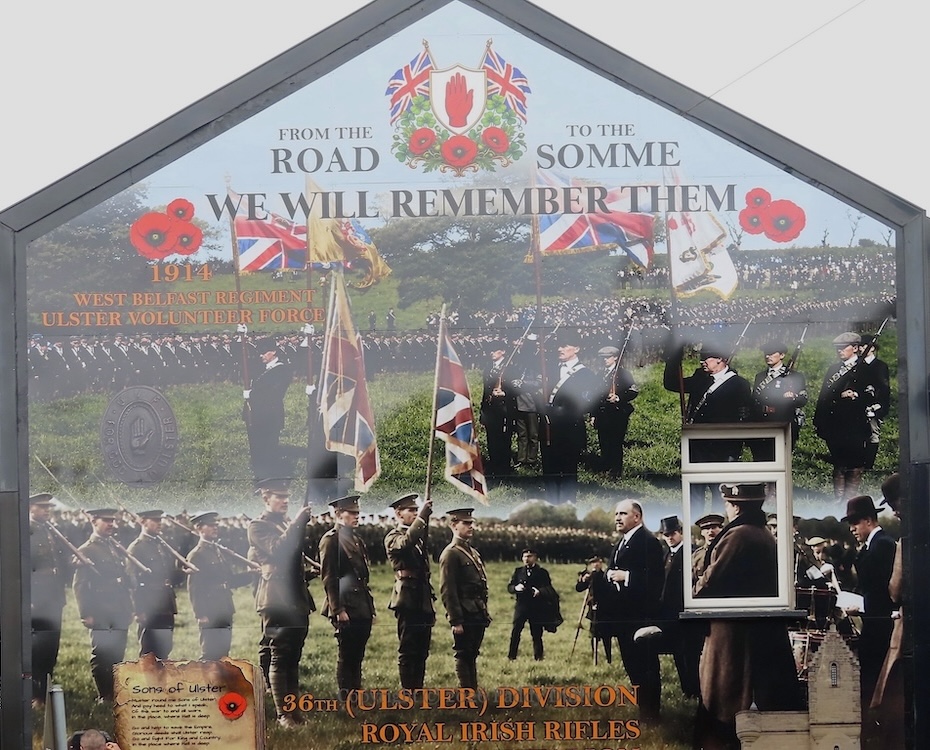
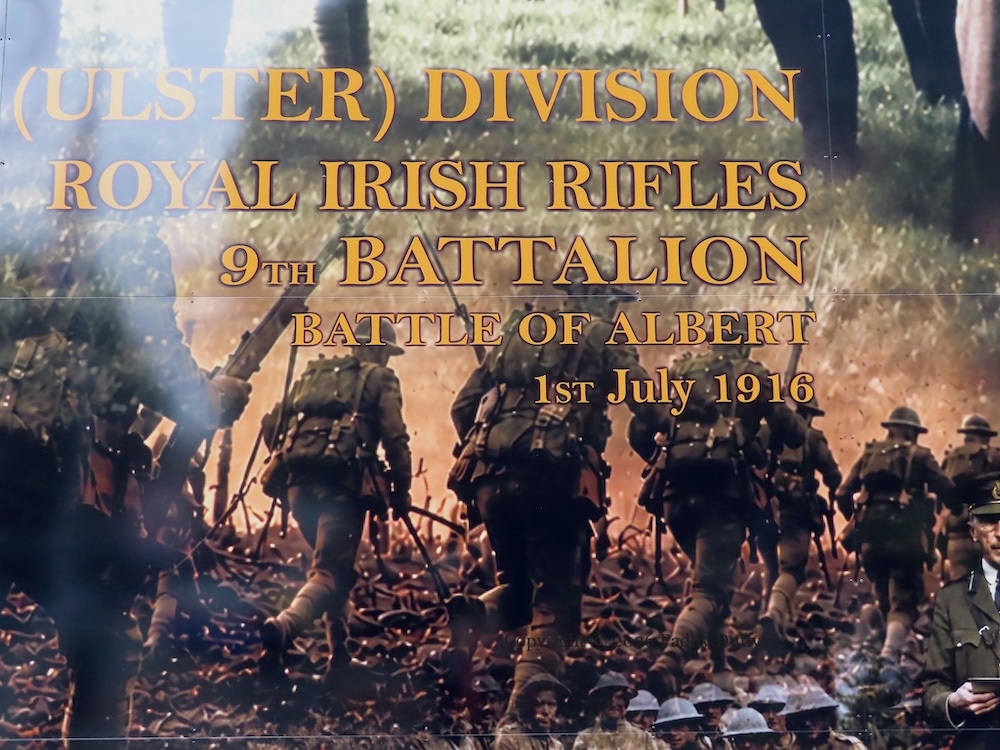
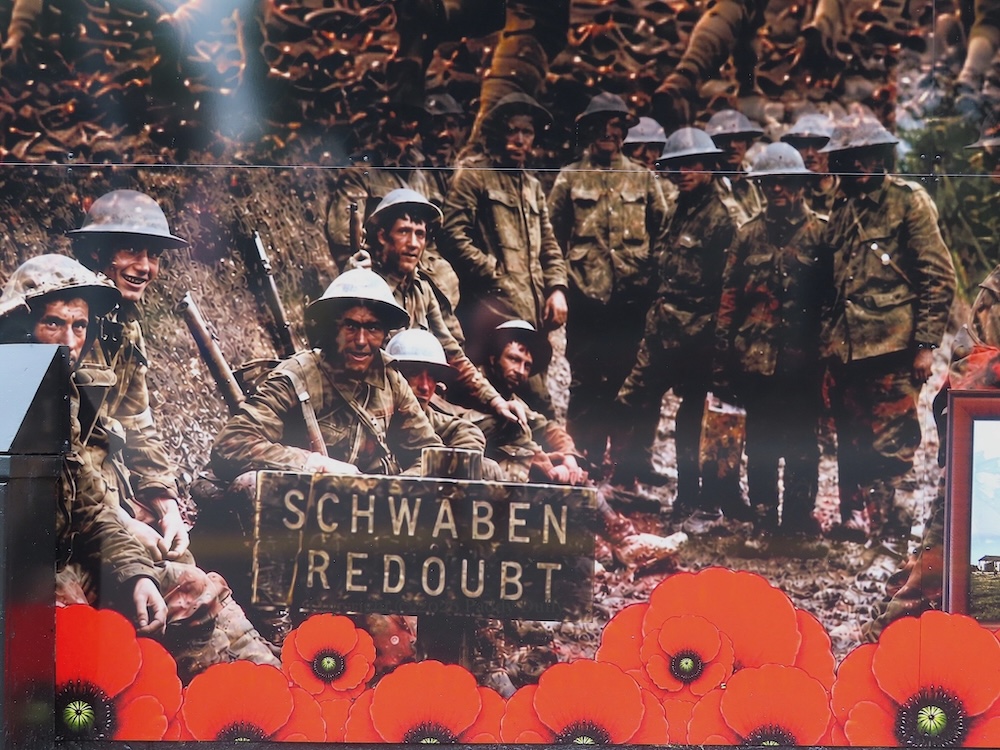
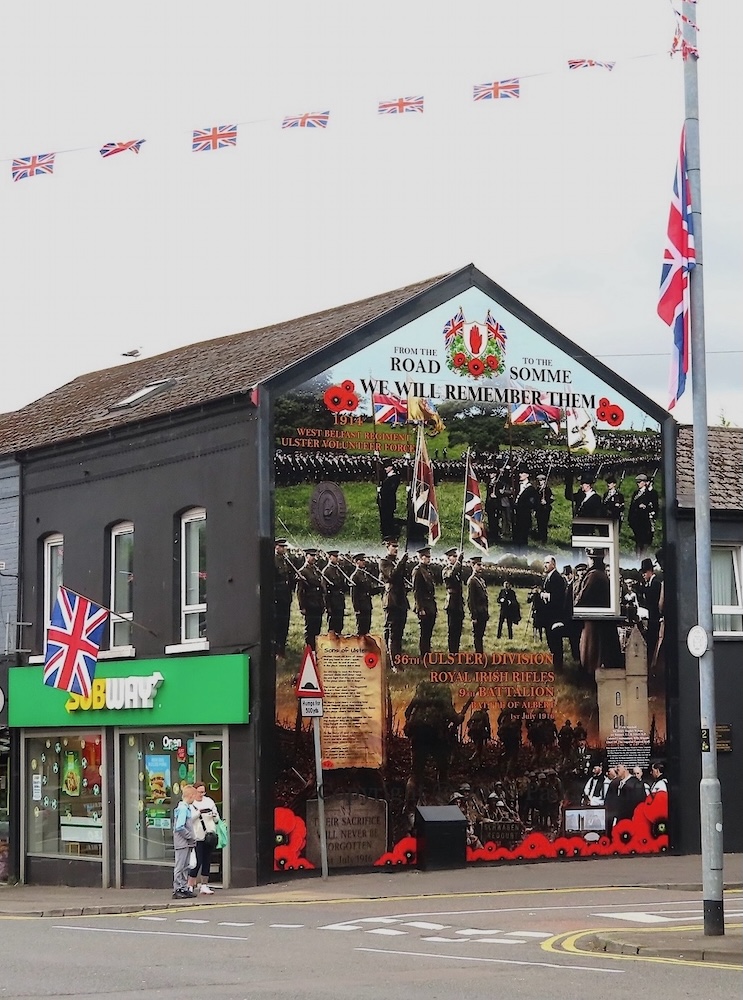
“1914 West Belfast regiment, Ulster Volunteer Force – 36th (Ulster) division, Royal Irish Rifles.” Men from the West Belfast Ulster Volunteers – which included the Shankill and Woodvale areas – joined the 9th battalion of the Royal Irish Rifles, which became part of the 107th brigade of the 36th division.
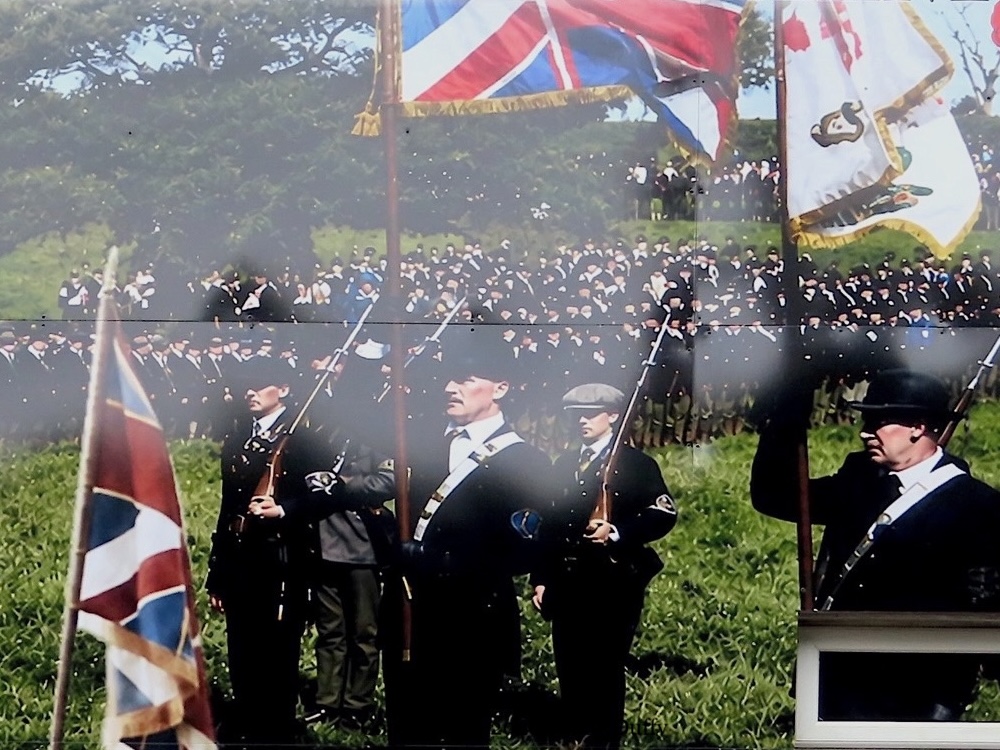
The main part of this new gable-sized board places two colourised photographs on top of each other. The first (upper) photo shows shows the first and second battalions of the West Down regiment being presented with their colours in May, 1914 (CyberProd). The second (lower) photo shows the first and second battalions of the West Belfast regiment receiving the Kings colours in May, 1914 (CyberProd).
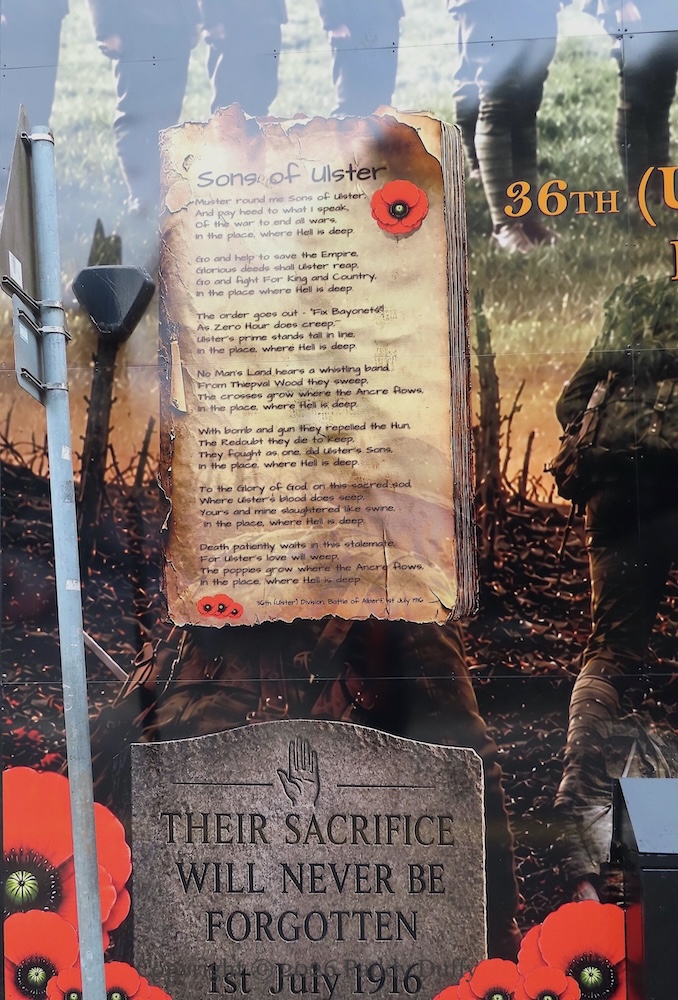
In the bottom left corner is a poem called “Sons of Ulster” written on a scroll: “Muster round me Sons of Ulster,/And pay heed to what I speak,/Of the war to end all wars,/In the place where hell is deep.//Go and help to save the Empire,/Glorious deeds shall Ulster reap./Go and fight for King and Country,/In the place where hell is deep.//The order goes out – “Fix Bayonets!”/As Zero Hour does creep,/Ulster’s prime stands tall in line,/In the place where hell is deep.//No-Man’s Land hears a whistling band,/From Thiepval Wood they sweep./The crosses grow where the Ancre flows,/In the place where hell is deep.//With bomb and gun they repelled the Hun,/The Redoubt they die to keep./They fought as one did Ulster’s Sons,/In the place where hell is deep.//To the Glory of God on this sacred sod,/Where Ulster’s Blood does seep,/Yours and mine slaughtered like swine,/In the place where hell is deep.//Death patiently waits in this stalemate,/For Ulster’s love will weep,/The poppies grow where the Ancre flows,/In the place where hell is deep.”
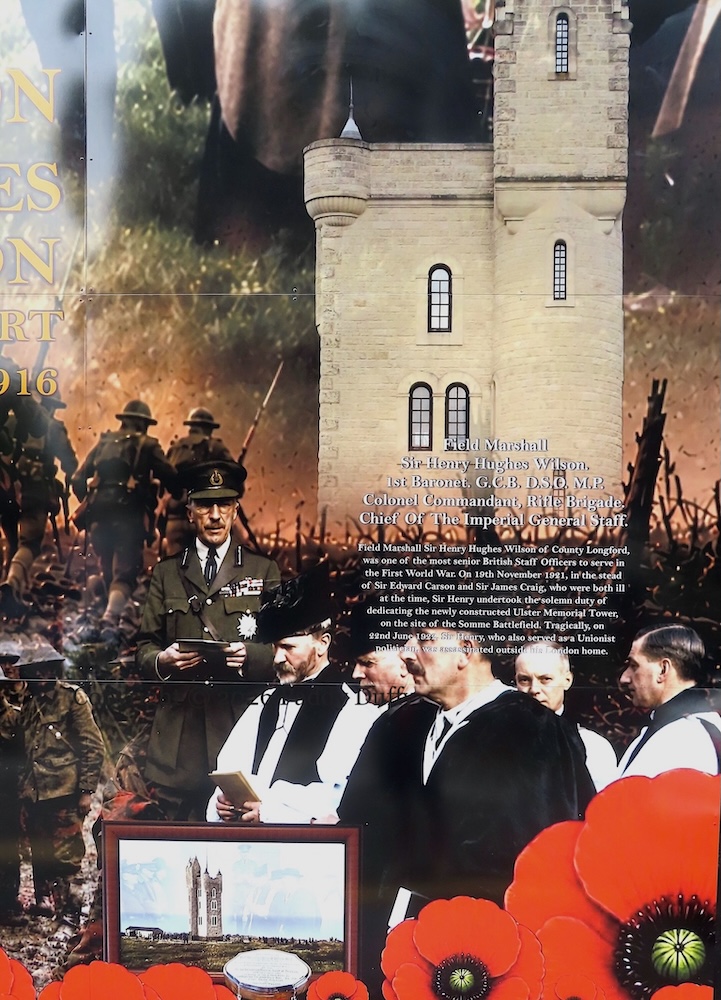
In the bottom right, the Ulster Tower is dedicated: “‘Field Marshall Sir Henry Hughes Wilson, 1st Baronet, GCB, DSO, MP, Colonel Commandant, Rifle Brigade, Chief Of The Imperial General Staff. Field Marshall Sir Henry Hughes Wilson of County Longford, was one of the most senior British Staff Officers to serve int he First World War. On 18th November 1921, in the stead of Sir Edward Carson and Sir James Craig, who were both ill at the time, Sir Henry undertook the solemn duty of dedicating the newly constructed Ulster Memorial Tower, on the site of the Somme battlefield. Tragically, on 22nd June 1922, Sir Henry, who also served as a Unionist politician, was assassinated outside his London home.”
Conway Street, Shankill, west Belfast, replacing Ulster Tower.
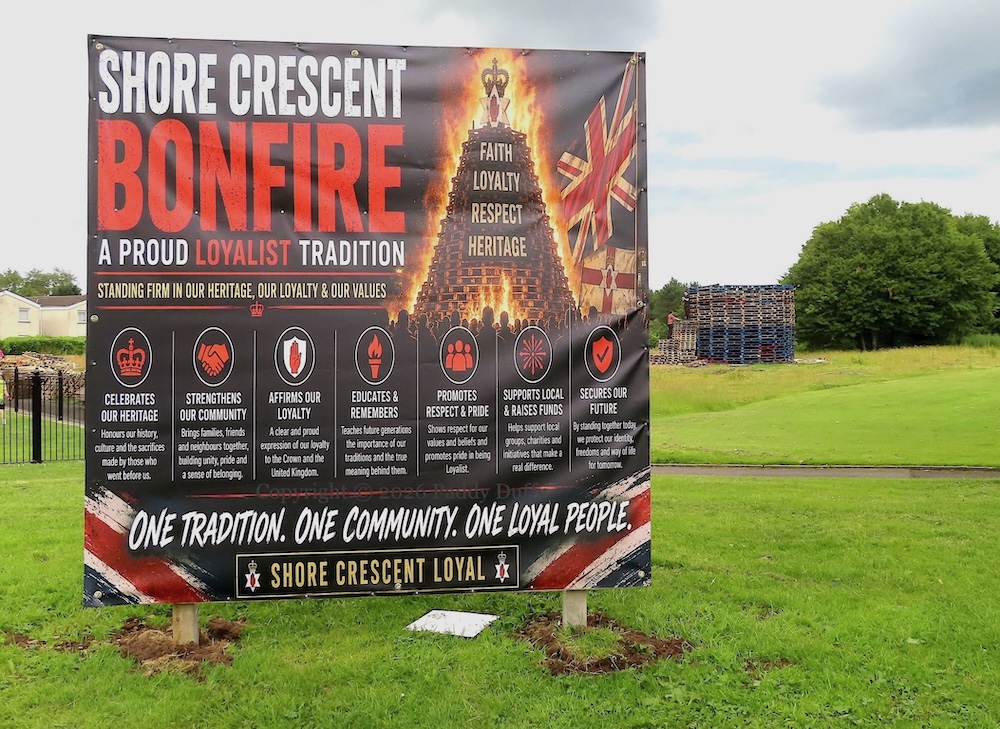
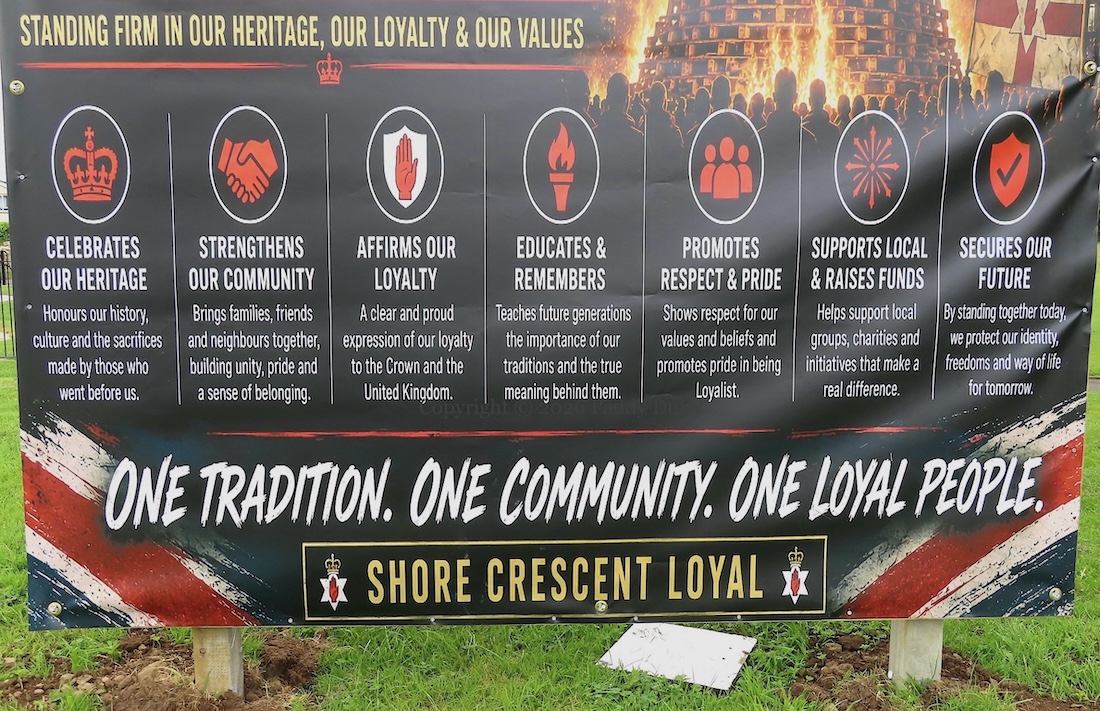
Shore Crescent prepares for Eleventh Night with a bonfire and a large sign explaining the positive impact of the tradition:
“Shore Crescent bonfire – a proud loyalist tradition. Standing firm in our heritage, our loyalty & our values. Faith – loyalty – respect – heritage. [The bonfire …] Celebrates our heritage – honours our history, culture and the sacrifices made by those who went before us; strengthens our community – brings families, friends and neighbours together, building unity, pride and a sense of belonging; affirms our loyalty – a clear and proud expression of our loyalty to the Crown and the United Kingdom; educates & remembers – teaches future generations the importance of our traditions and the true meaning behind them; promotes respect & pride – shows respect for our values and beliefs and promotes pride in being Loyalist; supports local [groups] & raises funds – helps support local groups, charities and initiatives that make a real difference; secures our future – by standing together today, we protect our identity, freedom and way of life for tomorrow. One tradition. One community. One loyal people. Shore Crescent loyal.”
Next to Loughside Playground, Shore Road, north Belfast




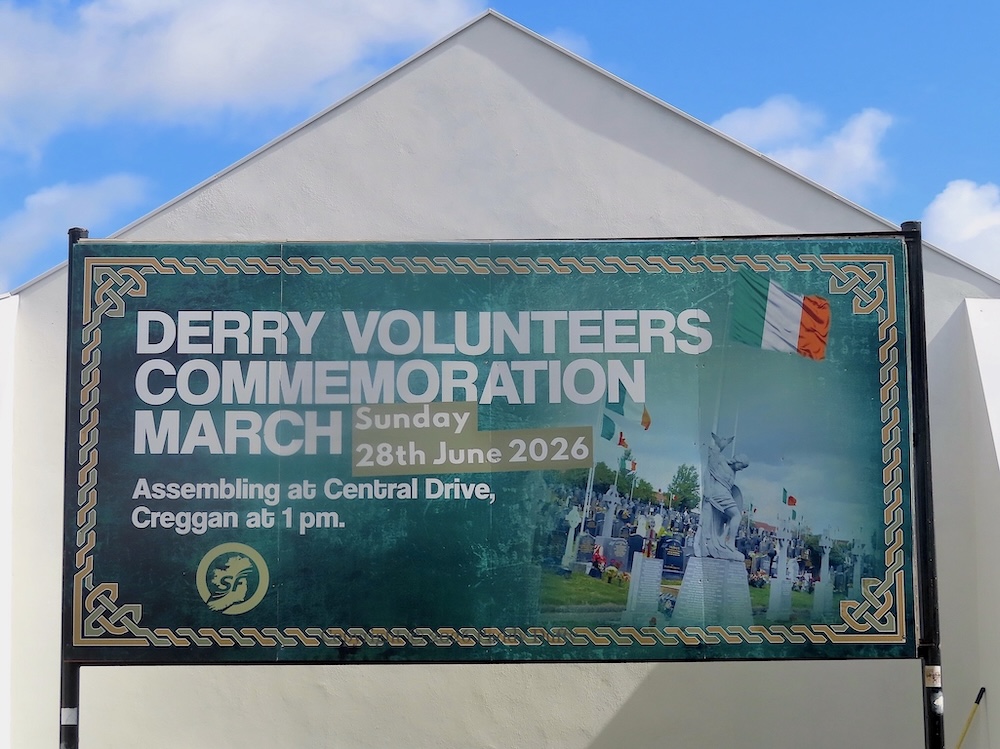
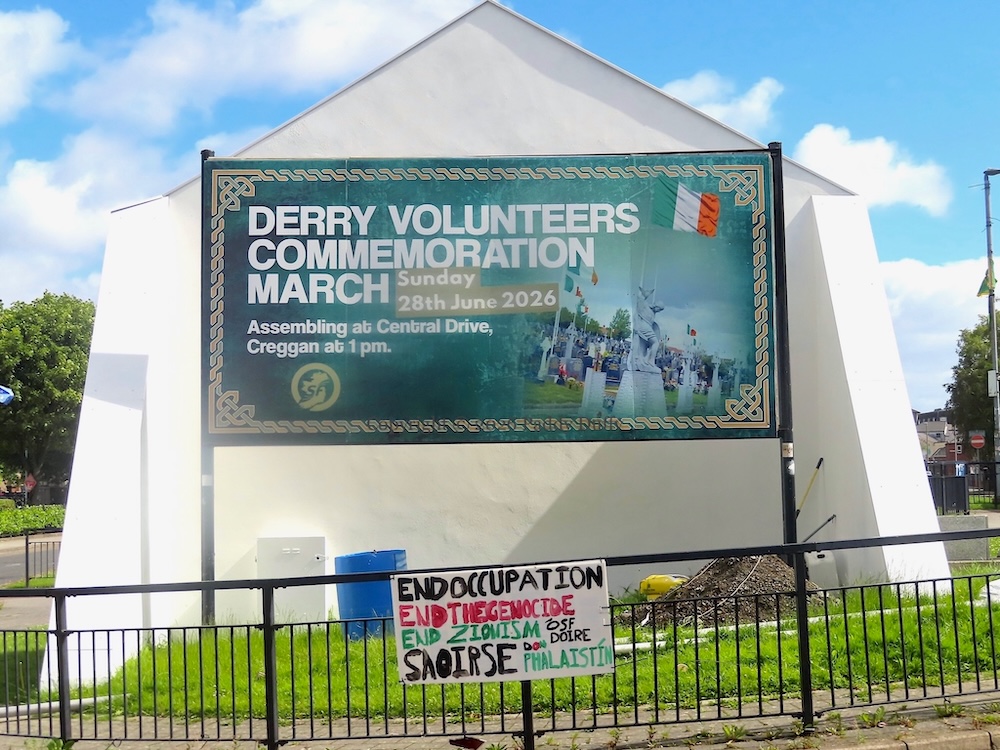
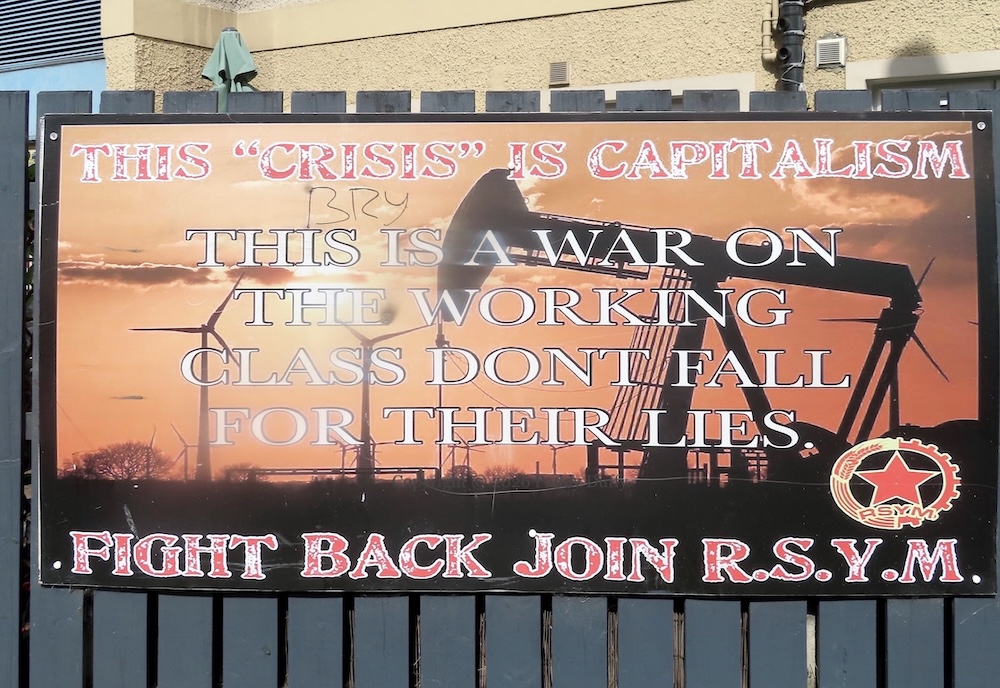
 Paddy Duffy Collection