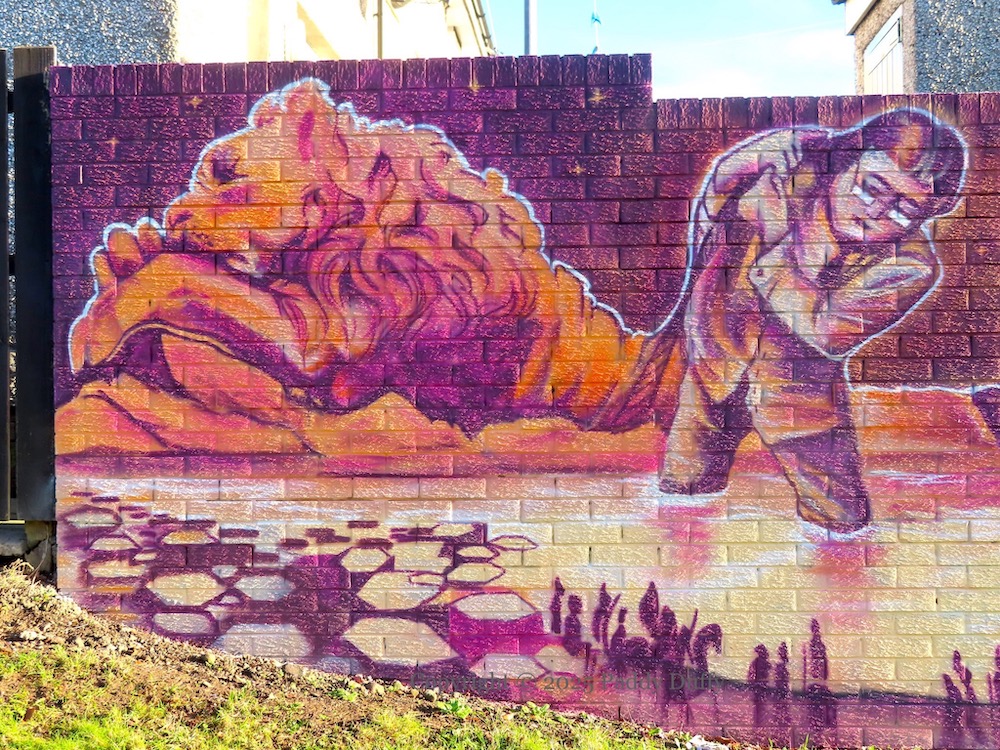
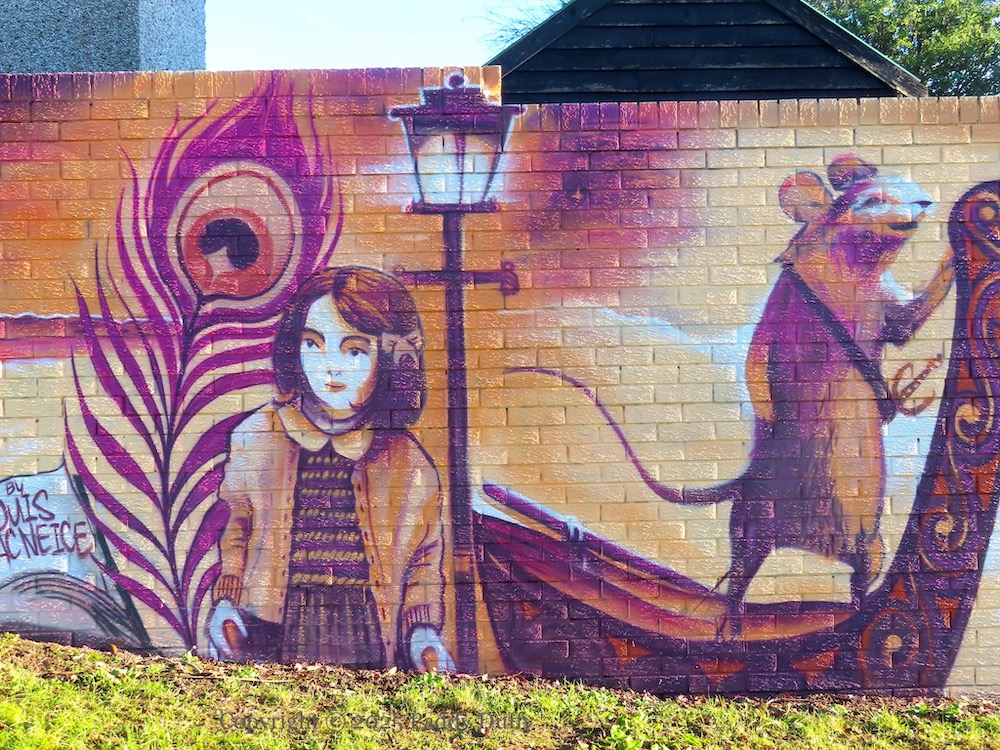
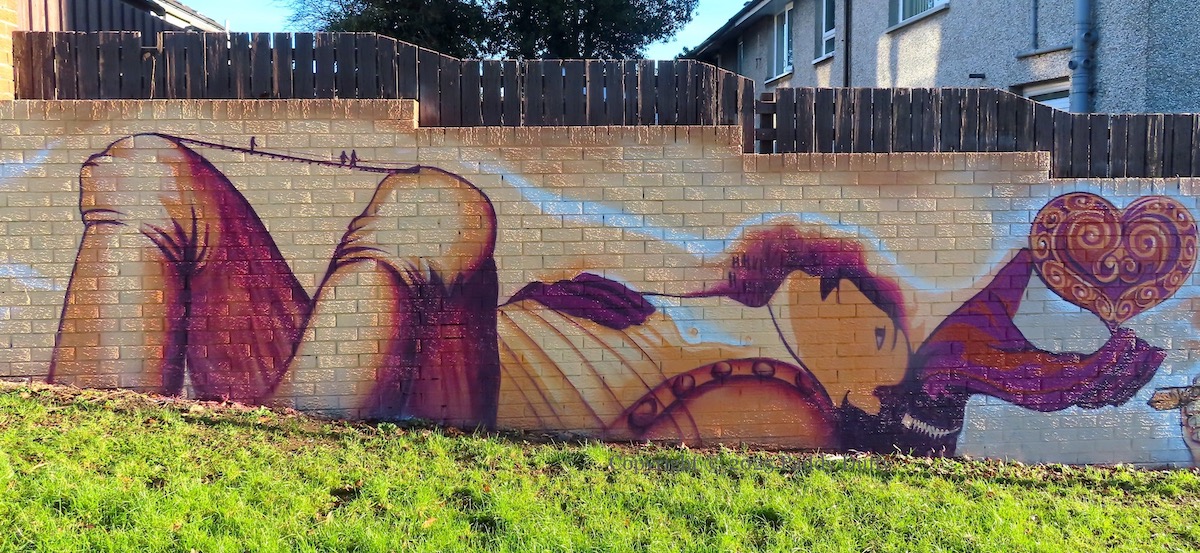
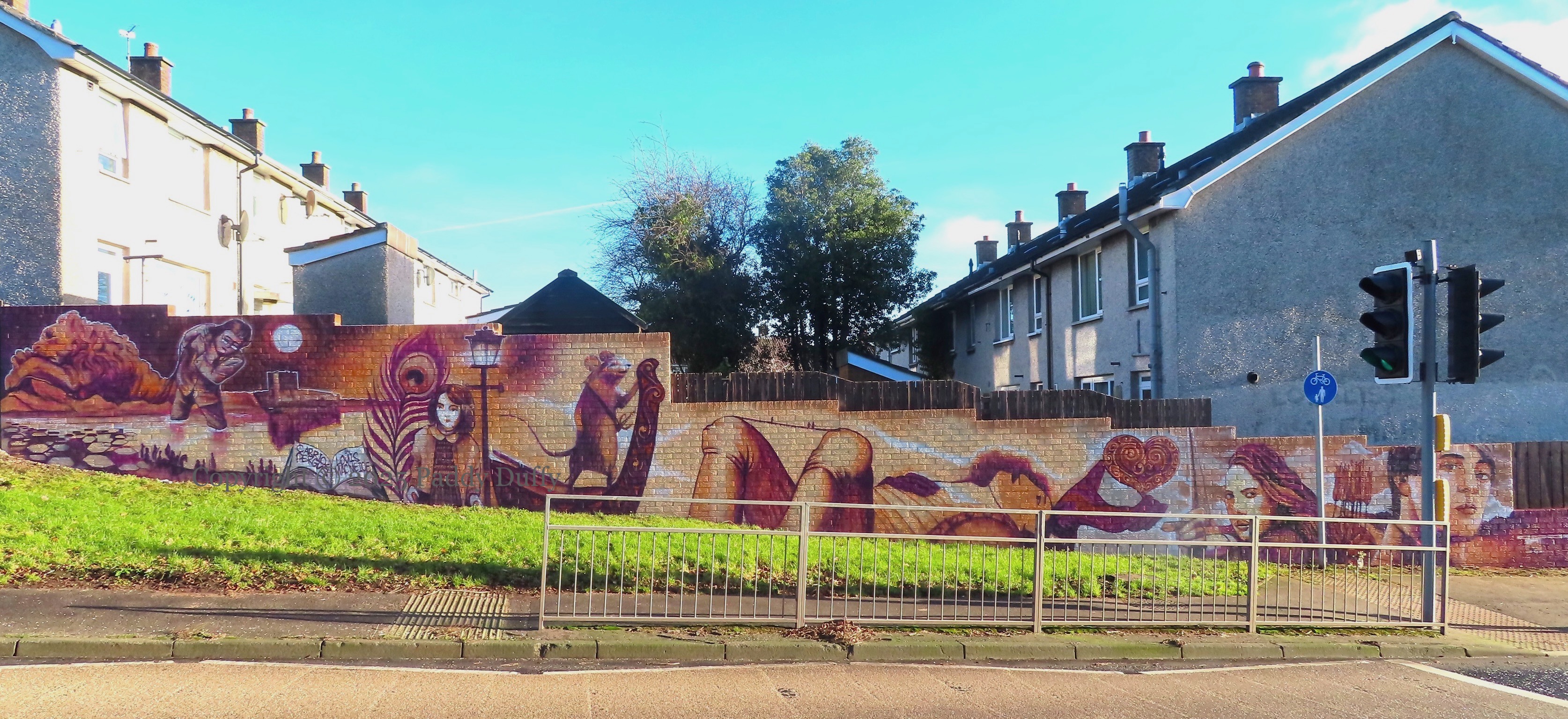
This new mural in Carrickfergus draws on local connections to literary figures Louis MacNeice and Jonathan Swift, as well as the more distantly located CS Lewis.
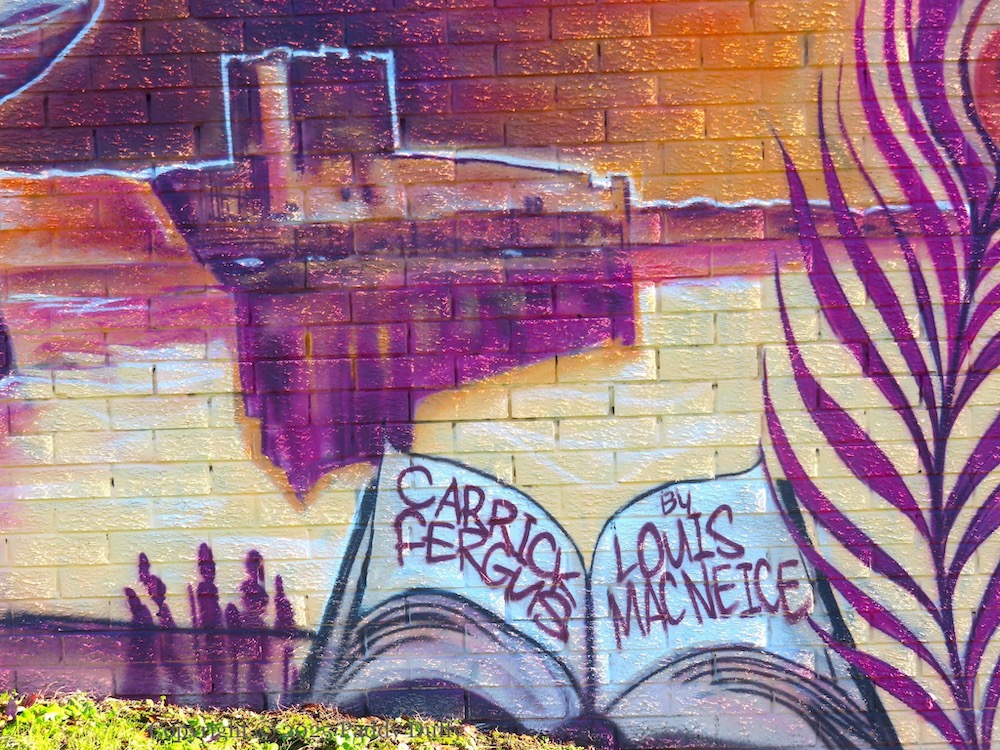
The MacNeices moved from Belfast to Carrickfergus in 1909 when Freddie (later Louis) was an infant and he grew up in the town until he was sent to Sherbourne Prep in Dorset, England, in 1917. In the mural, a book is opened to the page of his poem Carrickfergus, which was written in 1937 and describes the town in geological, historical, industrial, and sectarian terms, and more real than the “puppet world” of Sherbourne.
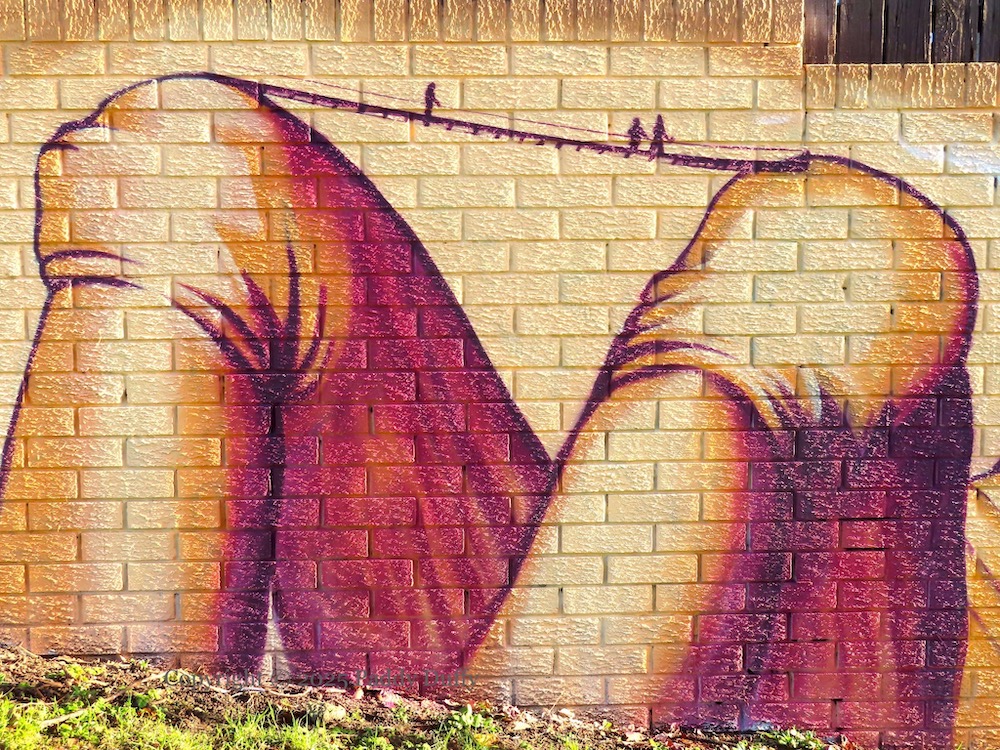
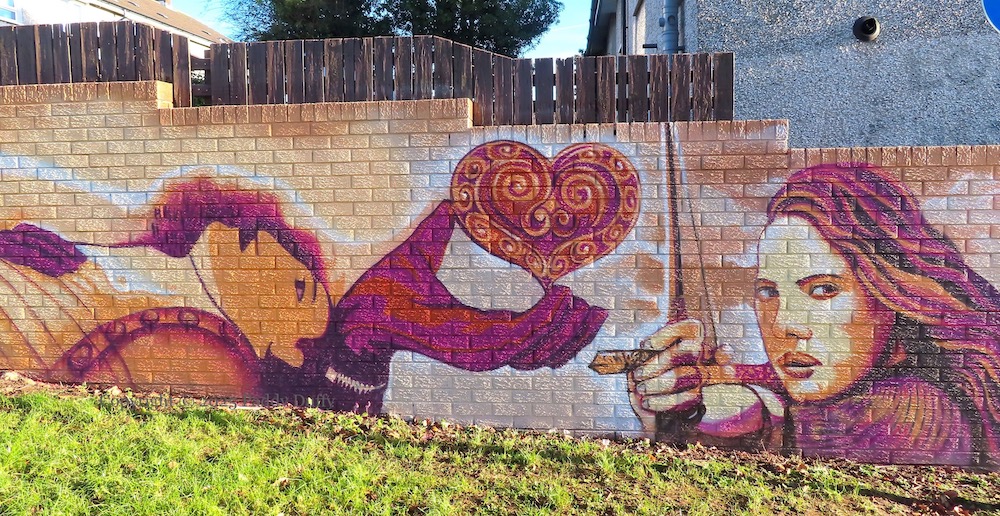
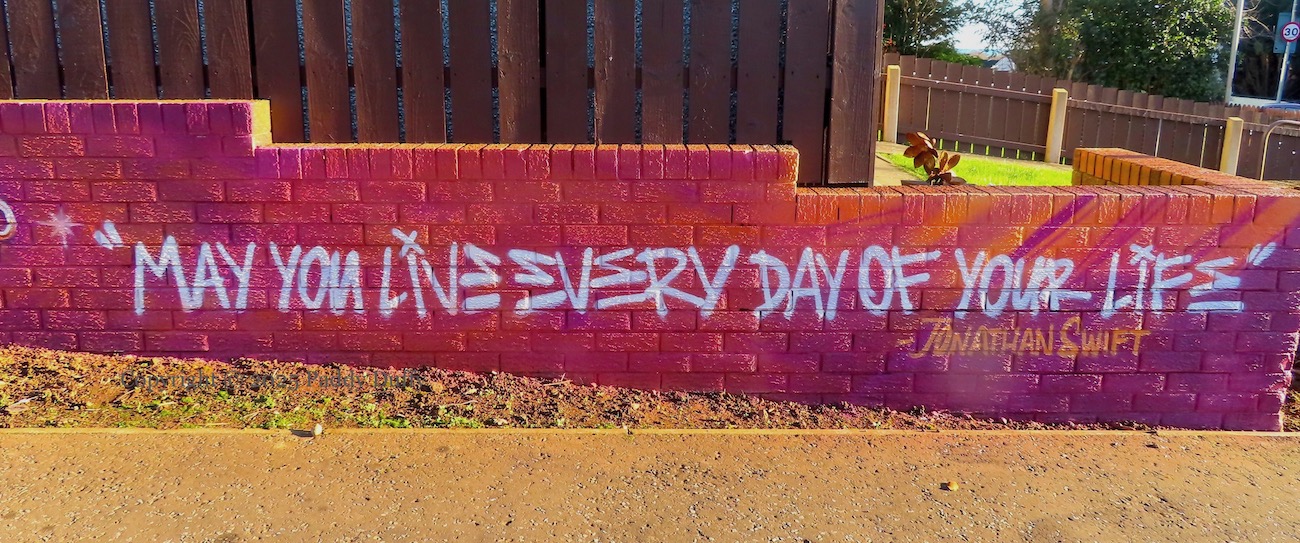
Jonathan Swift was briefly (1694-1696) a Church Of Ireland cleric in Kilroot, near Carrickfergus. In the mural, Carrick-A-Rede rope-bridge is shown strung between the knees of Gulliver as he wakes in Lilliput. The Swift quote on the extreme (viewer’s) right is from Polite Conversation (p. 154): Miss Notable is toasted by both Mr Neverout – “May you live a thousand years”; “Pray, Sir, don’t stint me”, she replies – and Colonel Atwit – “May you live every day of your life”.
Lewisian figures include Aslan the lion and Reepicheep the mouse. The final (right-most) figures would seem to be Katniss and Peeta from The Hunger Games.
Painted by DMC on North Road, Carrickfergus, at the entrance to the Castlemara estate, as a complement and competitor to the PUL boards.
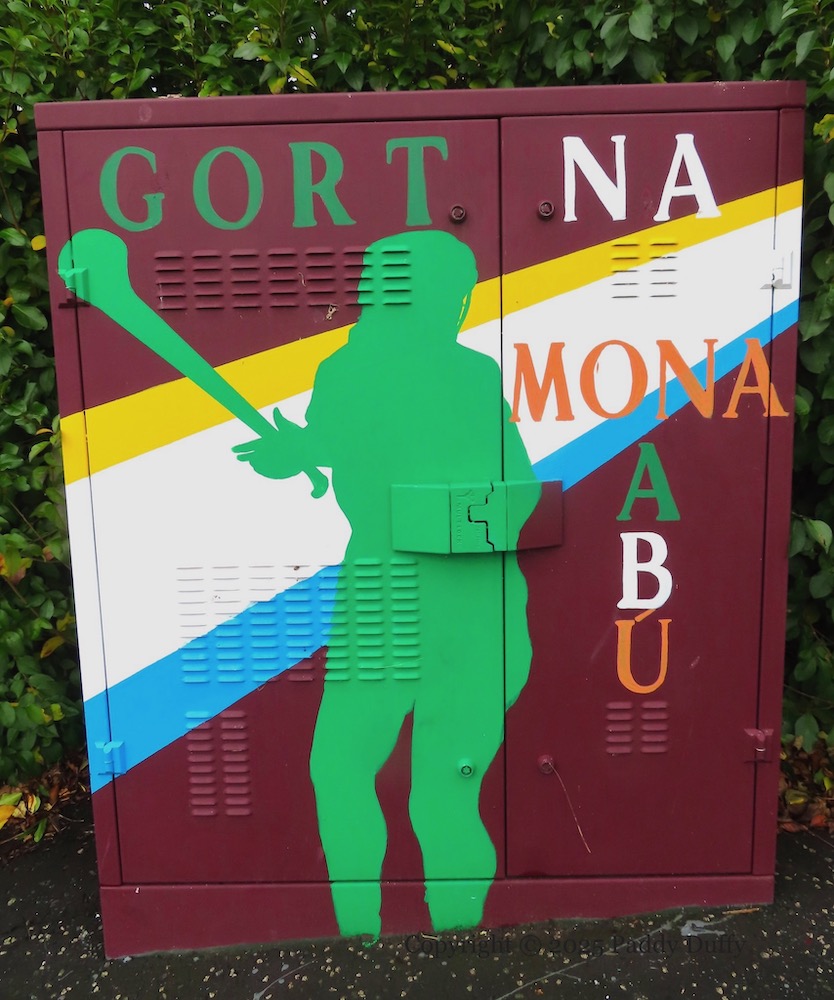
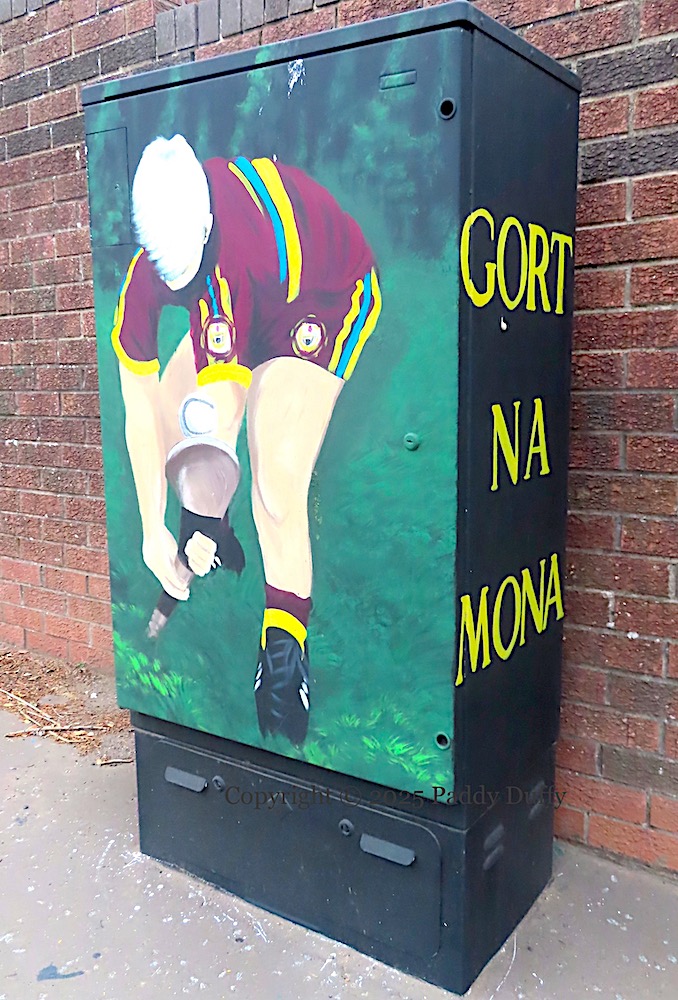
Gort Na Móna CLG was founded in 1974, developing out of the old Gort Na Móna secondary (before it became part of Corpus Christi). NVTv produced a programme to celebrate the fiftieth anniversary (youtube). These painted junction boxes are on Monagh Road and the Springfield Road.
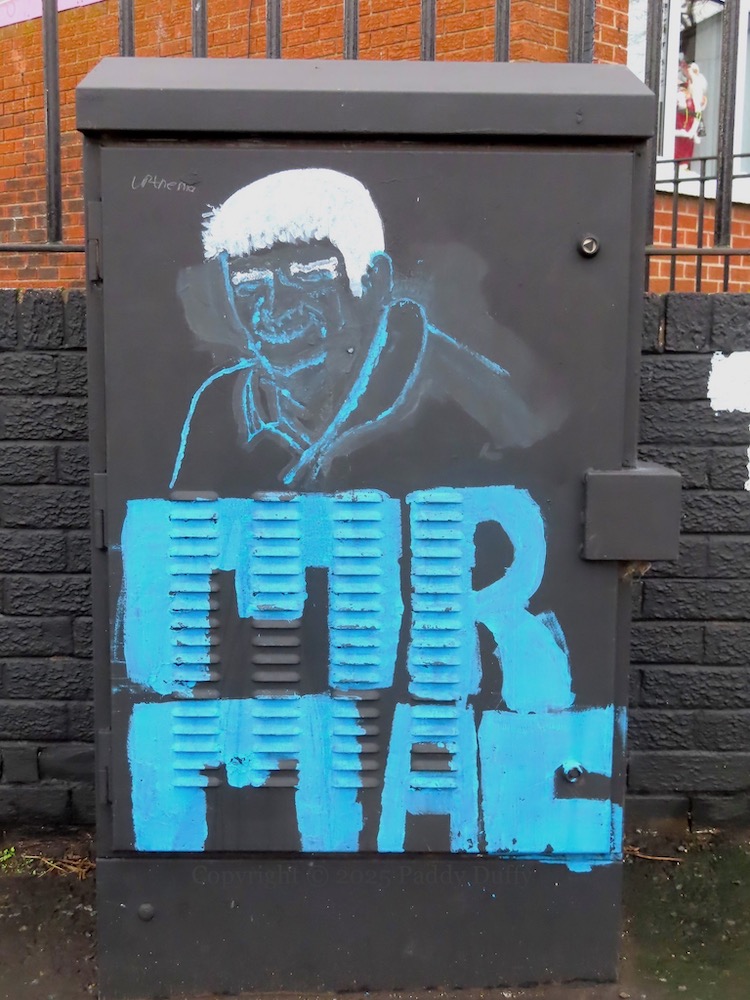
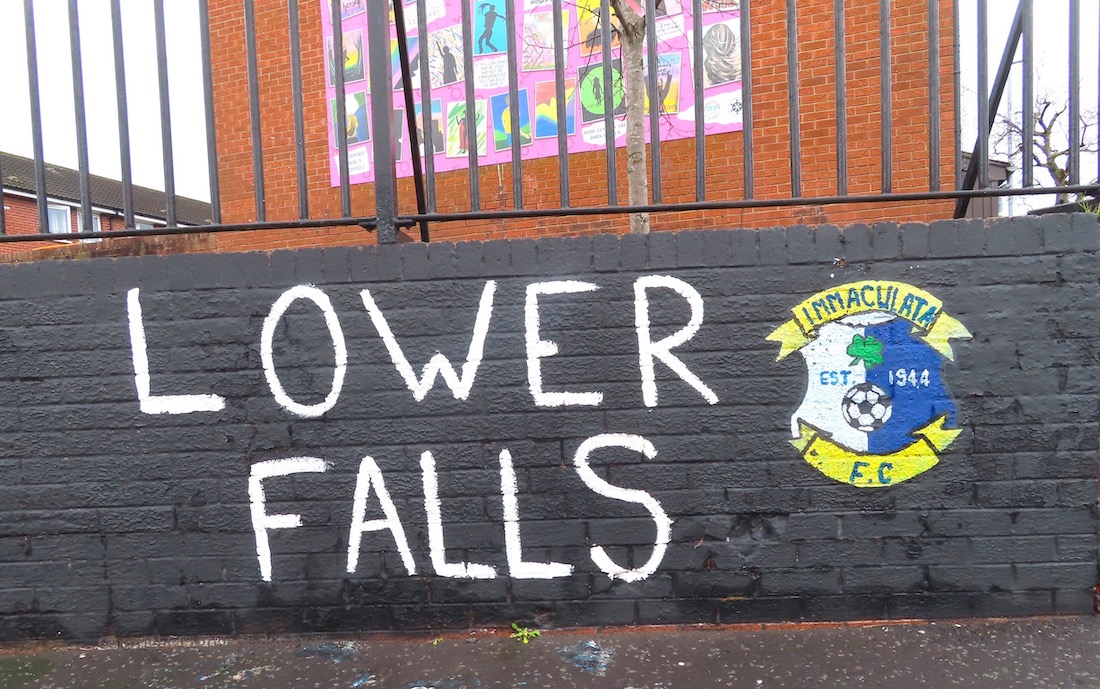
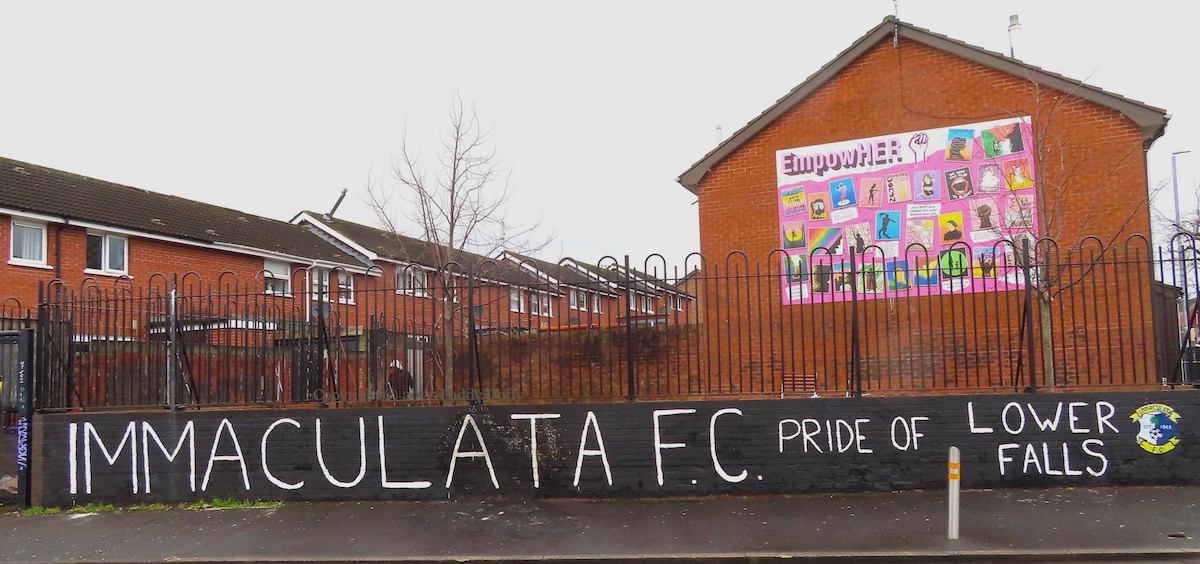
This is a painted tribute to Jim McKee, who was known as “Mr Immaculata” for his long-time support of Immaculata FC (Fb). McKee died in August when he was hit by a car near the Grosvenor community centre (BBC).
See also: Come On, The Mac, which is a stone’s throw further down Albert Street.
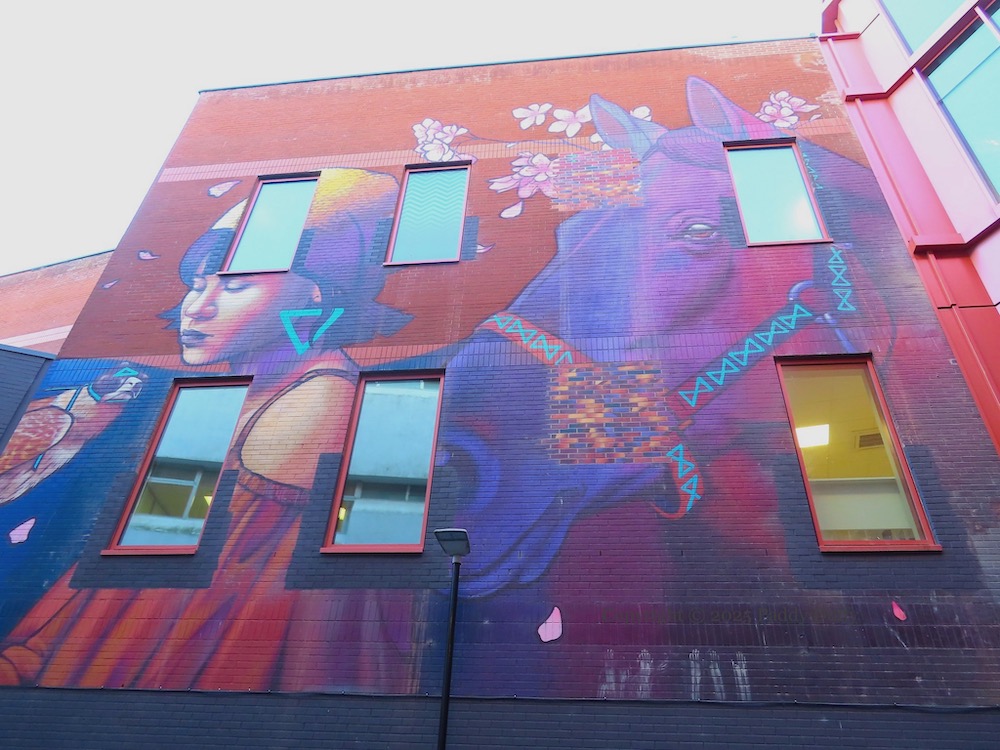
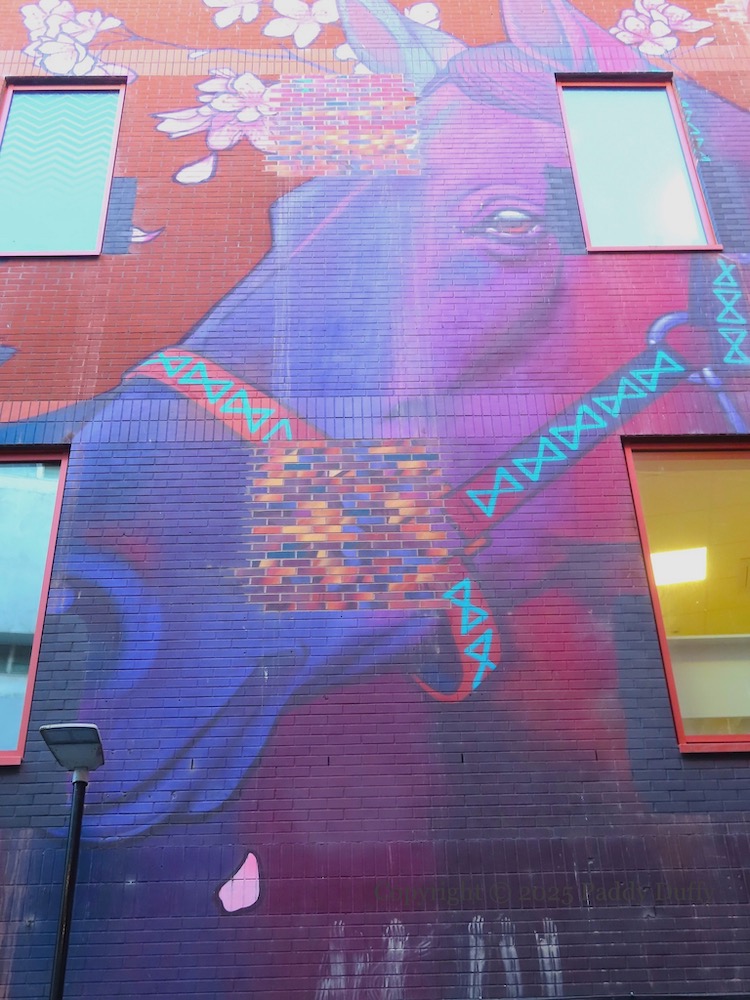
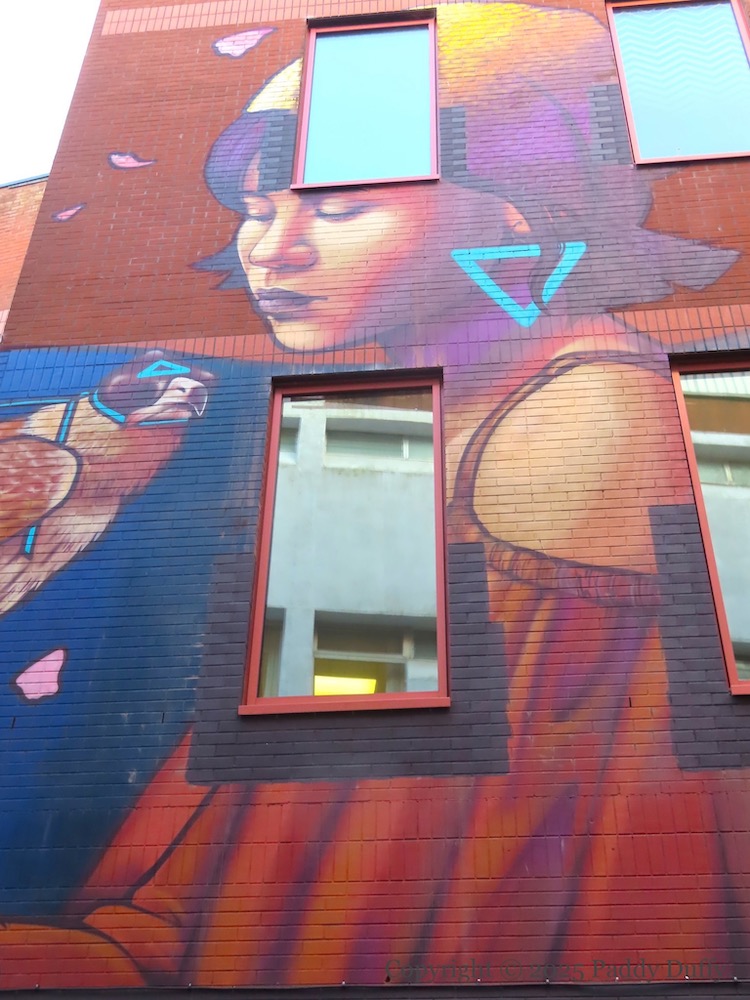
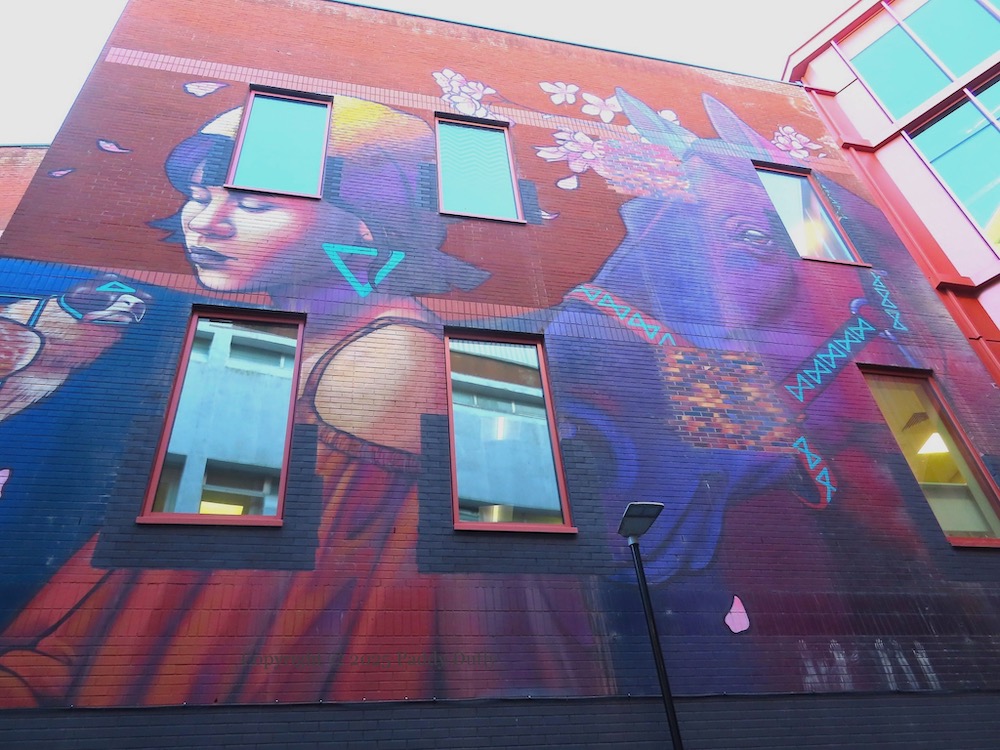
Work to the windows has been undertaken since this art was originally painted (in 2023) by Friz (web) and Gerry Norman (ig); two windows have been bricked up with multi-coloured bricks (best seen in the image immediately below), while others have been extended and narrowed, resulting in patches of black bricks (see the third and fourth images).
The piece is inspired by the seventeenth-century Belfast Castle. Castle Arcade is so-called because it is the site the original castle of Belfast, built by the Normans in the late 12th century and then rebuilt by Arthur Chichester in 1611. Chichester’s castle had “spacious gardens which extended from the river along to Cromac Woods and near Stranmillis” with “orchards, bowling greens and cherry gardens … fish ponds,” for “hunting, hawking, and other sports”. It was destroyed by fire in 1708, after which the area became commercialised as a market (ArchiSeek | Mary Lowry | BBC | Belfast Entries).
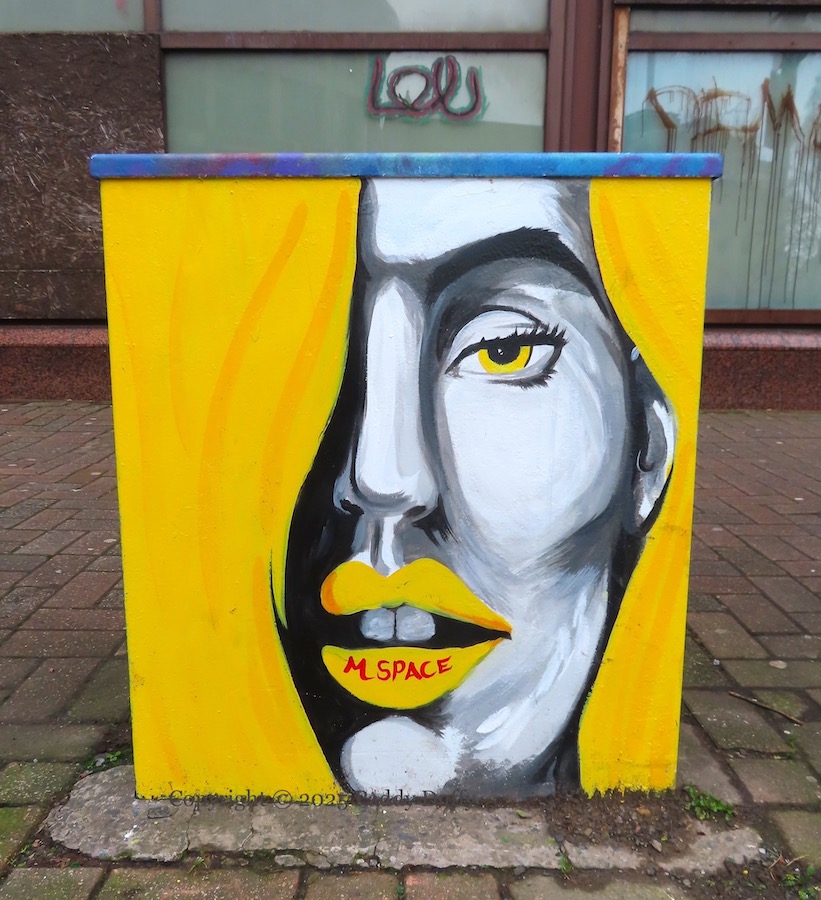
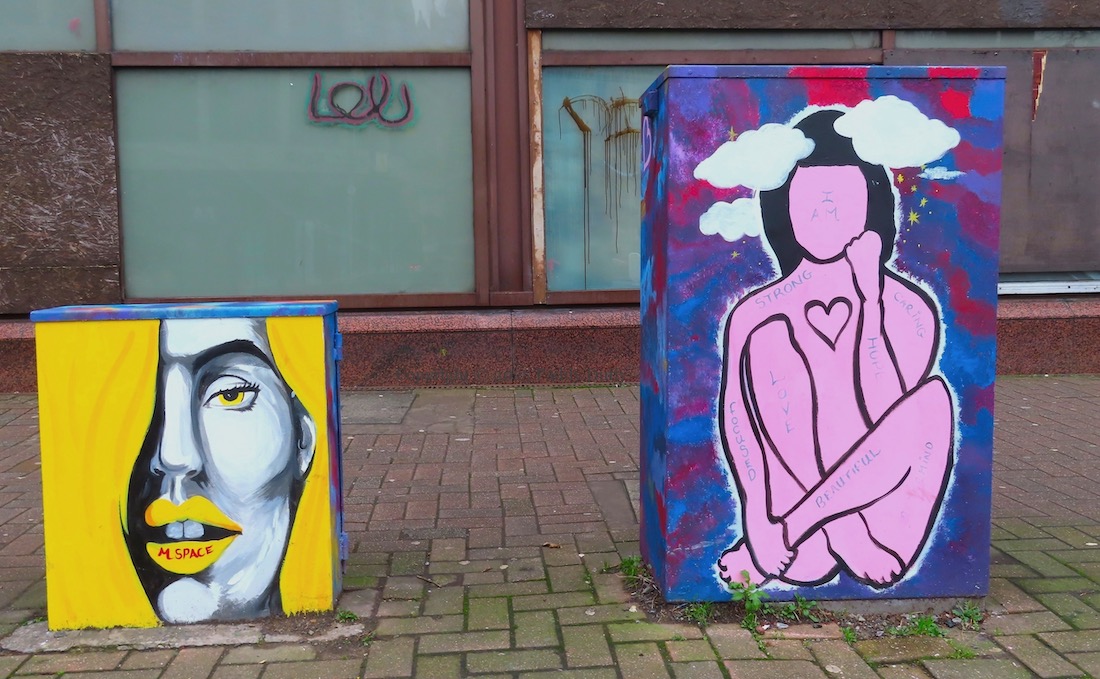
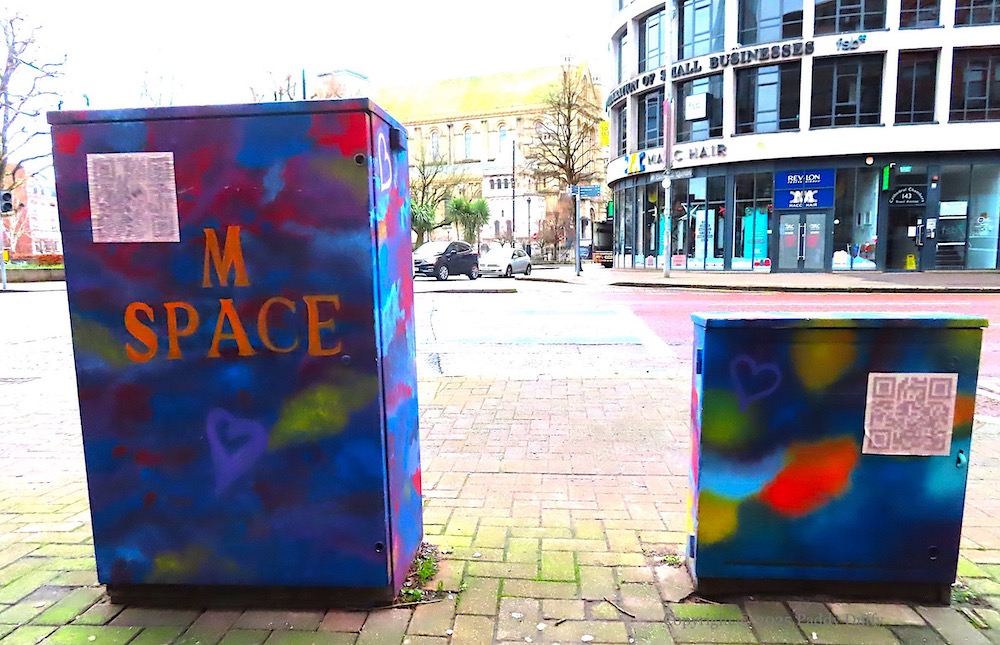
“I am … strong, focused, love, hope, caring, beautiful, body & mind.” M-Space is a project from Springboard Opportunities (web) providing intensive mental-health services for 115 young people.
This pair of utility boxes is on Royal Avenue, Belfast city centre. The backgrounds on the rear were perhaps painted during Culture Night.
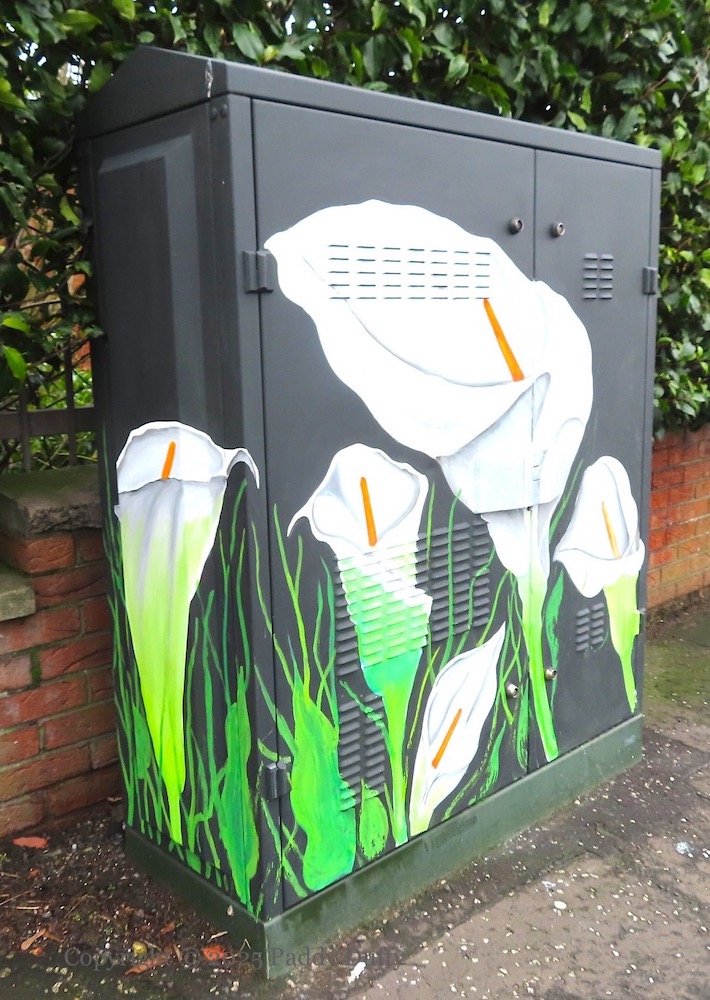
These Easter lilies are on a junction box on the Springfield Road at New Barnsley Park, west Belfast, and across the street from the boxes seen in Bóthar Chluanaí and Gaırdín Na hÉıreann.
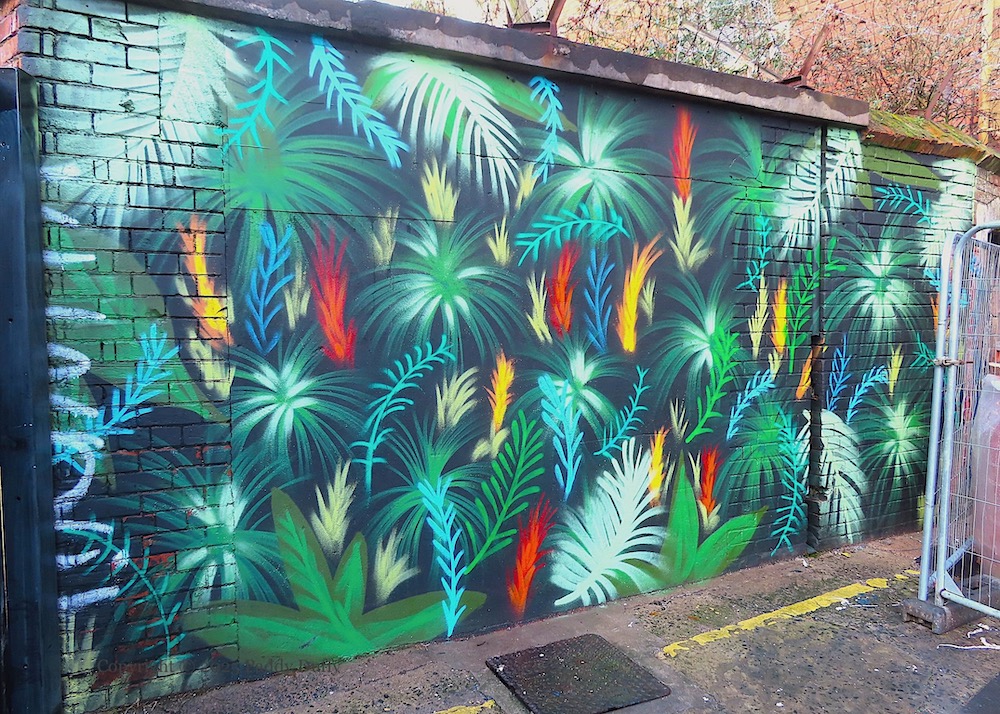
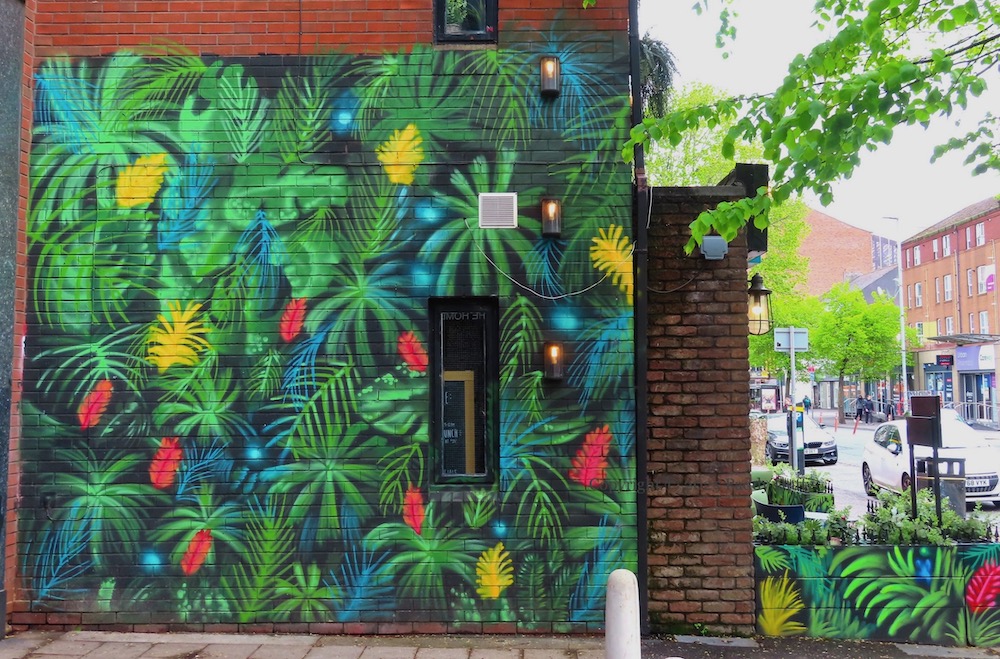
These palm-fronds and colourful flowers (by Visual Waste (ig)) are at the Teal Monkey (web) on the Dublin Road and Ventry Lane (which runs behind the restaurant).
This is a freshly-repainted sign for “South Belfast Ulster Volunteer Force, 2nd battalion, A company Donegall Pass” on the back wall of the Hideout bar. The previous version was painted c. 2005.











 Paddy Duffy Collection