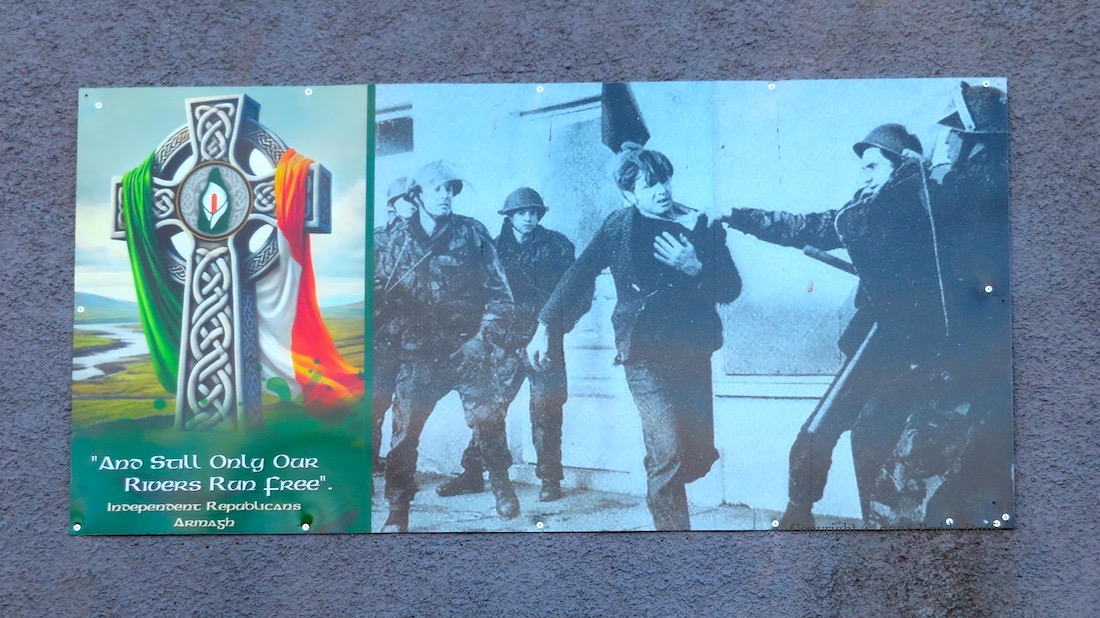
The photograph on the right is real: it shows British troops collaring a civilian in Coalisland in December 1971 – photographer unknown. The image on the left – a Celtic cross draped with a Tricolour – is AI slop. The first (or at least, an early and prominent) use of AI to produce images was Stop The Slaughter In Gaza from November 2023, and it is becoming more frequent in printed boards and wall-painting.
“”And still only our rivers run free” [youtube] – Independent Republicans Armagh [Fb]”
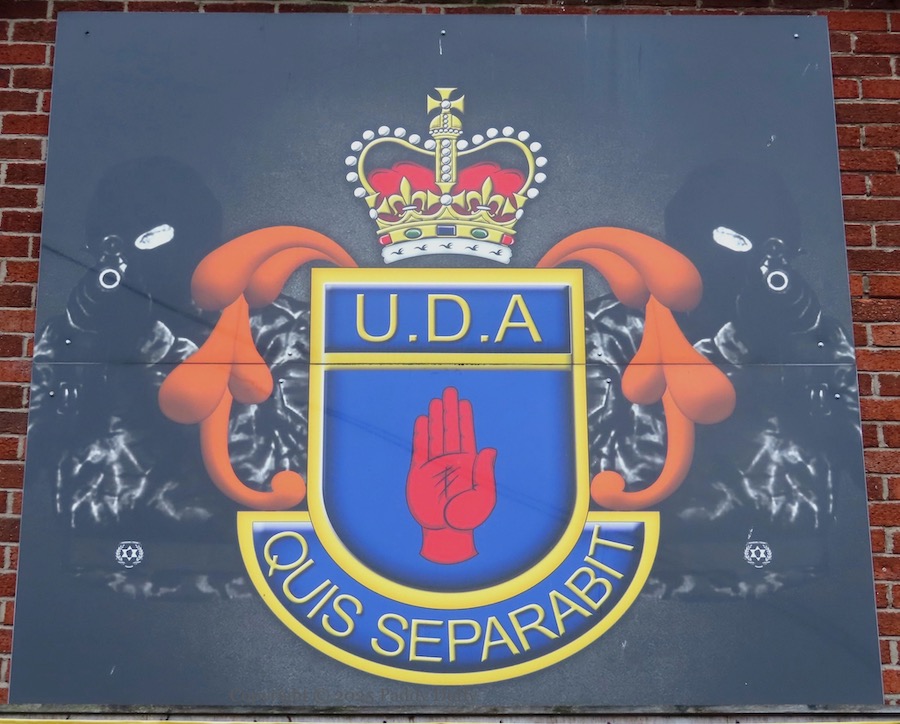
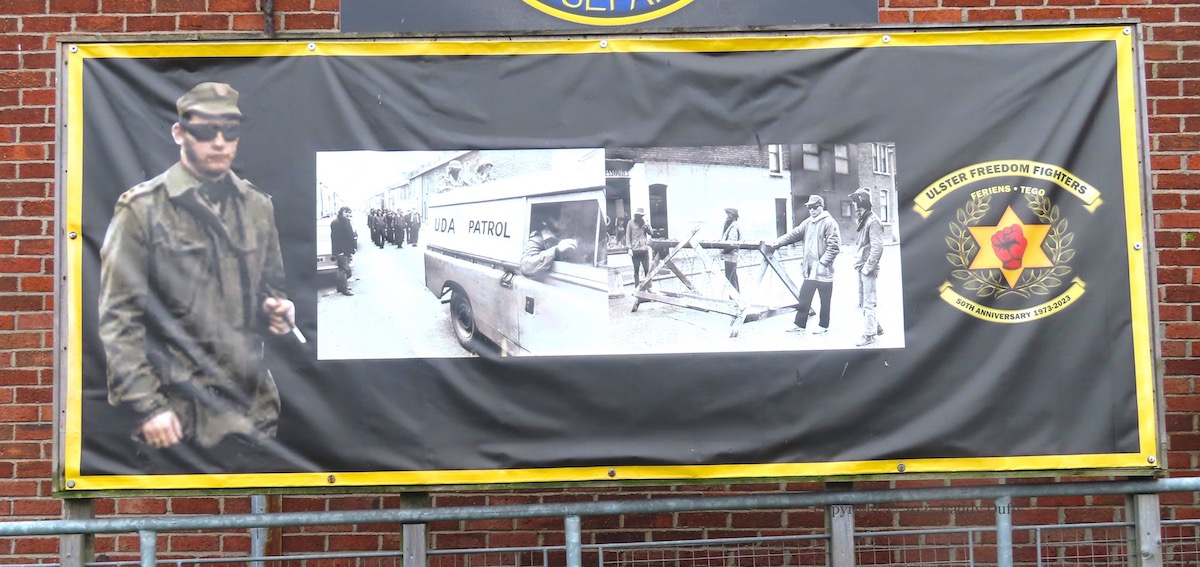
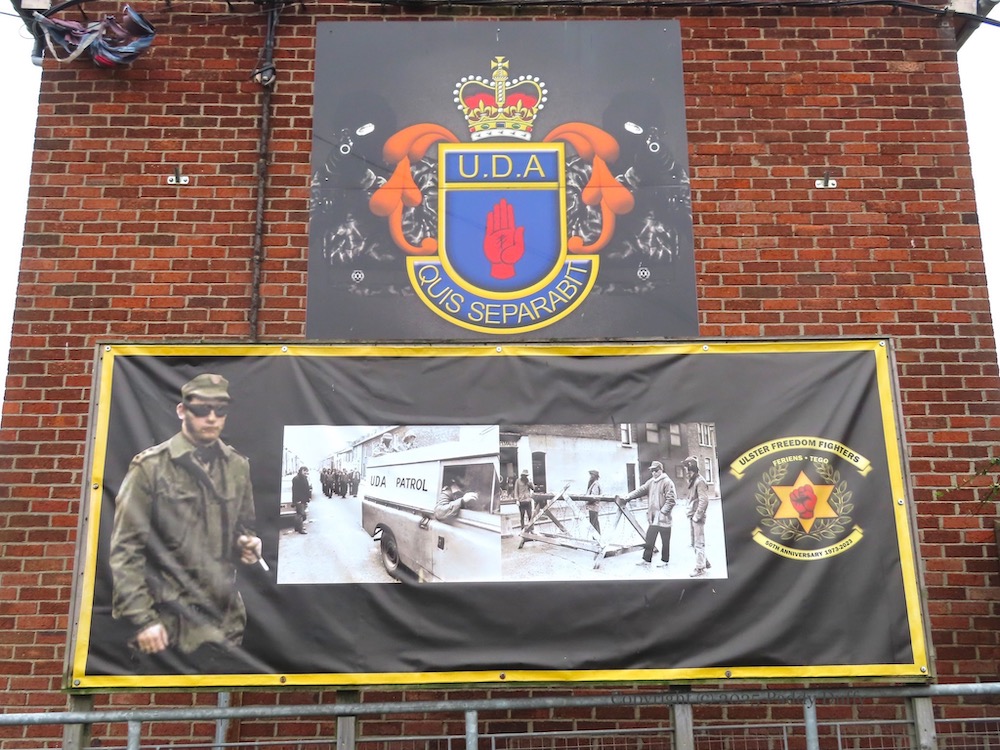
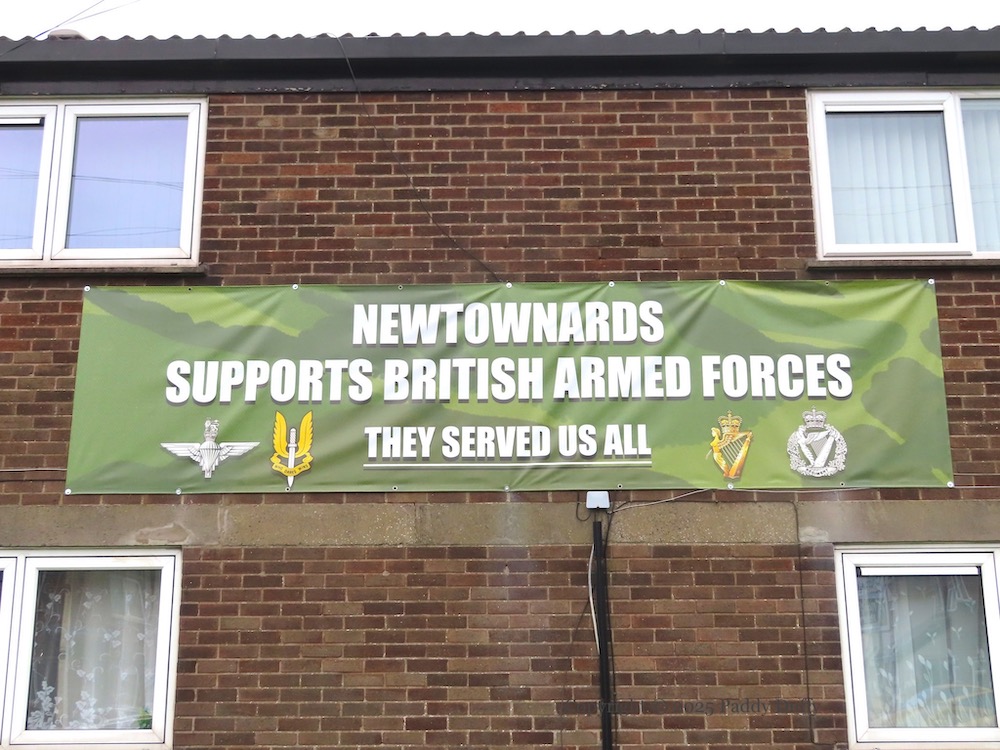
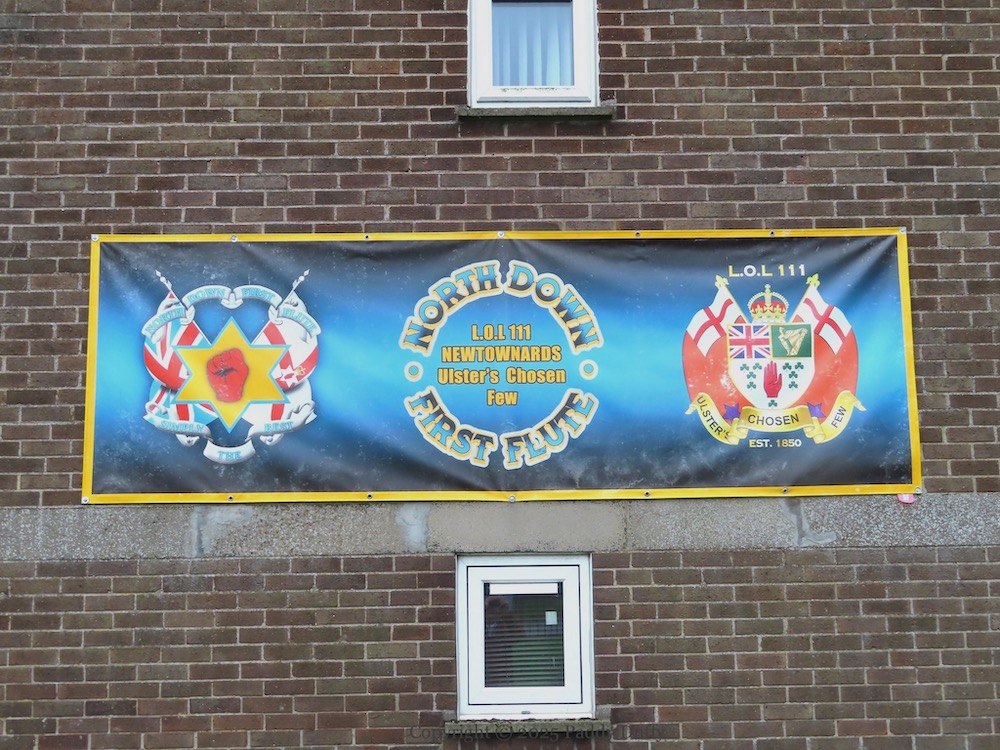
This entry updates the images seen at the end of 2022 (in Loyalist Movilla). The UDA board with hooded gunmen (above) remains as before but the tarp below it is new (though perhaps relocated from the Glen estate). The other two tarps are also new: “Newtownards supports British Armed Forces – They served us all” with the emblems of the Paratroop Regiment, the SAS, the RIR and the UDR, and, “North Down First Flute [Fb], LOL 111 Newtownards – Ulster’s chosen few”.
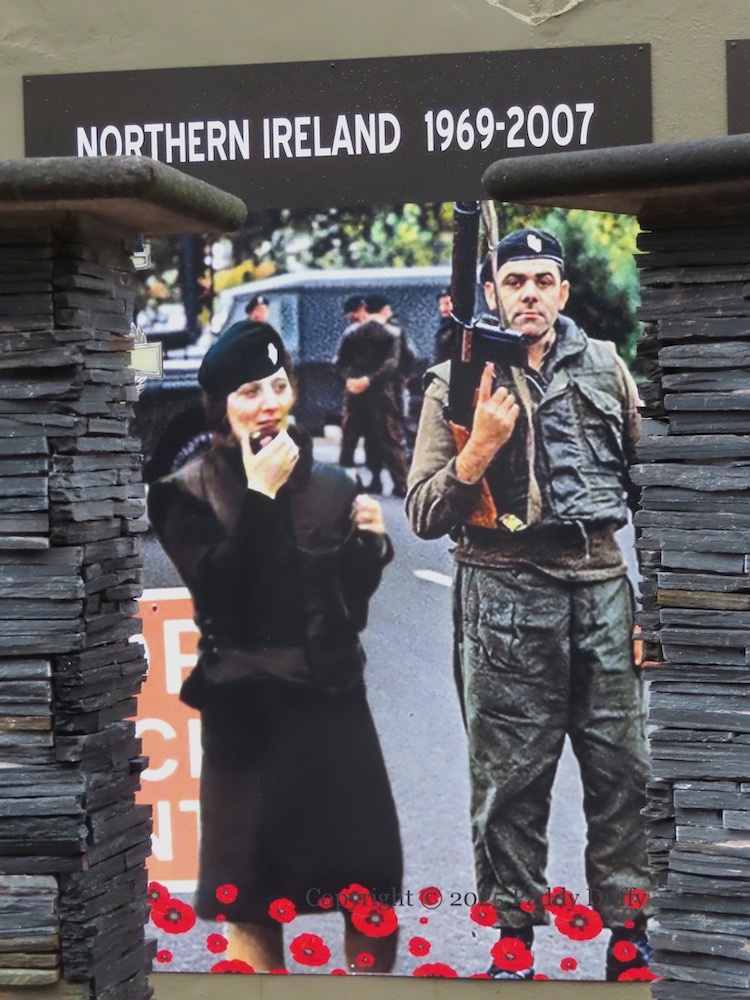
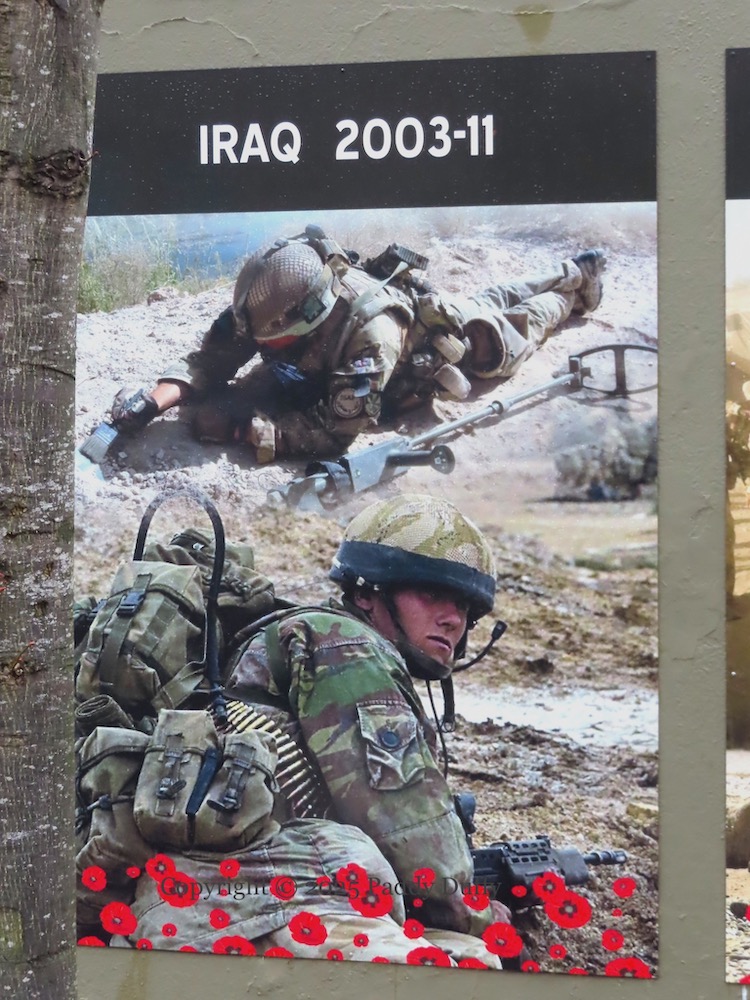
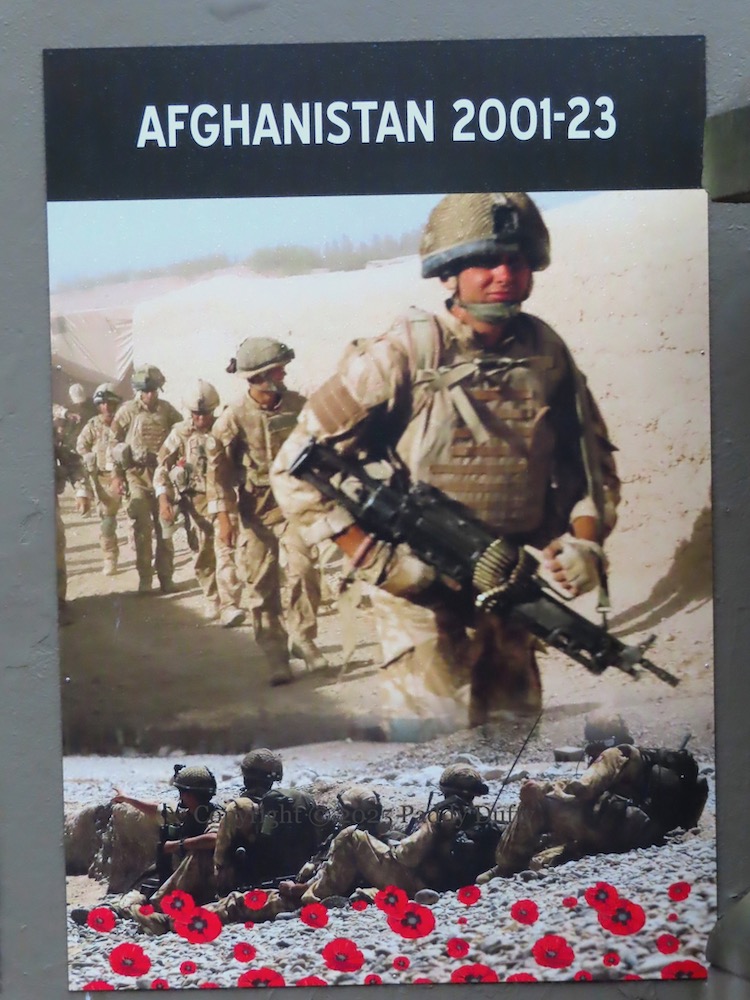
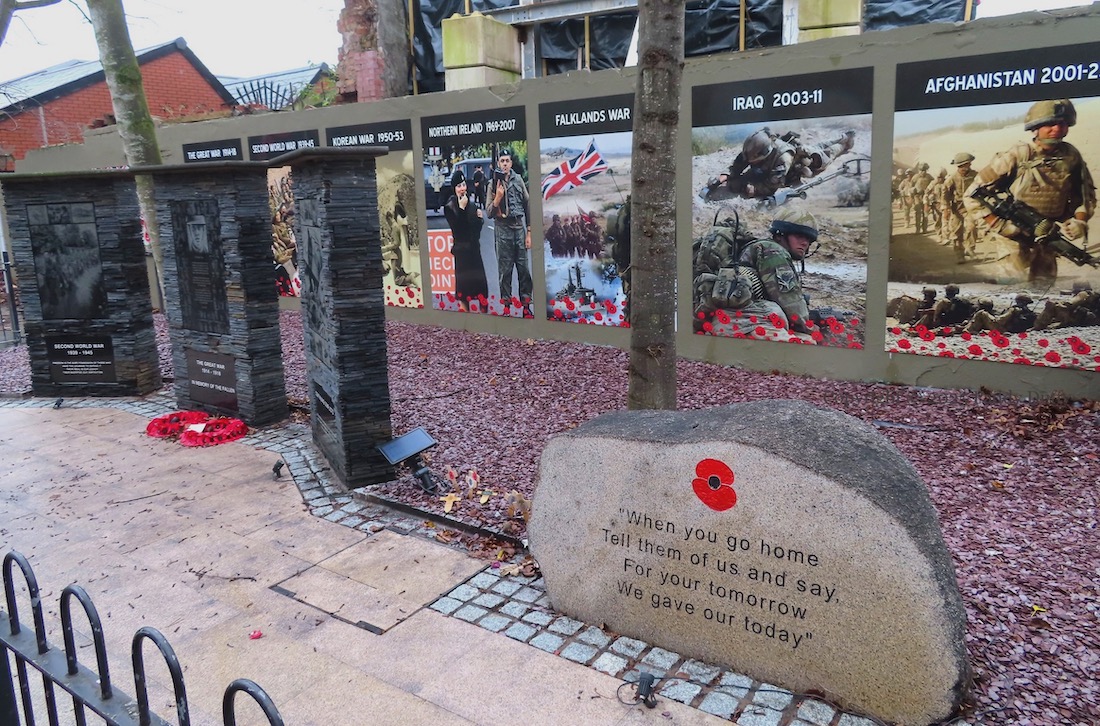
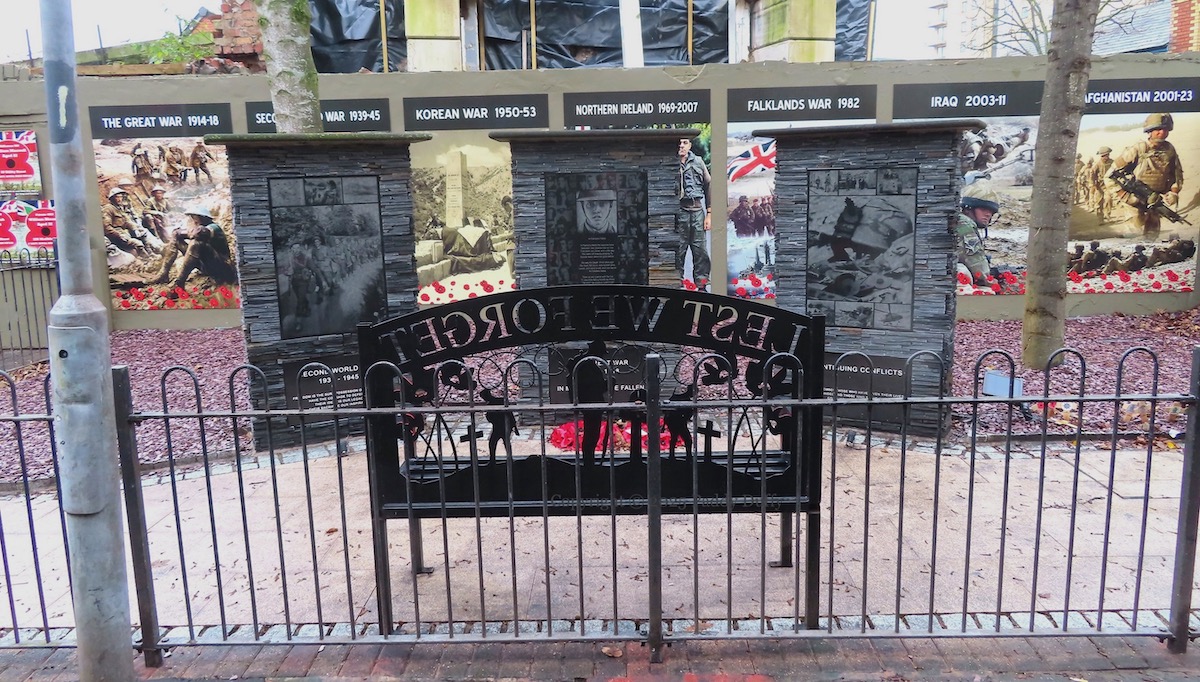
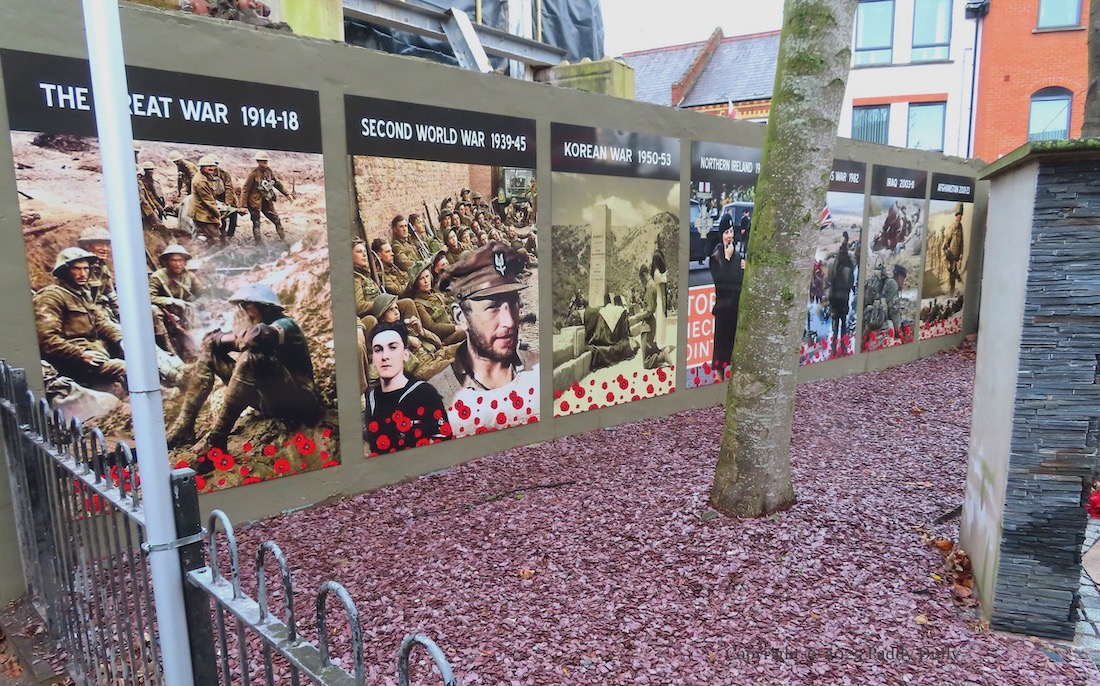
Printed panels illustrating the engagements of the British Army in the twentieth and twenty-first centuries have been added to the three stones (seen in Continuing Conflicts) that marked the World Wars and “continuing conflicts”. The conflicts depicted are the Great War 1914-1918, Second World War 1939-1945 (with individual photos of James Magennis and Blair Mayne, Korean War 1950-1953, Northern Ireland 1969-2007, Falklands War 1982 (the photo on the right is of troops “yomping”), Iraq 2003-2011, Afghanistan 2001-2023.
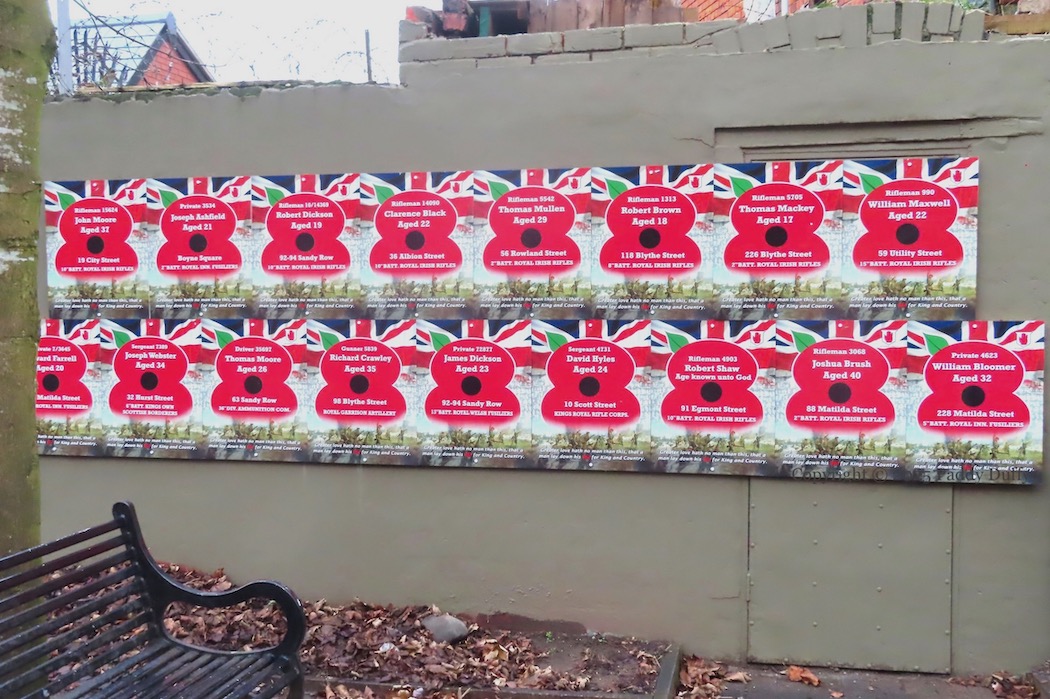
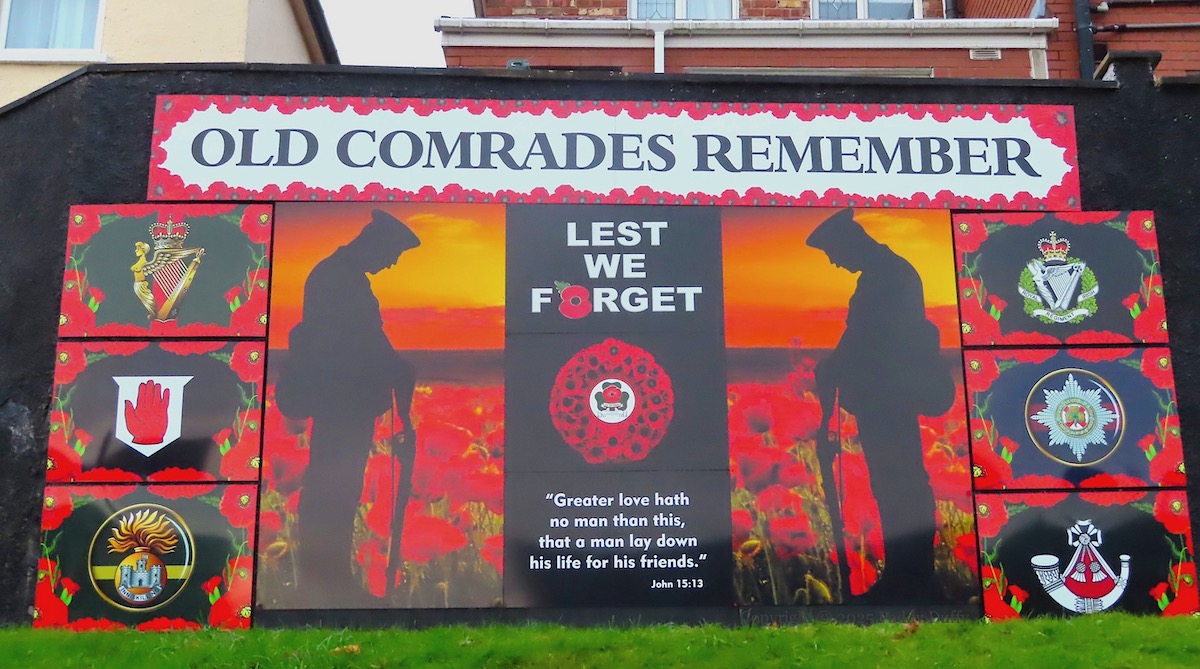
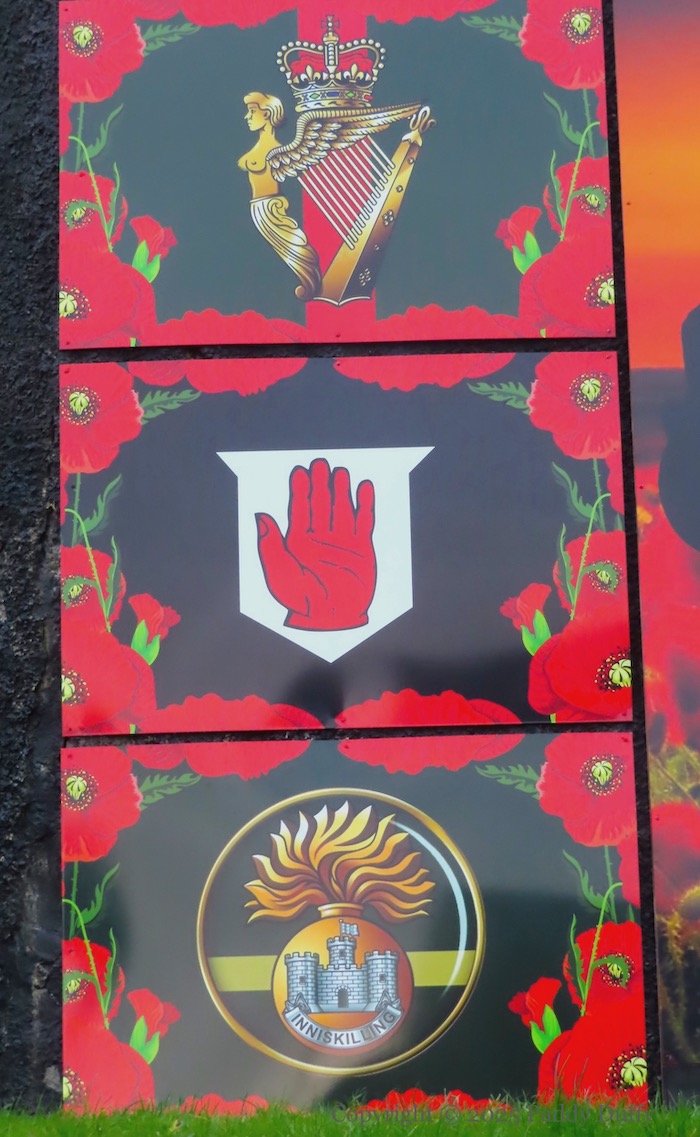
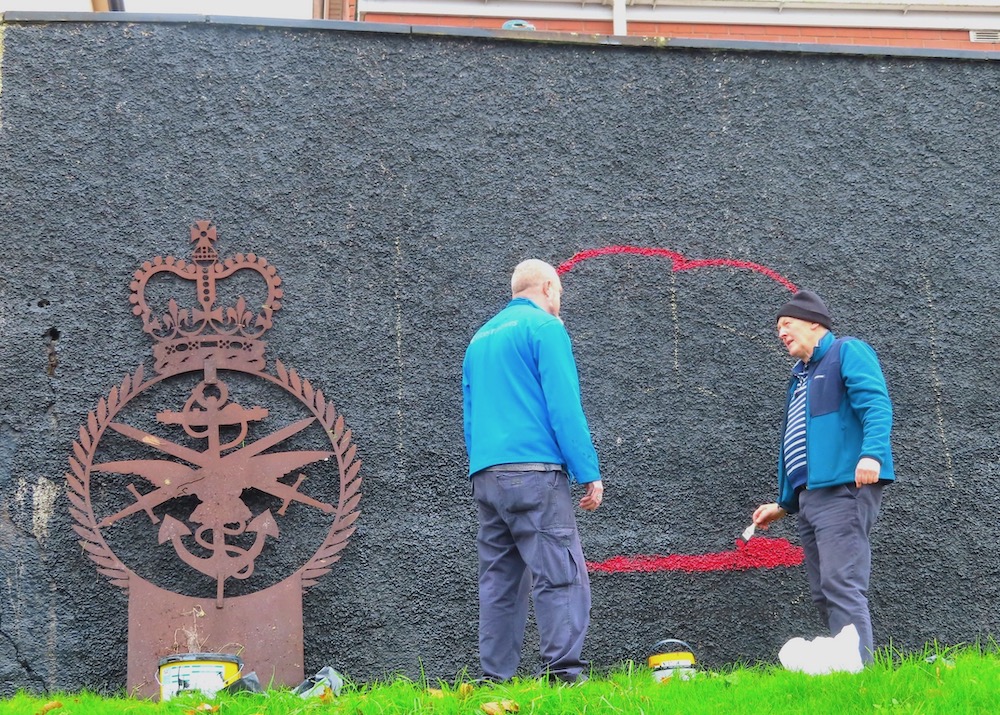
This entry updates the images seen in November’s Lest We Forget, with the addition of six military insignia to either side of the ‘Old Comrades’ board that was added just after Remembrance Sunday.
On the left (top to bottom): Royal Irish Rifles (later the Royal Ulster Rifles), 36th (Ulster) Division, Royal Inniskilling Fusiliers; on the right: Royal Irish Regiment, Order Of St Patrick, British Light Infantry.
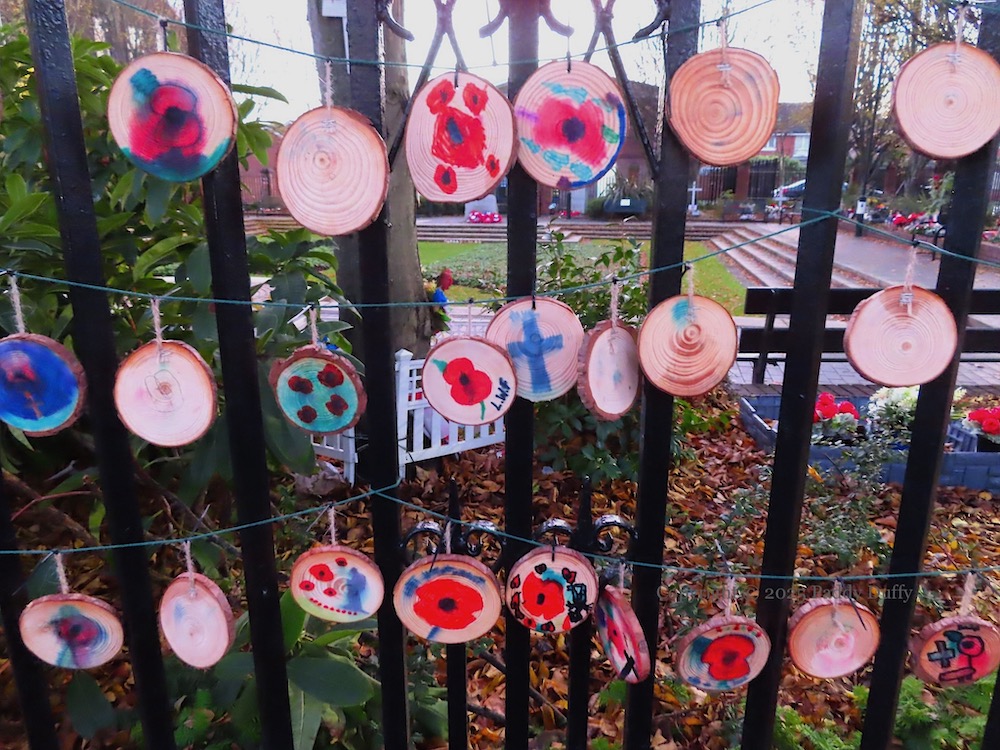
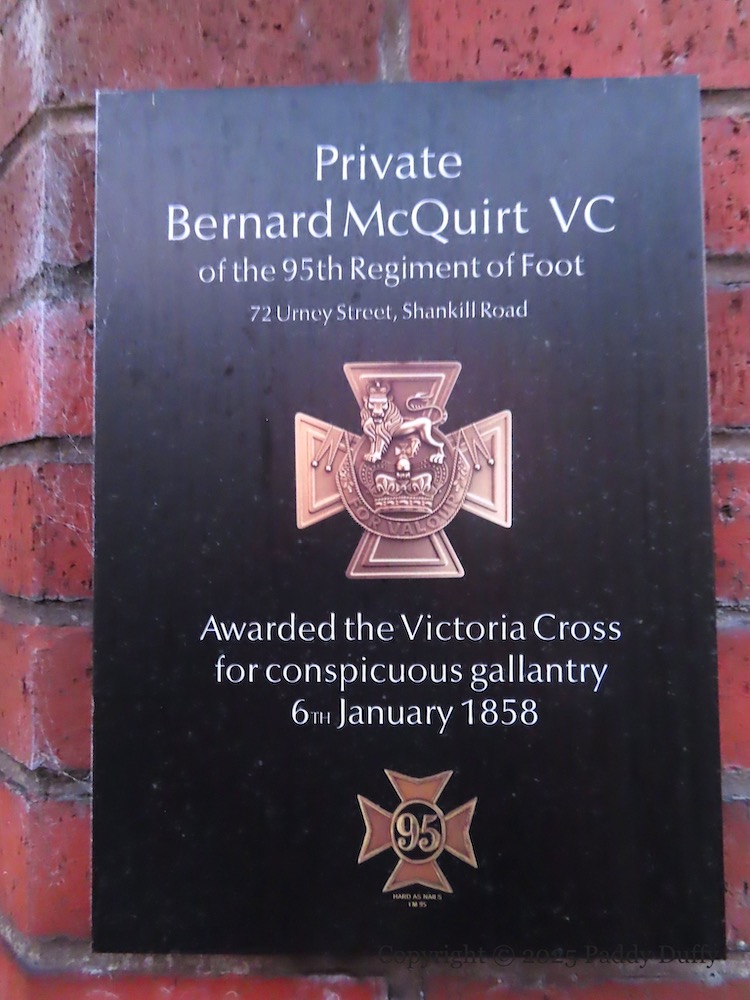
For Remembrance Sunday, rows of hand-painted wooden medallions were attached to the railings at West Kirk Presbyterian to pay homage to the dead of the British armed forces, including Bernard McQuirt, whose plaque is shown below. McQuirt was a VC winner for actions taken during the Indian Rebellion in 1858. Originally from Donaghcloney, he survived his injuries and died in 1888 at 72 Urney Street (HistoryHub | News Letter | WP) – Urney Street used to be where the plaque and the memorial garden now are, along the side of the West Kirk.
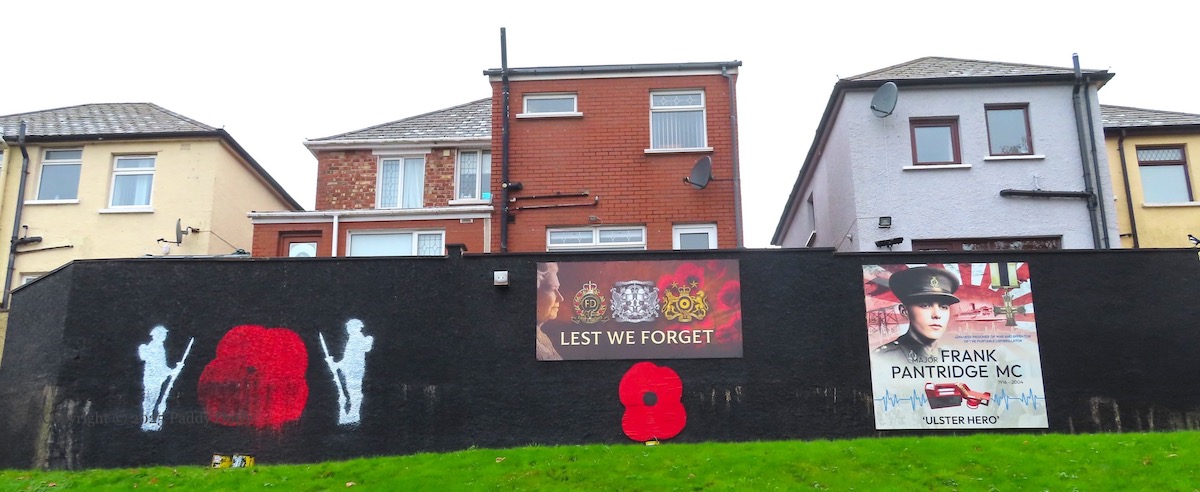
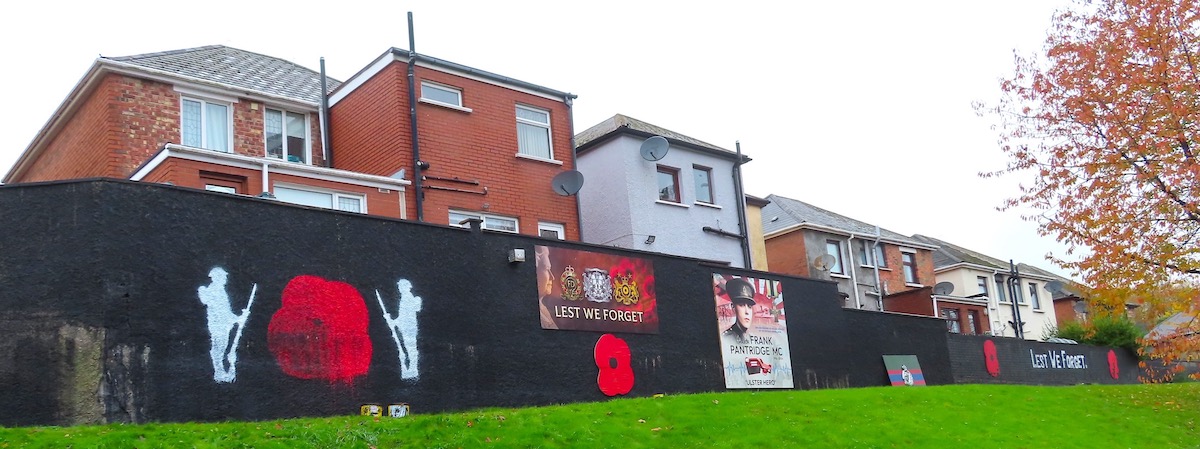
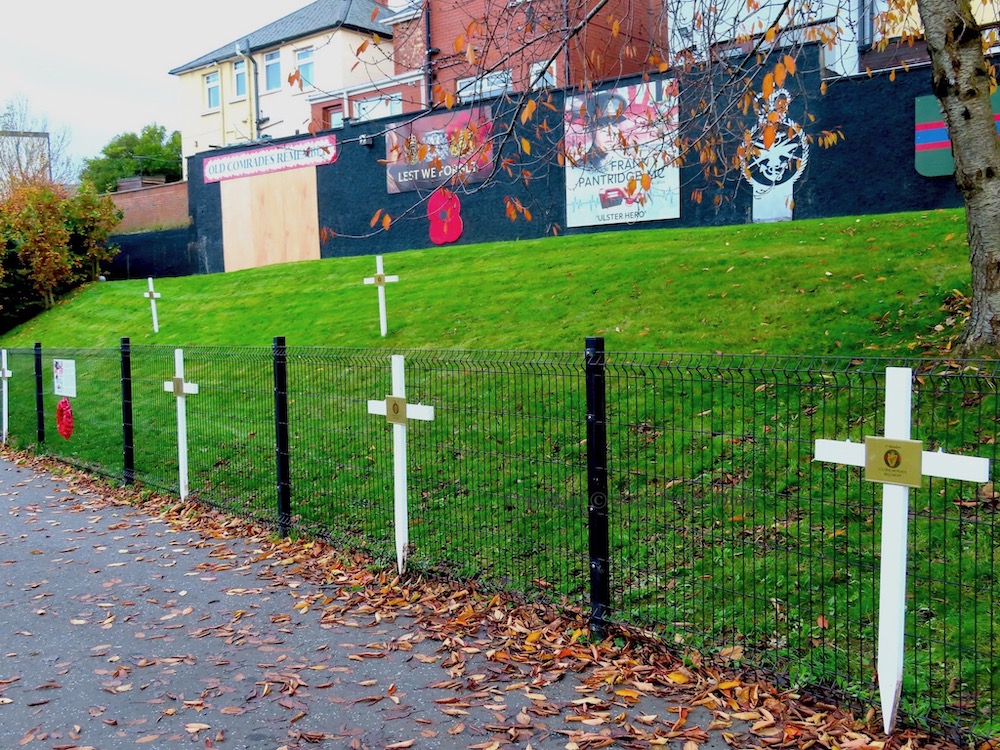
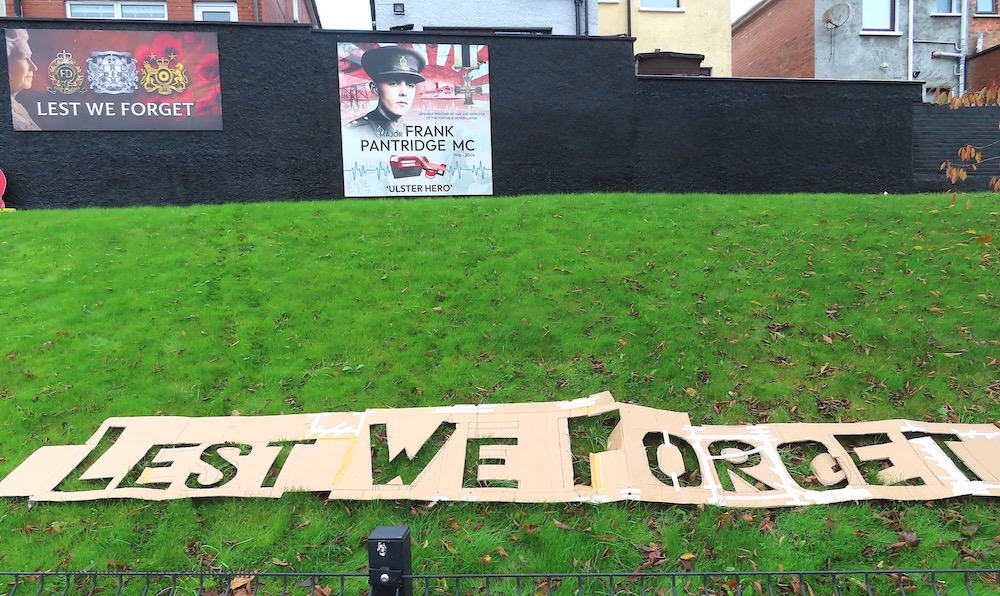
Here is a gallery of images from the wall behind the Shore Road ‘World Wars’ memorial (see Remembrance Sunday) which has a few new additions and re-ordered boards for this year’s commemorations. The main additions are the “Lest we forget” stencil shown above, and a large number of white crosses in the grass and along the fence bearing the emblem of the UDR. The UDR board has been moved from the slanted wall at the far left to what is now the central position on the wall.
For images from Sunday’s ceremonies at City Hall, see BBC.
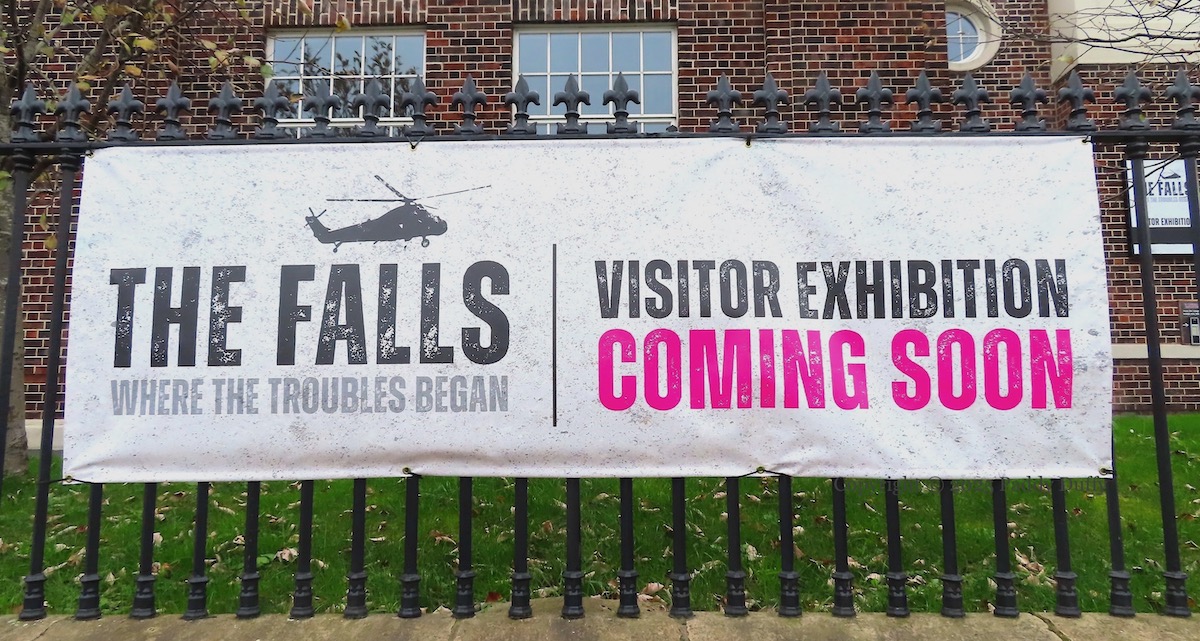
A new visitor exhibition will open on Thursday November 6th at Ionad Eileen Howell with images, video, and audio recordings covering the period from the start of the Troubles in 1969 to the Falls Curfew in 1970 (Belfast Media). The new exhibition is hosted by the Falls Community Council (Fb); tickets via Visit Belfast.
The Troubles are generally said to have started in August, 1969, rather than (e.g.) October, 1968, because the Battle Of The Bogside in Derry (beginning on August 12th) and the rioting in Belfast (beginning on the 13th) led to the deployment of British troops (on August 14th and 15th).
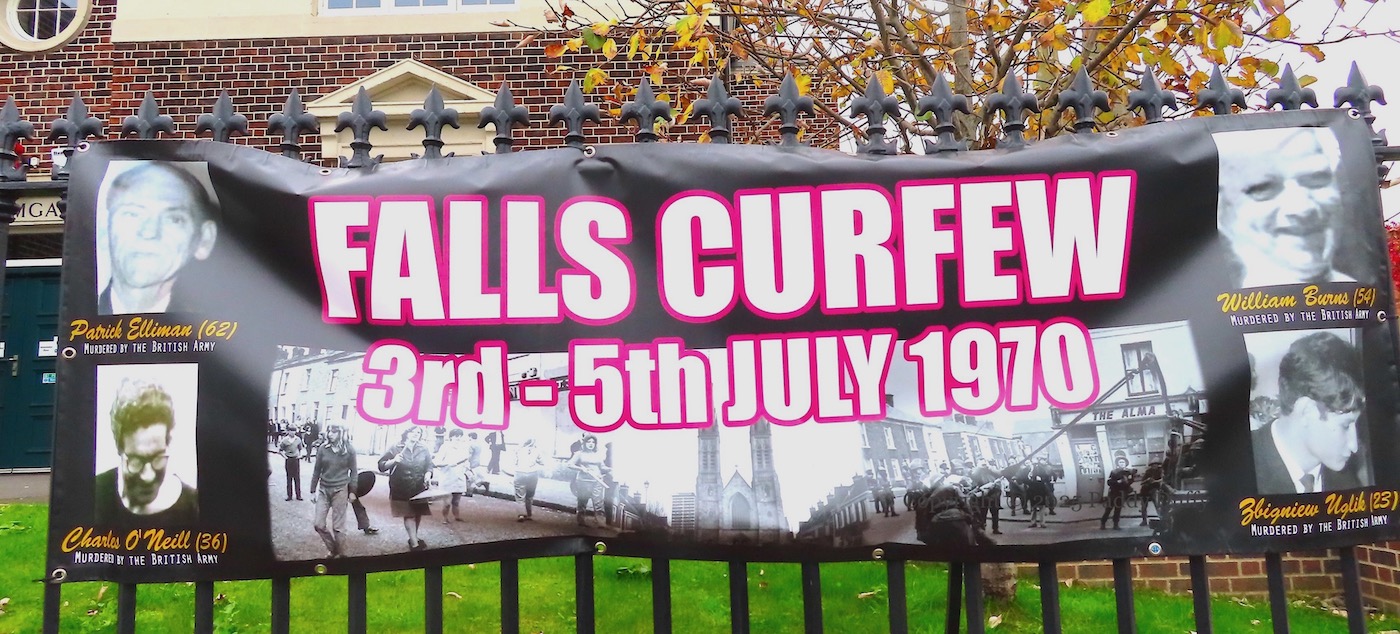
The Falls Curfew, in July 1970, was a pivotal event in the souring of relations between the CNR population and the British Army. About 3,000 homes were cordoned off, the area was saturated with CS gas, and thousands of bullets were fired by the Officials and Army soldiers, the latter killing Charles O’Neill, William Burns, Zbigniew Uglik, and Patrick Elliman; there is a plaque commemorating the four a little further up the road – see The Falls Curfew.
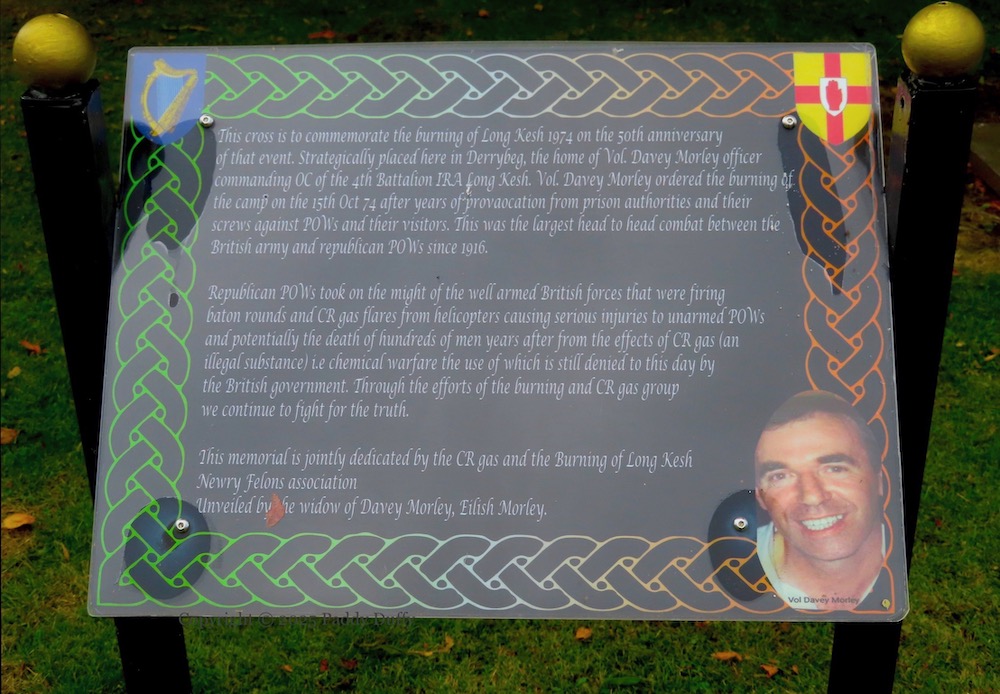
This is one of four Celtic crosses raised to commemorate the fiftieth anniversary of the Burning Of Long Kesh in 1974 and, in this specific instance, to pay tribute to local Derrybeg volunteer Davey Morley, camp OC of the Provisionals, who gave the order for the camp to be burned (Pensive Quill).
Morley died in 1987, at age 46, possibly suffering the aftereffects of CR gas (The Blanket | Only Our Rivers).
Images of the December 2024 launch can be seen on Newry.LN’s Fb page.
“There are special people in our lives who never leave us even after they are gone. In loving memory of all the men that have passed away since the burning of Long Kesh 15th & 16th October 1974. Rest in peace. Also remembering the blanket men and women, all republicans who have lost their lives in our fight for freedom. Rest in peace.”
“This cross is to commemorate the burning of Long Kesh 1974 on the 50th anniversary of that event. Strategically placed here in Derrybeg, the home of Vol. Davey Morley officer commanding (OC) of the 4th battalion IRA Long Kesh. Vol. Davey Morley ordered the burning of the camp on the 15th Oct 74 after years of provaocation [sic] from prison authorities and their screws against POWs and their visitors. This was the largest head-to-head combat between the British Army and republican POWs since 1916. Republican POWs took on the might of the well-armed British forces that were firing baton rounds and CR gas flares from helicopters causing serious injuries to unarmed POWs and potentially the death of hundreds of men years after from the effects of CR gas (an illegal substance) i.e. chemical warfare the use of which is still denied to this day by the British government. Through the efforts of the burning and CR gas group we continue to fight for the truth. This memorial is jointly dedicated by the CR gas and the Burning of Long Kesh Newry Felons association. Unveiled by the widow of Davey Morley, Eilish Morley.”
A poem on the back of the cross reads:
“Oh mother of mine, I committed no crime So please do not weep when they bury me deep Because here in this ground with my comrades I sleep The spirit of freedom they can never defeat.
No defeat in the battle, no defeat in the war No defeat as in death, just our hearts you have tore
Continuing tears our people do shed For this country of ours and its patriot dead But one day we will be free, my comrades and me
So dear mother don’t weep, I am only asleep Put a kiss on my head and a flower at my feet And remember together we can never be beat!”
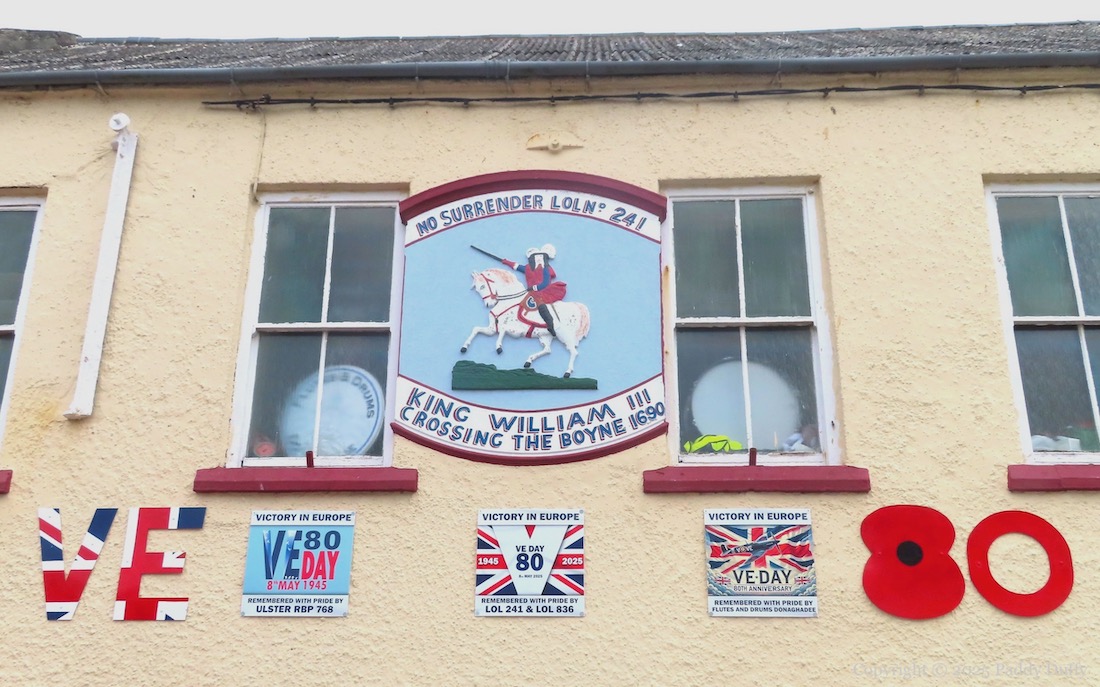
This image of King Billy crossing the Boyne in 1690 is on the No Surrender lodge (LOL 241) in Donaghadee. King William III’s victory in Ireland is celebrated annually on July 12th, with parades and gatherings of fraternal lodges and flute bands.
William’s victory is joined here by a number of small boards commemorating the 80th anniversary of Victory In Europe, on May 8th, 1945, “remembered with pride” by Orange lodges 241 and 836 (Brother Henry Ferguson Memorial), Royal Black Preceptory 768 (Ulster), and Flutes And Drums Donaghadee (Fb).
Manor Street, Donaghadee, replacing two Platinum Jubilee boards.
Jim McCabe, “life-long campaigner for truth and justice” after his wife Norah was killed by a plastic bullet in 1981, returns to the “International Wall” (Visual History) on Divis Street. The original mural – from a few months after his death in January 2023 – was replaced by A Window To A Free Country, one of the Palestinian-inspired murals. This new version replaces The Land Is Ours.
“In memory of all the innocent victims murdered and seriously injured by British Crown forces.”
The image above is from August 2nd; the images below are from July.















 Paddy Duffy Collection