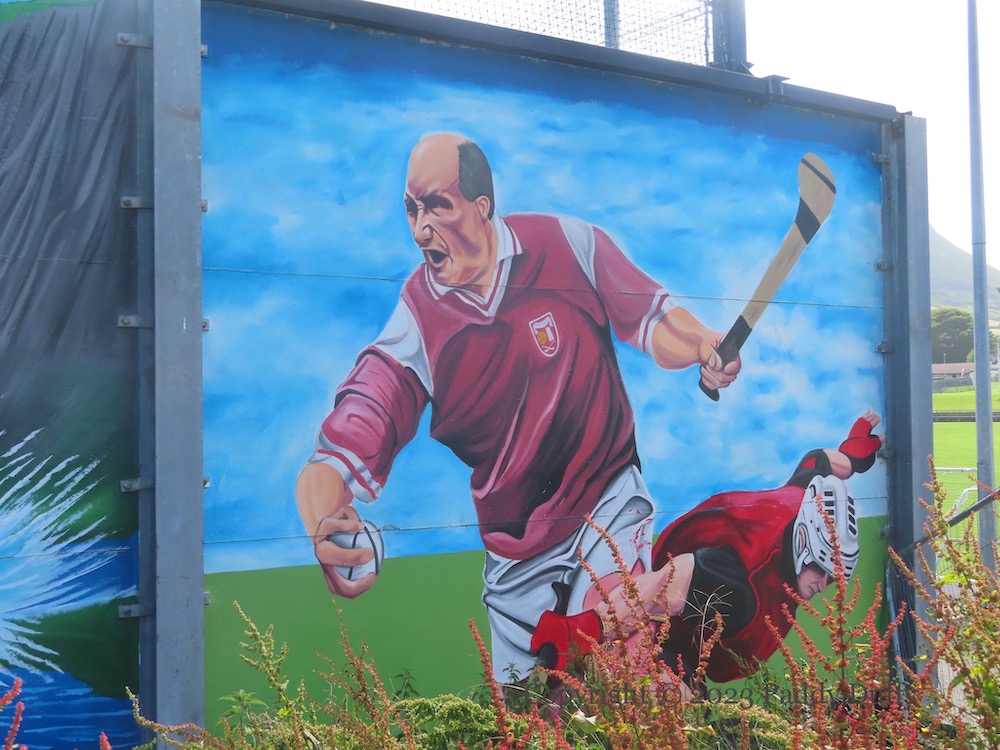
These two boards are at Gort Na Móna CLG. The one above was put developed by young Gorts as they learned about the history of the club as part of a twentieth anniversary celebration of Terry Óg Enright (Fb) who was killed by the LVF in 1998. The second board, below, combines the two previous boards to Terry Óg, seen previously in No Such Thing As Failure and Páırc Mhıc Ionnrachtaıgh.
“Welcome to Turf Lodge” — “Fáılte go dtí Lóıste Na Móna”. Turf Lodge was one of a number of estates built in the foothills of Black Mountain — including Westrock, Springhill, Ballymurphy, New Barnsley, and Dermot Hill — meant to house an underserved Catholic population and displaced families from other areas of Belfast.
The estate was built over a number of years but most people moved in between 1960 and 1962. (Northern Visions made a documentary about the history and people of the Turf Lodge estate that includes descriptions of the various ways in which the estate was left unfinished even as people took up residence.)
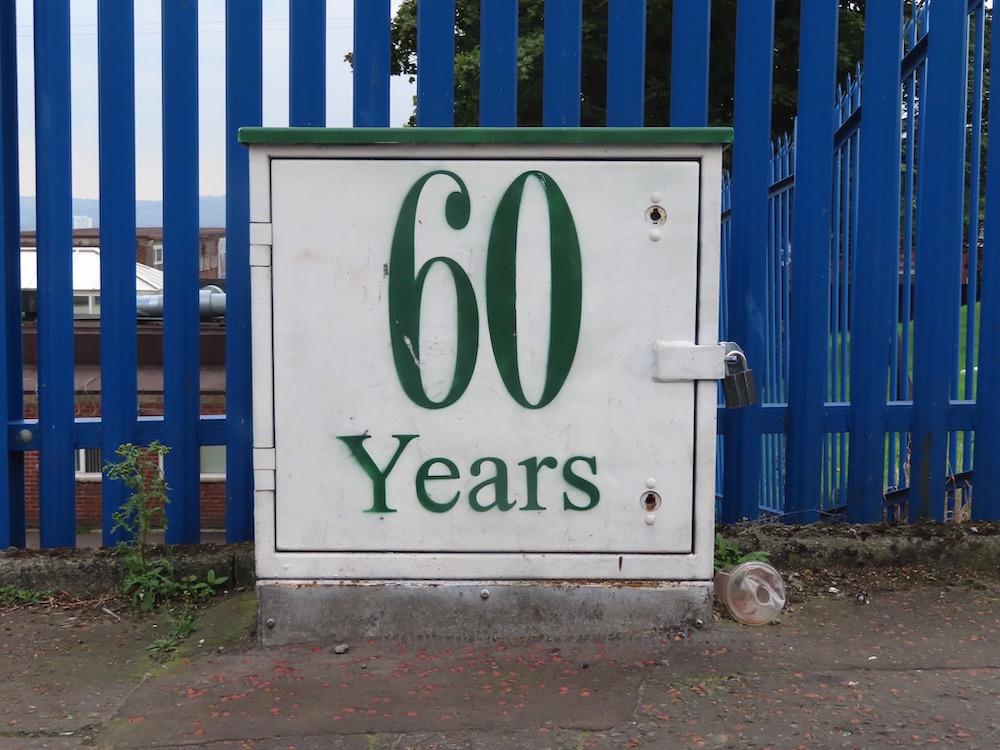
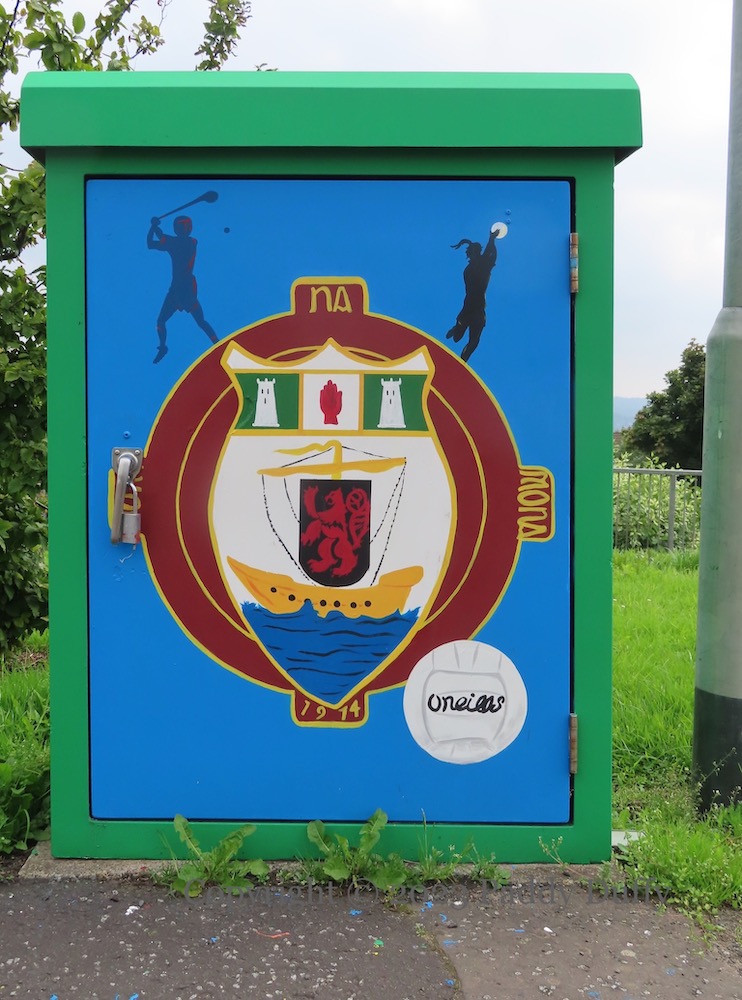
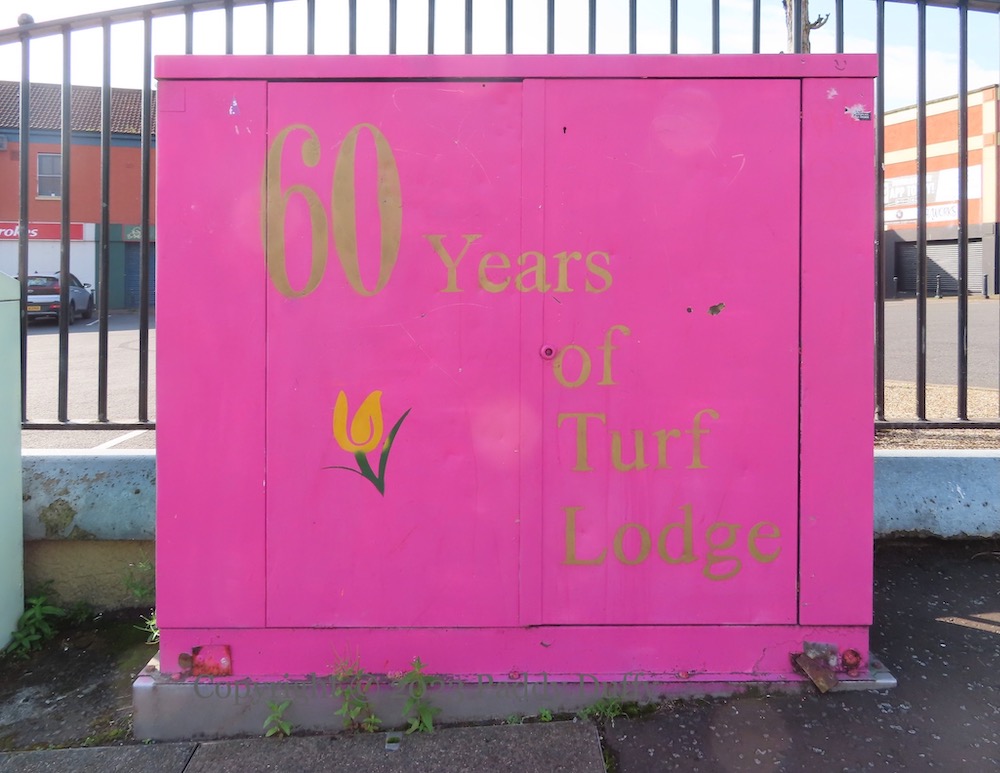
For the sixtieth anniversary, the electrical boxes outside John Paul II (formerly St Aidan’s) were stencilled (above and immediately below). This year (2023), more boxes have been painted, with images of gaelic games (see Gort Na Móna), bluebells (see Féıle Na gCloıgíní Gorma), and the silver fáınne on red background (see #AchtAnoıs).
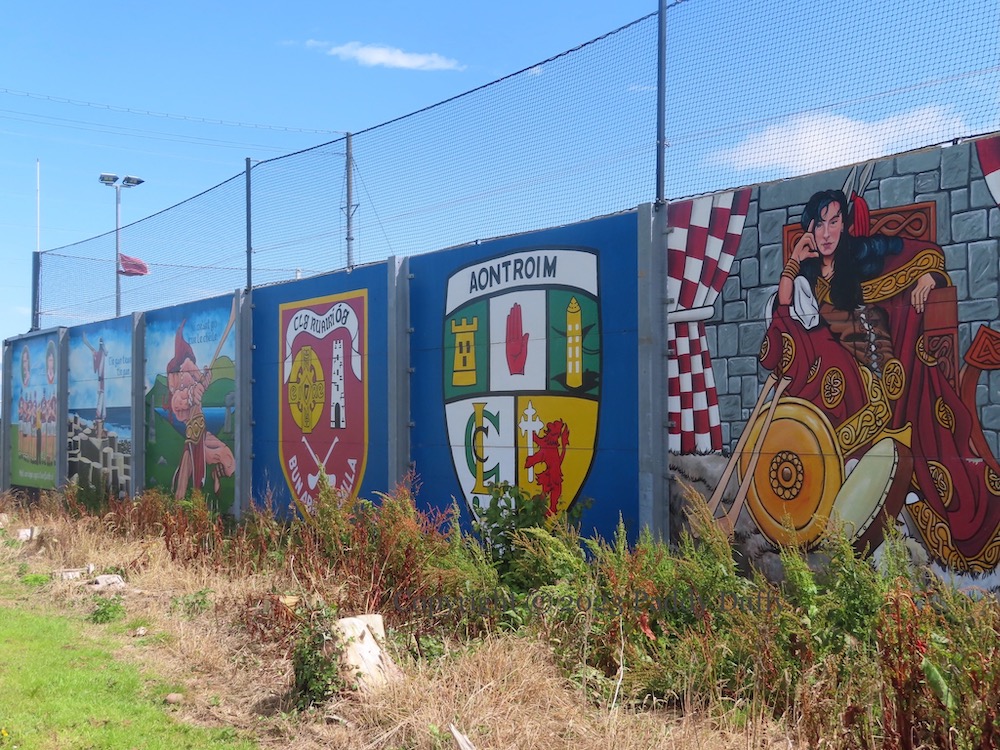
The two laochra featured in the first panel (above) are Danny McNaughton and John Darragh, while GAA hall-of-famer Terence “Sambo” McNaughton is featured in the final panel (BBC | GAA). Also included are Finn MacCool (on Giant’s Causeway), Setanta/Cú Chulaınn, and Queen Meadhbh – the latter two are in the style of Jim Fitzpatrick – the first is based on Fitzpatrick’s Hurling Match and the second takes Leyendecker’s painting of Maeve (WP) and renders it in Fitzpatrick’s style, complete with club-coloured drapes.
Coast Road, Cushendall at the grounds of Ruaırí Óg CLG (web).
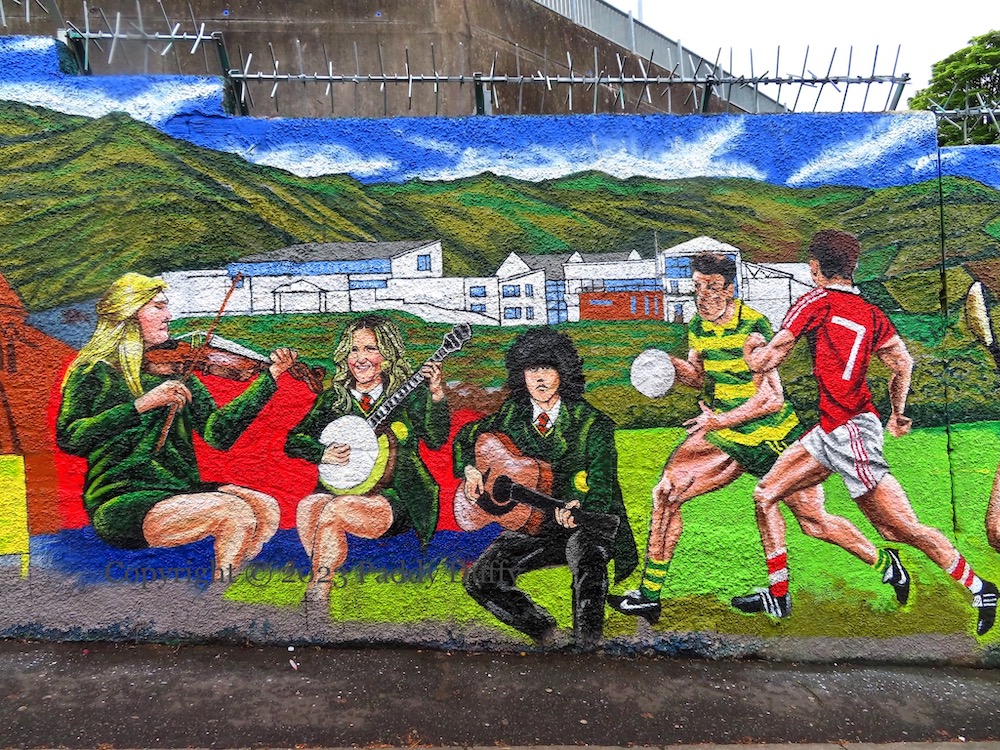
What is now Coláıste Feırste began life as Meánscoıl Feırste in 1991, teaching a group of nine students a curriculum inspired by Patrick Pearse (discussed previously in An Tusa An Chéad Laoch Eıle?) and based in Cultúrlann MacAdam-Ó Fıaıch (Cultúrlann). It moved to Beechmount in 1998 and in 2018 expanded into new buildings that were meant to accommodate 600 pupils (Doherty Architects), which it has now exceeded (BBC) as it enters its thirty-third year in existence.
The theme of preserving and promoting the Irish language occurs in several places in the mural: next to Pearse we see his saying, “Máırtín Ó Chadháın ” [a land without a language [is] a land without a soul], in the classroom scene we have “Labhaır í agus maırfıdh sí” [speak it and it will endure], and finally we see the Dream Dearg protesting for an Irish-Language Act (see previously #AchtAnoıs).
The in-progress images included below among completed detailed shots date from May 6th and 20th.
Giant’s Foot/Beechview Park. Replaces the short-lived mural of Olympians, seen in Sporting Giants.
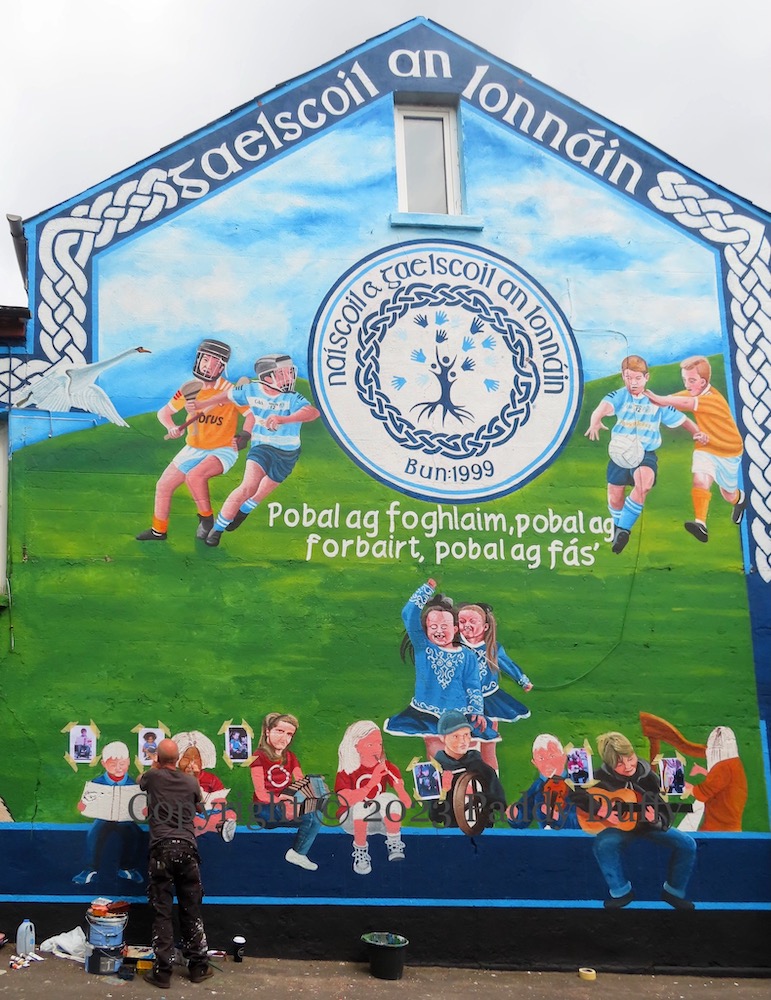
“Pobal ag foghlaım, pobal ag forbaırt, pobal ag fás” [a community learning, developing, growing]
Students from “Naíscoıl & Gaelscoıl An Lonnáın (Fb) bun[aithe] 1999″ [Nursery-school and Irish-language [primary] school of the loney, founded 1999] are shown playing Gaelic games, Irish dancing, and playing traditional instruments (and the guitar). On the left are representations from Irish mythology: the Children Of Lear and Setanta killing Culann’s hound (and taking the name Cú Chulaınn in taking its place), along with hedge-row school (see Hedge Row School).
The origin of the name is unclear; the nearest loney [lane] was the “Pound” loney, so-called because of the animal pen just outside Barrack Street, used to store livestock before moving on to the markets the following day (Rushlight | Uachtar Na bhFál). (The Pound Loney is included in the mural in Durham Street – see Et In Arcadia Ego.)
The other well-known loney in Belfast is the “buttermilk loney” which was either/both what is now Ballysillan Park (that is, connecting Olpark with the horsehoe bend) or the top part of the loney that connected Wheatfield (the top of Ardoyne) to the Ligoniel junction and on towards the old Ligoneil House (there are a mixture of usages in this Belfast Forum thread); this image from the 1930s might show the lane in (what was still at the time) the hills above Oldpark; a new housing-development towards the top of the Ballysillan Park is euphemistically called “Buttermilk Loney”. (It is also said to have been a prior name of Skegoniell Avenue (Belfast History).)
(The Uachtar Na bhFál page also mentions “Turf” loney, “Mountain” loney, and “Killoney”.)
The history of the Irish word “lonnán” is unclear. Uachtar na bhFál says the word is of Scots origin (perhaps as “loanin”). (See this BelTel article on the opening of the Ulster-Scots centre in 2014.) Spelled “lonnen”, it is also a Geordie word (Heslop’s Northumberland Words | wiktionary). The Irish News and Belfast Live, working from the same (uncited) press-release about Páırc An Lonnáın (which is along the Westlink below Raıdıó Fáılte), state that “loney” comes from the English word “loaning”. The Irish word “lonnán” does not appear in Dinneen 1904; Dinneen 1953 defines it (hyper-specifically) as “a grassy recess running up into high basaltic cliffs”.
The image above and immediately below are from May 19th, as the mural was nearing completion; other ‘in-progress’ images are as dated below. See Extramural Activity for images of the completed work.
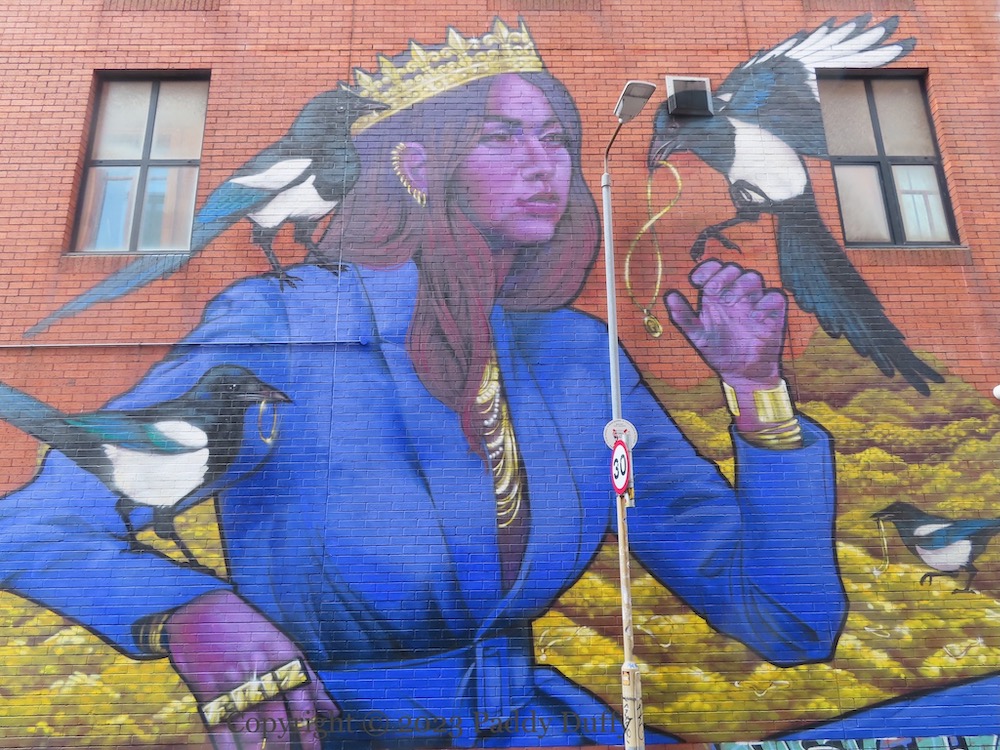
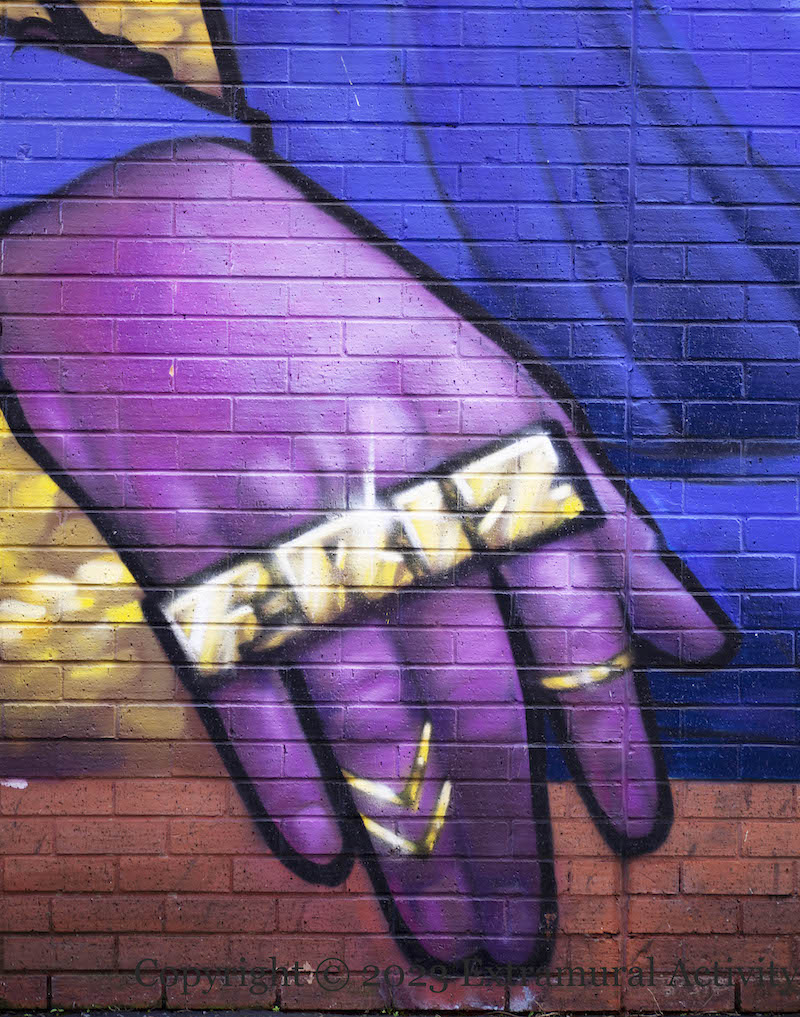
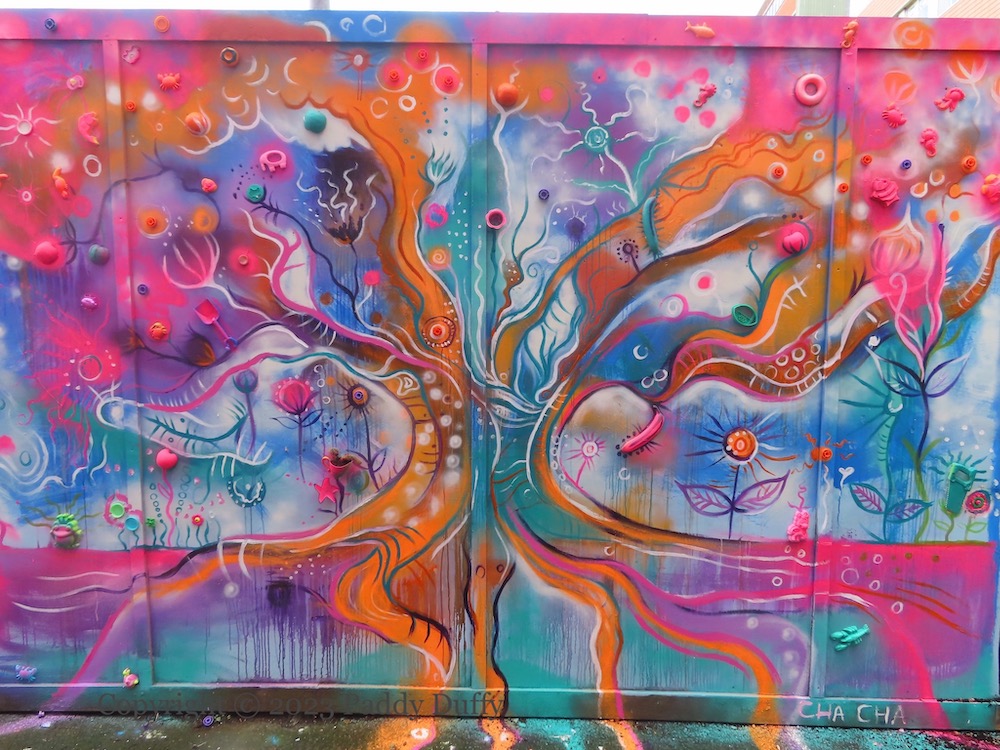
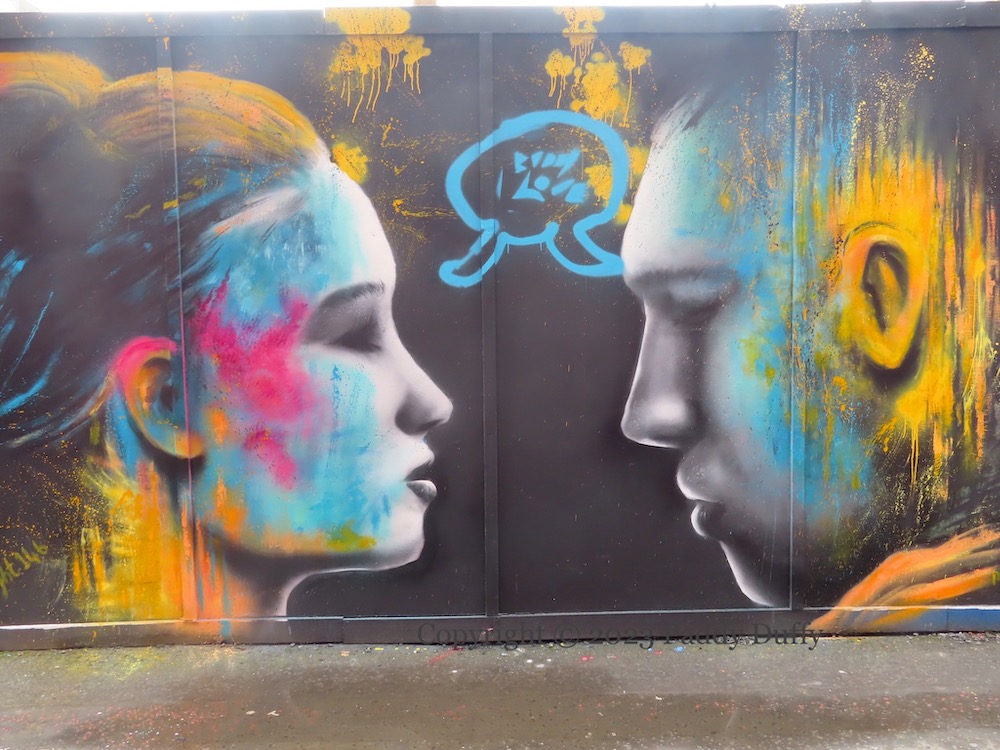
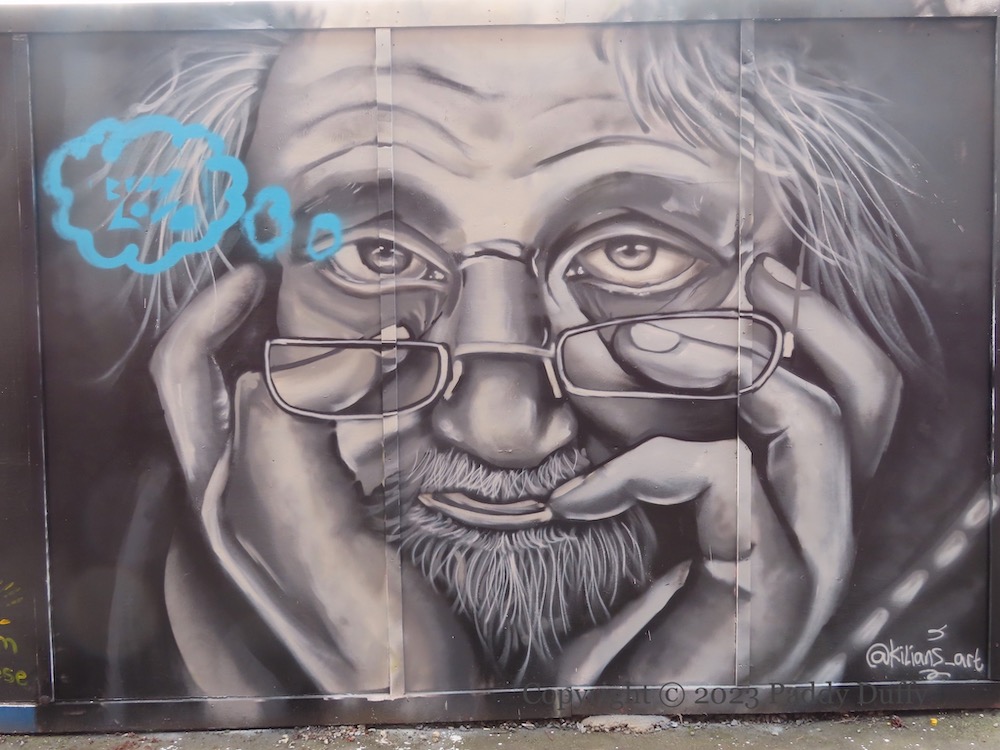
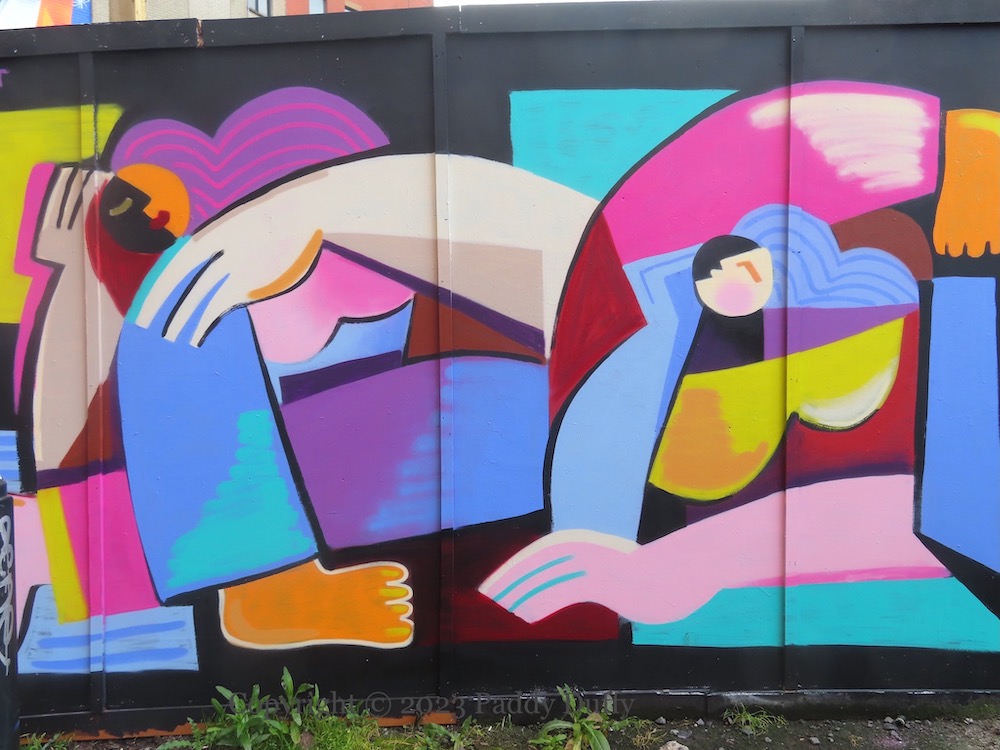
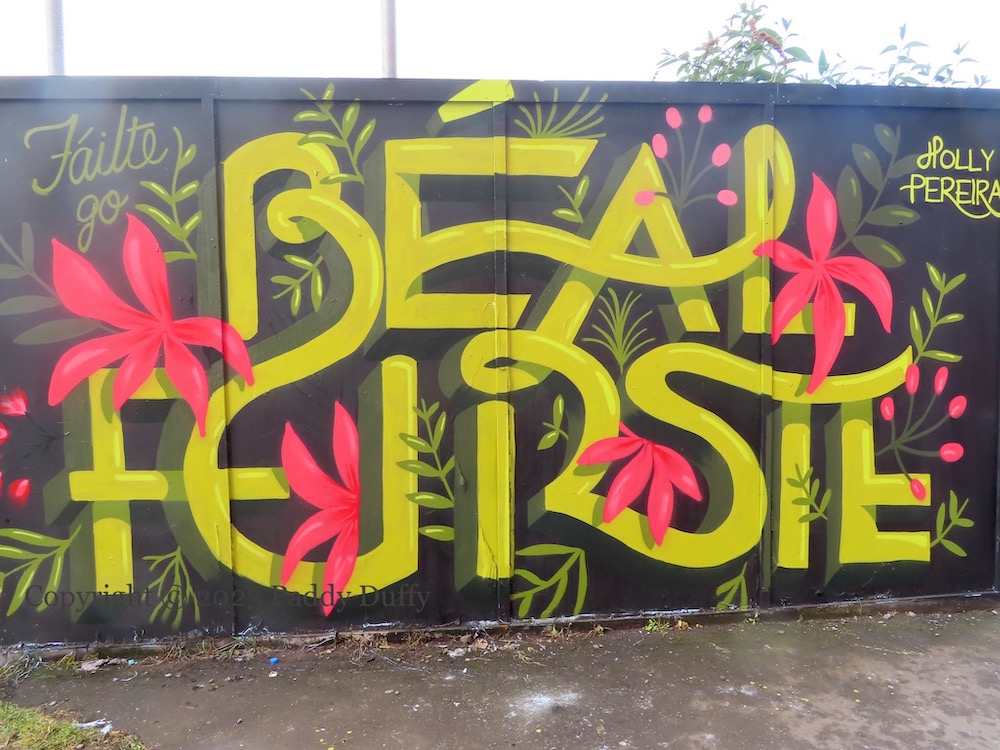
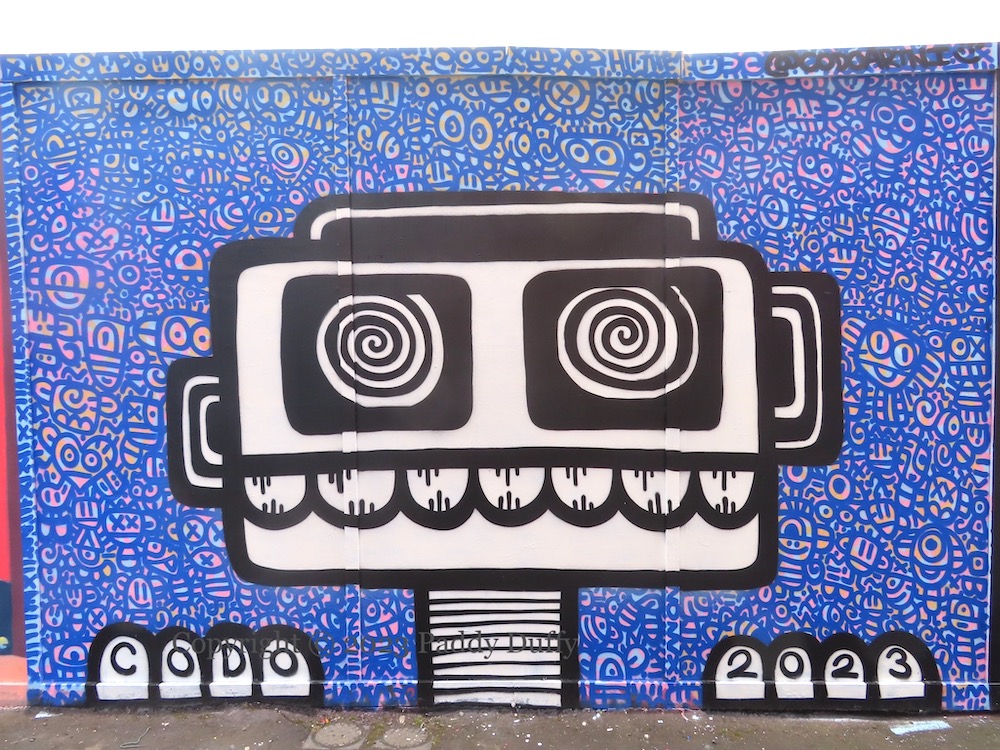
Here is a gallery of the new pieces from Hit The North 2023 on the south side of Kent Street (there is a separate post for the north side and there is a separate post for Kent Street above Union Street).
From left to right (top to bottom in this post), the art is by:
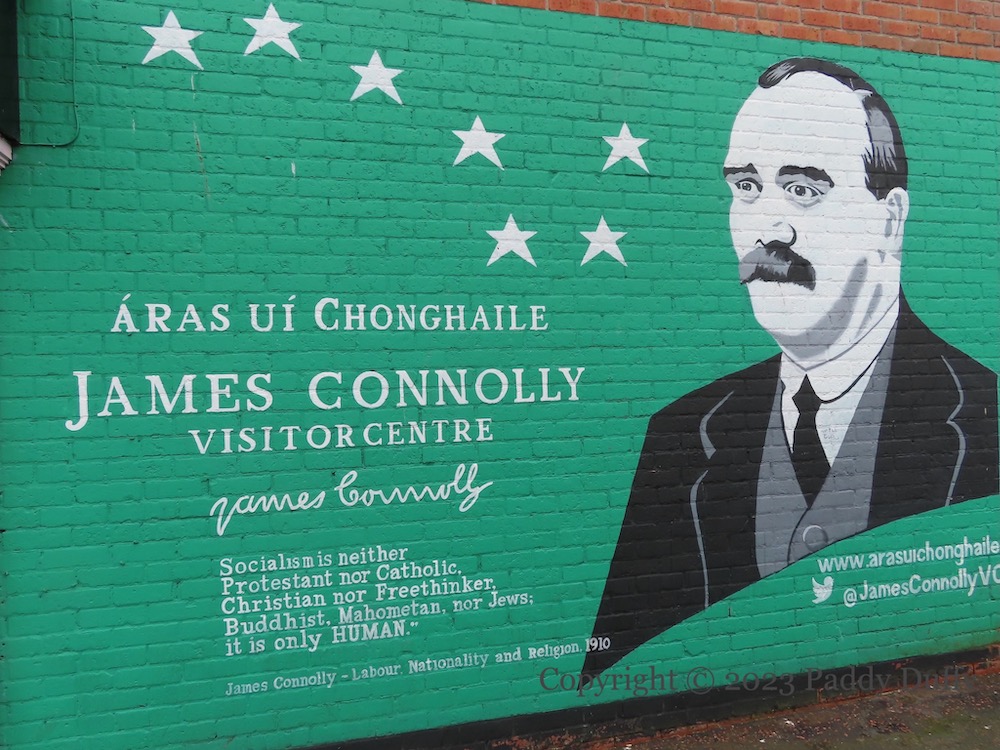
“Socialism is neither Protestant nor Catholic, Christian nor Freethinker, Buddhist, Mahometan, nor Jews [sic]. It is only human. We of the Socialist working class realise that as we suffer together we must work together that we may enjoy together. We reject the firebrand of capitalist warfare and offer you the olive leaf of brotherhood and justice to and for all.” From part 6 of Connolly’s Labour, Nationality And Religion in 1910.
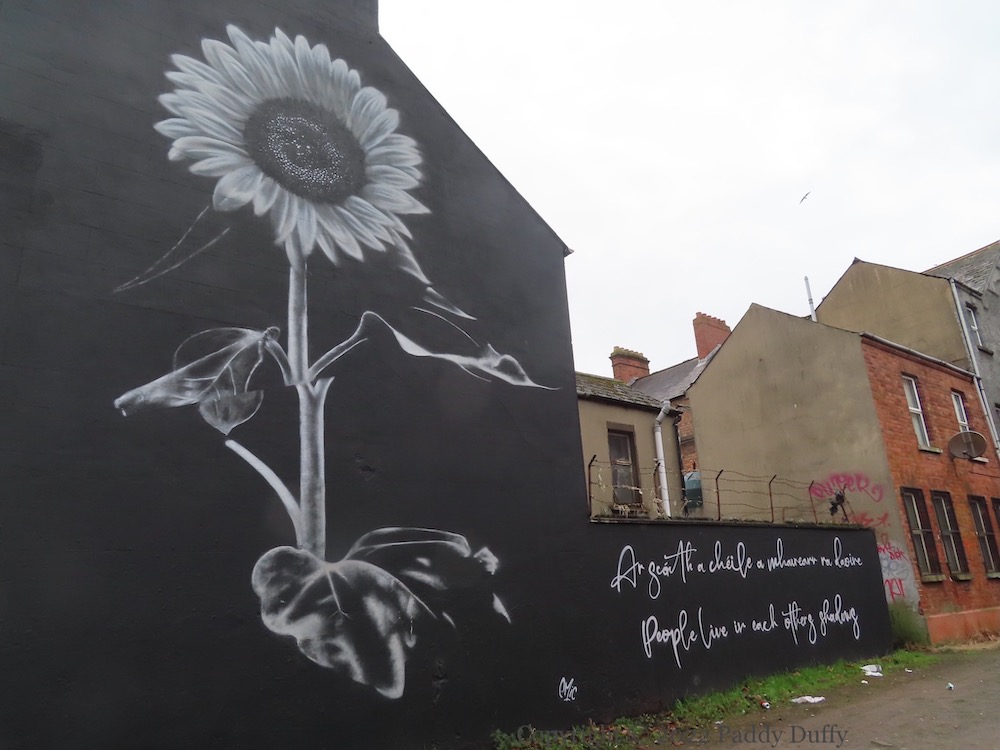
A Ukrainian woman in Heniches’k (just north of Crimea) (tw | with subtitles) became famous for berating an invading Russian soldier with the words “Take these seeds and put them in your pockets so at least sunflowers will grow here when you all die here.” Ukraine is the world’s largest producer of sunflower oil (WP) and since the Russian invasion began on February 24th, prices have increased – so far – by about 70% (Money Control), sending countries (especially India – Reuters | Bloomberg) and companies around the globe scrambling for alternatives, such as the replacement of sunflower oil by rapeseed oil in the making of crisps in Ireland (The Journal). The sunflower has become a symbol of solidarity with Ukraine, along with the Ukrainian flag. This giant sunflower was painted by emic (web | tw | ig) in Harrow Street.
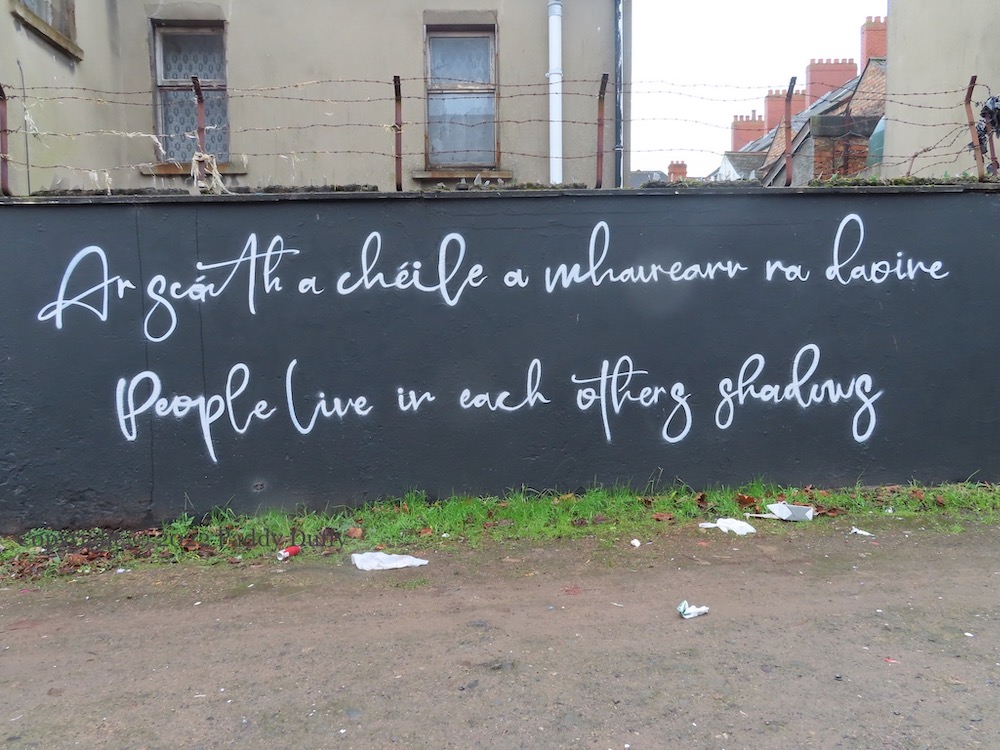
Update: added to the side wall “Ar scáth a chéıle a mhaıreann na daoıne”, here translated as “People live in each other’s shadows.”























 Paddy Duffy Collection
