Victory In Ireland Day

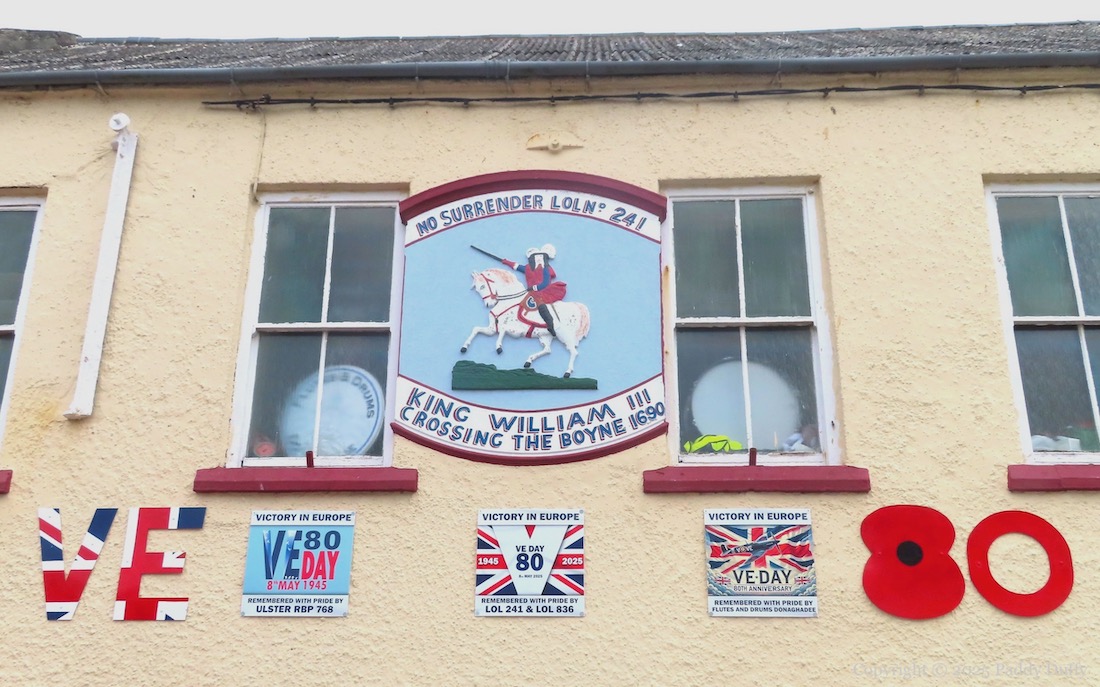
This image of King Billy crossing the Boyne in 1690 is on the No Surrender lodge (LOL 241) in Donaghadee. King William III’s victory in Ireland is celebrated annually on July 12th, with parades and gatherings of fraternal lodges and flute bands.

William’s victory is joined here by a number of small boards commemorating the 80th anniversary of Victory In Europe, on May 8th, 1945, “remembered with pride” by Orange lodges 241 and 836 (Brother Henry Ferguson Memorial), Royal Black Preceptory 768 (Ulster), and Flutes And Drums Donaghadee (Fb).

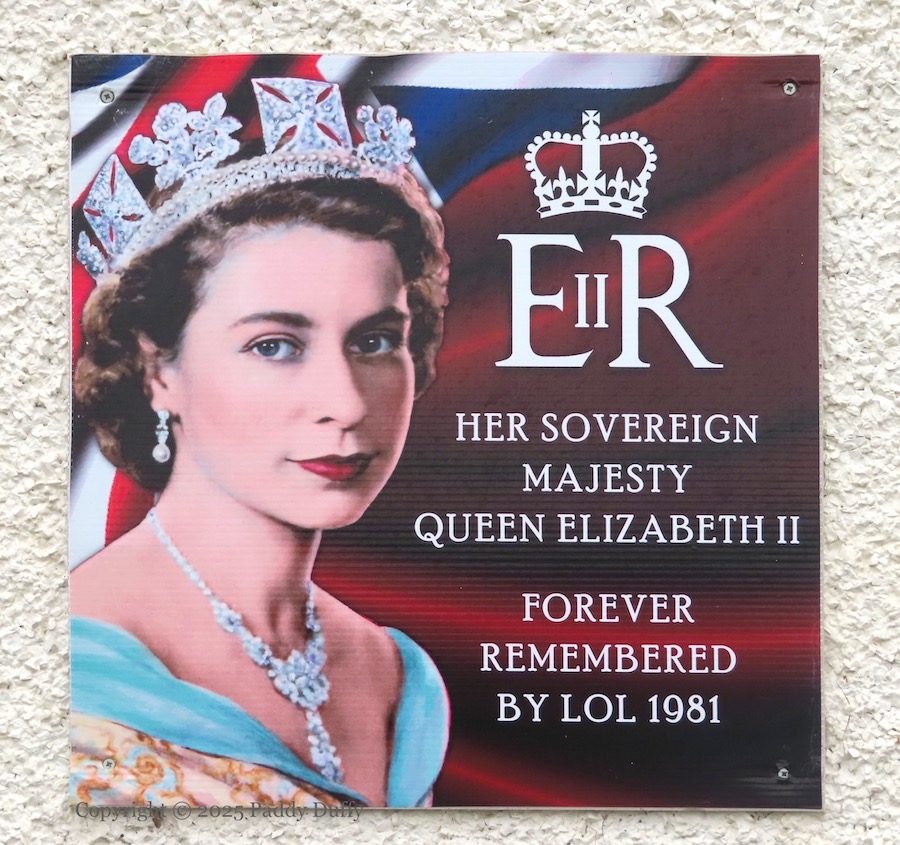
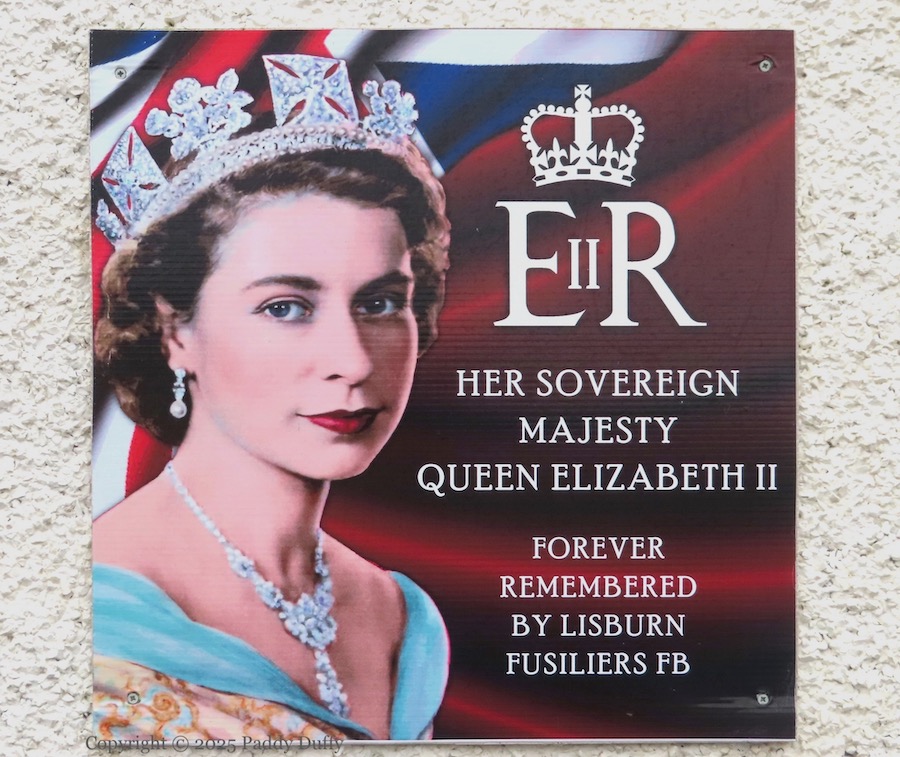
Manor Street, Donaghadee, replacing two Platinum Jubilee boards.

Click image to enlarge
Copyright © 2025 Paddy Duffy
T07403

Loyalist Village

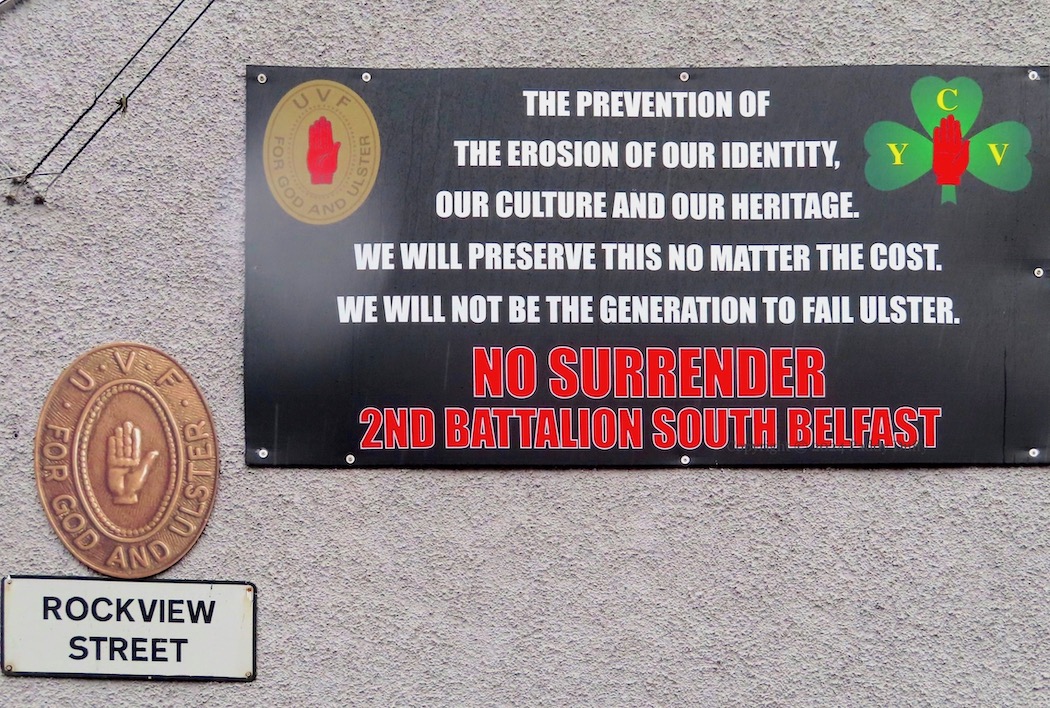
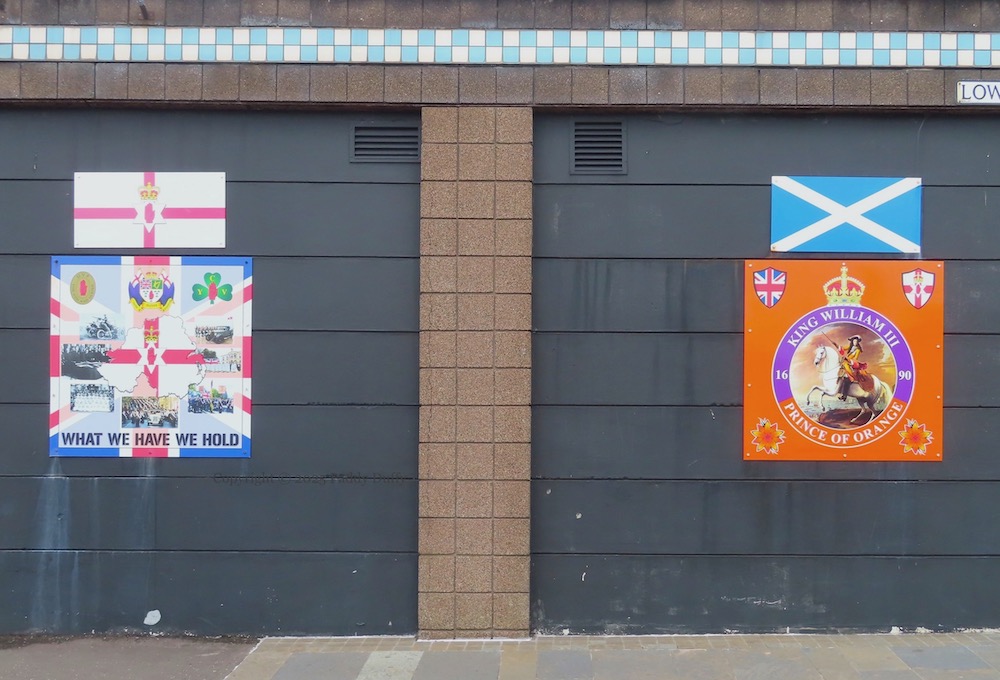
“Loyalist Village, south Belfast.” UVF markings in the Village continue to proliferate with the recently-added board shown above (from the top of Tavanagh Street) alongside a slew of other boards, some of which are included below.

The “Village team” is not Linfield FC but the UVF (the phrase was also used by the Village UDA); “VTOT” (standing for “Village team on tour”) has previously been used as graffiti – see Welcome To Hell!!!

The purple hoarding below gives “1913” as a creation-date for the battalion. The Ulster Unionist Council organised the signing of the Covenant in September, 1912, and in January 1913 voted to bring together the militias that had been formed in various places into an Ulster Volunteer Force. One of these was a South Belfast battalion that had formed in 1912 (History Ireland). Hence, both “1912” and “1913” are given as dates for the creation of the battalion. When the Volunteers were integrated into the Ulster Division for the Great War, the South Belfast Volunteers joined the 10th battalion of the Royal Irish Rifles.

Click image to enlarge
Copyright © 2024/2025 Paddy Duffy
[T07194] T07195
T05879 T05880
T07192 T07193 T07196
“The prevention of the erosion of our identity, our culture and our heritage. We will preserve this no matter the cost. We will not be the generation to fail Ulster. No surrender. 2nd battalion South Belfast” “What we have we hold”

Love The Brotherhood

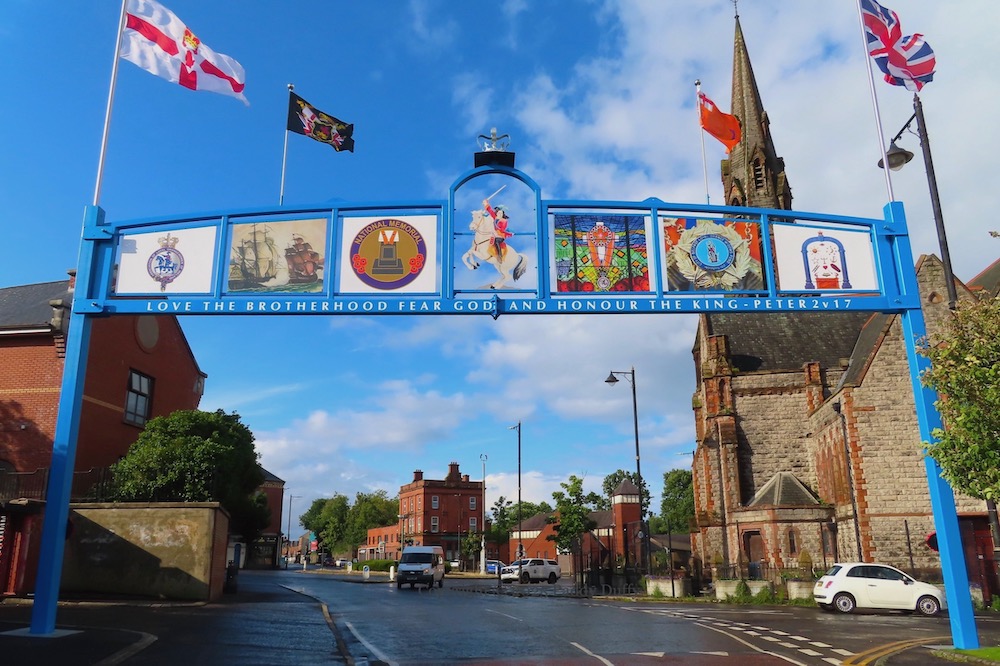
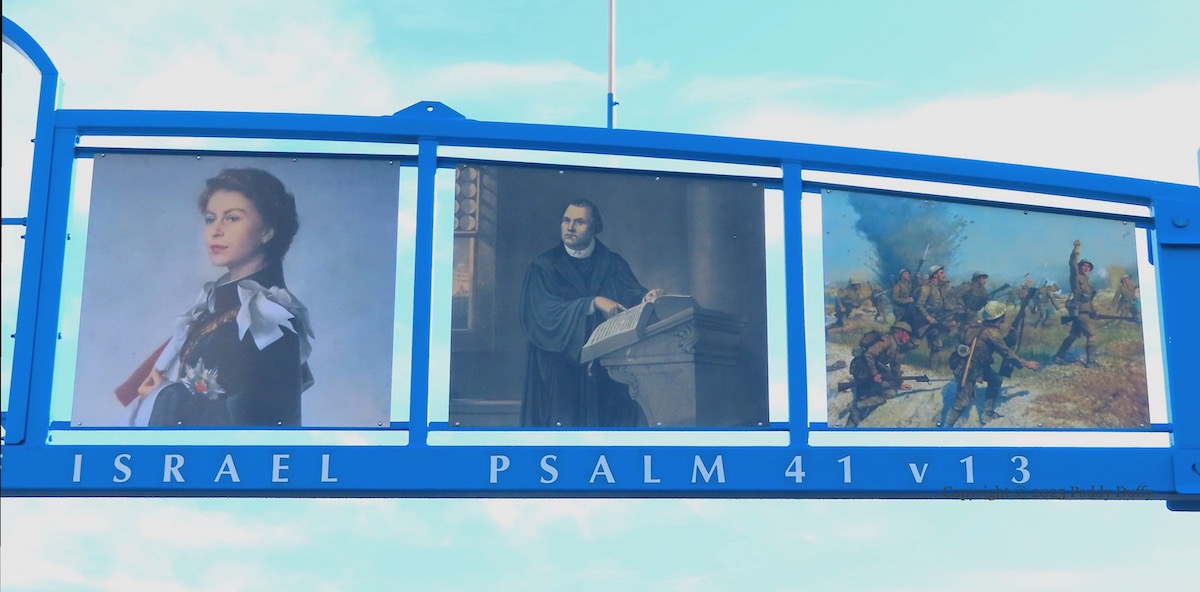
The Denmark Street arch (at the top of the lower Shankill estate and next to the Clifton Street Orange Hall) returns for the 2025 marching season.

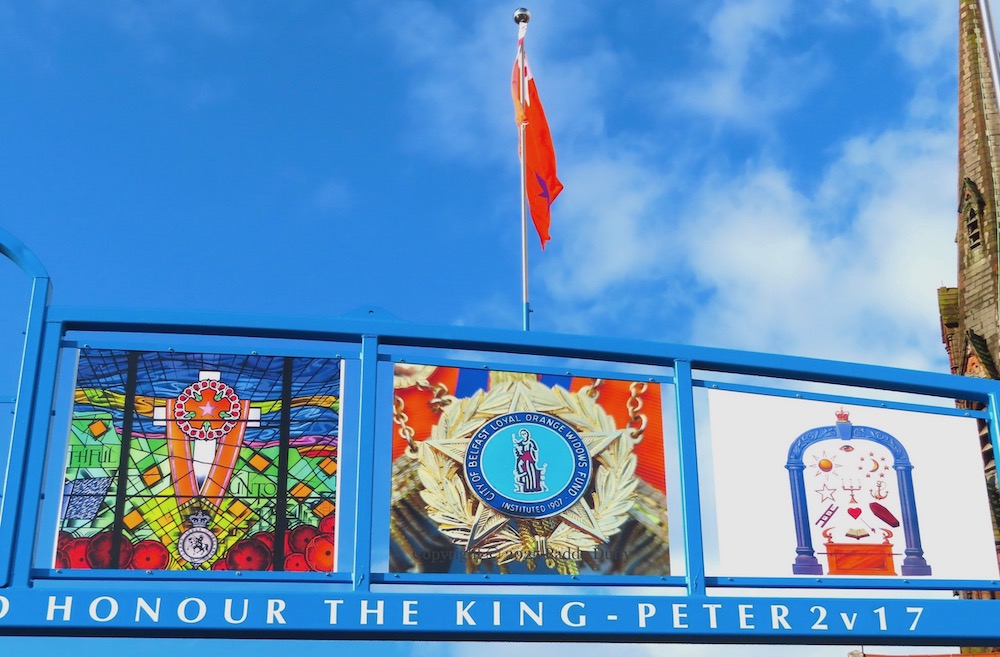
For each of the 12 panels, see Upward. Each side of the arch features a quote from scripture: on the outside, “Blessed be the Lord God of Israel – Psalm 41 v. 13”, and on the estate side “Love the brotherhood, fear God, and honour the King – [1st] Peter 2 v. 17”

Click image to enlarge
Copyright © 2025 Paddy Duffy
T07160 T07161 T07162
T07163 T07164 T07165

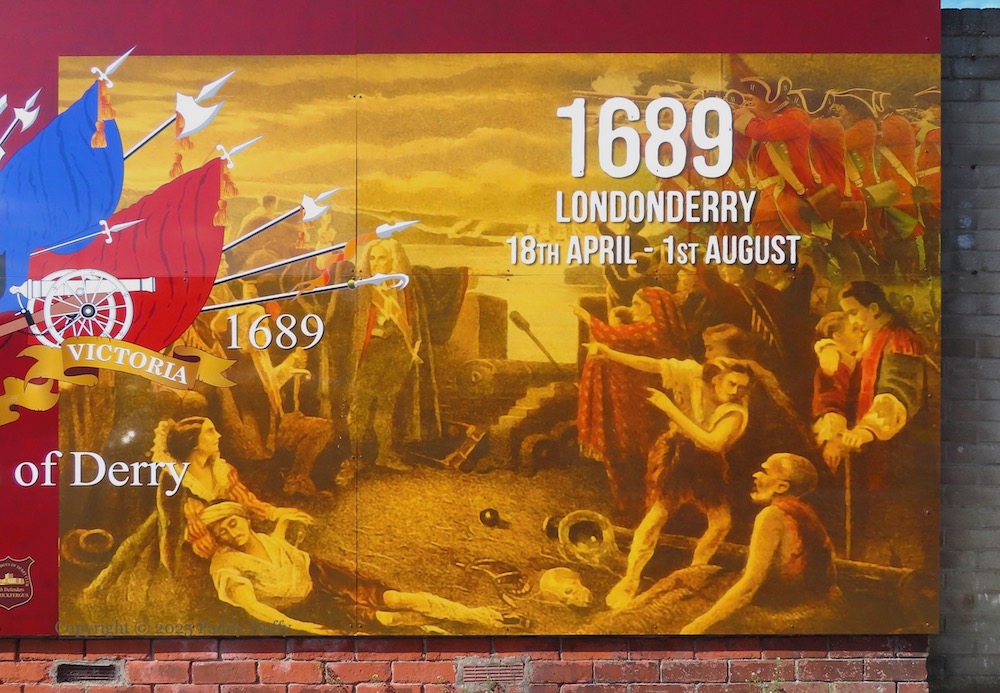
Breaking The Siege

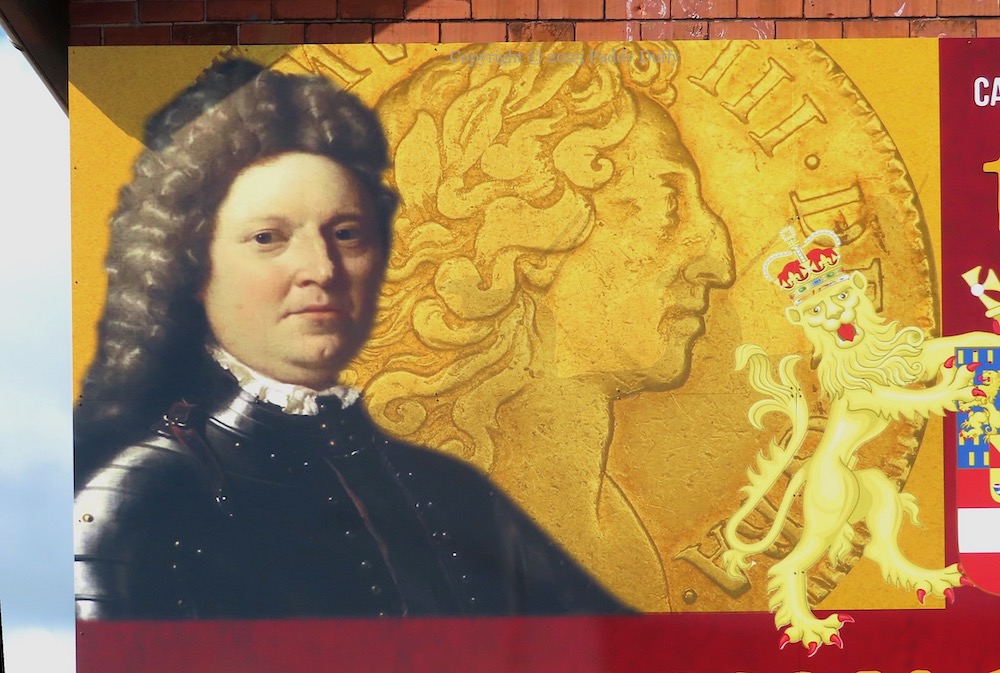
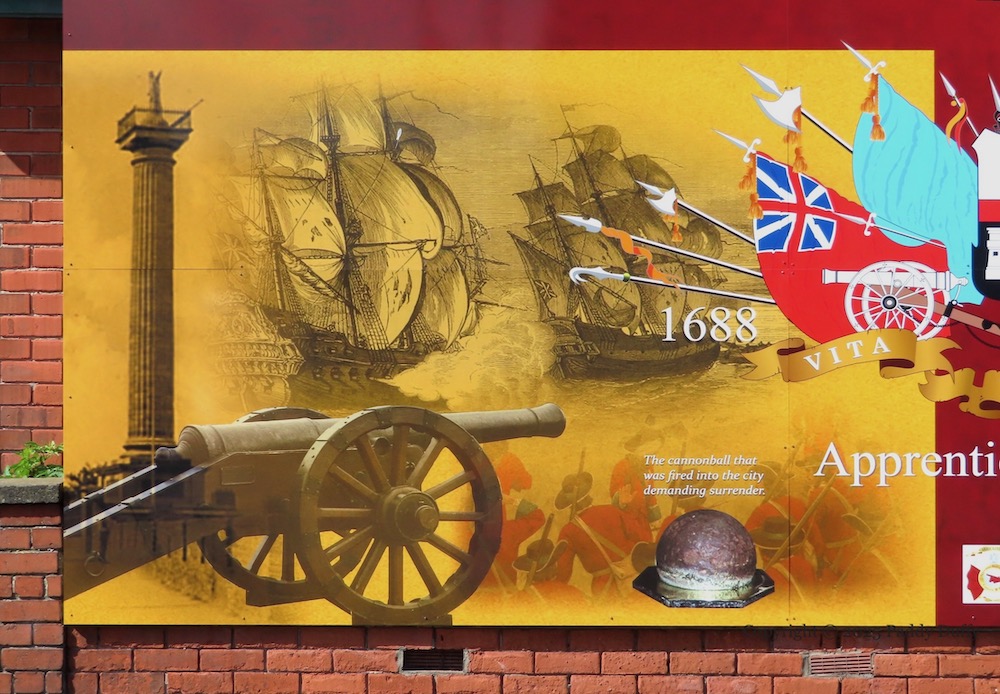
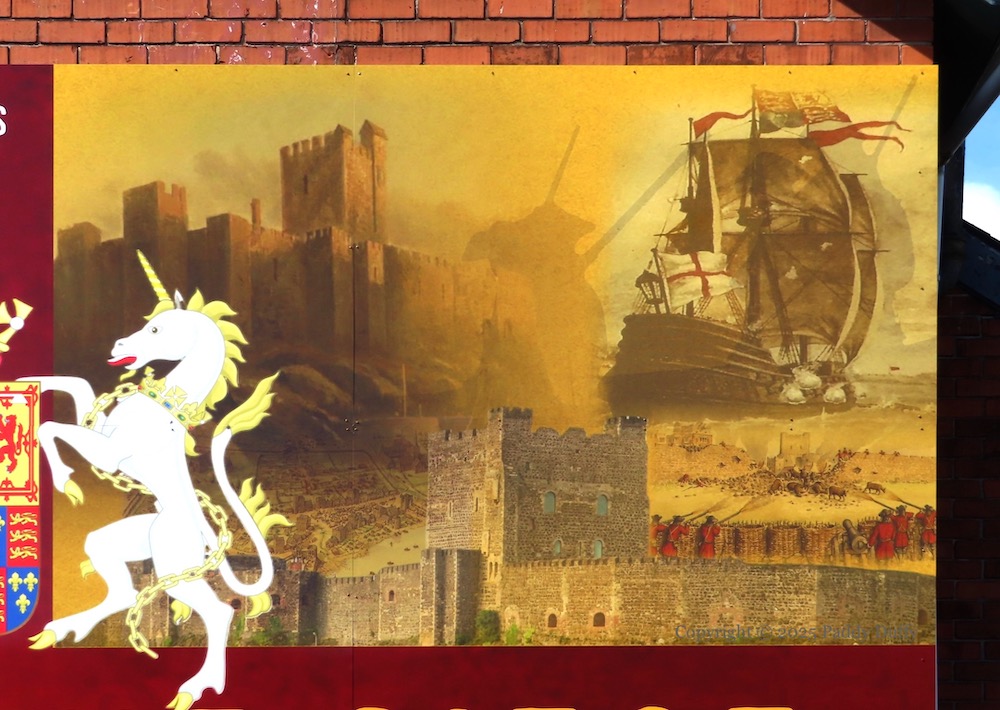
English forces under Kirke came to the aid of the besieged Protestants in Derry, “breaking the boom” across the Foyle and ending the siege at the end of July, 1689. The next wave of forces sailed for Belfast Lough, and together with the troops from Derry, set siege on August 20th to a garrison of Jacobite forces stationed in Carrickfergus castle, who soon began to run low on gunpowder, and surrendered. (WP | NIWorld)

This new board in Davy’s Street, Carrickfergus, focuses mostly on the siege of Derry, though gives the dates of the Carrickfergus siege at the top. Schomberg appears in the top-left quadrant of the board – he would go on to die on at the Boyne in 1690; in the top-right is the Carrickfergus castle and the Mountjoy; in the bottom-left are Walker’s statue and the canon ‘Roaring Meg’; bottom-right is a painting of the Derry inhabitants celebrating the end of the siege; top-centre is the coat of arms of William and Mary; and bottom-centre is the Londonderry coat of arms.

Replaces a trio of small UVF boards.

Click image to enlarge
Copyright © 2025 Paddy Duffy
T06797 T06798 T06799 T06800 T06801 T06802 T06803
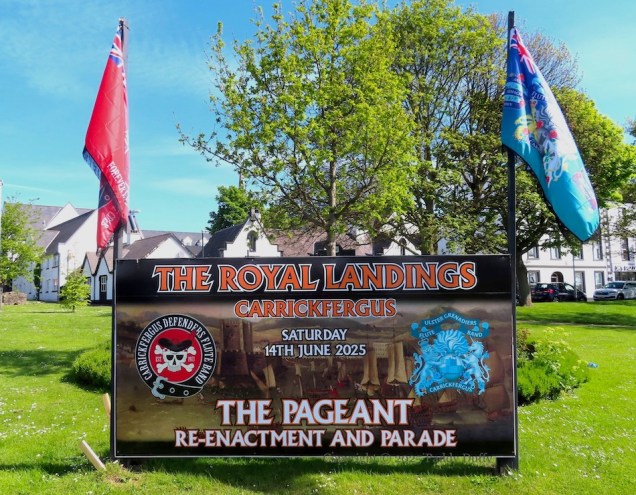
The Royal Landings

“The Royal Landing, Carrickfergus, Saturday 14th June 2025. The pageant, re-enactment, and parade.”

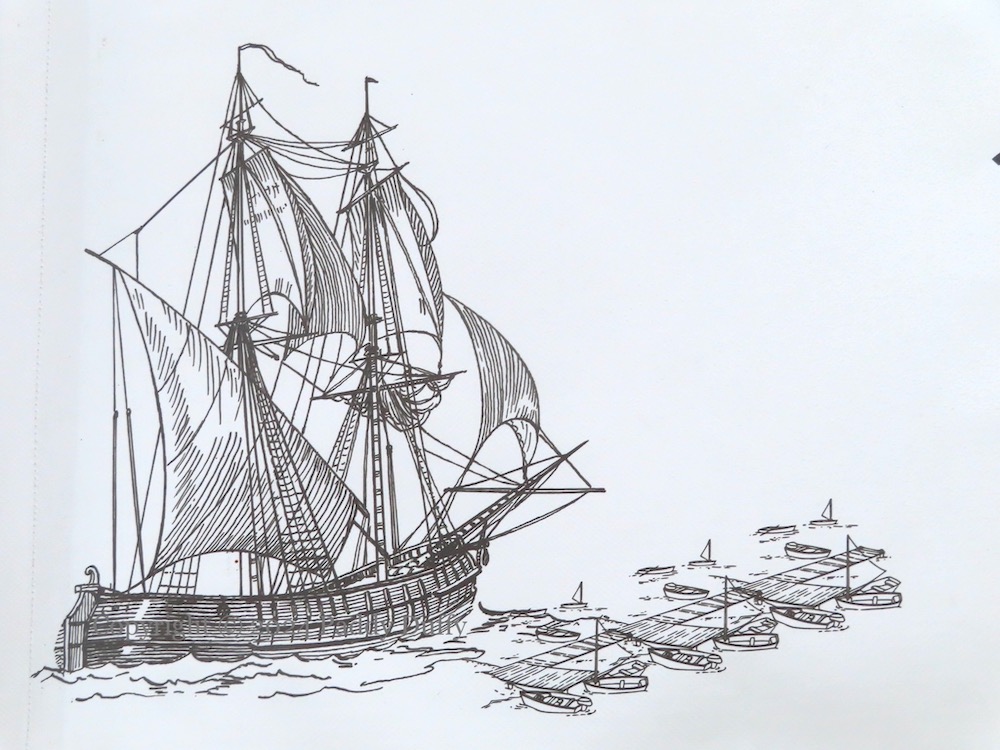
William III, statholder of Holland, landed at Torbay, England, in November, 1688 with 250+ ships and 30,000 men in order to overthrow the Catholic convert James II who had become king in 1685. As king of England, William was automatically made king of Ireland, but he and his forces had to go to Ireland to win the island from James and the forces loyal to him. Schomberg had already successfully besieged Carrickfergus in 1689, allowing William to land on June 14th, 1690. The image used as a background is Pocock’s oil painting of the landing, which is held by the National Maritime Museum.

The Royal Landing event involves a parade – involving the Carrickfergus Defenders flute band (Fb) and the Ulster Grenadiers flute band (Fb) – from Woodburn fields to the marina, where King Billy’s landing will be recreated (Fb).

See also: June 14th, 1690 in Newtownabbey

Click image to enlarge
Copyright © 2025 Paddy Duffy
T06

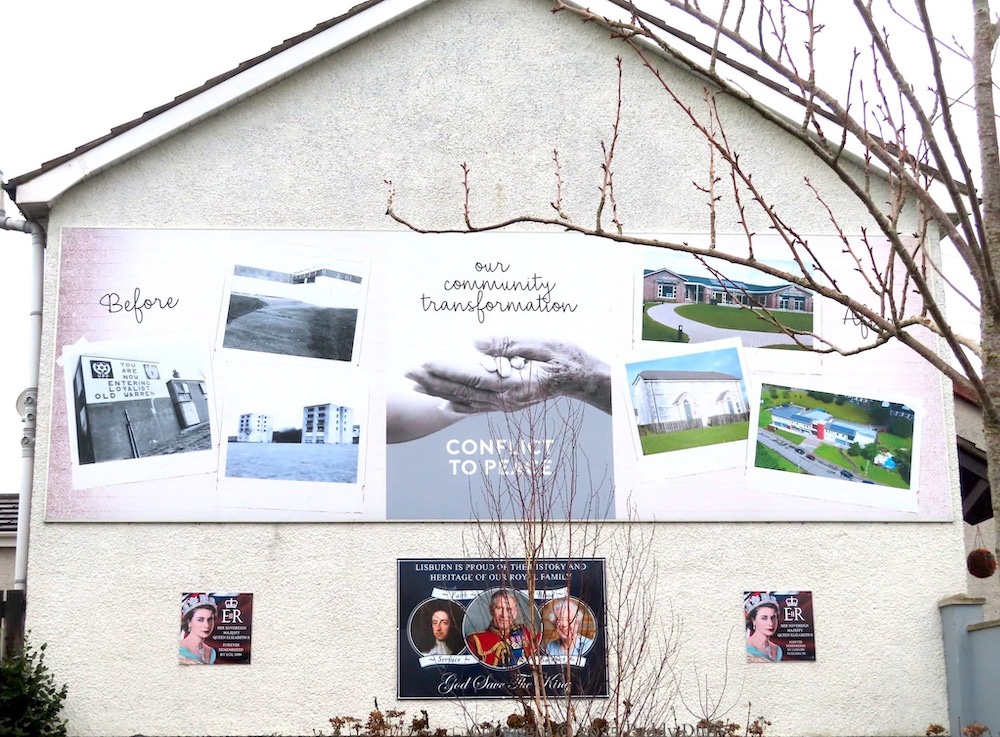
Our Community Transformation

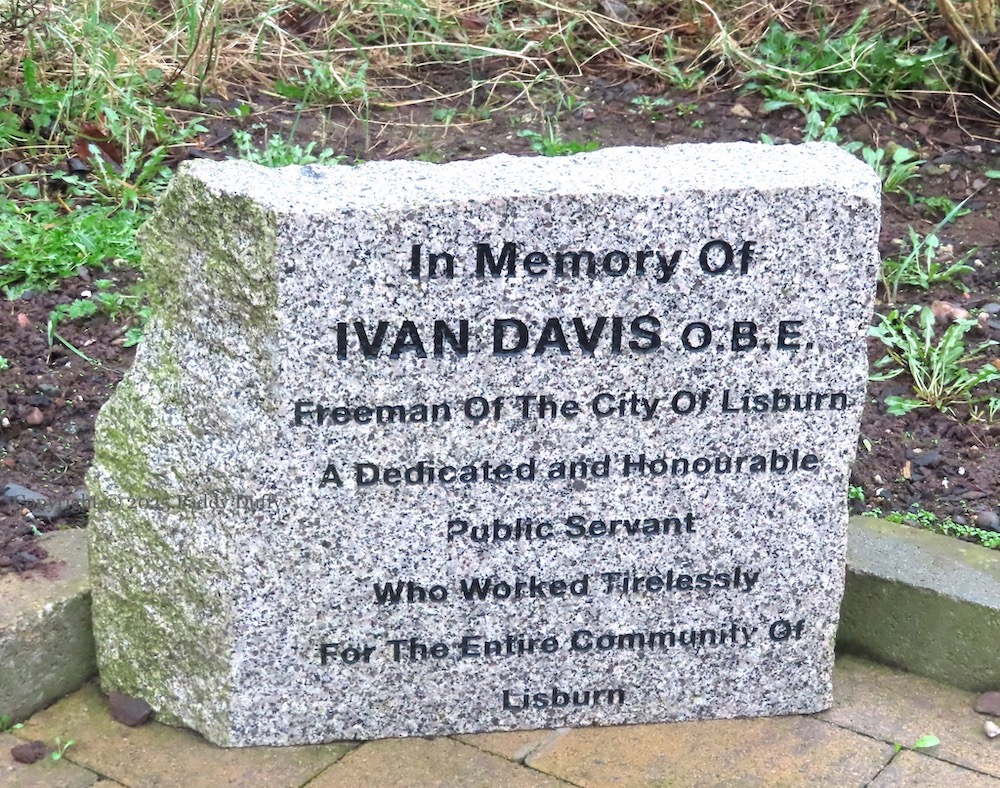
Ivan Davis was a DUP and then UUP politician who was a Lisburn borough councillor (and mayor 1991-1993) and member of the Assembly for Lagan Valley from 1998 to 2003, before being ousted in favour of the anti-Agreement Jeffrey Donaldson (BBC). He died in 2020 (BelTel). The stone in his memory is in the garden at the top of Old Warren: “In memory of Ivan Davis O.B.E. Freeman of the city of Lisburn, a dedicated honourable public servant who worked tirelessly for the entire community of Lisburn.”

The boards on the wall were seen previously in 2023’s Conflict To Peace – which includes a colour photograph of the old UDA mural – and 2024’s Faith, Blood, Service, Sacrifice.

Avonmore Park, Old Warren, Lisburn

Click image to enlarge
Copyright © 2025 Paddy Duffy
T06099 T06100 T06101 T06102 T06103 T06104

The Glorious Revolution

The story of William in Ireland has been a recent favourite in PUL displays (e.g. Newtownabbey | Carrickfergus | Shankill); this version is novel in adding a letter from June 30th, 1688, both in transcription and facsimile, under the heading of the “Glorious Revolution”. In it, the “Immortal Seven” tell William, the Prince Of Orange, that 95% of English people want a change in monarch. William arrived in England in November, 1688, and in Ireland in June, 1690.

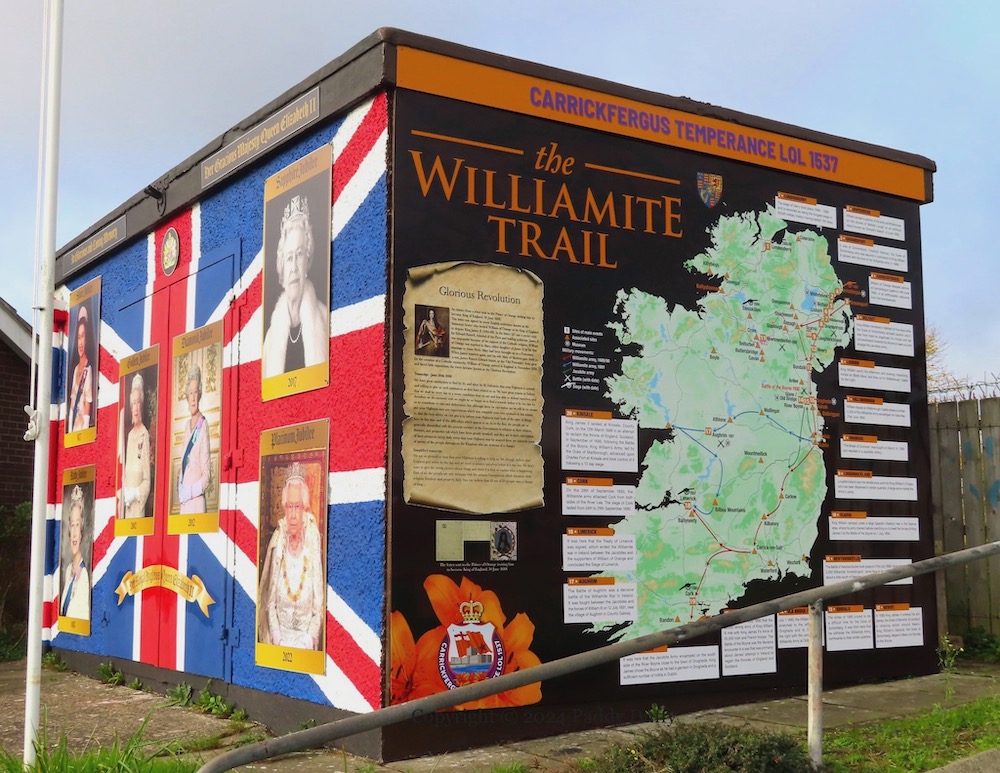
The Williamite Trail (from October) joins an earlier tribute (June) to Elizabeth II on the years of her silver, ruby, gold, diamond, sapphire, and platinum jubilees (1977, 1992, 2002, 2012, 2017, and 2022).

For another combination of William and Elizabeth, see Elizabeth, Queen Of Orange.

This sub-station is the site of the infamous “Join The UDA” mural of 2015 (one | two).

Oakfield Crescent, Oakfield/Glenfield, Carrickfergus

Click image to enlarge
Copyright © 2024 Paddy Duffy
T05859 T05858 T05860 Carrickfergus Temperance LOL 1537 (Fb)

Whitehead Temperance

Benjamin West painted The Battle Of The Boyne in 1778 and his composition – with William moving from left to right on a white horse and Marshal Schomberg dying in the bottom-right corner – has become the standard representation in loyalist culture, perhaps due to versions of it appearing on the covers of songbooks for the Orange Order and the Apprentice Boys soon after (Belinda Loftus 1982 Images In Conflict). It appears here on the wall of Whitehead Orange Hall, along with a board connecting service by Irish soldiers in British forces in WWI and Afghanistan (see previously: The Sacrifice Remains the Same in east Belfast).

Click image to enlarge
Copyright © 2024 Paddy Duffy
T05645 T05646 T05647

Row On Row

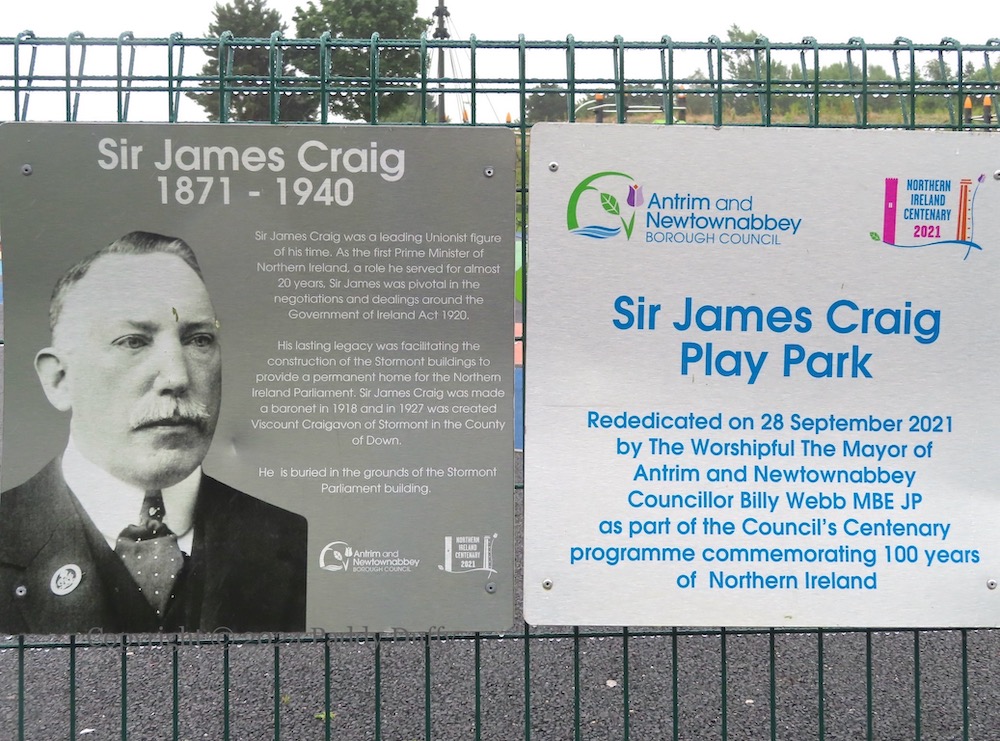
This images in this entry depict, above and below the information board about the park, the World Wars installation inside the park and the banners on the fence along Derrycoole Way.

There is an annual commemoration of the fallen in the World Wars in Rathcoole each year. The monument consisting of mourning soldiers and sandbags) was created in 2020 (Fb group | News Letter) and the bench was perhaps added in 2022. Images from the 2023 ‘row on row’ commemoration can be seen at NI World. The Row On Row group (web) hope to create a permanent memorial on the spot.

Rathcoole People’s Park was renamed the Sir James Craig Play Park by Antrim & Newtownabbey council in September, 2021, as part of the council’s celebrations of the centenary of Northern Ireland (NI World).

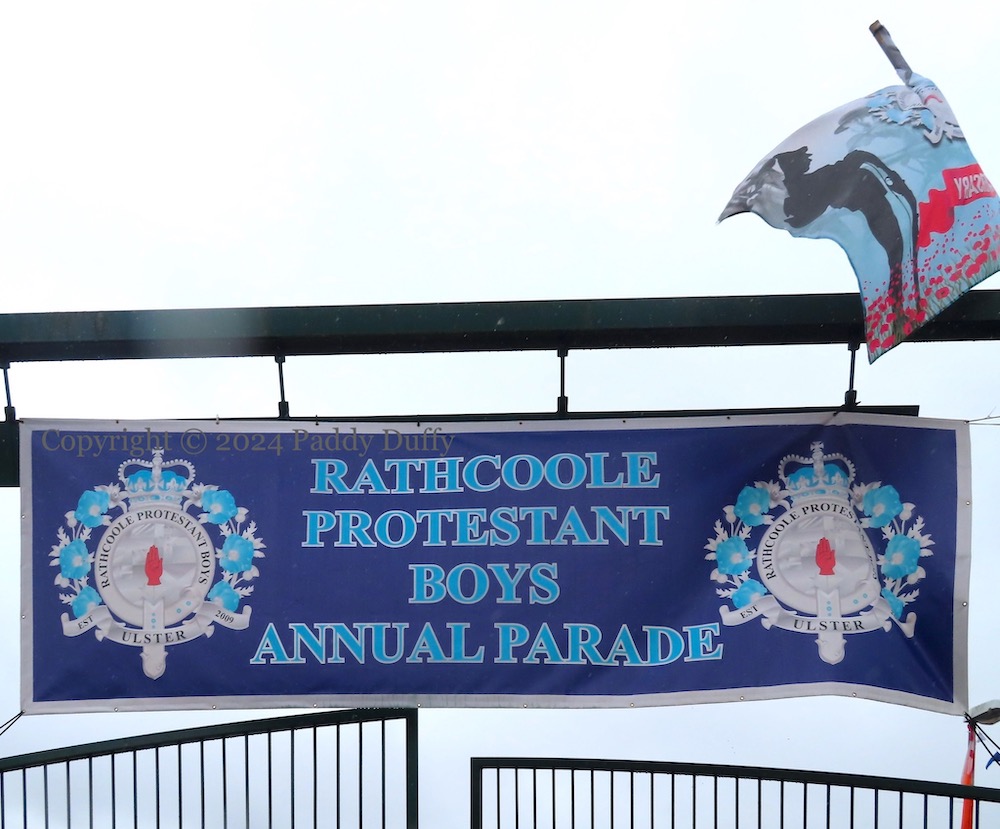
The banners on the side are from the Rathcoole Protestant Boys flute band (Fb) whose annual parade was at the end of June, and the Whitehouse Williamite Historical Society (Fb) whose fun-day on June 15th included a historical re-enactment of William’s army landing at Whitehouse. (For more on William’s connection to Whitehouse, see June 14th, 1690.)

Click image to enlarge
Copyright © 2024 Paddy Duffy
T05013 T05014 T05016 T05012 T05017
T05043 T05018 T05019 T05021 T05042 [T05022] T05020
T05023 [T05041]

It’s Coming Back

“Welcome to Carrickfergus, a host town of “The Twelfth” 2024. It’s coming back to our home town. Join us on “The Twelfth” to help celebrate the 334th anniversary of The Battle of the Boyne.”

Carrickfergus was one of nineteen host towns for Twelfth “demonstrations” this year (GOLI); the parade went from the top of Sunnylands, through the town, and out to the grounds of the rugby club (GOLI). “It’s coming back” is perhaps in reference to the fact that Carrickfergus is the town where William III landed in 1690 before making his way to Belfast, Lisburn, and the Boyne – see June 14th, 1690.

Irish Gate roundabout, Carrickfergus

Click to enlarge
Copyright © 2024 Paddy Duffy
T04957 T04958