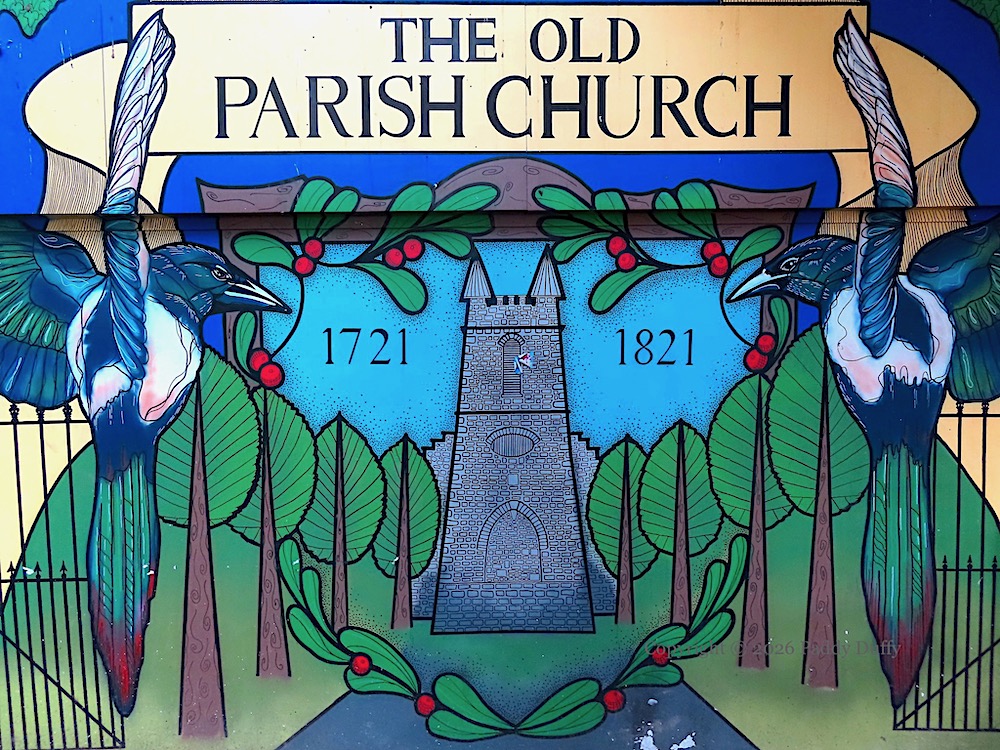
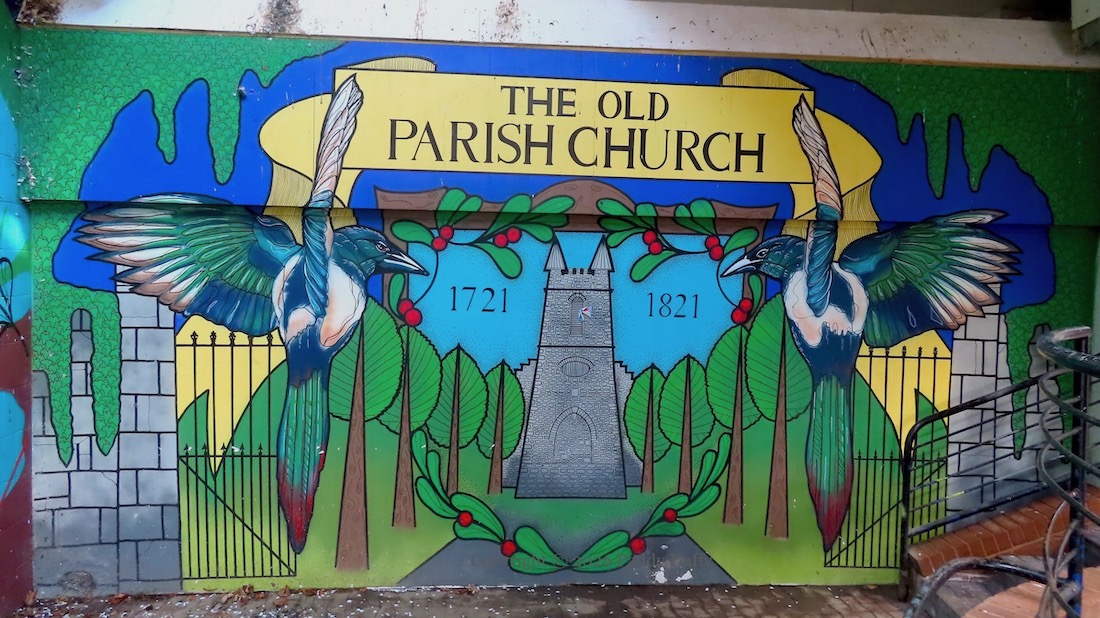
The Old Parish Church (Church Of Ireland) was consecrated in 1721, and a tower and gallery added in 1821. It was last used for a service in 1855 when it was replaced by St Patrick’s Church (Church History Trail youtube). Since then, the Old Parish Church has lain derelict.
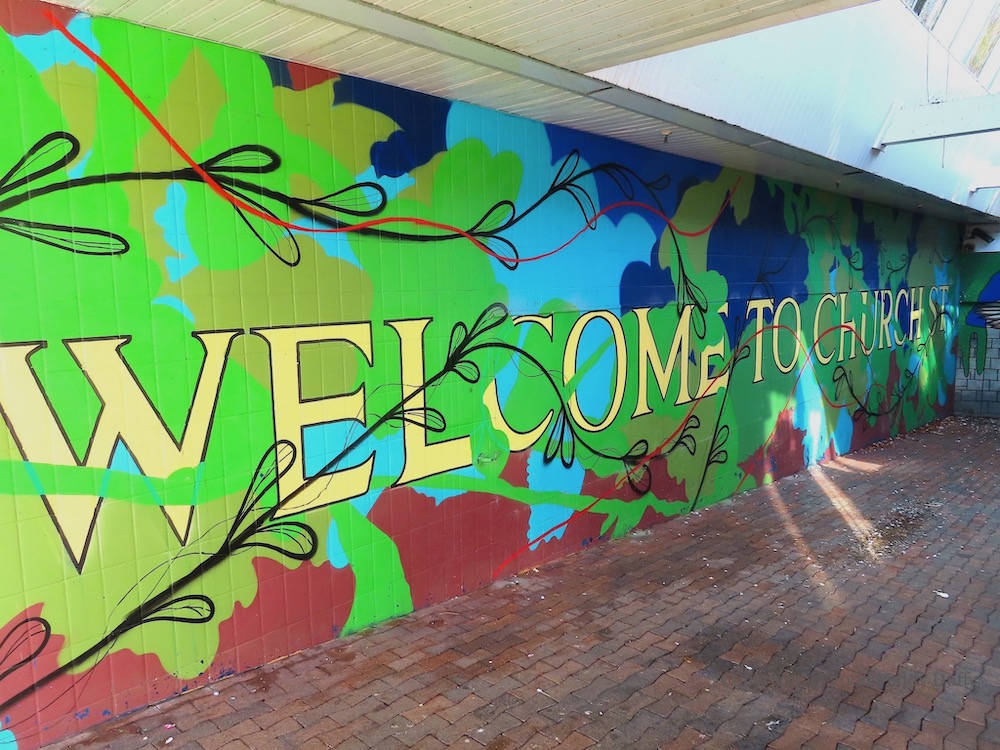
The wall-painting shown here is by Leanne McClelland (ig) in 2022 (Ballymena BID) in Church Street Arcade, off Church Street, Ballymena.
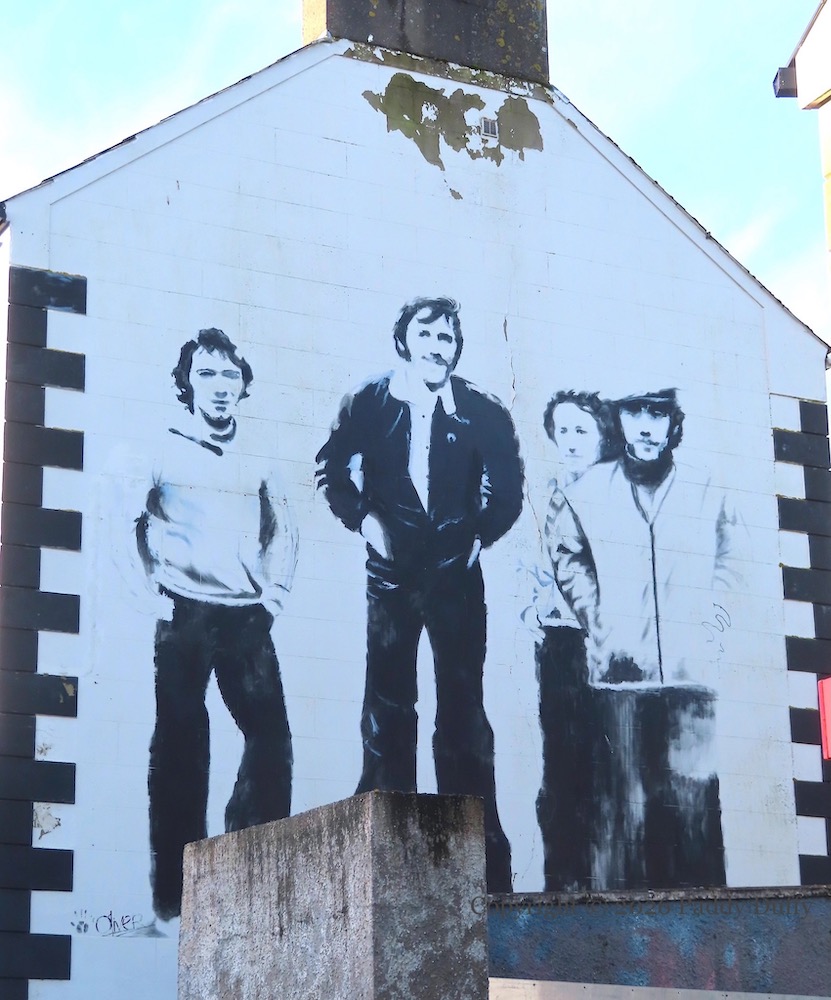
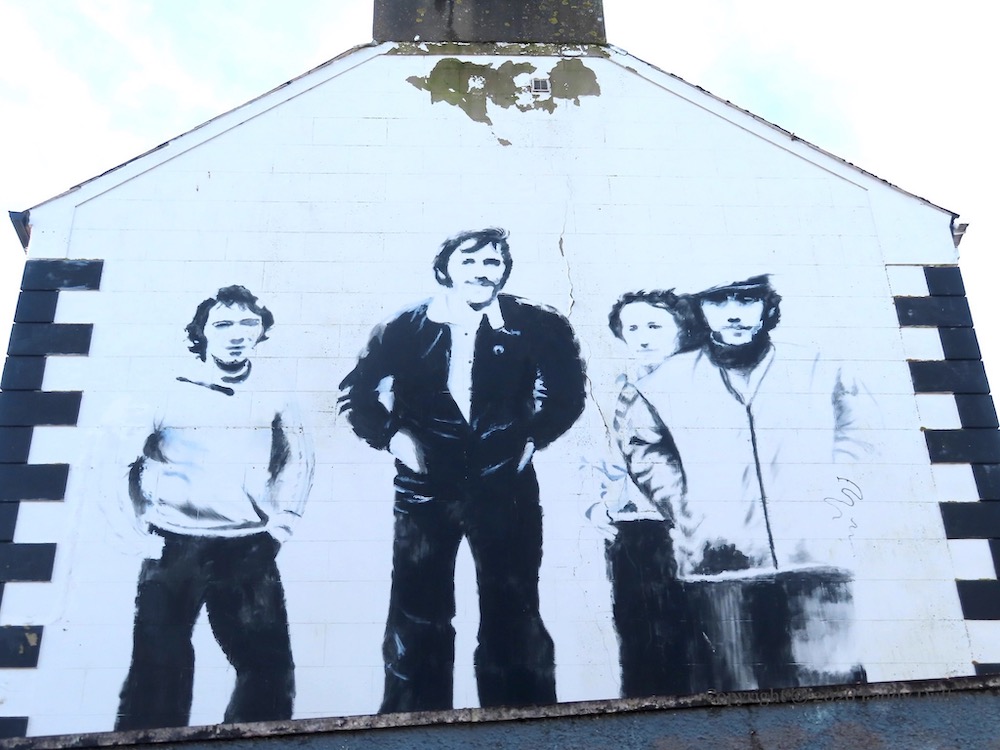
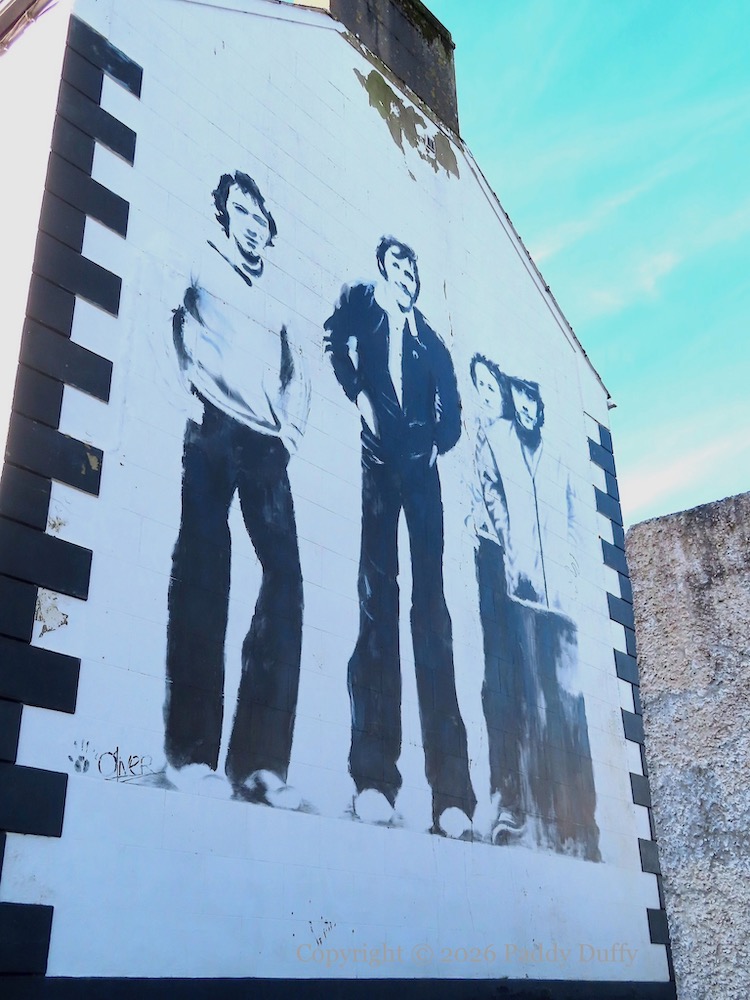
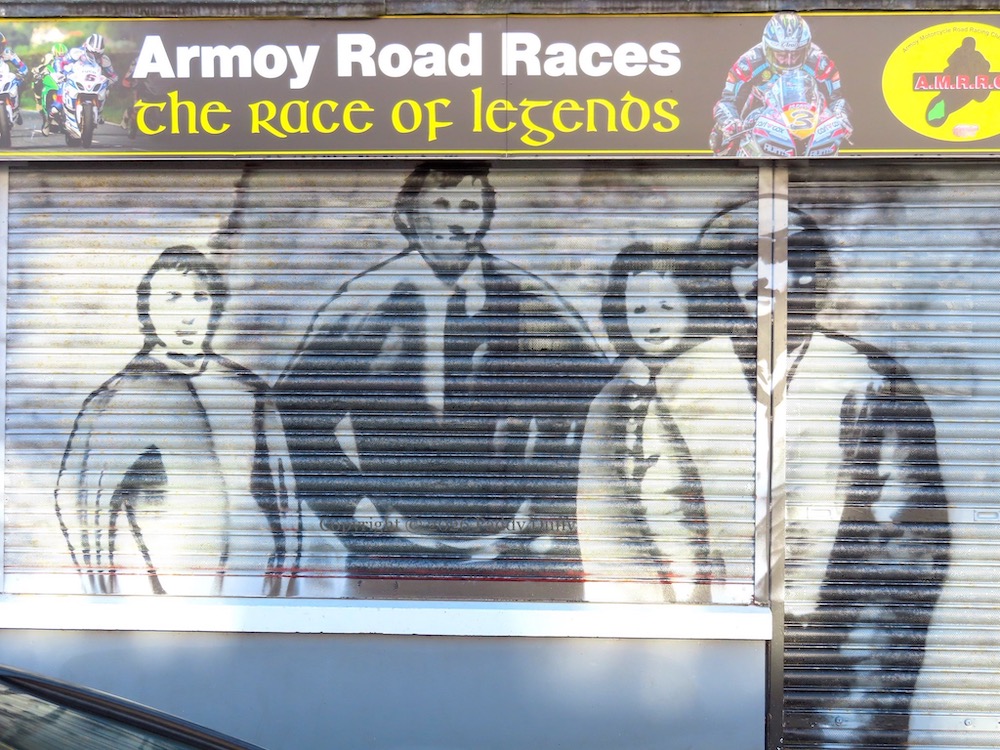
The “Armoy Armada” was (l-r) Joey Dunlop, Frank Kennedy, Jim Dunlop, Mervyn Robinson (AMRRC). The four formed a team of motorcycle racers from 1977 until 1979 when Kennedy was injured in the North West 200. In memory of the quartet, the Armoy Road Races have been held every July since 2009.
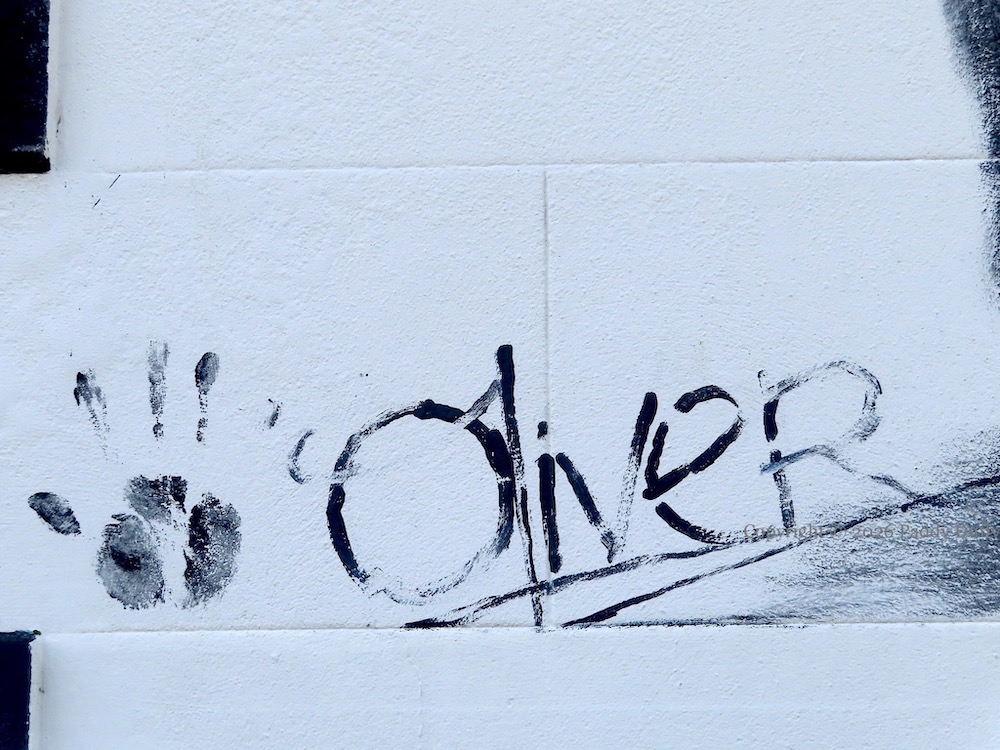
This mural was painted by Oliver McParland (web) in 2020 on a gable of a fast-food shop in Armoy. (For the original photograph, see Classic Motorbikes.) The cruder version in the final image, below, is also in Main Street, on the shutters of the Armoy Motorcycle Road Racing club.
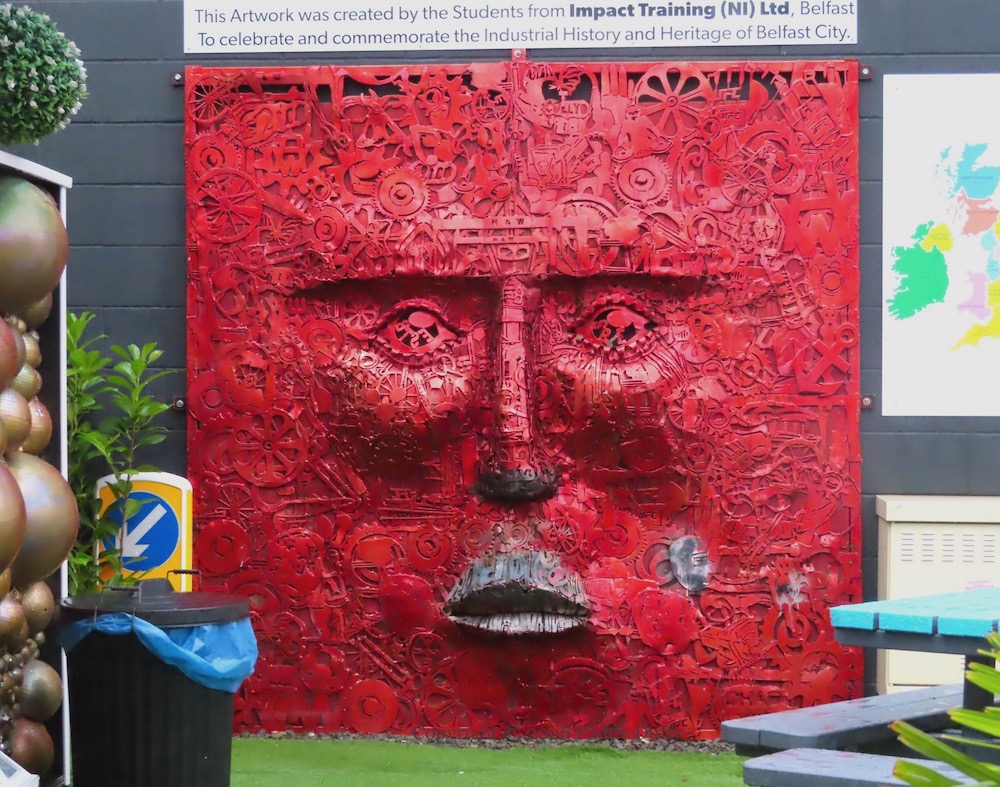
The Face was last seen on the Cupar Way war-wall in 2019 (see Please Respect Artwork). It was taken down (for reasons unknown) and put into storage in a works yard off Lanark Way, from where it was stolen it by thieves (perhaps thinking it might be valuable for its metal); it was found abandoned near the Slıabh Dubh car park (Belfast Live).
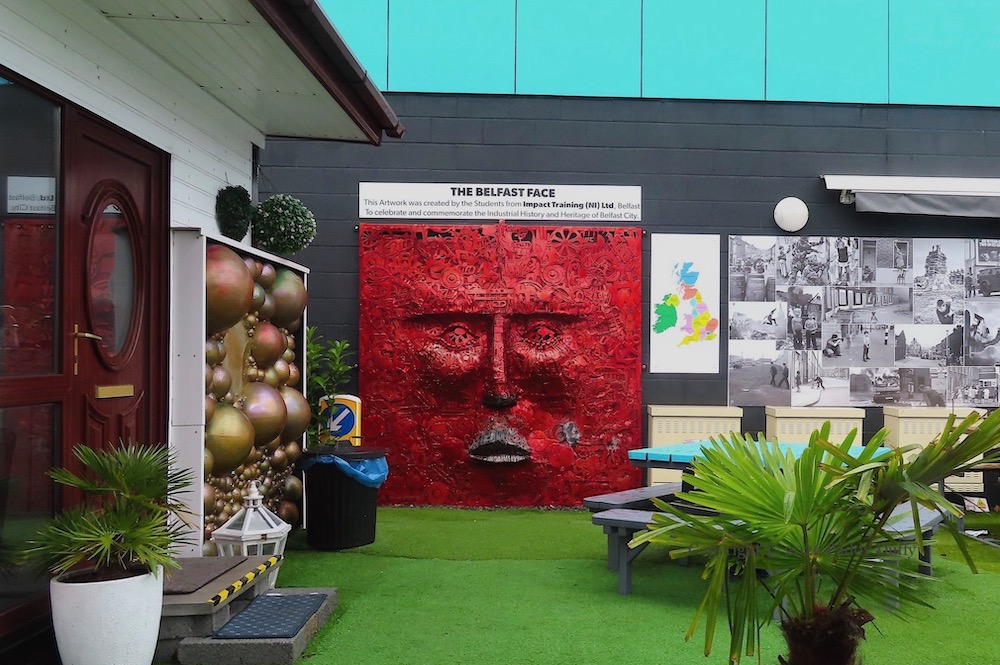
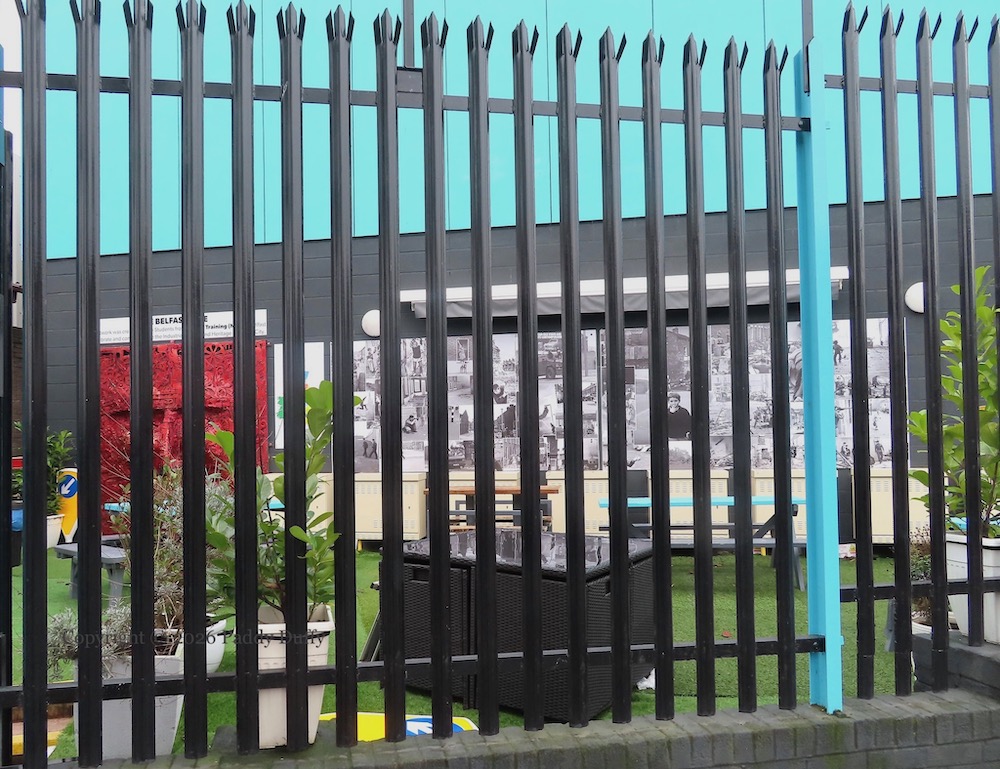
It has now found a home in a new coffee- and souvenir-shop (called Bean Around The World) that has been punched into the fencing at the top of Cupar Way in the shadow of a business park.
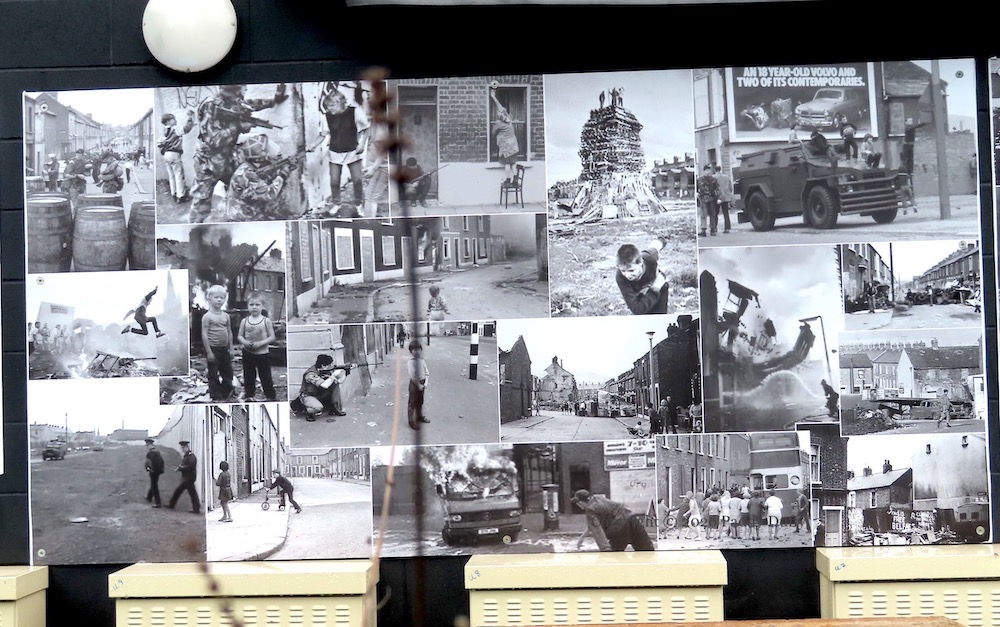
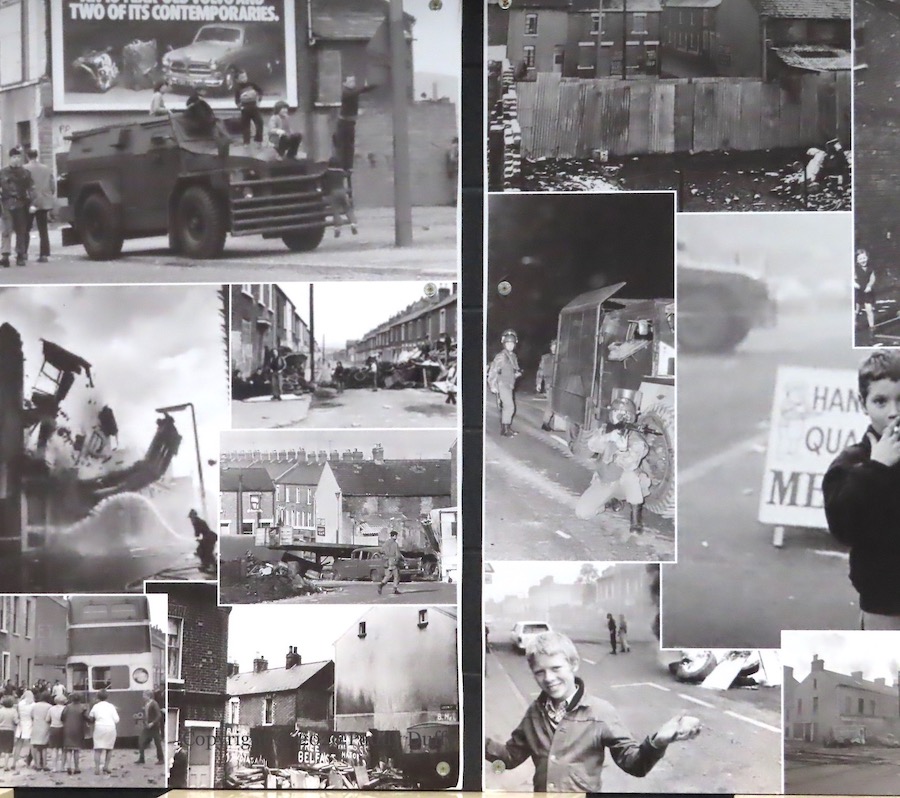
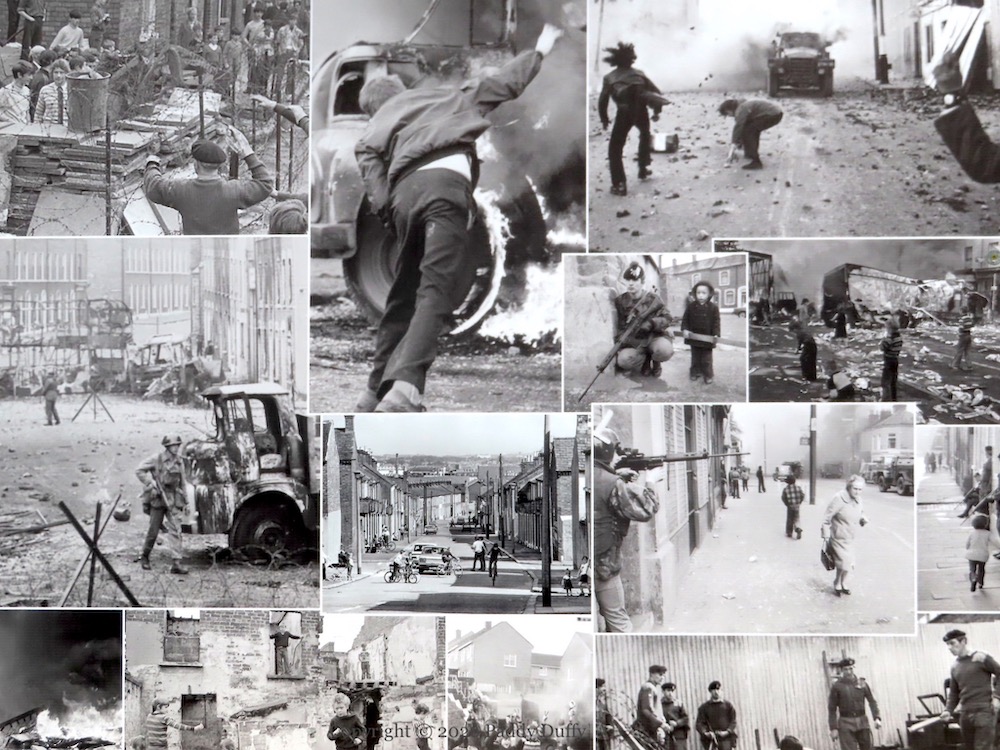
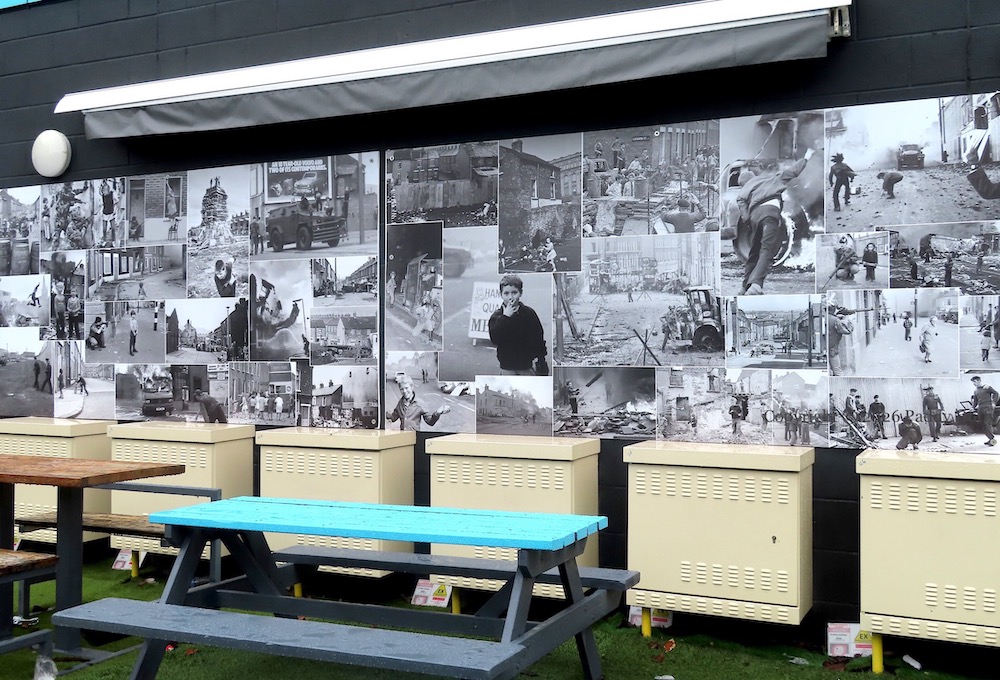
Next to The Face is a map of Ireland and Britain divided into regions, and a montage of black-and-white photographs from the Troubles (at least some of which come from the Belfast Archive Project).
The Face was created by Kevin Killen (web) and “the Students from Impact Training (NI) Ltd, Belfast To celebrate and commemorate the Industrial History and Heritage of Belfast City.”
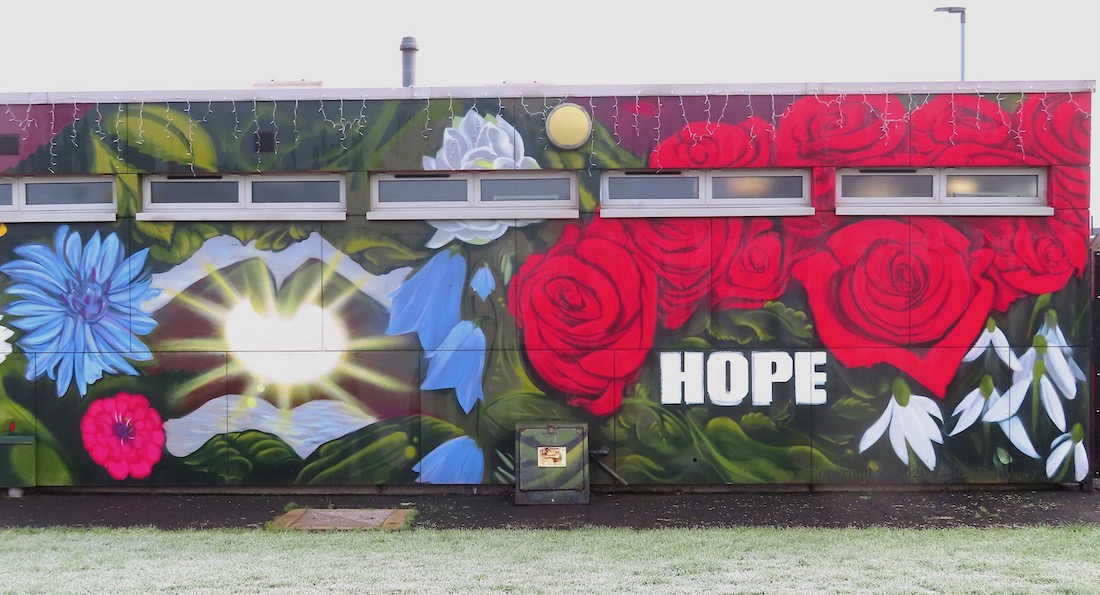
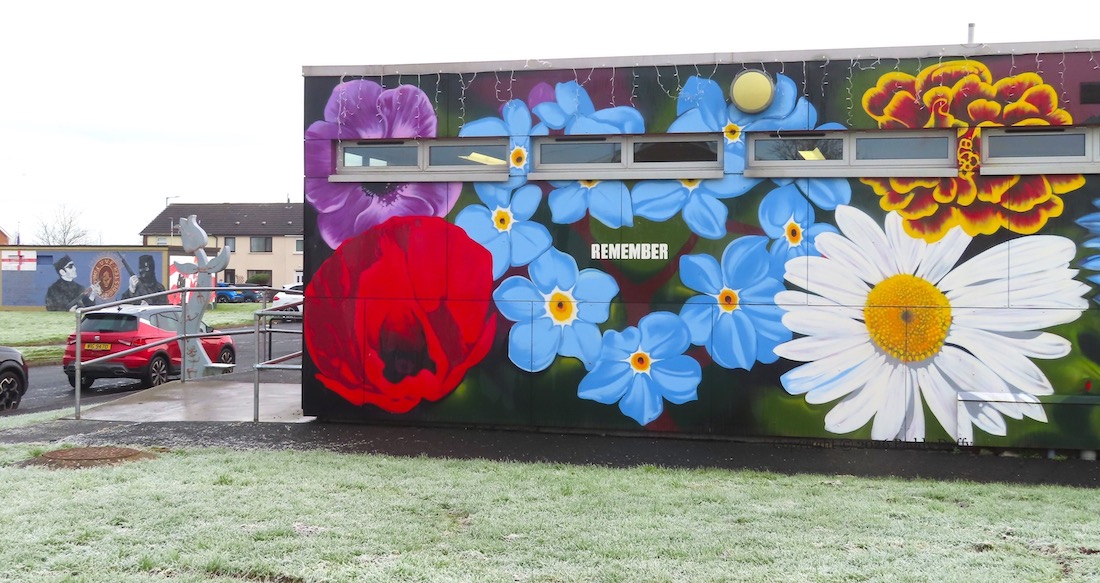
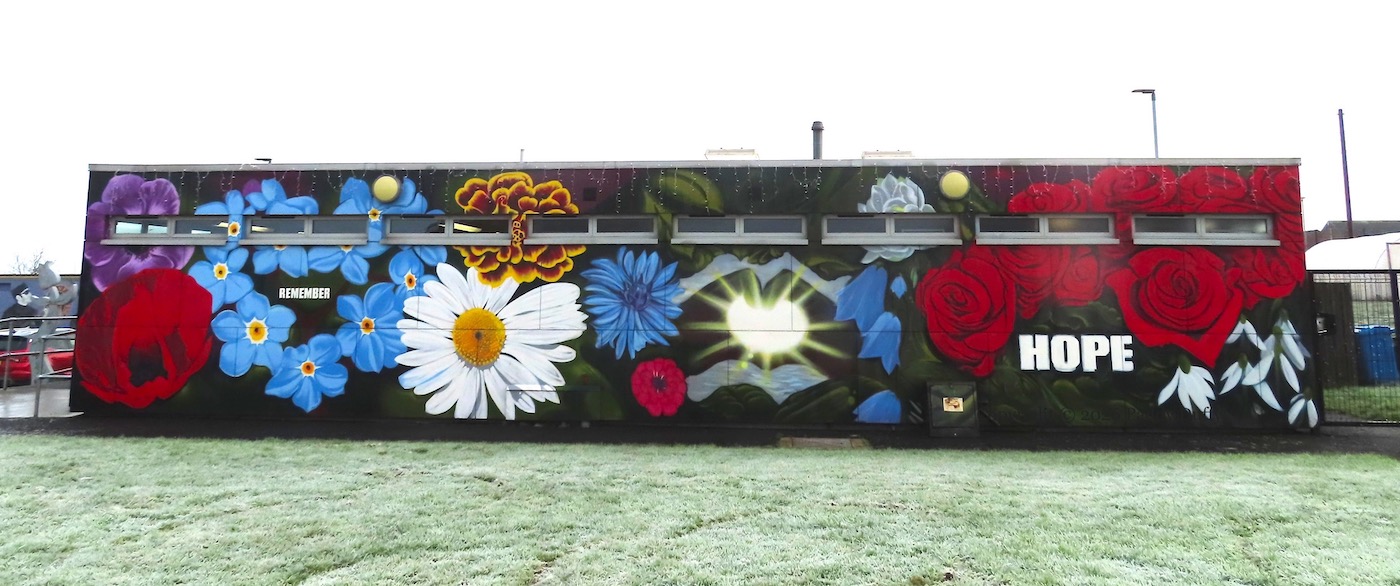
Or perhaps two separate injunctions, “remember” and “hope”. This is a new piece of street-art on a wall of the Ballyduff Community Centre (Fb), which is home to the Ballyduff Community Redevelopment Group (Fb).
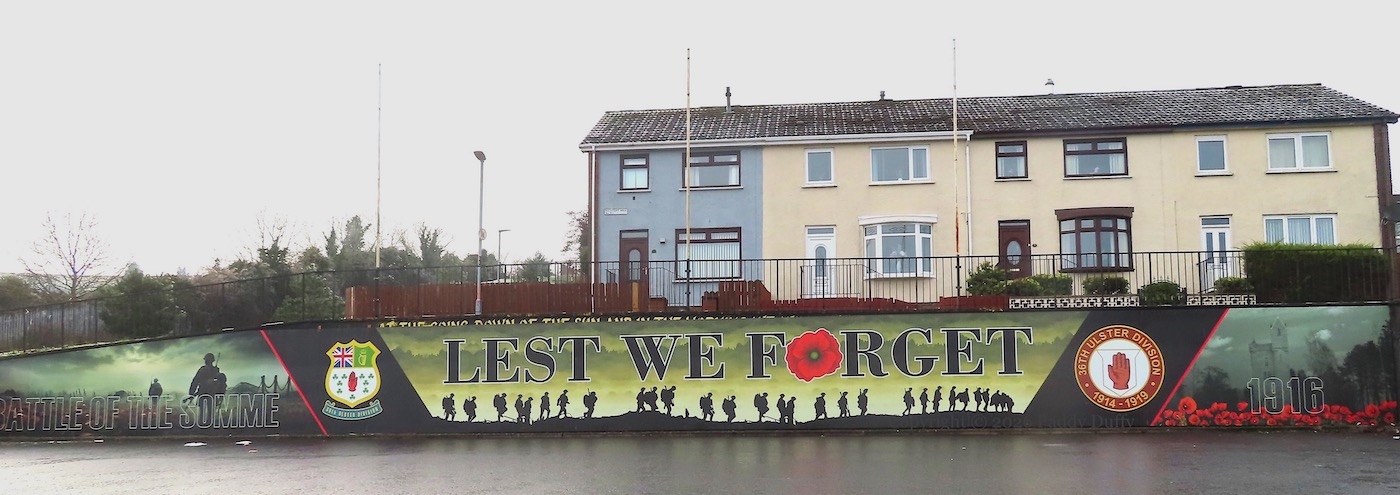
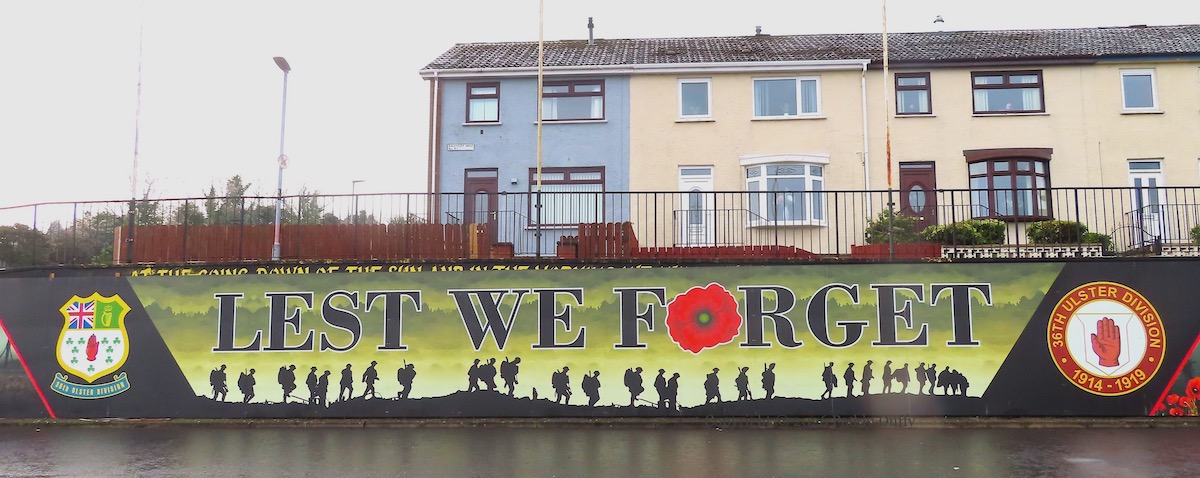
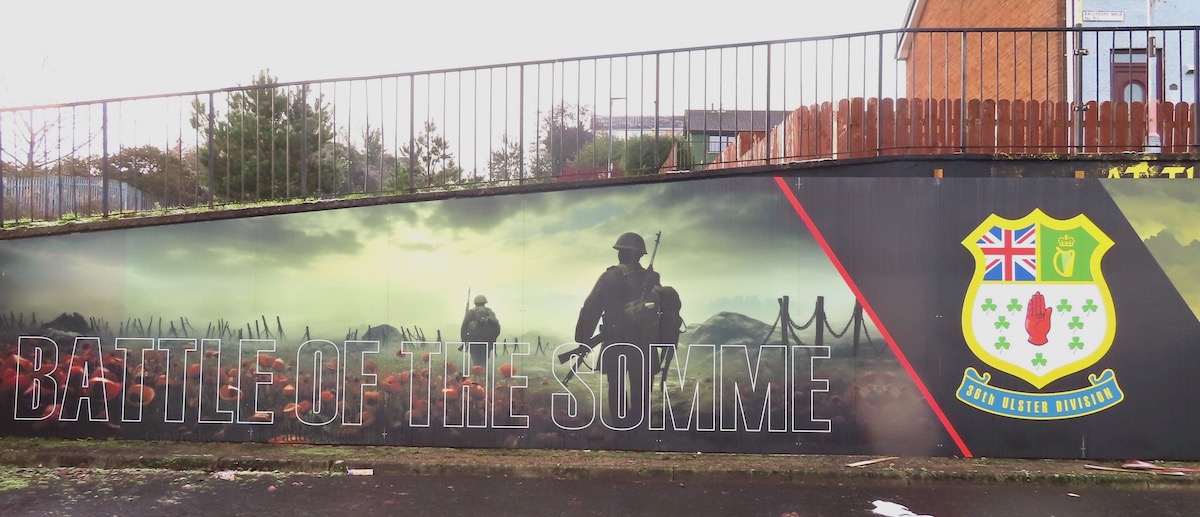
The badge or insignia of the 36th (Ulster) Division most frequently seen in murals is the one on the left of this board in Ballyduff, combining a red hand on a field of shamrocks with the Union Flag and the harp of the Royal Irish Rifles. The simpler insignia of the 36th Division on the right is being seen more frequently – it features a left-handed red hand, while the other uses a right-handed red hand, as do the flags of Ulster and of Northern Ireland.
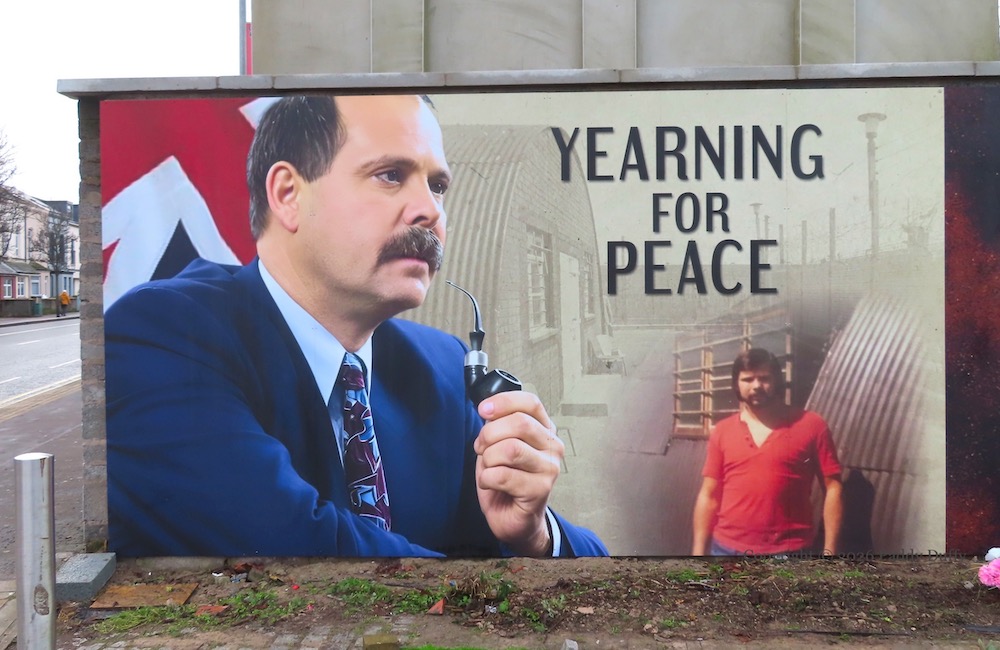
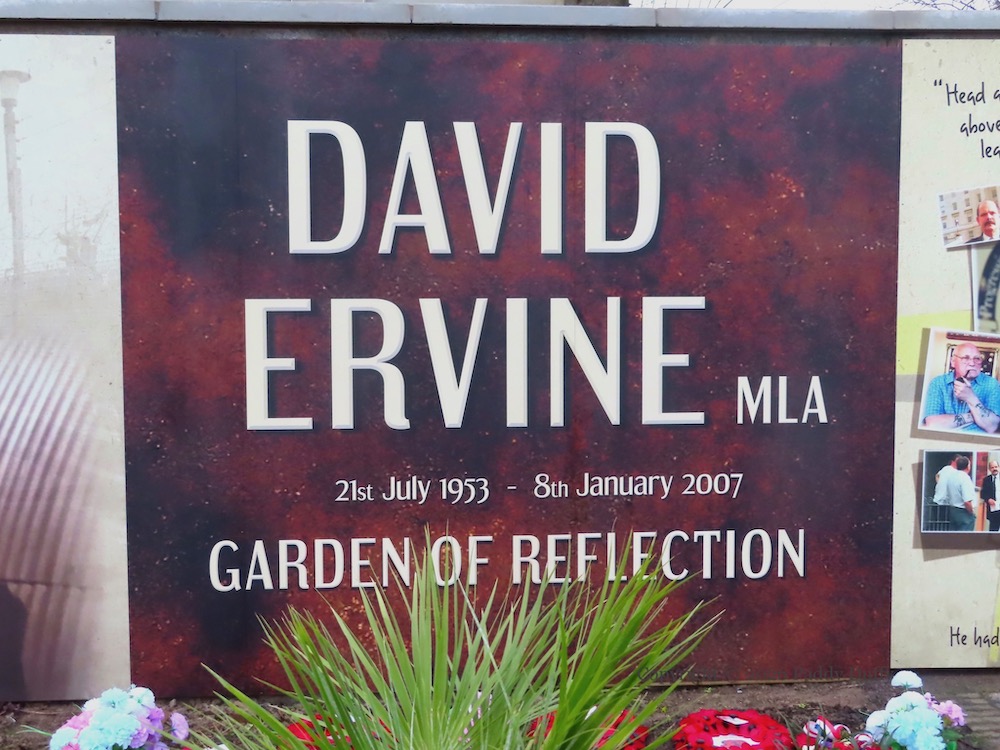
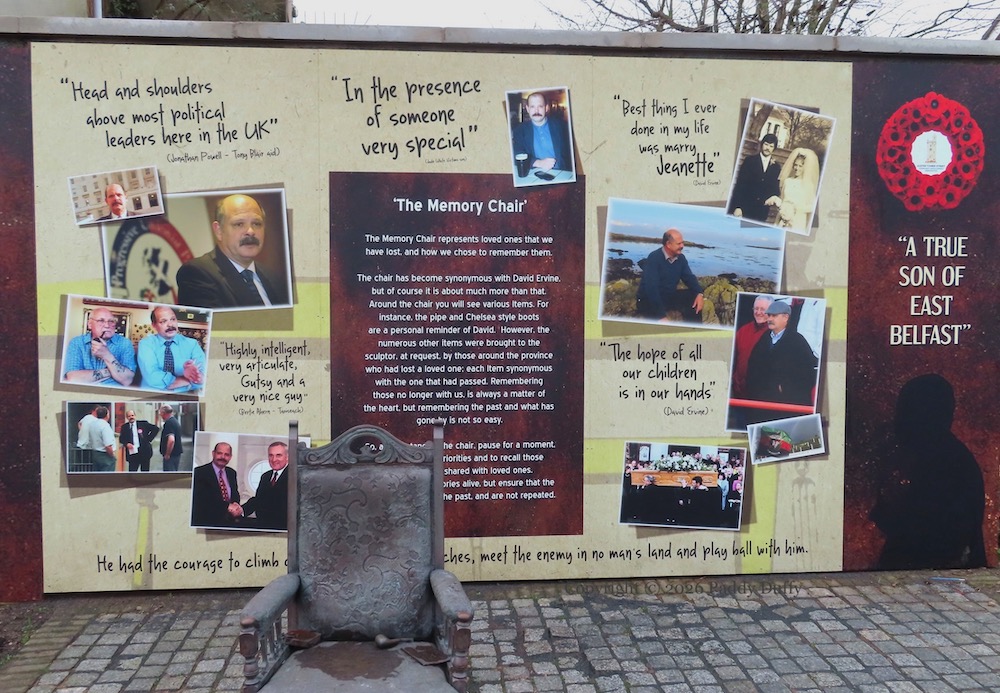
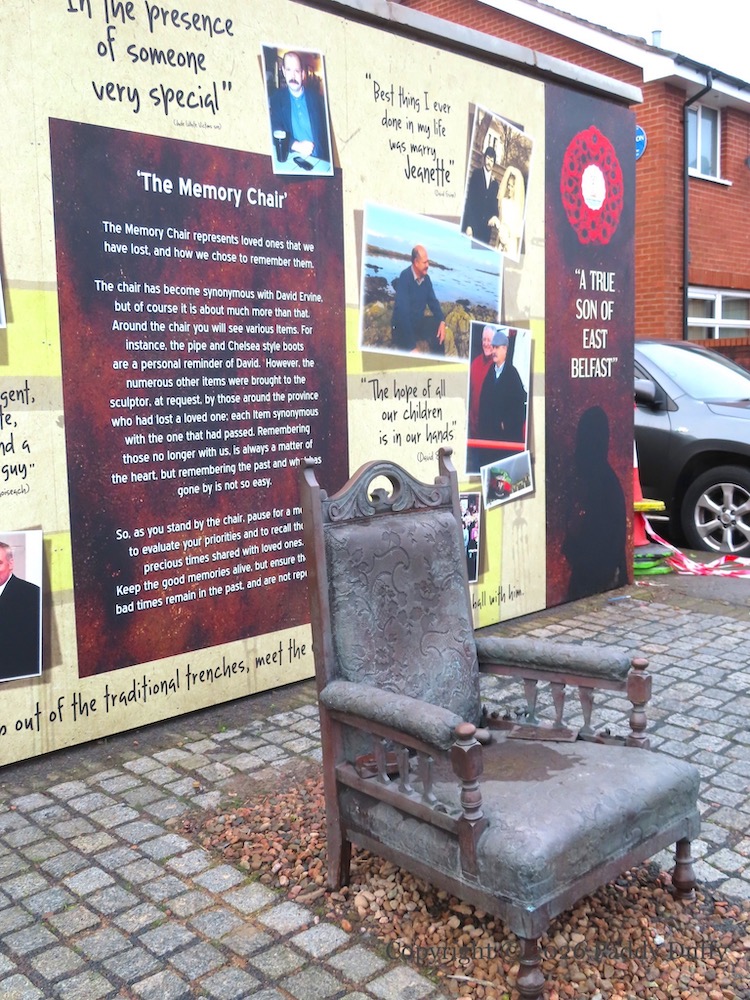
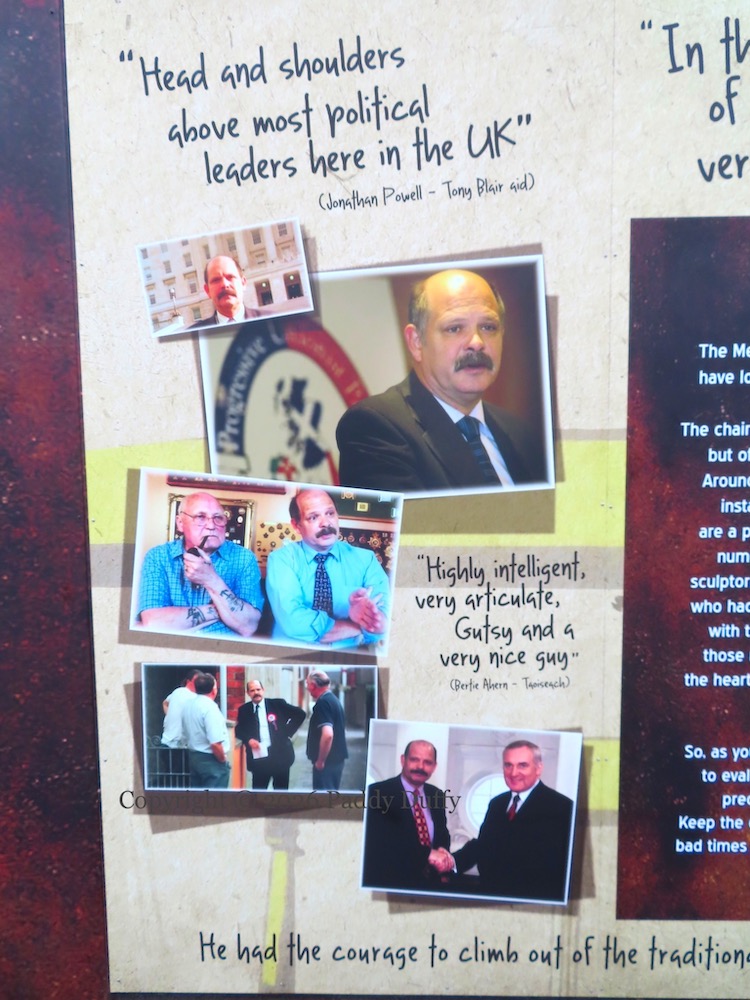
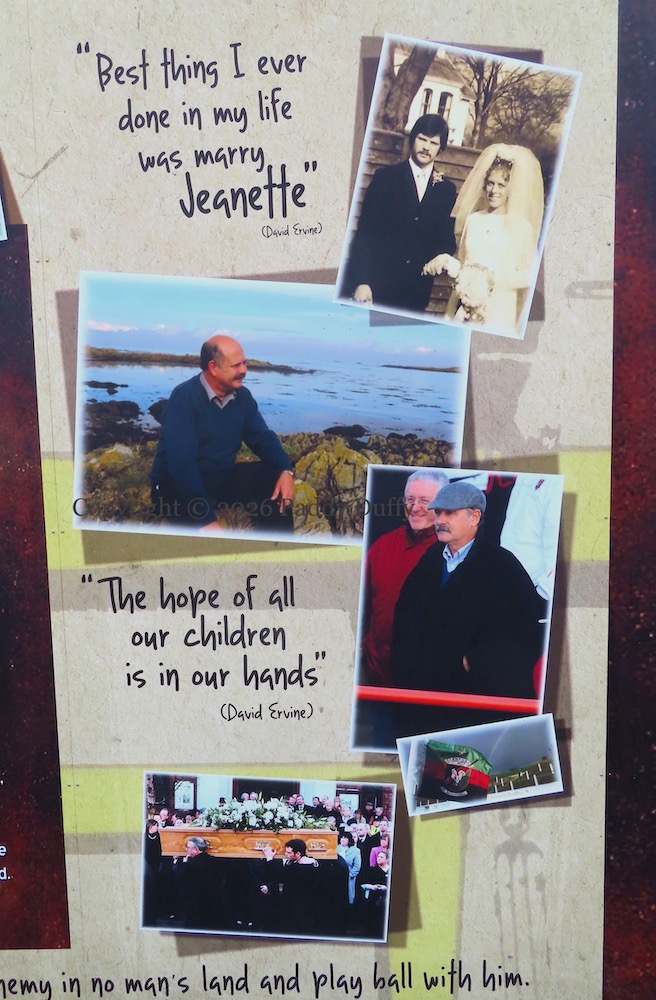
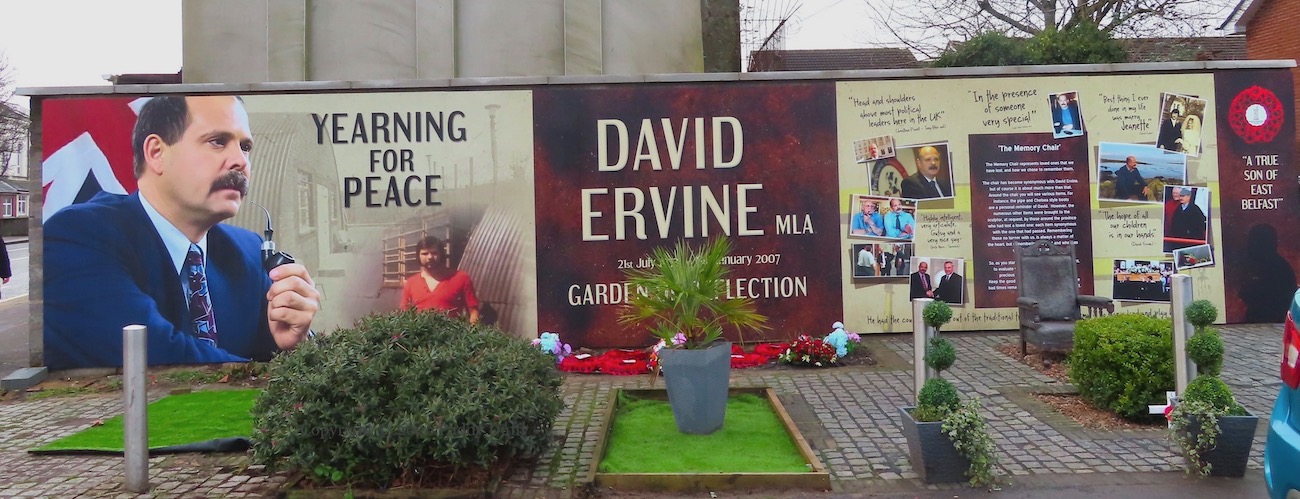
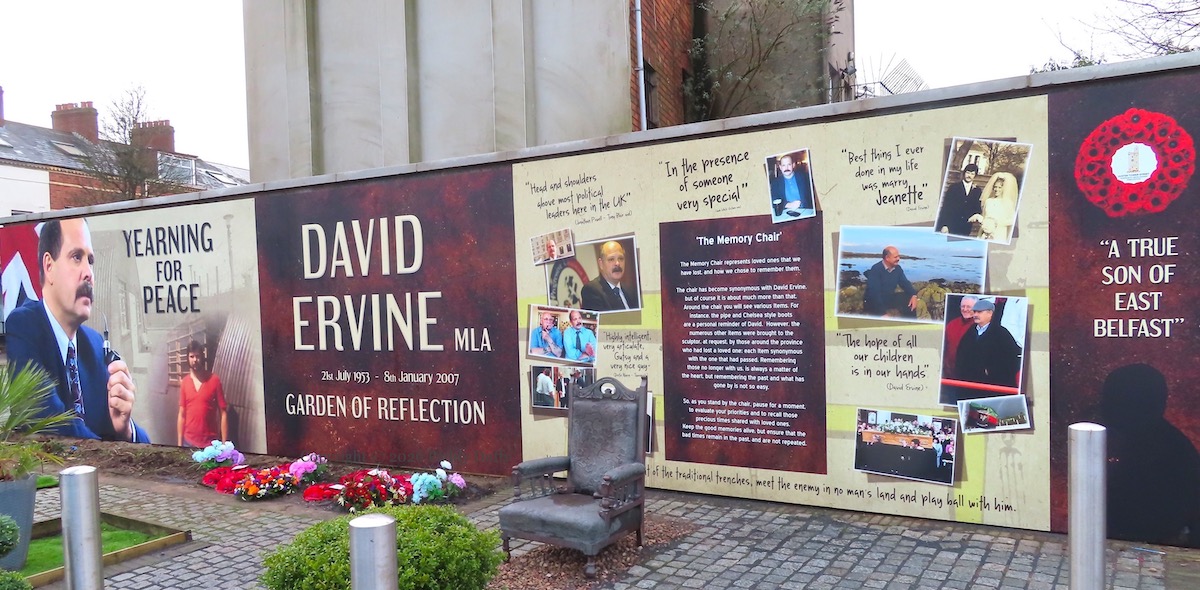
On the anniversary of David Ervine’s death, January 8th, a new board was launched in his memory, with images of Ervine “yearning for peace” in the cages of Long Kesh, where he met Gusty Spence (the pair can be seen together in the middle of the first column of photographs).
After his release, Ervine turned to politics, running unsuccessfully as a PUP candidate for Pottinger in the Belfast City Council elections of 1985 (WP); he would eventually be successful in 1997. In 1998 he was returned by Belfast East in the Assembly election (ARK). He helped bring about the loyalist ceasefire in 1994 – which was read aloud by Spence (youtube) – and was pro-Agreement in 1998 (DIB | Guardian | Slugger).
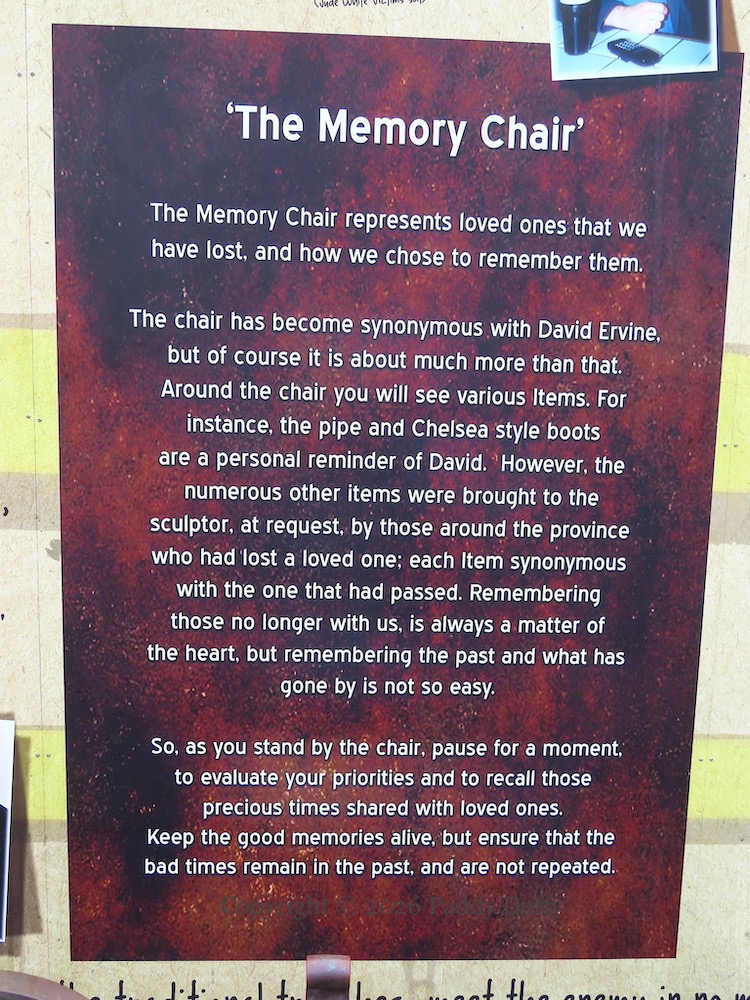
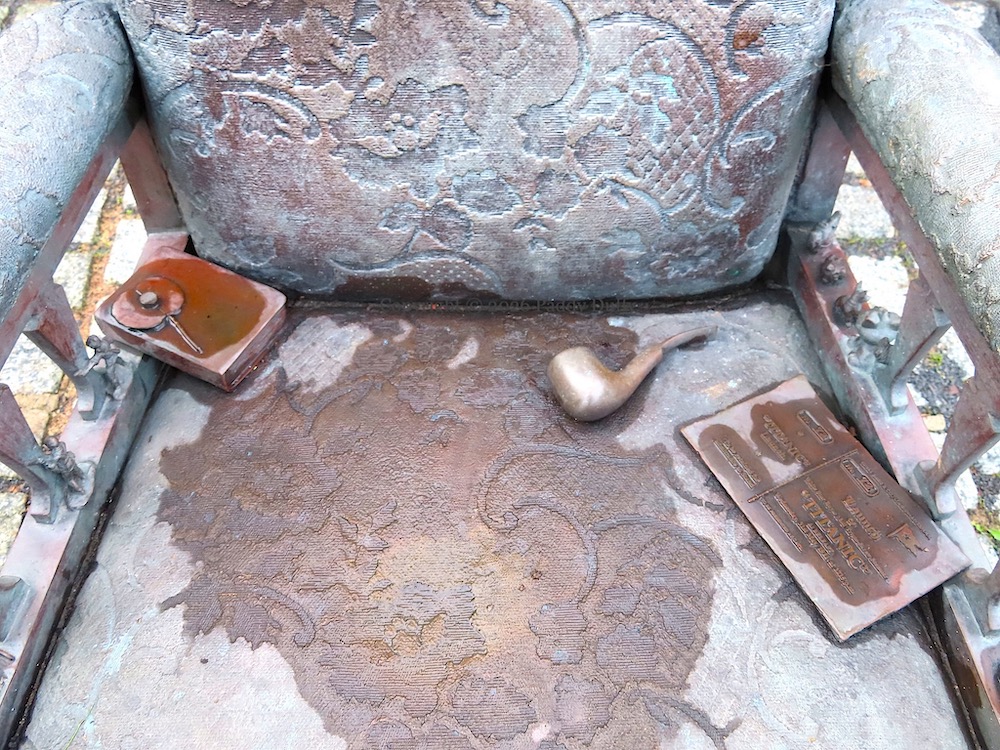
The information about the Memory Chair sculpture makes mention of Ervine’s boots but it seems they have not survived the mothballing of the sculpture which was last seen on site – boots included – in 2014.
This memorial for Glen “Spacer” Branagh, launched on the twentieth anniversary of his death in 2021, is at the junction of Canning Street and Orchard Street, north Belfast.
For information and the earlier plaque on N Queen St, see Forever Young.
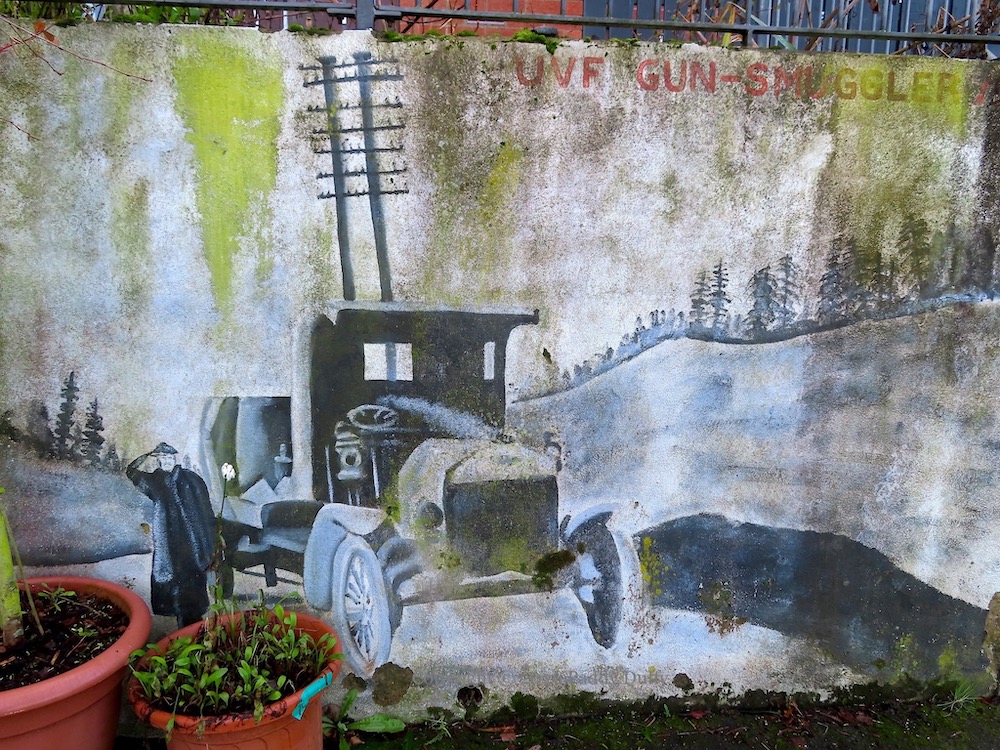
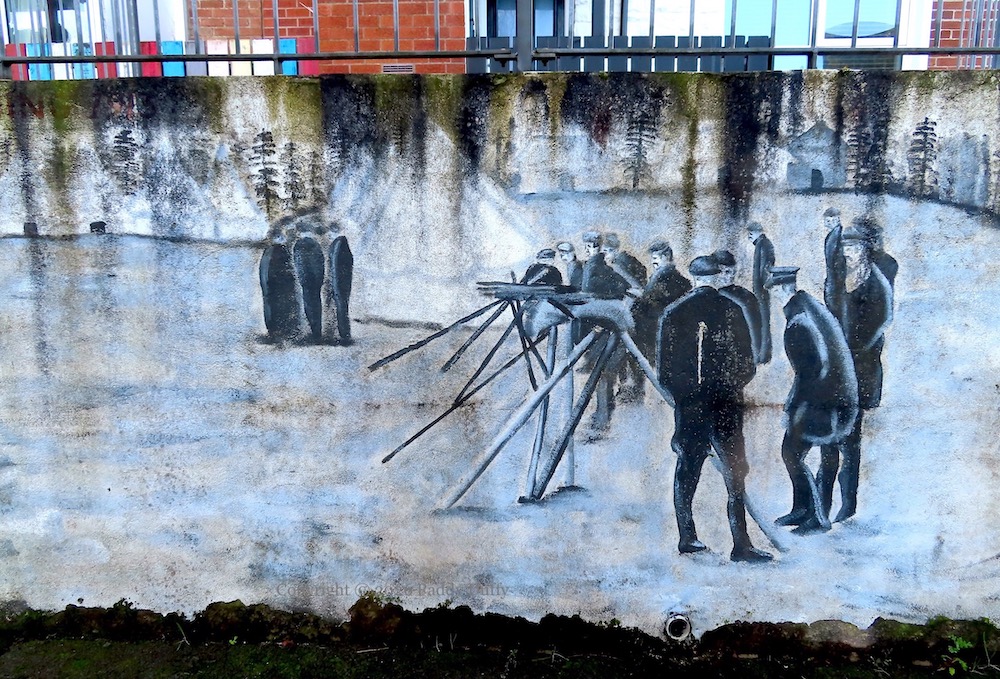
These faded Armagh murals have the titles “UVF Gun-Smuggler 1913” and “Arms Training 1913”.
The gun-smuggling mural features not the 1914 gun-running on Clyde Valley – the ship that brought in the weapons and ammunition into Larne – but a motor-car. There was earlier gun-running or bulk gun-purchasing – 175 rifles were bought from Harrods by the Earl Of Lanesborough and sent to Enniskillen (Balaclava Street) and 500 rifles were brought from Manchester in August 1913 (Irish Bayonets). (See also History Ireland.) These perhaps used automobiles for distribution, and the Larne gun-running is described as the first time that the horseless carriage was used in a military operation – there were about 350 vehicles in the “Motor Car Corps” (Angelsey p. 3).
The location of the car, and of the ‘arms training’ in the second mural, are unknown. Here is a 1914 image (Getty) showing tents and a single machine-gun at Ballywalter. The sources of both paintings are unknown.
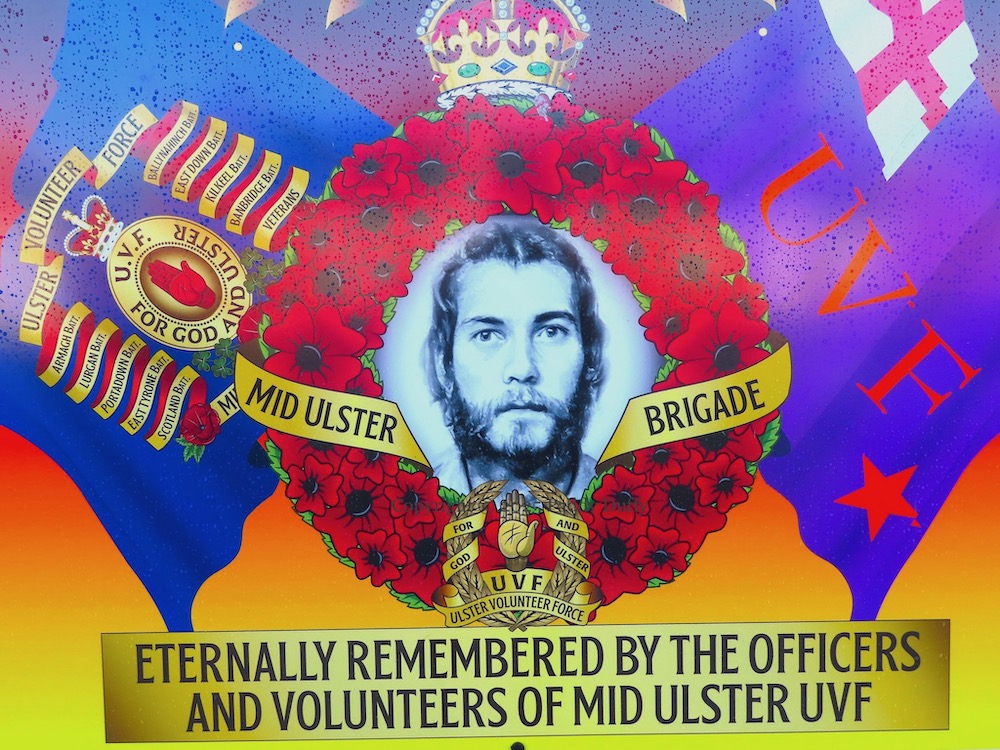
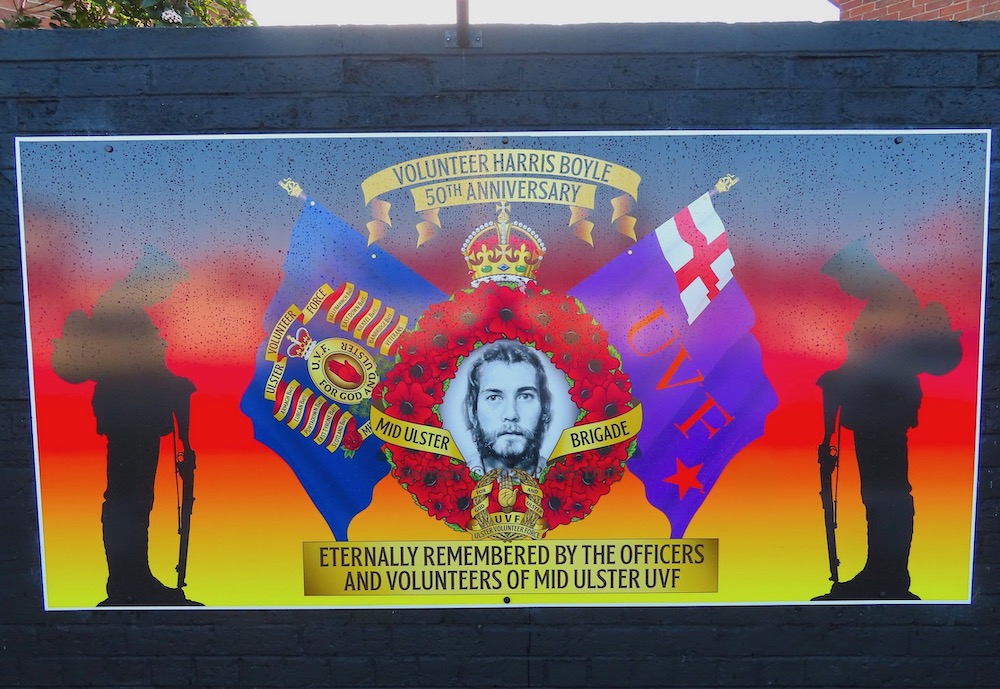
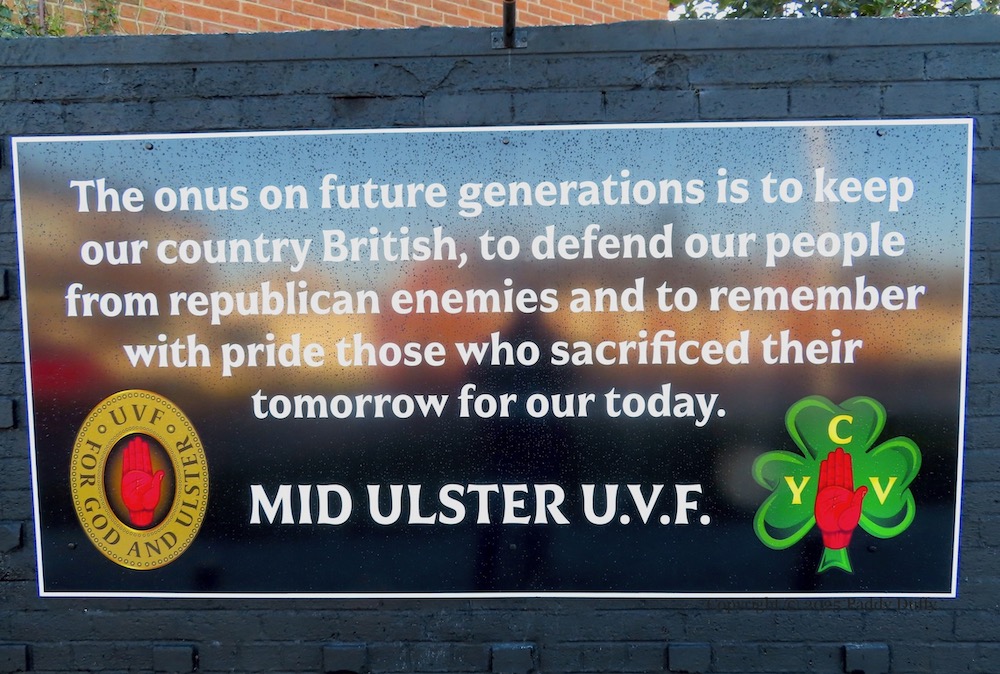
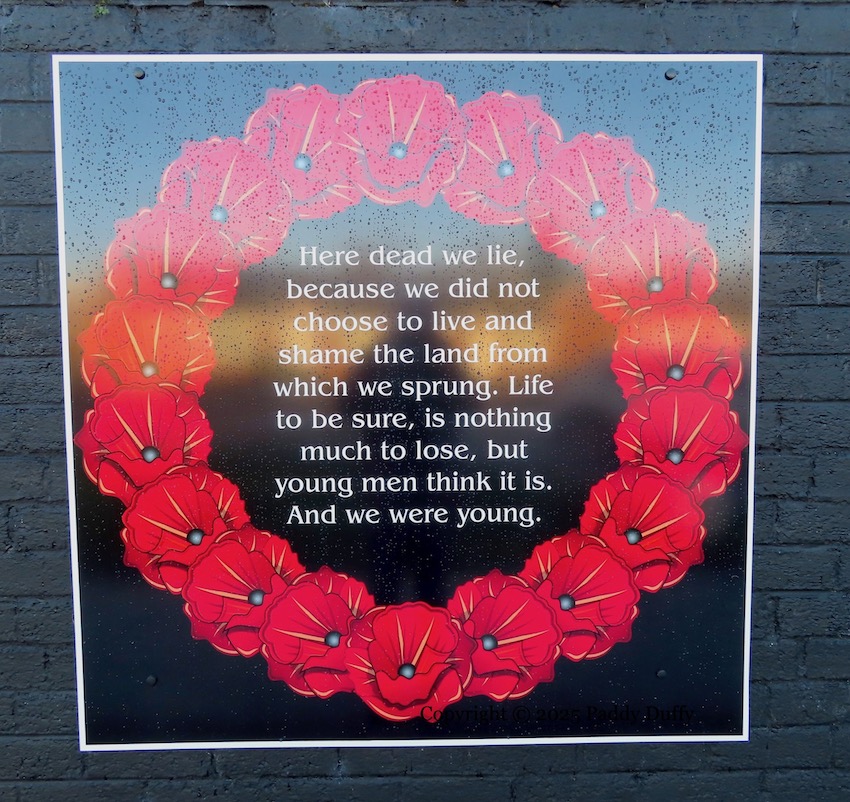
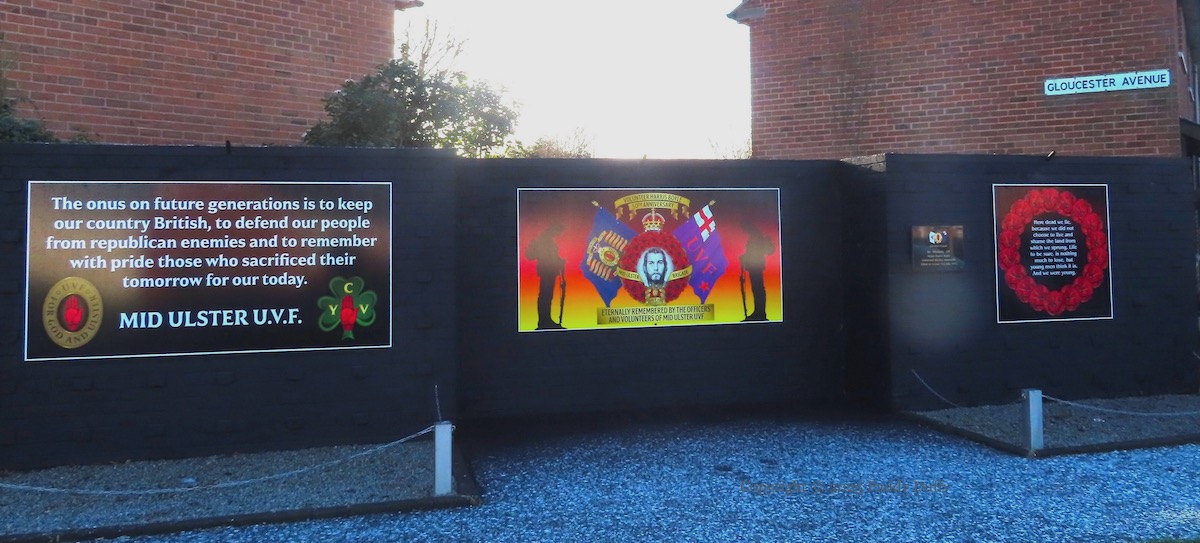
This entry updates 2024’s Here Dead We Lie – the plaque to Boyle and Somerville remains as before (it was originally mounted in 2005) but all three of the boards have been updated. The two on the extremes have the same content as before, while the central board marks the “50th anniversary” of the death of “Volunteer Harris Boyle”, “eternally remembered by the officers and volunteers of Mid-Ulster UVF”. Both Boyle and Somerville were members of both the UDR and UVF; they were “killed in action” when the bomb they were planting on the minibus of the Miami Showband went off prematurely. A parade in Boye’s memory took place in Portadown (BBC). Surviving Showband members and their sympathisers also marked the anniversary – on July 31st, 2025 – with a service at the spot of the attack (BBC).
The boards are at the junction of Gloucester Avenue and Princess Way in Portadown – Boyle was from the Killicomaine estate; Somerville is individually commemorated in Moygashel.
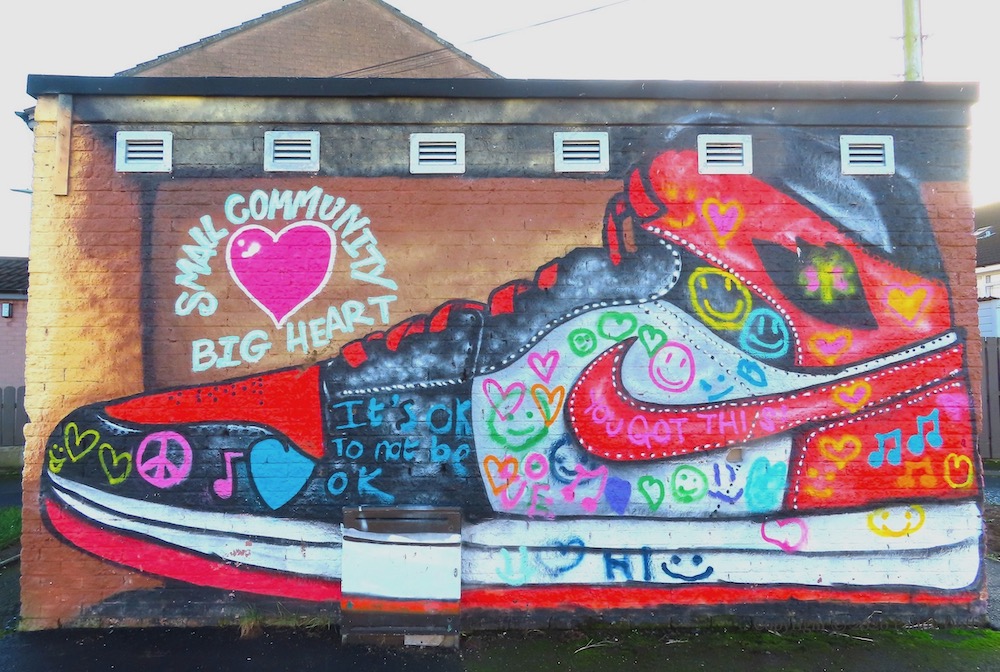
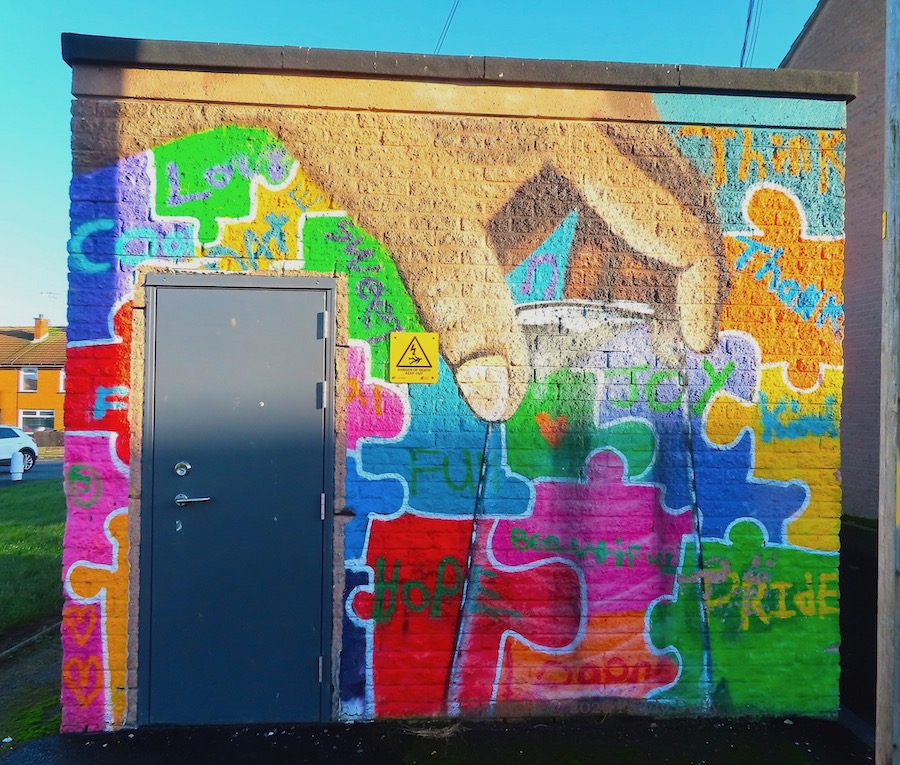
This is a kids/community/mental-health mural on the sub-station in Edgarstown. The art was painted by young people from the area, organised by Edgarstown Residents’ Association in the summer of 2024 (Fb).




 Paddy Duffy Collection