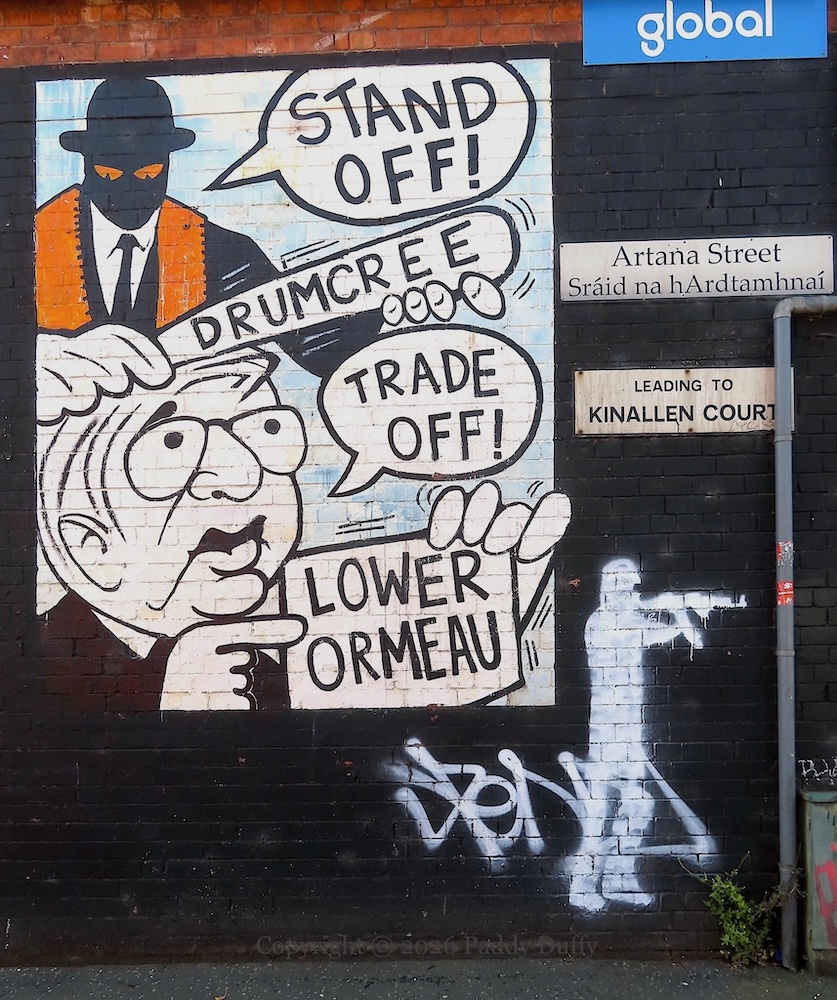
A crude stencil pays tribute to IRA volunteer Sean Clinton, who died in April (2026) (Pensive Quill).
The stencil re-creates a famous photograph (CAIN), taken by Brendan Murphy of the Irish News (November 2025 BBC obituary), showing Clinton firing from this spot at an RUC checkpoint on Ormeau bridge. Clinton/the photo is also known as “The Last Gunman”, as the ceasefire was renewed a few days later, on July 19th, 1997.
Artana Street, lower Ormeau, south Belfast
For the Parades Protest mural, see Stand Off, Trade Off, which gives links back to its original appearance in 1998.
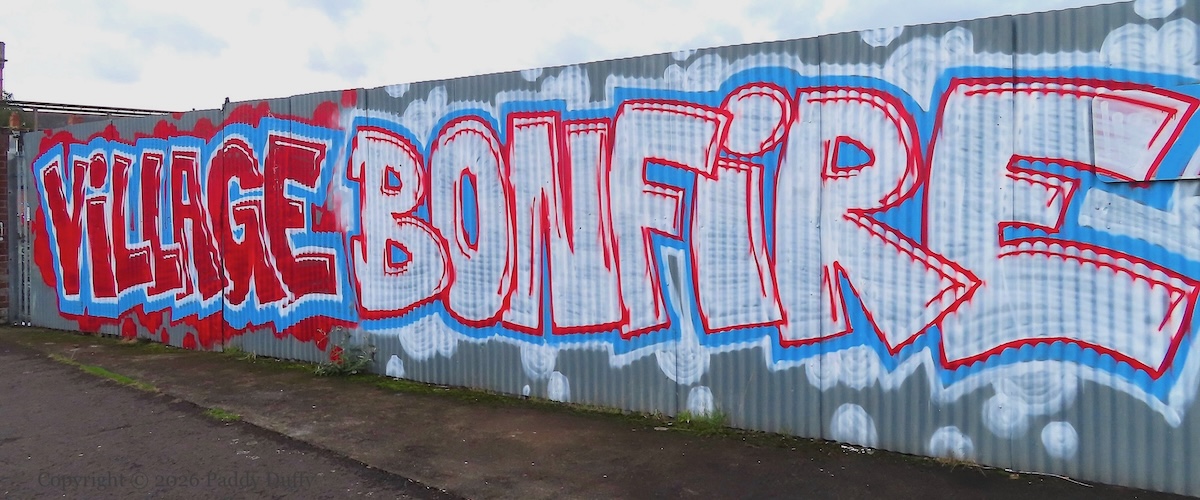
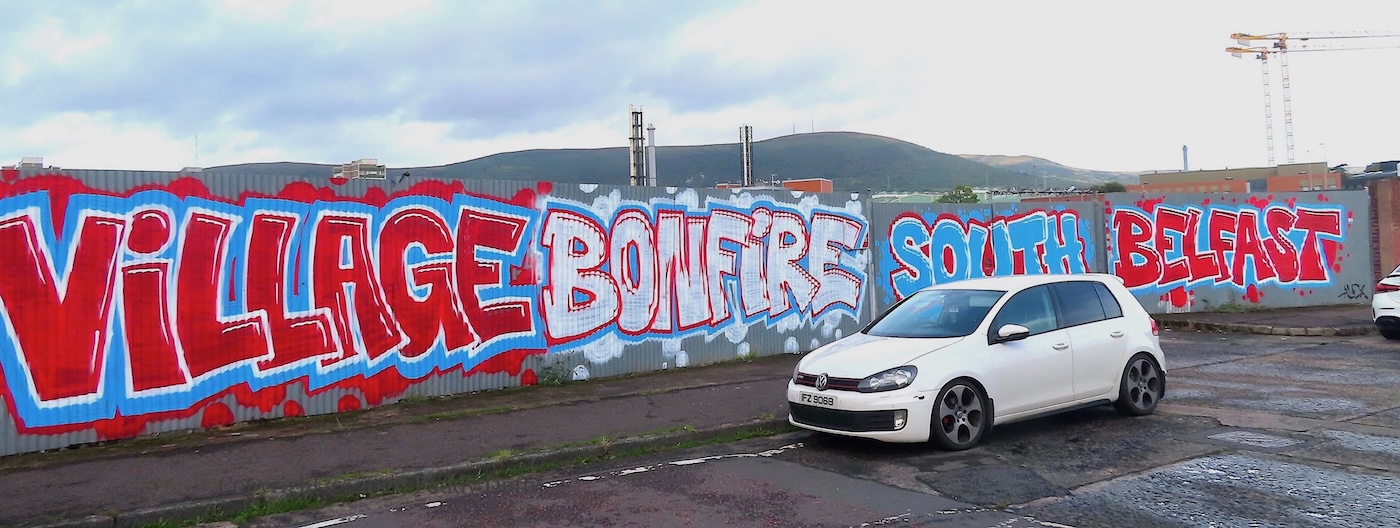
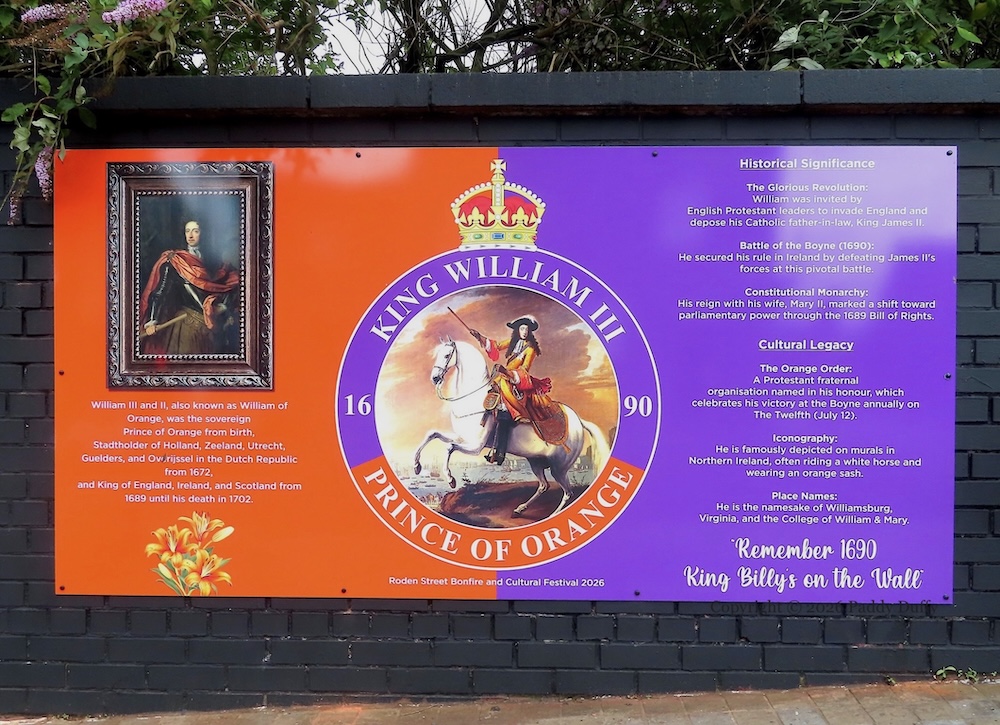
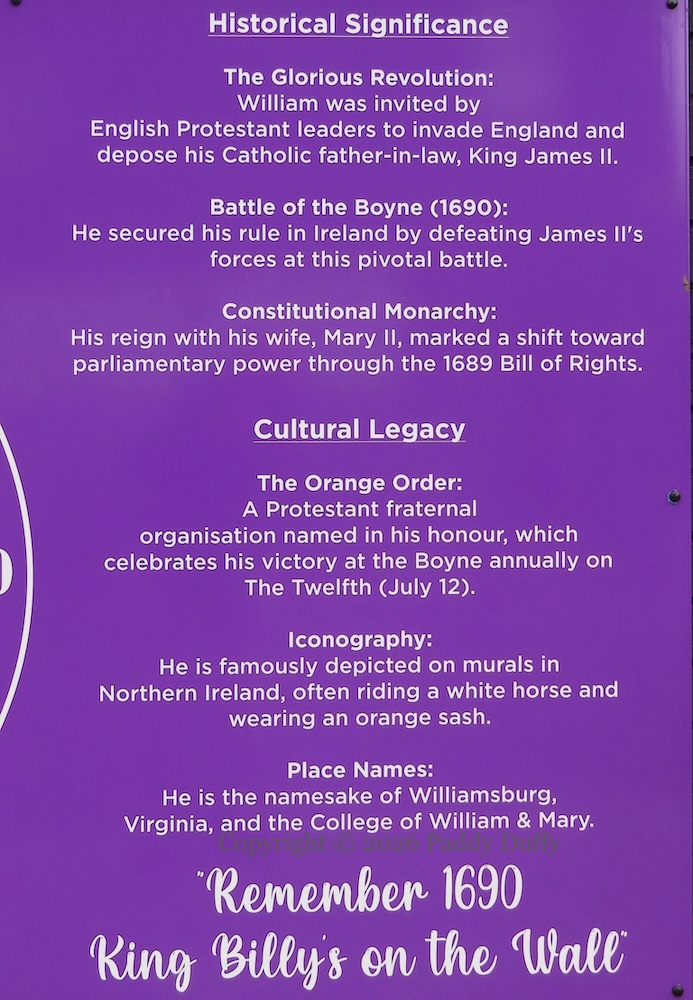
The “Roden Street Bonfire And Cultural Festival 2026” has events every day this week, leading up fireworks and the lighting of the bonfire on the Eleventh (Fb). This new board, at the Donegall Road end of Roden Street, was unveiled on June 28th (Fb video).
“William III and II, also known as William of Orange, was the sovereign Prince of Orange from birth, Stadtholder of Holland, Zeeland, Utrecht, Guelders, and Overijssel in the Dutch Republic from 1672, and King of England, Ireland, and Scotland from 1689 until his death in 1702.”
“Historical Significance. The Glorious Revolution: William was invited by English Protestant leaders to invade England depose his Catholic father-in-law, King James II. Battle of the Boyne (1690): He secured his rule in Ireland by defeating James II’s forces at this pivotal battle. Constitutional Monarchy: His reign with his wide, Mary II, marked a shift toward parliamentary power through the 1689 Bill of Rights. Cultural Legacy. The Orange Order: A Protestant fraternal organisation named in his honour, which celebrates his victory at the Boyne annually on The Twelfth (July 12). Iconography: He is famoulsy depicted on murals in Northern Ireland, often riding a white horse and wearing an orange sash. Place Names: He is the namesake of Williamsburg, Virginia, and the College of William and Mary. ‘Remember 1690 – King Billy’s on the Wall [youtube]'”
The portrait of William on the left is by Godfrey Kneller and part of the collection in the National Gallery Of Scotland.
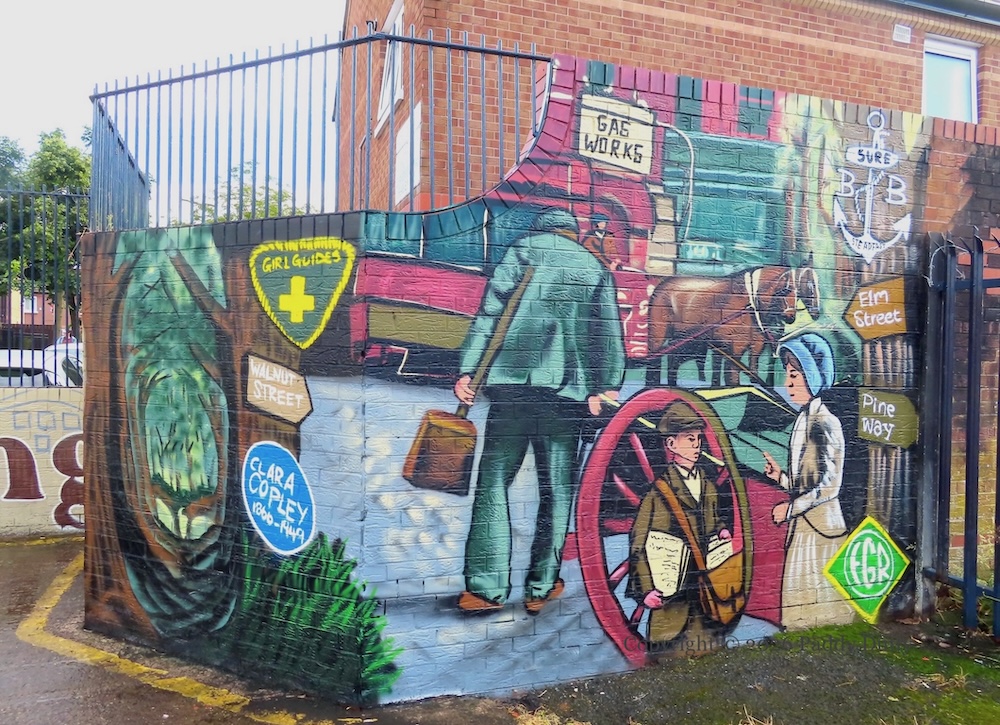
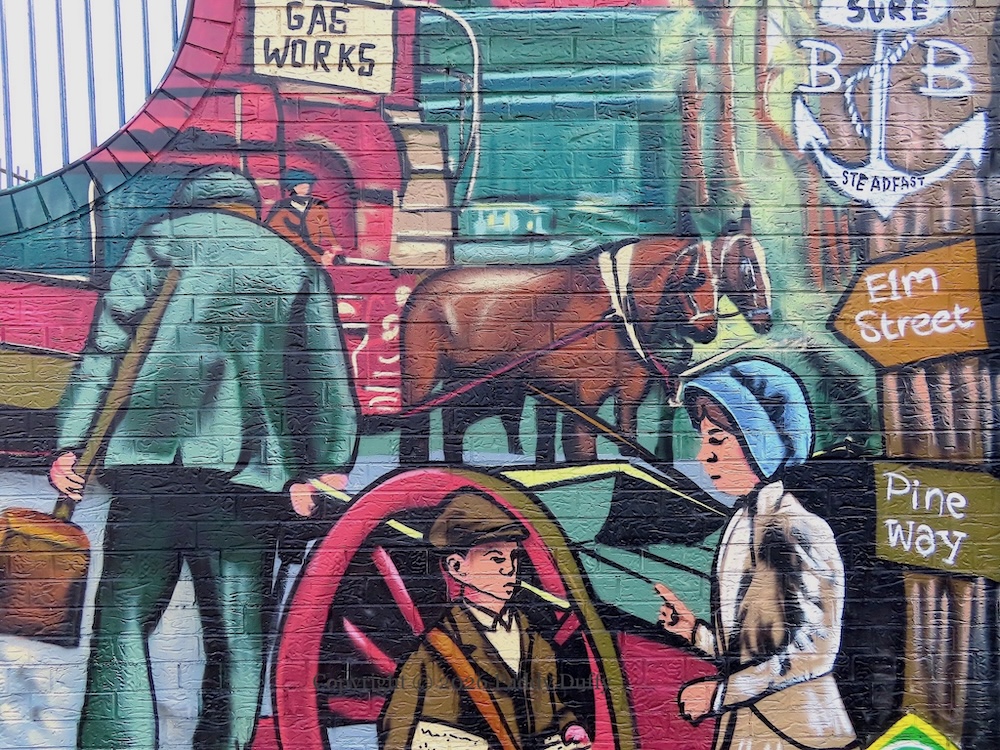
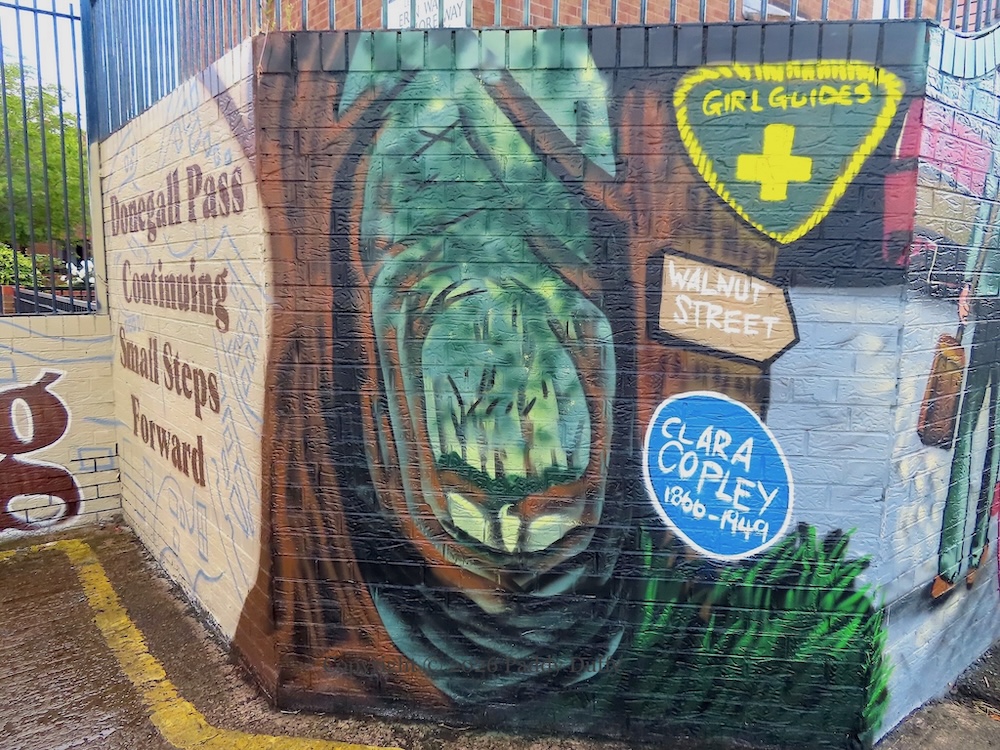
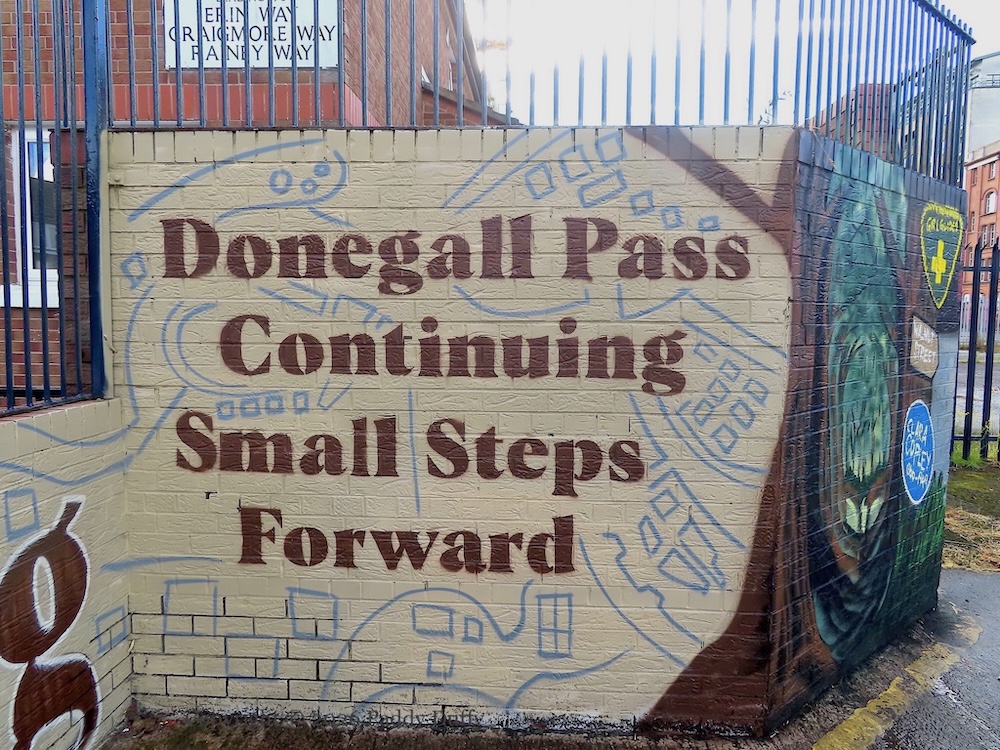
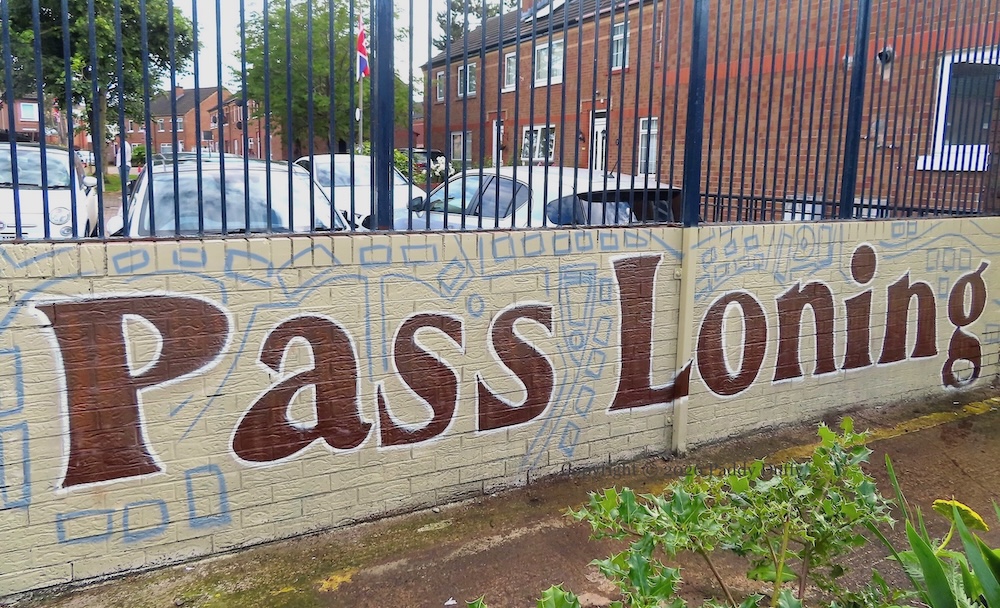
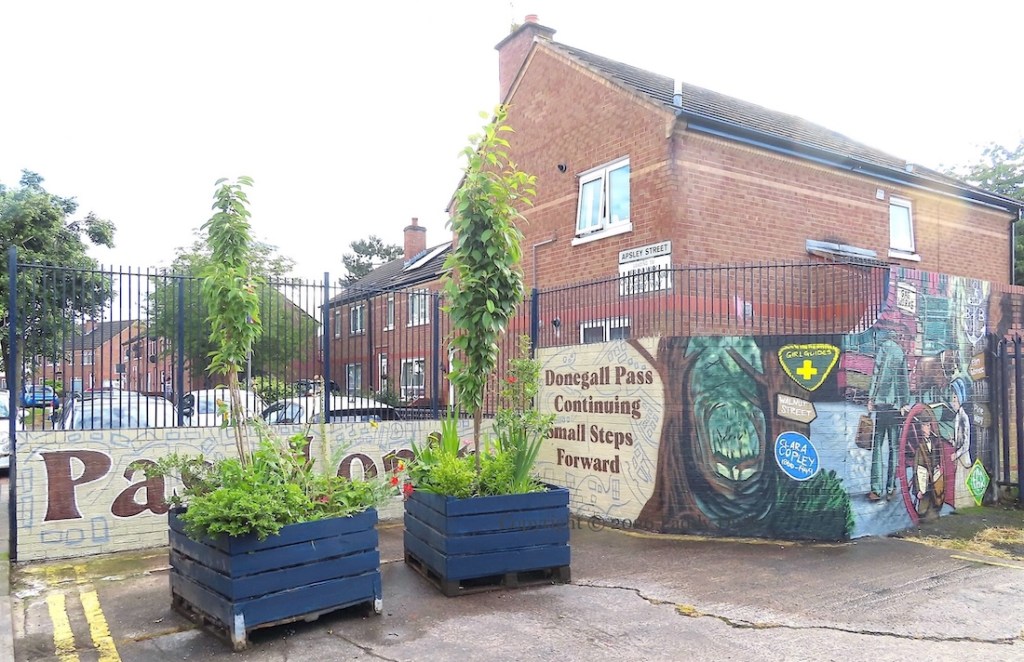
Donegall Pass began life in the late 1600s as a lane-way (loning, loney, loanen) made by one of the early earls of Donegall (the first three of whom were all called Arthur Chichester) through what was then Cromack Woods (Library Ireland). The woods are remembered in local street-names such as Walnut Street, Elm, Street, Pine Way (which are all included in the mural), as well as Cromac Street itself.
Clara Copley was born in Rotherham, moved to Liverpool, and then to Belfast c. 1900, where she lived for about fifty years. Her career was a colourful one that included running a fish-and-chip stall, an amusement arcade, a waxworks, a theatre, and a boxing ring, which was initially unlicensed but made official in 1936, when Copley was aged 70. She retired to a house in Donegall Pass where she died in 1949; there is a ‘blue plaque’ at the site (with an incorrect date of birth, faithfully reproduced here) in her memory. (DIB)
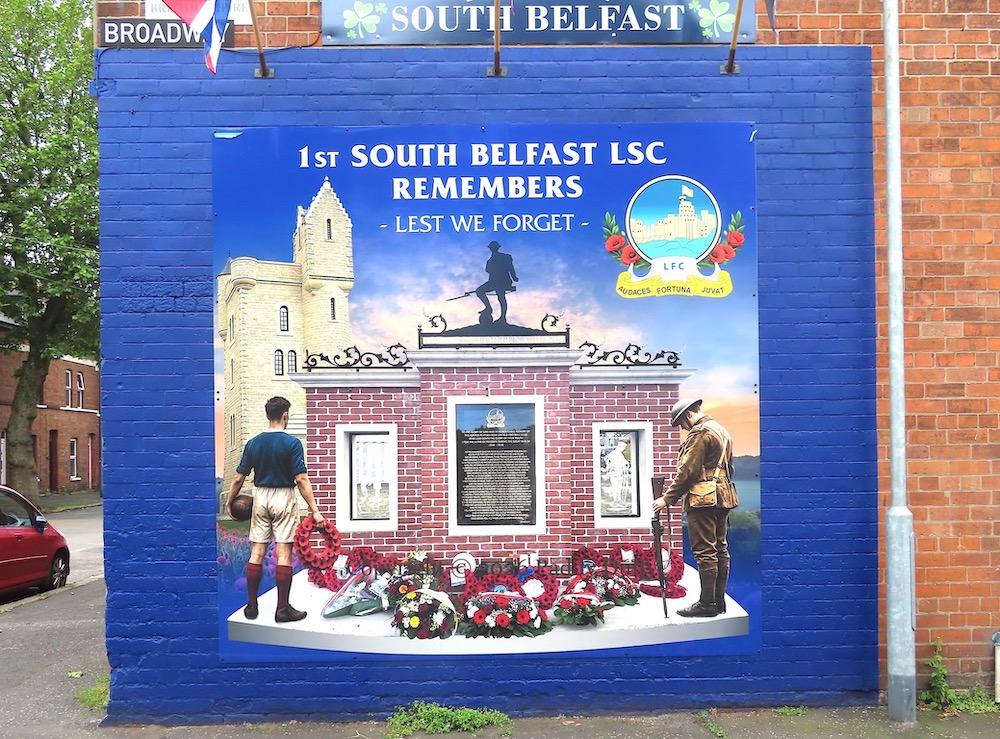
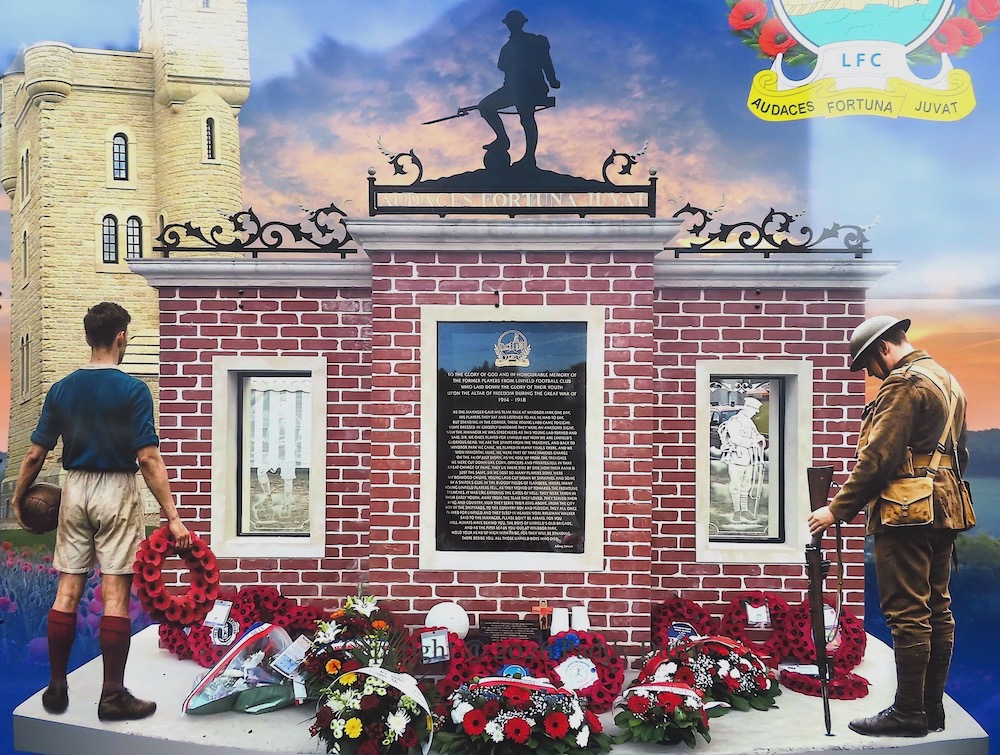
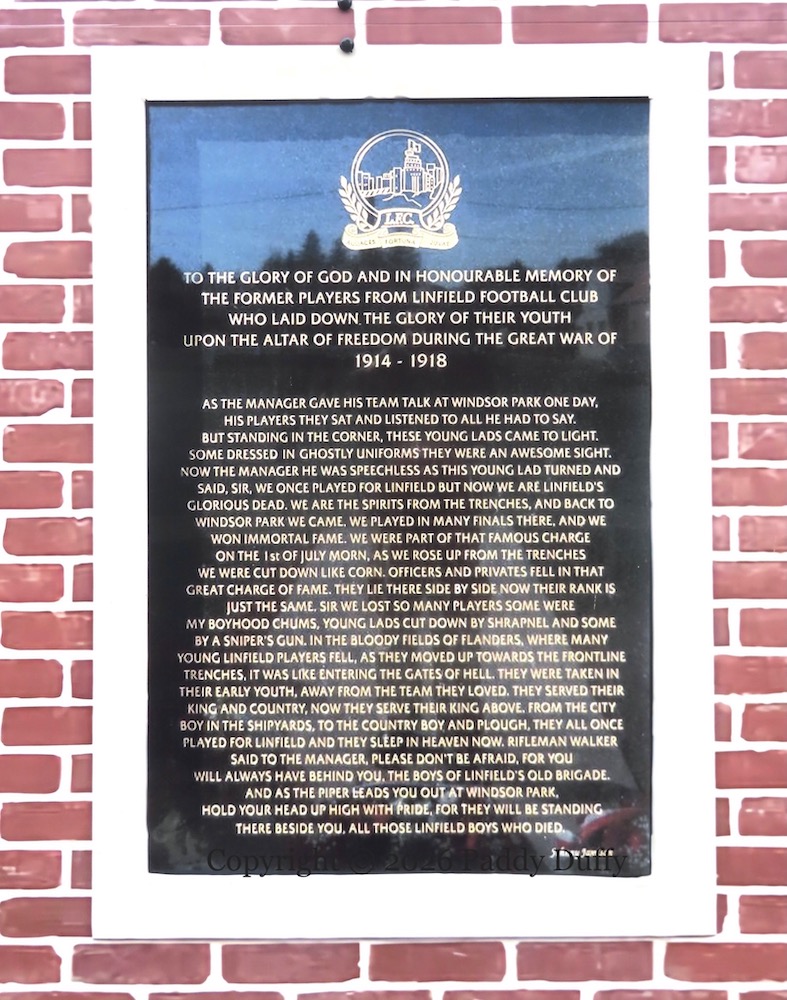
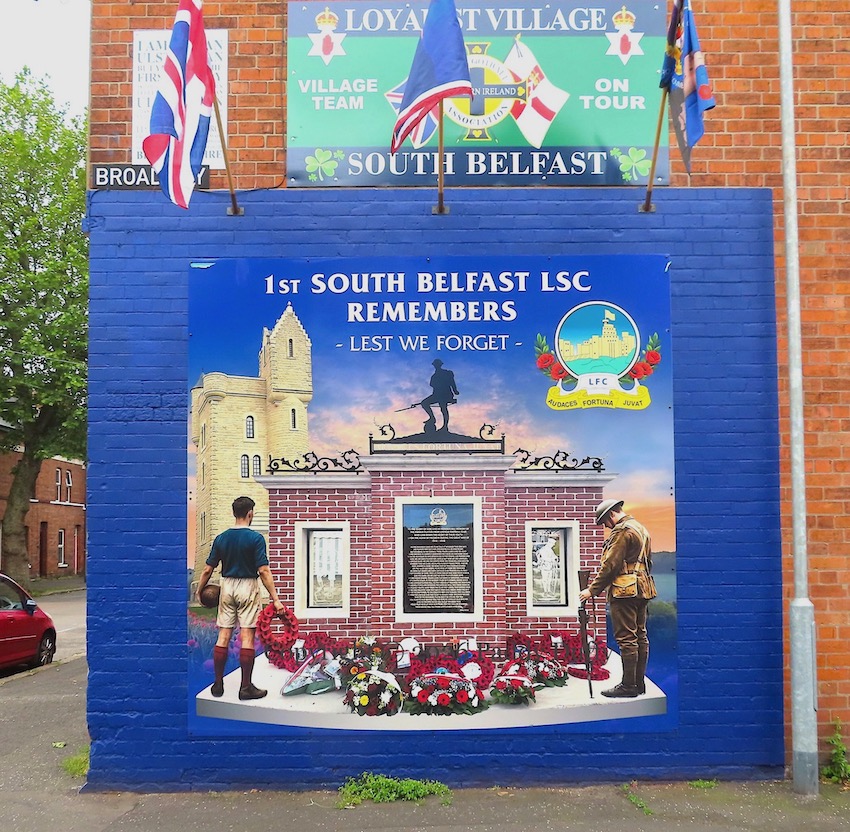
“1st south Belfast LSC [Fb] remembers. Lest we forget.” “To the glory of God and in honourable memory of the former players from Linfield Football Club who laid down the glory of their youth upon the altar of freedom during the Great War of 1914 – 1918.
The main part of this new board in the Village shows the Linfield memorial at Bertrancourt, France. The memorial was unveiled in 2022 (BBC). The BBC article explains the reference to “Rifleman Walker” in the poem by Johnny Jamison at the centre of the memorial: Walker had been a Linfield player before joining the Royal Irish Rifles and dying on May 6th, 1916. Jamison recites his poem in this Fb video. In the background is the familiar Ulster Tower.
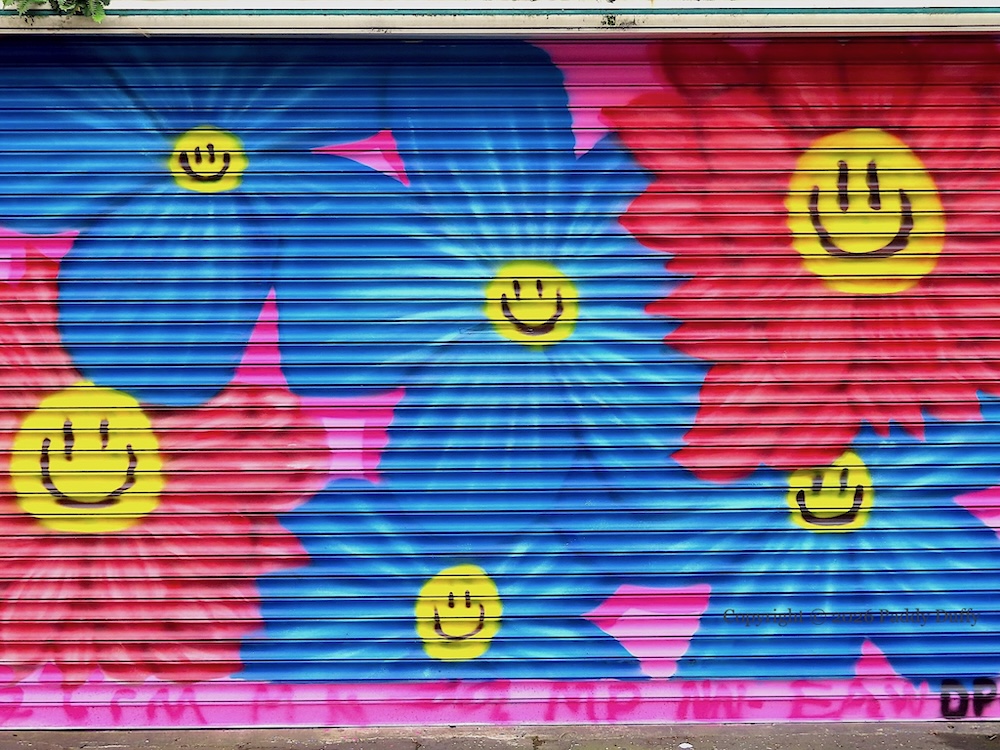
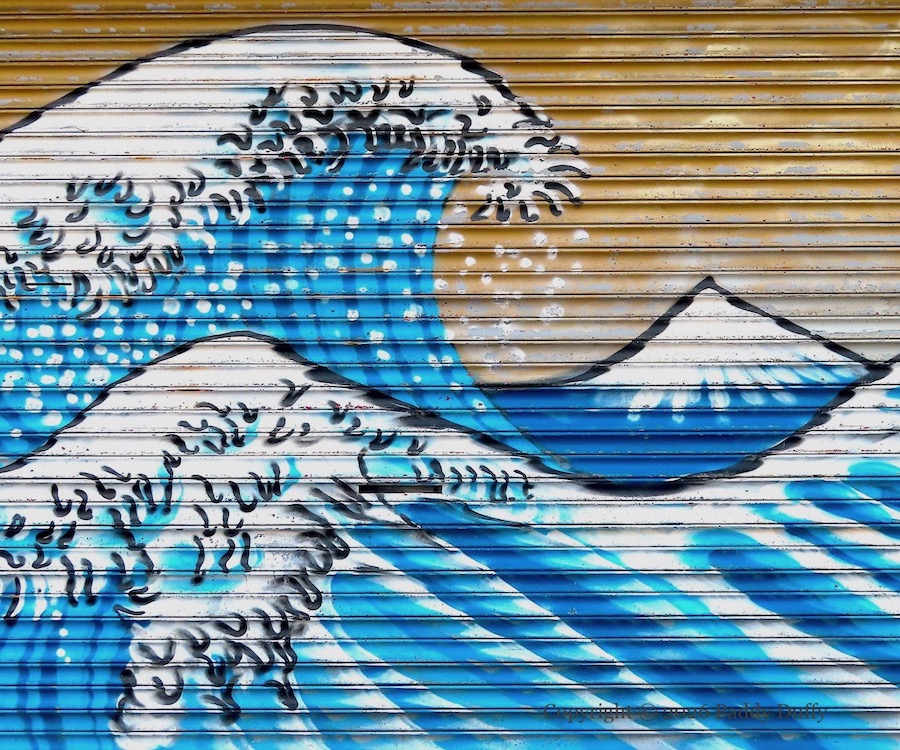
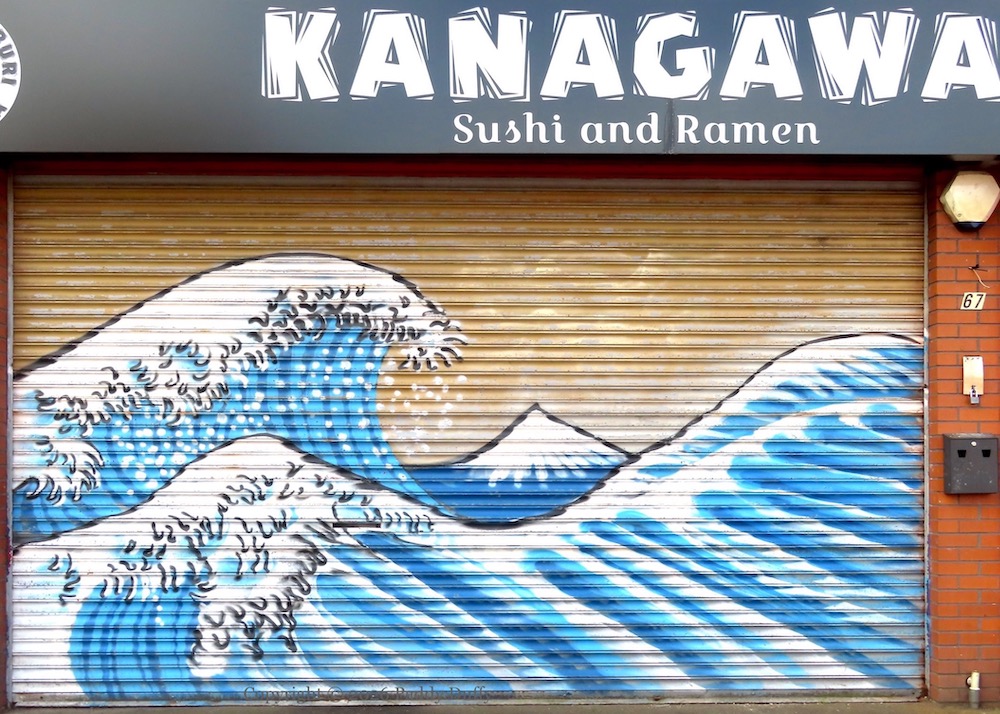
This is a version (without the boats) of Hokusai’s Great Wave on the shutters of Kanagawa Japanese restaurant (Fb) in Donegall Pass.
The full title of Hokusai’s famous picture is called ‘The Great Wave Off Kanagawa, 1831’. Kanagawa is a prefecture in Japan, south-west of Tokyo, with a view of Mount Fuji.
This nature mural – with badger, fox, rabbit, squirrel, and owl – is integrated with the bushy tree the lies along the top of the wall it is painted on. It was painted as part of the rejuvenation efforts of the Linen Quarter BID, which describes it as inspired by Cromac Wood, which existed “till the latter half of the 18th century” (Belfast Street Names) before becoming the site of the Markets (Market Social History) and Donegall Pass areas.
Painted by Visual Waste (web) in Apsley Street, south Belfast, towards the Ormeau Avenue end. Soon joined by Pass Loning.
“Dream. Love. Strength. Achieve. Life can take you higher than drugs.” New (May 2026) figures from the NI Statistics And Research Agency show 251 drug-related deaths in 2024 in Northern Ireland, most of which (219) are from drug abuse (NISRA). This new wall-painting in the New Lodge encourages young people to turn their backs on drugs and engage in activities suc as aerosol art and mountain-climbing.
By Blaze FX (Fb) with support from New Lodge Arts (Fb) and the Housing Executive.