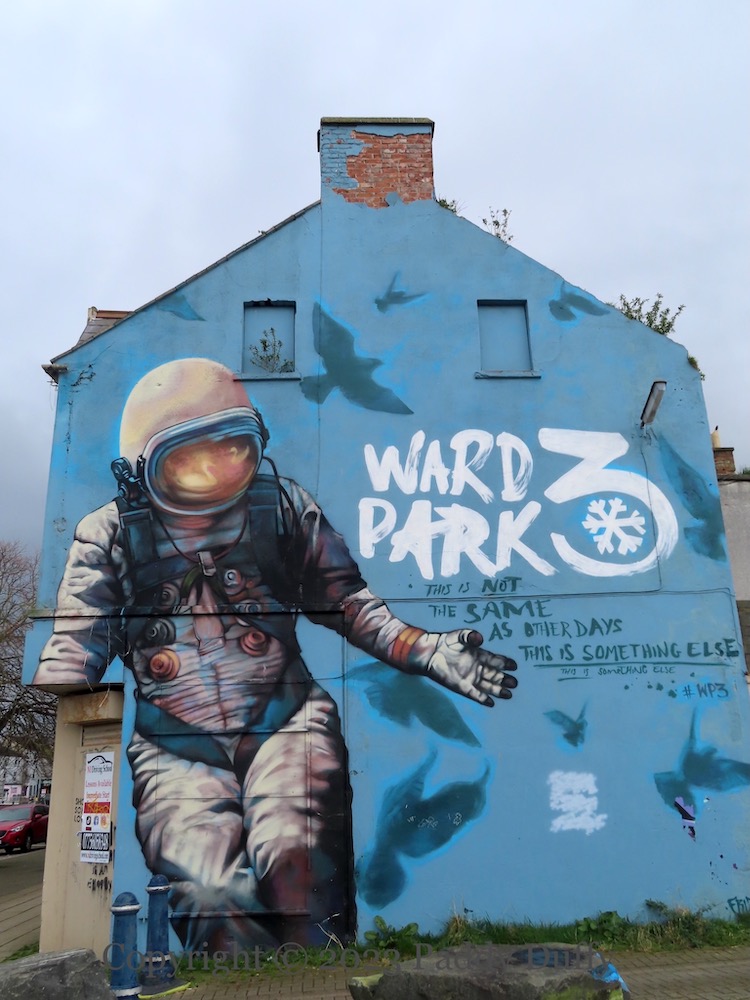
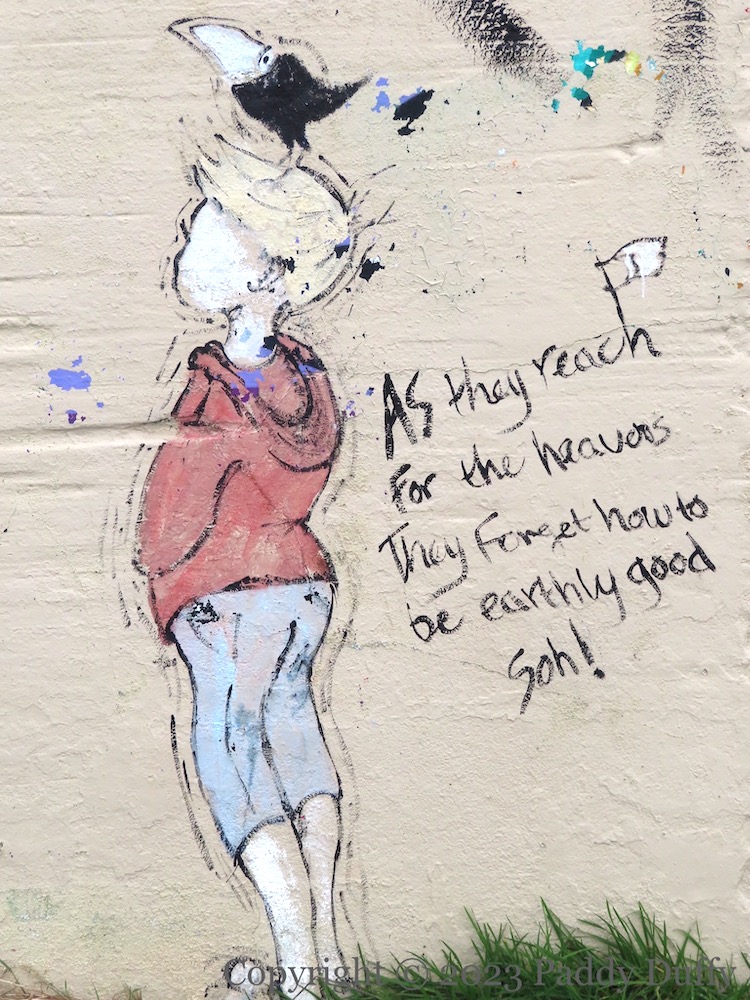
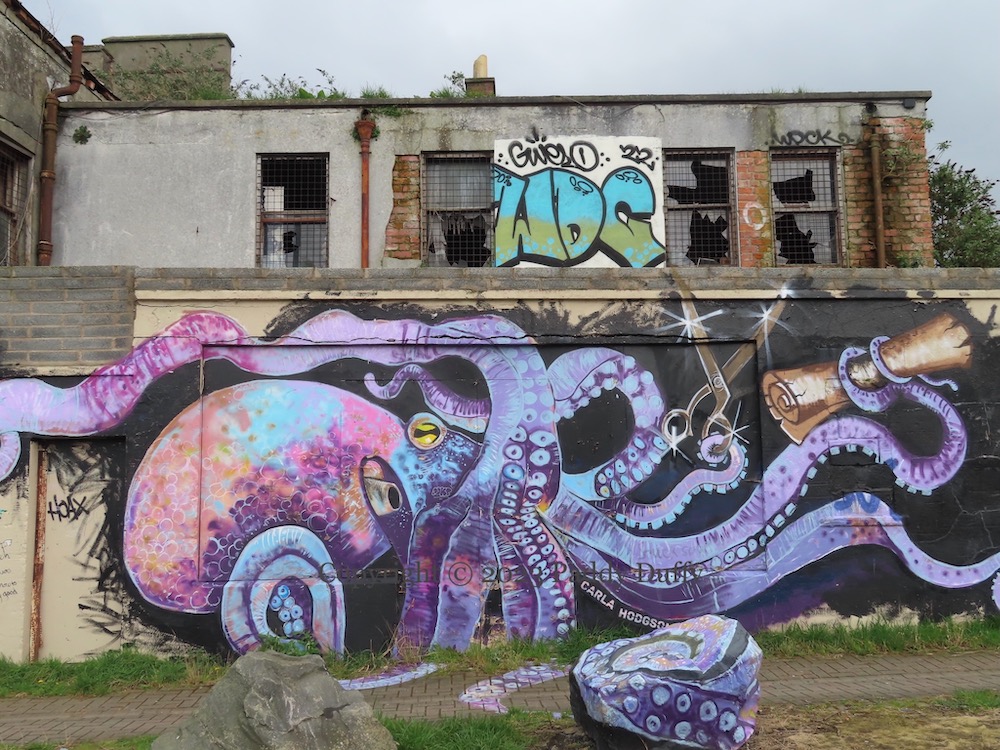
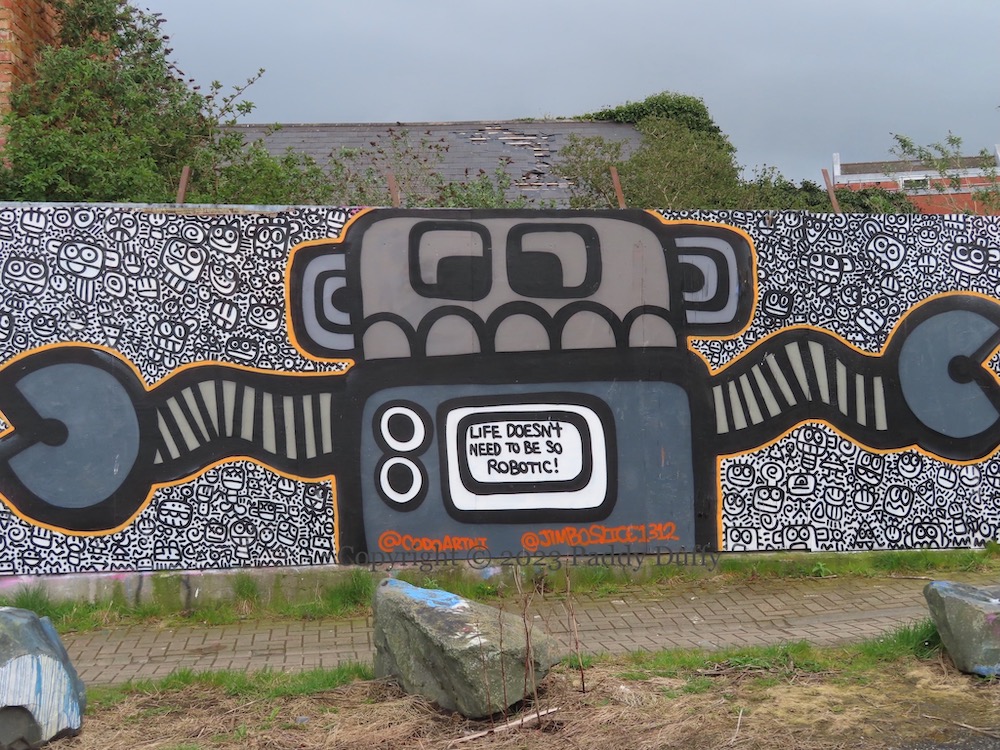
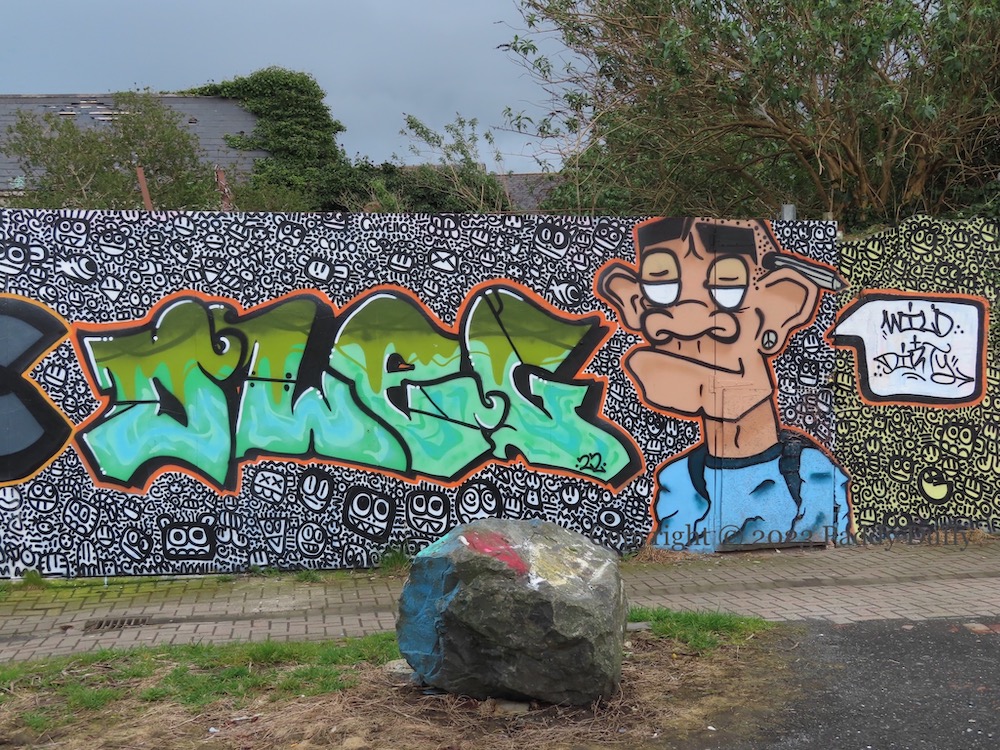
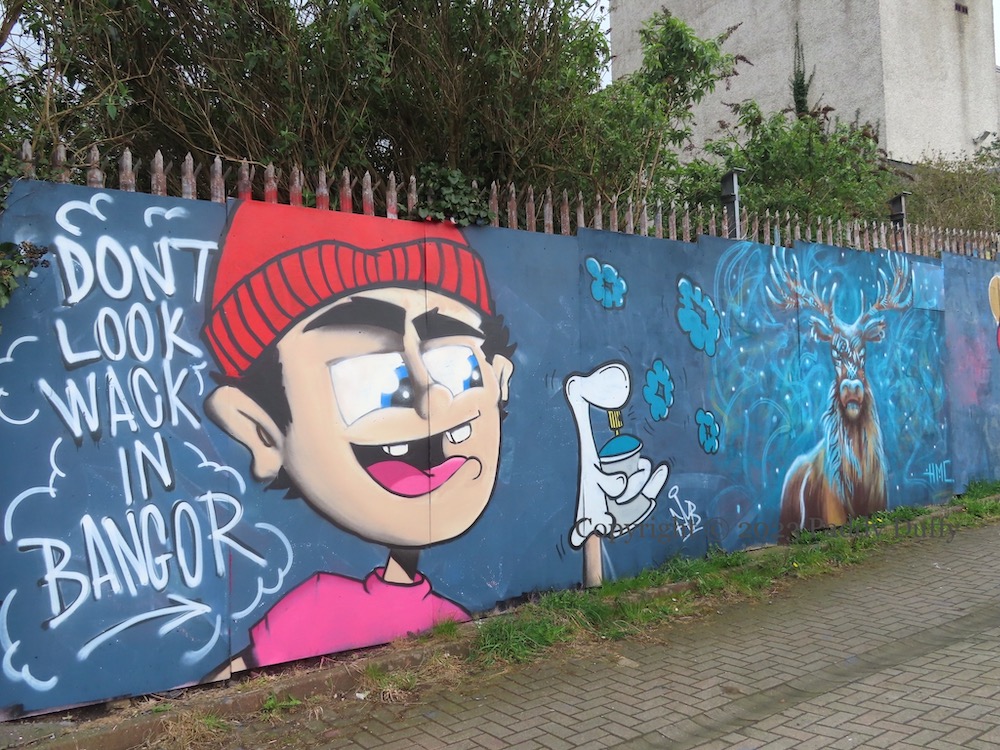
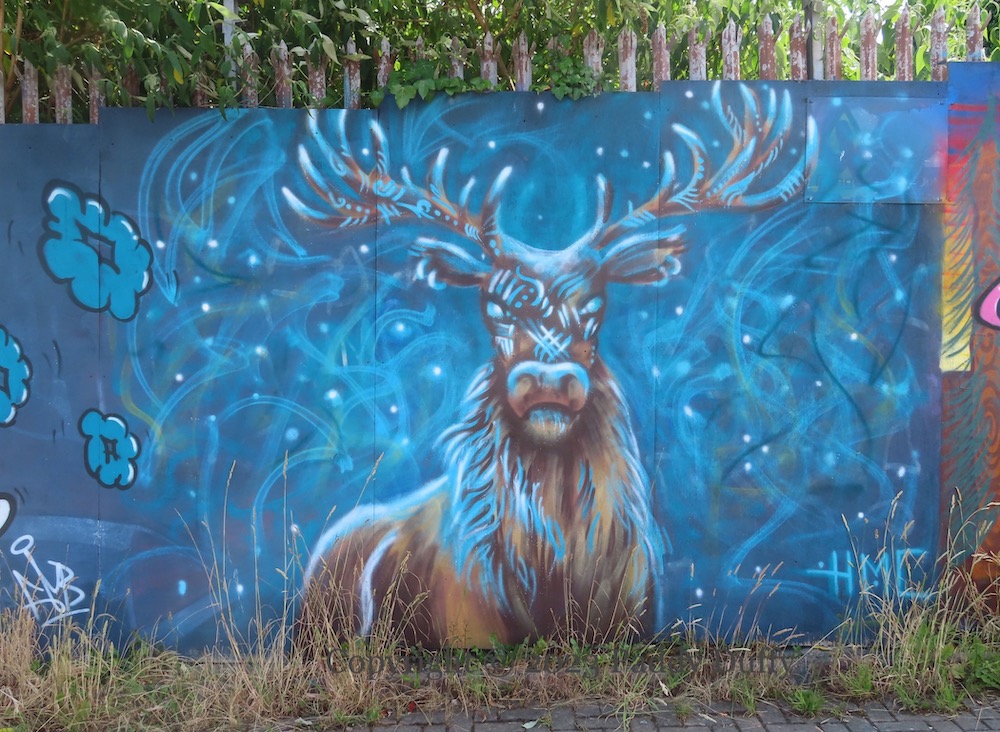
Here are images of street art in the green space off Queen’s Parade, (following on from Sharon Regan’s boards along the street – Nature Is Healing). The works are:
Friz’s (ig) Snow Patrol ‘Wildness’ cover for their “Ward Park 3” festival, unknown artist “As they reach for the heavens/They forget to be earthly good”. local artist Carla Hodgson’s (ig) “Rock, Paper, Scissors” octopus, Codo (ig) x Jimbo Slice (ig), FGB’s (ig) “Don’t look wack in Bangor”, HM Constance’s (ig) stag.
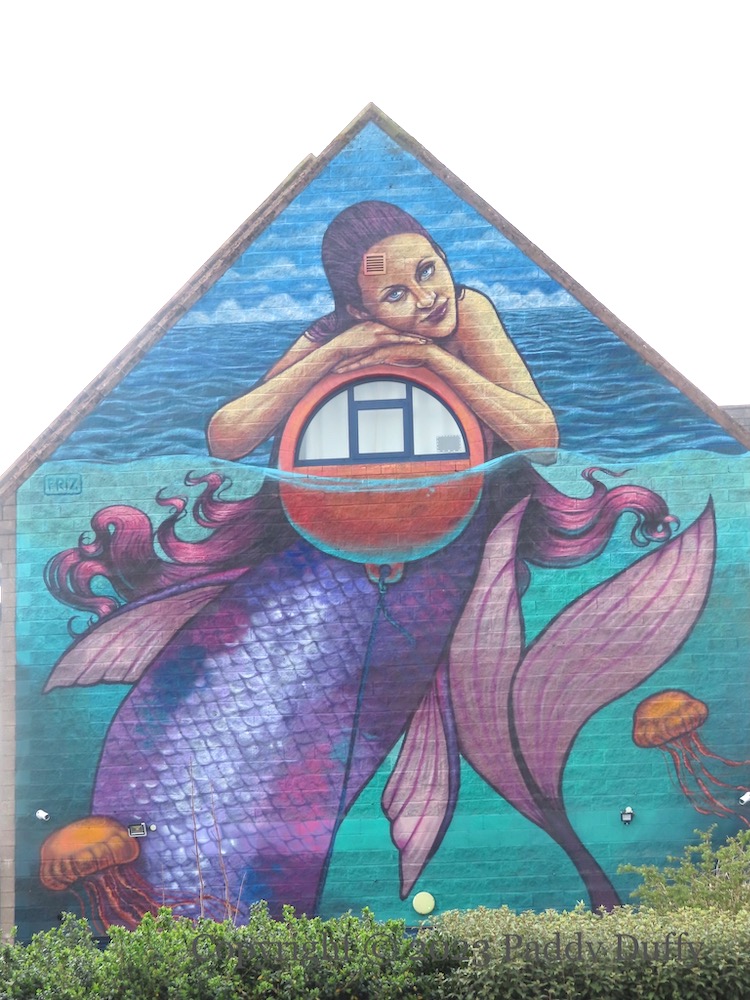
Lí Ban became a mermaid – half-human, half-salmon – after a year spent living in an underwater bower, taking shelter from the family’s uncovered spring that overnight formed Lough Neagh. Three hundred years later (circa 558 A.D.) she told an envoy of Saint Comgall’s who was on his way to Rome, that she would come ashore at Larne a year later. She forwent another 300 years of sea life in favour of being baptised and dying immediately. She was baptised by Comgall, the abbot of Bangor, and christened “Muirgen” (sea-born) and was buried in the Lough Derg (Donegal) abbey (O’Grady | WP). Muirgen’s feast-day is January 27th (Sacred Sisters).
Painted by Friz (ig) for the Bangor Seaside Revival Festival, with support from Seedhead Arts (ig).
For a different style of presentation of Lí Ban, see Shaped By Sea And Stone in Larne. The end of the story is similar to the fate of the children of Lear, who spend 900 years as swans before a monk hears their song, puts them (willingly) in chains, but in protecting them from others touches them, which restores them to human form only for (baptism and) death to follow immediately. (See The Children Of Lear.)
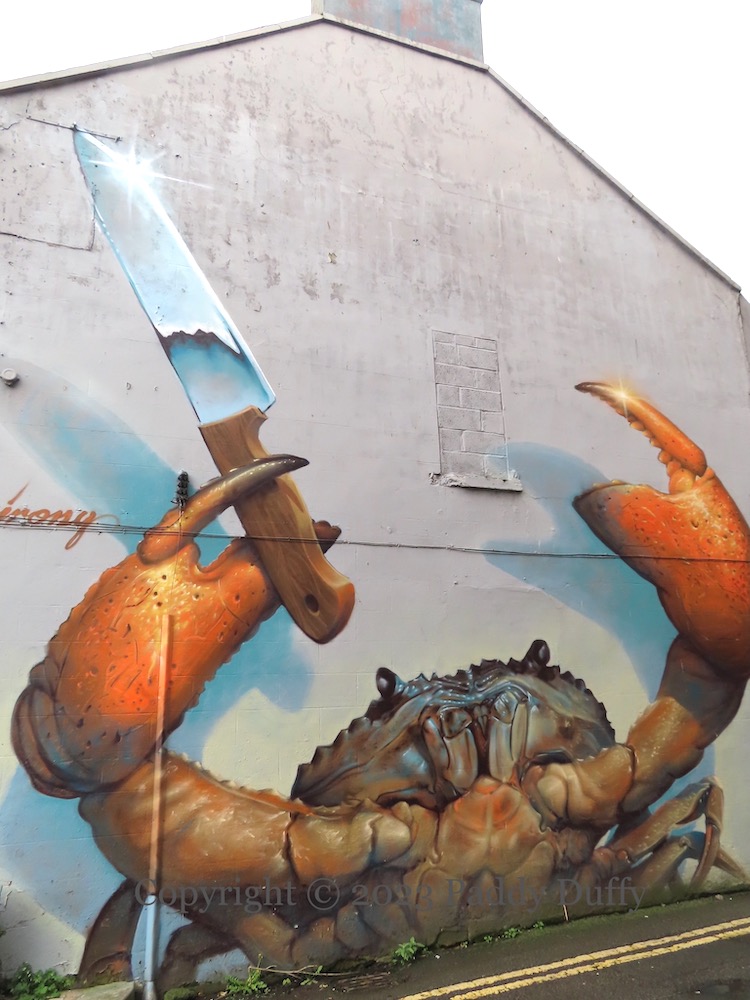
After centuries of pitiless exploitation by Bangor locals, a new hope is taking the knife into its own hand and striking back – revenge of the crustaceans. Work by Irony (ig) on Mill Row.
The first printing press in Belfast belonged to James Blow and his brother-in-law Patrick Neil in 1694 (DIB | Dublin Penny Journal gives 1696 | Mary Lowry Story Of Belfast gives 1690); a run of 8,000 Bibles is said to have been printed in 1751, one of which is part of the Linen Hall Library’s collection on Early Ulster Printing (RASCAL).
In 1895, Carswell & Sons opened a print-works and book-binders in a warehouse running with frontage in Queen Street and a rear in College Court (the building is now a bingo hall – see Kelly’s Eyes) which is currently being renovated as an office block (Bel Tel) – some of the scaffolding in College Cour can be seen in the later images in We Built This, the street art festival for International Women’s Day, 2023.
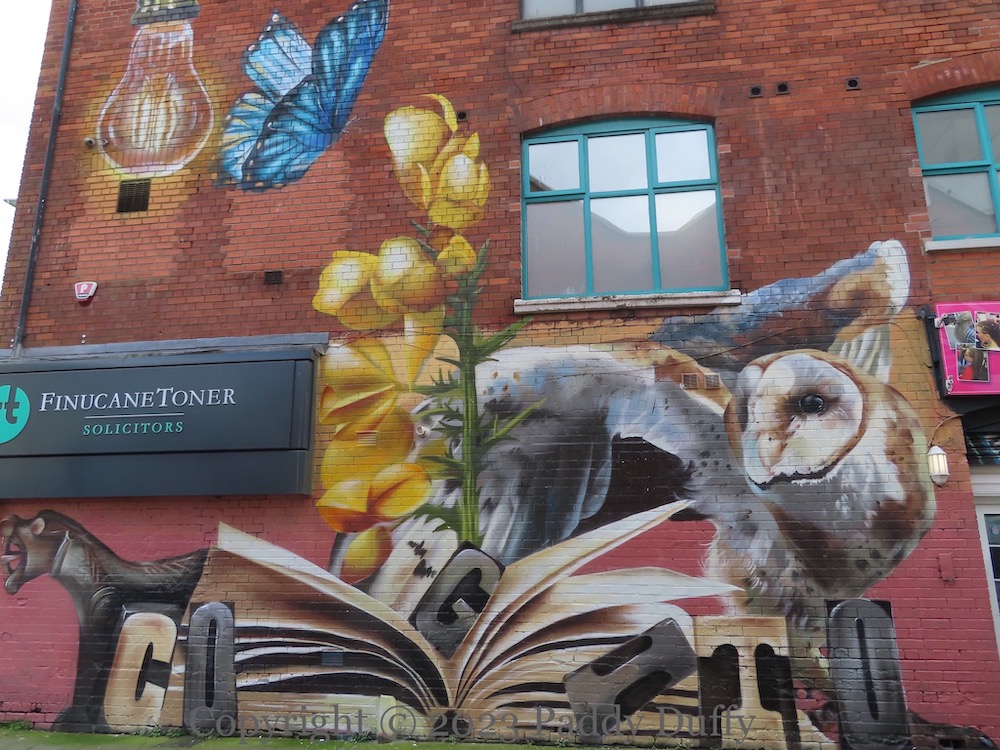
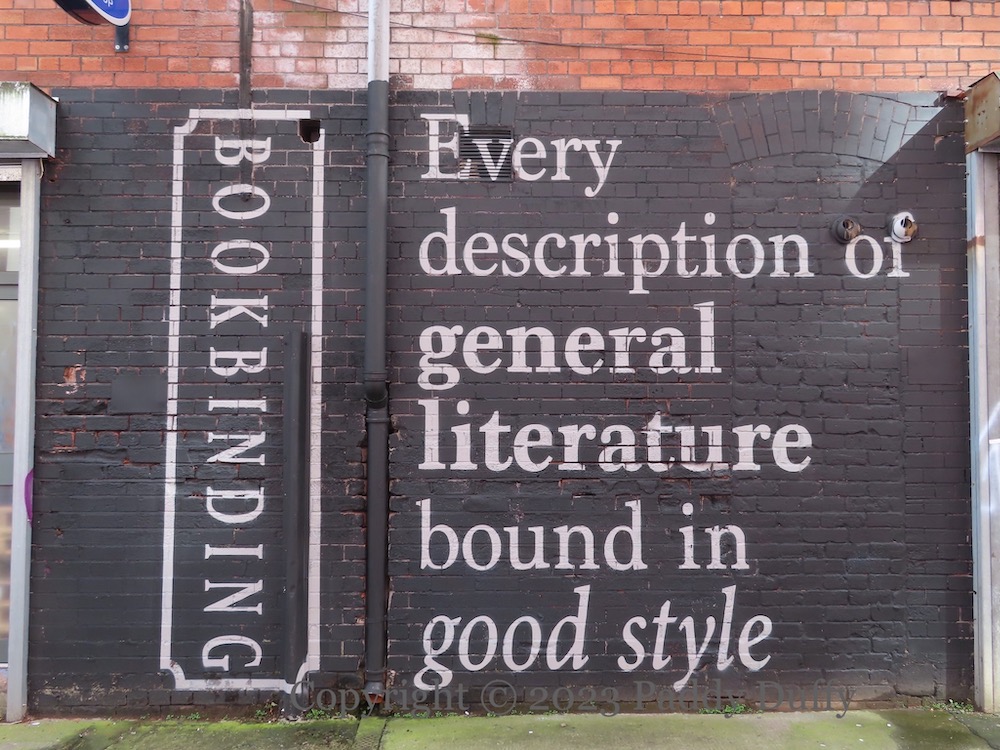
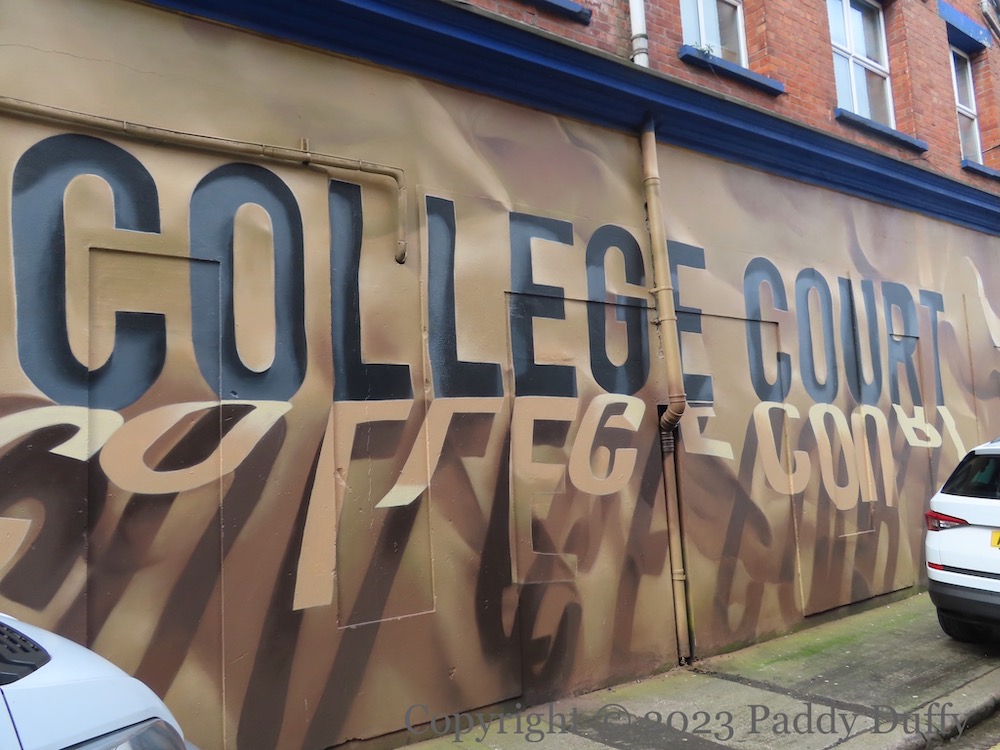
To complement those festival pieces, the mouth of College Court has been given a make-over, with work by Peachzz (ig) (above) and lettering by Woskerski (ig) that both draw on the street’s association with printing. If you know who did the “bookbinding” piece, please get in touch.
Previously on either side of College Court there were two pieces by Friz: Fox and Hare.
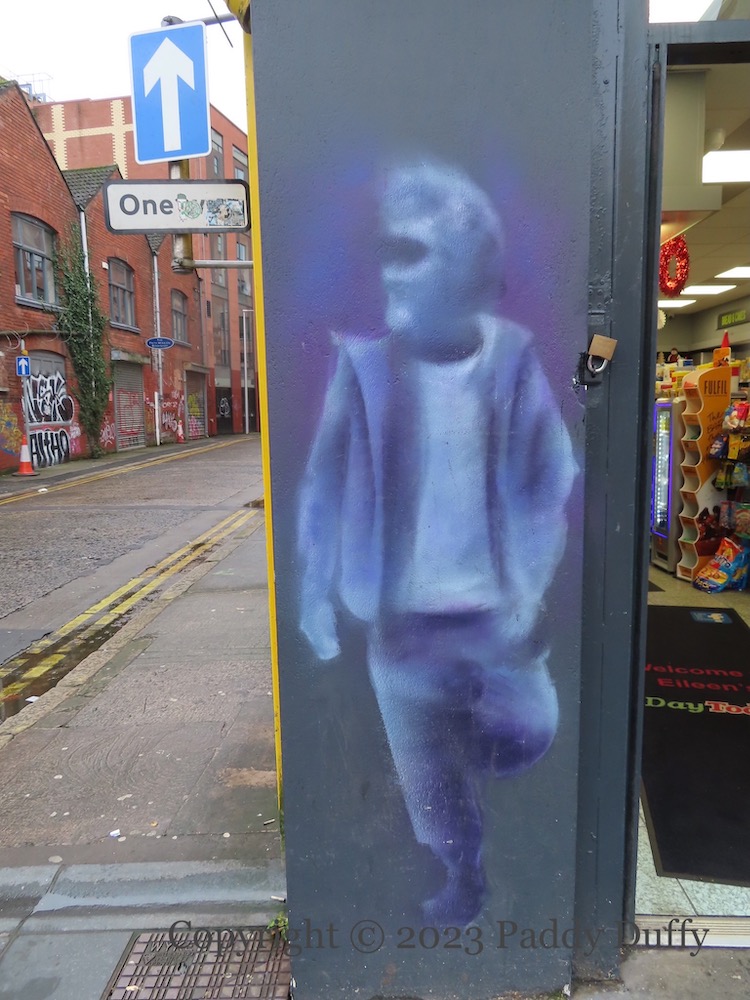
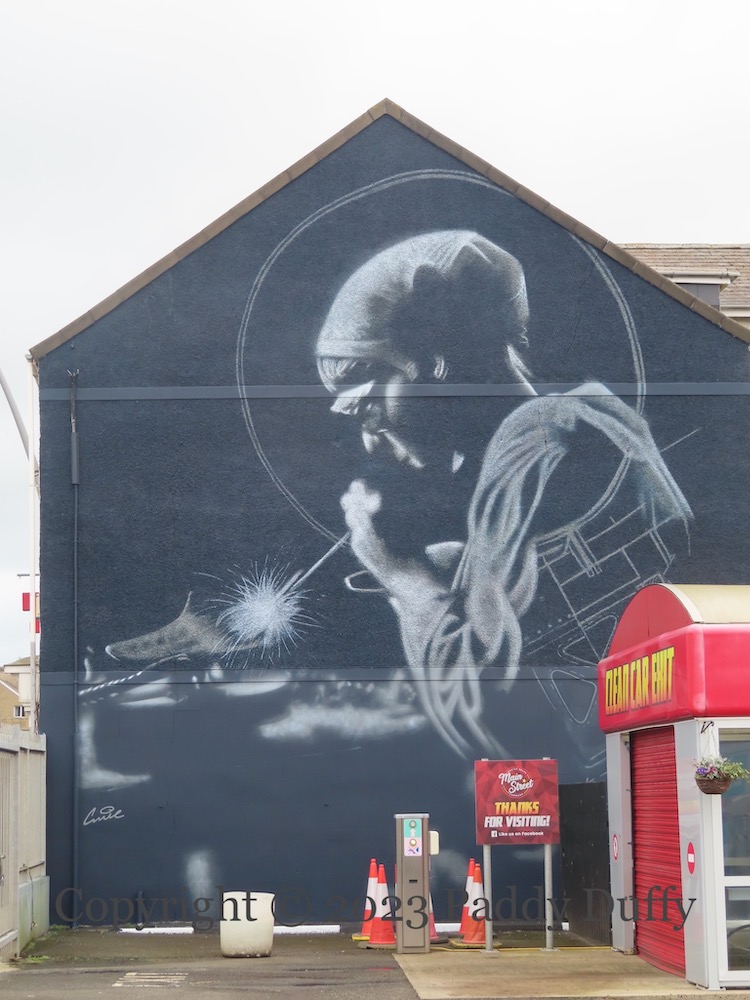
The bonus image, of a man leaning against the newsagent’s wall, is on the corner with Castle Street.
Above is a trio of boards on a wall behind the Antiville community centre, softening (somewhat) the very aggressive set of six UDA boards next to it.
The experts’ best guess is that the gentleman on the white horse (on the right of the painting) is James Scott, Duke of Monmouth, at the siege of Maastricht in 1673. Scott was commander of the English forces fighting with the French during the Franco-Dutch war. It’s not clear, thus, what the connection is to the Antiville area of Larne or the wars fought in Ireland over the English crown. It was painted by Jan Wyck, who also did a painting of the Battle of the Boyne. On either side (as shown below) are a portrait of Queen Elizabeth II and the English version of the Royal coat of arms of the United Kingdom.
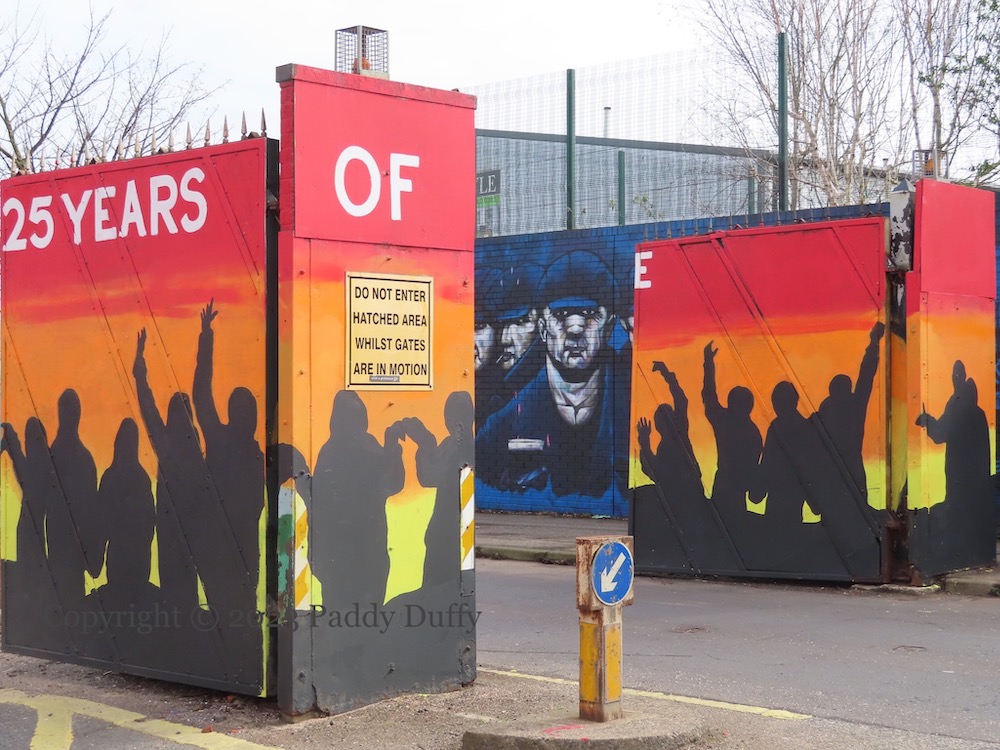
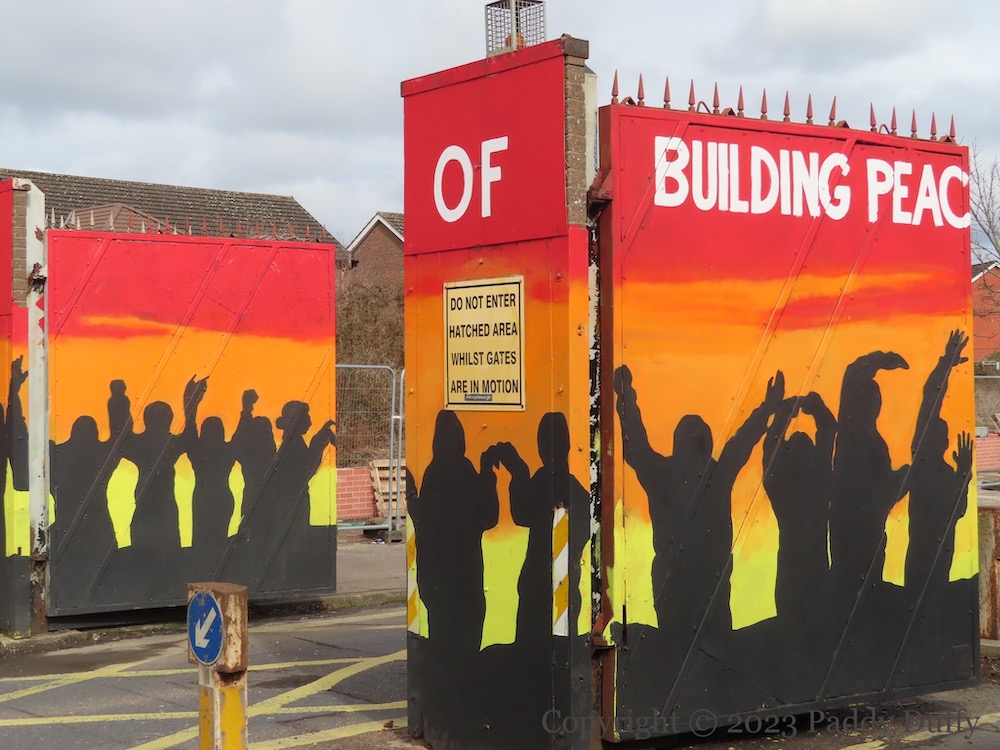
The gates on Lanark Way are part of the west Belfast “peace” wall. On this site we always put the word in scare-quotes to signify that it has a different meaning than it typically does. Without them, “peace wall” might suggest a place where people can go for a few moments of quiet reflection.
Rather, the wall – and the gates and the cages that surround many buildings on either side of the wall (see above) – is a divider meant to keep the peace by separating warring factions. Indeed the reason for the re-painting of the gates is not just the up-coming 25th anniversary of the Belfast or “Good Friday” Agreement (on April 10th) but the fact that they were damaged in the 2021 rioting (BBC). (This Irish News article surveys 150 years of violence at the site.)
The new art on the gates is inspired by the cover of the booklet sent to every household in advance of the May vote to ratify the Agreement (available at CAIN), which was similar in various ways to the television ad shown at the time (Ads On The Frontline). It showed a family of four in silhouette against a red-and-orange sunset; given the rioting associated with Lanark Way, on the gates this sunset could be mistaken for flames, and the rejoicing silhouetted figures for gesticulating and petrol-bomb-throwing rioters. For the previous art on the gates, see the Visual History page on the west Belfast “peace” line. (For the mural in the background, see Sailortown Dockers.)
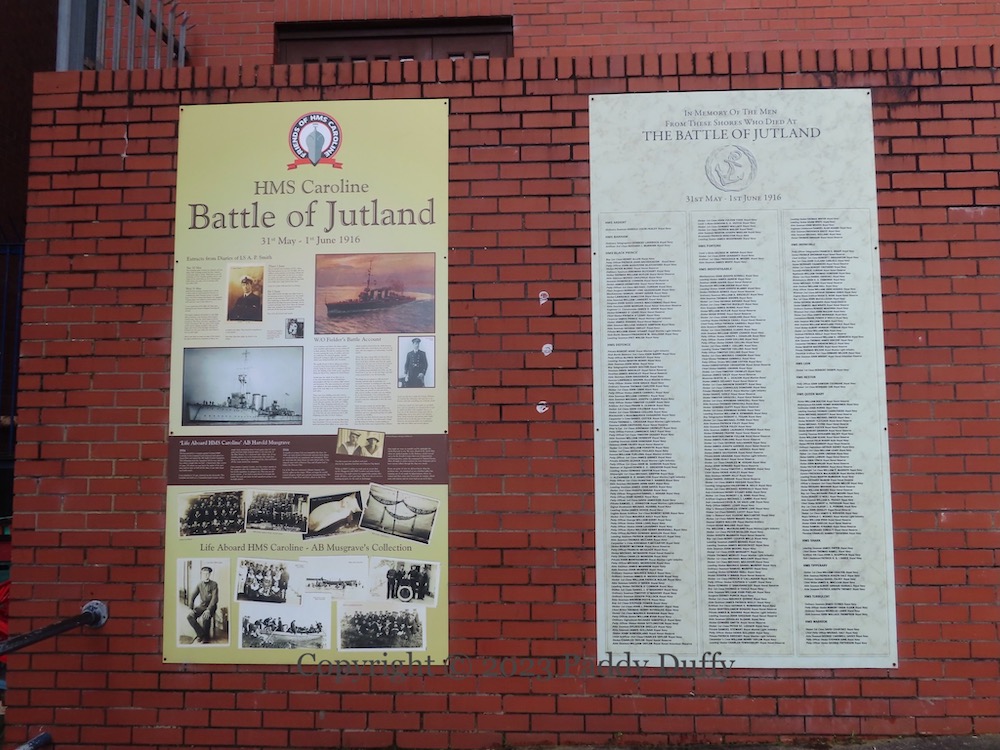
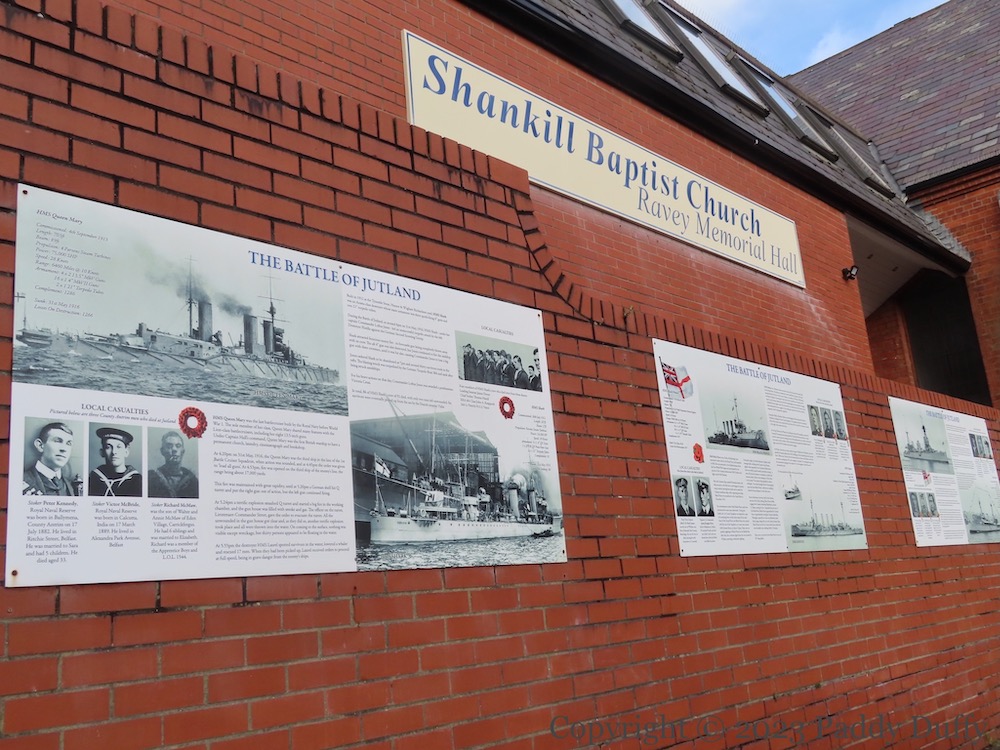
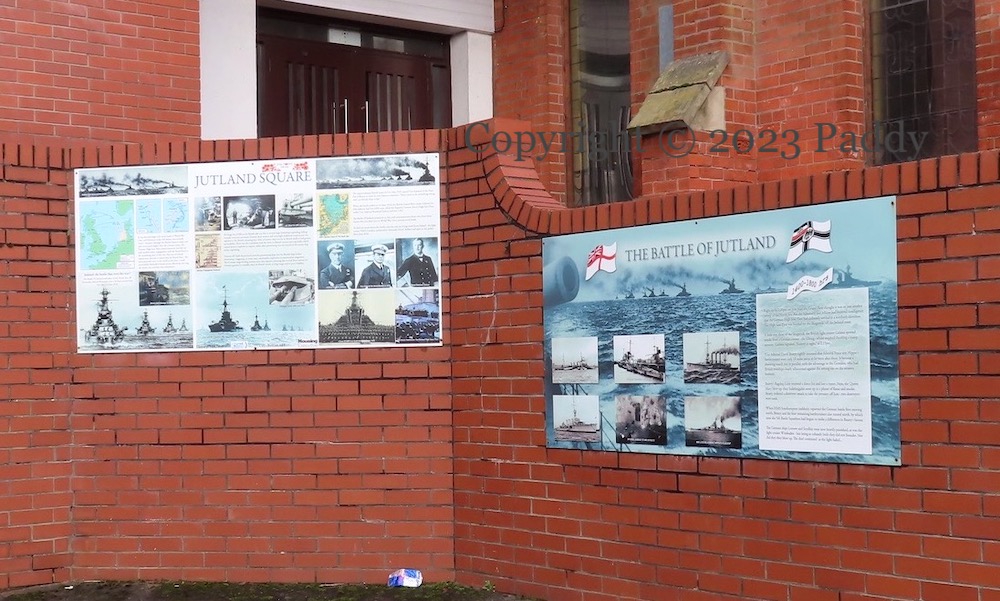
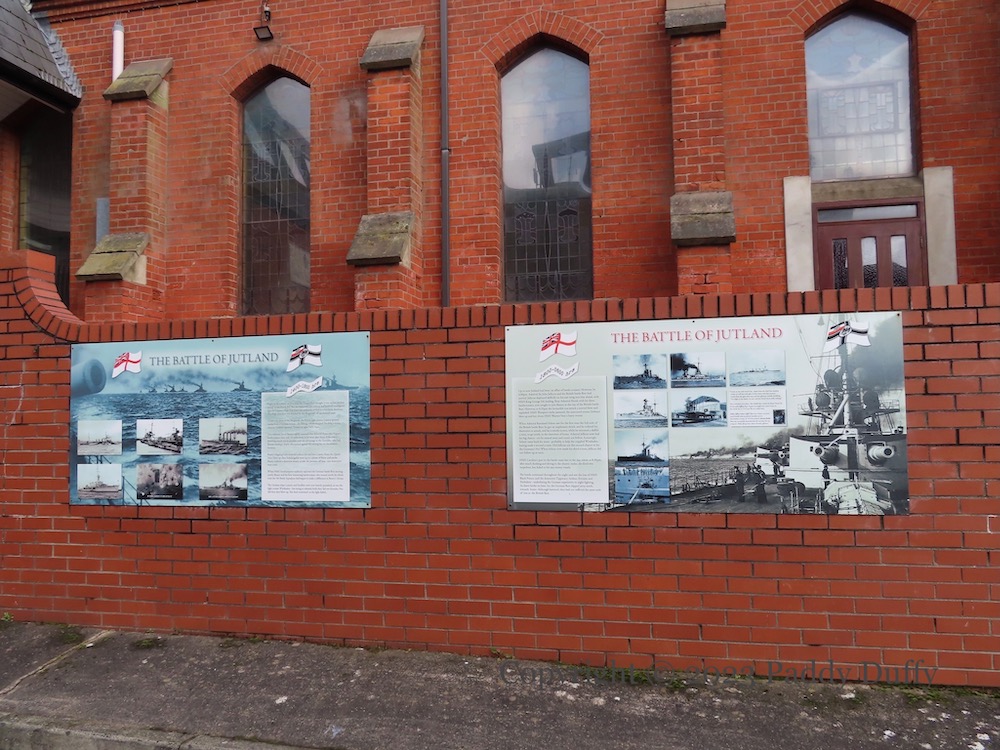
HMS Caroline re-opened in March, post Covid (Royal Navy). It opened as a floating museum in 2016, in time for the centenary of the Battle Of Jutland on May 31st-June 1st, 1916. There were almost 10,000 casualties and 25 ships were sunk that day but the Caroline survived. She served as a Navy headquarters during WWII, in Belfast habour, before being returned to reserves. (WP)
These eight panels are in Tennent Street in the Shankill. There was previously a painting of HMS Caroline at the Battle Of Jutland off the Shore Road in north Belfast – see HMS Caroline.
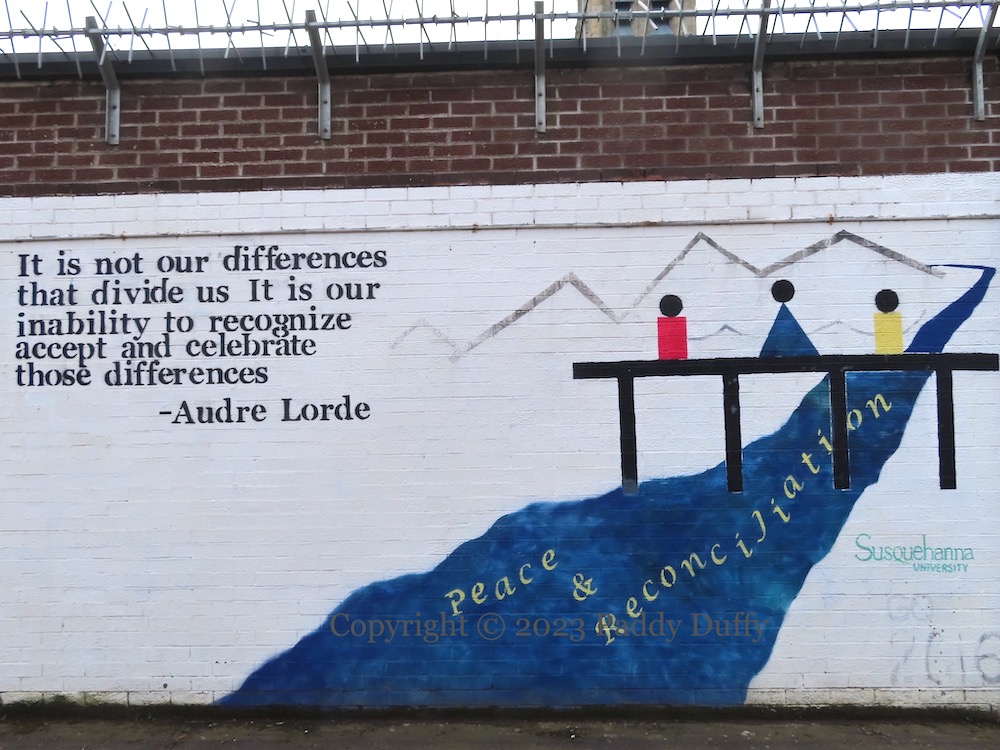
“”It is not our differences that divide us. It is out inability to recognize, accept and celebrate those differences.” – Audre Lorde”, “Peace & reconciliation”.
This does not seem to be an authentic Audre Lorde quote but an extrapolation of some lines from the essay “Age, Race, Class, and Sex: Women Redefining Difference”, where she writes, “It is not our differences which separate women, but our reluctance to recognize those differences and to deal effectively with the distortions which have resulted from the ignoring and misnaming of those differences.” (p. 122 in Sister Outsider).
Painted in 2016 by students from Susquehanna University in Bread Street, Divis. “The river and bridge represent a Lutheran hymn about the peace of mind a river provides and the bridge connecting people” (Spaces4Learning). In 2017, students from the same university painted the gates on the “peace” line – see Ambassadors For Peace.
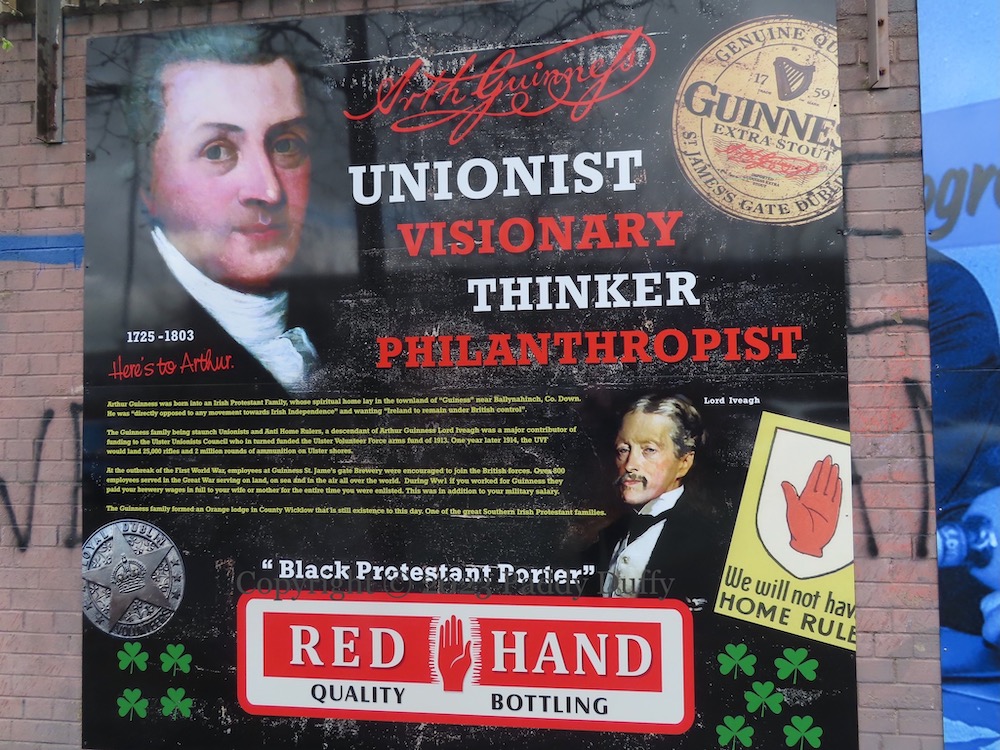
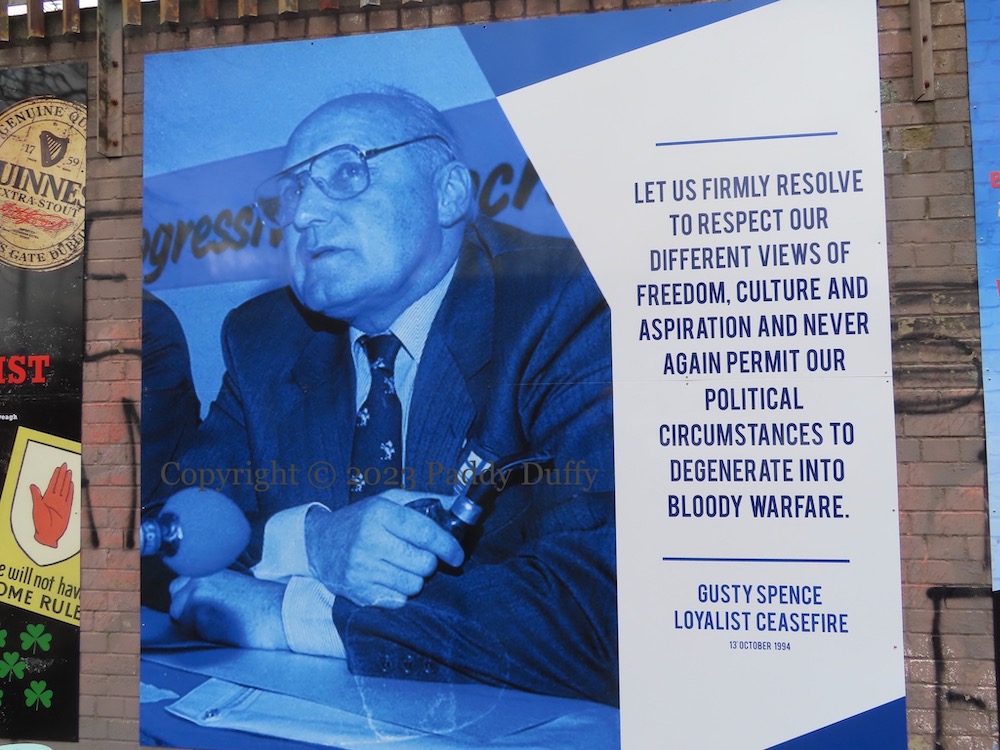
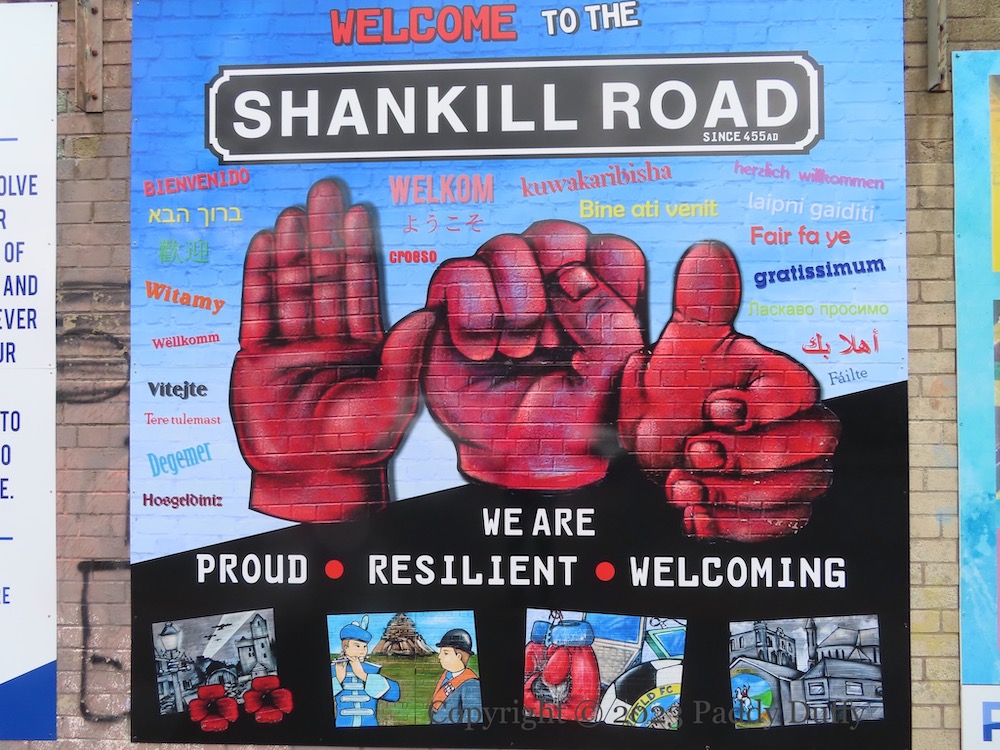
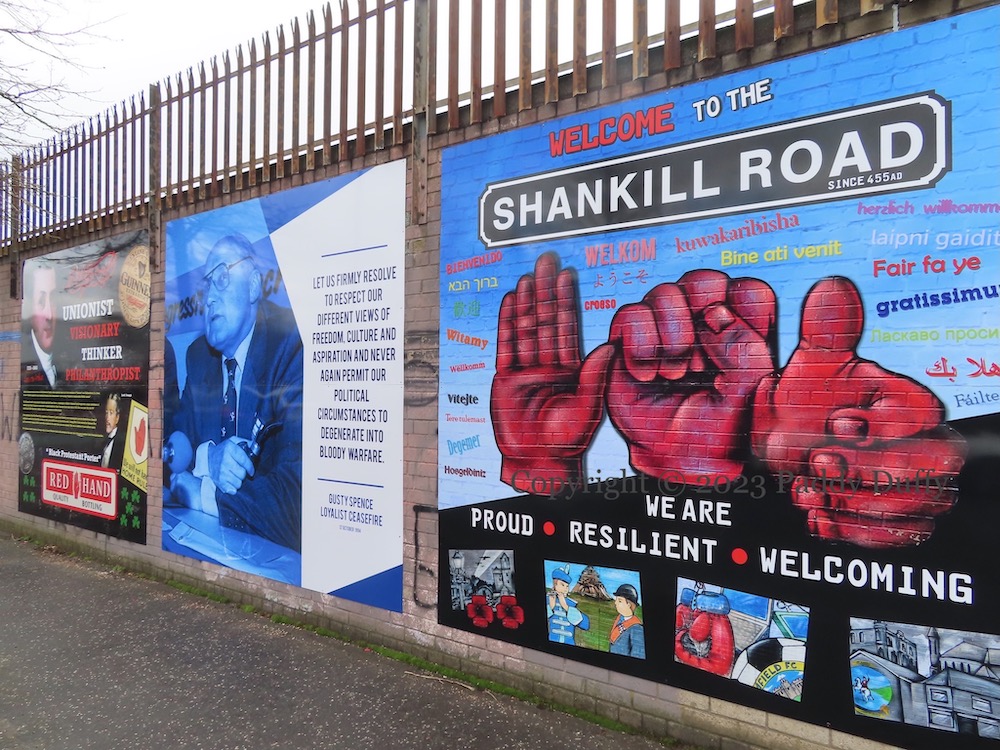
Here are three new pieces above the security gates on Northumberland Street, coving over the “Deserted! Well, We Can Stand Alone” graffiti in the last remaining spot on the wall without a mural. From left to right:
Arthur Guinness: “Black Protestant Porter” as a description of Guinness stems from Arthur Guinness’s opposition to the 1798 rebellion (Indo). The Union Star (newspaper in Belfast – A Planet Of Light And Heat) called Guinness a spy and advised that “United Irishmen will be cautious of dealing with any publican who sells his drink.” (An Phoblacht).
Gusty Spence, a former commander of the UVF, read out the ceasefire statement of the “Combined Loyalist Military Command” (UVF, RHC, and UDA): “Let us firmly resolve to respect our different views of freedom, culture and aspiration and never again permit our political circumstances to degenerate into bloody warfare – Gusty Spence, loyalist ceasefire [statement in full], 13 October, 1994.”
“Welcome To The Shankill Road – we are proud, resilient, welcoming”: The original ‘three hands’ was on Northumberland Street, just above this spot – see Proud, Defiant, Welcoming – which was then reproduced in reduced form in Gardiner Street – see Welcome To The Shankill Road.
This is the most conciliatory statement ever made by loyalism and the decision to put it on Northumberland Street, especially in the context of the internationally famous and associated-with-Ireland Guinness and the “welcome” mural, suggests that the trio is directed at tourists rather than locals.



 Paddy Duffy Collection