“The Reds” are Belfast soccer team Cliftonville FC. Although the team and their fans are “The Pride Of North Belfast”, this poster is on an electrical box on the Springfield Road, west Belfast.
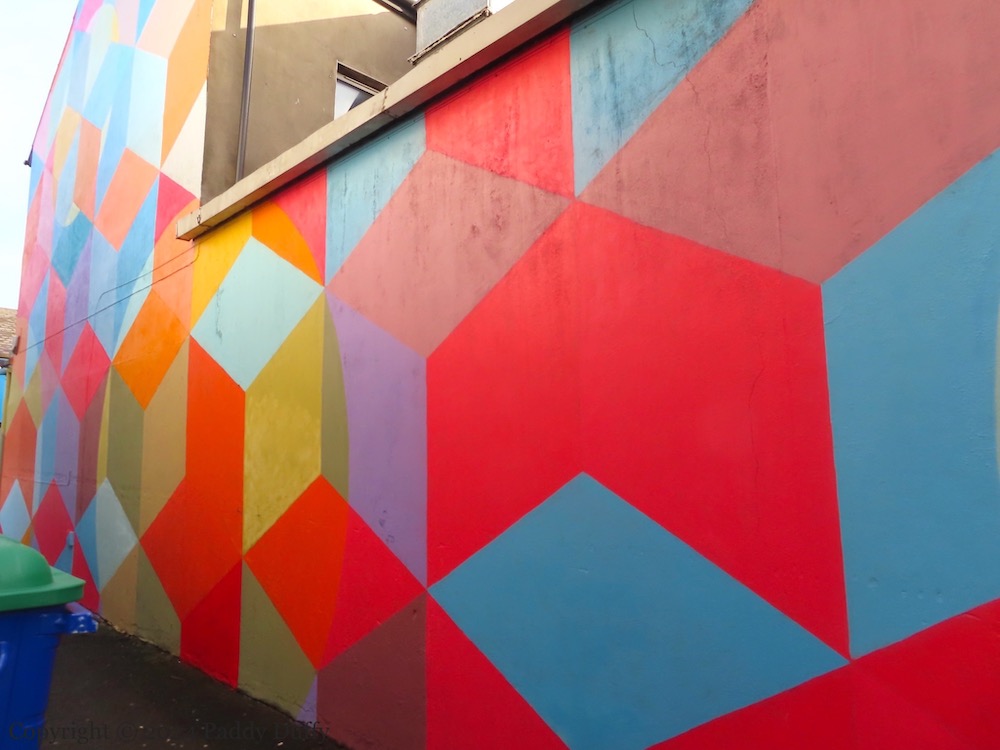
Geometrical work by Rob Hilken (web). This is an awkward one to photograph, being in an alley between a hamburger restaurant and an insurance broker’s on the Belmont Road, east Belfast.
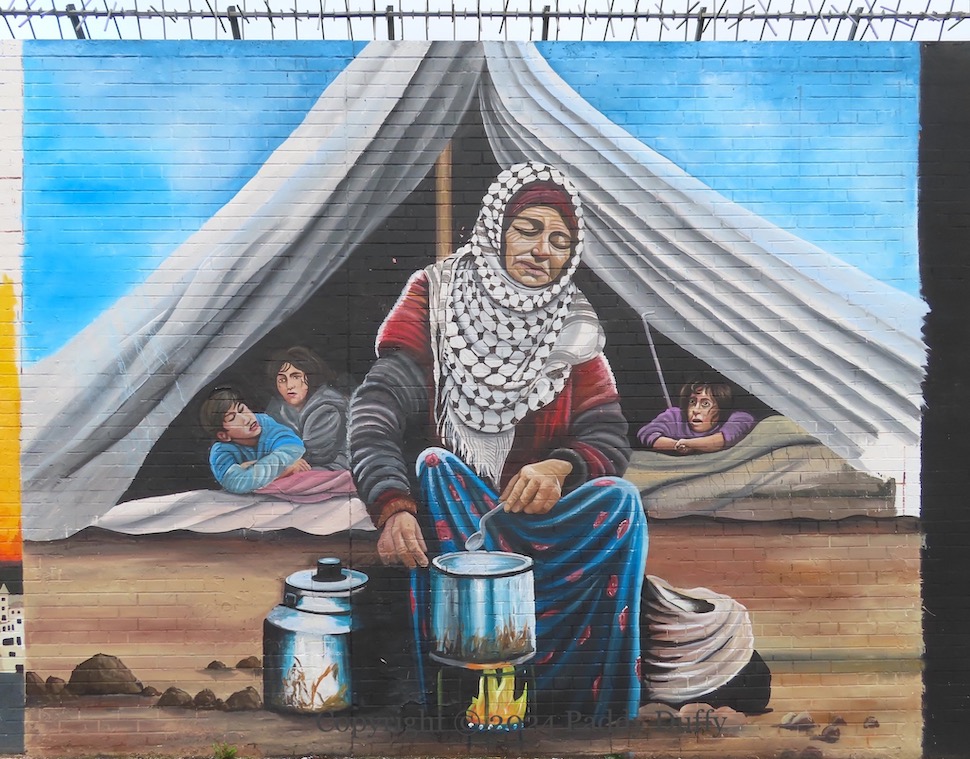
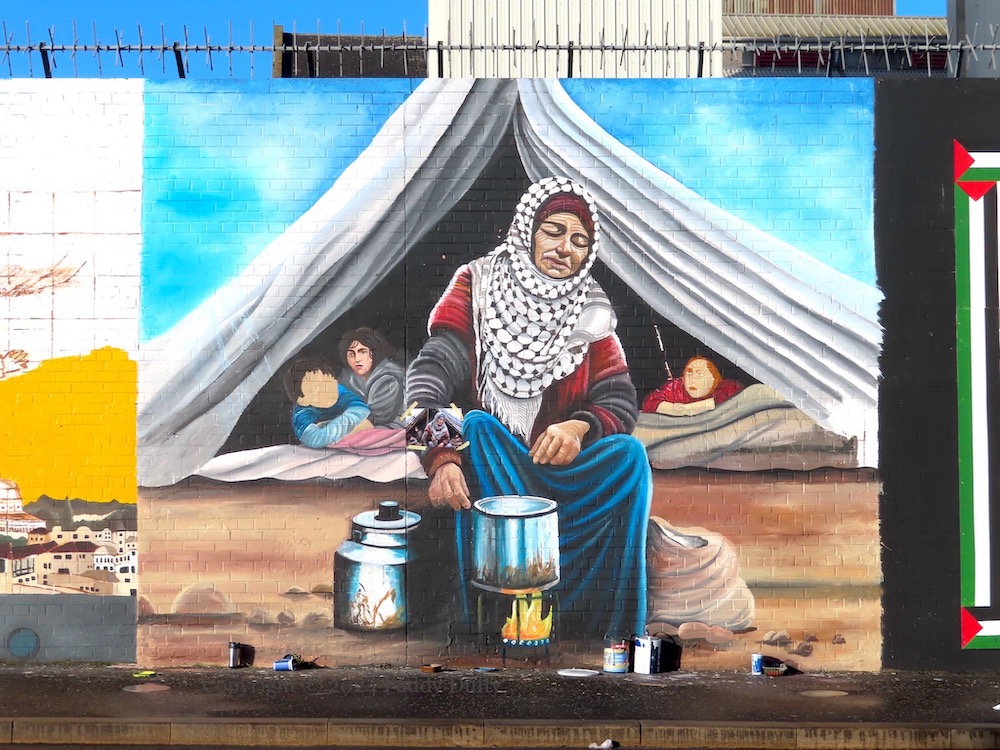
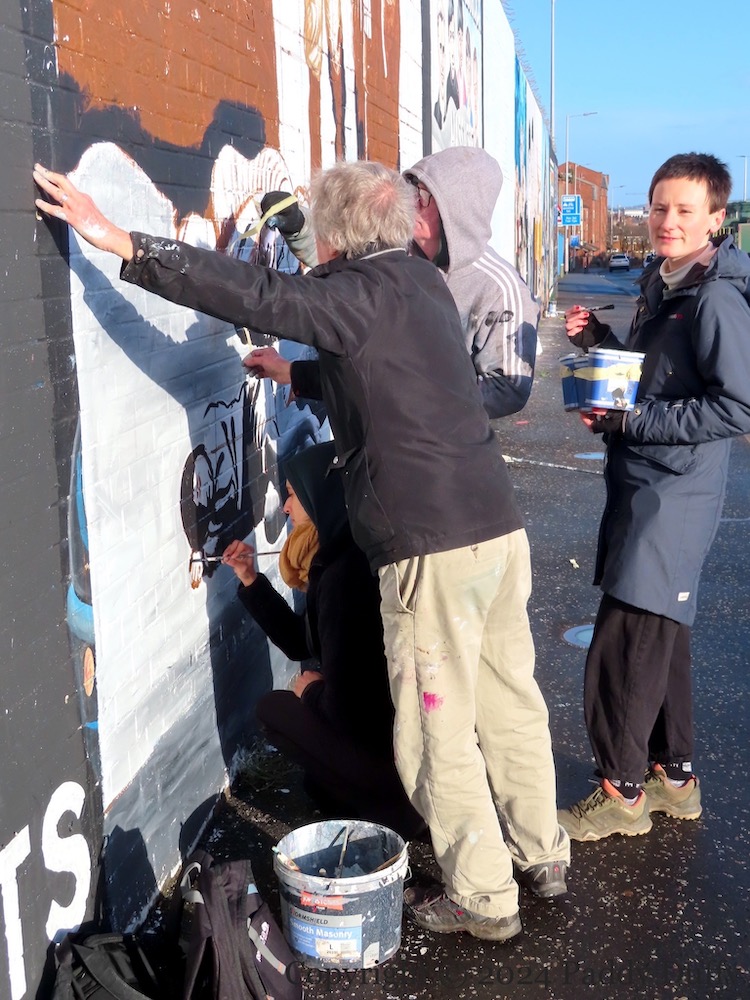
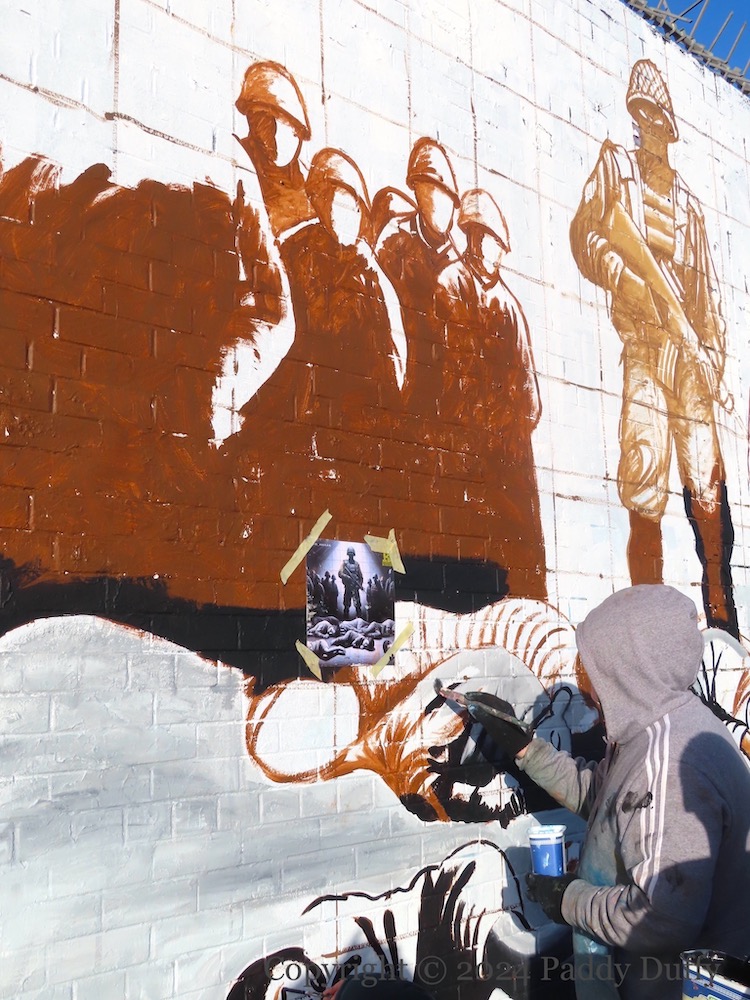
This is one of five pieces by digital artist Saïd Hassan (ig) that is being painted on the International Wall as part of the Painting For Palestine (Fb) project. It shows a family of refugees living in a tent; the female adult is cooking over an open flame while three children look on.
This is the last (right-most) of the 12 murals.
The image above is from February 18th. Most of the mural was painted quickly but then it sat for many days without two of the faces and an unfinished patch on the right. This image (below) was taken on January 24th:
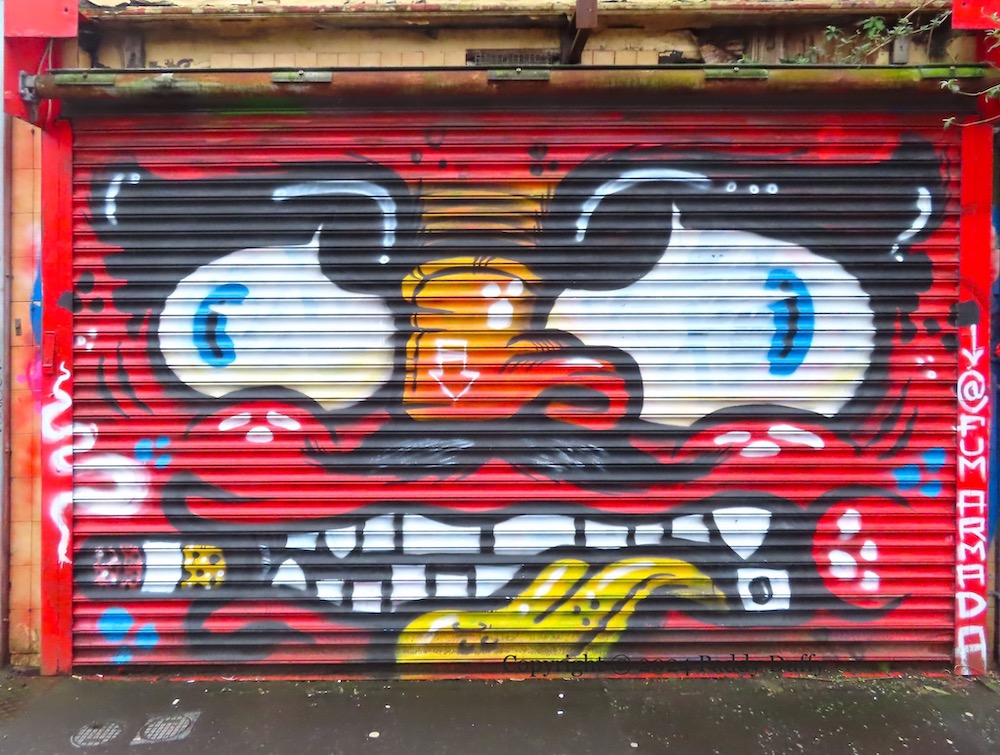
This face is by Birmingham graffiti artist Fum.Armada (ig), in Union Street, Belfast. There is another from North Street in the Extramural Activity collection.
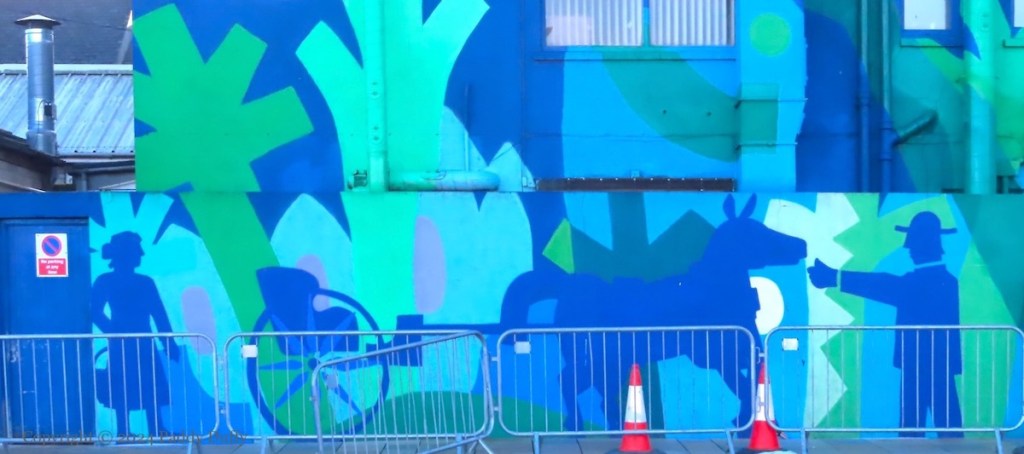
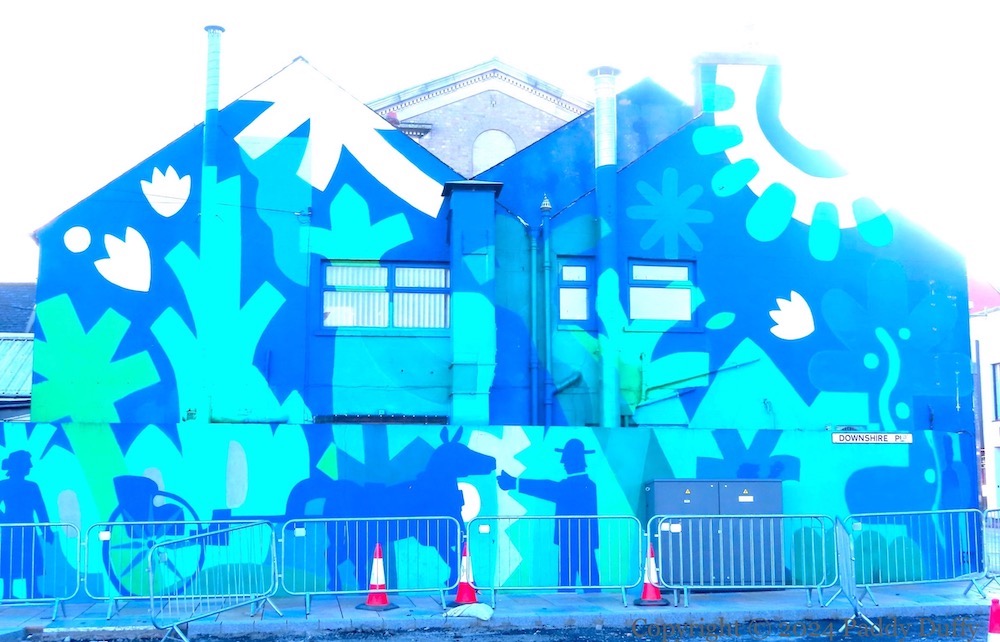
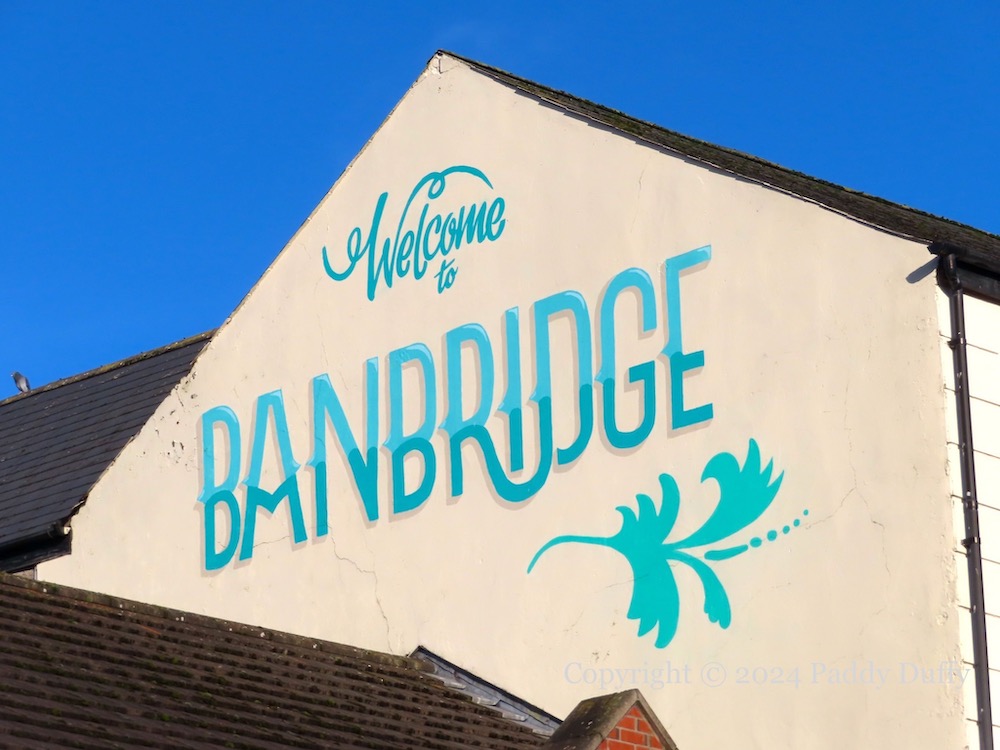
Here are two final pieces from the street-art make-over of Banbridge in 2022. Below is Holly Pereira (web)’s “Welcome To Banbridge” in Newry Street; above and immediately below is Decoy (web)’s piece in Downshire Place depicting how the town grew up around a coach stop at the eponymous “Bann bridge” on the route from Belfast to Dublin (ABC borough council). According to Connolly (Google Books) and History Ireland, a short-lived coach service c. 1740 from Dublin to Belfast stopped in Drogheda and Newry; permanent service did not begin until 1788. According to the Downshire Arms (web), a Georgian coaching inn built in 1816, Banbridge was the second stop along the route from Belfast.
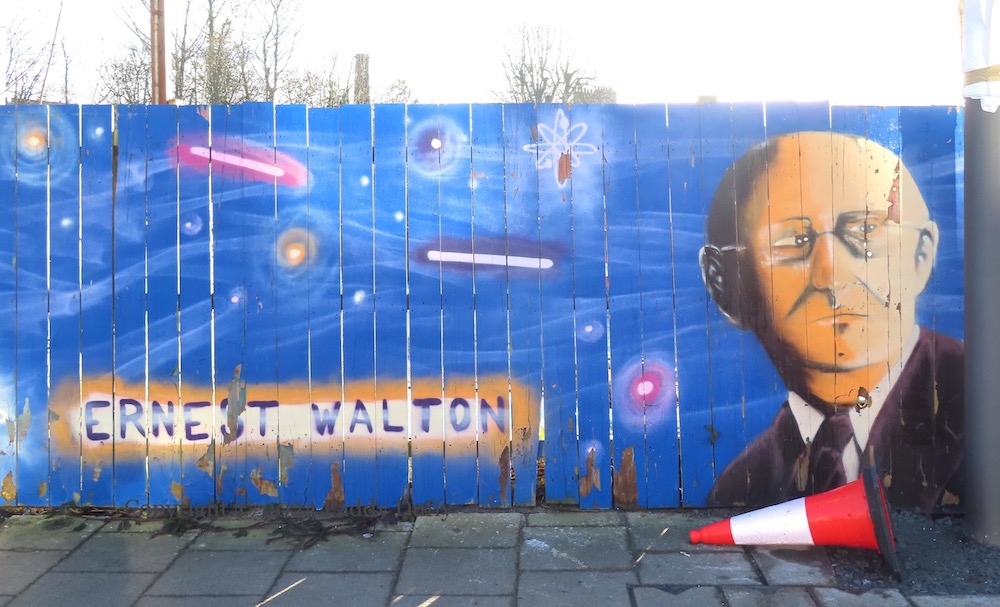
The other paintings in the 2022 ‘Arrivals’ project, organised by Daisy Chain and the Council, are by Friz (The Jingler), FGB (Ernest Walton), and Rob Hilken (Damask For Dignity).
For a list of other borough council projects, see Visual History 11 on the rise of street art.
This is a Rob Hilken (web) piece in Linenhall Street, Banbridge, and in connection with the location and the linen tradition of Banbridge, the piece features a chrysanthemum pattern (visible at Lisburn Museum) from one of the 1,600 glass plates found at the Ewart-Liddell weaving factory in Donacloney when it was dismantled in 2007 (Lisburn Museum), as well as holes from a Jacquard loom punch-card (Science & Industry Museum). (ig)
Commissioned by Armagh City, Banbridge & Craigavon Borough Council (web), with support from Daisy Chain (web).
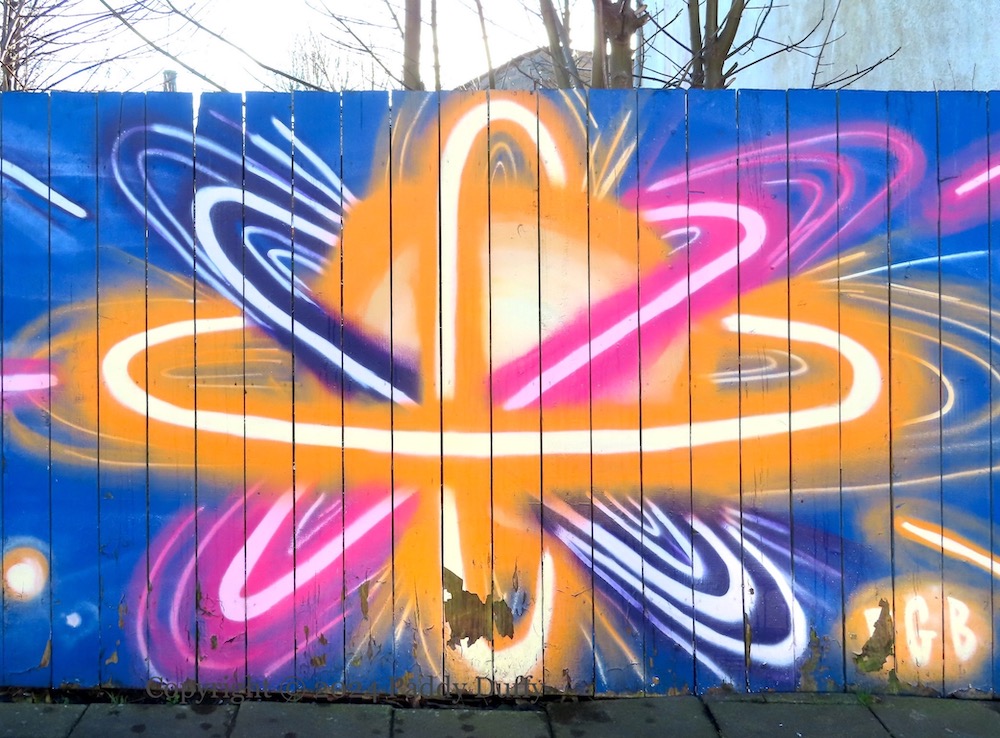
Ernest Walton was born in 1903 in Co. Waterford, graduated from TCD, and then worked in the Cavendish lab in Cambridge, England, and then at TCD. He and John Cockroft were together awarded the 1951 Nobel Prize in physics for their 1932 work at Cavendish that split apart the nucleus (specifically, of a lithium atom), verifying Rutherford’s conjectures about the structure of atoms (WP). He died in Belfast in 1995.
His connection to Banbridge, which is where this FGB (ig) mural can be found on Bridge St, is that he attended kindergarten in the town (DIB).







 Paddy Duffy Collection