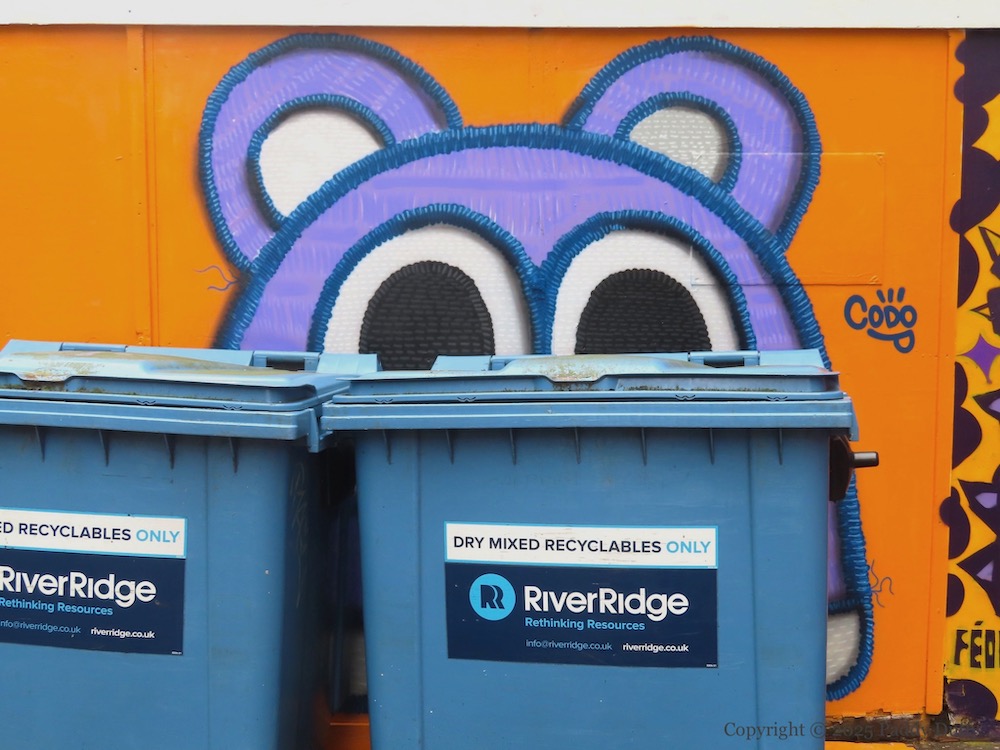
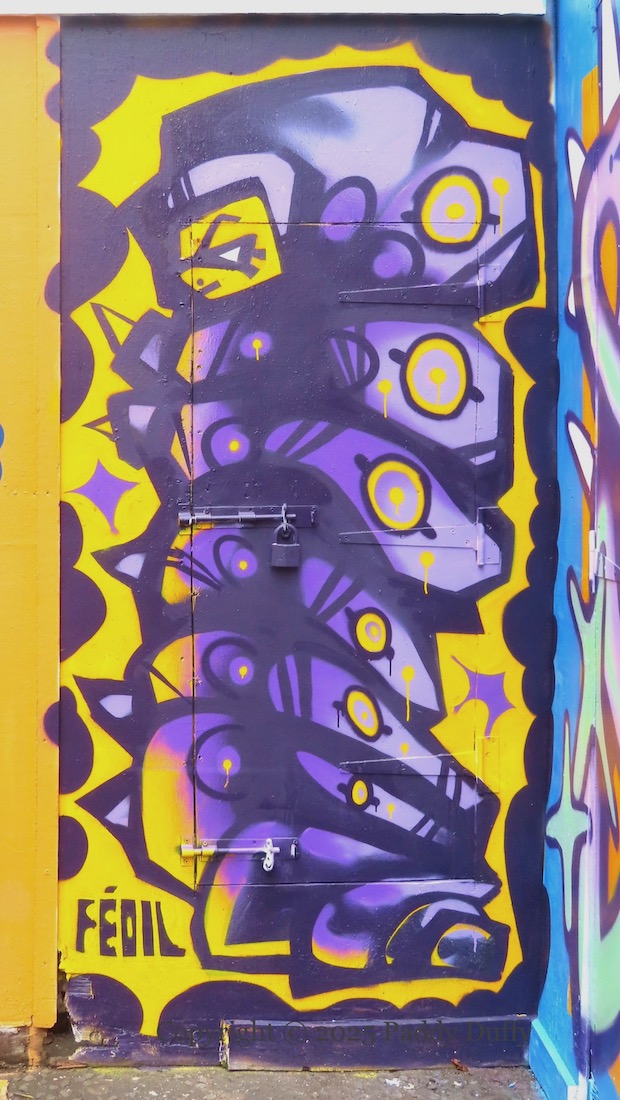
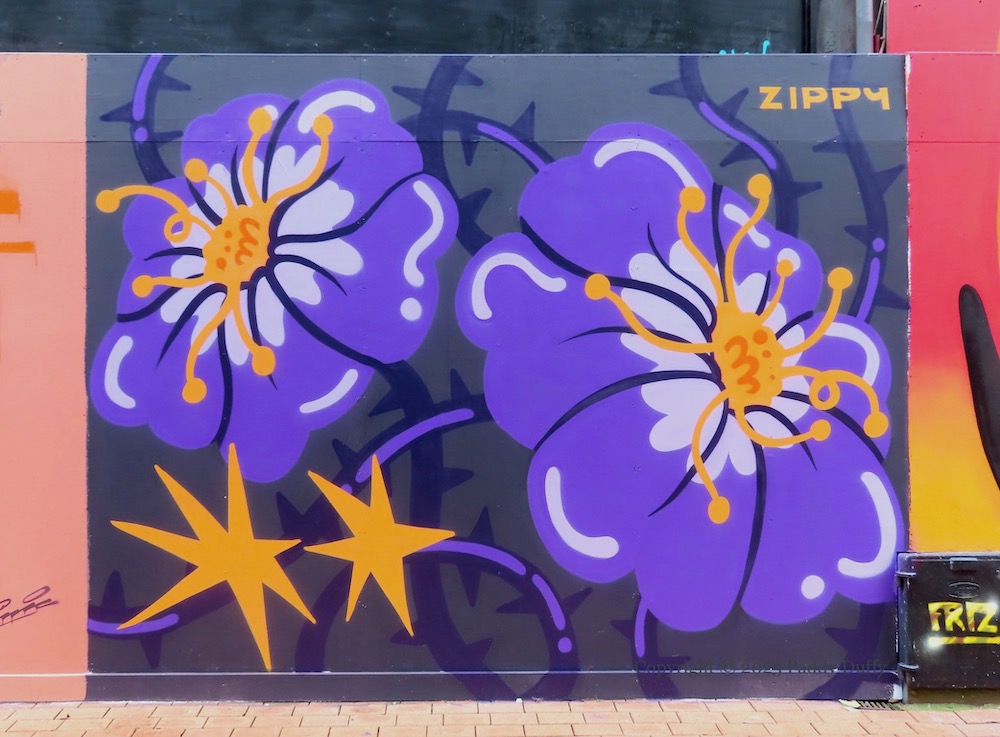
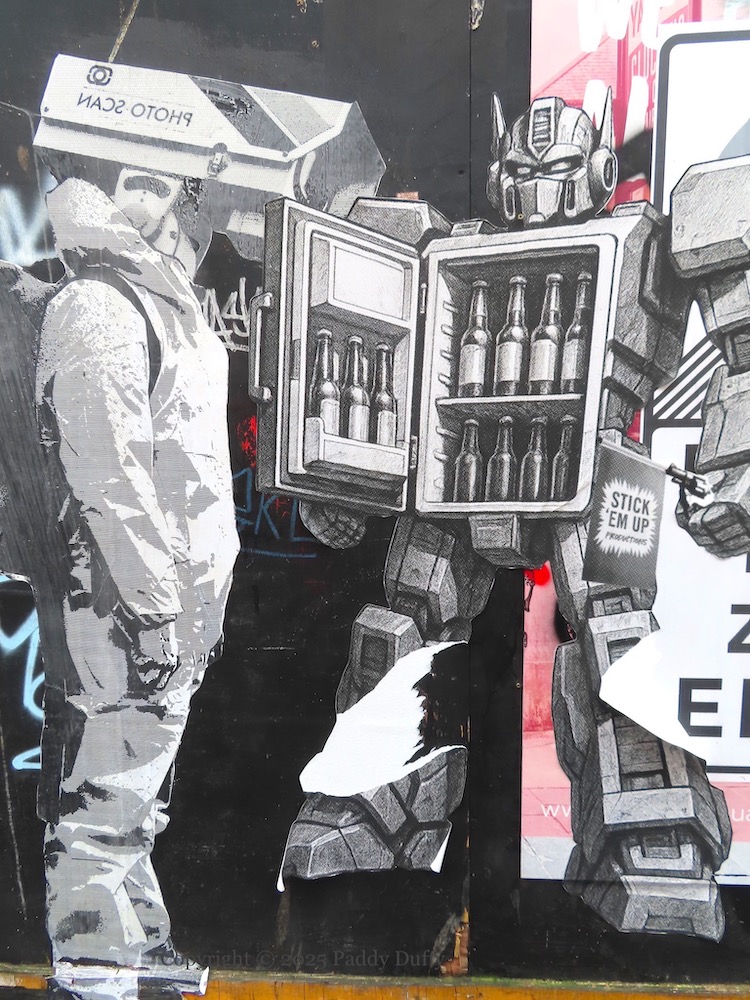
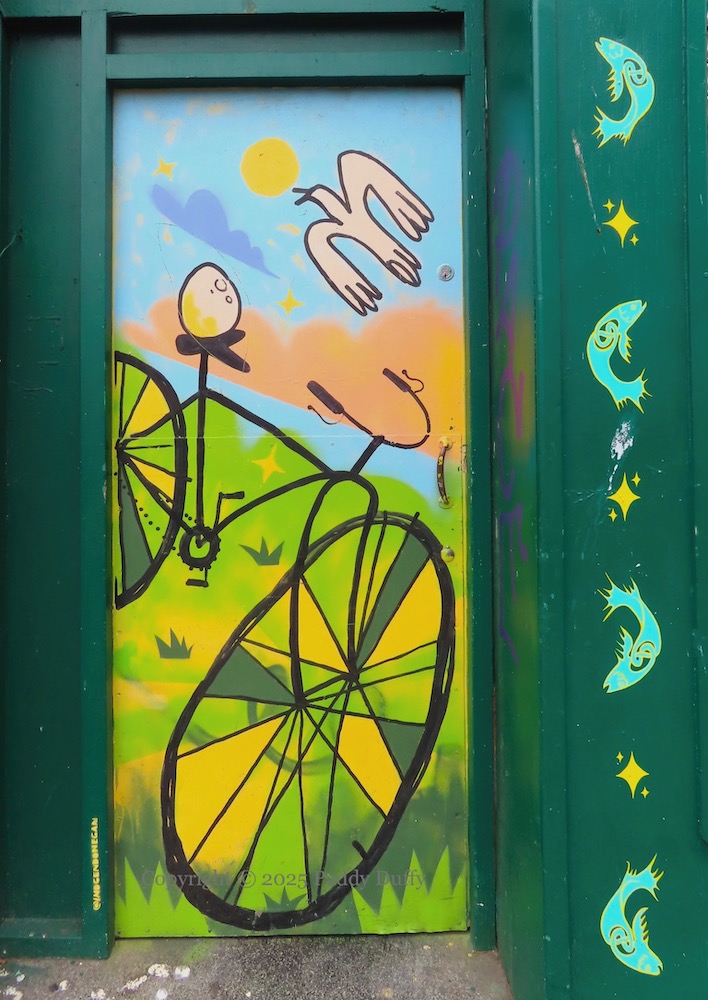
From top to bottom (left to right on the street), the work is be Codo (ig), Féoıl (ig), Imogen Donegan (ig) / Conor McClure (ig), Wee Nuls (web) (painting DJTimeOfTheMonth (ig)), emic (web), and Zippy (web).
Here is a selection of paste-ups on the hoardings around the War Memorial building in Waring Street, inspired by Leo Boyd’s attempt to create an unofficial paste-up wall. (See Paste No Paste-Ups.)
The piece above relies on two homophones, “nai” (“now” in a strong Belfast accent) and “nigh”, and, “sigh” and “scythe”.
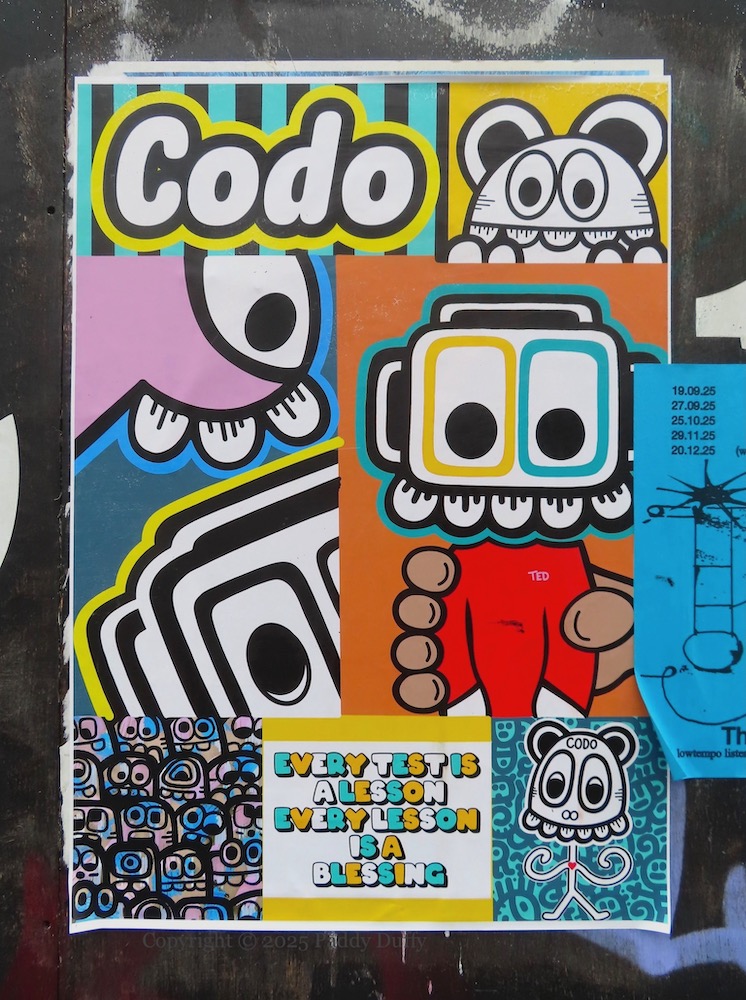
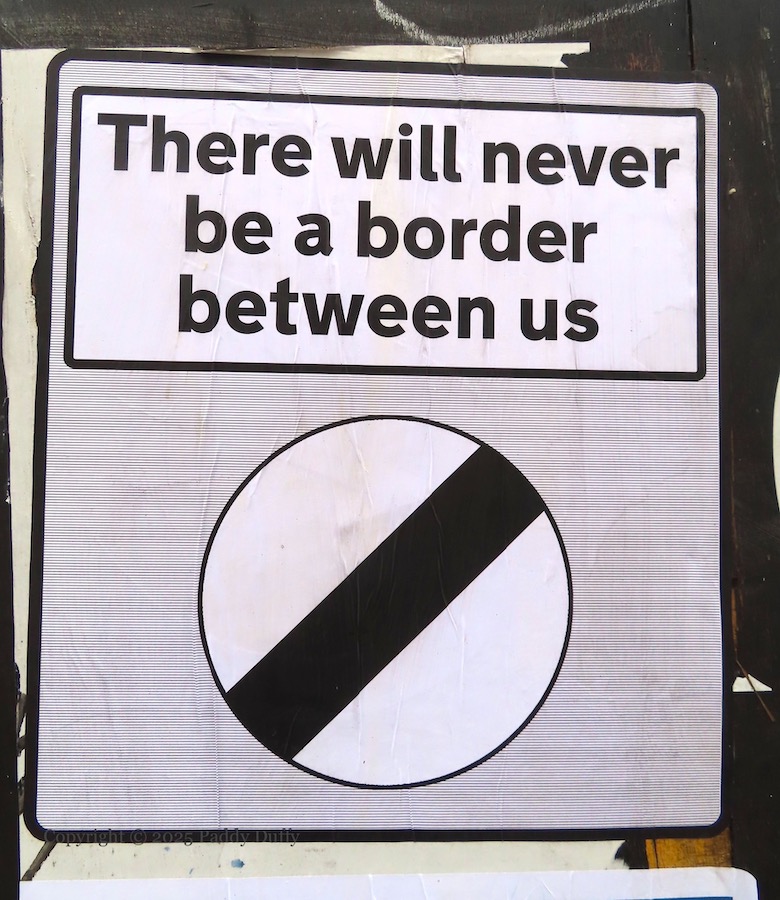
In addition to pieces by Boyd (web), there are works by Lazer Eyes (web) (“In the gears, the machine”), Codo (ig) (“Every test is a lesson; every lesson is a blessing”), Szu Szu Sign Co (ig) (“There will never be a border between us”), Dragos (ig) (Imagine Balkans creatures), and RickyDrewAPiccy (Fb) “The End Is Nai” and “Cranes – they’re everywhere. She’s got cranes on her walls … now she’s got cranes in her soul.”
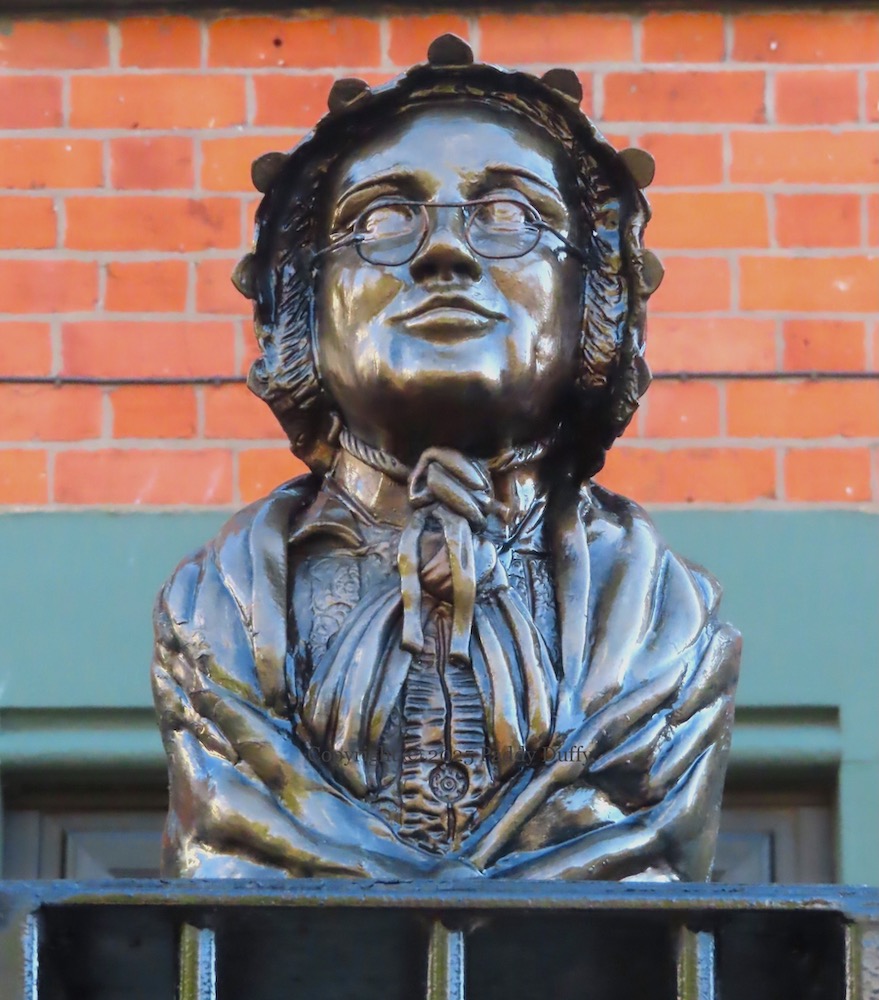
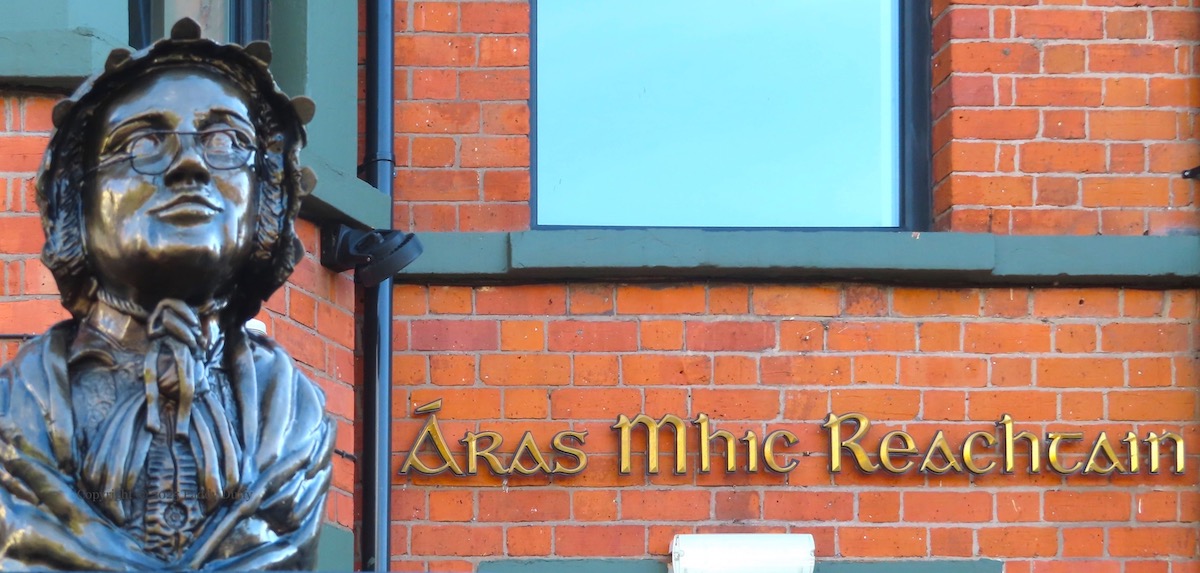
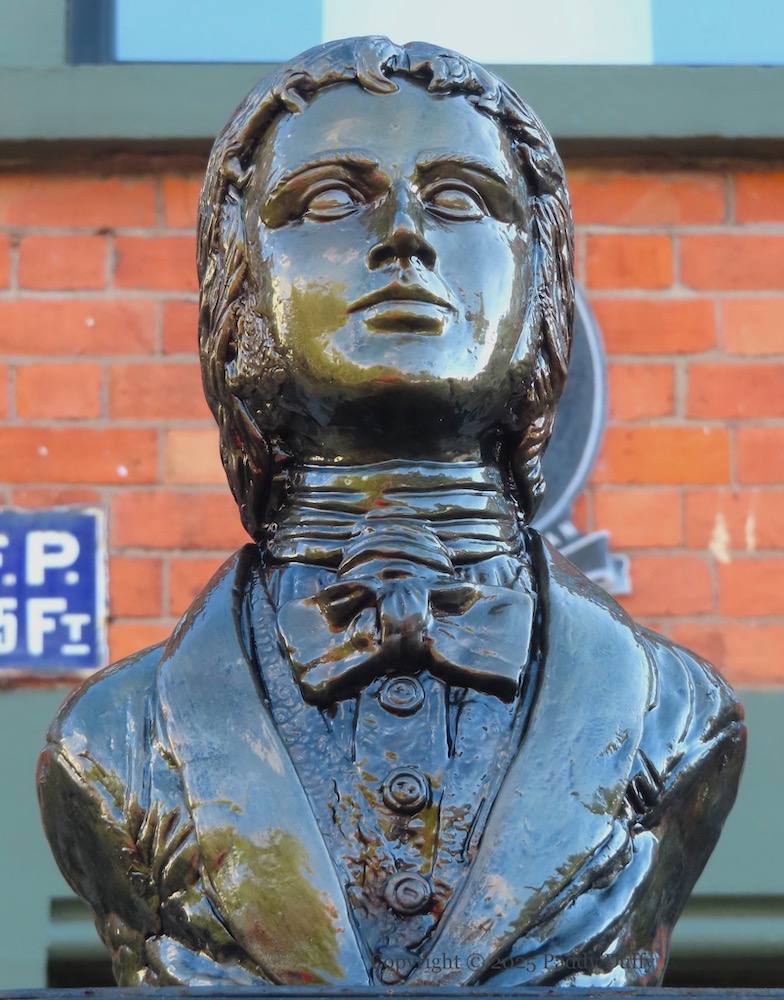
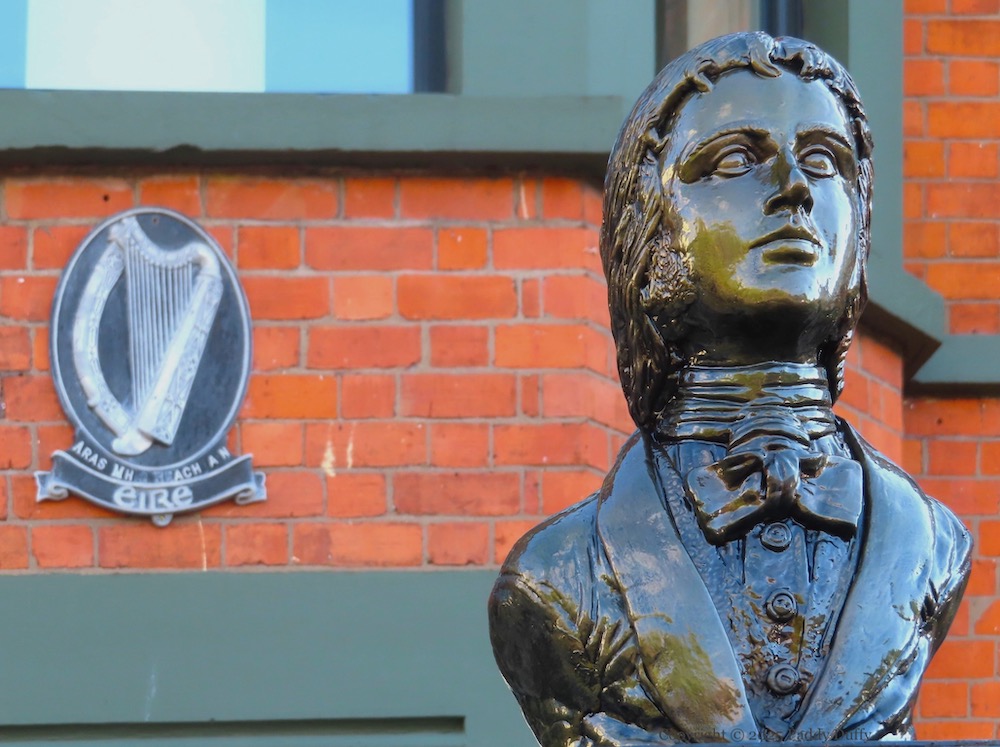
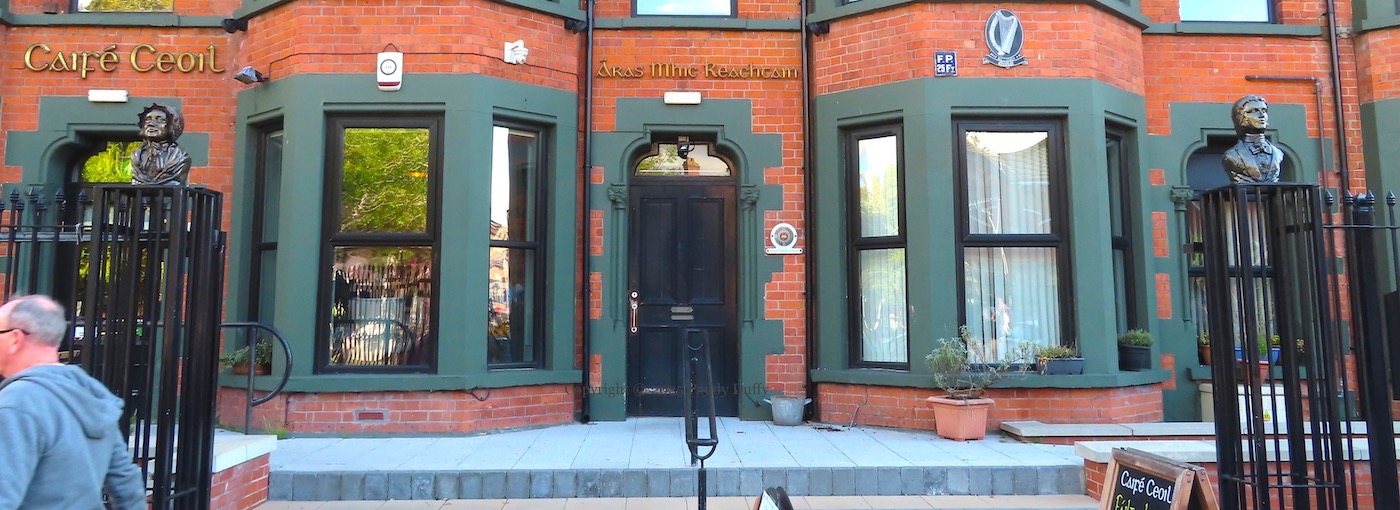
Bronze busts of Máıre Áıne Mhıc Reachtaın/Mary Ann McCracken and Anraí Seoıgh Mhıc Reachtaın/Henry Joy McCracken have been unveiled outside Áras Mhıc Reachtaın, the Irish-language centre on the Antrim Road and home of Cumann Cultúrtha Mhıc Reachtaın (web).
The pair – brother and sister – were Presbyterians and republicans; their mother was Ann Joy, daughter of Francis Joy, linen manufacturer and founder of the Belfast Newsletter. Henry led the Antrim uprising of the United Irishmen in 1798 and was hanged for it in Corn Market at age 30. (WP)
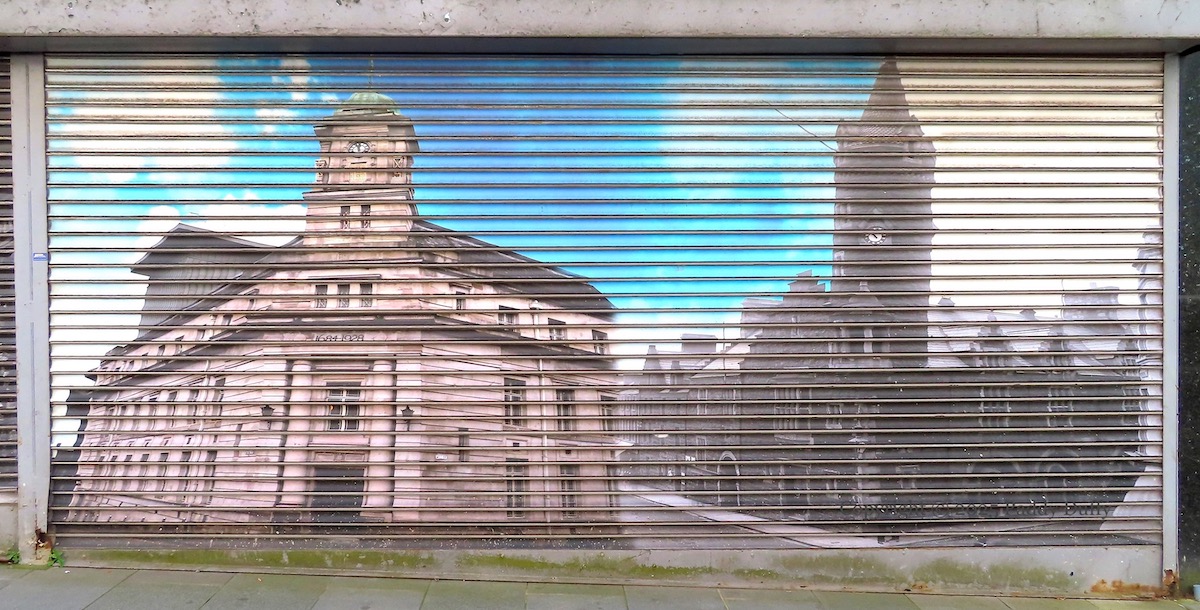
Here are two shutter paintings of bygone Ballymena: above is Ballymena Town Hall, which has been rebuilt on multiple occasions; pictured above are the hall in its present form, since 1918, and its previous incarnation.
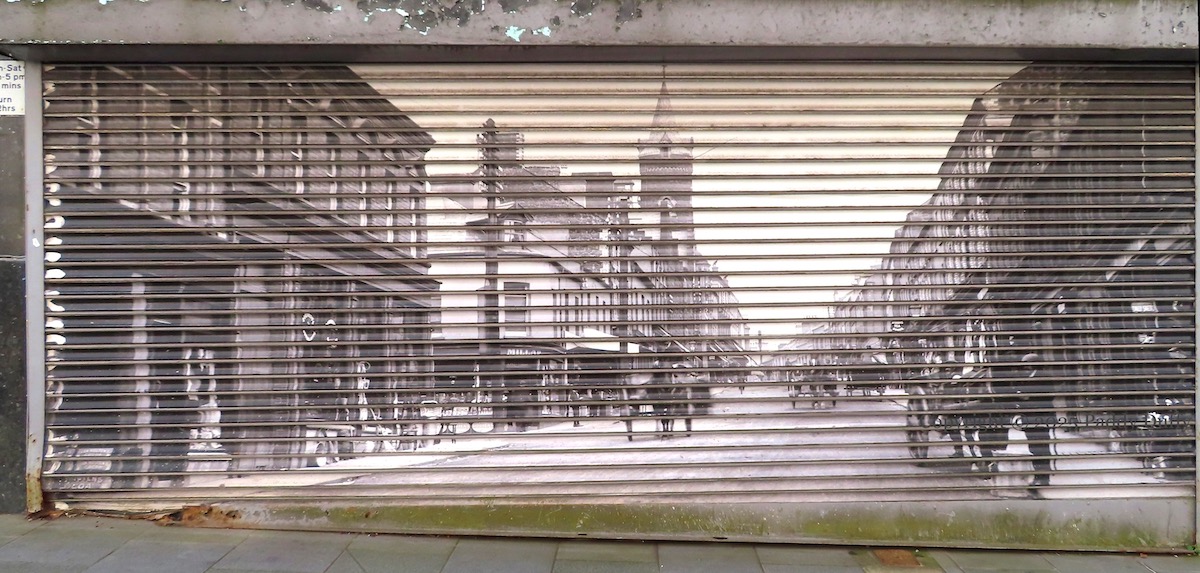
Below is the view looking up Bridge Street, with the old town hall in the middle.
Both of these are on shutters in the modern Bridge Street. tThere are also shutters painted with Mill St, Ballymena.
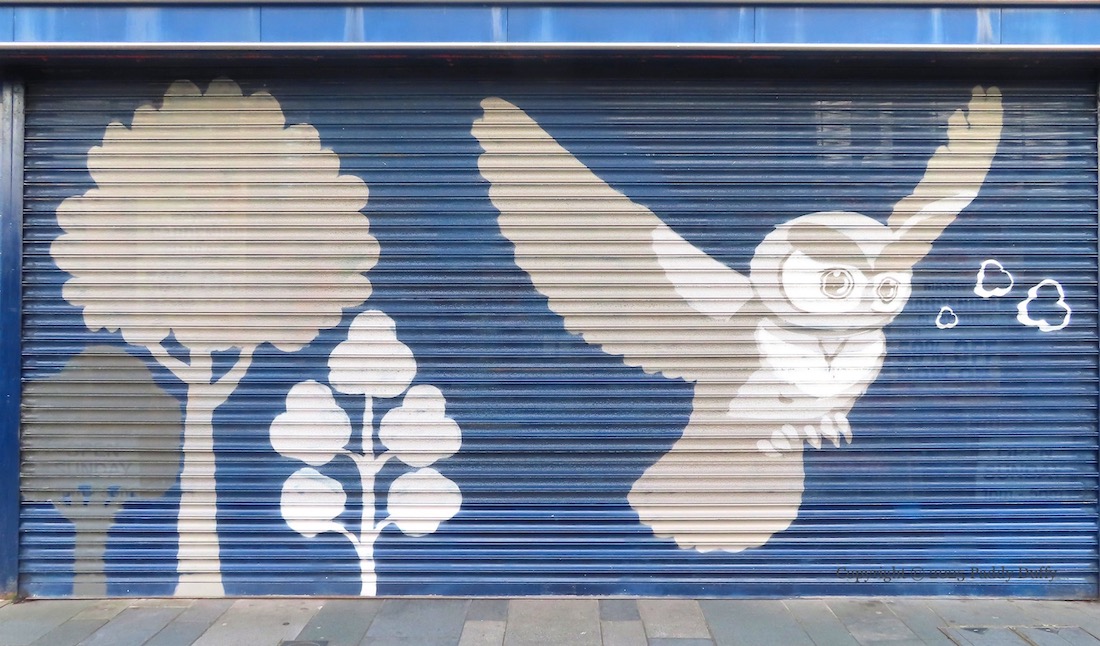
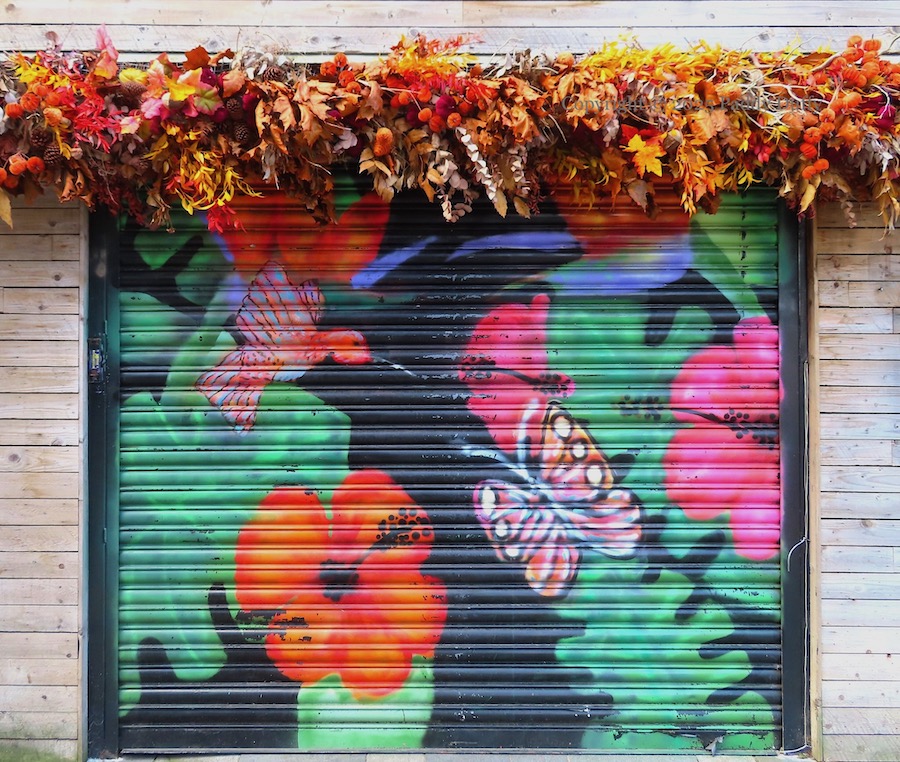
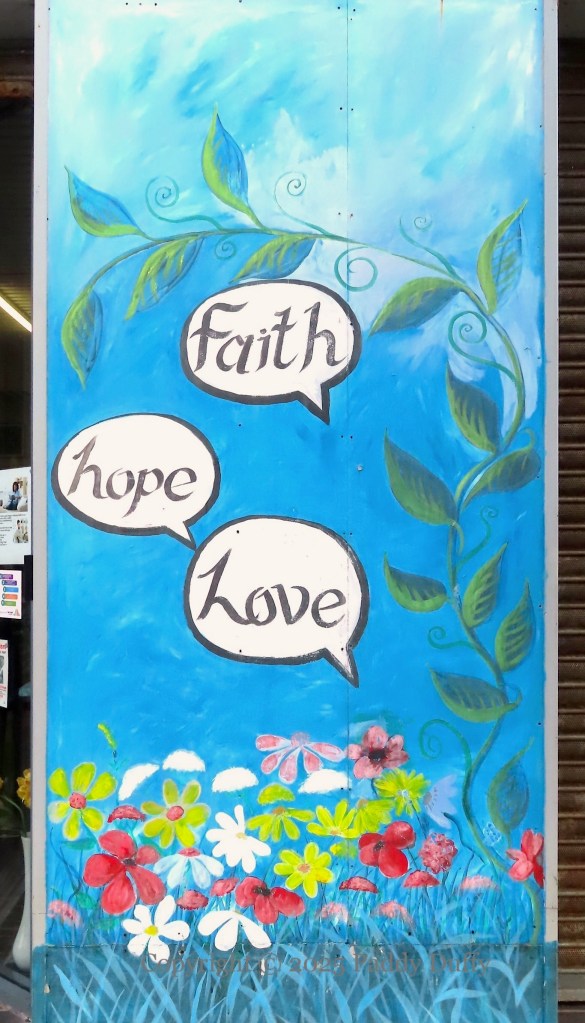
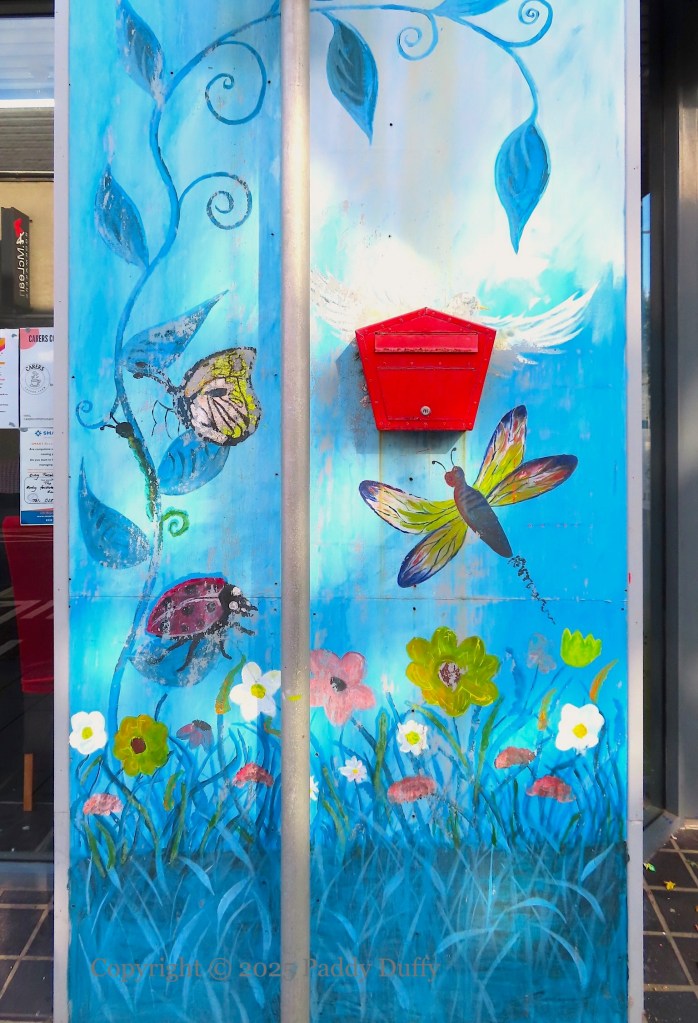
The owl is in Church Street while the butterfly and nature pair are in Broughshane Street (at Blossom & Birch and The Venue).
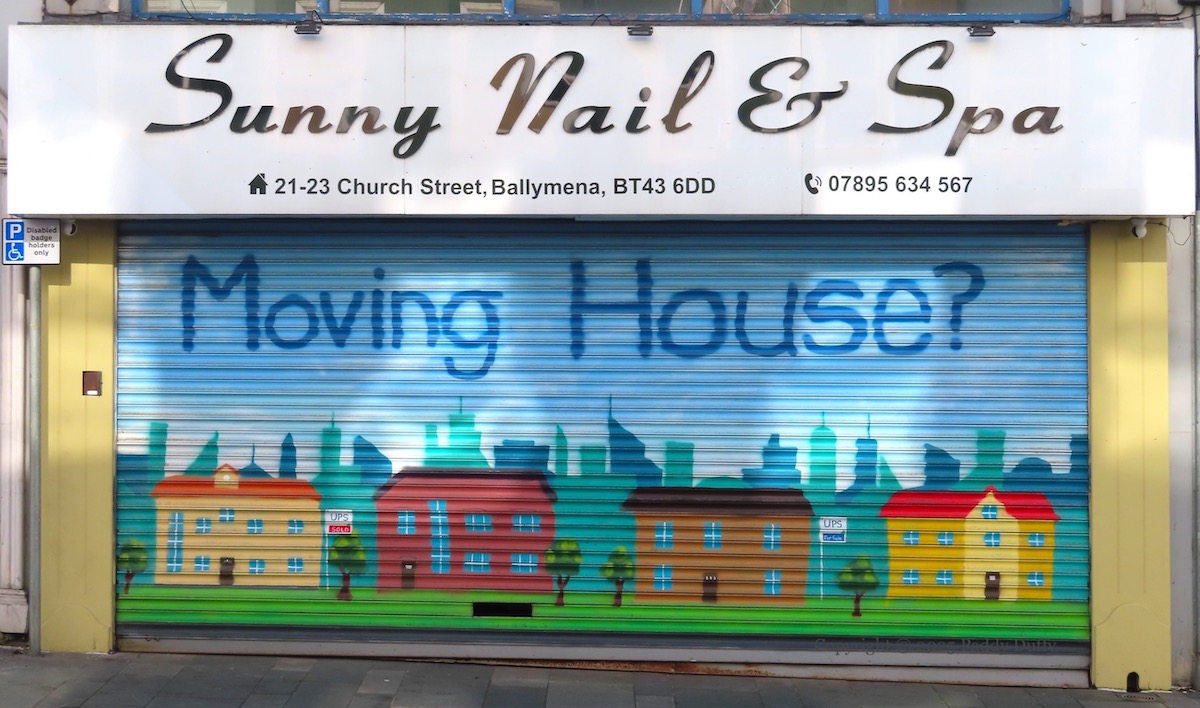
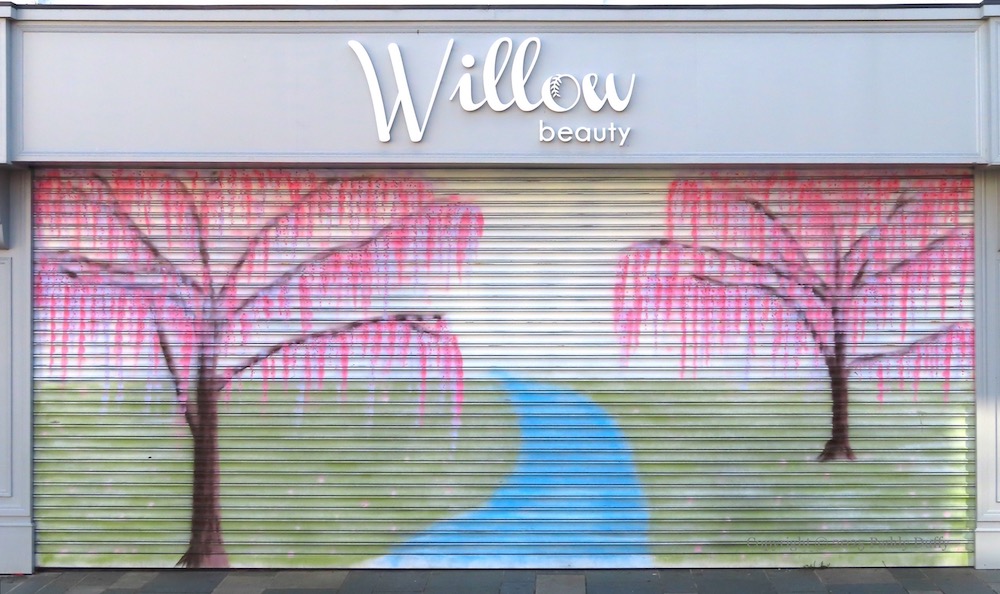
The two commercial pieces (final two images, below) are by Sam McAleese for Ballymena BID (LoveBelfast). (For others, see Midtown Makers.)
This entry updates 2023’s Harryville Says No with images of two additional boards/plaques erected by the 12th Battalion Royal Irish Rifles Memorial Association (Fb), “in honour of the men from Harryville [Ballymena] who made the ultimate sacrifice during the Battle Of The Somme from 1st July to 18th November 1916”.
“Remembering 57386 Sergeant John McNabney, formerly of No 9 Larne Street, 36th Divisional signal company, awarded the distinguished conduct medal, military medal with bar, and mentioned in despatches.” McNabney’s career and many decorations are described in Ballymena Guardian | Your Lurgan.
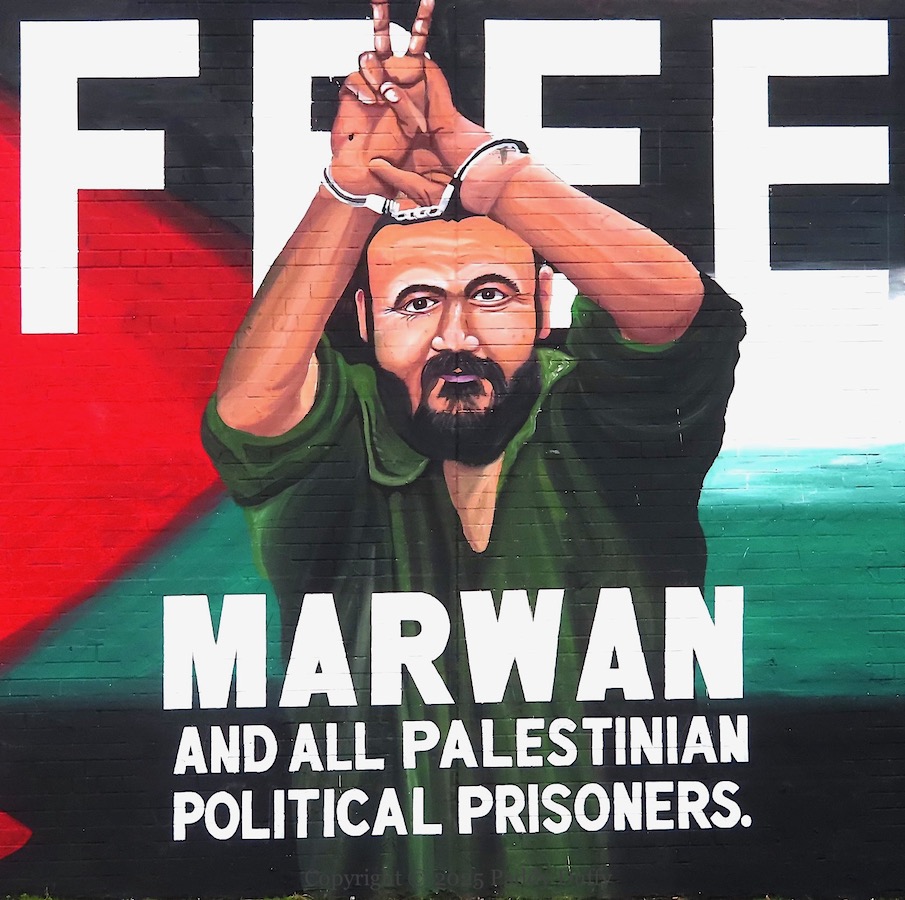
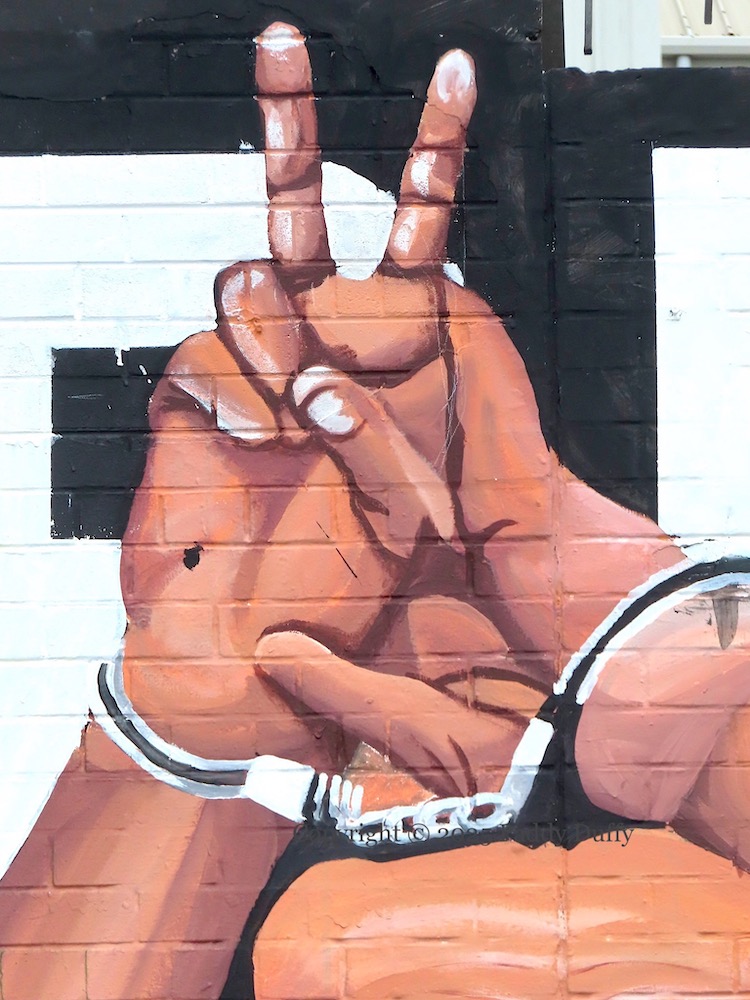
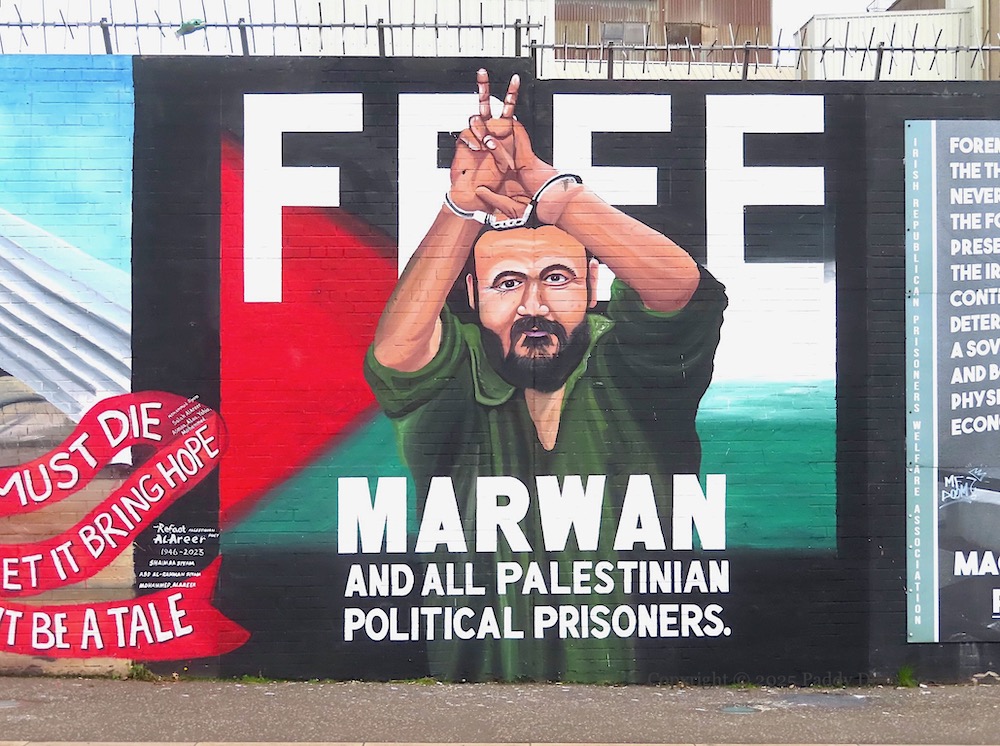
“Free Marwan and all Palestinian political prisoners”. Marwan Barghouti, a leader of the group Fatah, has been in Israeli prison since 2002. He was seen last month in a video showing Israeli’s national security minister taunting the 66-year-old Barghouti in his cell (BBC | Al Jazeera | NPR).
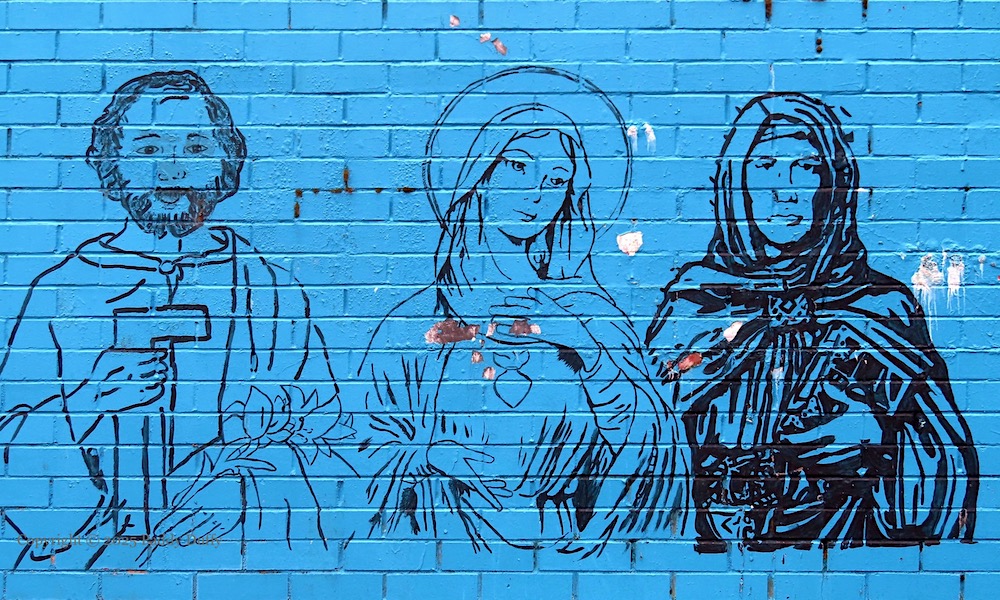
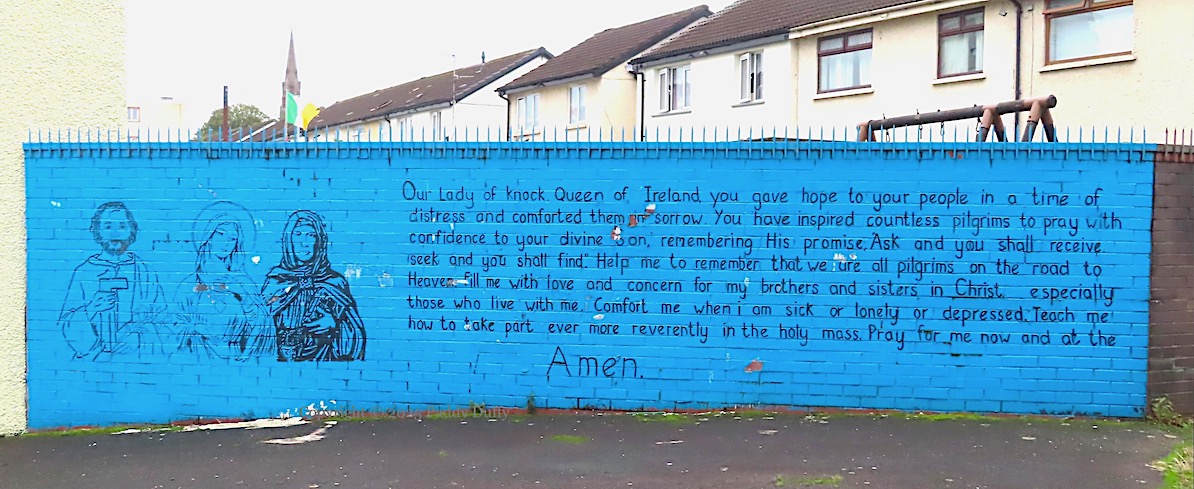
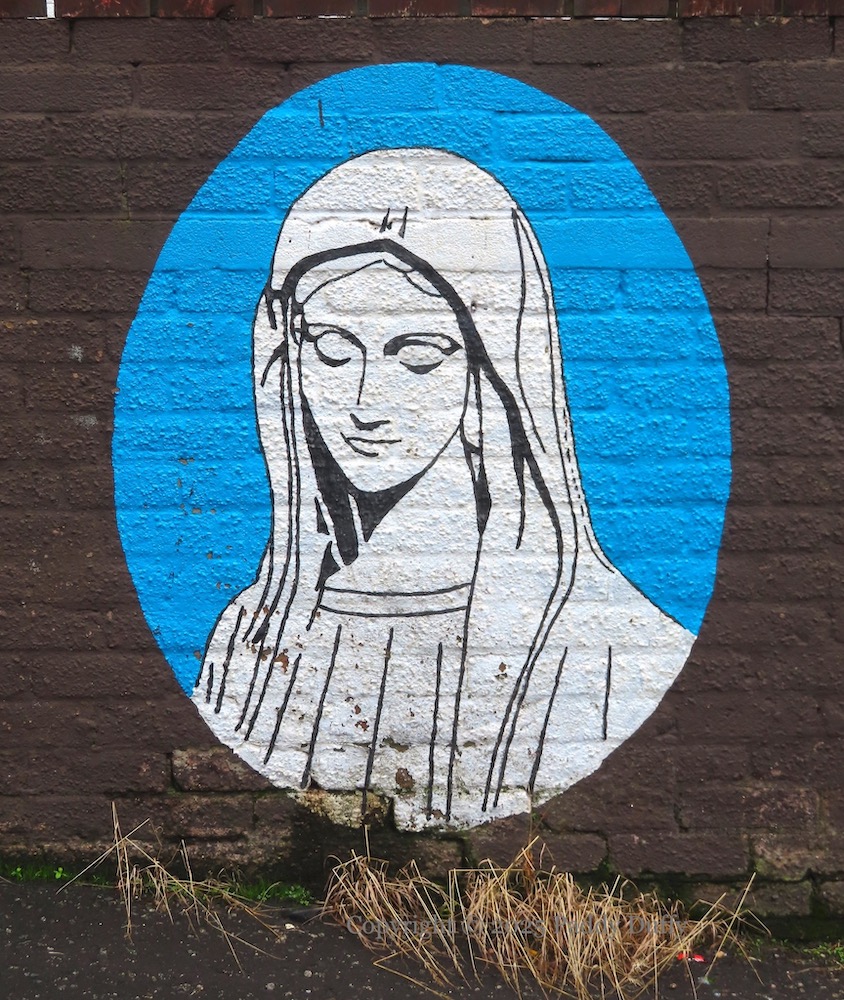
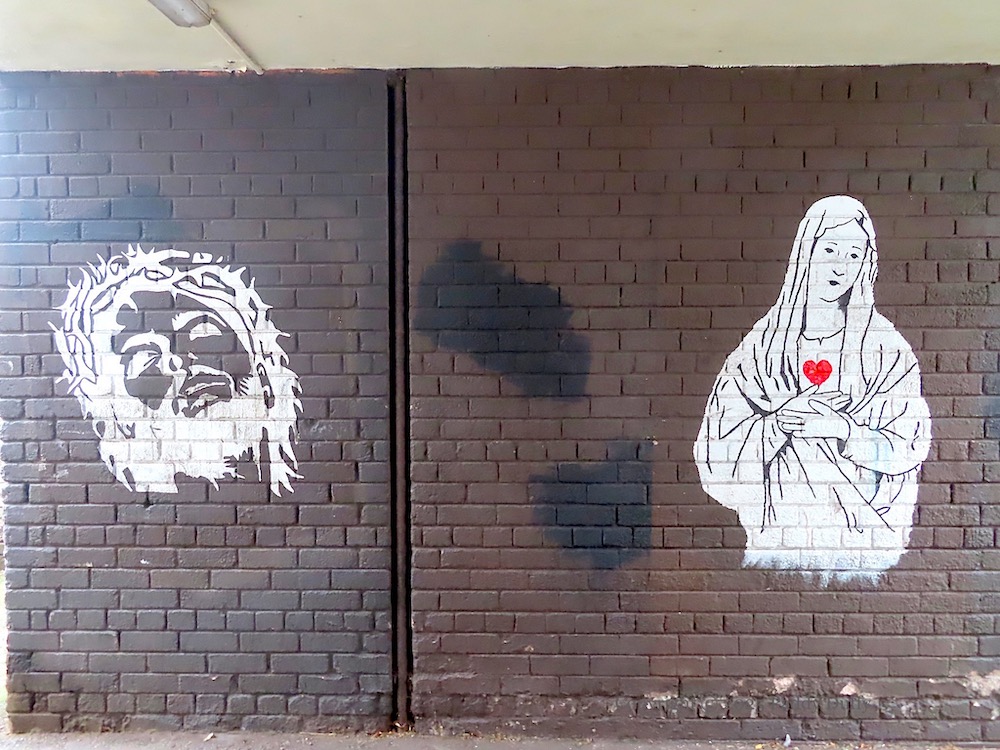
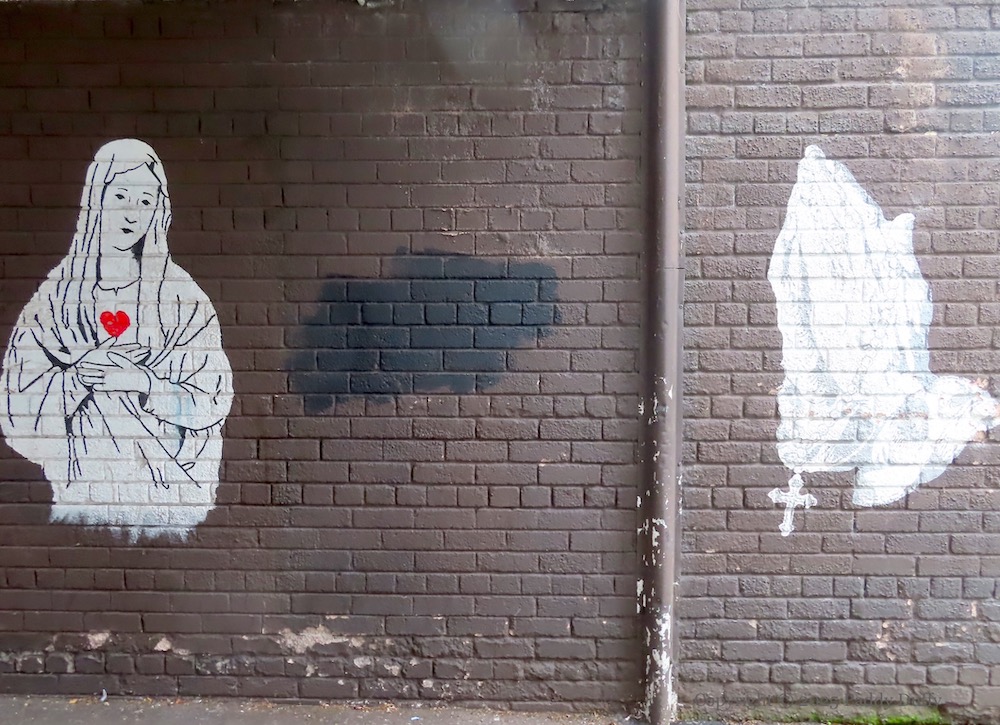
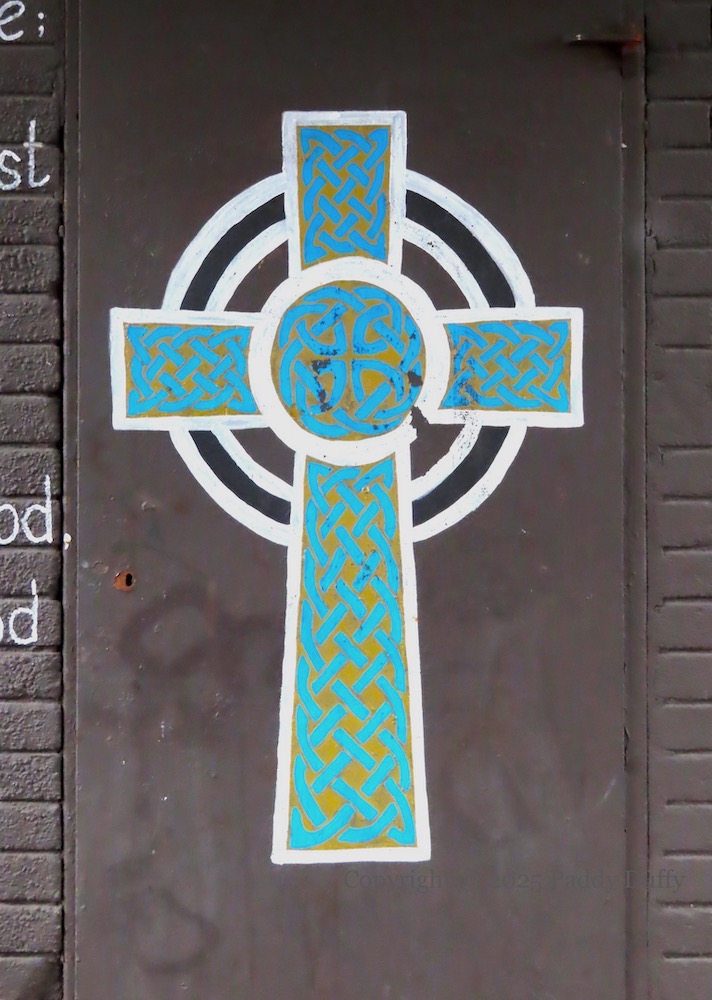
Mary, the mother of Jesus, is remembered in various guises around the New Lodge Grotto. Above, and in the underpass, she takes the form of the ‘Immaculate Heart Of Mary’ (alongside St. Joseph the carpenter and St Patrick(?)).
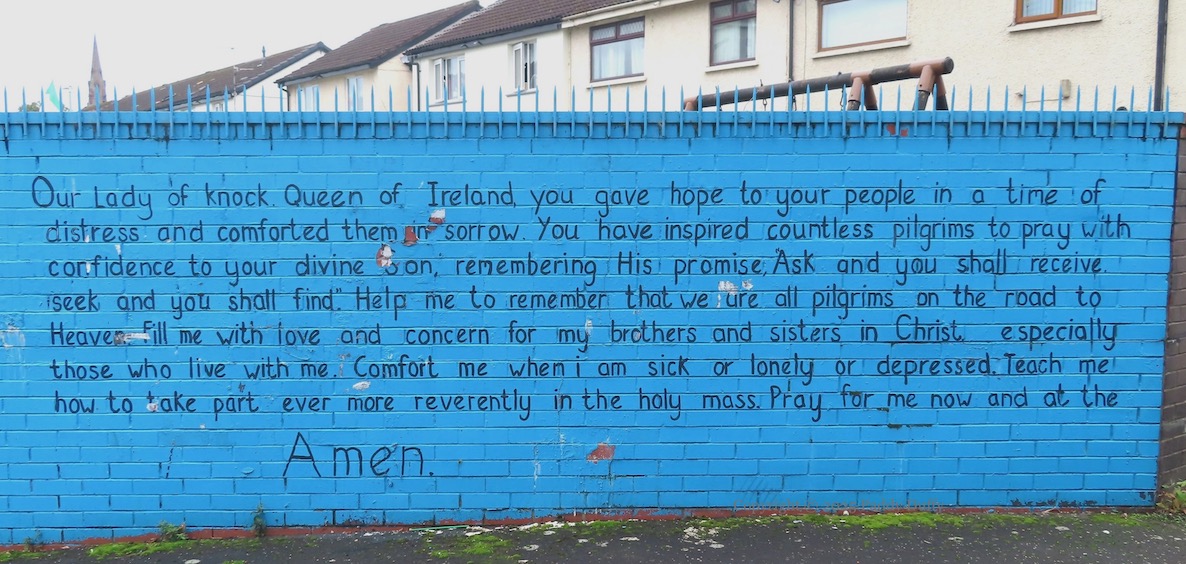
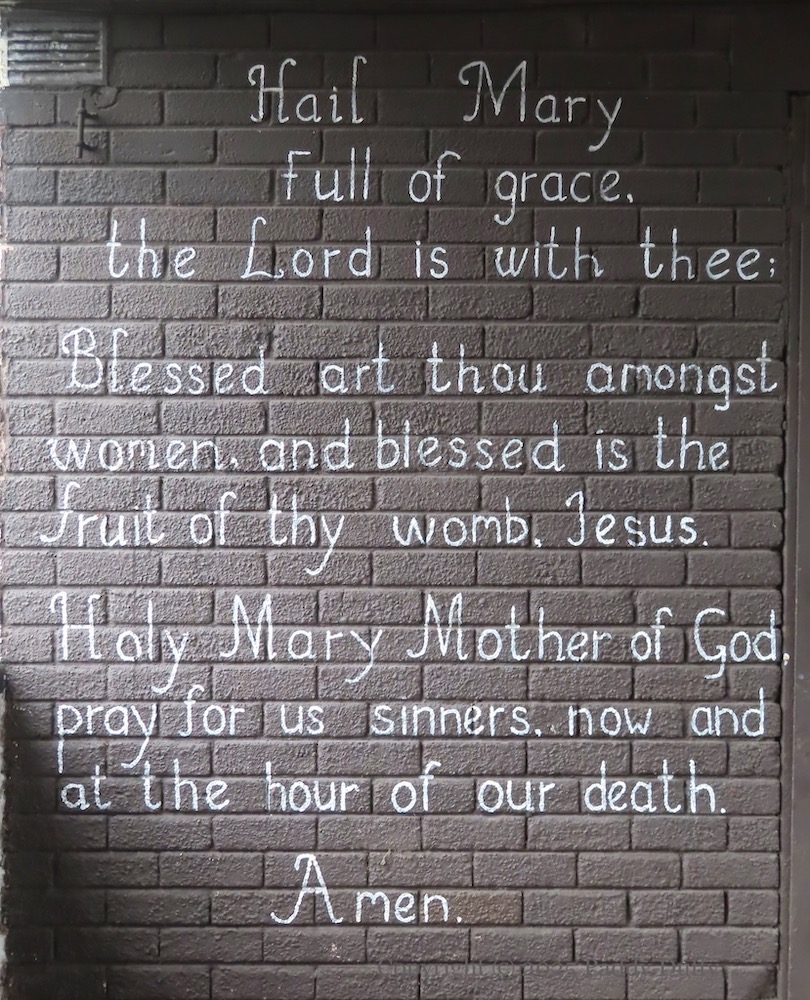
The prayer next to the trio is a Prayer To Our Lady Of Knock: (Our Lady of Knock, Queen of Ireland, you gave hope to your people in a time of distress, and comforted them in sorrow. You have inspired countless pilgrims to pray with confidence to your divine Son, remembering His promise, “Ask and you shall receive; seek and you shall find.” Help me to remember that we are all pilgrims on the road to heaven. Fill me with love and concern for my brothers and sisters in Christ, especially those who live with me. Comfort me when I am sick, lonely or depressed. Teach me how to take part ever more reverently in the Holy Mass. [Give me a greater love of Jesus in the Blessed Sacrament.] Pray for me now, and at the [hour of my death.] Amen.)
The Apparition At Knock took place on August 21st, 1879; there was a mural of the standard depiction of the event in nearby Newington (Street View).
The presentation on the “New Lodge Grotto” side-wall (alongside St Thérèse) is of Our Lady Of Medjugorje. (There was a mural with the same title not far from the grotto.)
There was also an “Our Lady Of Fátima” image on the doors, best seen in C07117.
The ‘Hail Mary’ is also given, in English (Hail, Mary, full of grace, the Lord is with thee. Blessed art thou amongst women and blessed is the fruit of thy womb, Jesus. Holy Mary, Mother of God, pray for us sinners, now and at the hour of our death. Amen.) and in Irish (Sé do bheatha, a Mhuıre, atá lán de ghrásta. Tá an Tıarna leat. Is beannaıthe thú ıdır mná, agus ıs beannaıthe toradh do bhroınne, Íosa. A Naomh-Mhuıre, a Mháthaır Dé, guıgh oraınn na peacaıgh, anoıs, agus ar uaır ár mbáıs. Amen.)
Painted by Paddy McCloskey, with help from Eddie Rossbotham and others.
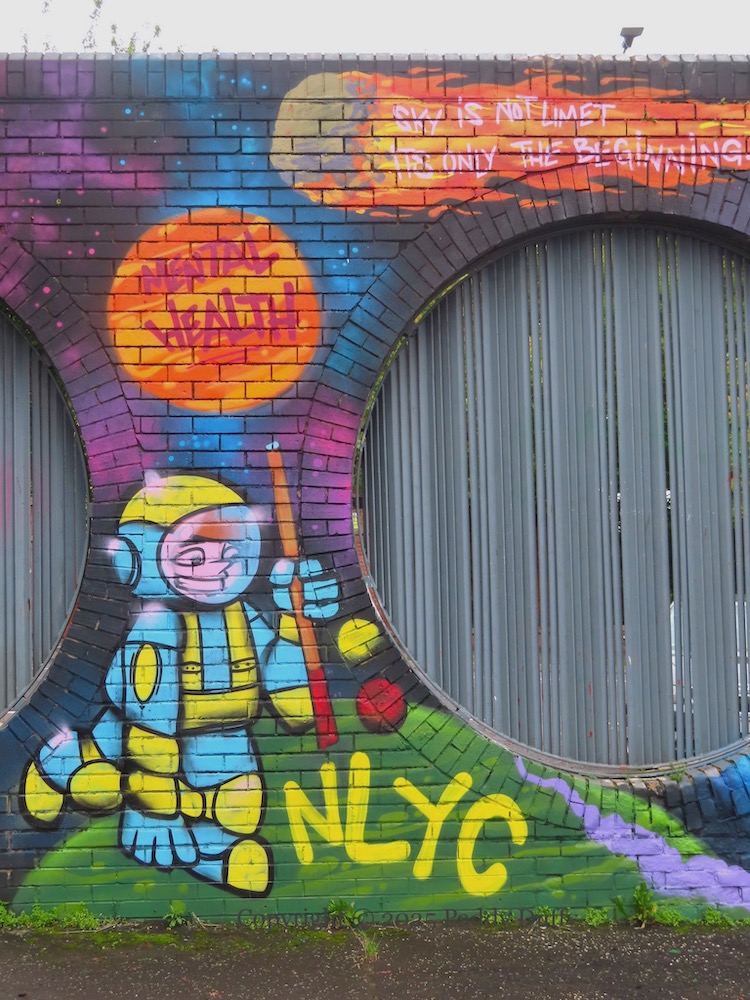
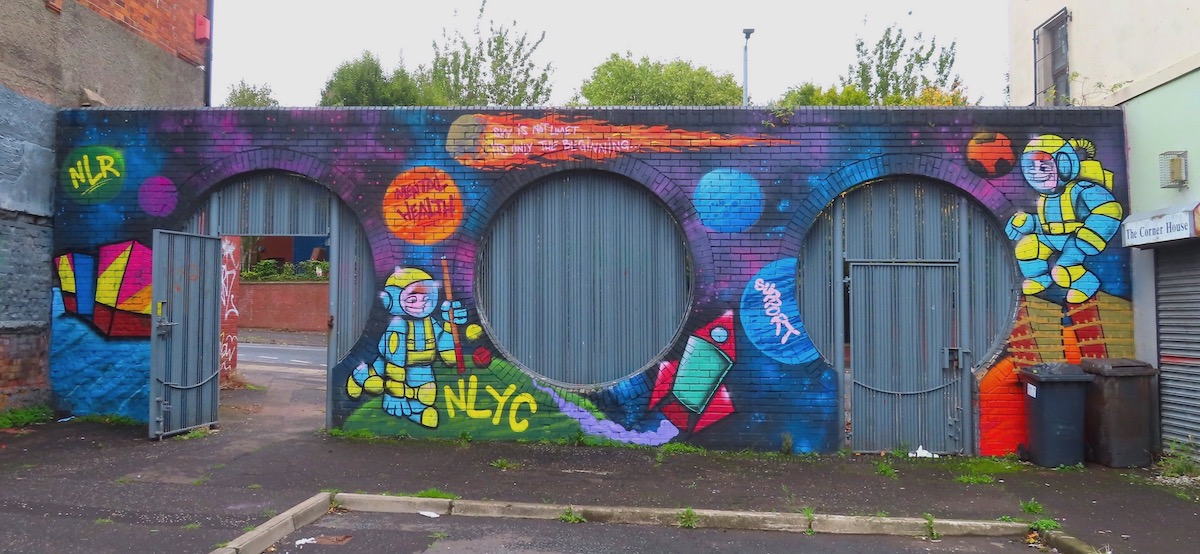
“Sky is not [the] limit – it’s only the beginning” – this is new mental health art from the New Lodge Youth Centre (Fb | previously seen), at the war-wall that separates Lepper Street from Duncairn Avenue, next to the (long-empty) Corner House, suggesting that young people can transcend their earthly bonds and actualise themselves in space.
















 Paddy Duffy Collection