HMS Caroline re-opened in March, post Covid (Royal Navy). It opened as a floating museum in 2016, in time for the centenary of the Battle Of Jutland on May 31st-June 1st, 1916. There were almost 10,000 casualties and 25 ships were sunk that day but the Caroline survived. She served as a Navy headquarters during WWII, in Belfast harbour, before being returned to reserves. (WP)
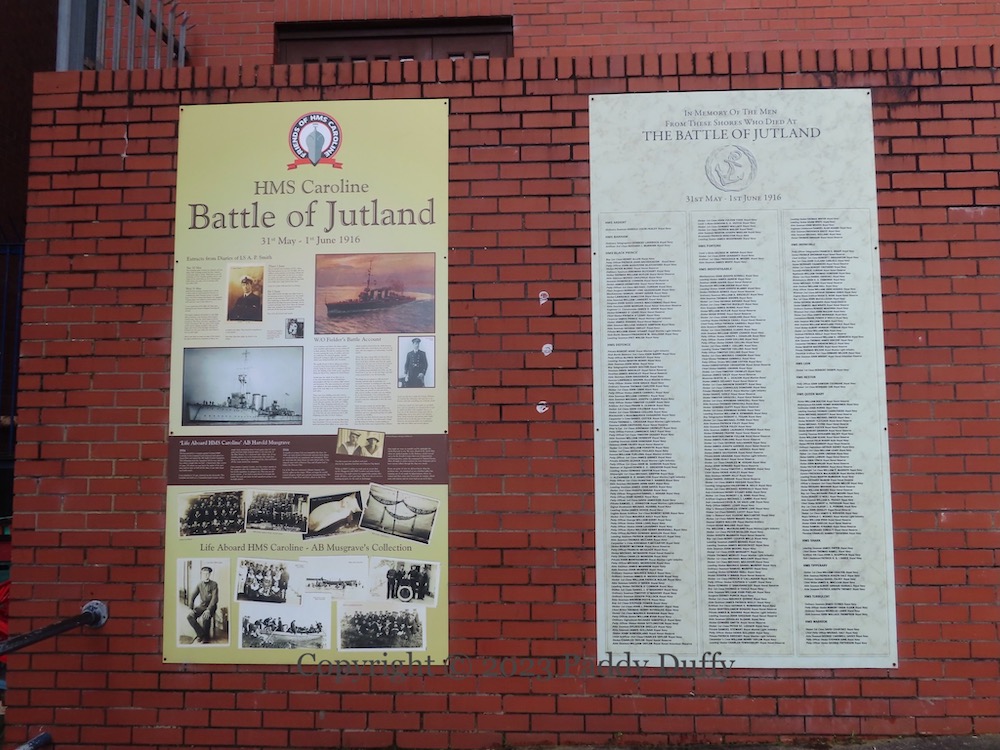
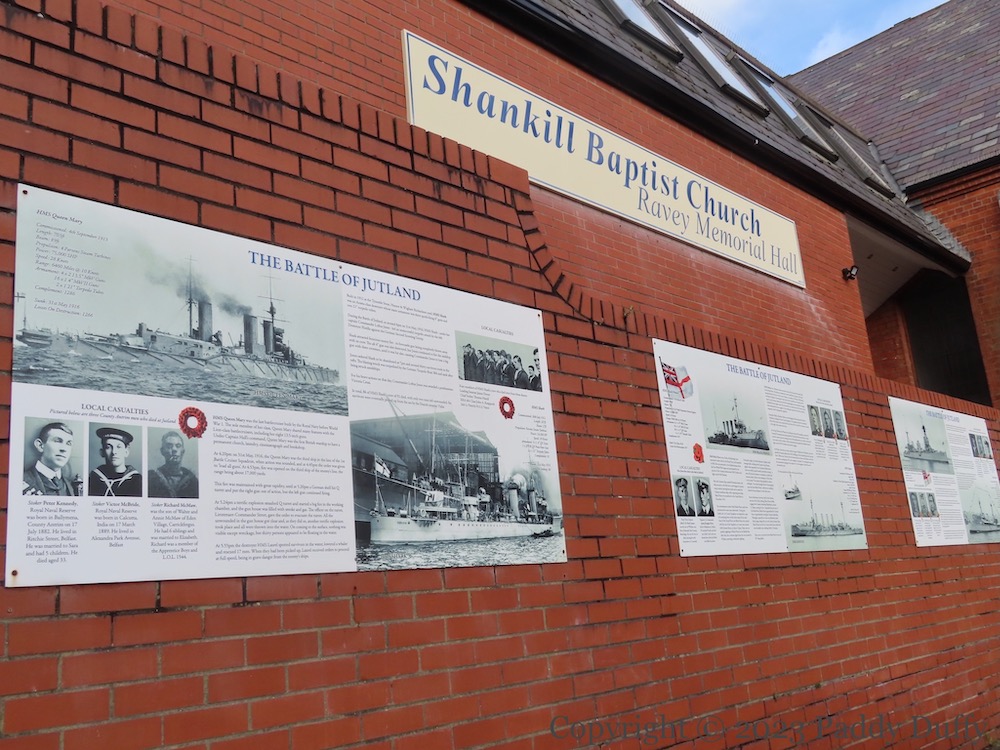
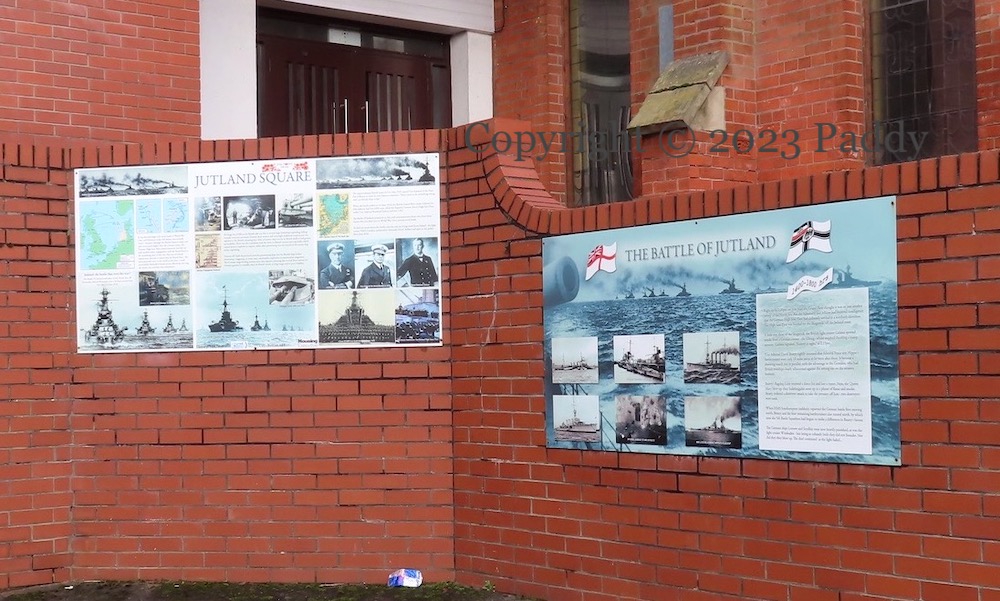
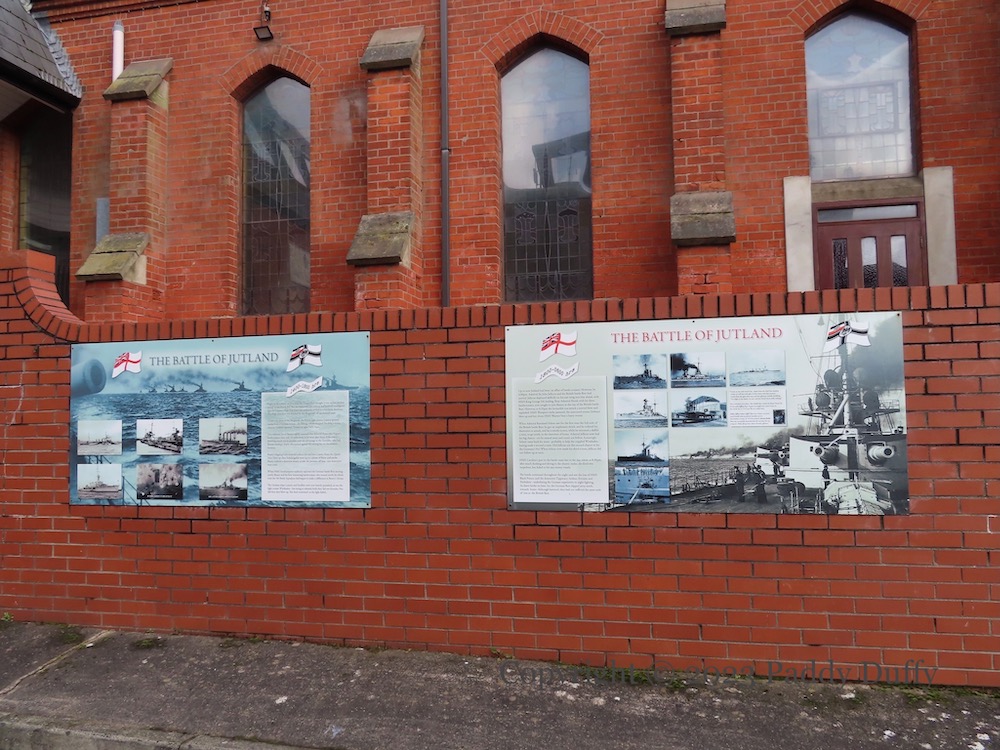
These eight panels are in Tennent Street in the Shankill. There was previously a painting of HMS Caroline at the Battle Of Jutland off the Shore Road in north Belfast – see HMS Caroline.
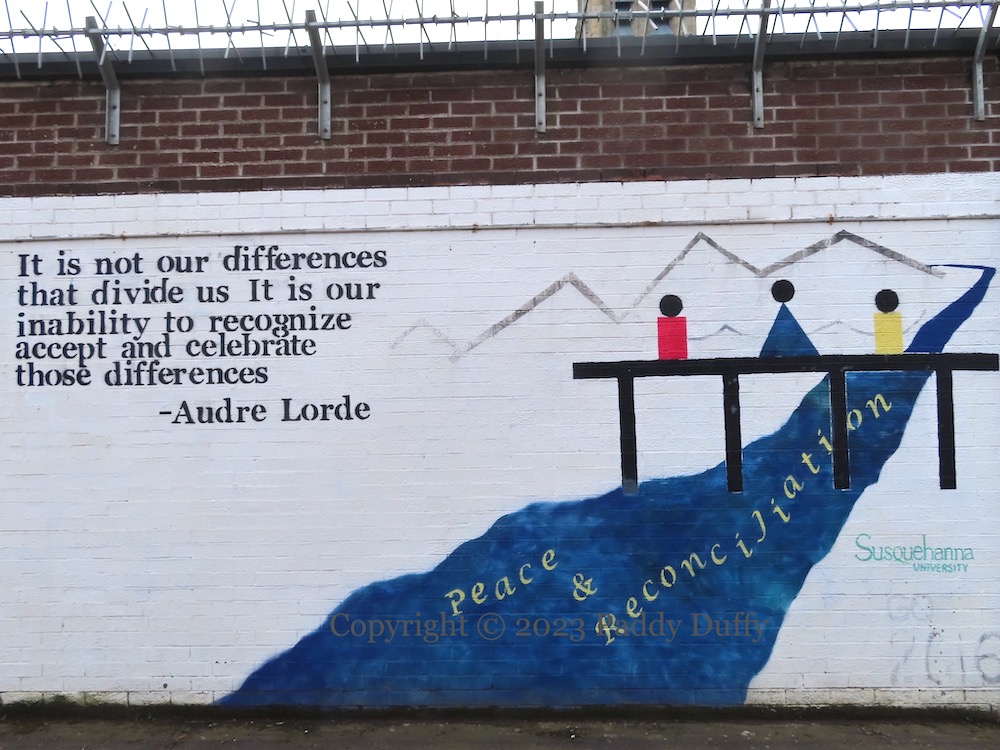
“”It is not our differences that divide us. It is out inability to recognize, accept and celebrate those differences.” – Audre Lorde”, “Peace & reconciliation”.
This does not seem to be an authentic Audre Lorde quote but an extrapolation of some lines from the essay “Age, Race, Class, and Sex: Women Redefining Difference”, where she writes, “It is not our differences which separate women, but our reluctance to recognize those differences and to deal effectively with the distortions which have resulted from the ignoring and misnaming of those differences.” (p. 122 in Sister Outsider).
Painted in 2016 by students from Susquehanna University in Bread Street, Divis. “The river and bridge represent a Lutheran hymn about the peace of mind a river provides and the bridge connecting people” (Spaces4Learning). In 2017, students from the same university painted the gates on the “peace” line – see Ambassadors For Peace.
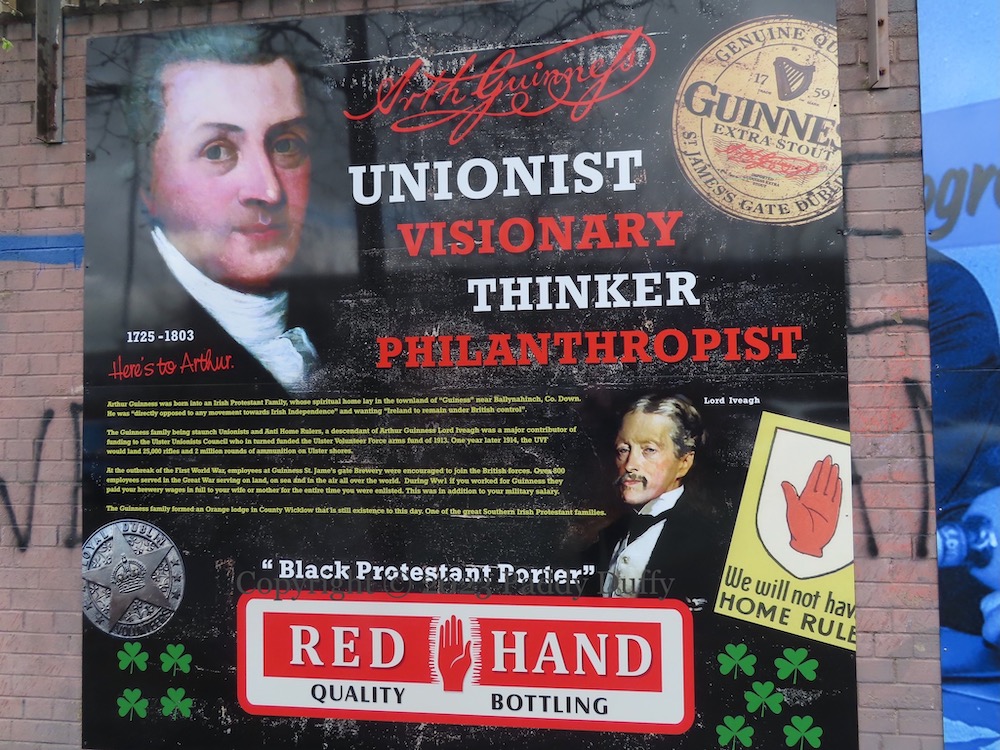
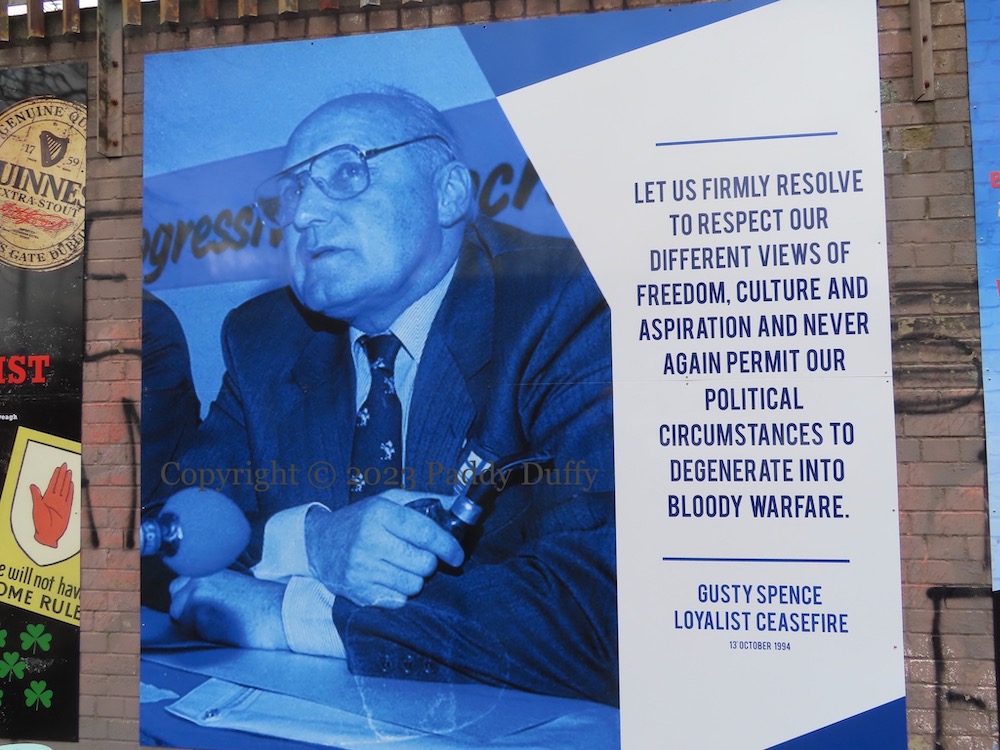
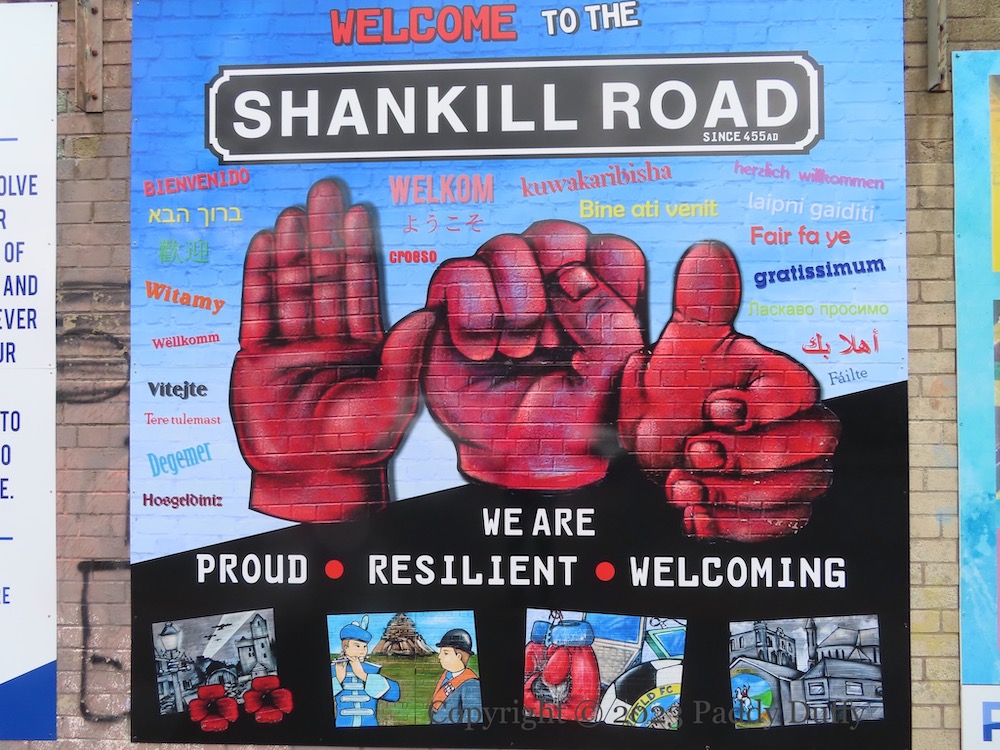
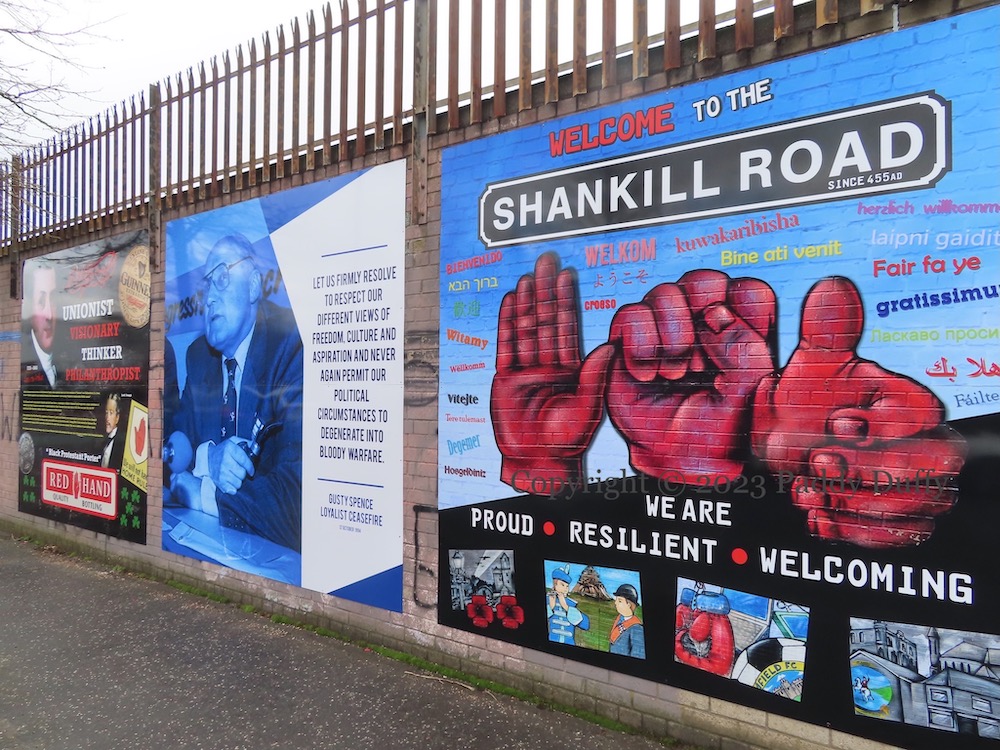
Here are three new pieces above the security gates on Northumberland Street, coving over the “Deserted! Well, We Can Stand Alone” graffiti in the last remaining spot on the wall without a mural. From left to right:
Arthur Guinness: “Black Protestant Porter” as a description of Guinness stems from Arthur Guinness’s opposition to the 1798 rebellion (Indo). The Union Star (newspaper in Belfast – A Planet Of Light And Heat) called Guinness a spy and advised that “United Irishmen will be cautious of dealing with any publican who sells his drink.” (An Phoblacht).
Gusty Spence, a former commander of the UVF, read out the ceasefire statement of the “Combined Loyalist Military Command” (UVF, RHC, and UDA): “Let us firmly resolve to respect our different views of freedom, culture and aspiration and never again permit our political circumstances to degenerate into bloody warfare – Gusty Spence, loyalist ceasefire [statement in full], 13 October, 1994.”
“Welcome To The Shankill Road – we are proud, resilient, welcoming”: The original ‘three hands’ was on Northumberland Street, just above this spot – see Proud, Defiant, Welcoming – which was then reproduced in reduced form in Gardiner Street – see Welcome To The Shankill Road.
This is the most conciliatory statement ever made by loyalism and the decision to put it on Northumberland Street, especially in the context of the internationally famous and associated-with-Ireland Guinness and the “welcome” mural, suggests that the trio is directed at tourists rather than locals.
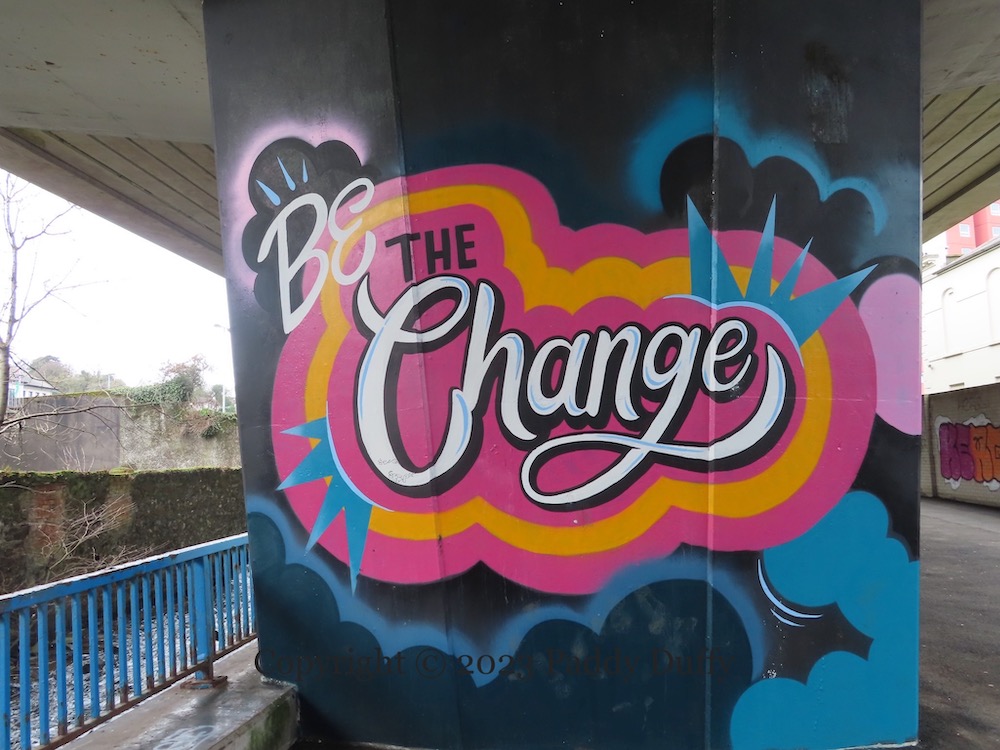
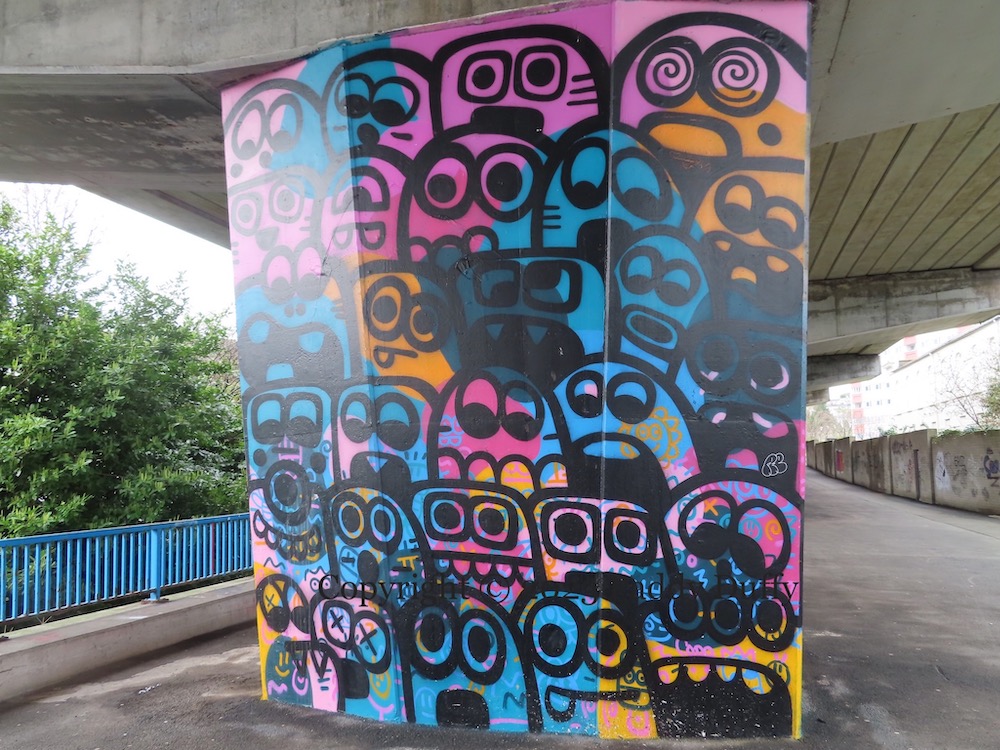
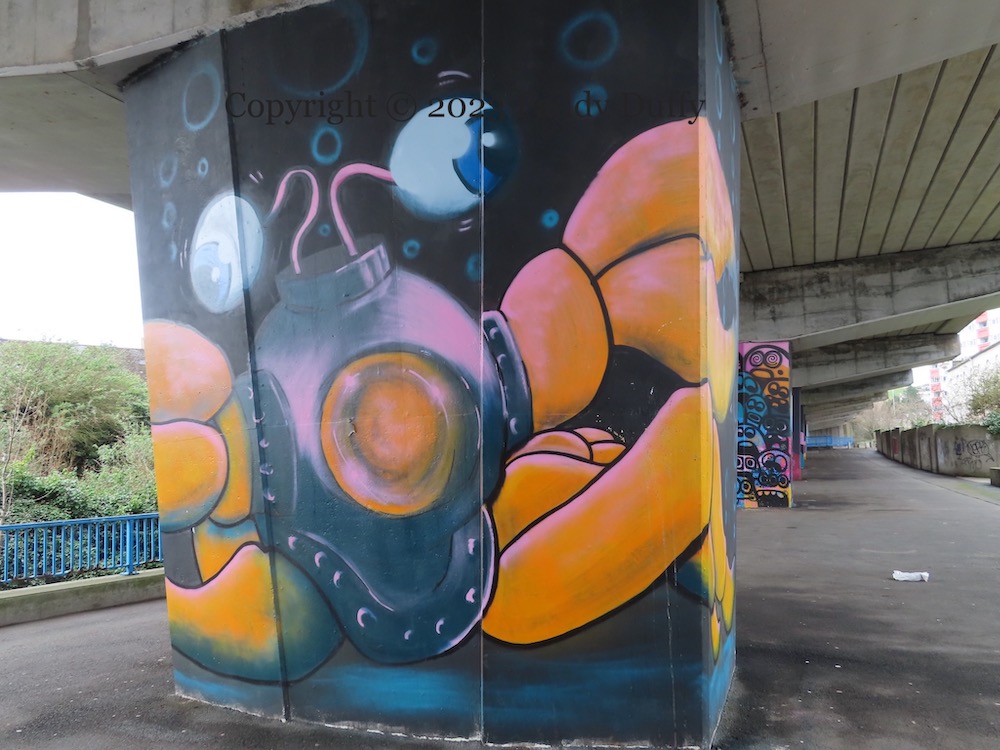
Harbour Highway underpass in Larne was re-painted in late October (2022) by (in order of appearance) Alana McDowell (ig), Rob Hilken (ig), emic (ig) (Lí Ban and/as otter, which was also the inspiration for iota’s piece in the town – see Shaped By Sea And Stone), Codo (ig), and FGB (ig).
With support from Seedheard Arts (ig) and Mid- & East Antrim council (ig).
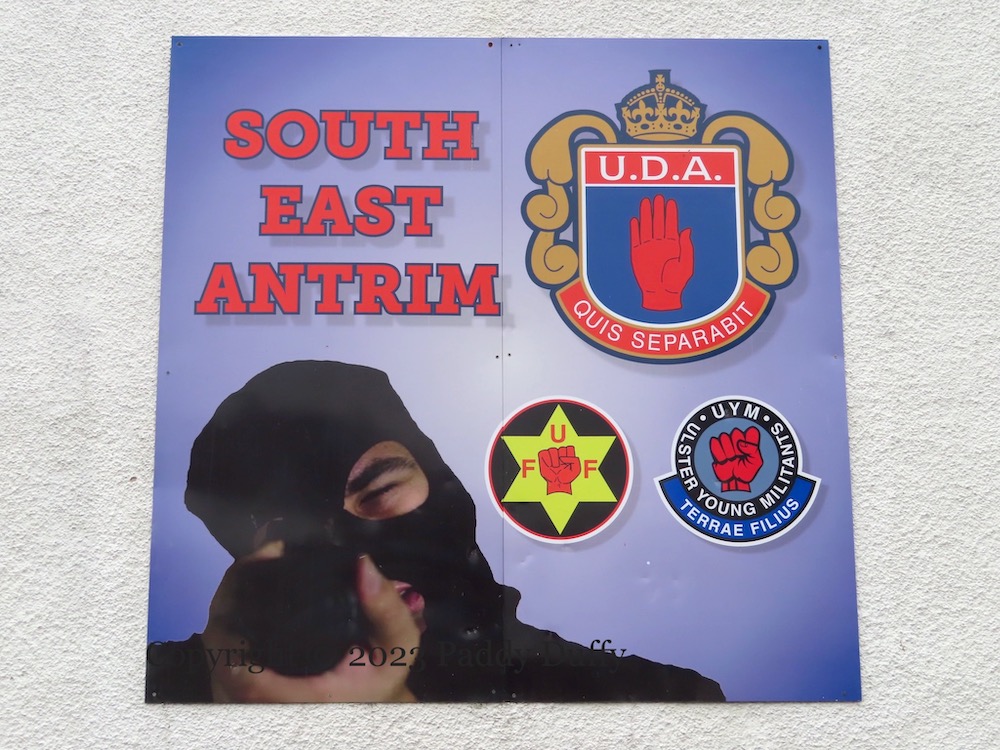
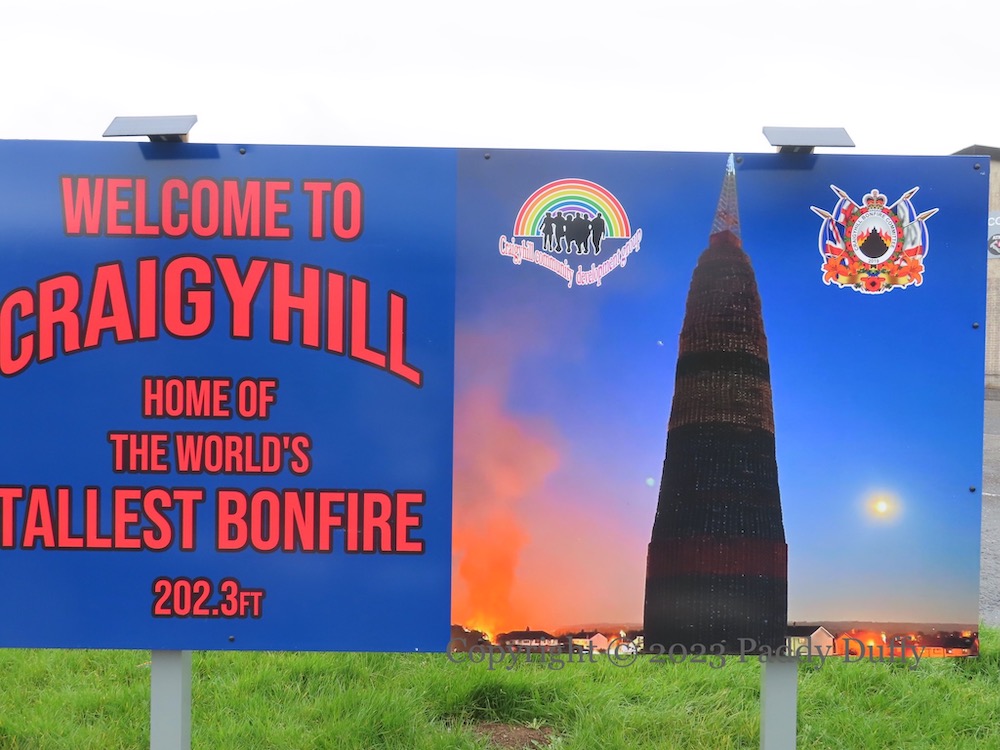
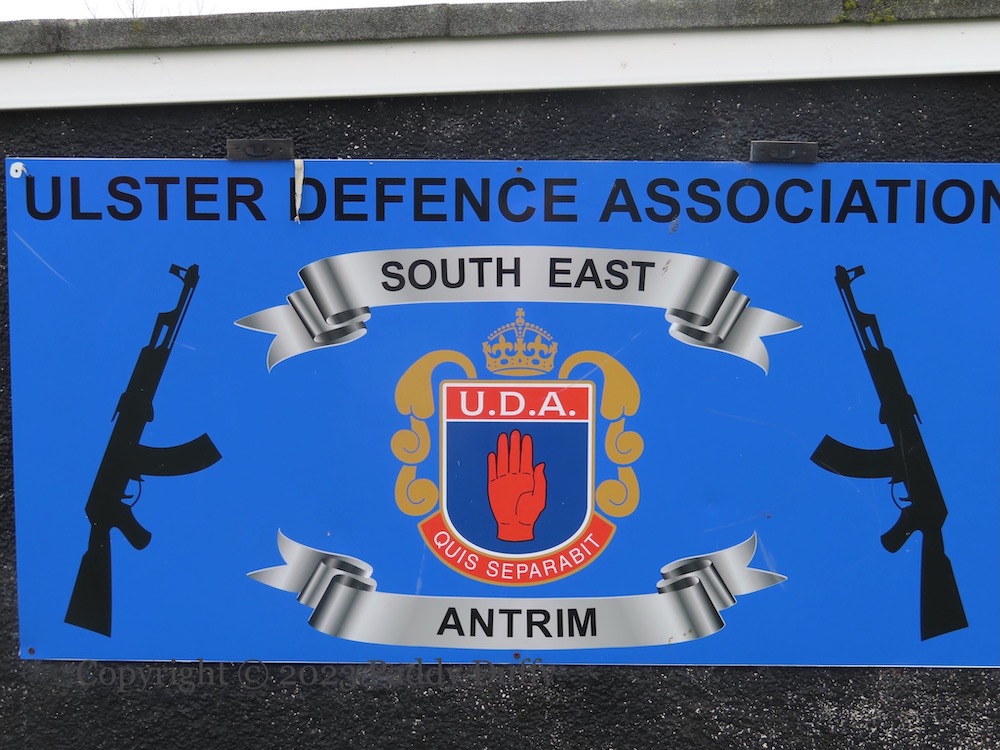
Bullets and bonfires in Craigyhill, Larne: the hooded gunman shown above is next to the boards shown in The Loyalist Executioner in Glenfarne Place, Craigyhill (Larne).
Both it and the second image (from the top of Cairngorm Drive) have been added since July, 2022. For the claim to be the “world’s tallest bonfire”, see Commonwealth Handling Equipment.
The image of a pair of assault rifles is in Fanad Drive.
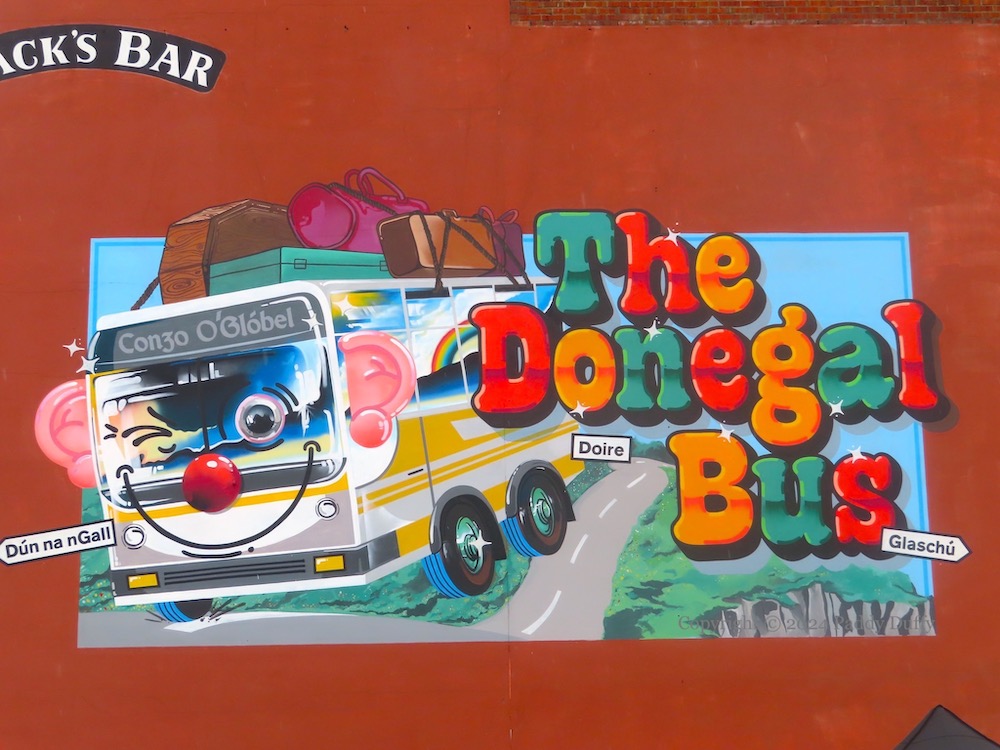
The Derry 2021 street art festival – rebranded as Roots Street Art – was affected by Covid lockdowns (Derry Journal) but several pieces were painted, including this one by the Glöbel Bros (Conzo Throb and Ciaran Glöbel, referring to emigration and economic migration between Dún Na nGall [Donegal], Doire [Derry], and Glaschú [Glasgow].
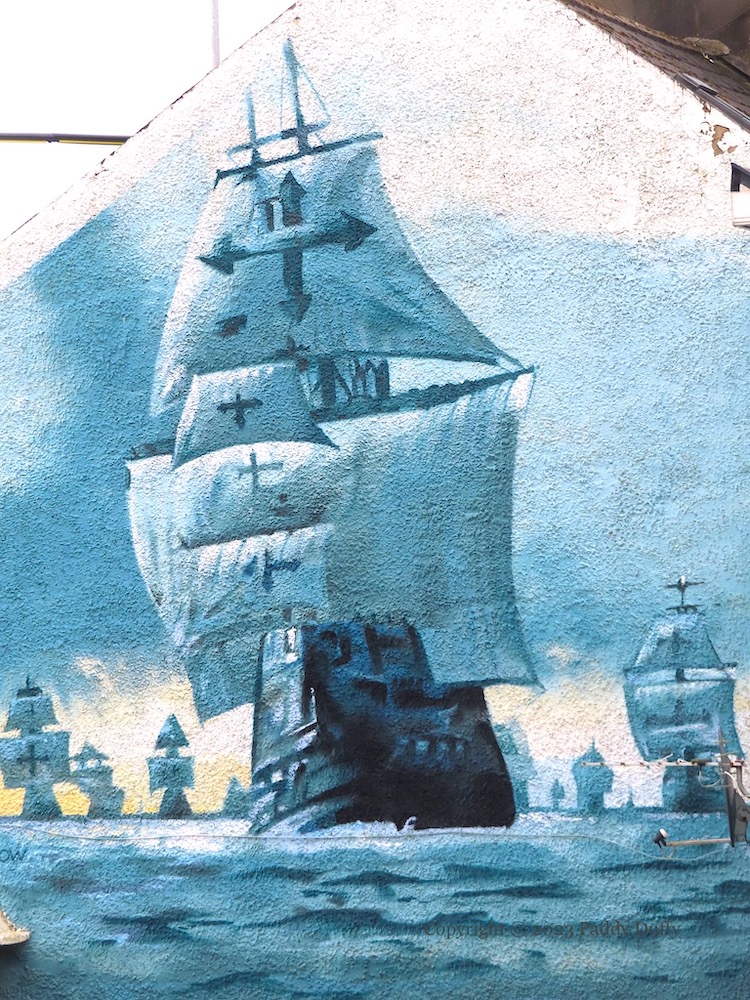
The Spanish galleass La Girona, one of the 130 ships that made up the armada that was unsuccessful against the English in 1588, docked at Killybegs, County Donegal, for repairs to her rudder (WP). When she departed, she got only as far as Lacada Point near Ballintoy, County Antrim, before sinking in a gale with the loss of roughly 1,300 lives and a substantial treasure that was recovered (in part) by Sorley Boy McDonell (portrayed in a Ballycastle mural) and (in part) by modern divers in 1968 (BBC).
Donegal Road, Killybegs, with a bonus image of the docks from the fish shop in Conlin Road.
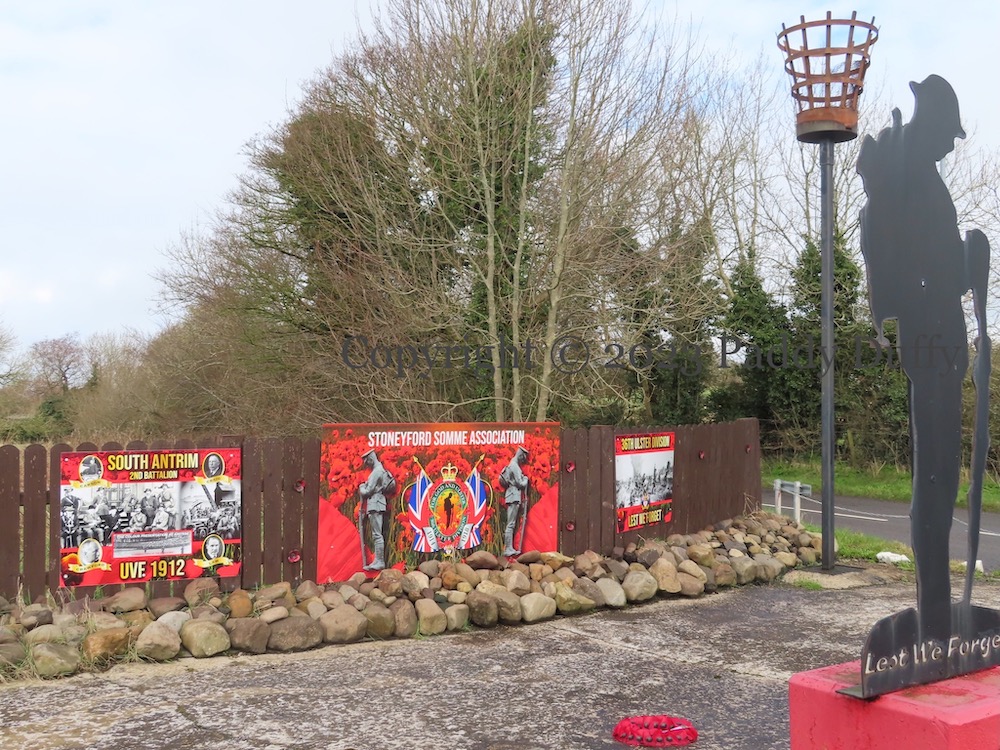
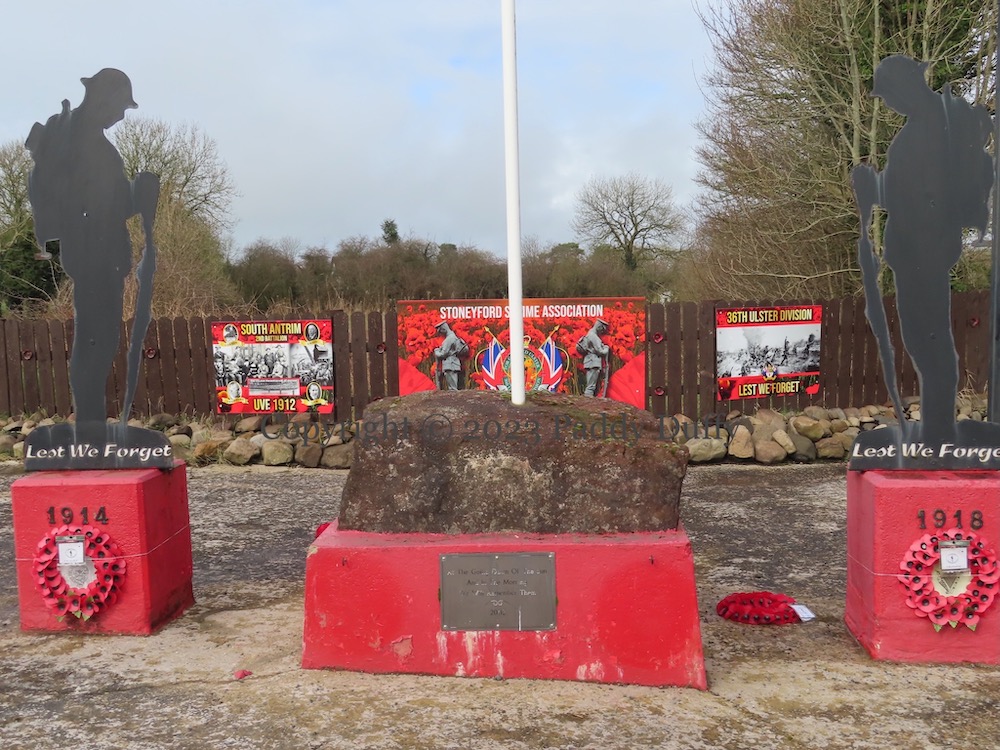
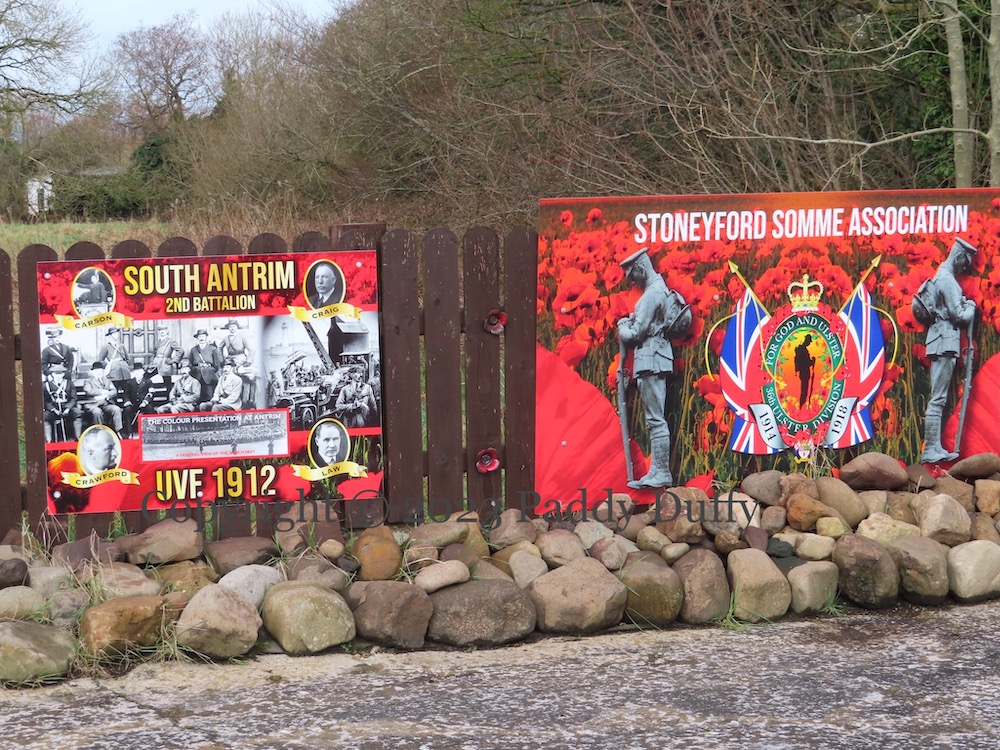
Boards have been added to the WWI memorial plaque in Stoneyford. On the right, the 36th Division go over the top in Beadle’s ‘Attack Of The Ulster Division’ (see Over The Top); the board on left more specifically commemorates the 2nd battalion of the South Antrim Ulster Volunteers, flanked by the leaders of the anti-Home Rule movement – Carson, Craig, Crawford, and Bonar Law.
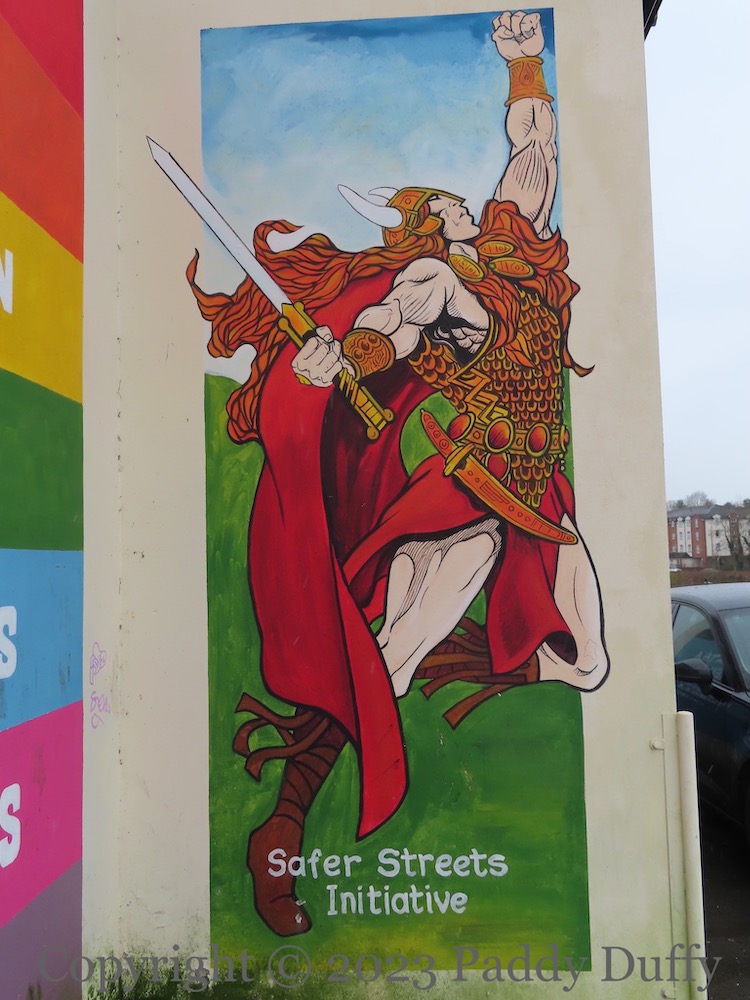
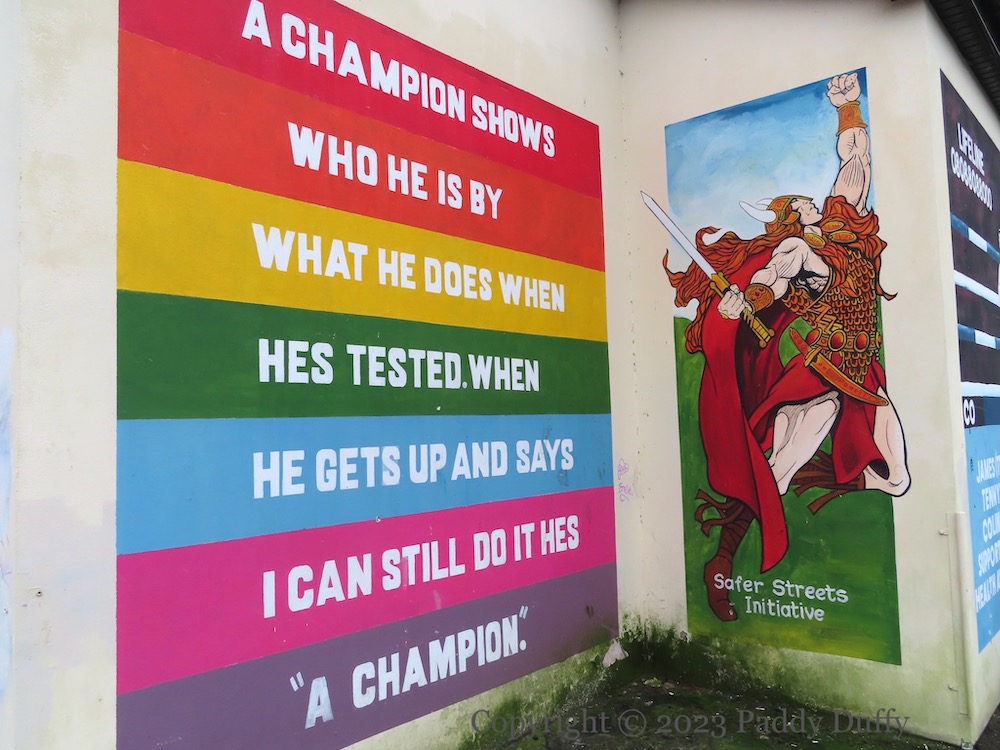
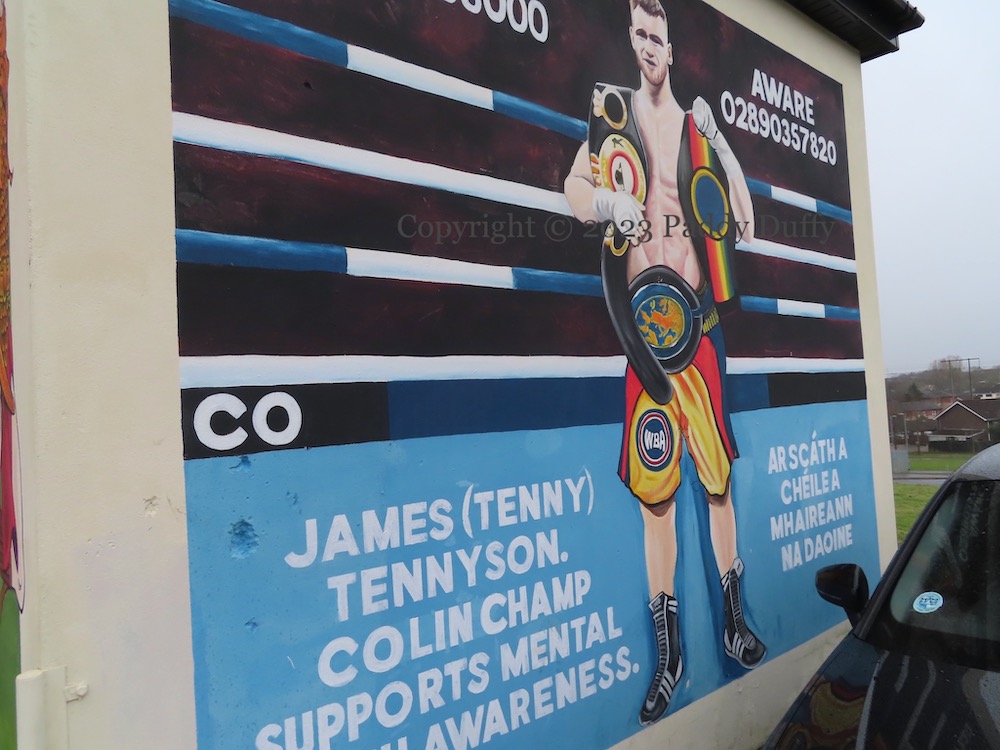
“A champion shows who he is by what he does when he’s tested. When he gets up and says “I can still do it”, he’s “a champion.” In Irish mythology, the Tuatha invade Ireland and battle the Fır Bolg. They are successful but their king Nuadha loses his arm and with it his kingship of the Tuatha. He had it replaced with an arm made of silver and regained his position. He is used here as an inspiration for those struggling with mental health, who are encouraged to call Lifeline or Aware.
(A history of Nuadha in murals is included in the Visual History page on Jim Fitzpatrick.)
The modern-day hero accompanying Nuadha is boxer James “The Assassin” Tennyson, current Irish super-featherweight champion. There are also four mental health boards (shown below) around the corner from Urban Villages Colin Safer Streets Initiative with messages such as “Think, Talk, Feel – Positive”, “Everything that you are is enough”, “Learn from yesterday, live for today, hope for tomorrow”,







 Paddy Duffy Collection