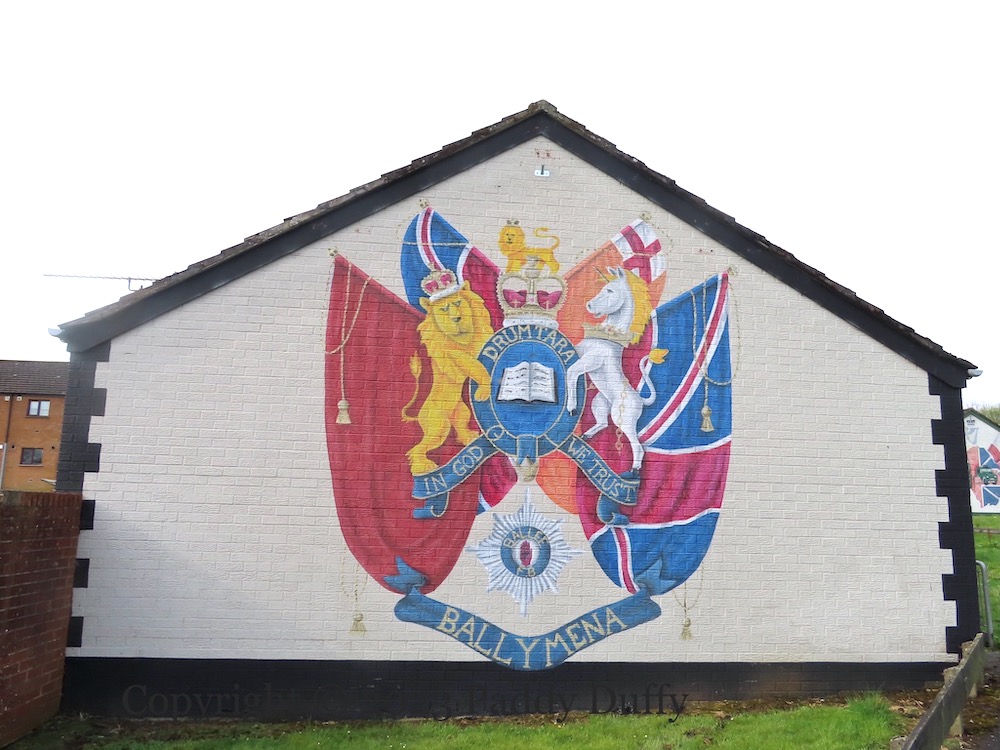
The third of the three murals on Ballee way is a Ballee Flute Band (formerly the Ballee Blues And Royals) mural showing the ‘lion and the unicorn’ from the UK coat of arms. The lion (England) wears a crown but the unicorn (Scotland) does not, since, as the nursery rhyme has it, “the lion beat the unicorn all around the town” (WP).
In place of the Royal Standard, “honi soit qui mal y pense” and “Dieu et mon droit” “, however, we find the Bible. “Drumtara”, and “In God we trust”. Behind are the Union flag and the flags of the Apprentice Boys and the Orange Order.
To the right of frame can be seen part of UDR Checkpoint.
This is the third version (at least) of the circular King Billy in the centre of Ballymena. The first goes back to 1989 (D00471) and the second to 2000 (X00158 | M00711).
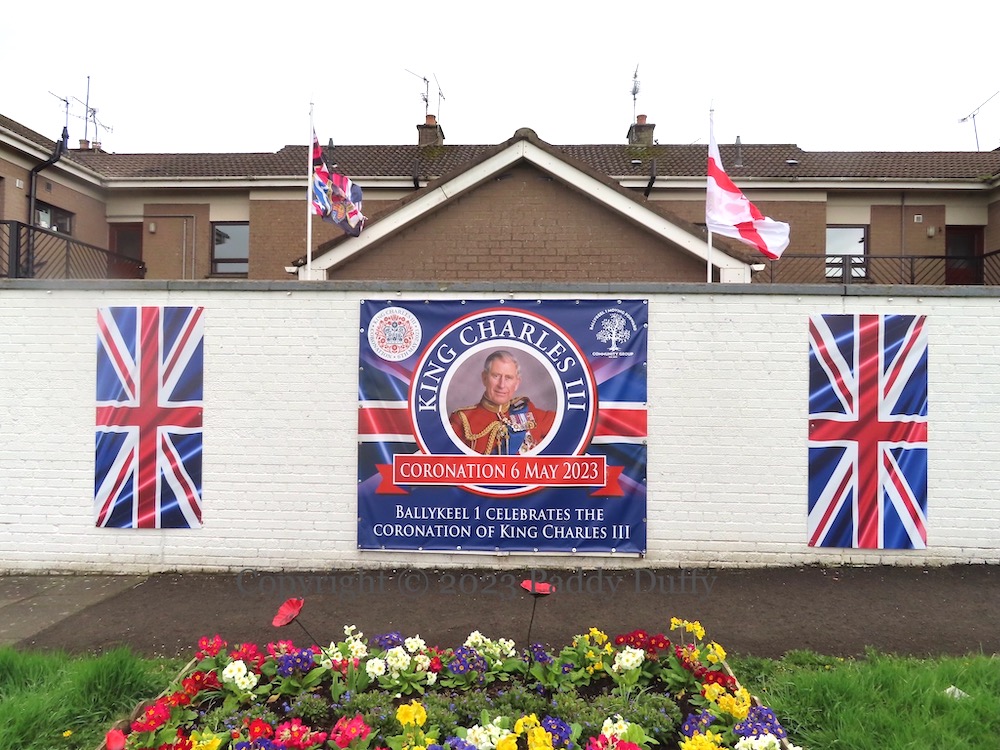
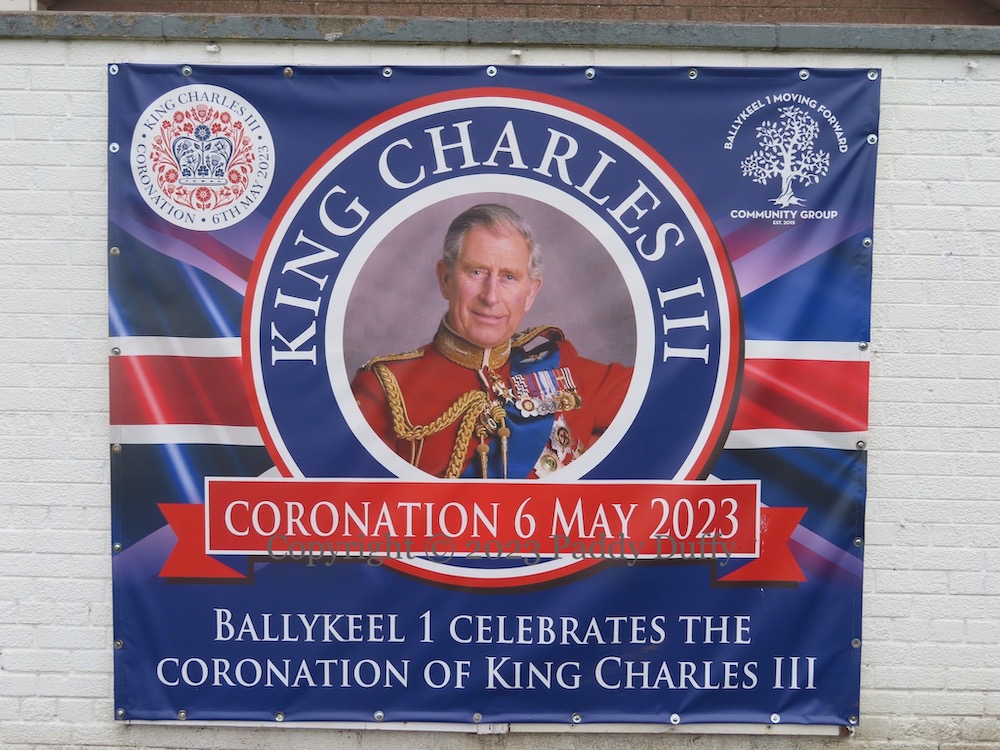
“Ballykeel 1 celebrates the coronation of King Charles III.” The United Kingdom crowns a new monarch today, May 6th, 2023, in the form of Charles III; he acceded to the throne on September 8th, 2022, upon the death of his mother, Elizabeth II (see The People’s Queen Is Dead | Now Is The Time To Kneel | Loyal Servants). The ceremony will include a pledge of allegiance that those in attendance and those watching may (voluntarily) make (BBC). The leaders of Australia and New Zealand are among those expected to make the pledge (Reuters); Michelle O’Neill and Alex Maskey of Sınn Féın will be in attendance (BBC).
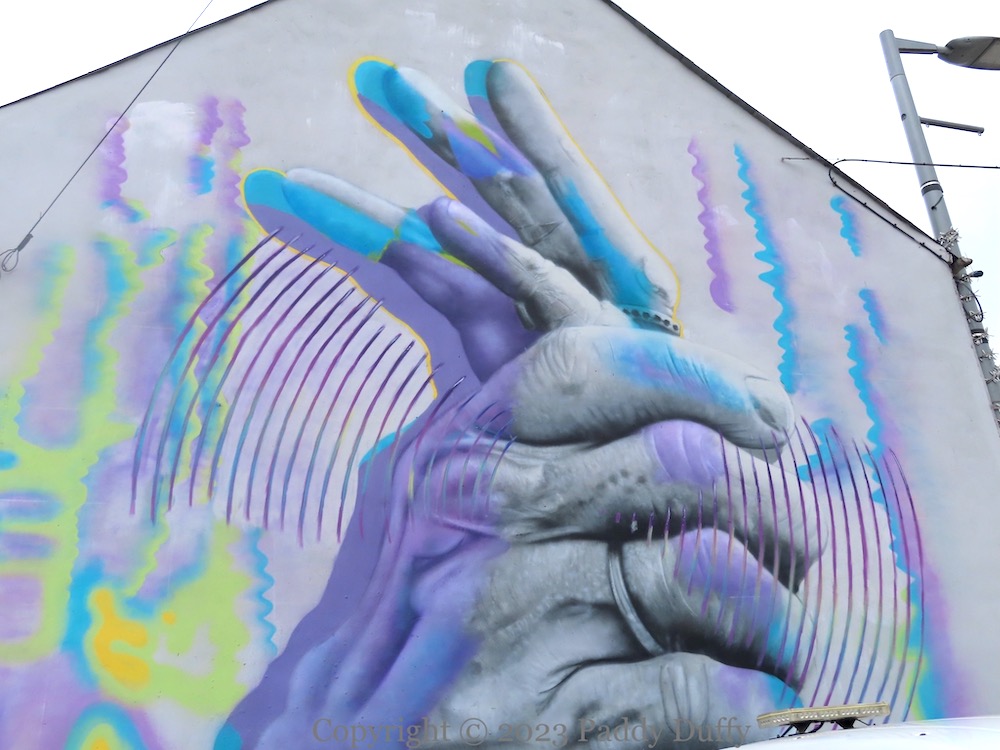
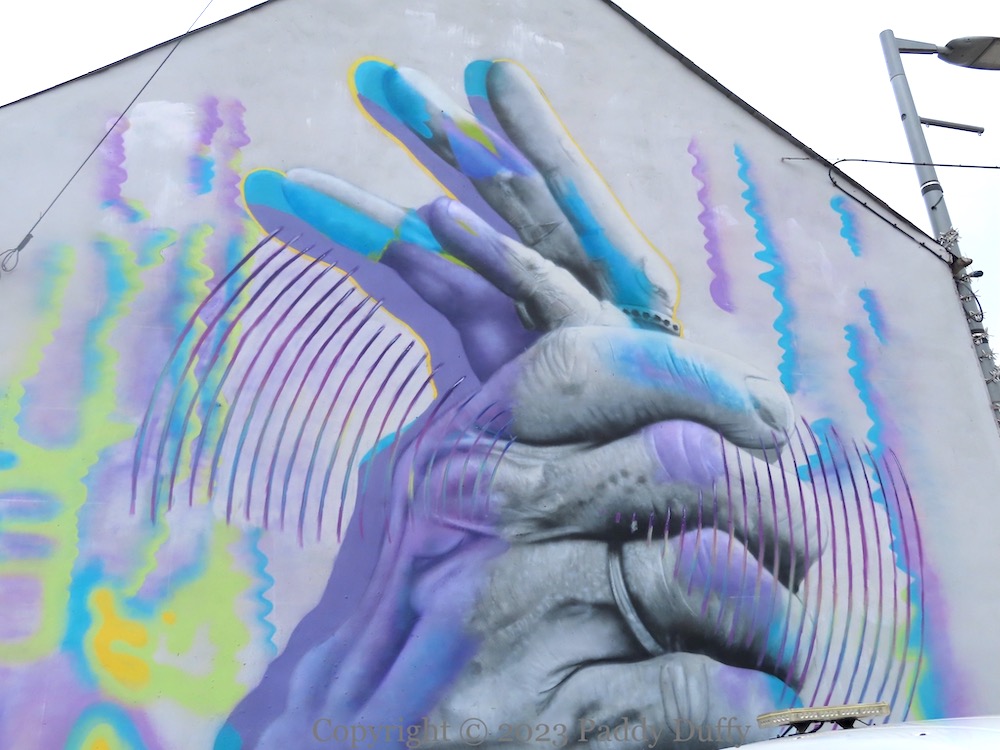
Good Morning Ballymena (Fb) is a telephone helpline for the elderly. Emic has drawn a pair of wrinkled hands radiating a signal for the organisation in the Alexander Street car park.
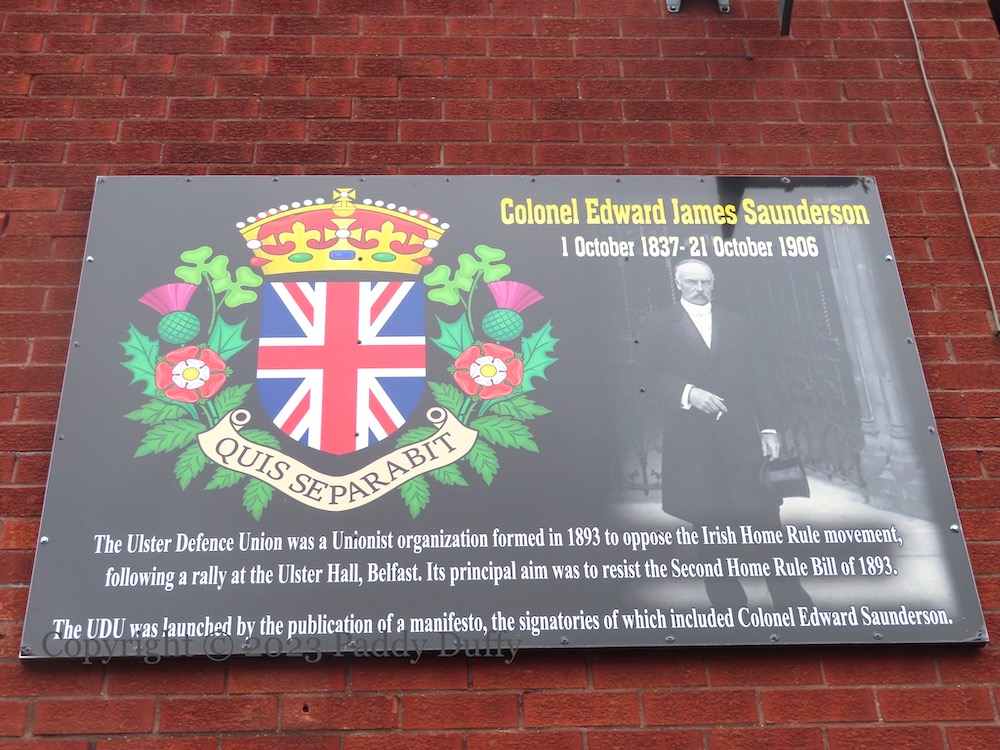
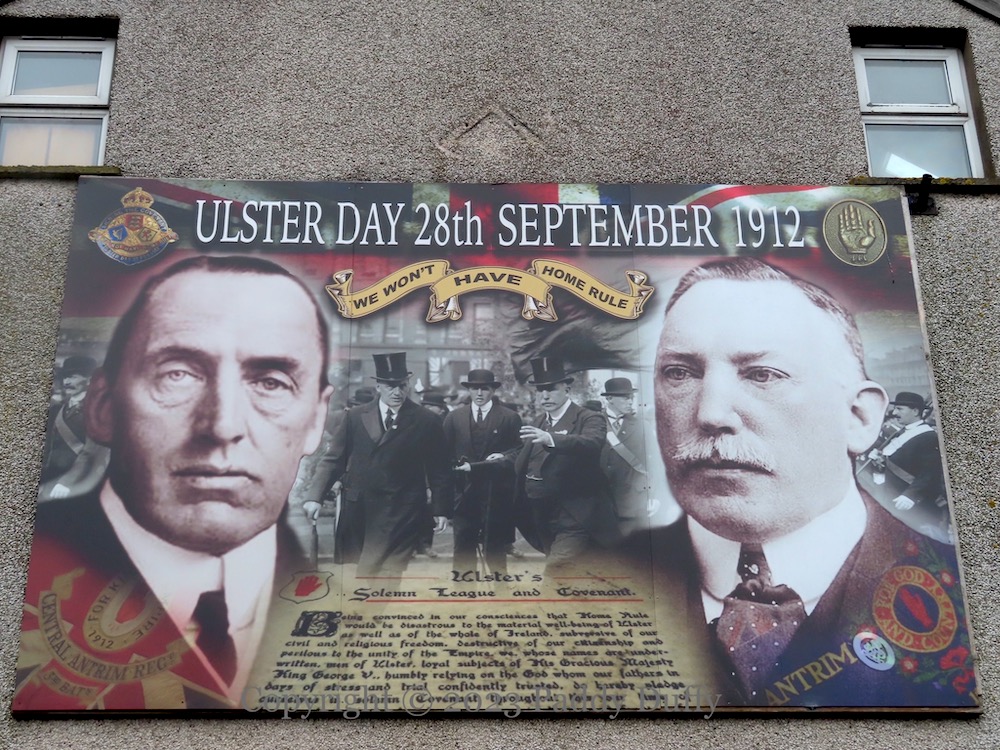
Here is a gallery of six boards from Harryville (four from Larne St/Larne Rd and two from Queen Street). The newest one is shown above; it celebrates Colonel Saunderson, a founder of the Ulster Defence Union, and organisation formed in 1893 to resist the second Home Rule bill. As mentioned on the board, the UDU initially met in Belfast in March and Saunderson was among the signatories of the UDU manifesto (see page 5 of the [Sydney] Freeman’s for 1893-04-29). For more on Saunderson, see Union Is Strength. The second bill was passed by the Commons but defeated in the Lords. The champions of resistence against the third Home Rule bill were Carson and Craig, shown in the penultimate image with the “Ulster Covenant” of September, 2012.
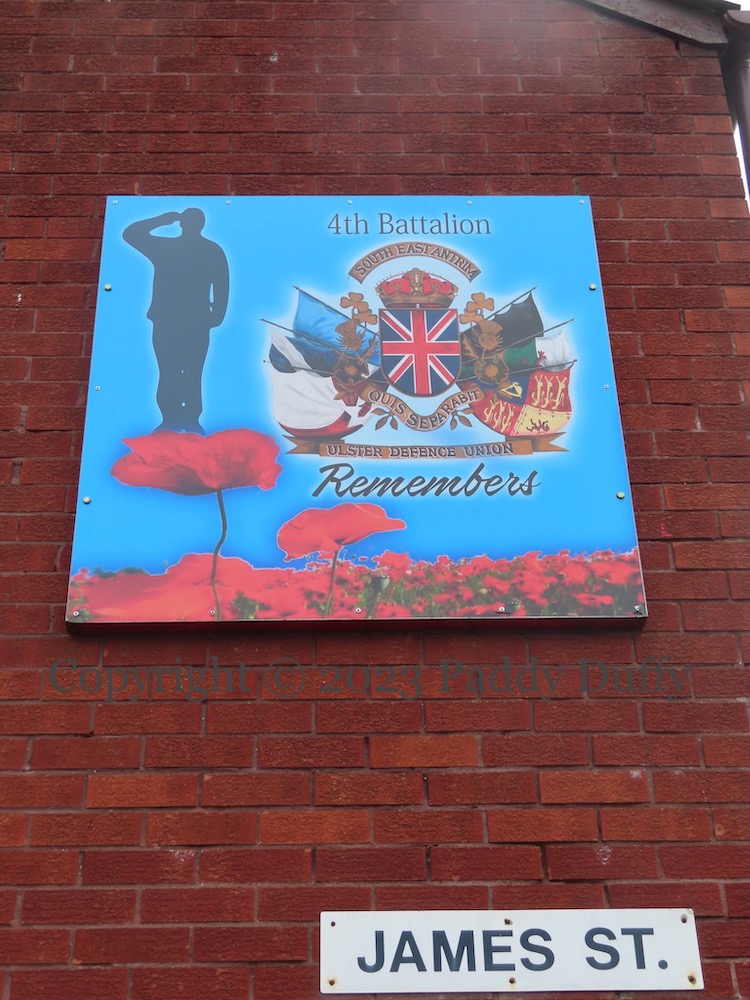
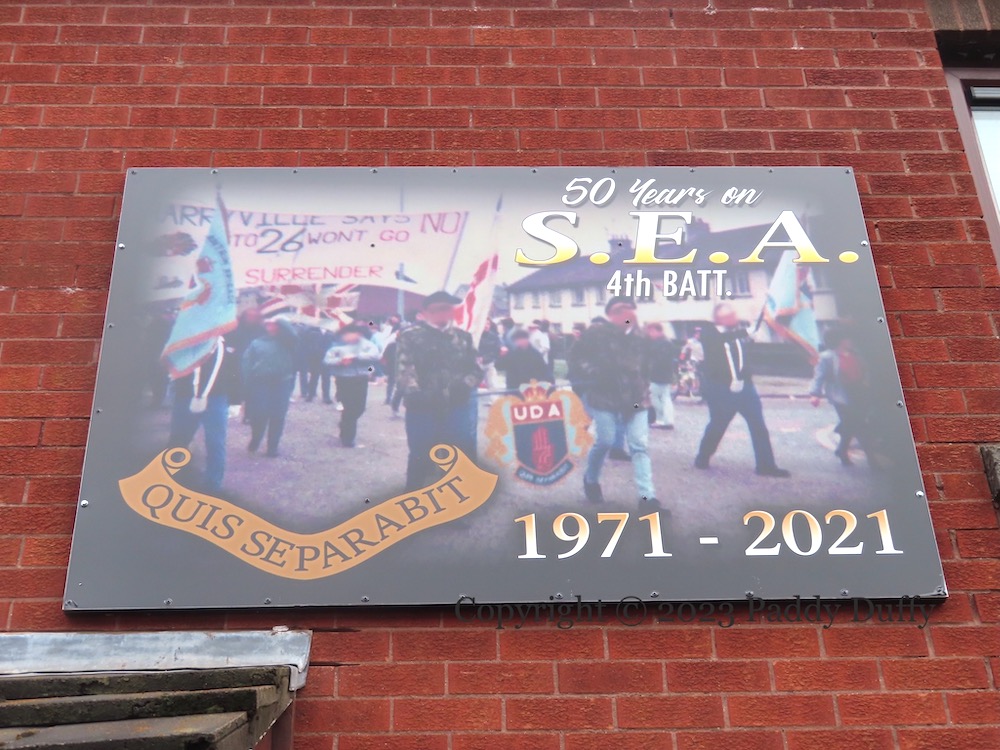
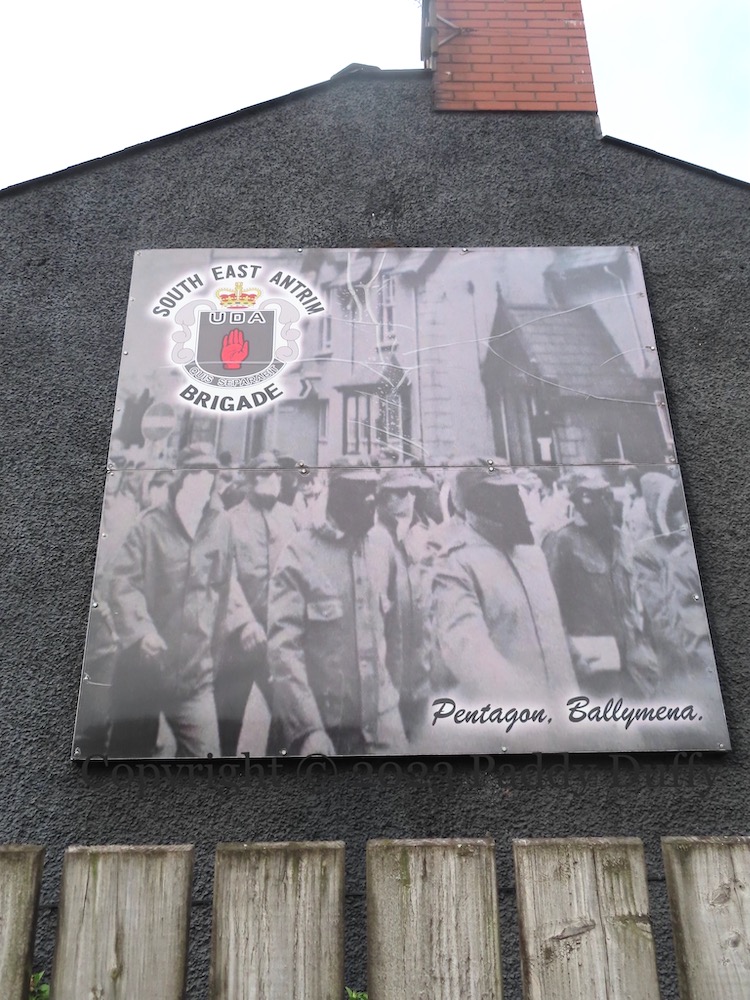
The name “Ulster Defence Union” is being used by some anti-Agreement factions of the UDA as a name for the organisation (starting in 2007 – see WDA on Peter Moloney’s site). The second board, just below, is a 4th Battalion South East Antrim UDA/UDU board. The UDA was formed in September 1971 and hence was 50 years old in 2021. The remaining two images show the UDA on parade at Harryville Bridge and in front of Pentagon House.
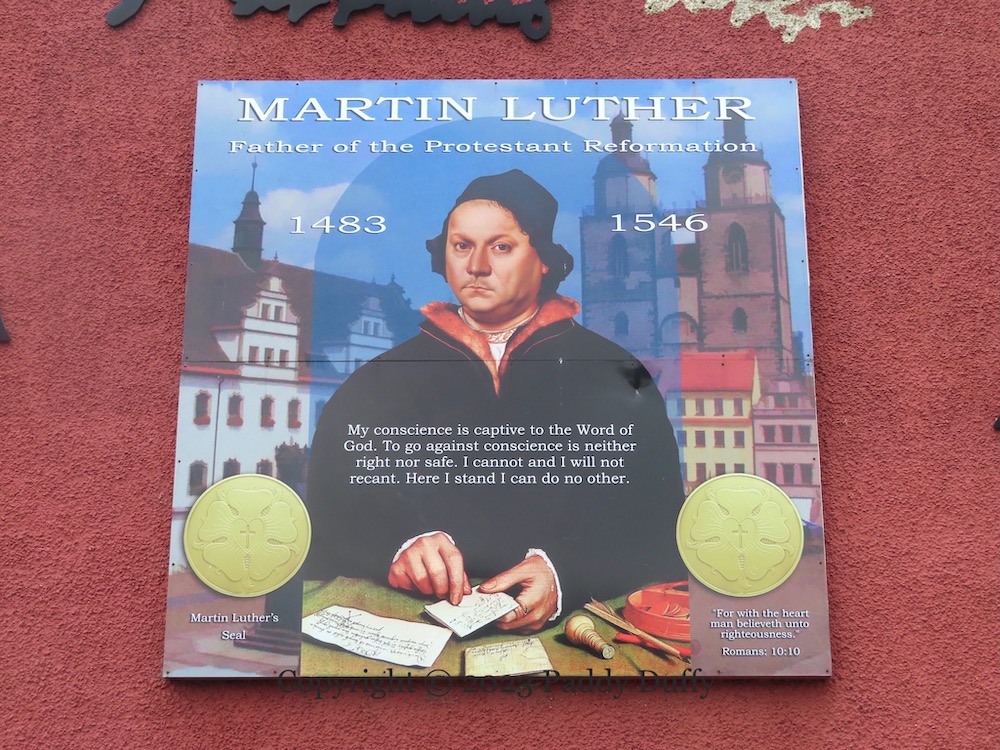
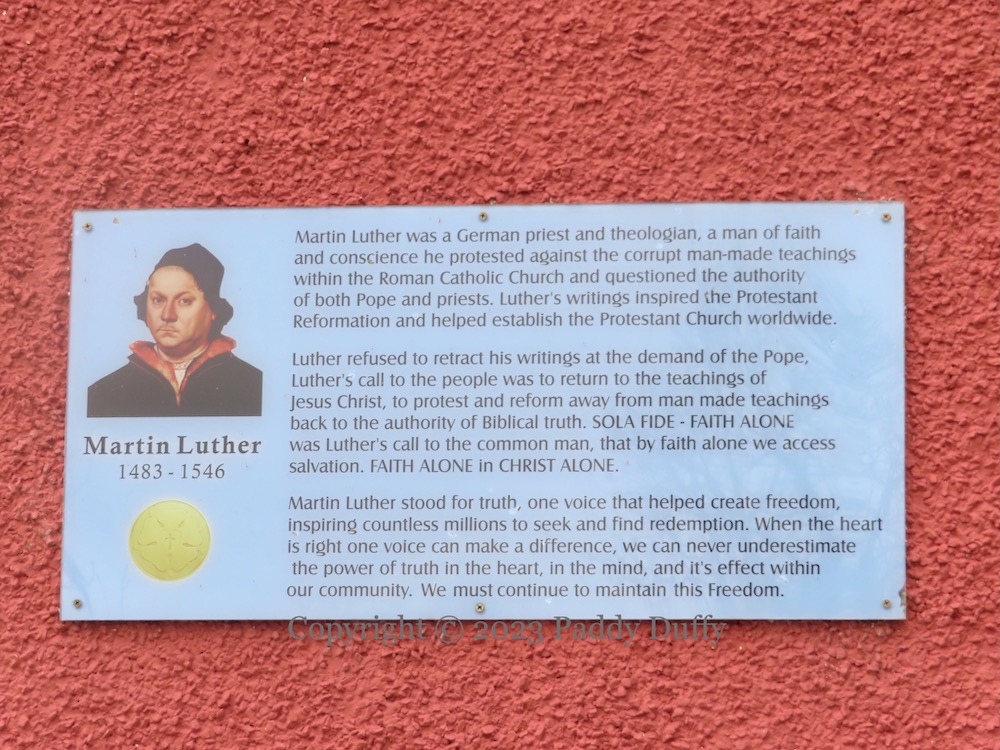
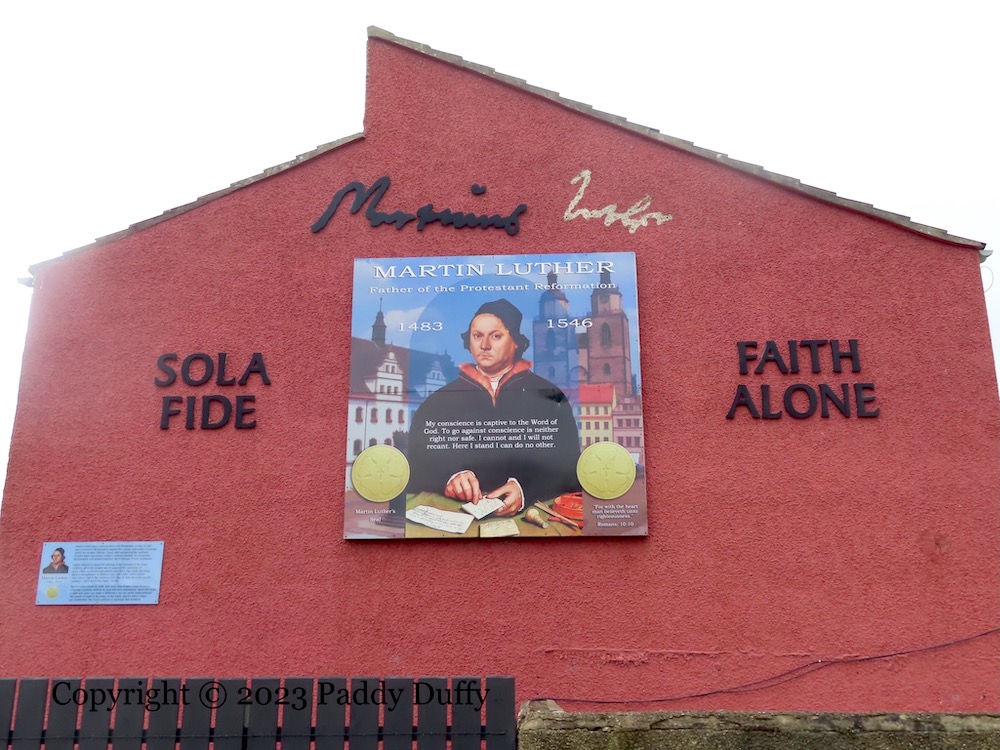
“My conscience is captive to the Word of God. To go against conscience is neither right nor safe. I cannot and I will not recant. Here I stand; I can do no other.” Luther’s last name has fallen off the wall above the main board in Waveney/Doury Road – the installation is about a decade old and replaced a South East Antrim UDA emblem (see Keresapa). Luther’s signature was also painted into the strained glass window of an old Martin Luther mural in the lower Shankill – see Here I Stand I Can Do No Other.
Martin Luther, Father of the Protestant Reformation, 1483-1546. “For with the heart man believeth unto righteousness – Romans 10:10”
Two poems of WWI in Ballykeel 2, Ballymena: above, “We are the Dead. Short days ago/We lived, felt dawn, saw sunset glow,/Loved and were loved, and now we lie/In Flanders fields.” from ‘In Flanders Fields’ by John McCrae.
Below: “They shall not grow old/As we that are left grow old/Age shall not weary them/Nor the years condemn/At the going down of the sun/And in the morning/We will remember them.” from ‘For The Fallen’ by Laurence Binyon.
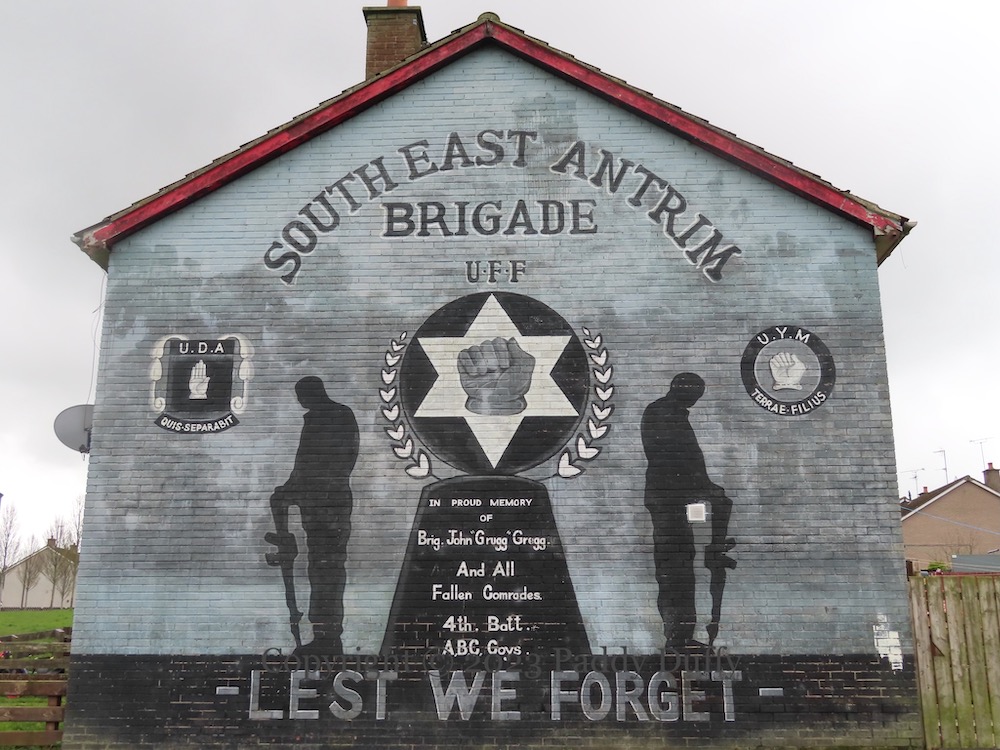
“South East Antrim Brigade UFF. In proud memory of Brig. John “Grugg” Gregg and all fallen comrades. 4th Batt. A B C Coys. Lest we forget.” Gregg is known for the attempted killing of Gerry Adams and for being killed on the orders of Johnny Adair, which led to the expulsion of Adair’s company from the lower Shankill (WP).
Orkney Drive, Ballykeel 2, Ballymena. Seen previously in 2010: M05987.
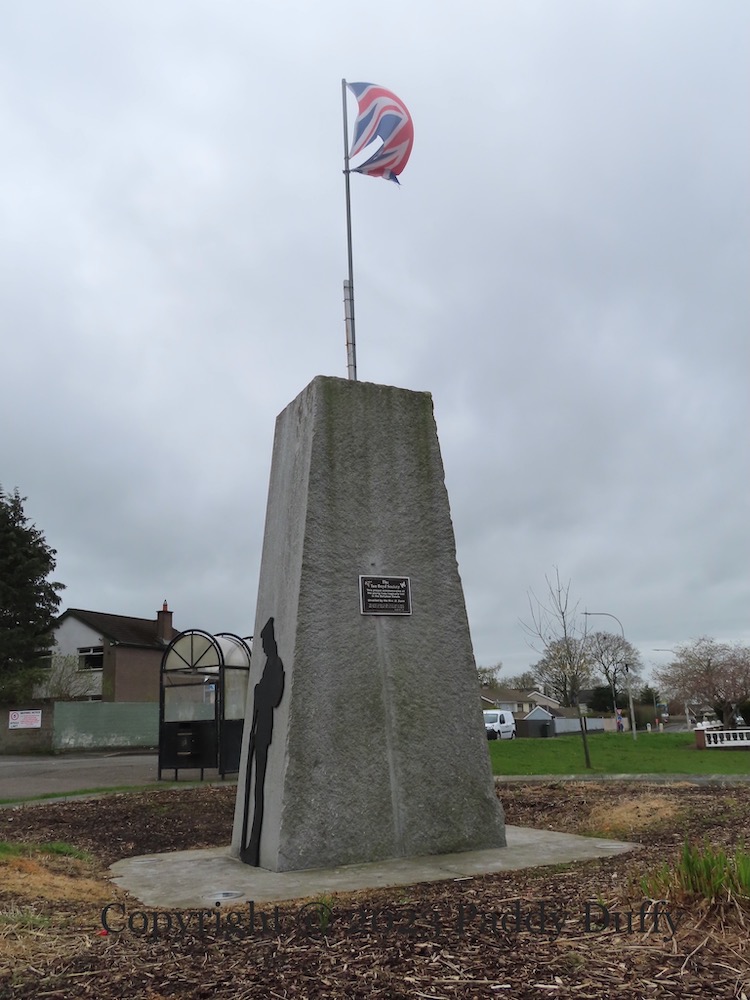
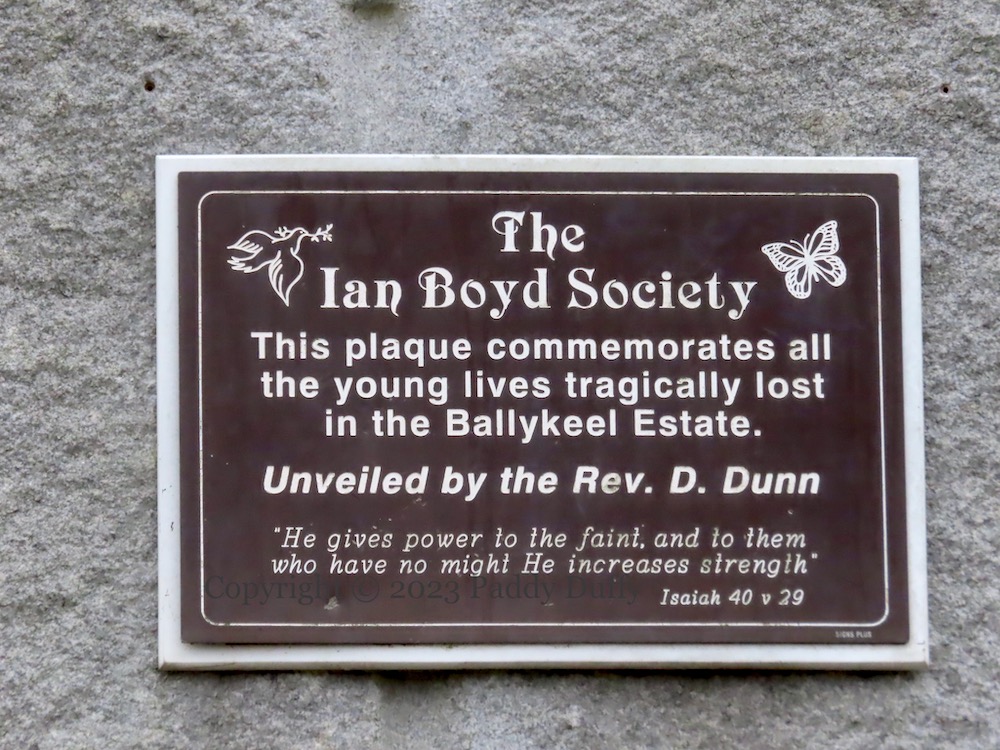
Ballykeel 2 remembers: 1690, VE Day (75th anniversary in 2020 – see also north Belfast | Caw, Londonderry), the Somme 1916, and “all the young lives tragically lost in the Ballykeel estate” (Ian Boyd took his own life in 2006 – anglican.org).
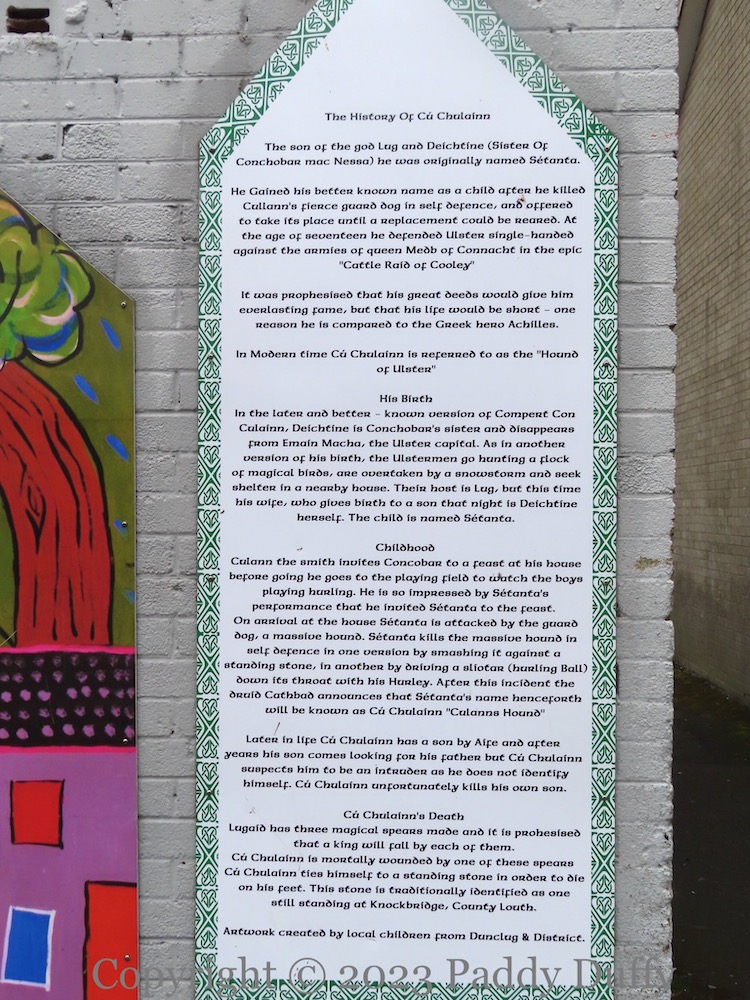
Cú Chulaınn is revered as a living god who might watch over children and their pets, homes, food, and toys in these devotional panels in Dunclug, Ballymena. As the info board says, “It was prophesied that his great deeds would give him everlasting fame.” Cú Chulaınn has his own Visual History page.






 Paddy Duffy Collection