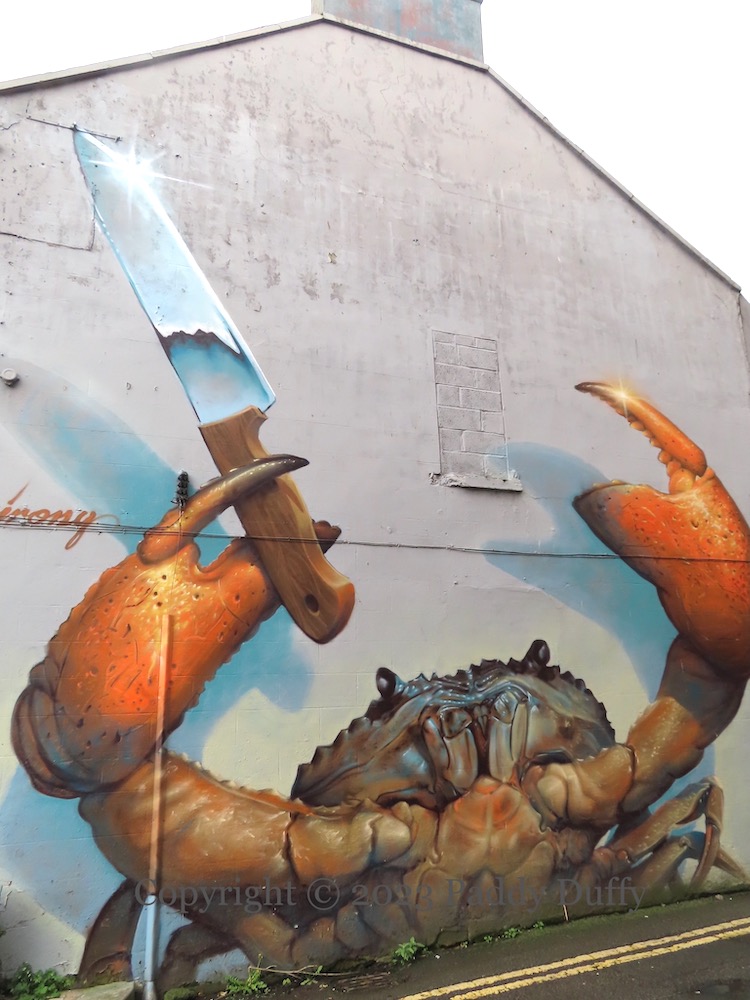
After centuries of pitiless exploitation by Bangor locals, a new hope is taking the knife into its own hand and striking back – revenge of the crustaceans. Work by Irony (ig) on Mill Row.
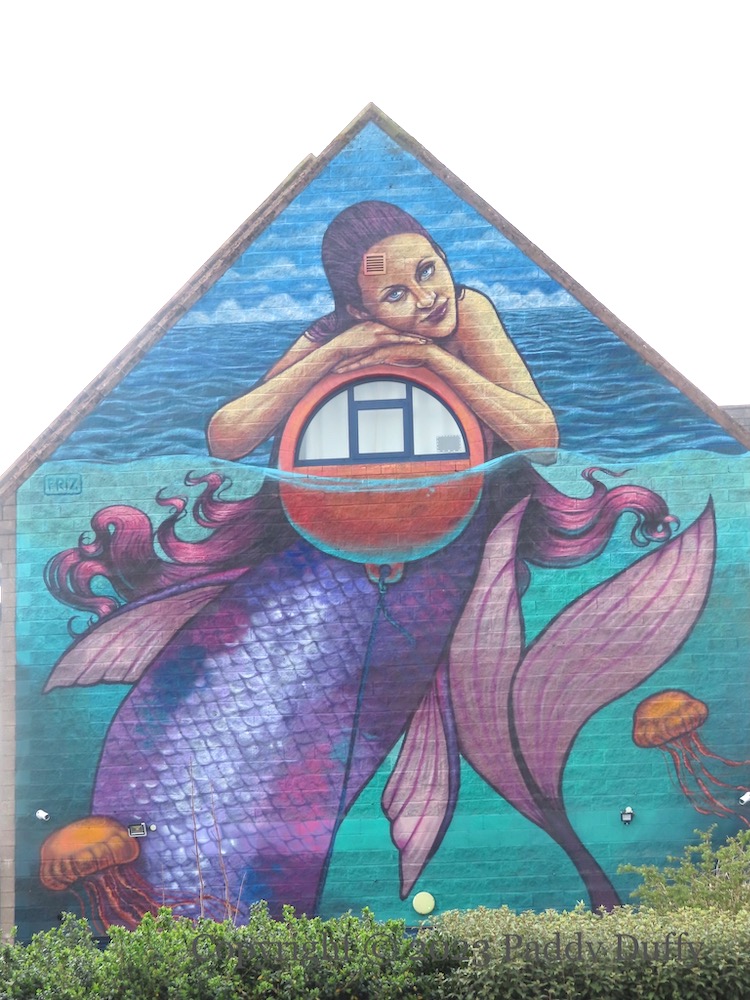
Lí Ban became a mermaid – half-human, half-salmon – after a year spent living in an underwater bower, taking shelter from the family’s uncovered spring that overnight formed Lough Neagh. Three hundred years later (circa 558 A.D.) she told an envoy of Saint Comgall’s who was on his way to Rome, that she would come ashore at Larne a year later. She forwent another 300 years of sea life in favour of being baptised and dying immediately. She was baptised by Comgall, the abbot of Bangor, and christened “Muirgen” (sea-born) and was buried in the Lough Derg (Donegal) abbey (O’Grady | WP). Muirgen’s feast-day is January 27th (Sacred Sisters).
Painted by Friz (ig) for the Bangor Seaside Revival Festival, with support from Seedhead Arts (ig).
For a different style of presentation of Lí Ban, see Shaped By Sea And Stone in Larne. The end of the story is similar to the fate of the children of Lear, who spend 900 years as swans before a monk hears their song, puts them (willingly) in chains, but in protecting them from others touches them, which restores them to human form only for (baptism and) death to follow immediately. (See The Children Of Lear.)
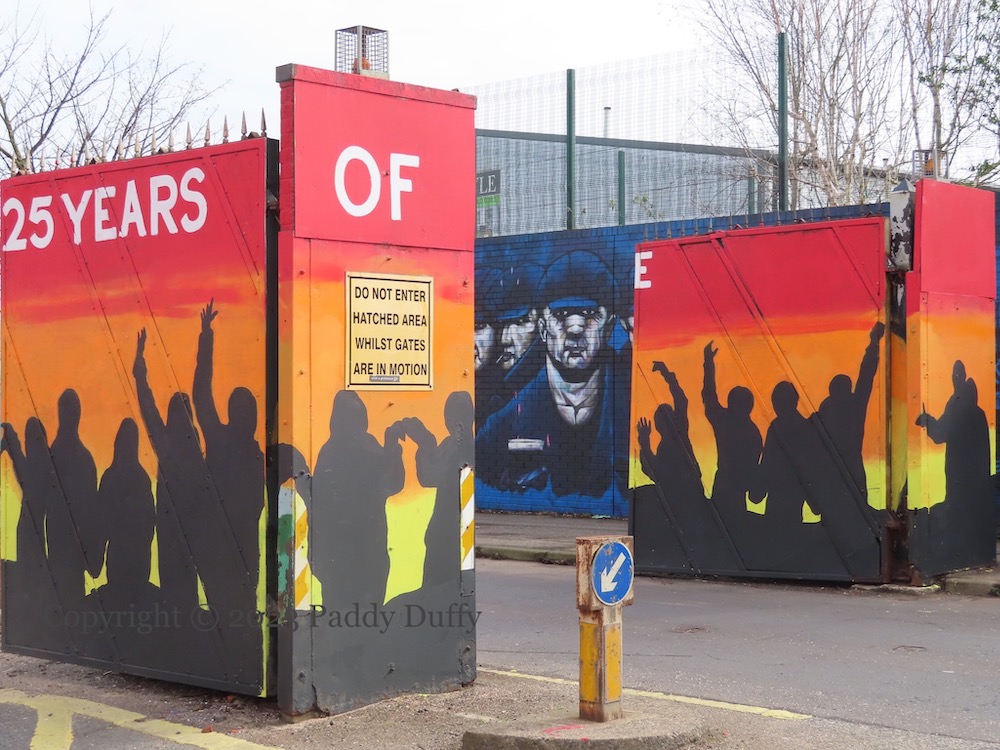
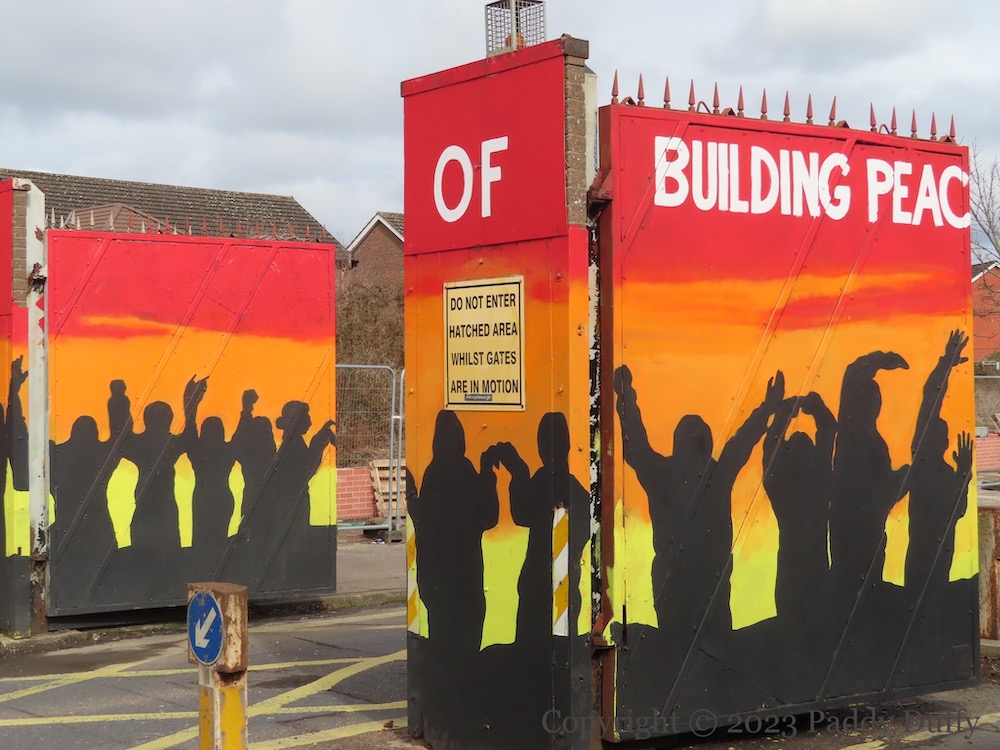
The gates on Lanark Way are part of the west Belfast “peace” wall. On this site we always put the word in scare-quotes to signify that it has a different meaning than it typically does. Without them, “peace wall” might suggest a place where people can go for a few moments of quiet reflection.
Rather, the wall – and the gates and the cages that surround many buildings on either side of the wall (see above) – is a divider meant to keep the peace by separating warring factions. Indeed the reason for the re-painting of the gates is not just the up-coming 25th anniversary of the Belfast or “Good Friday” Agreement (on April 10th) but the fact that they were damaged in the 2021 rioting (BBC). (This Irish News article surveys 150 years of violence at the site.)
The new art on the gates is inspired by the cover of the booklet sent to every household in advance of the May vote to ratify the Agreement (available at CAIN), which was similar in various ways to the television ad shown at the time (Ads On The Frontline). It showed a family of four in silhouette against a red-and-orange sunset; given the rioting associated with Lanark Way, on the gates this sunset could be mistaken for flames, and the rejoicing silhouetted figures for gesticulating and petrol-bomb-throwing rioters. For the previous art on the gates, see the Visual History page on the west Belfast “peace” line. (For the mural in the background, see Sailortown Dockers.)
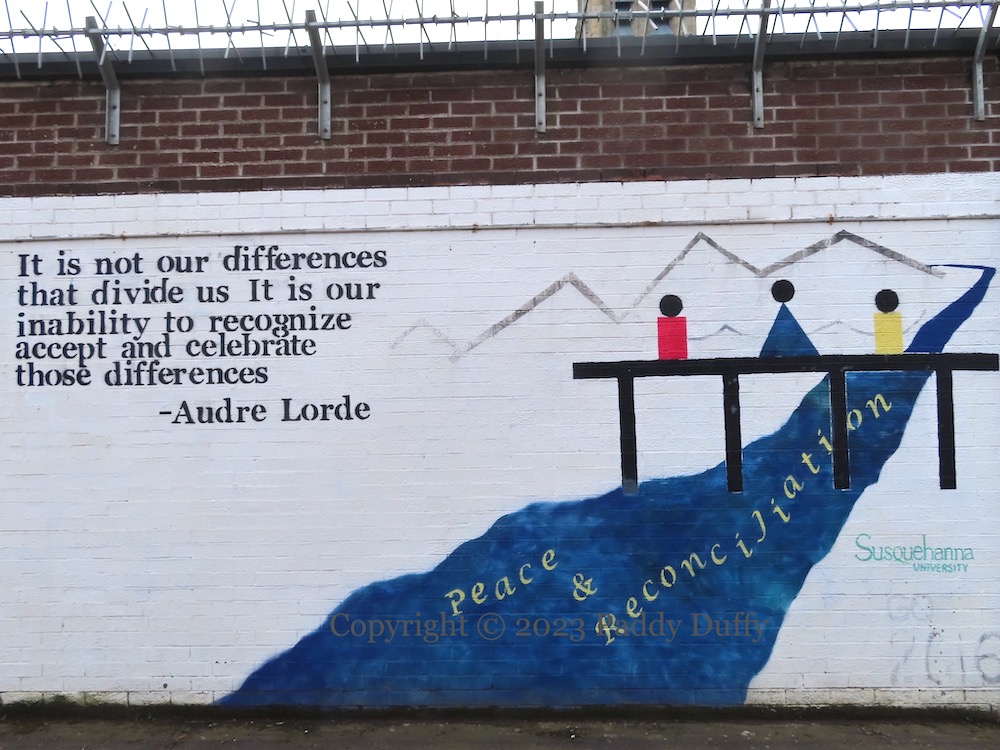
“”It is not our differences that divide us. It is out inability to recognize, accept and celebrate those differences.” – Audre Lorde”, “Peace & reconciliation”.
This does not seem to be an authentic Audre Lorde quote but an extrapolation of some lines from the essay “Age, Race, Class, and Sex: Women Redefining Difference”, where she writes, “It is not our differences which separate women, but our reluctance to recognize those differences and to deal effectively with the distortions which have resulted from the ignoring and misnaming of those differences.” (p. 122 in Sister Outsider).
Painted in 2016 by students from Susquehanna University in Bread Street, Divis. “The river and bridge represent a Lutheran hymn about the peace of mind a river provides and the bridge connecting people” (Spaces4Learning). In 2017, students from the same university painted the gates on the “peace” line – see Ambassadors For Peace.
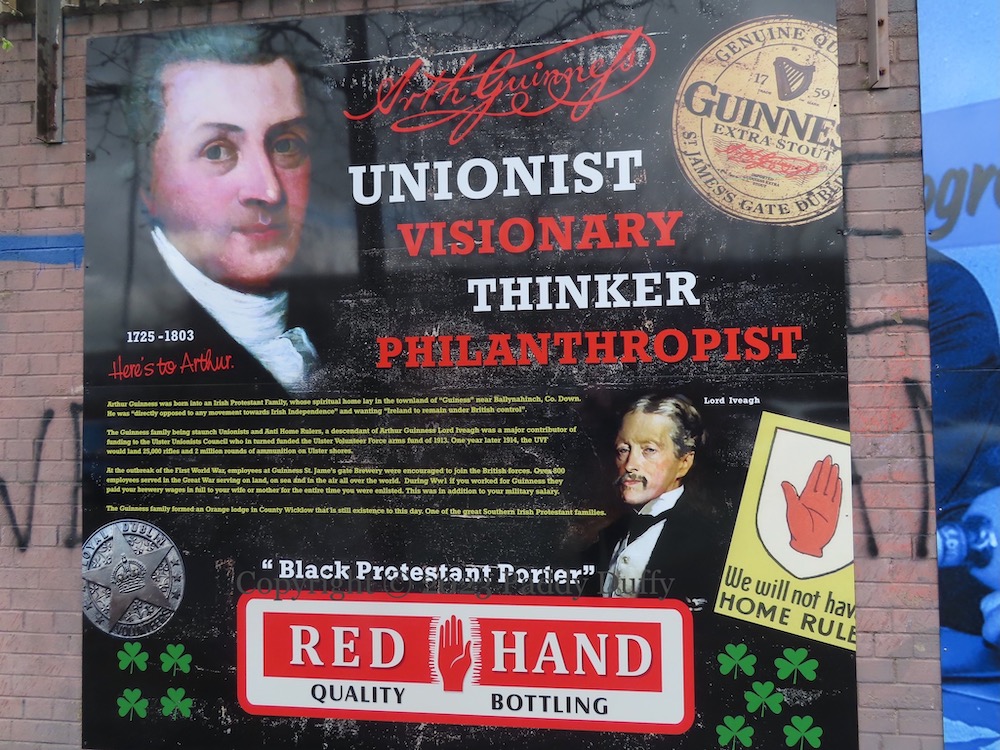
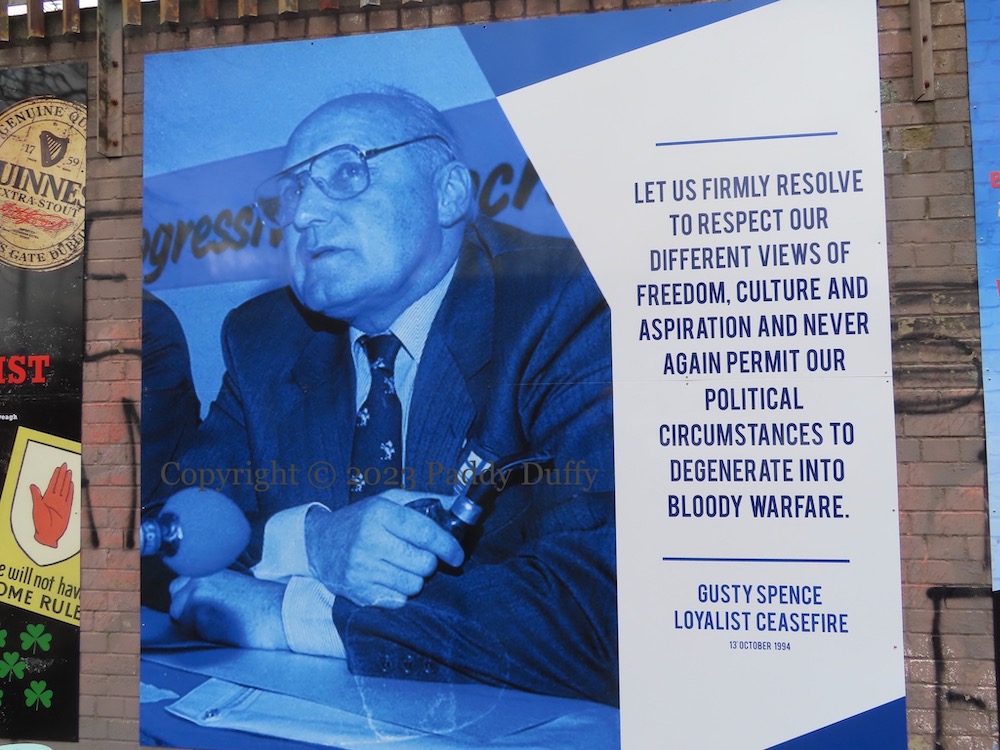
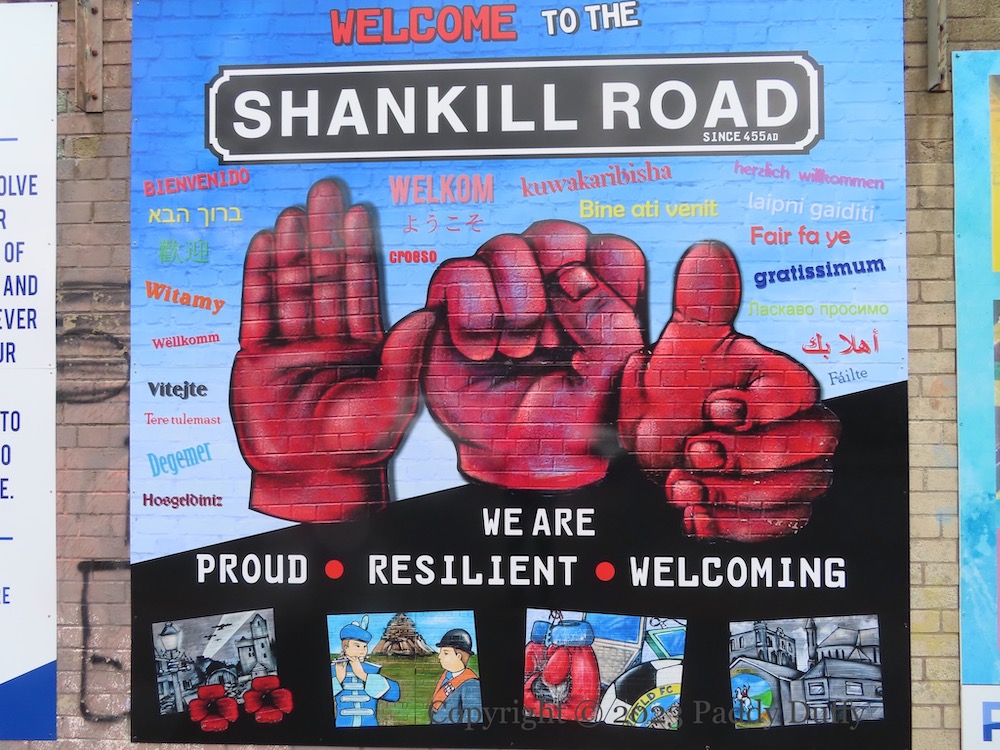
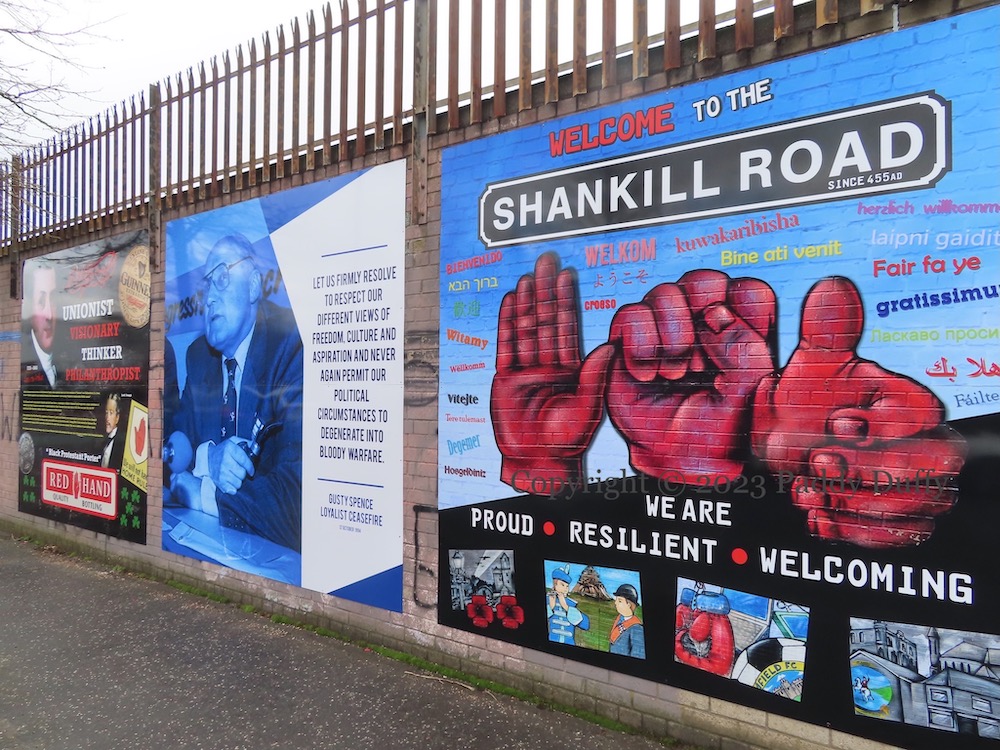
Here are three new pieces above the security gates on Northumberland Street, coving over the “Deserted! Well, We Can Stand Alone” graffiti in the last remaining spot on the wall without a mural. From left to right:
Arthur Guinness: “Black Protestant Porter” as a description of Guinness stems from Arthur Guinness’s opposition to the 1798 rebellion (Indo). The Union Star (newspaper in Belfast – A Planet Of Light And Heat) called Guinness a spy and advised that “United Irishmen will be cautious of dealing with any publican who sells his drink.” (An Phoblacht).
Gusty Spence, a former commander of the UVF, read out the ceasefire statement of the “Combined Loyalist Military Command” (UVF, RHC, and UDA): “Let us firmly resolve to respect our different views of freedom, culture and aspiration and never again permit our political circumstances to degenerate into bloody warfare – Gusty Spence, loyalist ceasefire [statement in full], 13 October, 1994.”
“Welcome To The Shankill Road – we are proud, resilient, welcoming”: The original ‘three hands’ was on Northumberland Street, just above this spot – see Proud, Defiant, Welcoming – which was then reproduced in reduced form in Gardiner Street – see Welcome To The Shankill Road.
This is the most conciliatory statement ever made by loyalism and the decision to put it on Northumberland Street, especially in the context of the internationally famous and associated-with-Ireland Guinness and the “welcome” mural, suggests that the trio is directed at tourists rather than locals.
Harbour Highway underpass in Larne was re-painted in late October (2022) by (in order of appearance) Alana McDowell (ig), Rob Hilken (ig), emic (ig) (Lí Ban and/as otter, which was also the inspiration for iota’s piece in the town – see Shaped By Sea And Stone), Codo (ig), and FGB (ig).
With support from Seedheard Arts (ig) and Mid- & East Antrim council (ig).
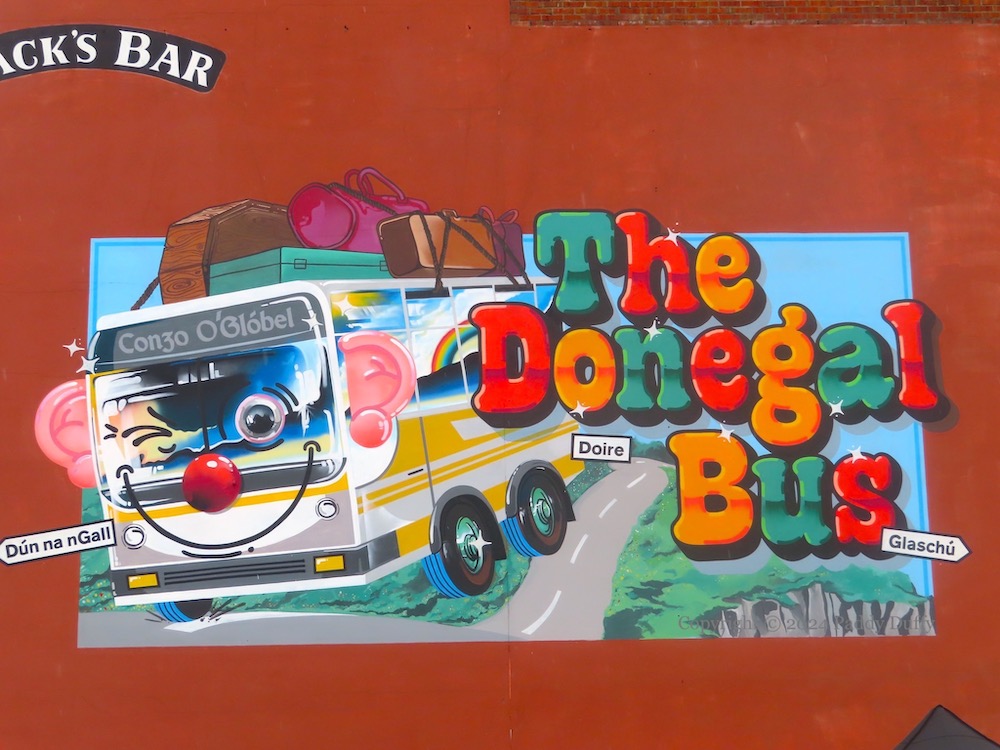
The Derry 2021 street art festival – rebranded as Roots Street Art – was affected by Covid lockdowns (Derry Journal) but several pieces were painted, including this one by the Glöbel Bros (Conzo Throb and Ciaran Glöbel, referring to emigration and economic migration between Dún Na nGall [Donegal], Doire [Derry], and Glaschú [Glasgow].
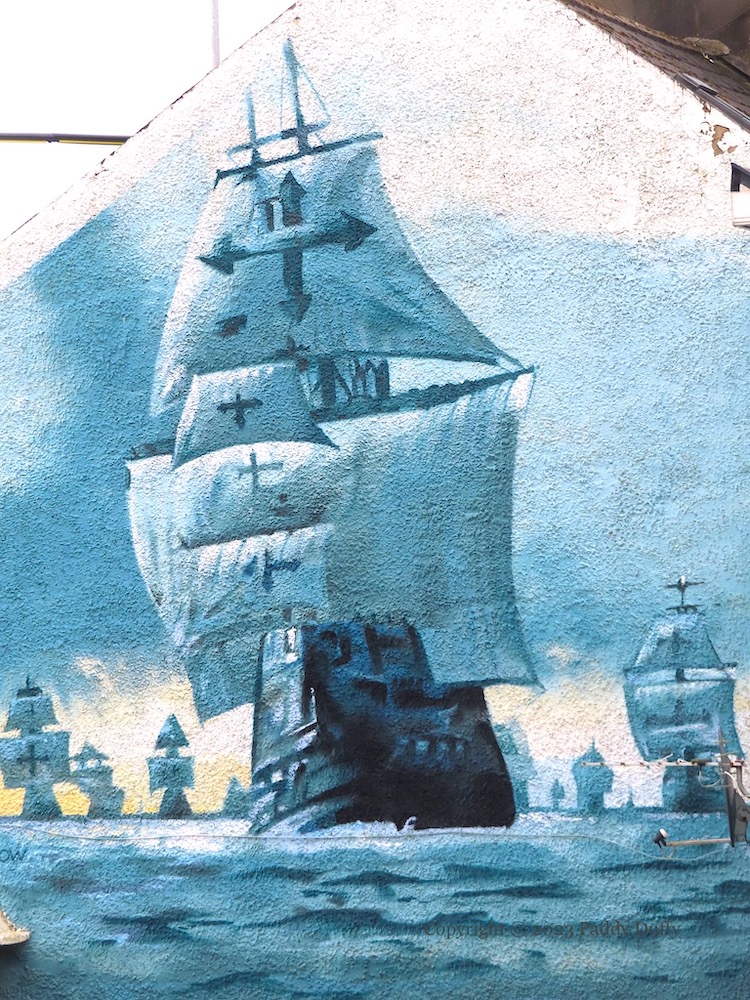
The Spanish galleass La Girona, one of the 130 ships that made up the armada that was unsuccessful against the English in 1588, docked at Killybegs, County Donegal, for repairs to her rudder (WP). When she departed, she got only as far as Lacada Point near Ballintoy, County Antrim, before sinking in a gale with the loss of roughly 1,300 lives and a substantial treasure that was recovered (in part) by Sorley Boy McDonell (portrayed in a Ballycastle mural) and (in part) by modern divers in 1968 (BBC).
Donegal Road, Killybegs, with a bonus image of the docks from the fish shop in Conlin Road.
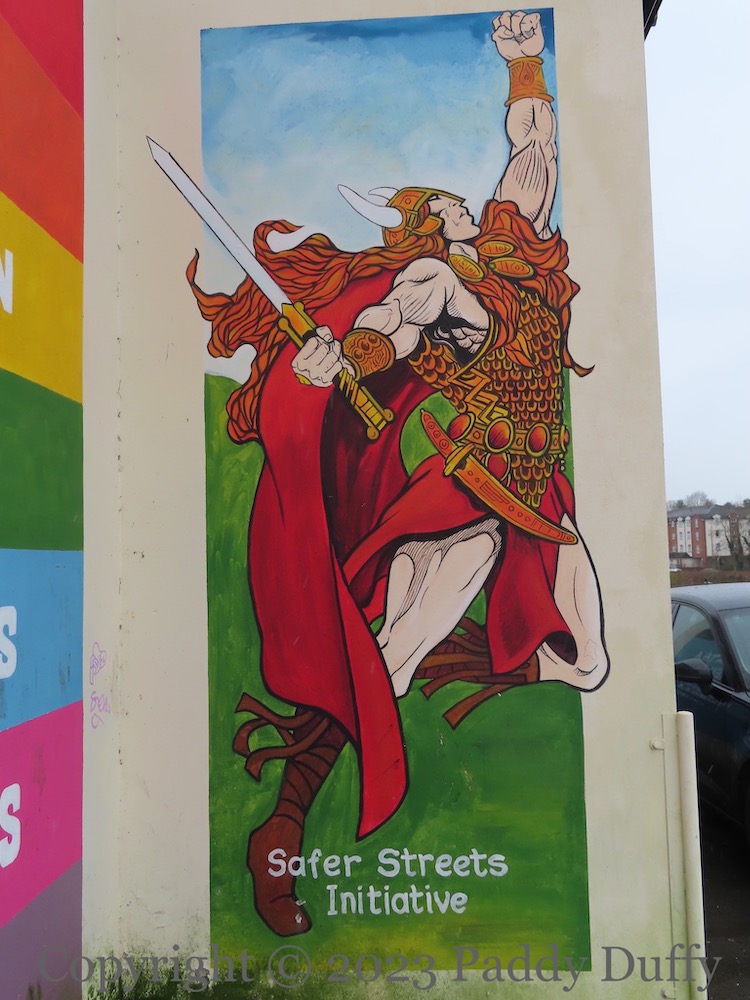
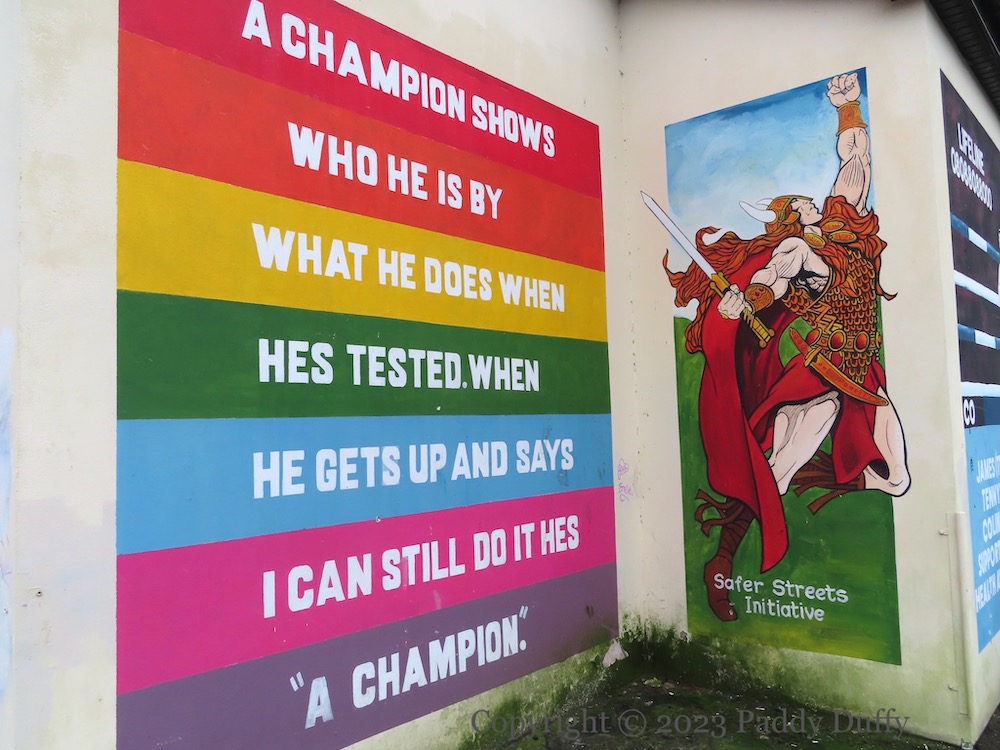
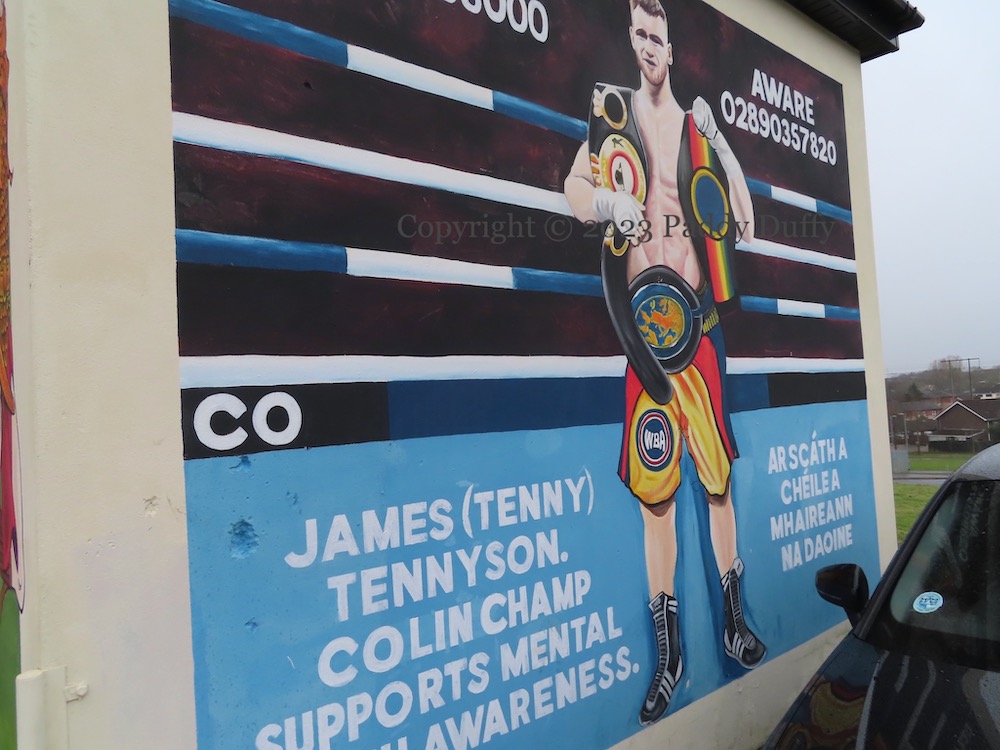
“A champion shows who he is by what he does when he’s tested. When he gets up and says “I can still do it”, he’s “a champion.” In Irish mythology, the Tuatha invade Ireland and battle the Fır Bolg. They are successful but their king Nuadha loses his arm and with it his kingship of the Tuatha. He had it replaced with an arm made of silver and regained his position. He is used here as an inspiration for those struggling with mental health, who are encouraged to call Lifeline or Aware.
(A history of Nuadha in murals is included in the Visual History page on Jim Fitzpatrick.)
The modern-day hero accompanying Nuadha is boxer James “The Assassin” Tennyson, current Irish super-featherweight champion. There are also four mental health boards (shown below) around the corner from Urban Villages Colin Safer Streets Initiative with messages such as “Think, Talk, Feel – Positive”, “Everything that you are is enough”, “Learn from yesterday, live for today, hope for tomorrow”,






 Paddy Duffy Collection