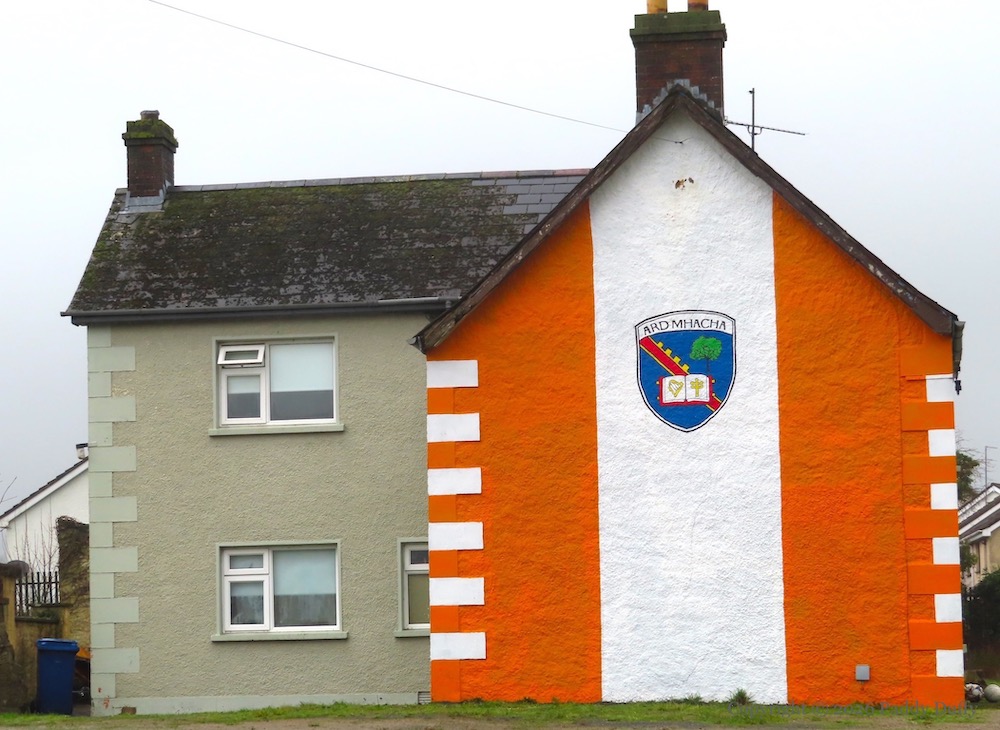
Here is another (see previously: Armagh For Sam) mural supporting Armagh’s senior football team, presumably in connection with its successful 2024 campaign, this time in Newry.
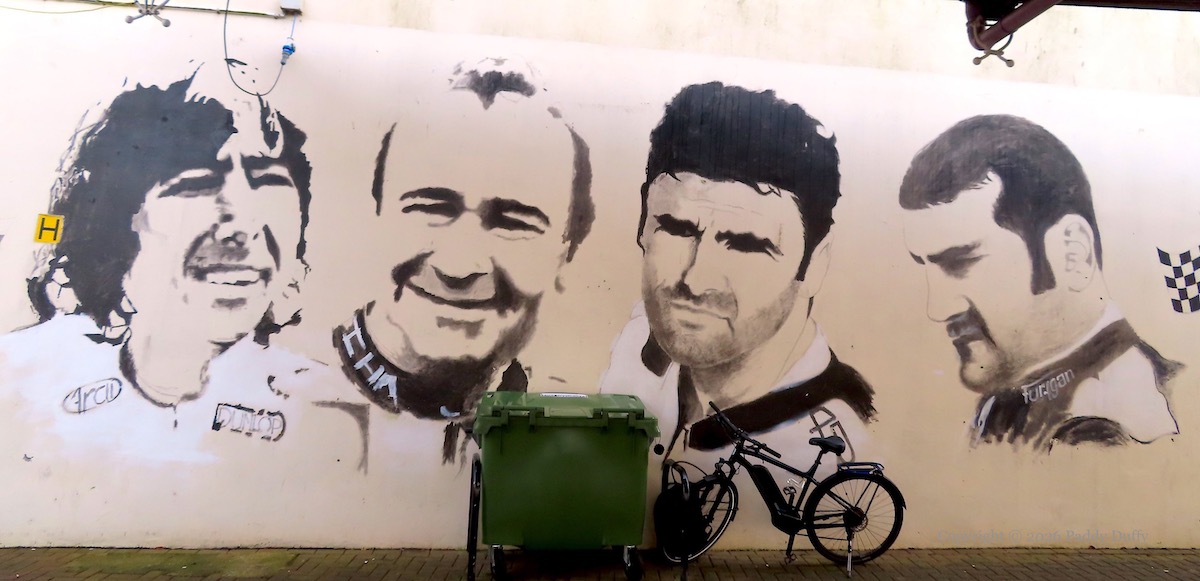
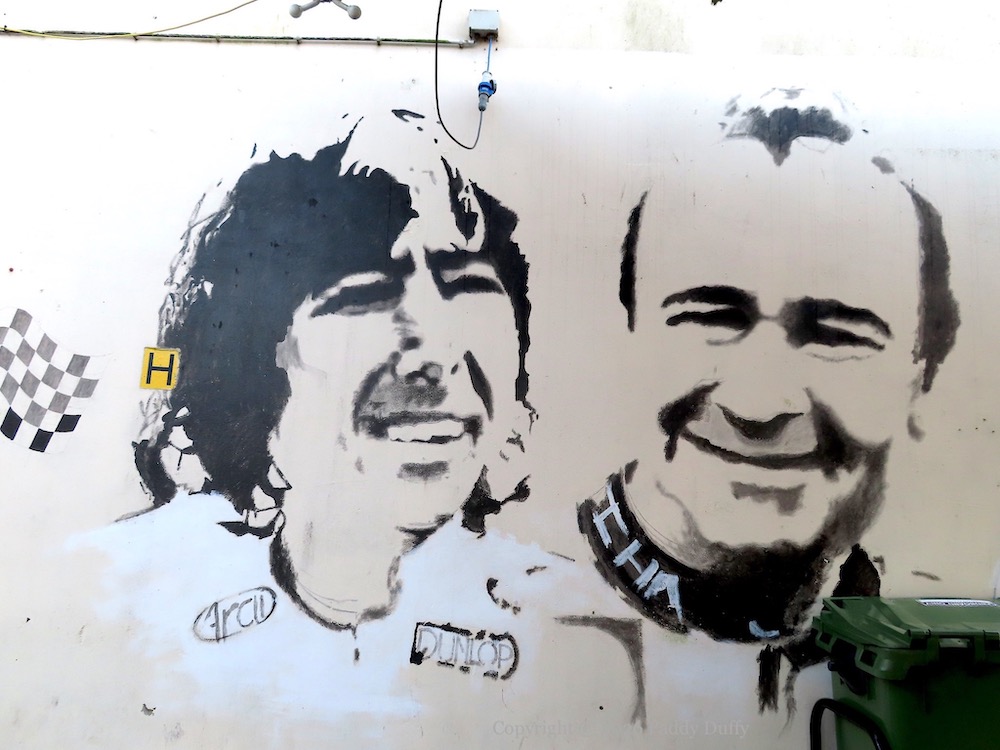
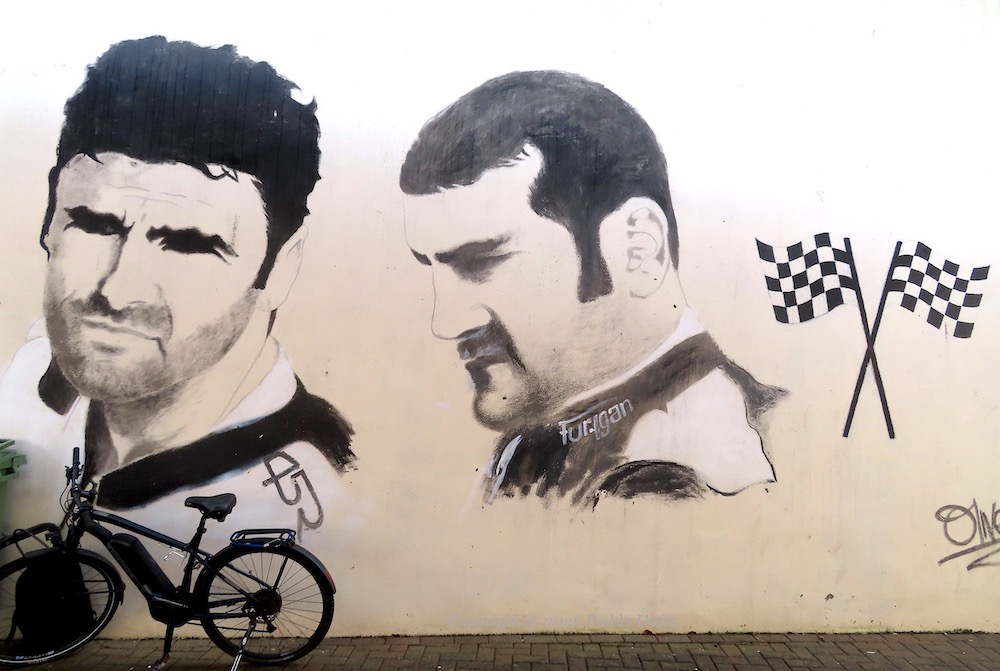
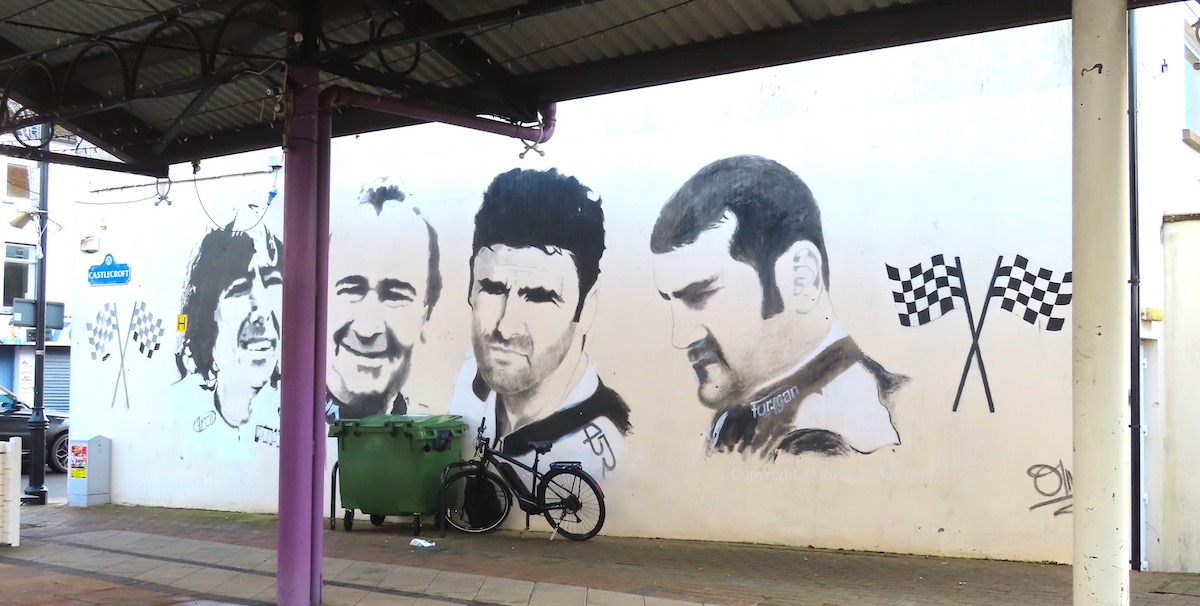
This Ballymoney mural celebrates and commemorates members of the Dunlop family of motorcycle racers. From left to right we see brothers Joey and Robert and then Robert’s sons William and Michael. Joey died in a race in Estonia in 2000; Robert died in 2008 of injuries sustained in a practice session for the North West 200; William died in 2018 in a crash during practice for the Skerries 100. Michael is still alive and currently aged 36; he was Irish Motorcyclist Of The Year in 2025 (BelTel).
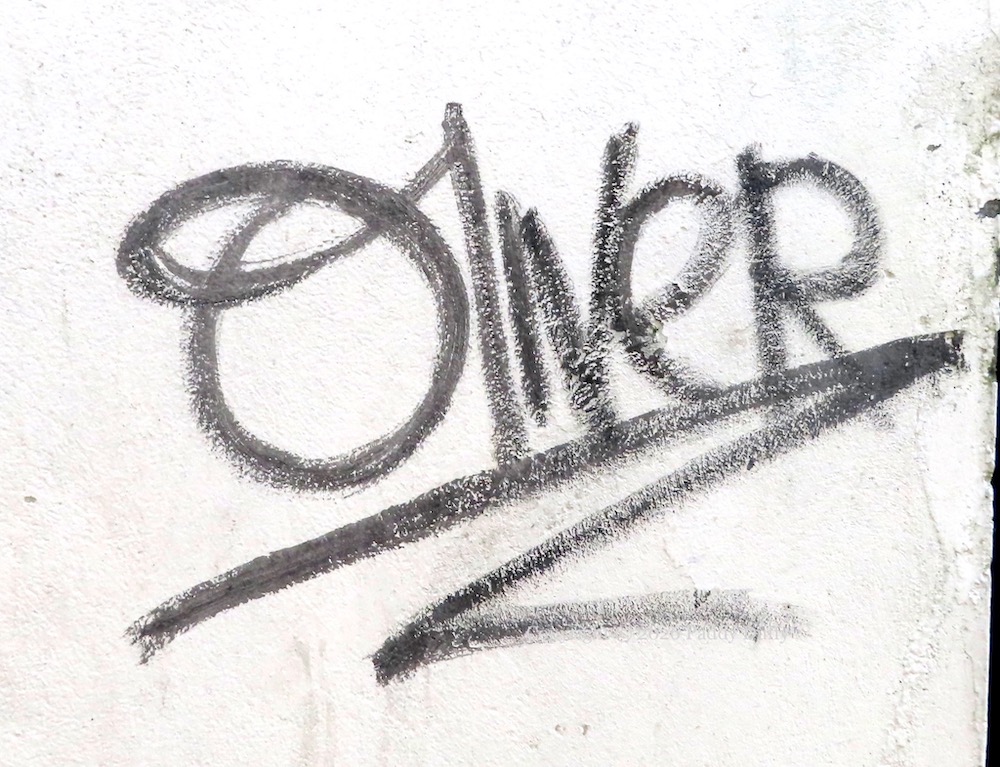
This mural was painted by Oliver McParland (web) in Castlecroft Square, Ballymoney.
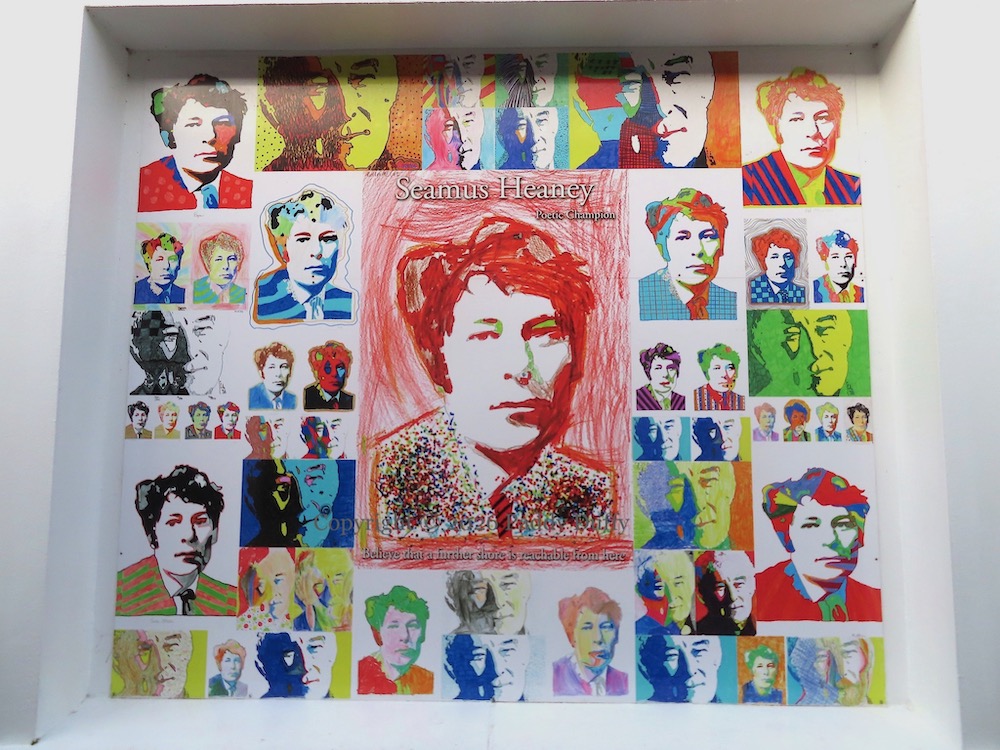
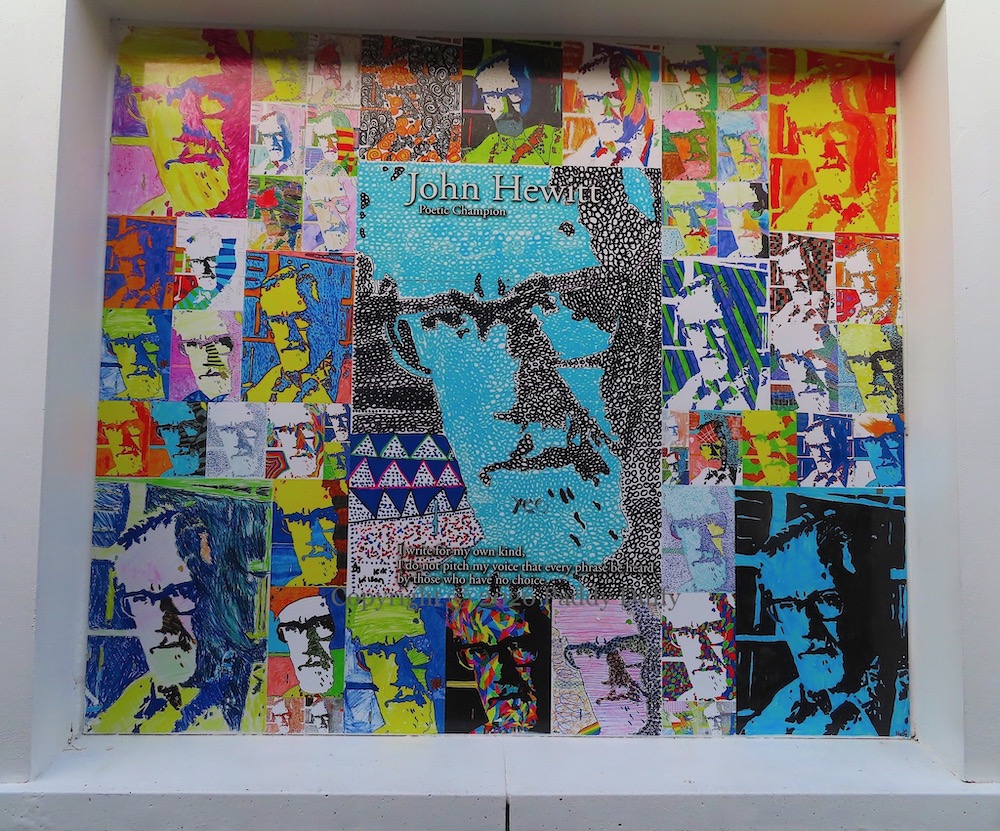
These two panels were created by Ross Wilson (web) along with children from four local Ballymoney schools (BBC | NI World). They portray two famous poets from Northern Ireland, Seamus Heaney and John Hewitt and include a line from a work of each:
Seamus Heaney’s “Believe that a further shore is reachable from here”, comes from The Cure At Troy (youtube).
The quotation from John Hewitt is the first line of the poem I Write For: “I write for my own kind, I do not pitch my voice that every phrase be heard by those who have no choice.”
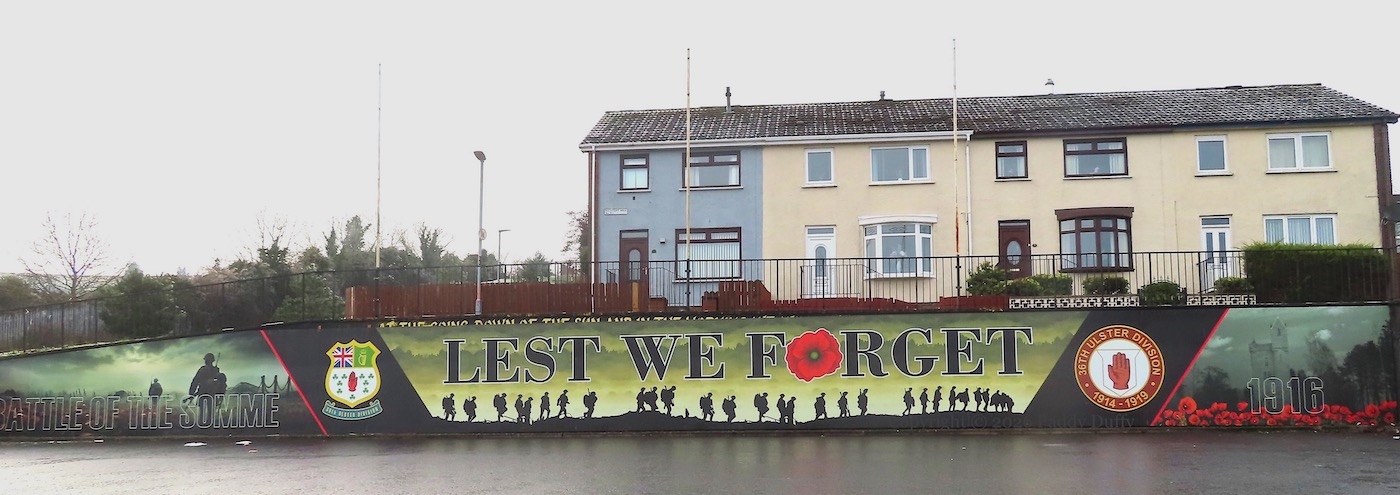
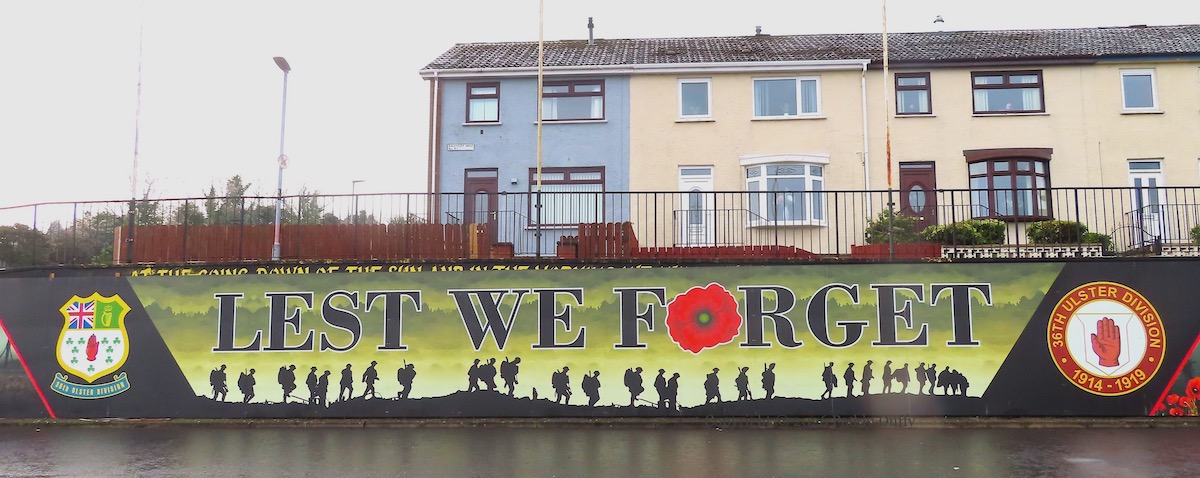
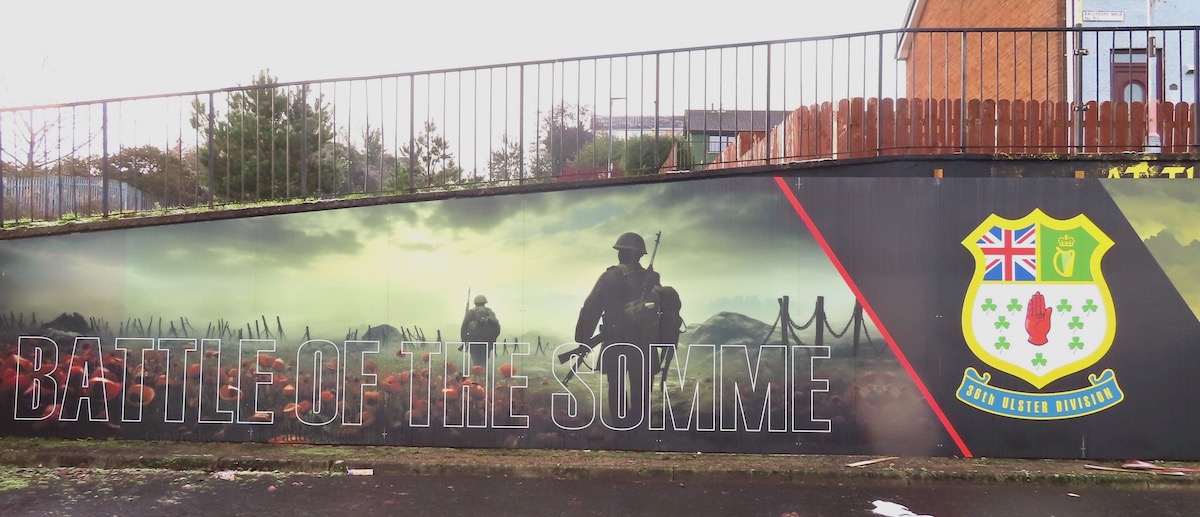
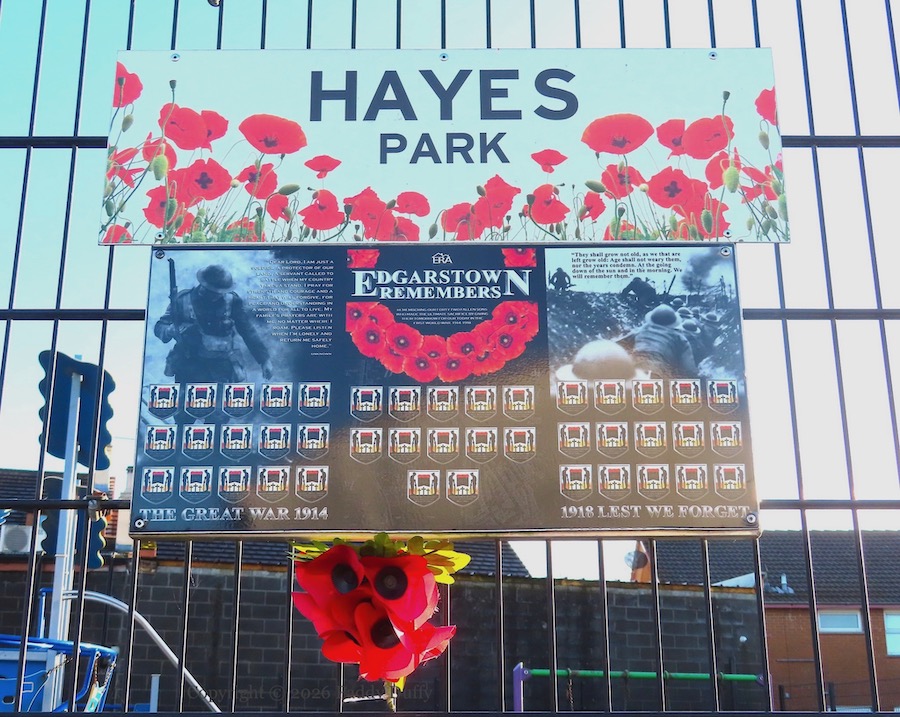
The badge or insignia of the 36th (Ulster) Division most frequently seen in murals is the one on the left of this board in Ballyduff, combining a red hand on a field of shamrocks with the Union Flag and the harp of the Royal Irish Rifles. The simpler insignia of the 36th Division on the right is being seen more frequently – it features a left-handed red hand, while the other uses a right-handed red hand, as do the flags of Ulster and of Northern Ireland.
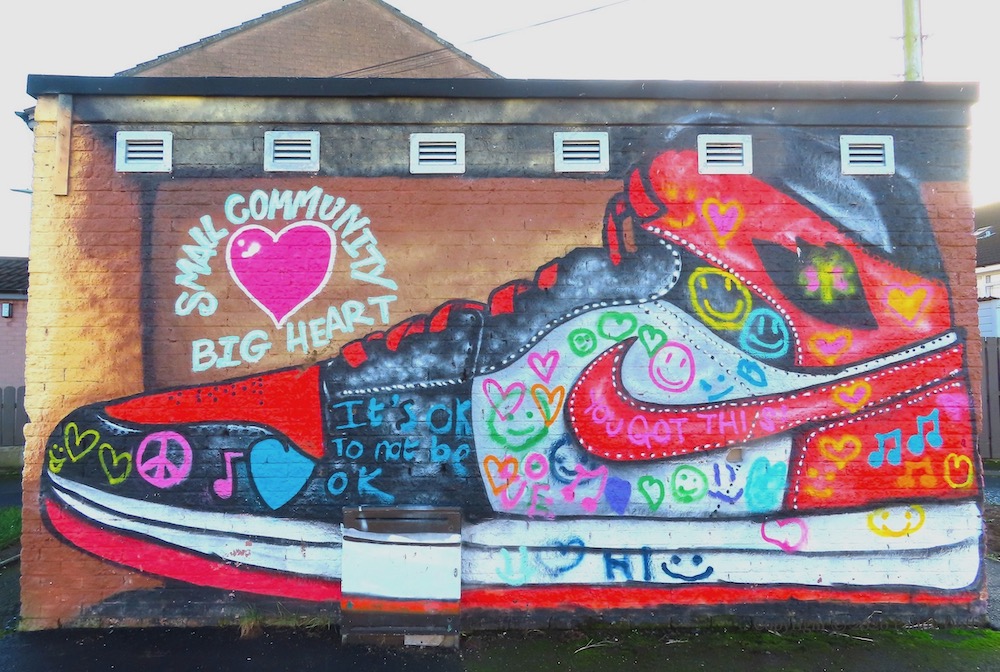
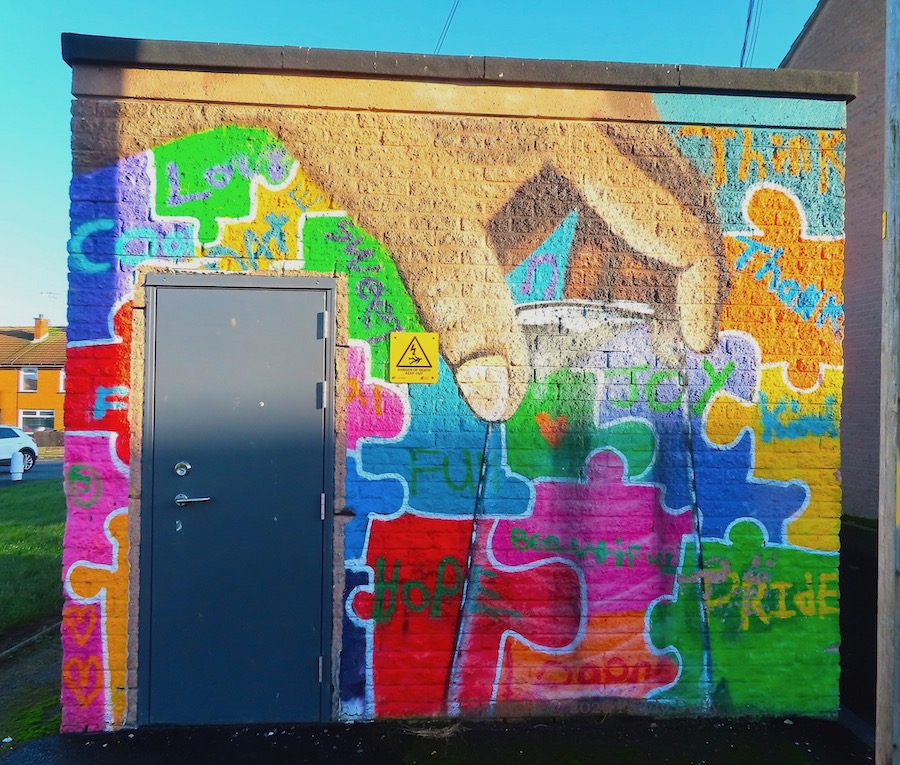
This is a kids/community/mental-health mural on the sub-station in Edgarstown. The art was painted by young people from the area, organised by Edgarstown Residents’ Association in the summer of 2024 (Fb).
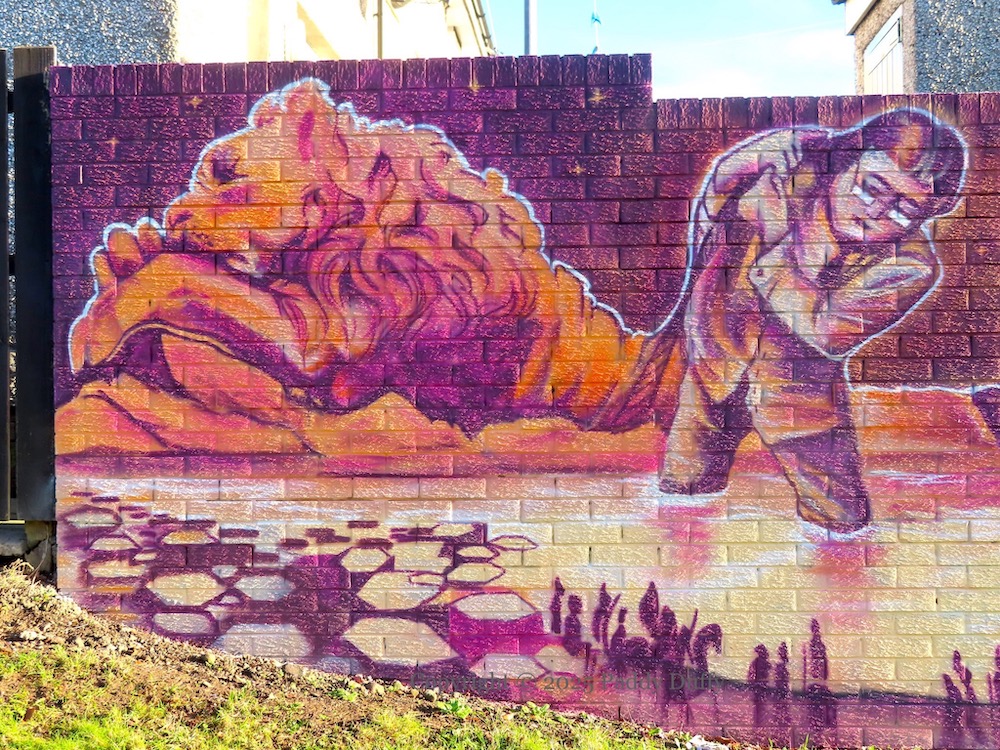
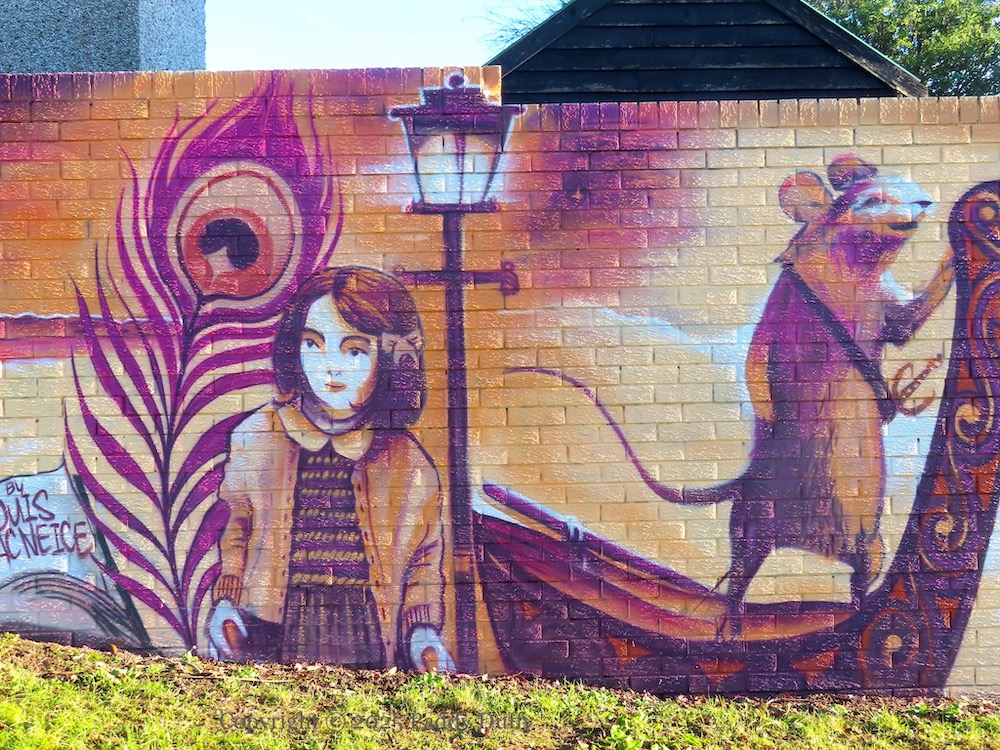
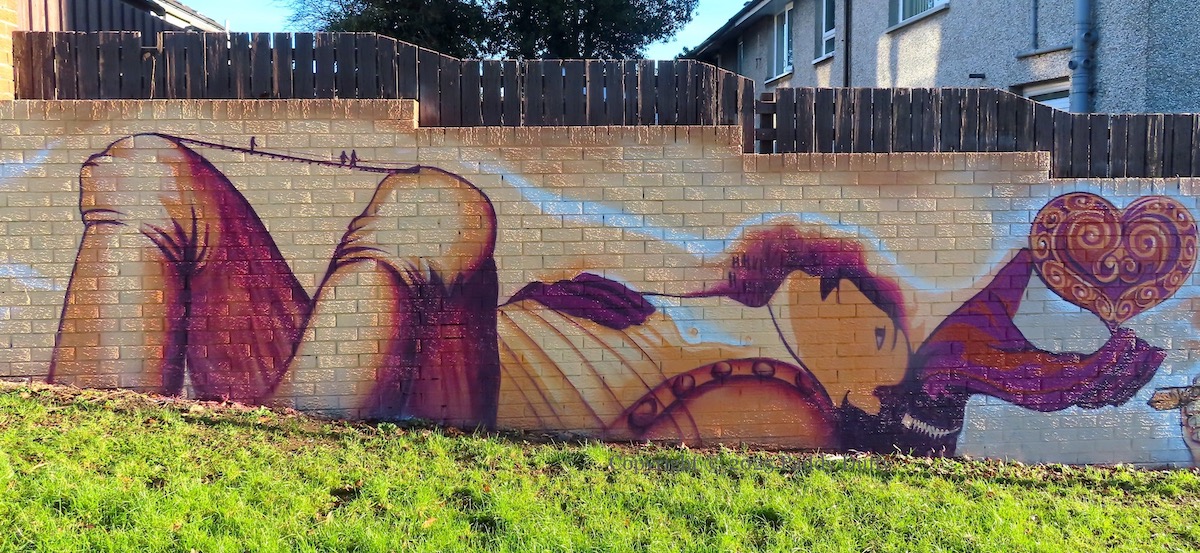
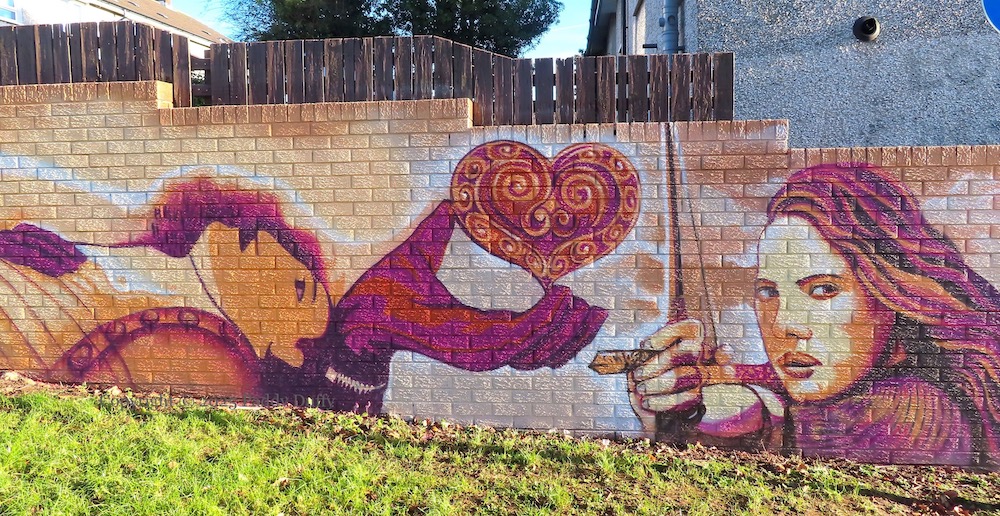
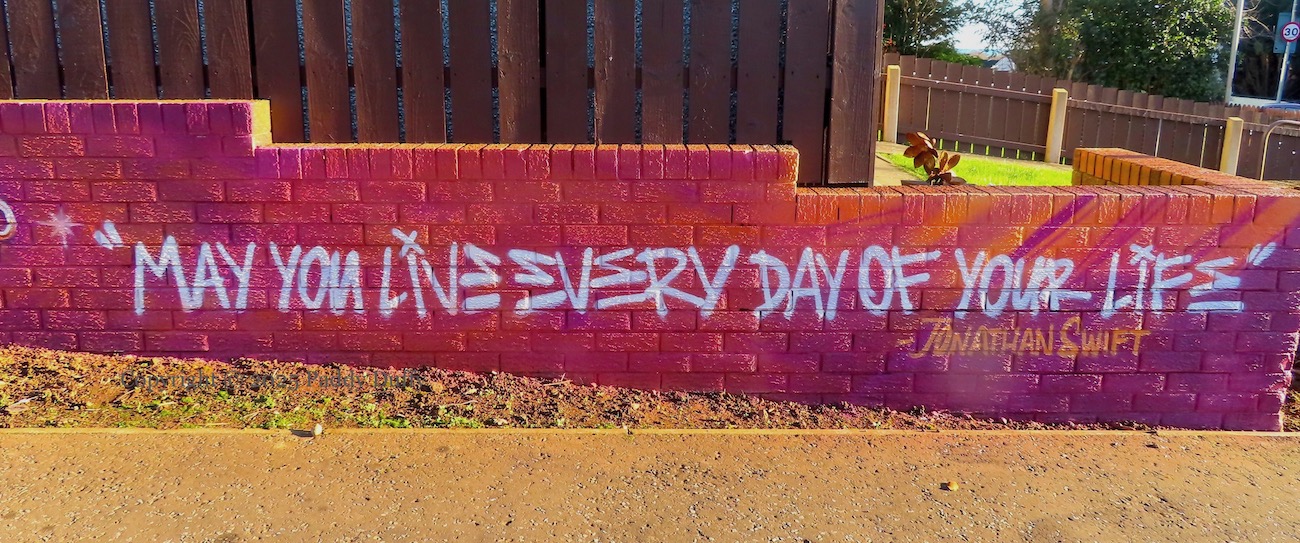
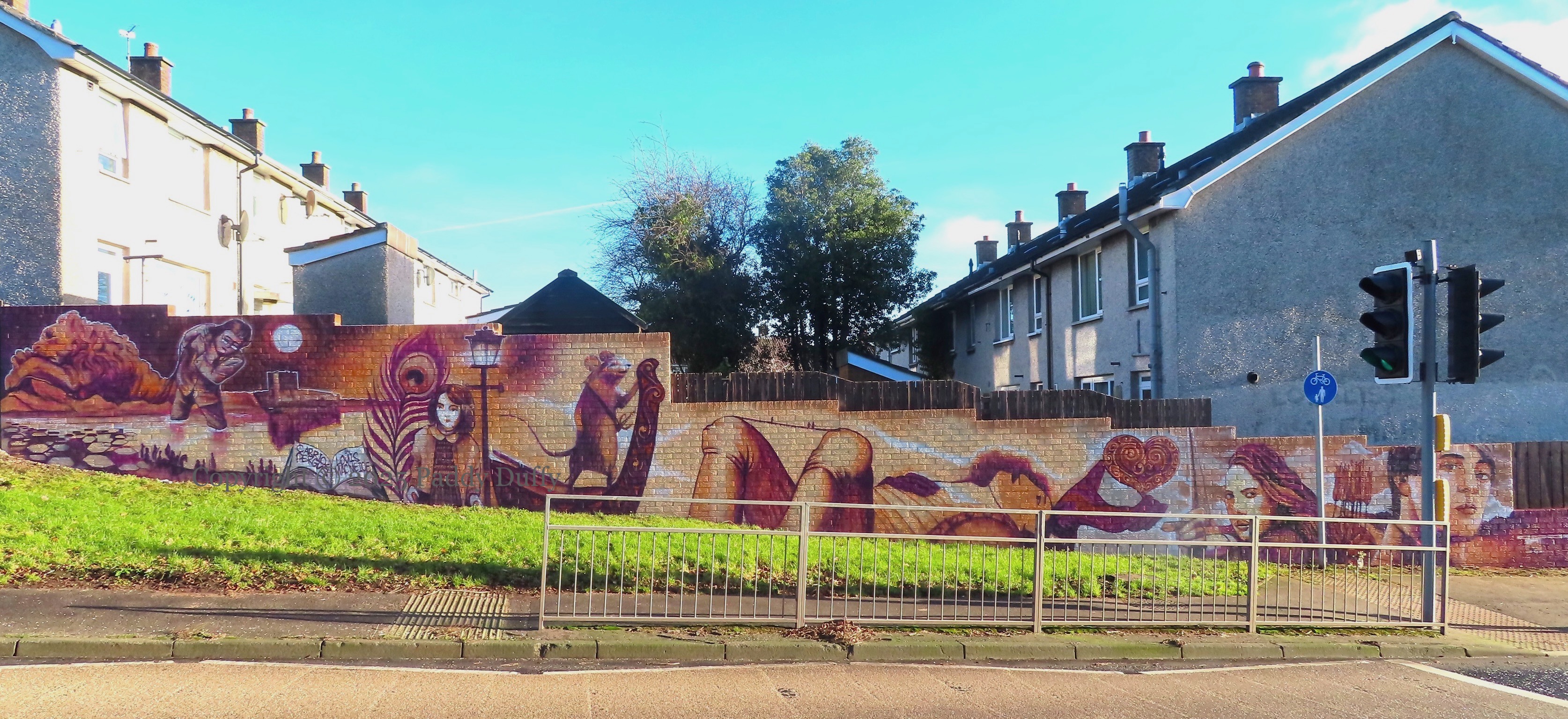
This new mural in Carrickfergus draws on local connections to literary figures Louis MacNeice and Jonathan Swift, as well as the more distantly located CS Lewis.
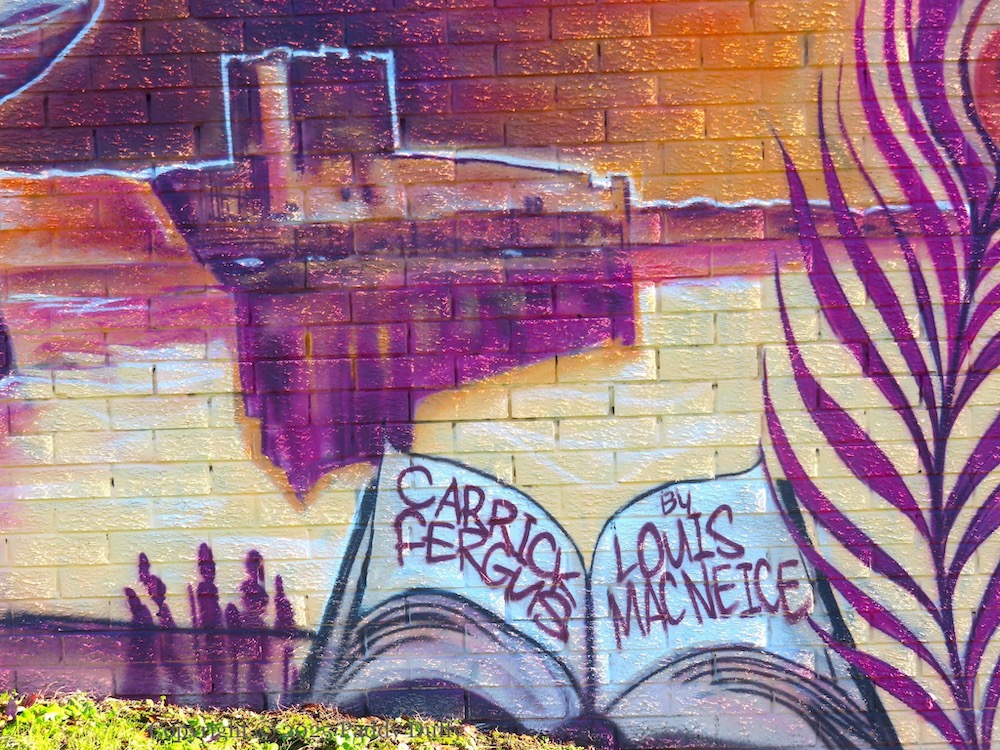
The MacNeices moved from Belfast to Carrickfergus in 1909 when Freddie (later Louis) was an infant and he grew up in the town until he was sent to Sherbourne Prep in Dorset, England, in 1917. In the mural, a book is opened to the page of his poem Carrickfergus, which was written in 1937 and describes the town in geological, historical, industrial, and sectarian terms, and more real than the “puppet world” of Sherbourne.
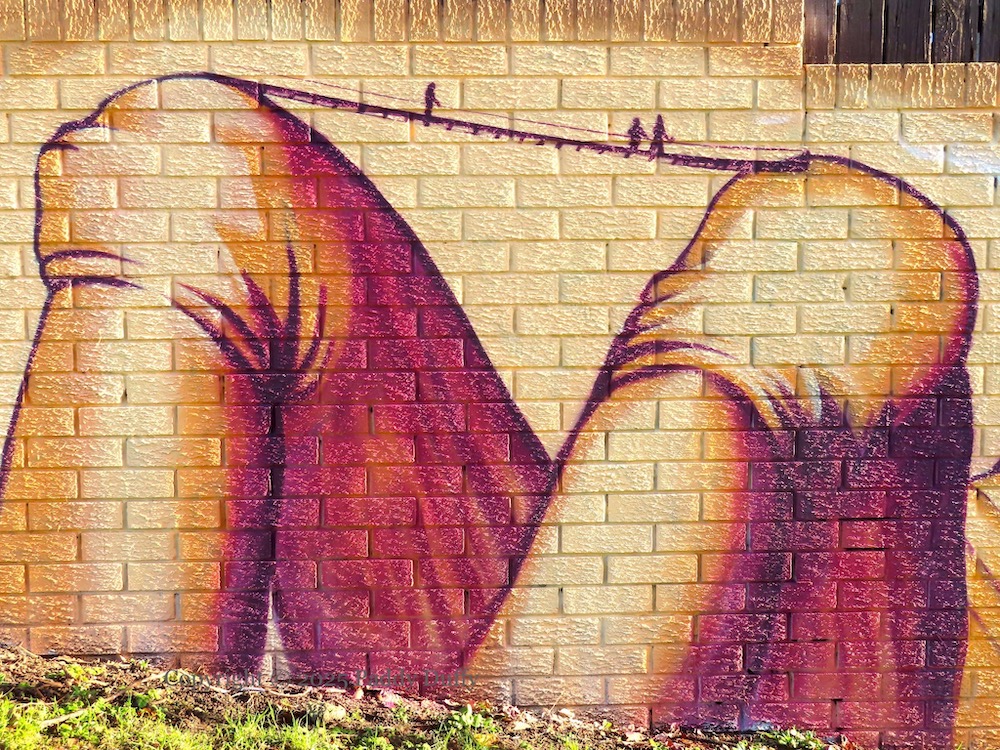
Jonathan Swift was briefly (1694-1696) a Church Of Ireland cleric in Kilroot, near Carrickfergus. In the mural, Carrick-A-Rede rope-bridge is shown strung between the knees of Gulliver as he wakes in Lilliput. The Swift quote on the extreme (viewer’s) right is from Polite Conversation (p. 154): Miss Notable is toasted by both Mr Neverout – “May you live a thousand years”; “Pray, Sir, don’t stint me”, she replies – and Colonel Atwit – “May you live every day of your life”.
Lewisian figures include Aslan the lion and Reepicheep the mouse. The final (right-most) figures would seem to be Katniss and Peeta from The Hunger Games.
Painted by DMC on North Road, Carrickfergus, at the entrance to the Castlemara estate, as a complement and competitor to the PUL boards.
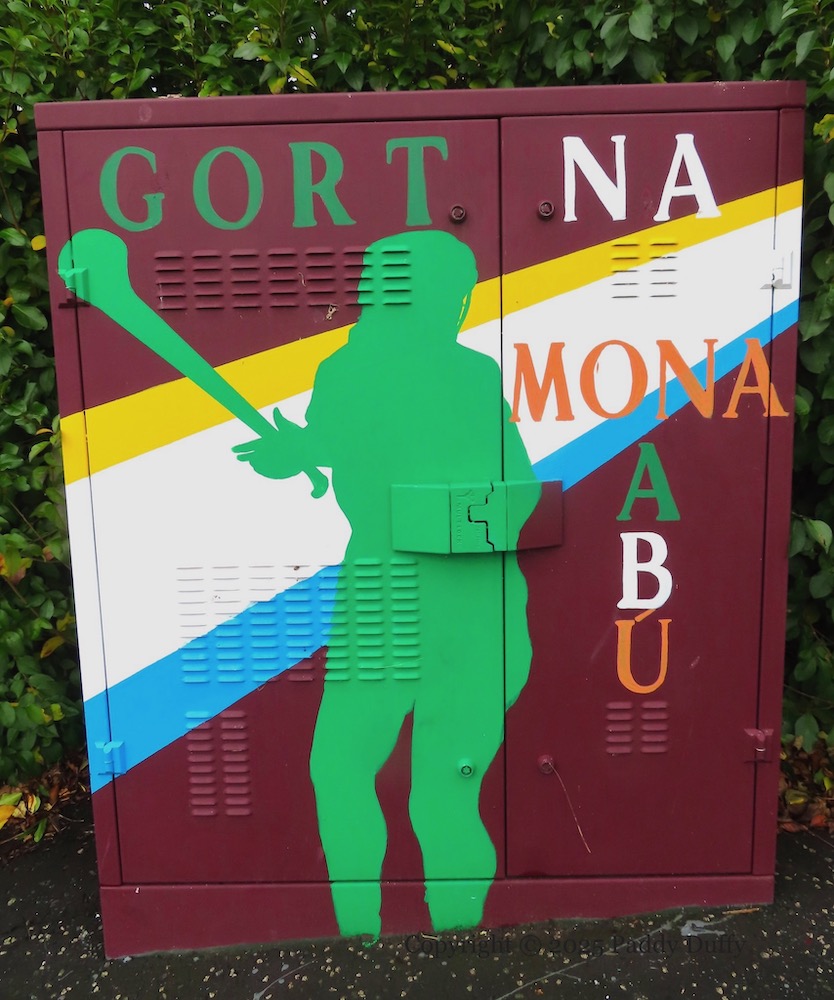
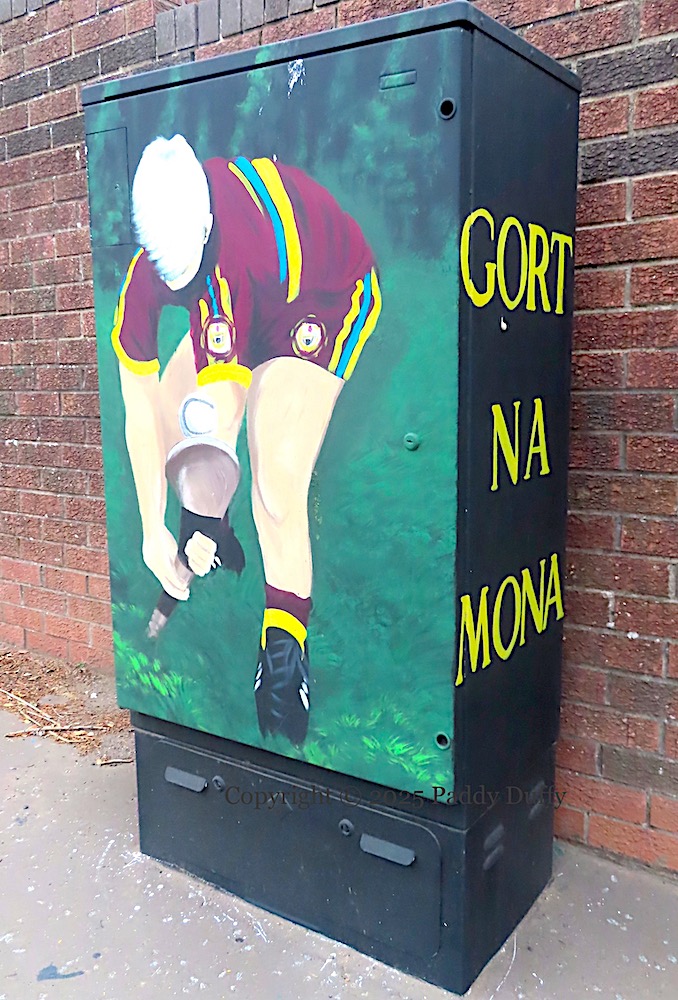
Gort Na Móna CLG was founded in 1974, developing out of the old Gort Na Móna secondary (before it became part of Corpus Christi). NVTv produced a programme to celebrate the fiftieth anniversary (youtube). These painted junction boxes are on Monagh Road and the Springfield Road.
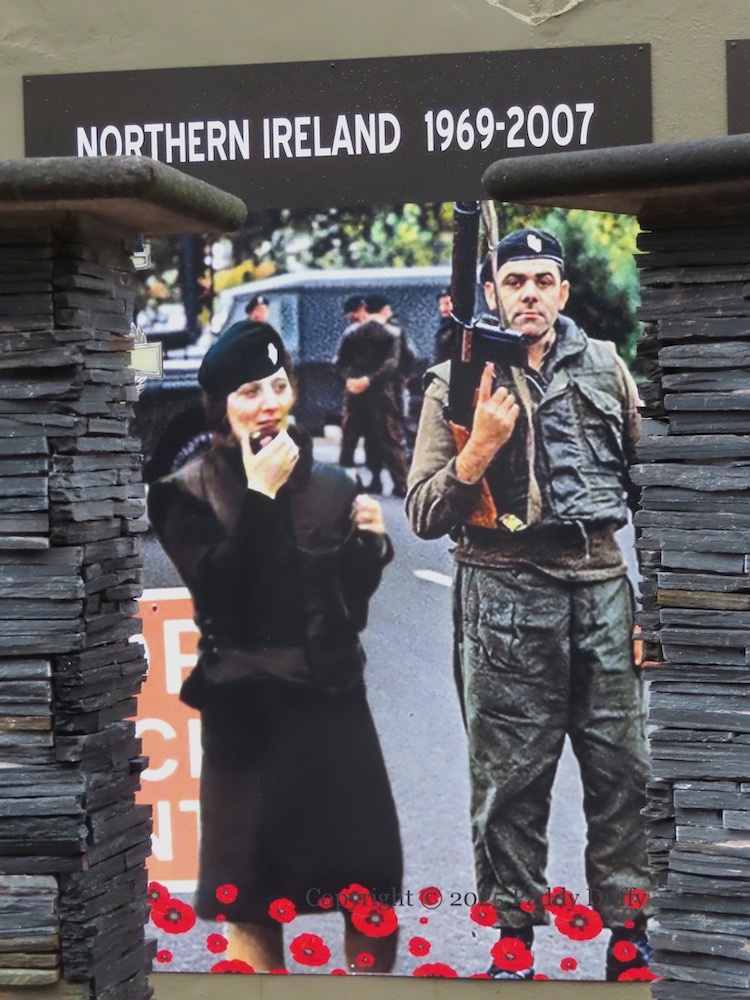
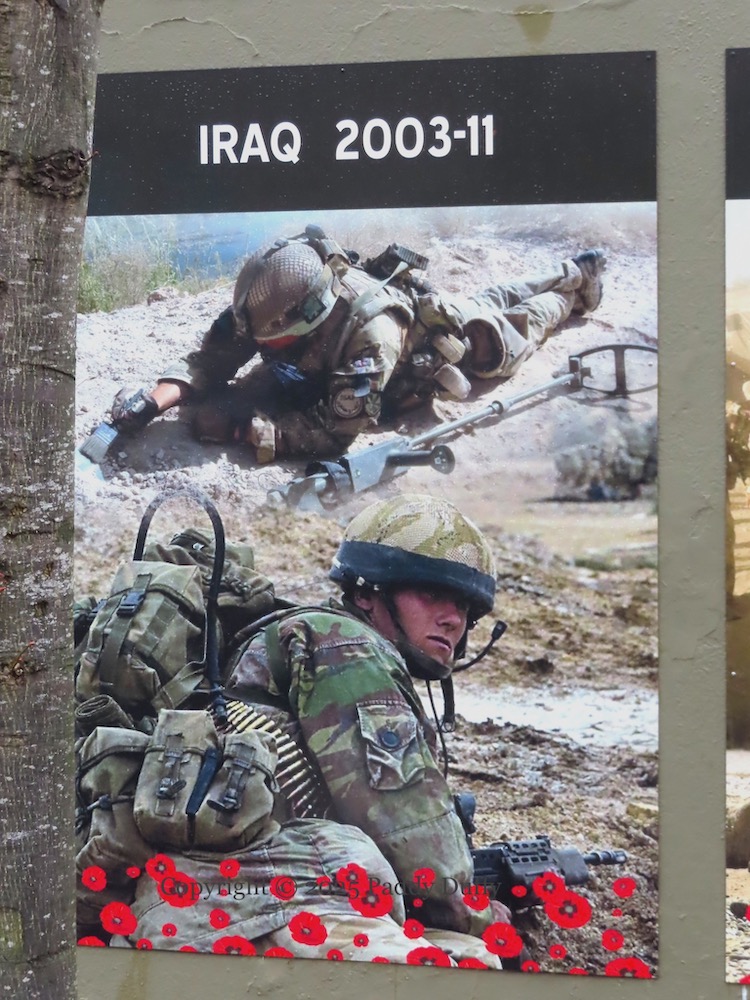
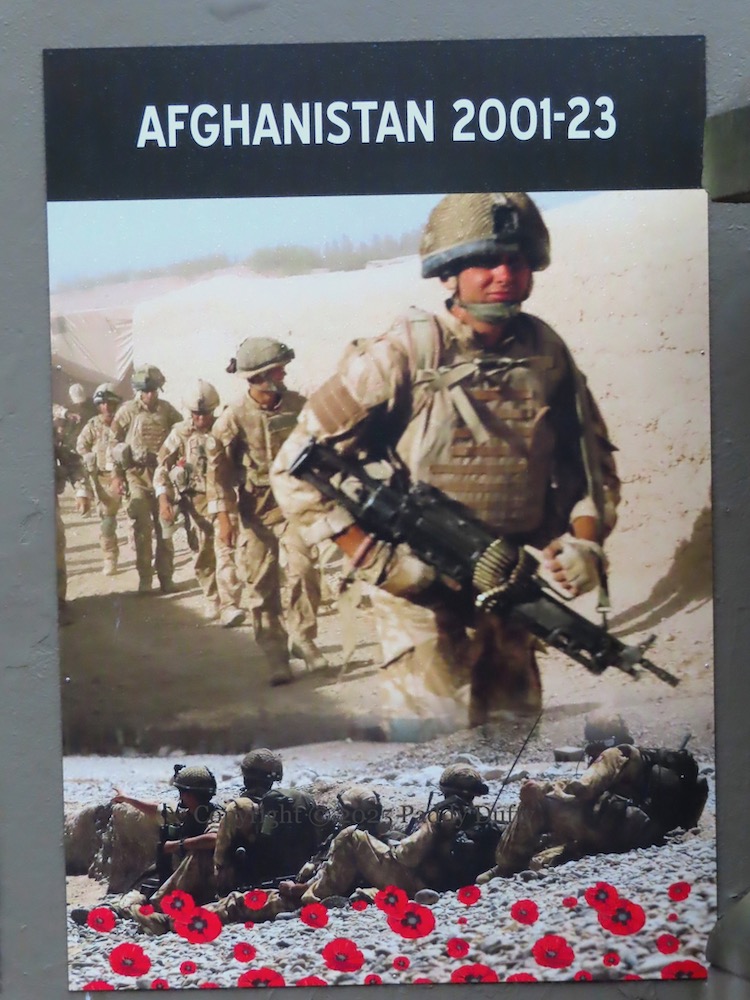
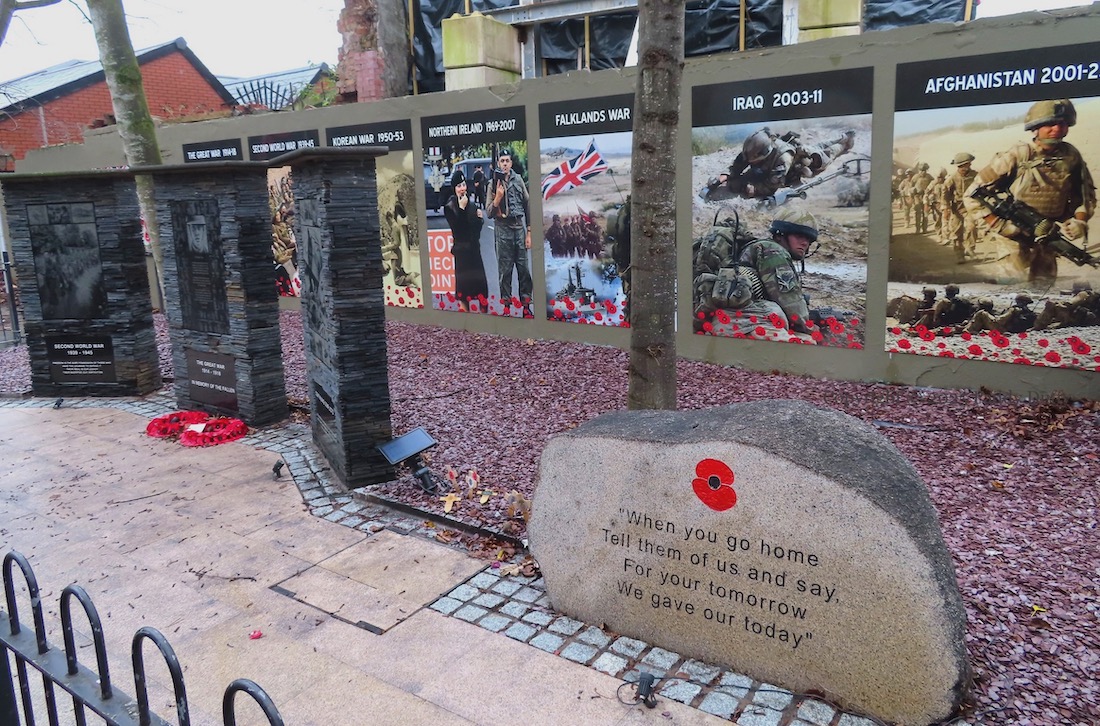
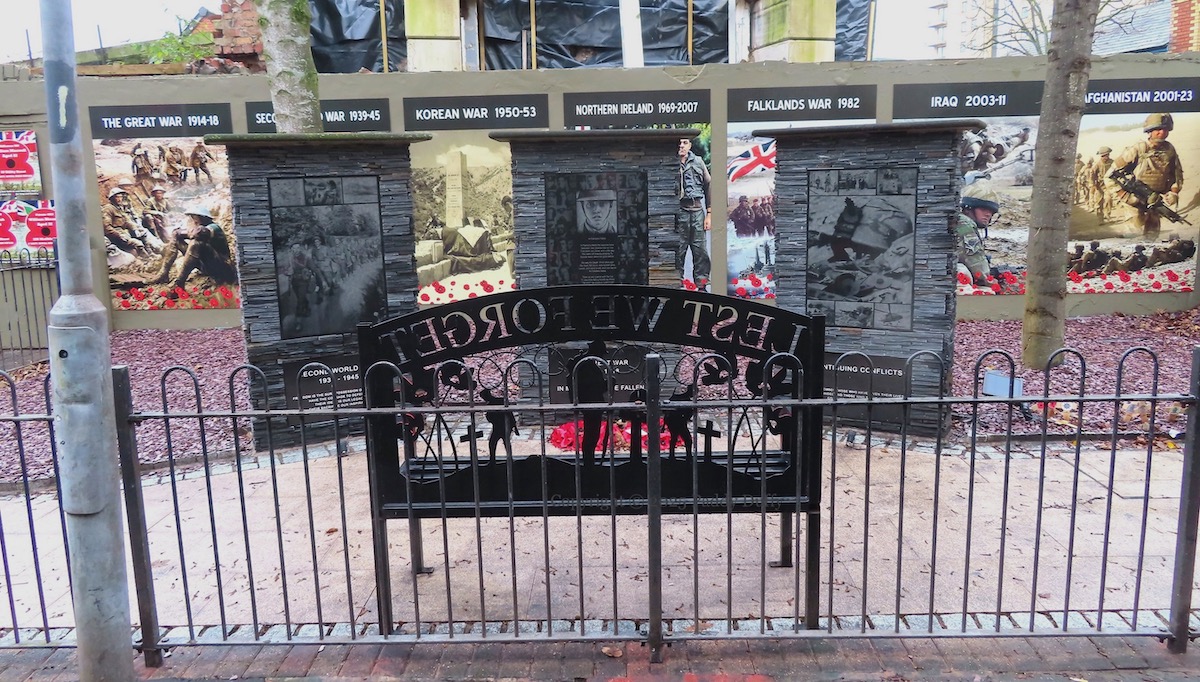
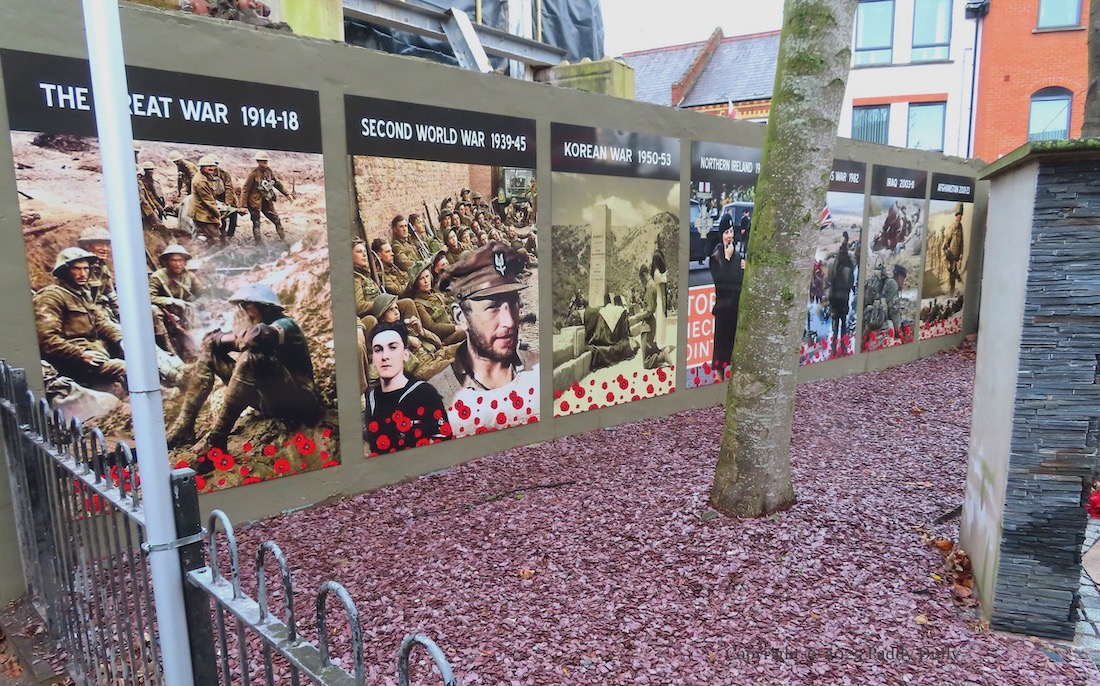
Printed panels illustrating the engagements of the British Army in the twentieth and twenty-first centuries have been added to the three stones (seen in Continuing Conflicts) that marked the World Wars and “continuing conflicts”. The conflicts depicted are the Great War 1914-1918, Second World War 1939-1945 (with individual photos of James Magennis and Blair Mayne, Korean War 1950-1953, Northern Ireland 1969-2007, Falklands War 1982 (the photo on the right is of troops “yomping”), Iraq 2003-2011, Afghanistan 2001-2023.
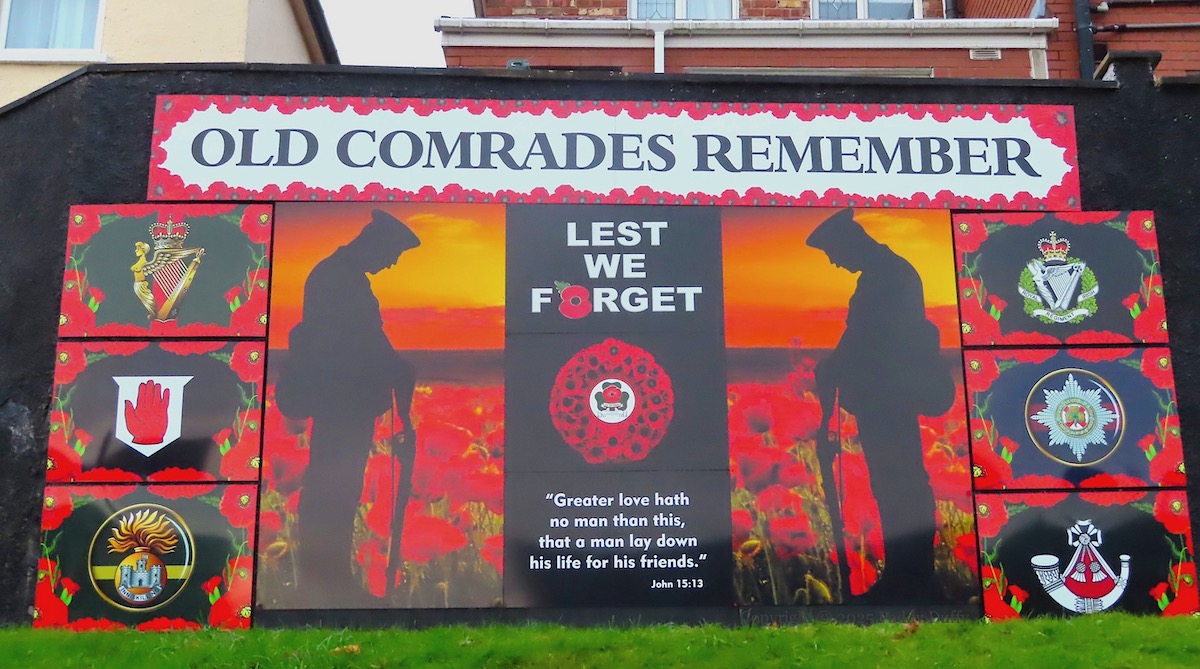
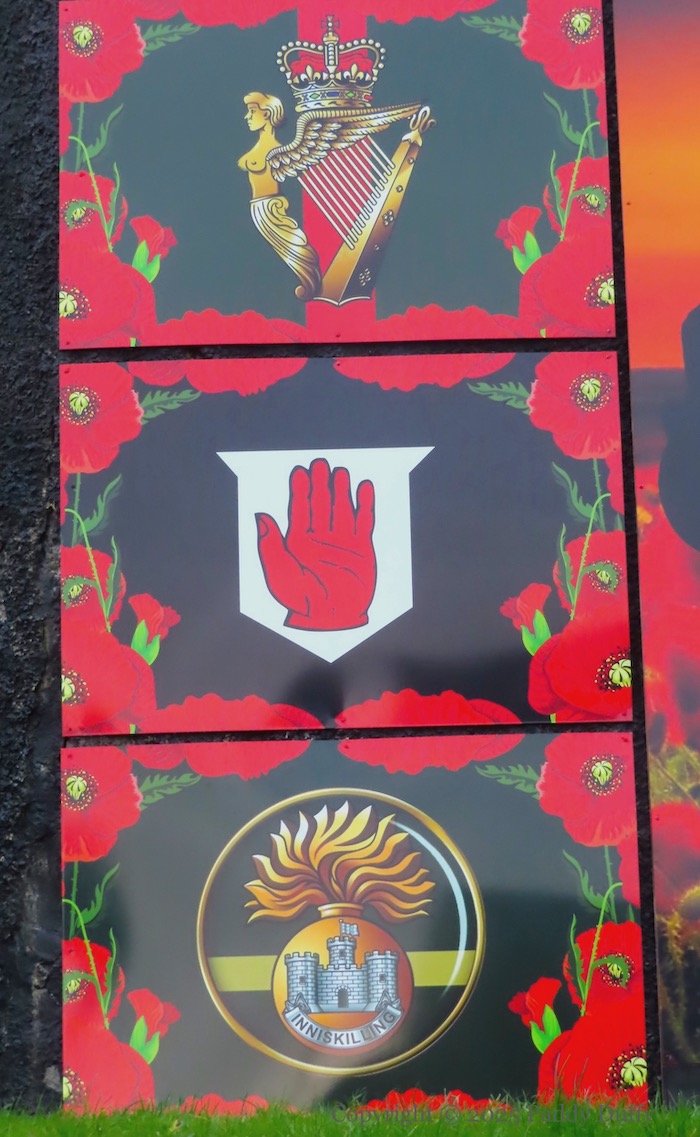
This entry updates the images seen in November’s Lest We Forget, with the addition of six military insignia to either side of the ‘Old Comrades’ board that was added just after Remembrance Sunday.
On the left (top to bottom): Royal Irish Rifles (later the Royal Ulster Rifles), 36th (Ulster) Division, Royal Inniskilling Fusiliers; on the right: Royal Irish Regiment, Order Of St Patrick, British Light Infantry.
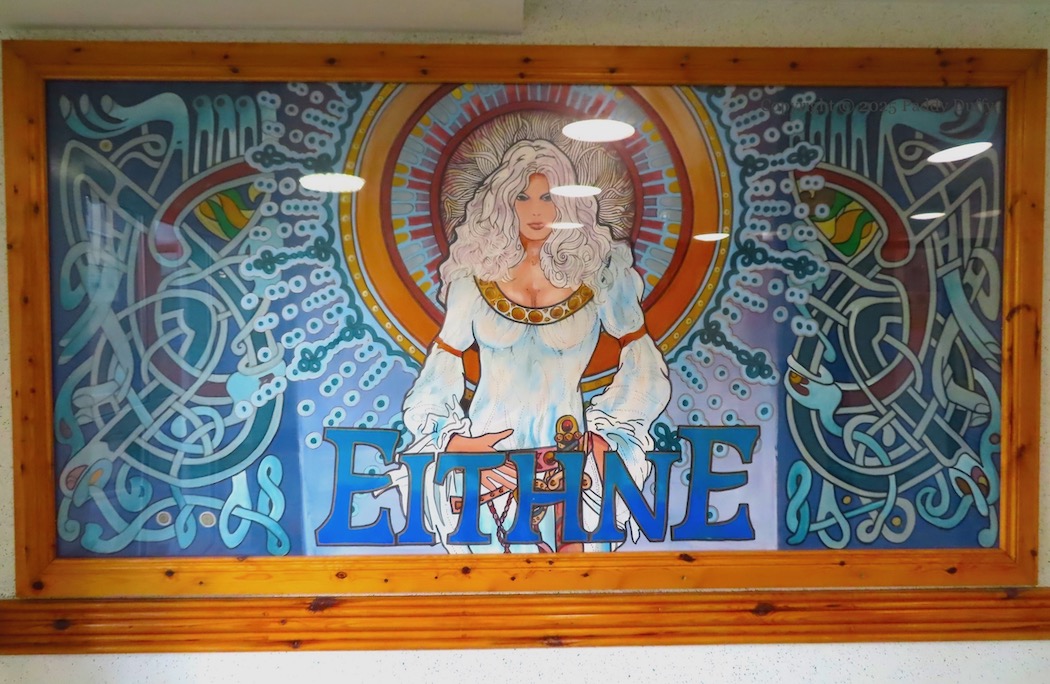
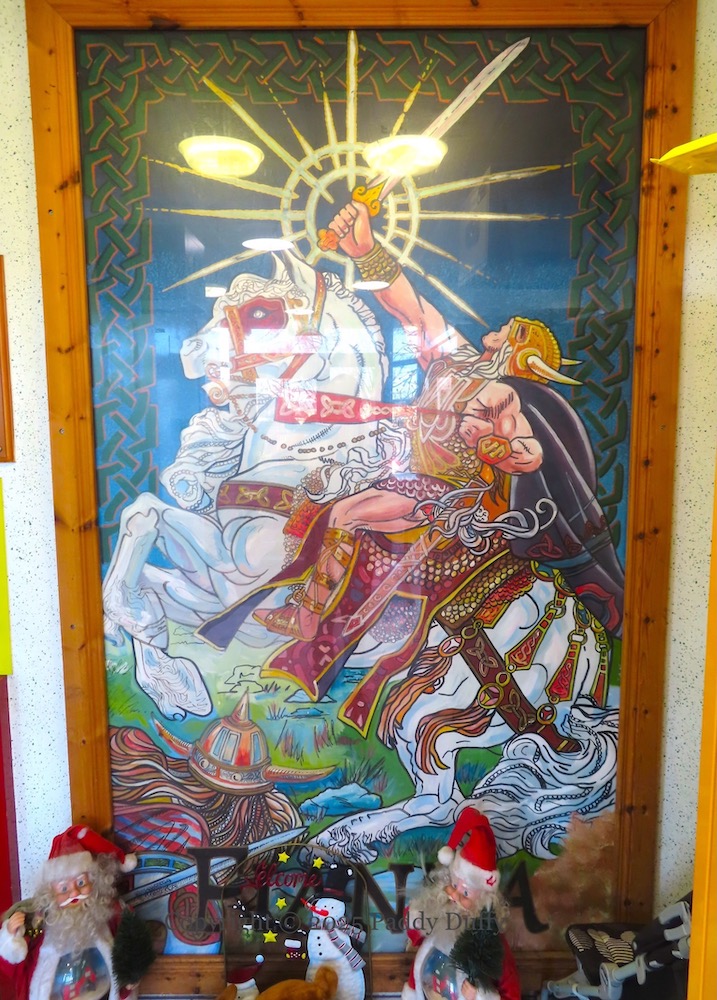
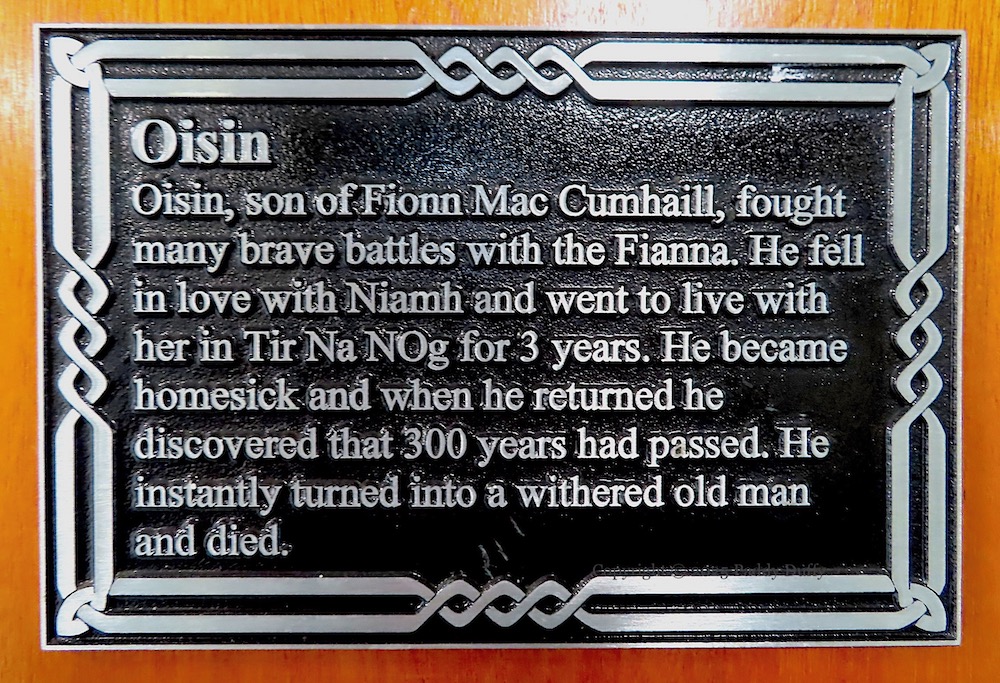
The seven “houses” (tower blocks) in the New Lodge are named after figures from Irish mythology: Méabh, Eıthne, Cú Chulaınn, Fınn, Na Fıanna, Gráınne, and Oısín. In the foyer of each house there is a painting of the eponymous hero, painted by Danny D and Marty L in imitation of Jim Fitzpatrick (as is explicitly acknowledged in the Gráınne painting, below): Eıthne is represented by Fitzpatrick’s Palu The Cat Goddess; Na Fıanna are represented by Lugh; Gráınne is represented by Fann. The bulls are by Finbarr O’Connor; Cú Chulaınn is inspired by the Oliver Sheppard statue in the GPO.
For the old names of the buildings, and the pairs of hunger-strikers painted on the tops of six of the seven towers, see New Lodge Flats.
“Fıonn Mac Cumhaıll gained fable knowledge after sucking his thumb which he burned while cooking the magical Salmon of Knowledge. He followed in his father Cumhall’s footsteps becoming captain of the Fıanna. His death at the Battle of Gabhra marked the beginning of the decline in the might of the Fıanna.”
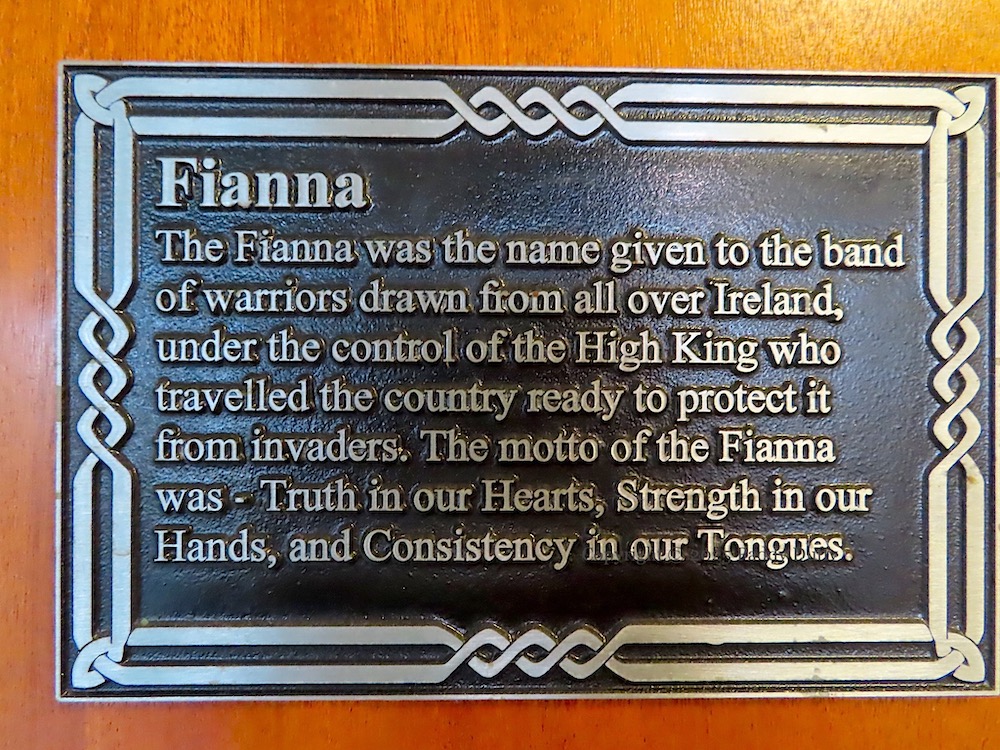
“The Fıanna was the name given to the band of warriors drawn from all over Ireland, under the control of the High King who travelled the country ready to protect it from invaders. The motto of the Fıanna was – Truth in our Hearts, Strength in our Hands, and Consistency in our Tongues.”
“Gráınne, daughter of Cormac Mac Art, High King of Ireland, betrothed to a grey-haired Fıonn Mac Cumhaıll but ran away with the handsome young Dıarmuıd before the marriage took place. She returned to marry Fıonn after Dıarmuıd’s death.”
“Oısín, son of Fıonn Mac Cumhaıll, fought many brave battles with the Fianna. He fell in love with Nıamh and went to live with her in Tír Na nÓg for 3 years. He became homesick and when he returned he discovered that 300 years had passed. He instantly turned in a withered old man and died.”














 Paddy Duffy Collection