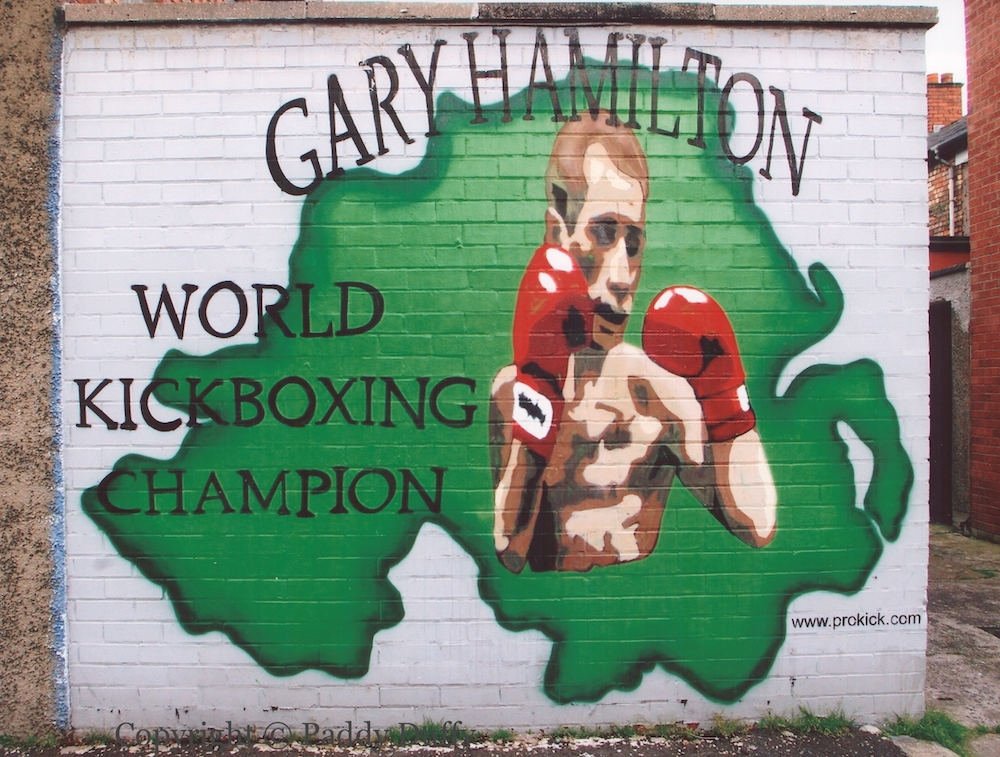
“Gary Hamilton – world kickboxing champion – www.prokick.com“. Hamilton held the featherweight full contact world title from 2002-2009 (WP). The Prokick gym is in east Belfast.
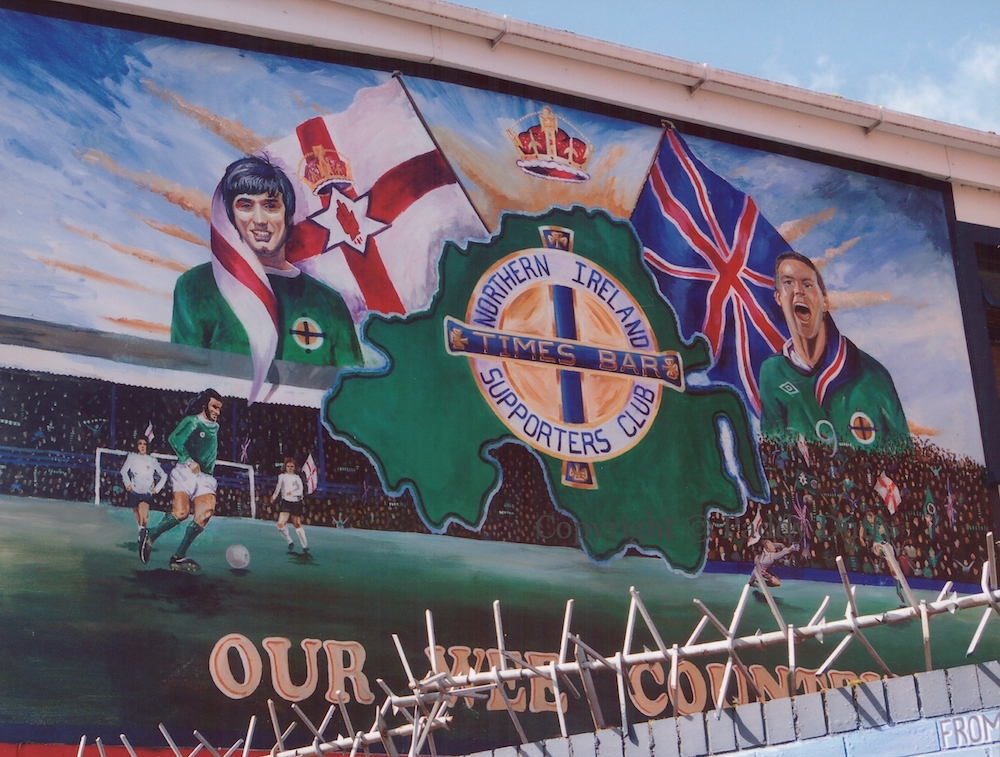
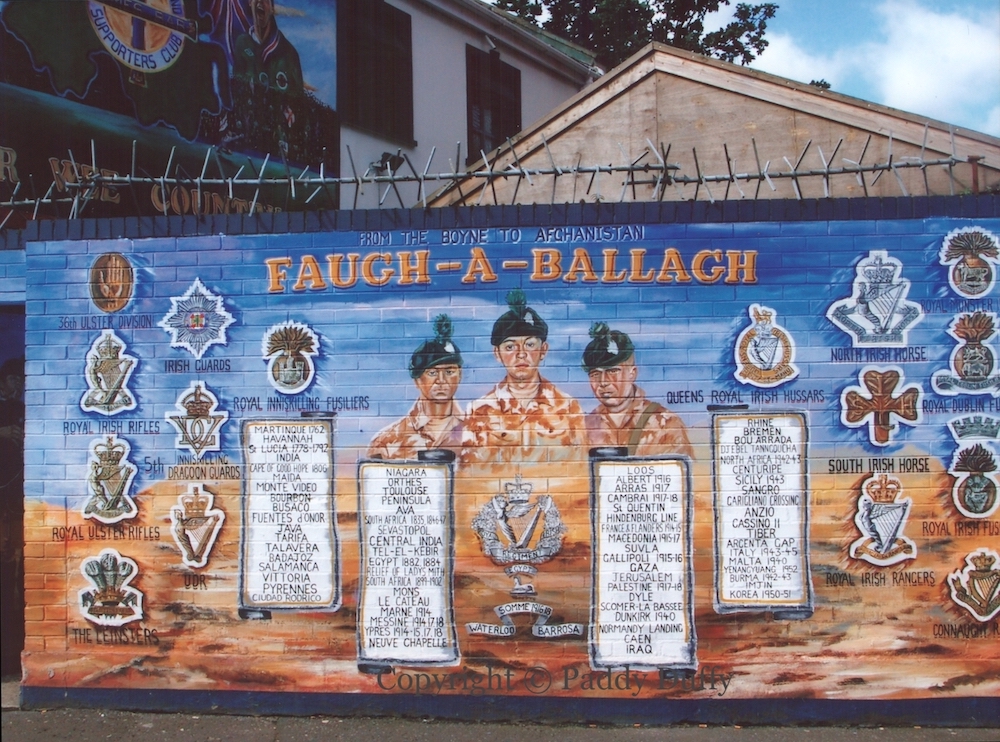
Here are two murals from the Times Bar in York Road, north Belfast.
First (above), a mural celebrating the Northern Ireland football team with the slogan “our wee country”. George Best is on the left and David Healy on the right.
Second, under the title “Faugh-A-Ballagh”, the motto of the Royal Irish Fusiliers (and more recently of the Royal Irish Regiment), a mural commemorating Irish and Northern Irish service in the British military. Robert Blair “Paddy” Mayne is featured on the left (WP). A plaque in the middle reads: In memory of Pte. F.G. Dolloghan, Parachute Regt. Killed at the Nijmegan Bridges, Holland, Sept. 1944. (WWII’s Operation Market Garden (WP))
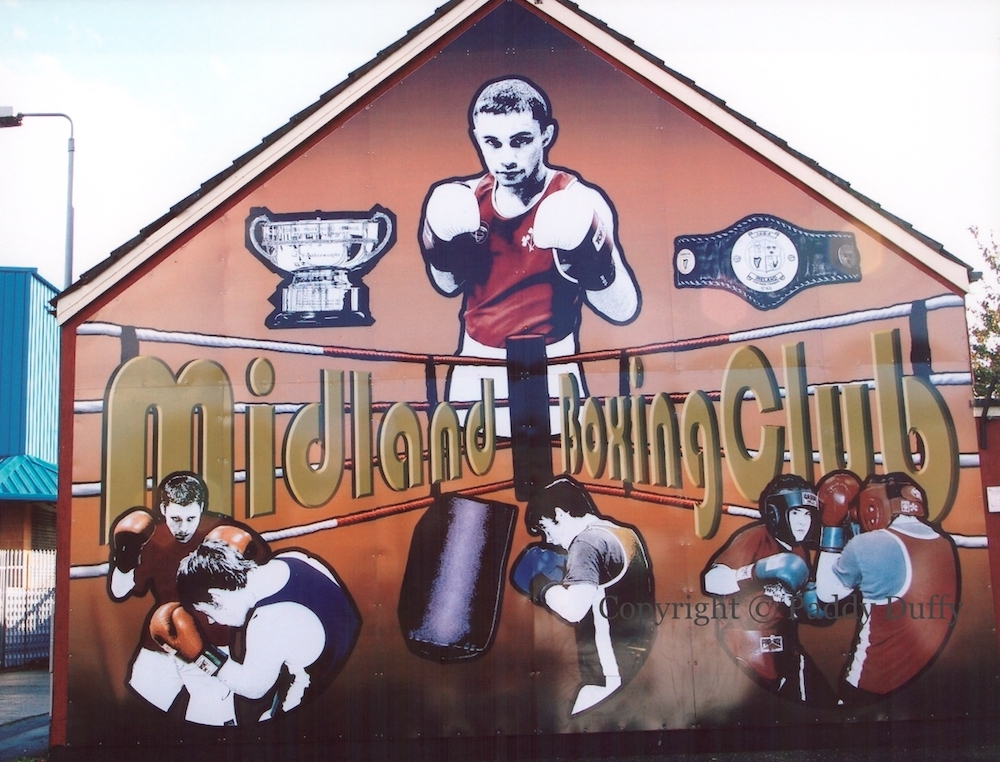
Carl ‘The Jackal’ Frampton is featured here in the apex of the ‘Midland Boxing Club’ board, alongside his Irish featherweight title. Frampton is managed and promoted by Barry McGuigan. Here is a 2013 video profile of Frampton by The Guardian. As he mentions in the video, Frampton (who is Protestant) married a Catholic, while McGuigan (who is Catholic, from Clones) married a Protestant.
The board is unusual in that it is tailored to the full size of the gable wall.
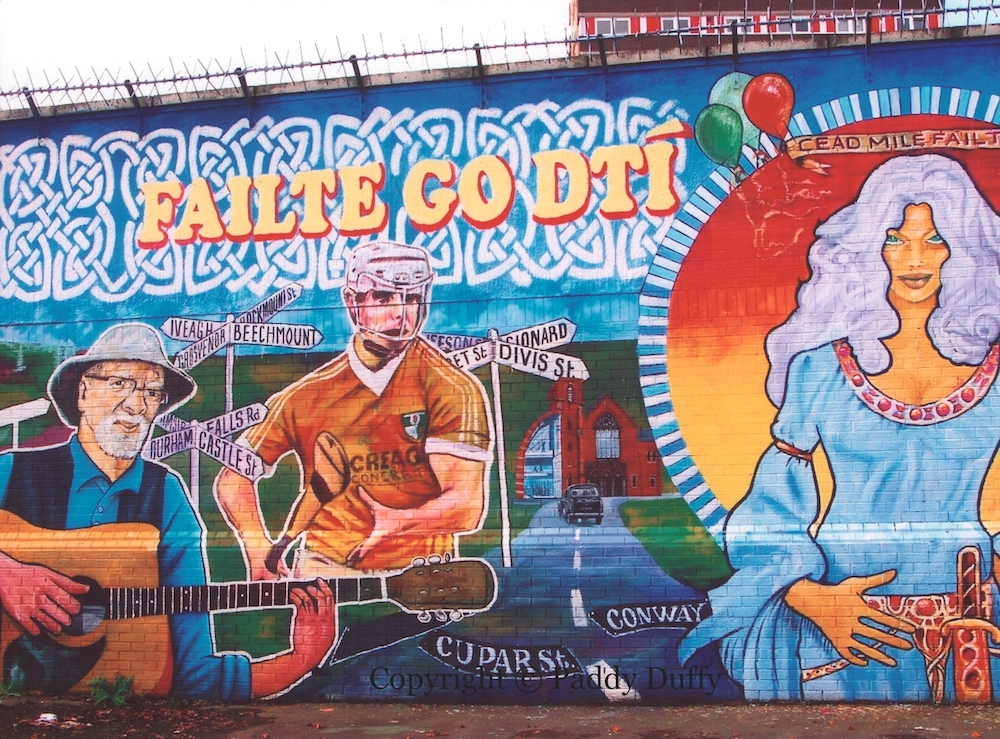
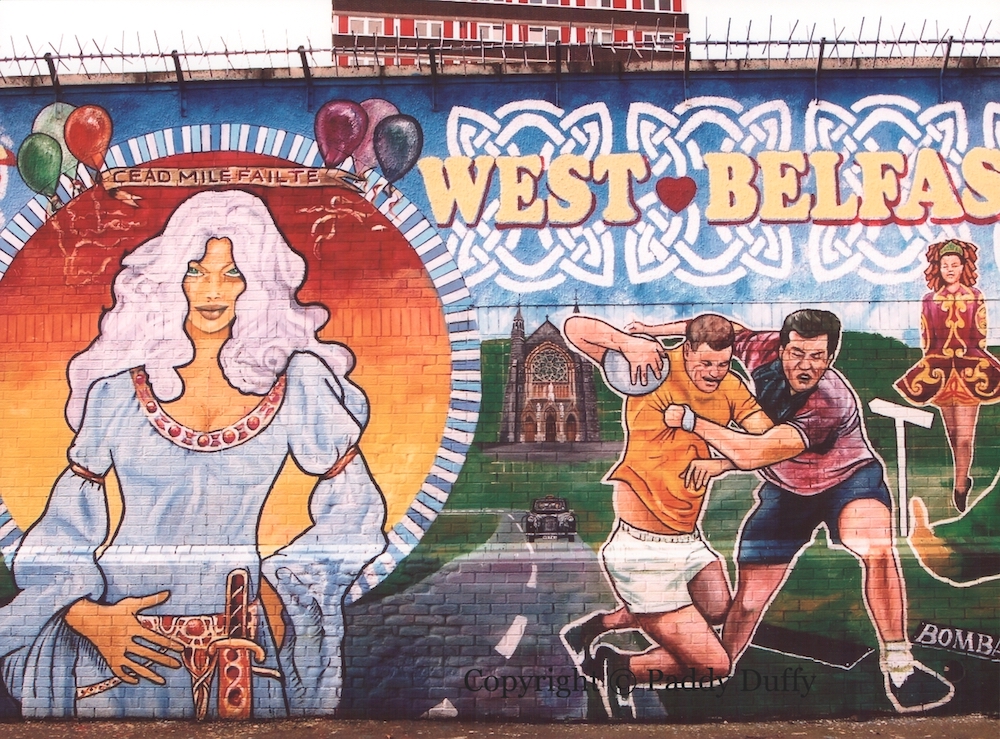
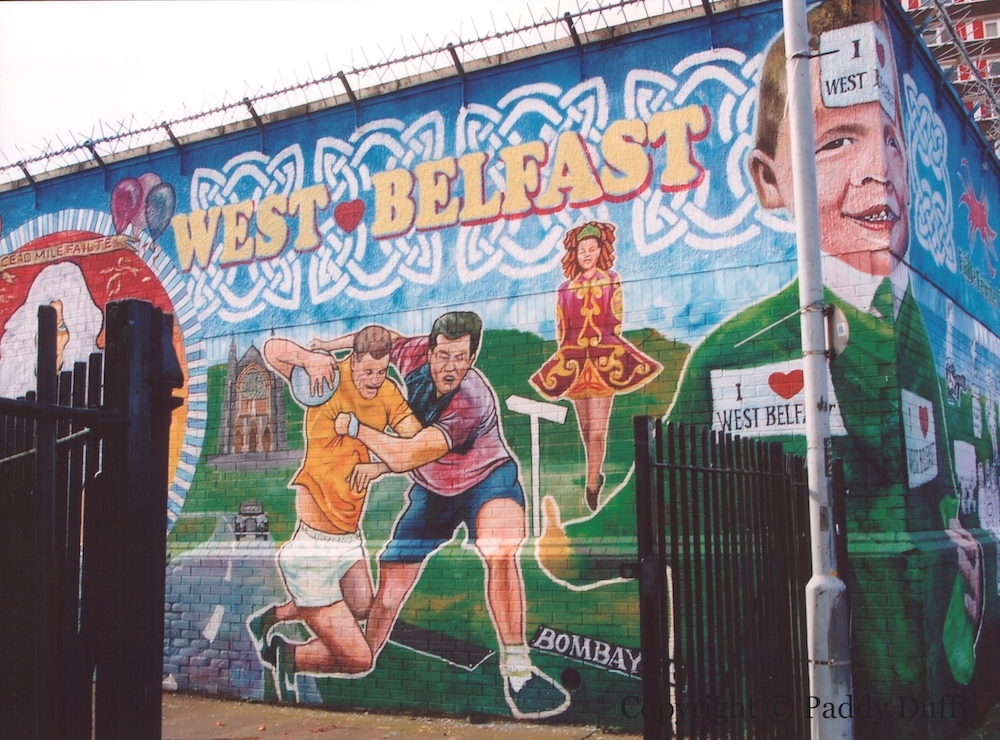
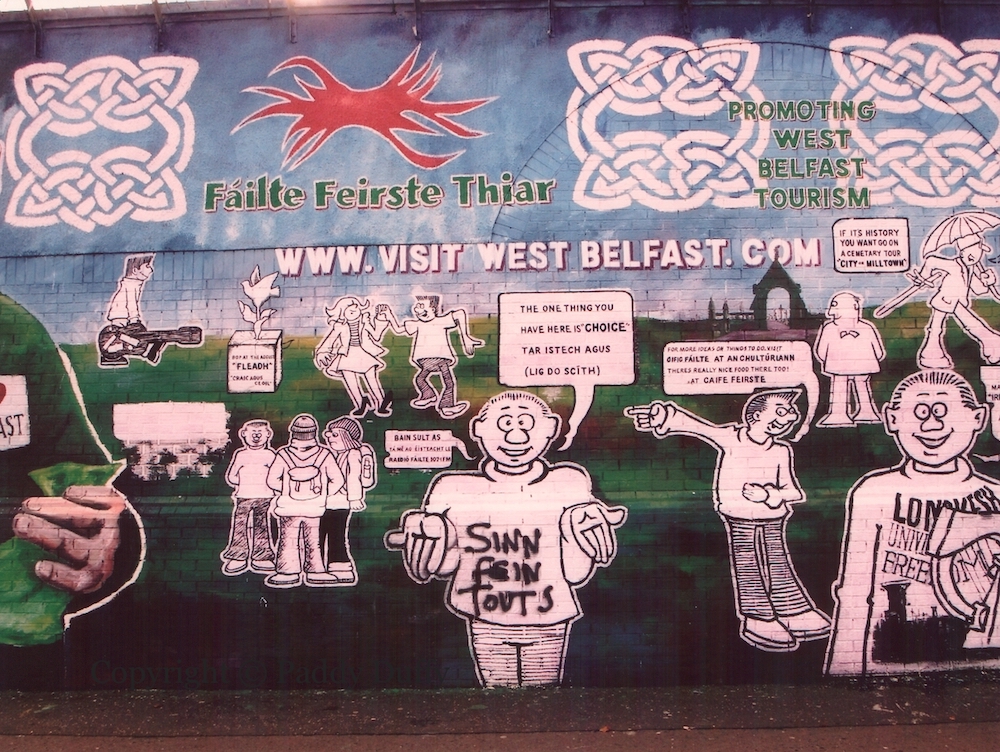
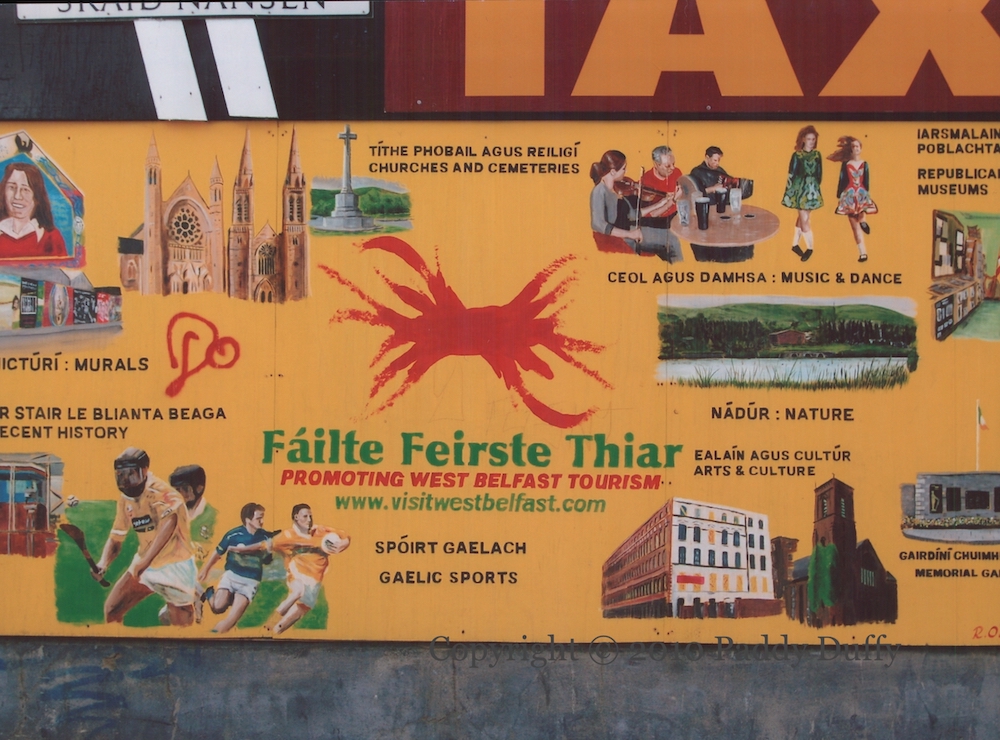
“Welcome to west Belfast”. West Belfast is portrayed as a place of music, sport, and dancing, whose landmark buildings and streets are under the watchful eye (and sword) of the goddess Érıu.
The image of the little boy with the “I [heart] Belfast” stickers and a bag of sweets, standing in the waste ground of Divis flats, is a photograph from the early days of Féıle An Phobaıl/West Belfast Festival.
On the Divis Street side, characters in the style of cartoonist Cormac (see e.g. Notes) are “Promoting west Belfast tourism” for “Fáılte Feırste Thıar”, “www.visitwestbelfast.com“. The attractions touted are: “Bop at the August “fleadh”. “Craıc agus ceol” (for Robert Ballagh’s dove coming out of the concrete block, see Féile An Phobail 2008), “The only thing you have here is “choice”. Tar ısteach agus (lıg do scíth)”. “Baın sult as. Tá mé ag éısteacht le Raıdıó Fáilte 107.1 FM”, “For more ideas on things to do, visit Oıfıg Fáılte at An Chultúrlann. There’s really nice food there too! at Caıfe Feırste”, “If it’s history you want go on a cemetery tour “City or Milltown””, “Enjoy a walk on ‘Slıabh Dubh’ (The black … … mountain)”, “Make sure you visit the “Irish republican history museum” at Conway Mill” (with ‘Long Kesh University Of Freedom’ sweater; “Sinn Féin touts” is not a sweater but graffiti.)
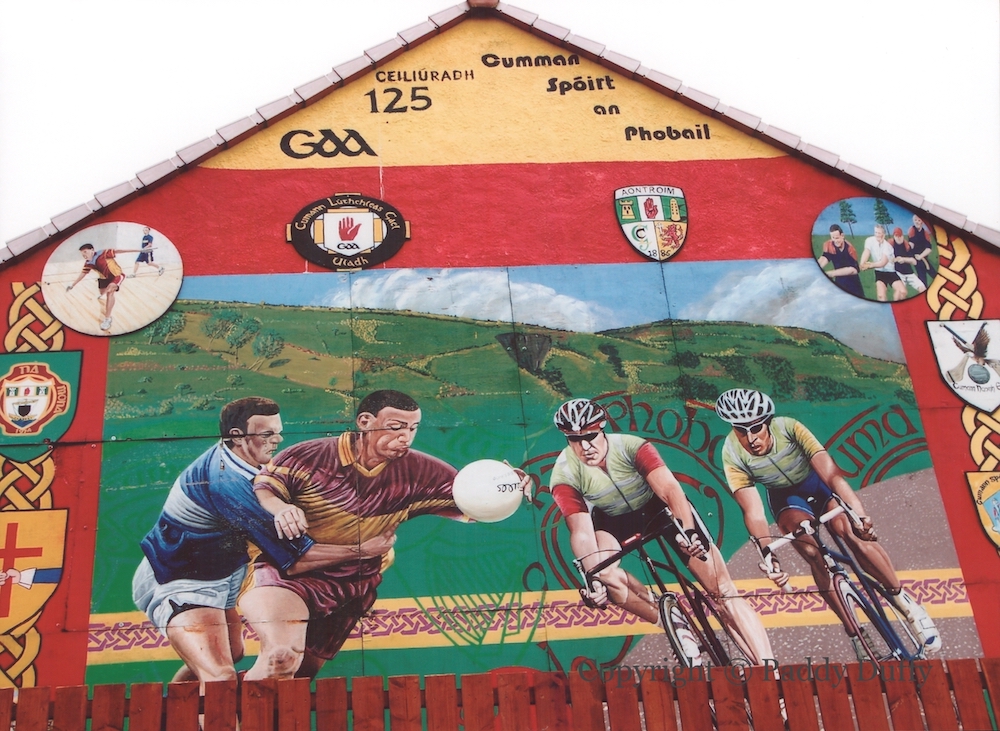
This mural (partly on boards, partly on the wall) celebrates 125 years of the GAA, particularly local teams Cumman [sic] Spóırt An Phobaıl, Cardinal O’Donnell’s, Gort Na Móna, and Cumann Naomh Eoın.
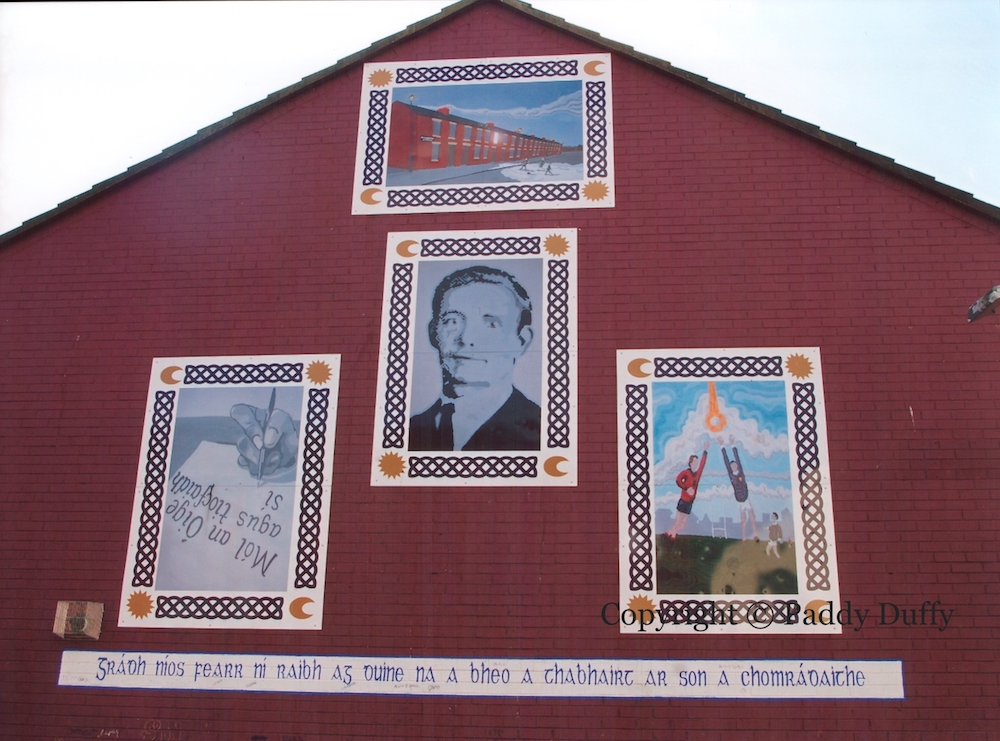
IRA Volunteer Sean Martin is at the centre of these panels in the Short Strand. The image in the apex of the house depicts his death in nearby Anderson Street (which no longer exists; roughly where Arran Street is).
milltowncemetery.com (link now dead) reports that Sean Martin “was killed in April 1940 during a lecture on arms and a Millis hand grenade in a small terrace house in Anderson Street. In the course of the lecture Sean, who was giving the instruction, had dismantled the grenade, and was putting it together again. The detonator which he was using was thought to have been a dud one. In demonstrating how to throw the grenade, he pulled out the pin and released the lever. Hearing the hissing sound of the fuse he realised that the detonator was live and that the grenade was about to explode. He rushed to the window with the intention of throwing it out on to the street, but some children were playing outside. In the few seconds left to him, Sean had to make that terrible choice; shouting to the others to get out of the house – he pulled the grenade into himself with his two hands and leaned over the kitchen table with the grenade covered by his whole body. The device exploded and blew him right across the kitchen, killing him instantly. All the others escaped uninjured.”
The Irish at the bottom reads “Grádh níos fearr ní raıbh ag duıne na a bheo a thabhaırt ar son a chomrádaıthe” – “A greater love no person has than to give his life for his comrades” (John 15:13)
Belfast Forum has some pictures of Anderson Street; according to the accompanying conversation, the Martins (might have) lived at no. 29. Sean Martin’s CLG/GAA club was named after Martin.
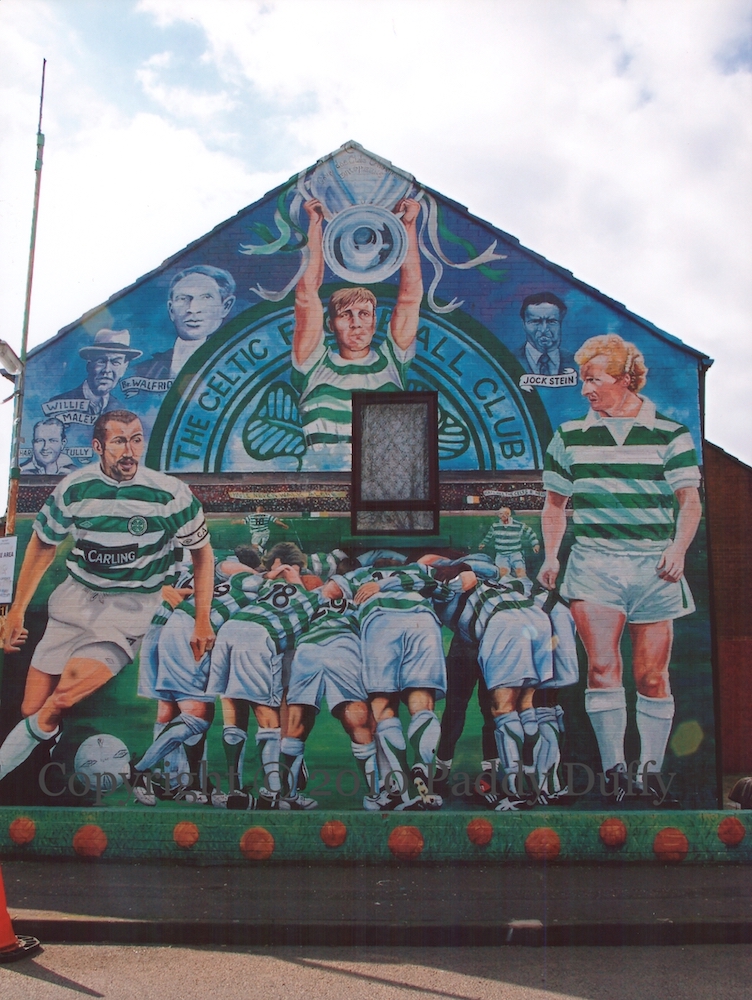
Glasgow Celtic football club was founded in 1888 by Brother Walfrid who is partially obscured here by a leaf to the left of centre. Joining him in the apex are (from left to right) Charlie Tully (of Belfast and Glasgow Celtic), Willie Maley (the first manager), [Wilfrid], Billy McNeil lifting the European Cup in 1967, Jock Stein (player 1951-1957 and manager 1965-1978). On the field are former players Henrik Larsson (1997-2004) and Jimmy Johnstone (1962-1965) on either side of the team “doing the huddle”.
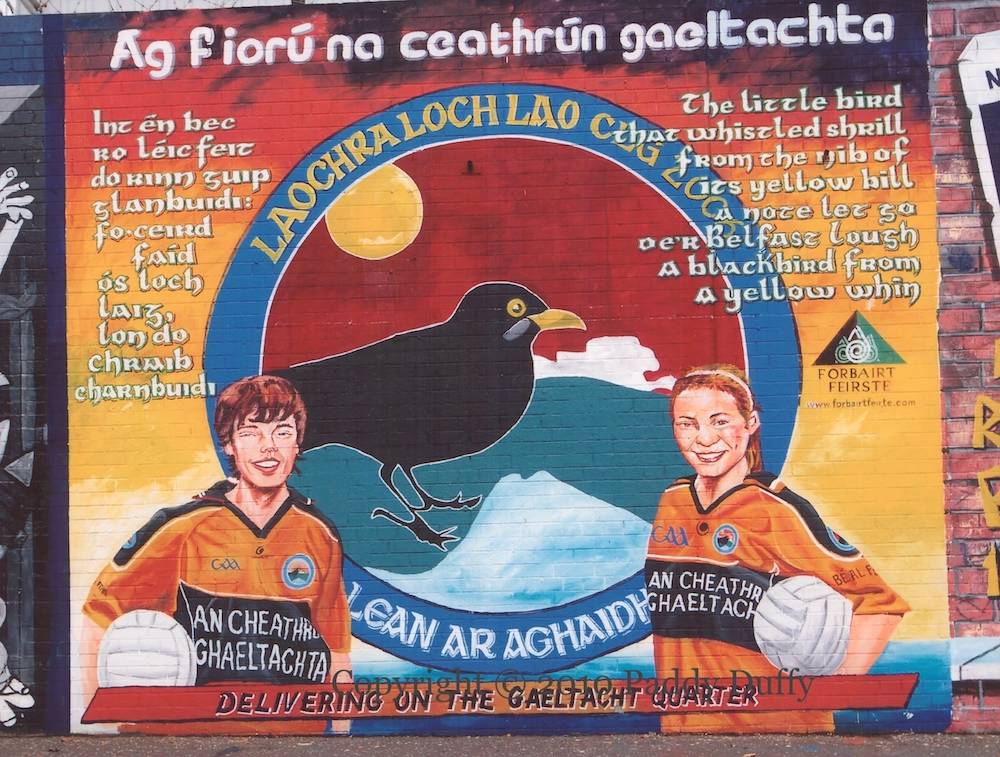
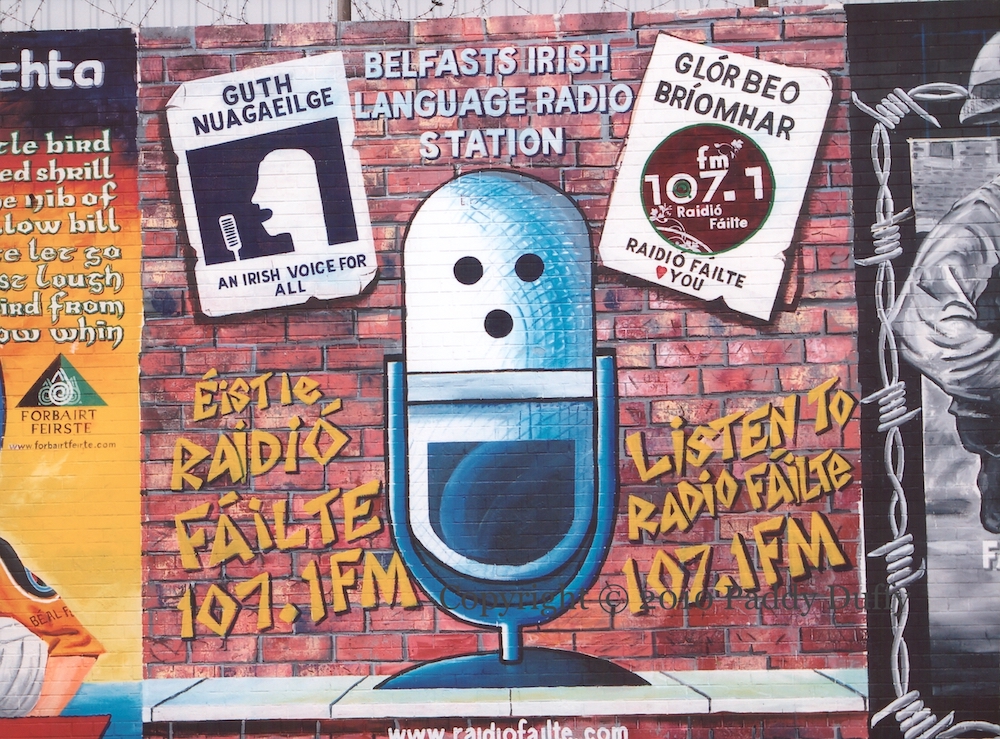
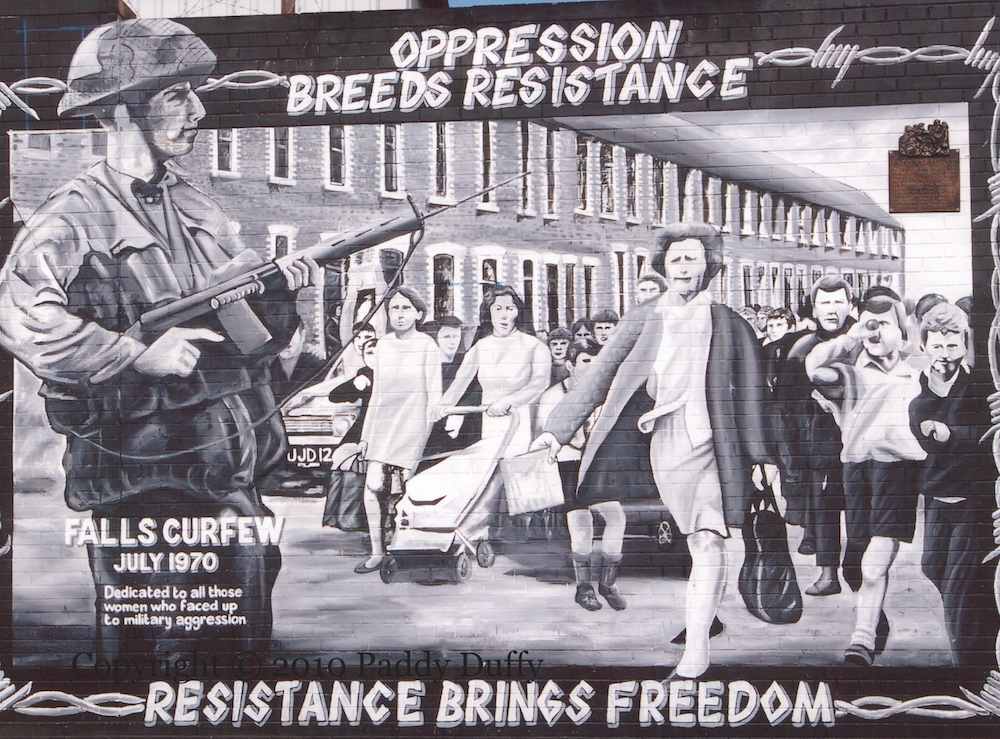
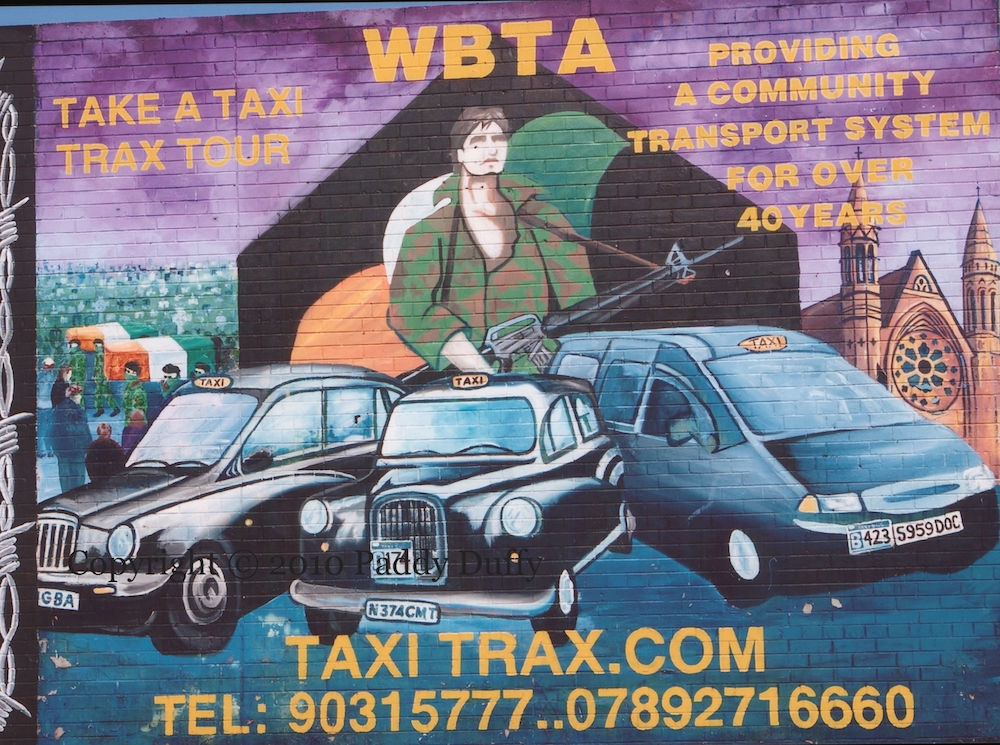
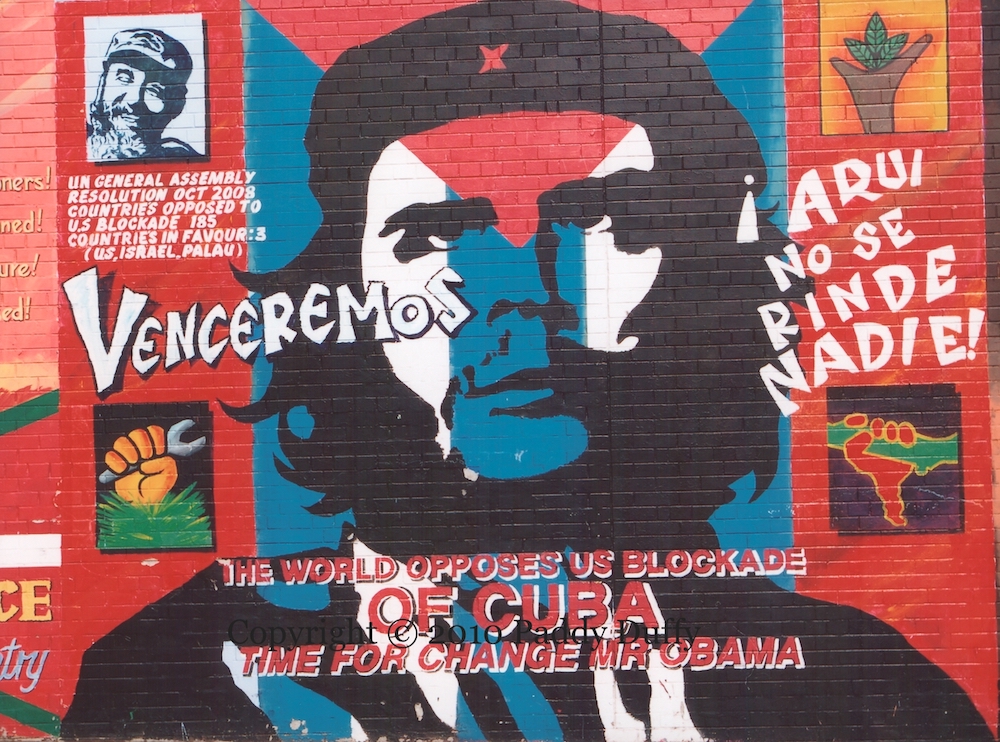
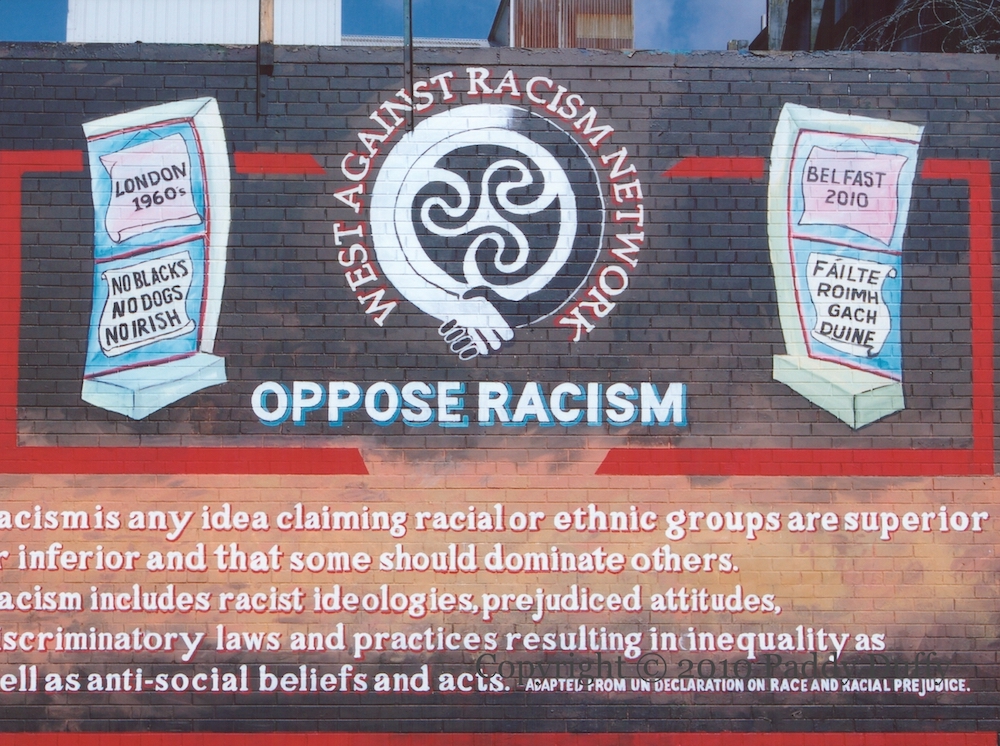
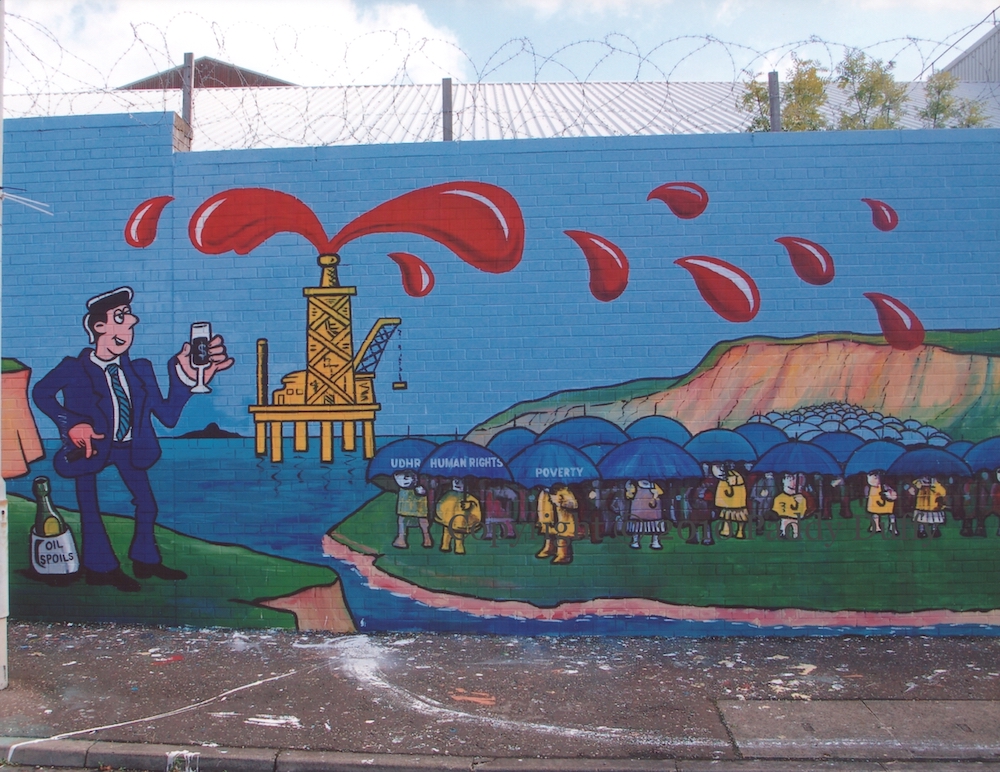
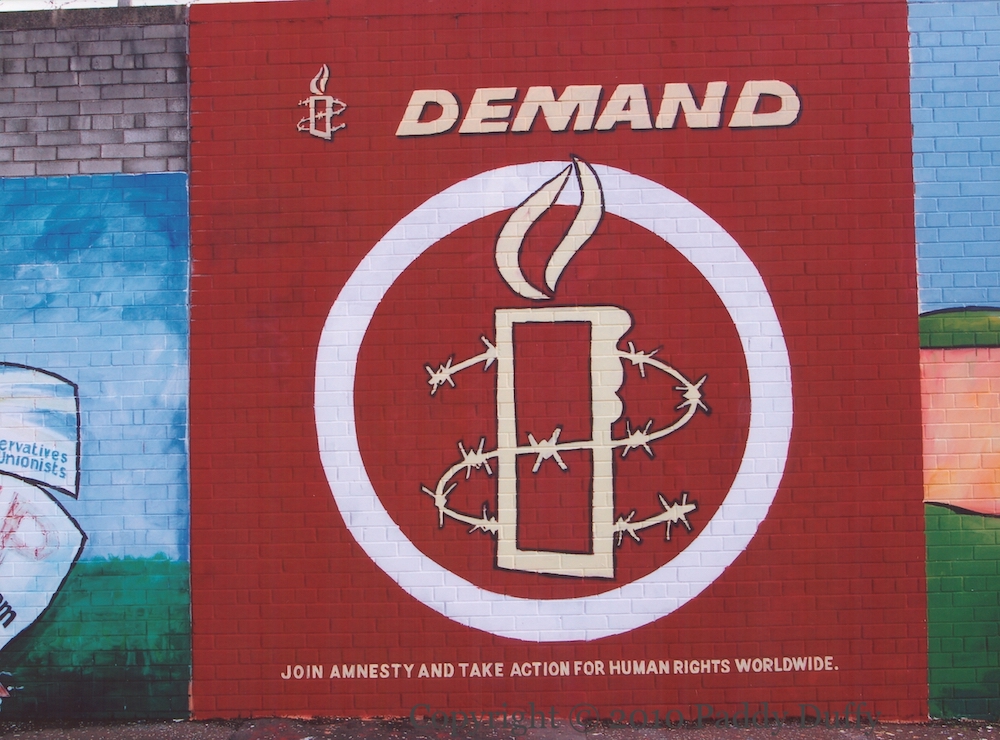
 Paddy Duffy Collection