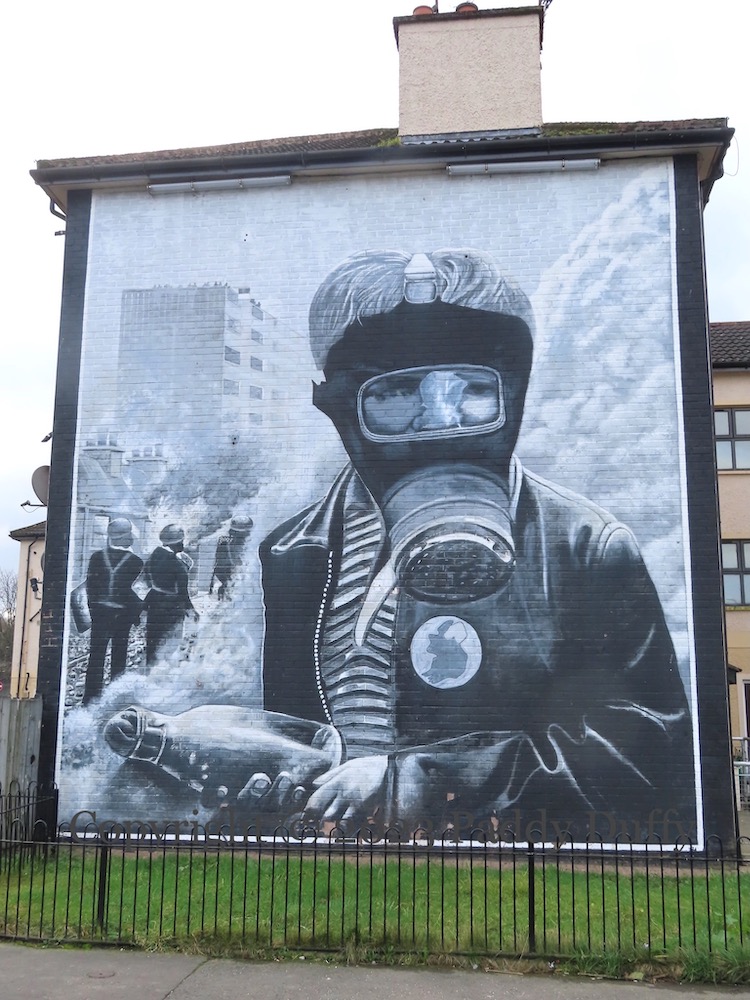
The Petrol Bomber was first painted by the Bogside Artists in 1994 and modified a number of times in the first few years, to change the badge to “No RUC” and to a green ribbon.
Part of The People’s Gallery (Visual History) along Lecky Road and Rossville Street in Derry’s Bogside.
“A free Ireland will control its own destiny from the plough to the stars.” So James Connolly is said to have explained the significance of “the plough in the stars” (Ursa Major) as a symbol of Irish revolutionary socialism. (Though no source is given for the remark. See From The Plough To The Stars for more.)
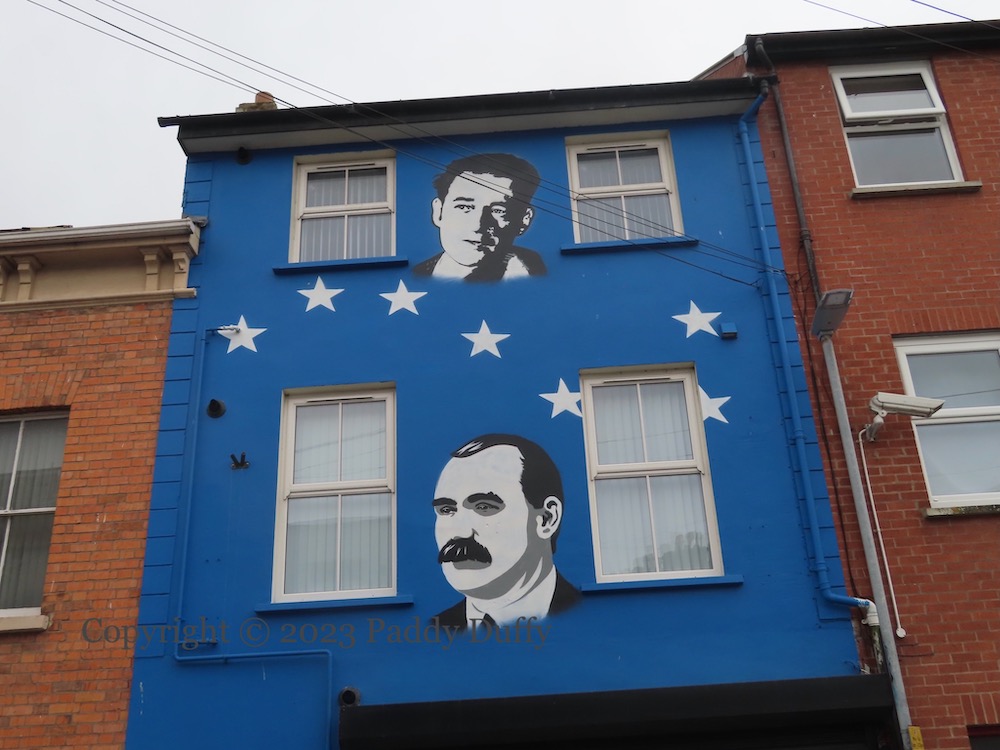
Connolly and Seamus Costello, heroes of the IRSP (web) are painted on James Connolly house in Chamberlain Street, Derry, which is also home to Teach Na Fáılte, the Republican Socialist Ex-Prisoners group.
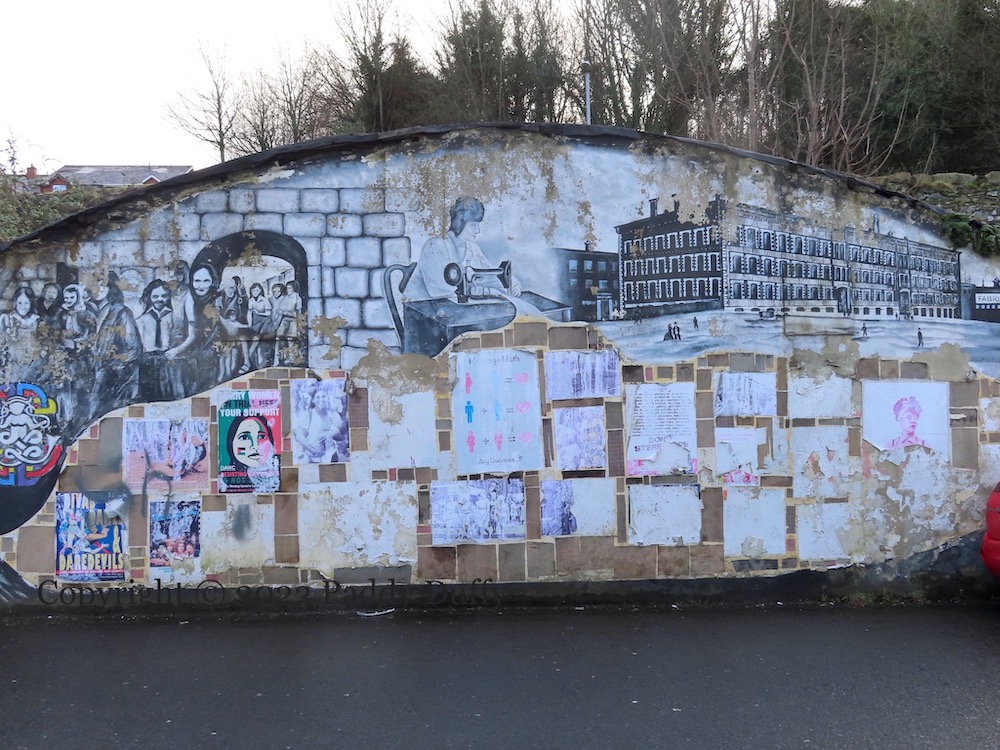
This piece was originally launched in 2014 and is now much the worse for wear. It celebrates the role of women in the cultural and economic life of Derry.
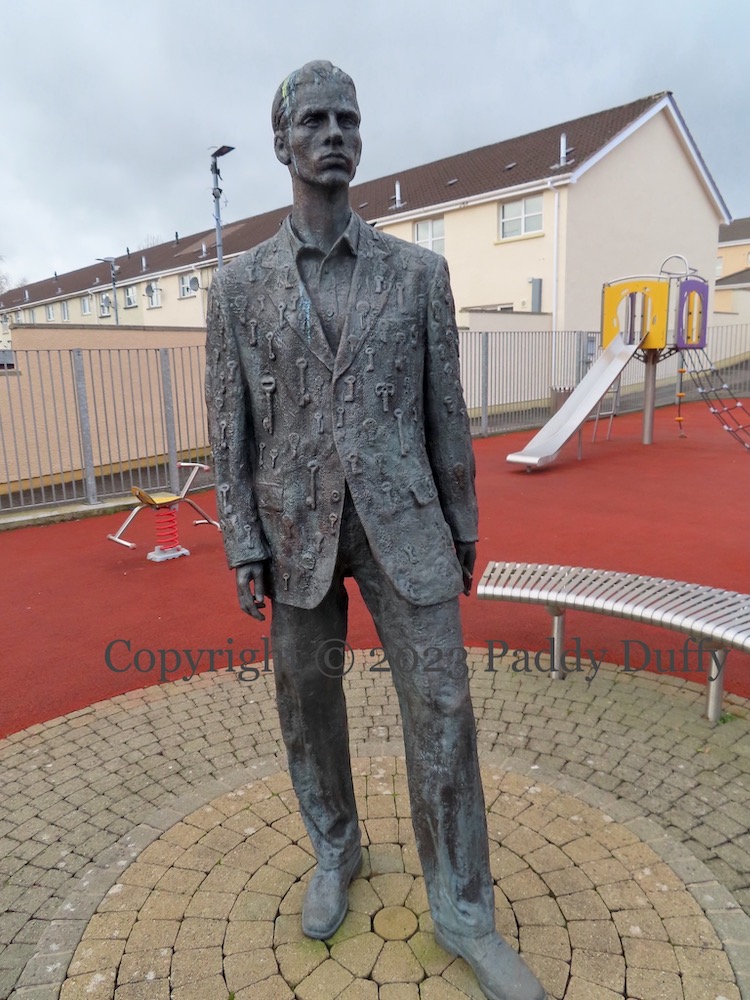
“This Sculpture is about unlocking freedom, a community that does not know outward social freedom can still know inward personal freedom. The key to freedom is formed within the heart, each individual has an unseen key that can help a community unlock the knowledge of itself. The Apprentice Angel is a bringer of freedom, he is patterned with keys collected within The Fountain Estate by young people from The Cathedral Youth Club. The Angel holds a large recast key from the Siege of Derry 1689, a key in the hand of an Apprentice that helped turn history, the Past is always present but the Future is key to us all, we alone have the power to unlock it and the right to experience it. Within a community it is young hearts that beat loudest, it is their future that we must help unlock with the keys of Freedom. This was a Cathedral Youth Club project funded by Arts Council Re-Imaging Communities. Sculptor – Ross Wilson. [2009]”
There are Orange Order lodges in Ghana and Togo and there were previously lodges in South Africa and Nigeria (History Ireland | WP). A photo of the Ghanaian representative in the mural – Dennis Tette Tay – is included in this BBC article. The Canadian representative is perhaps from “Mohawk Loyal Orange Lodge No. 99” on the Mohawk Reservation at Desoronto, Ontario, Canada (Fb).
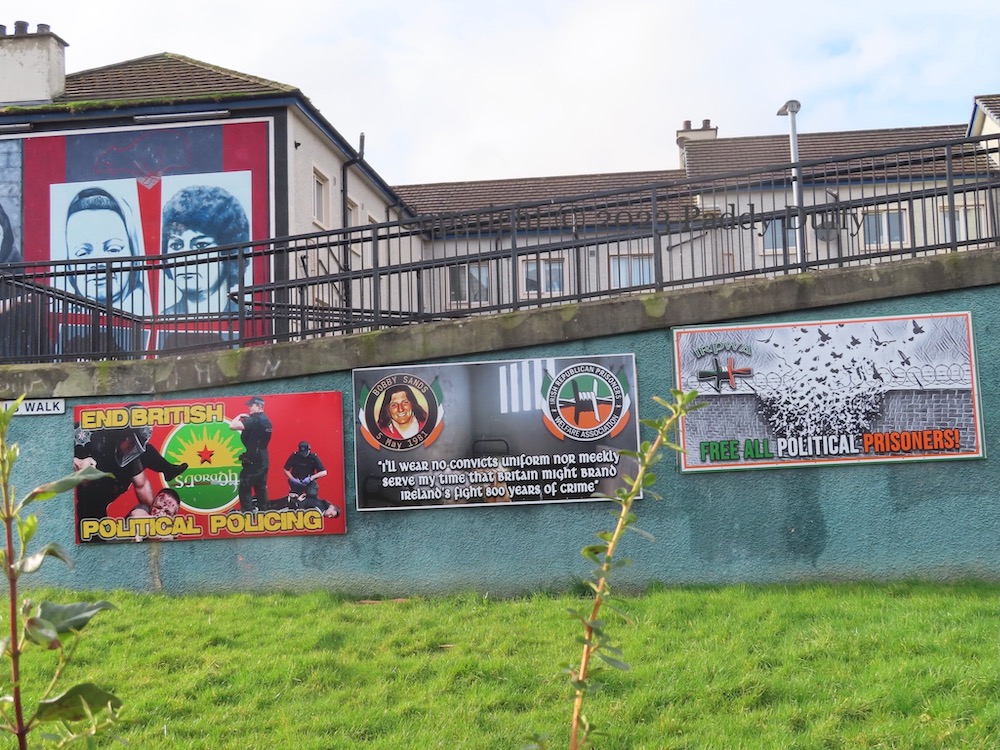
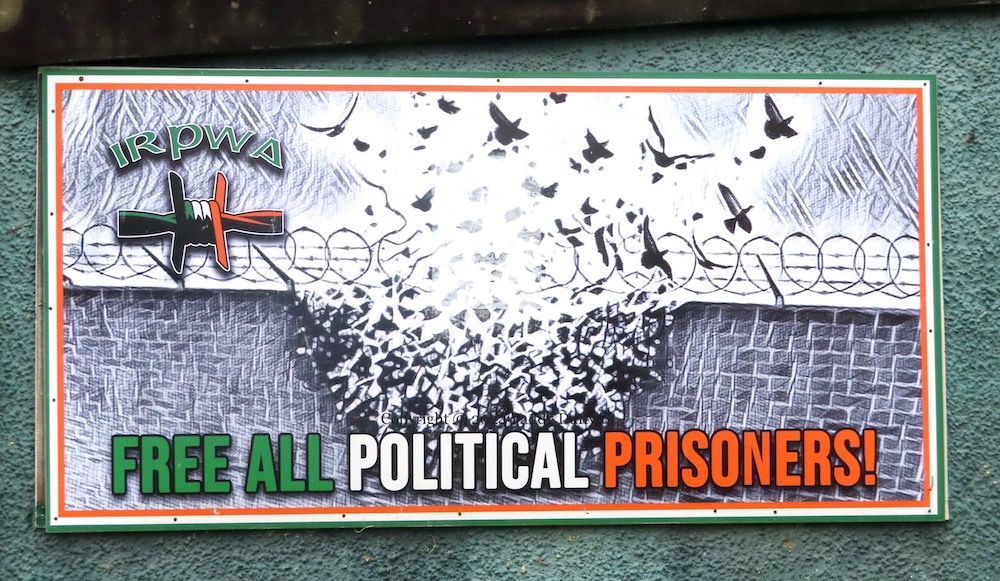
The Dome Of The Rock with its golden dome and octagonal walls (WP) provides a background to Palestinian protesters in this board expressing solidarity with Palestine (seen previously in 2021-11). Éıstıgí (Fb) is the youth division of Saoradh (web), and IRPWA (tw) is its prisoner-of-war organisation.
This is a printed board but even so the artwork is in a different style to what has been previously seen, with the two characters drawn in a cartoon/animation style.
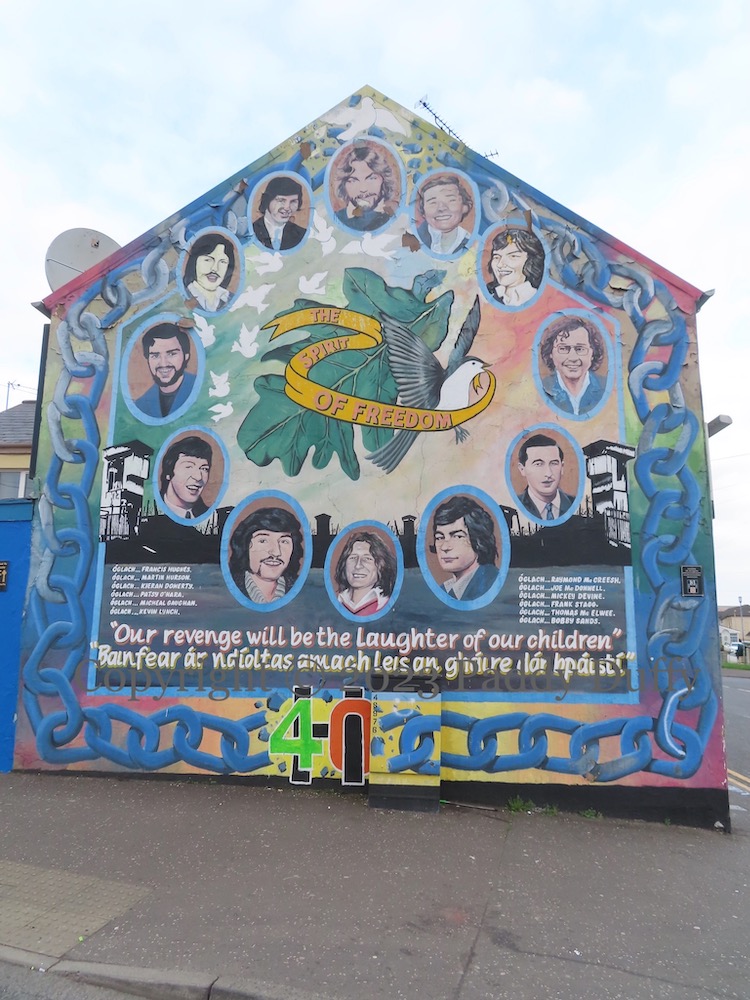
The plaque to the left reads, “This mural is dedicated to all those who tragically died on the streets of Derry during the hunger strike era. Suaımhneas Dé da nanamacha. 3rd October 2006.” The mural referred to is in fact the ‘crumbling cell’ mural (see M03350); the ‘Spirit Of Freedom’ mural was first painted in 2011 for the 30th anniversary (see X00999) – the 30th anniversary plaque remains, on the right of the mural but for the 40th anniversary of the 1981 hunger strike “40” replaced the “30” in the bottom border.
The mural features both the lark and the dove (Visual History).
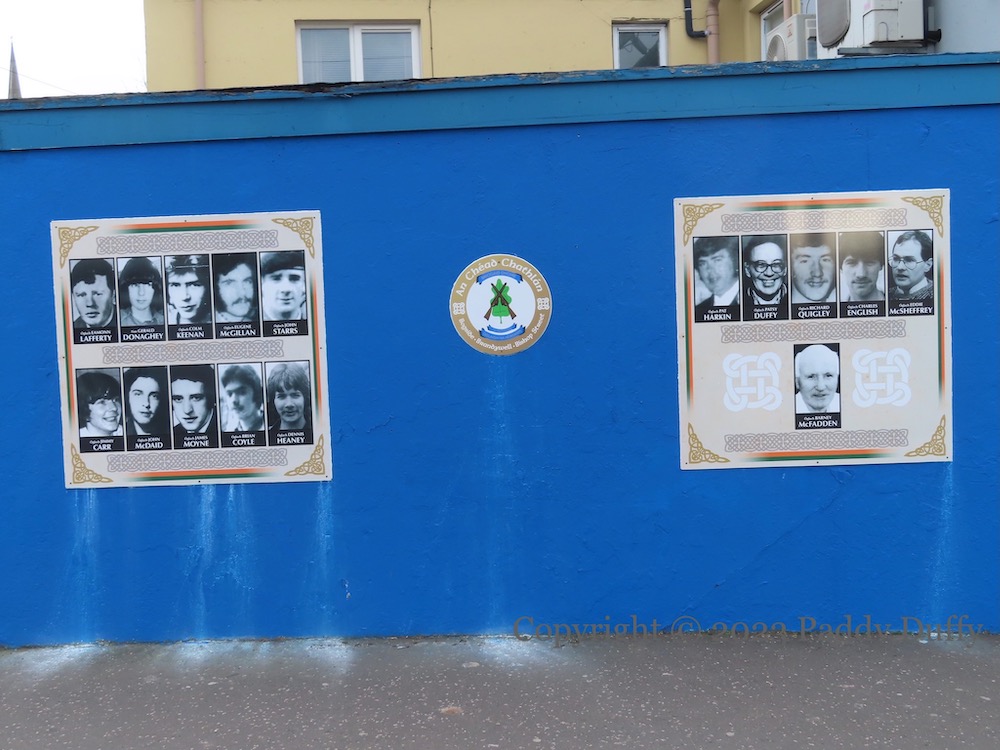
On the side wall, two new panels remember members of the IRA’s Derry brigade, replacing the single board seen in M07635.
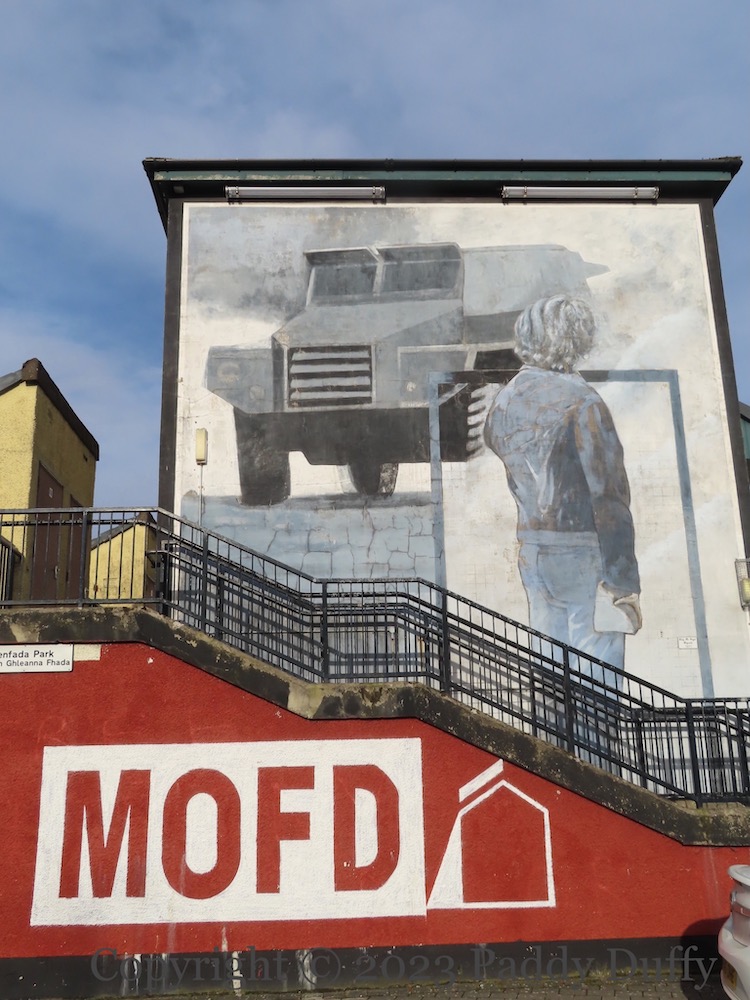
Signage for the Museum Of Free Derry (web), which employs the outline of Free Derry Corner (Visual History), in front of The Rioter – one of the murals in The People’s Gallery (Visual History) in the Bogside, Derry.
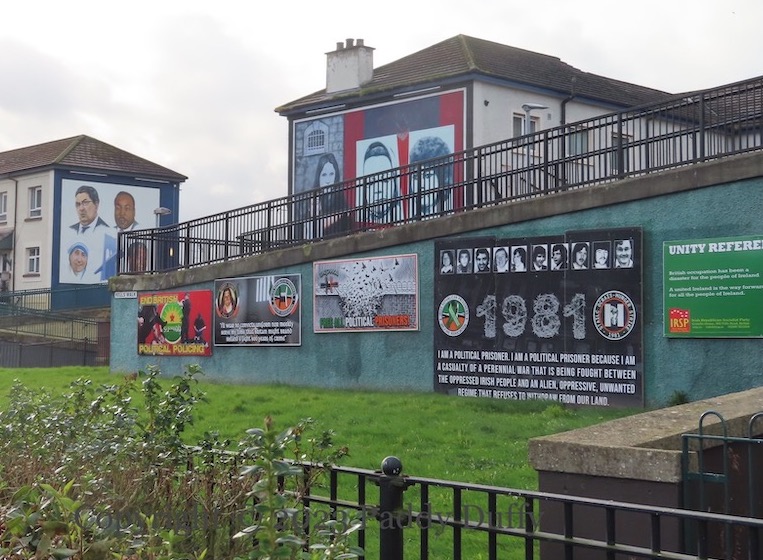
There are six small boards along Rossville Street, Derry.
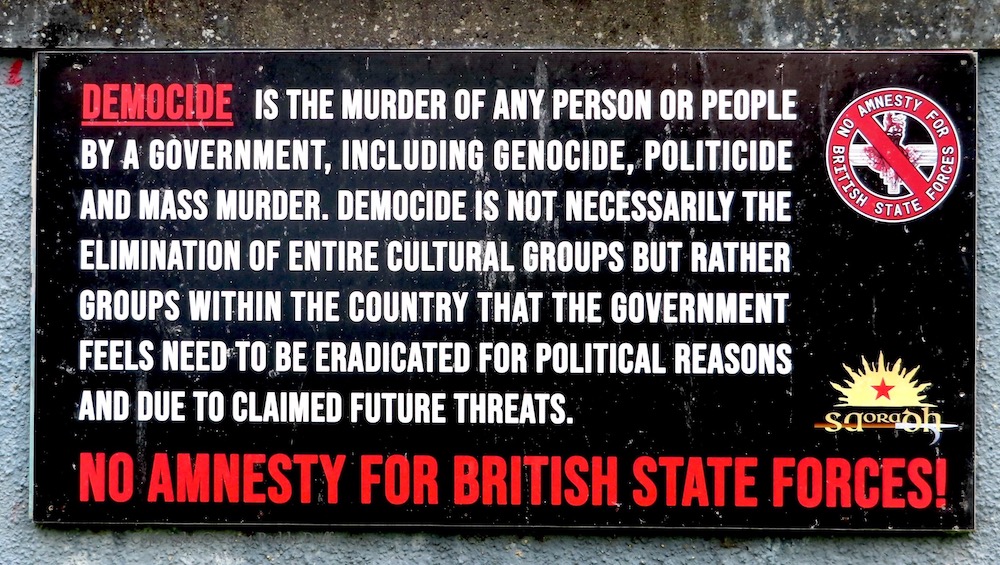
On the end wall (out of sight in the wide shots): “Democide is the murder of any person or people by a government, including genocide, politicide and mass murder. Democide is not necessarily the elimination of entire cultural groups but rather groups within the country that the government feels needs to be eradicated for political reasons and due to claimed future threats. No amnesty for British state forces.”




 Paddy Duffy Collection