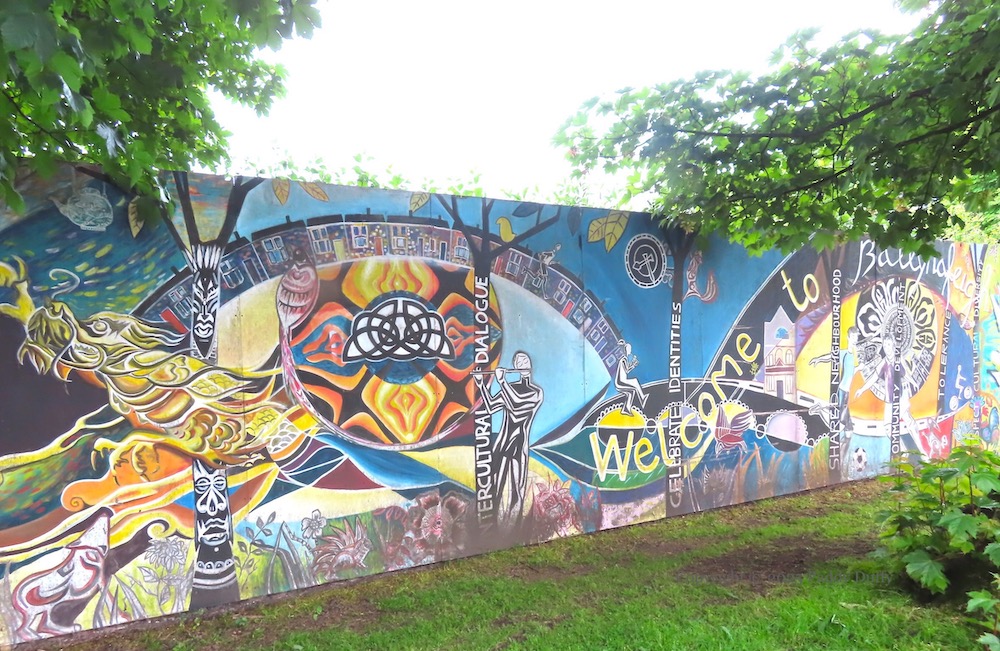
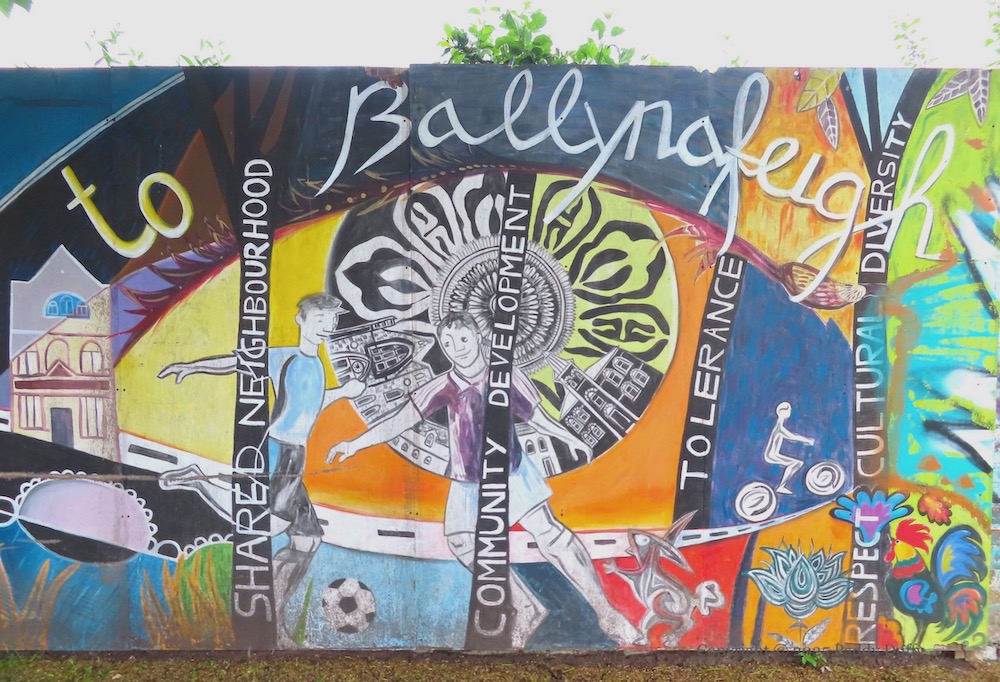
Ballynafeigh is the neighborhood just across Ormeau bridge, containing Annadale flats and surrounding streets – home to Ormeau Road UDA/UFF and Ballynafeigh Apprentice Boys flute band (Fb). The painted boards shown here was painted by Daniela Balmaverde (web) with help from local volunteers and presents imagery from non-Western cultures along with slogans on tree-trunks: “Cultural dialogue”, “Celebrate identities”, Shared neighbourhood”, “Community development”, “Tolerance”, and “Respect cultural diversity”.
The mural is at the Ormeau Road entrance to Ormeau park opposite Candahar Street. The Brigada Romona Para mural was previously in this spot.
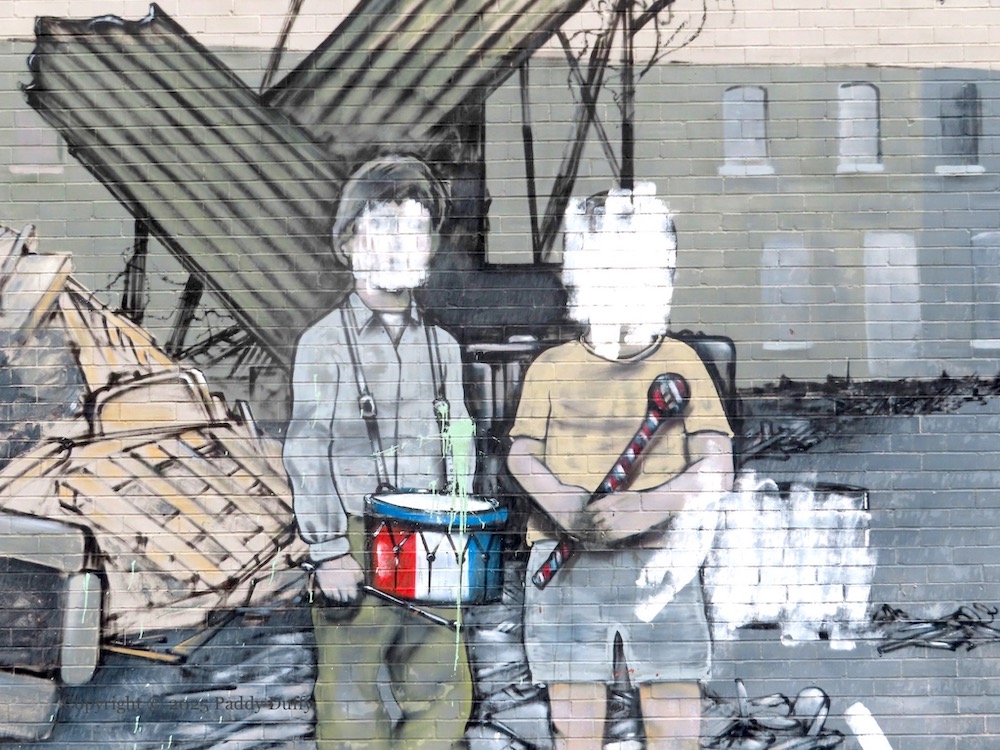
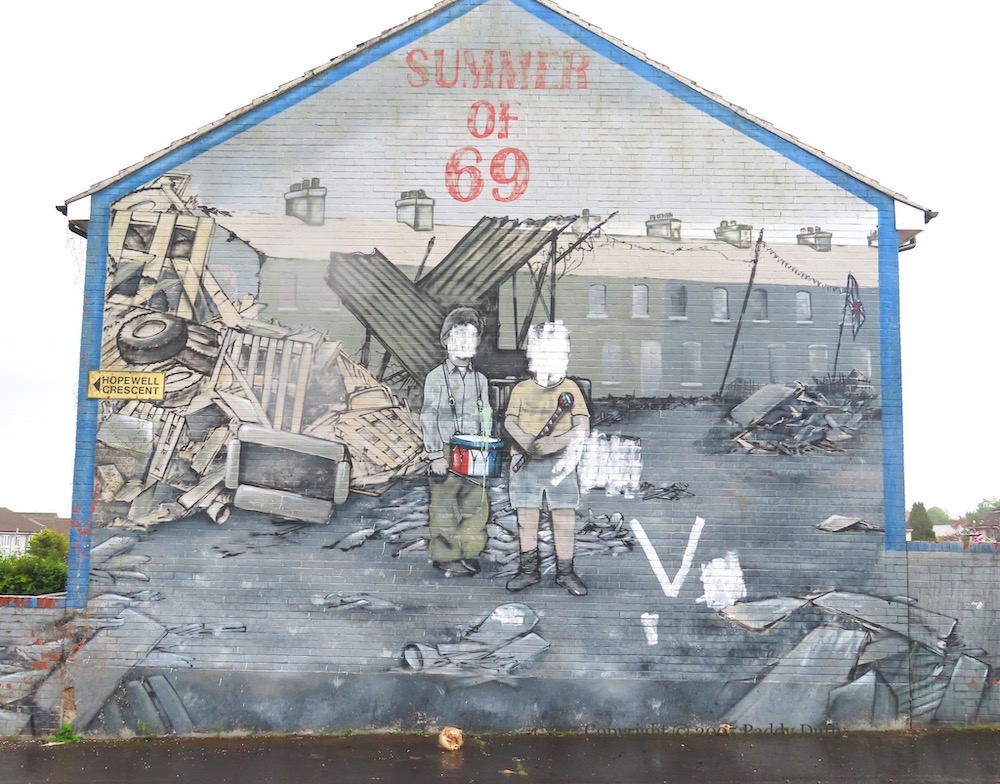
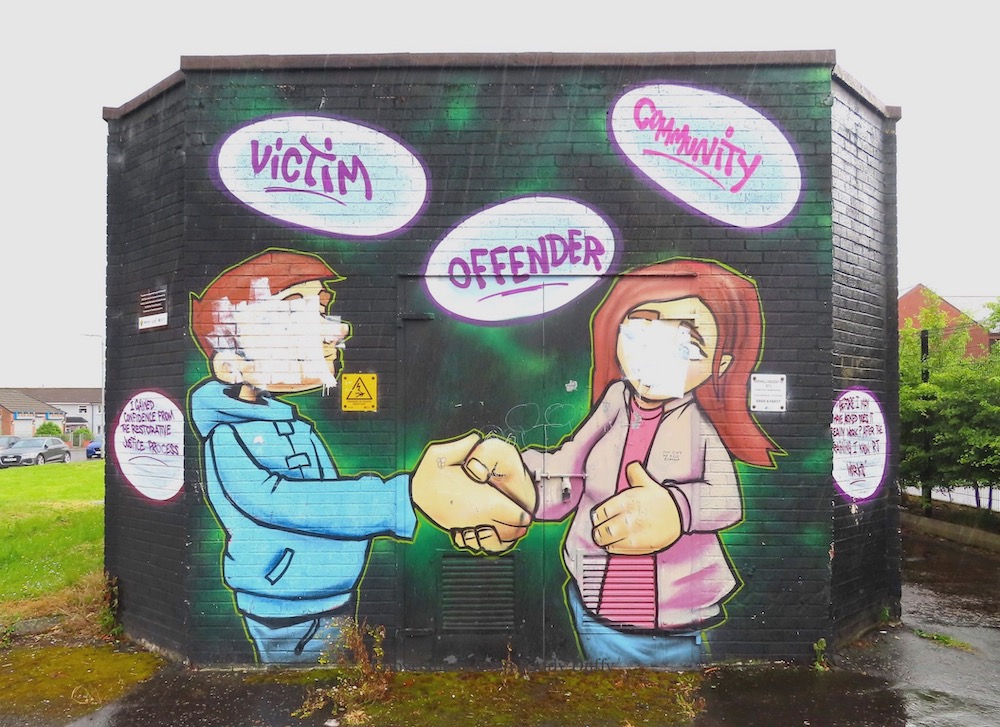
The faces in two wall-paintings in the lower Shankill estate have been painted out. It is not known if there is a specific point to this or whether it is simple vandalism.
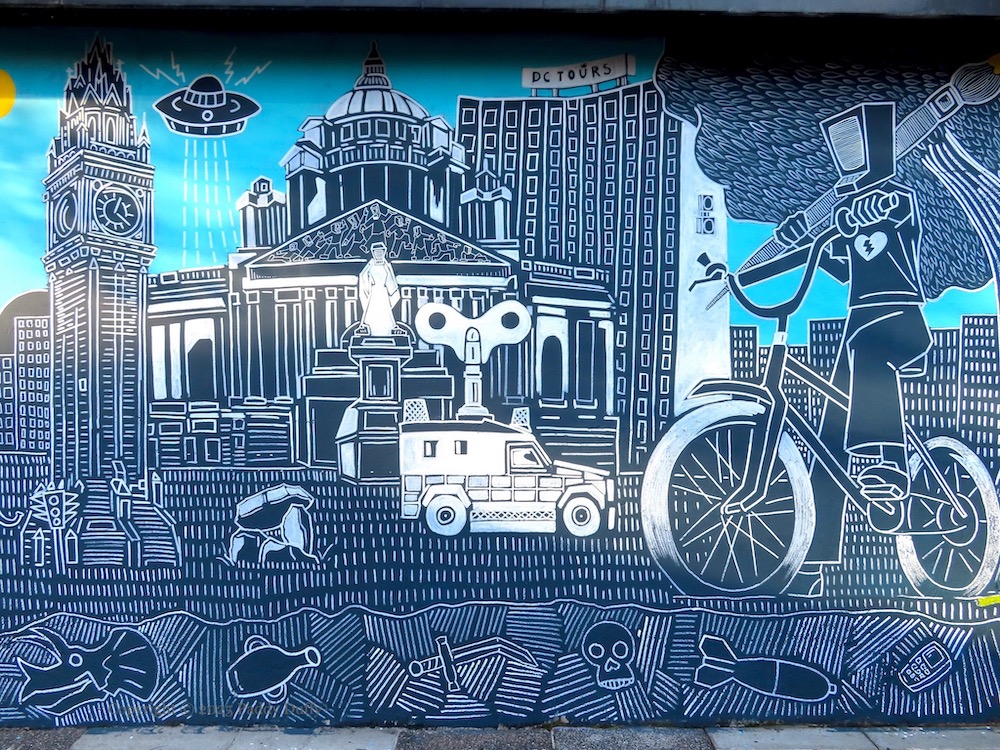
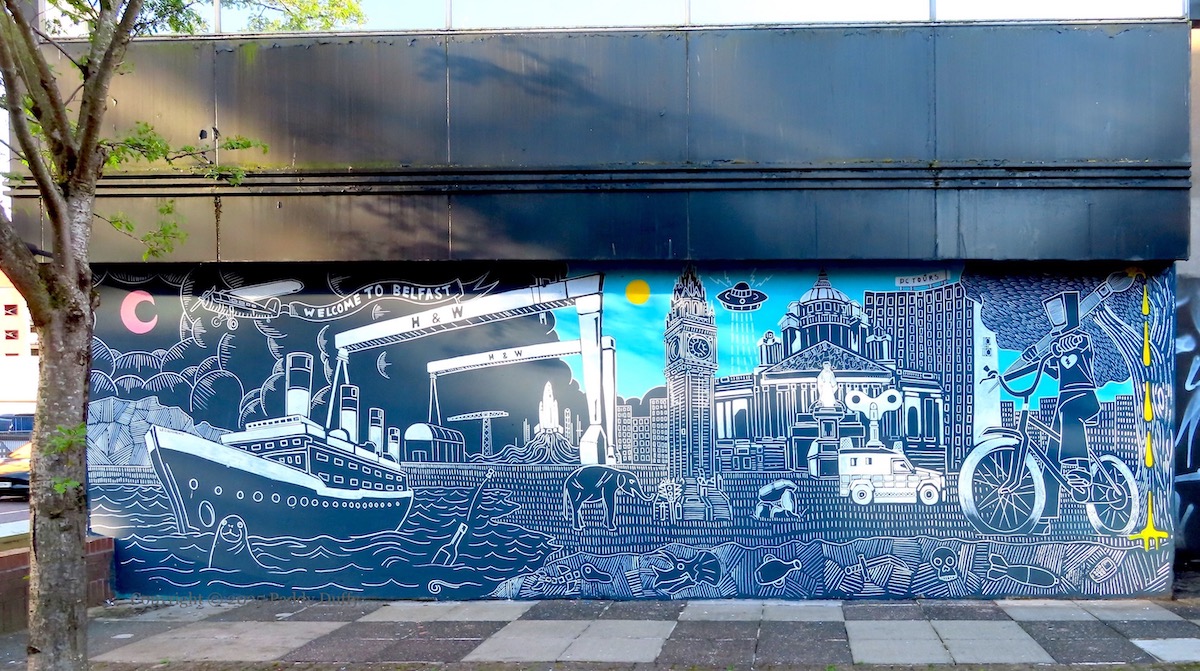
This is the new piece by Leo Boyd (web) for DC Tours, replacing Belfast Romances on Great Victoria Street. It is full of Belfast icons – Titanic, Sammy the seal, Samson & Goliath, Shiela the elephant, the Albert Clock, city hall, the Europa hotel – as well as some familiar Boydisms such as the wind-up police land-rover and the paintbrush cyclist who is responsible for the pink moon and the yellow sun.
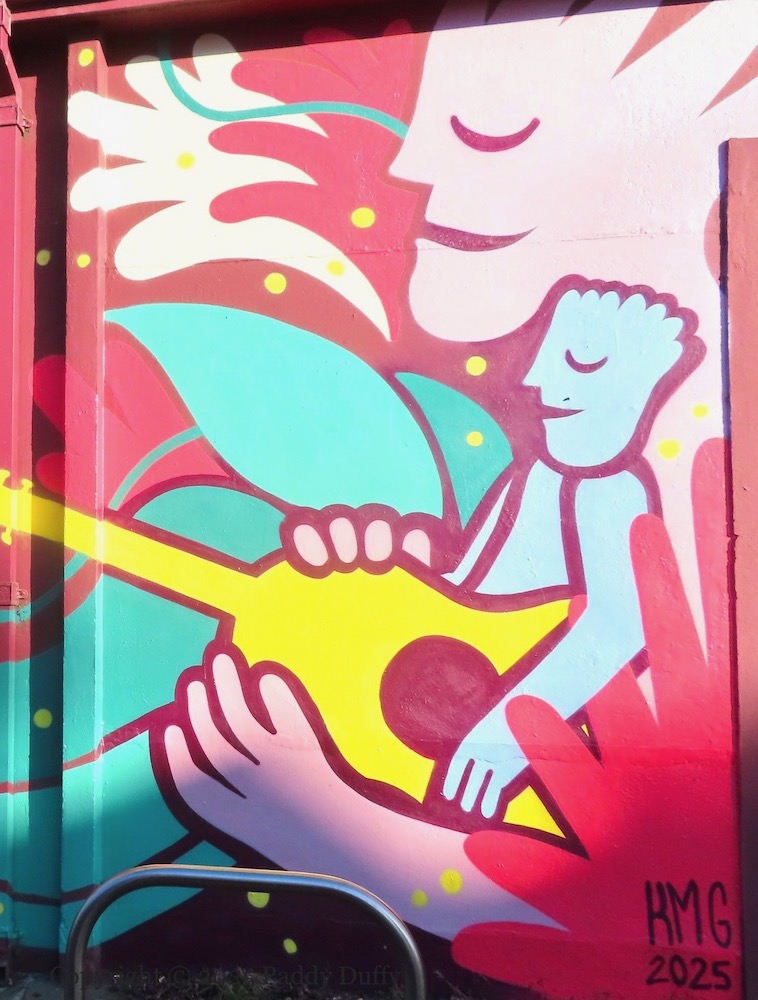
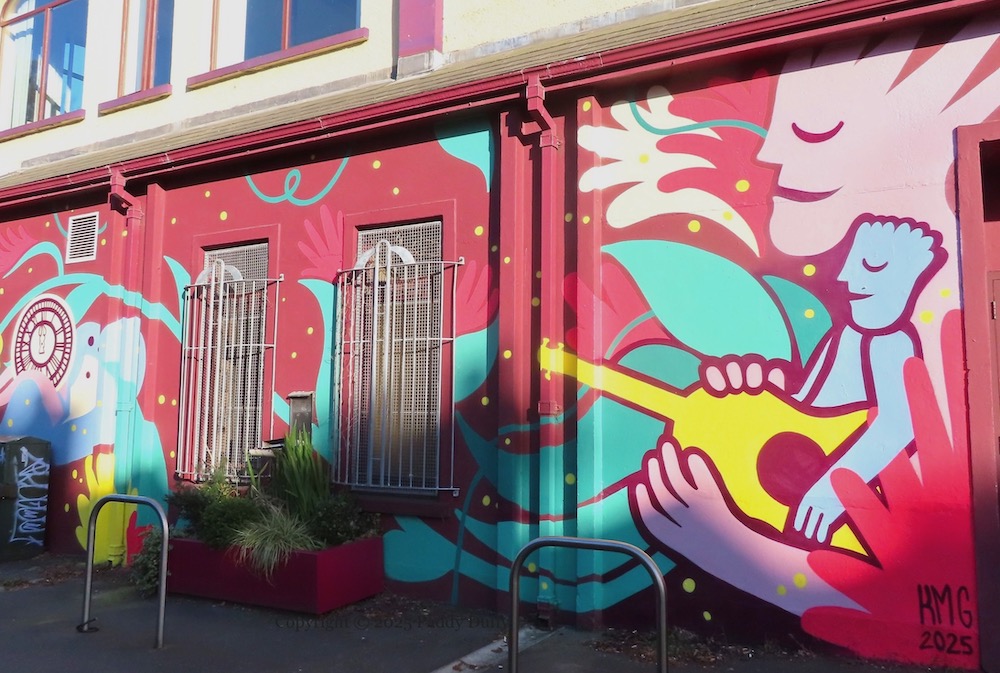
Ballynafeigh Community Development Association (web) celebrated its fiftieth anniversary in May with a day of activities and a new piece of street art by KMG (web).
Also included, last below, is the graffiti art on the back of the building: “Nothing is impossible. The word itself says I’m possible.”
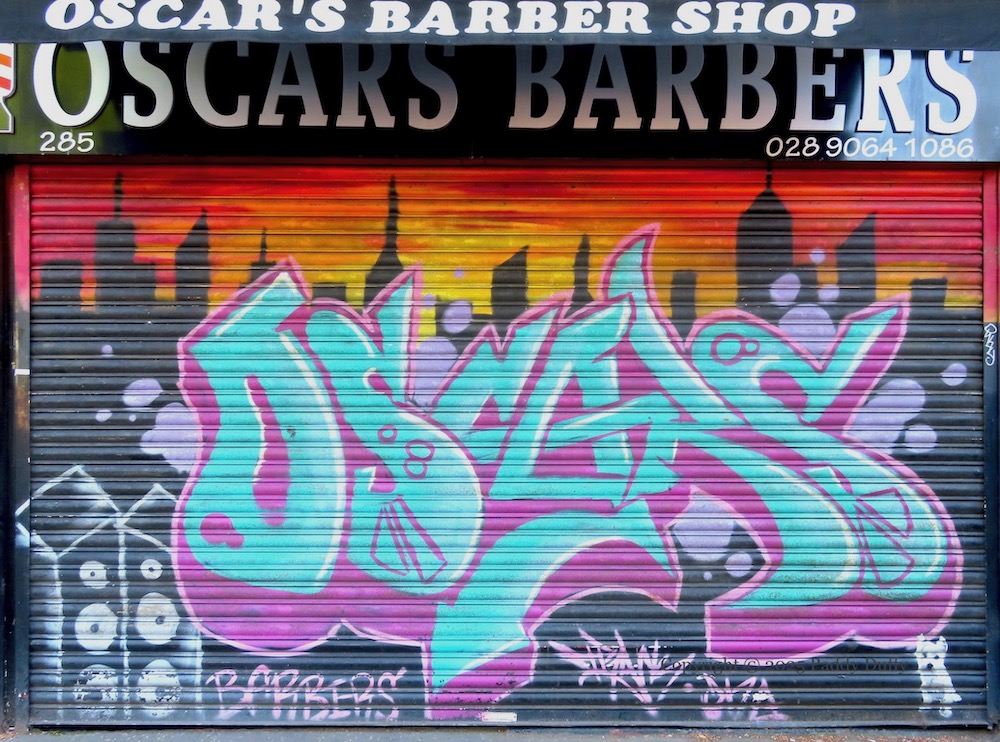
Candahar Street, south Belfast. Also included is a piece of wild-style writing on Oscar’s Barbers, next door.
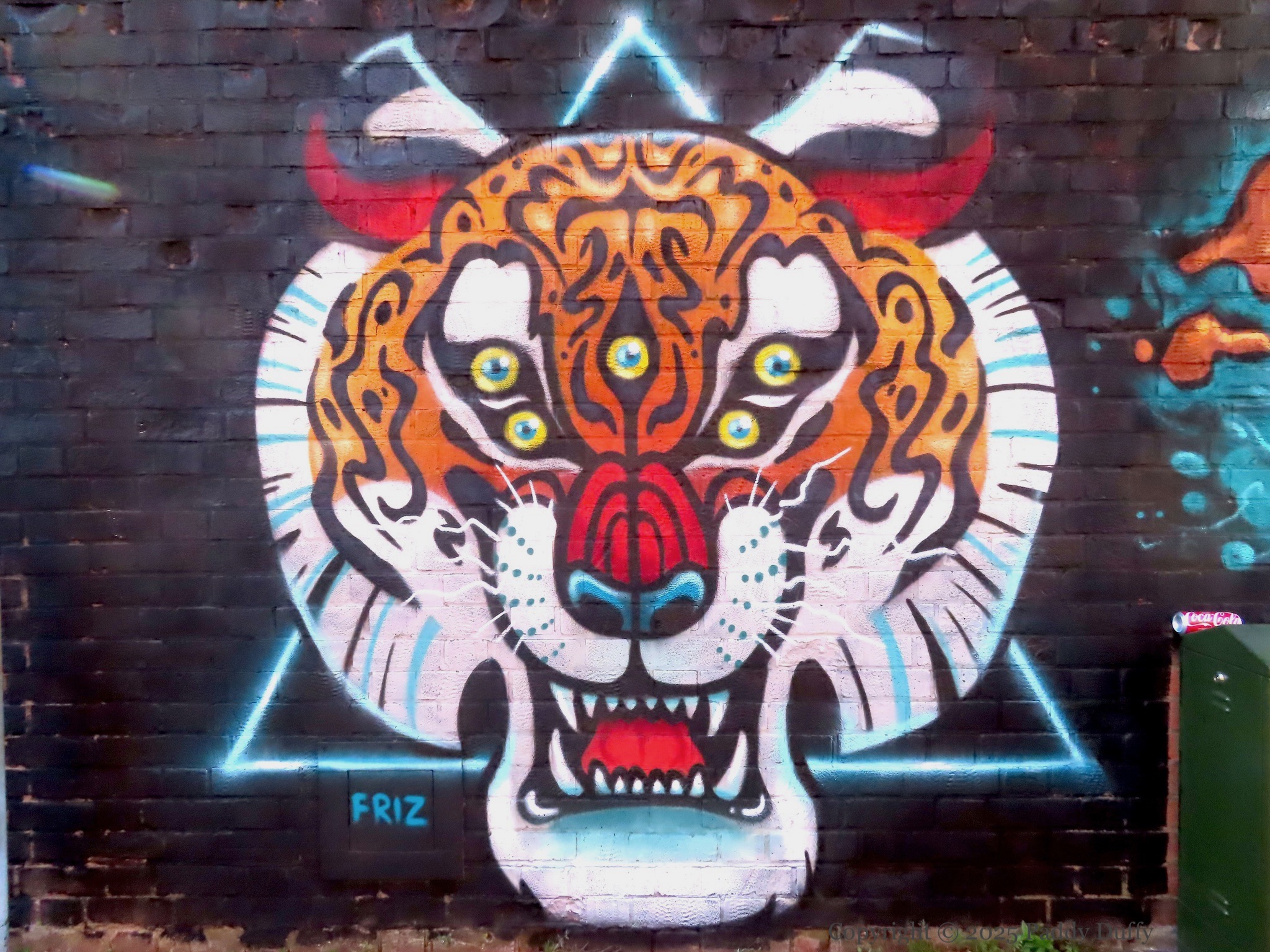
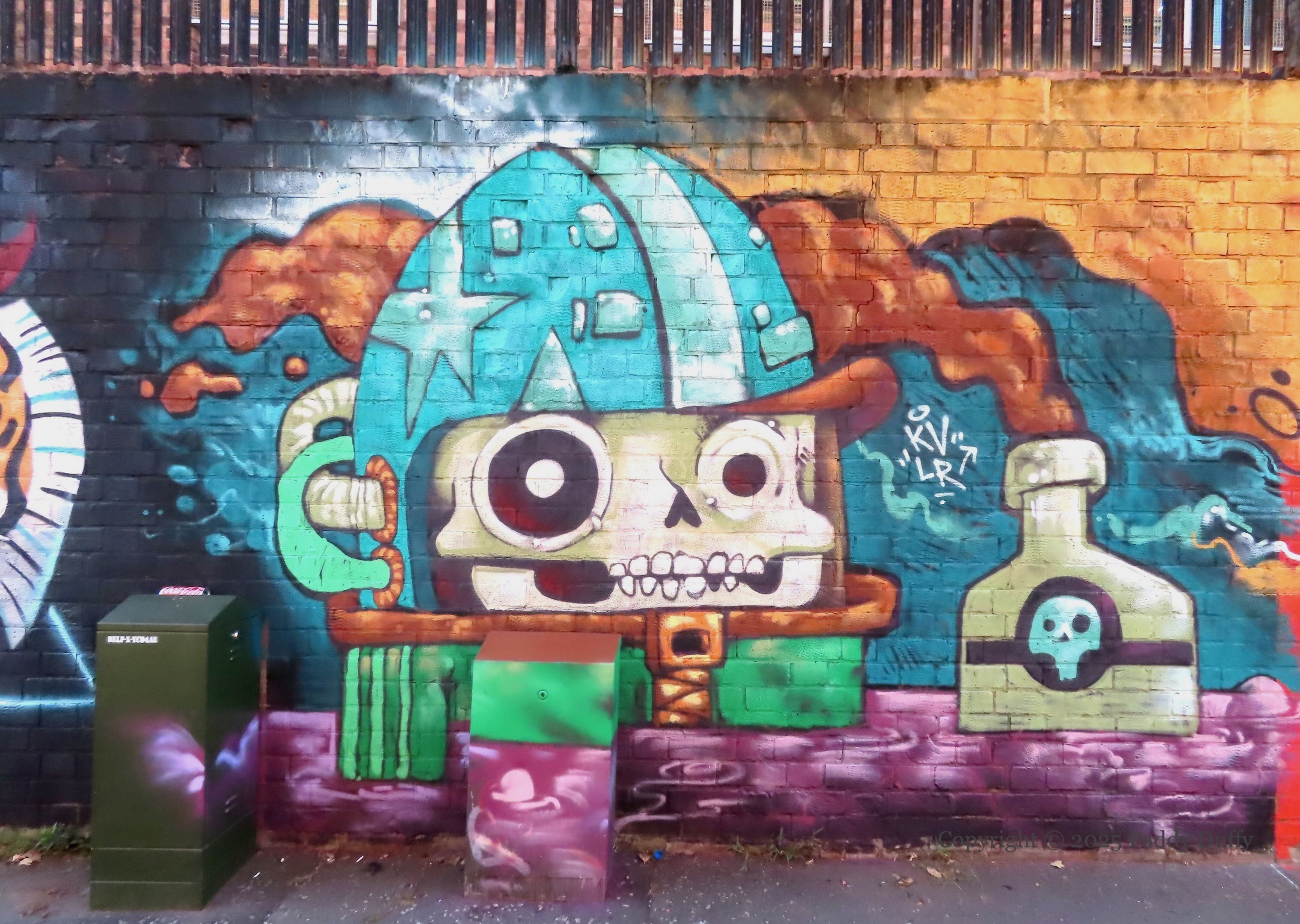
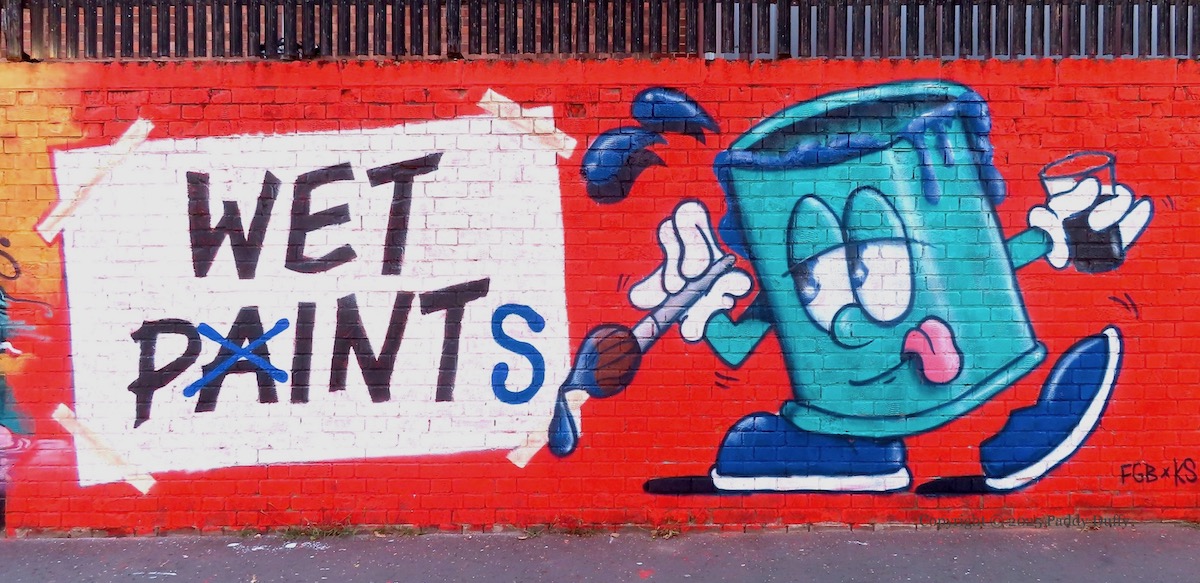
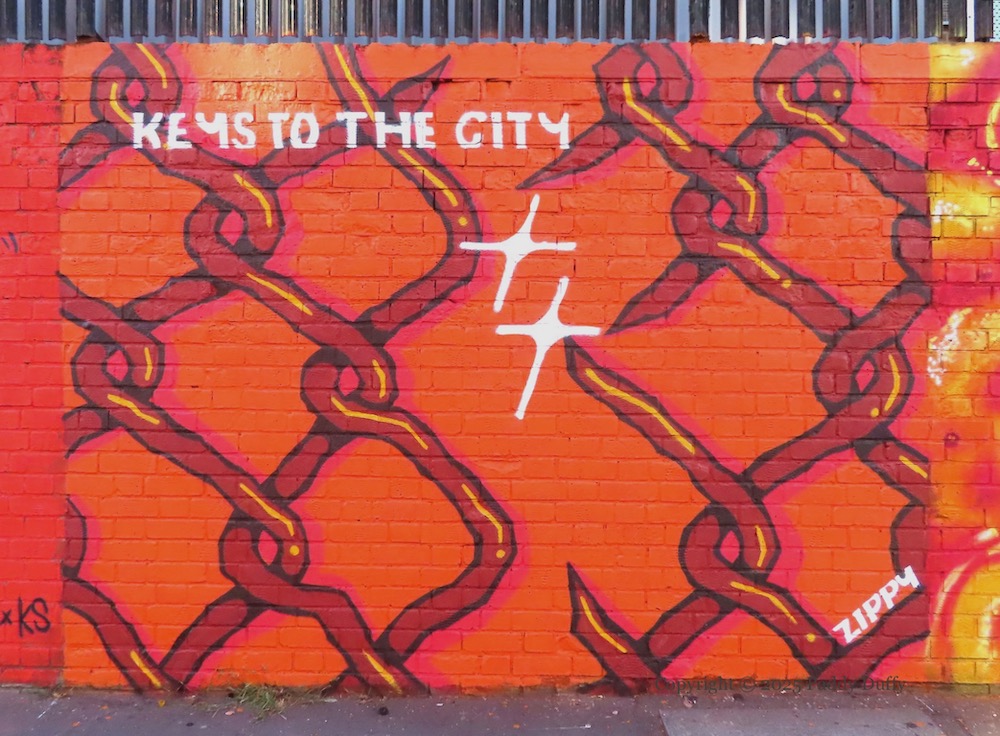
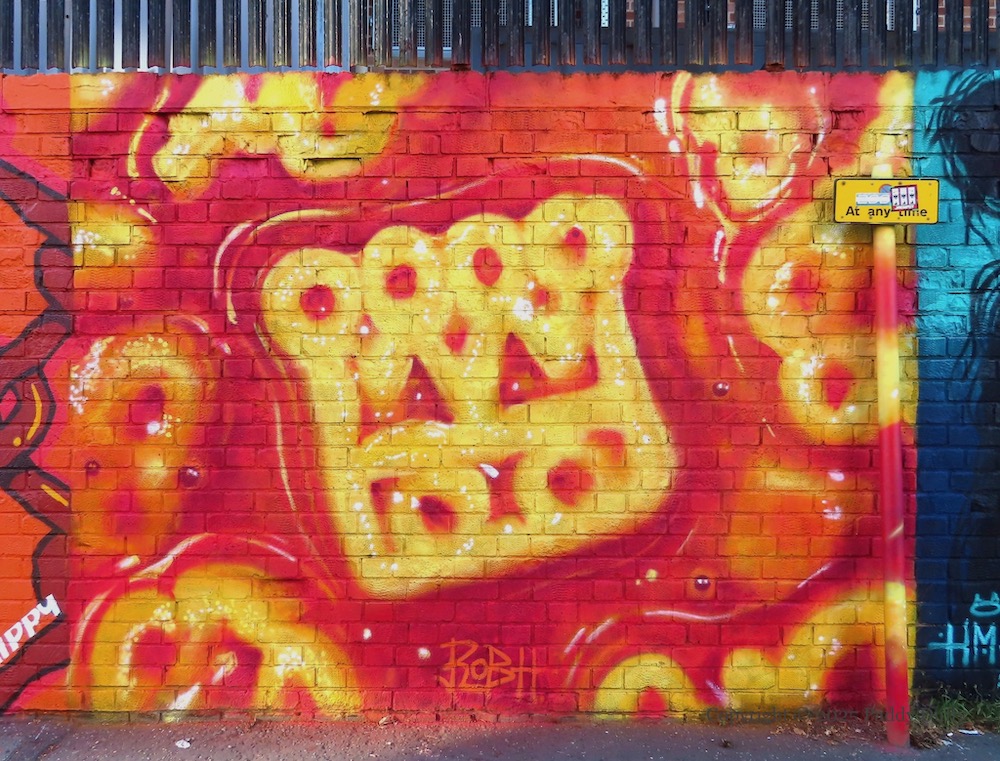
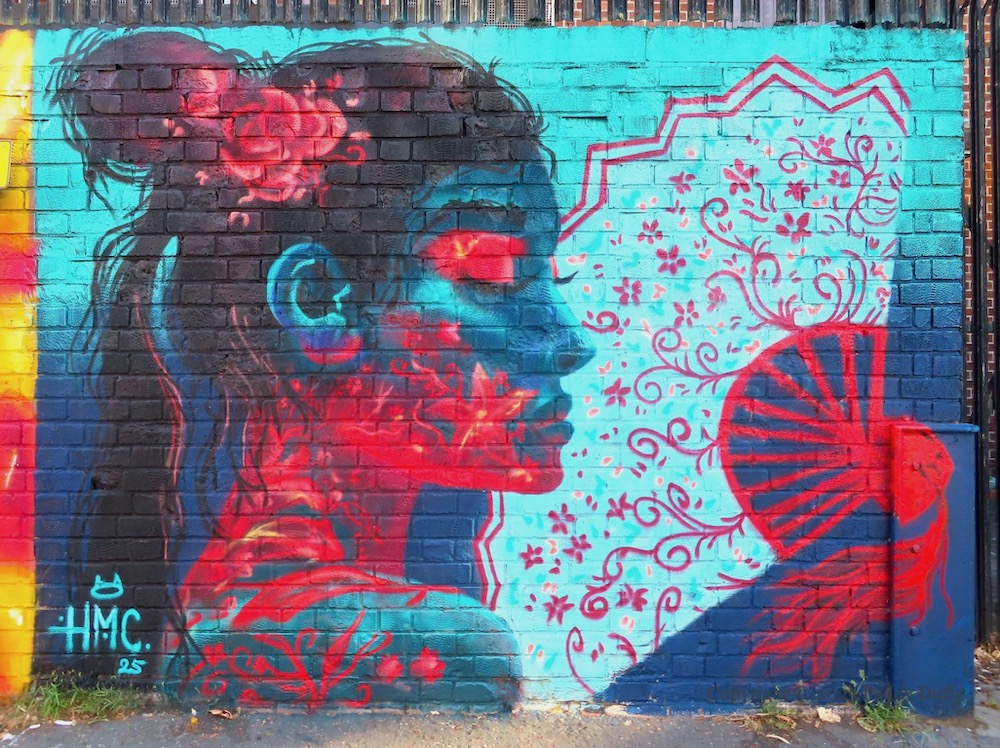
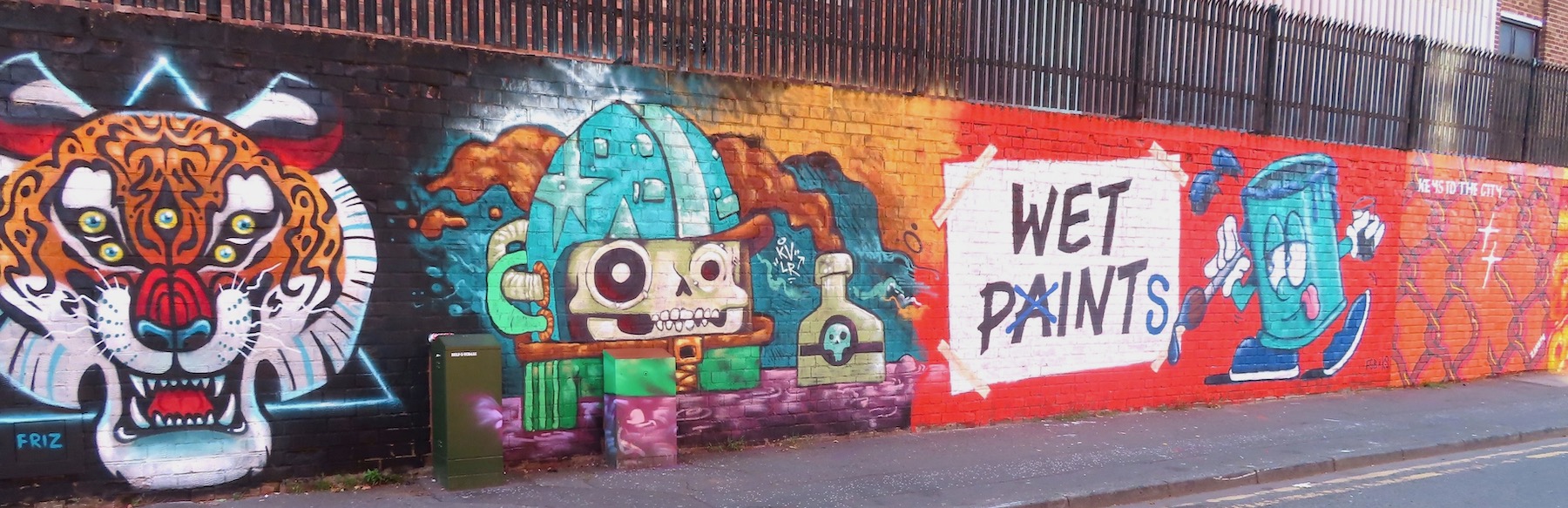
Here is a gallery of new street art at the Pavilion Bar, St Jude’s Parade, off the Ormeau Road, south Belfast. The pieces are by Friz (web), KVLR (web), “Wet Paint Wet Pints” FGB (web) + Katriona (web), “Keys to the city” by Zippy (web), a Peppa Pig crown in alphabetti spaghetti by Rob Hilken (web), and HMC (web)
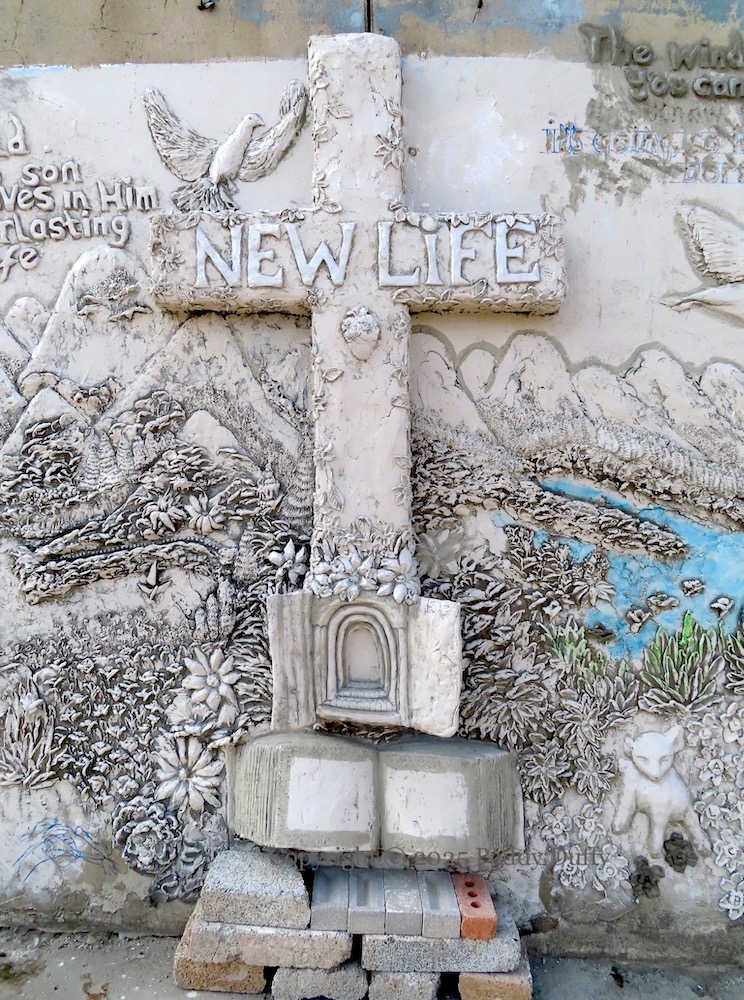
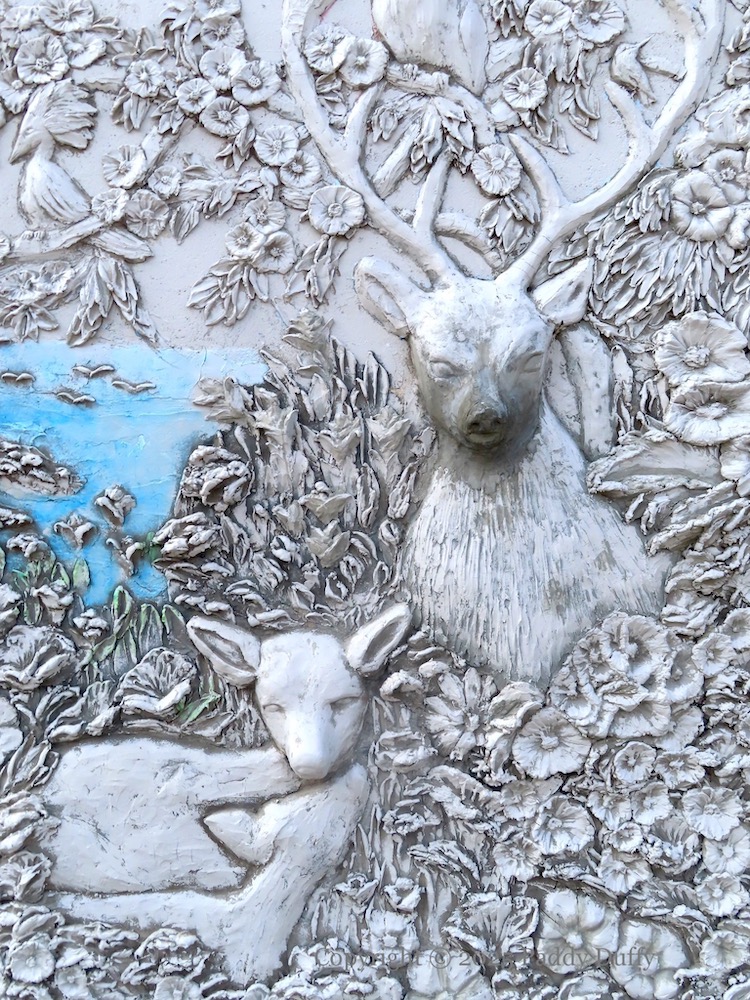
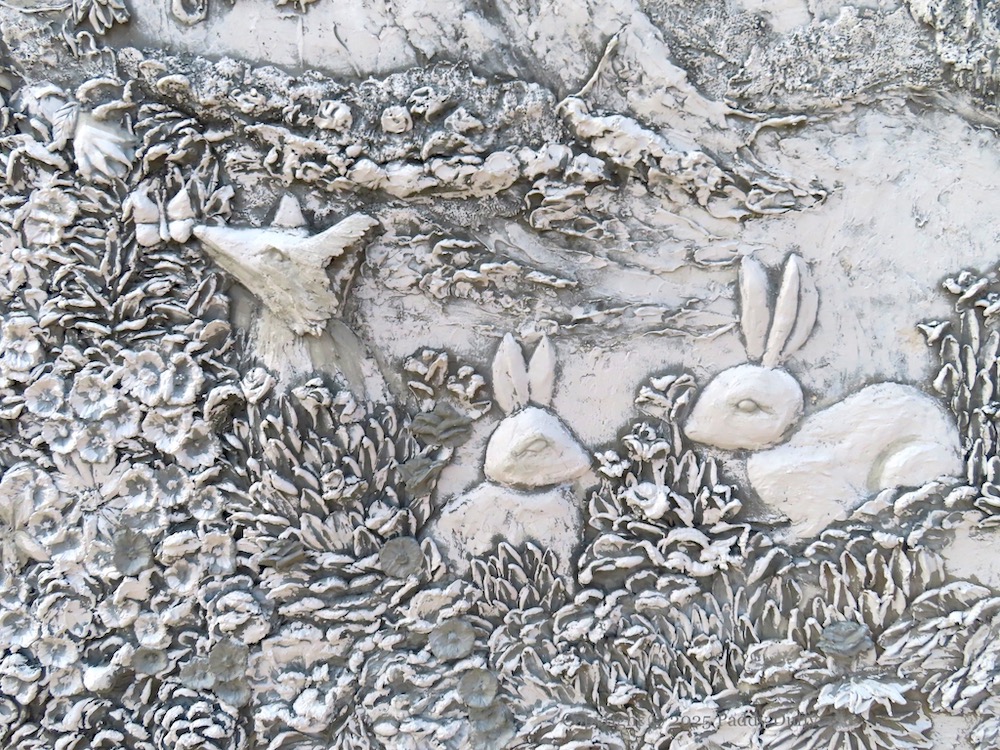
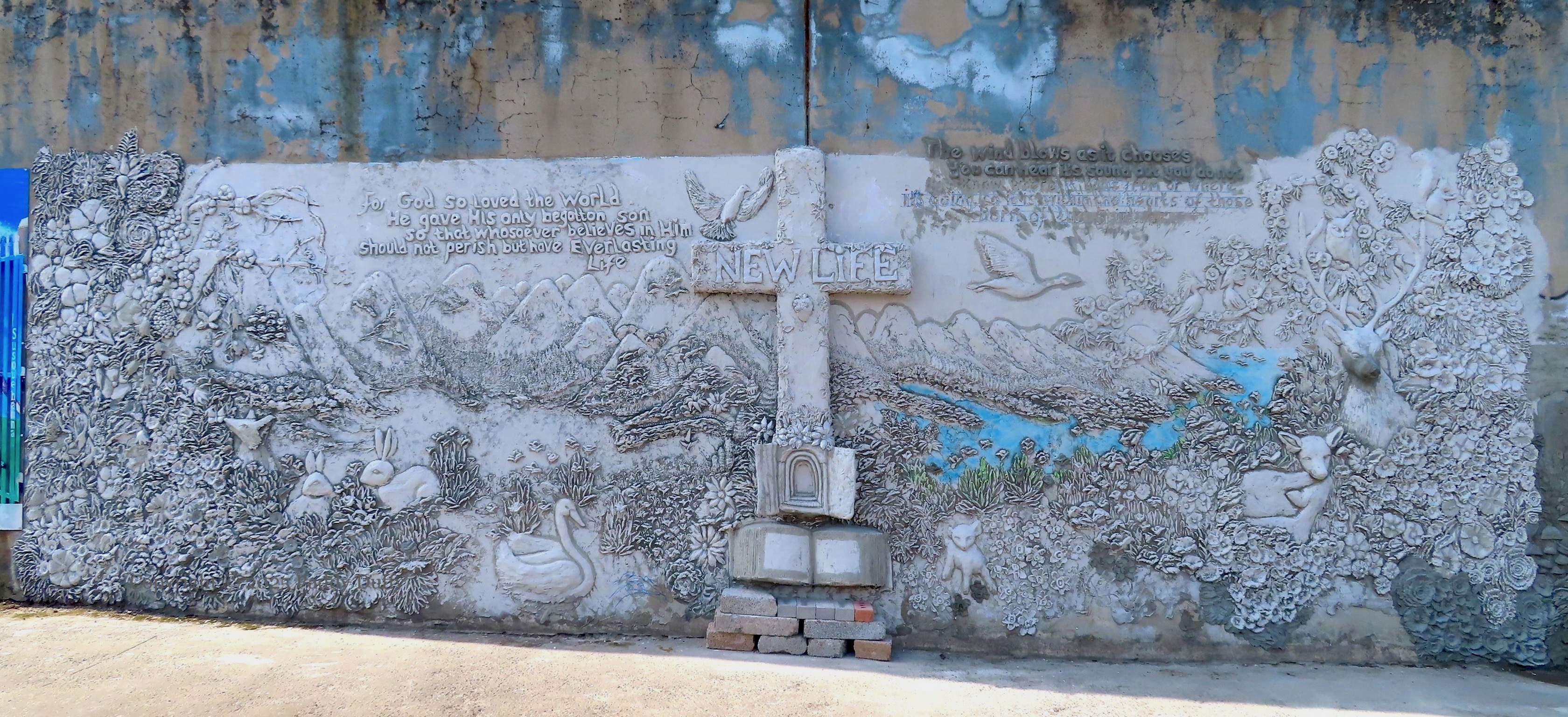
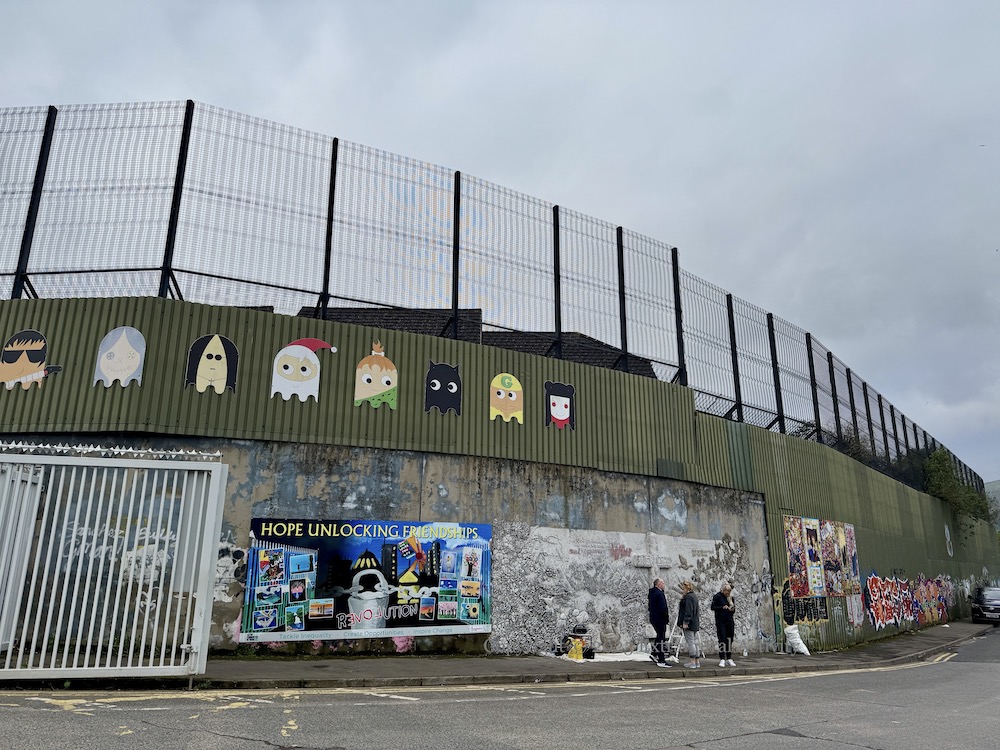
These are images of a new concrete relief-work in progress on the Cupar Way “peace” line (war wall) at the North Howard Street gates. The creator is Debbie Hutchings, a member of the New Life City church (Fb) (Belfast Media); the piece is on top of the ‘repent’ version of the New Life mural, and it contains a scriptural quote John 3:16: “For God so loved the world He gave His only begotton [begotten] son so that whosoever believes in Him should not perish but have everlasting life.”
There is video of Hutchings at work in this Irish News video on Fb and at the BelTel. Work began at the beginning of April and the piece is perhaps still unfinished – see the incomplete text of John 3:8 in the third image: “The wind blows as it chooses, you can hear it’s [its] sound but you do not know where it came from or where it is going; so it is with the hearts of those born of the spirit”.
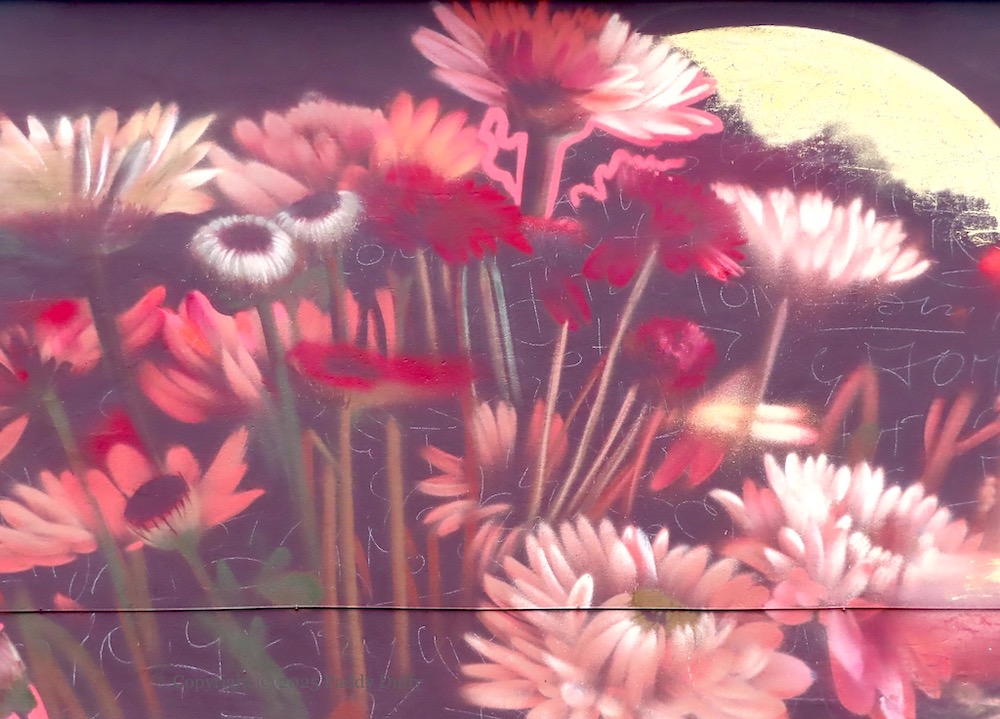
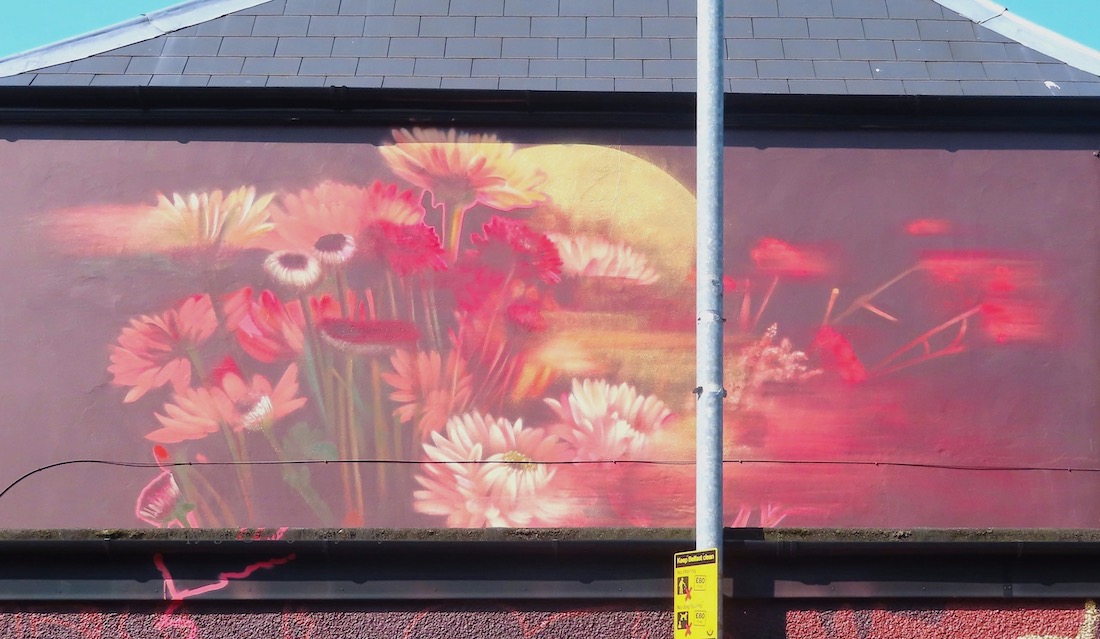
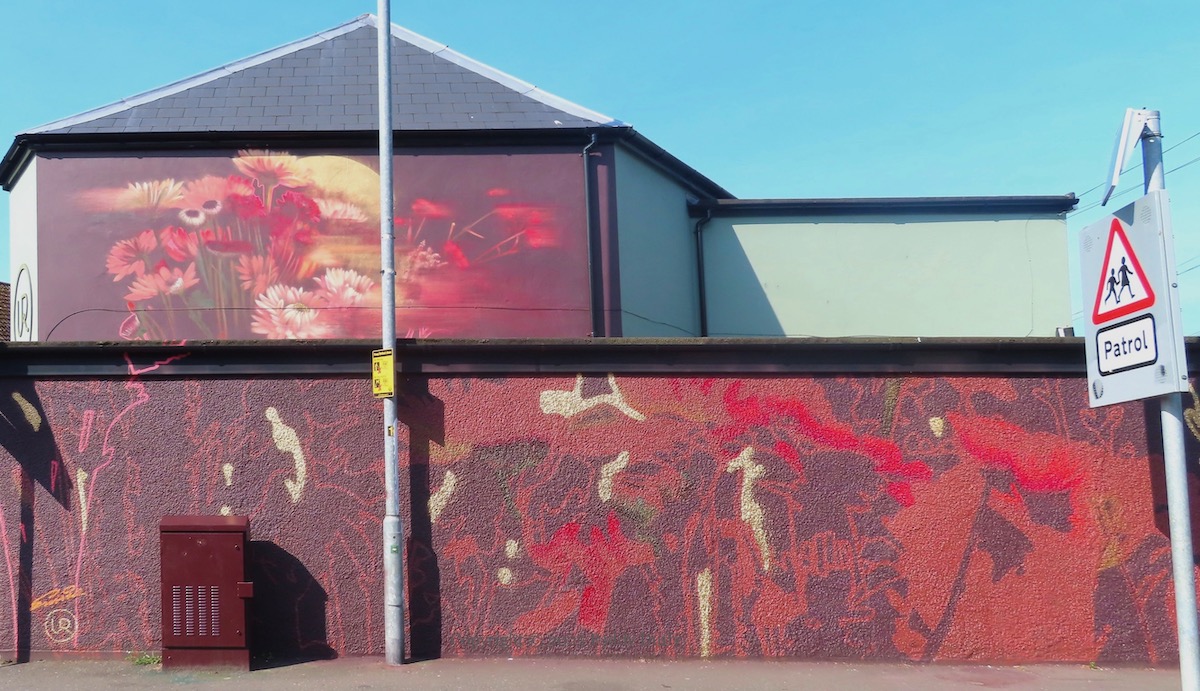
These flowers are by emic (web) on the Earlswood Road side of the Urban Roots salon (web) on the Upper Newtownards Road. The image above – with some of the doodle-grid still visible – is from the end of March, while the images of the completed piece are from May.
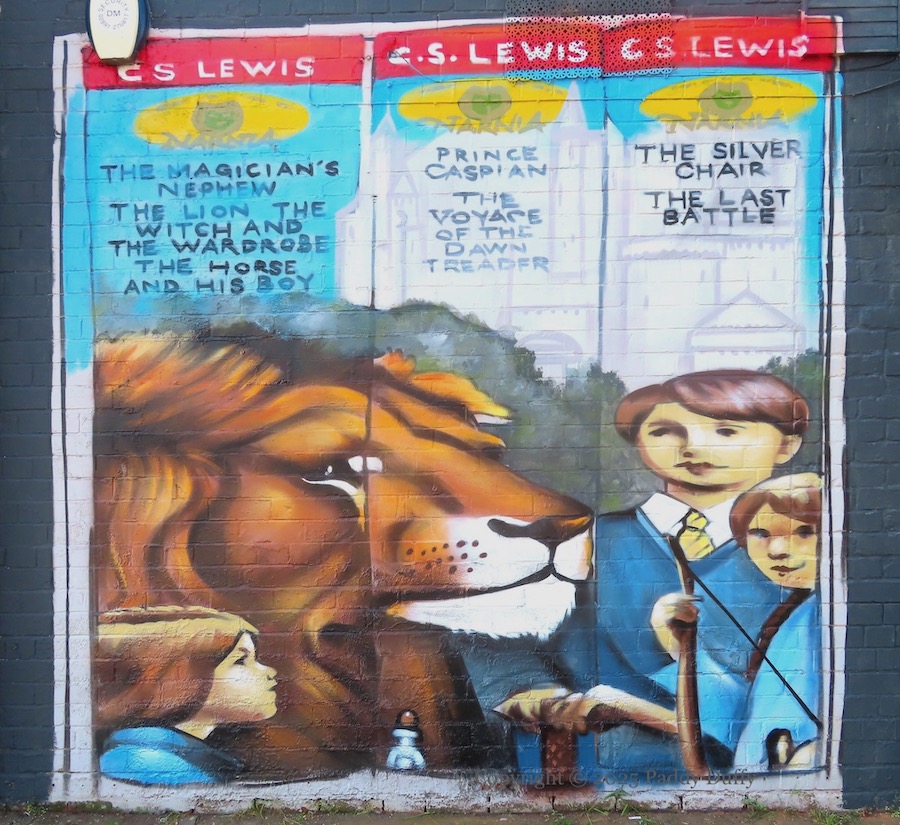
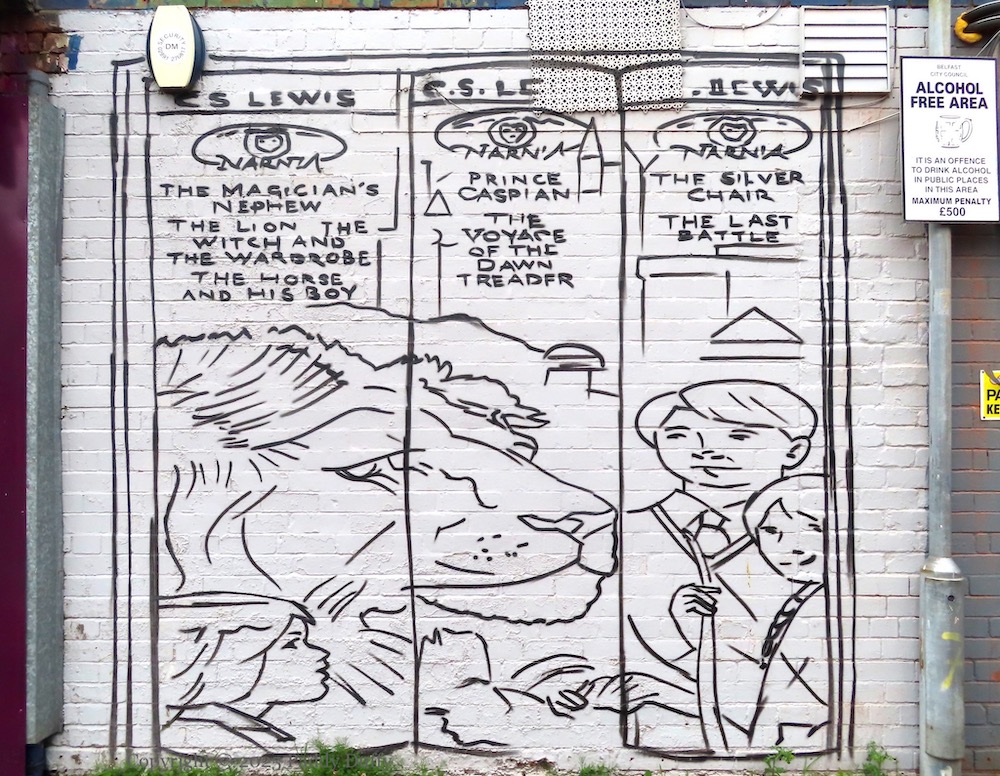
The Lion, The Witch, And The Wardrobe is by far the most famous of C.S. Lewis’s ‘Chronicles Of Narnia’. It was the first of the seven to be written – in 1950 – but as it is set in 1940, The Magician’s Nephew is often read first, as it is set in 1900 and concerns the creation of Narnia. The others are The Horse And His Boy, Prince Caspian, The Voyage Of The Dawn Treader, The Silver Chair, The Last Battle. Lewis was born in Dundela and raised in Strandtown, in east Belfast (CSLewisInstitute).
Children play among and with the landmarks of the world – riding the Sydney opera house, building the pyramids out of sand, climbing the Eiffel Tower, building the Taj Mahal from blocks, blowing on a windmill, and swinging from Samson and Goliath.
This is an old (2016) piece by Friz (web), still in excellent shape on the wall of Currie Primary school, off the Limestone Road in north Belfast.
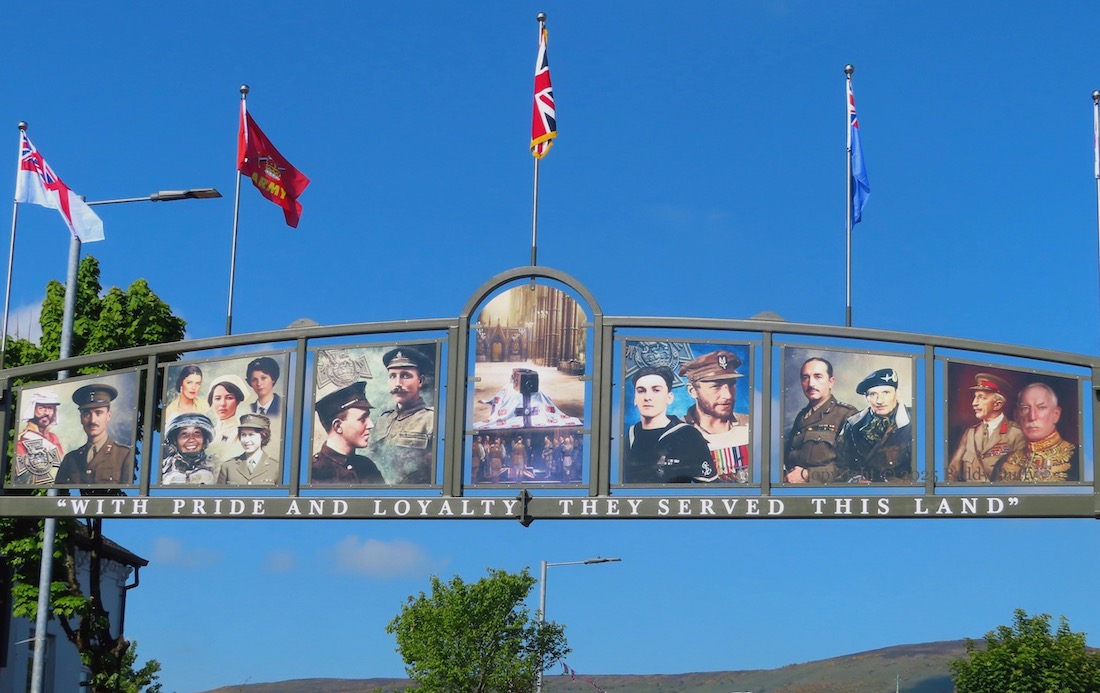
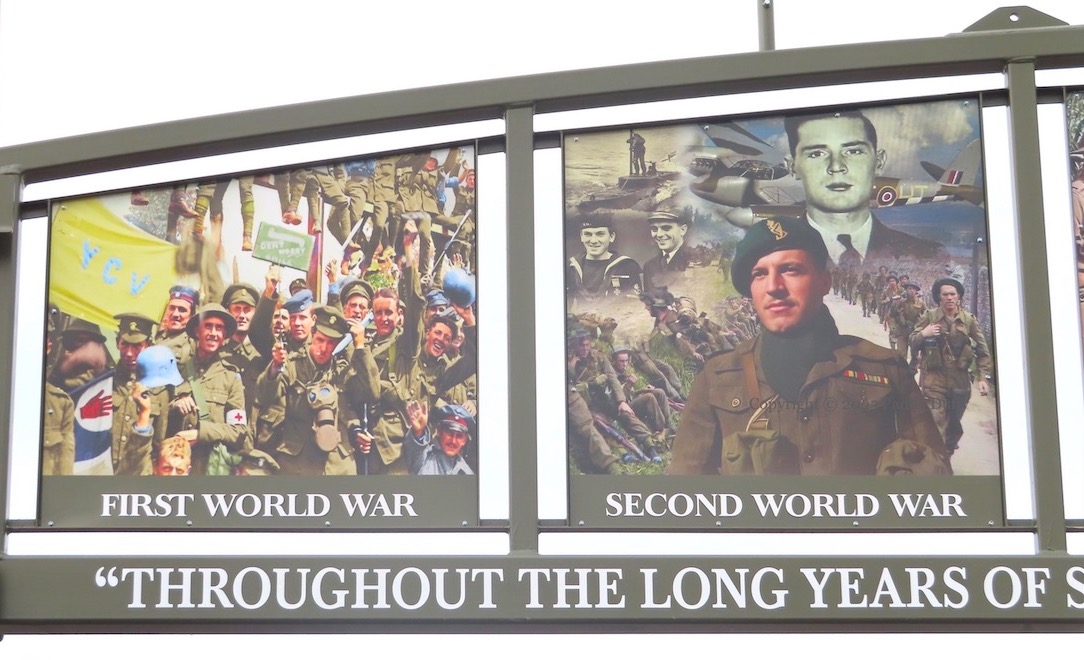
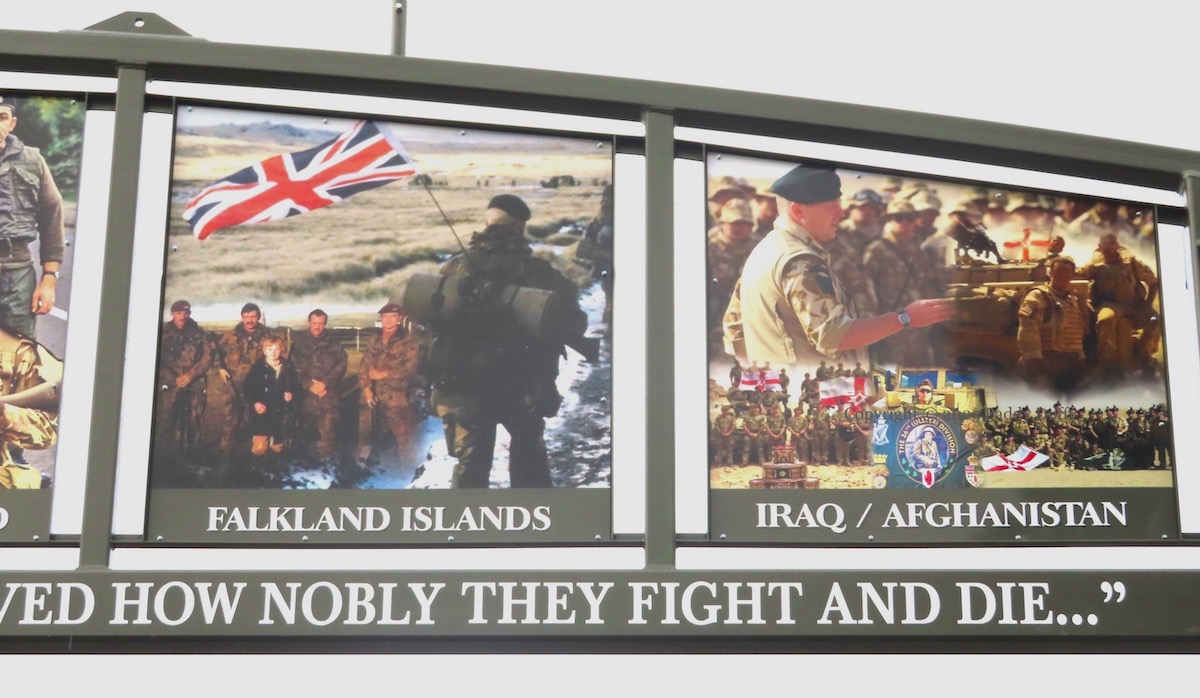
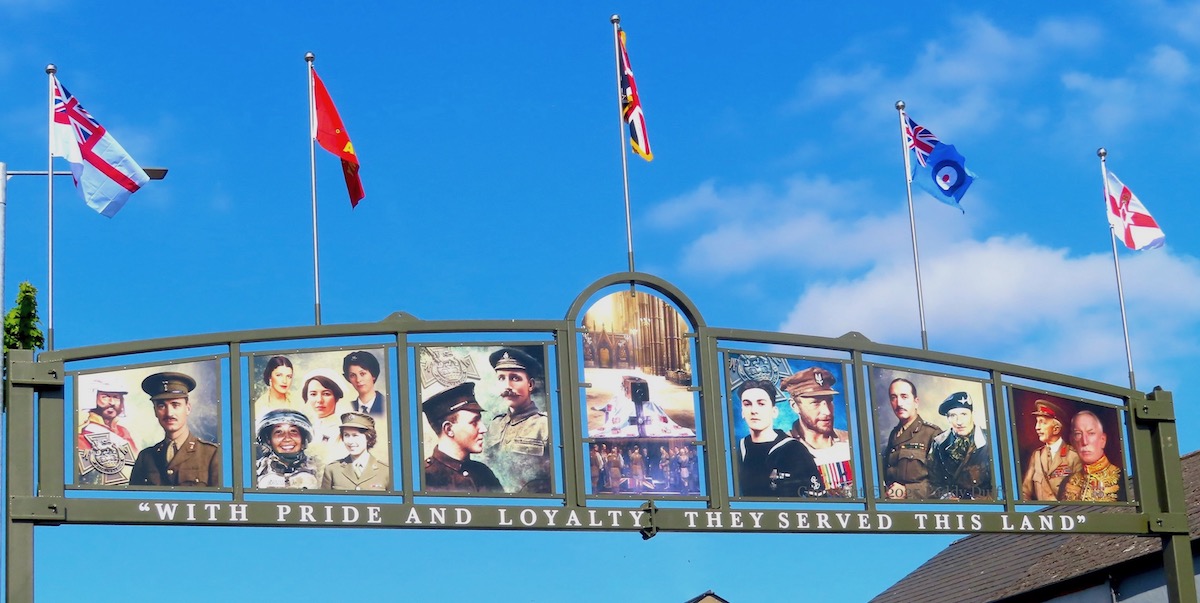
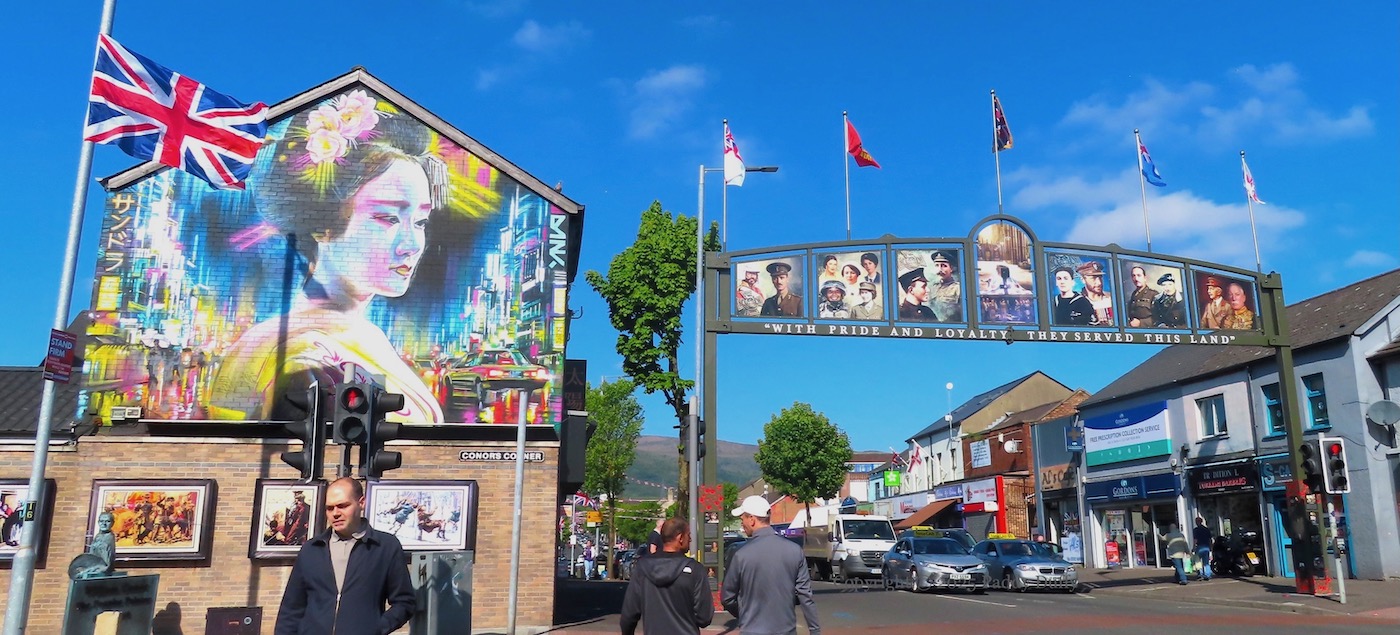
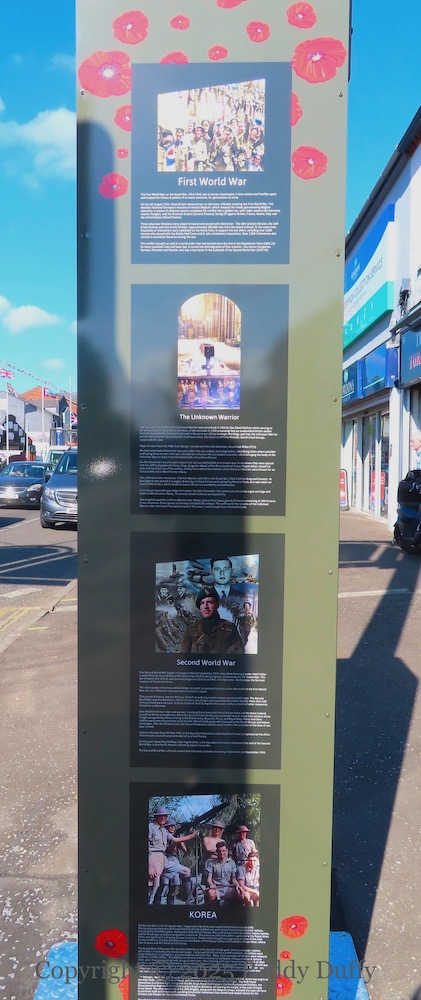
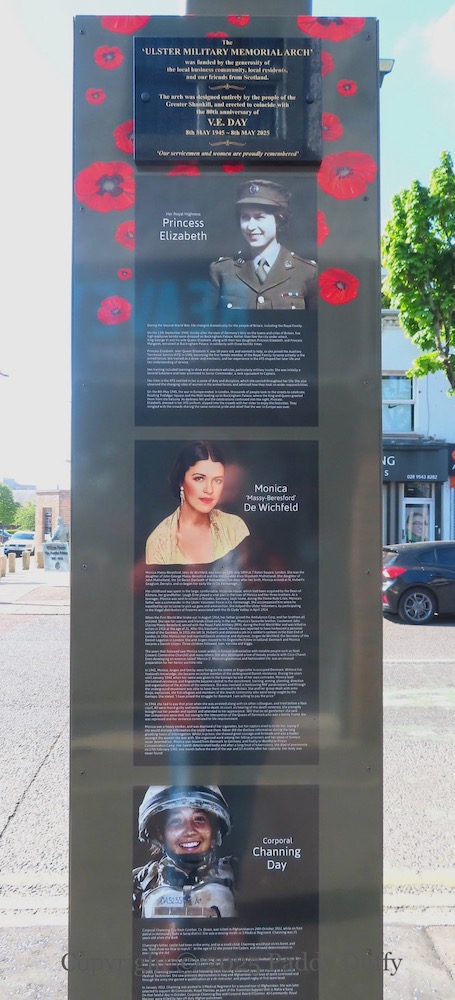
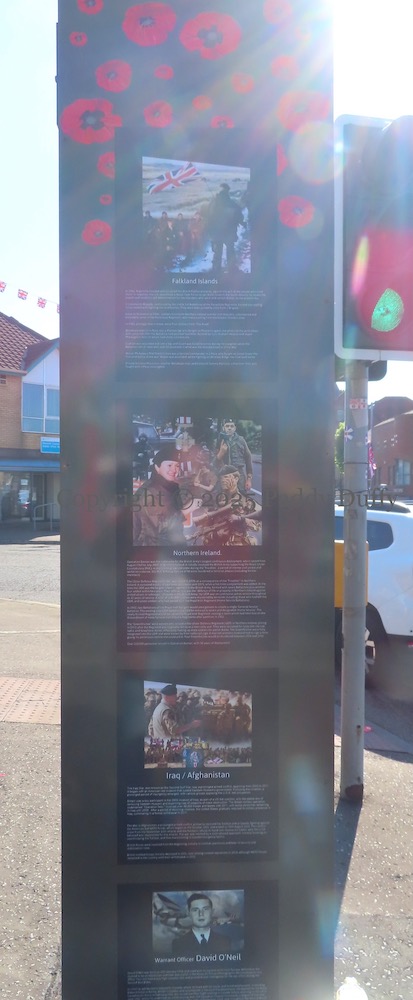
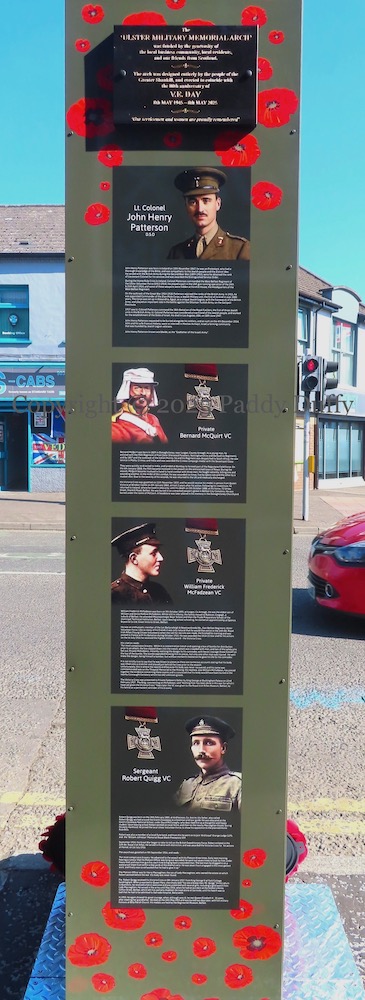
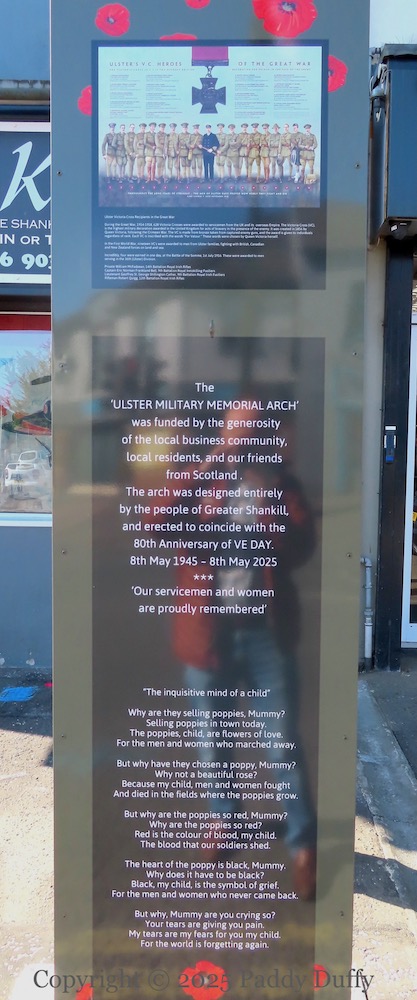
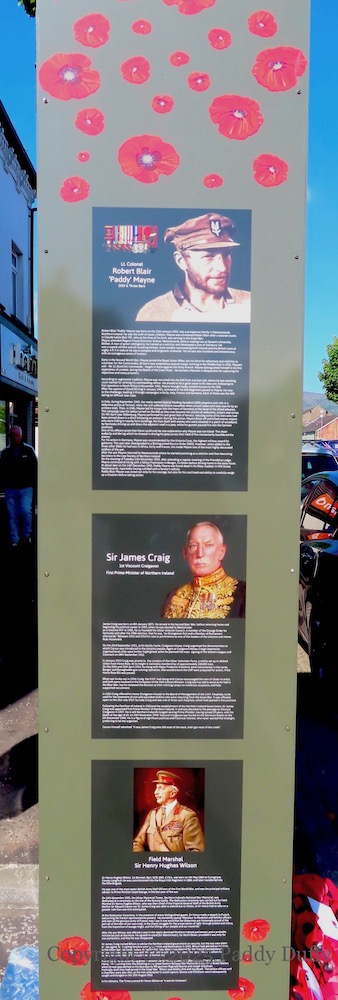
“The ‘Ulster Military Memorial Arch’ was funded by the generosity of the local business community, local residents, and our friends from Scotland. The arch was designed entirely by the people of the Greater Shankill, and erected to coincide with the 80th anniversary of VE Day 8th May 1945 – 8th May 2025. Our servicemen and women are proudly remembered.” For images of the VE Day launch, see the BelTel.
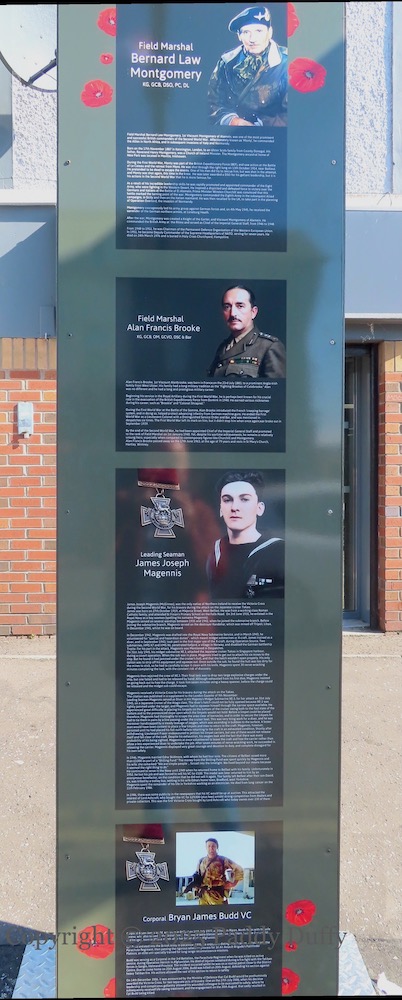
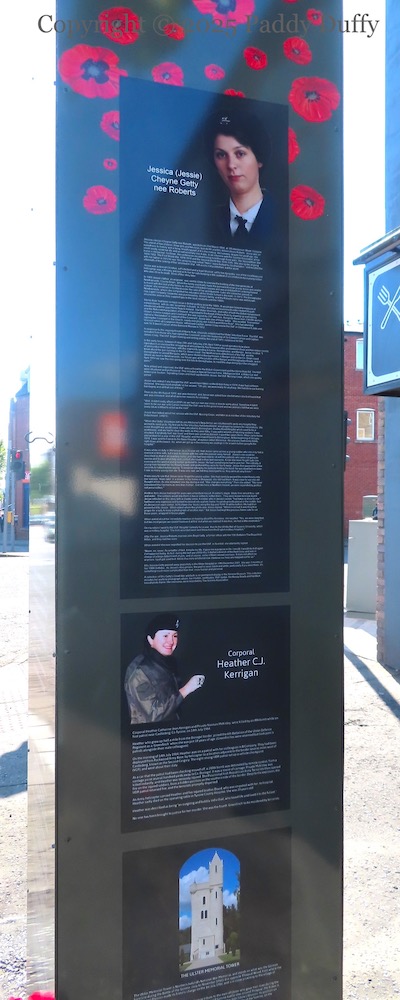
Pictured on Peter’s Hill side of the arch (bearing the quote “With pride and loyalty they served this land”) are (left to right) … Private Bernard McQuirt (a VC winner in 1858 during the Indian Rebellion) and Lt Colonel John Henry Patterson Monica De Wichfeld (raised in Fermanagh and Danish resistance member), Jessie Roberts (a nurse for the Ulster Volunteers and (in WWI) for the Volunteer Aid Detachment, serving in Birmingham and in Wimereux, France; she gets a very long entry on the info panels (see below), as her biography is not available on-line), a (unidentified) nurse, Corporal Channing Day (a medic killed in Afghanistan, 2012), Princess Elizabeth Private William Frederick McFadzean and Sergeant Robert Quigg the tomb of “the unknown warrior” (central panel) Leading Seaman James Joseph Magennis and Lt Colonel Robert Blair ‘Paddy’ Mayne Field Marshal Alan Francis Brooke and Field Marshal Bernard Law Montgomery Field Marshal Sir Henry Hughes Wilson and Sir James Craig
On the other/Shankill side of the arch, bearing the quote “Throughout the long years of struggle … the men and women of Ulster have proved how nobly they fight and die”, the ‘WWII’ panel includes (top right) Warrant Officer David O’Neill, a Canadian Air Force pilot hailing from Ballymena, lost in 1943, and the ‘Northern Ireland’ panel features (left) Corporal Heather CJ Kerrigan, a UDR Greenfinch killed by the IRA in 1984. These two are also profiled in the info panels around the legs of the arch, along with Corporal Bryan James Budd, a 3rd Para soldier killed by friendly fire in Afghanistan, 2006.
Also included is JF Willcocks’s poem Poppies (sometimes called The Inquisitive Mind Of A Child): Why are they selling poppies, Mummy? Selling poppies in town today./The poppies, child, are flowers of love. For the men who marched away./But why have they chosen a poppy, Mummy? Why not a beautiful rose?/Because my child, men fought and died in the fields where the poppies grow./But why are the poppies so red, Mummy? Why are the poppies so red?/Red is the colour of blood, my child. The blood that our soldiers shed./The heart of the poppy is black, Mummy. Why does it have to be black?/Black, my child, is the symbol of grief. For the men who never came back./But why, Mummy are you crying so? Your tears are giving you pain./My tears are my fears for you my child. For the world is forgetting again.”
















 Paddy Duffy Collection