Children play among and with the landmarks of the world – riding the Sydney opera house, building the pyramids out of sand, climbing the Eiffel Tower, building the Taj Mahal from blocks, blowing on a windmill, and swinging from Samson and Goliath.
This is an old (2016) piece by Friz (web), still in excellent shape on the wall of Currie Primary school, off the Limestone Road in north Belfast.
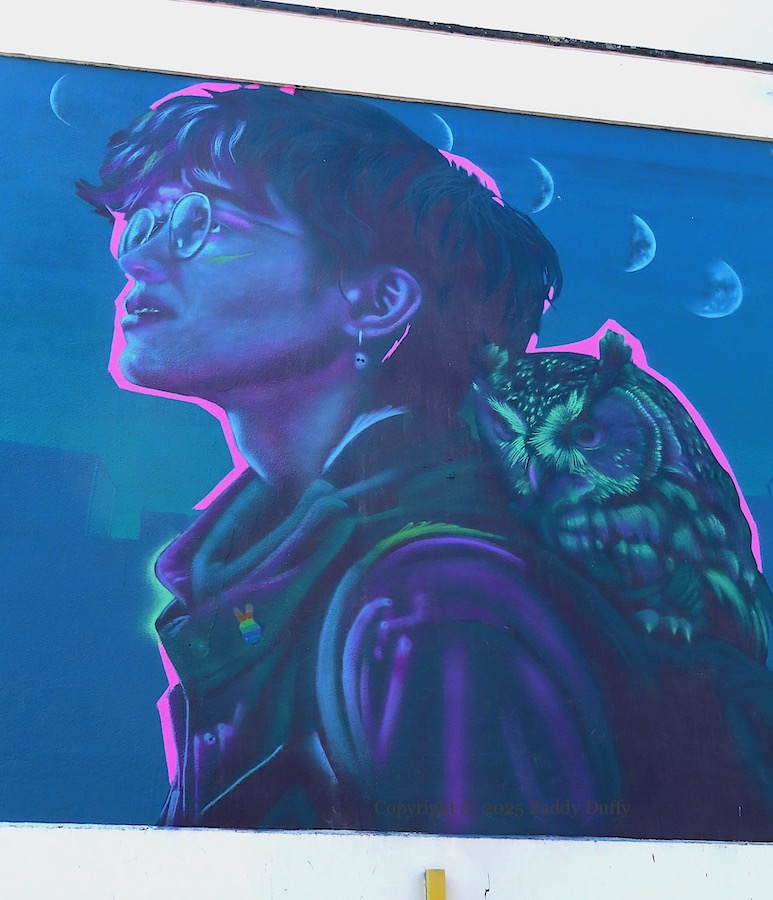
A student makes their way through the cycles of the moon, with Pride pin, skull earring, and owl familiar (and horcrux scar on the cheek?) to guide the way.
Street art by emic (web) at Belfast Royal Academy on the Cliftonville Road, north Belfast.
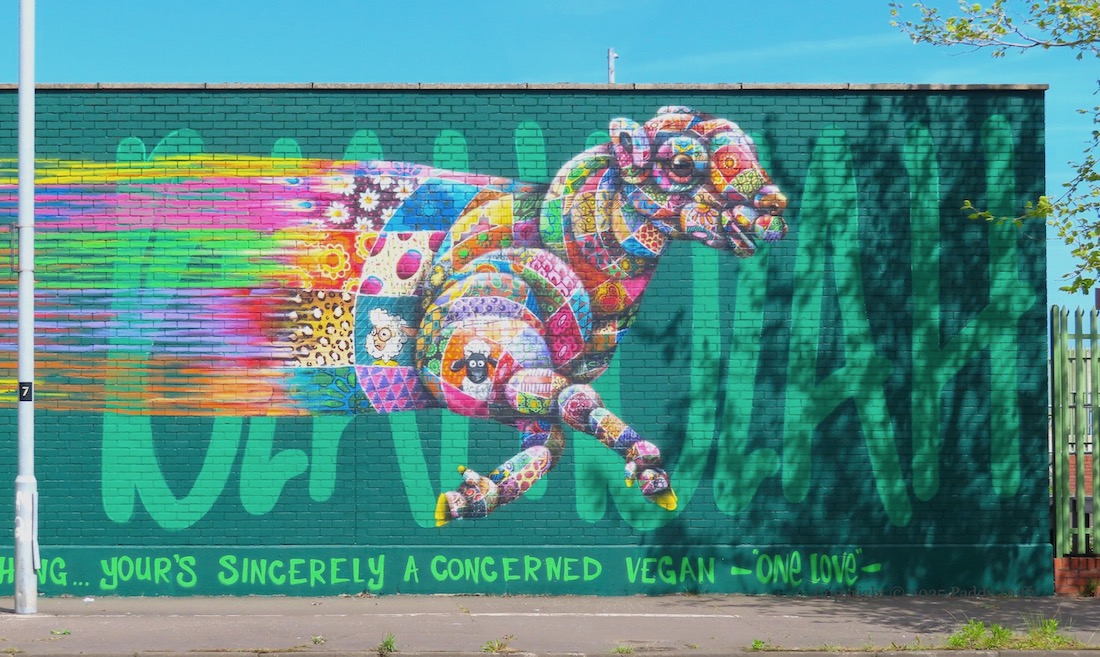
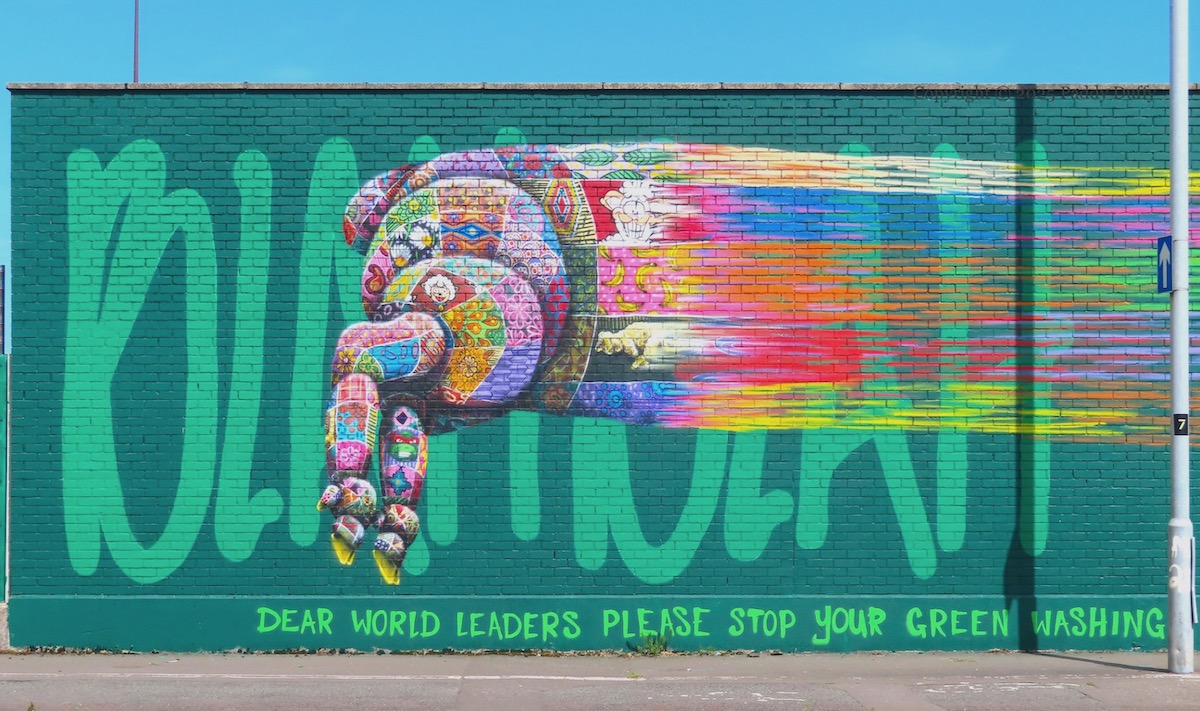
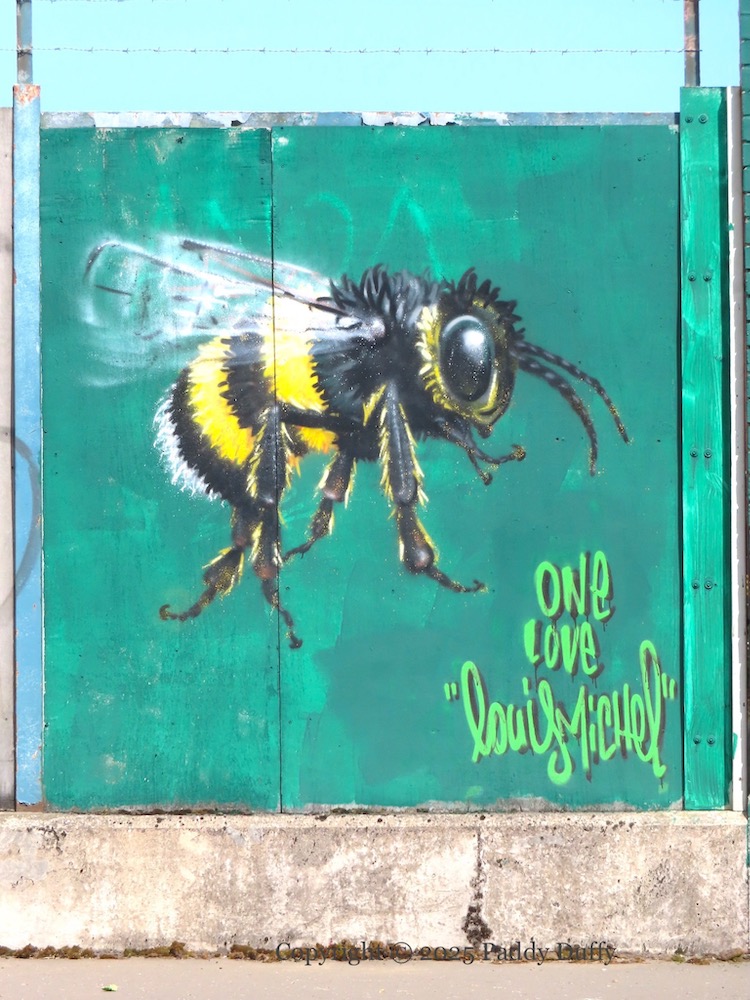
“Dear world leaders, please stop your green-washing … yours sincerely, a concerned vegan” – street art by “One Love” Louis Masai Michel (ig) in Whitla Street for Hit The North 2025 (Seedhead Arts).
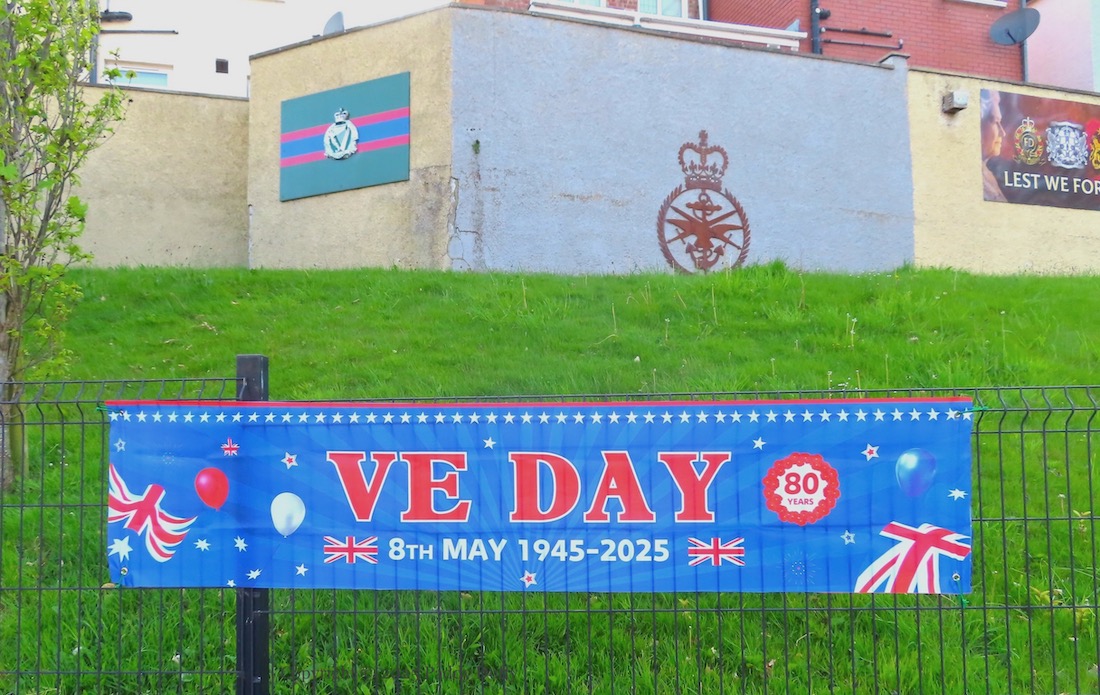
39 Allied divisions – 12 of them British – participated in the Normandy Landings – officially “Operation Neptune” – that took place on June 6th, 1944; in planning for the operation, the original “D-Day” was June 5th, but bad weather postponed it until the following day, when 160,000 troops stormed the beaches of the Bay Of The Seine. By the end of August, Paris had been liberated, and by the following May, victory in Europe had been achieved. 2024 was the eightieth anniversary of D-Day and 2025 the eightieth anniversary of VE Day, on May 8th.
This D-Day board and VE Day mural are in Edlingham Street, Tiger’s Bay, north Belfast. Also included below is a WWI memorial electrical box in Mervue Street, though as can be seen from the board (immediately below) the ‘graveside mourner’ silhouette is becoming a generic symbol of lost UK forces.
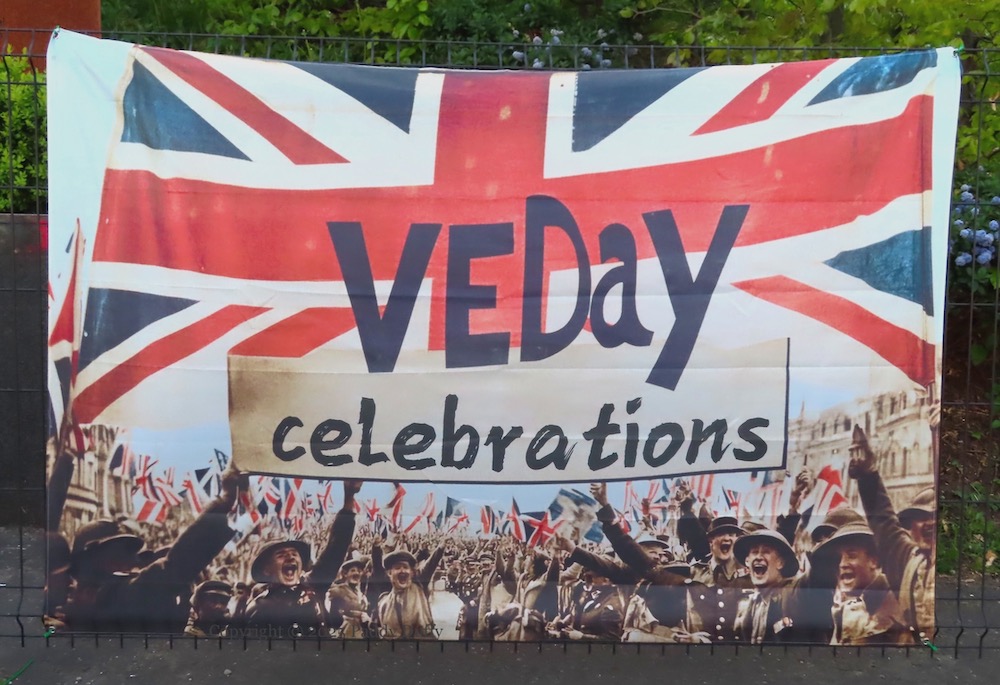
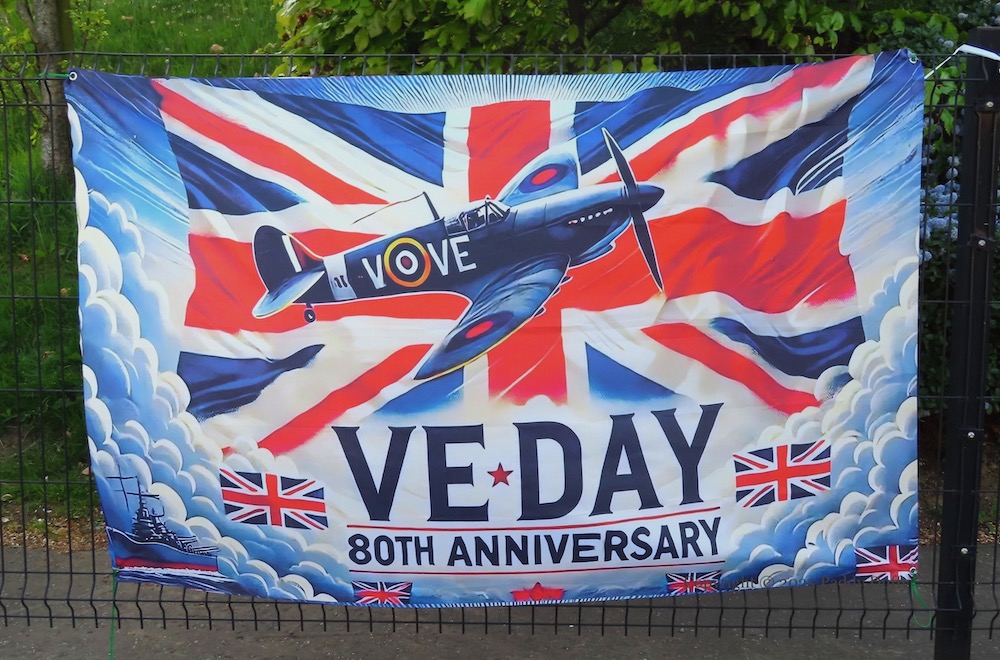
The eightieth anniversary of VE (“Victory In Europe”) Day is May 8th. Commemorative events in Belfast include a walking tour of the city centre (City Council) and a dance on the HMS Belfast (IWM); for events elsewhere in Northern Ireland, see VE-VJDay80. Pubs will be open for an extra two hours (until 1 a.m.) on the day.
Shore Road, north Belfast. For the monument and the “Lest We Forget” board in the background, see Remembrance Sunday.
In Irish, the seven bright stars of the celestial group Ursa Major are together known as “an céachta” or “an camchéachta” – the bent plough, though the reason for the modification “bent” is unclear (Vıcıpéıd). (In other cultures they are thought of as a wagon/wain, or dipper, or the hind-quarters and tail of a bear.)
The “starry plough” flag was originally proposed in 1914 for the Irish Citizen Army and flown over the Imperial Hotel during the 1916 Rising (WP); it is now the symbol of the INLA/IRSP (web) and many current anti-Agreement groups,
The starry plough shown here, in Cliftonpark Avenue, north Belfast, has the correct number of stars – seven – but has lost its typical shape.
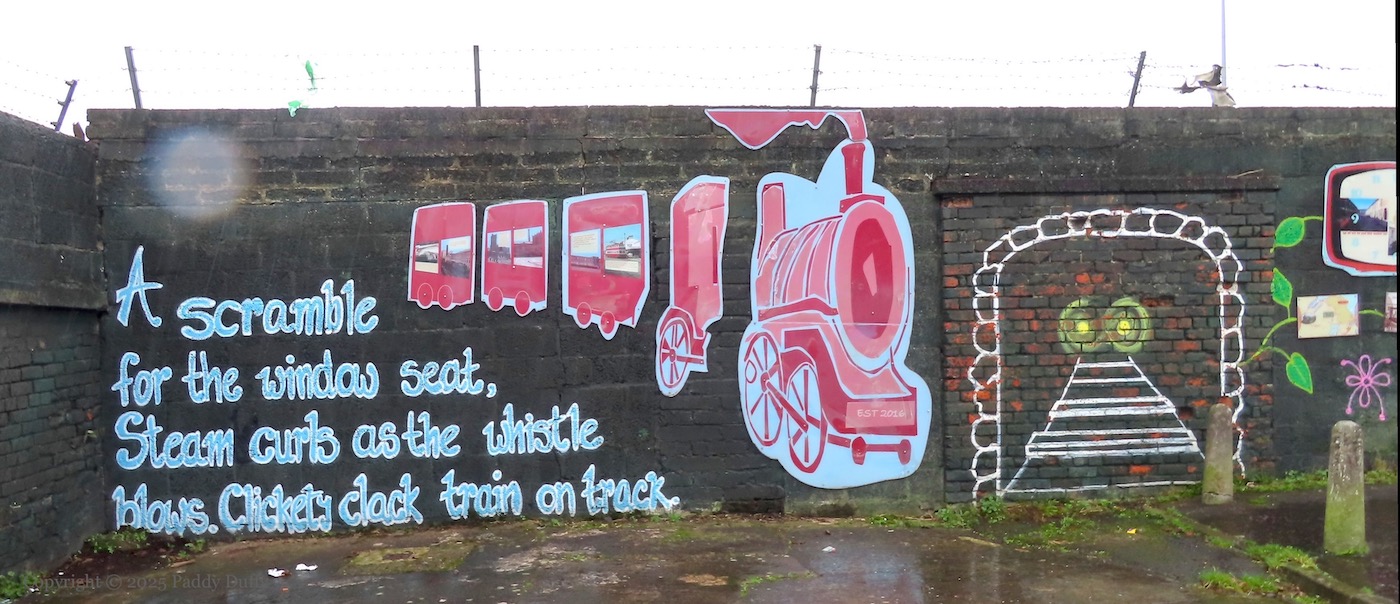
“A scramble for the window seat, steam curls as the whistle blows. Clickety clack train on track.”
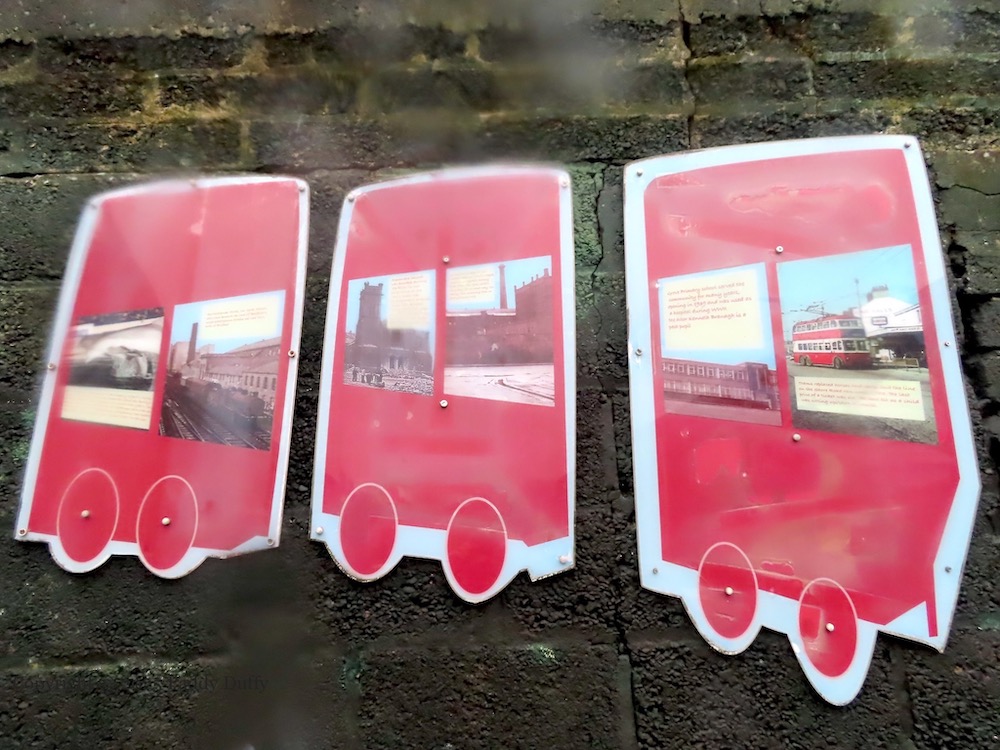
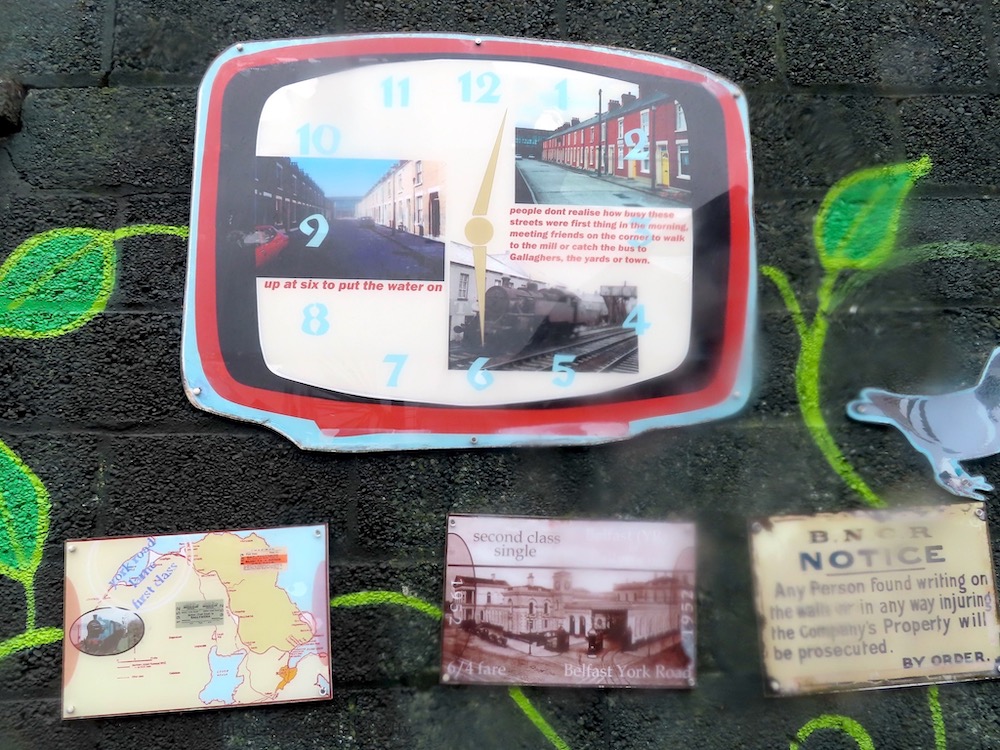
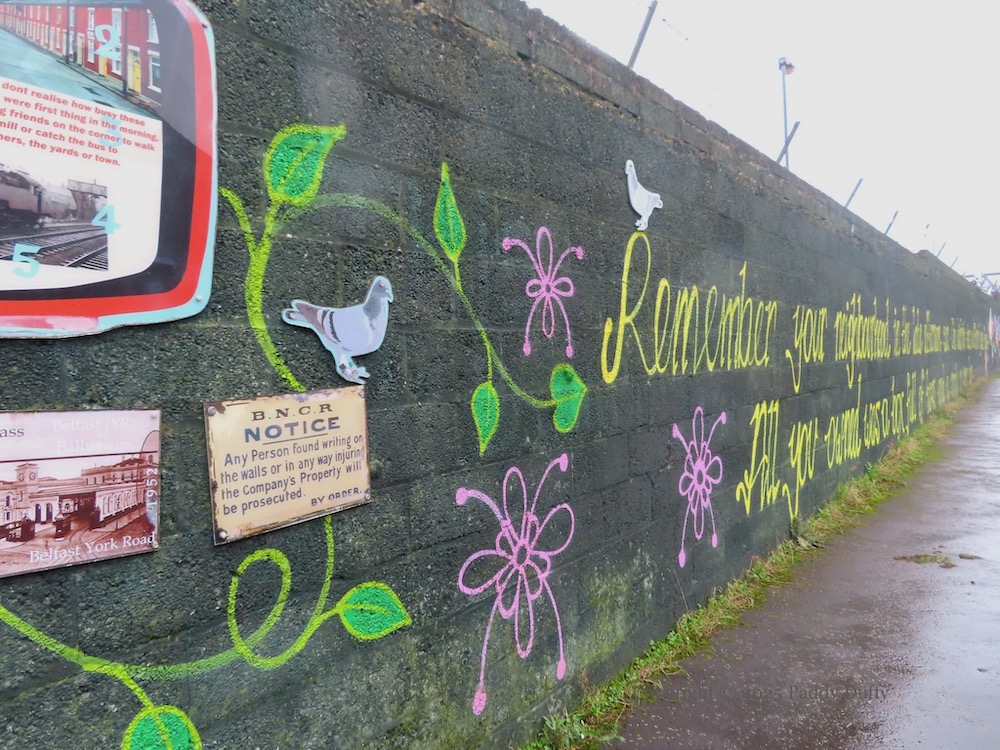
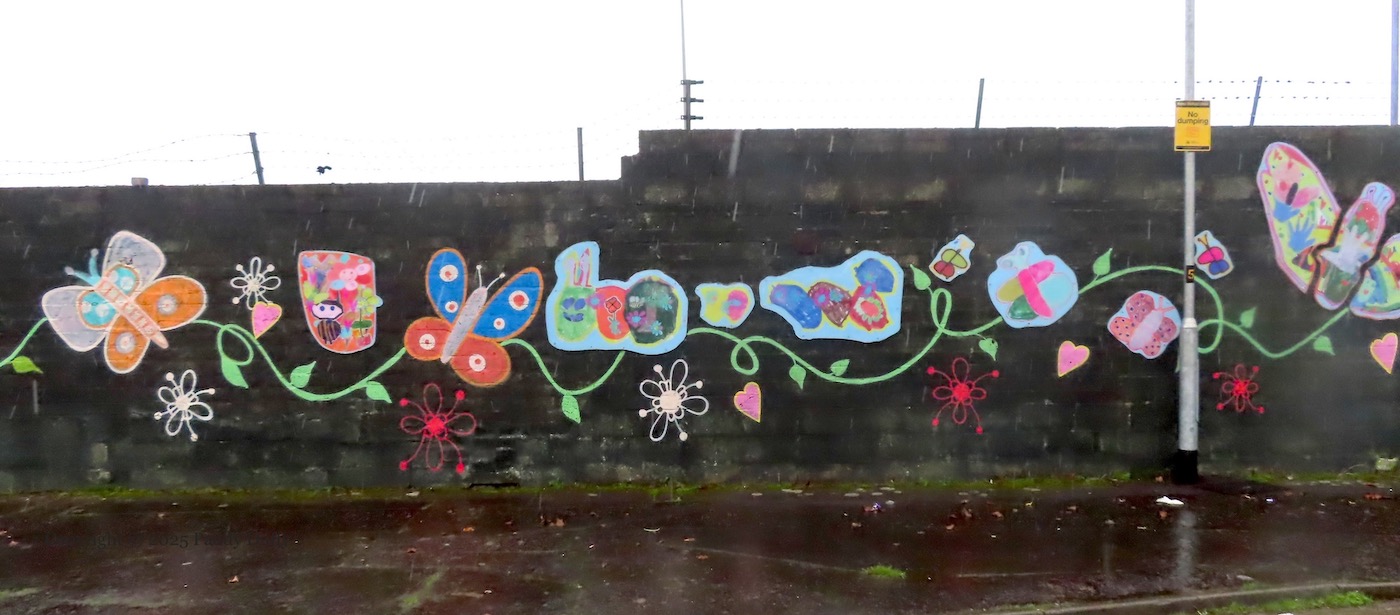
The York Road railway station was a few minutes’ walk below Ritchie Street – site of this wall-paintings and decorations (and Pearly’s Place, the adjacent community garden) – until it closed in 1992. The original line was to Ballymena and then Coleraine and London-/Derry, with service to Carrick and Larne added later. It was badly damaged in WWII and its final demise came with the opening of Belfast Central in 1976 (WP). It was replaced with Yorkgate in 1992 which no longer serves as a terminus (WP), but the line still runs along behind the end of the streets along York Road and the Grove area of the Shore Road.
On the long wall to the right is written “Remember your neighbourhood in the late afternoon sun. The district was a different place then. All you owned was a box full of toys and a smile on your face.”
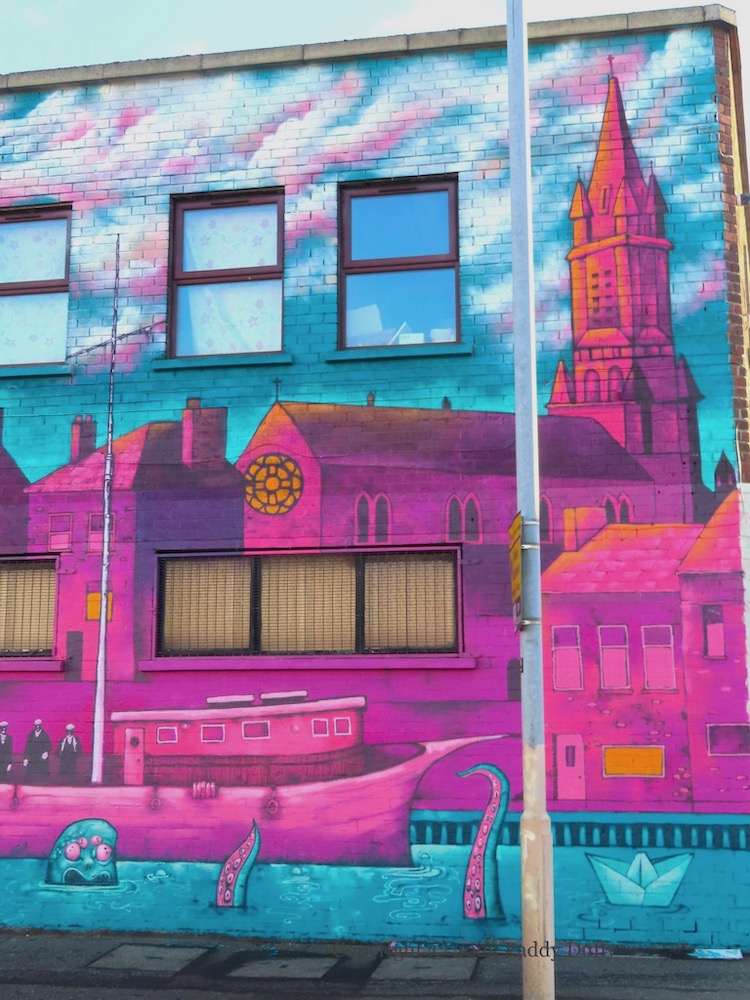
A kraken awakes in Belfast harbour, under the watchful eyes of working-class men on the waterfront in Belfast’s Sailortown, in front of local landmarks.
Storm Darragh originally took only the top third off the UVF “Prepared for peace, ready for war” mural in Mount Vernon (see Taken By Storm) but the entire wall was subsequently demolished – as shown in these images – due to concerns about its safety. The Sunday World reports that residents in the estate do not want the mural to be repainted; the wall is/was NIHE property (pdf).
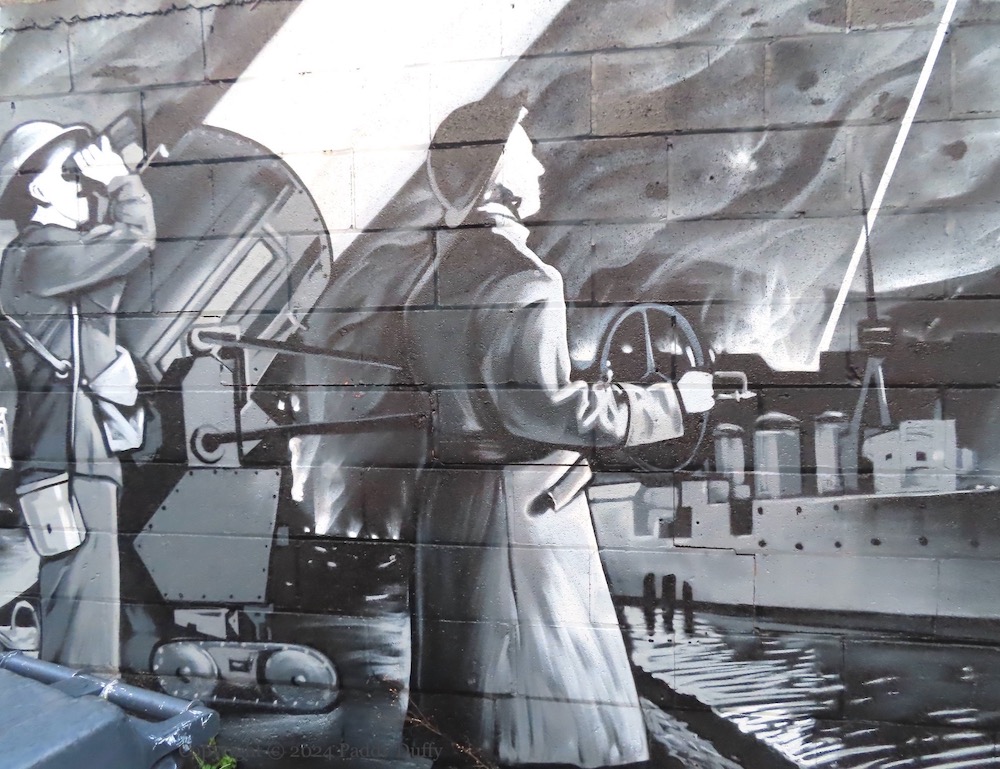
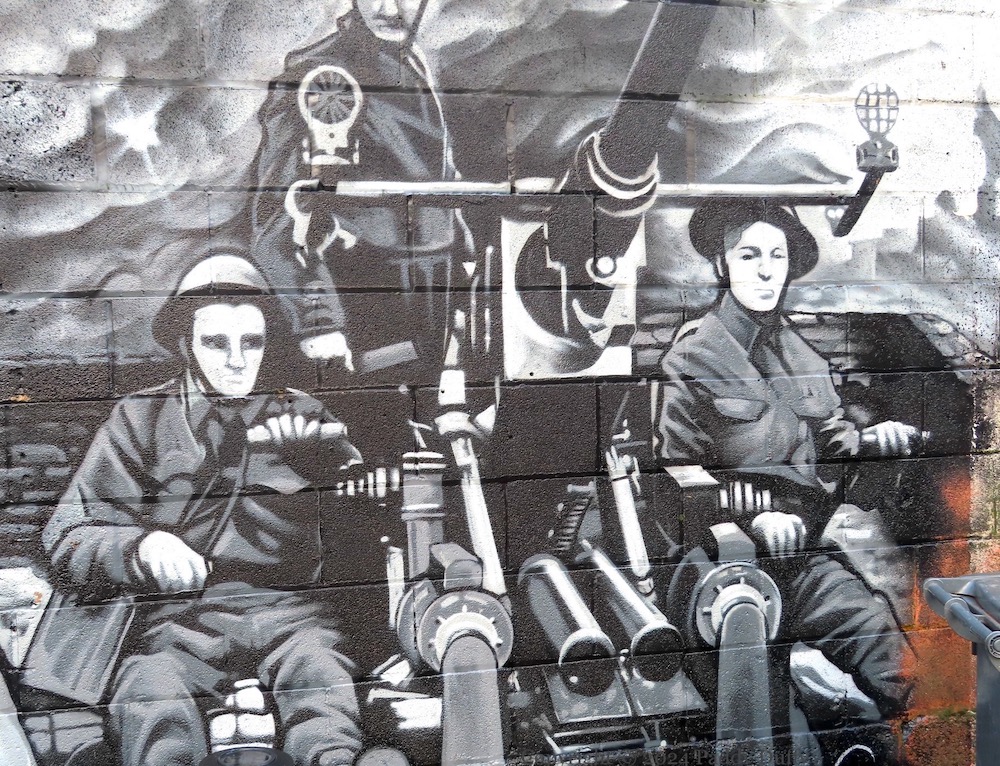
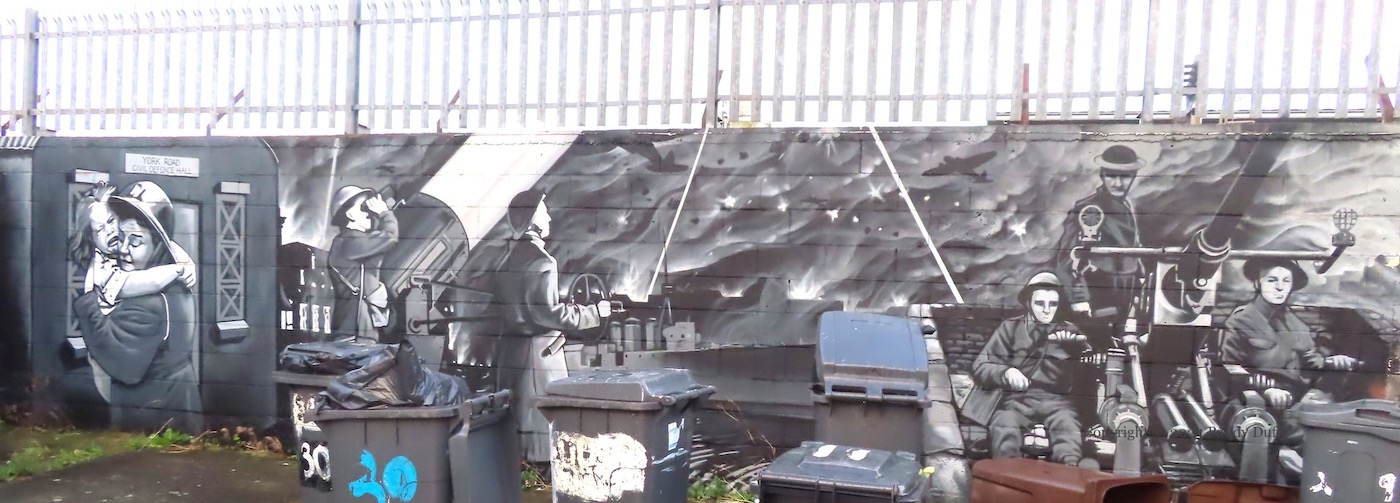
The HUBB community centre (Fb) in north Belfast has, since 2010, been based in what used to be a World War II Civil Defence air-raid shelter, which it cleaned and renovated (Tele). The original hall is depicted in this mural on the side of the HUBB.
In 1940, Belfast was protected by thirty-eight anti-aircraft guns. The German Luftwaffe flew a reconnaissance flight over Belfast on November 30th, 1940 and a test mission of eight planes on April 7th, 1941 concluded that Belfast’s defences were, “inferior in quality, scanty and insufficient” (Hogg). 150 bombers would blitz Belfast the following week, on Easter Tuesday, April 15th, and the seven guns that had been in operation ceased firing, believing, falsely, that RAF planes were also in the sky (WP).
Belfast was bombed by the Germans four times in April and May of 1941. In the blitz of Easter Tuesday, 1941, more than 900 people died, 1,500 were injured, and half the houses in Belfast were damaged (WP). According to Elaine Hogg’s research in the ‘Darker Side Of Belfast’ series, 100,000 people left the city in the remainder of the month, due to shock, fear, and the squalid conditions and unruly behaviour that followed the bombing.














 Paddy Duffy Collection