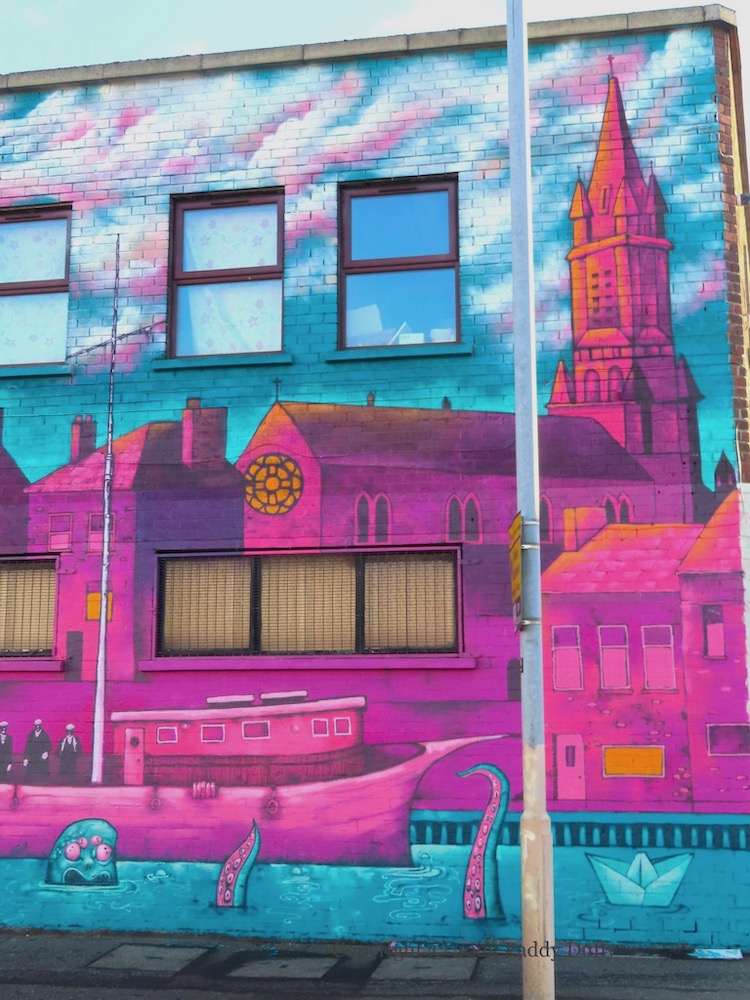
A kraken awakes in Belfast harbour, under the watchful eyes of working-class men on the waterfront in Belfast’s Sailortown, in front of local landmarks.
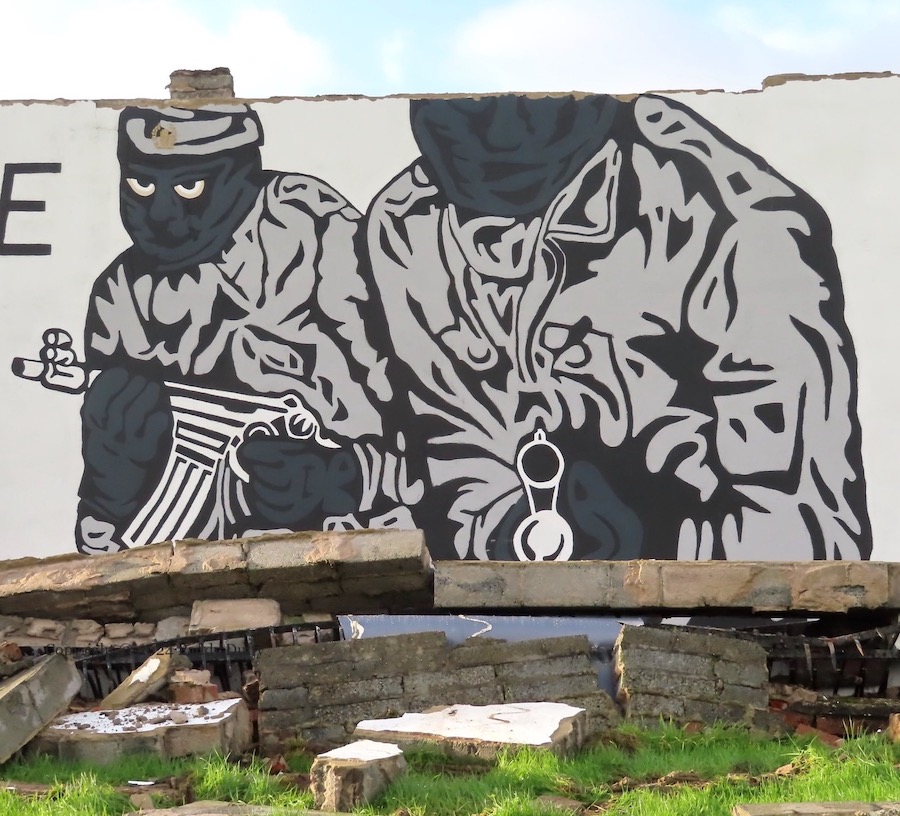
Storm Darragh originally took only the top third off the UVF “Prepared for peace, ready for war” mural in Mount Vernon (see Taken By Storm) but the entire wall was subsequently demolished – as shown in these images – due to concerns about its safety. The Sunday World reports that residents in the estate do not want the mural to be repainted; the wall is/was NIHE property (pdf).
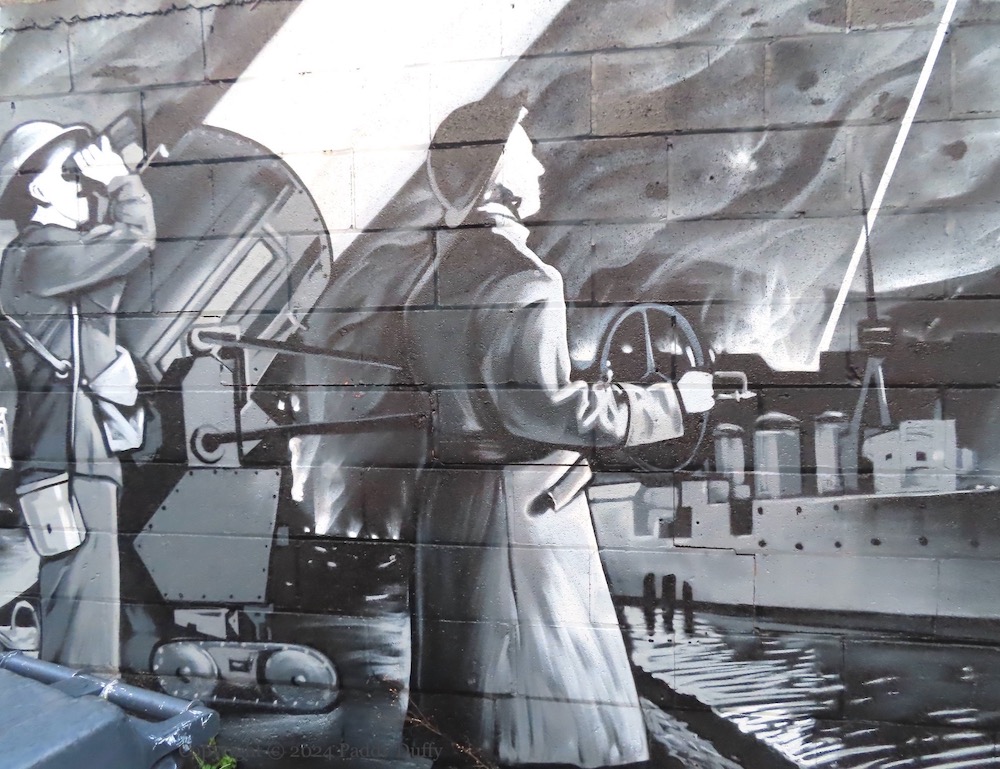
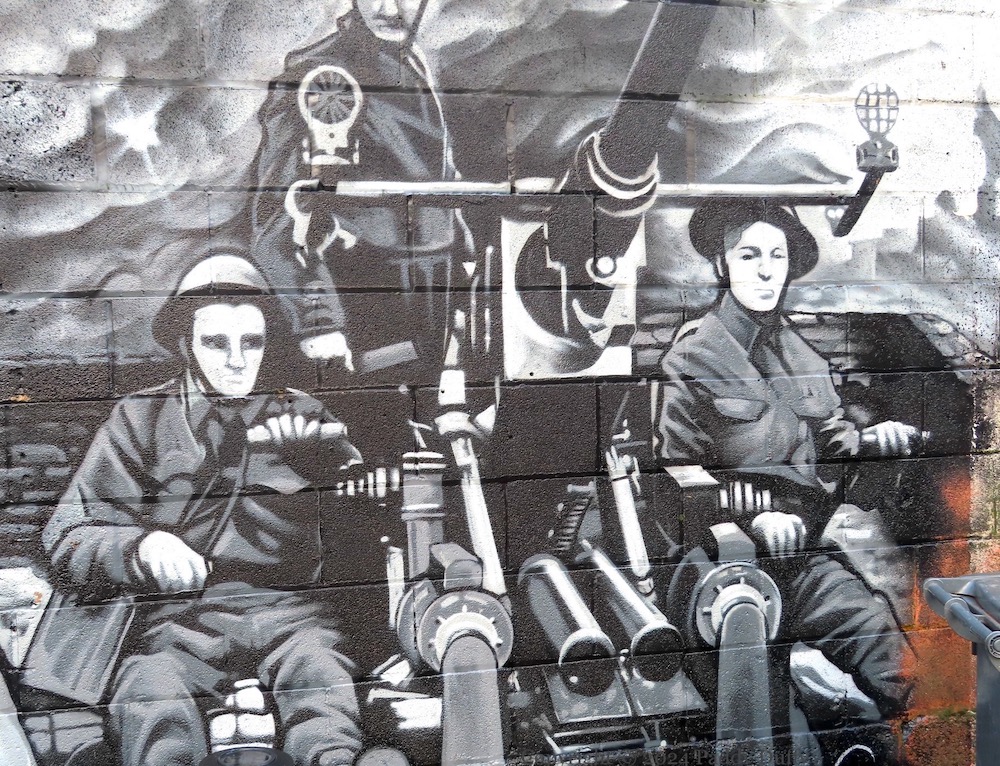
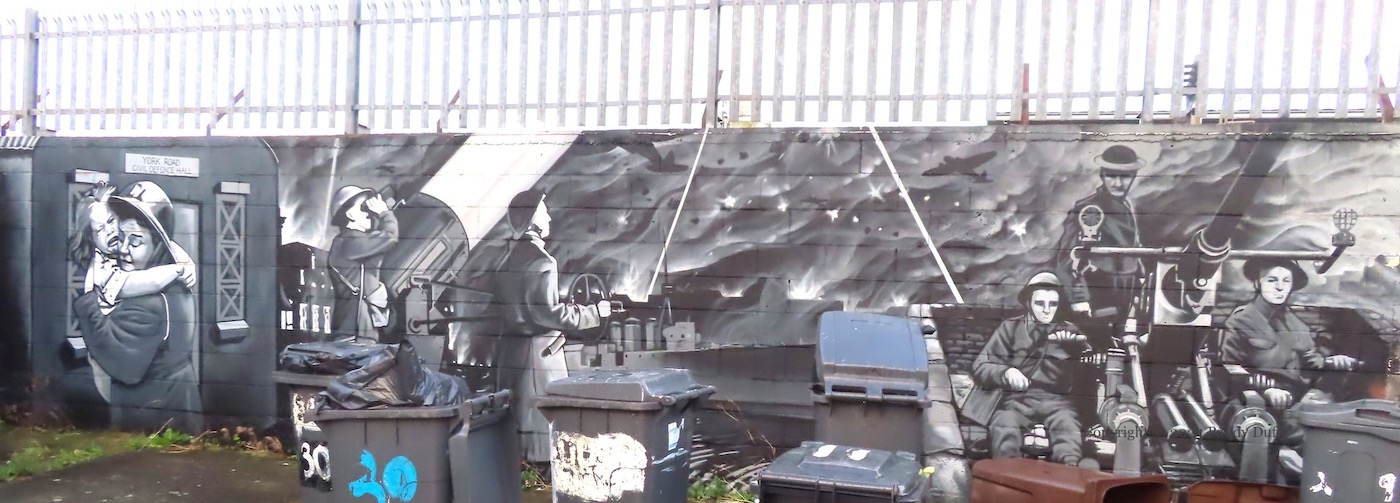
The HUBB community centre (Fb) in north Belfast has, since 2010, been based in what used to be a World War II Civil Defence air-raid shelter, which it cleaned and renovated (Tele). The original hall is depicted in this mural on the side of the HUBB.
In 1940, Belfast was protected by thirty-eight anti-aircraft guns. The German Luftwaffe flew a reconnaissance flight over Belfast on November 30th, 1940 and a test mission of eight planes on April 7th, 1941 concluded that Belfast’s defences were, “inferior in quality, scanty and insufficient” (Hogg). 150 bombers would blitz Belfast the following week, on Easter Tuesday, April 15th, and the seven guns that had been in operation ceased firing, believing, falsely, that RAF planes were also in the sky (WP).
Belfast was bombed by the Germans four times in April and May of 1941. In the blitz of Easter Tuesday, 1941, more than 900 people died, 1,500 were injured, and half the houses in Belfast were damaged (WP). According to Elaine Hogg’s research in the ‘Darker Side Of Belfast’ series, 100,000 people left the city in the remainder of the month, due to shock, fear, and the squalid conditions and unruly behaviour that followed the bombing.
The UVF hooded gunmen mural in Mount Vernon, which “greets” drivers coming off the M2 at the Shore Road, has been damaged by Storm Darragh, which had winds of 90 m.p.h. and more, with the apex and a further 6 feet of masonry coming down. (Belfast Live gallery of NI damage | BBC gallery of UK storm damage.)
This wall is NIHE property (pdf) and the need for repair or reconstruction might delay any repainting of the mural.
The mural in this location dates back to 2001 (here are images from 2006 and 2012) and was touched up in 2022 (T01300 | X10660). The original mural – which dates back to the ceasefire era (1995) – was on a gable at the front of the estate but the entire block of houses was razed – see T00138 | D00382.
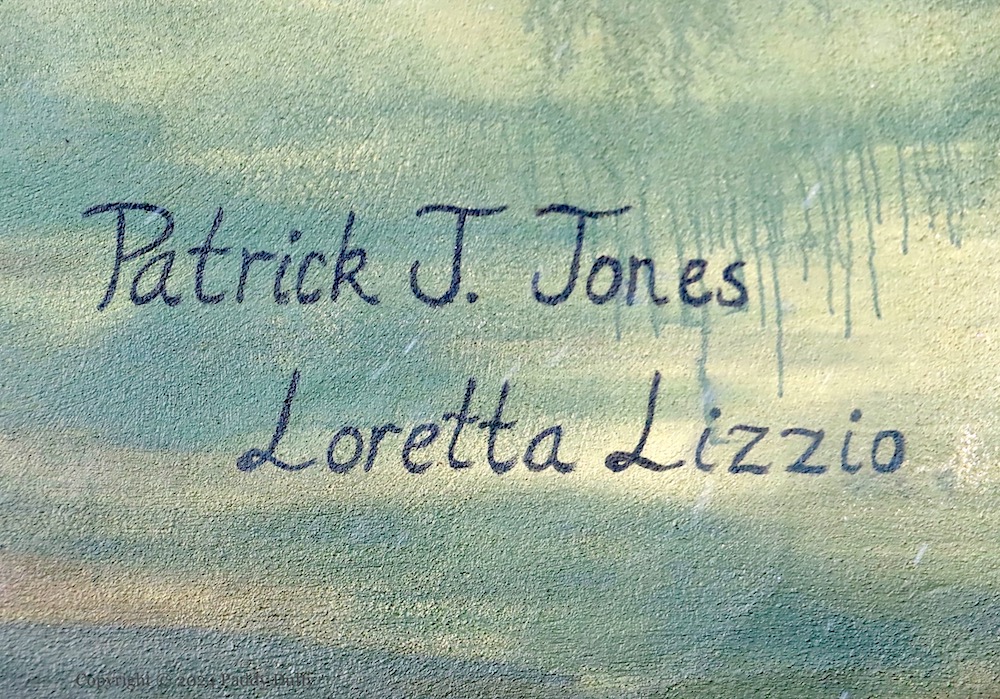
“The Dark Dreamer – The Silkie mural by Loretta Lizzio is a recreation of the oil painting “Dark Dreamer” by world-famous Irish artist Patrick Jones who lived here in the family home.”
Patrick J. Jones (web) grew up in Belfast before leaving for London, England, in 1984 and Brisbane, Australia, in 1997. Lizzio, (web), who is also from Australia, reproduced Jones’s original (Fb) on the side of the Stax coffee-shop on the Cliftonville Road, renaming it ‘The Silkie’, though it depicts a mermaid rather than one of the seal-folk; compare with KMG’s interpretation of the Selkie myth in the city centre.
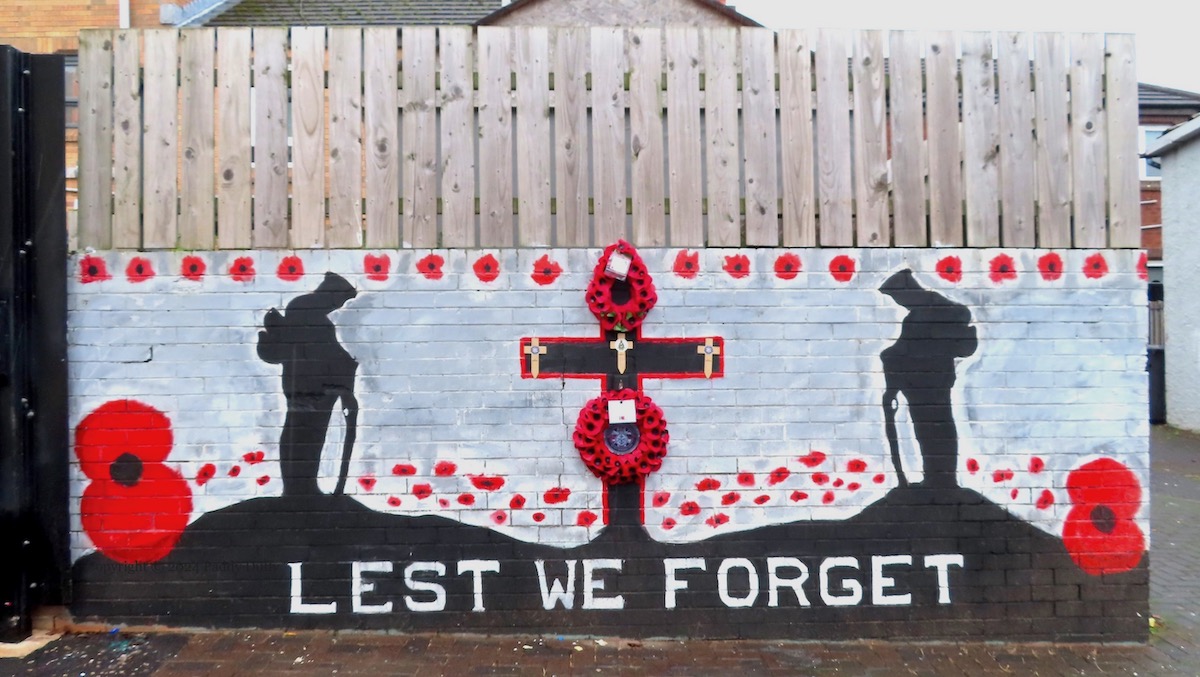
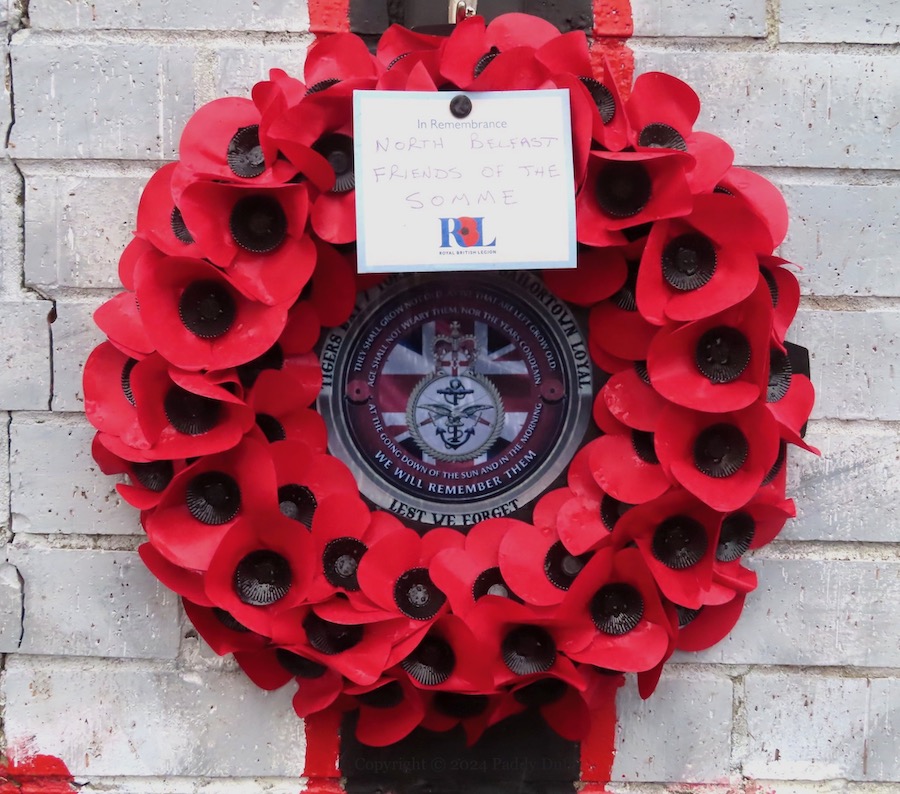
The rosette at the centre of the poppy wreath shows the UK armed services badge (with the crown overlaid by the Ulster Banner) surrounded by a verse from Binyon’s ‘For The Fallen’ and “Tiger’s Bay – York Street – Sailortown loyal”. That group’s Facebook page is private and no home-page seems to be available for ‘North Belfast Friends Of The Somme’.
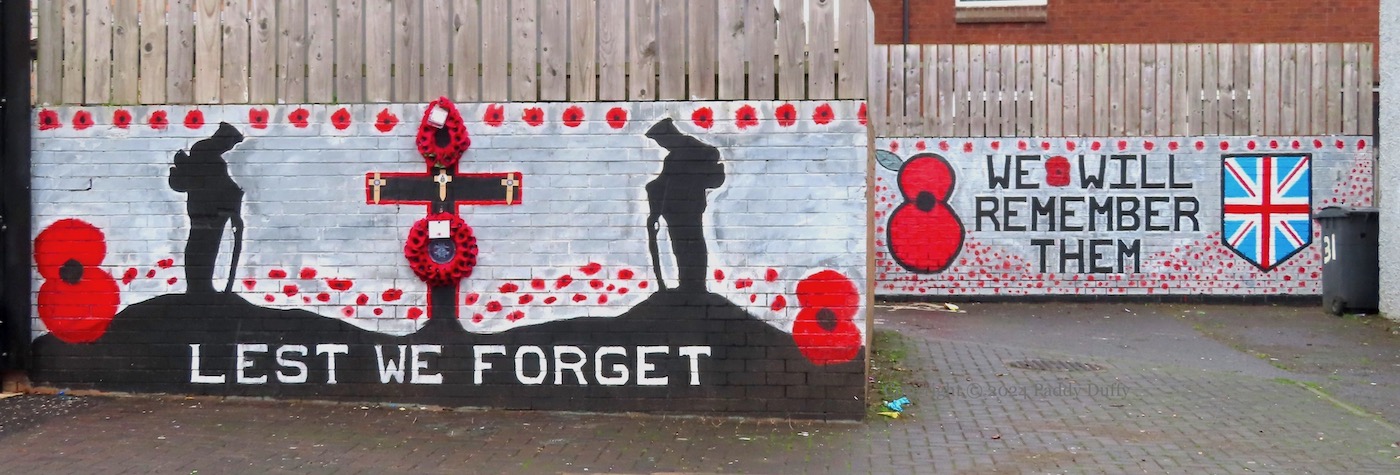
North Queen Street, Tiger’s Bay, Belfast, at the old Lewis Street.
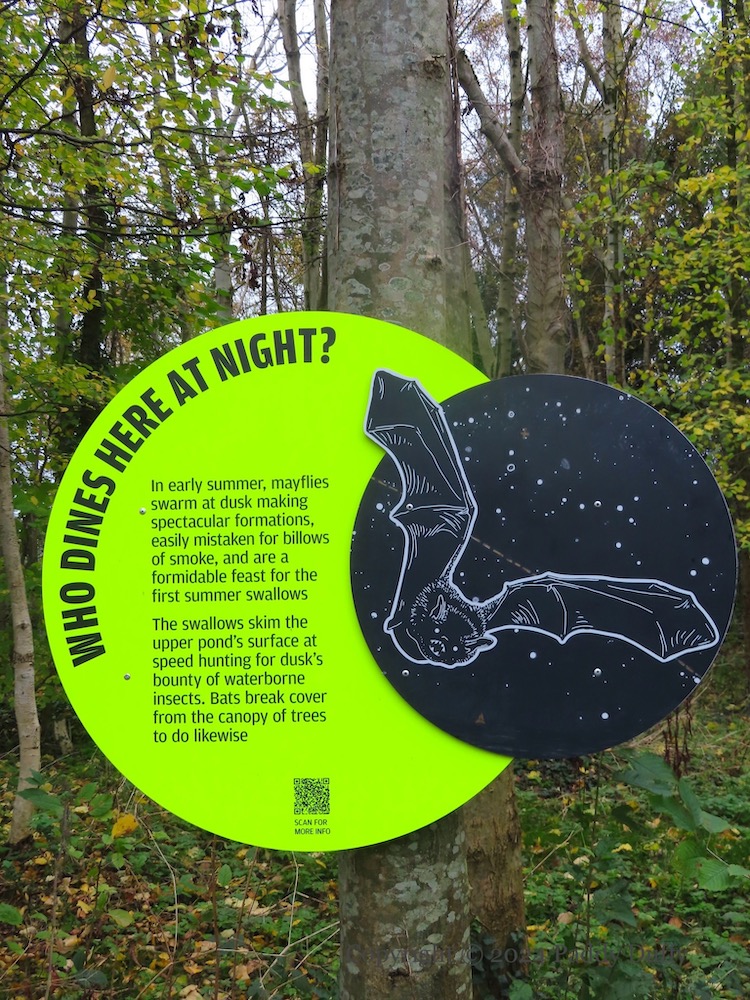
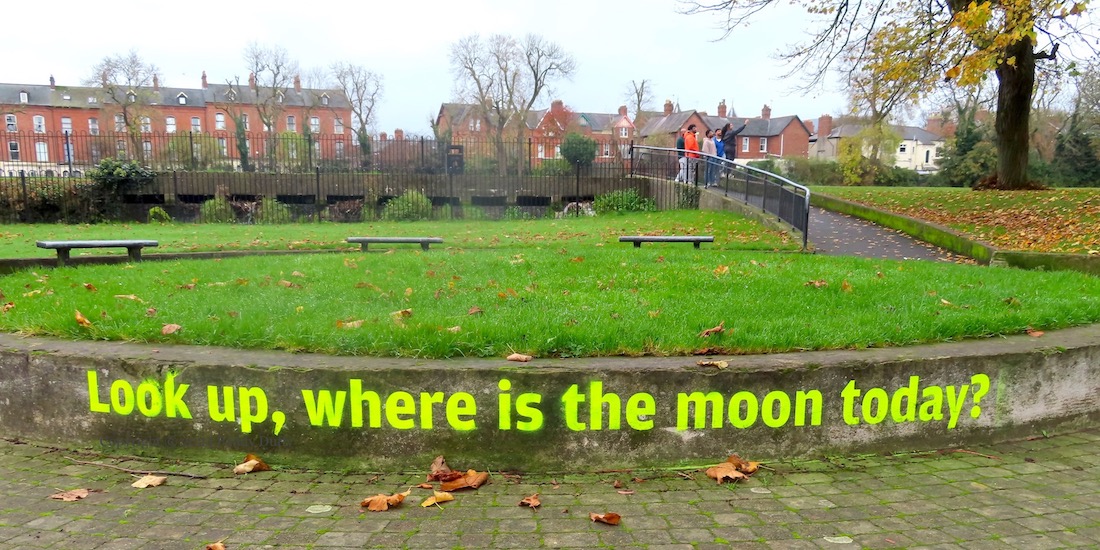
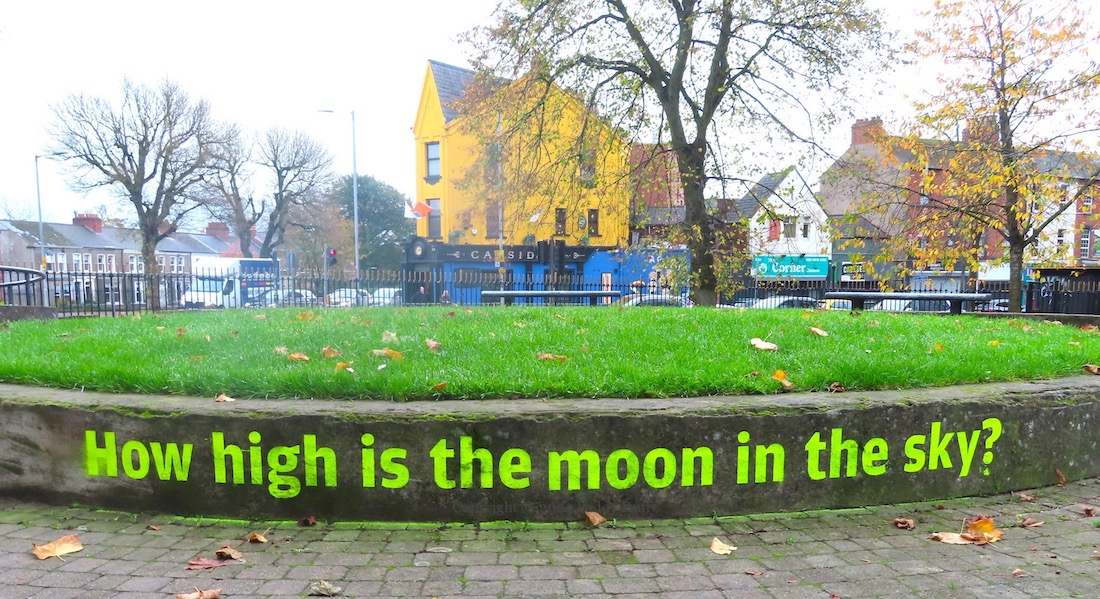
‘Suggestions For Stargazing’ is a series of information boards and fluorescent questions encouraging people to embrace darkness. The installation was designed by Aisling O’Beirn (web) as part of the Right To The Night (ig) project, which is concerned with light pollution in north Belfast, and was included in the Red Sky At Night festival (Belfast CC). It will remain in place until the end of November, 2024.
Above: “Light pollution is caused by too much artificial outdoor light. When we over-light we risk losing our night time environment with negative effects for the environment, the climate, wildlife, human health and the economy.”
Last below: “There is a global movement to reduce light pollution, everyone can help, even you! Use light only when necessary. Minimise glare and brightness. Angle outdoor lights downwards. Use switch off or dimming sensors. Keep nature dark. Avoid illuminating trees, water, and nesting areas.”
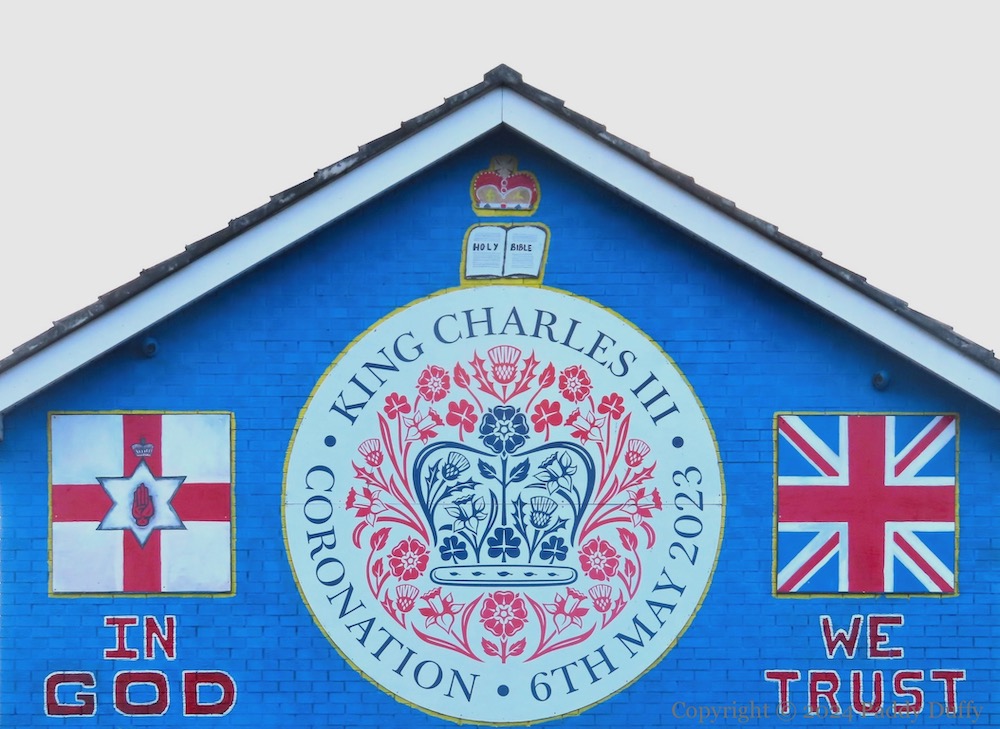
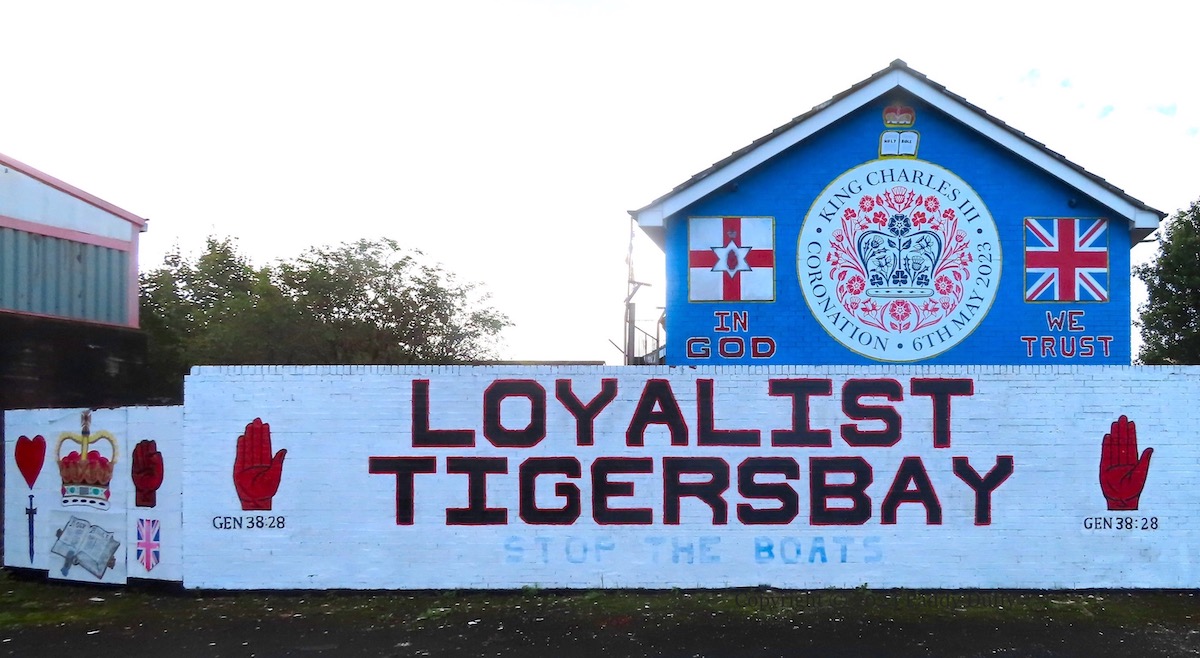
The tribute to the new UK monarch King Charles III at the northeastern corner of Tiger’s Bay has been completed, with Ulster Banner and Union Flag on either side of a circular board showing a crown with the flowers of the “four nations” – thistle, shamrock, daffodil, and rose – both inside (in blue) and out (in red).
There is another piece using the same central board inside the estate – see I Will Plant Them.
The title of this entry comes from Charles’s coronation service, on May 6th, 2023 (pdf).
For ‘Loyalist Tiger’s Bay’ on the front wall, see the Stop The Boats; for the Orange Order symbols on the side wall (in the final image) – including the crown and Bible in the apex of the main wall – see Your Kingdom Will Endure Forever.
Here are three ‘Four Loko’ hand-painted ads in Belfast, specifically Islandbawn Street, west Belfast (above), Little Donegall Street, city centre (immediately below) by Shane Ha (web) in August, and (final image) Legann Street, Ligoniel, north Belfast.
Four Loko was originally contained caffeine, taurine, and guaraná (as well as being 12% alcohol), and was marketed as an energy drink (or, “blackout in a can” (GrubStreet | Campus Times)). Now, it just has the alcohol and the fruit flavour (Four Loko FAQ | WP page on the 2010 ban).
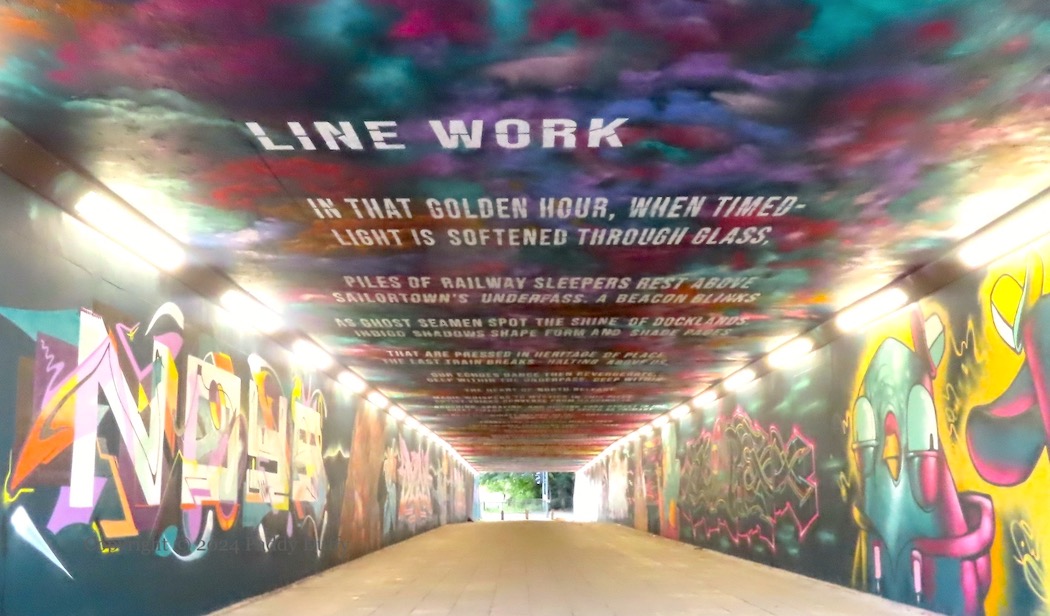
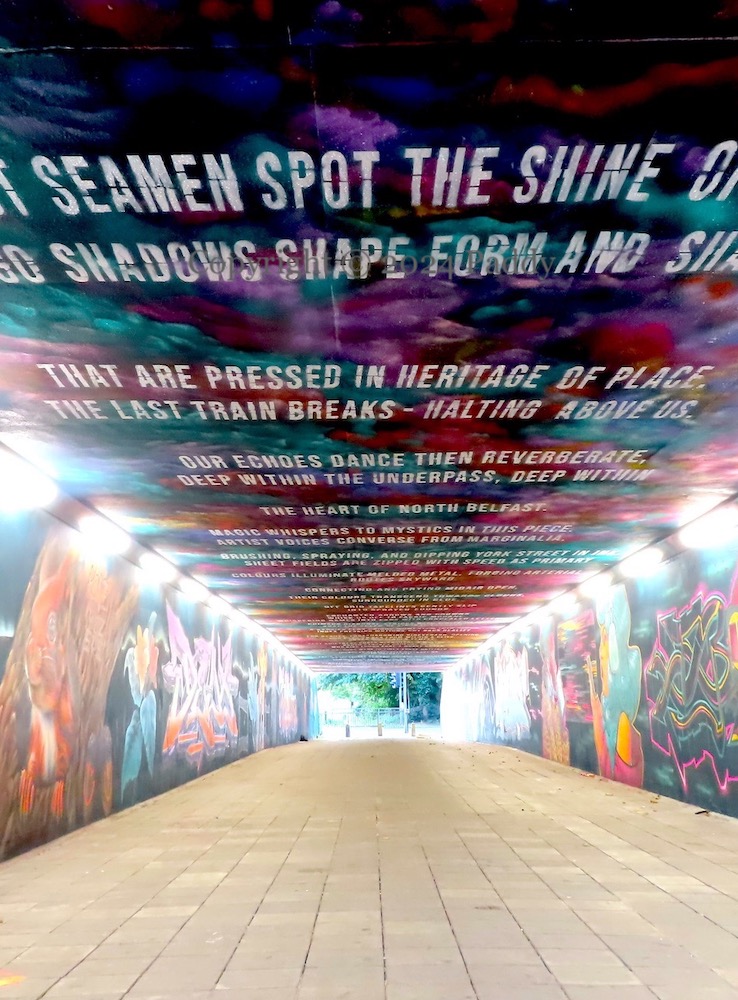
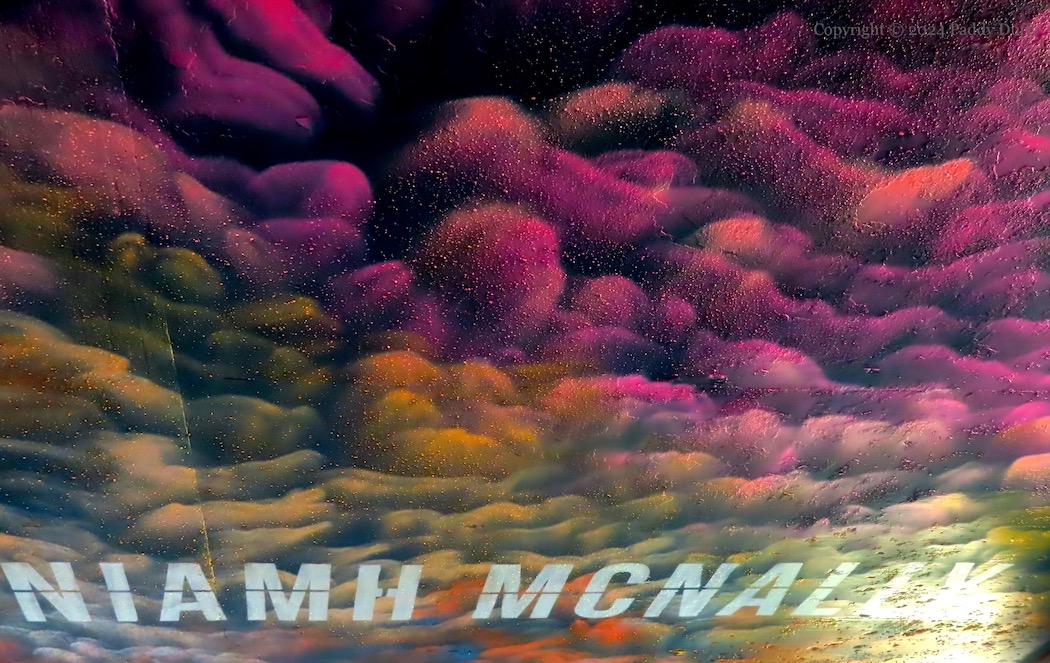
As part of Tunnel Vision paint-jam that added street art along the sides of the underpass at York Street station, a poem by Niamh McNally (ig) – Line Work – was added to the ceiling.





















 Paddy Duffy Collection