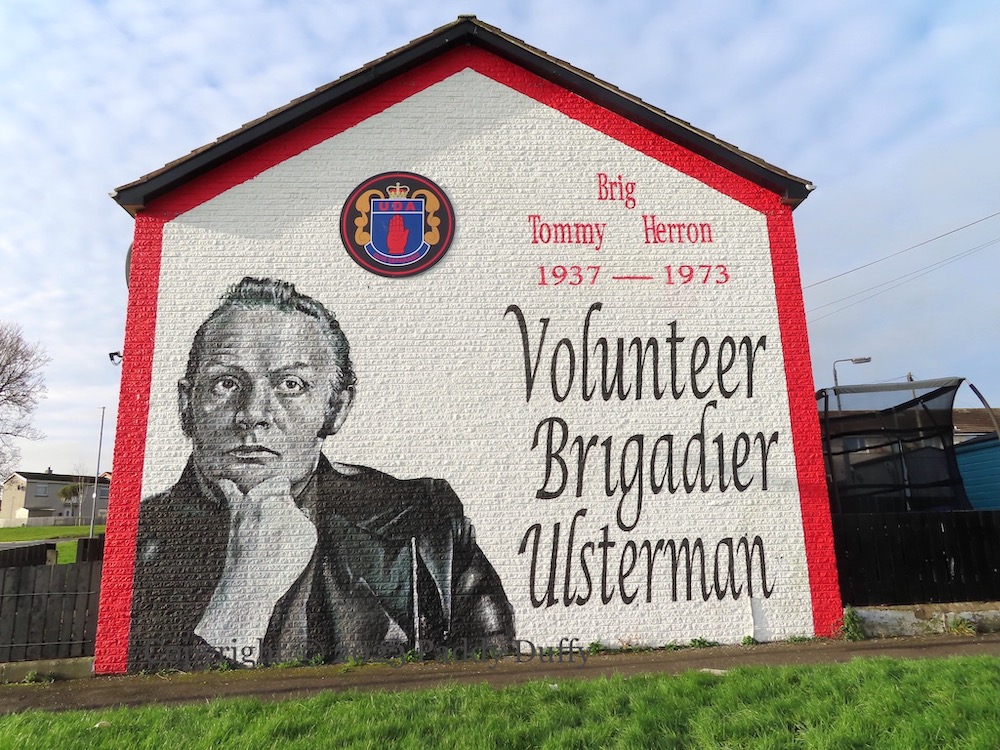
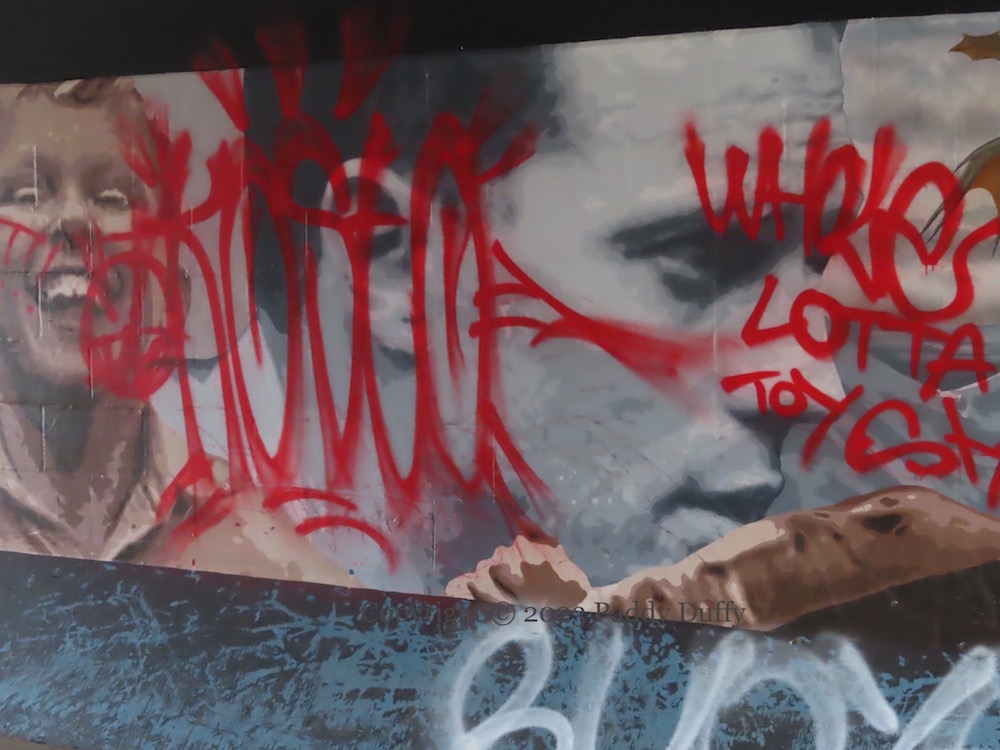
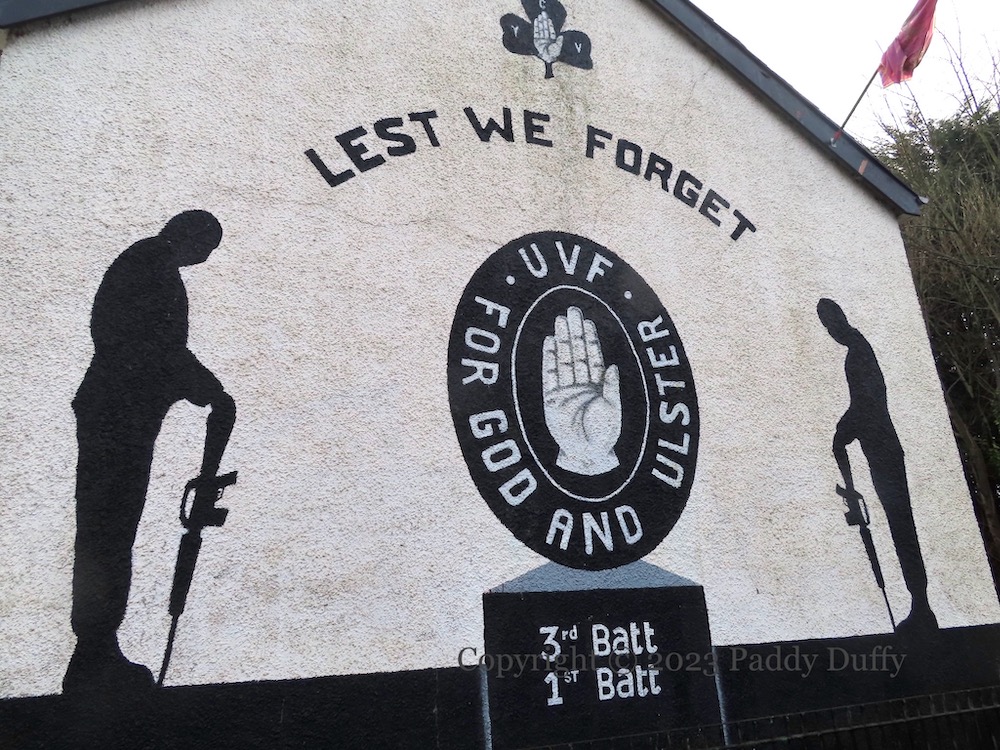
Tommy Herron was kidnapped and executed in September 1973, probably by members of his own East Belfast UDA brigade in a dispute over money from a robbery (Irish Times | Lost Lives 938 | Holland | BelTel) though others allege it was by the security forces (BelTel), perhaps the SAS or MI5. These BBC News videos (one | two) give a sense of the perplexity of the case; a HET inquiry years later was inconclusive (Irish Times). His 18-year-old brother-in-law, Michael Wilson, had been killed by the UDA at their shared house in June, perhaps in a case of mistaken identity, perhaps as an informer (WP | Lost Lives 877).
Despite the internal conflict over Herron’s position and profiteering, 25,000 people attended his funeral and hearkened to the words of the Reverend Ian Paisley (AP video | Patterson images). The AP video shows ranks of UDA volunteers marching in the procession; the mural was launched with (two) masked UDA volunteers flanking speaker Dee Stitt (BelTel).
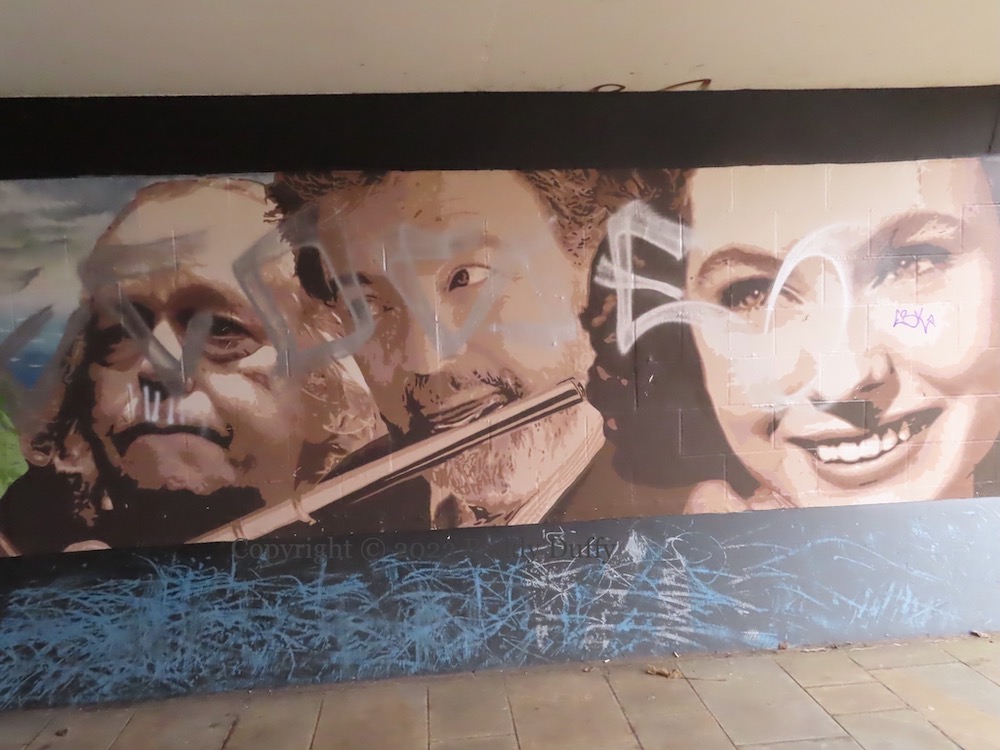
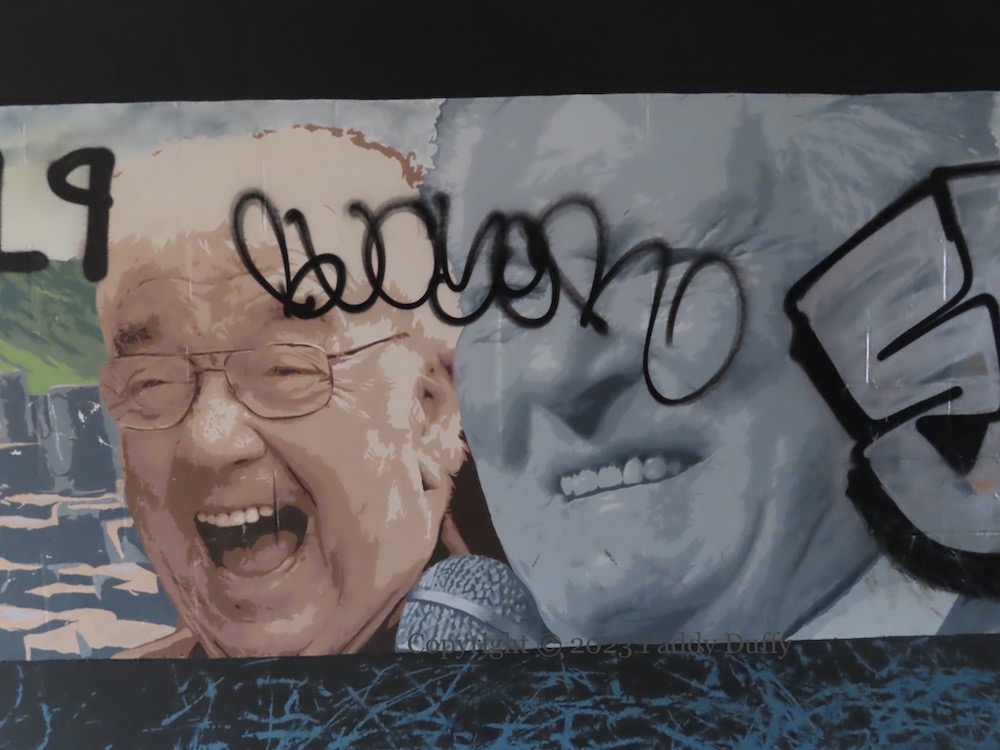
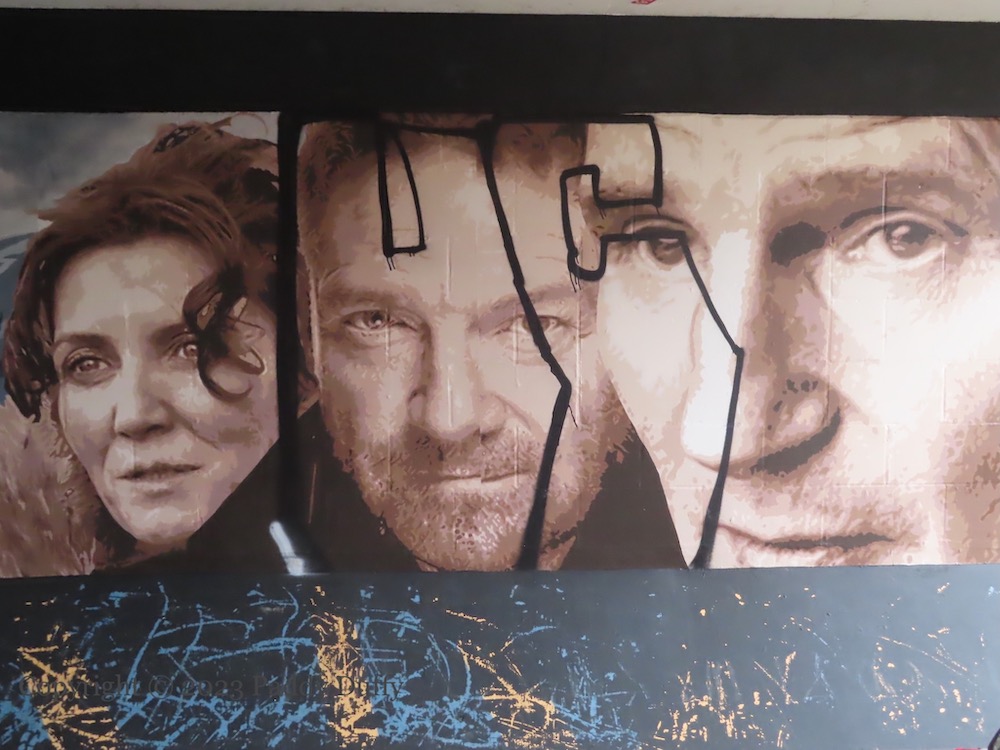
The underpass from Ballymacarrett Road to the Titanic Quarter station (formerly Bridge End and renamed in 2012 (BBC)) was remodeled in 2020, with new pavers and the removal of the bollards at the entrance to the underpass, and some new parking bays (ACS). In 2022 the old mural (Transformation, from 2012) was replaced with a gallery of famous faces – actors, musicians, comedians, and singers.
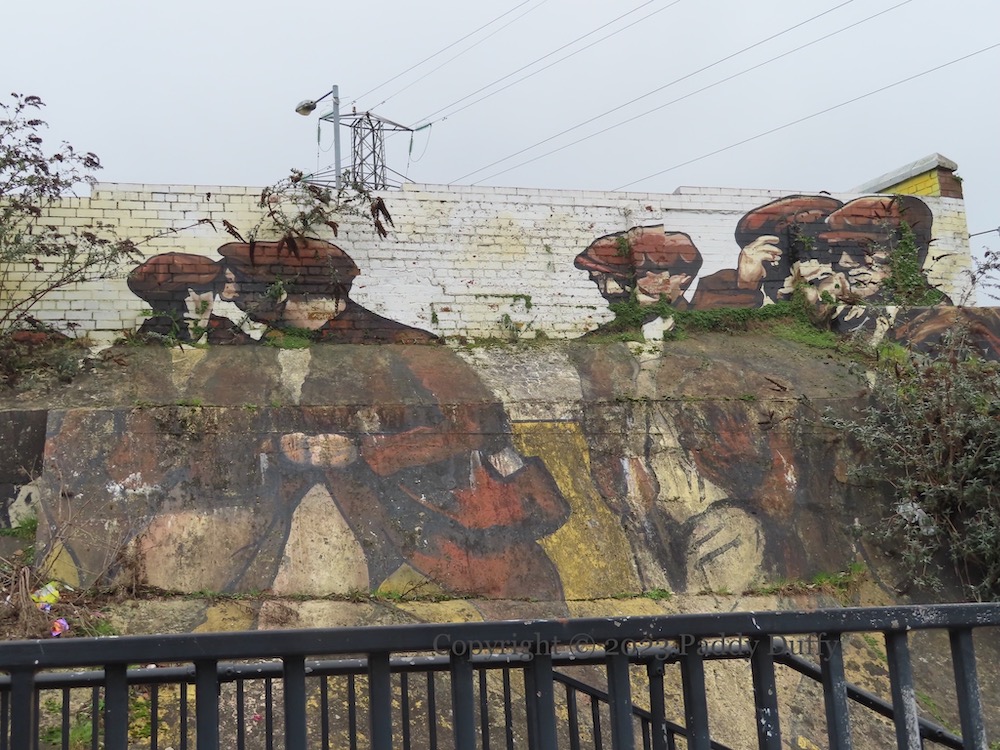
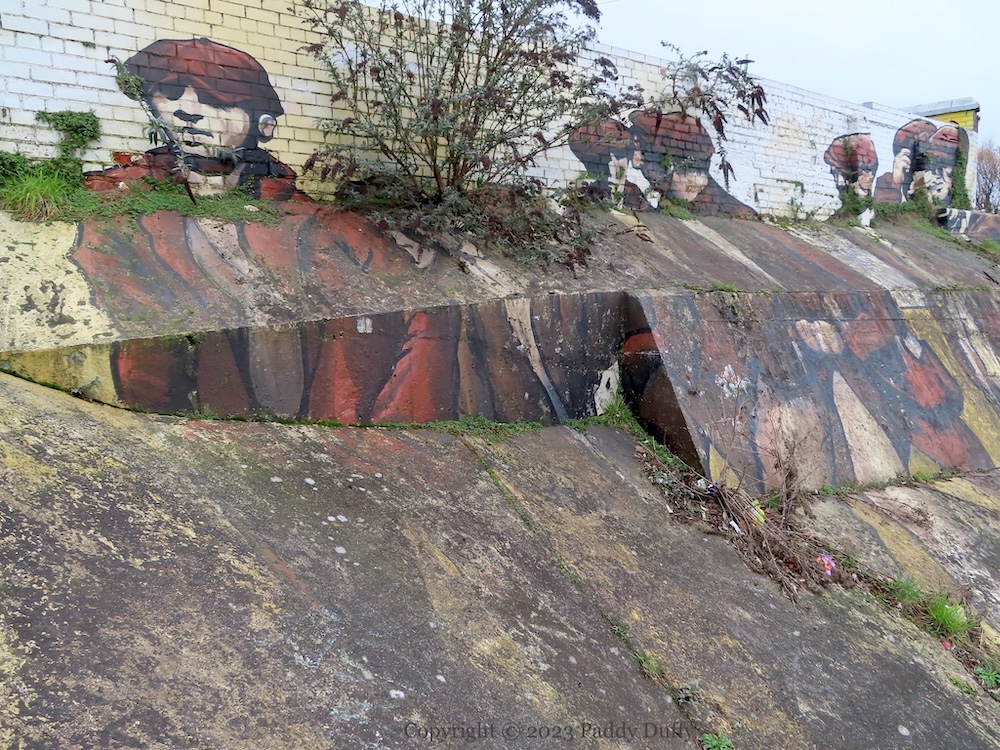
The mural was restored by Dee Craig (Fb) in 2018 after originally being painted by John Johnston c. 2008. For images of the previous version, see Titanic Workers.
The mural is on the footbridge linking Dee Street and Queen’s Island, in east Belfast.
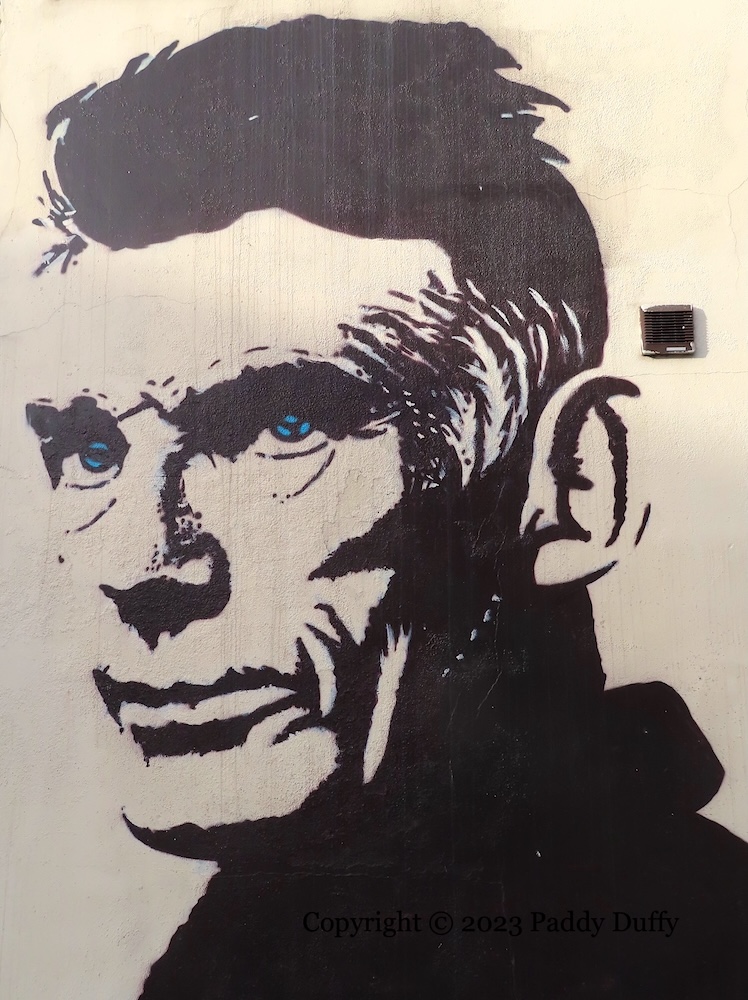
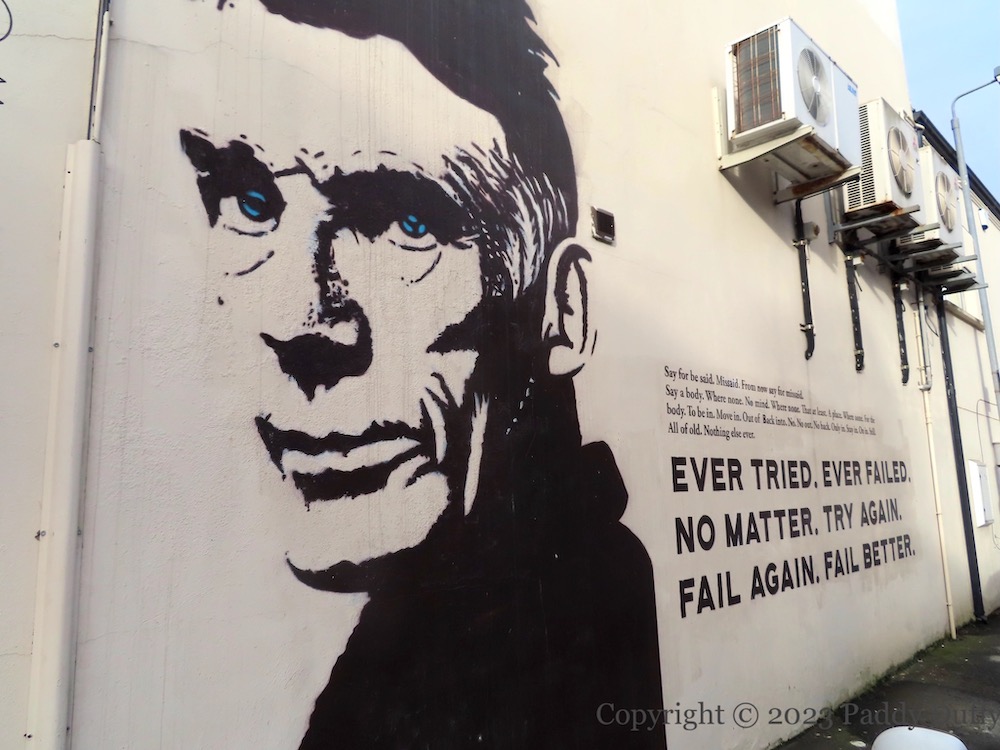
Glen Molloy’s Samuel Beckett mural in the Dundela area of east Belfast was largely whitewashed the day after it was finished (see the SMC Collection). (This was only a few weeks after the Maya Angelou mural across the street was painted and graffitied.) (Belfast Live) The portrait was restored in 2021 with blue sparkling blue eyes, and the quotation was added again last (2022) summer.
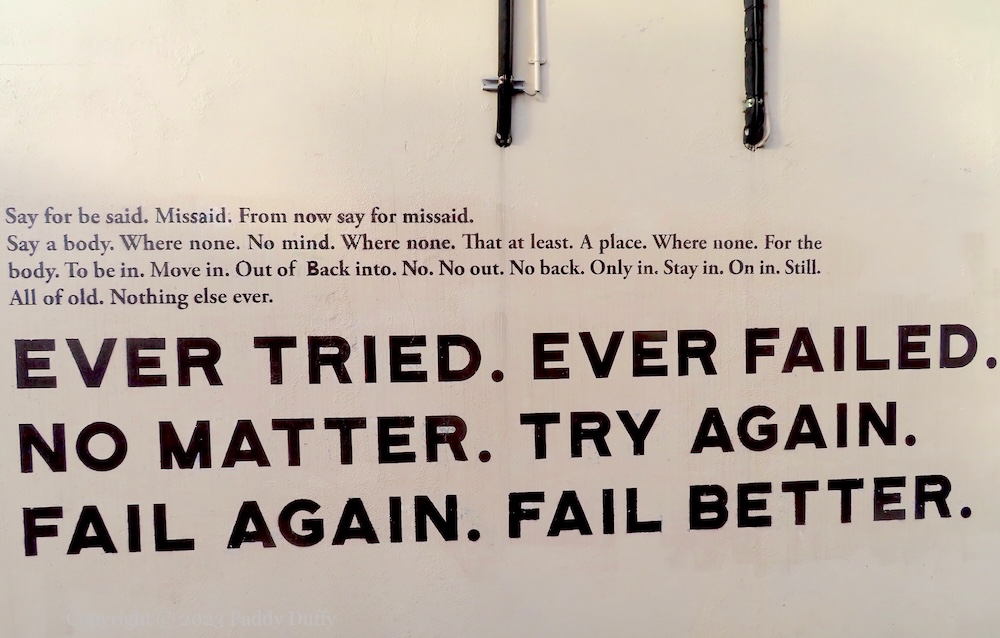
The quotation is from Worstward Ho! (not “Westword Ho!” as written on the wall just out of shot to the left): “Say for be said. Missaid. From now say for missaid. Say a body. Where none. No mind. Where none. That at least. A place. Where none. For the body. To be in. Move in. Out of. Back into. No. No out. No back. Only in. Stay in. On in. Still. All of old. Nothing else ever. Ever tried. Ever failed. No matter. Try again. Fail again. Fail better.”
Painted by Glen Molloy (ig) in Bathgate Drive, east Belfast
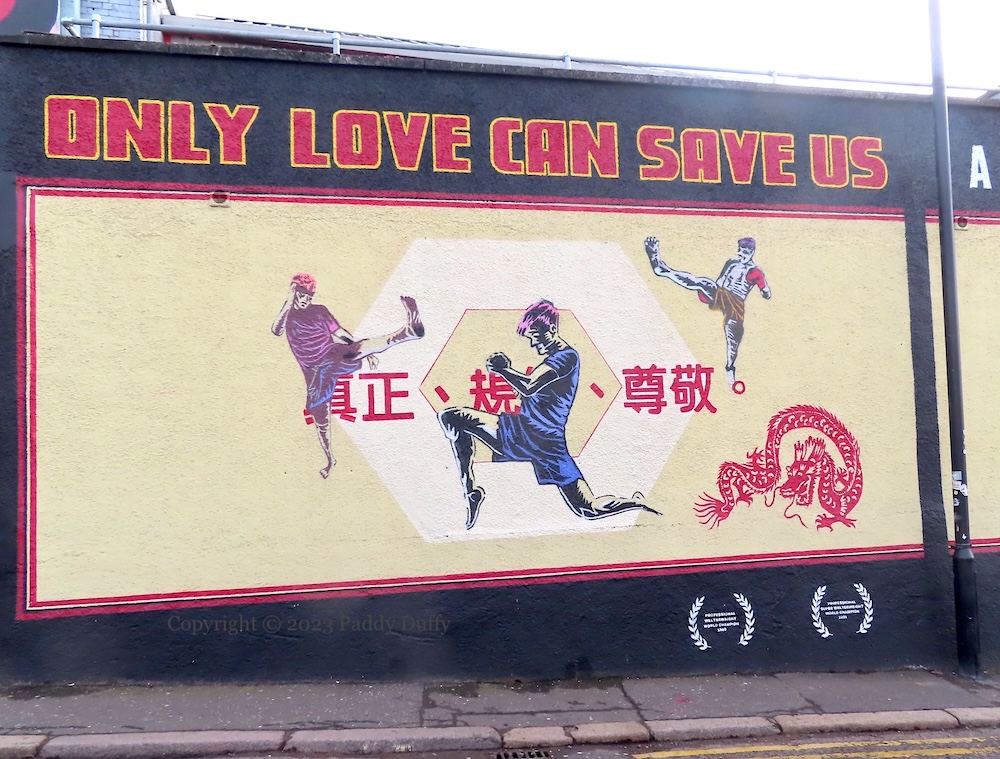
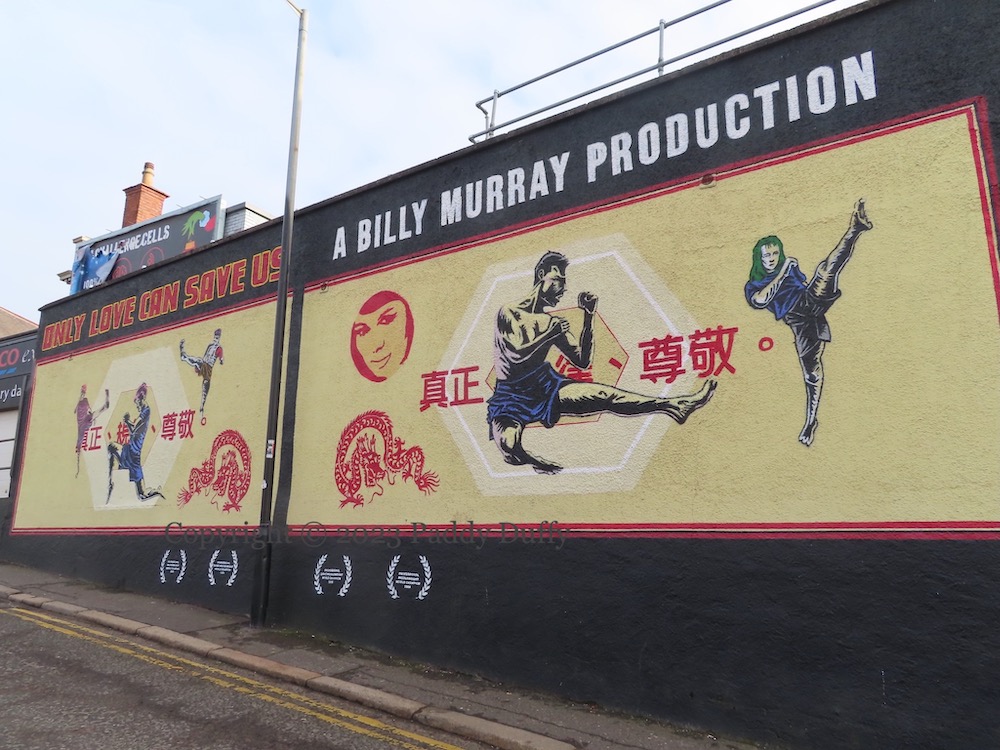
Prokick kickboxing (web) has moved from Dundela to Connswater, a bit closer to town; the new digs were formally opened on September 12th, 2022, the anniversary of founder Billy Murray’s first world championship (Sunday World). The mural in honour of Murray (in Dundela) was designed by Stephen Hackett and painted by Glen Molloy (ig) (Belfast Live).
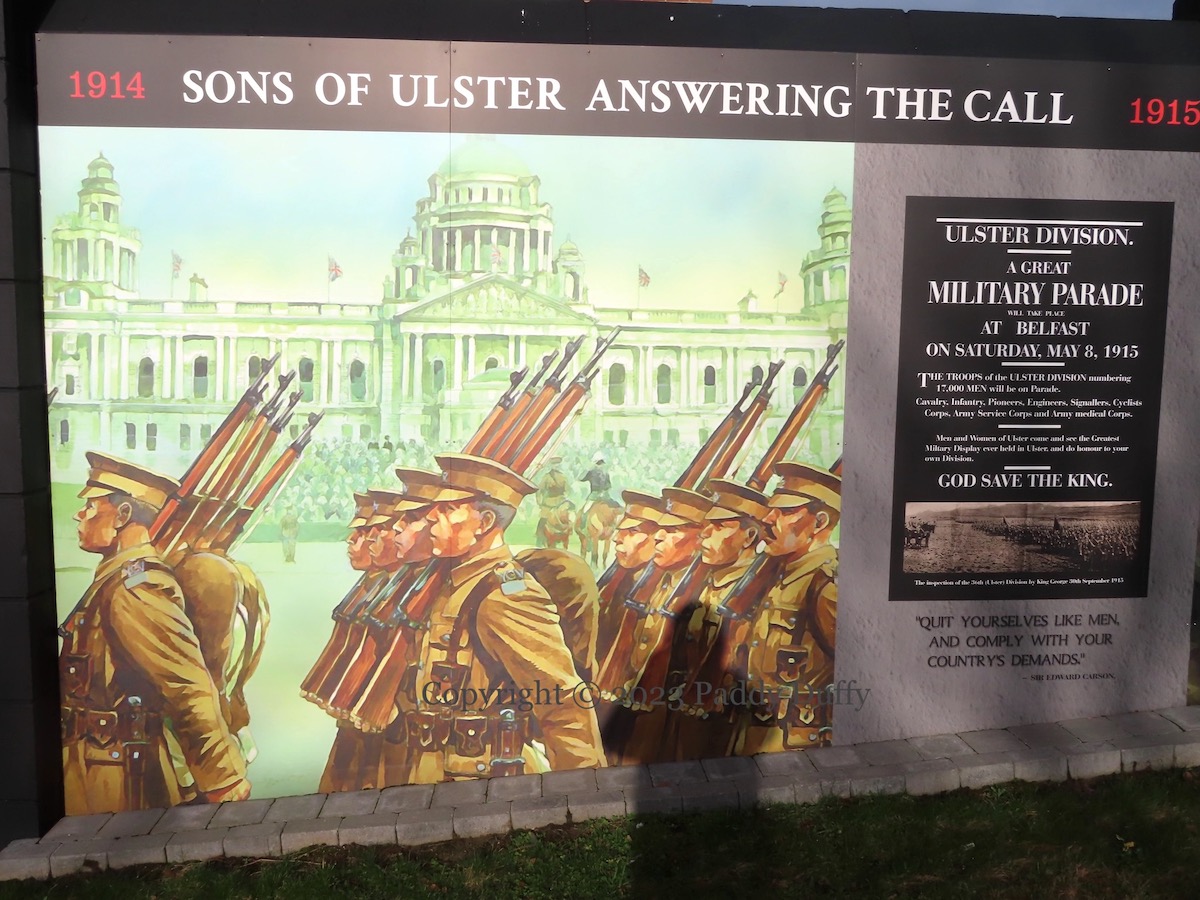
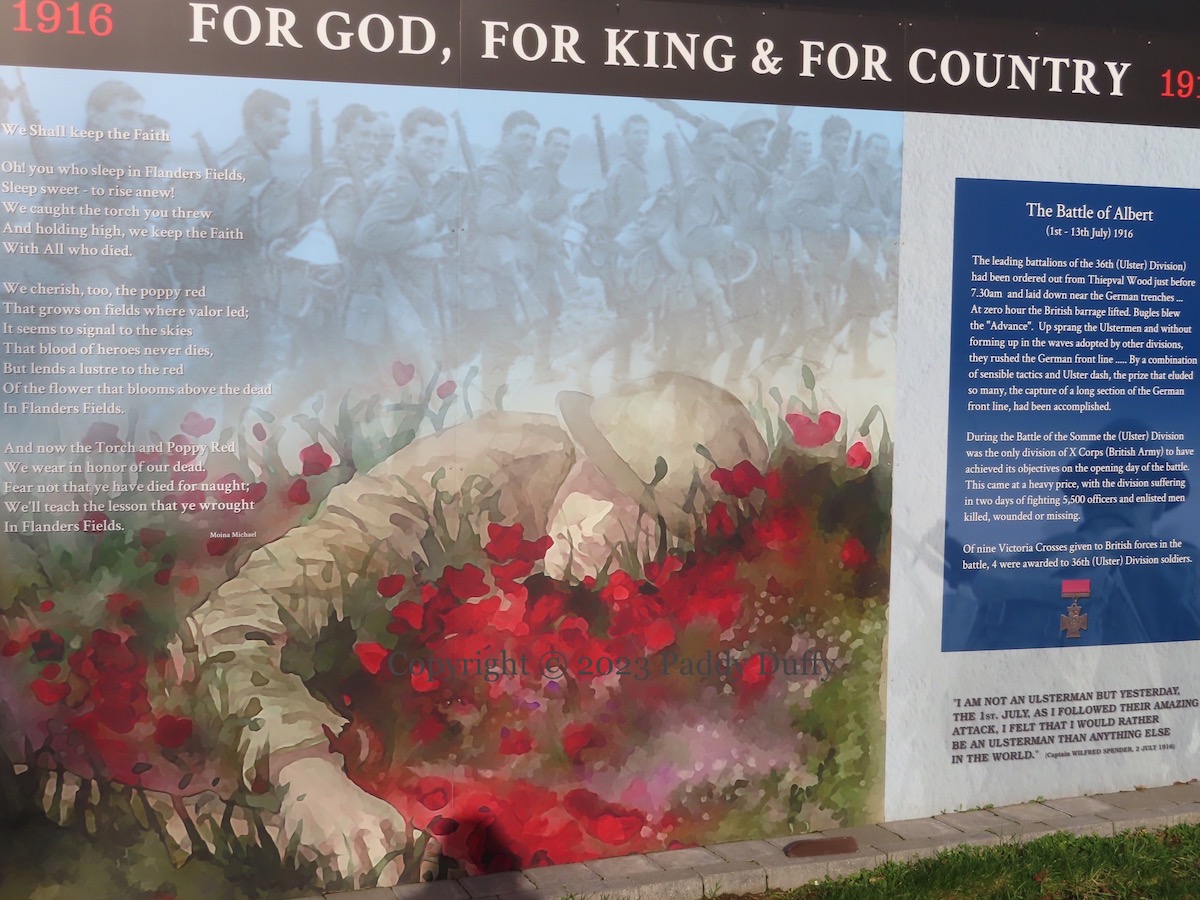
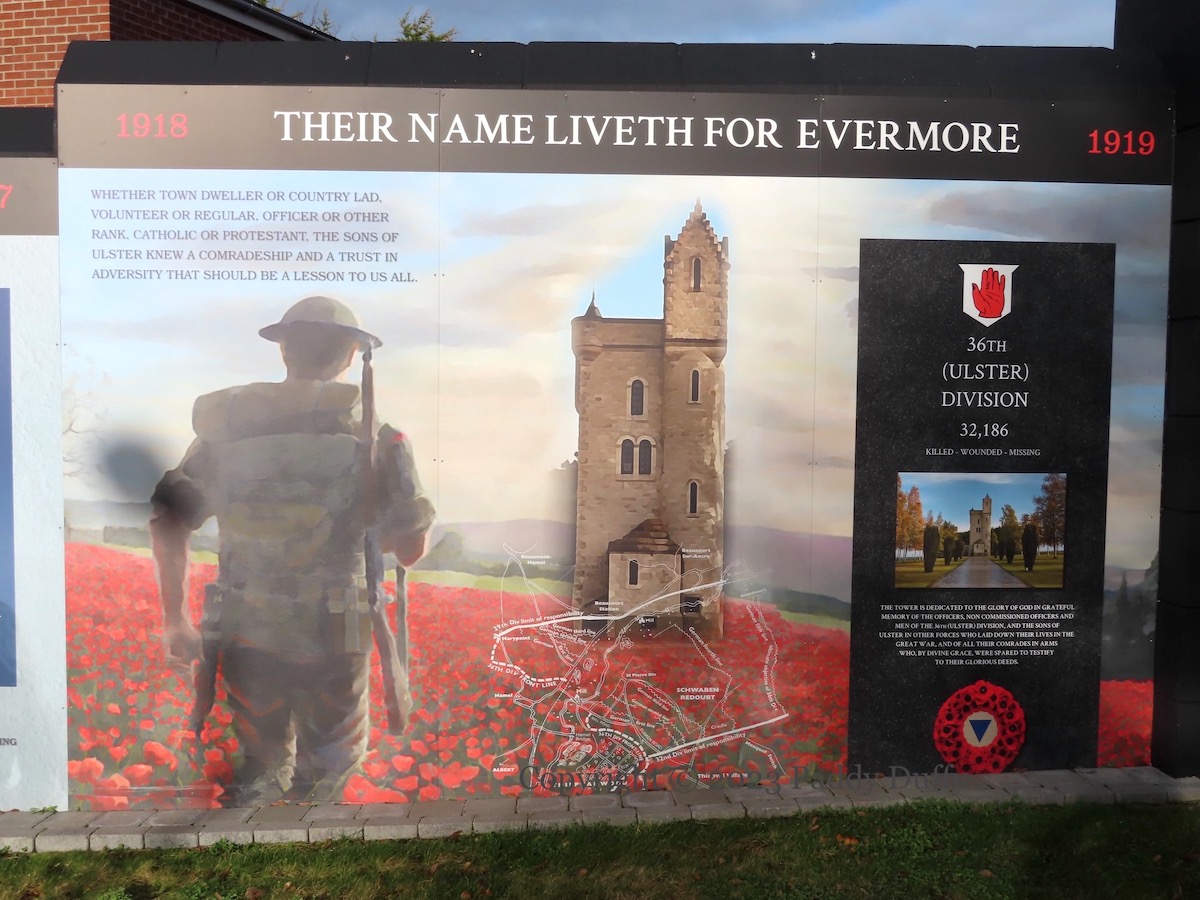
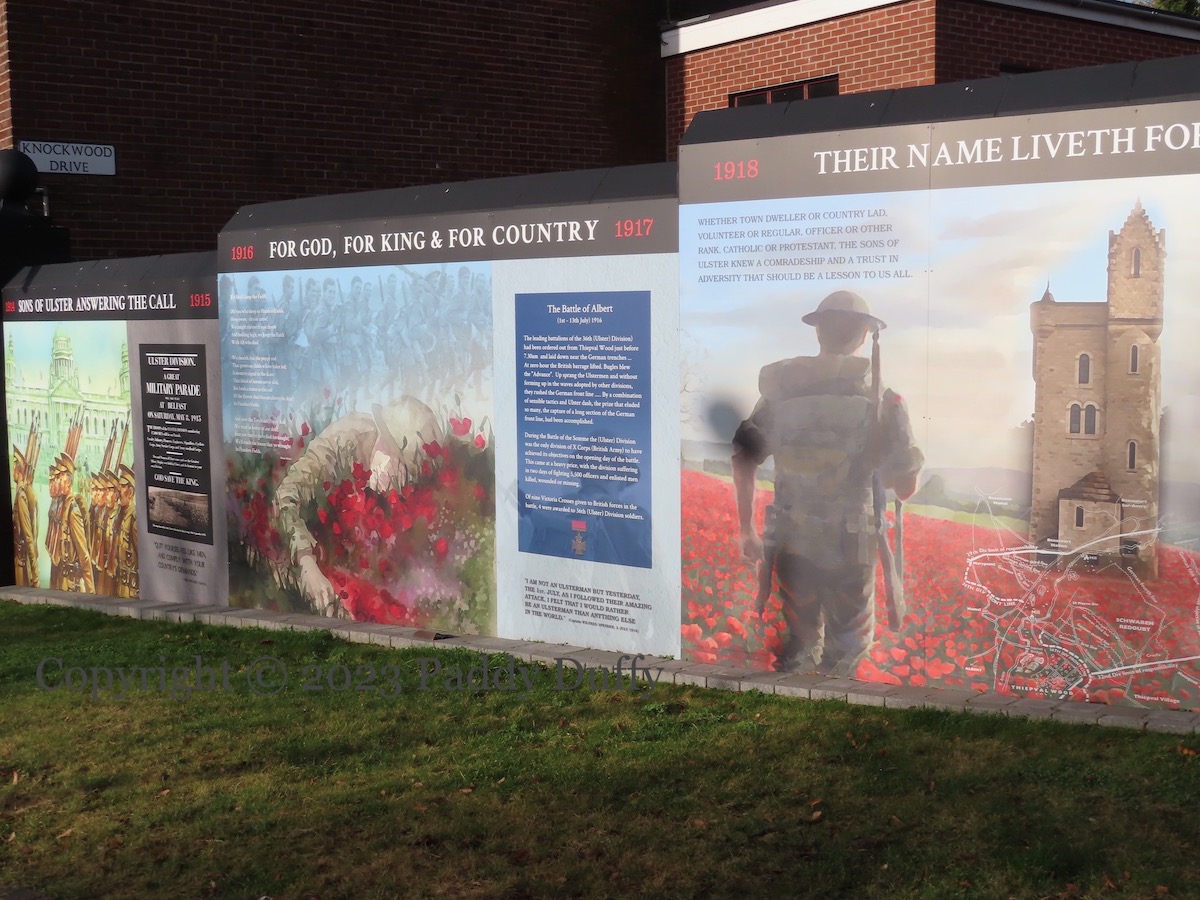
A history of the 36th (Ulster) Division in three panels along Knockwood Crescent in east Belfast:
1914 – Sons Of Ulster Answering The Call – 1915: “Ulster Division – a great military parade will take place at Belfast on Saturday, May 8, 1915. The troops of the Ulster Division numbering 17,000 men will be on parade. Cavalry, infantry, pioneers, engineers, signallers, cyclists corps, Army service corps and Army medical corps. Men and women of Ulster come and see the greatest military display every helf in Ulster, and do honur to your own Division. God save the King.” The original poster can be seen at Wartime Memories. “‘Quit yourselves like men and comply with your country’s demands.’ – Sir Edward Carson.” With a picture of “the inspection of the 36th (Ulster) Division by King George [V] 30th September 1915.
1916 – For God, For King & For Country – 1917: “The Battle of Albert (1st – 13th July) 1916. The leading battalions of the 46th (Ulster) Division) had been ordered out from Thiepval Wood just before 7.30am and laid down near the German trenches … At zero hour the British barrage lifted. Bugles blew the “Advance”. Up sprang the Ulstermen and without forming up in the waves adopted by other divisions, they rushed the German front line …… By a combination of sensible tactics and Ulster dash, the prize that eluded so many, the capture of a long section of the German front line, had been accomplished. During the Battle of the Somme the (Ulster) Division was the only division of X Corps (British Army) to have achieved its objectives on the opening day of the battle. This came at a heavy price, with the division suffering in two days of fighting 5,500 officers and enlisted men killed, wounded or missing. Of nine Victoria Crosses given to British forces in the battle, 4 were awarded to 36th (Ulster) Division soldiers.” With quotes from Wilfrid Spender (see I Would Rather Be An Ulsterman), and the poem We Shall Keep The Faith by Moina Michael. Please get in touch if you can identify the photo of soldiers going off to war at the top.
1918 – Their Name Liverth For Evermore – 1919: “Whether town dweller or country lad, volunteer or regular, officer or other rank, Catholic or Protestant, the sons of Ulster knew a comradeship and a trust in adversity that should be a lesson to us all.” “36th (Ulster) Division 32,186 killed, wounded, missing. The [Ulster] tower is dedicated to the glory of God in grateful memory of the officers, non commussioned officers and men of the 36th (Ulster) Division, and the sons of Ulster in other forces who laid down their lives in the Great War, and of all their comrades in arms who, by divine grace, were spared to testify to their glorious deeds.”
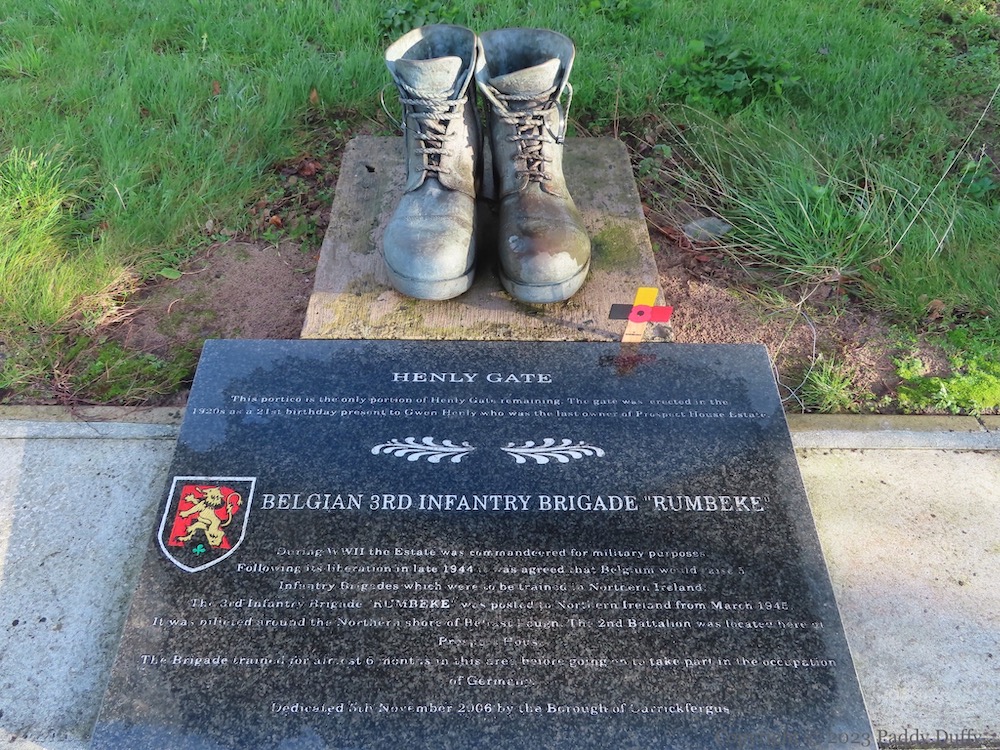
Five Belgian brigades trained in Northern Ireland towards the end of WWII, as the Belgian Army rebuilt itself after the liberation of Belgium in 1944 (WarTimeNI). The 3rd or ‘Rumbeke’ brigade was raised in March 1945 and trained in six south-east Antrim towns, including Carrickfergus, where they were stationed at Henly House. After training, it took part in the occupation of Germany for about six months (BE Brigades). The boots and plaque are beneath the arch of what was once Prospect House.
The text on the plaque reads in full: “Henly Gate. This portico is the only portion of the Henly Gate remaining. The gate was erected in the 1920s as a 21st birthday present to Gwen Henly who was the last owner of Prospect House Estate. Belgian 3rd Infantry Brigade “Rumbeke”. During WWII the Estate was commandeered for military purposes. Following the liberation in late 1944 it was agreed that Belgium would raise 5 Infantry Brigades which were to be trained in Northern Ireland. The 3rd Infantry Brigade “Rumbeke” was posted to Northern Ireland from March 1945. It was billeted around the Northern shore of Belfast Lough. The 2nd Battalion was located here at Prospect House. The Brigade trained for almost 6 months in this area before going on to take part in the occupation of Germany. Dedicated 5th November 2006 by the Borough of Carrickfergus.”
At the junction of Woodburn Rd and Prospect Rd, Carrickfergus.
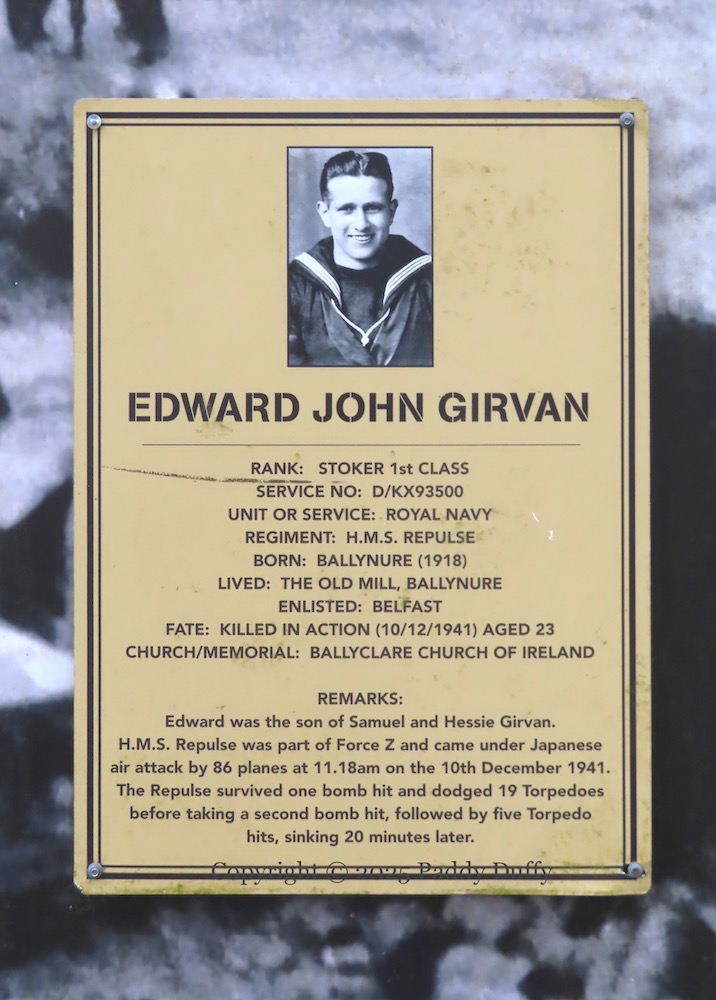
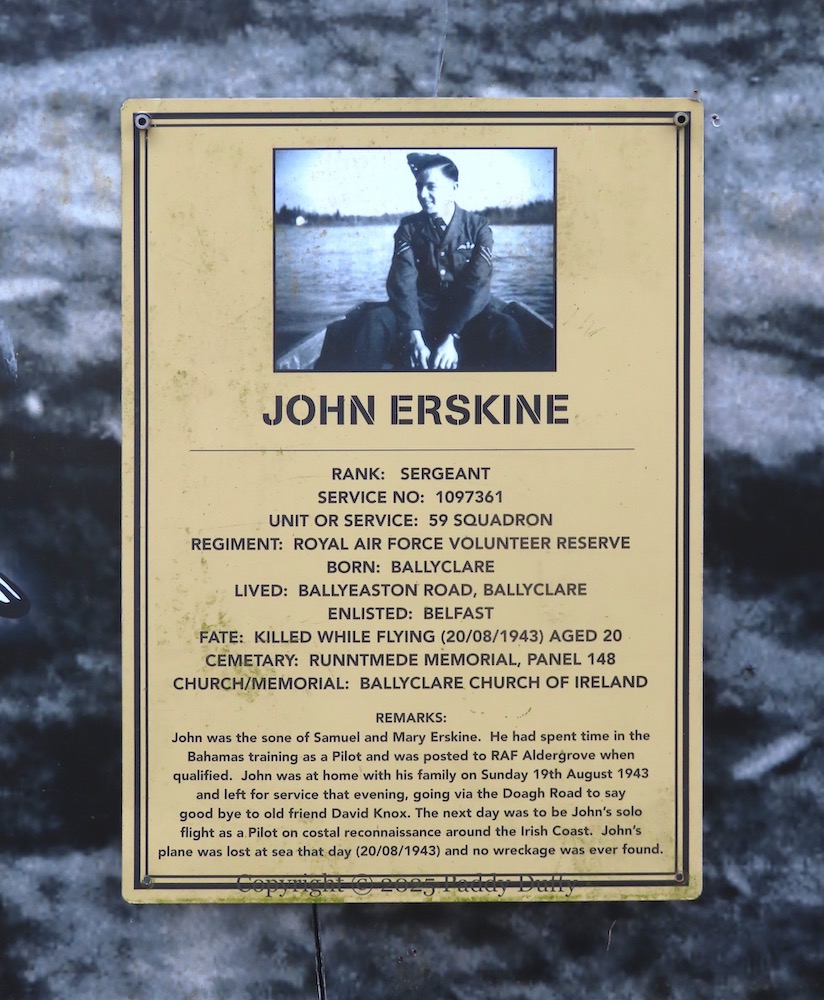
There is now a long board along the front. The two info plaques profile Edward Girvan and John Erskine, whose portraits are also featured in the larger mural, and between them are the emblems of the branches of the British Army: Merchant Navy, Navy, Army, and Air Force.
To the right of and out of frame in the image above, there is a Union Flag painted for the 75th anniversary of VE Day – see Street View.