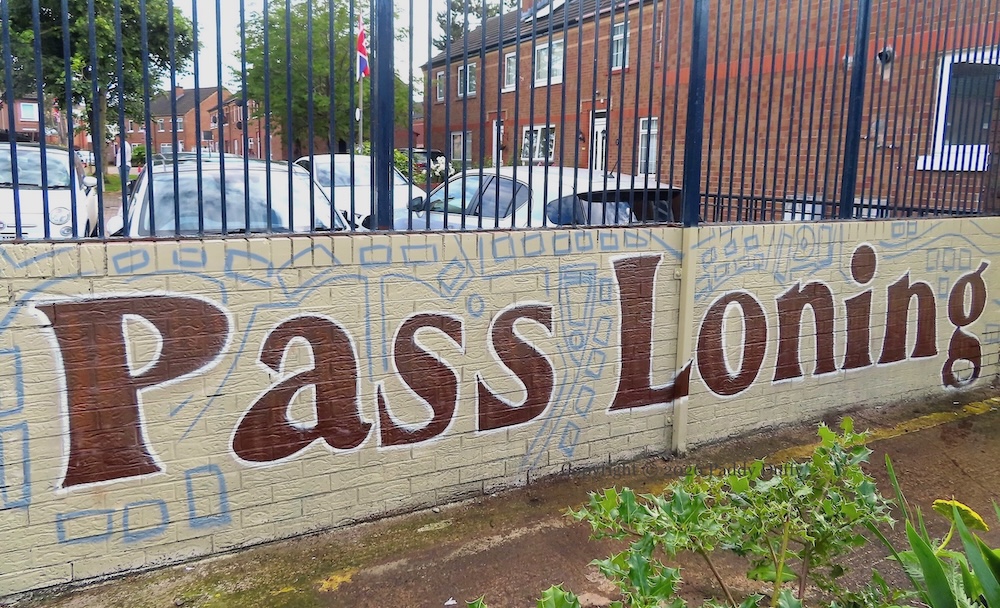
Pass Loning

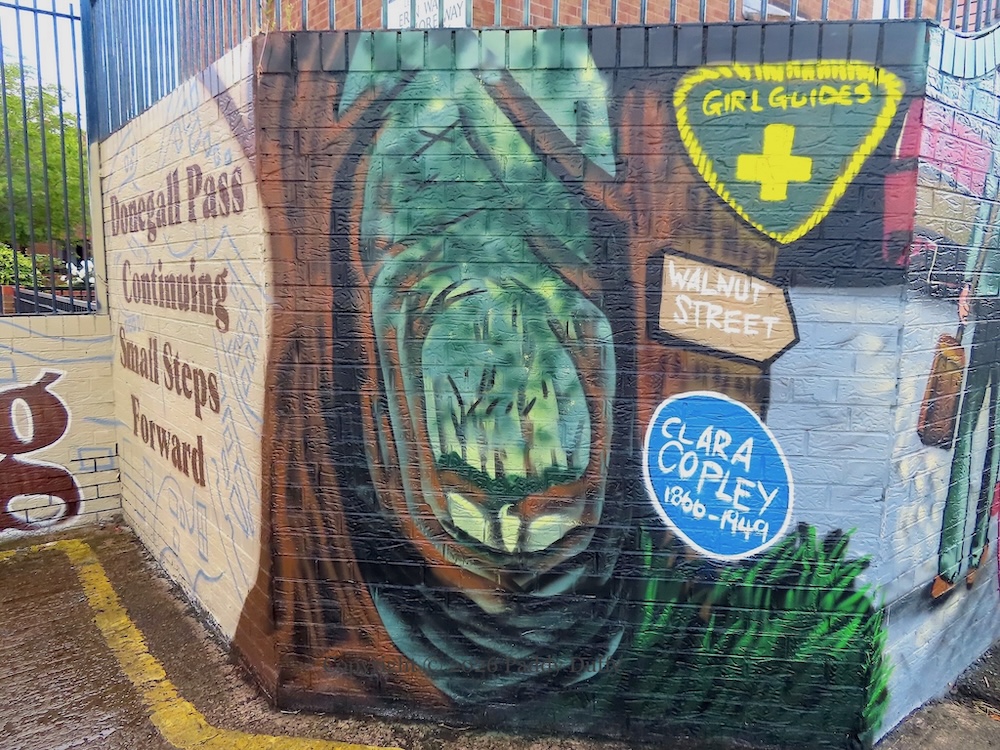
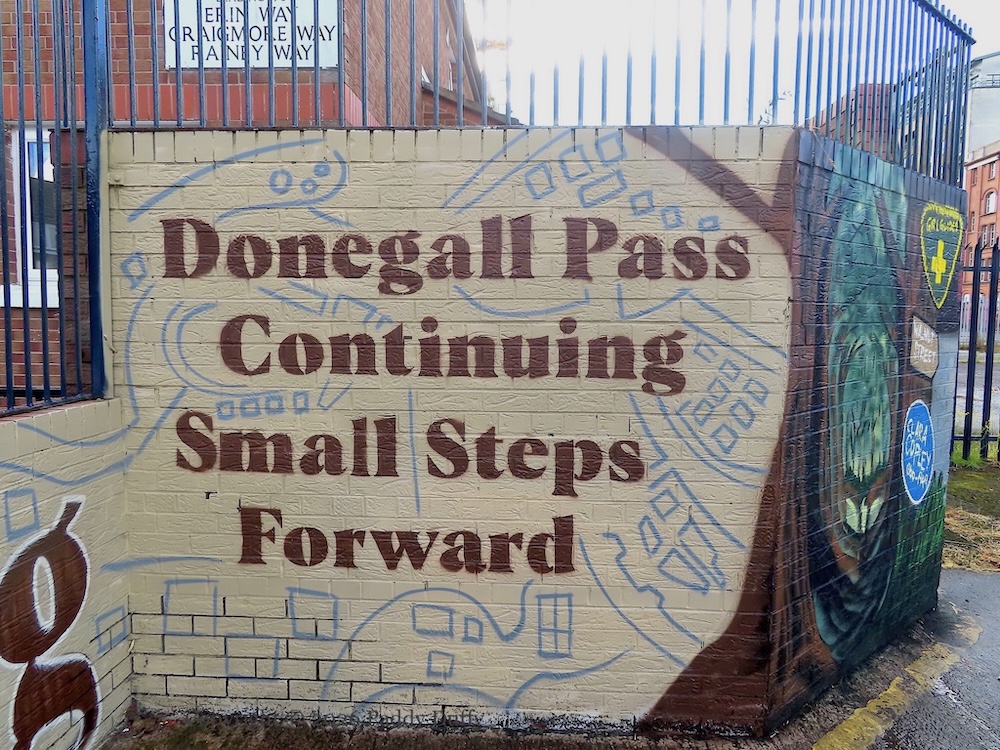
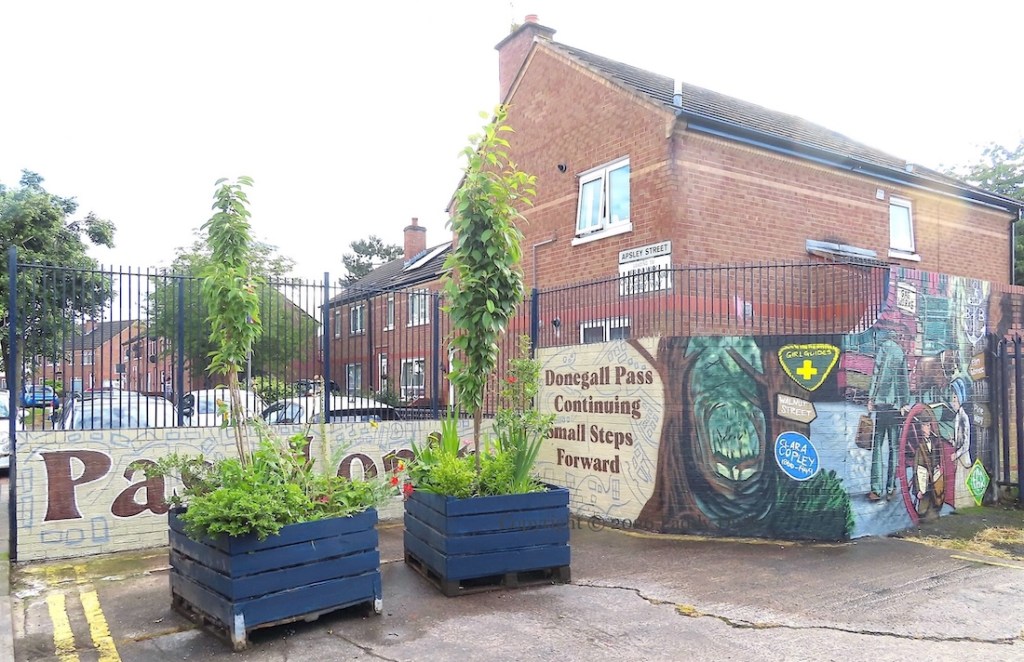
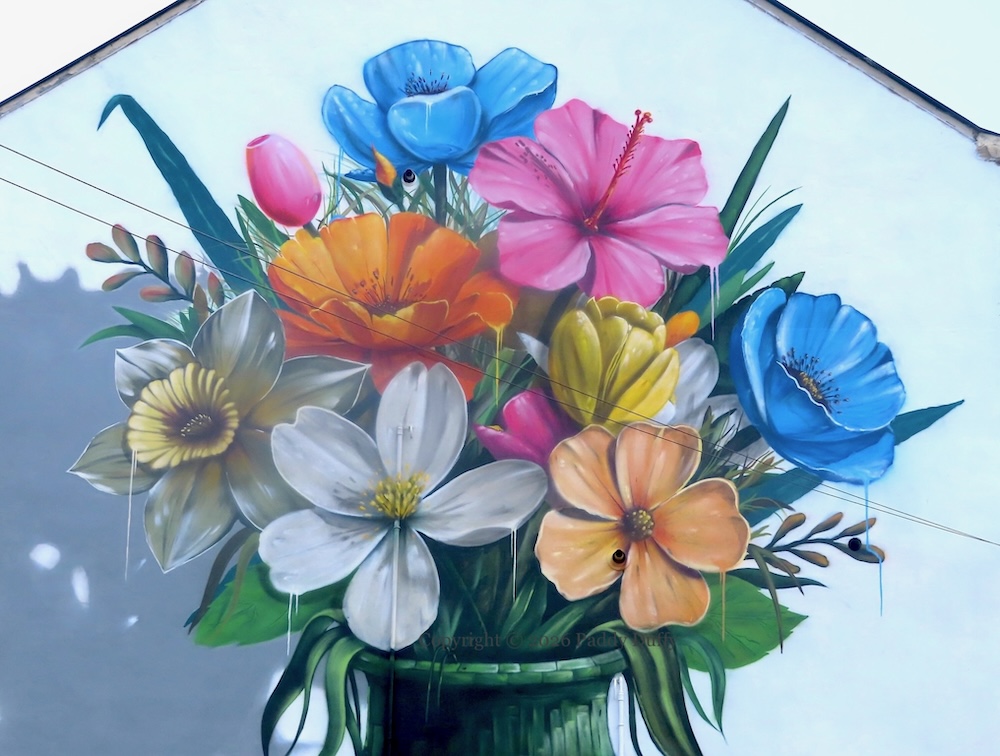
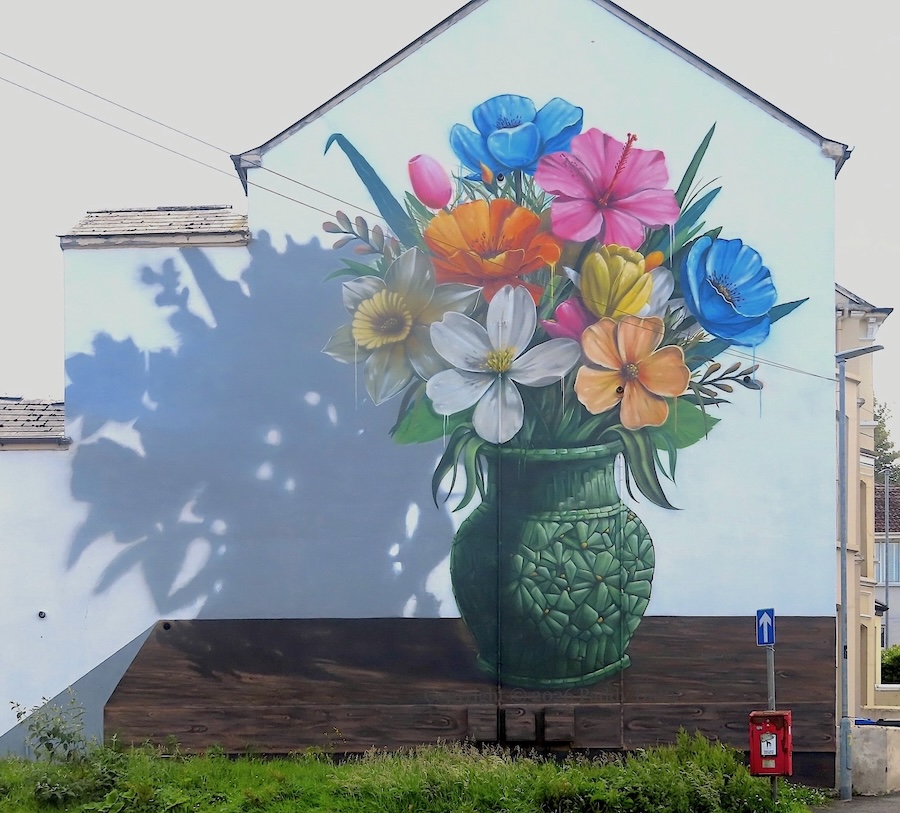
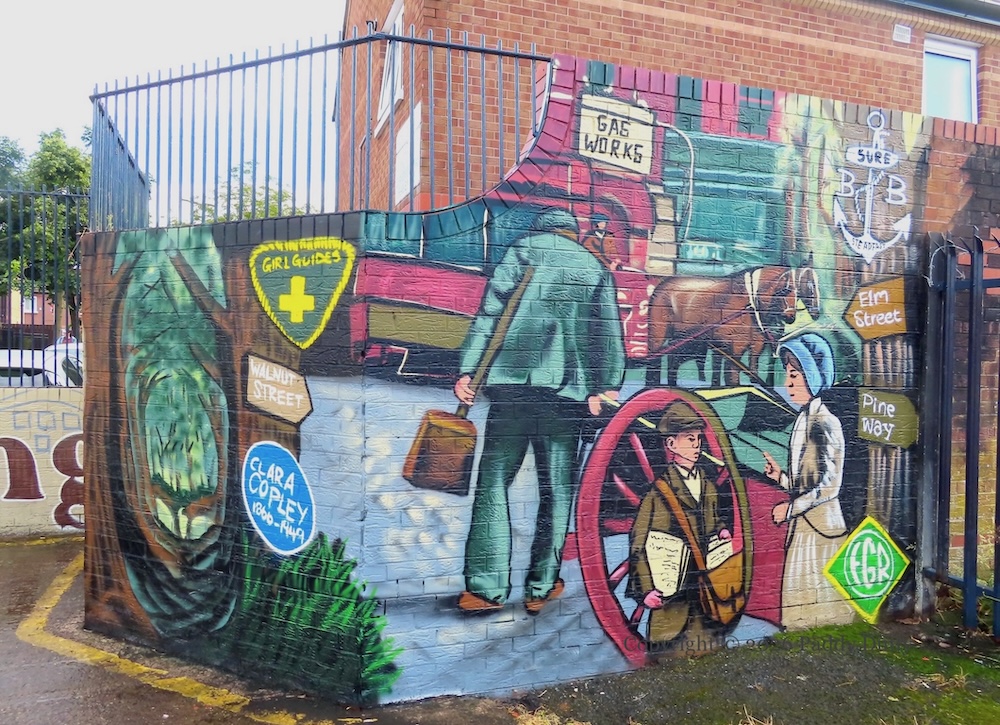
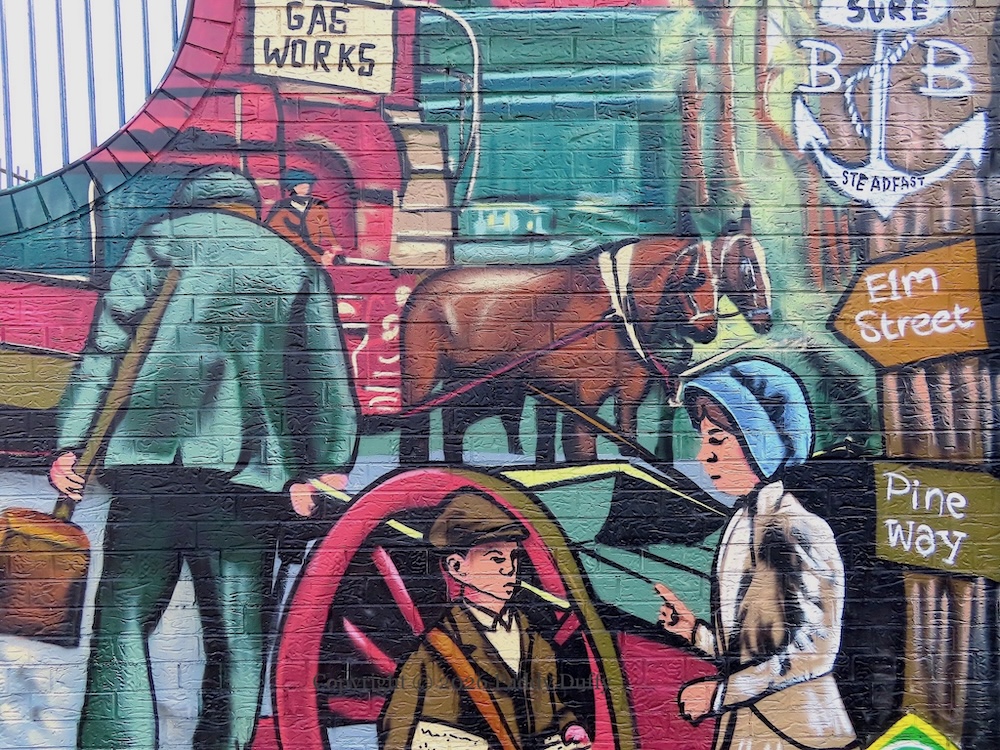
Donegall Pass began life in the late 1600s as a lane-way (loning, loney, loanen) made by one of the early earls of Donegall (the first three of whom were all called Arthur Chichester) through what was then Cromack Woods (Library Ireland). The woods are remembered in local street-names such as Walnut Street, Elm, Street, Pine Way (which are all included in the mural), as well as Cromac Street itself.

Clara Copley was born in Rotherham, moved to Liverpool, and then to Belfast c. 1900, where she lived for about fifty years. Her career was a colourful one that included running a fish-and-chip stall, an amusement arcade, a waxworks, a theatre, and a boxing ring, which was initially unlicensed but made official in 1936, when Copley was aged 70. She retired to a house in Donegall Pass where she died in 1949; there is a ‘blue plaque’ at the site (with an incorrect date of birth, faithfully reproduced here) in her memory. (DIB)

Apsley Street, south Belfast, opposite In Harmony With Nature.
Click image to enlarge
Copyright © 2026 Paddy Duffy
T09455 T09456 T09457 T09458 T09459 T09460
Open Season

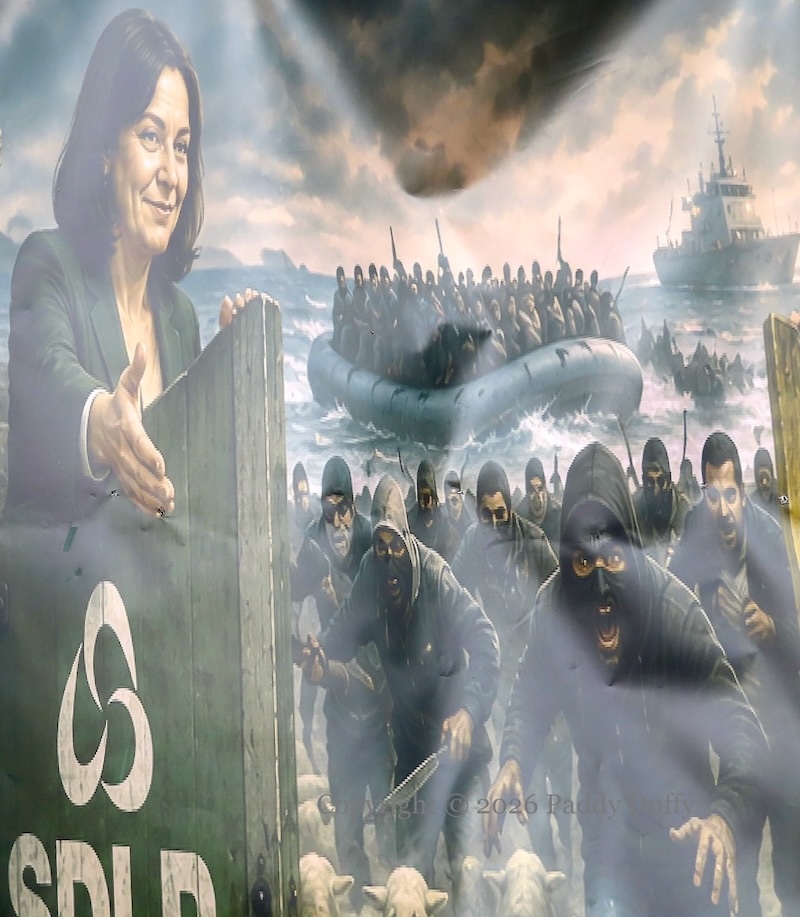
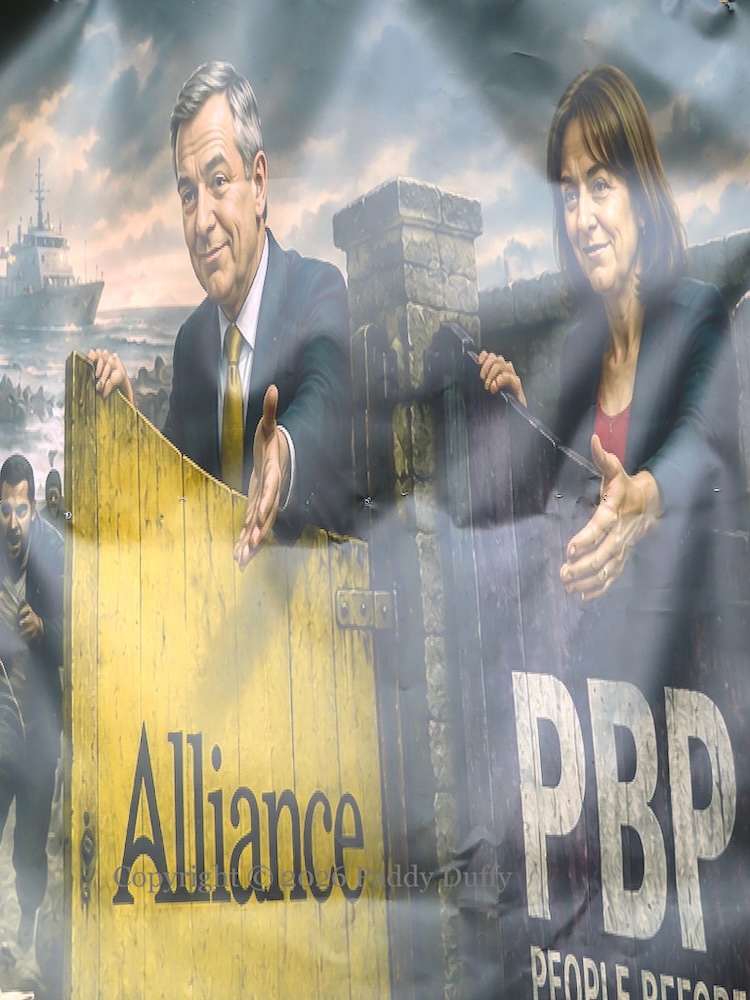
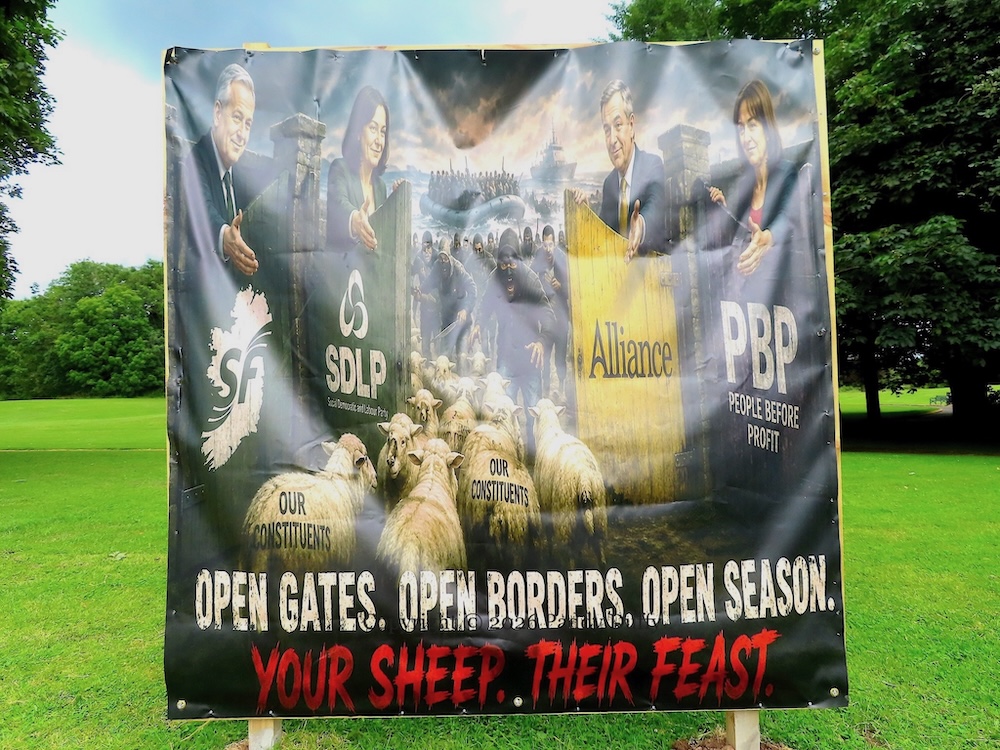
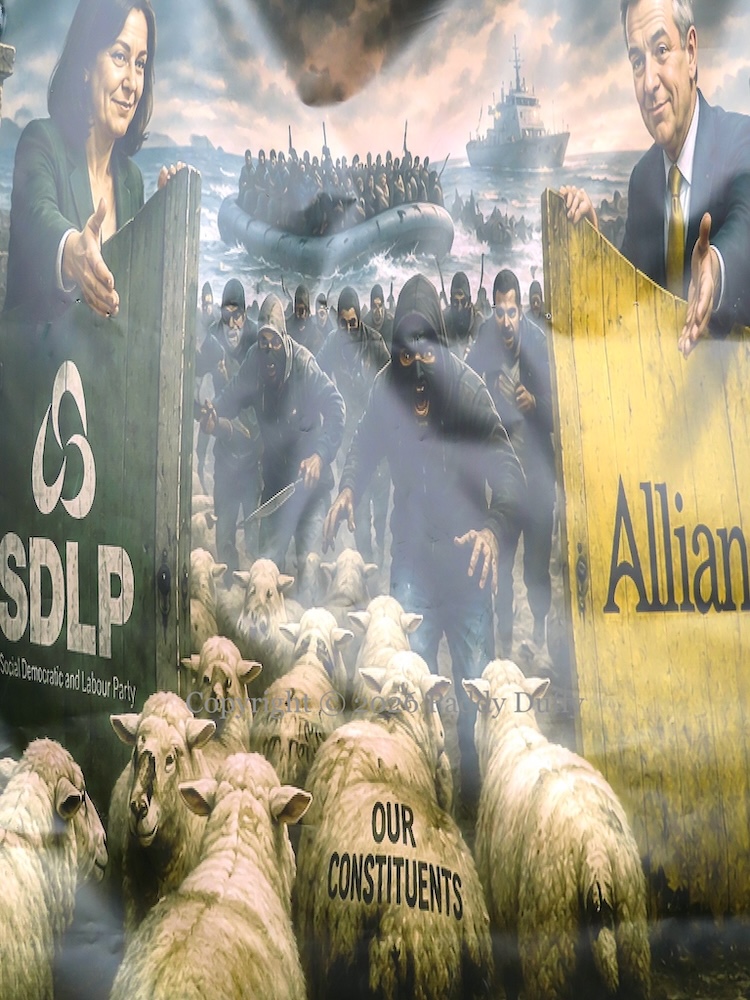
“Open gates. Open borders. Open season. Your sheep. Their feast.” Politicians from Sınn Féın, the SDLP, Alliance, and People Before Profit are shown opening the gates for masked and armed men who are coming from the sea and bidding them to enter a sheepfold of “our constituents”.

The PSNI are investigating the banner as a “hate incident” (rather than a “hate crime” – see A New Evil for the difference) (BelTel). The banner was later (July 1st) removed and replaced with Union Flags and an Ulster Banner (Belfast Media | News Letter).

Shore Road, north Belfast

Update, July 3rd: the banner has been restored – see the Seosamh Mac Coılle collection.

Click image to enlarge
Copyright © 2026 Paddy Duffy
T09446 T09444c T09445 T09443

Shore Crescent Bonfire

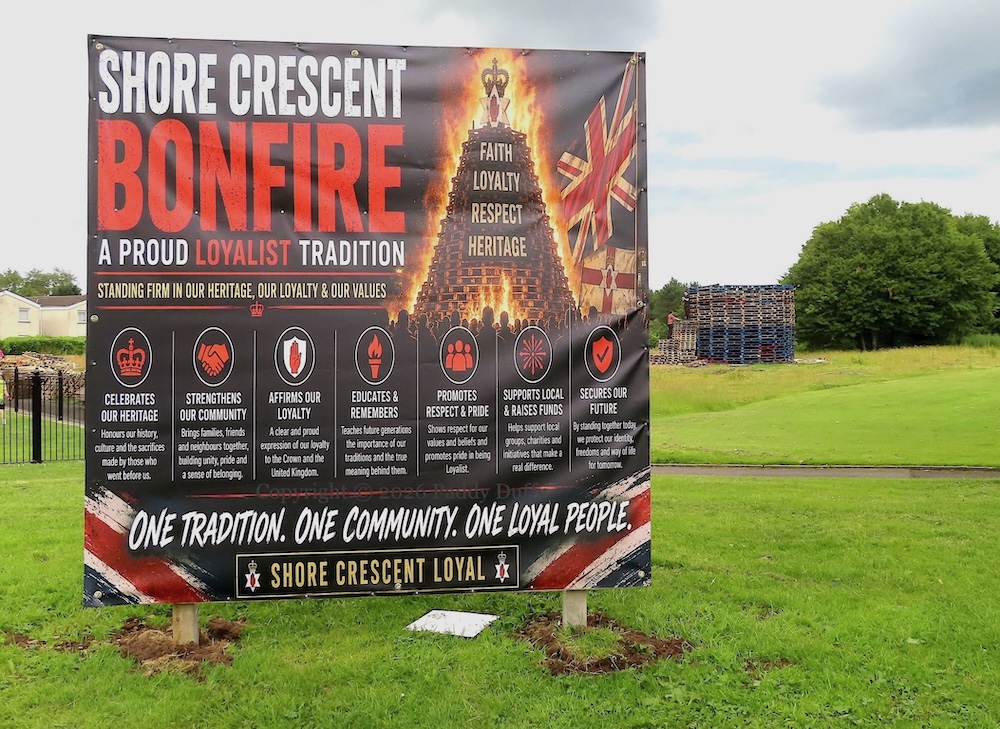
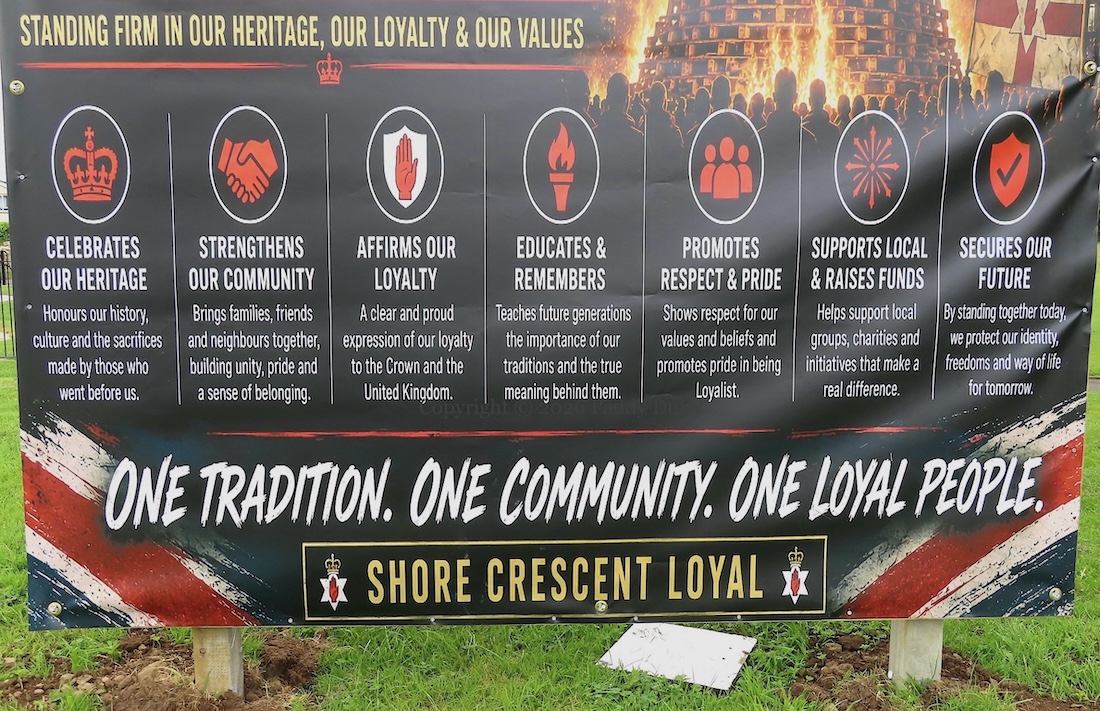
Shore Crescent prepares for Eleventh Night with a bonfire and a large sign explaining the positive impact of the tradition:

“Shore Crescent bonfire – a proud loyalist tradition. Standing firm in our heritage, our loyalty & our values. Faith – loyalty – respect – heritage. [The bonfire …] Celebrates our heritage – honours our history, culture and the sacrifices made by those who went before us; strengthens our community – brings families, friends and neighbours together, building unity, pride and a sense of belonging; affirms our loyalty – a clear and proud expression of our loyalty to the Crown and the United Kingdom; educates & remembers – teaches future generations the importance of our traditions and the true meaning behind them; promotes respect & pride – shows respect for our values and beliefs and promotes pride in being Loyalist; supports local [groups] & raises funds – helps support local groups, charities and initiatives that make a real difference; secures our future – by standing together today, we protect our identity, freedom and way of life for tomorrow. One tradition. One community. One loyal people. Shore Crescent loyal.”

Next to Loughside Playground, Shore Road, north Belfast

Click image to enlarge
Copyright © 2026 Paddy Duffy
[T09447] T09448 T09449

Defending The Community

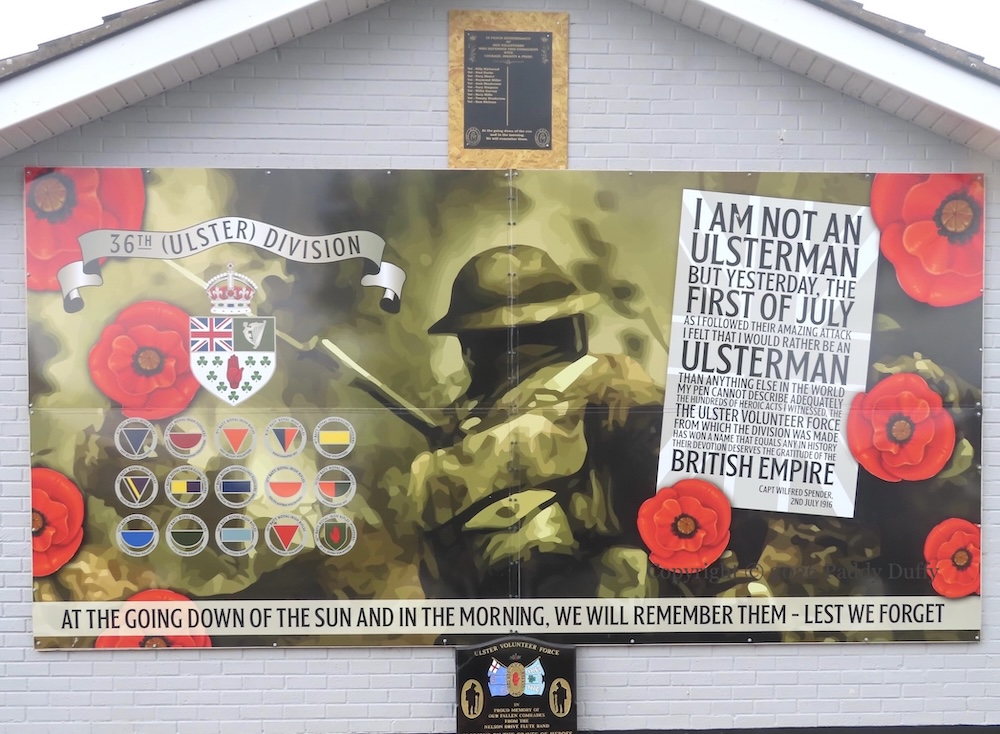
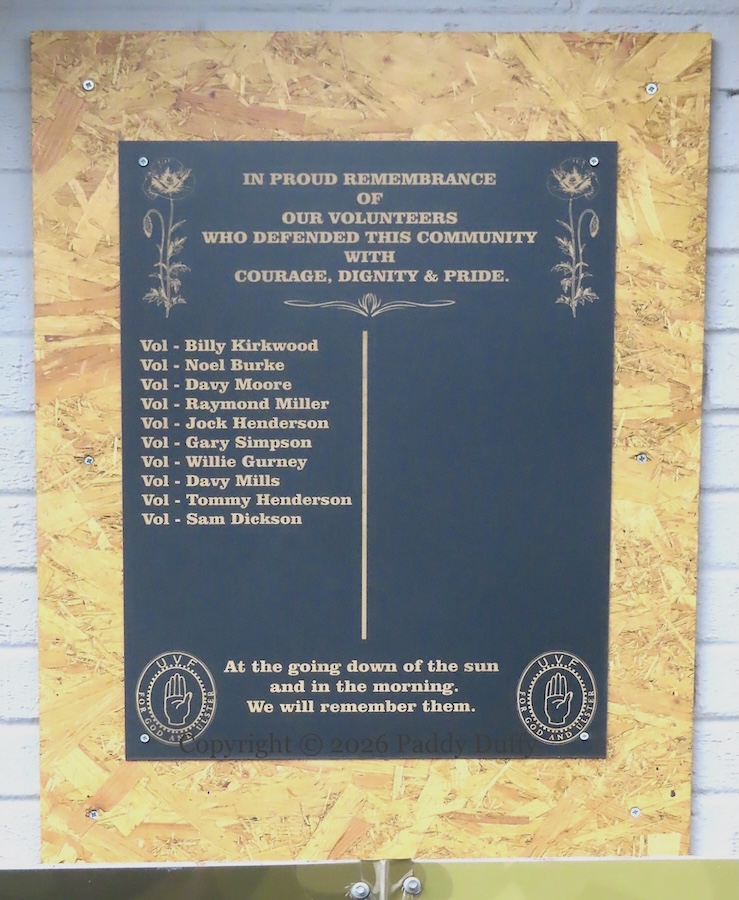
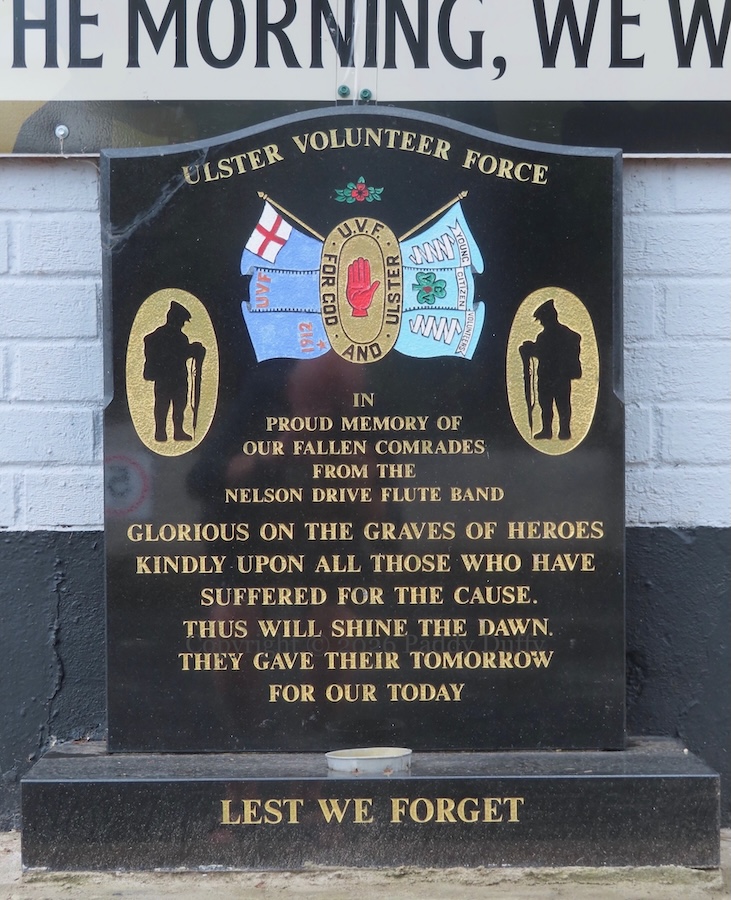
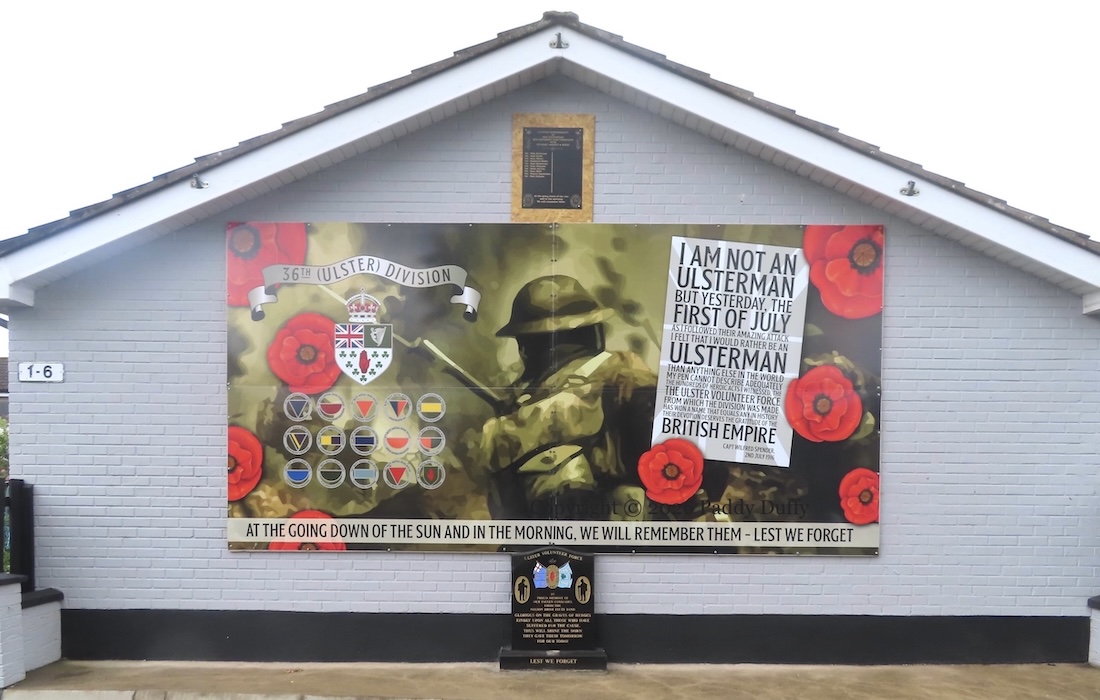
A UVF roll of honour has been added in the apex above the small memorial garden (now reduced to a single stone) in the Caw, Londonderry: “In proud remembrance of our volunteers who defended this community with courage, dignity & pride: Billy Kirkwood, Noel Burke, Davy Moore, Raymond Miller, Jock Henderson, Gary Simpson, Willie Gurney, Davy Mills, Tommy Henderson, Sam Dickson”. None of these appear to have died during the Troubles itself. There was previously a plaque to four volunteers who died in 1975.

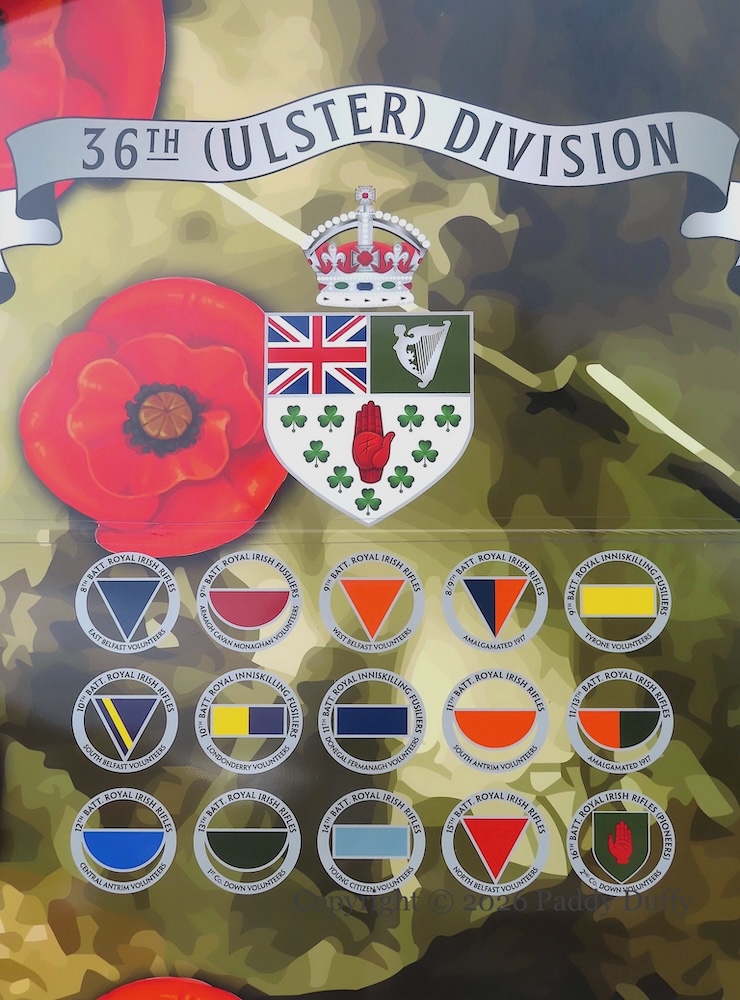
The large 36th (Ulster) Division board shows (on the left) various battalion insignia in three rows:
8th Royal Irish Rifles – East Belfast; 9th Royal Irish Fusiliers – Armagh, Cavan, Monaghan; 9th RIR – West Belfast; 8/9th RIR – Amalgamated 1917; 9th Royal Inniskilling Fusiliers – Tyrone;
10th RIR – South Belfast; 10th Royal Inniskilling Fusiliers – Londonderry; 11th Royal Inniskilling Fusiliers – Donegal, Fermanagh; 11th RIR – South Antrim; 11/13th RIR – Amalgamated 1917;
12th RIR – Central Antrim; 13th RIR – 1st Co Down; 14th RIR – Young Citizen Volunteers; 15th RIR – North Belfast; 16th RIR (Pioneers) – 2nd Co Down.

And Wilfrid Spender’s report on the 36th Division on the first day of the battle at the Somme (July 1st, 1916) is on the right – for the text, see Their Amazing Attack.

Sperrin Park, Caw, Londonderry, replacing Undefeated.

Click image to enlarge
Copyright © 2026 Paddy Duffy
T09384 T09386 T09383 T09385 T09382

Waterside, Cityside, Quayside

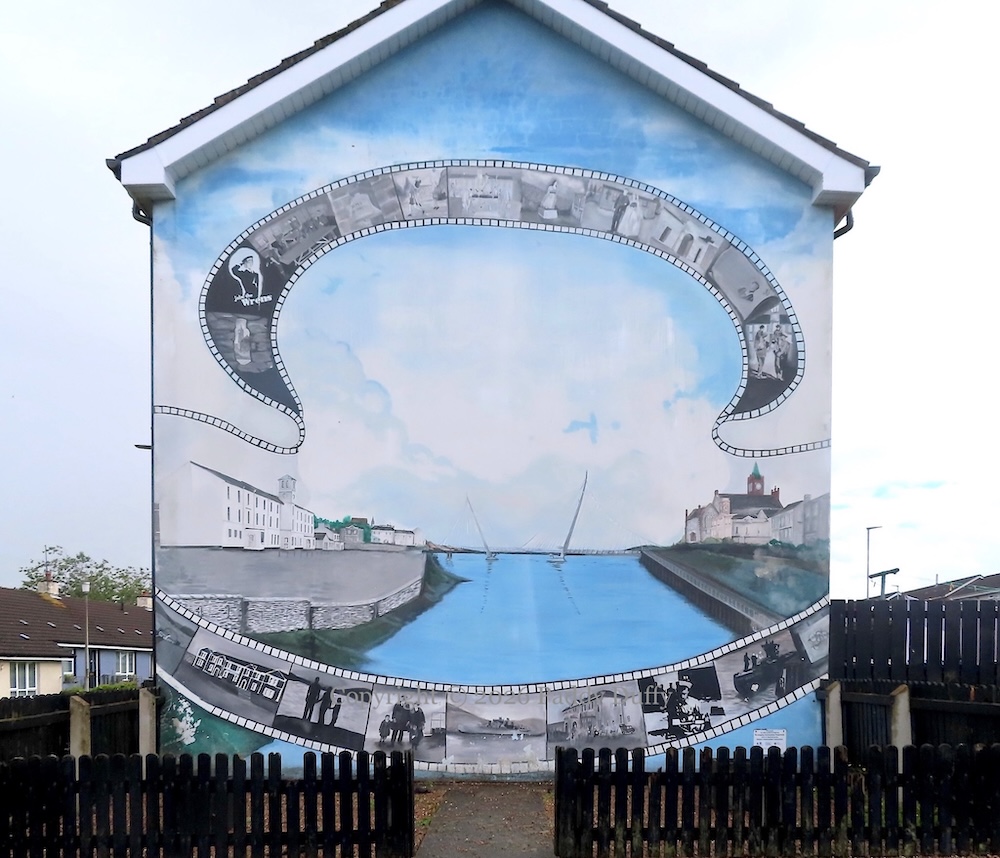
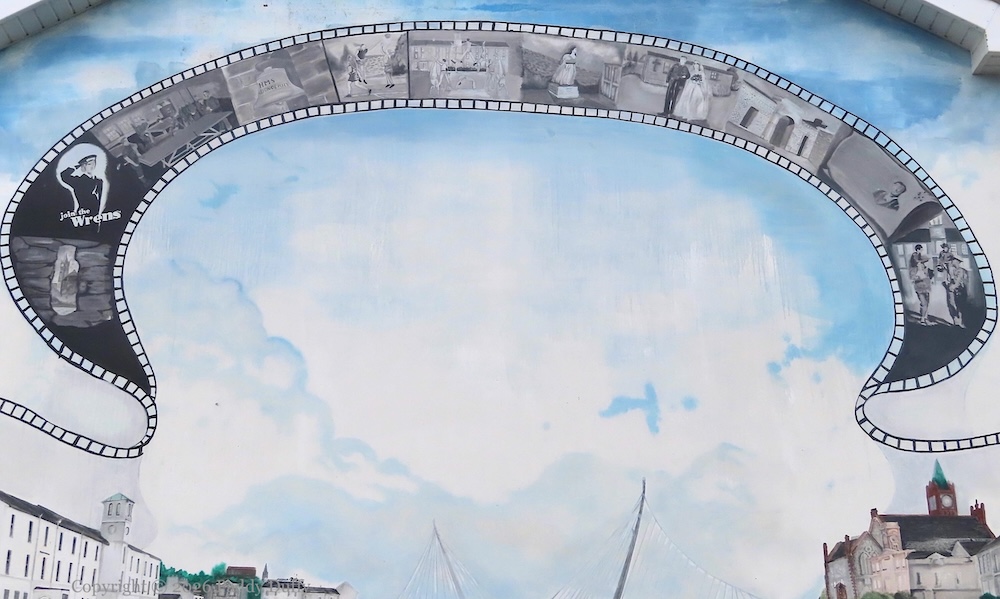
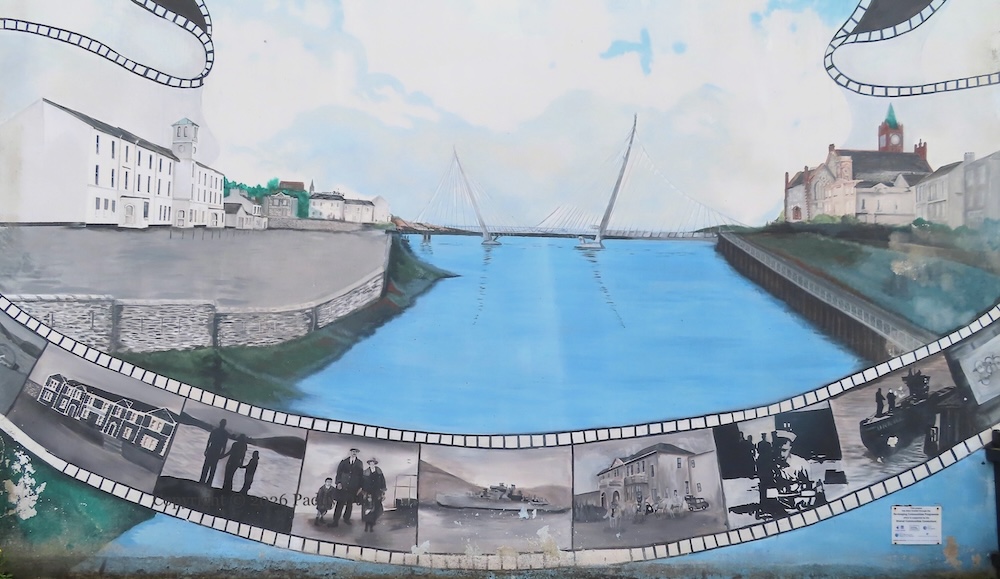
The Peace Bridge is shown spanning the Foyle between (the former) Ebrington barracks and the Guildhall, with a film-strip of images, many depicting naval and military scenes, above and below. The first few panels in the upper ribbon show a gap in the walls of Derry, a poster encouraging people to “Join the Wrens [and free a man for the fleet]” (the Women’s Royal Naval Service; see the poster at IWM), soldiers playing ping-pong in their barracks, and the ship’s bell of the HMS Londonderry (which served as a training ship during the Falkland War (WP)).

Sperrin Park, Caw, Londonderry

Click image to enlarge
Copyright © 2026 Paddy Duffy
T09376 [T09377] T09378 T09379

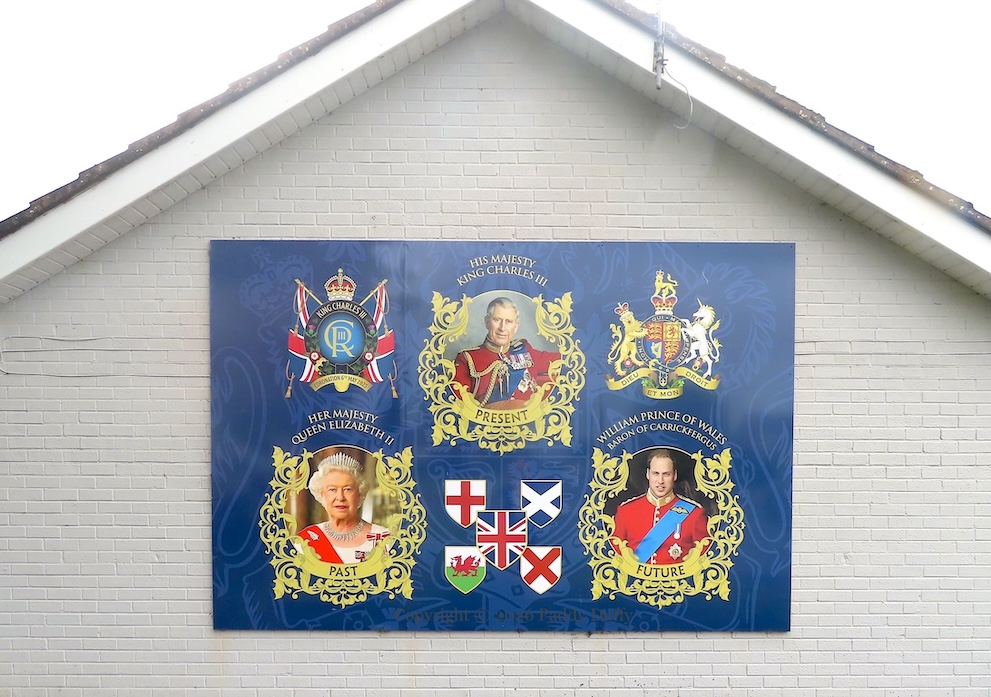
Dieu Et Mon Droit

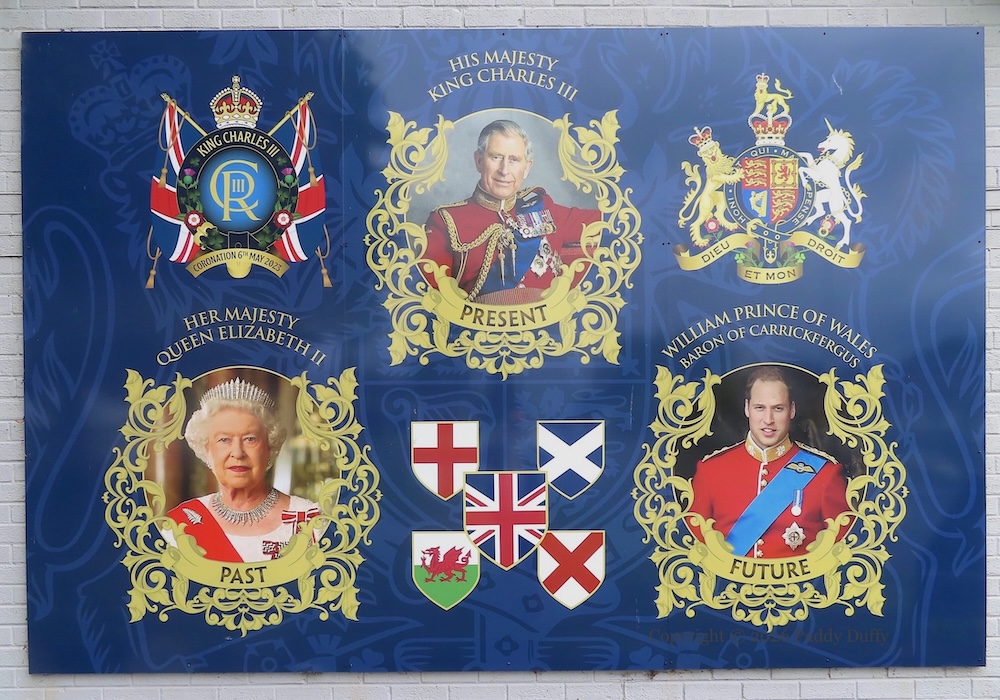
That is, king or queen “by the grace of God” or divine right. The first UK monarch to use the phrase was Henry V in the early 1400s and it has been used as a royal motto since then, up to and including the present-day monarchs shown on this board in the Caw, Londonderry.

On the left, the past – Her Majesty Queen Elizabeth II; in the centre, the present – His Majesty King Charles III; on the right, the future – William Prince Of Wales, Baron Of [sic] Carrickfergus.

The Welsh dragon is included alongside the three flags/crests that make up the Union Flag – St George’s Cross for England, St Andrew’s Saltire for Scotland, and St Patrick’s Saltire for Ireland.

For the same trio in Newtownabbey, see Past, Present, Future.

Replaces the William MacFadzean board in Kinsale Park, Caw, Londonderry.

Click image to enlarge
Copyright © 2026 Paddy Duffy
T09380 T09381

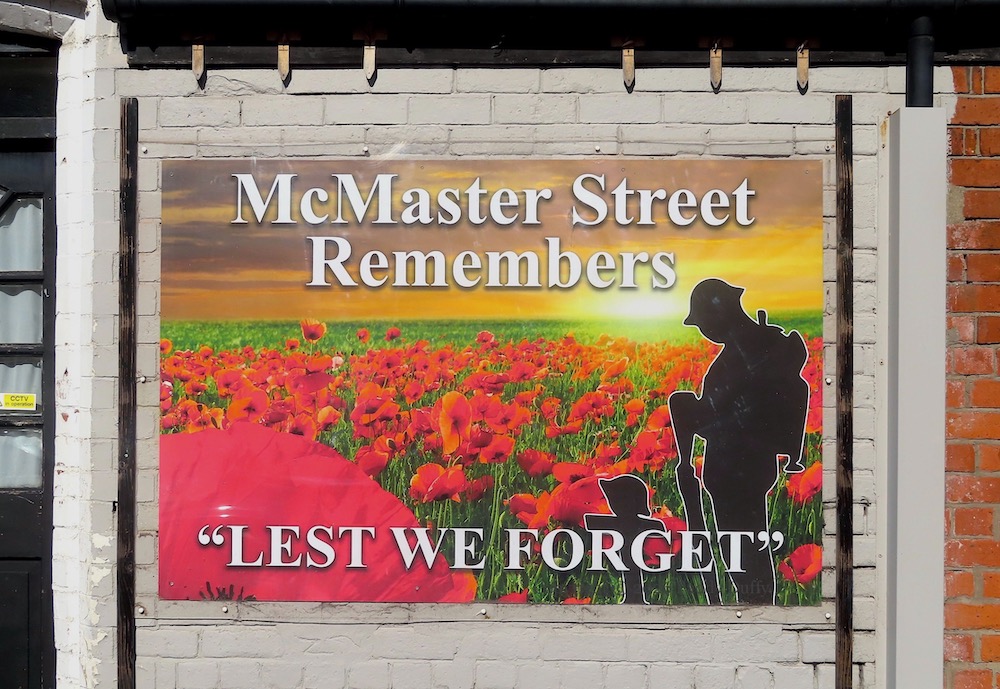
McMaster Street Remembers

McMaster and Lendrick streets – part of a conservation site of Victorian terraced houses (Dept For Communities) – were the epicentre of last week’s anti-immigration riots, with cars and houses in the street set ablaze and families evacuated to safety by the security forces (BBC video).

Also in the street: An Act Of Betrayal (about the Sea Border) and (before that, c. 2010) Young Newtown UDA.

Click image to enlarge
Copyright © 2026 Paddy Duffy
T09293

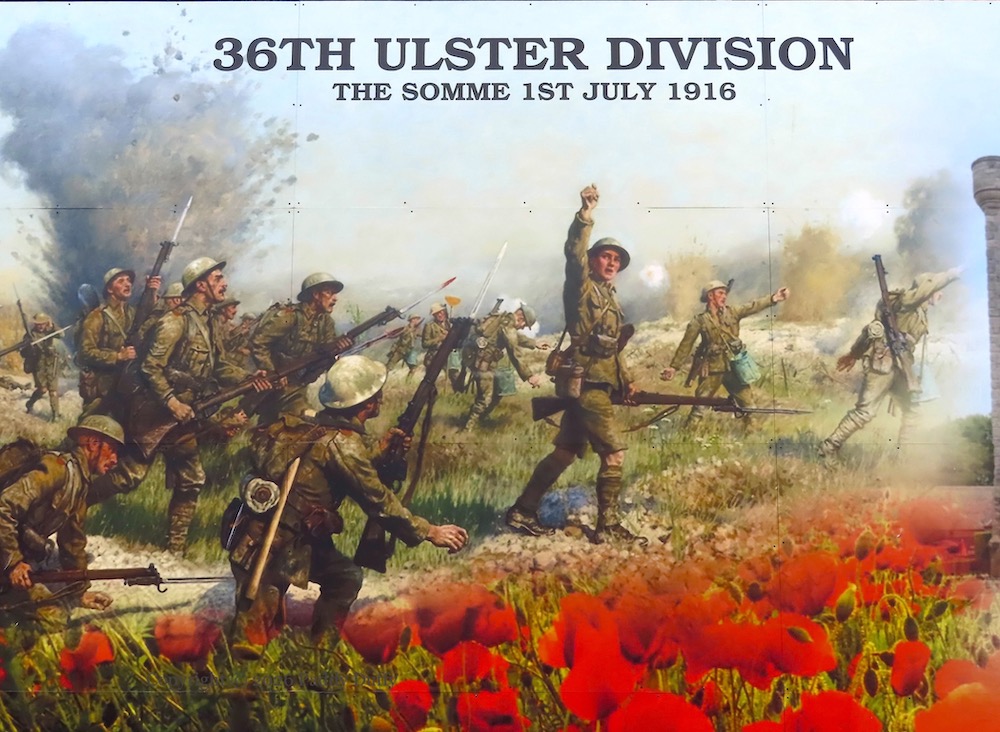
Attack Of The Ulster Division

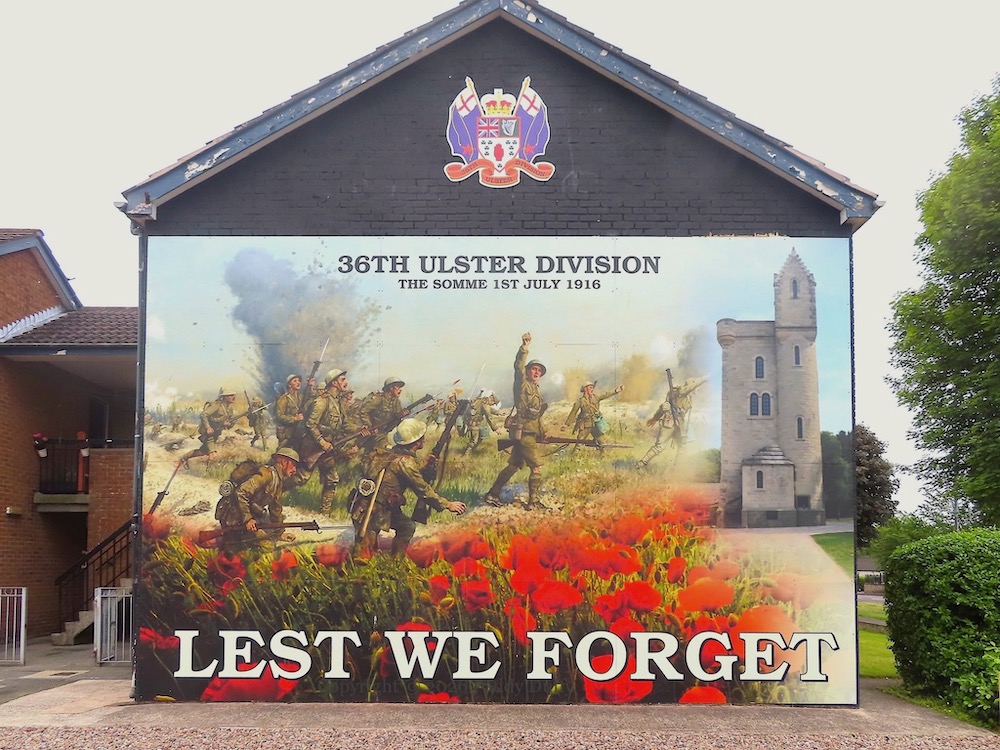
“Lest we forget.” JP Beadle’s painting “Battle Of The Somme: Attack Of The Ulster Division” shows soldiers of the 36th Division bravely going to their death on July 1st, 1916. The original painting hangs in Belfast City Hall (militaryprints.com). In the board shown here, a foreground of poppies has been added, along with the Ulster Tower in Thiepval, France, on the right.

Grange Drive, Ballyclare

Click image to enlarge
Copyright © 2026 Paddy Duffy
T09288 T09289 T09287

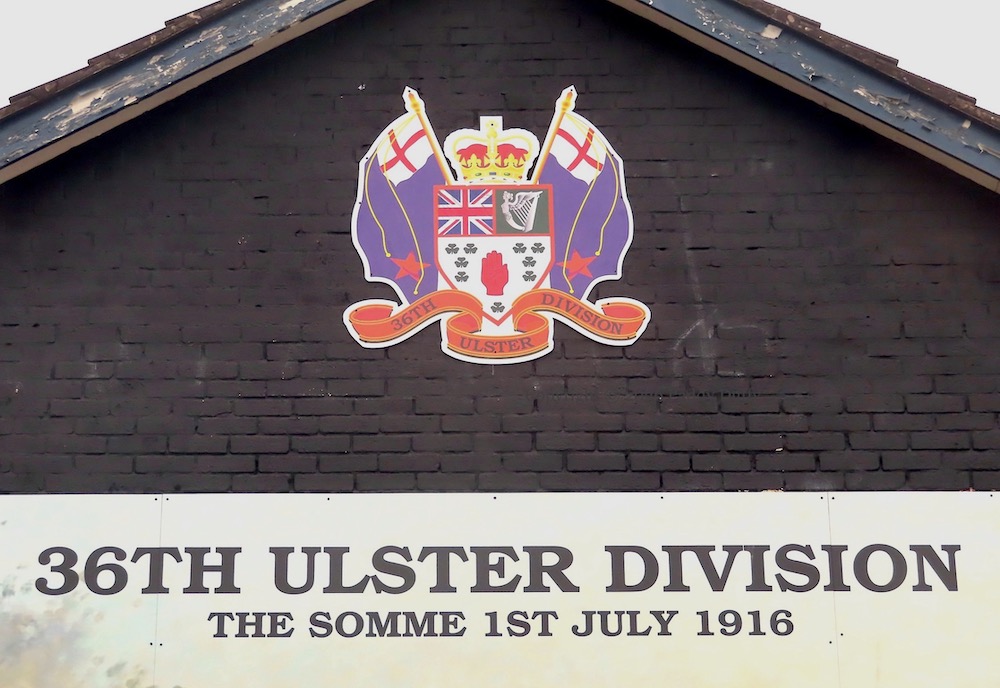
The Loyal 36th

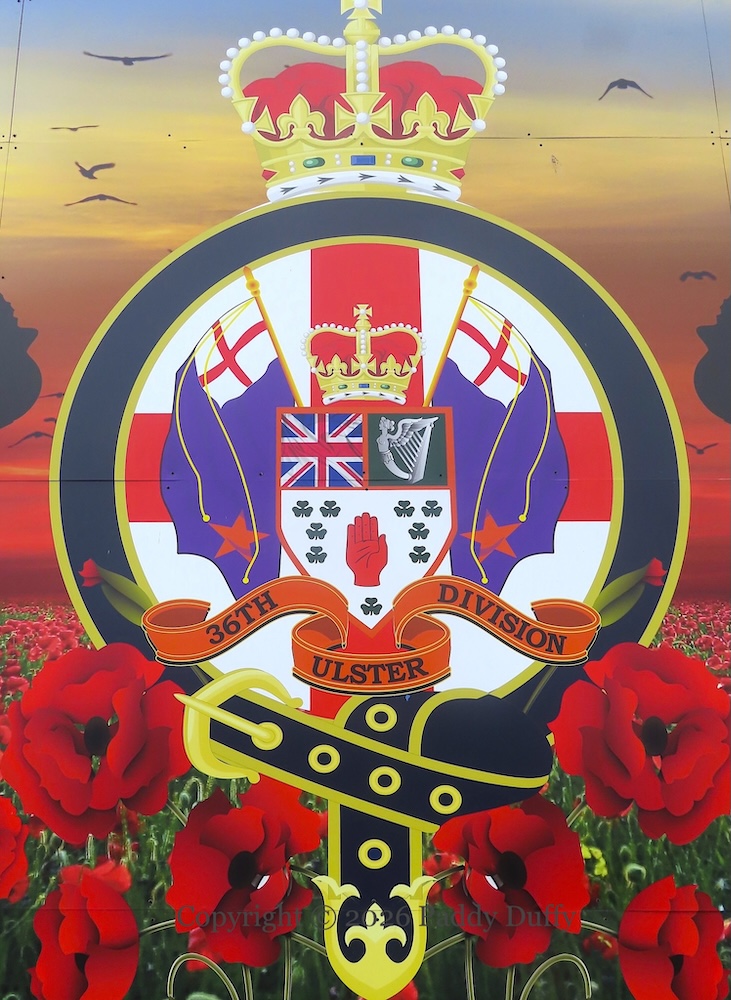
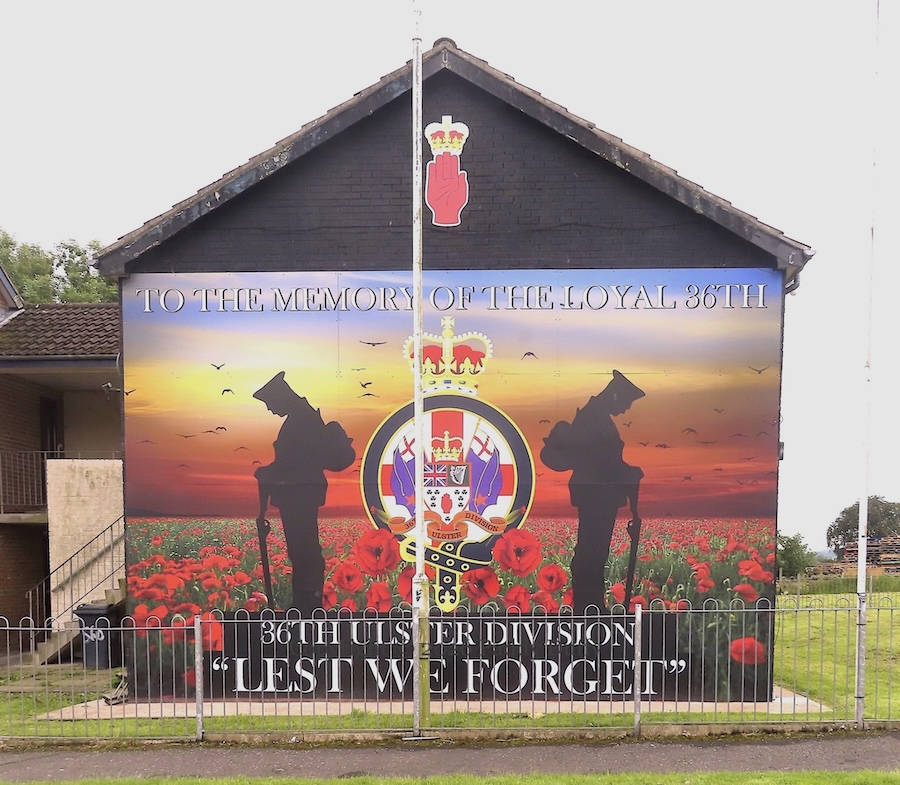
“To the memory of the loyal 36th”. The emblem of the 36th (Ulster) Division – shown in close-up above – is a modern one, perhaps from the 2000s. The 36th’s emblem in WWI was a simple red (left) hand, while this one involves a crest combining a Union Flag, Maid Of Erin harp (emblem of the Royal Irish Rifles), and a red (right) hand on a field of nine shamrocks, below a crown and flanked with UVF flags. These are flags of the modern UVF; according to Sam’s Flags, the flags of the Ulster Volunteers (1913-1914) looked like regimental flags.

Grange Drive, Ballyclare, replacing We Band Of Brothers

Click image to enlarge
Copyright © 2026 Paddy Duffy
T09285 T09283 [T09284] [T09286]