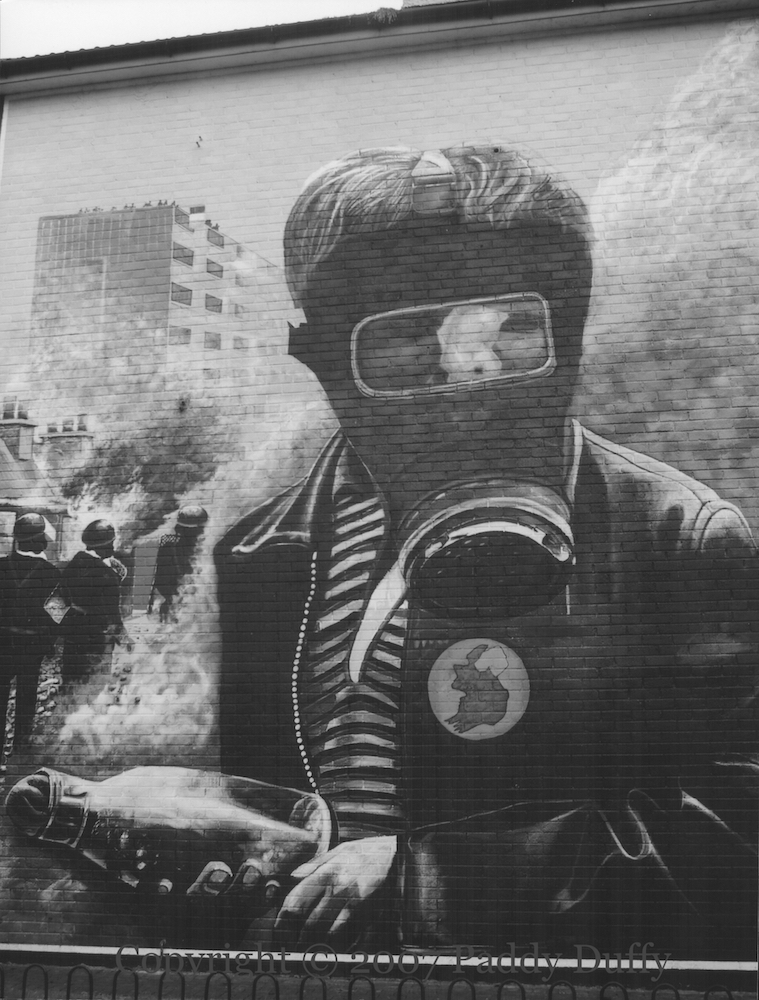
The Petrol Bomber was first painted by the Bogside Artists in 1994 and modified a number of times in the first few years, to change the badge to “No RUC” and to a green ribbon.
Part of The People’s Gallery (Visual History) along Lecky Road and Rossville Street in Derry’s Bogside.
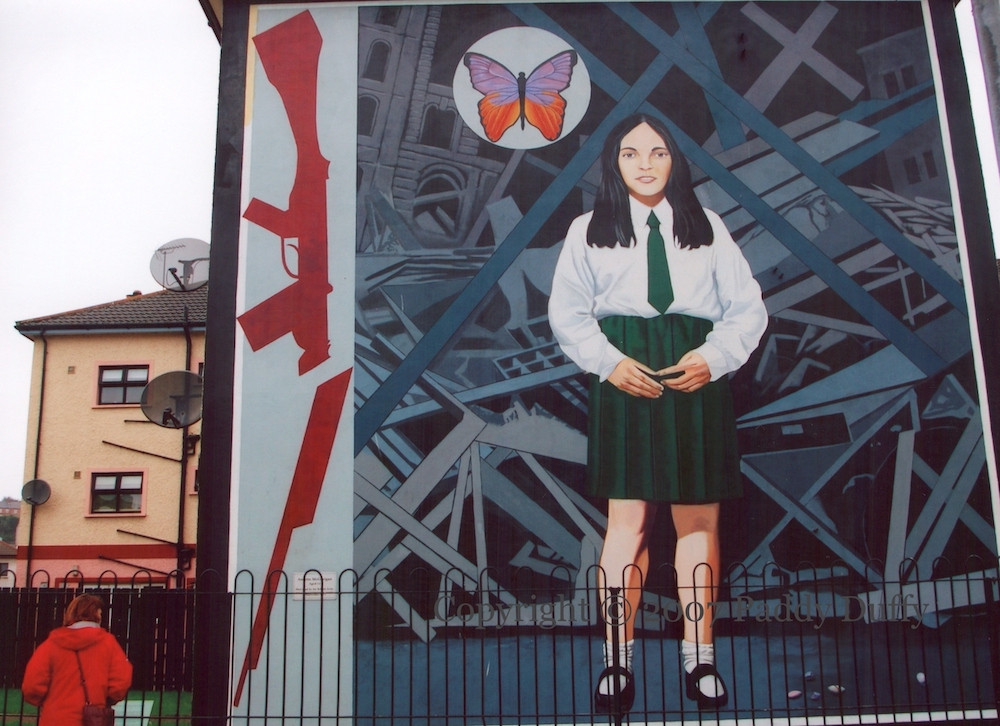
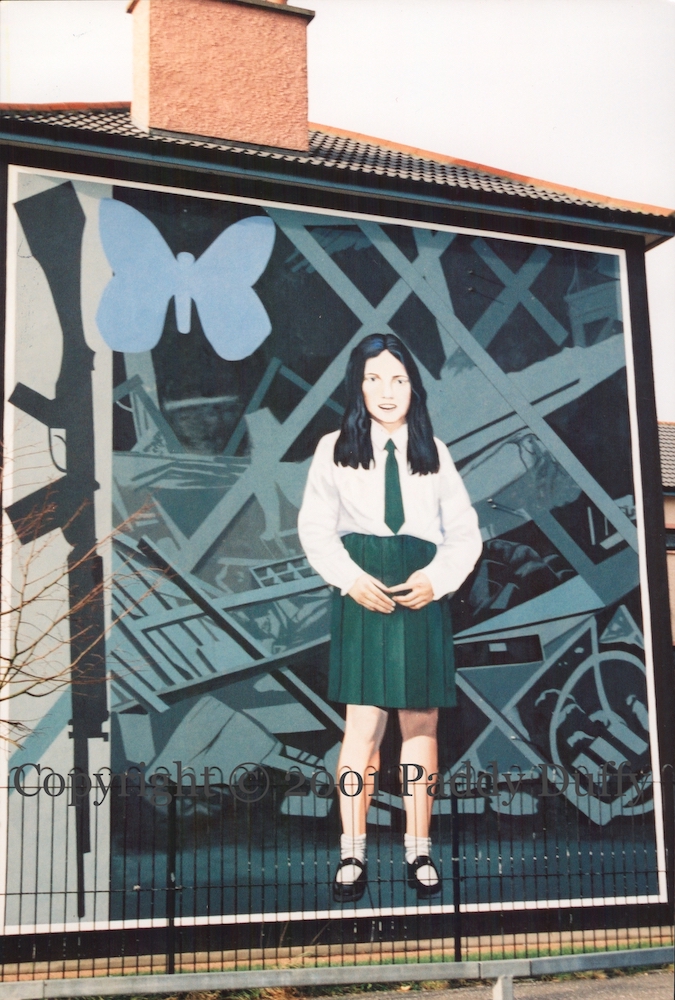
The mural to the first child killed in the Troubles, Annette McGavigan, entitled The Death Of Innocence, was repainted by the Bogside Artists in 2006. On account of the success of the peace process and IRA decommissioning of weapons, the rifle on the left is broken.
“Years from now they will ask you where you were when your comrades were dying on hungerstrike. Shall you say you were with us or shall you say that you were conforming to the very system that drove us to our deaths[?]” INLA (sign the light-pole as well as the flags and red star in the mural) volunteer Patsy O’Hara, from Derry, joined the hunger strike on the same day as Raymond McCreesh (March 22nd) and died, 61 days later, later in the same day (May 21st, 11:29 p.m.) as him (2:11 a.m.).
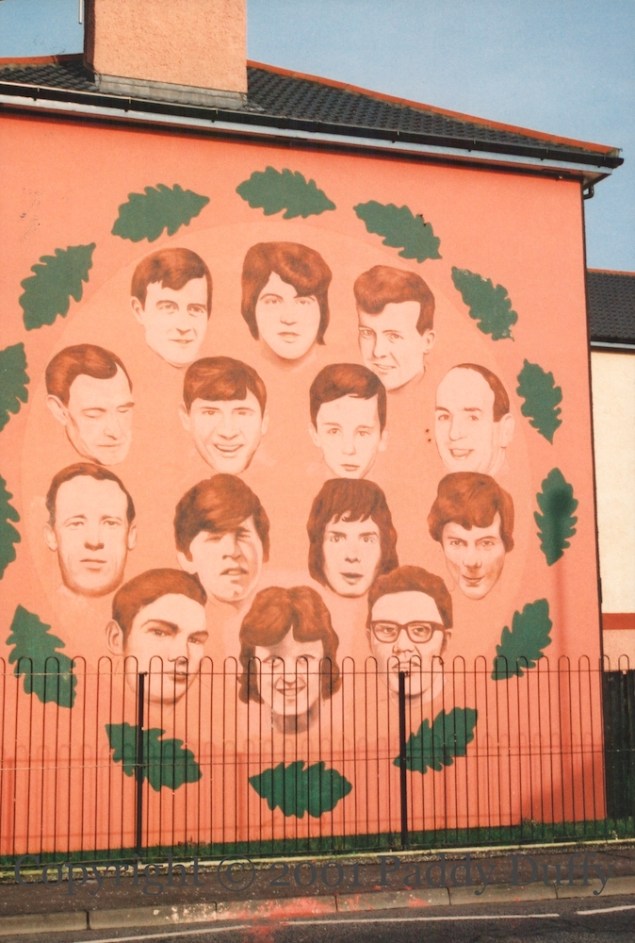
A Christian cross is added to the Bloody Sunday memorial mural in Westland Street, Derry. A version without a cross was seen previously in 1999 and 2004. (The latter gives the names of the victims.) There is an oak leaf – symbol of Derry – for each of the fourteen victims.
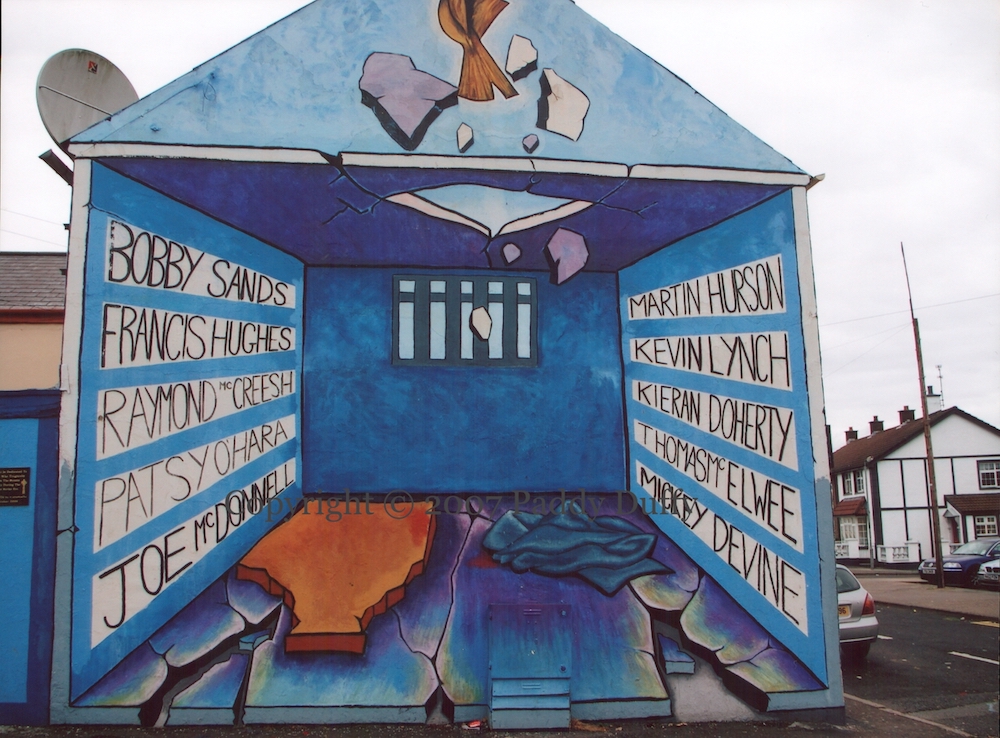
A lark (rather than a dove) bursts through the ceiling of a H-Block cell lined with the names of the ten deceased 1981 hunger strikers. “This mural is dedicated to all those who tragically died on the streets of Derry during the hunger strike era. Suımhneas Dé dá nanamacha. 3rd October 2006.”
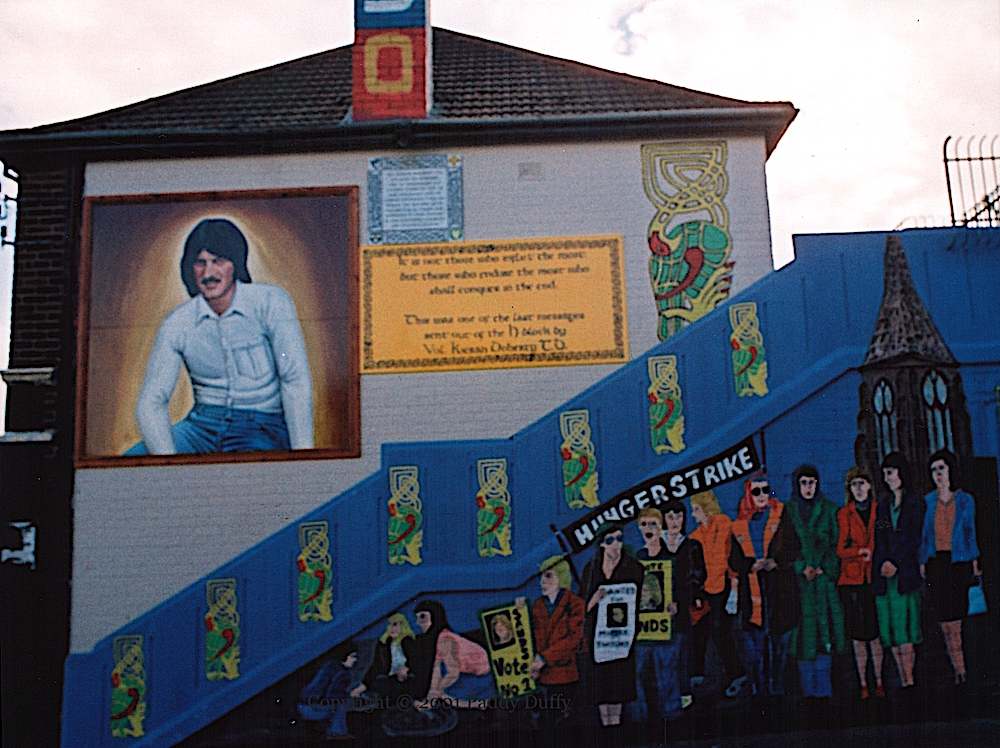
Kieran Doherty was elected TD (Teachta Dála) for Cavan-Monaghan three weeks into his 1981 hunger strike. He held the position for two months, until he died on August 2nd. The portraits, plaques, and mural of marchers are in his home area of Andersonstown. The words “It is not those who inflict the most, but those that can endure who shall conquer in the end” is an echo of Terence MacSwiney, whose hunger strike in 1920 lasted 74 days, one more than Doherty’s.
This board on the back of Free Derry Corner (Visual History) commemorates the thirtieth anniversary of the second hunger strike and the ten strikers who died.
The subject for the fifth mural by The Bogside Artists (Visual History) is Annette McGavigan, the first child to be killed by British forces in the Troubles, in 1971 (WP).
The fourth mural by the Bogside Artists (Visual History) shows the faces of the fourteen people who died on or as a result of Bloody Sunday, January 30th, 1972, shot by the “gun-happy louts” (as described by the Belfast UDA; Vanguard also called for their removal – see the entry for Robert McKinnie in Lost Lives) of the 1st Parachute Regiment; 15 more people were injured.
By row, the victims portrayed are: Michael McDaid, John Young, Paddy Doherty John Johnston (d. June 16th), Hugh Gilmour, Gerry Donaghy, Barney McGuigan Gerry McKinney, William Nash, Kevin McElhinney, Jackie Duddy Jim Wray, Michael Kelly, William McKinney
The portraits are presented within a circle of oak leaves – symbol of Derry – one for each person.
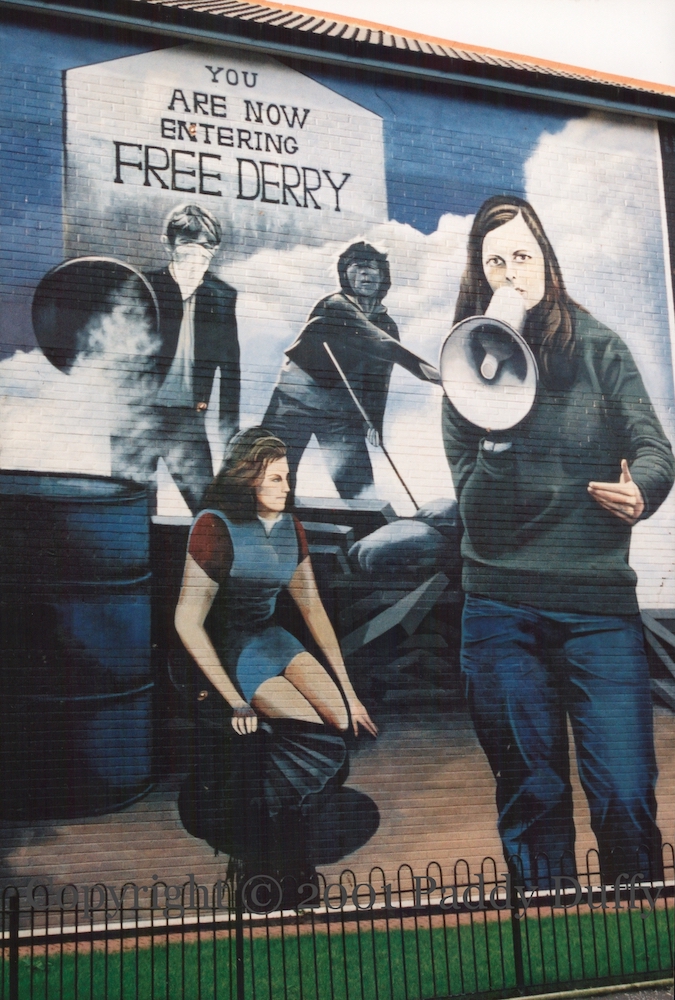
The second mural by the Bogside Artists (after The Petrol Bomber – Visual History) also depicts the battle of the Bogside and features Bernadette Devlin (later McAliskey). Devlin was elected to the British parliament in 1969 at age 21 and was imprisoned in December for her role in the August uprising. The mural reproduces a classic photograph showing Devlin with a megaphone in front of protesters and Free Derry Corner. It replaces another ‘Battle of the Bogside’ mural. The Bogside Artists explain the mural and its history in this short video.



 Paddy Duffy Collection