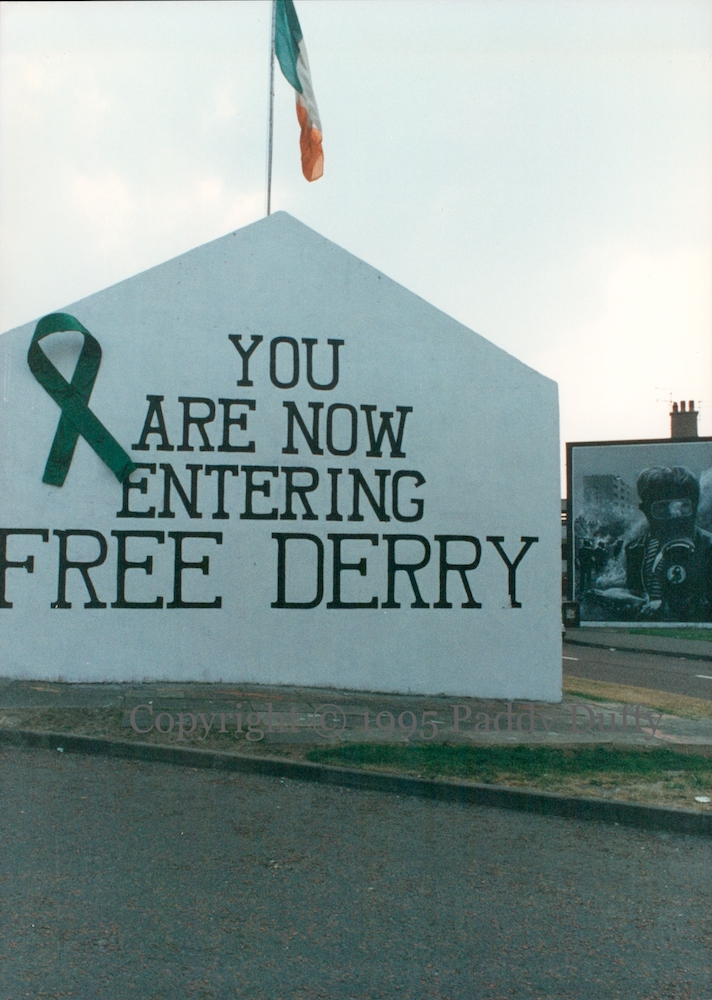
A large green ribbon is added to Free Derry Corner (Visual History) as a call for prioritising the release of political prisoners in negotiations that take place during the ceasefire.
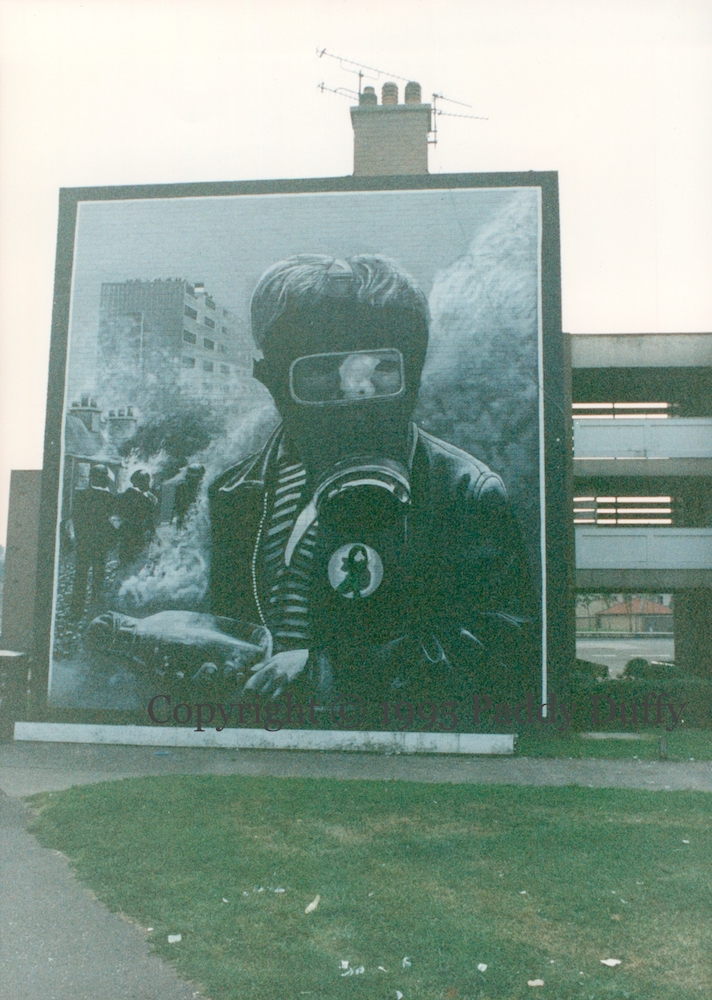
The Petrol Bomber was the first mural painted by the Bogside Artists – Kevin Hasson, Tom Kelly, and William Kelly – as part of what would become The People’s Gallery (Visual History).
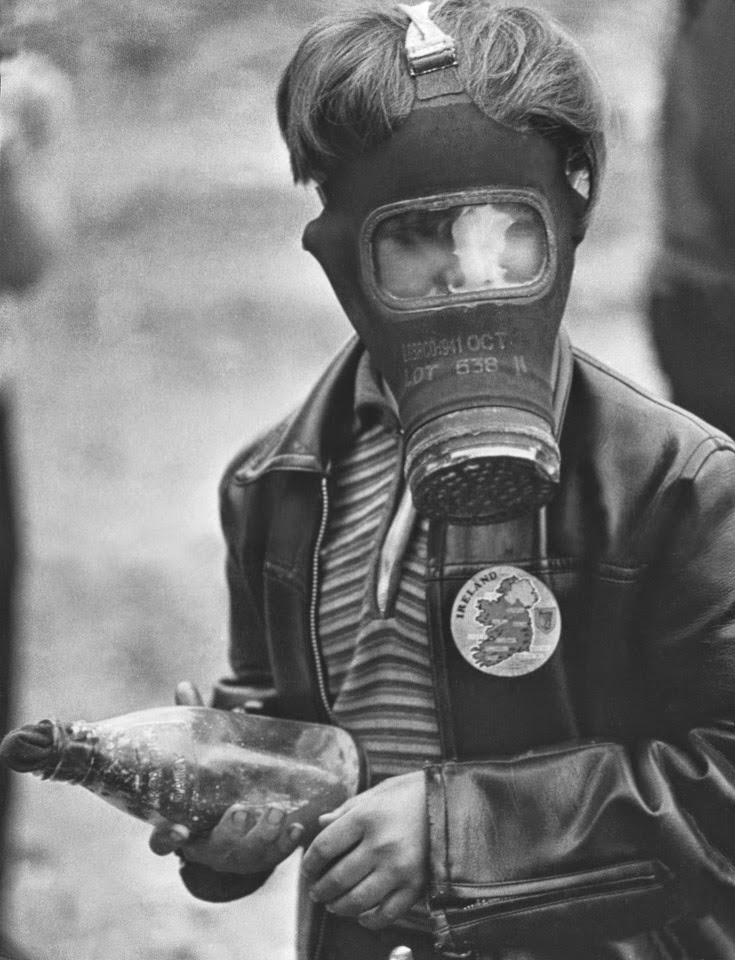
It shows 13 year-old Paddy Coyle (Derry Journal) with a Molotov cocktail and wearing a gas mask (used to protect rioters against CS gas). The original did not have the green ribbon on the boy’s badge – it is a symbol of the movement to have POWs released as part of any peace agreement.
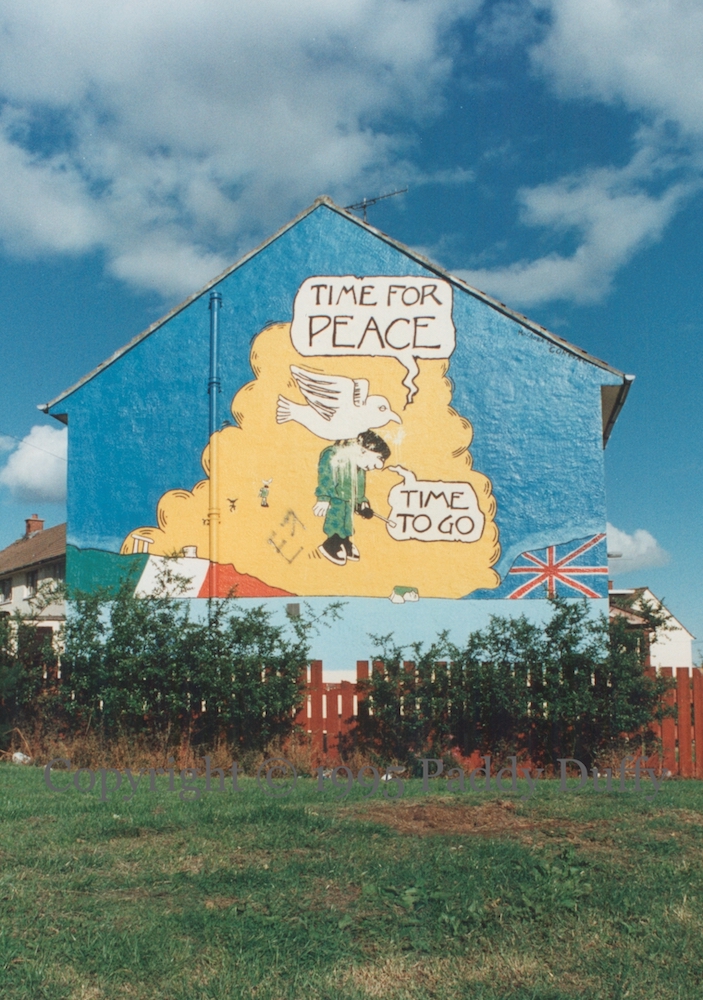
A Cormac cartoon is reproduced as a mural by Mo Chara Kelly: the ceasefire means that doves (“Time for peace”) can/should be carrying British soldiers (who themselves recognise it is “Time to go”) from Ireland (tricoloured, with dolmen) to Britain (with Union flag) over the Isle of Man.
“Nature sent the potato blight, government & landlords created the famine.” 1845-1849 saw one million Irish people die and a million more emigrate. During the period, the full range of other foodstuffs was produced and shipped to England, being too expensive for the native population.
This is one of about nine murals painted in 1995 on the Great Hunger (Visual History).
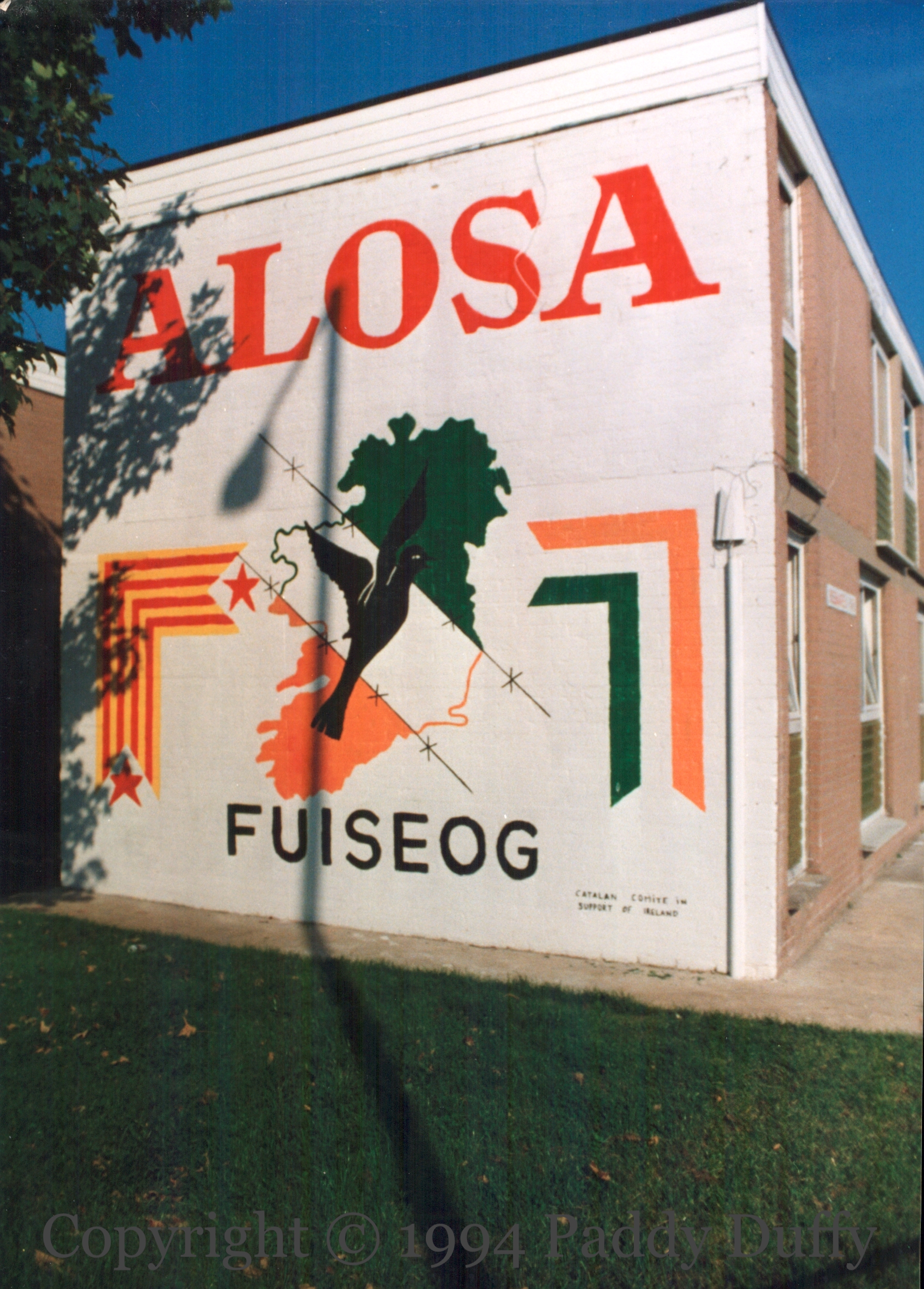
“Lark” in Catalan is “alosa” and in Irish “fuıseog”. This appears to be the earliest Catalan mural in the extant collections and it appears from the sponsorship in the lower corner – “Catalan comite [committee] in support of Ireland” – to be an expression of Catalonian solidarity with Ireland, rather than the other way around.
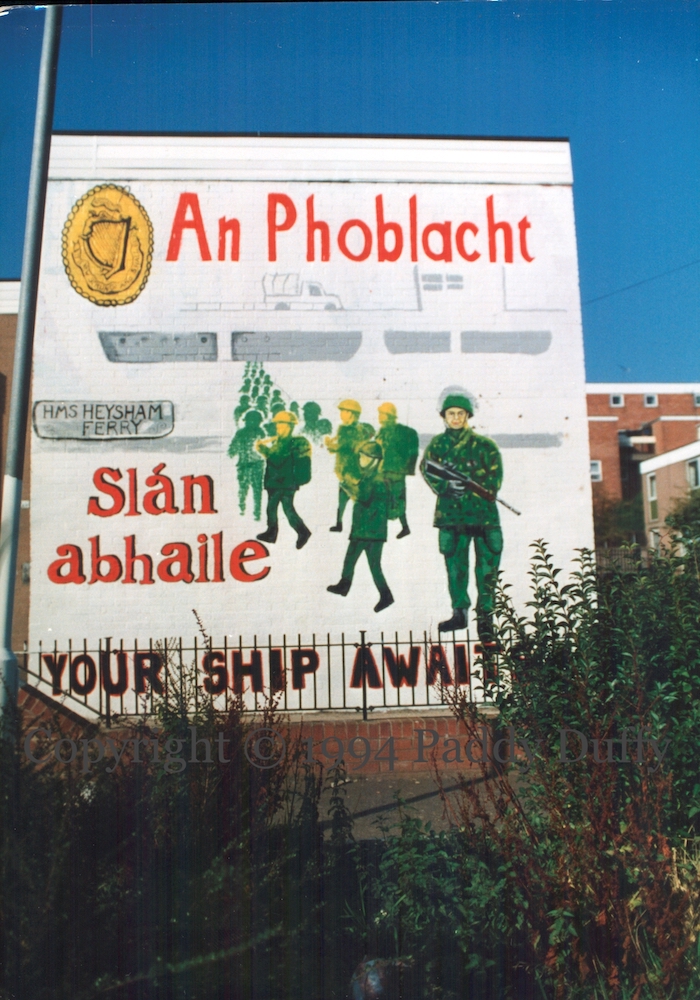
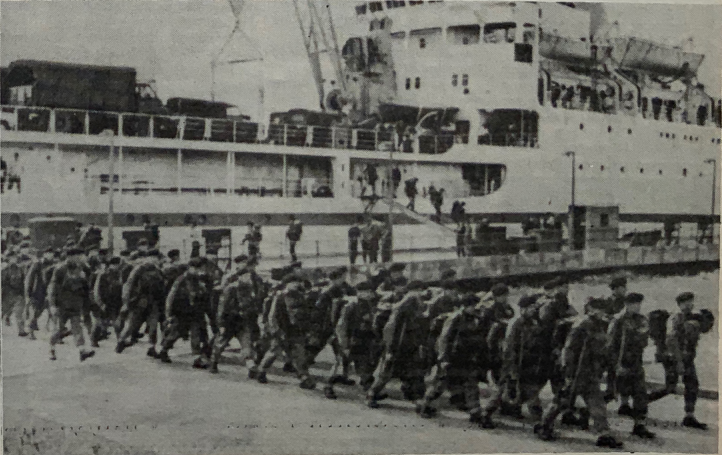
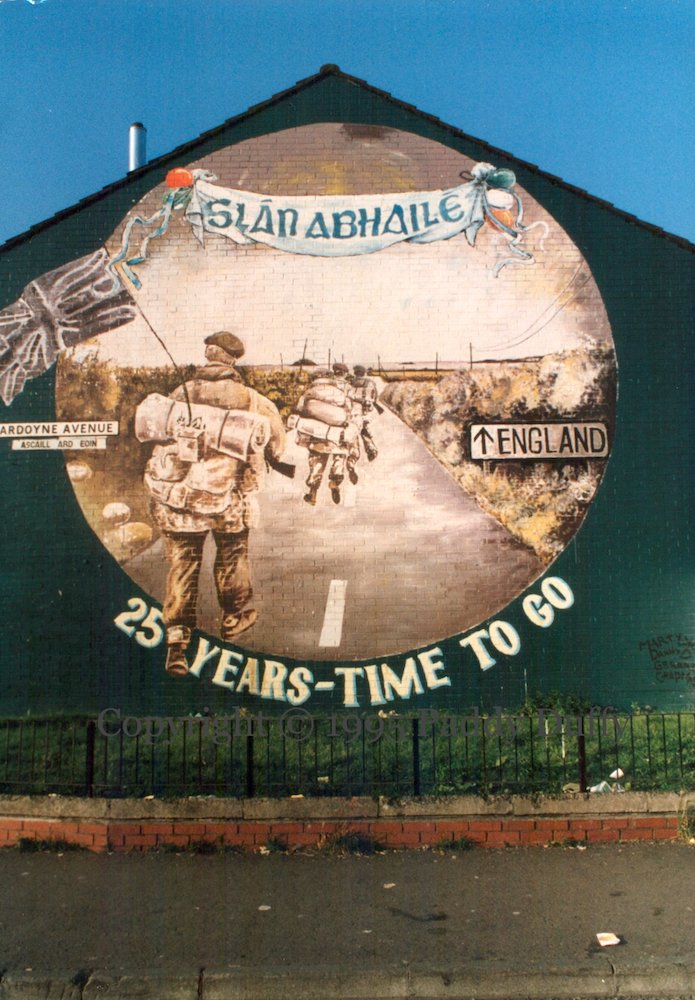
This mural calling for British troops to leave uses the same slogan as in other murals — “Slán abhaıle” — but different imagery, of soldiers boarding the Belfast-Heysham (Lancashire, England) ferry.
This is possibly a cover of An Phoblacht but no source has yet come to light. The image below appeared in the edition of August 11th.
At the front of Rossnareen, Shaw’s Road, west Belfast
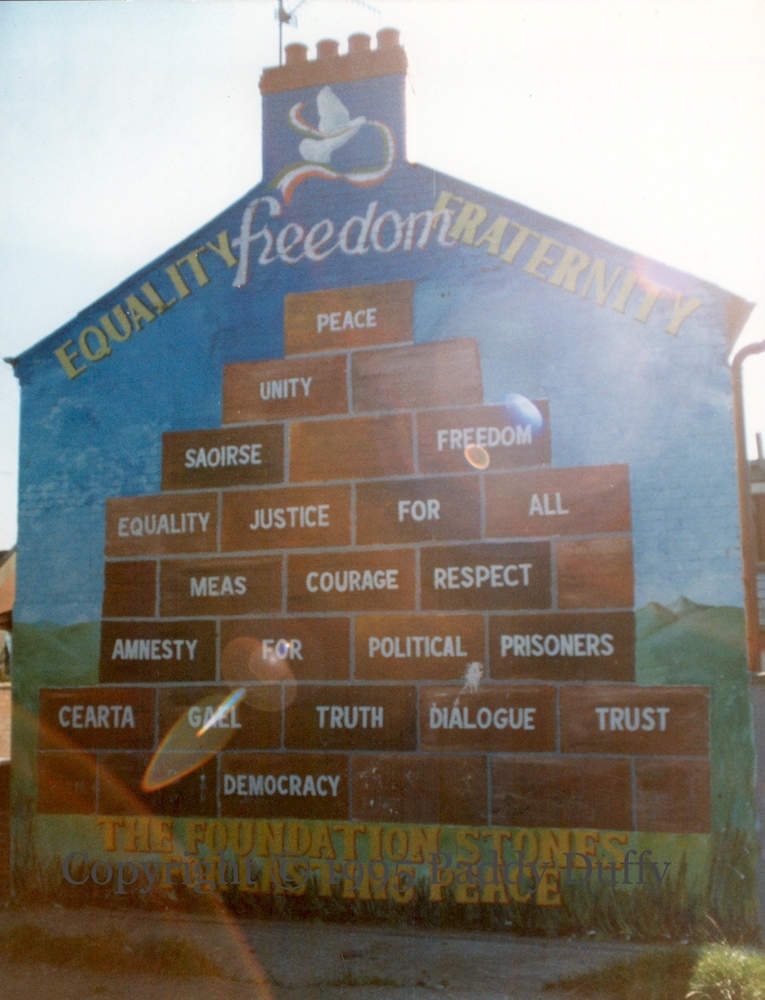
“Equality, freedom, fraternity – peace, unity, saoırse, freedom, equality, justice for all, meas, courage, respect, amnesty for political prisoners, cearta Gael, truth, dialogue, trust, democracy – the foundation stones for lasting peace.”
Amnesty for political prisoners and Irish-language rights are the concrete goals among many vague concepts being sought in the peace process – represented by the dove carrying a tricoloured ribbon on the chimney. Fág Ár Sraıdeanna adds collusion, RUC disbandment, and ending the Unionist veto.
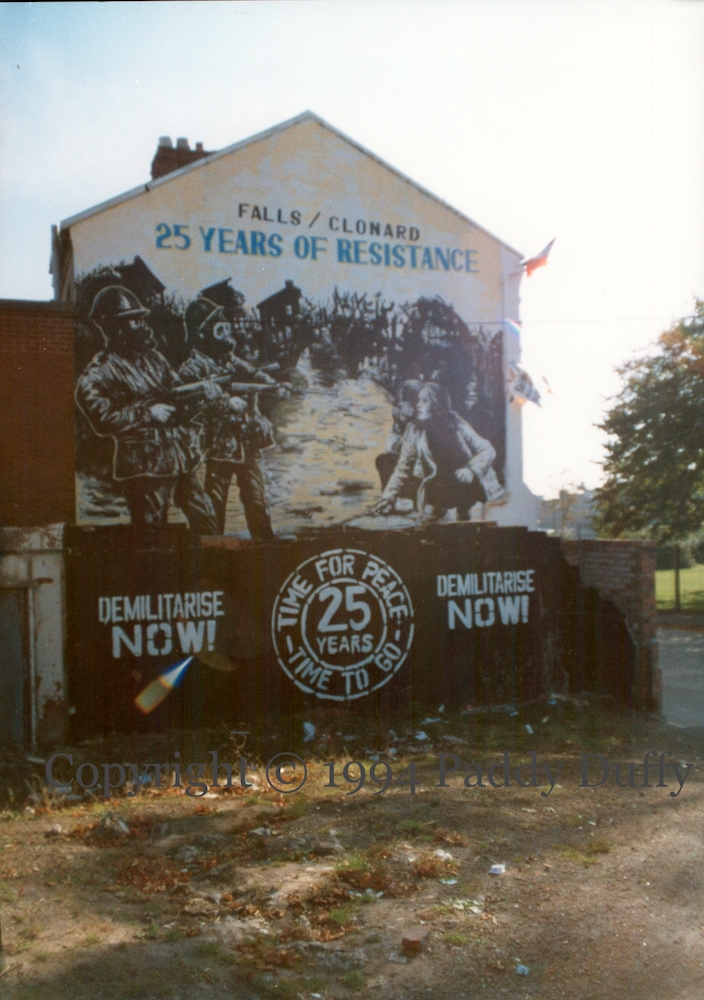
“Falls/Clonard 25 years of resistance”. The mural combines an image of British troops deployed to Belfast in 1969 (similar to this Stan Meagher photo) with Stephen Bradley’s photo of women banging bin-lids on the ground to alert the community to the presence of soldiers, against a background of burnt-out buildings (reminiscent of Bombay Street).
The writing on the lower wall – “25 years – time for peace, time to go. Demilitarise now!” – was produced by a stencil – see the Peter Moloney Collection for in-progress images.
British soldiers trooping back towards London, being painted on the back of Free Derry Corner, on Lecky Road, Derry. The piece is by Robert Ballagh, taking a famous photograph of British forces in the Falklands marching (“yomping”) towards Port Stanley and placing it in a circle (to suggest a closing eye, perhaps) below tricoloured party balloons.

 Paddy Duffy Collection