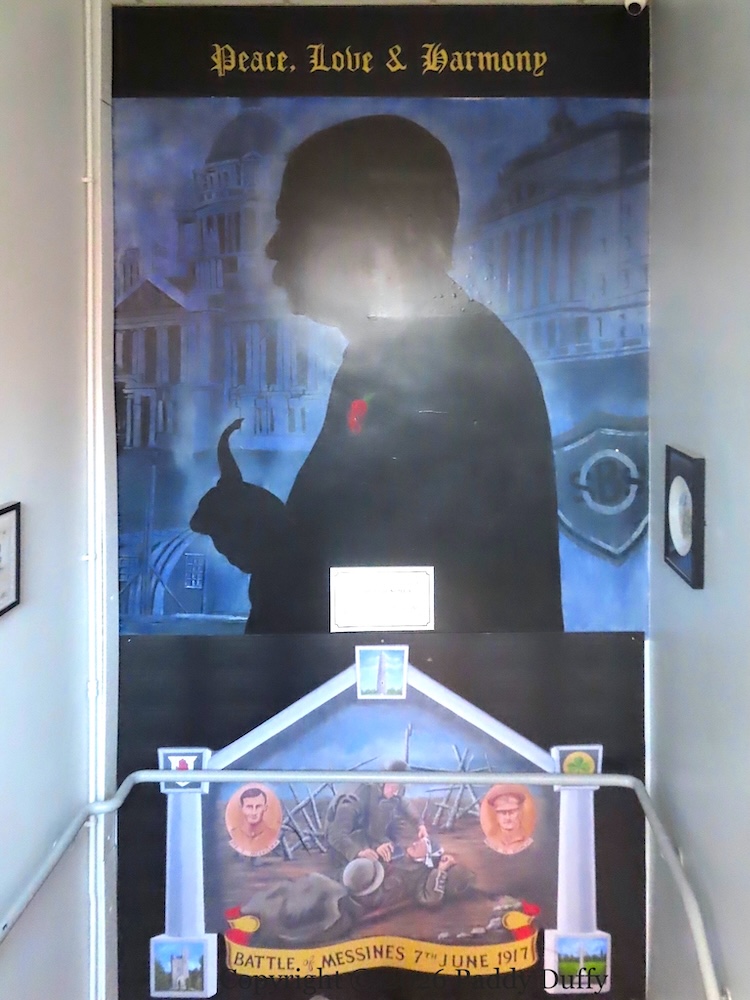
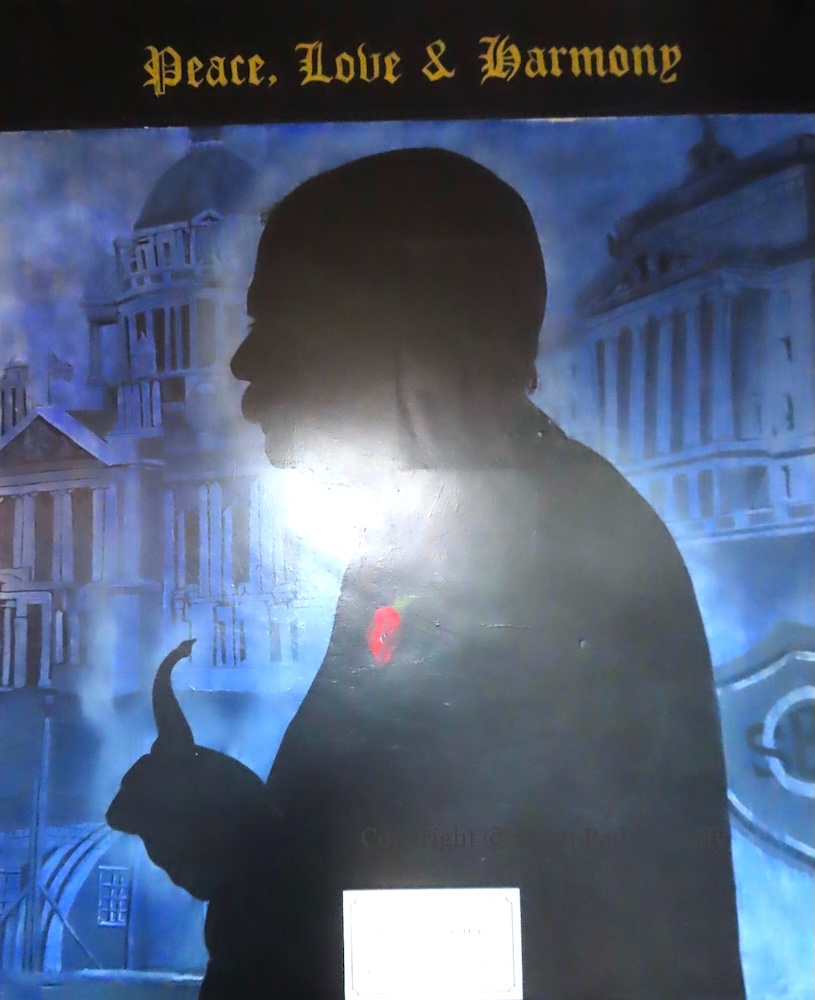
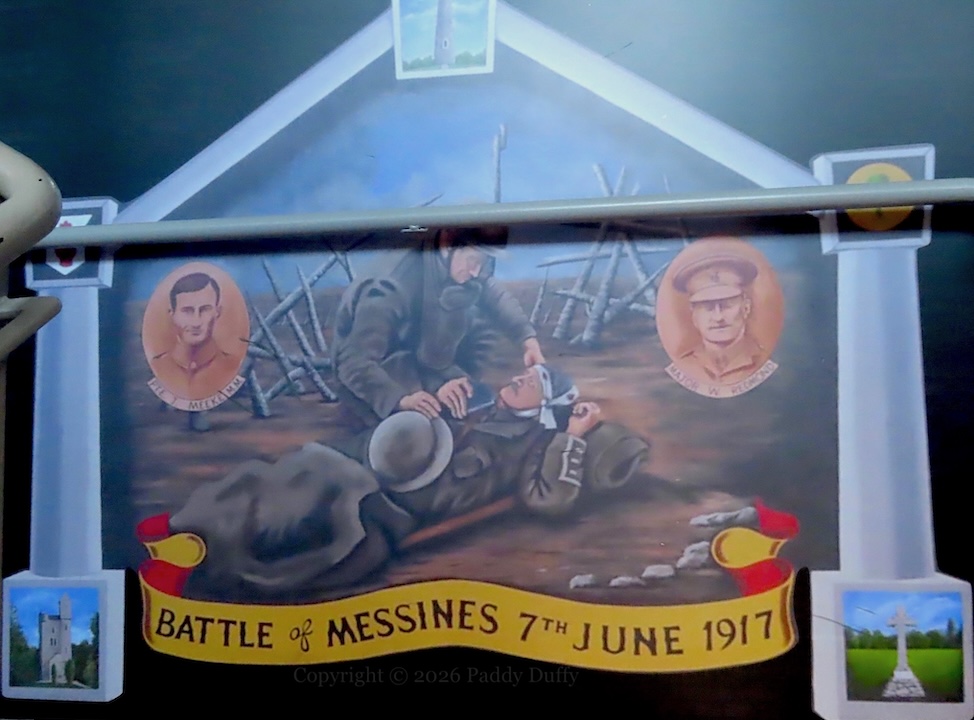
This is a pair of small paintings at the Raven Social club in east Belfast. Above, a silhouette of David Ervine – see An Architect Of Peace. A lounge in the club is named after Ervine. And below, a small version of a mural in Londonderry, depicting the interaction between John Meeke of the 36th (Ulster) Division and Willie Redmond of the 16th (Irish) Division on Messines Ridge in 1917 – see Comrades In Arms. 1st Raven Somme Association holds an annual Battle Of Messines Parade (Raven Fb).
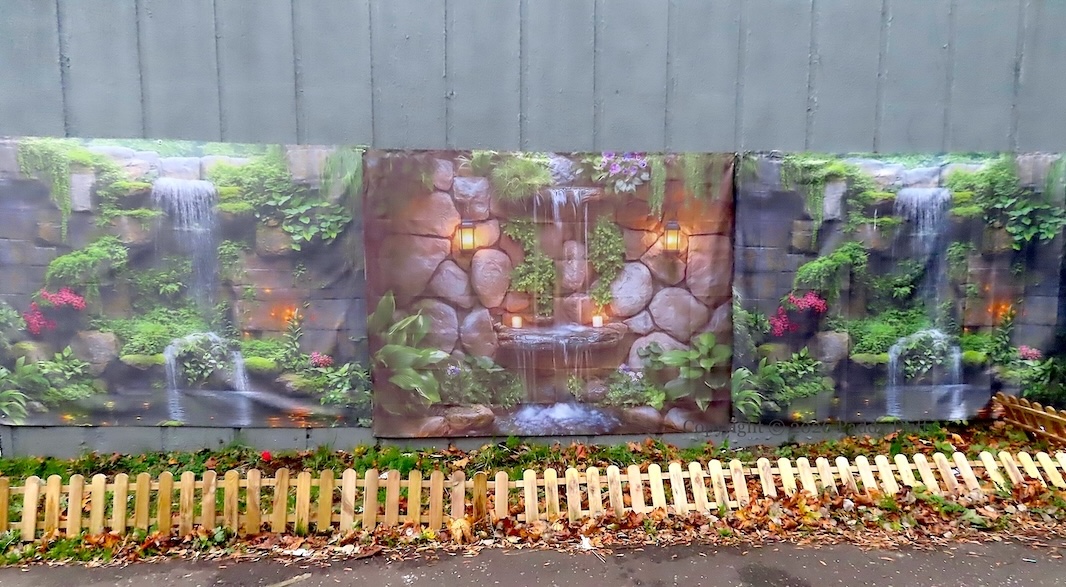
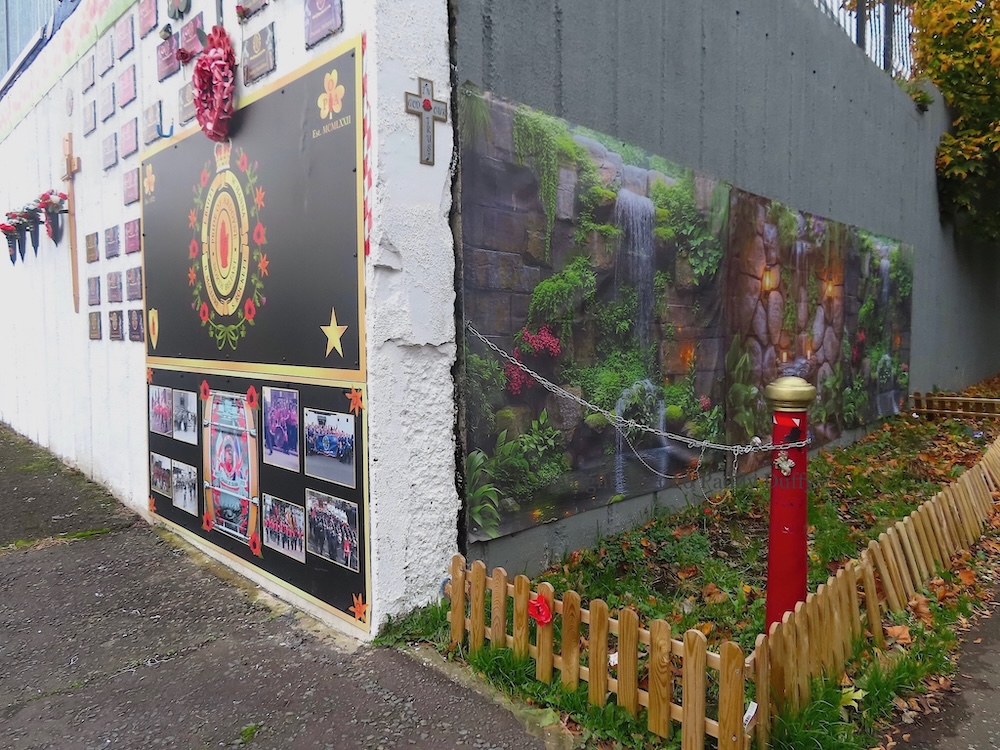
This entry updates 2024’s Pride Of Ardoyne, which described the boards added to the long-standing Billy Hanna plaque. Around the corner three images of water-features and candles have been added, behind a small wooden picket fence.
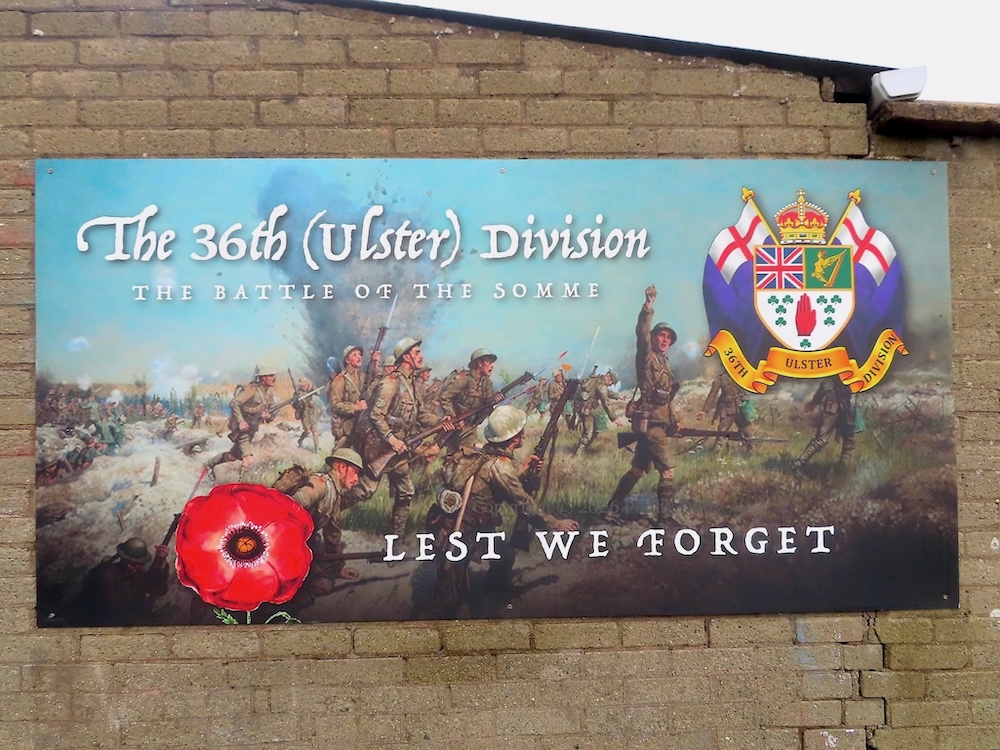
1,000 copies of J.P. Beadle’s painting “Battle Of The Somme: Attack Of The Ulster Division” were produced in 1917 in order to raise funds for wounded soldiers and POWs of the First World War. It has been further reproduced in boards and paintings since the re-imaging wave in the mid 2000s (see Visual History 10 | some early instances: 2007 in Londonderry | 2008 in Belfast), including this one in Cookstown. The original painting hangs in Belfast City Hall. (Irish Untold)
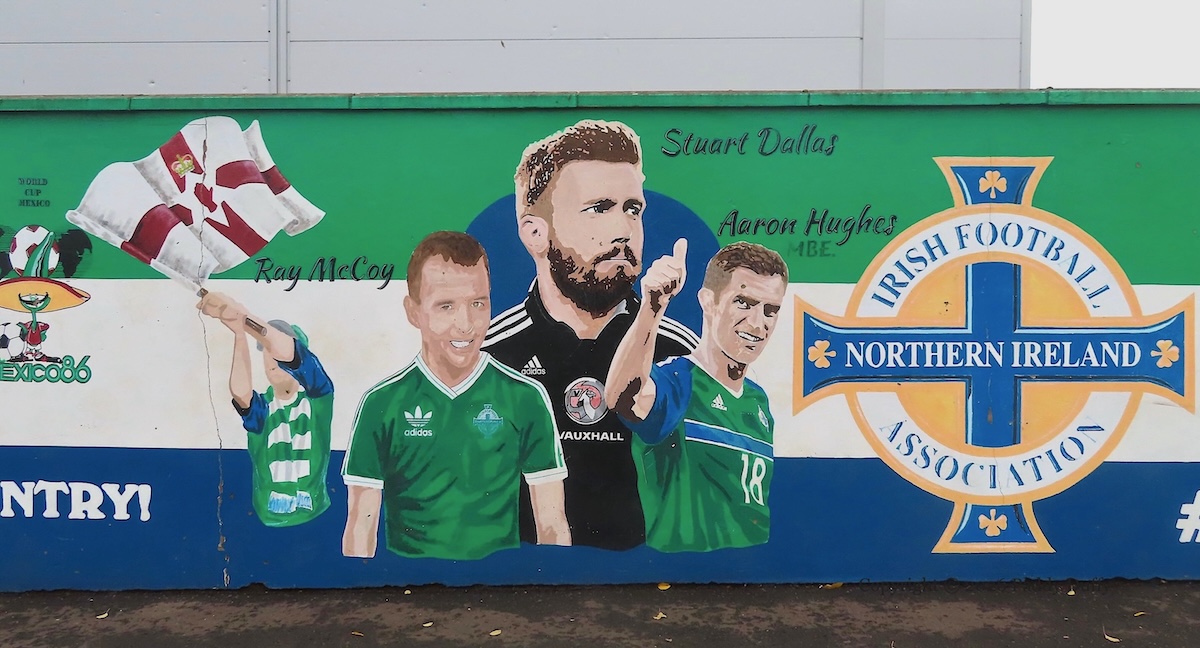
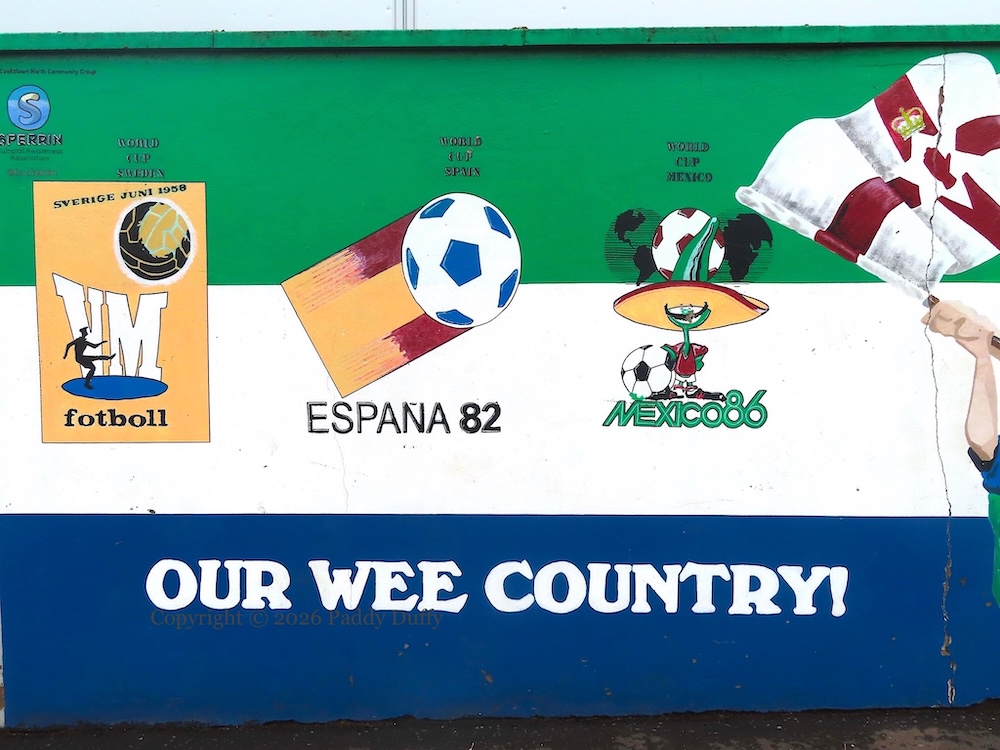
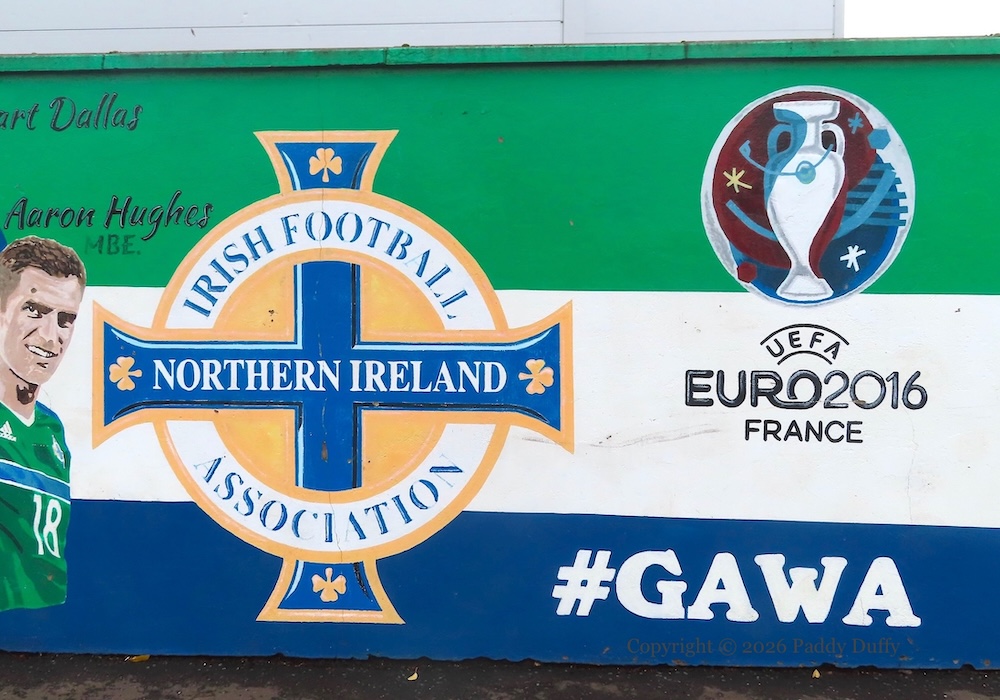
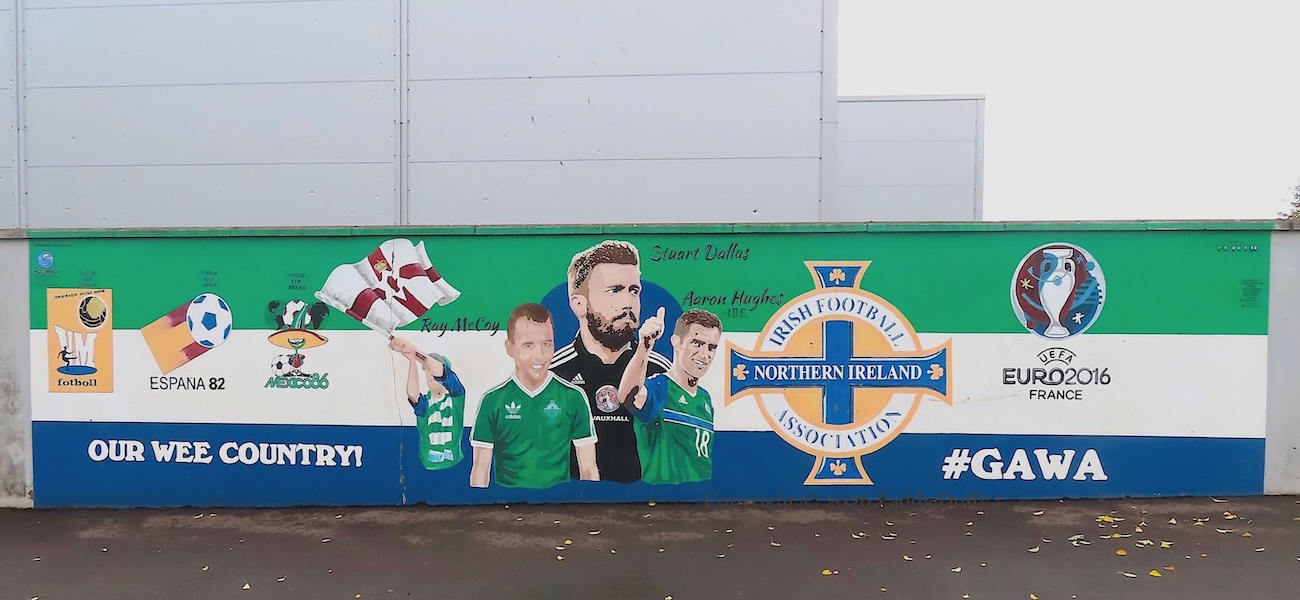
This celebration of the Northern Ireland soccer team is in Cookstown. On the left are the emblem of three world cups. Prior to its twice-in-a-row appearances at the World Cups in Spain (1982) and Mexico (1986), Northern Ireland’s only other appearance was in Sweden (1958), where it reached the quarter-finals.
The three players in the centre – Ray McCoy, Stuart Dallas, and Aaron Hughes – are all Cookstown locals. McCoy made one appearance for the NI team, Dallas 62, and Hughes 112.
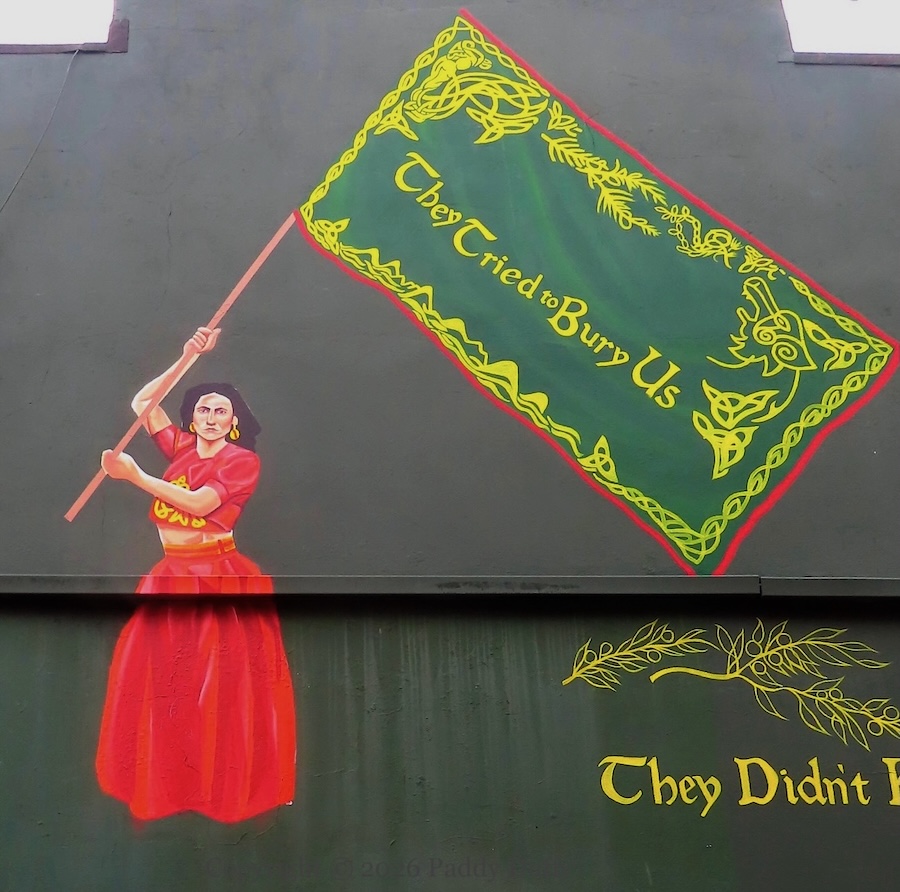
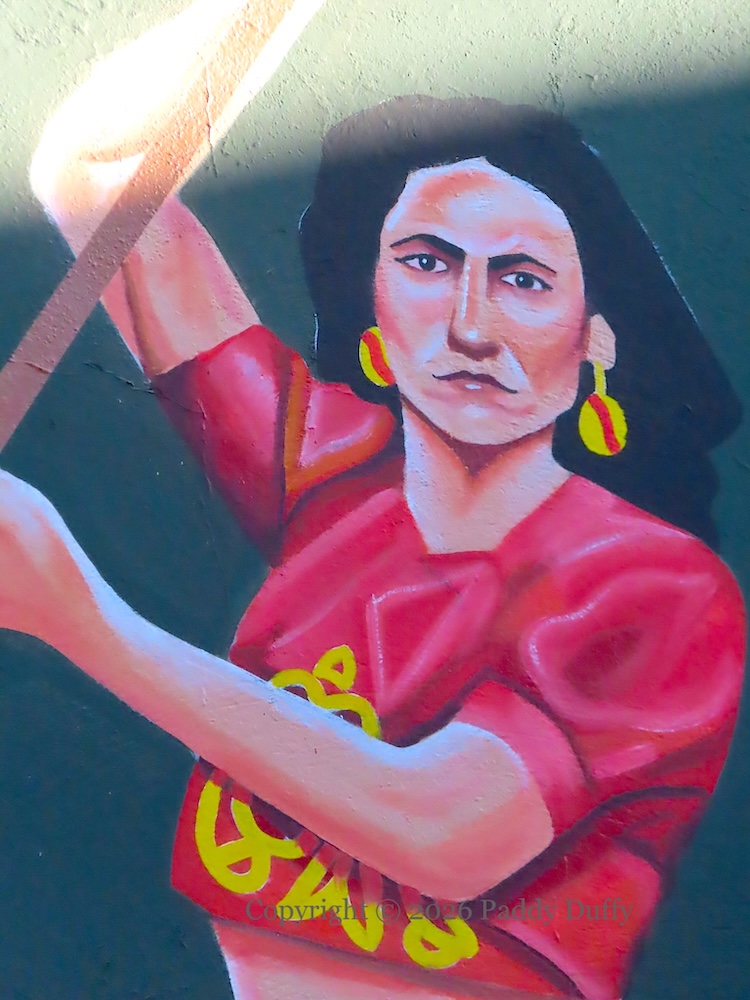
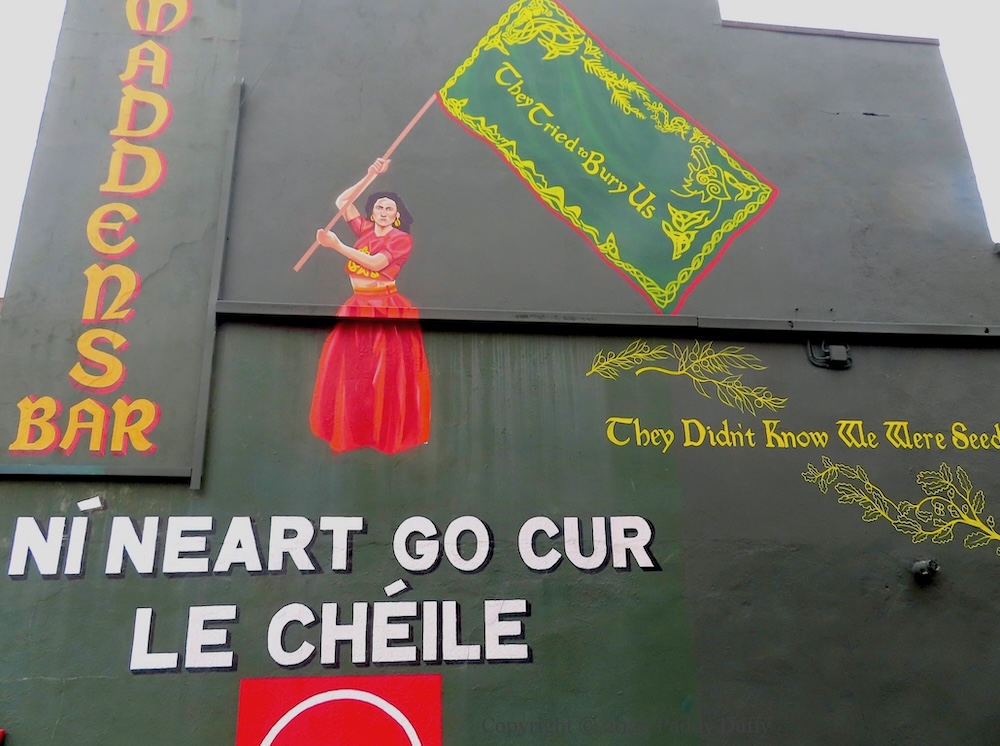
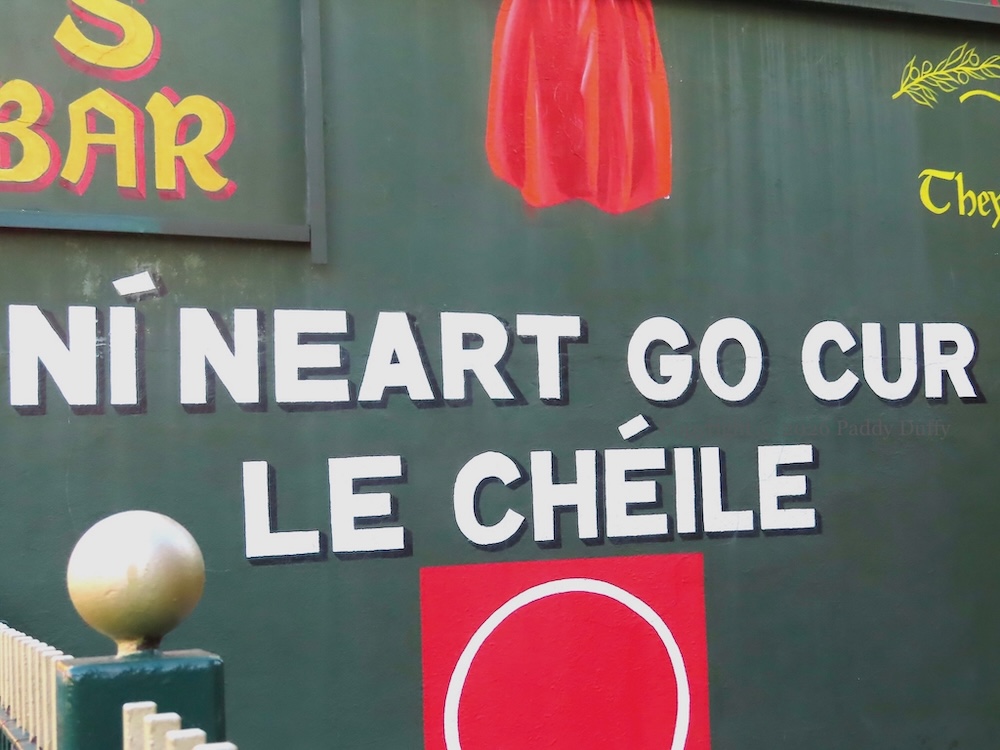
“There is no strength without coming together.” Cork singer and fiddler Clare Sands (web) will be in An Chultúrlann in Derry tonight (October 16th) and at the Empire in Belfast on Sunday night (18th) promoting her new album “They Tried To Bury Us” (Bandcamp).
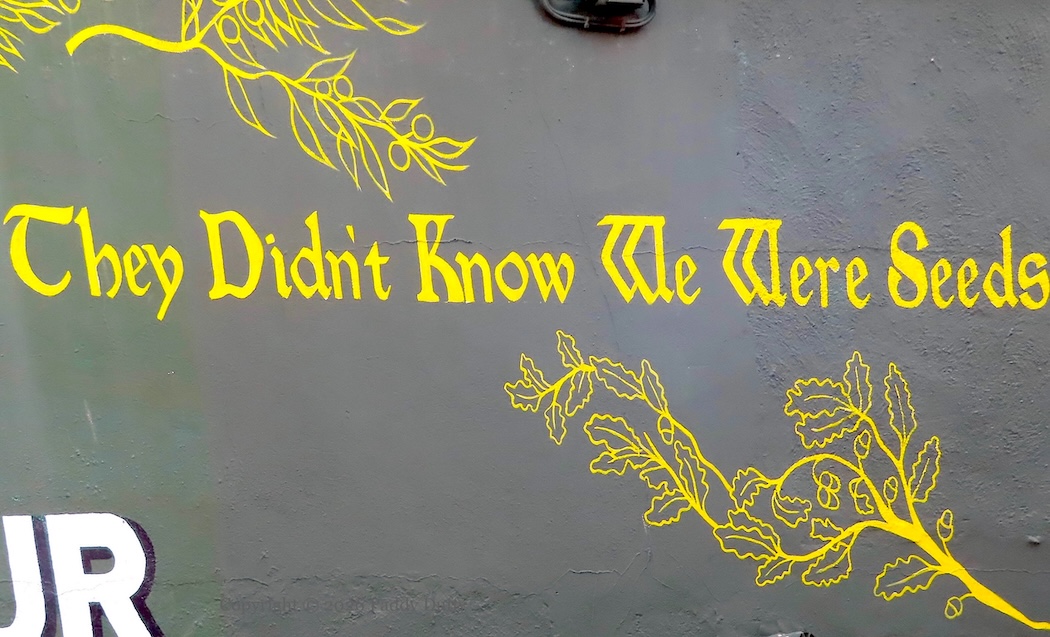
The phrase “they tried to bury us; the didn’t know we were seeds” was briefly used in a Crossmaglen mural where it was attributed to Bobby Sands, but probably goes back to Nicaraguan poet Ernesto Cardenal in 1961.
This new mural is on the back of Madden’s bar, in Berry Street, Belfast city centre
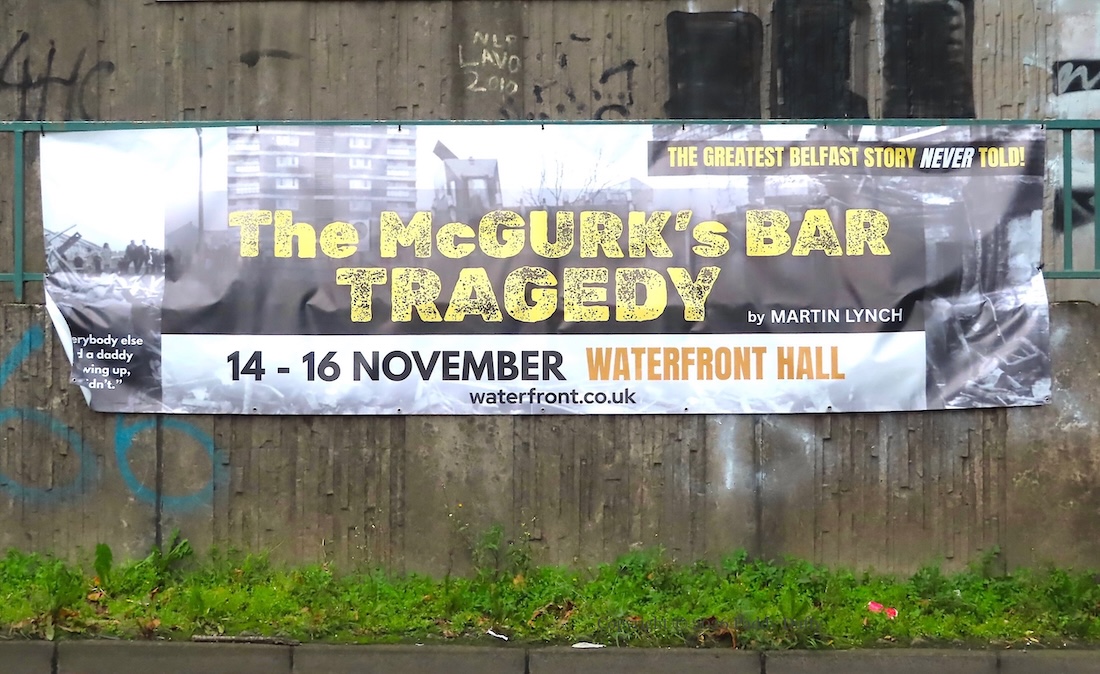
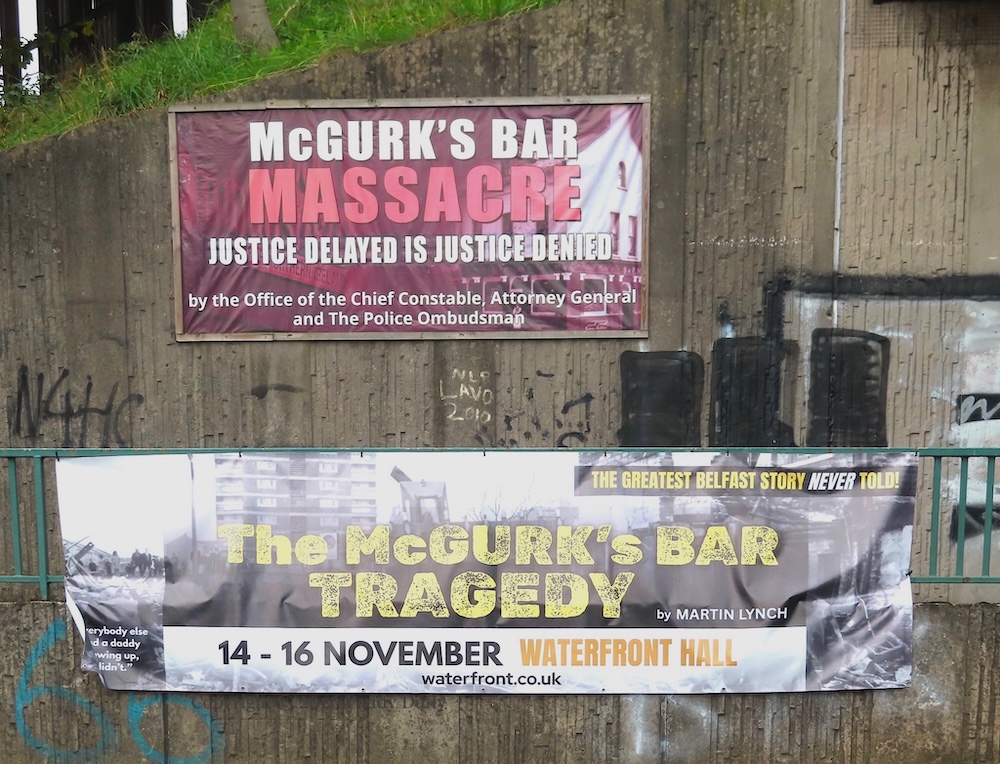
‘The greatest Belfast story never told!” ‘The McGurk’s Bar Tragedy’ is a new play by Martin Lynch (WP), being put on in the Waterfront in November by his production company Green Shoots, which is dedicated to telling working-class stories and involving actors from the community, including The Man Who Swallowed A Dictionary.
On the left of the banner, the quotation, “Everybody else had a daddy growing up; I didn’t.” is a paraphrase of Mary Kane, whose father Eddie died in the attack.
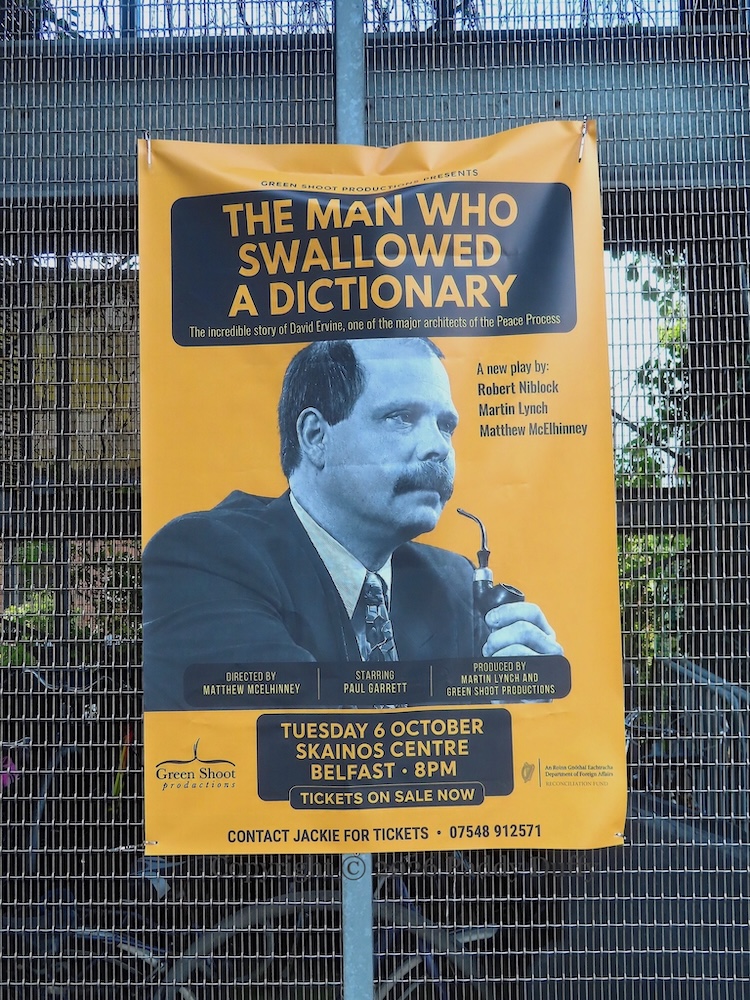
The one-man play about the life and evolution of David Ervine – from UVF volunteer and prisoner to PUP representative and ceasefire negotiator – returns for a short tour starting this evening, September 29th, at the Roddy’s in west Belfast. Dates for other locations can be found on the Fb page of Green Shoots productions. The play was performed at the Lyric in 2023 and 2024 and toured in 2025 (Green Shoots web page).
This poster is at the Skainos Centre in Ervine’s home area of east Belfast, which will host the production on October 6th.
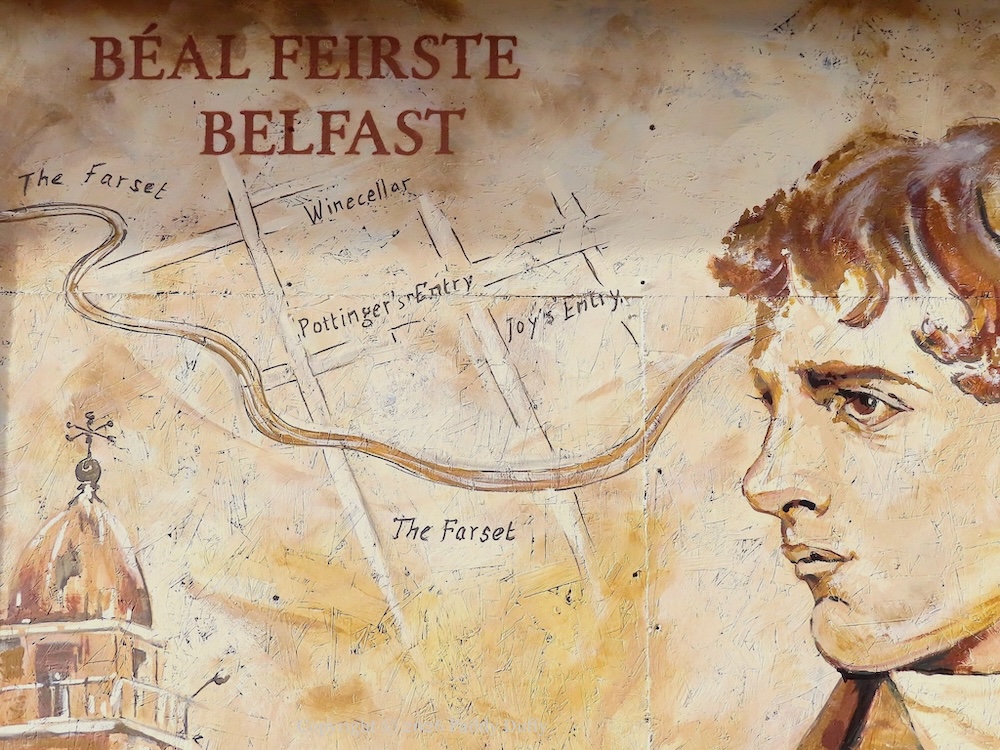
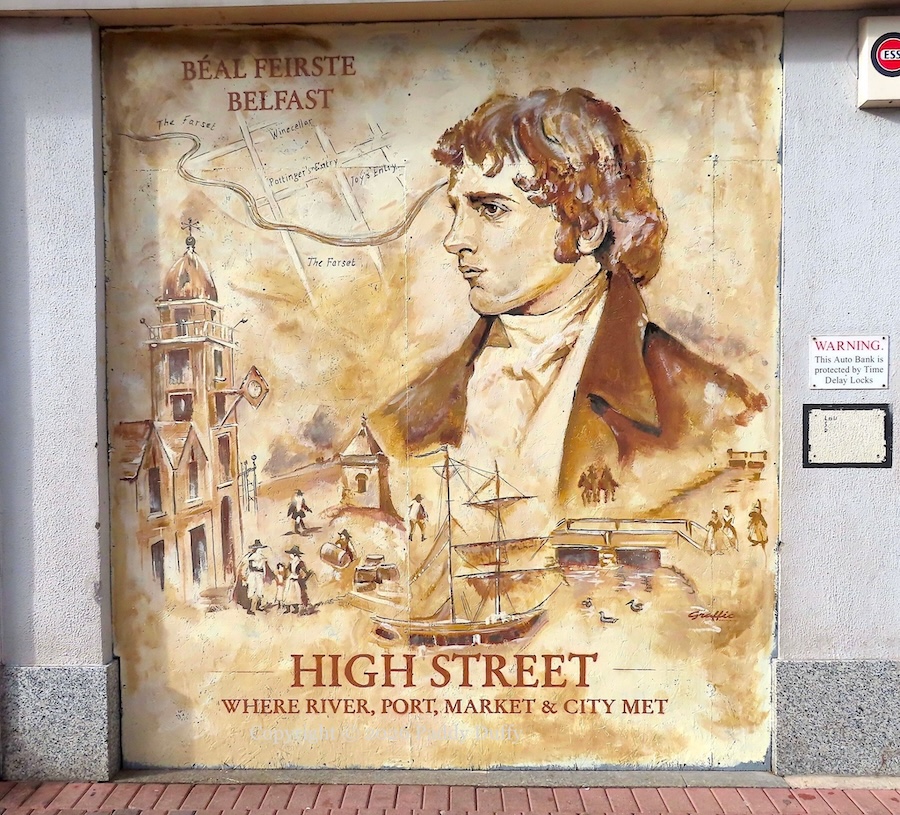
The Farset runs from the Horseshoe Bend above Ballysillan/Ligoniel south across the Shankill before turning east towards the city centre at what is now the western end of the west Belfast war wall (“peace line”) at junction of Lanark Way and Cupar Way (Visual History), before emptying into the Lagan. In the city centre, it ran along Castle Place and High Street, but, because it was used as a sewer, it was paved over by 1848 (BBC). It can still be seen (above ground) in Townsend Enterprise Park, former site of the Soho Foundry) and in spots closer to its source.
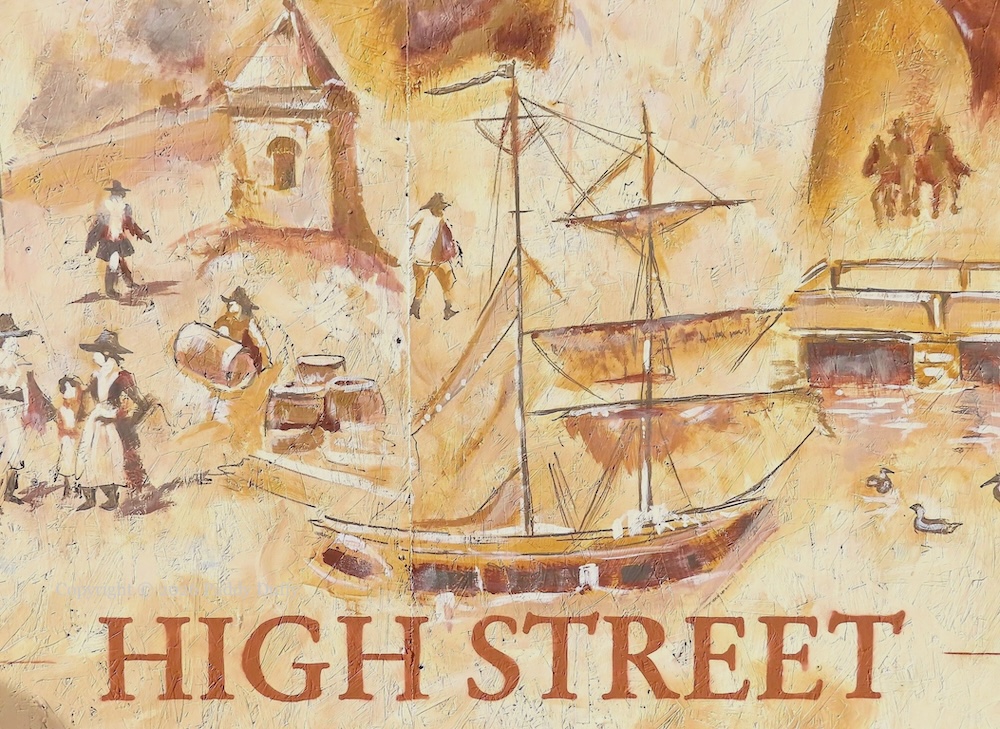
This new piece shows scenes along the Farset just inland from the Lagan shore, showing goods being unloaded along the High Street docks (here is a map (“ground plan”) from 1685 which labels the Farset as “Belfast River”, and a painting by Joseph Carey c. 1820) and the footbridge used to cross the Farset between the Entries (Visual History) at what is now Bridge Street. (There appears to be a mistake in the map: Pottinger’s Entry is east of Joy’s Entry.)
The portrait is of Henry Joy McCracken, leader of the United Irishmen, who was born and executed by the Farset, in High Street. He was born at 39 High Street (WP) and executed in front of the Market House (shown on the left of the painting) (Lord Belmont) at the top of Cornmarket (BBC) (where Dunnes Stores now is, and before it, Woolworths); he was buried in St George’s, at what was at that time the end of the Farset, where Victoria and High streets now meet.
In McCracken’s right oxter is the gatehouse of the old Belfast Castle, the great majority of which McCracken’s portrait supplants – see the original image at Eddie’s Extracts.
Painted by Graffic Belfast (ig) for Belfast One BID (ig) on Culture Night, on a boarded-up (since anchor tenant Bank Of Ireland departed in mid-2020) entrance to the Middleton Building in High Street, across from the site of the old Market.
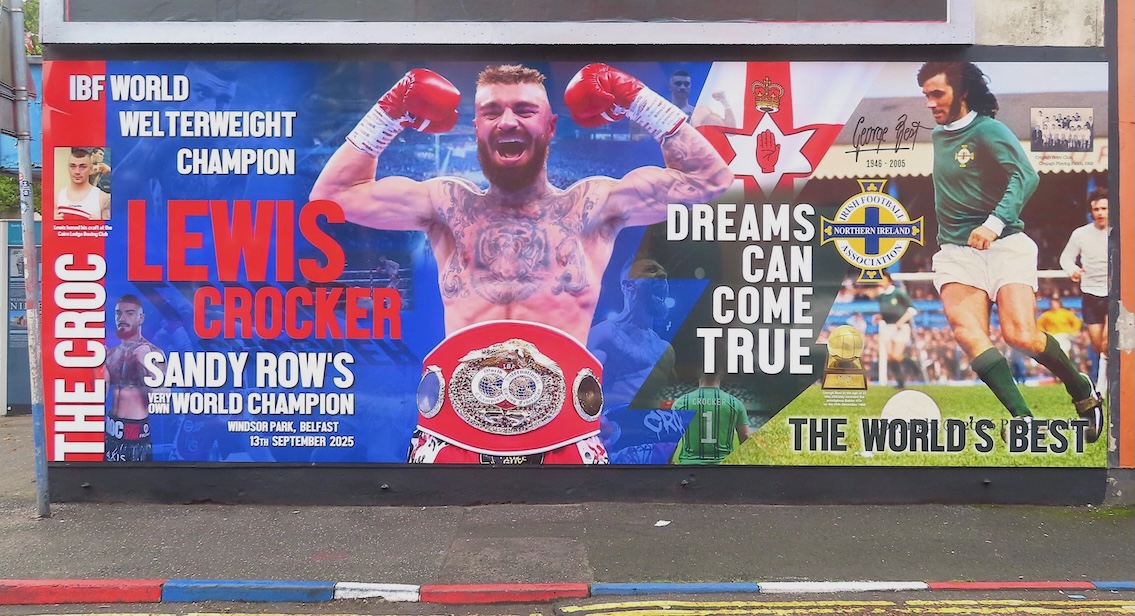
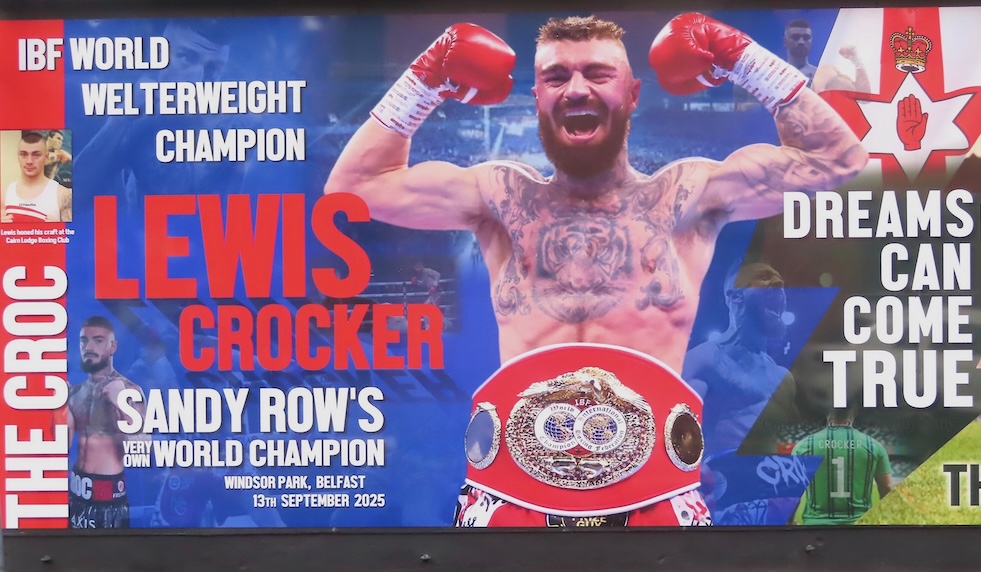
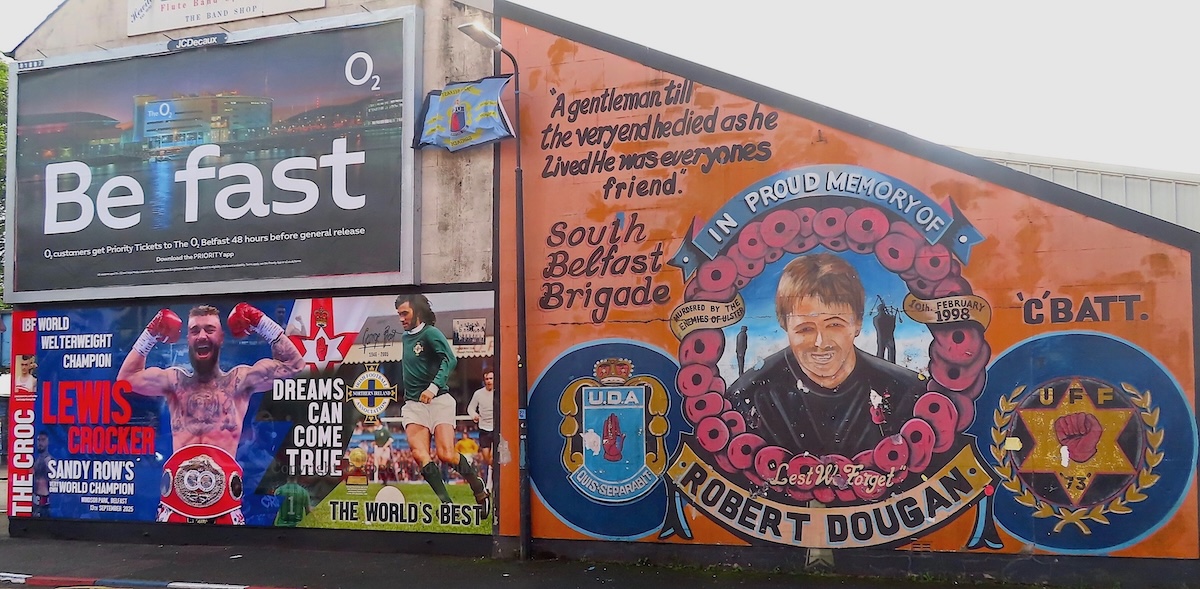
“The world’s best.” A new board has been mounted in Sandy Row to pay tribute to Lewis ‘The Croc’ Crocker, Sandy Row’s very own world champion, who “honed his craft at Cairn Lodge boxing club” on the West Circular and became “IBF world welterweight champion” at “Windsor Park, Belfast, 13th September 2025.” Crocker lost the title in June 2026, to the Australian Liam Paro.
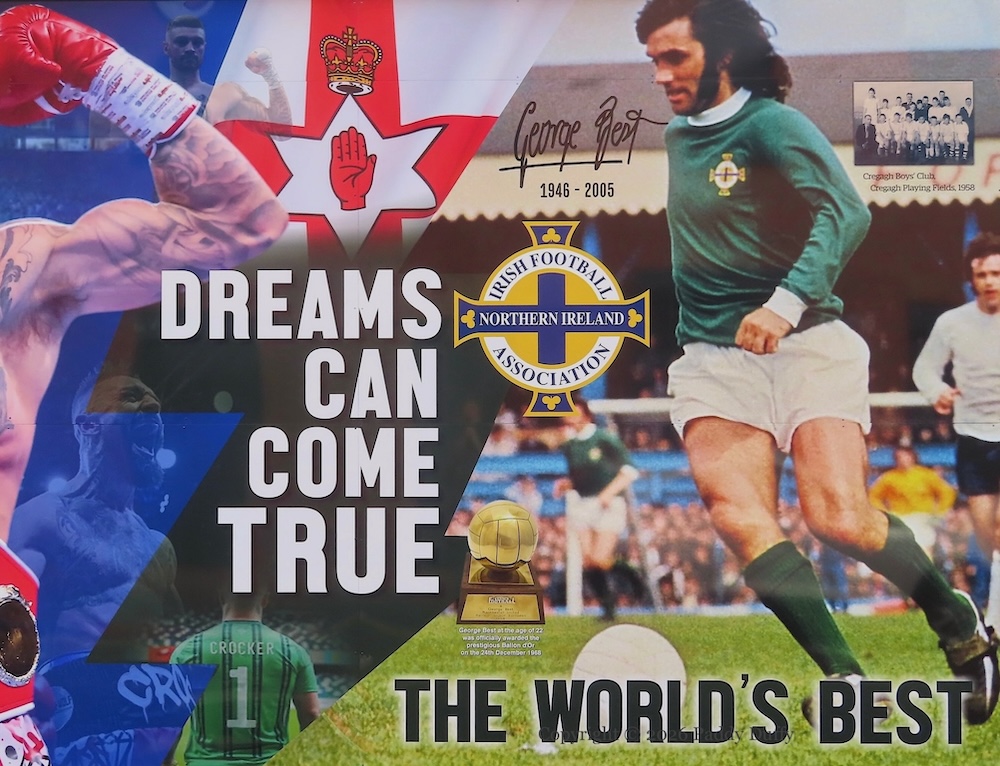
On the right is soccer-player George Best, who grew up in Cregagh and debuted for Manchester United at the age of 17. “George Best at the age of 22 was awarded the prestigious Ballon d’Or on the 24th December 1968.”
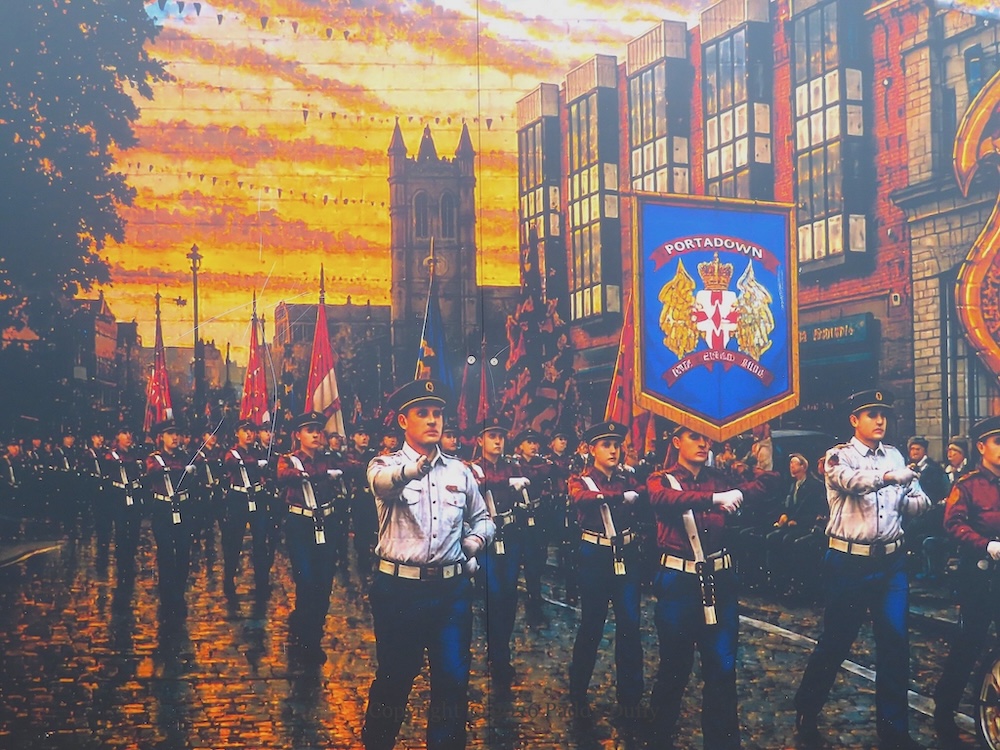
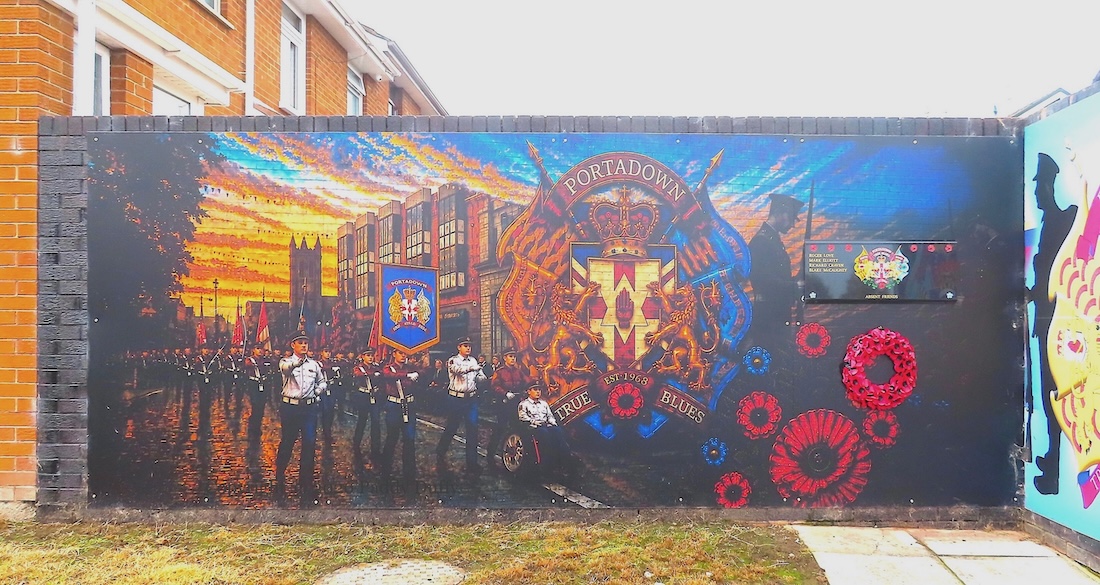
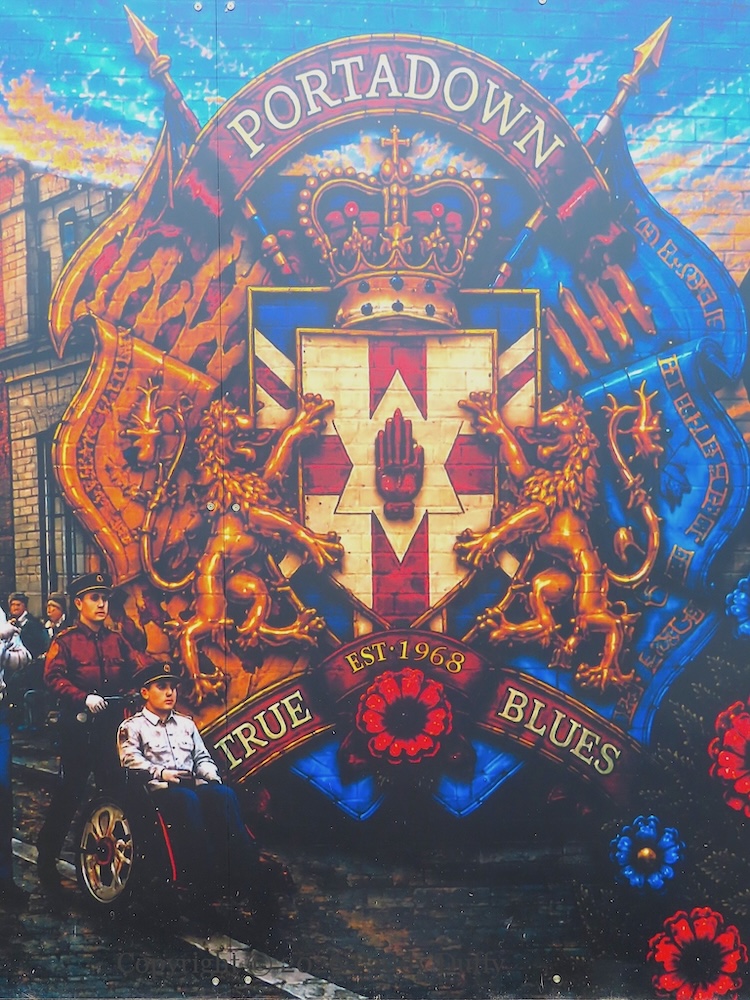
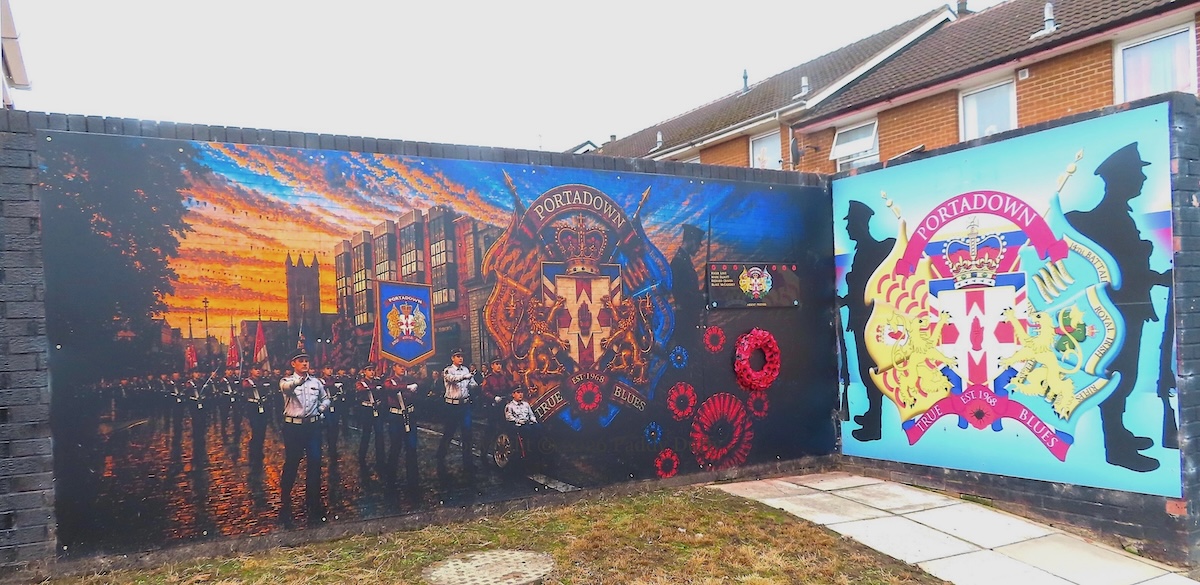
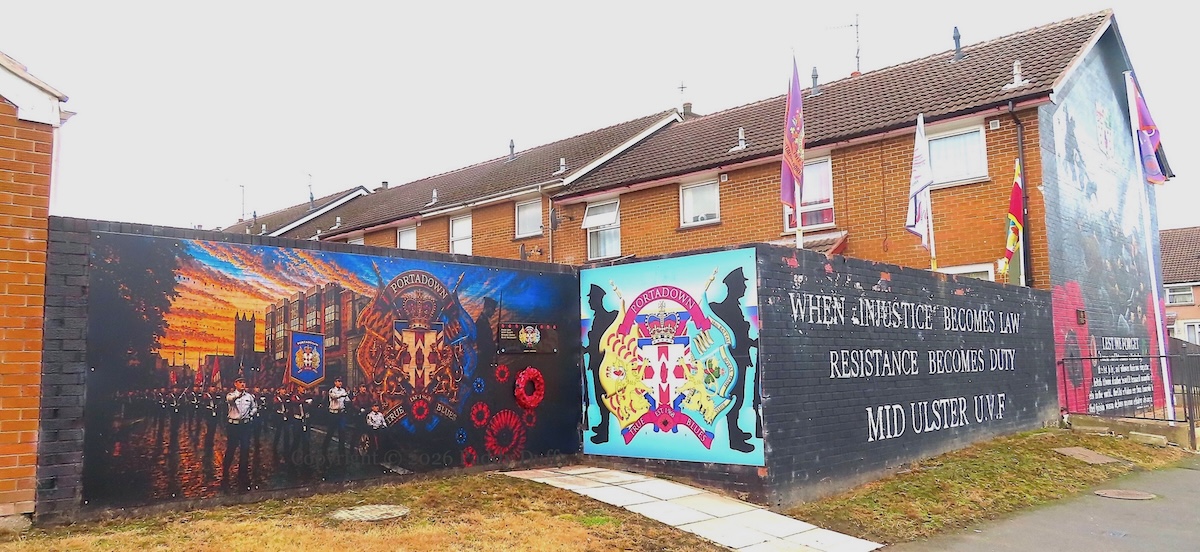
This is a new board featuring the Portadown True Blues flute band (Fb). The white lines around the second flag from the left in the image above are scratches caused to the board within days of its unveiling on June 20th.
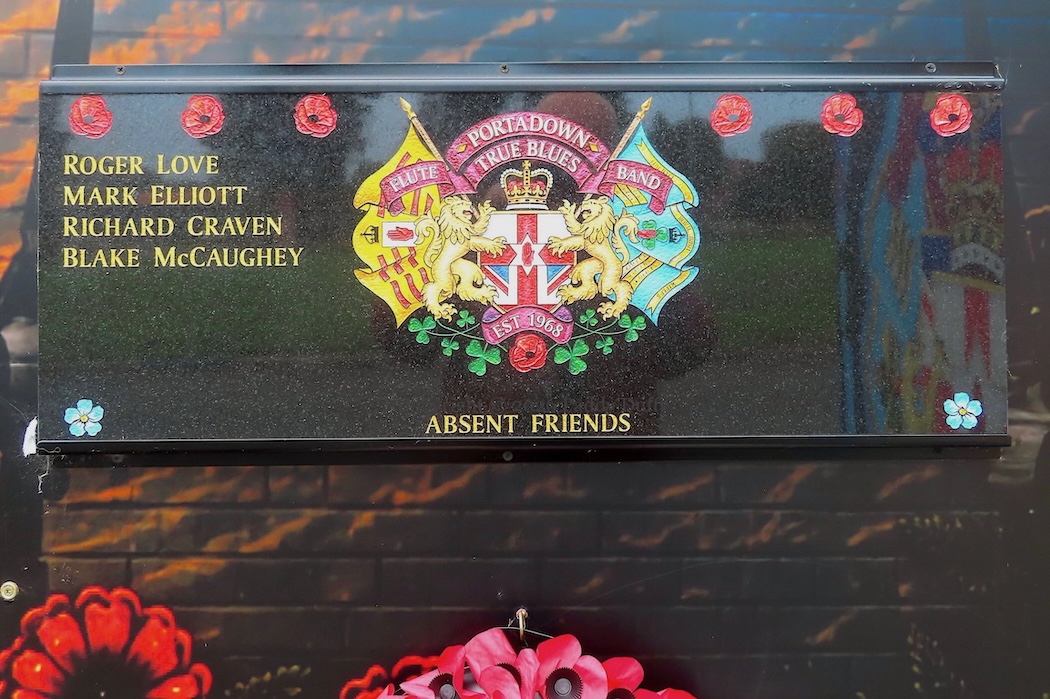
The plaque on the right names “Roger Love, Mark Elliott, Richard Craven, Blake McCaughey”. McCaughey is featured in the board leading the parade in a wheelchair; he suffered from a genetic disorder (BBC) and died in January (2026) at age 18 (NI World).