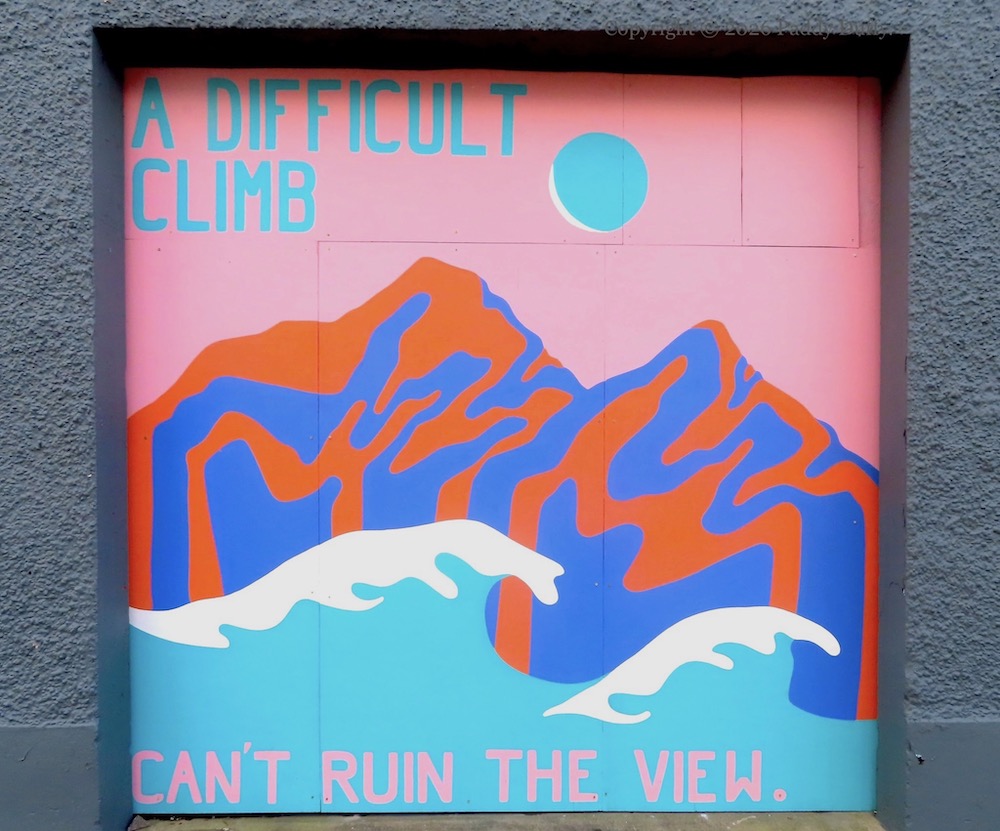
This is one of at least three murals painted by Becky Gilmour (ig) as she skated-boarded the 2,700 kilometres of the Wild Atlantic Way in order to raise mental-health awareness and money for the Samaritans (Donegal Daily).
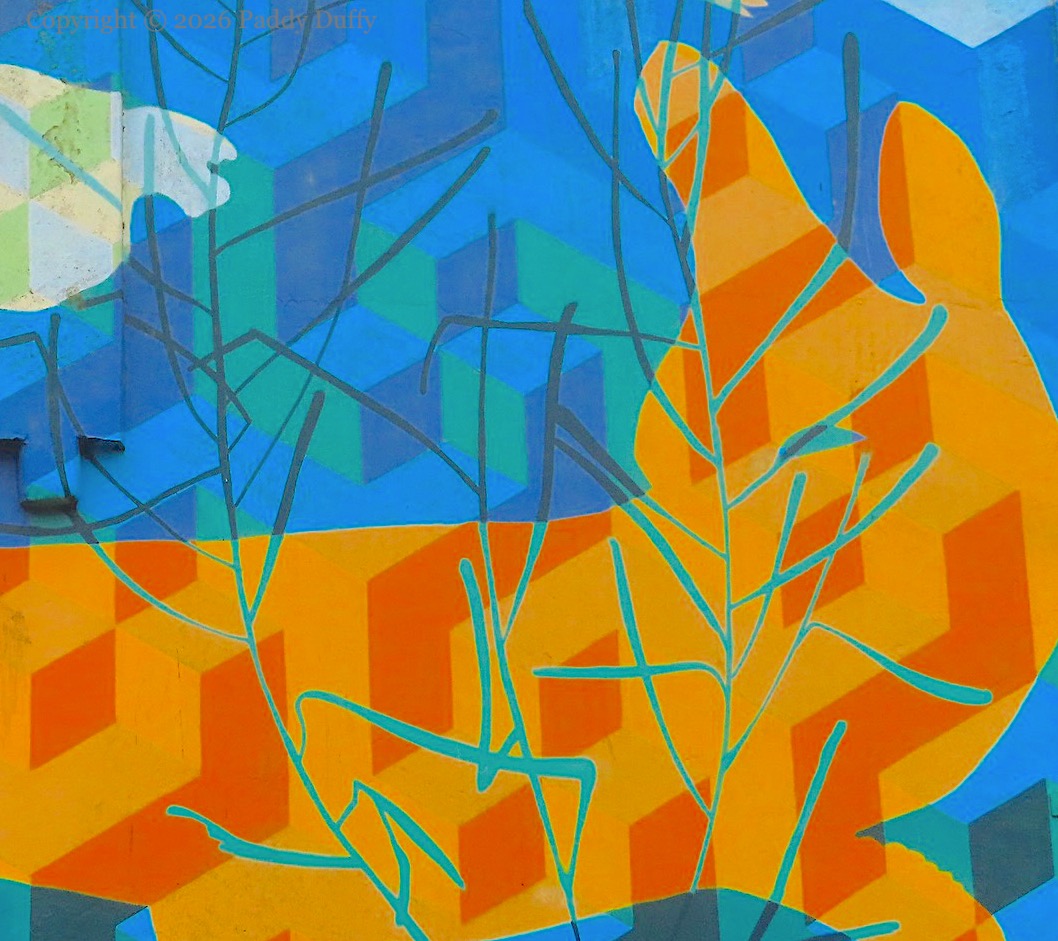
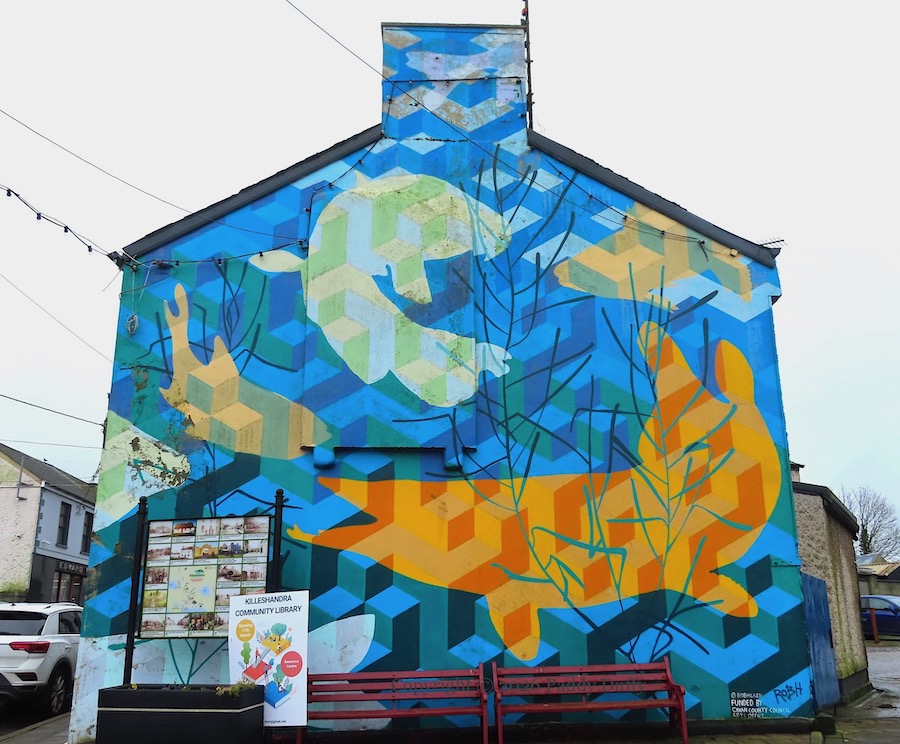
Killeshandra, County Cavan, is located near the Lough Oughter system of lakes, which is home to a wide variety of fish, including the roach, tench, perch, bream, and pike (Island View Cavan pdf) featured in this Rob Hilken (web) piece in the centre of town.
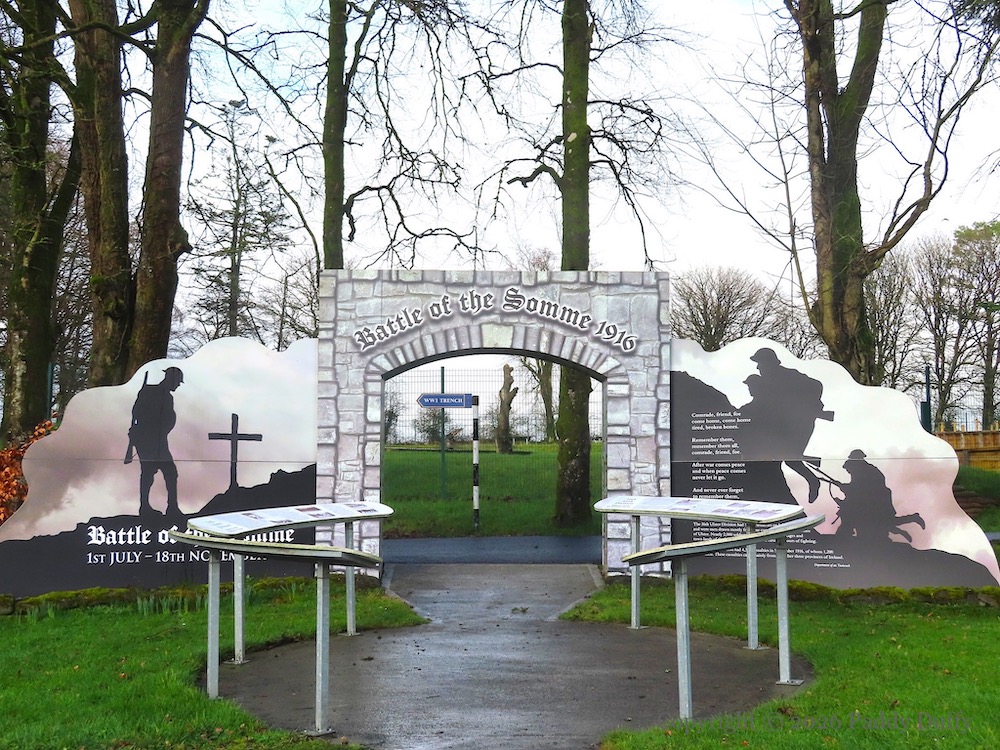
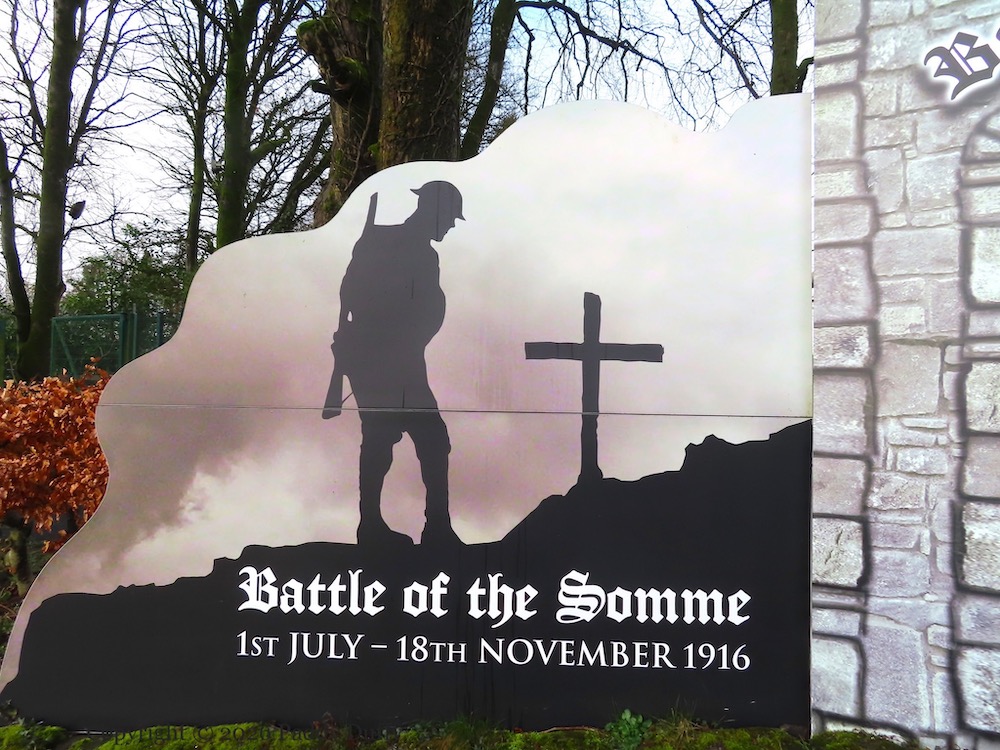
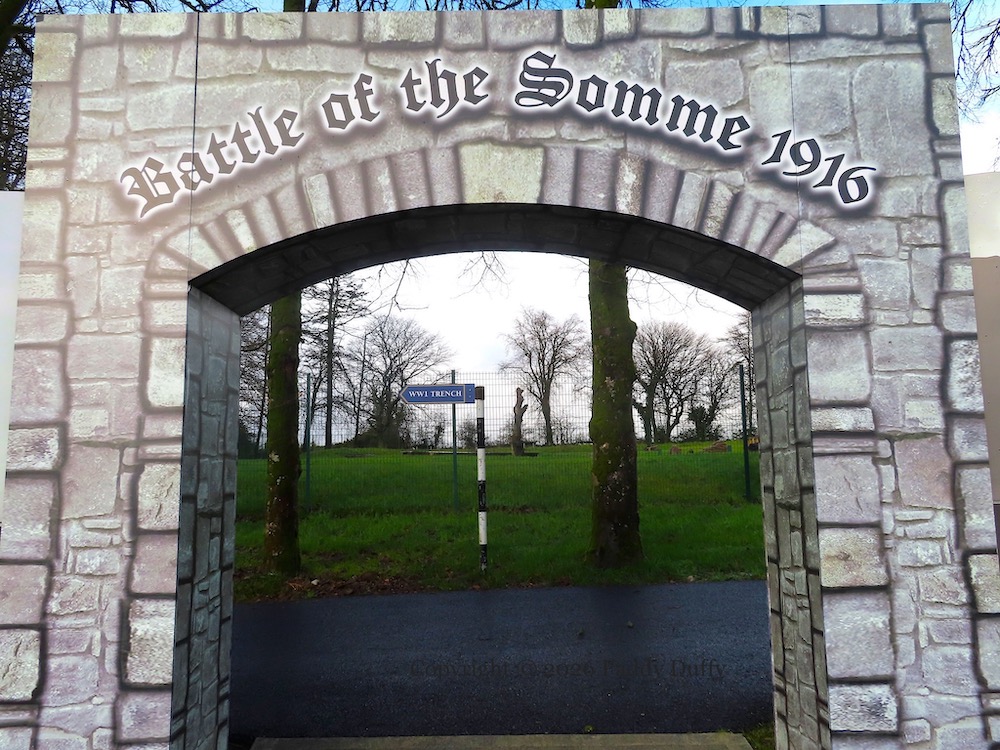
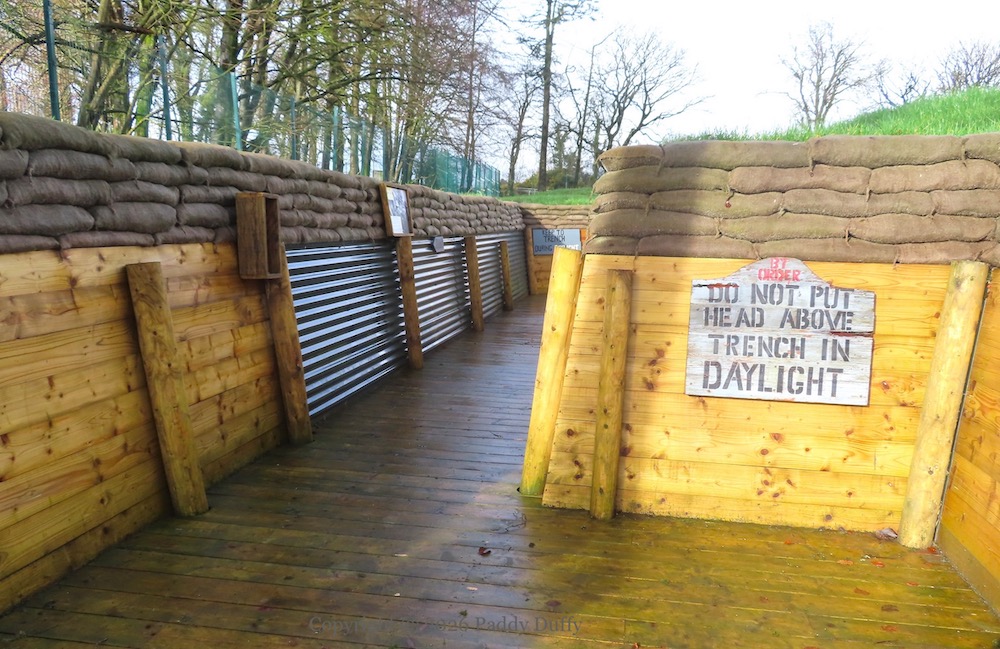
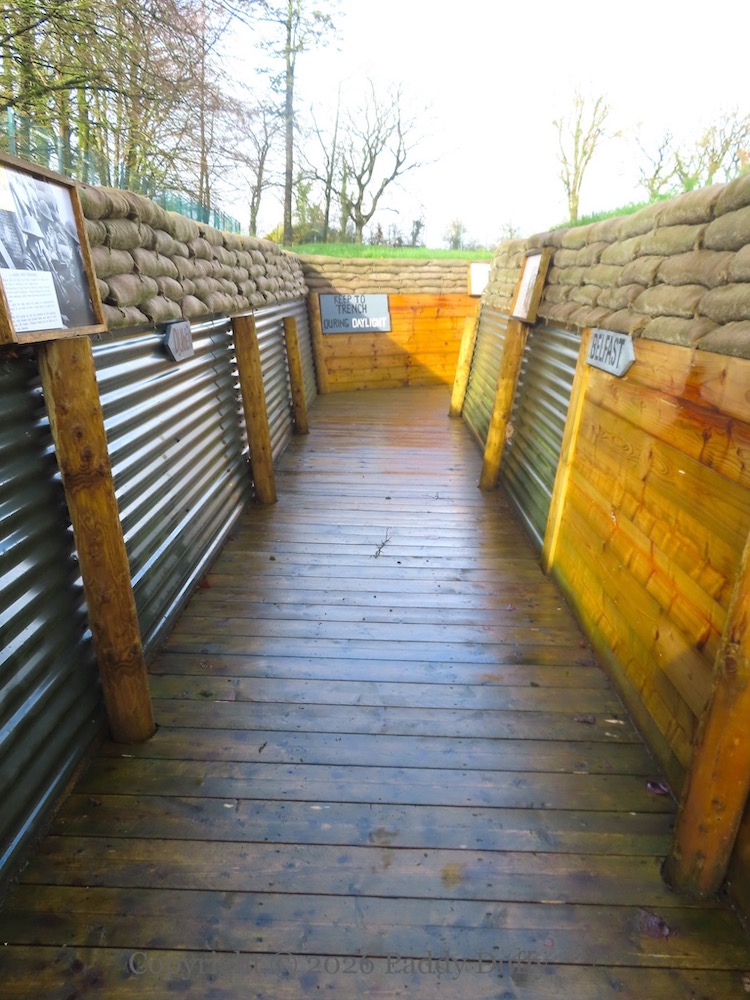
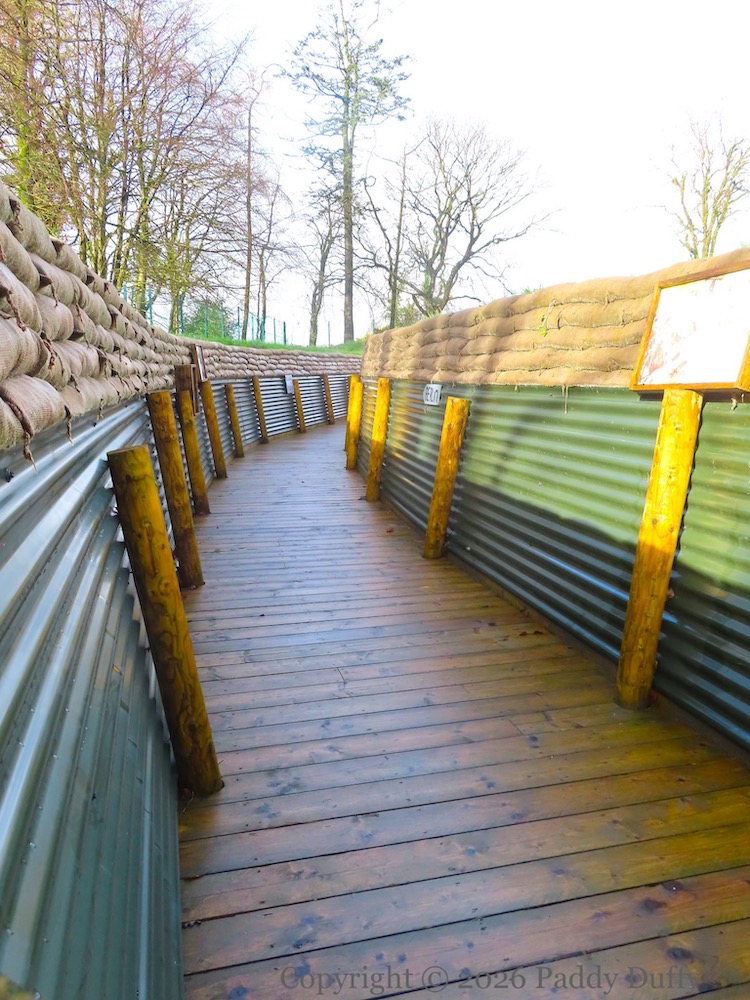
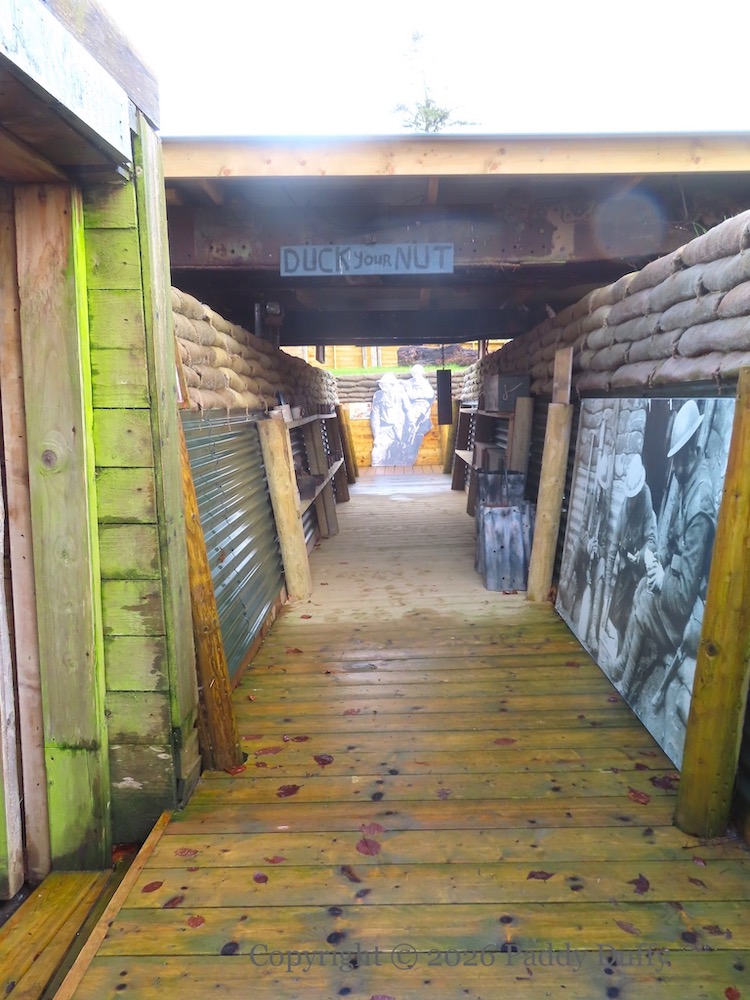
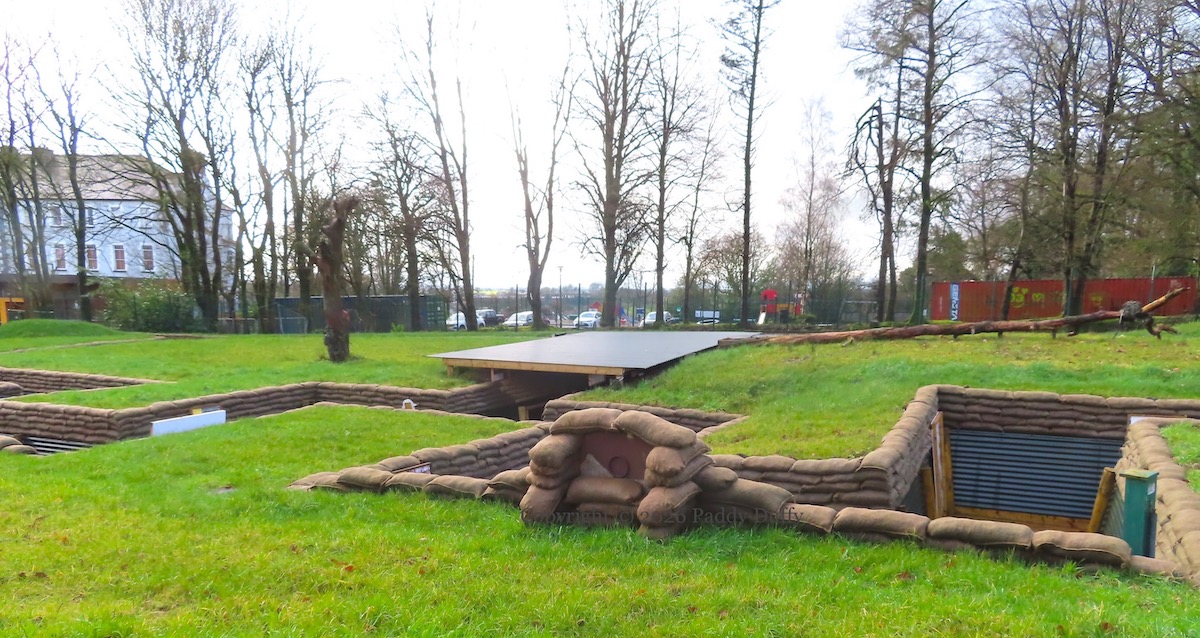
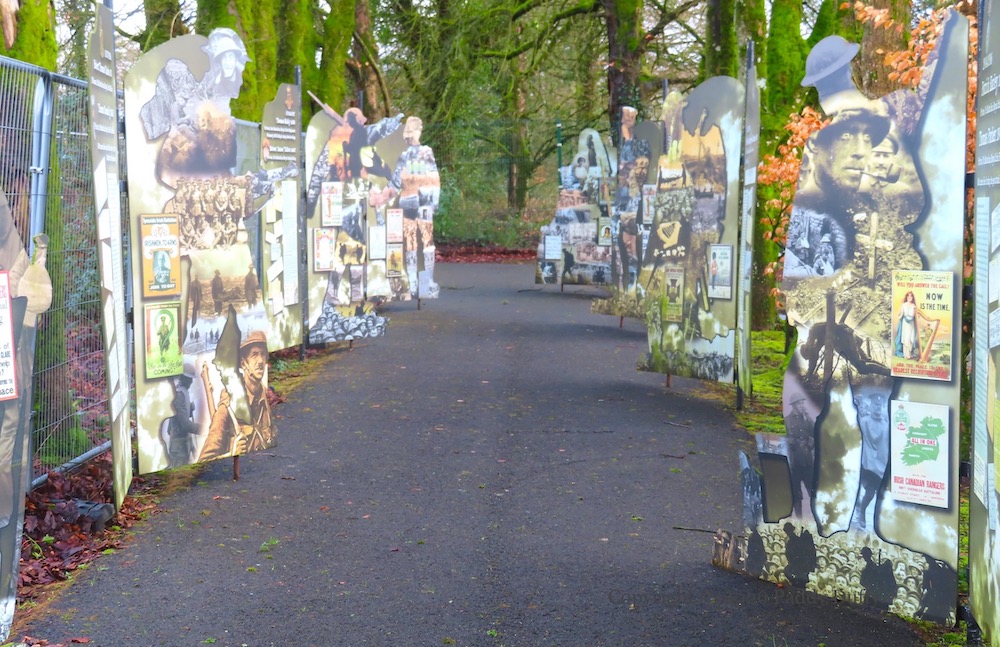
The Cavan County Museum (web) in Ballyjamesduff includes a “WWI trench experience”, with 350 metres of trench and more than 6,000 sand-bags. The Cavan volunteers joined the 9th battalion of the Royal Irish Fusiliers (108th brigade of the 36th). The officer commanding of the Division, Oliver Stewart Wood Nugent, was from Cavan (History Ireland).
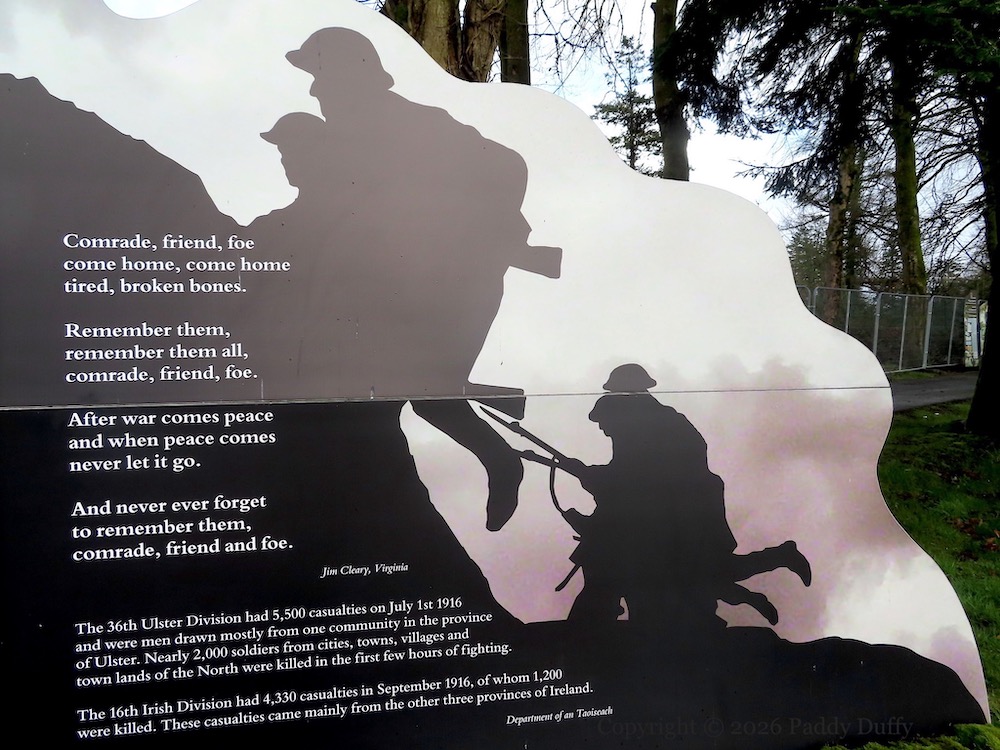
“Battle Of The Somme 1st July – 18th November 1916”, “”Comrade, friend, foe/come home, come home/tired, broken bones.//Remember them,/remember them all,/comrade, friend, foe.//After war comes peace/and when peace comes/never let it go.//And never ever forget/to remember them,/comrade, friend and foe.” – Jim Cleary, Virginia.”
“”The 36th (Ulster) Division had 5,500 casualties on July 1st 1916 and were men drawn mostly from one community in the province of Ulster. Nearly 2,000 soldiers from cities, towns, villages and town lands of the North were killed in the first few hours of fighting. The 16th (Irish) Division had 4,330 casualties in September 1916, of whom 1,200 were killed. These casualties came mainly from the other three provinces of Ireland.” – Department Of An Taoıseach”
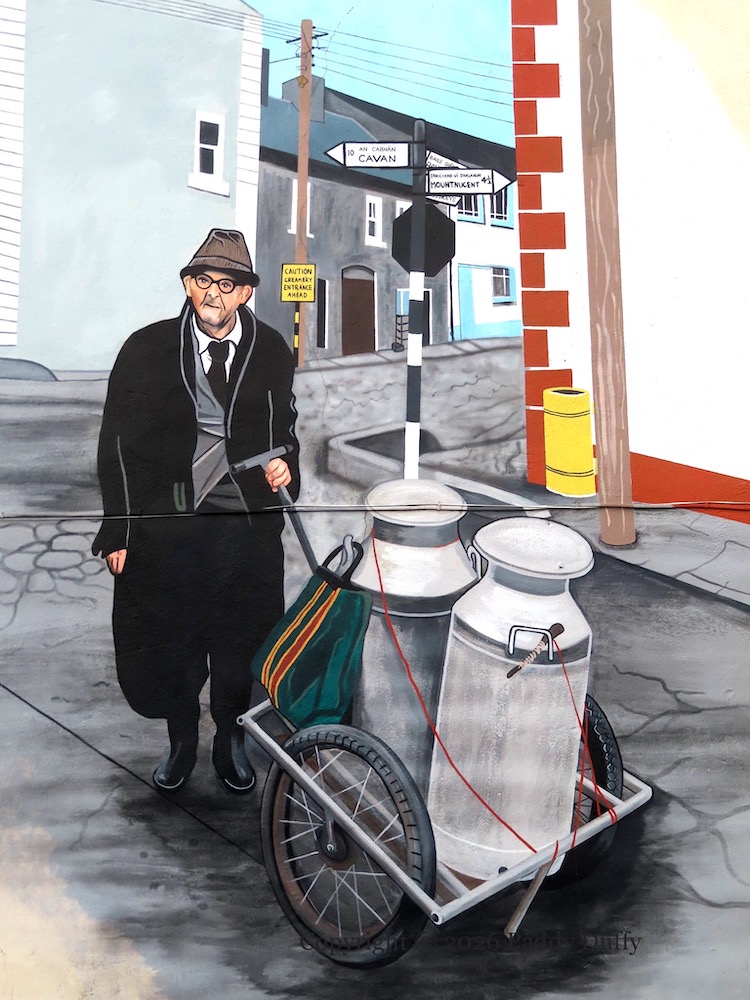
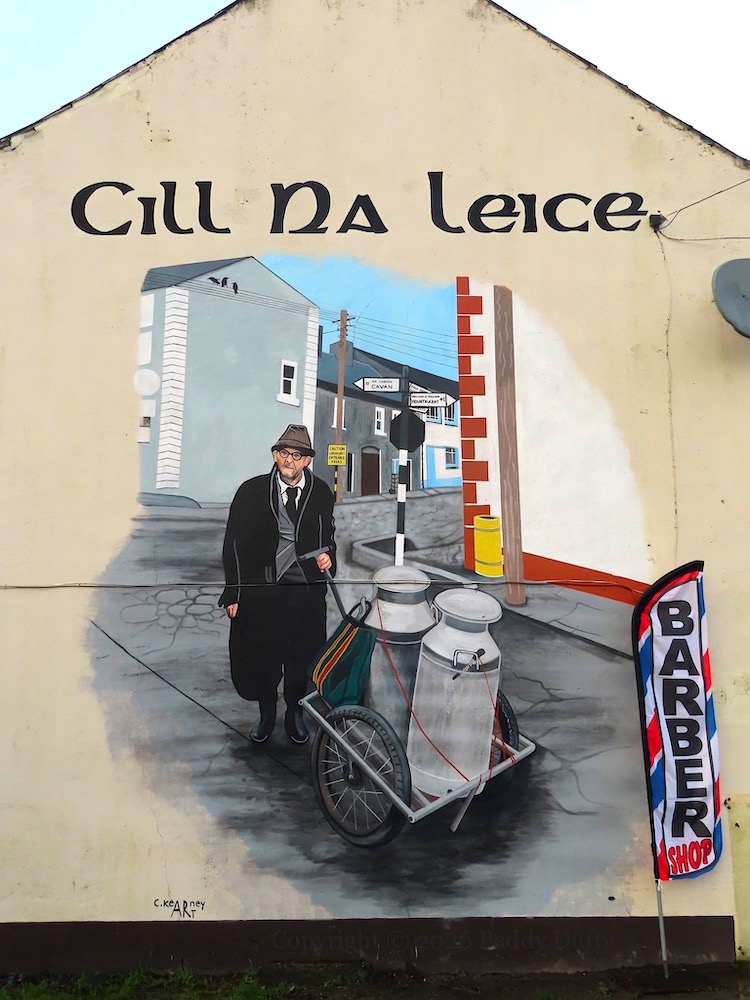
Kilnaleck local Frank Brook built the cart that he wheeled daily to the creamery. For more information about Frank, see this profile at AngloCelt of the artist, Colette Kearney (web).
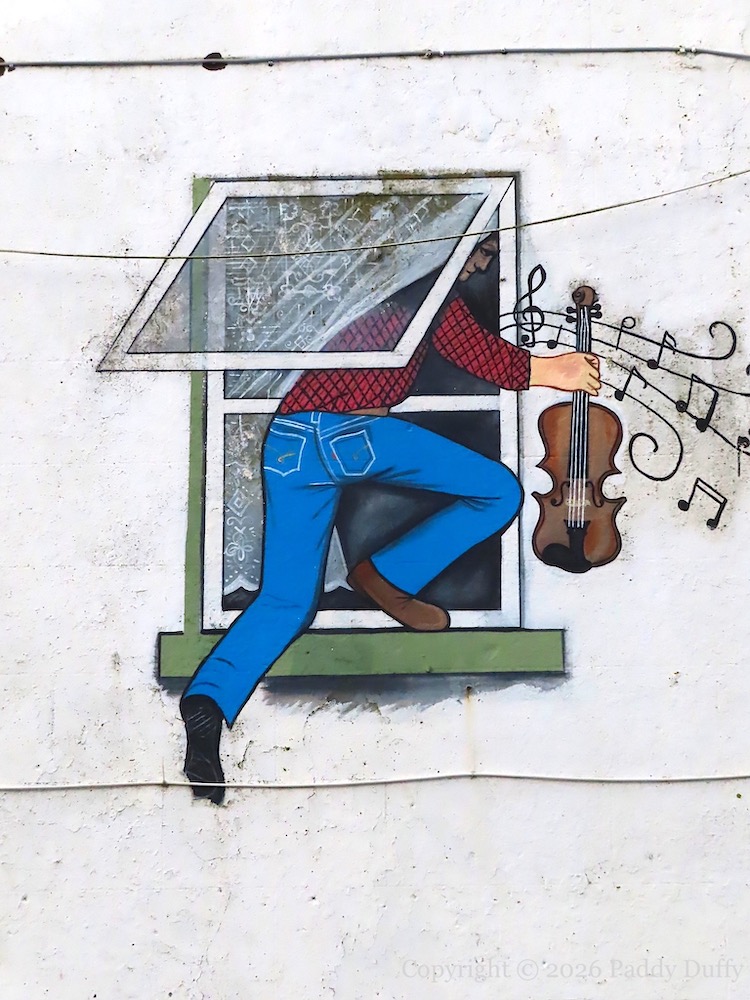
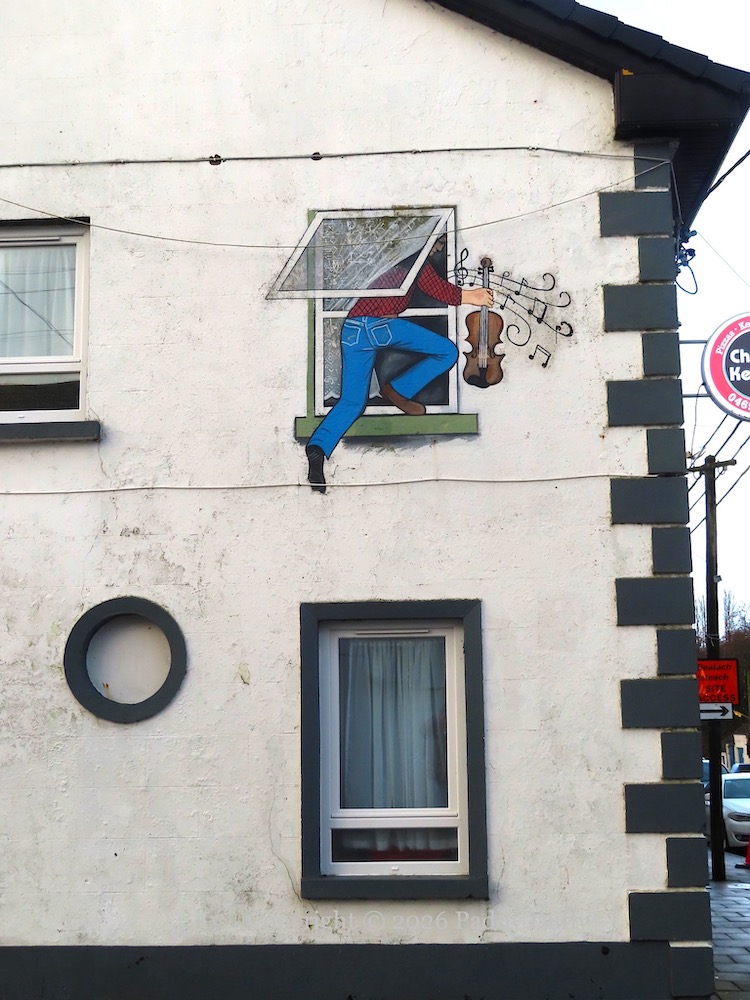
The other piece is on the side wall of (what was) the Copper Kettle.
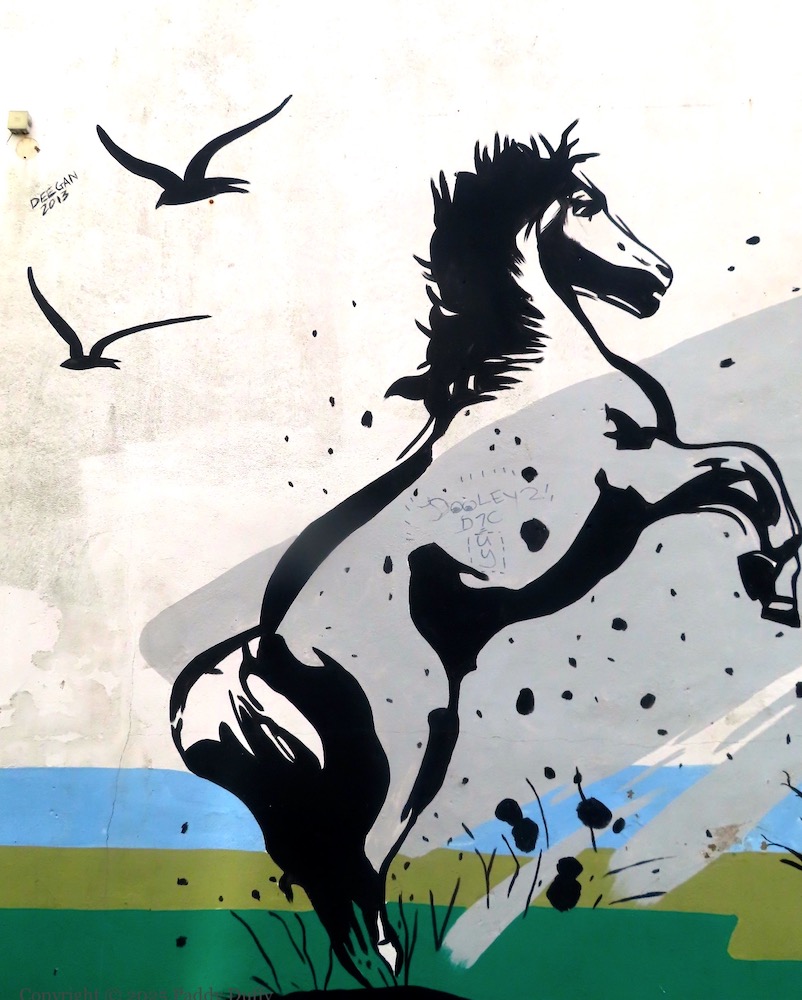
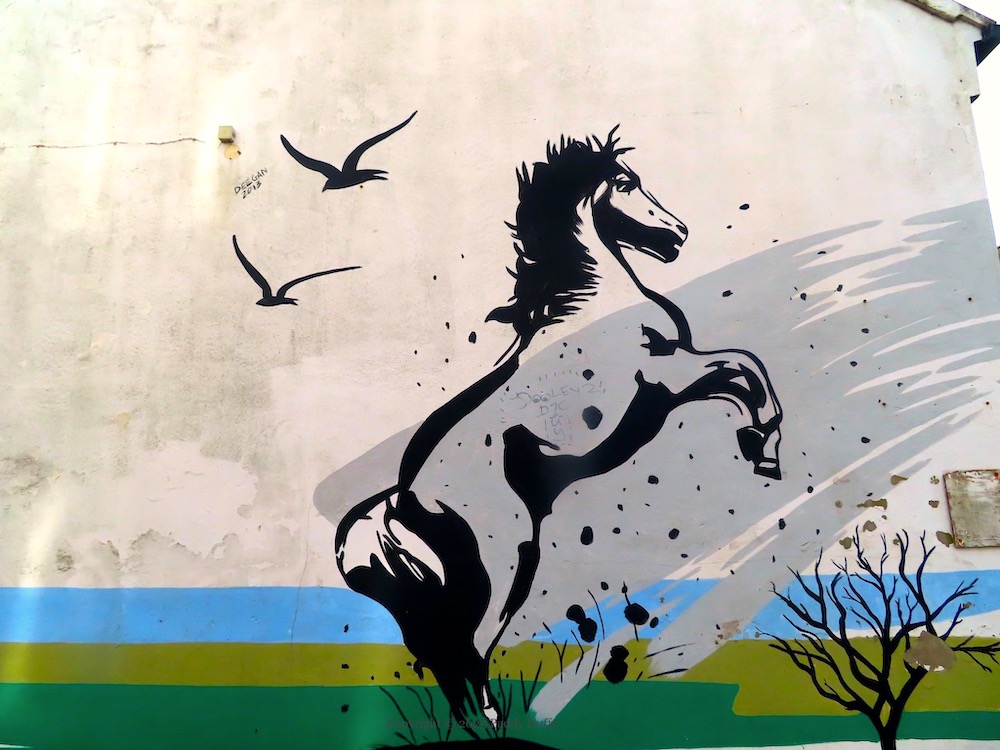
The “West End Horse” in Bundoran was painted by John Deegan (Fb) in 2013 (Discover Bundoran). The “Big wave” on the wall of Madden’s is by Nik Purdy of Blow Designs (ig), who also did murals of James Connolly in Sligo and of local literary figures in Carrick-On-Shannon.
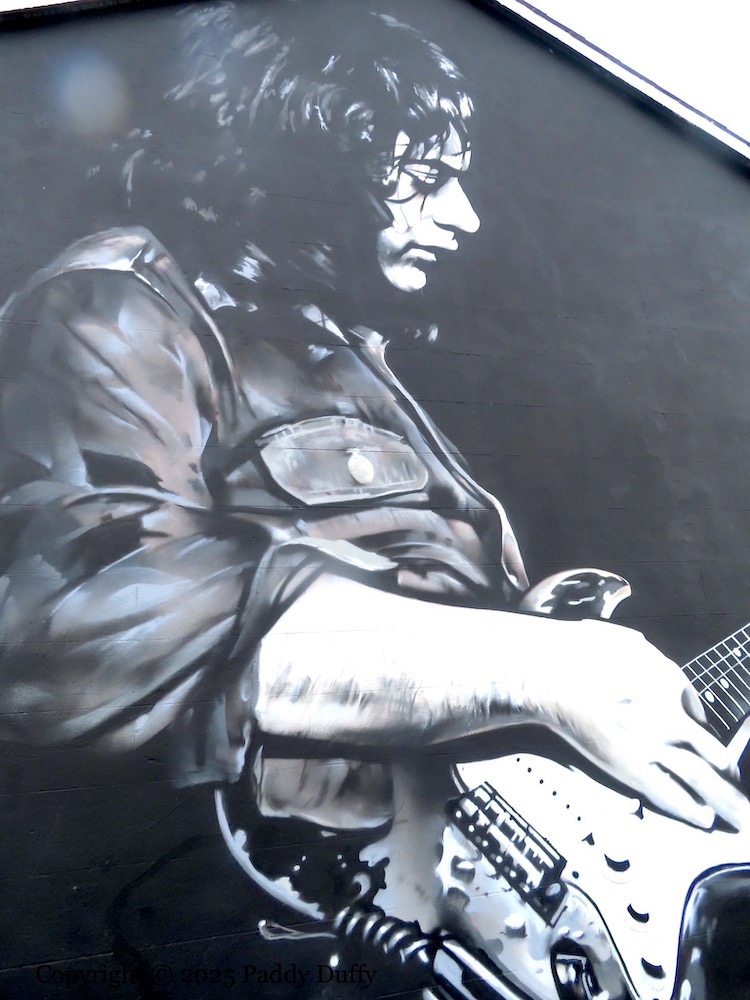
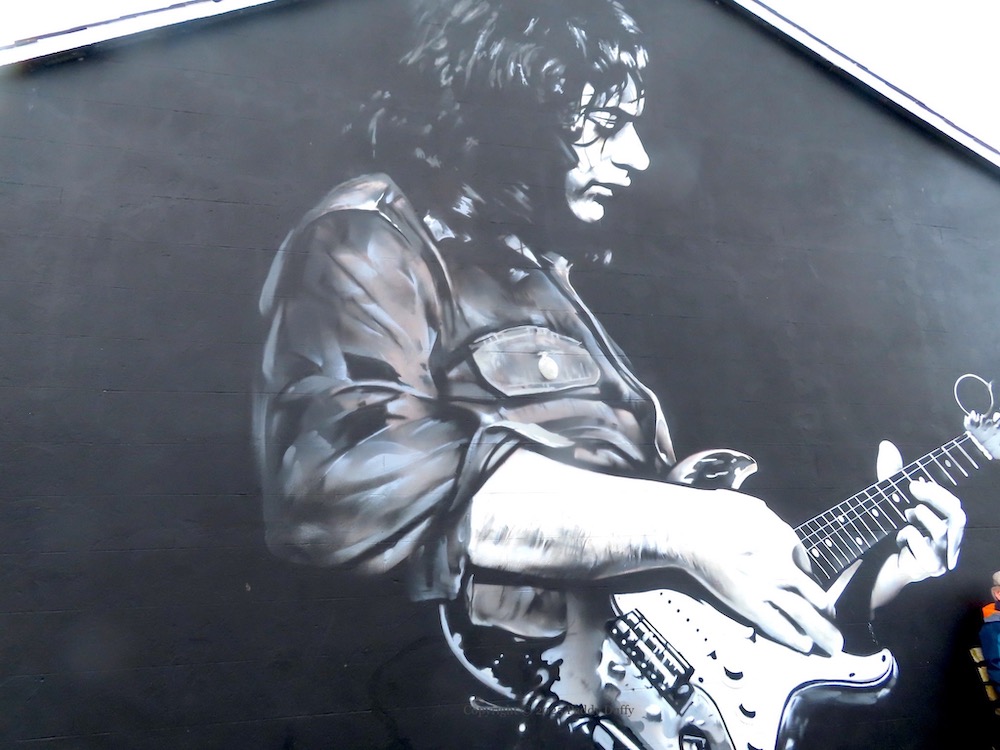
The 21st Rory Gallagher International Tribute Festival (web) starts on Thursday May 29th in Ballyshannon, the County Donegal town in which the guitarist was born in 1948. In addition to the festival, Gallagher is remembered in the town by both a mural and a statue.
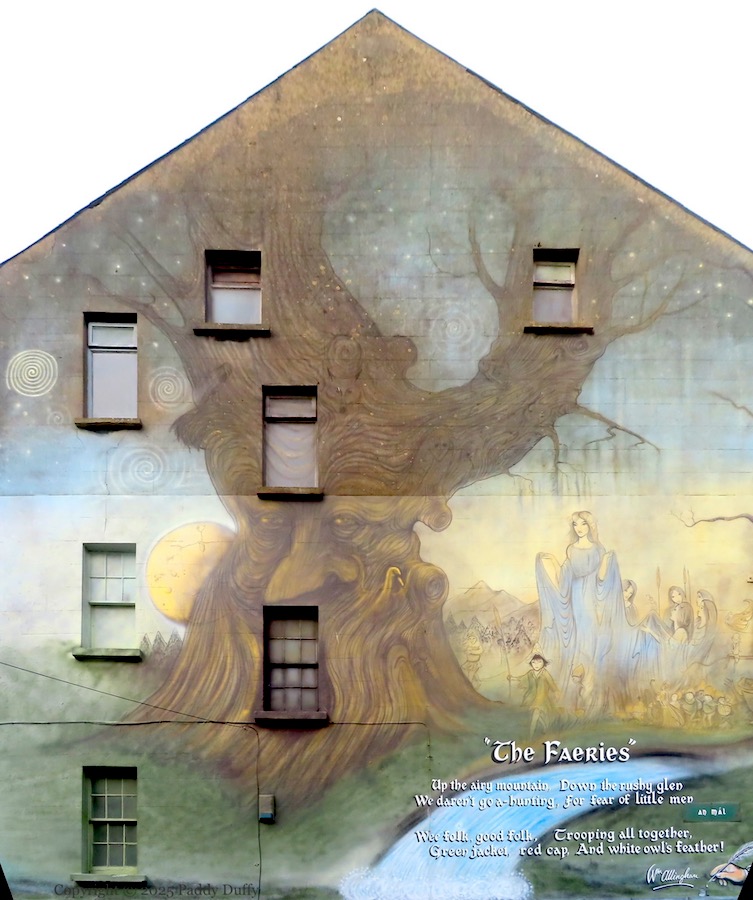
The mural is in Main Street, Ballyshannon/Béal Átha Seanaıdh; the statue is on The Mall/An Mál, next to The Faeries. As of January, 2025, there is also a statue of Gallagher in Belfast.
“Up the airy mountain/Down the rushy glen/We daren’t go a-hunting,/For fear of little men.//Wee folk, good folk,/Trooping all together,/Green jacket, red cap,/White owl’s feather! – Wm Allingham”
Customs-officer, magazine editor, and poet William Allingham was born in Ballyshannon, Co Donegal, in 1824, and his ashes – brought back from London – are interred in St Anne’s church in the town (WP). “The Faeries” (poetry.com) was first published in his 1850 collection Poems (UCC) and remains a staple of children’s and mythological collections.
The art shown here is on The Mall/An Mál in Ballyshannon/Béal Átha Seanaıdh.
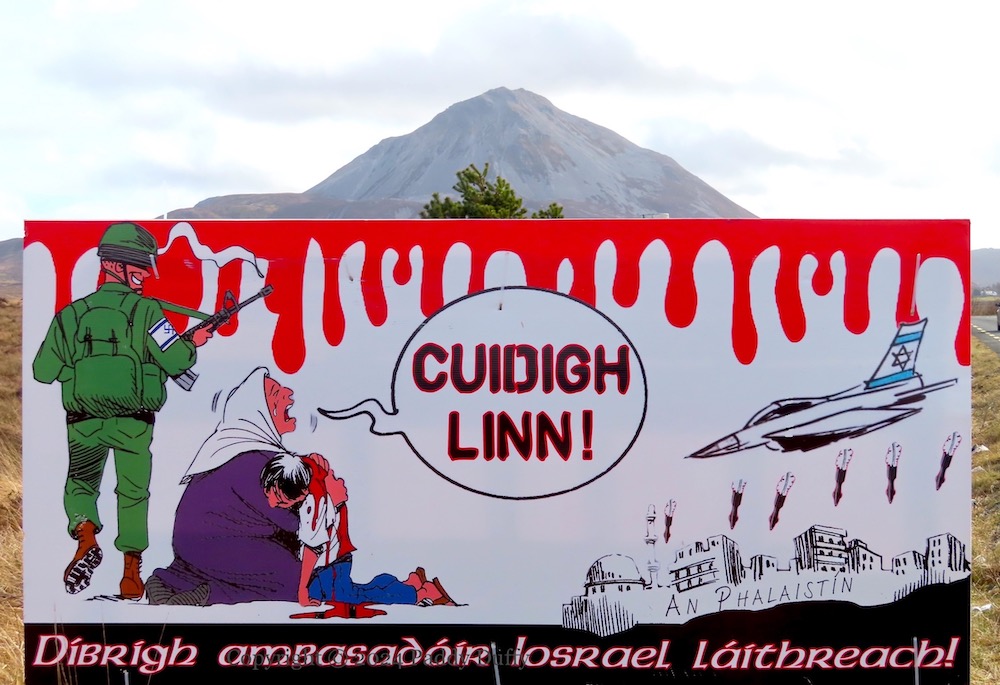
“Help us!” Two Carlos Latuff cartoons are combined in this pro-Palestinian board in Donegal, with Errigal/An Earagaıl providing the backdrop.
On the left, an Israeli soldier with a smoking rifle and swastika armband walks away from a mother holding a bloodied child (Xitter), while on the right, bombs from an Israeli fighter jet (Xitter) rain down on “An Phalaıstín”.
“Díbrıgh ambasadóır Iosrael láıthreach!” [Expel the ambassador of Israel immediately!] The current ambassador is Dana Erlich; a motion to expel Erlich was defeated in the Dáıl in November (Indo).
(As with the recent board in Belfast for the ‘Joe Cahill memorial tournament‘, the pseudo-Gaelic font chosen here includes both fadas and (incorrectly) dotted “i”.)
At the beginning of Joyce’s A Little Cloud (from Dubliners), Little Chandler is sitting at his desk in the King’s Inns (law school) rather than, as written here “the King’s Inn”, which is the nearby pub outside of which this painted electrical box can be found.
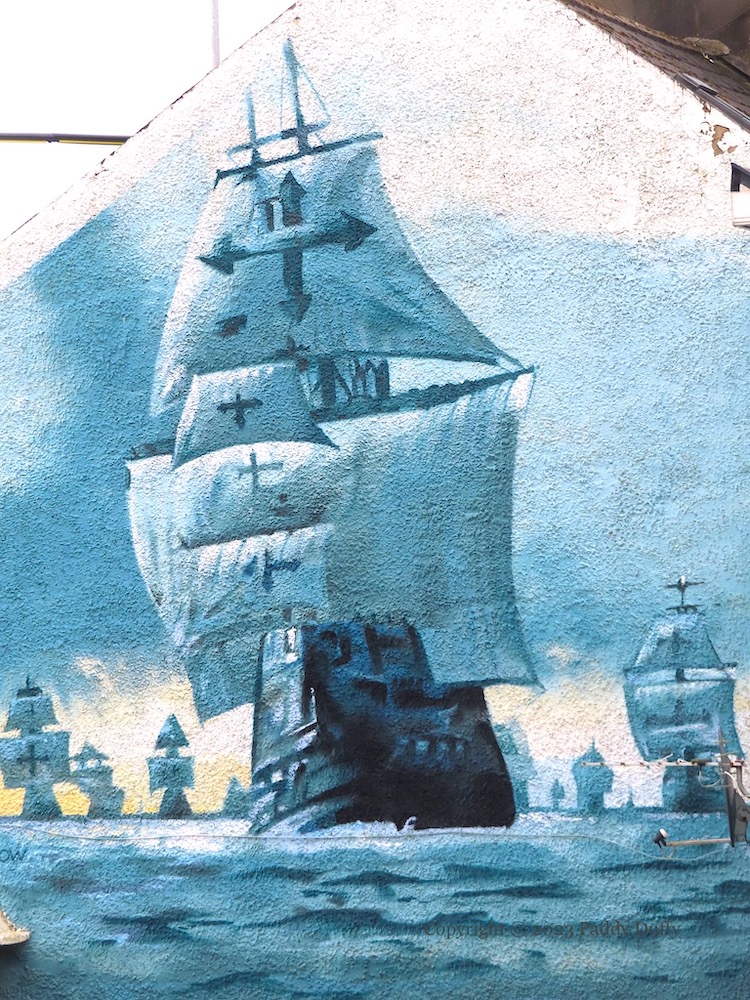
The Spanish galleass La Girona, one of the 130 ships that made up the armada that was unsuccessful against the English in 1588, docked at Killybegs, County Donegal, for repairs to her rudder (WP). When she departed, she got only as far as Lacada Point near Ballintoy, County Antrim, before sinking in a gale with the loss of roughly 1,300 lives and a substantial treasure that was recovered (in part) by Sorley Boy McDonell (portrayed in a Ballycastle mural) and (in part) by modern divers in 1968 (BBC).
Donegal Road, Killybegs, with a bonus image of the docks from the fish shop in Conlin Road.






 Paddy Duffy Collection