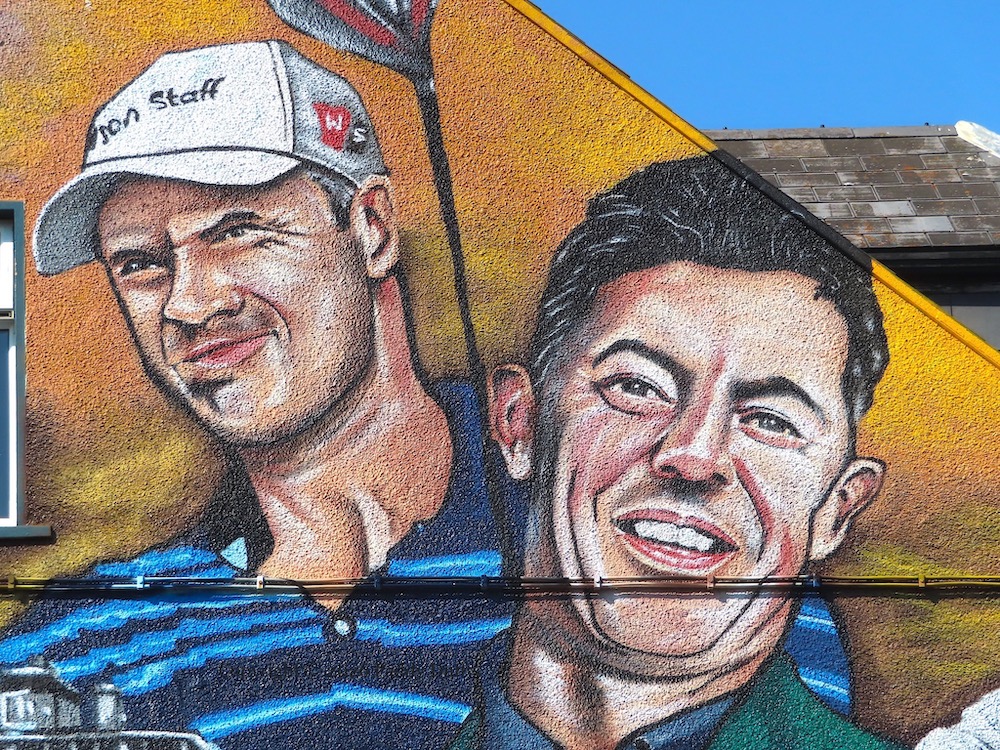
Golf Digest rated Royal County Down as the world’s number one course. Over the years it has hosted various important tournaments, including the Irish Open (most recently in 2024, won by Rasmus Højgaard).
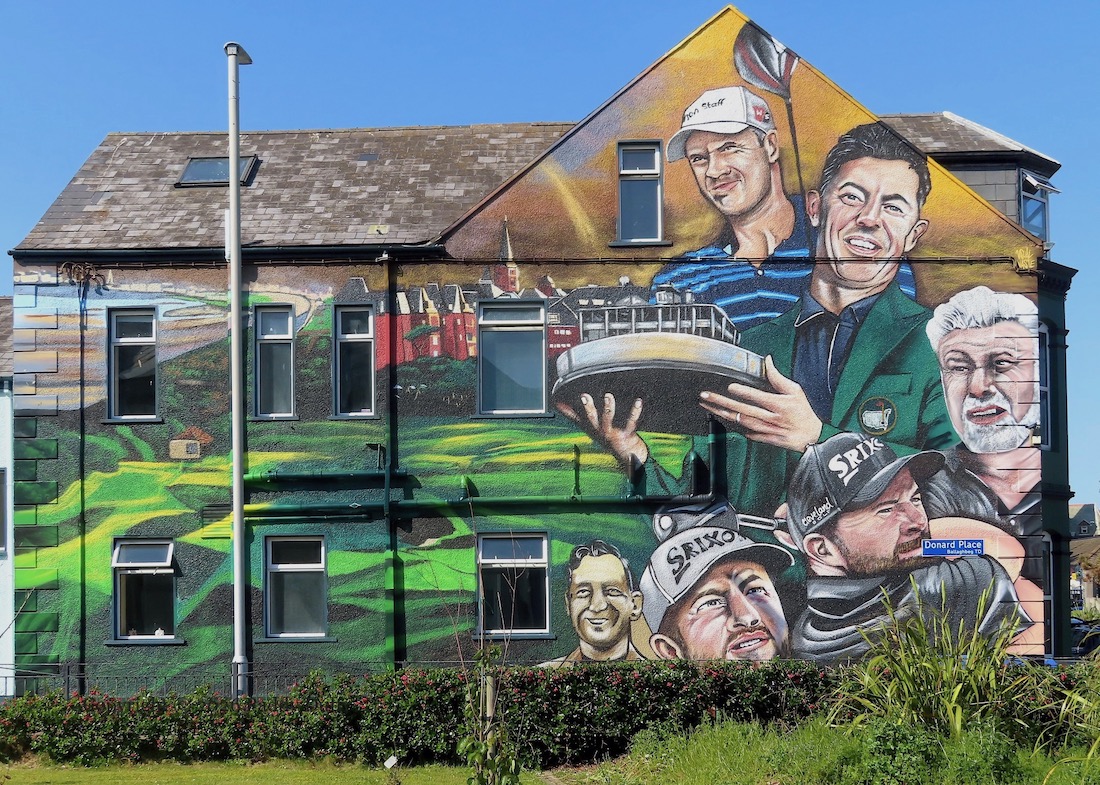
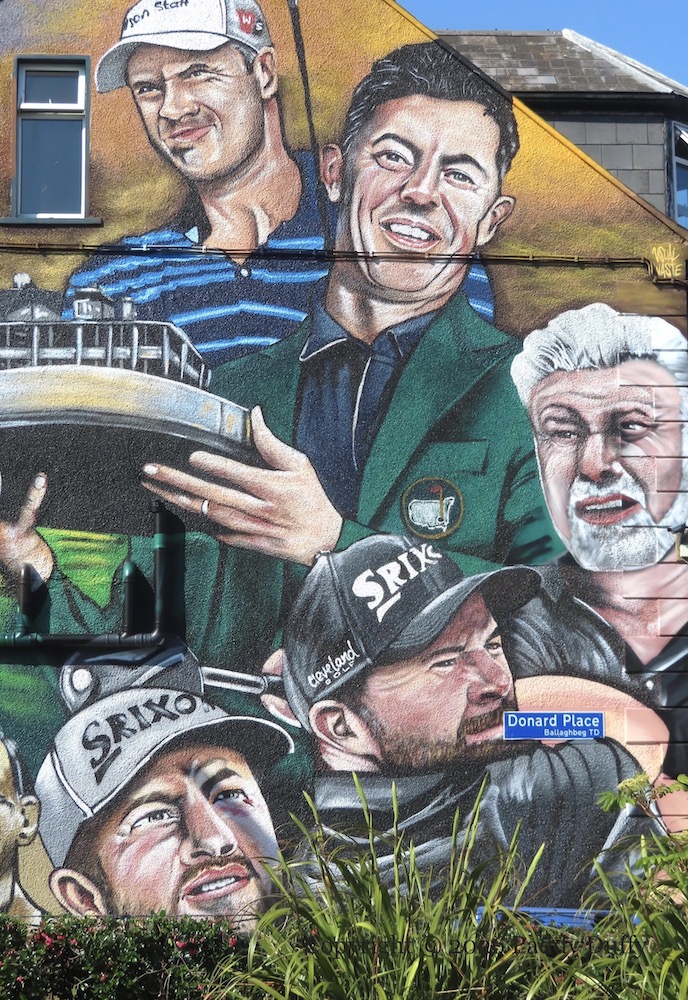
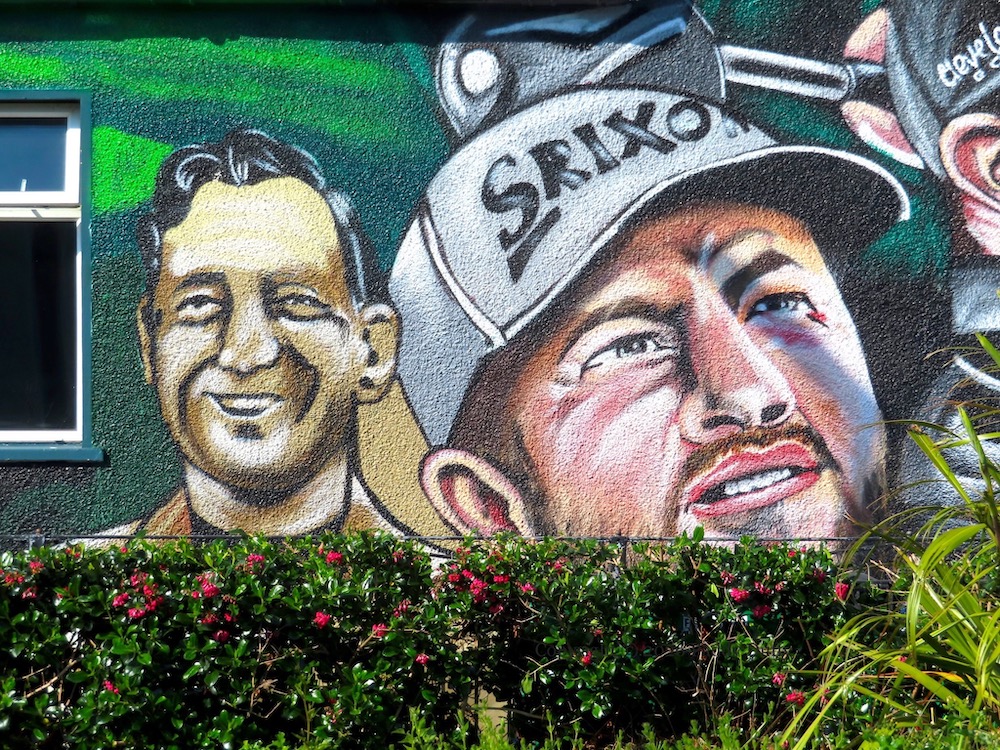
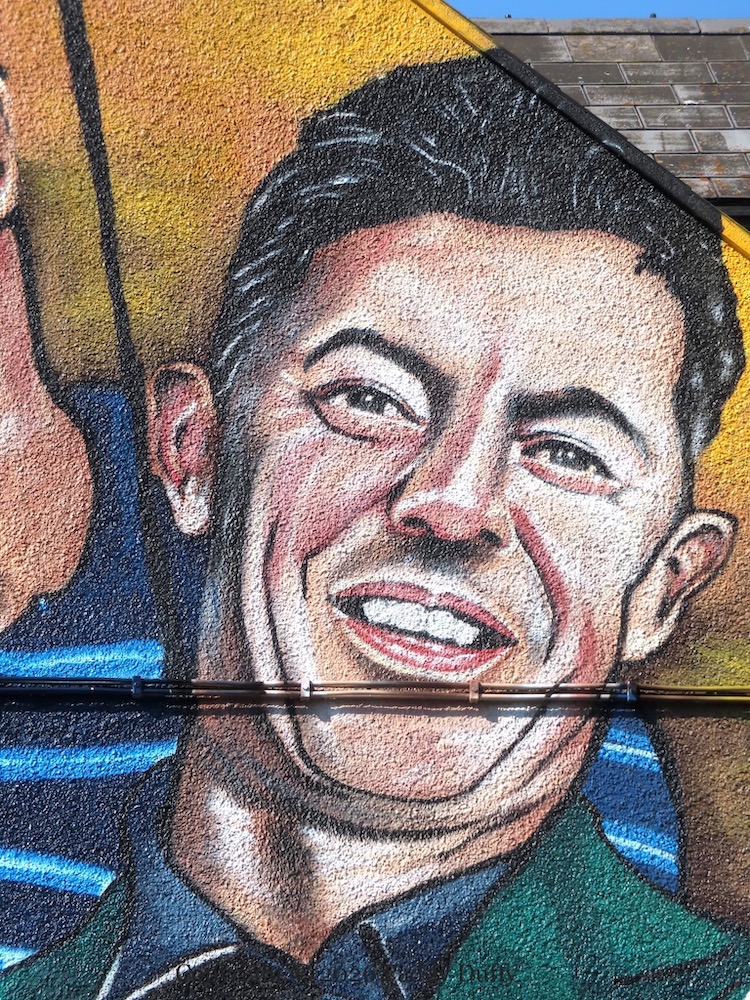
This mural features six famous golfers, past and present. Clockwise from top: Pádraıg Harrington, Rory McIlroy (holding his Masters trophy and wearing the green jacket), Darren Clarke, Graeme McDowell, Shane Lowry, and Fred Daly, who won the Irish Open in 1946 and the British Open in 1947. In the background of the mural is the Slieve Donard hotel, which is just to the south of the golf course.
Painted by Visual Waste (web) in Donard Place, Newcastle, Co Down
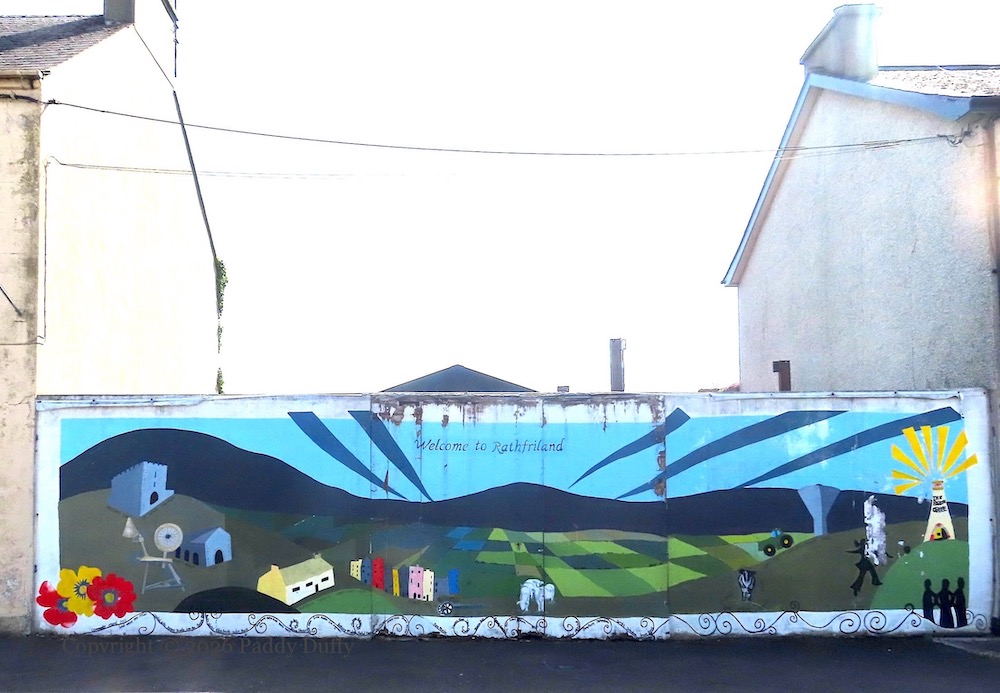
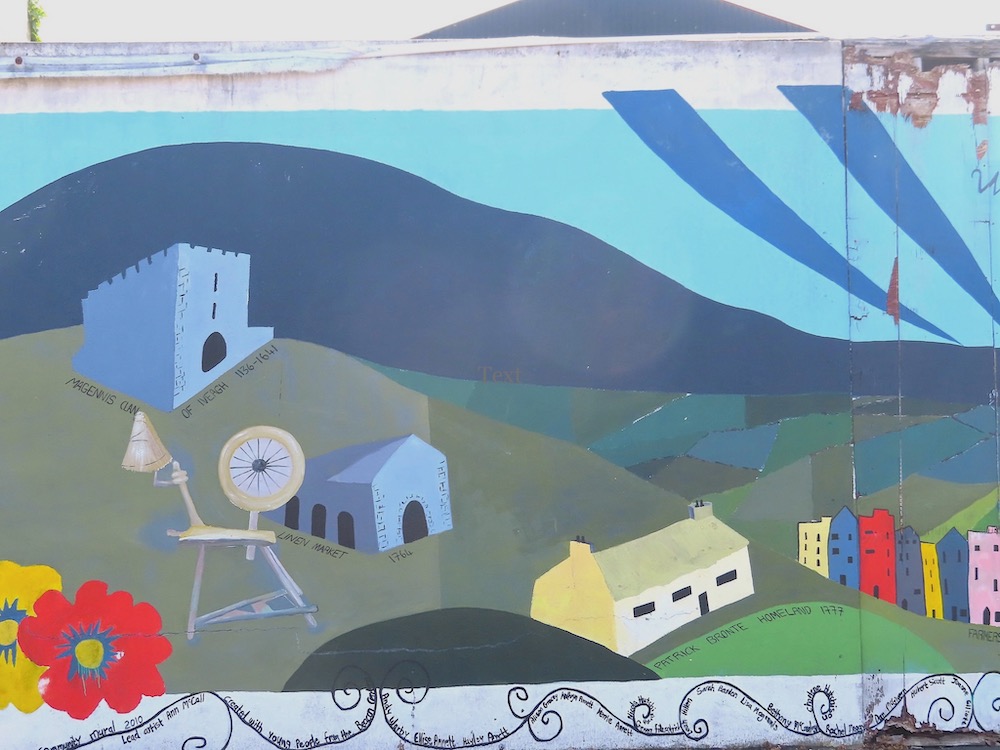
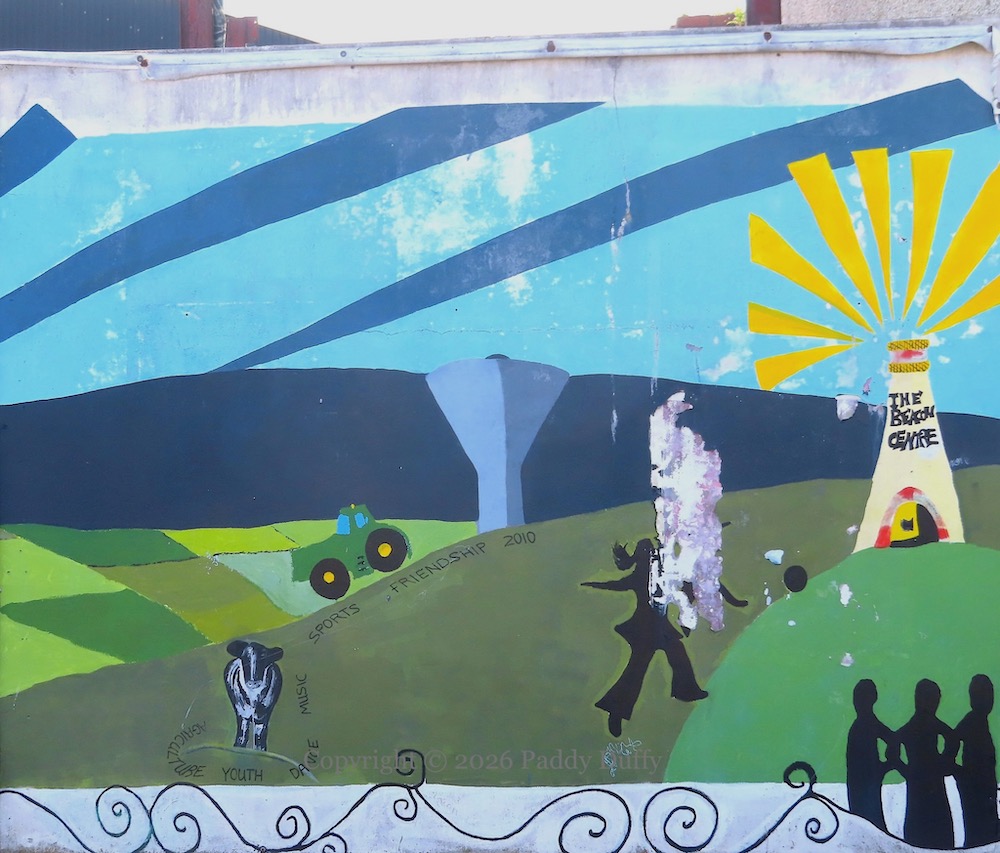
Life and landmarks in Rathfriland, eight miles outside Newry, are presented in this “Community mural, 2010, lead artist Ann McCall, created with young people from the Beacon Centre”.
The four buildings on the left are labelled: Magennis clan of Iveagh 1136-1641 [i.e. until the Confederate Wars], Linen Market 1754, Patrick Brontë [father of the three Brontë authors] homeland 1777, Farmers’ Market. On the right is the Beacon Centre.
The mural was covered over by a printed tarp for a number of (seven?) years, but this has come down and the mural behind it is again visible. The mural in much better condition can be seen on Geograph.
Church Square, Rathfriland, site of the market house or tholsel – here is an image from c. 1915.
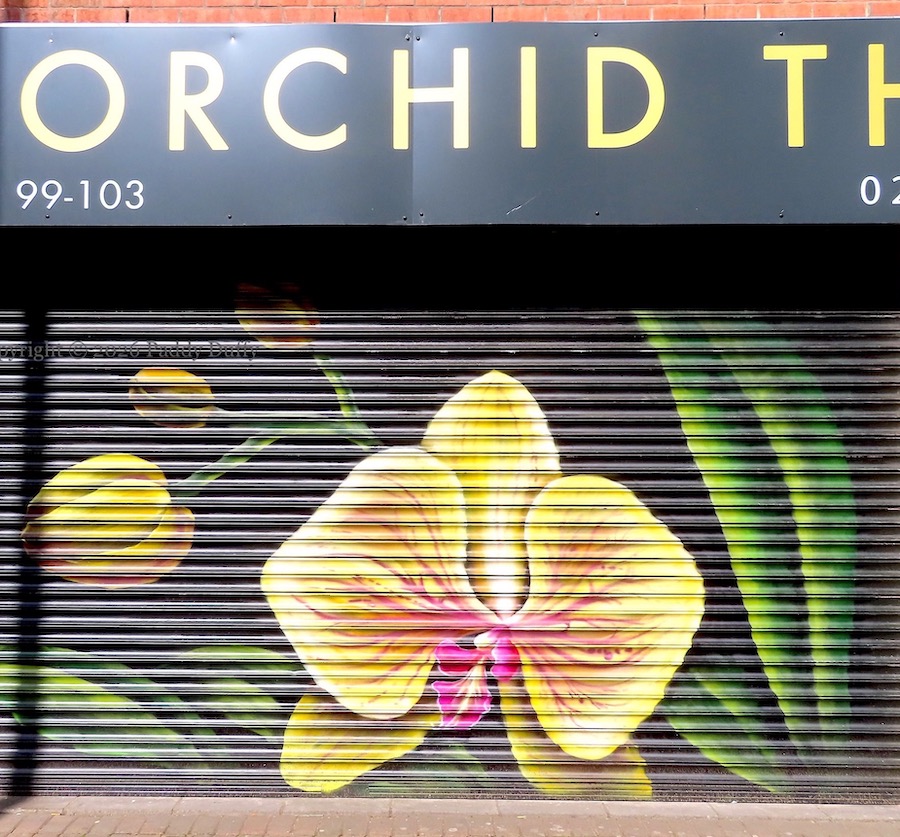
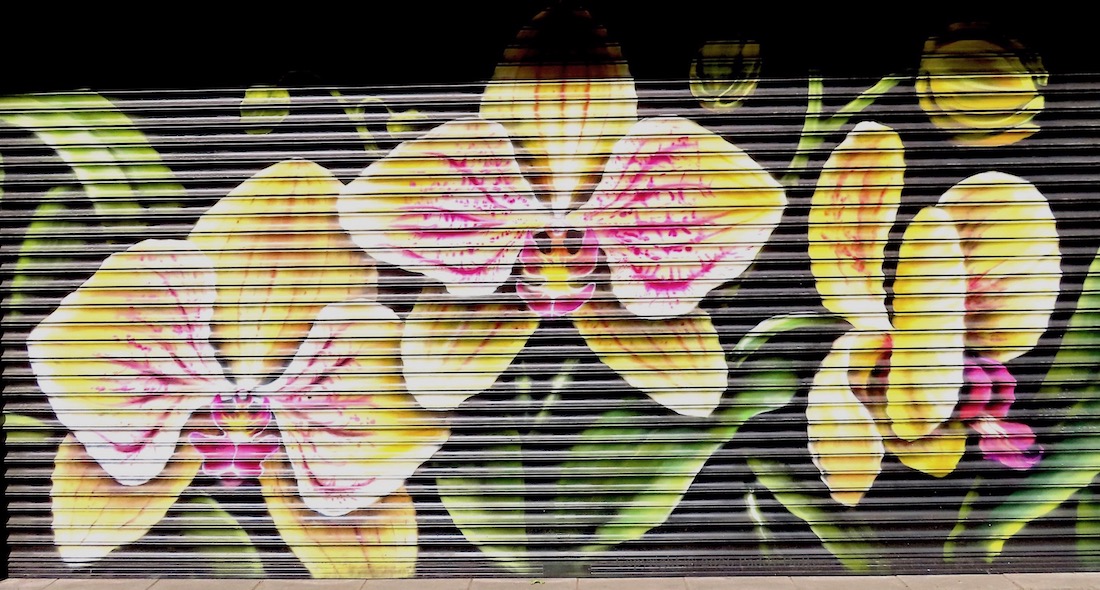
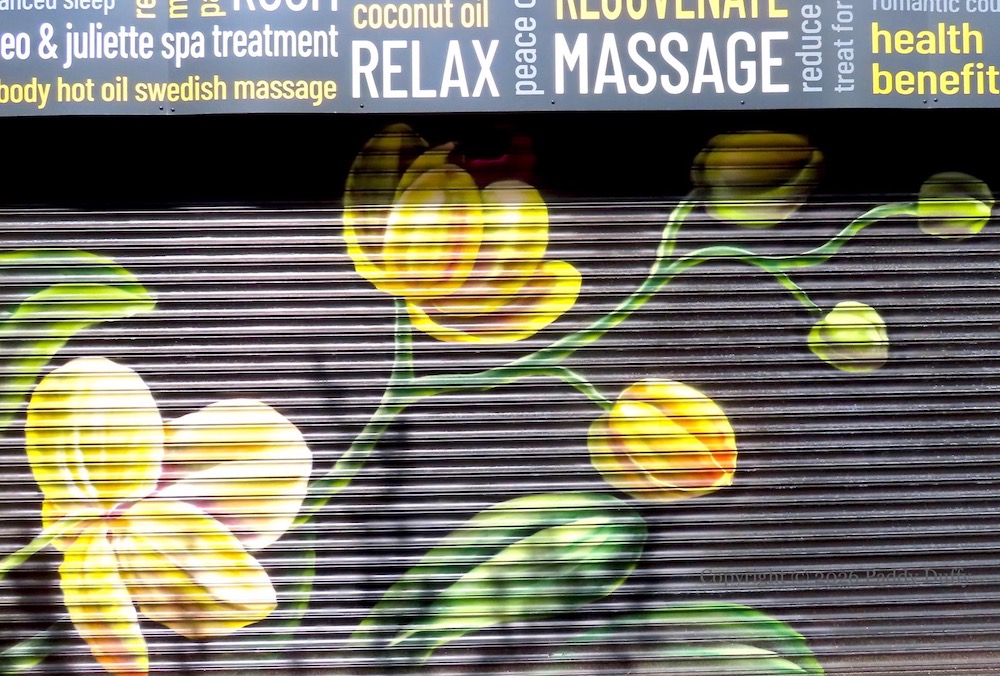
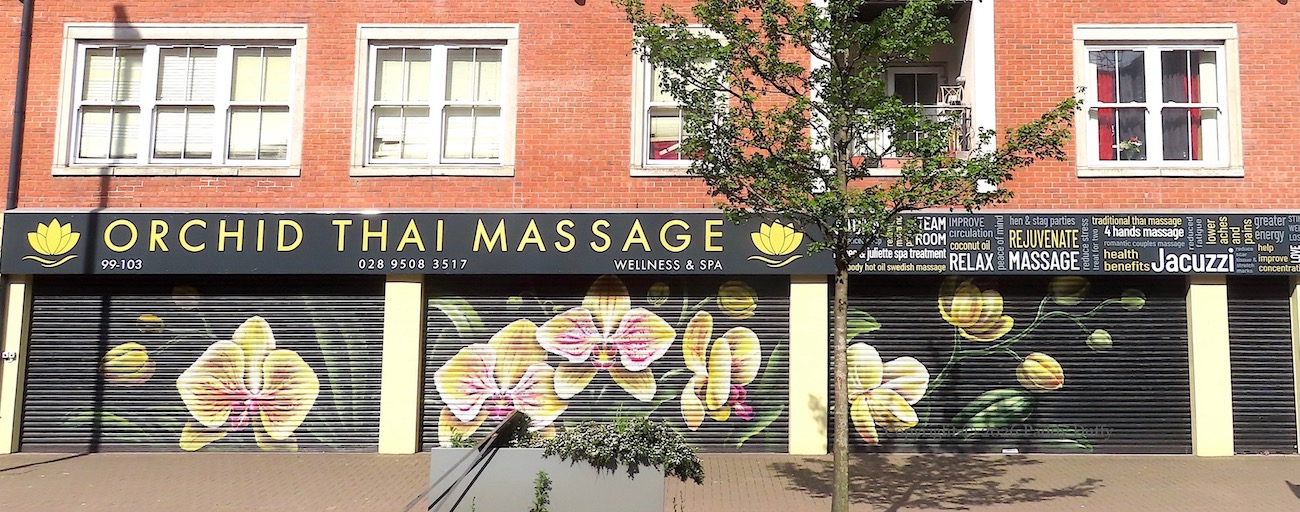
The national flower of Thailand is the blossom of the cassia fistula or golden shower tree but the high humidity and high heat also make the country an ideal growing location for more than a thousand species of orchids, making Thailand (one of) the world’s largest exporters of orchids (Nation Thailand | ASEAN Garden). In Thailand itself, they are a mark of respect and are given, for example, to teachers on Teachers’ Day (Thailand Now).
These orchids (perhaps Phalaenopsis Baldan’s Kaleidoscope) are on the shutters of Orchid Thai Massage (web) in Great Victoria Street, Belfast city centre.
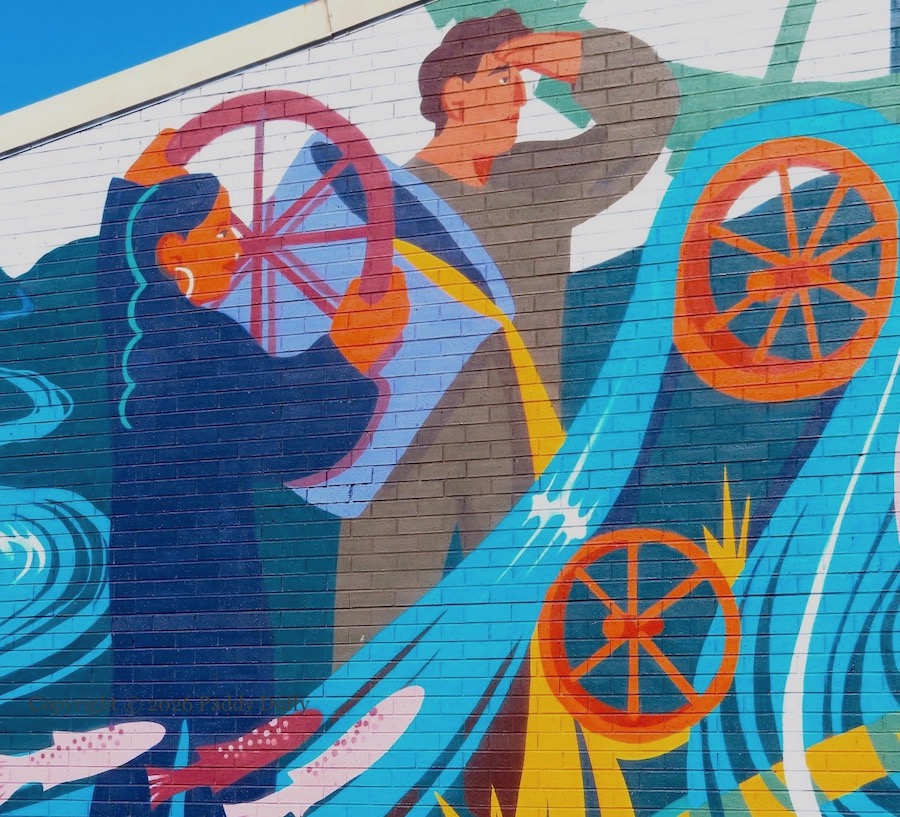
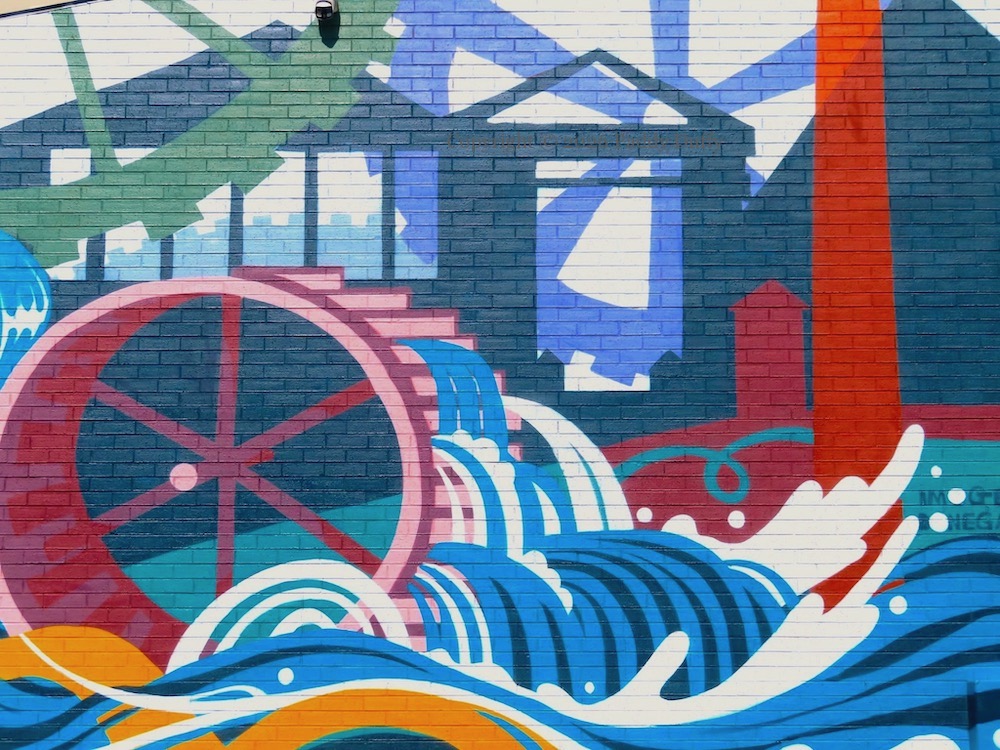
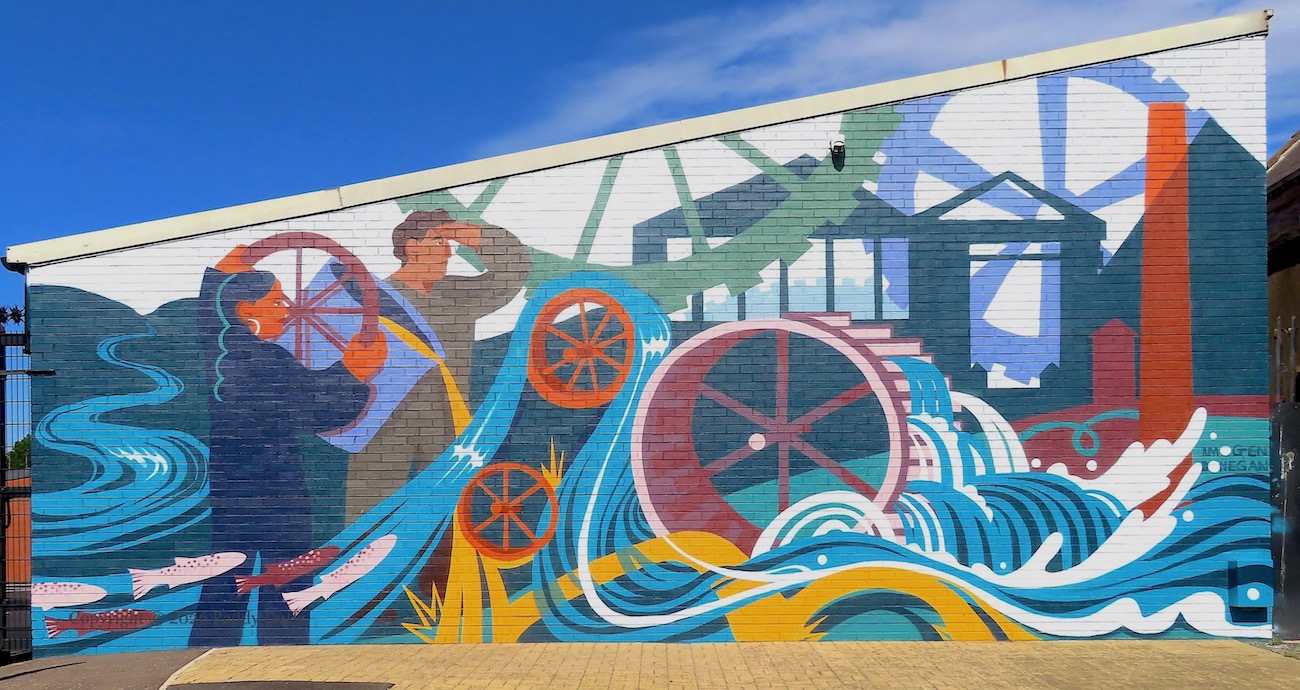
The Townsend Enterprise Park, at the Falls end of Townsend Street, was formerly the site of the Soho Foundry, established by brothers James and Robert Shipboy MacAdam, making (among other things, including scutching machines) large turbines for export across the world – “the largest steam-engine ever made in Ireland” (at 62″ in diameter) went to the Nile in Egypt in 1848 (Grace’s | Grace’s). This new mural on the wall of the Enterprise Park recalls the area’s industrial past.
By Imogen Donegan (ig) with support from Daisy Chain (web).
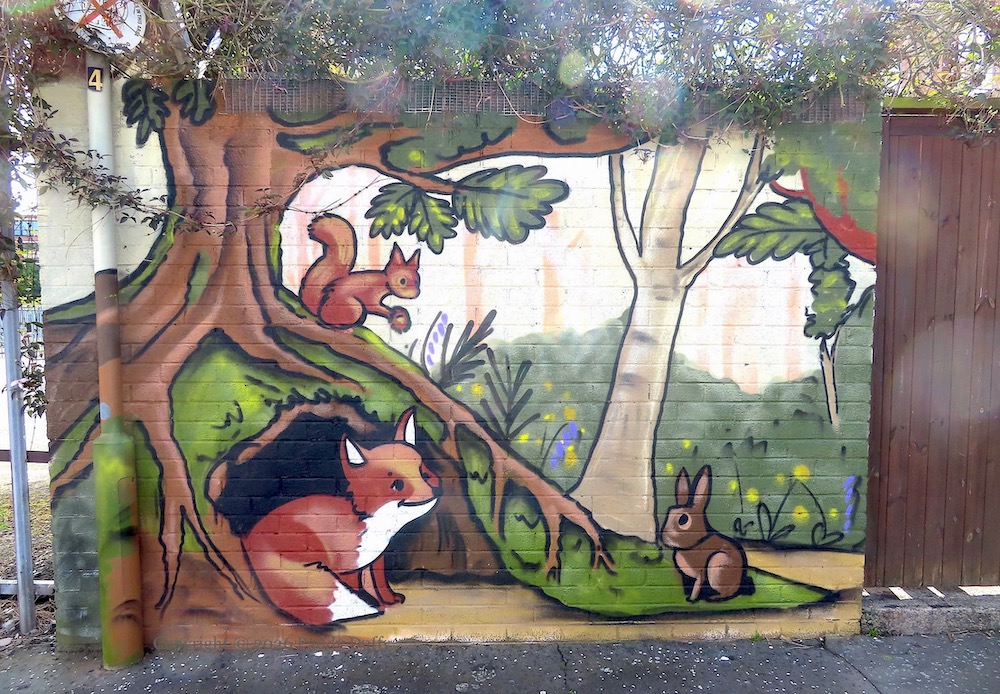
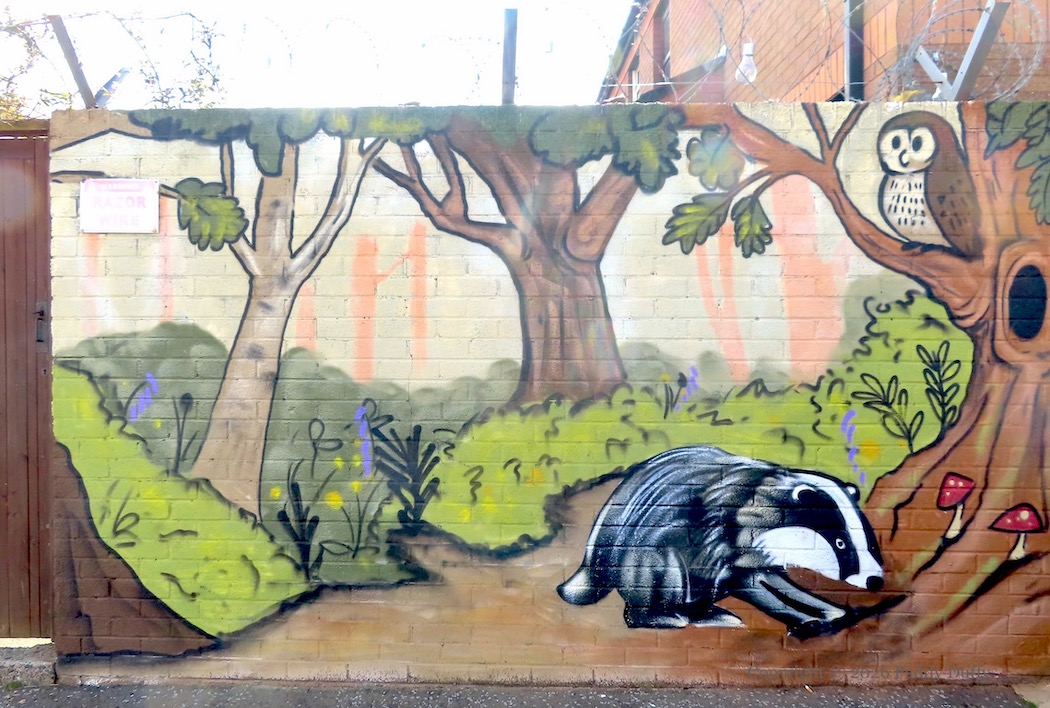
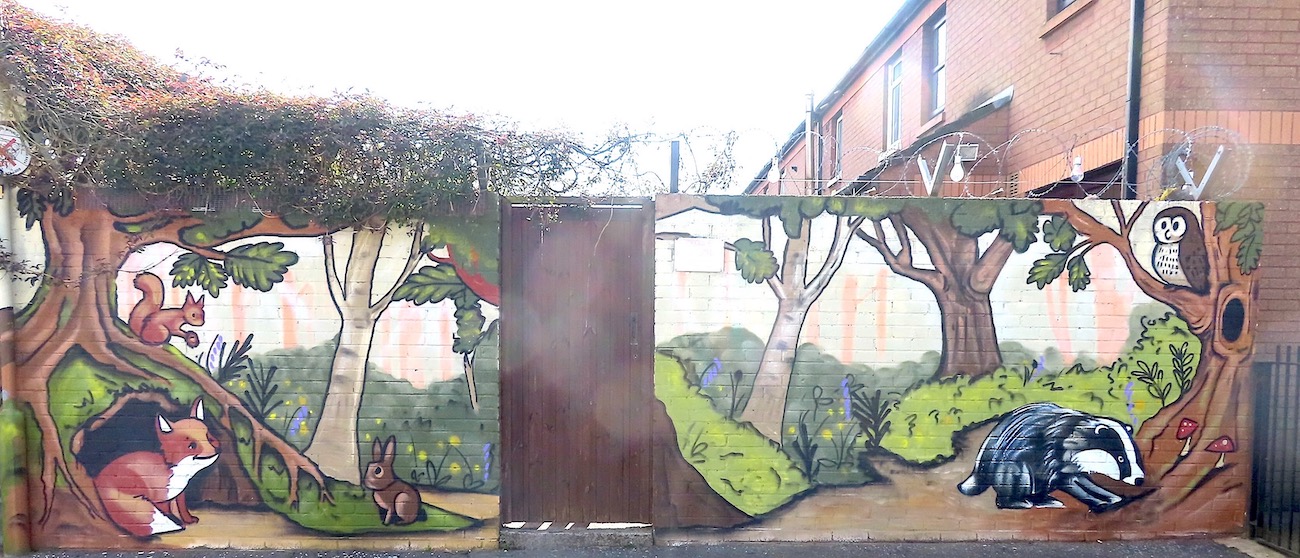
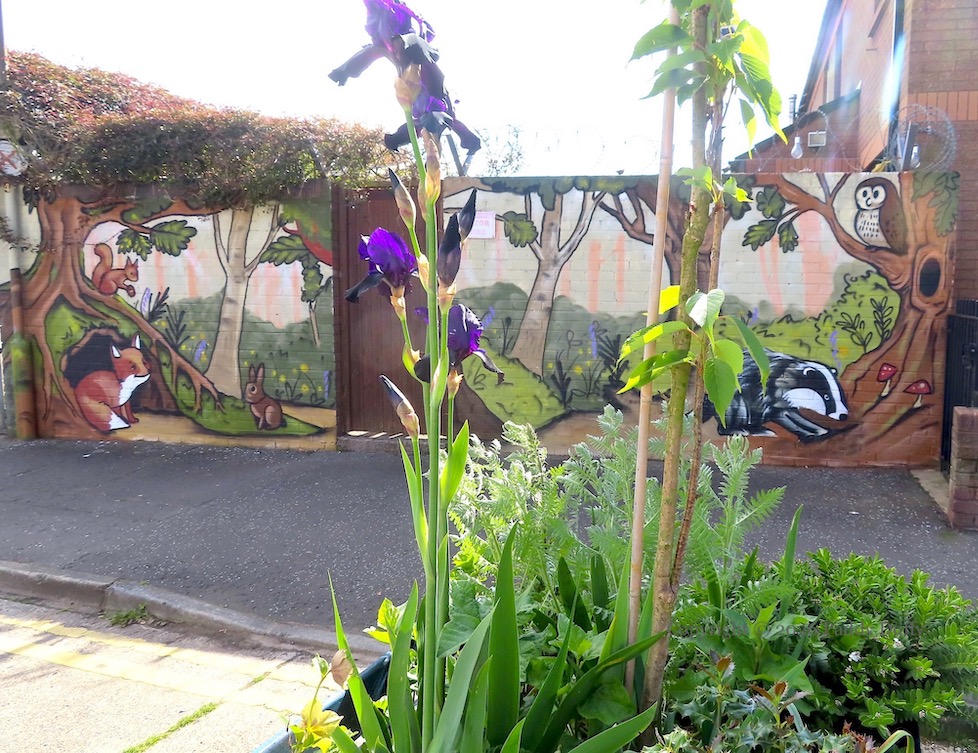
This nature mural – with badger, fox, rabbit, squirrel, and owl – is integrated with the bushy tree the lies along the top of the wall it is painted on. It was painted as part of the rejuvenation efforts of the Linen Quarter BID, which describes it as inspired by Cromac Wood, which existed “till the latter half of the 18th century” (Belfast Street Names) before becoming the site of the Markets (Market Social History) and Donegall Pass areas.
Painted by Visual Waste (web) in Apsley Street, south Belfast, towards the Ormeau Avenue end. Soon joined by Pass Loning.
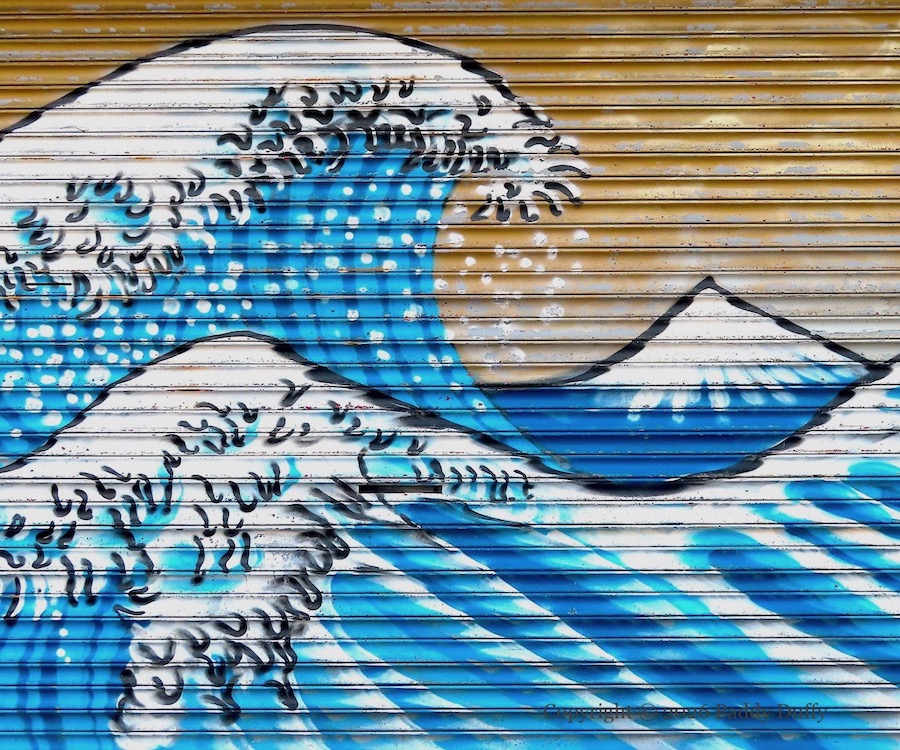
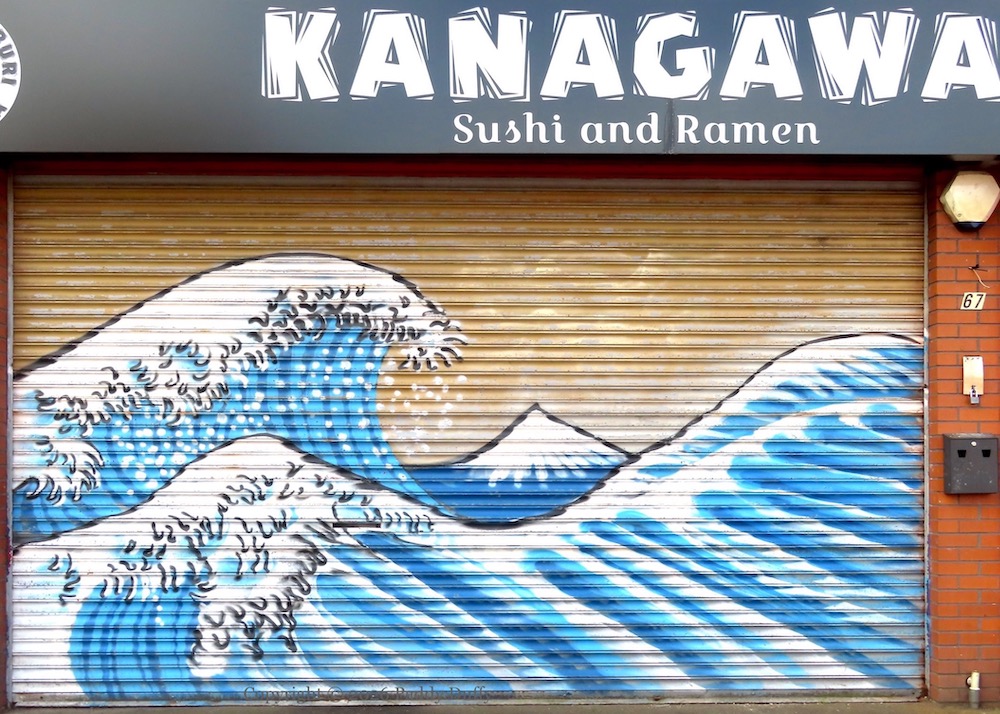
This is a version (without the boats) of Hokusai’s Great Wave on the shutters of Kanagawa Japanese restaurant (Fb) in Donegall Pass.
The full title of Hokusai’s famous picture is called ‘The Great Wave Off Kanagawa, 1831’. Kanagawa is a prefecture in Japan, south-west of Tokyo, with a view of Mount Fuji.
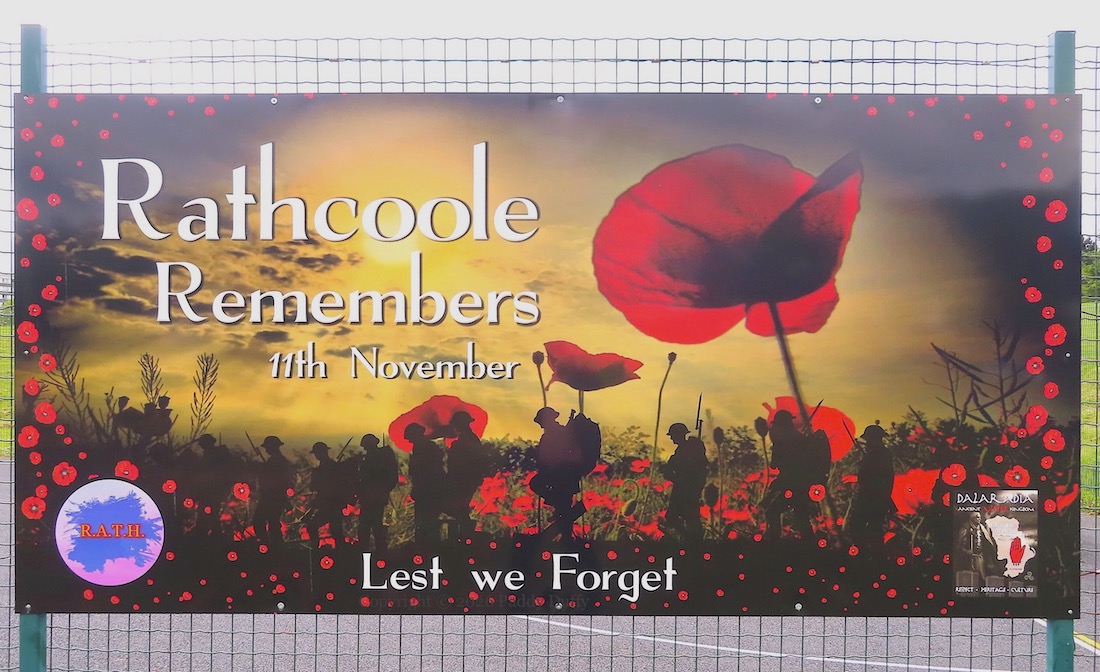
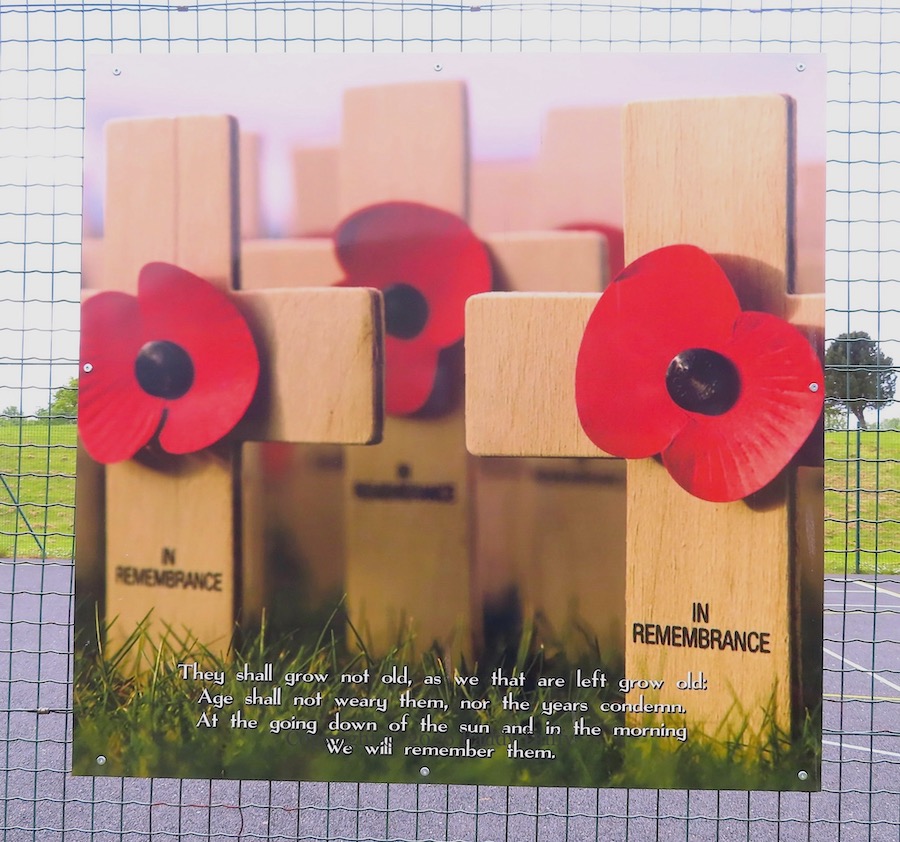
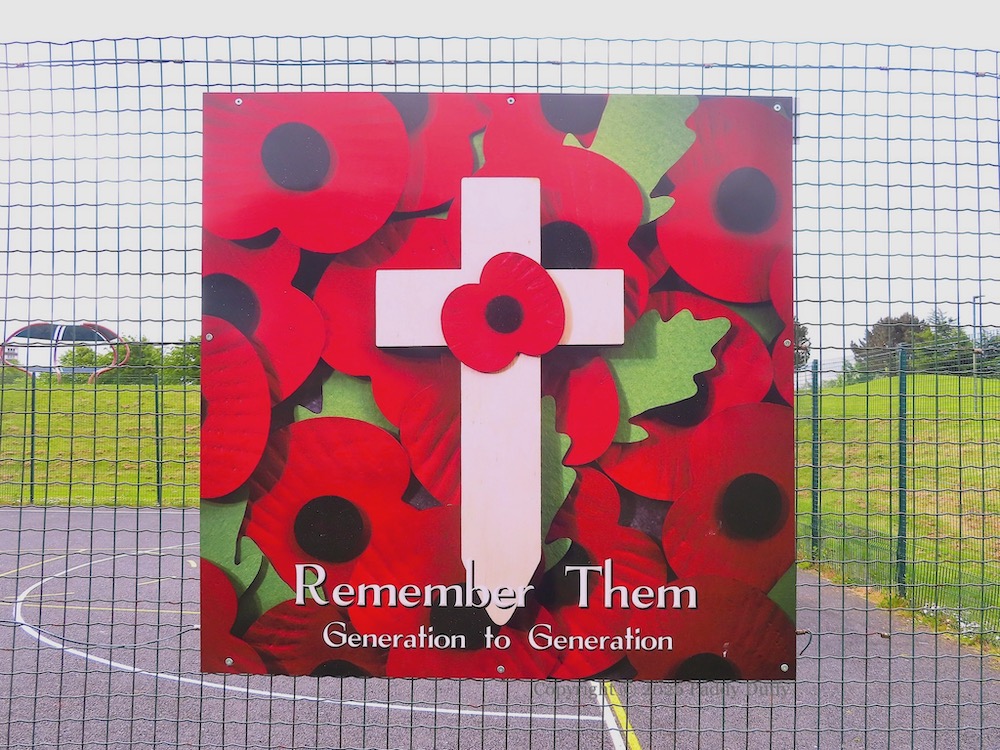
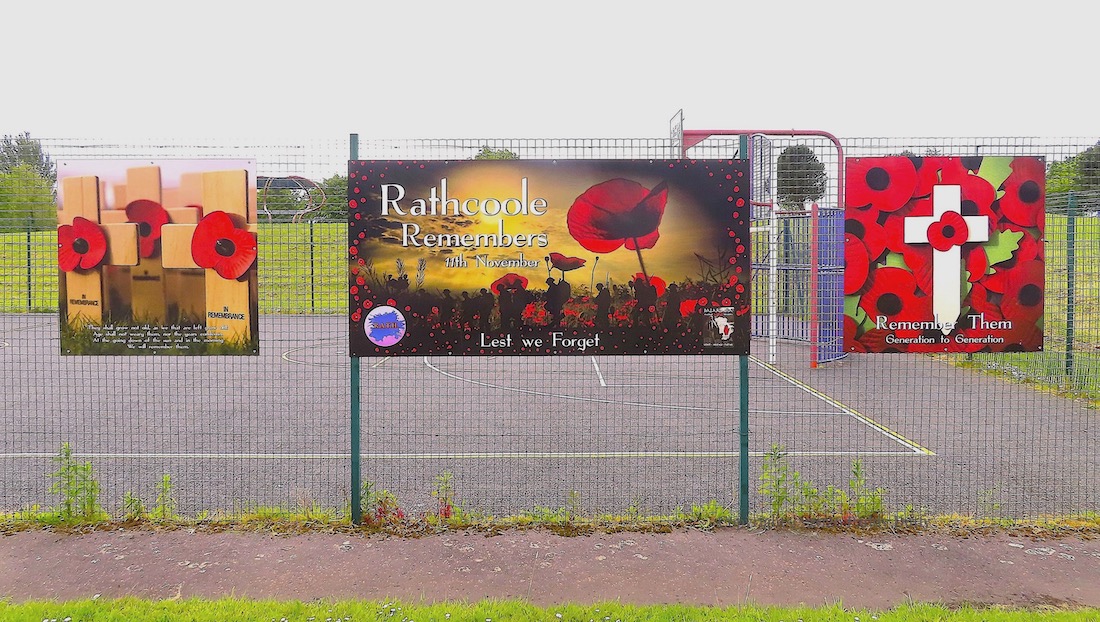
“Rathcoole remembers 11th November. Lest we forget”, “In remembrance” with some lines from For The Fallen, and “Remember them, generation to generation”.
This trio of WWI memorial boards is on the fence of the basketball court along Derrycoole Way, Rathcoole, Newtownabbey, next to an installation of gravestones and sandbags – Row On Row.
The sponsors in the corners of the board shown above are RATH Community Group (Fb) and Dalaradia (web); they previously jointly supported a QEII mural “On The Occasion Of Her Platinum Jubilee“. RATH holds a commemorative service annually in November.
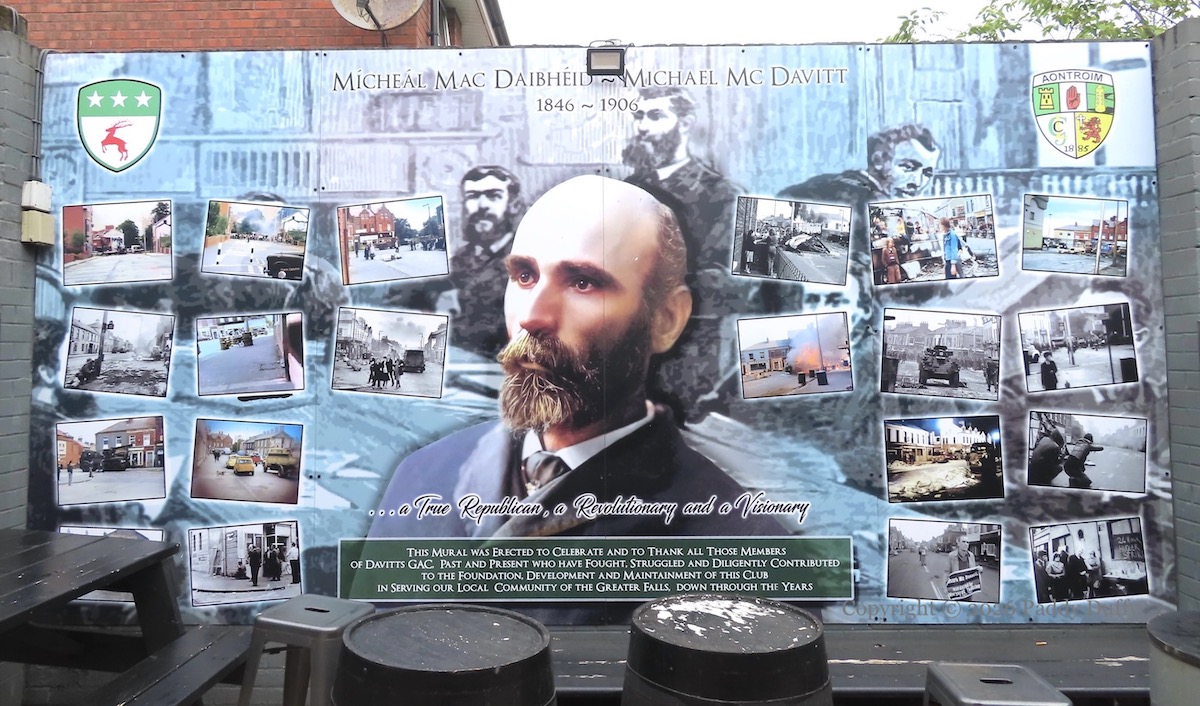
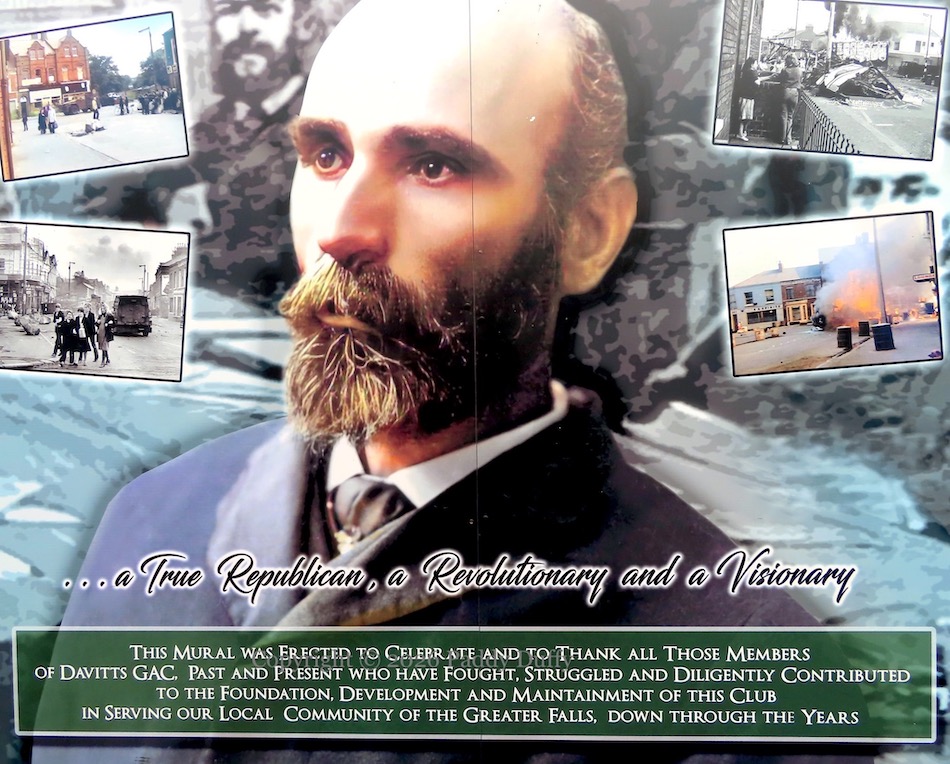
“Mícheál Mac Daıbhéad ~ Michael Davitt, 1846 ~ 1906 … a true republican, a revolutionary and a visionary. This mural was erected to celebrate and to thank all those members of Davitt’s GAC, past and present, who have fought, struggled and diligently contributed to the foundation, development and maintainment of this club in serving our local community of the greater Falls, down through the years.”
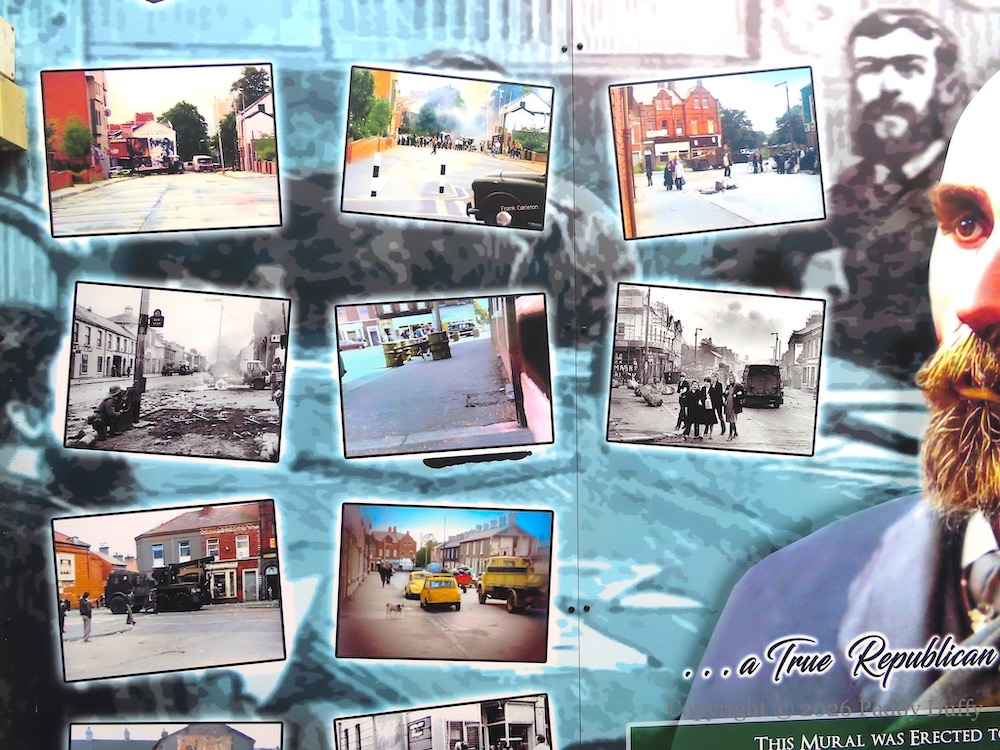
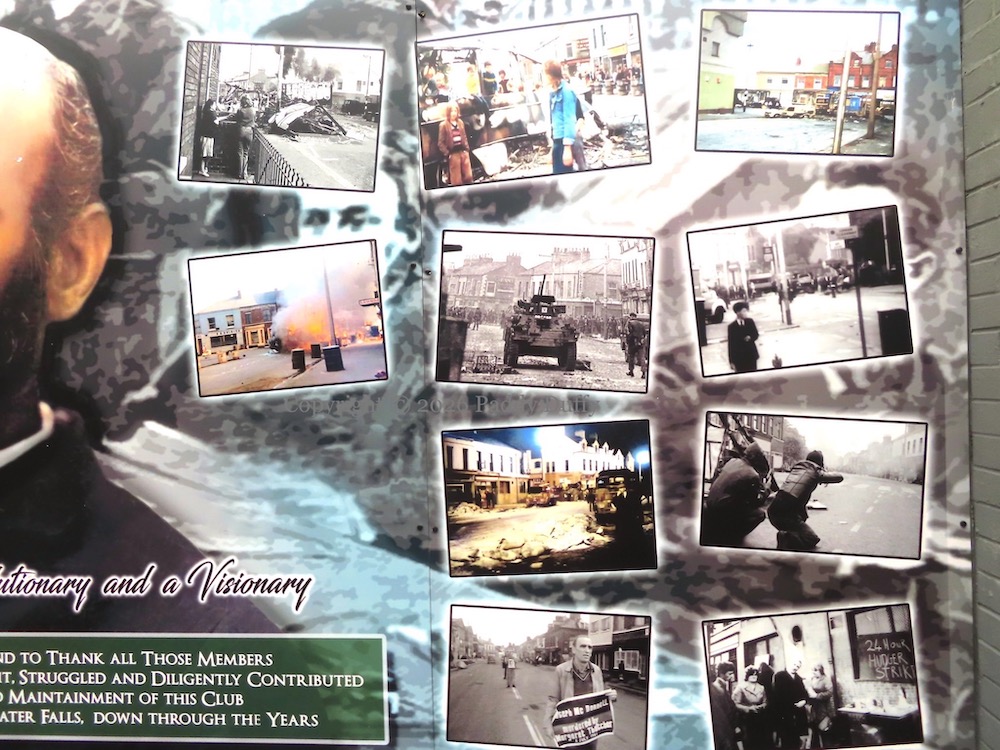
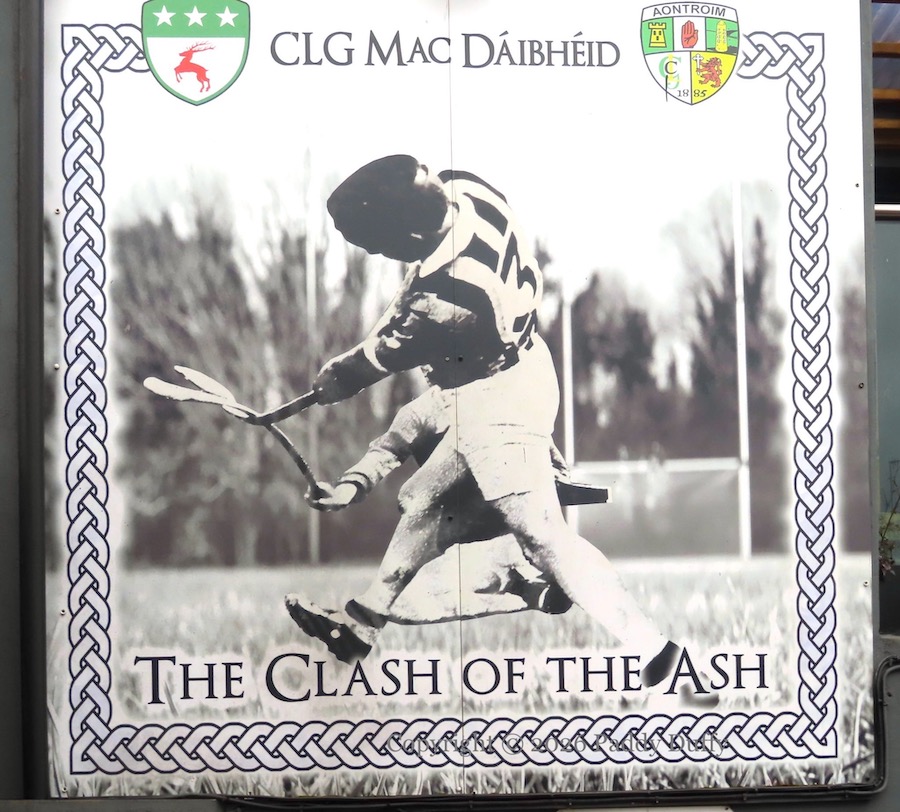
Mícheál Mac Daıbhéad/Michael Davitt is famous for leading the Irish Republican Brotherhood and as “father of the Land League”, and a west Belfast CLG and social club is named in his honor. The board in the courtyard of the social club includes twenty photographs of the lower Falls area from the years of the Troubles.
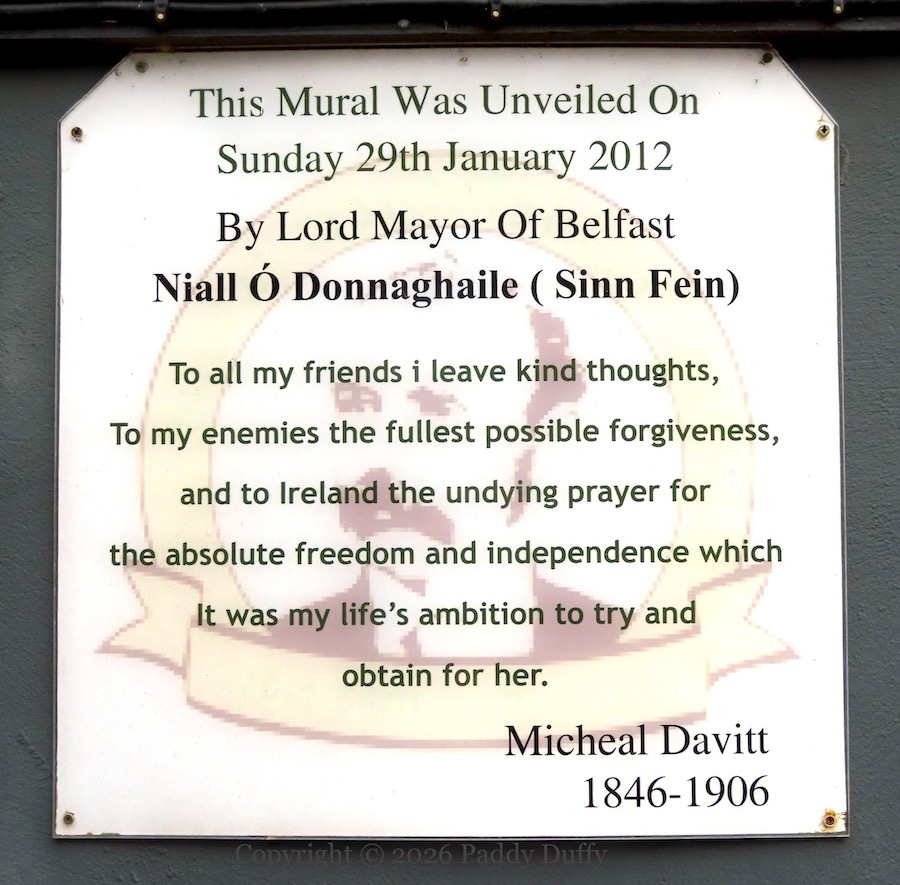
“To all my friends I leave kind thoughts, to my enemies the fullest possible forgiveness, and to Ireland the undying prayer for the absolute freedom and independence which it was my life’s ambition to try and obtain for her.” These words come from Davitt’s will; he died at age 60 (Mayo Live). The mural referred to in the information board (in the final image) was painted for the centenary of the club, in 2012.
 Paddy Duffy Collection