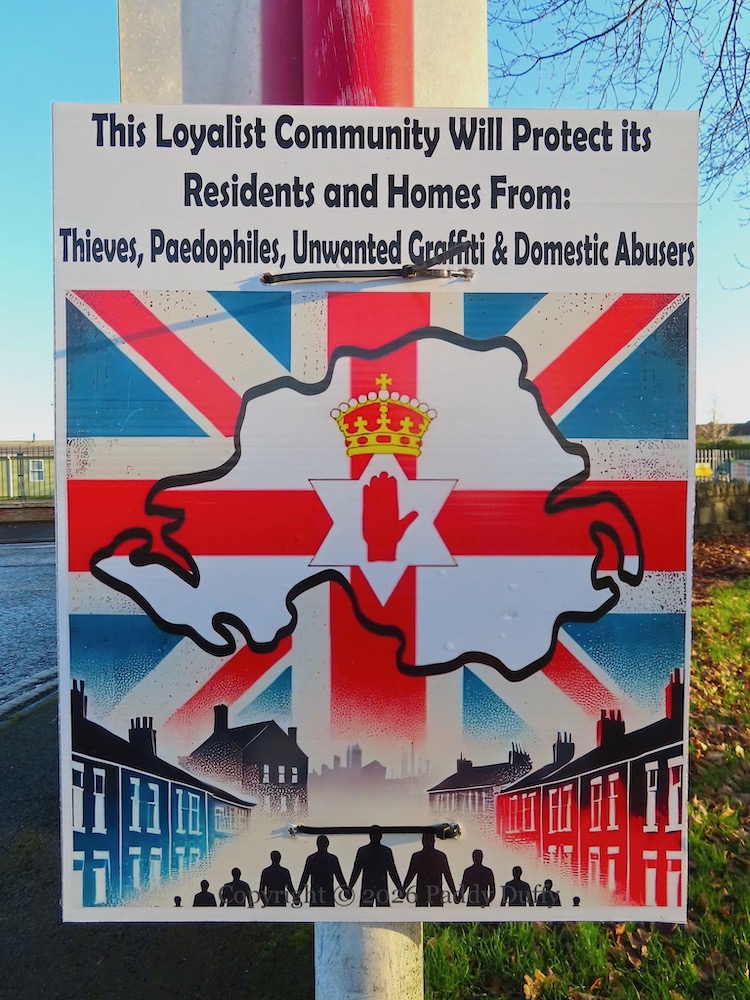
“The loyalist community will protect its residents and homes from: thieves, paedophiles, unwanted graffiti & domestic abusers.” The list of crimes makes no reference to denomination or ethnicity, but “loyalist” and the combined Union Flag (which is incorrectly rendered) and Ulster Banner suggest that the threat comes from those who identify insufficiently with the UK.
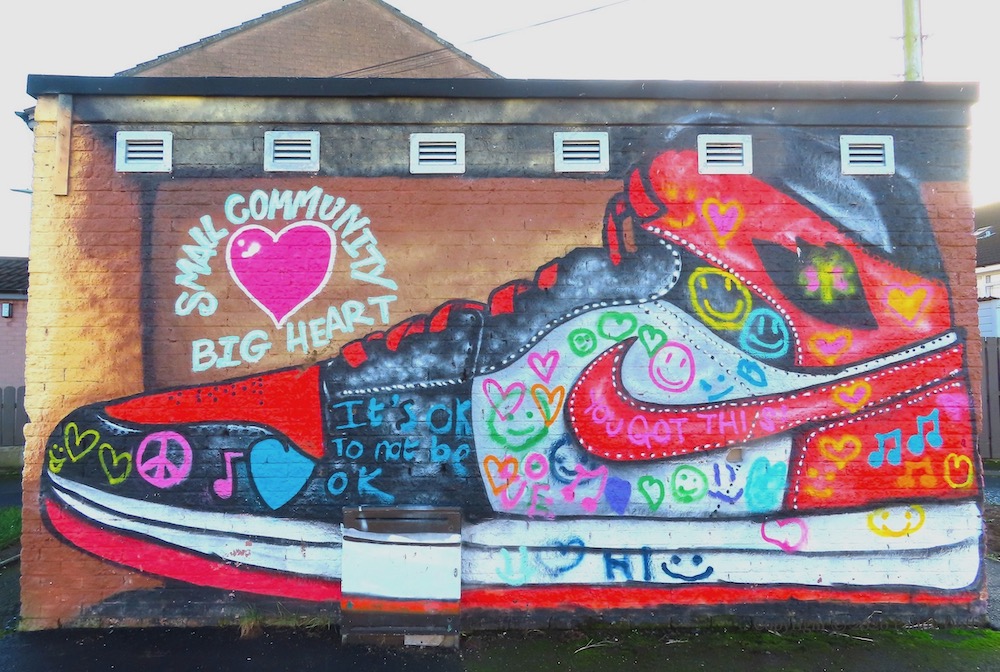
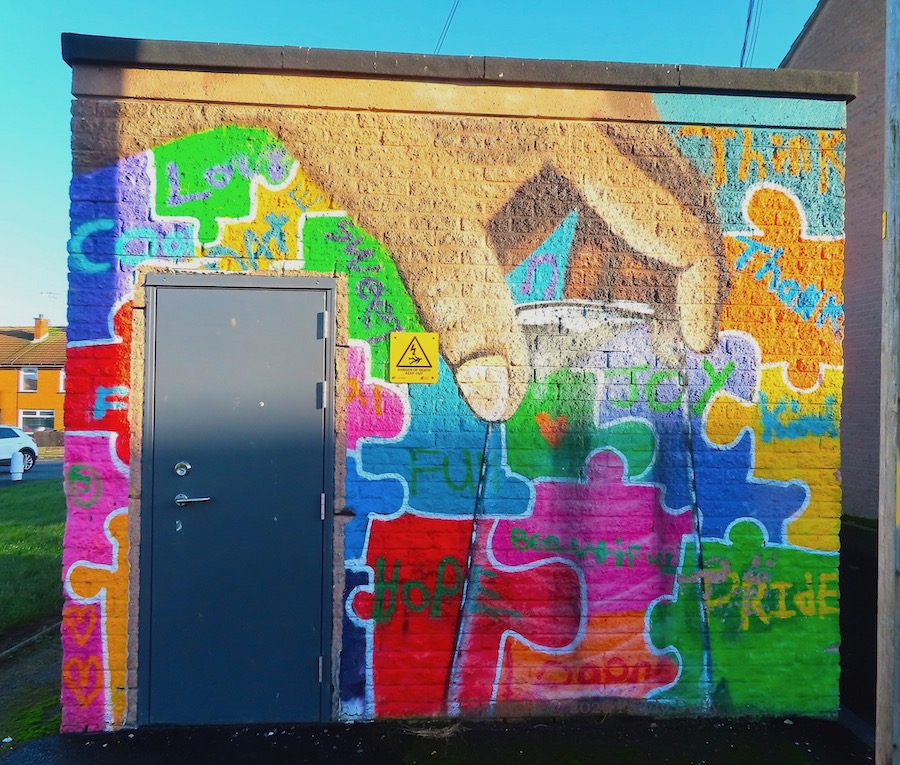
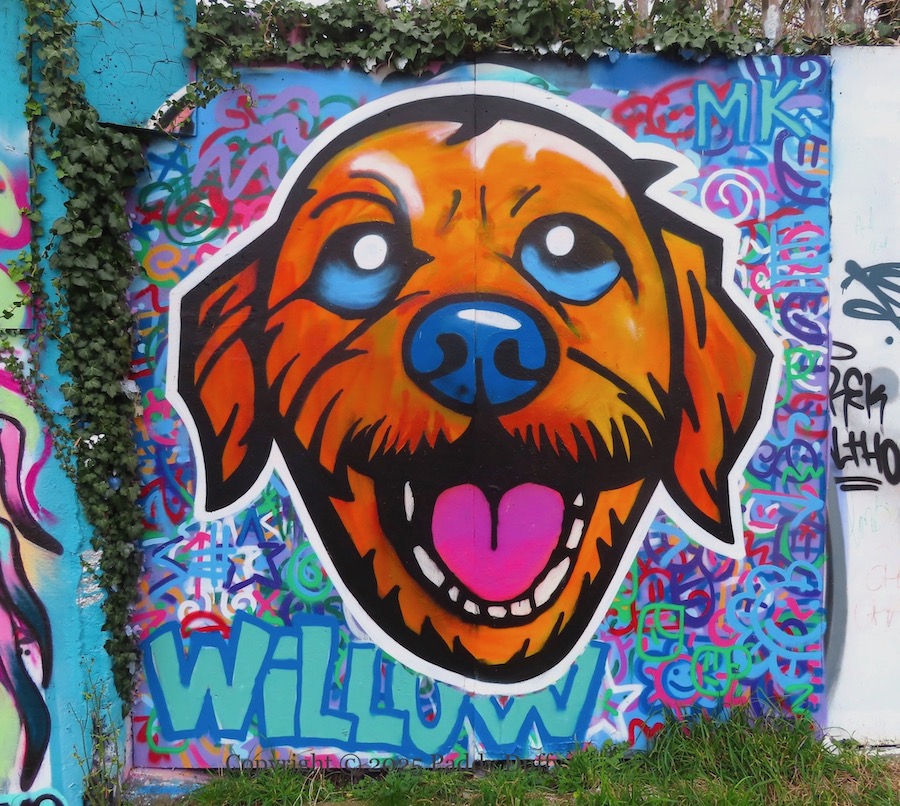
This is a kids/community/mental-health mural on the sub-station in Edgarstown. The art was painted by young people from the area, organised by Edgarstown Residents’ Association in the summer of 2024 (Fb).
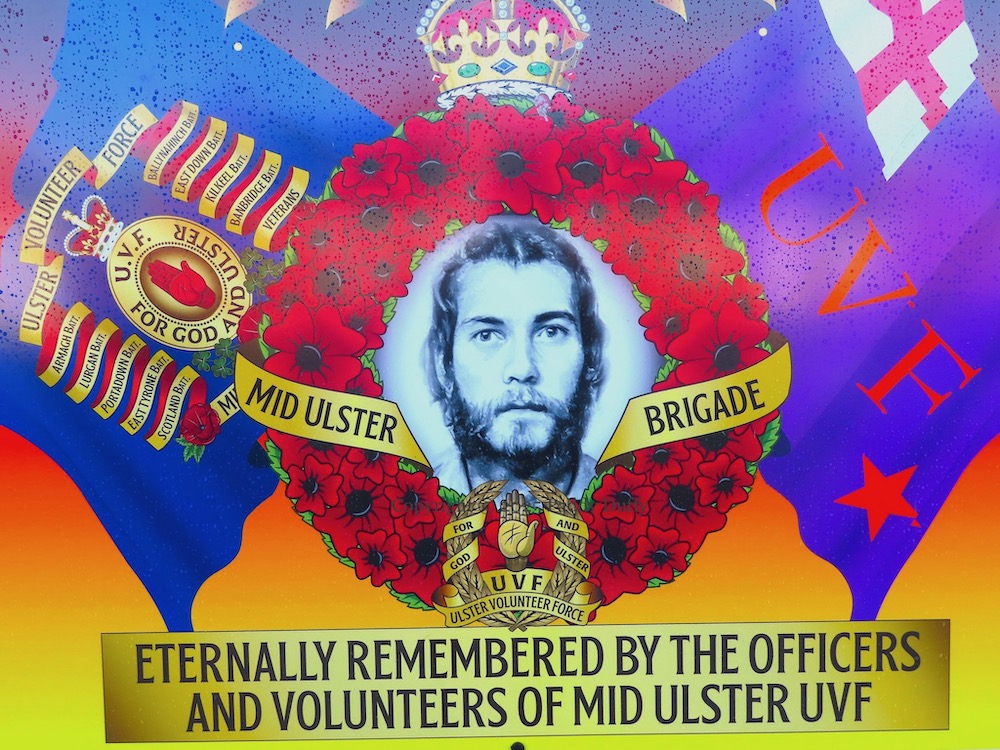
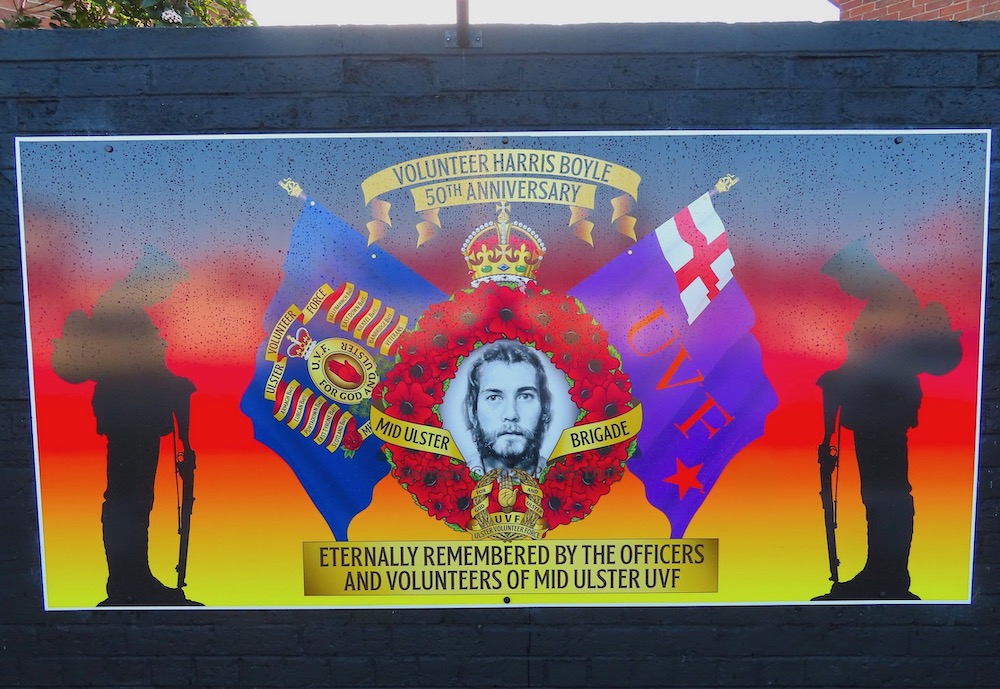
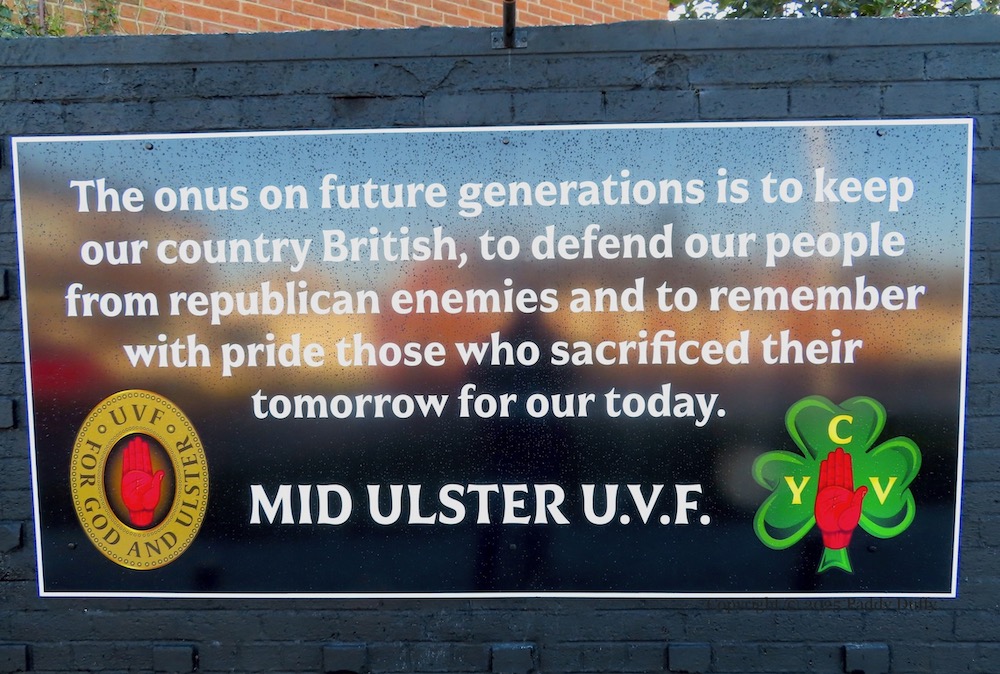
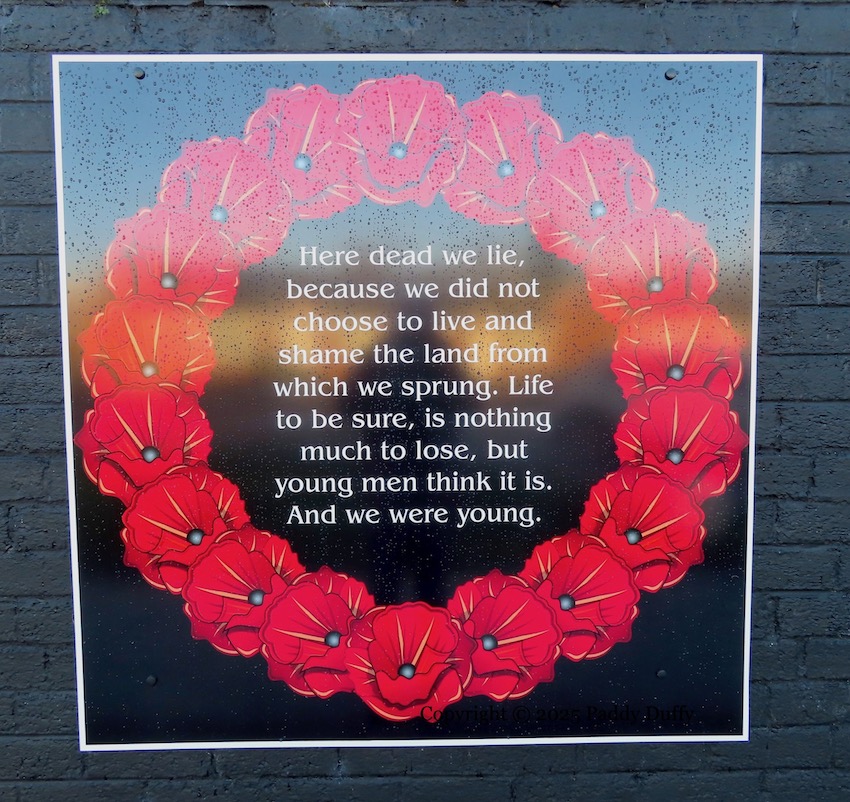
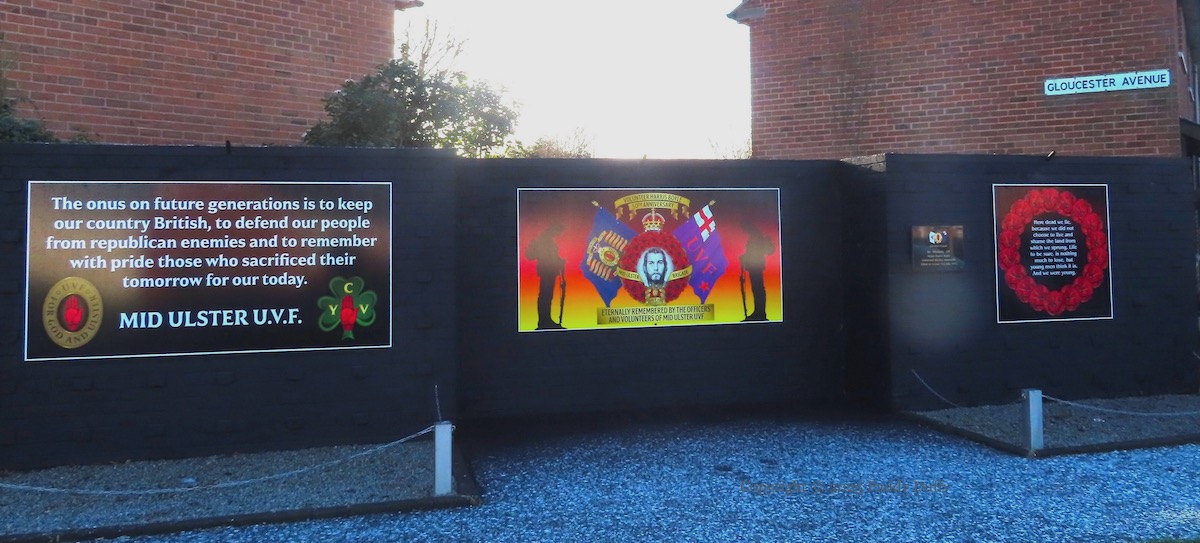
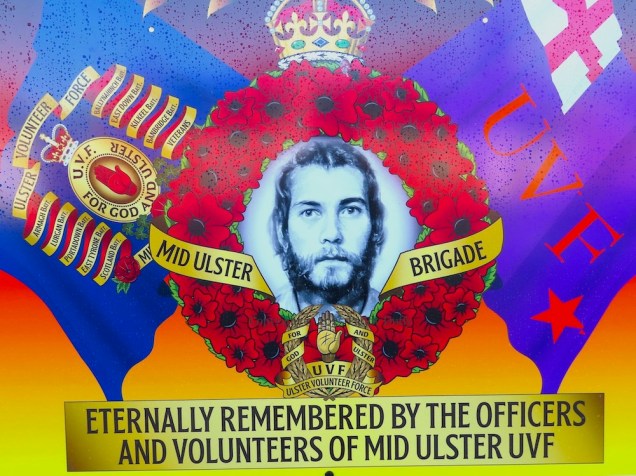
This entry updates 2024’s Here Dead We Lie – the plaque to Boyle and Somerville remains as before (it was originally mounted in 2005) but all three of the boards have been updated. The two on the extremes have the same content as before, while the central board marks the “50th anniversary” of the death of “Volunteer Harris Boyle”, “eternally remembered by the officers and volunteers of Mid-Ulster UVF”. Both Boyle and Somerville were members of both the UDR and UVF; they were “killed in action” when the bomb they were planting on the minibus of the Miami Showband went off prematurely. A parade in Boye’s memory took place in Portadown (BBC). Surviving Showband members and their sympathisers also marked the anniversary – on July 31st, 2025 – with a service at the spot of the attack (BBC).
The boards are at the junction of Gloucester Avenue and Princess Way in Portadown – Boyle was from the Killicomaine estate; Somerville is individually commemorated in Moygashel.
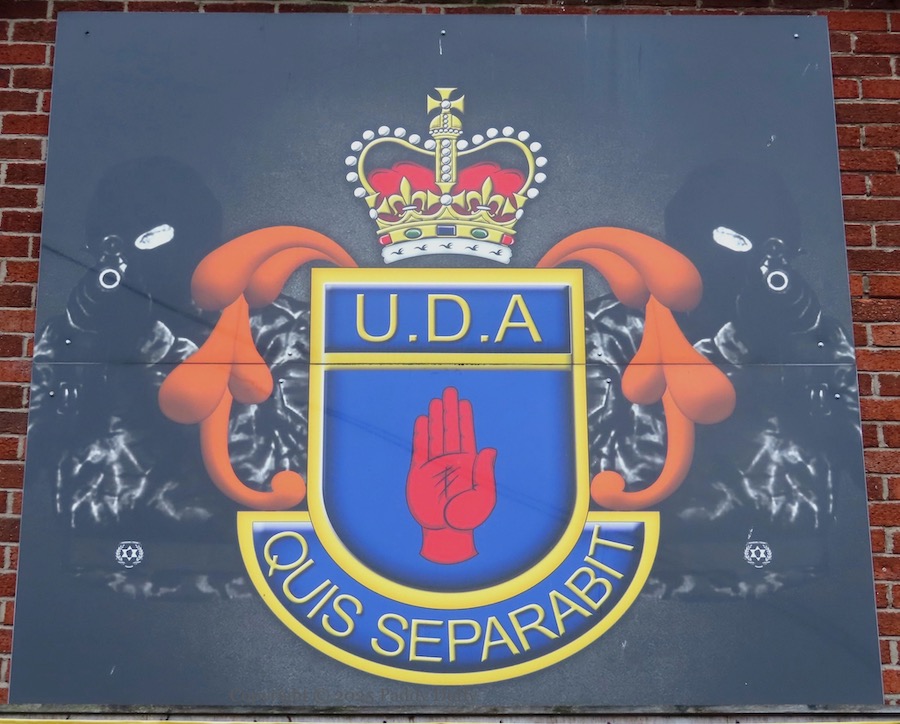
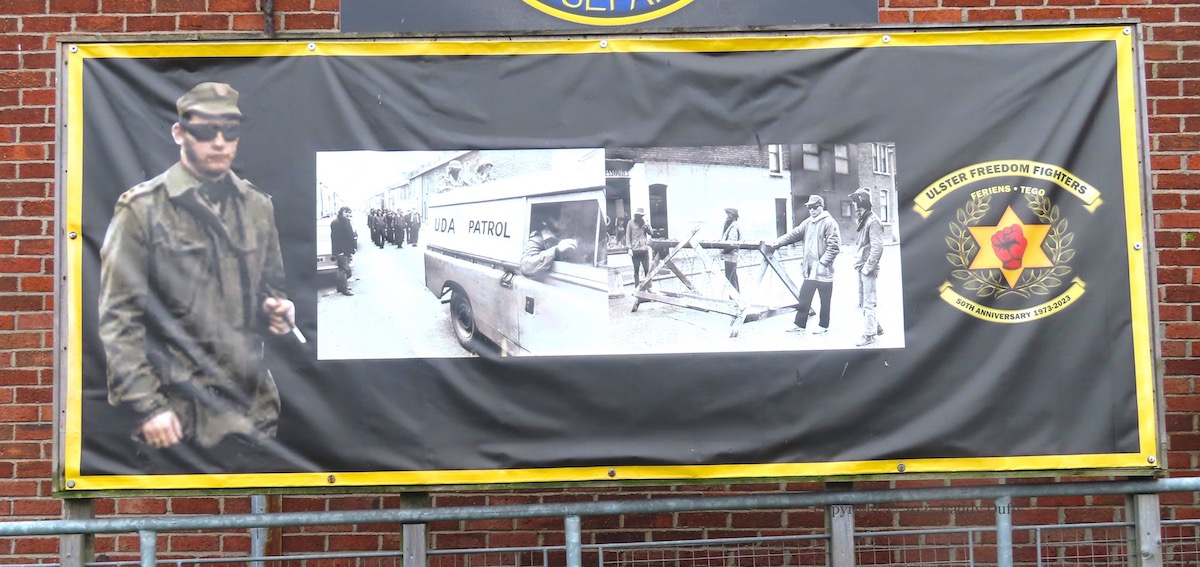
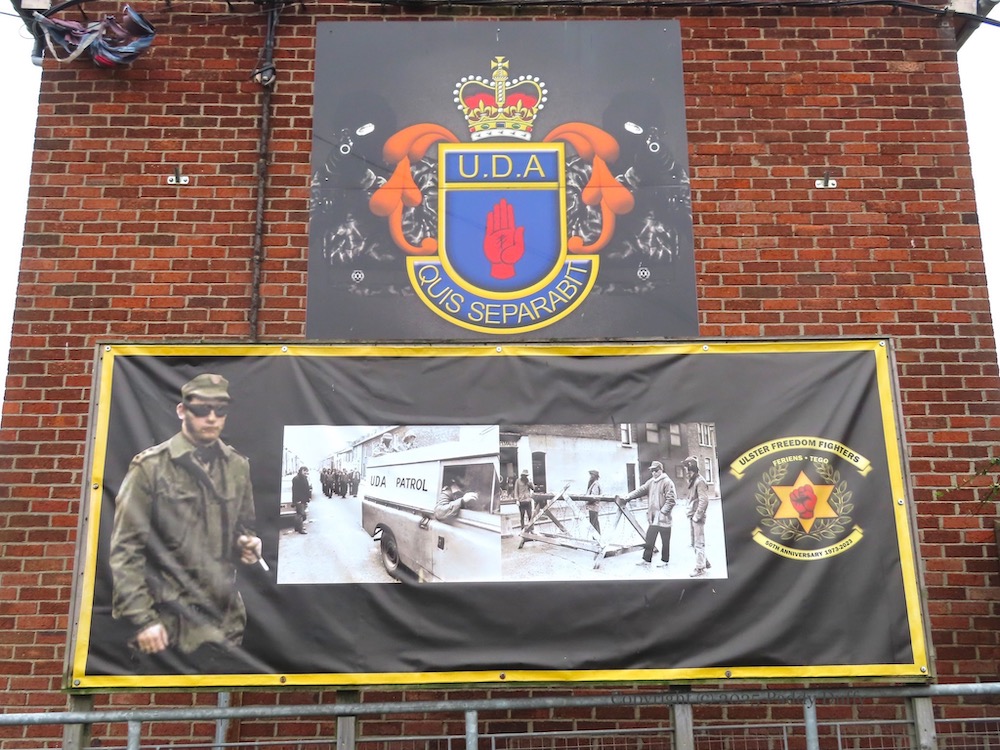
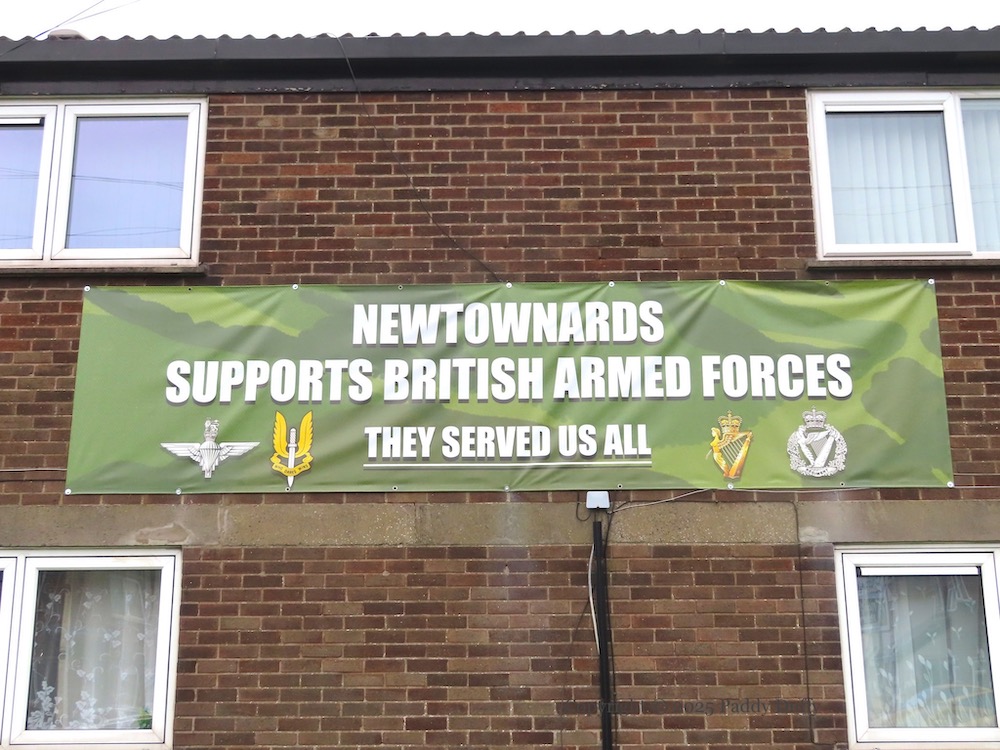
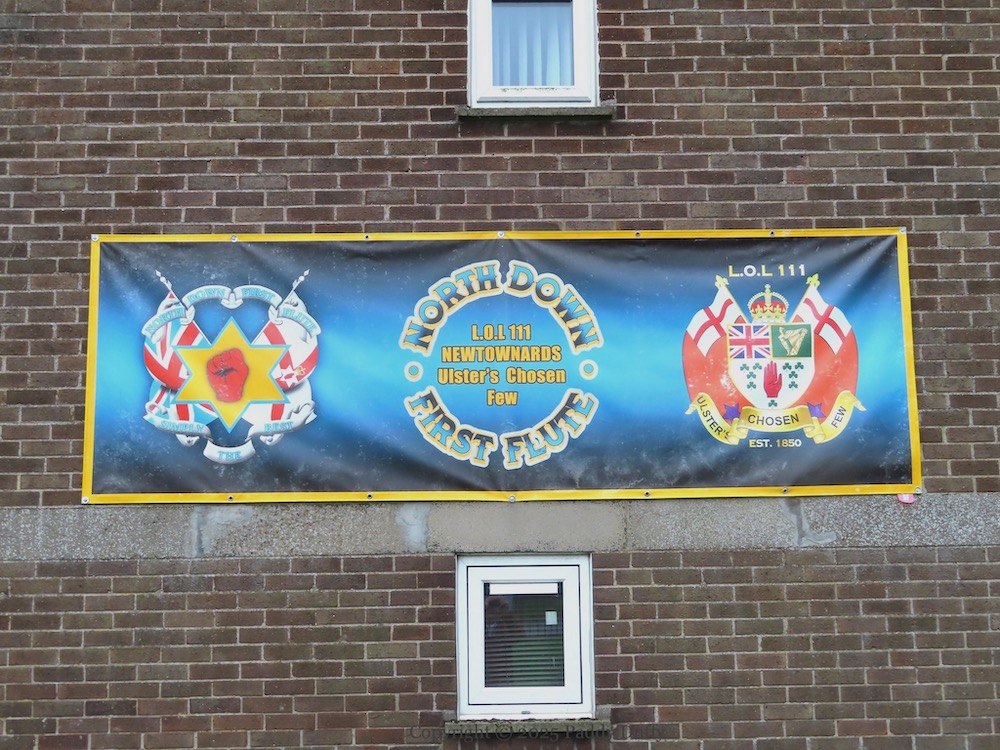
This entry updates the images seen at the end of 2022 (in Loyalist Movilla). The UDA board with hooded gunmen (above) remains as before but the tarp below it is new (though perhaps relocated from the Glen estate). The other two tarps are also new: “Newtownards supports British Armed Forces – They served us all” with the emblems of the Paratroop Regiment, the SAS, the RIR and the UDR, and, “North Down First Flute [Fb], LOL 111 Newtownards – Ulster’s chosen few”.
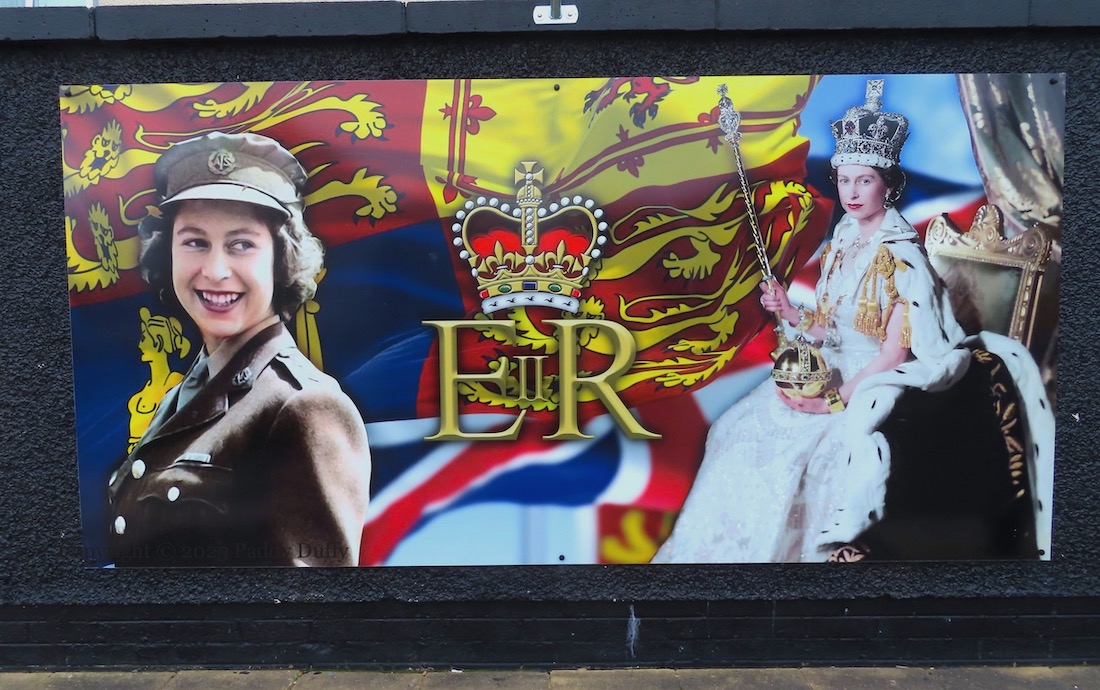
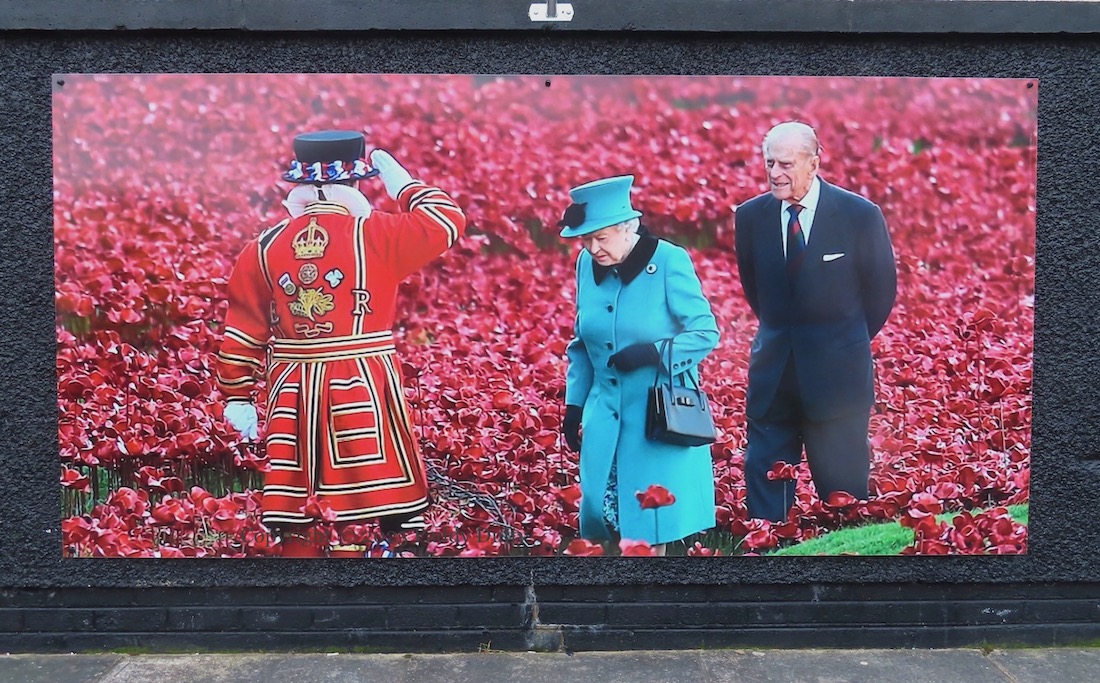
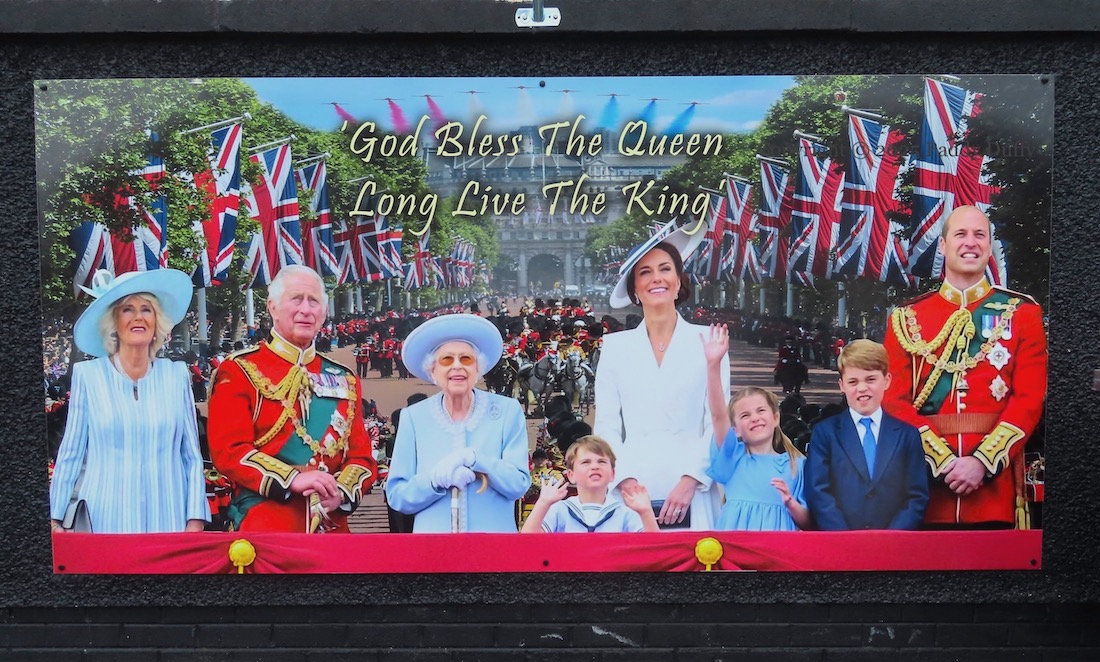
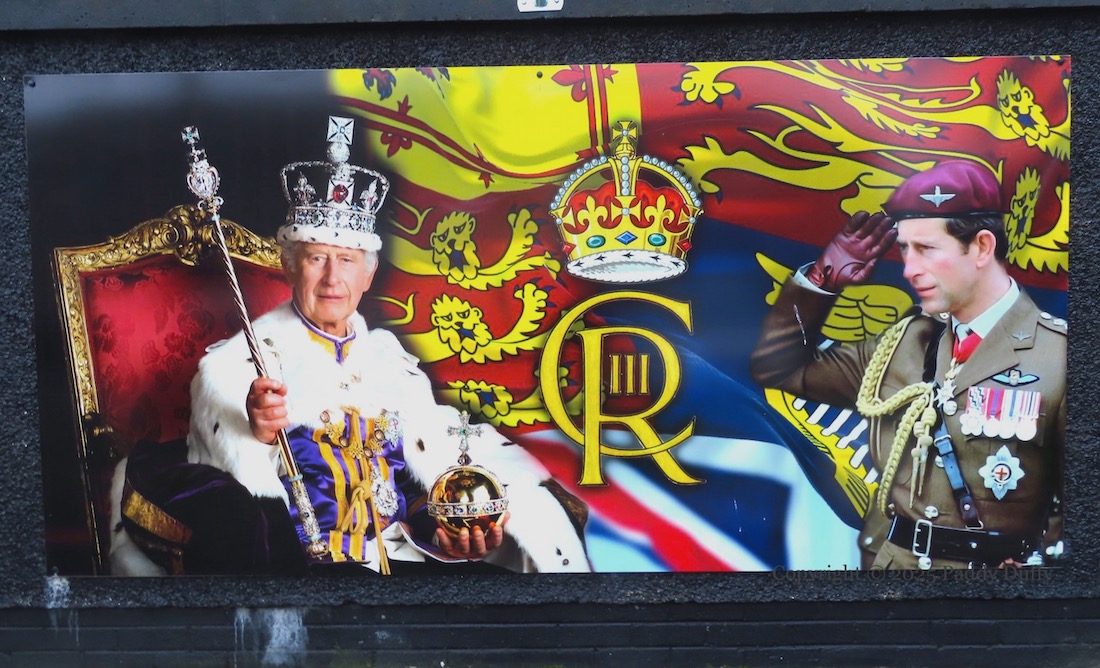
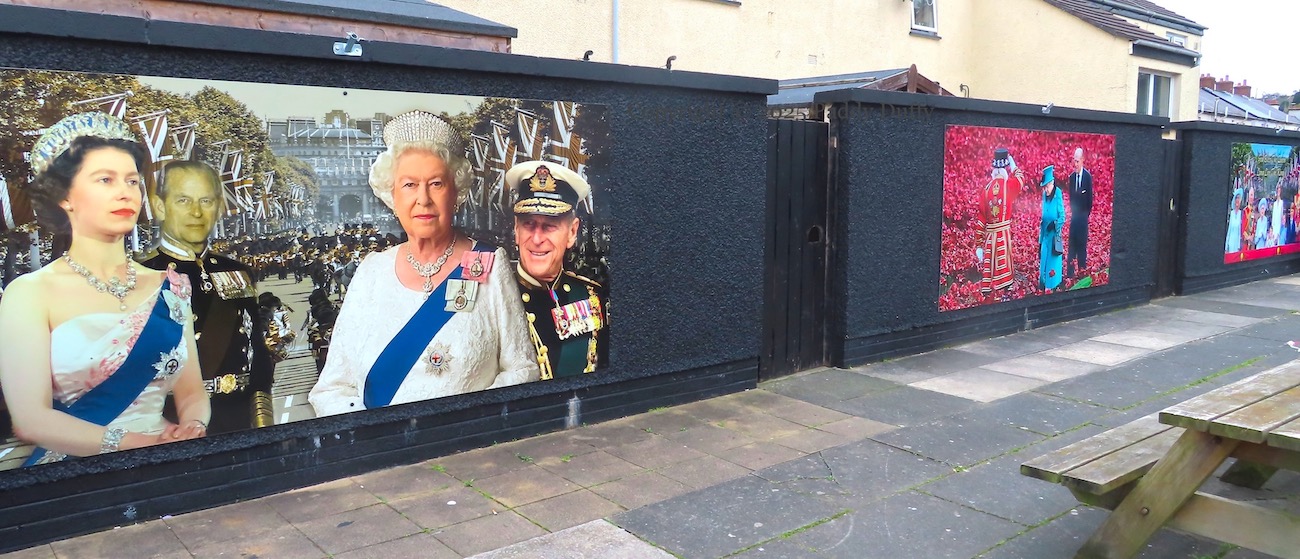
This is a series of five boards commemorating and celebrating the recent transition in UK royalty from Elizabeth to Charles. Three panels chronicle the life of Elizabeth Windsor beginning (above) with her service during the Second World War in the Auxiliary Territorial Service and coronation in 1953. In the final panel, Charles is shown in a coronation photograph (from 2022) and celebrating the fiftieth anniversary of the Parachute Regiment in 1990 (youtube).
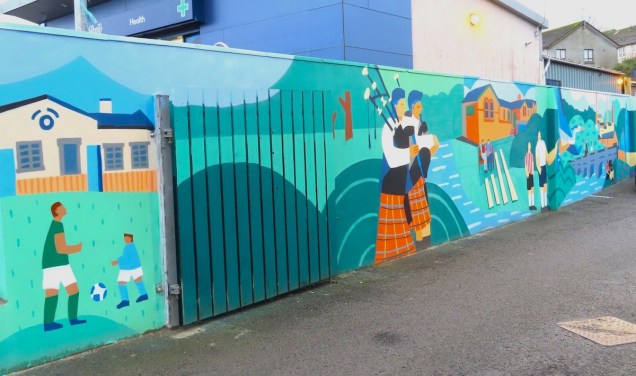
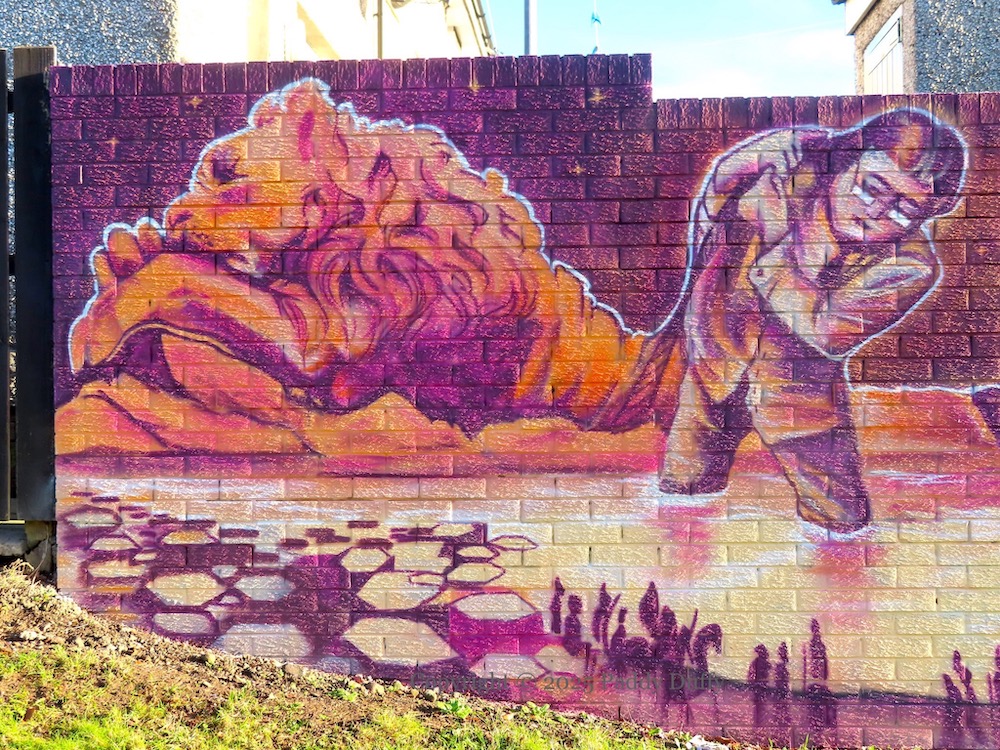
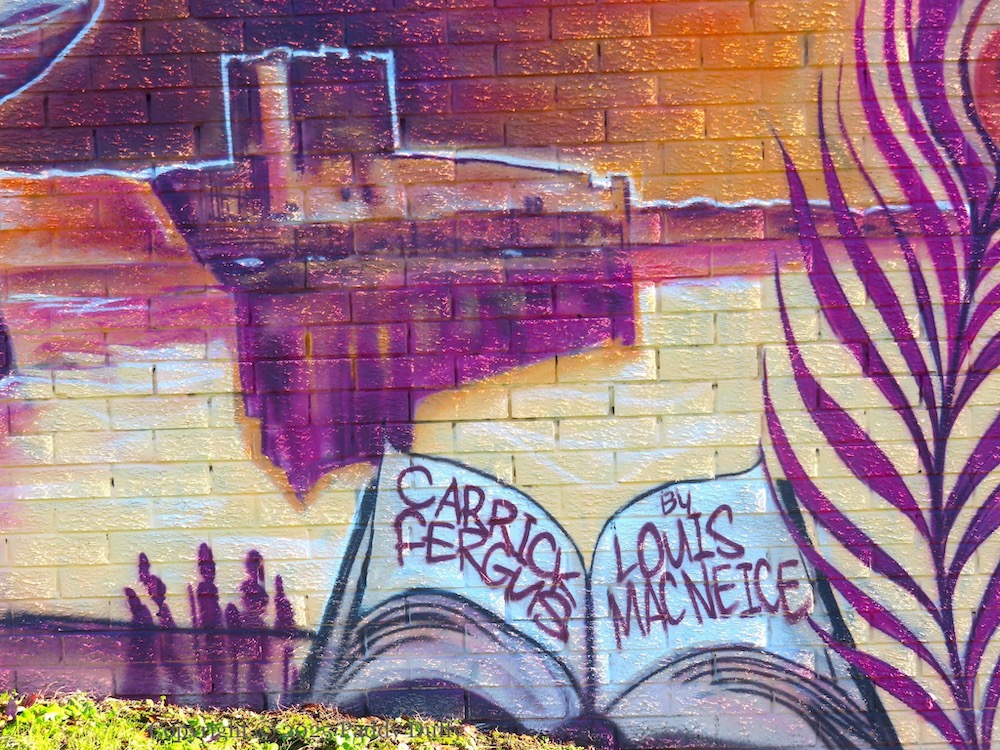
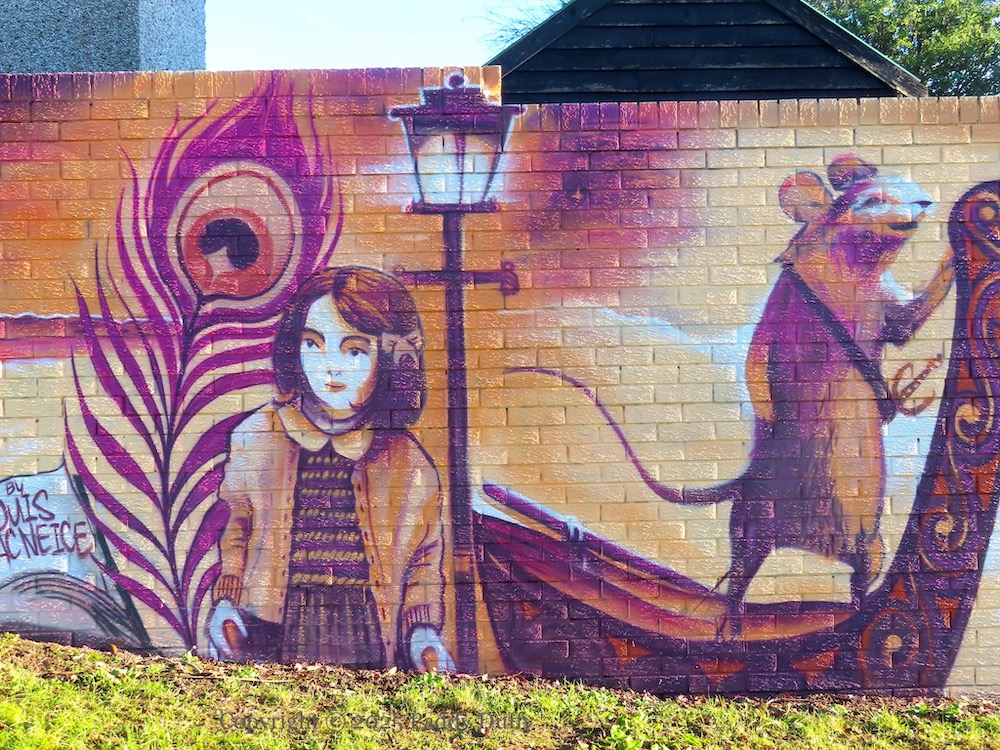
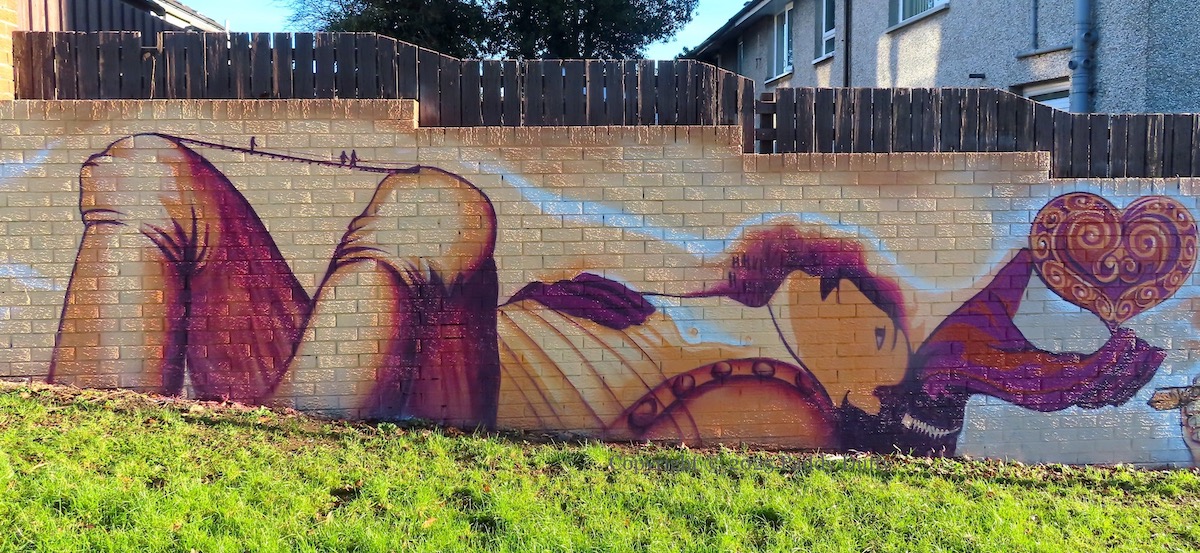
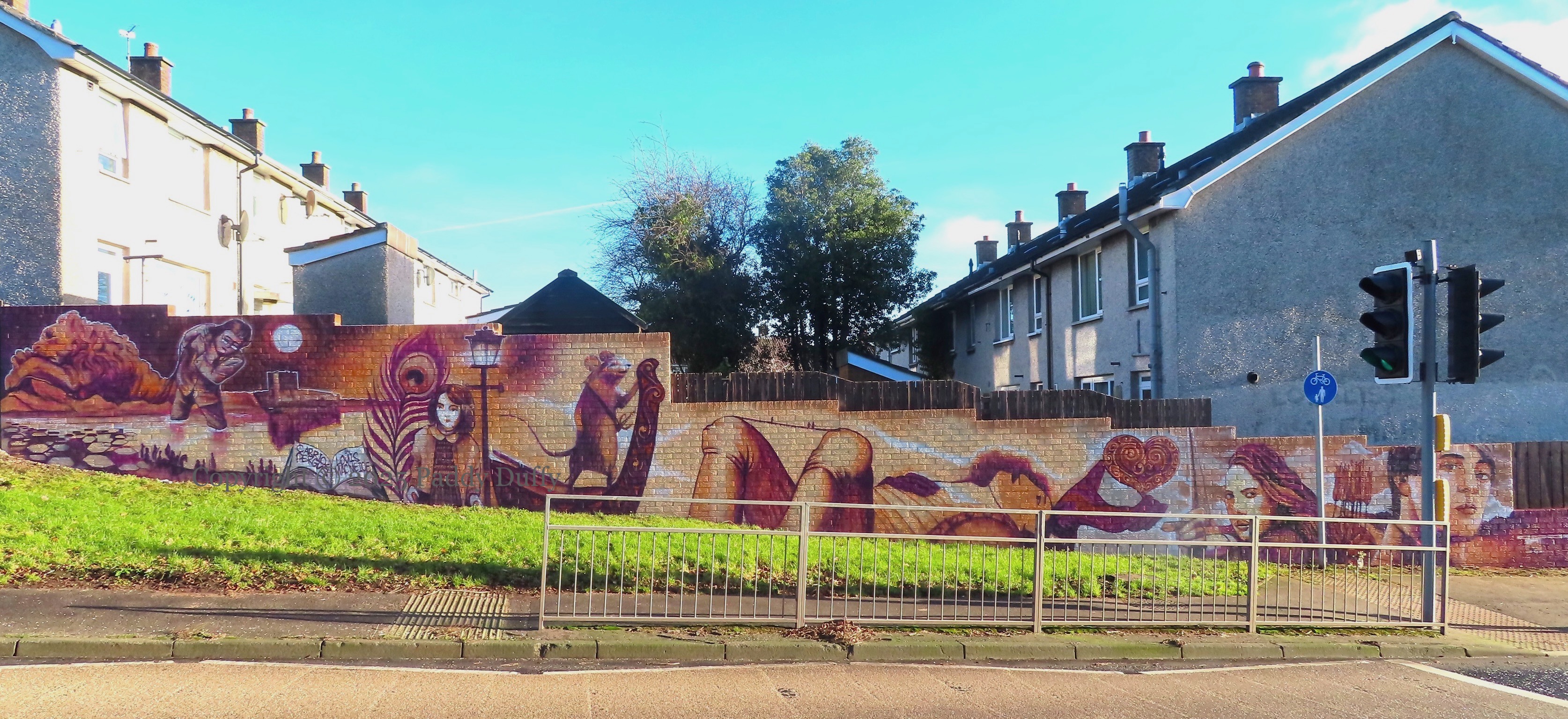
This new mural in Carrickfergus draws on local connections to literary figures Louis MacNeice and Jonathan Swift, as well as the more distantly located CS Lewis.
The MacNeices moved from Belfast to Carrickfergus in 1909 when Freddie (later Louis) was an infant and he grew up in the town until he was sent to Sherbourne Prep in Dorset, England, in 1917. In the mural, a book is opened to the page of his poem Carrickfergus, which was written in 1937 and describes the town in geological, historical, industrial, and sectarian terms, and more real than the “puppet world” of Sherbourne.
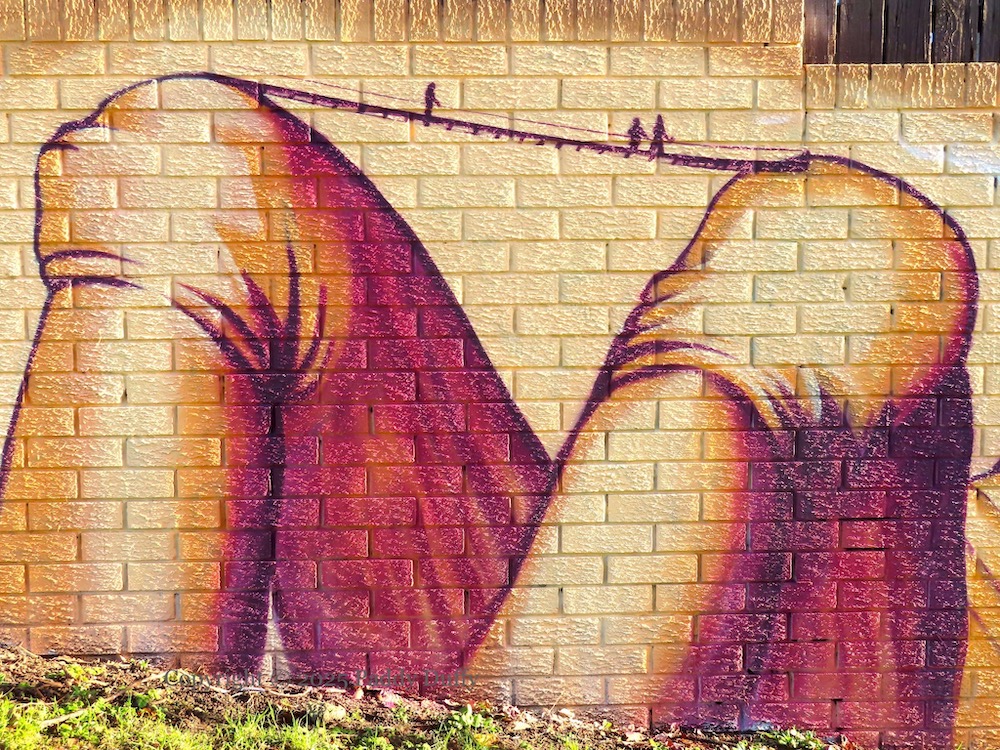
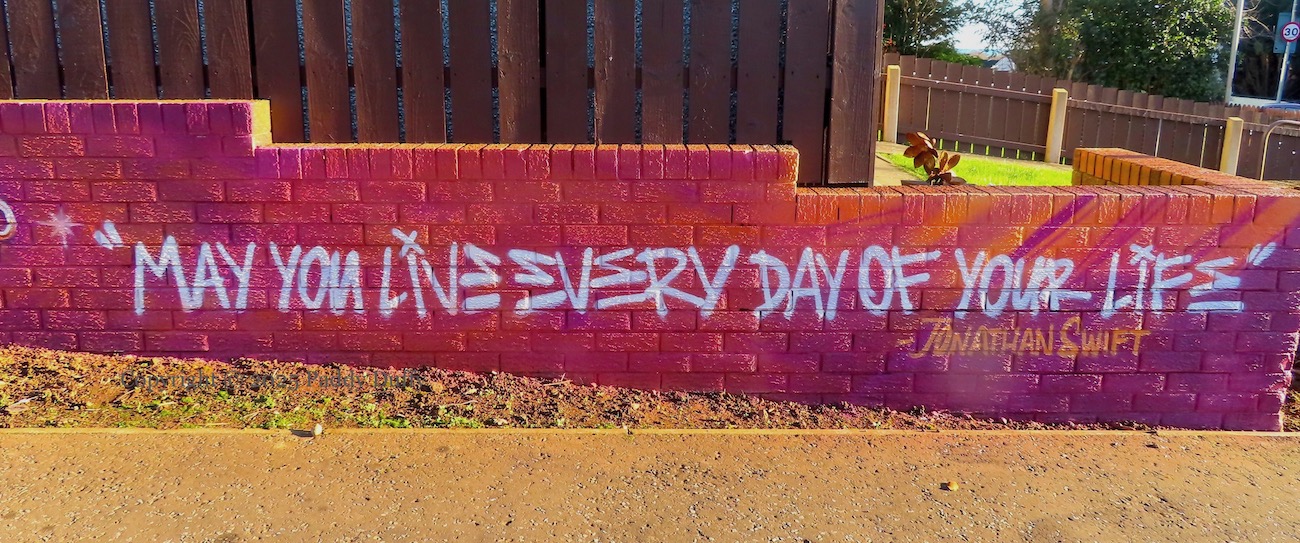
Jonathan Swift was briefly (1694-1696) a Church Of Ireland cleric in Kilroot, near Carrickfergus. In the mural, Carrick-A-Rede rope-bridge is shown strung between the knees of Gulliver as he wakes in Lilliput. The Swift quote on the extreme (viewer’s) right is from Polite Conversation (p. 154): Miss Notable is toasted by both Mr Neverout – “May you live a thousand years”; “Pray, Sir, don’t stint me”, she replies – and Colonel Atwit – “May you live every day of your life”.
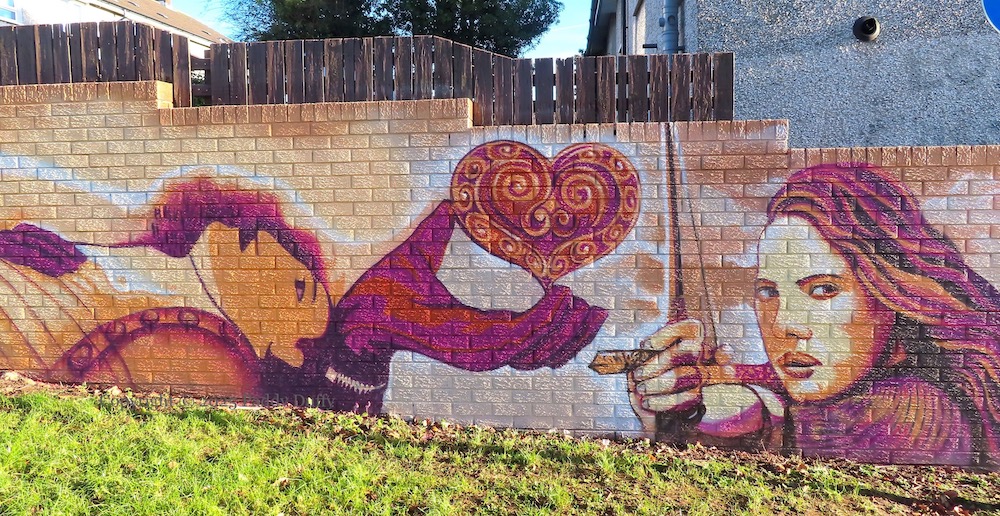
Lewisian figures include Aslan the lion and Reepicheep the mouse. The final (right-most) figures would seem to be Katniss and Peeta from The Hunger Games.
Painted by DMC on North Road, Carrickfergus, at the entrance to the Castlemara estate, as a complement and competitor to the PUL boards.
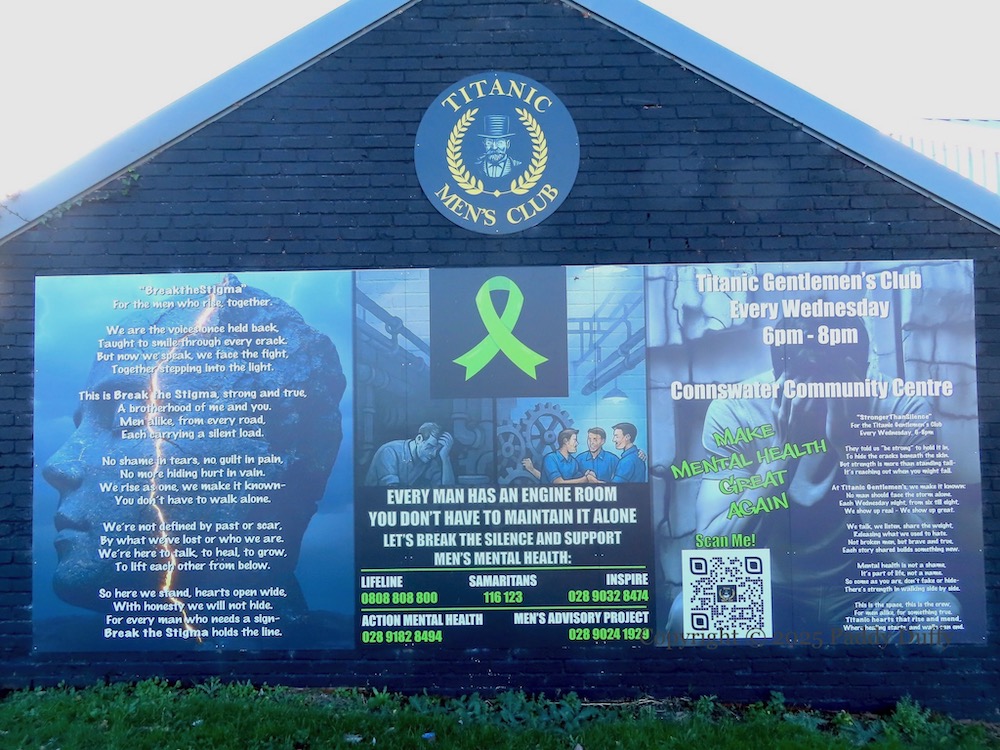
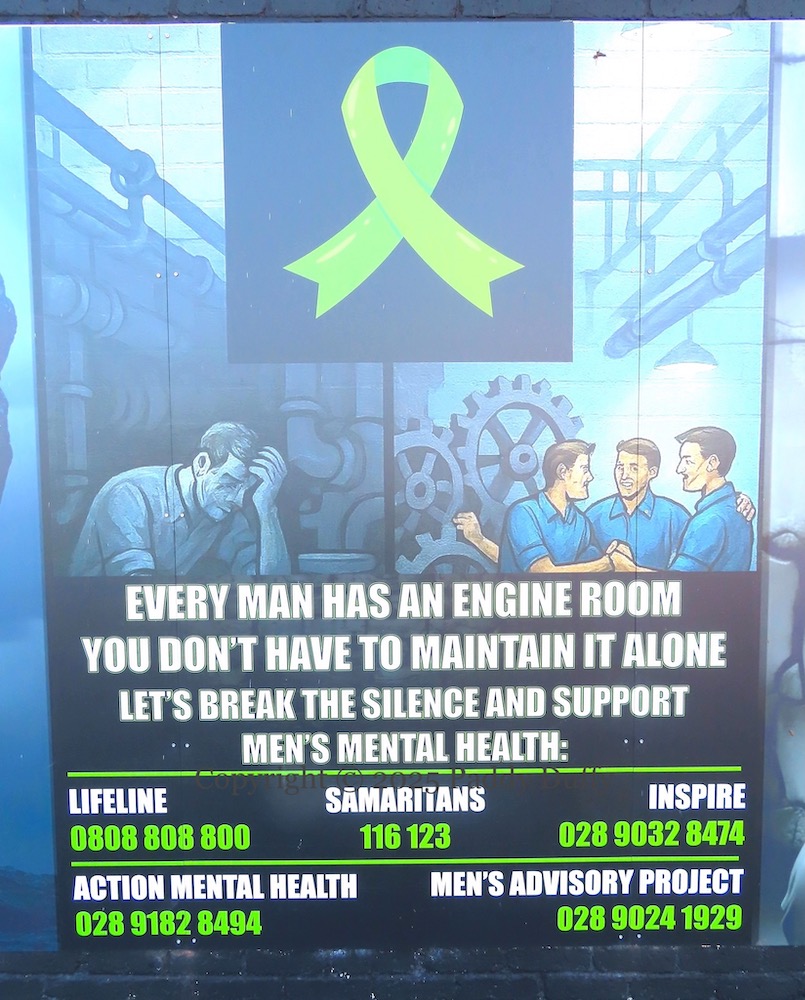
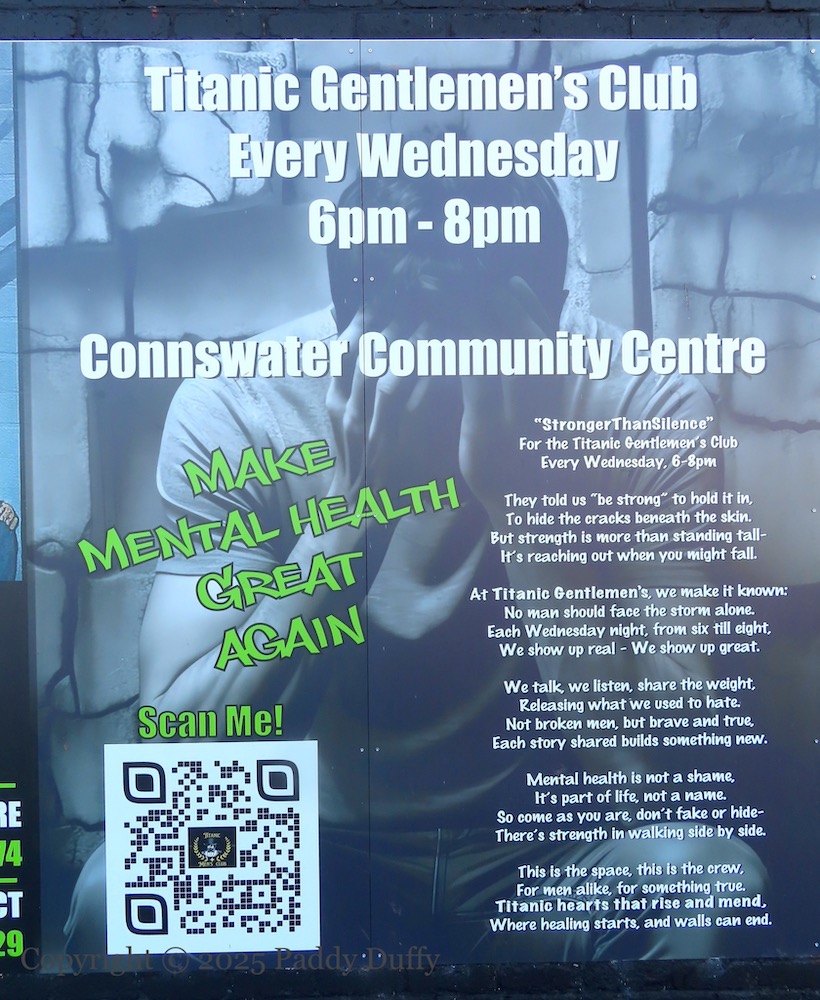
“Titanic Gentlemen’s Club [Fb], every Wednesday 6pm – 8pm, Connswater Community Centre. Make mental health great again. Every man has an engine room – you don’t have to maintain it alone. Let’s break the silence and support men’s mental health.”
The green ribbon is the symbol of the campaign to release political prisoners, and “Make ___ great again” is the form of the slogan of the MAGA movement in the United States.
The board was officially launched July 9th (Fb) in Severn Street, east Belfast.
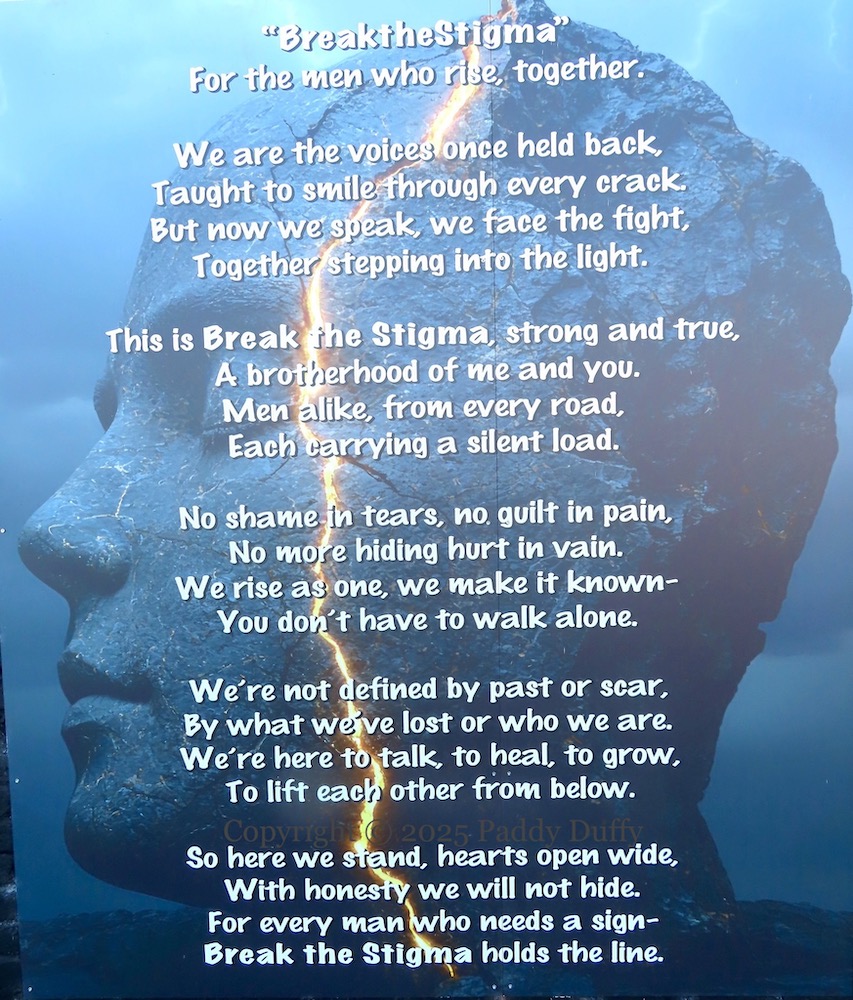
“”BreaktheStigma” for the men who rise, together: We are the voices once held back,/Taught to smile through every crack./But now we speak, we face the fight,/Together stepping into the light.//This is Break the Stigma, strong and true,/A brotherhood of me and you./Men alike, from every road,/Each carrying a silent load.//No shame in tears, no guilt in pain,/No more hiding hurt in vain./We rise as one, we make it known-/You don’t have to walk alone.//We’re not defined by past or scar,/By what we’ve lost or who we are./We’re here to talk, to heal, to grow,/To lift each other from below.//So here we stand, hearts open wide,/With honesty we will not hide./For every man who needs a sign-/Break the Stigma holds the line.”










 Paddy Duffy Collection