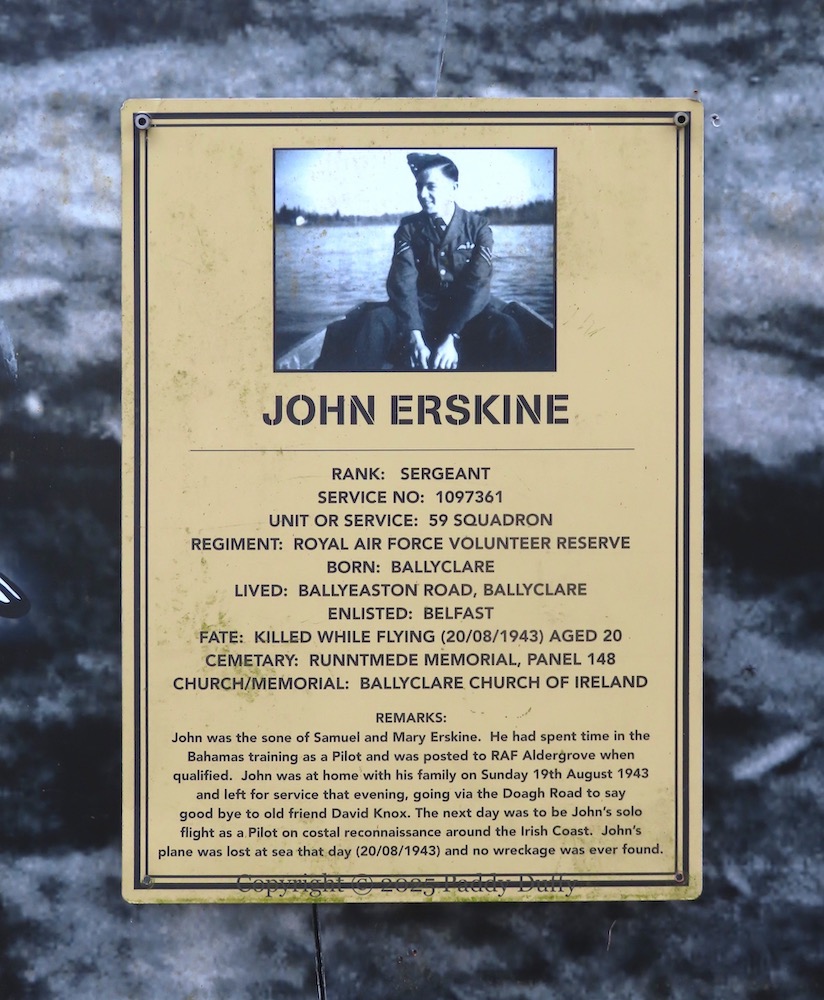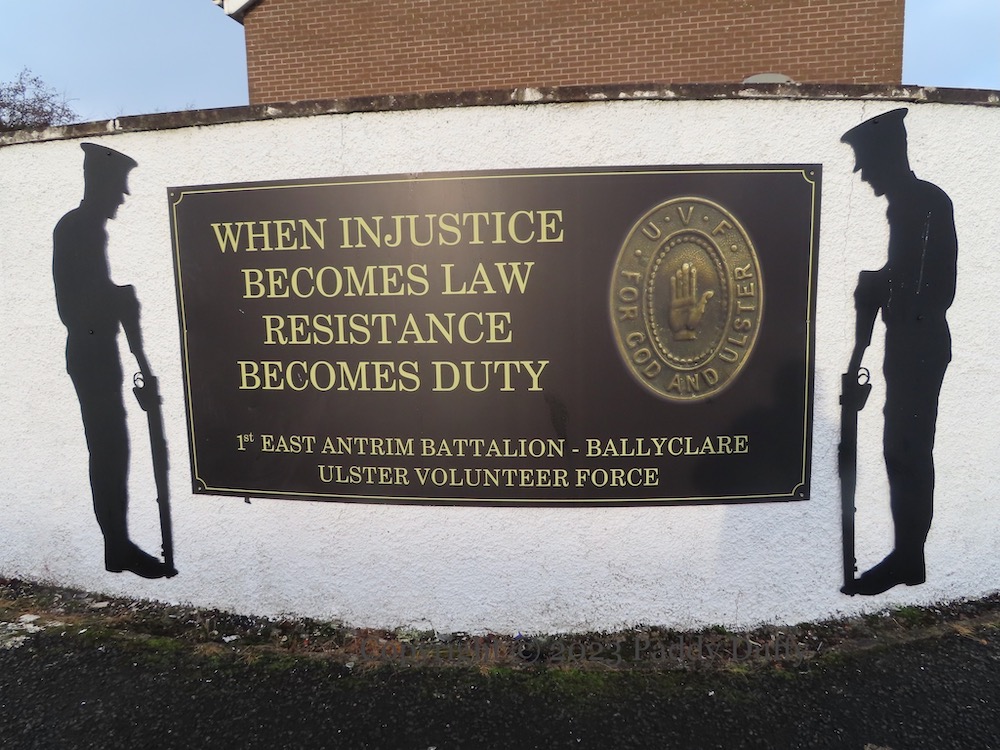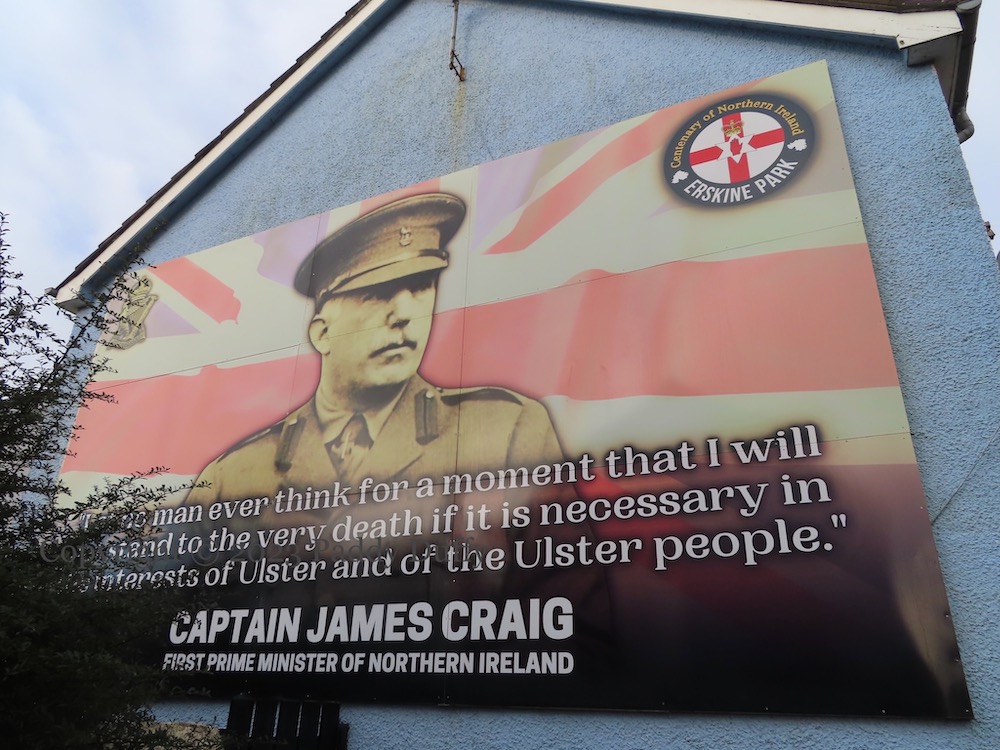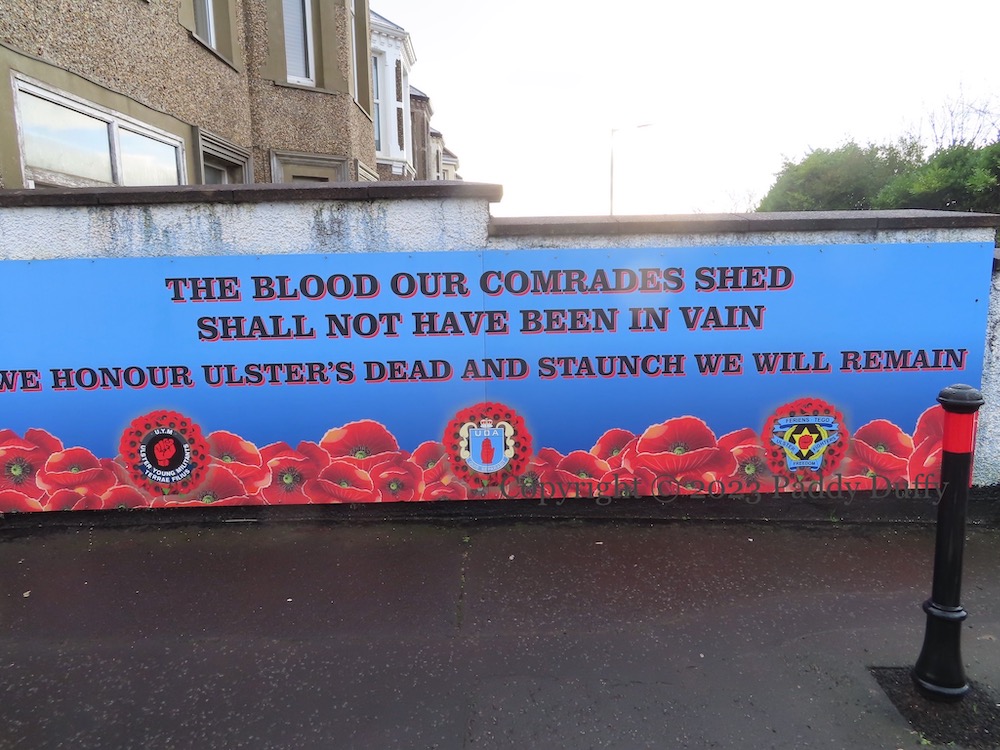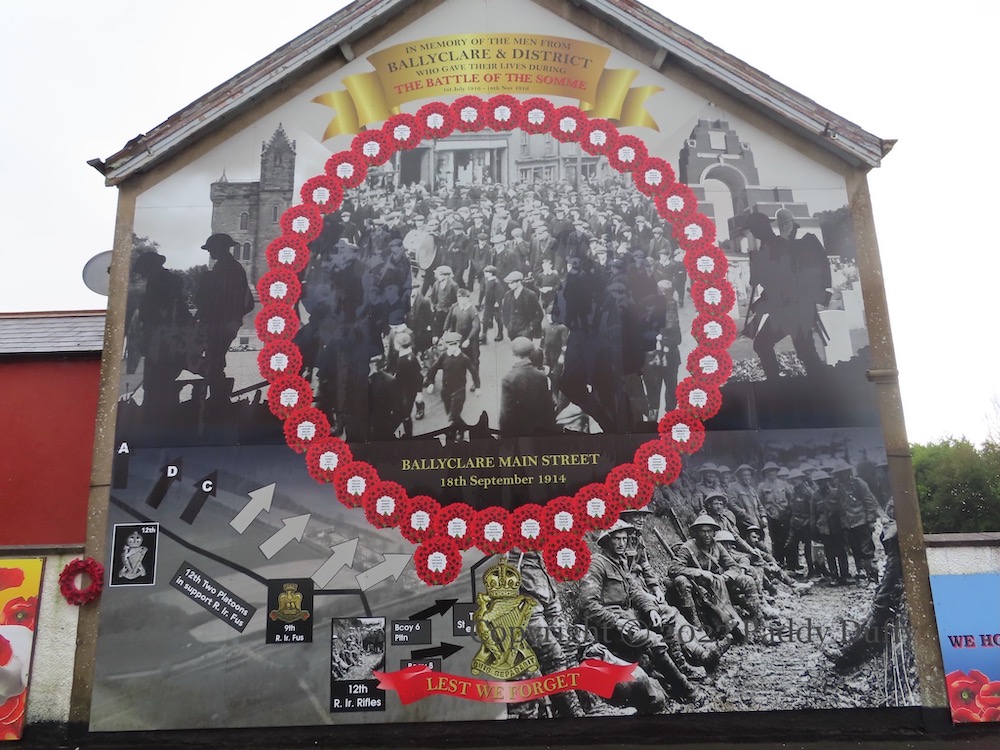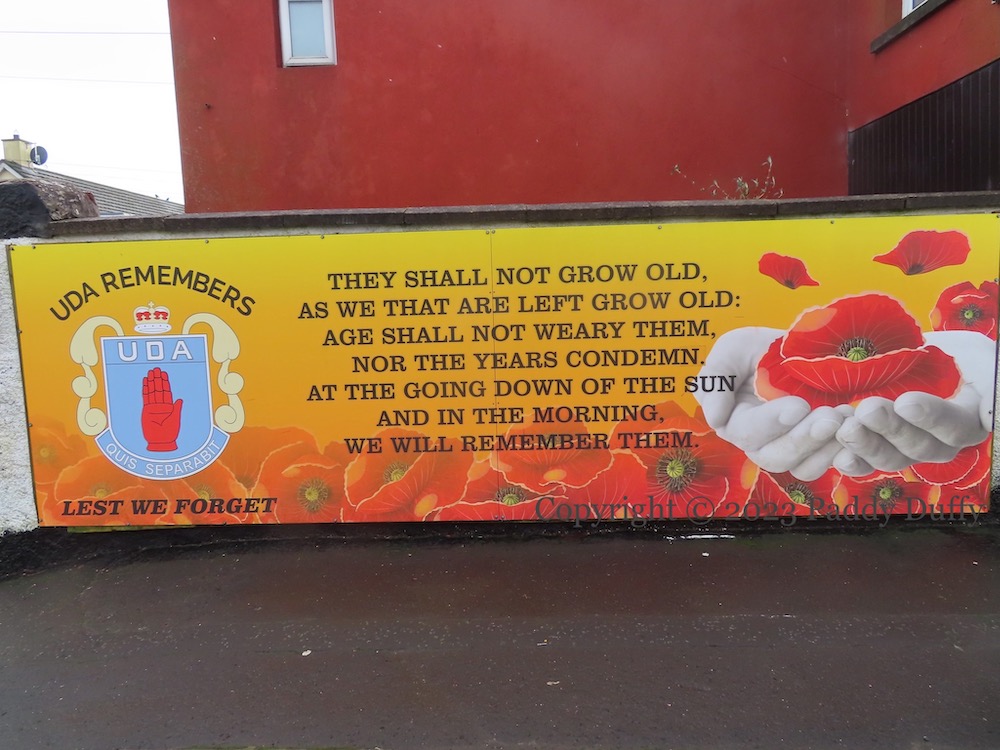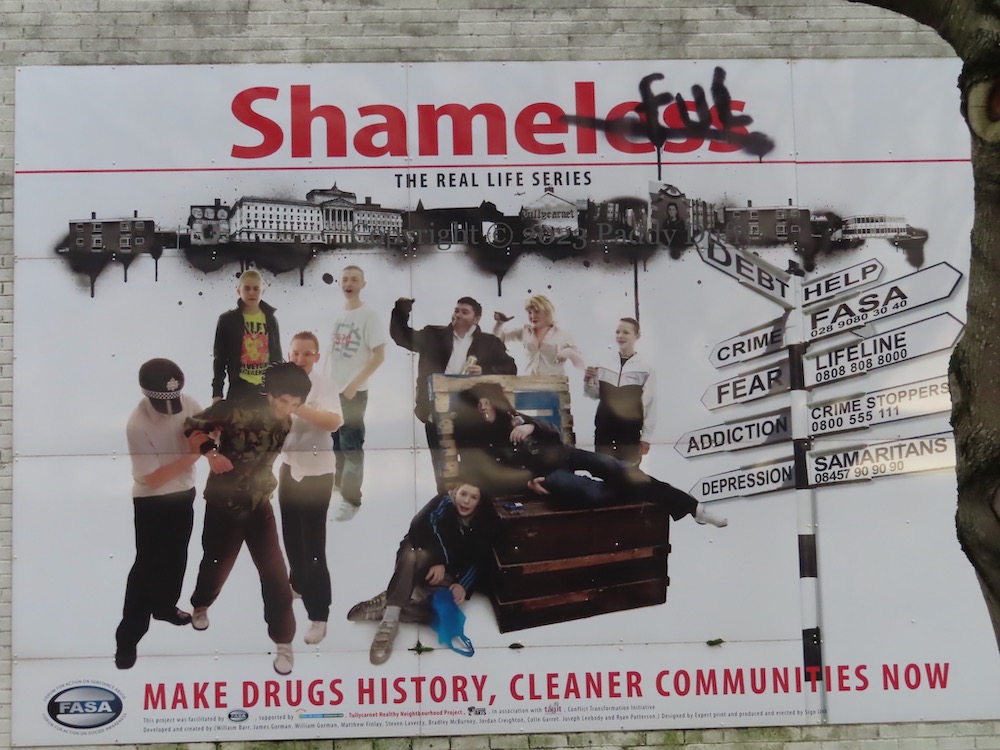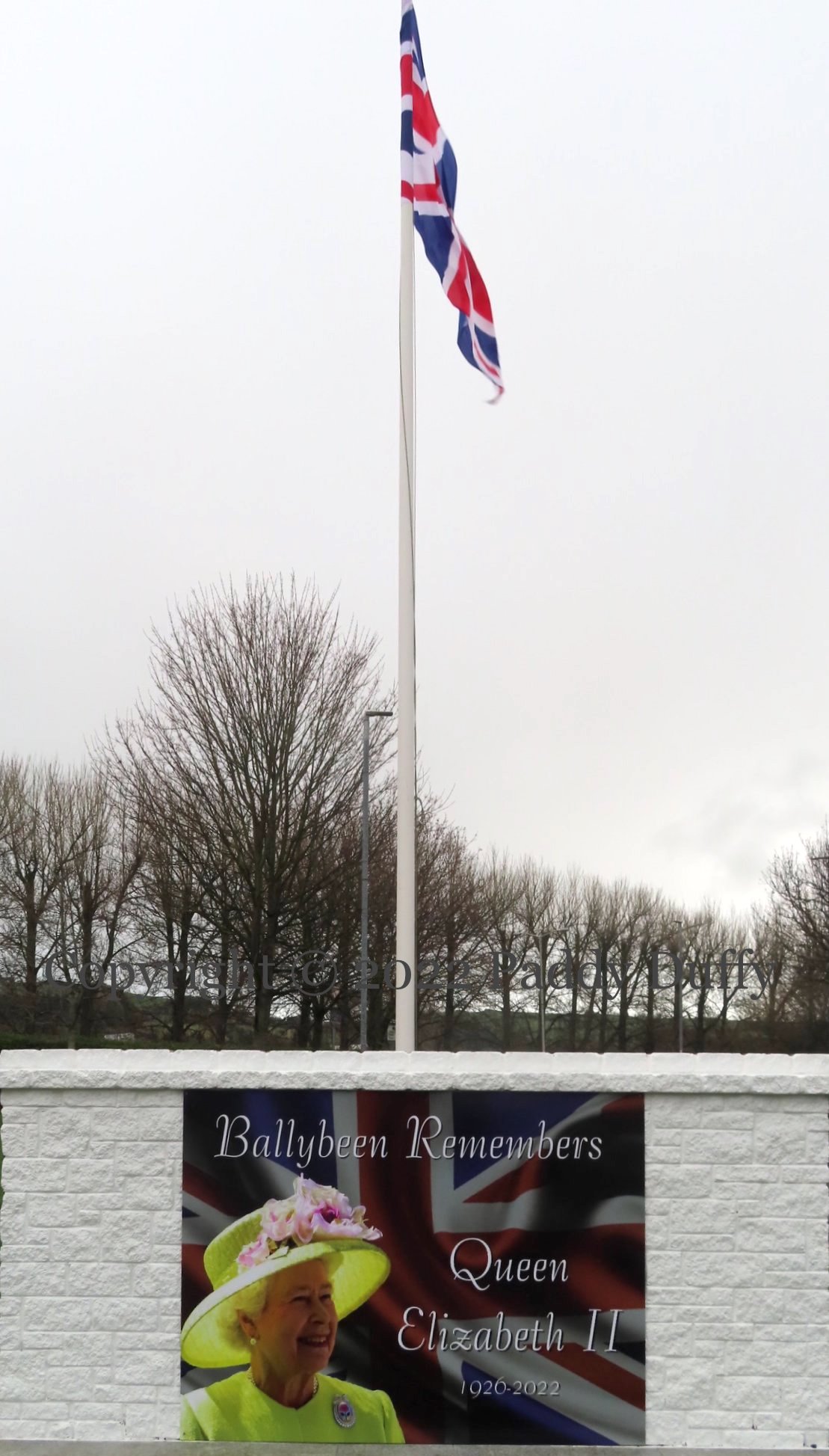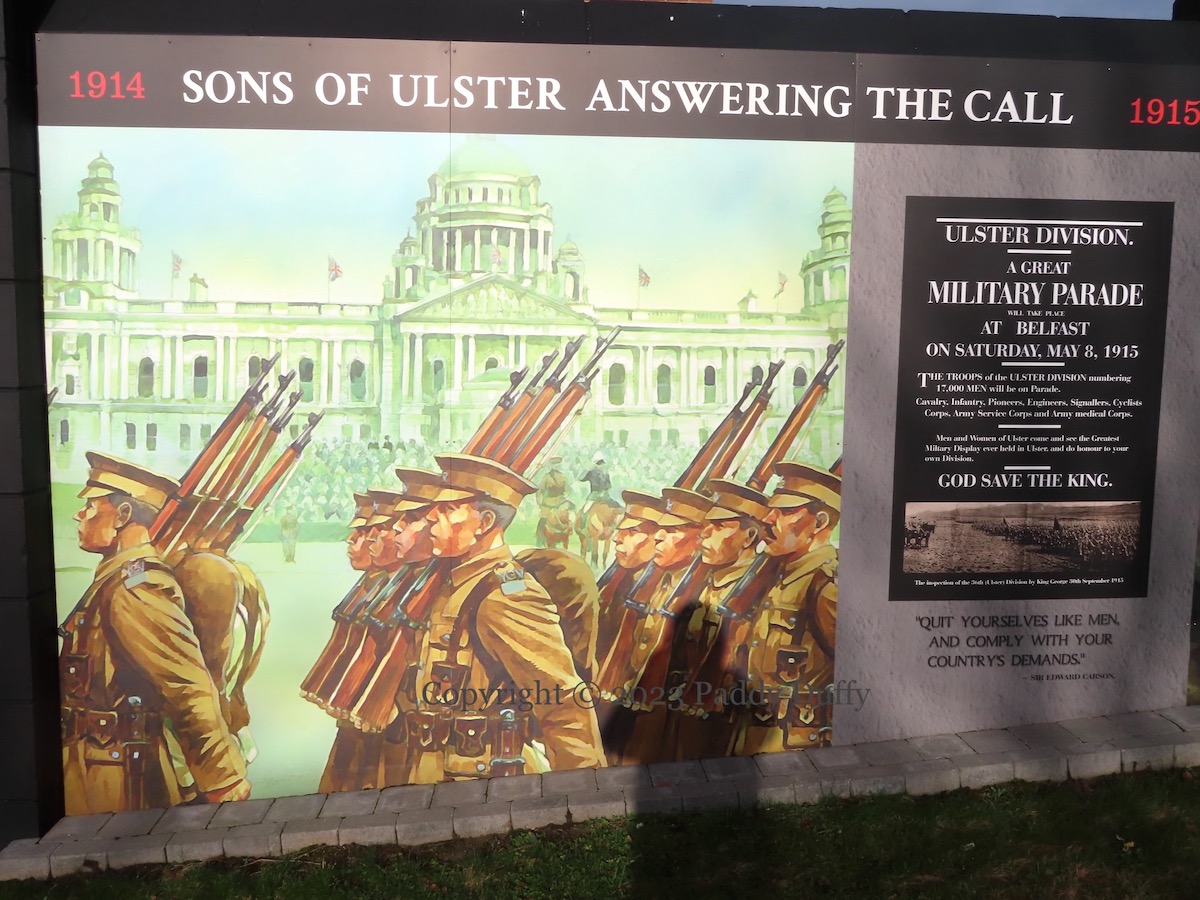
The mural in Cluan Place goes back to (at least) 2002. It used to include the words “5 people shot, houses burned, houses bombed” but these have been painted out in this repainted version.
Photographs of a dozen atrocities are included on the right of this Derwent Street mural, ranging in time from the 1970 gun-battle around the nearby St Matthew’s church in 1970, in which Jimmy McCurrie and Bobby Neill were killed, to the October 1993 IRA bombing of Frizzell’s fish shop on the Shankill Road, in which Leanne Murray (shown on the left) was one of ten people, two of them children, to die. The others incidents portrayed are Bloody Friday, Darkley, Coleraine, Abercorn, Balmoral, Claudy, La Mon, Kingsmill, and Teebane.
This new computer-generated mural replaces the painted East Belfast Remembers, which had peeled away to a great extent.
“The slaughter of the innocent by the blood soaked hands of Sinn Fein/IRA never to be forgotten. The dead cannot cry out for justice. It is a duty of the living to do so for them. Is this the equality Sinn Fein/IRA asks for? No economic targets, no legitimate targets, no enquiries, no truth, no justice. Hold dear the memory of all the innocents murdered in our country in support of the Sinn Fein electorate. This memory extends to those not mentioned here who were murdered going about their daily lives at work, at prayer and in remembrance. Nothing was sacred in the futile question for a united Ireland.”
“He had the courage to climb out of the traditional trenches, meet the enemy in no man’s land and play ball with him.” David Ervine was a UVF member, arrested in 1974 and served six years in the Maze before turning to politics: he first ran for office in 1985 and represented East Belfast in the NI Assembly from 1998 until his death in 2007. The board, above, shows Ervine’s silhouette in a wreath of poppies along with pictures of and information about his life; the image below of the lower left-hand side includes a photograph of Ervine with Gusty Spence.
Video of the launch (on 2014-11-01) is available at U.tv
These five boards together form a memorial to the UDR and in particular to Privates Fred Starrett and James Cummings, who died in an IRA bombing on Belfast’s Royal Avenue on February 24th, 1988. Both Orangemen, their deaths are commemorated every year by a parade from east Belfast to the city centre.
“I declare before you all that my whole life, whether it be long or short, shall be devoted to your service,” said Princess Elizabeth on her 21st birthday on April 21st, 1947, five years before she became queen. As the info board to the right describes, “In 2015, she became the longest reigning monarch in British history, surpassing her great-great grandmother, Queen Victoria. In 2016, she became the oldest reigning monarch in the world! … In 2017 Her Majesty and her loyal consort Prince Philip marked their 70th wedding anniversary – the longest royal marriage in British history.”
“This artwork was commissioned by Queens Park Women’s Group to celebrate the platinum anniversary of the reign of our beloved monarch Queen Elizabeth II and was officially opened by Mr David McCorkell KStJ, Her Majesty’s lord-lieutenant for County Antrim on 25th August 2022.”
The Newington tribute to Bobby Sands and the other deceased hunger strikers of the 1970s and 80s (see previously: Mol An Óıge Agus Tıocfaıdh Sí) has been augmented with four plaques to republicans from the area who died in the Troubles: (l-r) Martin McDonagh, Rosemary Bleakley, Colm Mulgrew, and Sean ‘Maxi’ McIvenna.
Unbeknowst to her parents (Lost Lives), Bleakley had joined Cumann Na mBan at 18 and was four days short of her nineteenth birthday when she and McDonagh were killed in a premature bomb explosion in the North Street arcade (Victor Patterson image of the blast), along with civilians Ian Gallagher and Mary Dornan (Sutton); 20 others were injured (Fortnight). Bleakley was not buried in the republican plot (in Milltown) but coincidentally in the plot adjacent to Dornan (BBC).
The (colour) RNU phoenix and the Craigavon 2 “Free The Innocent” tarp have been joined by a Cogús fist grasping a strand of barbed wire – Cogús (Fb) is (was?) the prisoners’ welfare arm of the RNU.
“Britain in Palestine & Ireland” The Balfour Declaration of November 1917 is seen as a pivotal moment in the history leading to the what is formally known as the State Of Israel, as it made the UK the first major government to endorse the idea of a homeland for Jews (WP).
This board on Northumberland Street draws parallels between Ireland and Palestine: homelands partitioned for British imperialist interests, struggles for freedom met with British barbarism … forbidden from speaking their native tongue, faiths outlawed … . About 650 former RIC members were recruited to the “British Gendarmarie” that would police what was called “Mandatory Palestine” (Palestine Studies | Irish History) after WWI.
The League Of Nations mandate putting the UK in change of the Palestinian territory was replaced (in 1947) by a UN plan for partition, which triggered an internal war between Jews and Arabs, and when the UK ended the mandate and evacuated from Palestine in May 1948, Israel declared independence and neighbouring Arab states entered the conflict. About 700,000 Arabs were displaced during the fighting. Key48 (tw) advocates for the right of return and uses as a symbol the keys that householders took with them when they fled.
Four people were killed in the course of The Falls Curfew, the 36 hours from July 3rd to 5th in 1970 during which 3,000 houses on the lower Falls were cordoned off after a weapons search of the area devolved into a riot. The curfew ended with a march of women and children from Andersonstown bearing relief (represented in Falls Curfew 1970).
This board has a dual purpose. On the one hand, it was part of celebrations marking the 75th anniversary of the Battle Of Britain, which was waged from July to October in 1940. On the other, it is part of an anti-racism project, celebrating in particular the contributions to the Battle made by roughly 145 Polish aviators (WP) and especially the 303 squadron: “The Polish nation – part of us then, part of us now”. The 303 was later stationed in Northern Ireland for a time. (BBC-NI)