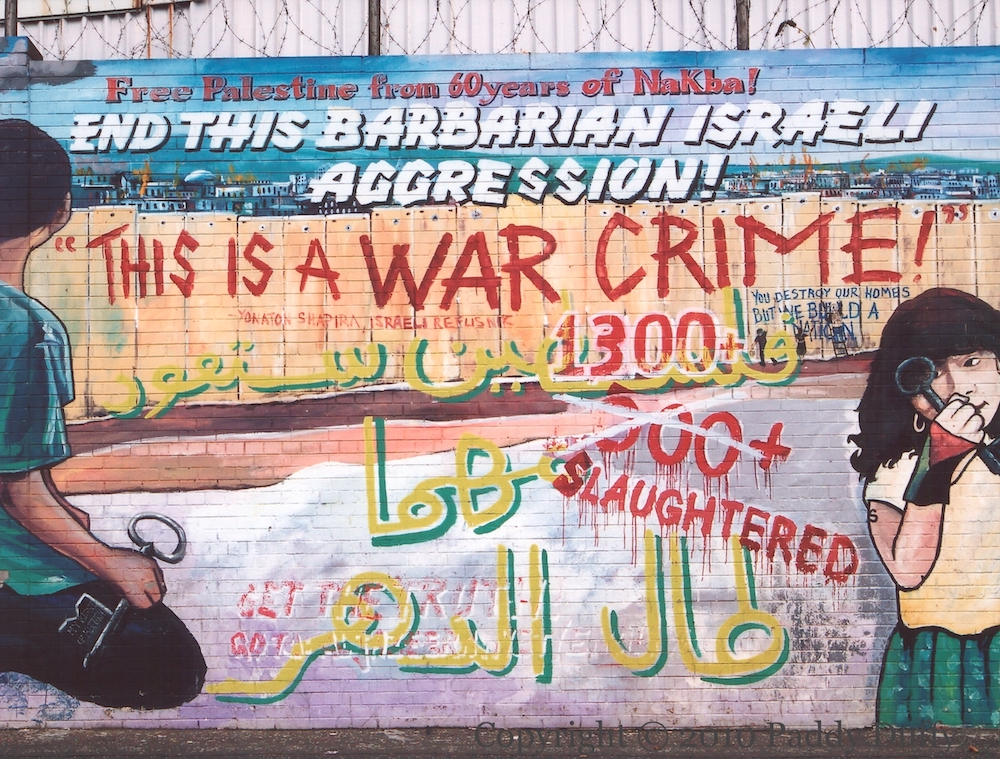
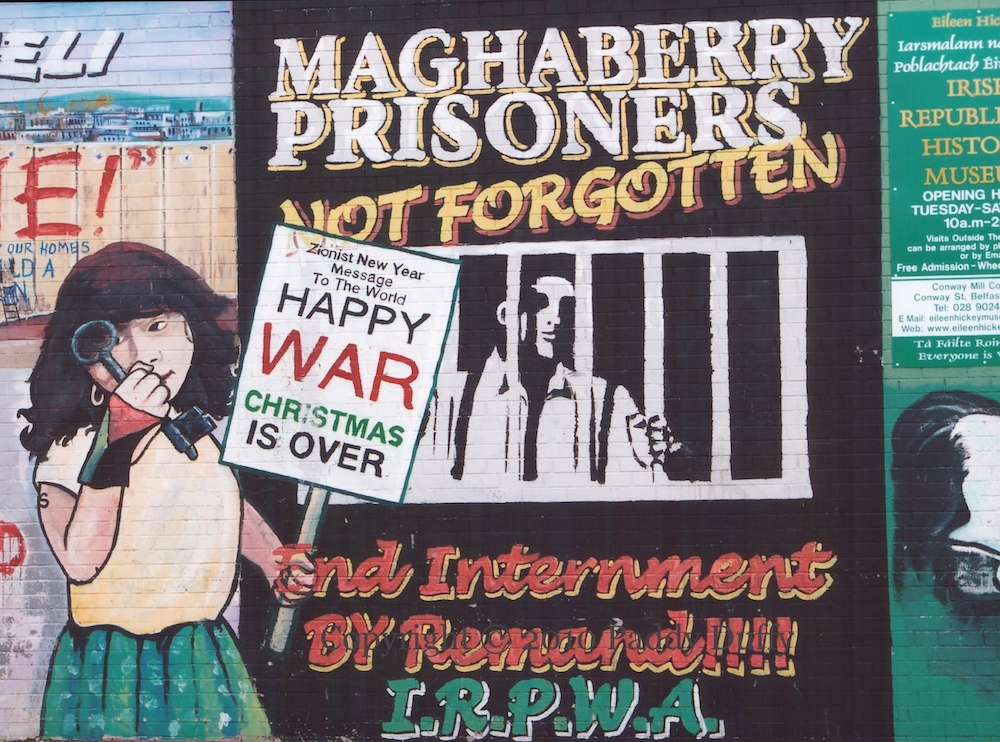
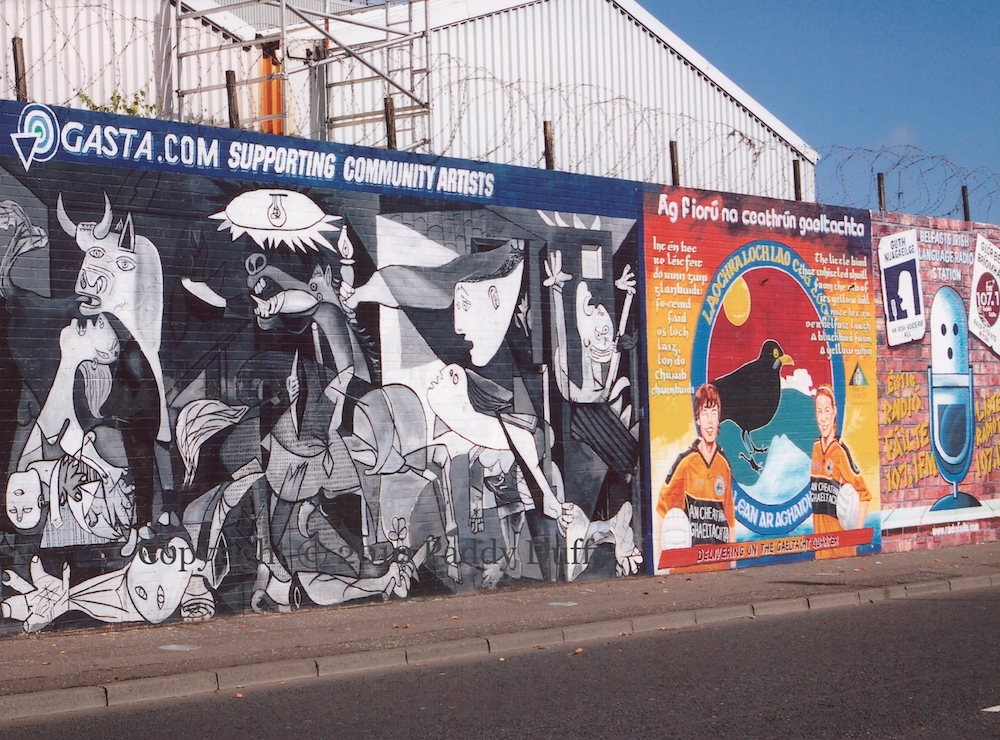
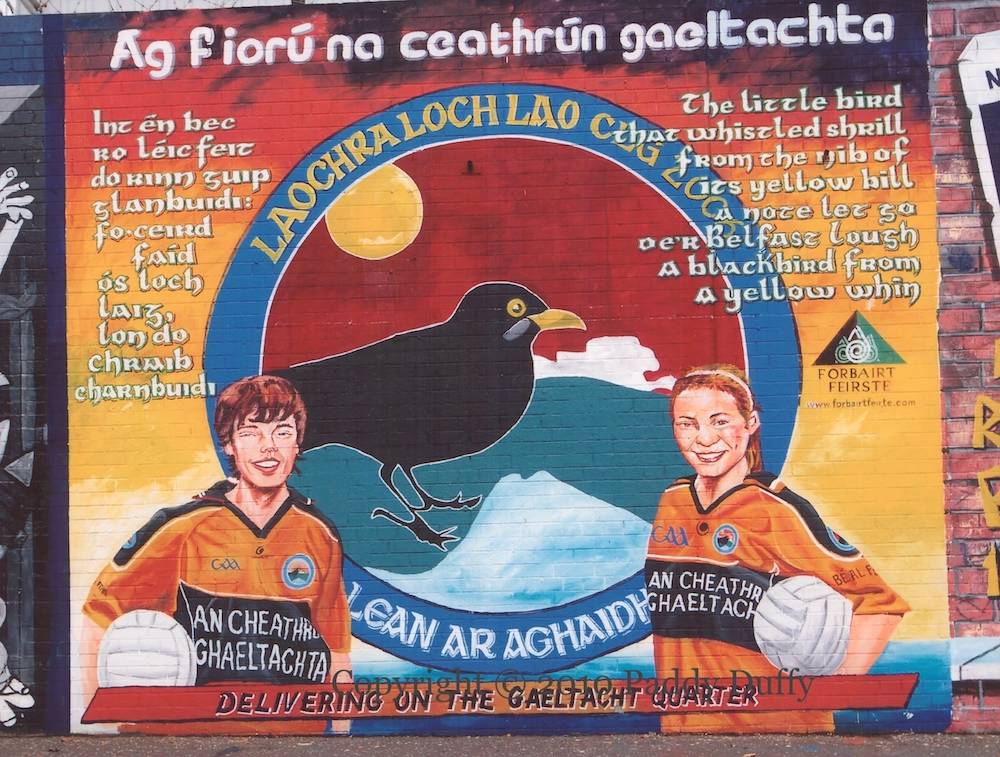
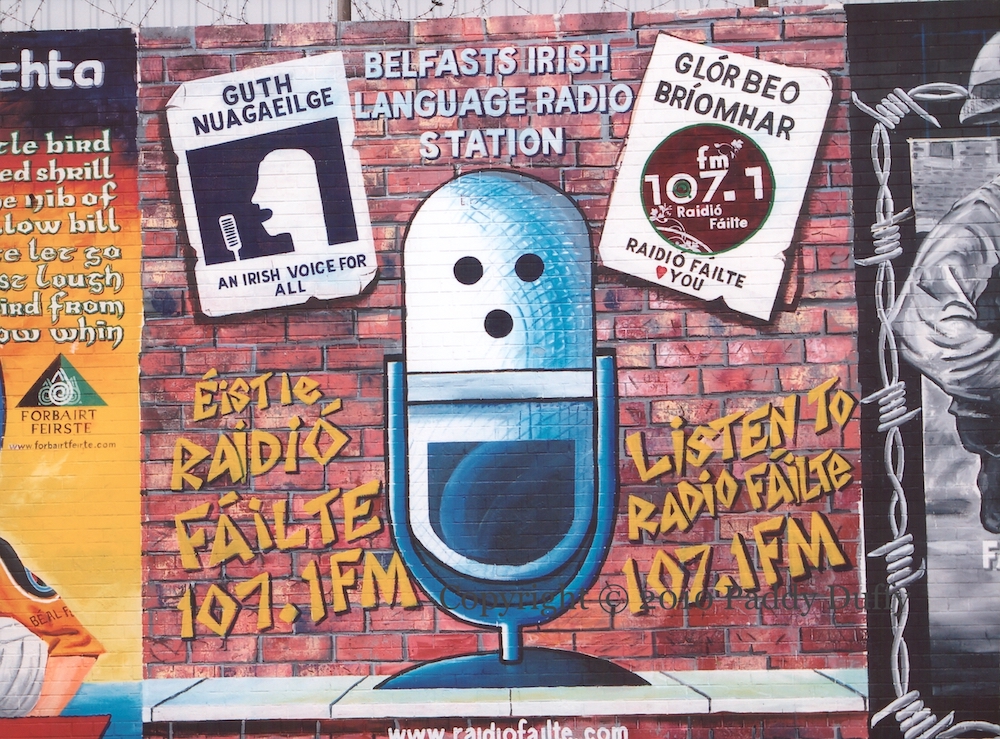
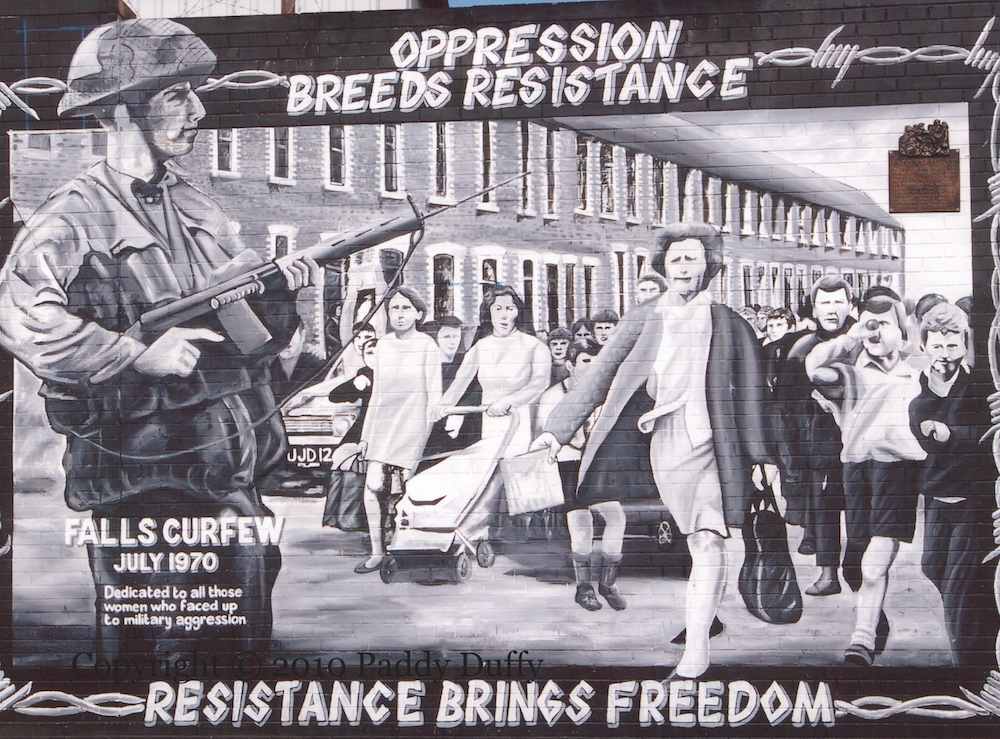
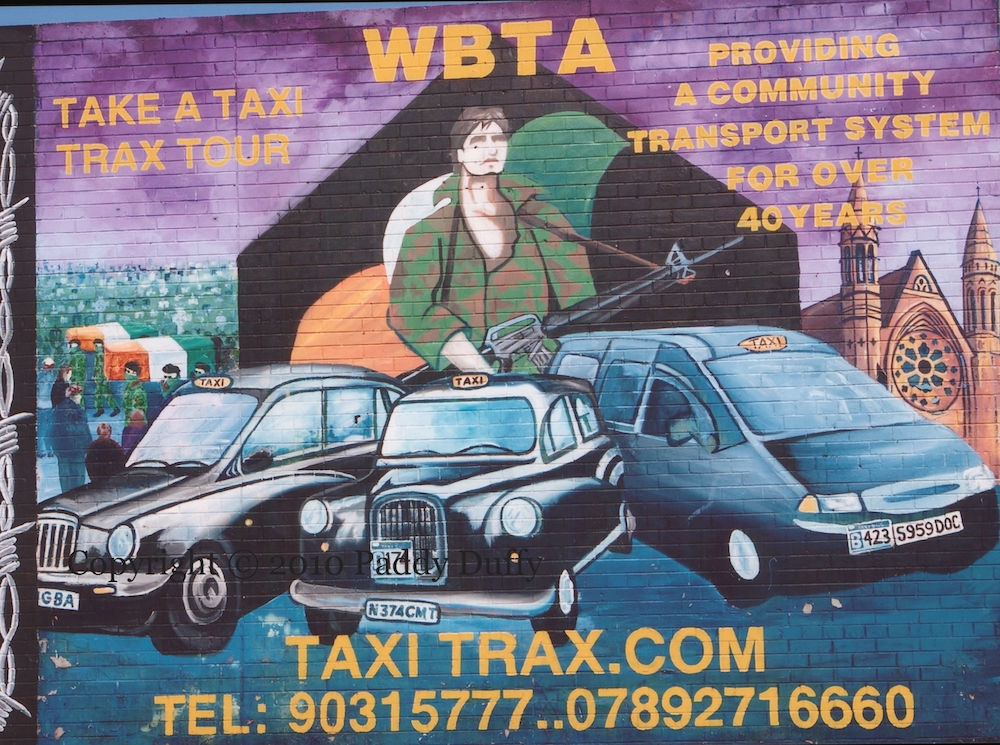
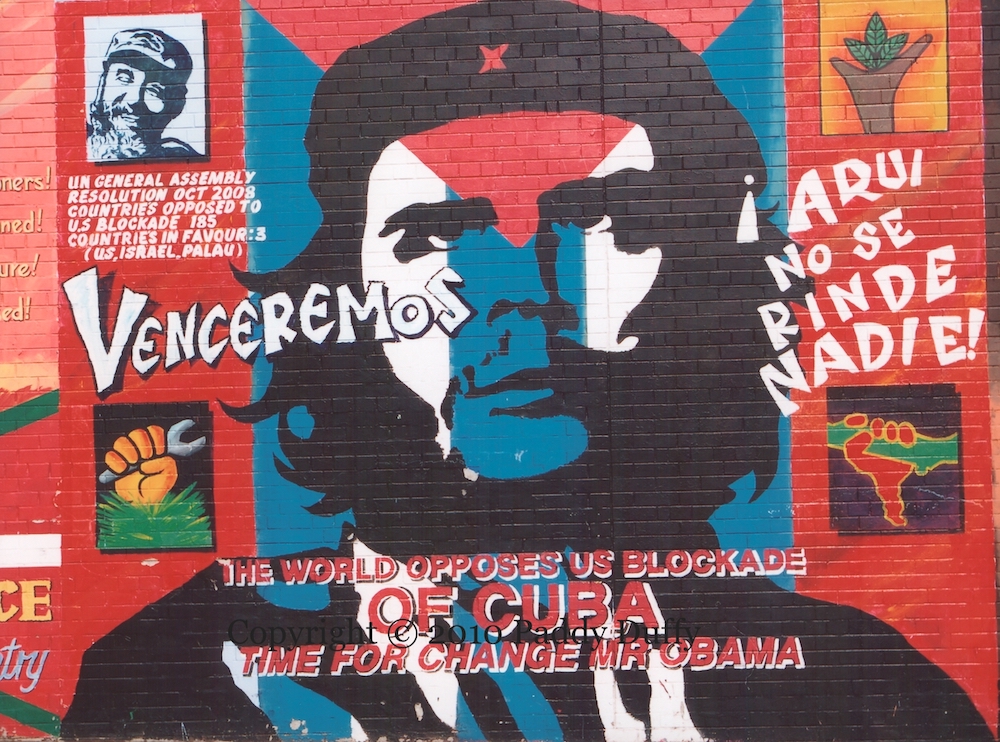
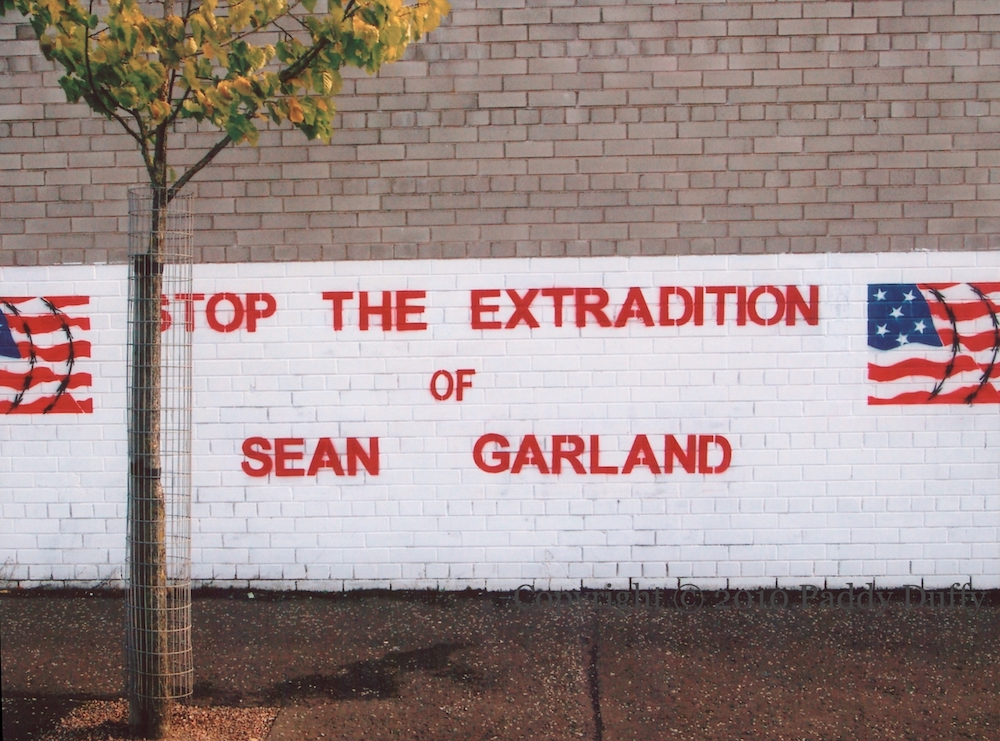
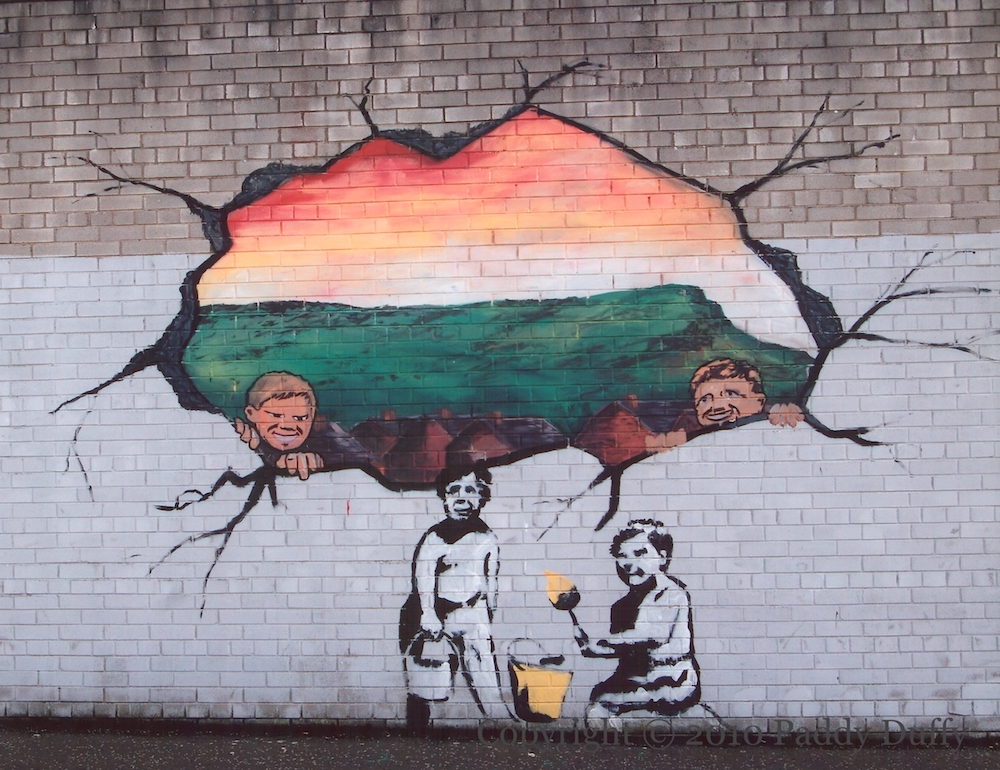
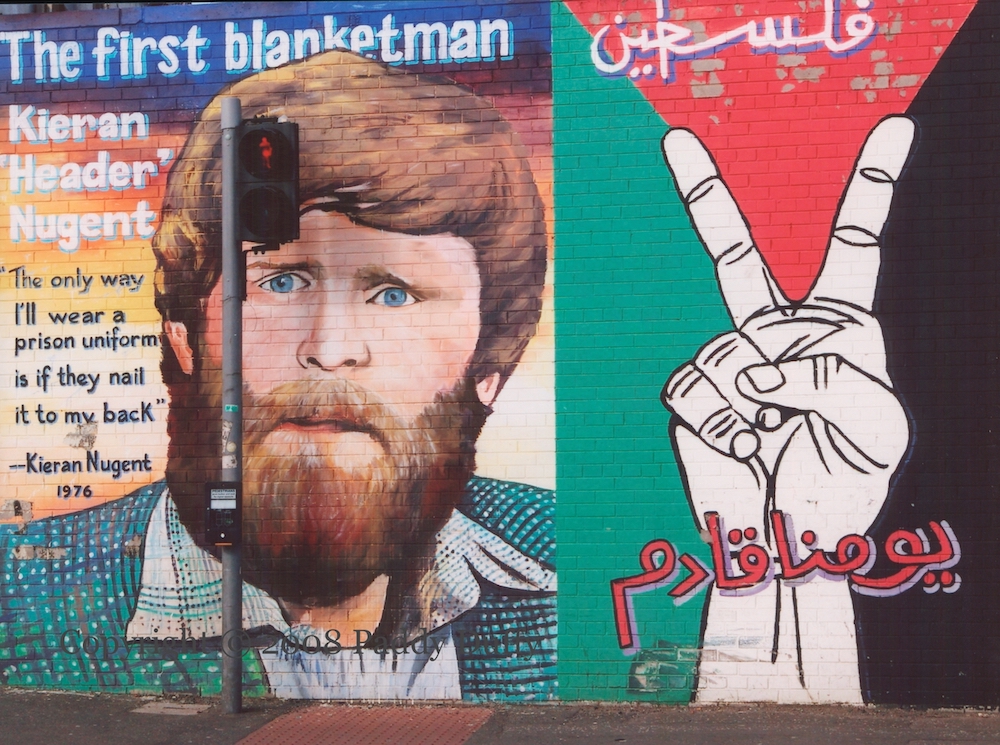
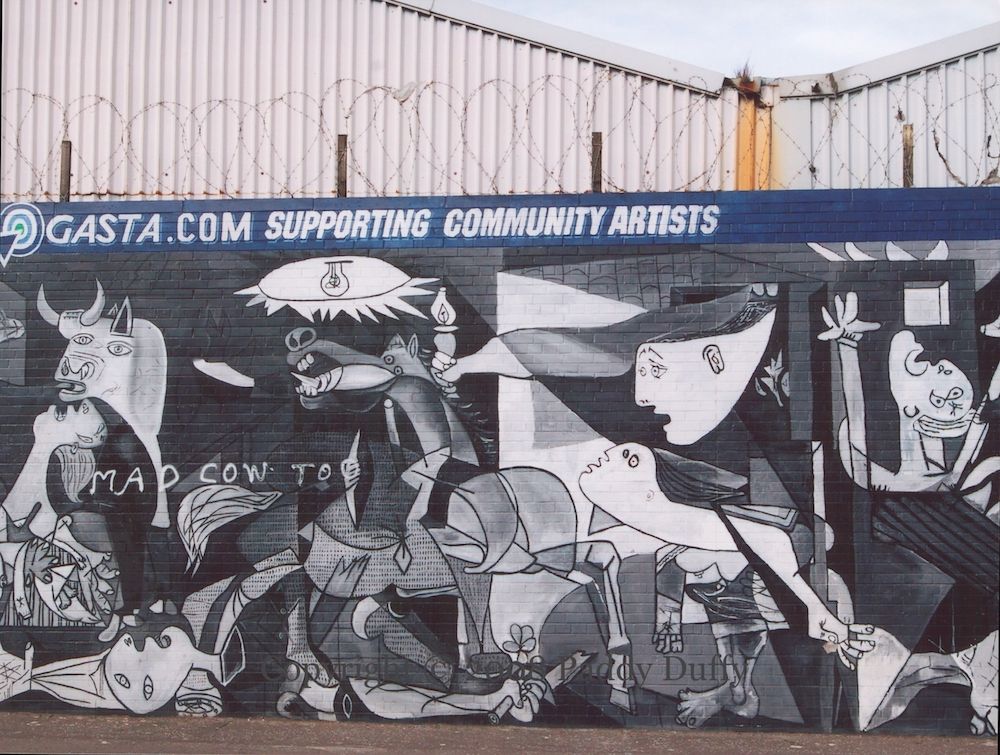
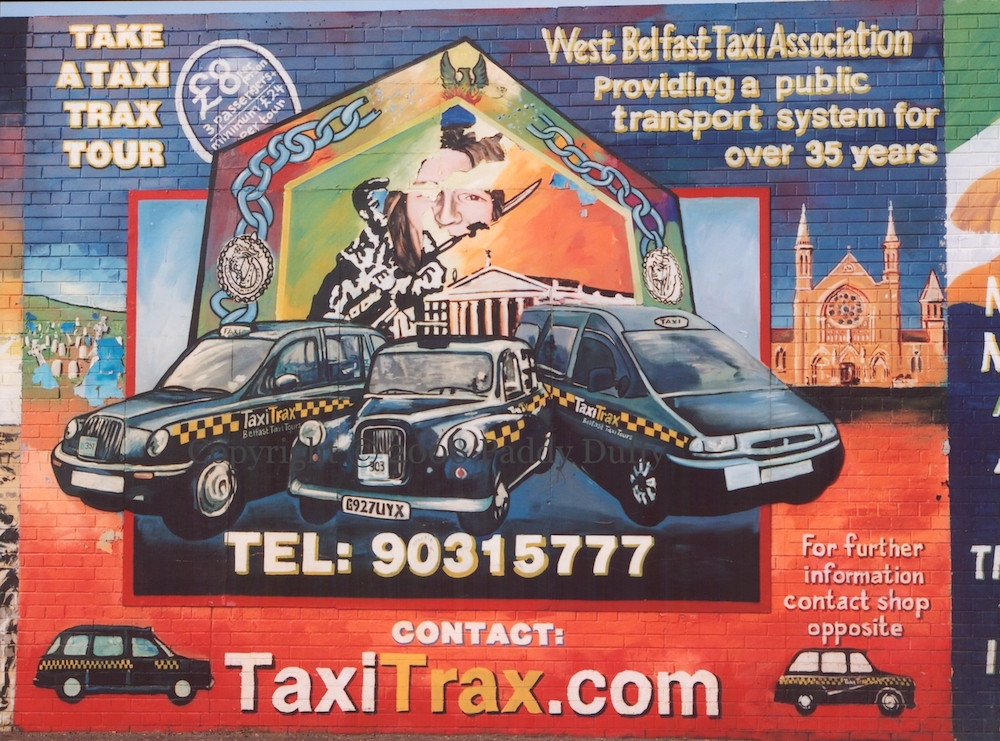
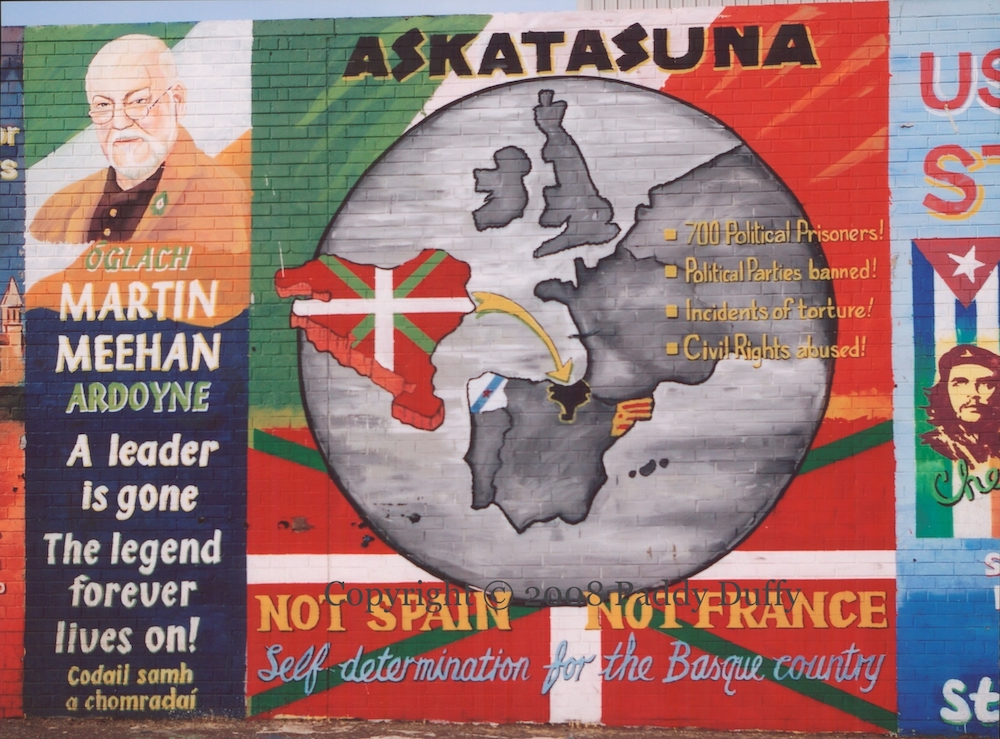
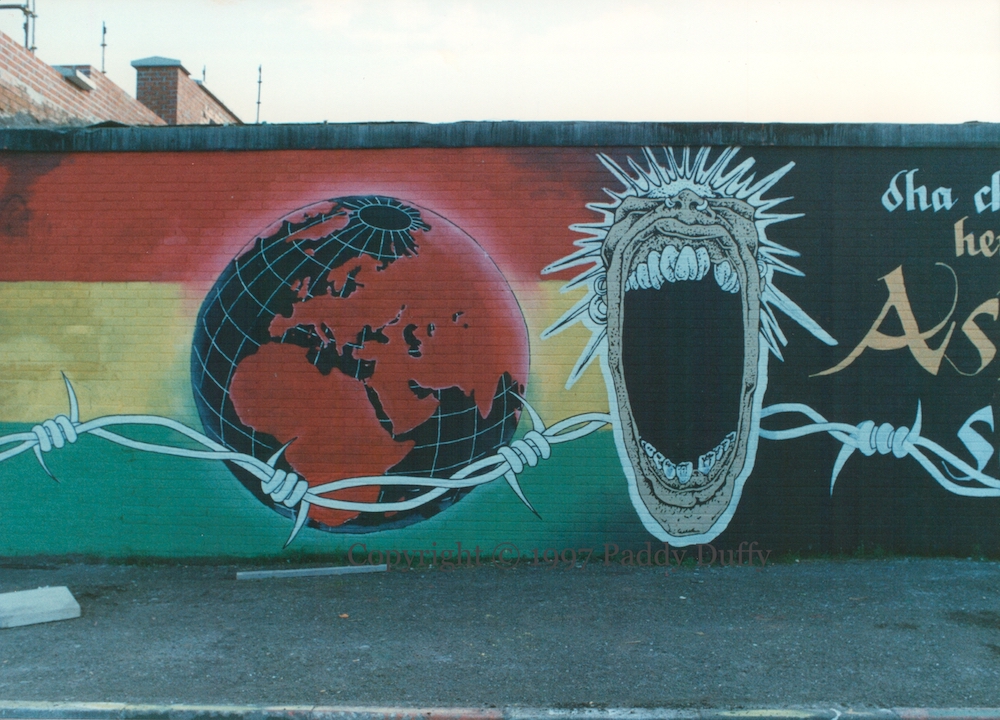
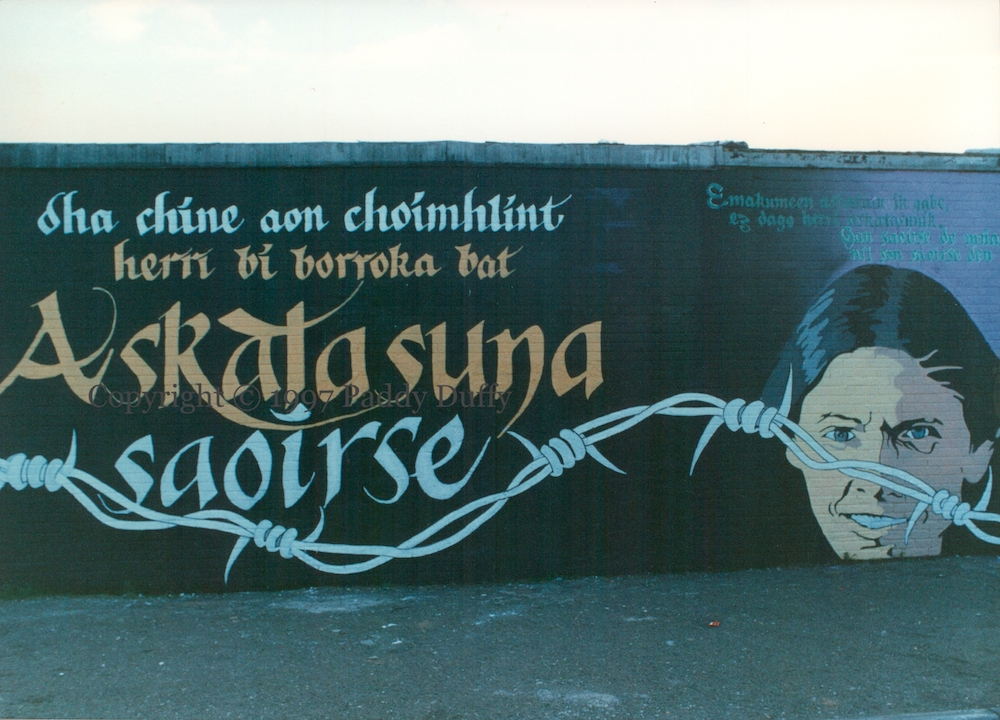
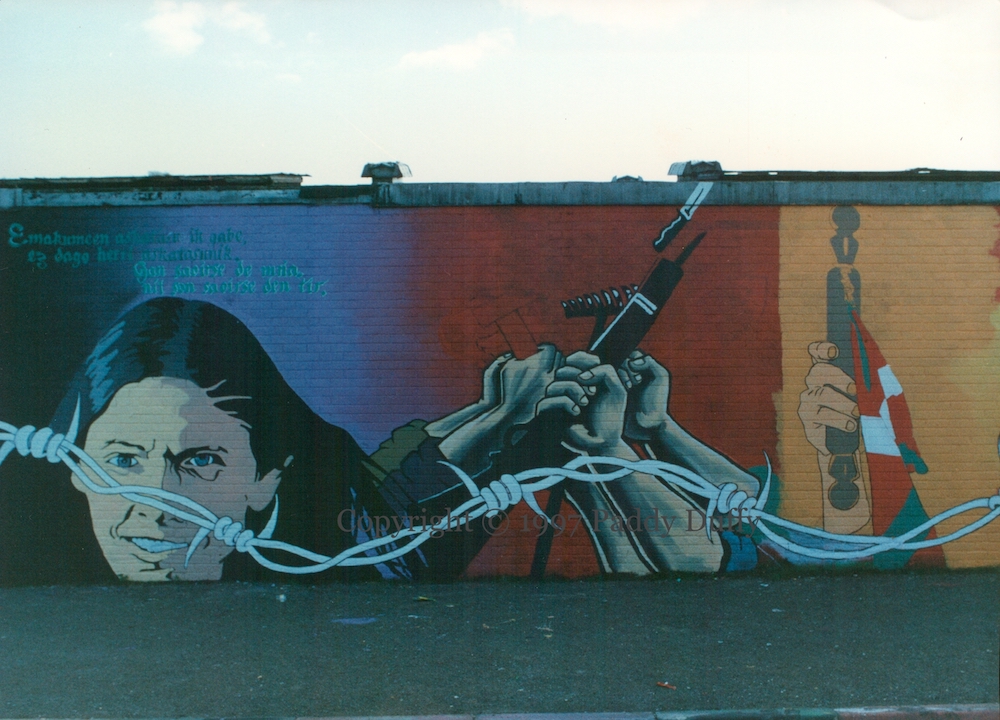
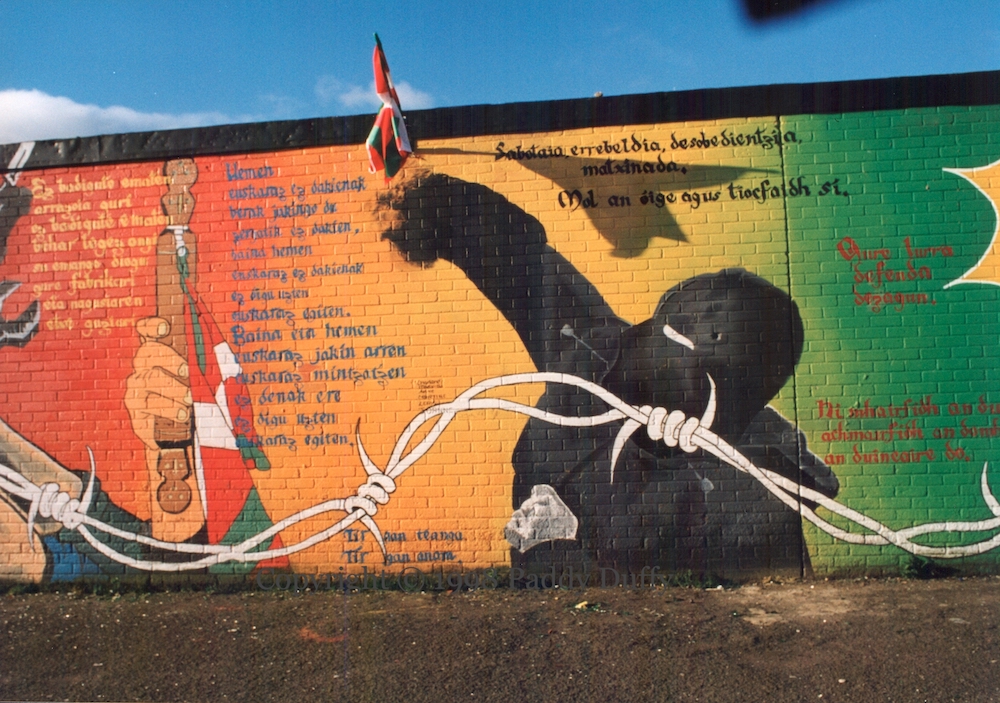
Here is a complete set of images of the International Wall (Visual History) some time in the first half of 2008 (the Nugent mural and the WBTA mural had been changed by July). From left to right:
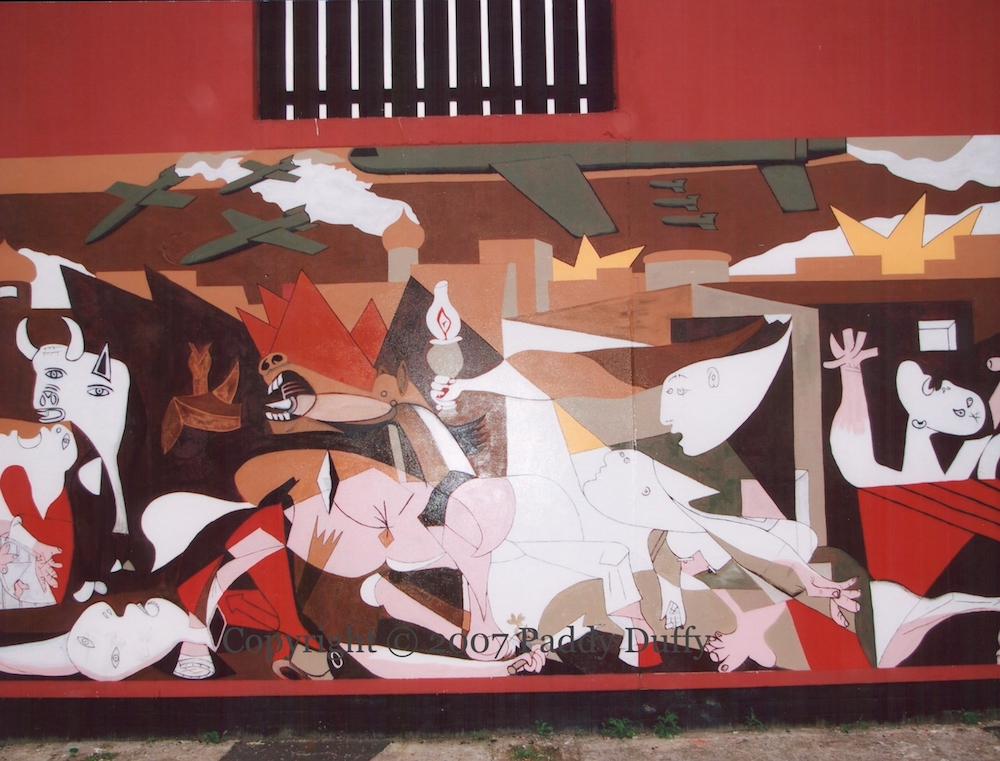
“The first blanketman” Kieran ‘Header’ Nugent Solidarity with Palestine “the largest concentration camp in the world!!! 33 million innocent people tortured, denied their freedom! Maghaberry POWs “Not forgotten – segregation for Irish POWs” Frederick Douglass Guernica The Manchester Martyrs American’s Greatest Failure, with a “British support hook” Taxi Trax, with a central image of the GPO, and with an internet address for the first time Martin Meehan “A leader is gone, the legend forever lives on” + Askatasuna “not Spain, not France – self-determination for the Basque country” Stop Plan Bush “Stop the crazy son of a Bush” Liam MacCarthy “Ireland’s forgotten son”
Picasso painted Guernica to protest the Nazi bombing of the Basque capital of Gernika (at the request of Franco’s forces) on April 26, 1937, during the Spanish Civil War, which resulted in hundreds of deaths. Its reproduction in Derry in 2007 was to protest the Iraq war; it is entitled Iraqnica. Modern-looking aeroplanes, one dropping bombs, have been added at the top of the image. The original is black and white and grey but here has been coloured in a palette that matches the colour of the wall.
Painted by Jim Keys, Stephen Gargan, and Jim Collins in Glenfada Park, Derry
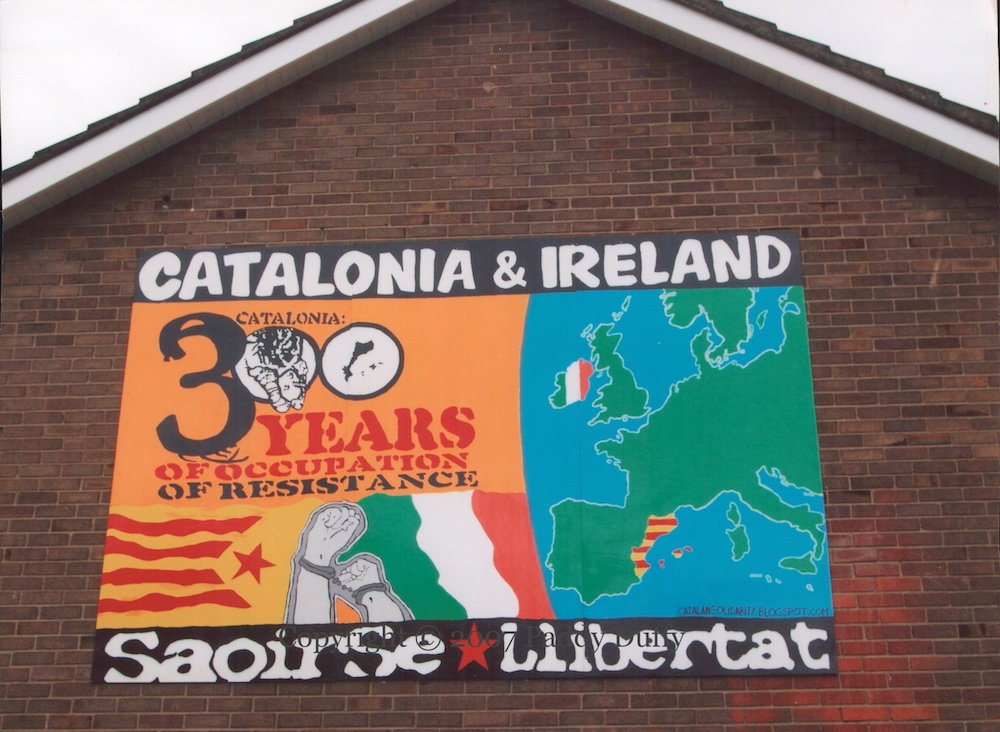
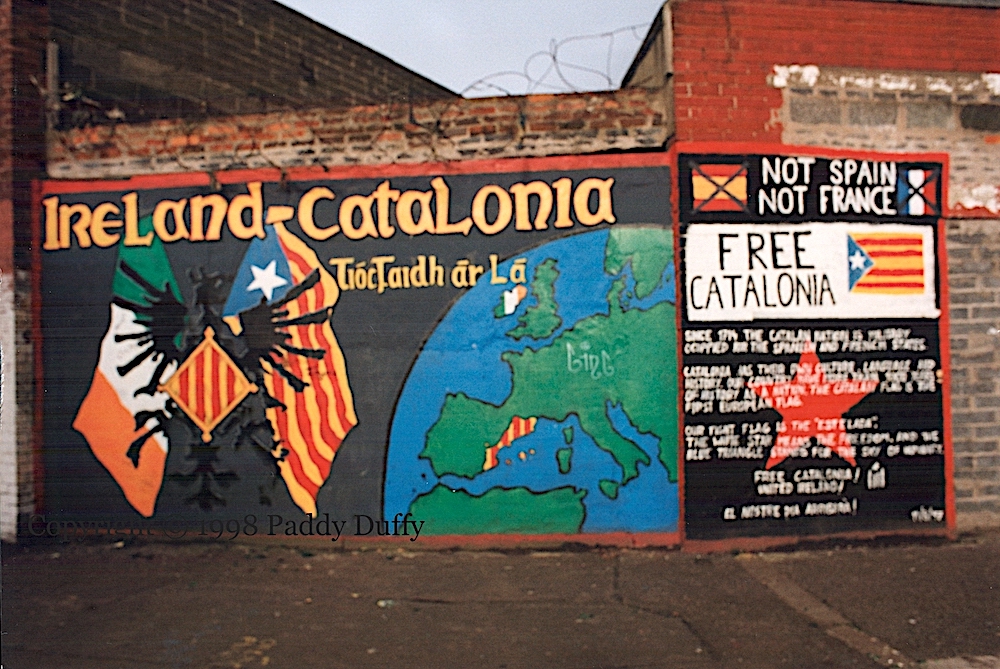
“Catalonia & Ireland – Saoırse • Llibertat”, “Catalonia – 300 years of occupation, of resistance.”
Centralised Spanish rule dates back to the Nueva Planta decrees (WP) made by Philip V (who is shown upside-down in the first zero) between 1707 and 1716. These formed a single Spanish nation and citizenry and ended various regional identities including Catalonian.
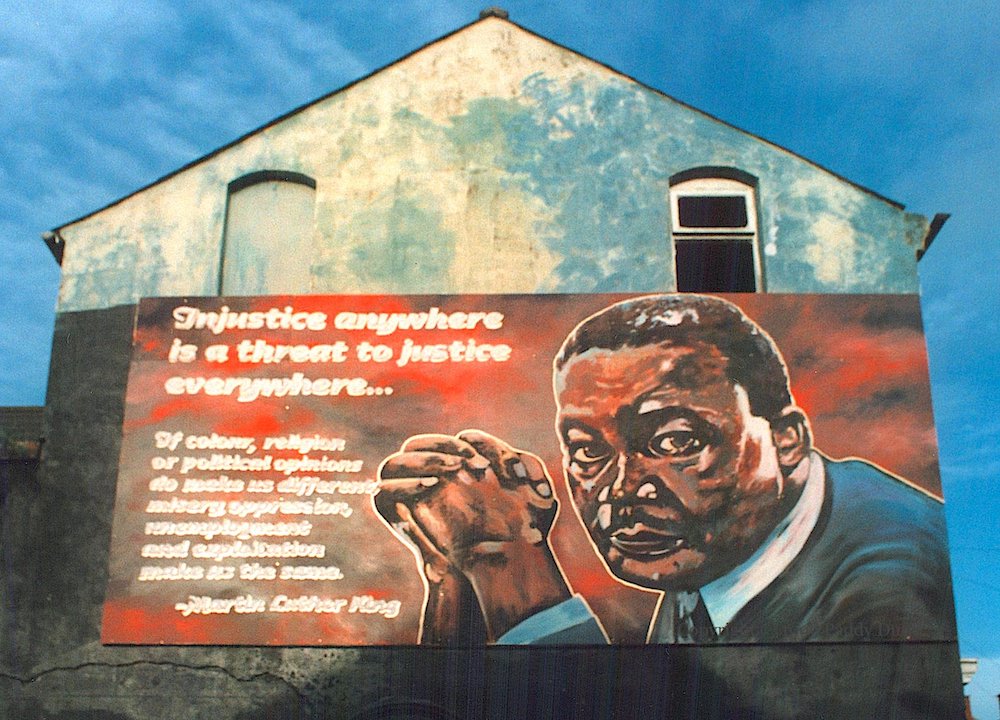
“Injustice anywhere is a threat to justice everywhere …” “If colour, religion or political opinions do make us different, misery, oppression, unemployment and exploitation make us the same – Martin Luther King” The first quote comes from Martin Luther King’s Letter From A Birmingham Jail; the source of the quote is unknown.
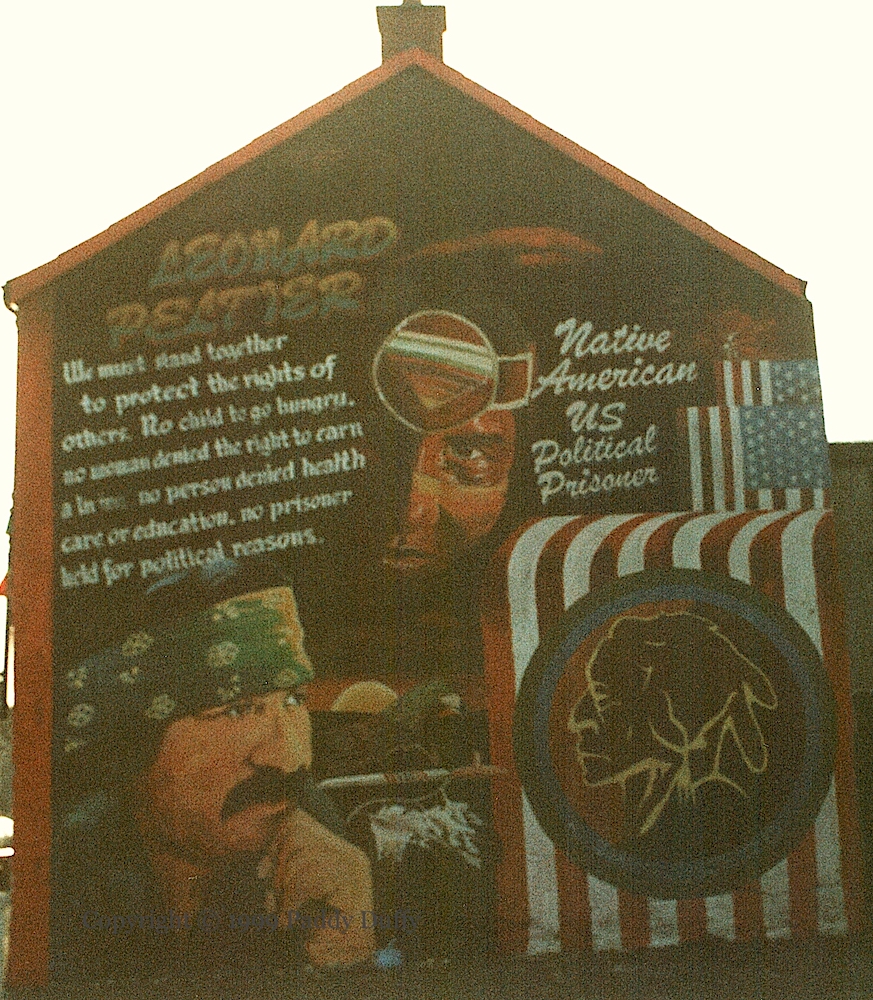
“Leonard Peltier, Native American US political prisoner. “We must stand together to protect the rights of others. No child to go hungry, no woman denied the right to earn a living, no person denied health care or education, no prisoner held for political reasons.”” (The quote appears in a letter on Peltier’s web site.) Peltier, a member of the American Indian Movement, was convicted of the shooting of two FBI agents in a shootout at Pine Ridge in 1975 and sentenced to two life terms (WP).
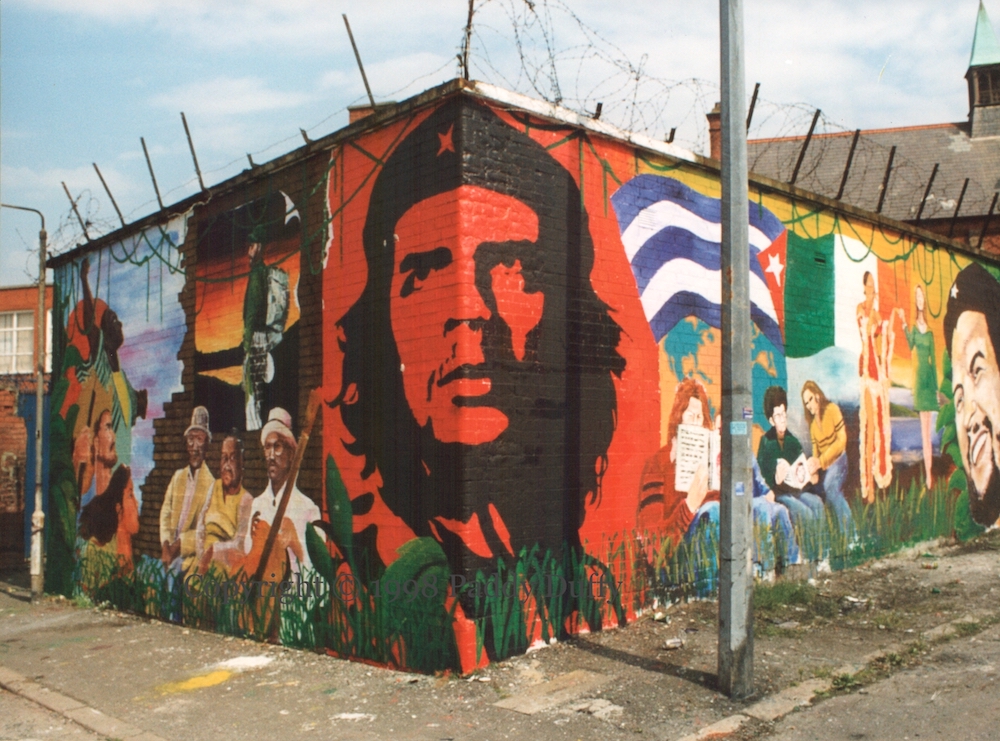
Jim Fitzpatrick’s Che (Visual History) is the linchpin of this mural in Shiels Street, Beechmount, expressing solidarity between Irish republicanism and the Cuban revolutionaries. Fidel Castro appears on the right (and in the poster on the left), and Bobby Sands is seen on the right reading a collection of Che’s speeches and writings published in English in 1969 as Venceremos! (pdf).
“Not Spain, not France. Free Catalonia. Since 1714 the Catalan nation is military [sic] occupied for the Spanish and French states. Catalonia has their own culture, language, and history. Our country have [sic] more than 1000 years of history as a nation. The Catalan flag is the first European flag. Our fight flag is the “Estelada”. The white star means the freedom, and the blue triangle stands for the sky of humanity. Free Catalonia! United Ireland! El nostre dia arribarà! Tıócfaıdh [sic] ár lá. 11/8/97″
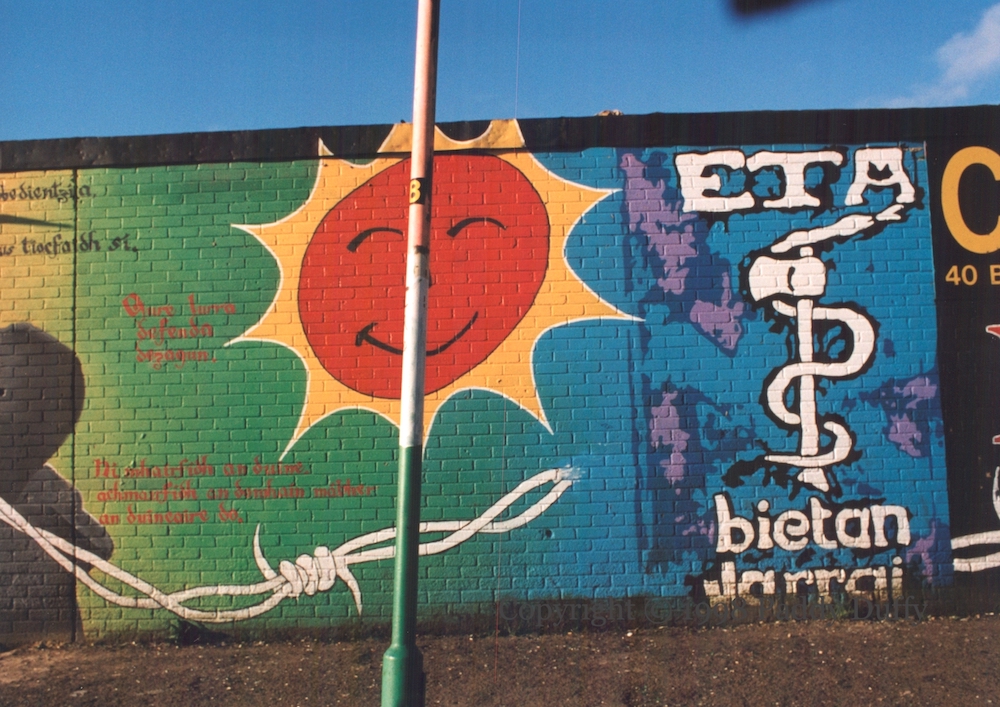
This is a long mural expressing solidarity between Ireland and the Basque Country on the wall of JB Kennedy’s bakery in Beechmount Grove. The bakery would close in 1998 (Belfast Live).
There are various slogans in Basque and in Irish. From top to bottom (left to right):
“Dhá chıne, aon choımhlint – Bi herri, borroka bat. Askatasuna – Saoırse”
“Emakumeen askatasunik gabe, ez daga herri askatasunik – Gan saoırse de mná, níl aon saoırse den tír.”
“[unknown Basque poem/song about overthrowing the capitalists]”
“Hemen euskaraz ez dakienak berak jakingo du zergatik ez dakien. Baina hemen euskaraz ez dakienak ez digu uzten euskaraz egiten. Baina eta hemen euskaraz jakin arren euskaraz mintzatzen ez denak ere ez digu uzten euskaraz egiten”
“Tír gan teanga, tír gan anam”
“Sabotaia, errebeldia, desobeintzia, matxinada”
“Mol an óıge agus tıocfaıdh sí”
“Oure lurra defenda dezagun”
“Ní mhaırfidh an duıne, ach maırfıdh an domhaın má bhe[ı]r an duıne aıre dó”
In Aboriginal cultures, “Dreamings” are the stories – in words or in paintings – of the creation and persistence of the Aboriginal peoples and lands, and their inter-relation. They belong to the person or tribe who told the story; it’s not know how this image came to be painted in Belfast’s New Lodge, or whether it is an authentic dreaming.
It shows two slender figures in black – one female, one male – looking upward at a jagged red circle/sun, all three of them contained in an inverted egg-like shape, itself surrounded (above) by a field of stars (including a small Plough) and (below) a variety of snake-like shapes and other designs.