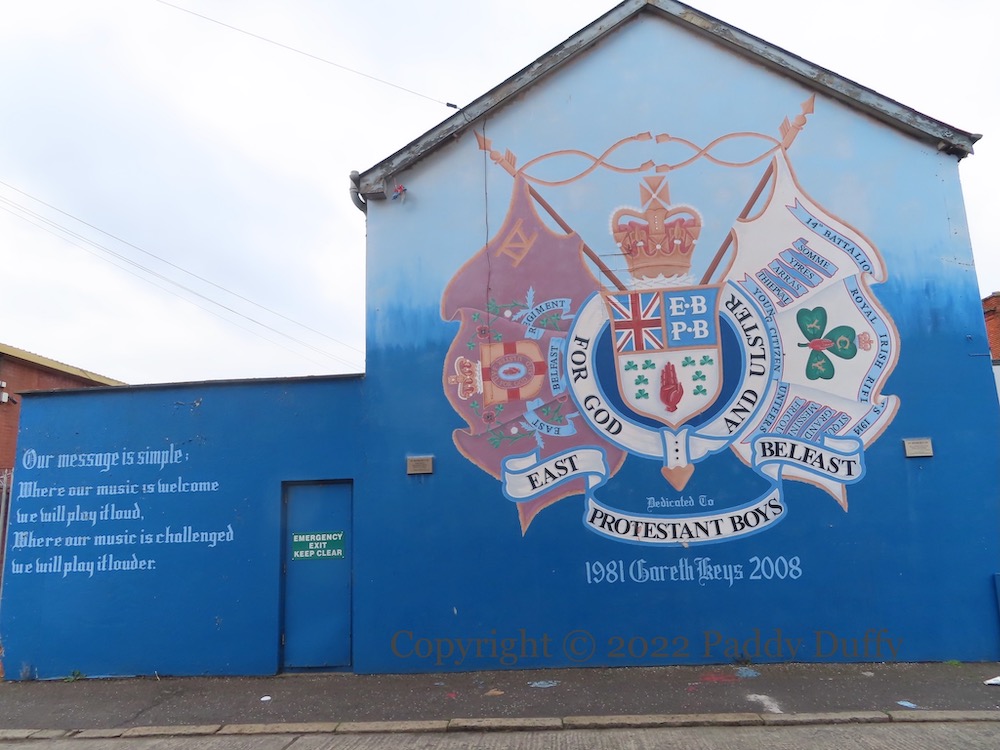
East Belfast Protestant Boys (Fb) mural “dedicated to Gareth Keys” with the statement (on the side wall): “Our message is simple: where our music is welcome, we will play it loud; where our music is challenged, we will play it louder.”
In the old Hemp Street, nearly opposite Derwent Street, east Belfast.
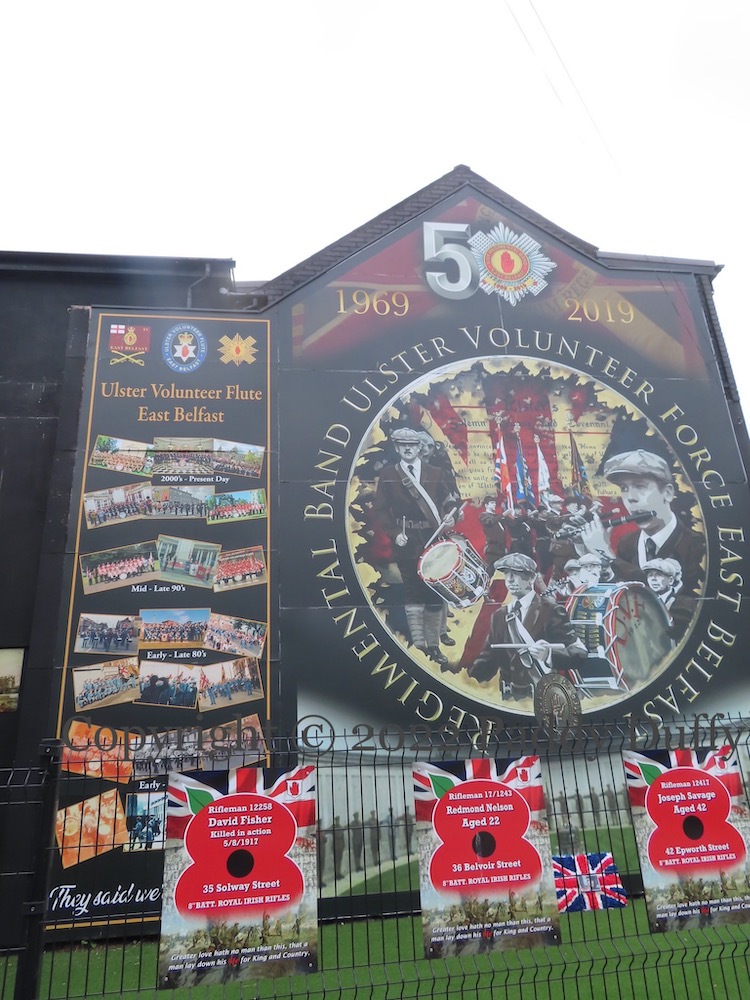
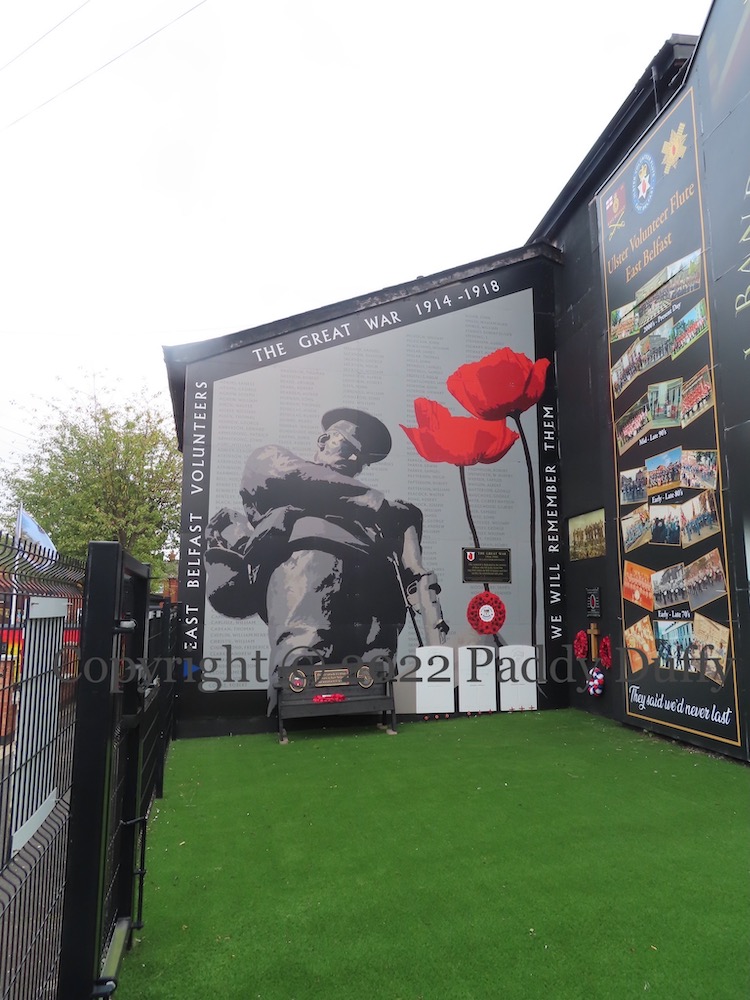
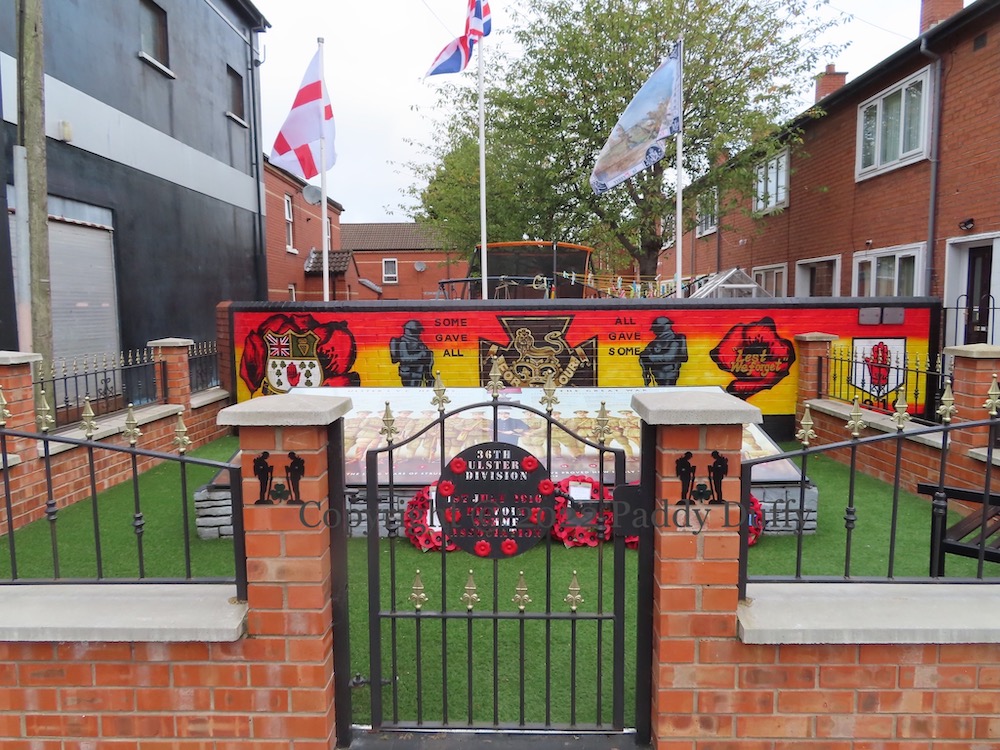
Ronnie’s hardware shop in east Belfast, vacant for many years and the site of Our Brave Defenders, was finally torn down last year and a pocket park created with murals commemorating east Belfast volunteers who died in the Great War and the UVF Regimental Band (tw), this year celebrating its 50 anniversary (video of the launch).
See previously: 40th anniversary banner at the same spot (next to the Belvoir Bar at the old Newcastle Street in east Belfast).
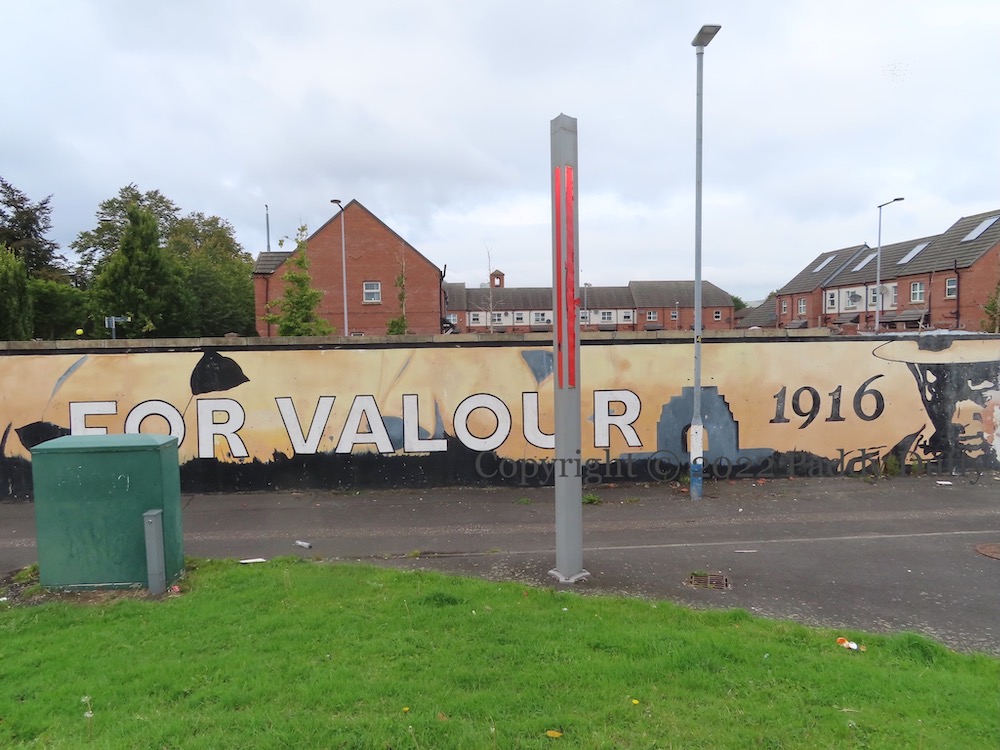
This is the repainted version of this wall in Pitt Park. Previously (see Peter Moloney Collection) it featured VC winners but now it commemorates WWI soldiers generally.
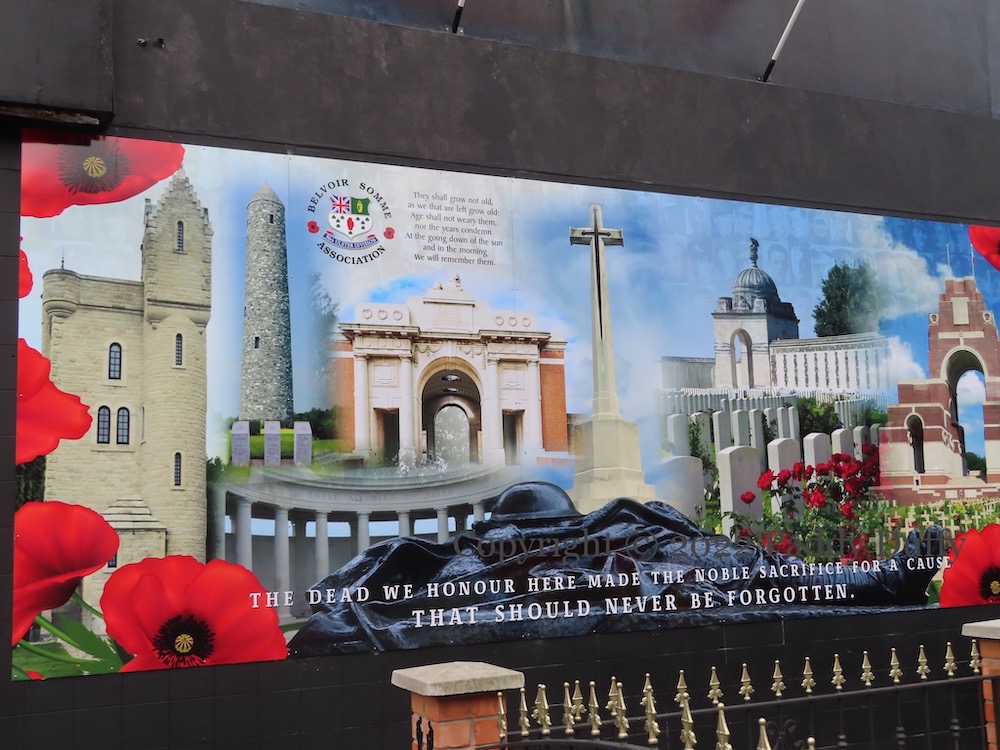
“The dead we honour here made the noble sacrifice for a cause that should never be forgotten.” A new board has been added to the memorial to the Ulster Volunteers on the Newtownards Road at St Leonard’s Crescent (the old Newcastle Street) over the bricked-up windows of the Belvoir Bar (see previously Not For Sale). The annual parade of the Belvoir Somme Association took place at the end of September (youtube)
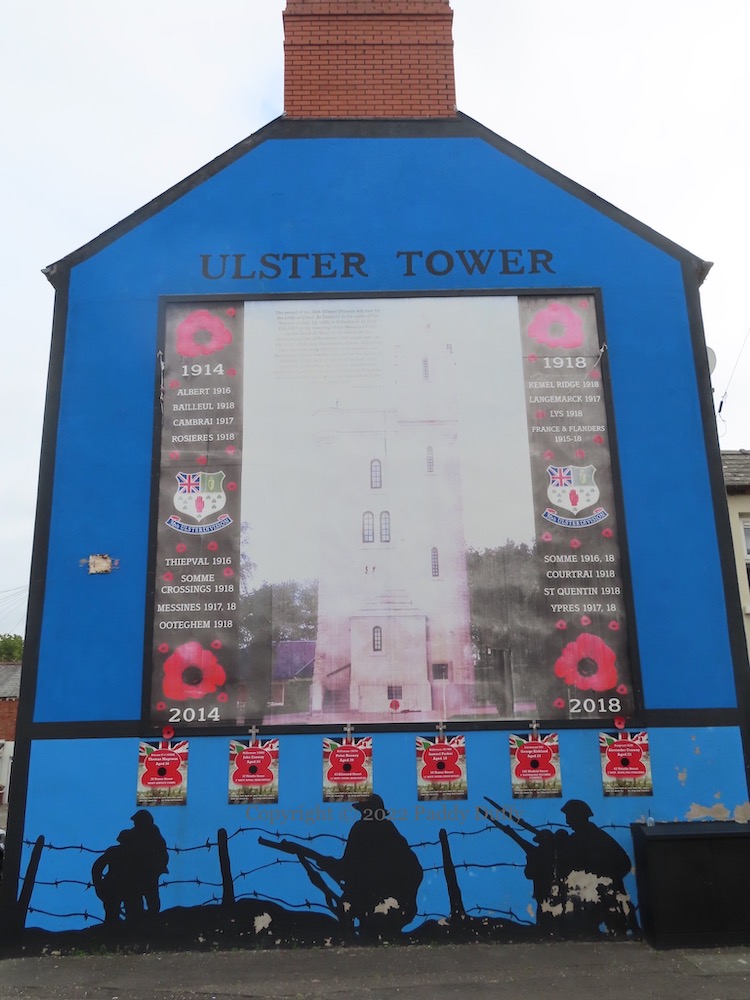
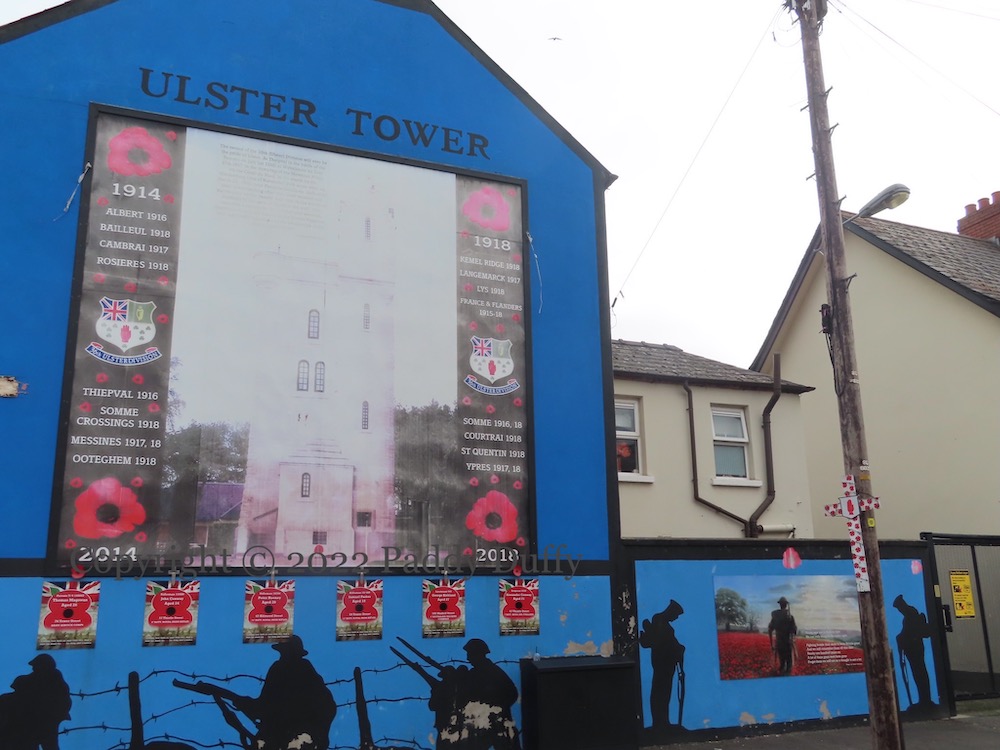
Tower Street in east Belfast is (unofficially) renamed “Ulster Tower Street” to complement the mural at the corner with Beechfield Street. The work was created in 2016 and is now (2022) showing its age. The image of the Ulster Tower at Thiepval, in the centre of the main panel, is fading, though the list of battles in which the 36th (Ulster) Division participated remain legible.
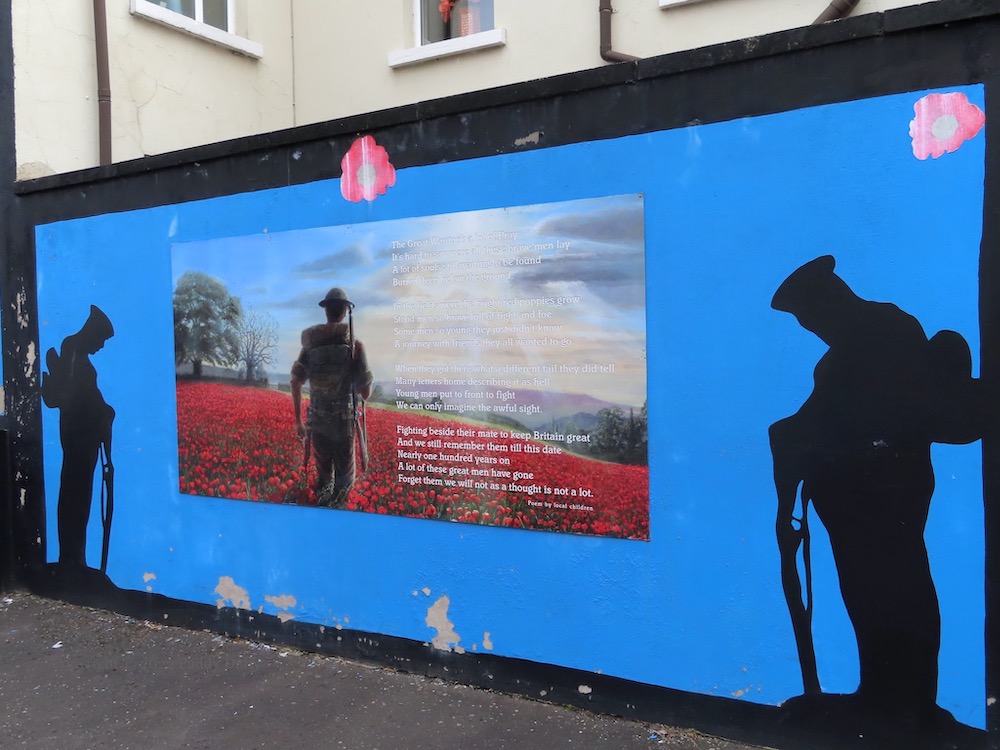
There is also some fading and peeling paint on both the main wall and side-wall. The smaller board on the side-wall features a poem from local children: “The Great War took a lot of Pray/It’s hard to say w[h]ere all these brave men lay/A lot of souls still waiting to be found/Buried deep below the ground.//In the fields w[h]ere the bright red poppies grow/Stood men so brave of fight and foe/Some men so young they just didn’t know/A journey with friends they all wanted to go.// When they got there what a different tail [tale] they did tell/Many letters home describing it as hell/Young men put to front to fight/We can only imagine the awful sight.//Fighting beside their mate to keep Britain great/And we still remember them till this date/Nearly one hundred years on/A lot of these great men have gone/Forget them we will not as a thought is not a lot.”
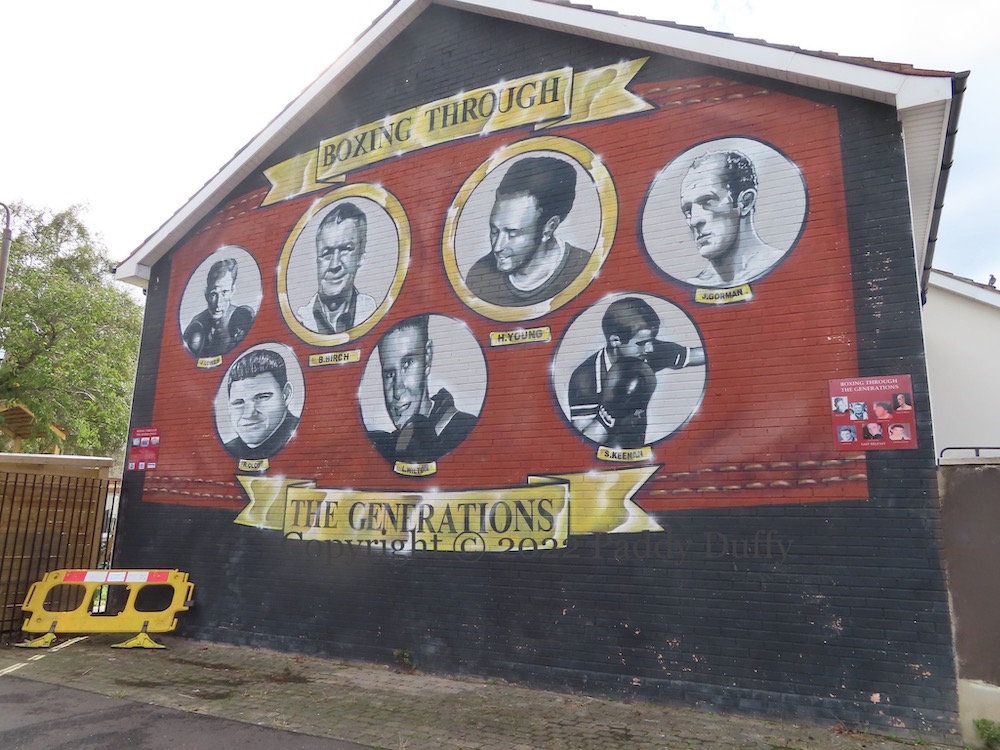
This mural features seven boxers: John Lowey, Billy Birch (’47-’54), Herbie Young, James Gorman, Ray Close (who fought Chris Eubanks to a draw for a World belt in 1993), Luke Wilton (’08-present), and Stephan Keenan.
One of the plaques show the photographs upon which the portraits in the mural were based (except Keenan’s), and the other describes the process by which the Ulster-Scots mural was replaced as part of a project by Charter NI (along with the city council and the housing executive). It reads: “Communities Moving Forward Re-Imaging Programme Phase One. The concept of renewal, change and respect lies at the heart of the ‘Communities moving forward’ programme, which recognises the importance of creativity in all its manifestations and in all our lives, reflecting the heritage of our communities in a positive manner. Boxing through the generations showcases the positive images of this proud small community.” (Also: NIHE press release)
Templemore Street, at the eastern edge of the residential part of Albertbridge Road.
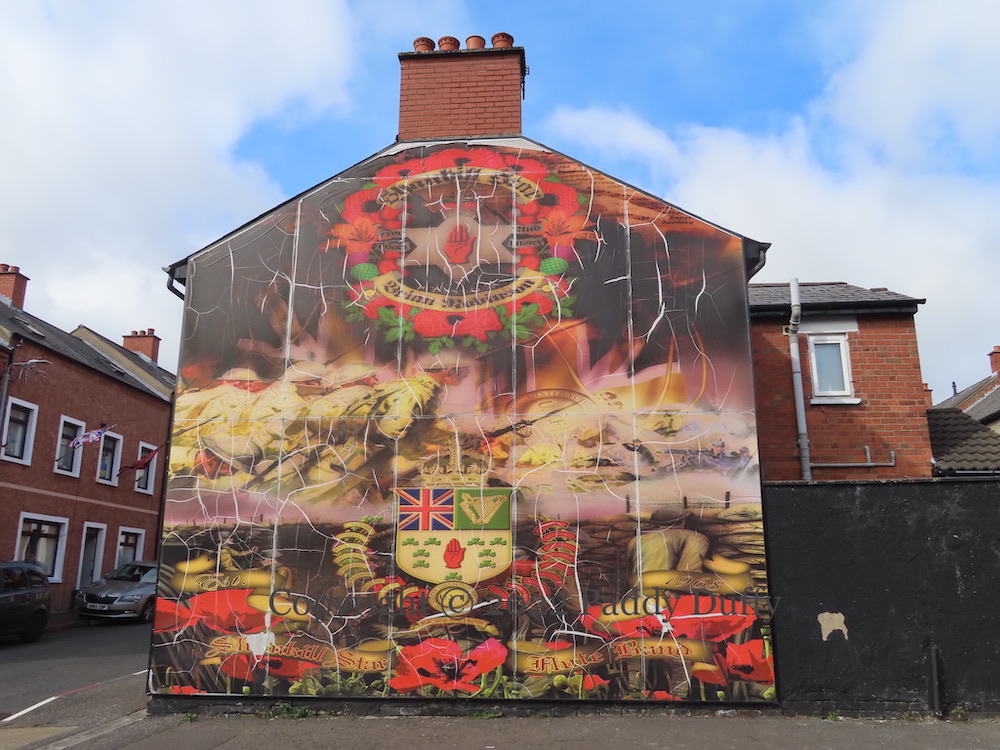
This memorial to Brian Robinson (unveiled March 2, 2013) was sponsored by the Shankill Star Flute Band, in Disraeli Street – where Robinson grew up – and is replete with images from the first World War such as soldiers (both British and German), trenches and poppies.
Robinson was killed on 2 Sept., 1989 by an army undercover unit moments after he had shot and killed a Catholic named Patrick McKenna (WP). This is the second mural on the street to Robinson. The piece is not paint, but printed laminate, which is now cracking and peeling.
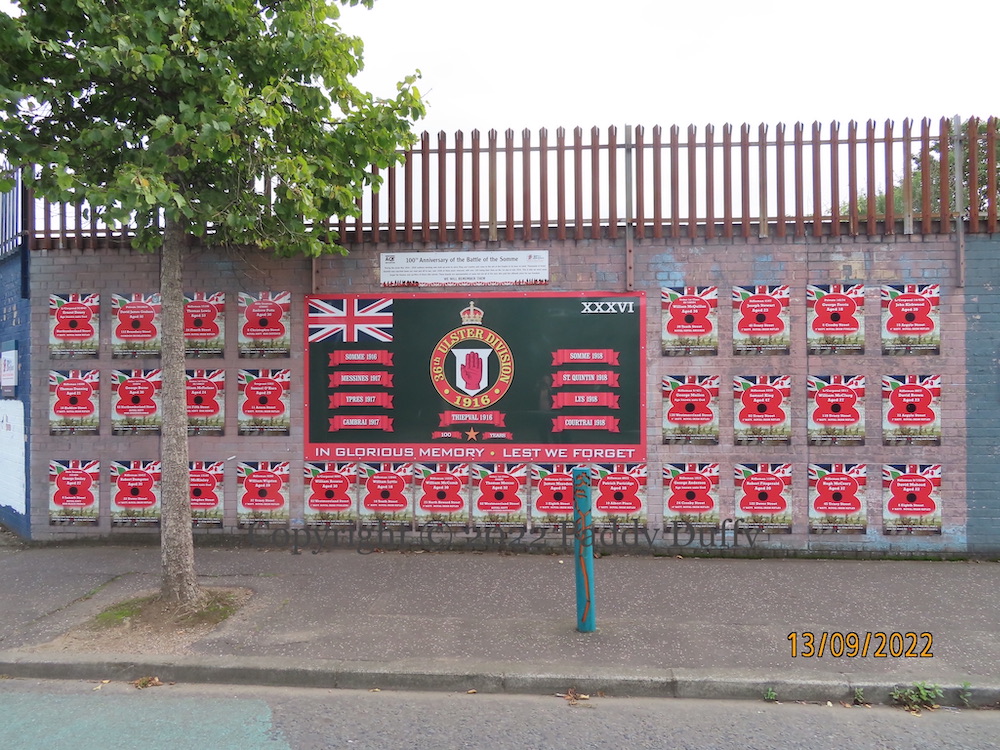
The main battles of the 36th (Ulster) Division (“XXXVI”) are listed – Somme, Thiepval, Messines, Ypres, Cambrai, Somme (1918), St. Quintin [St. Quentin], Lys, Courtrai – and those who died are commemorated on this new board. The main board is surrounded by smaller boards, part of the Poppy Trail, bearing the names, ages, addresses, ranks, and units of deceased soldiers. For example: William Lyttle, aged 18, 16 Tenth Street, 9th batt. Royal Irish Rifles, Rifleman 13044.
The info board above reads: “Thousands of brave Shankill men marched down our road and off to war, over 1500 of them never returned, with over 150 losing their lives on the 1st day of July 1916.”
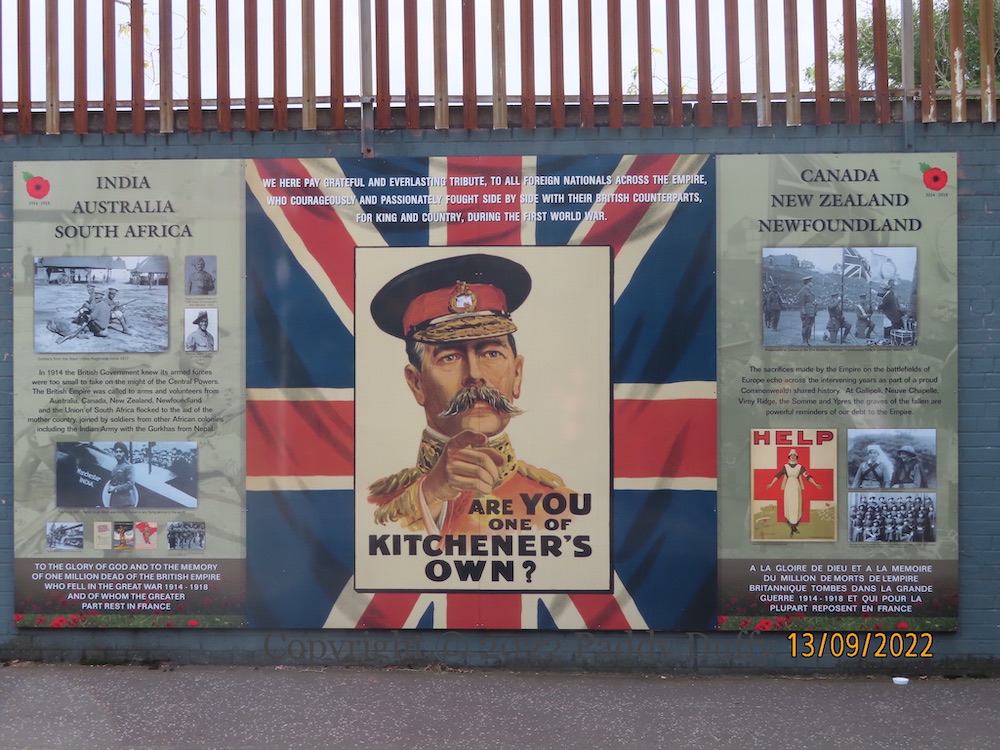
“Are you one of Kitchener’s own?” asks this mural in Northumberland Street: “We here pay grateful and everlasting tribute, to all foreign nationals across the empire, who courageously and passionately fought side by side with their British counterparts, for King and country, during the First World War.” The left-hand side (second image) features images of soldiers from the West Indies and India, including “The Flying Sikh”, Hardit Singh Malik and a French lady as she “pins flowers on a regiment containing Muslims, Sikhs, and Hindus.” On the right, images of the “presentation of Colours to the 51st Battalion Canadian expeditionary force” and of Canadian “bluebird” nurses in the Canadian Army Medical Corps.