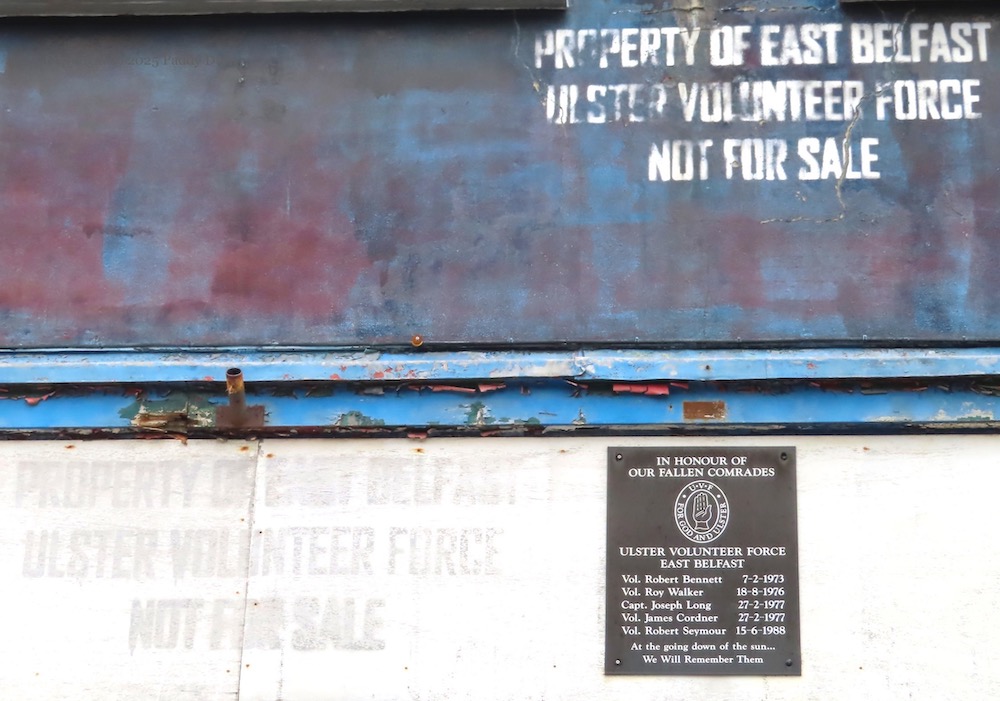
This notice is on the outside of the Belvoir Bar in east Belfast: “Property of east Belfast Ulster Volunteer Force – Not for sale” alongside a plaque to “fallen comrades” Robert Bennett, Roy Walker, Joseph Long, James Cordner, and Robert Seymour. It seems that the bar has been shuttered since 2011 (Belfast Telegraph | Irish Times).
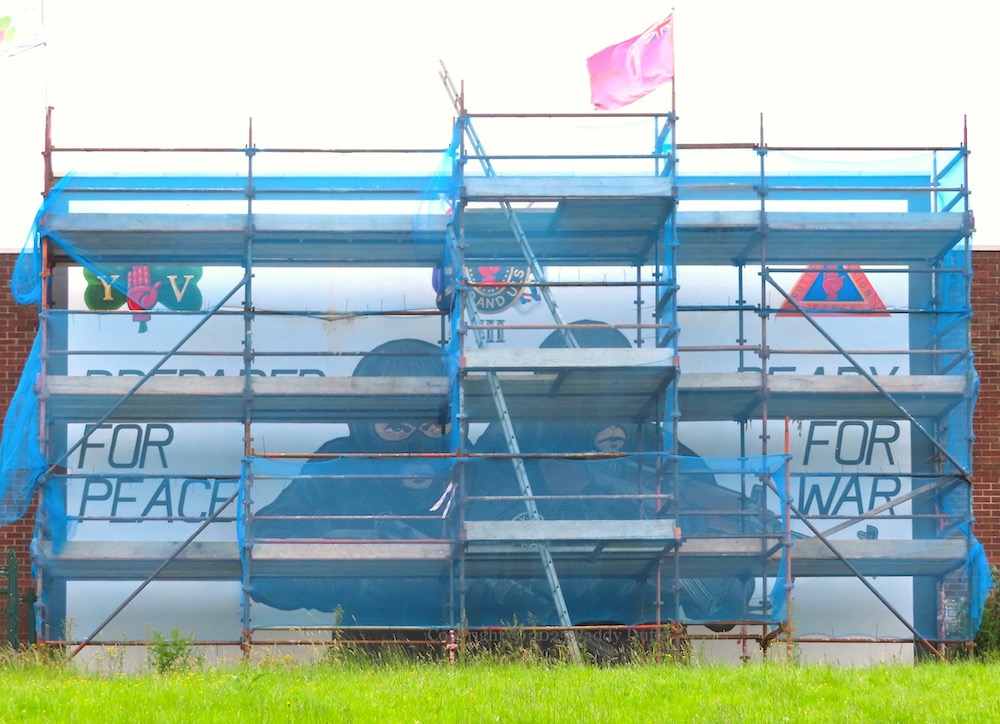
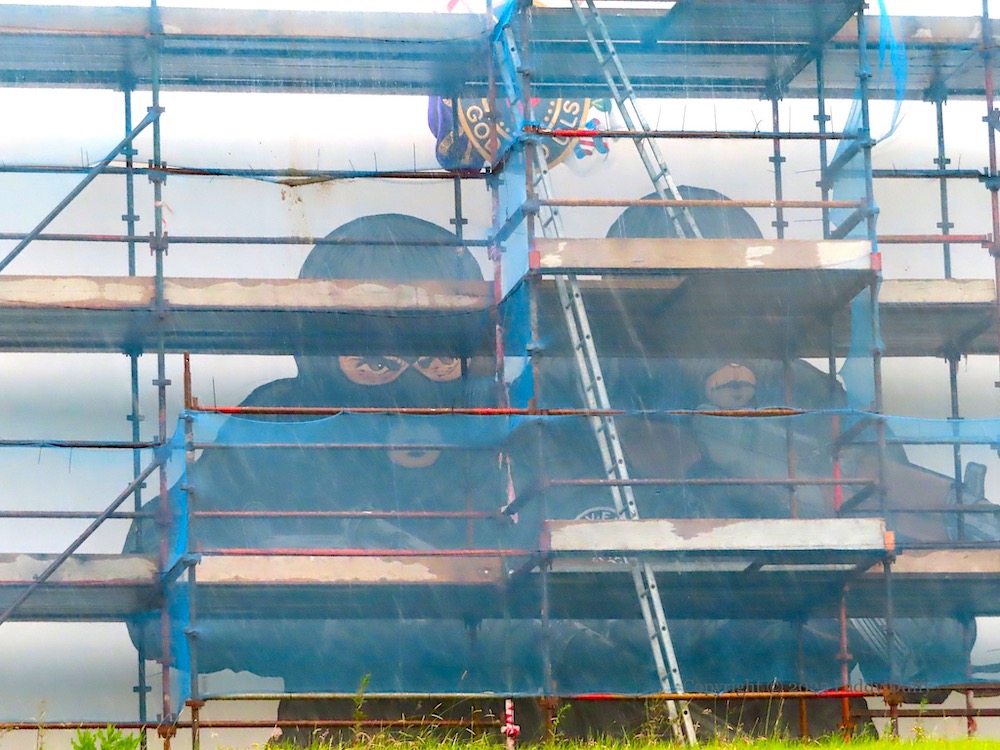
The UVF mural overlooking the entrance to Mount Vernon has been repainted after Storm Darragh back in December (2024) knocked down part of the wall it was painted on (see Taken By Storm) and the remainder of the wall was subsequently knocked down (see Prepared For Space, Ready For Wall).
There were local voices against the repainting of the mural (Sunday World) but after the wall (which is owned by the Housing Executive) was rebuilt, scaffolding went up at the end of March (BelTel) and painting began in June.
The mural will be officially launched at the Twelfth celebrations. The repainting has been criticised by the father of one UVF victim (BelTel). One (very) small mercy is that neither of the gunmen – from the North Belfast UVF – is directly confronting the viewer (including the drivers coming off the M2 at Fortwilliam.
Images of the completed mural are from June 26th; the in-progress images are as dated below.
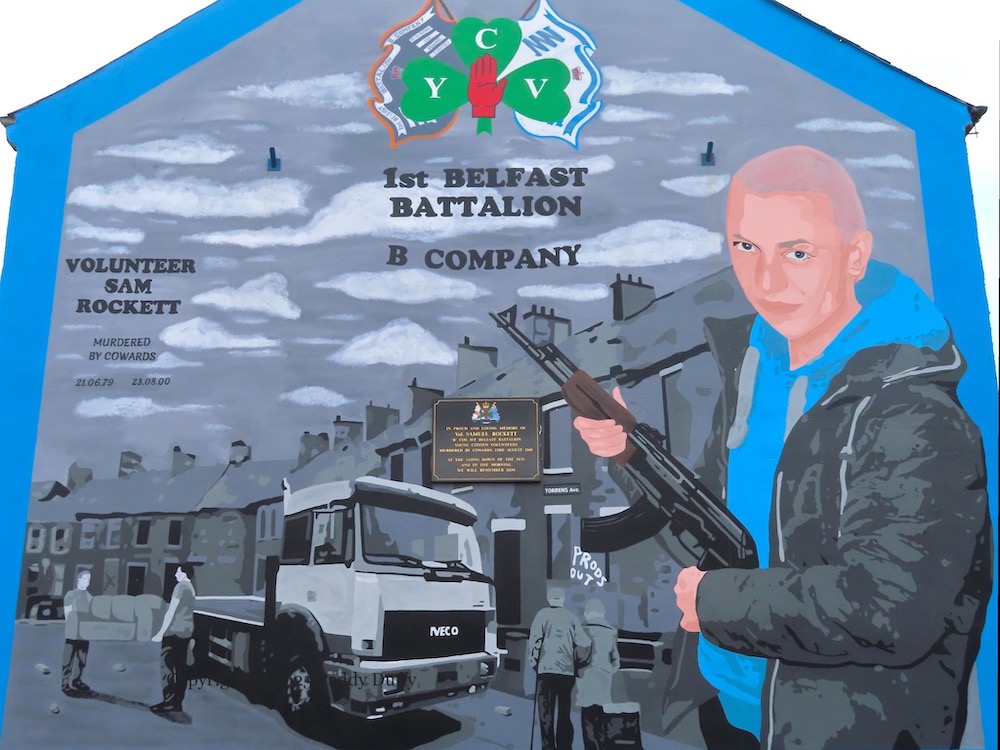
A few changes have been made to the Sam Rockett mural (compared to the 2023 original): Rockett’s hair has been lightened, the “Prods out” graffiti on the row of burned-out houses has been brightened, a simple “B Company” has replaced the smaller “1st Belfast Brigade, B Company”, and “Murdered by cowards 21.06.79 – 23.08.00” has been added on the left.
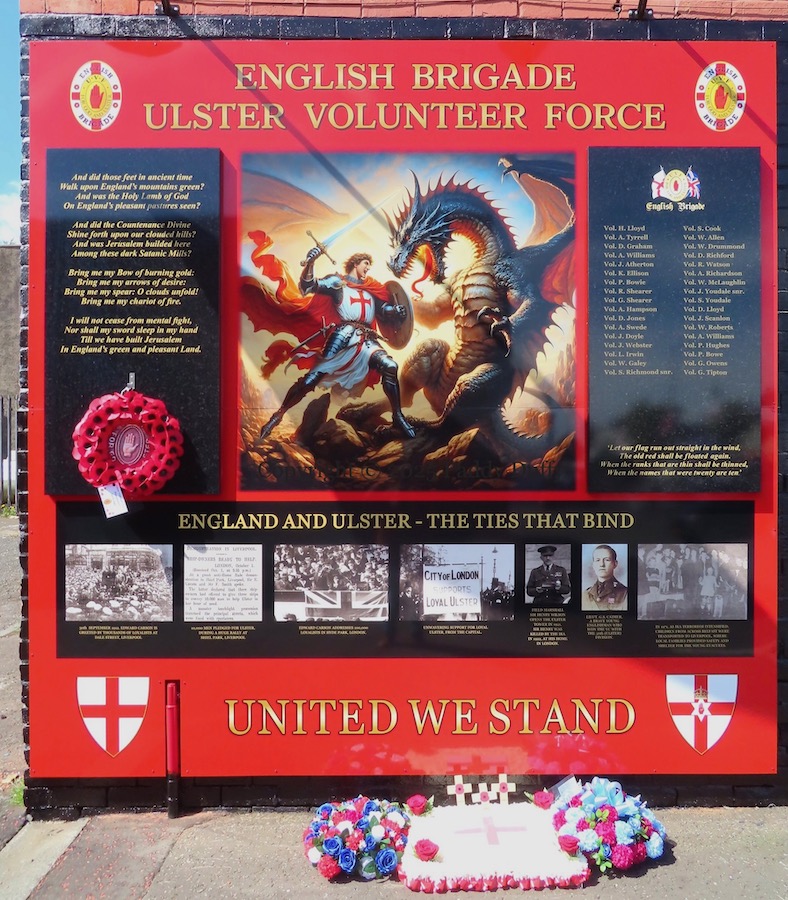
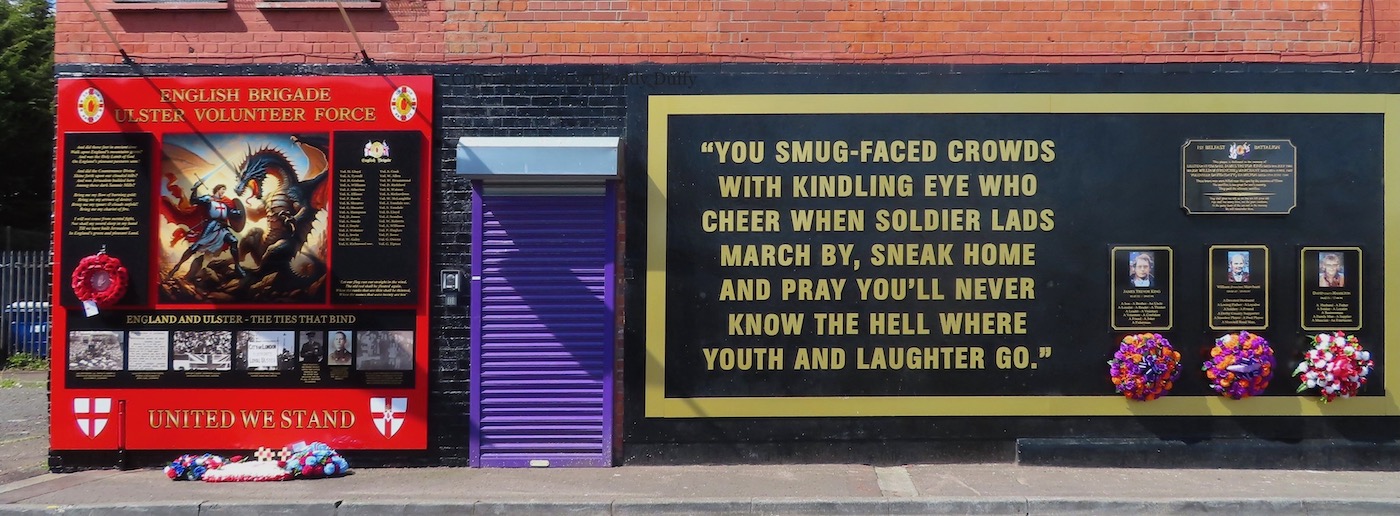
“English Brigade Ulster Volunteer Force.” “England and Ulster – the ties that bind.” “United we stand.”
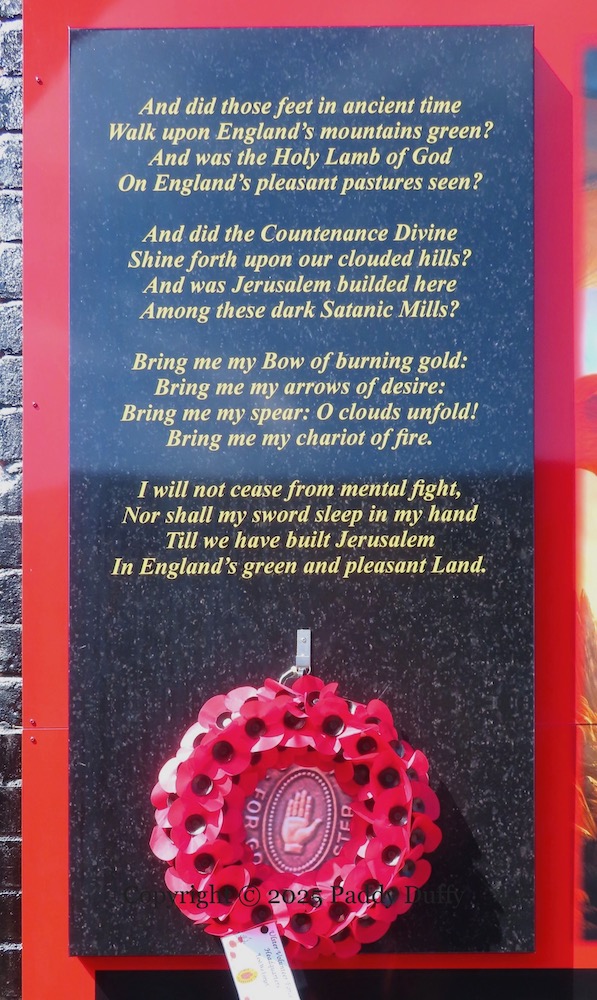
On the left are the words from William Blake’s poem, which also serve as the lyrics to the hymn Jerusalem.
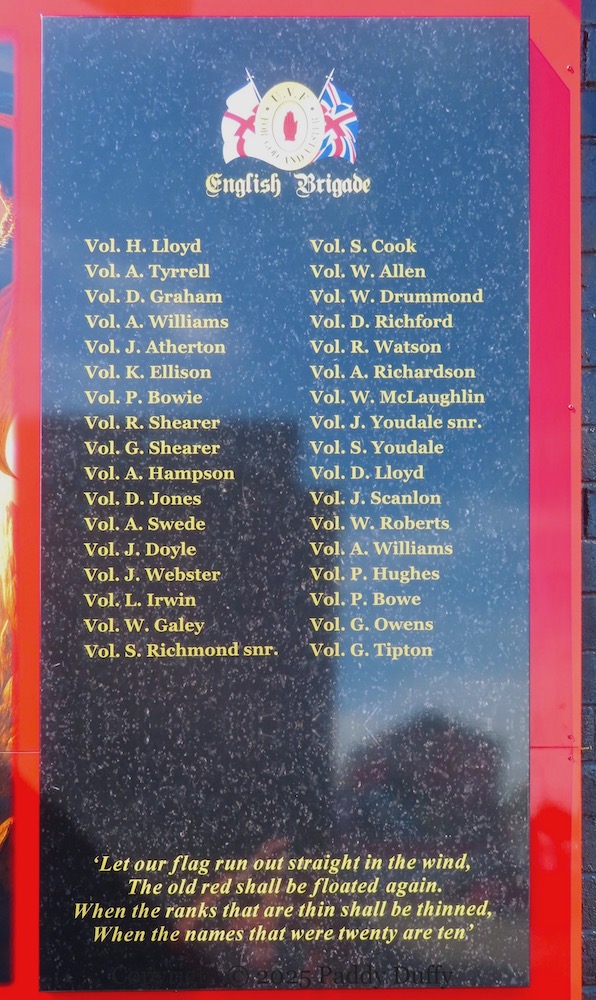
“Let our flag run out straight in the wind/The old red shall be floated again./When the ranks that are thin shall be thinned/When the names that were twenty are ten.” [from Swinburne’s A Song In Time Of Order which was also used as a socialist song]
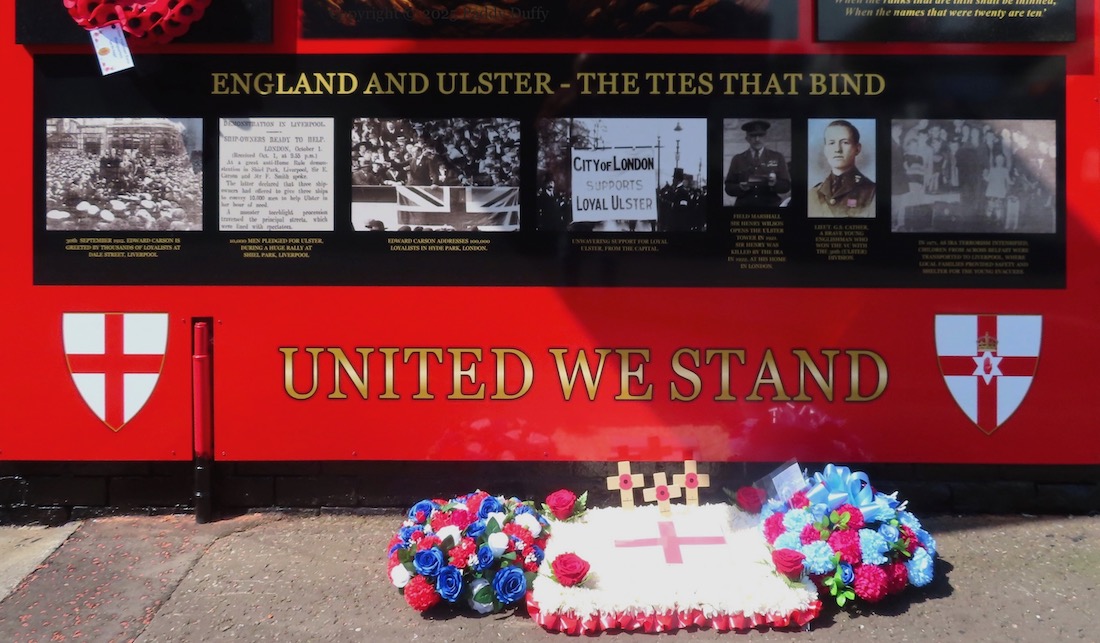
The images along the bottom illustrate the connection between Northern Ireland and England. From left to right: Edward Carson in Liverpool in 1912; 10,00 pledges from Liverpool men; Carson addressing 100,000 people in Hyde Park, London; a banner reading “City of London supports loyal Ulster”; “Field Marshall Sir Henry Wilson opens the Ulster Tower in 1921. Sir Henry was killed by the IRA in 1922 at his home in London”; GS Cather, VC winner with the Ulster Division; evacuees to Liverpool in 1973.
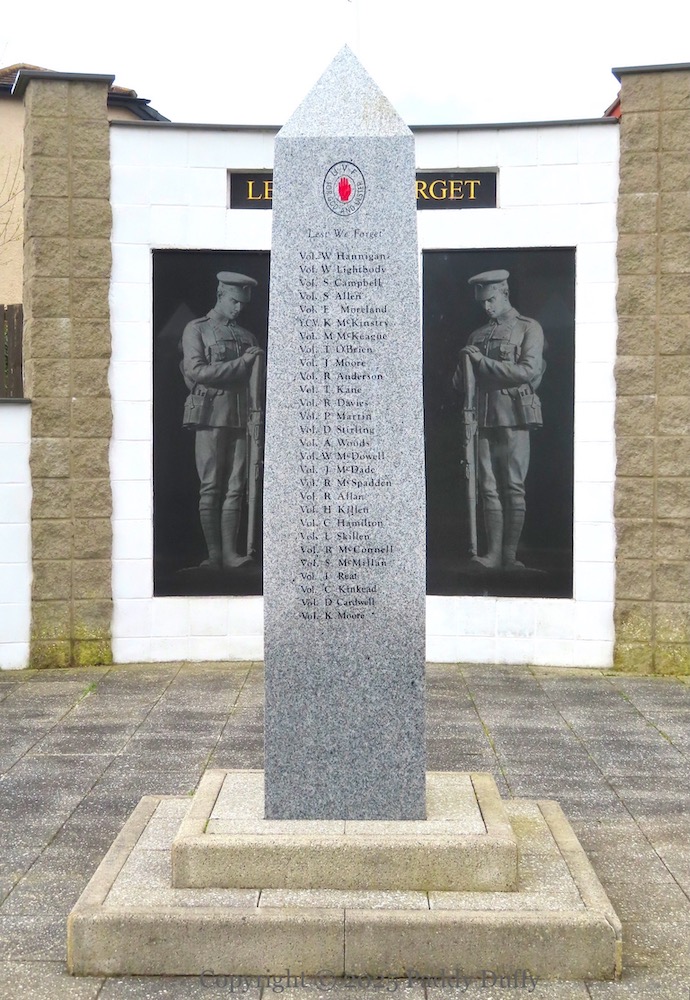
The uniforms of the graveside mourners are from WWI and the image on each side is JP Beadle’s Attack Of The Ulster Division (Royal Irish) at the Battle Of The Somme in 1916, but the names on the pillar (in the image immediately below) are from the modern UVF. Little information about any of those listed is available on-line, but ten of those listed were also on a plaque in Abbot Crescent, which was similarly in front of a 36th Division mural.
This entry updates 2023’s Leaders Of Unionism Against Home Rule, which shows portraits of Carson, Crawford, and Craig, and describes their efforts in 1912, with creation of the Ulster Volunteers and the importing of arms into Larne and Donaghadee.
To the original board have been added the two plaques (shown above and immediately below), one on either side:
On the right: “In memory of our absent friends. Forever remembered by 1st East Belfast Mens, Cosy, East End and Laganville Somme groups. ‘They live in our hearts forever'”
On the left: “Jim Holt – forever remembered – forever in our ranks [of the UVF]. West End Somme Association, Glasgow.” There is a large board to Holt in Beechfield Street.
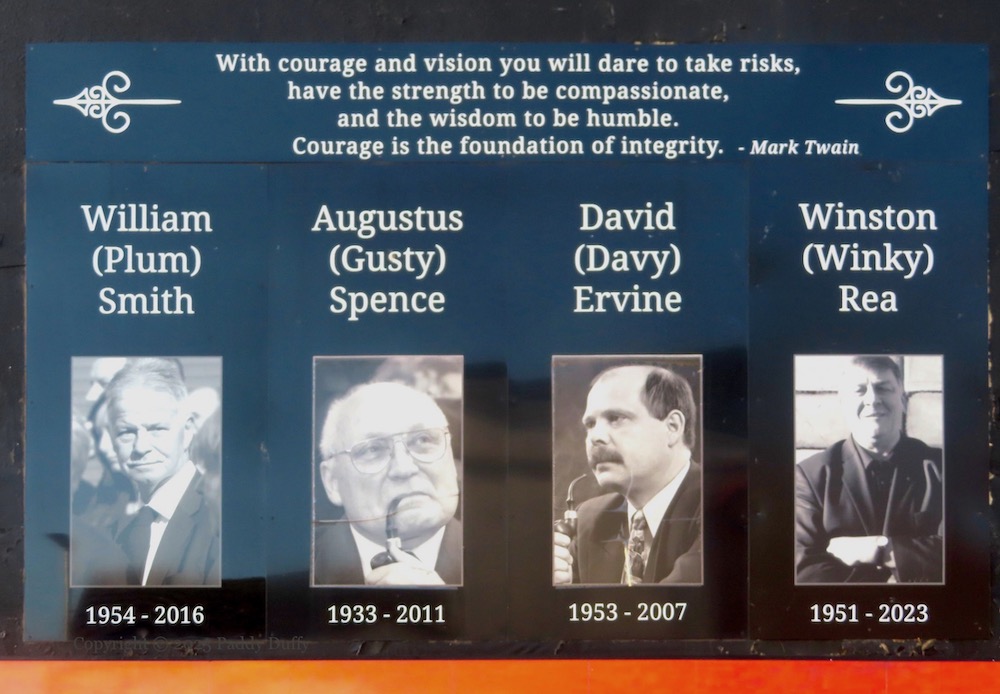
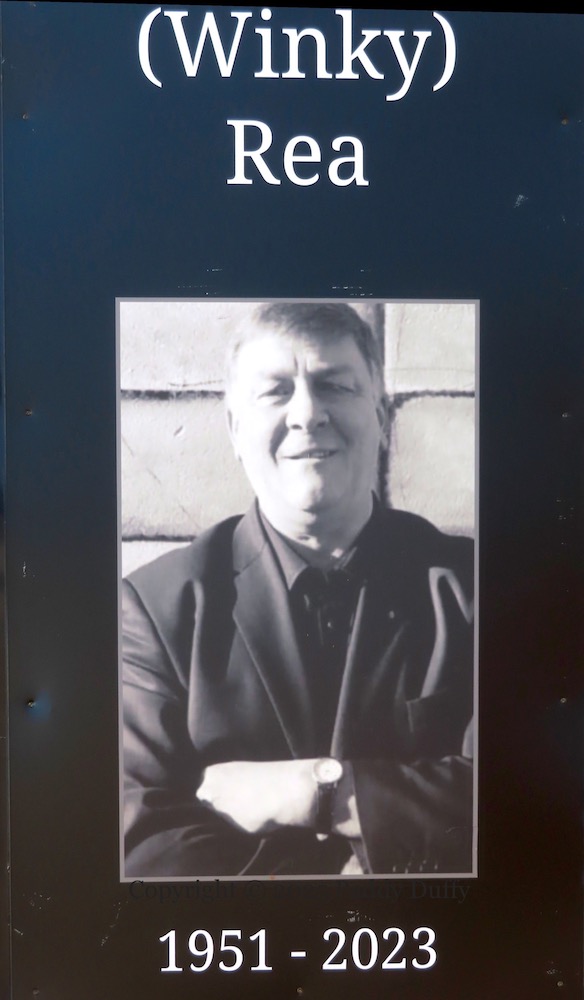
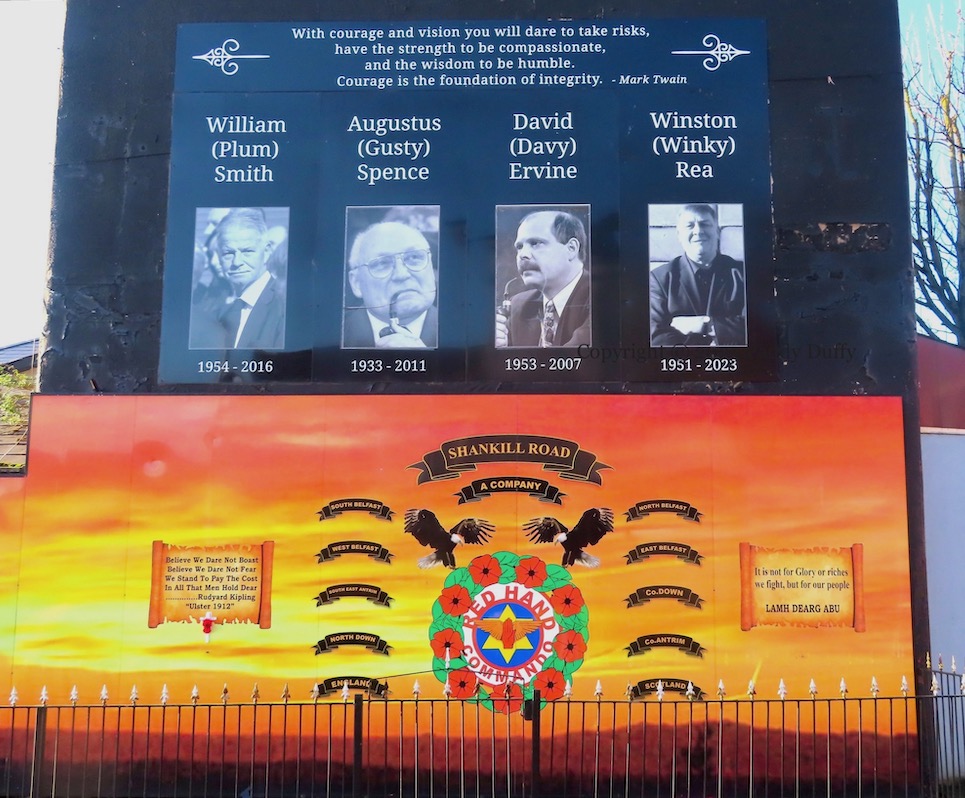
A portrait of Winston Winky/Winkie Rea has been added to the gallery above the Red Hand Commando board in the upper Shankill, taking the place of a pesudo-Mark Twain quote that has been reproduced in a horizontal format above the quartet. (See the previous iteration.)
Like the other three, Rea was a RHC (or UVF) member who then became a member of the Progressive Unionist Party (PUP). On the basis of his interview with the Boston College project, he was charged with crimes including two murders and two attempted murders (BBC | BBC). The trial was still on-going when he died in December of 2023.
“With courage and vision you will dare to take risks, have the strength to be compassionate, and the wisdom to be humble. Courage is the foundation of integrity. – Mark Twain [Keshavan Nair].”
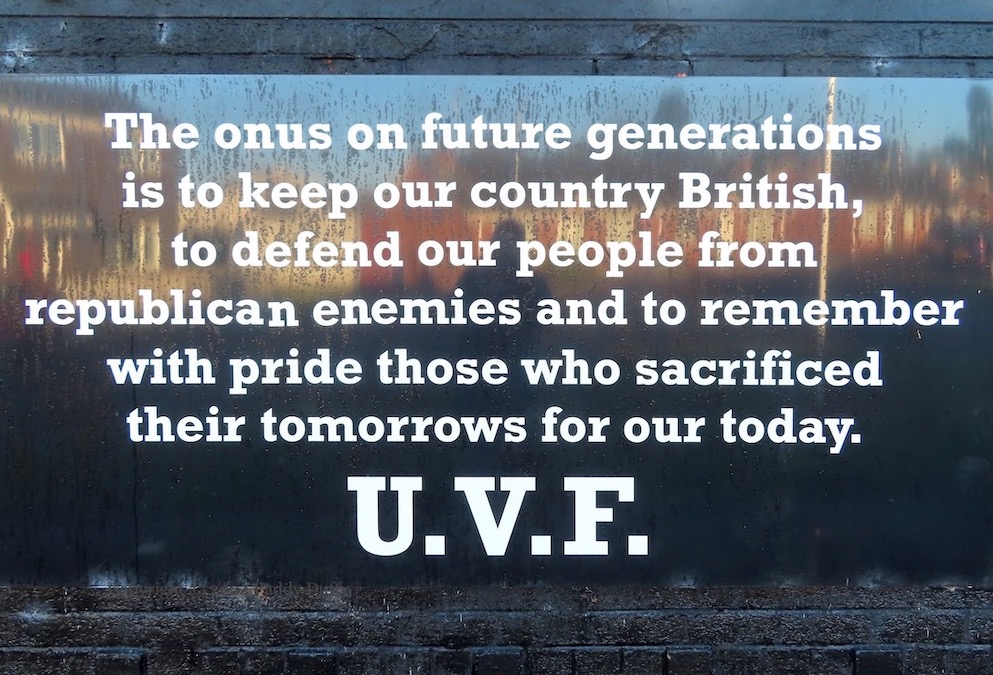
There are new boards (and a black background) for the memorial plaque to Harris Boyle and Wesley Somerville in Portadown.
On the left: “The onus on future generations is to keep our country British, to defend our people from republican enemies and to remember with pride those who sacrificed their tomorrows for our today. UVF.”
And on the right, the words of A.E. Housman’s 1936 poem: “Here dead we lie because we did not choose/To live and shame the land from which we sprung.//Life to be sure, is nothing much to lose,/But young men think it is, and we were young.”
Despite the WWI references and imagery, the two people commemorated belong to the Troubles era. Boyle and Somerville were UDR soldiers and UVF volunteers. They were “killed in action” when the bomb they were planting on the minibus of the Miami Showband went off prematurely. Of the pair, only Somerville’s arm with its “UVF Portadown” tattoo remained identifiable. Three members of the band were also killed in the attack. (WP) The plaque goes back to (at least) 2008: Boyle & Somerville.
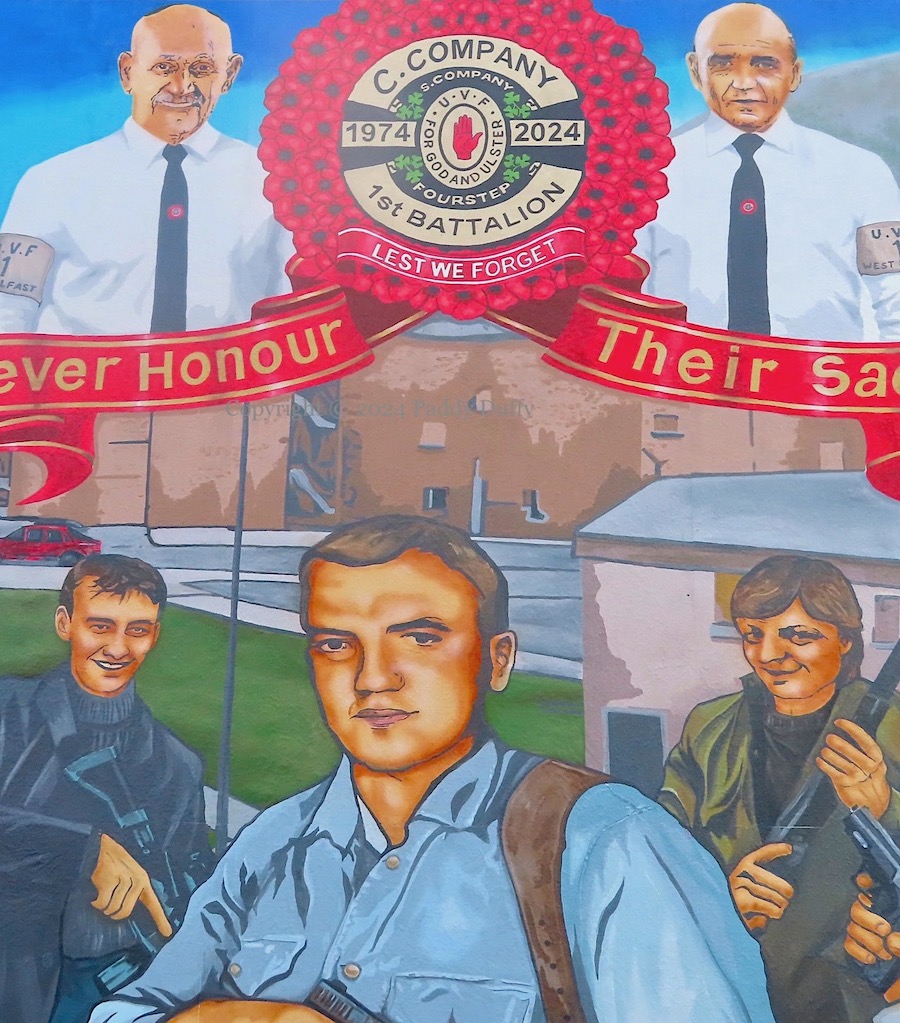
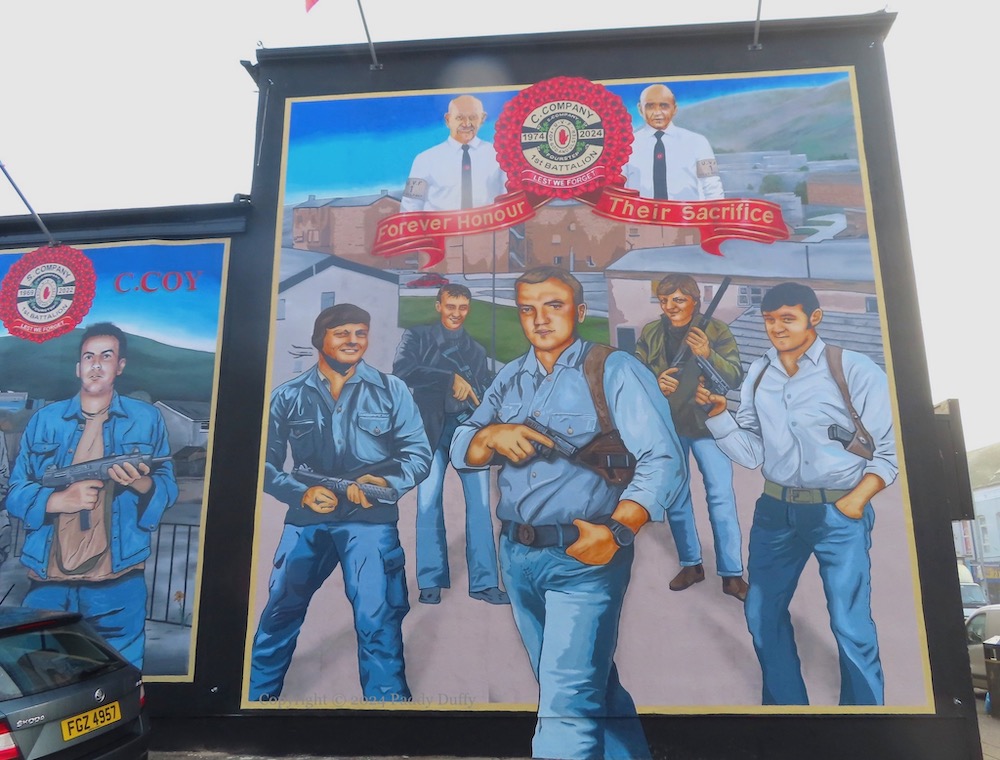
This is a new mural to UVF volunteers (l-r) Robert McIntyre, William Hannah, James McGregor, Robert Wadsworth, and Thomas Chapman, who were killed between 1973 and 1978. Compared to the previous mural, the volunteers generally present a more relaxed appearance, lacking their jackets and parkas, though still brandishing a wide variety of weapons.
It is not clear who the two gentlemen in the top, wearing vintage UVF arm-bands, are.
Carnan (or “C. Coy”) Street in the Shankill. For the mural to the left (to Joe Coggle and Paul McClelland) see S. Company, C. Company.
Prepped for the launch:
July 7th: The plaster was taken back to the brick and then re-plastered and painted before the mural was added.
“In proud memory of Ryan McCosh [and] Chris Hamilton, North Down battalion, Bangor”. The memorial board was officially dedicated on November 10th but was in place a month previously (Fb).
To the right of the wide shot, writing on side-walls can be seen that reads “Bangor Protestant Boys F[lute] B[and]” and “Did they beat the drum slowly? Did they play the fife lowly?”. The latter lines are from Eric Bogle’s song “No Man’s Land” which is about a young man (“Willie McBride”) dying on “the green fields of France” in WWI. (Here (youtube) is the recording by Tommy Makem and Liam Clancy.) McCosh and Hamilton appear to have been members of the flute band, rather than members of the Ulster Volunteers or the Troubles-era UVF.














 Paddy Duffy Collection