Remembrance Day, formerly known as Armistice Day, commemorates and celebrates the end of hostilities in the first World War on November 11th, 1918. Many ceremonies in the UK take place on the second Sunday of the month, regardless of the date. This practice began in 1945, changing the WWII practice of marking the occasion on the preceding Sunday, to ensure that the holiday did not fall on a work-day (WP).
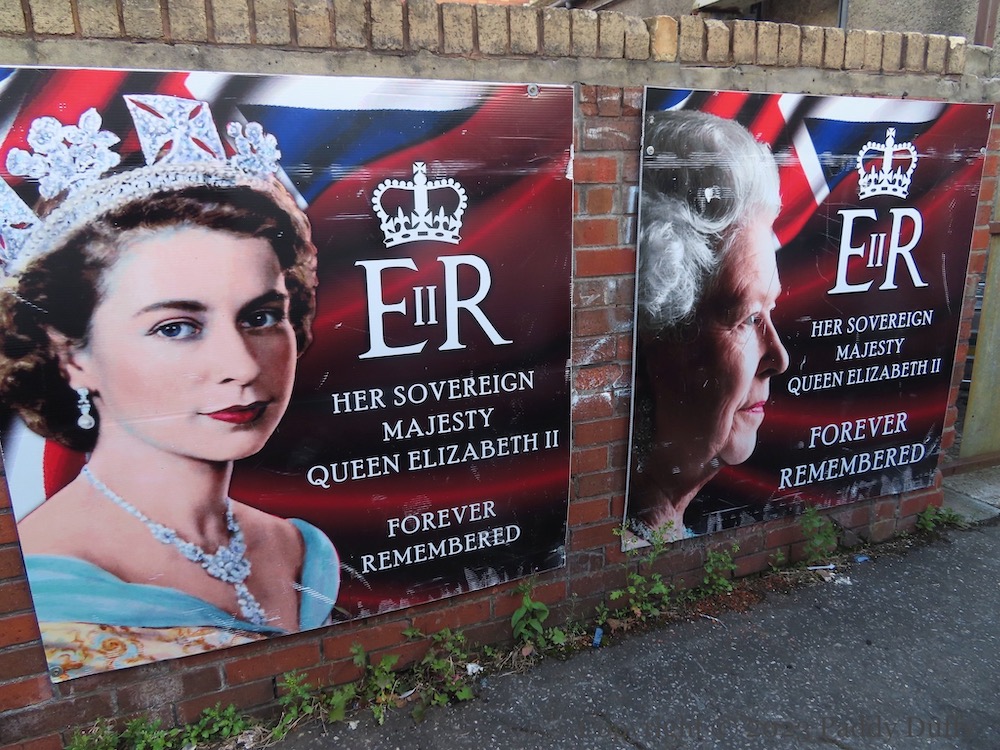
This large tarp (above) is at the Shore Road memorial garden to the 10th, 36th, and 16th divisions, shown below, along with the nearby Fifes & Drums/Fairhill flute band (Fb)/Pride Of The Shore (Fb) tribute to QEII. The tarp was also seen last year: Remembrance Day.
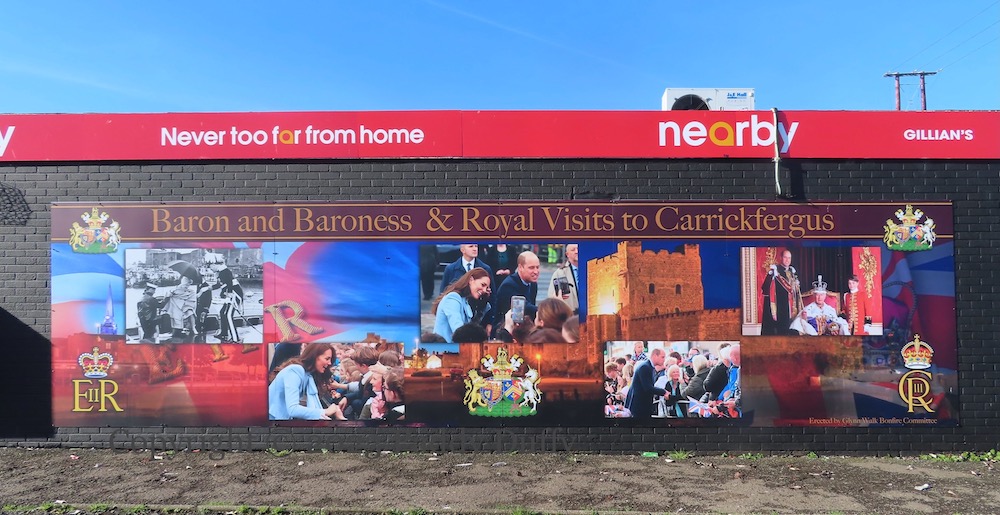
This Castlemara, Carrickfergus, board is not remarkable so much for what it depicts — the new prince and princess of Wales, “baron & baroness of [sic] Carrickfergus” — but for what it replaces, namely, the Carrickfergus Eddie, which had been in place since (at least) 2000 — see Show No Mercy.
This means that there are no large murals of Eddie remaining; there are only some smaller versions of Eddie of boards or tarps. Eddie has his own Visual History page.
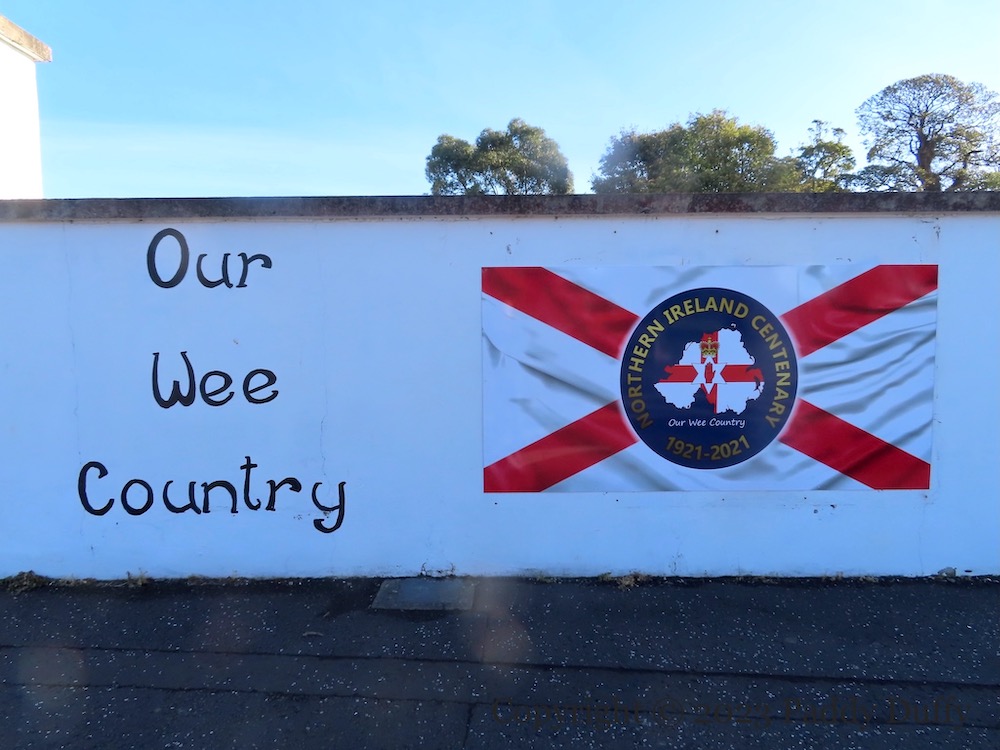
This is the second (at least) iteration of an installation along Taylor’s Avenue, Carrickfergus, showcasing the Ulster-Scots heritage of Carrickfergus and its later contributions to the United Kingdom.
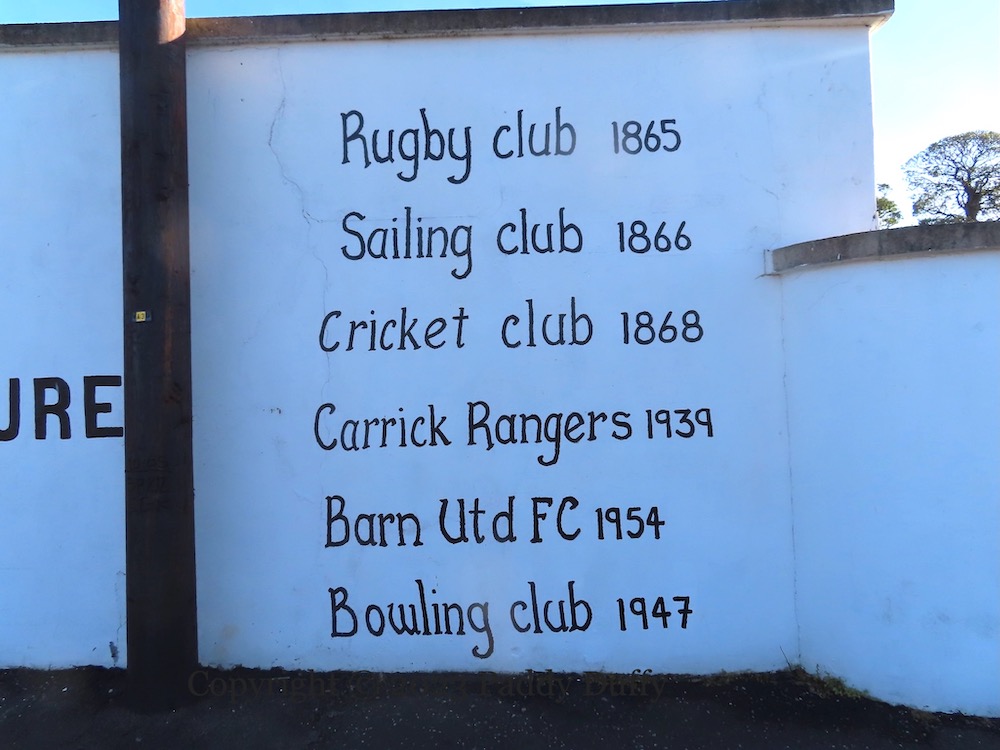
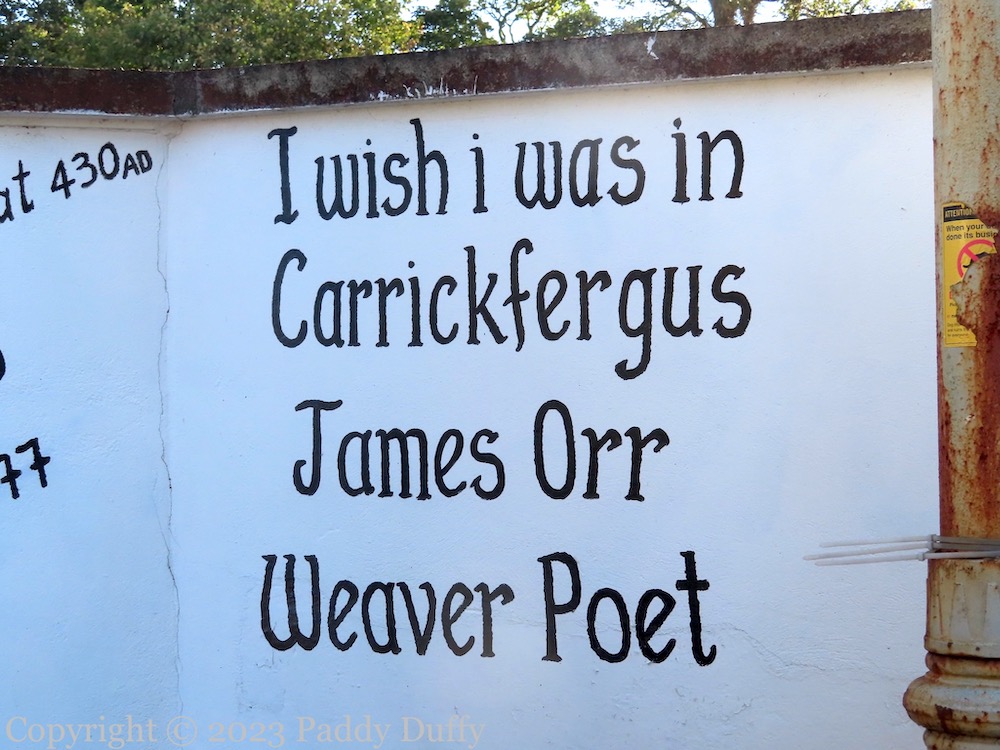
The wall is 60 metres/200 feet in length and can be divided into about ten distinct panels – notes on the different panels are given below, following the order of presentation of images, which show the entire wall moving from left to right.
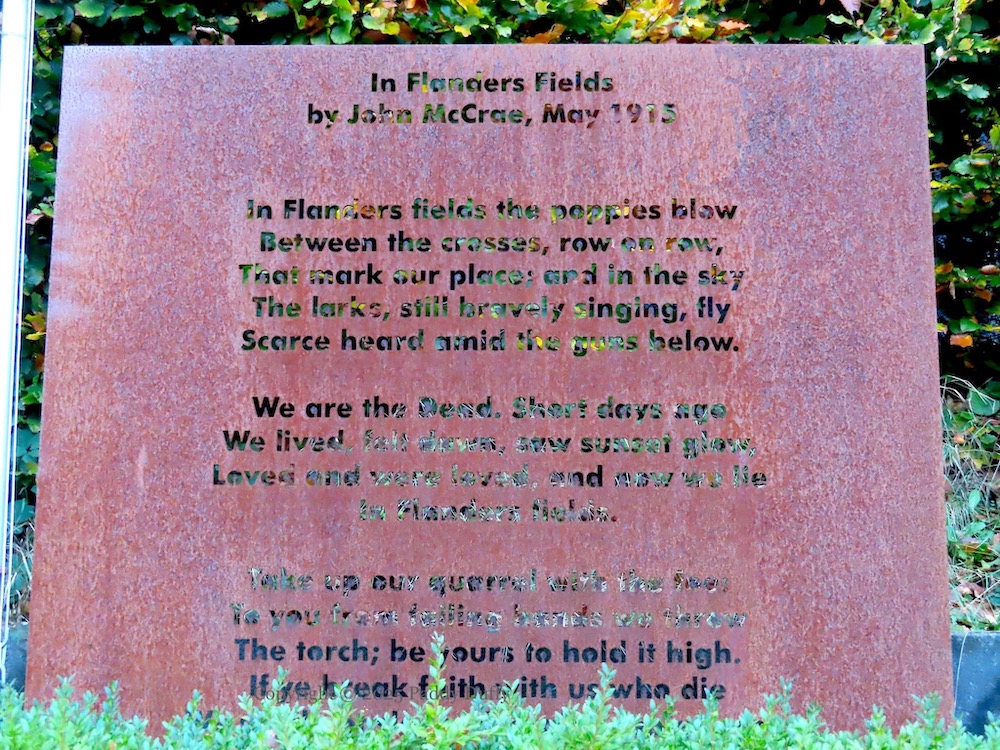
The original, as seen on Street View, included boards showing the Pretani Isles/British Isles, QEII, and Tom Moore. As seen here, there are now boards to King Charles III, a vintage postage stamp, ‘The Siege Of Carrickfergus’ in 1689, and ‘The Barn Mills Fallen’ of WWI.
James Orr, the ‘Bard Of Ballycarry’, was a contemporary of Robert Burns and a United Irishman. It does not appear that he wrote a poem with the line “I wish I was in Carrickfergus”.
Daniel Cambridge won his VC for service in the Crimean War (WP) and James Crichton for service in WWI (WP).
CarrickfergusHistory includes “the oldest know map of Carrickfergus” from 1560, employing the spelling “Kragfargus”.
The 2/6 postage stamp featuring Carrickfergus Castle was one of four in a “Castle series” in 1955 (WP).
This Castlemara, Carrickfergus, board is notable for its background, which follows that of old coronation and jubilee portraits. These would show the royal couple (and sometimes immediate family) in plush surroundings and standing in front of chairs. This style of composition has been seen in murals of George V’s jubilee in 1935 and George VI’s coronation in 1937 — see Visual History 01. In this board, however, Philip and Elizabeth are portrayed in old age and are not in coronation gear; the chairs shown are from the Throne Room in Buckingham Palace.
Also notable is that the board replaces a UDA mural – see Joint Manoeuvres. The other UDA mural in the estate — Carrickfergus Eddie — has also been replaced.
For the UVF/YCV gunmen in the background of the wide shot, see Out Of The Trenches.
William was granted the peerage “baron Carrickfergus” as a wedding present in 2011, which made Catherine/Kate baroness (WP). They visited the town in 2022 (BBC). The black-and-white photograph on the left is of Queen Elizabeth visiting in 1961 (youtube).
Replaces the kids mural We Are Friends in Hawthorn Avenue, Carrickfergus.
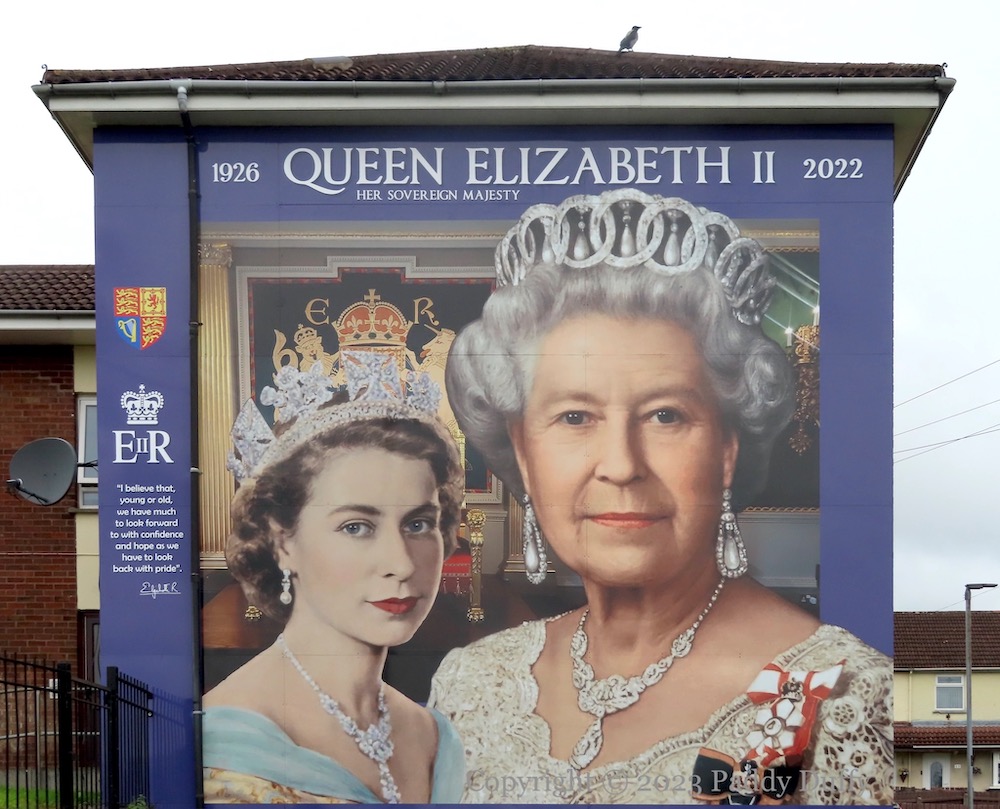
“Queen Elizabeth II, her sovereign majesty, 1926-2022. ‘I believe that, young or old, we have to look forward to with confidence and hope as we have to look back [on] with pride.'”
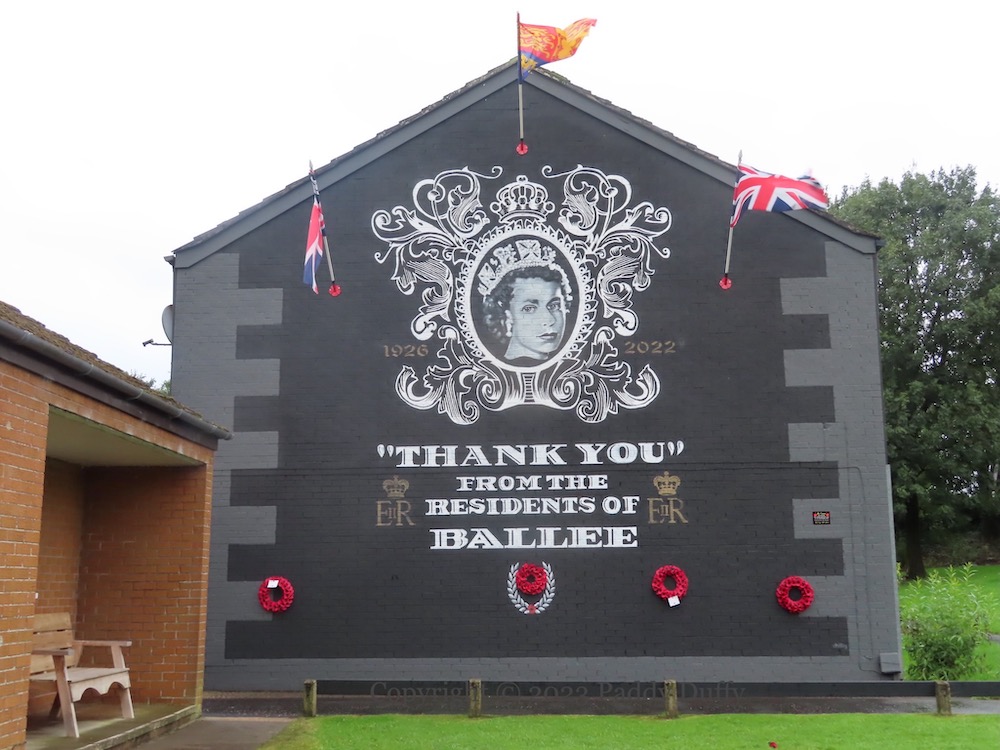
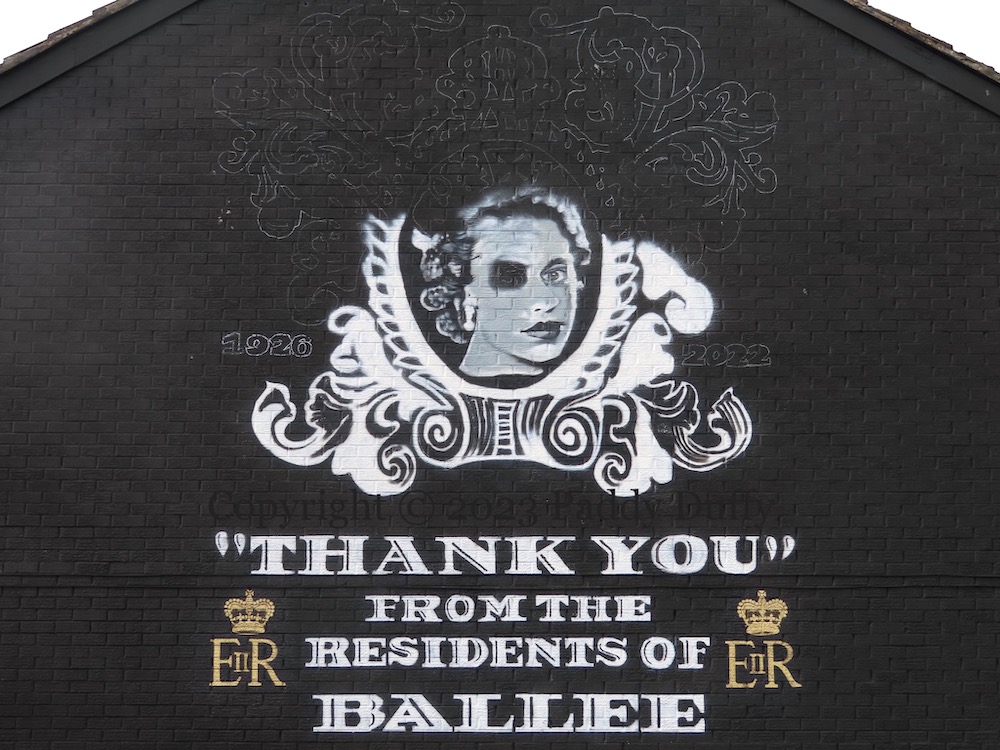
This is the mural that controversially replaced the infamous ‘Rathcoole towers’ UDA mural that had stood for more than 20 years in Bencrom Park (see South East Antrim UFF). Apparently, some people thought Queen Elizabeth was not hard-line enough (BelTel).
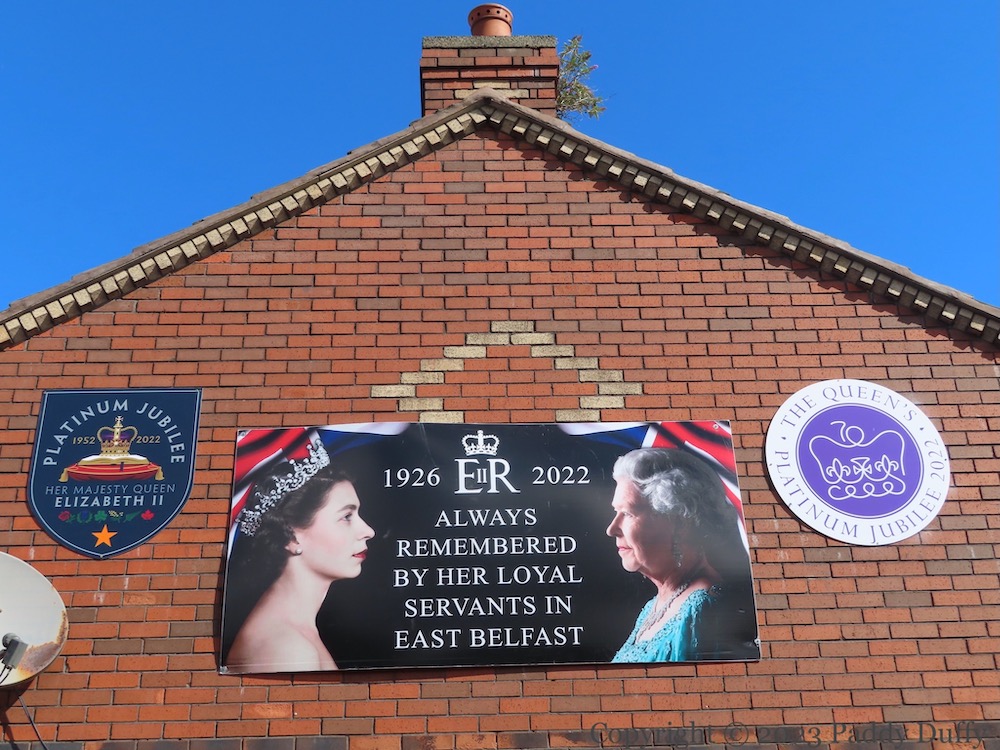
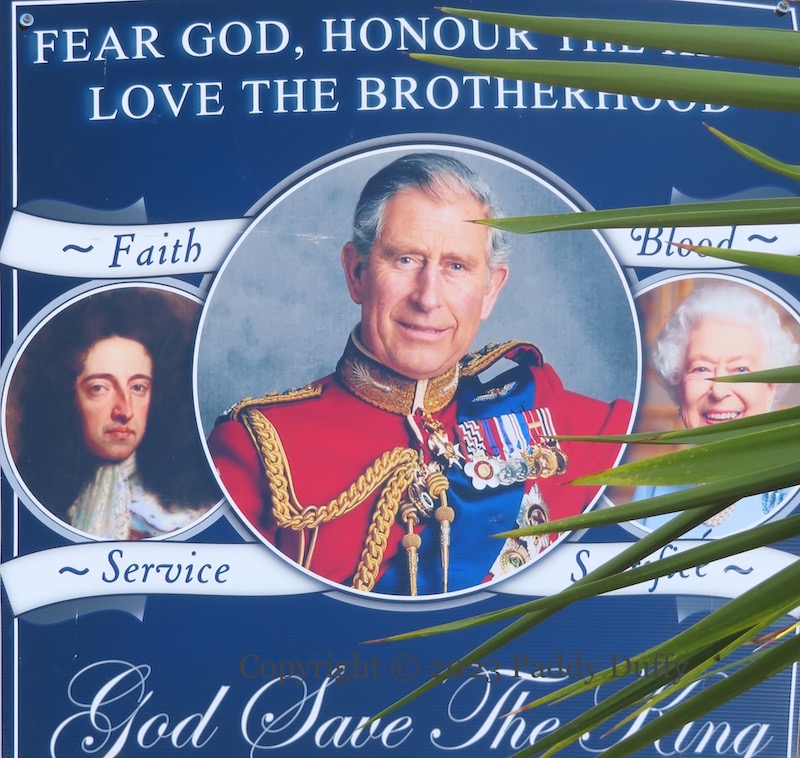
Here are three images from the blind end of Montrose Street, east Belfast, updating a post from November last year (Loyal Servants) with the addition of the boards above, on the death of Queen Elizabeth II, and the final image below, which puts the new King Charles III between Queen Elizabeth and King William III.
Here are two portraits of the recently crowned King Charles III in east Belfast. The image at the centre of the lower board is the standard one we have seen many times; the one above, however, appears to reproduce a slightly stylised painting or graphic.
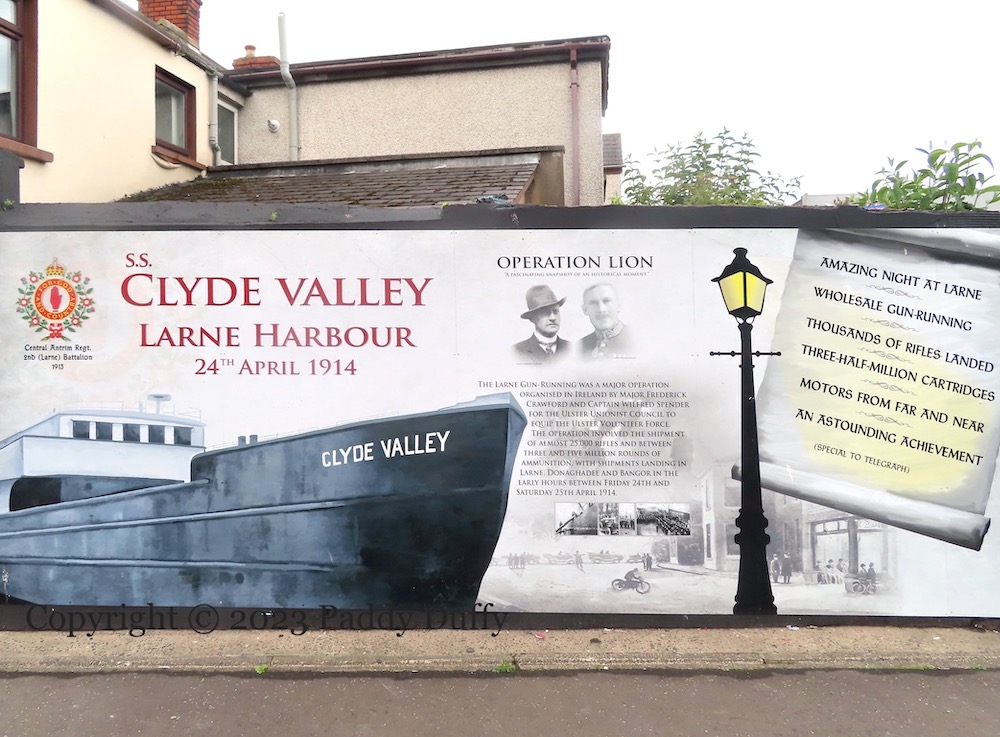
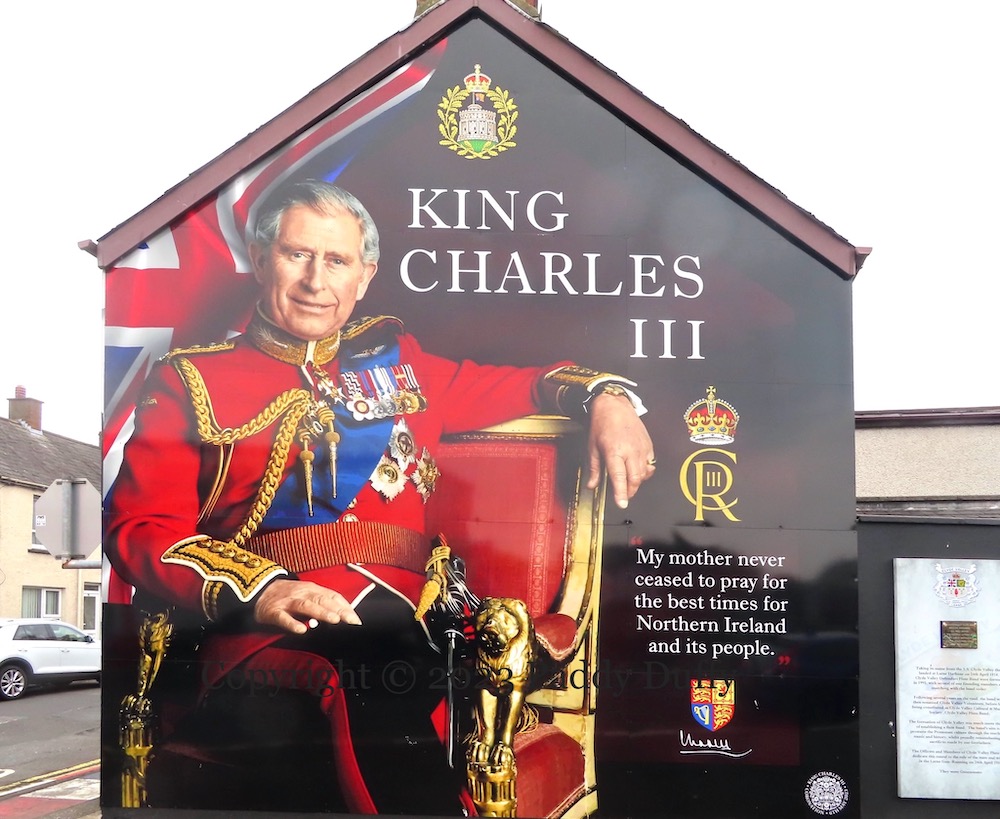
There’s a new King Charles III board in Boyne Square, Larne, of a similar sort to those we have seen in various other areas and using the same “lounging” image of Charles as in east Belfast, Carrickfergus, and the Caw (Londonderry) – though the quote is different: “My mother never ceased to pray for the best times for Northern Ireland and its people” (source unknown). The celebration of the 1914 gun-running that was on the wall previously (see Amazing Night In Larne) has been moved to the side wall, replacing King Billy.
“Operation Lion – a fascinating snapshot of an historical moment. The Larne gun-running was a major operation organised in Ireland by Major Frederick Crawford and Captain Wilfred [sic] Spender for the Ulster Unionist Council to equip the Ulster Volunteer Force. The operation involved the shipment of almost 25,000 rifles and between three and five million rounds of ammunition, with shipments landing in Larne, Donaghadee and Bangor in the early hours between Friday 24th and Saturday 25th April 1914.”
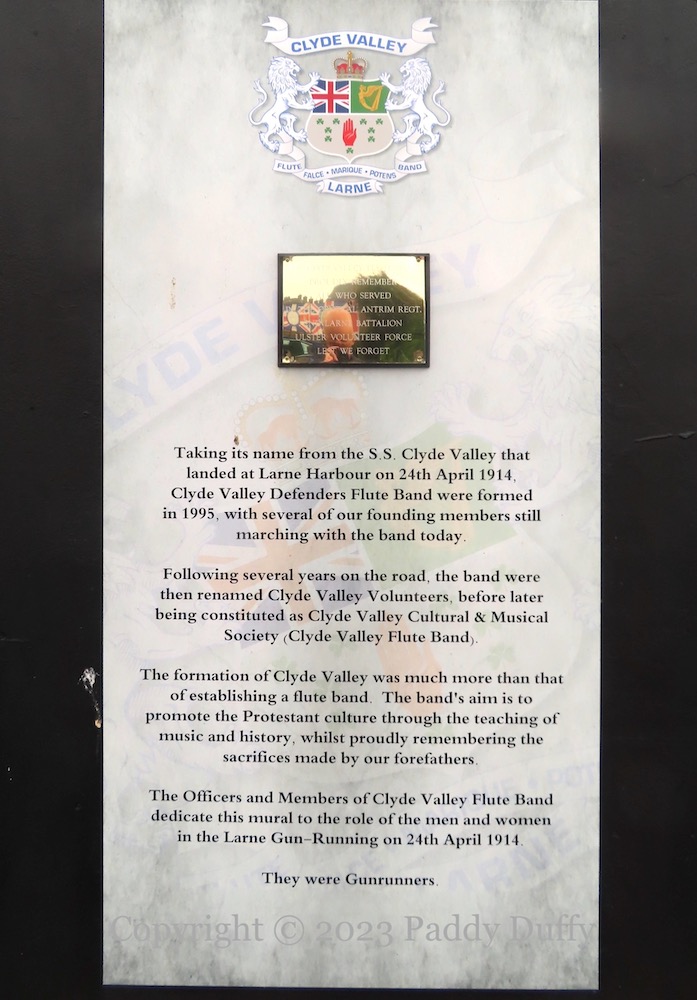
“Taking its name from the S.S. Clyde Valley that landed at Larne Harbour on 24th April 1914, Clyde Valley Defenders Flute Band were formed in 1995, with several of our founding members still marching with the band today. Following several years on the raod, the band were then renamed Clyde Valley Volunteers, before later being constituted as Clyde Valley Cultural & Musical Society (Clyde Valley Flute Band). The formation of Clyde Valley was much more than that of establishing a flute band. The band’s aim is to promote the Protestant culture through the teaching of music and history, whilst proudly remembering the sacrifices made by our forefathers. The Officers and Members of CLyde Valley Flute Band dedicate this mural to the role of the men and women in the Larne Gun-Running on 24th April 1914. They were Gunrunners.”










 Paddy Duffy Collection