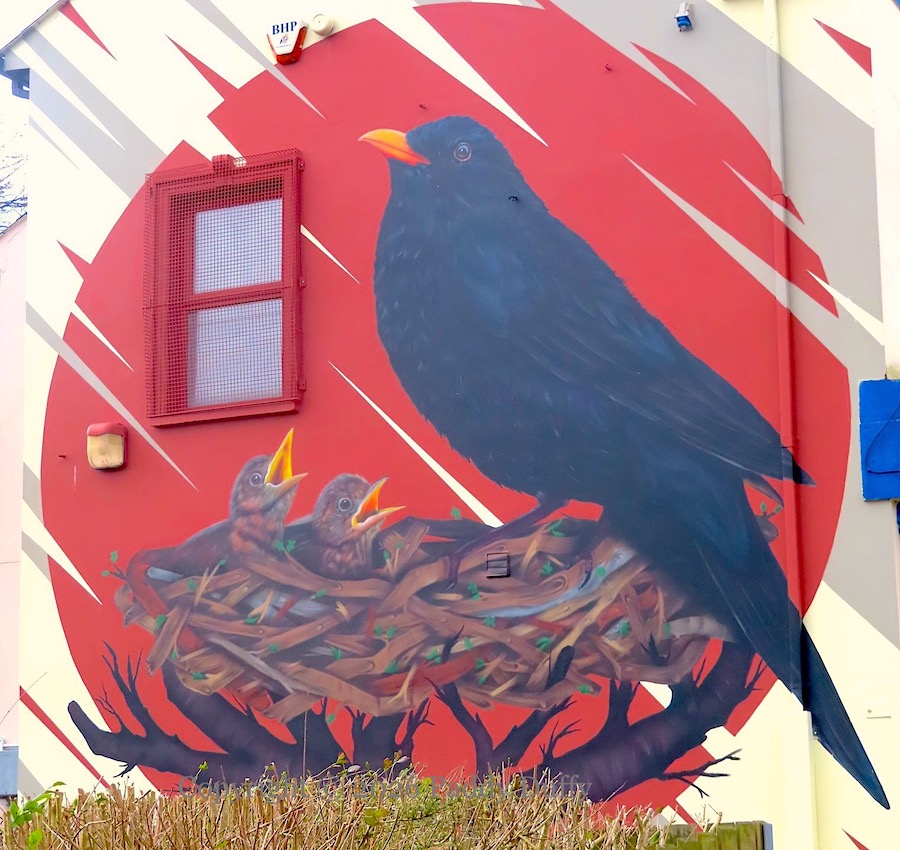
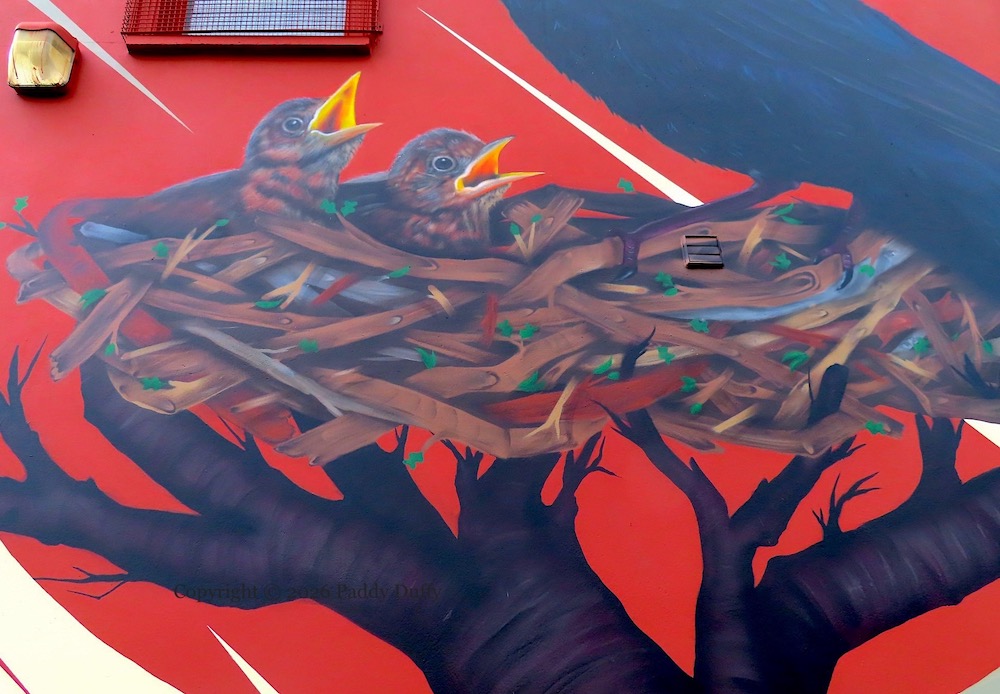
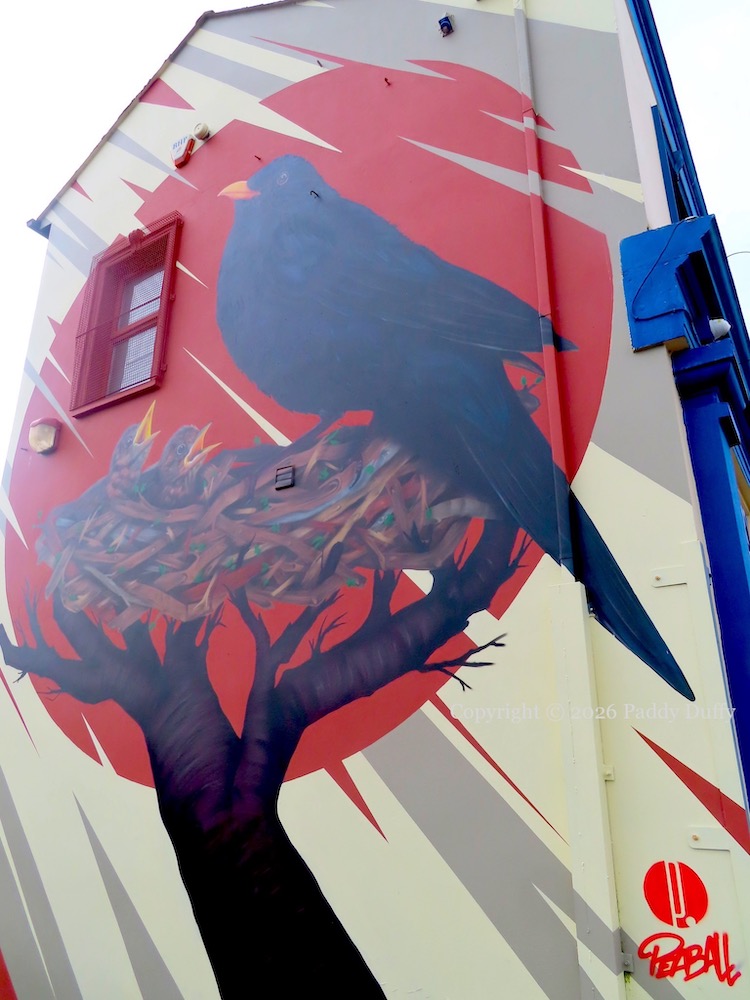
“The blackbird on the gable wall.” This piece of Peaball (web) art is on the side of the credit union in Main Street, Claudy, commissioned by Derry Credit Union to celebrate its sixty-fifth anniversary (ig).
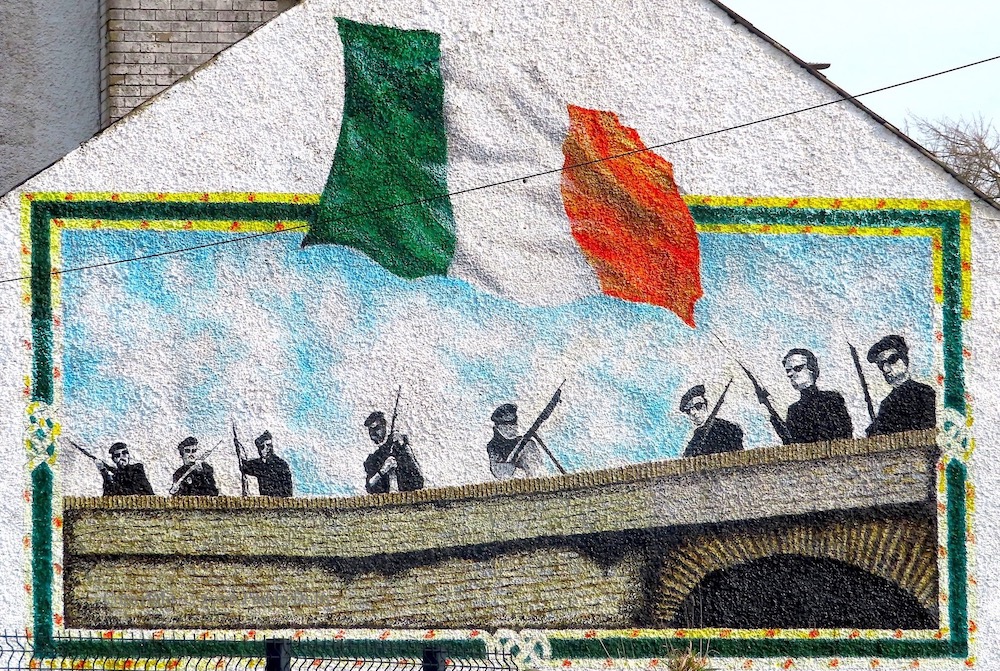
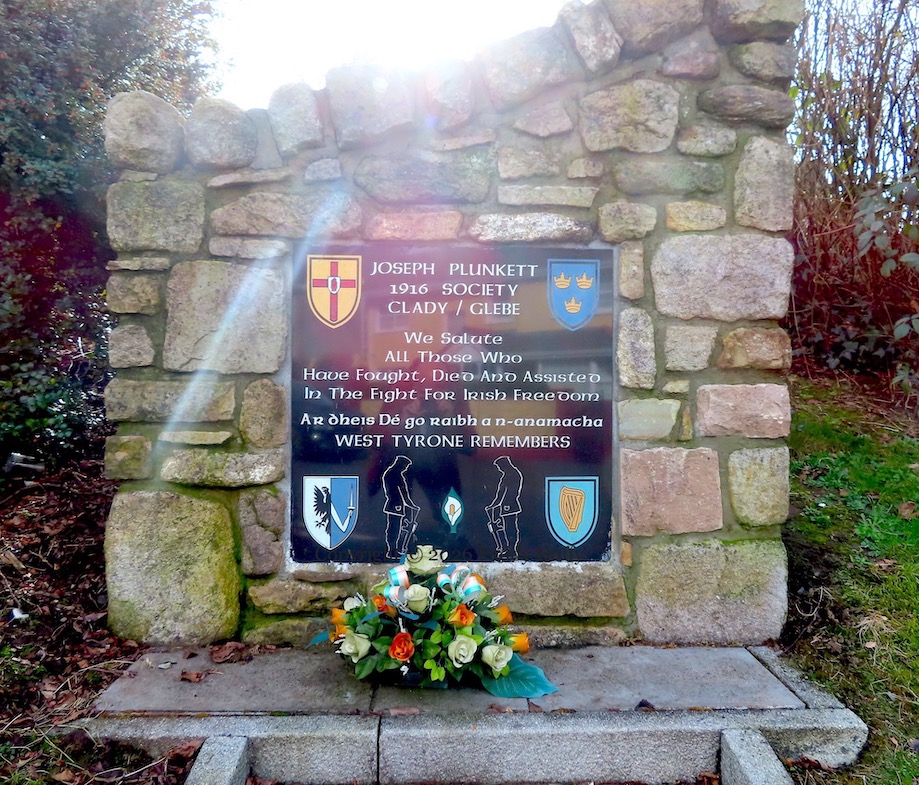
“We salute all those who have fought, died and assisted in the fight for Irish freedom. Ar dheıs Dé go raıbh a n-anamacha. West Tyrone remembers.”
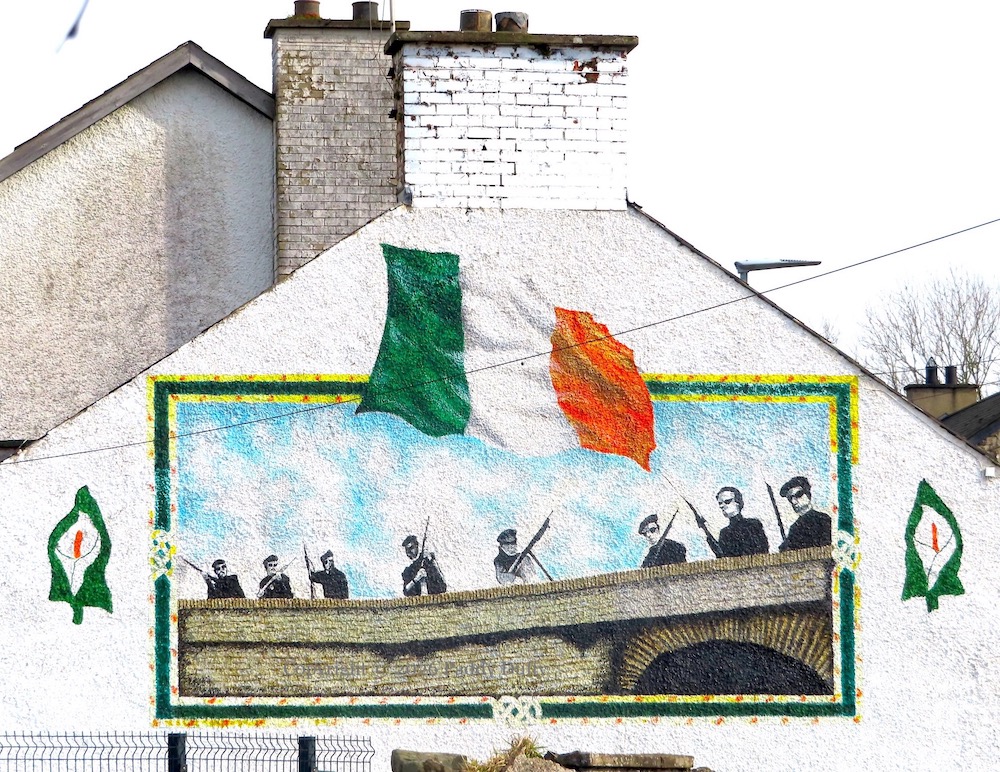
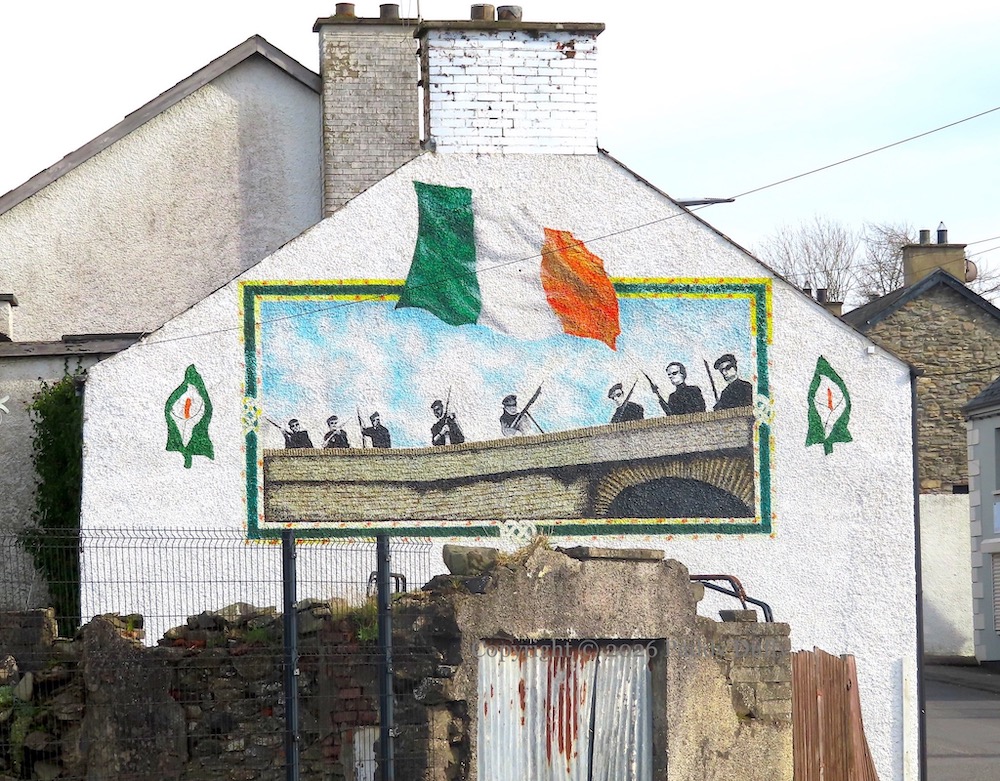
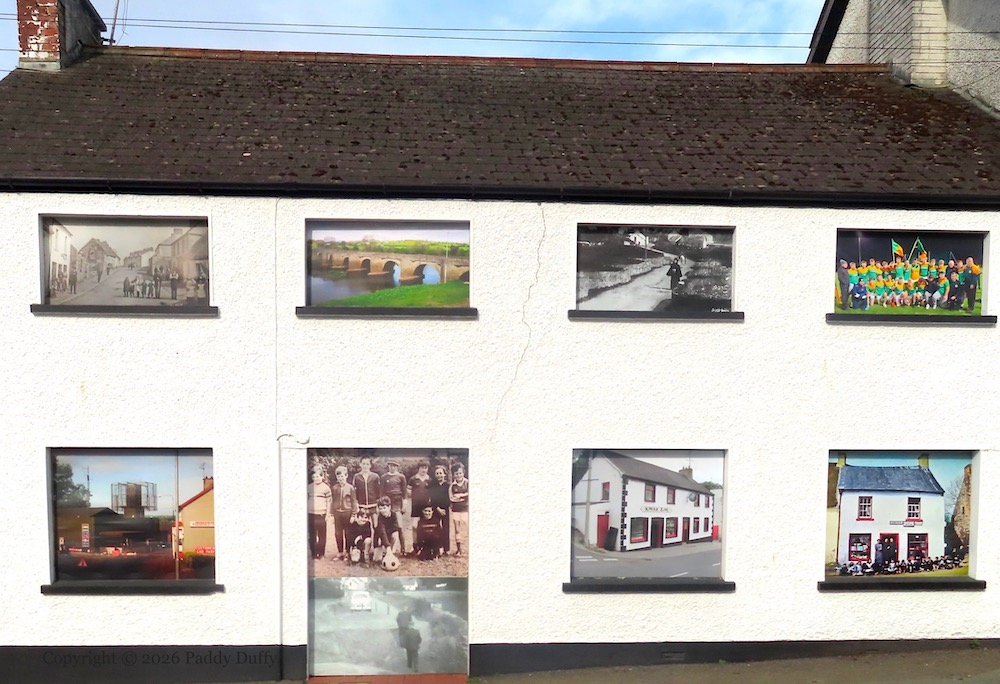
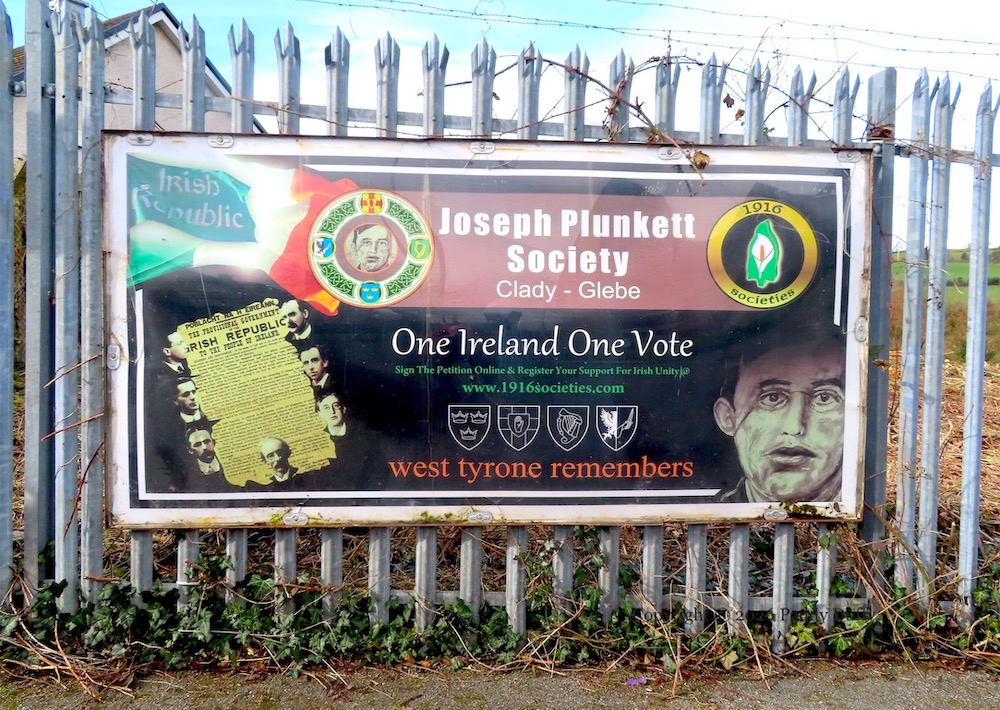
Above is a recent (2025-06) mural painted in Clady of IRA volunteers c. 1971 defending the bridge a stone’s throw outside the town, to prevent it from being blown up by the British Army. A history of the bridge, and the photograph which the mural reproduces, can be found at The Pensive Quill. The work of painting the mural and refreshing the window-boards of the building has been undertaken by the Joseph Plunkett 1916 Society Clady/Grebe (Fb).
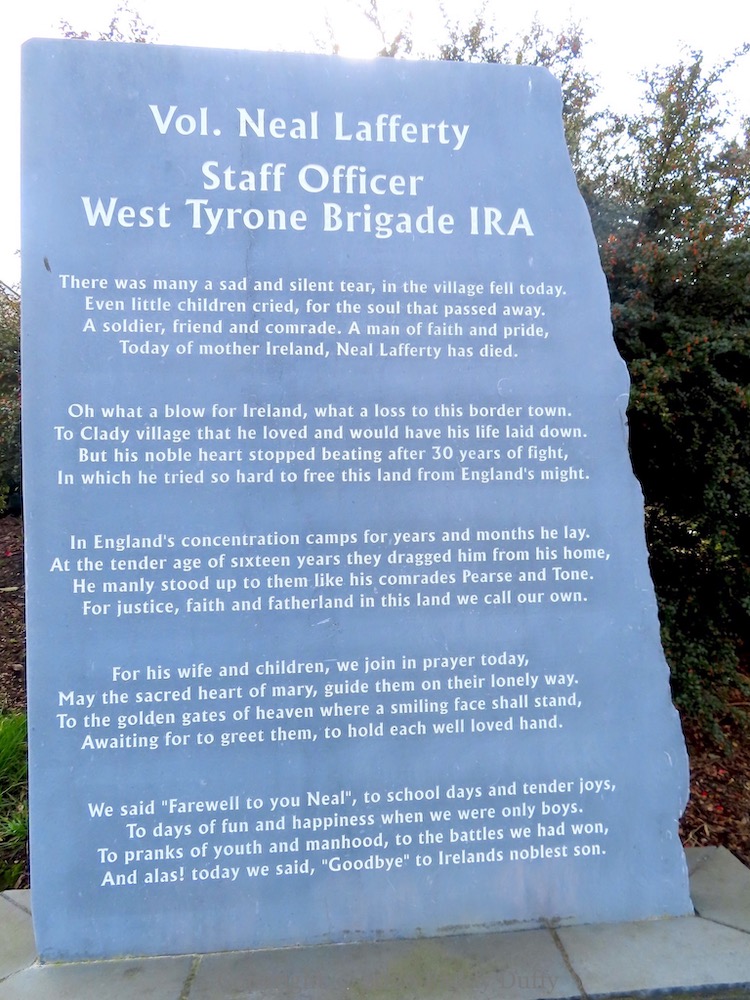
The two monuments, to volunteers generally and Neal Lafferty (d. 1975) specifically (Fb), stand together at the junction with Cluney Gardens. There is also a memorial to James McPhelimy (d. 1988) on the other side of Urney Road, and one to Jim McGann (d. 1973) on the bridge.
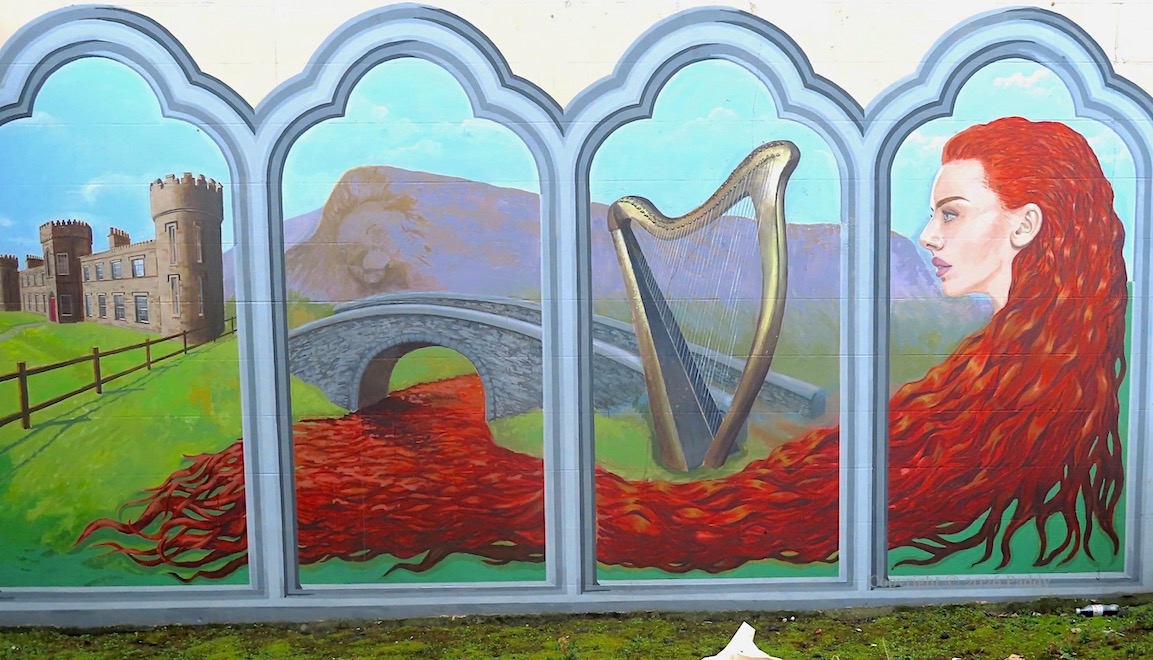
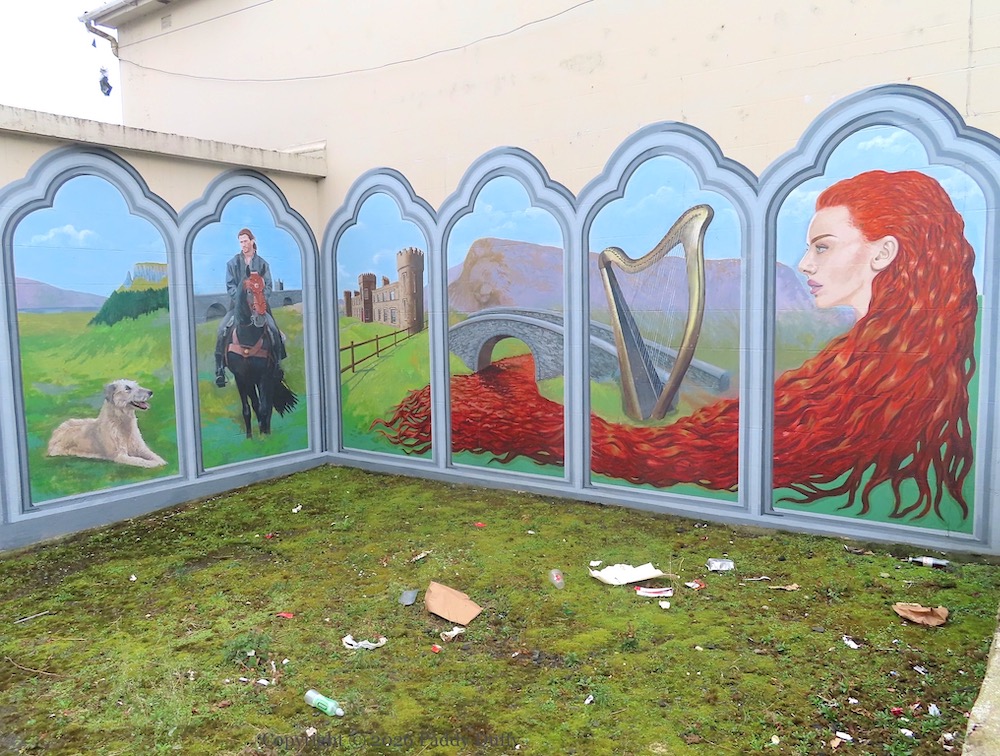
Finvola of the O’Cahans was such a beauty that she was called the “gem of the Roe” – the Roe being the river that runs through Dungiven on its way from the Sperrins to Lough Foyle. She married Angus McDonnell of Islay, who could not bear, as promised, to return with her body when she died. Her family travelled to the Hebrides to reclaim the corpse and return it to Dungiven (Library Ireland). Her life was immortalised in the song ‘Finvola, Gem Of The Roe’. (Here is a version by Anne And Francie Brolly on youtube).
In this mural, Finvola’s long red hair represents the river, which flows towards Benbradagh Mountain.
Painted by Sheila Byrne with youths from Benbradagh Community Support (Fb) in Main Street, Dungiven (Derry Now).
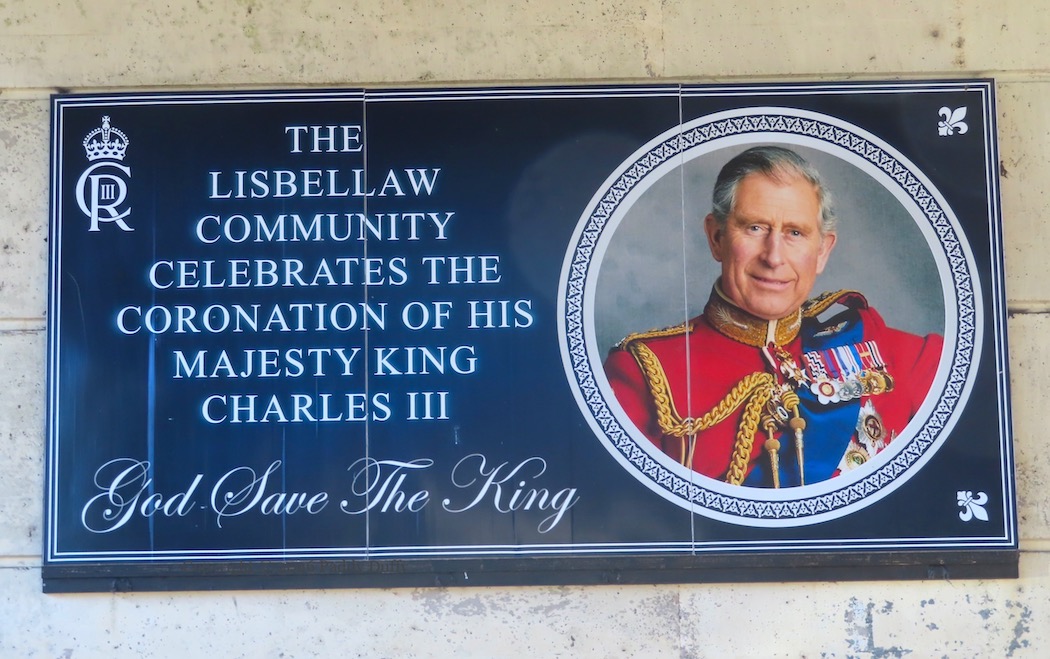
“The Lisbellaw community celebrates the coronation of his majesty King Charles III. God save the King.” Charles’s coronation was on May 6th, 2023, eight months after acceding to the throne upon the death of his mother, Queen Elizabeth II. He turns 78 this year (2026).
This is a large printed board in the Brook Street, Lisbellaw, below the A4.
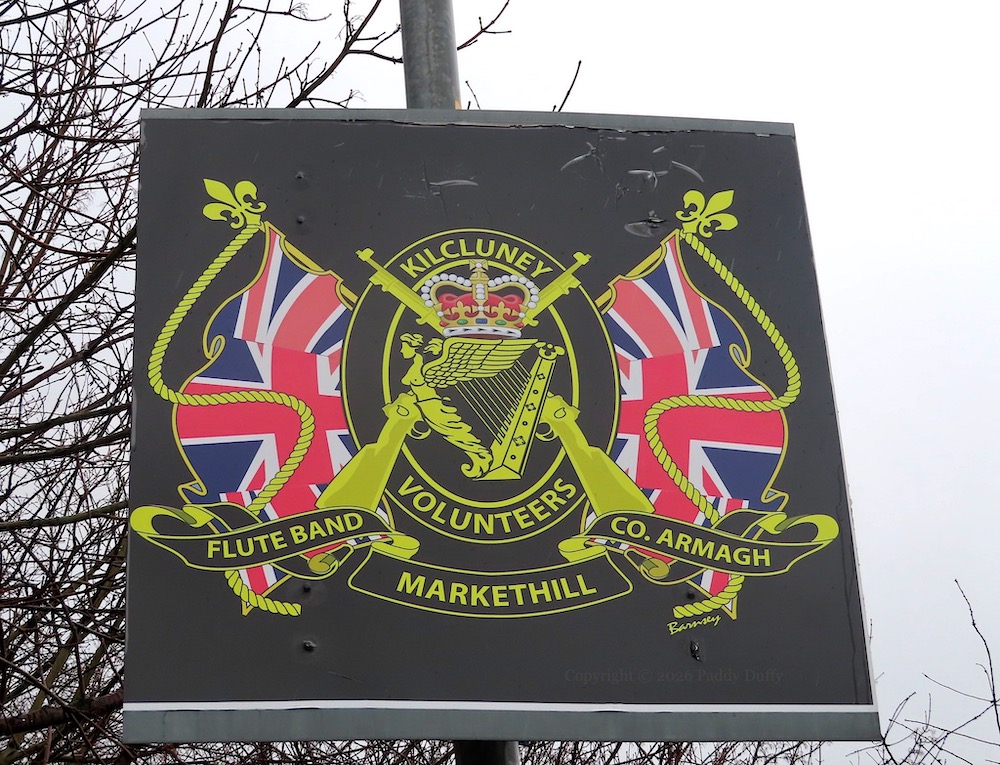
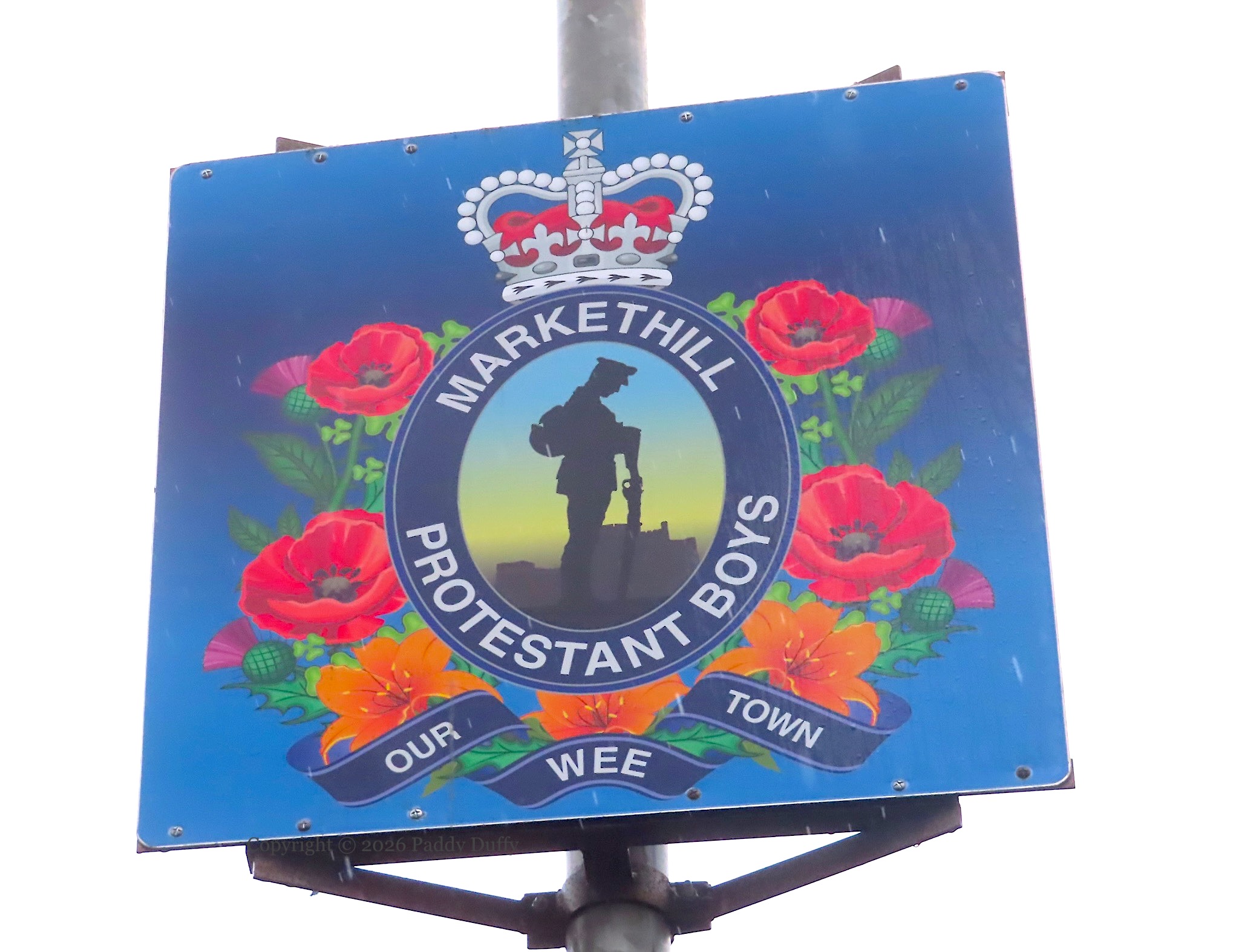
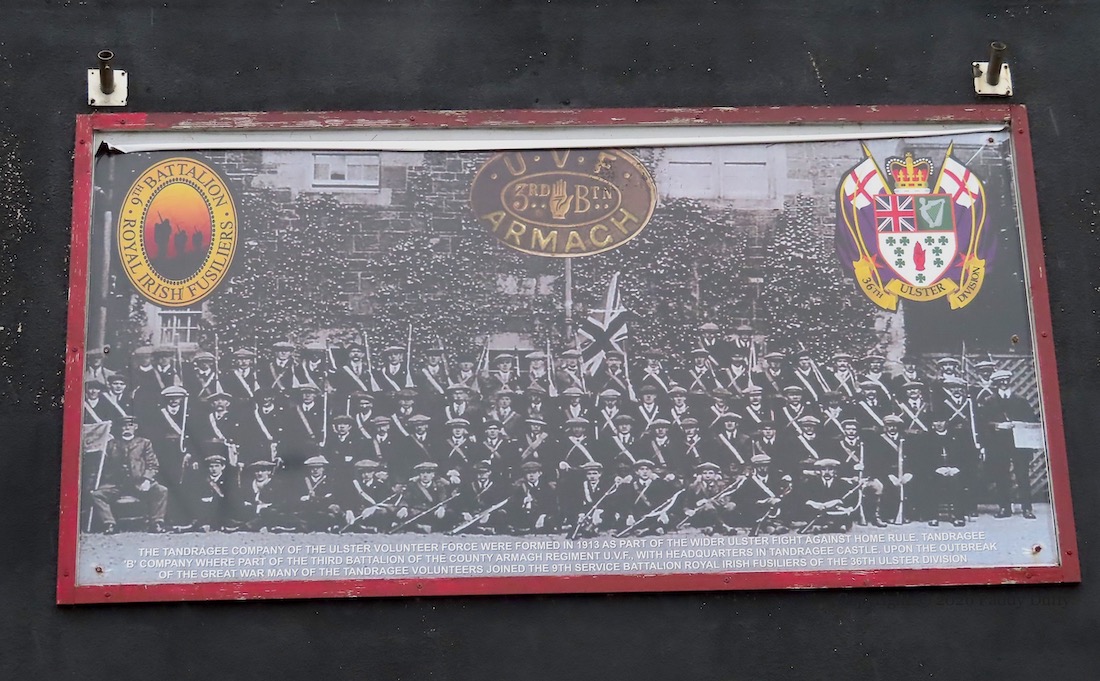
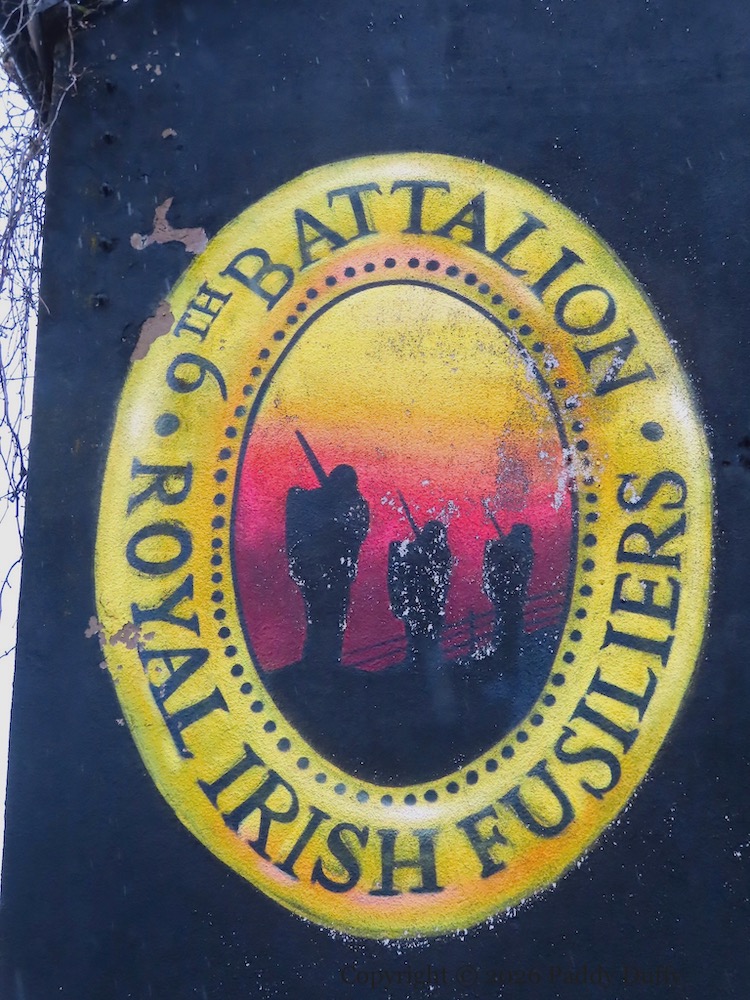
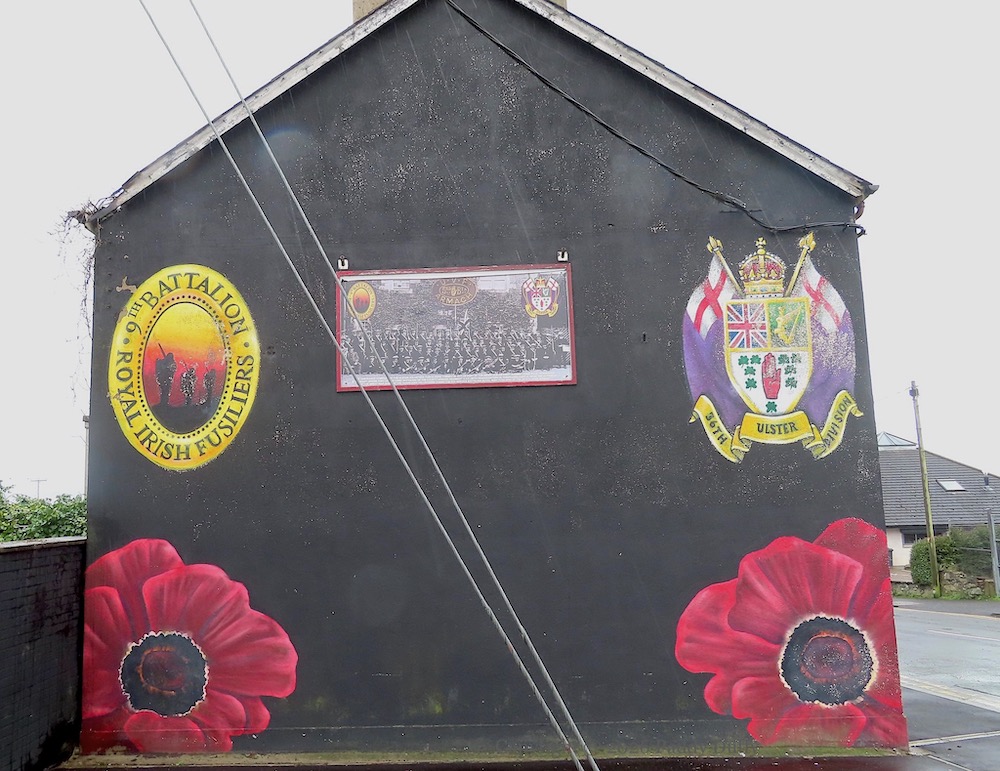
These placards for two local flute-bands are on light-poles in Markethill: above, the Kilcluney Volunteers flute band (Fb), below, the Markethill Protestant Boys (Fb). The crossed rifles and RIR emblem, and the graveside mourner and poppies, are WWI imagery; Markethill men joined the second battalion of the Armagh brigade of the Ulster Volunteers and (in the Great War) the ninth battalion of the Royal Irish Fusiliers. (See also UVF 3rd Battalion Armagh in Tandragee).
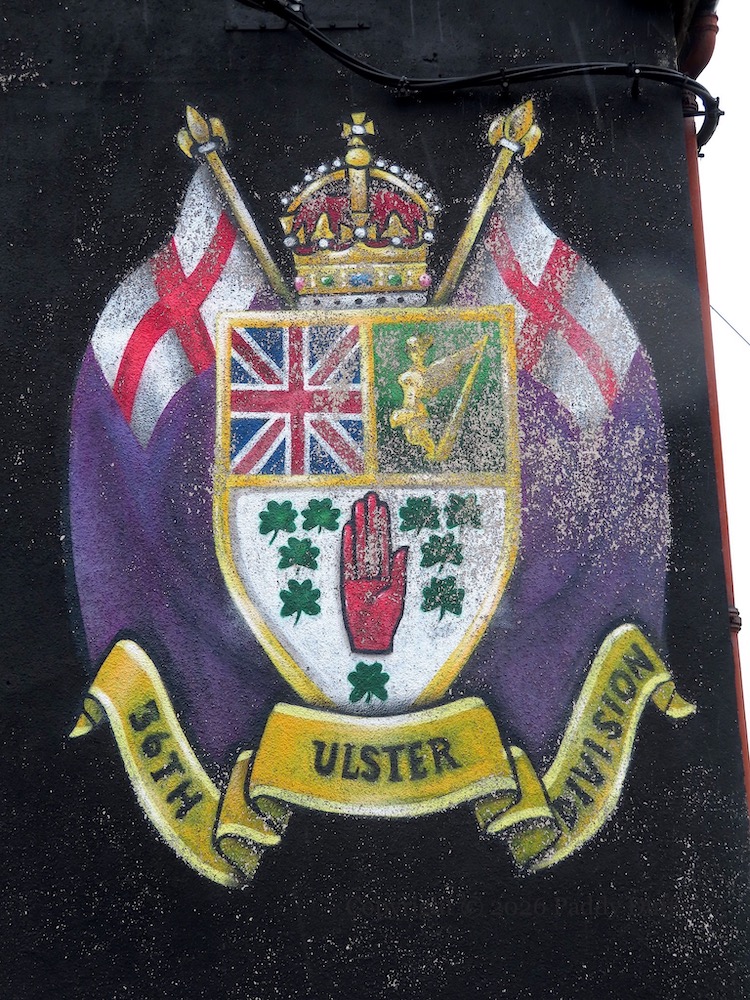
“The Tandragee company of the Ulster Volunteer Force were formed in 1913 as part of the wider Ulster fight against Home Rule. Tandragee ‘B’ Company where [were] part of the third battalion of the County Armagh Regiment UVF with headquarters in Tandragee Castle. Upon the outbreak of the Great War many of the Tandragee Volunteers joined the 9th Service Battalion Royal Irish Fusiliers of the 36th (Ulster) Division.”
The 9th battalion comprised volunteers from Armagh, Monaghan, and Cavan.
For a fuller version of the photograph, see Cyberprod.
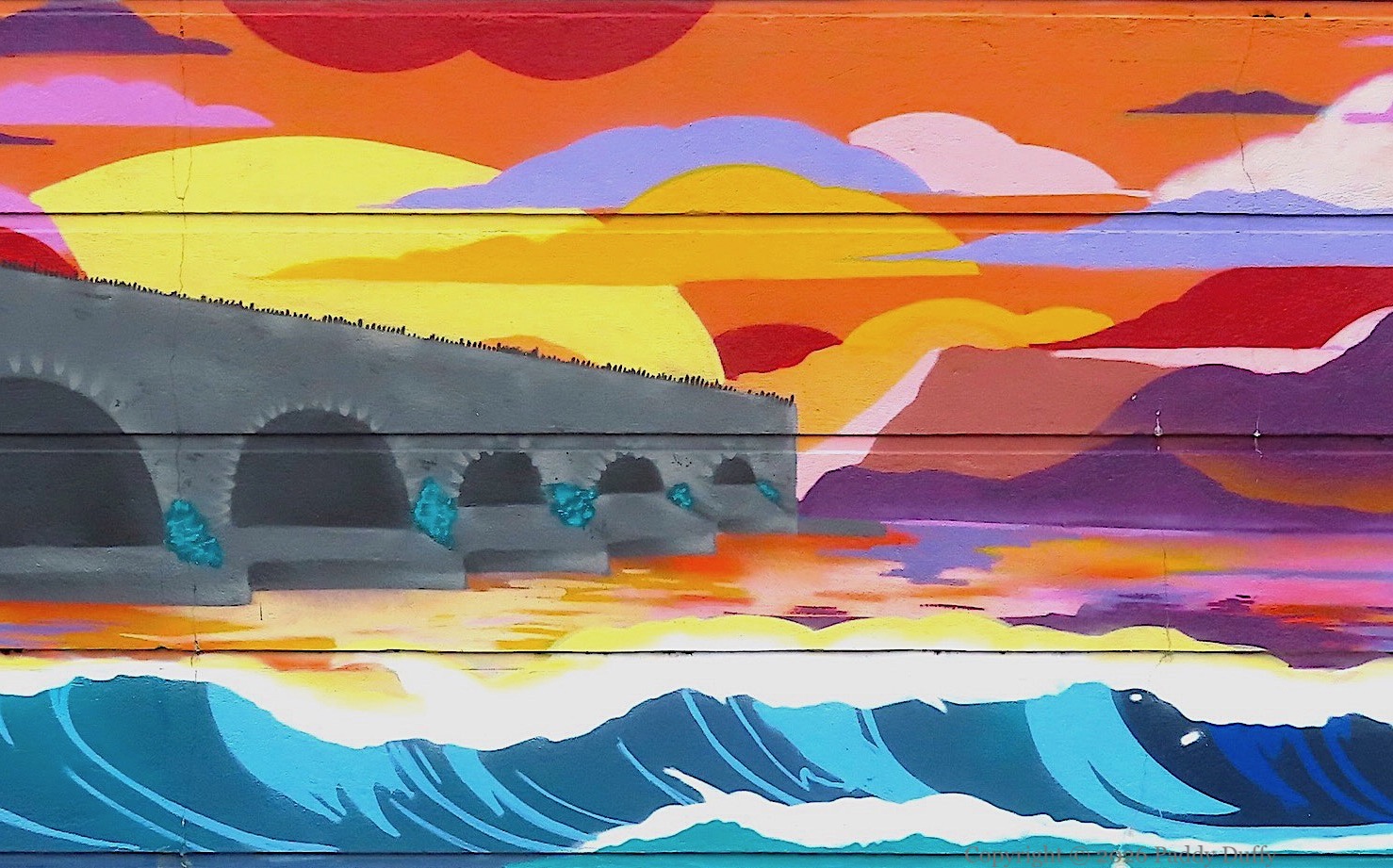
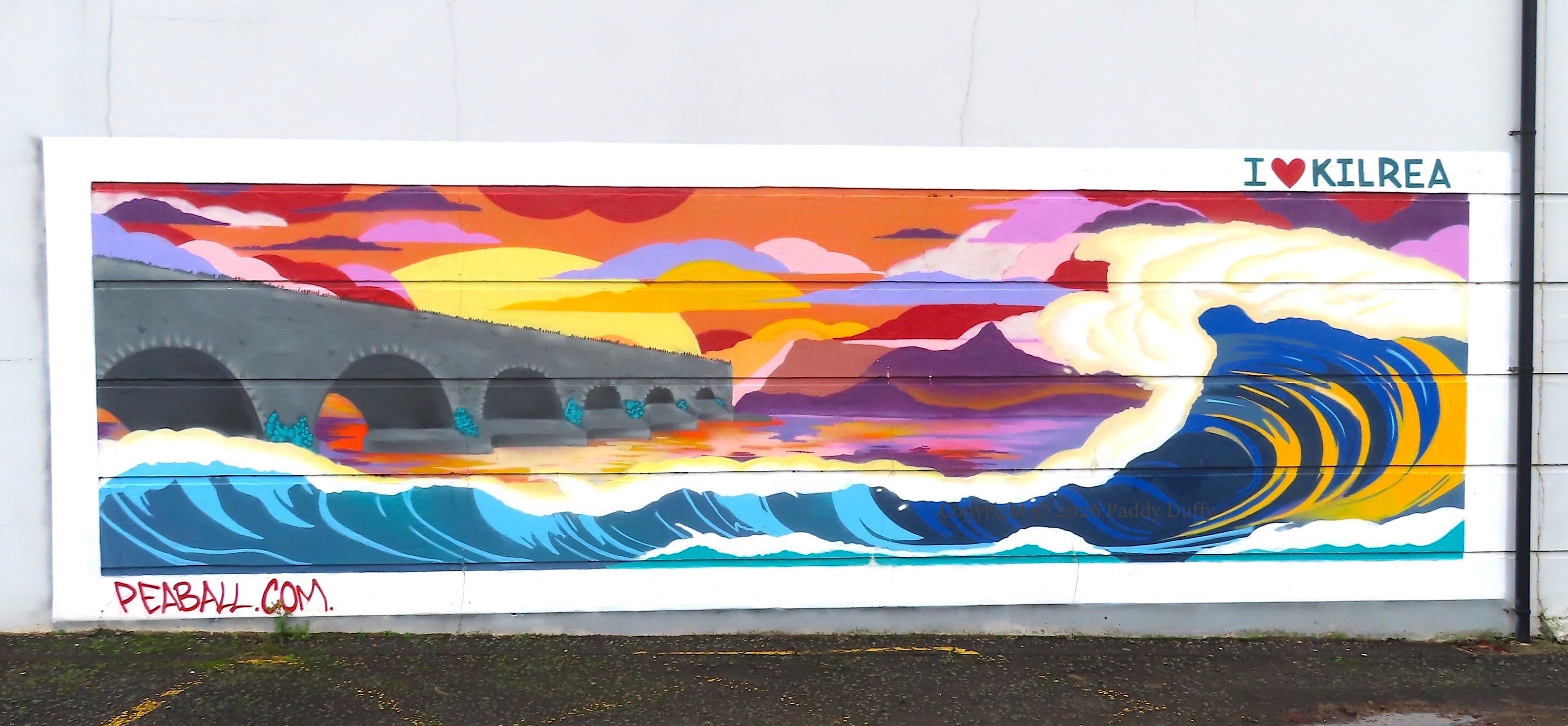
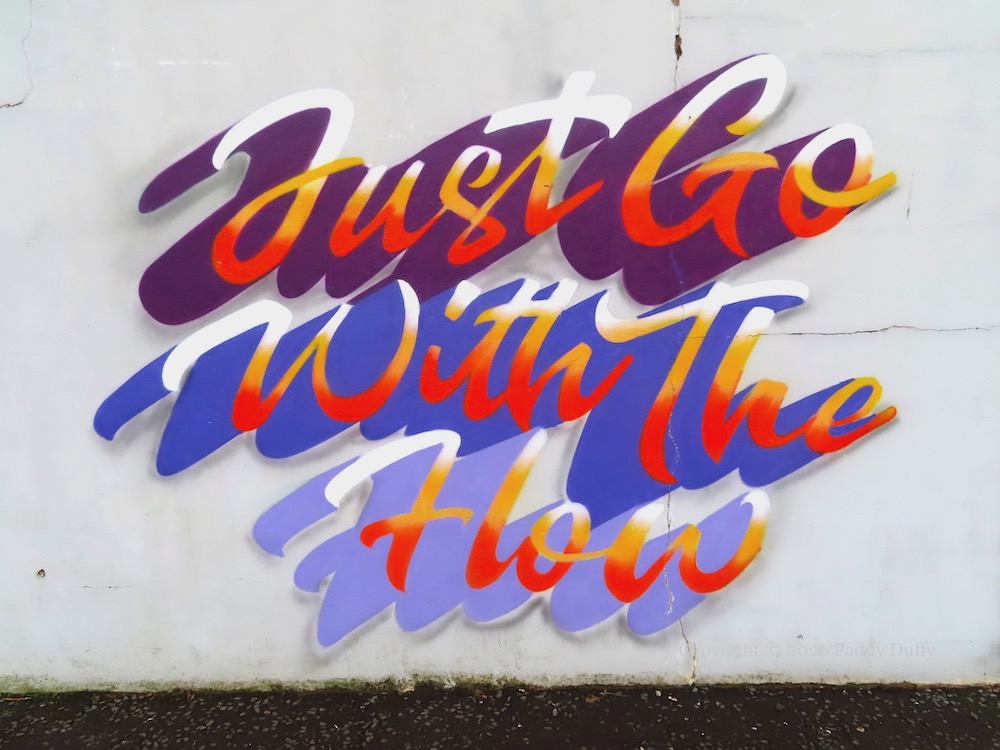
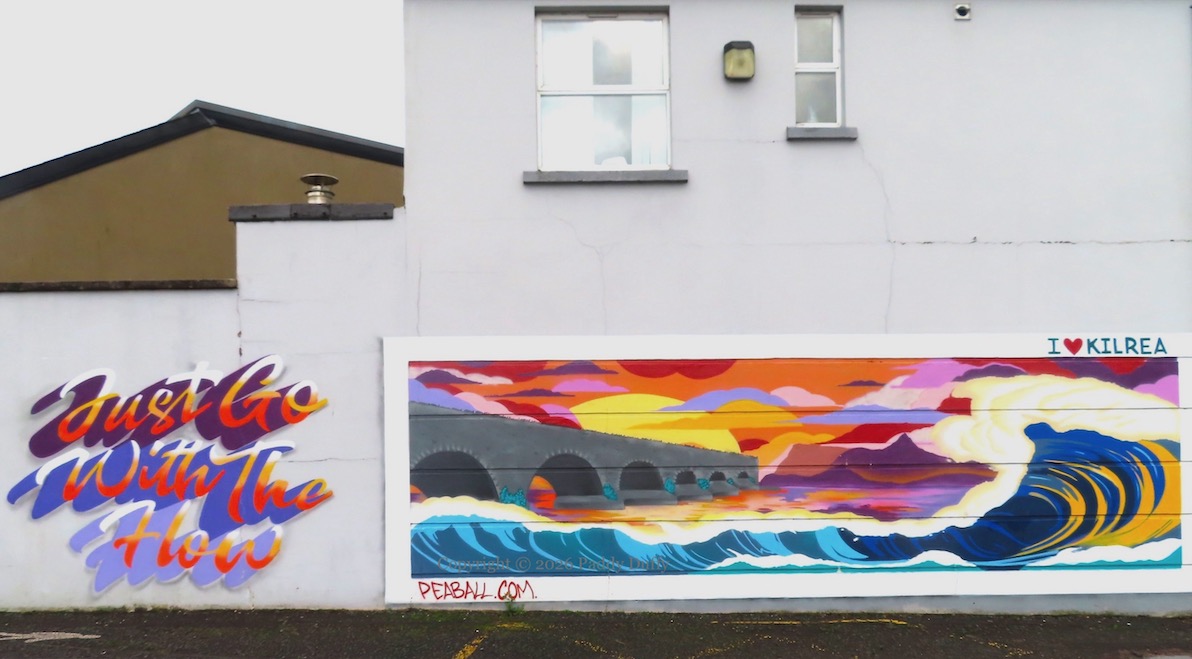
“Just go with the flow.” The river Bann rises in the Mournes and flows through the Lough and on towards the north coast. The lower Bann passes under nine bridges (WP), the oldest of which, just east of Kilrea, was built in 1783 (Derry Now). It features in this Kilrea mural, painted by Peaball (web) with local school-children at the entrance to the Maghera Street car-park in Kilrea, with support from Kilrea Community & Fairy Thorn Association (Fb) and funding from Donaghy Brothers (web).
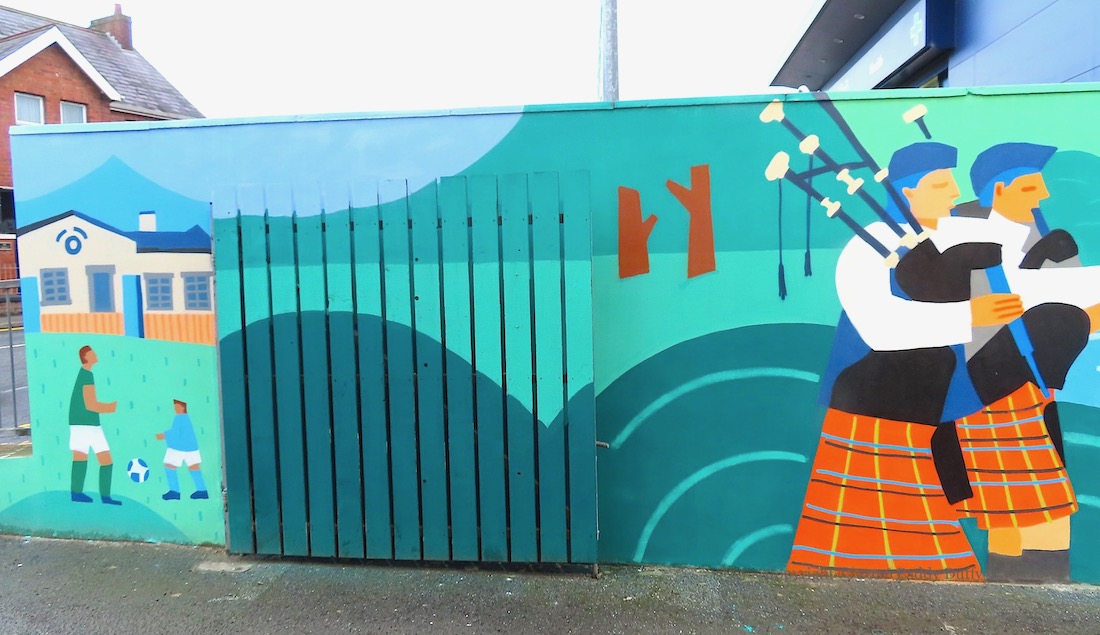
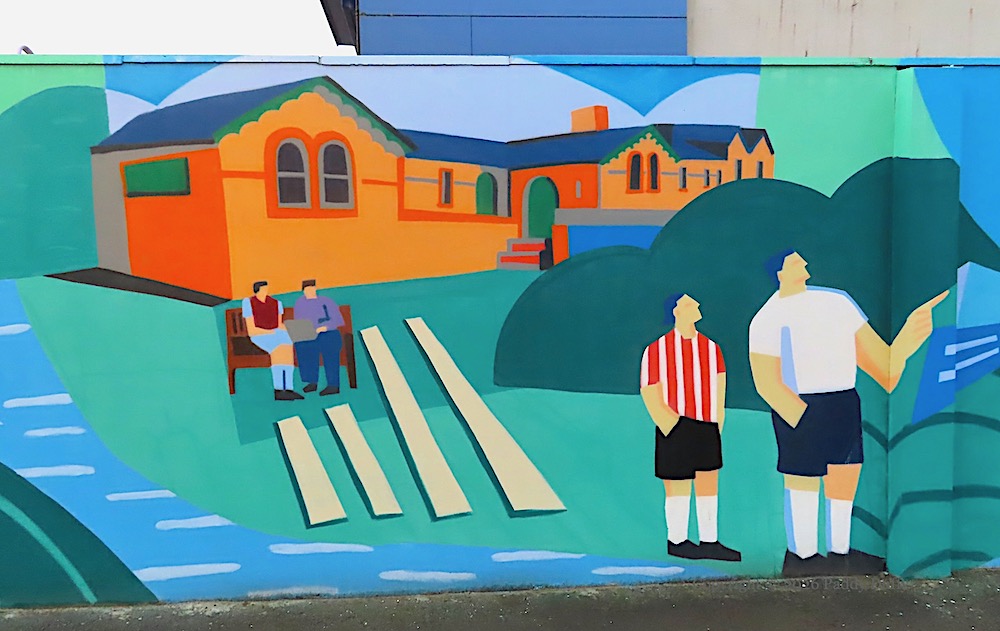
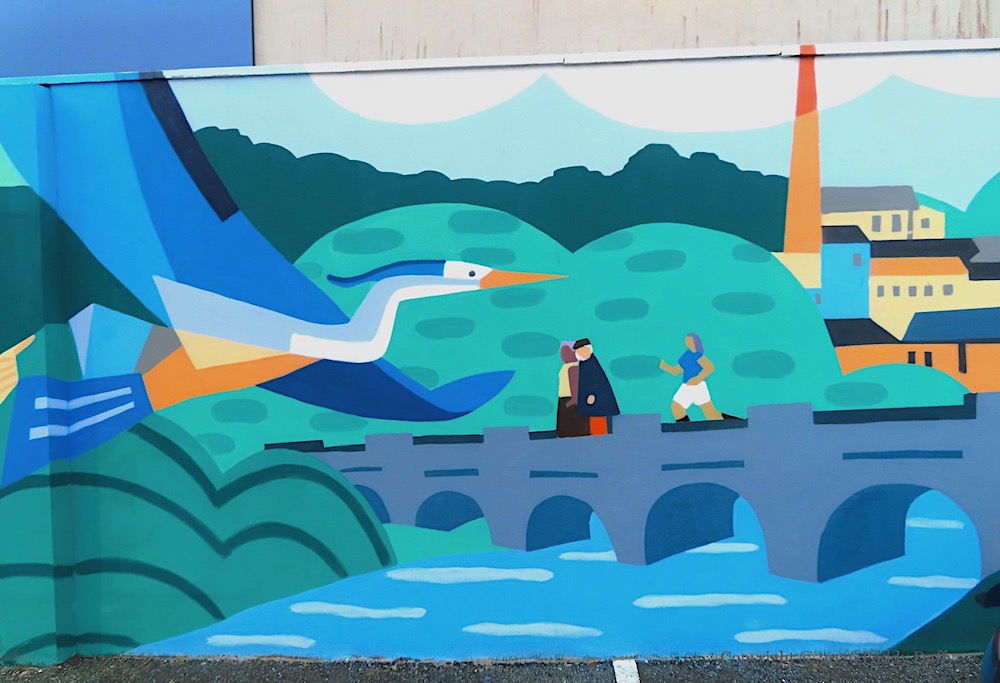
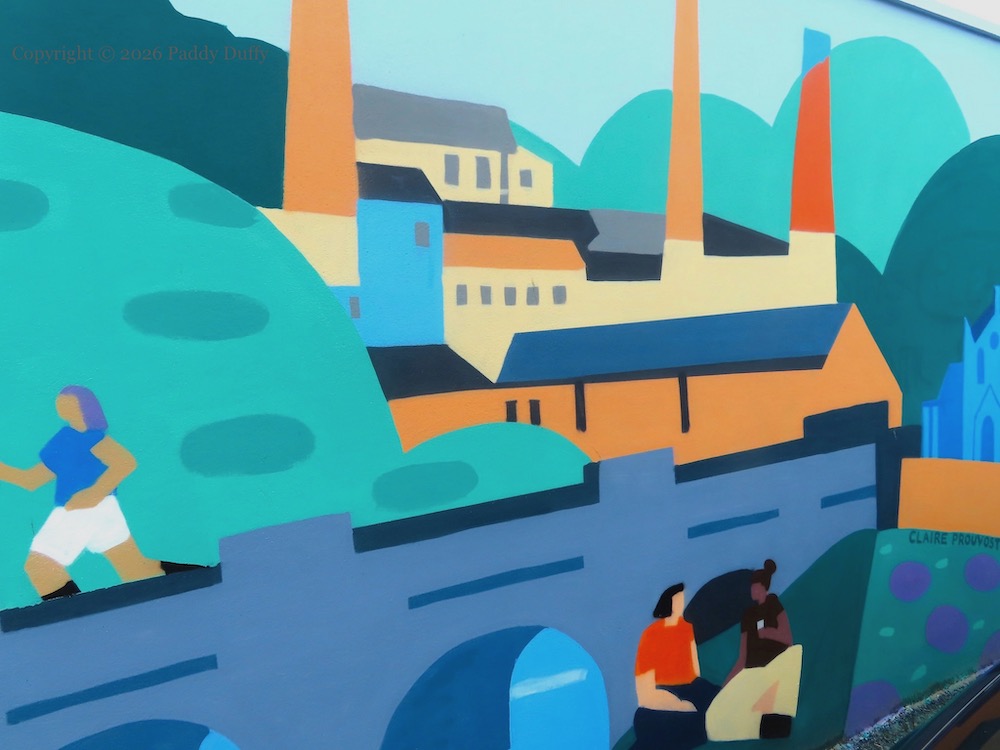
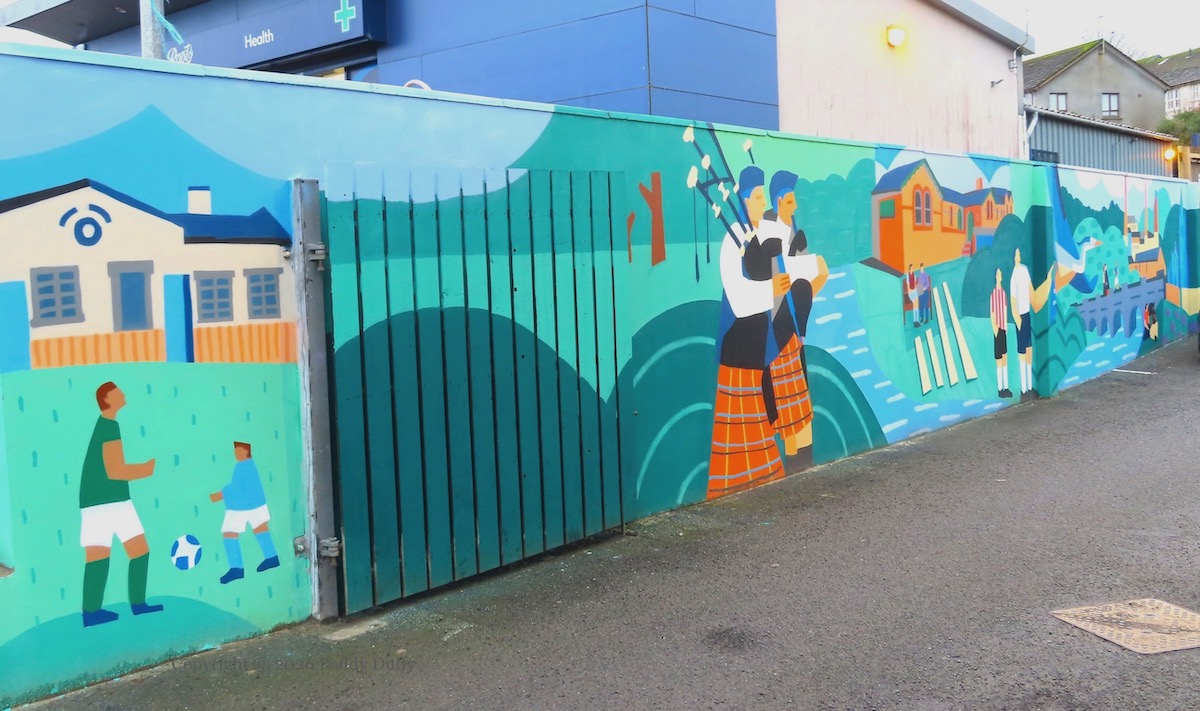
This Cullyback art is a “Shared Island” (gov.ie) project, created as a collaboration between Waterford City & County Council and Mid- & East-Antrim Borough Council. It shows, from left to right, children playing soccer in front of Buick Memorial school, the Cullybackey Pipe Band (Fb), the Railway Sleeper (Discover NI), wildlife at the Cullybackey Bridge (geograph), and Maine works.
Paint by Claire Prouvost (web), 2025-10, with support from The Walls Project (Fb) and Cullybackey Community Partnership (Fb).
Main Street, Cullybackey, between the Maine business centre and Boots.
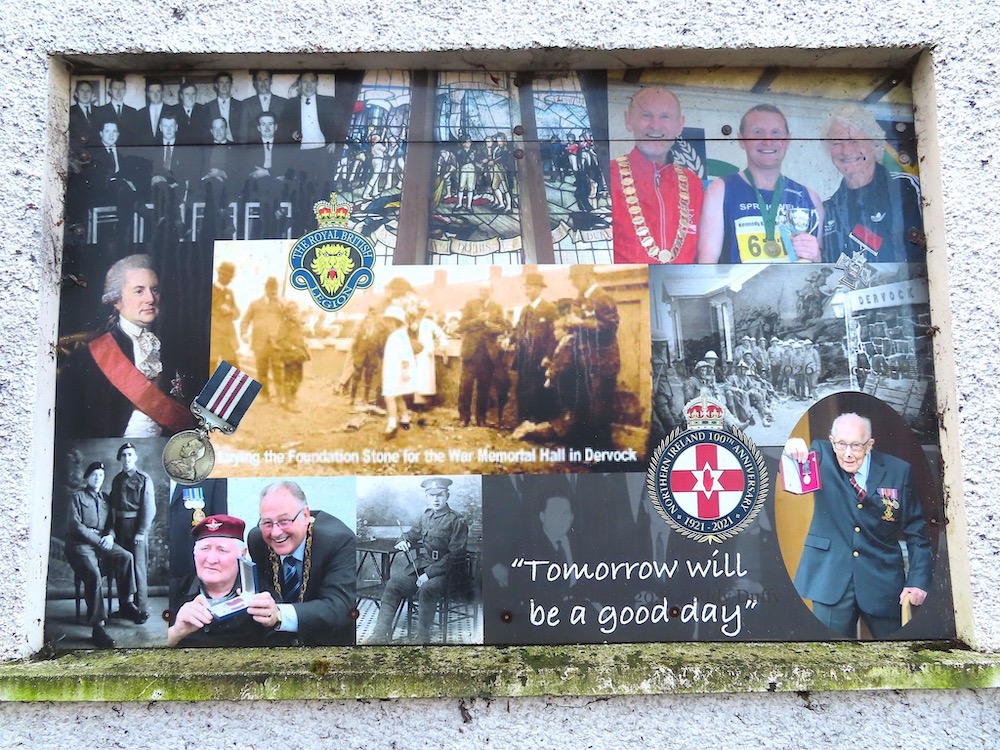
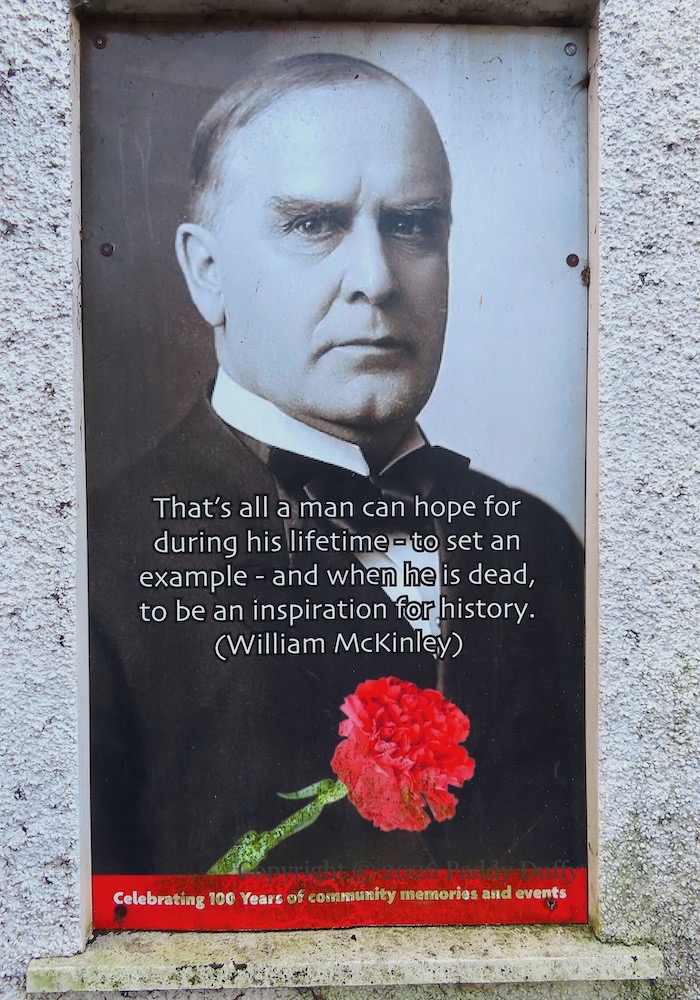
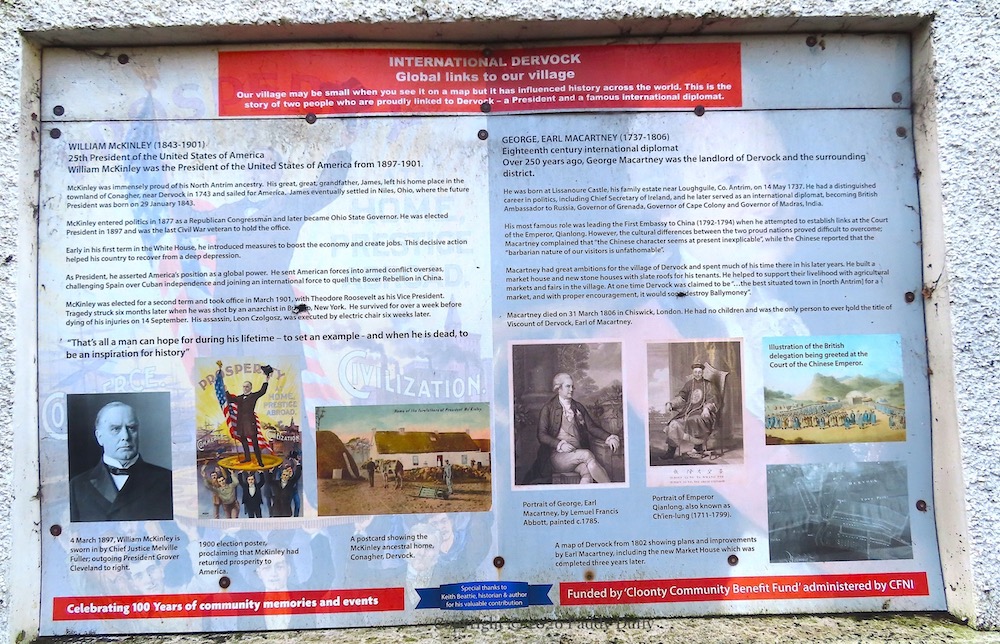
“Our village may be small when you see it on a map but it has influenced history across the world. This is the story of two people who are proudly linked to Dervock – a President and a famous international diplomat.”
The President is “William McKinley (1843-1901) 25th President of the United States … from 1897-1901. McKinley was immensely proud of his North Antrim ancestry. His great, great, grandfather, James, left his home place in the townland of Conagher, near Dervock in 1743 and sailed for American. James eventually settled in Niles, Ohio, where the future President was born on 29 January 1843. … “That’s all a man can hope for during his lifetime – to set an example – and when he is dead, to be an inspiration for history.””
The second figure is “George, Earl Macartney (1737-1806) Eighteenth century diplomat. Over 250 years ago, George Macartney was the landlord of Dervock and the surrounding district. He was born at Lissanoure Castle, his family estate near Loughguile, Co. Antrim, on 14 May 1737. … His most famous role was leading the First Embassy to China (1792-1794) …”
 Paddy Duffy Collection