1st Ranger Battalion

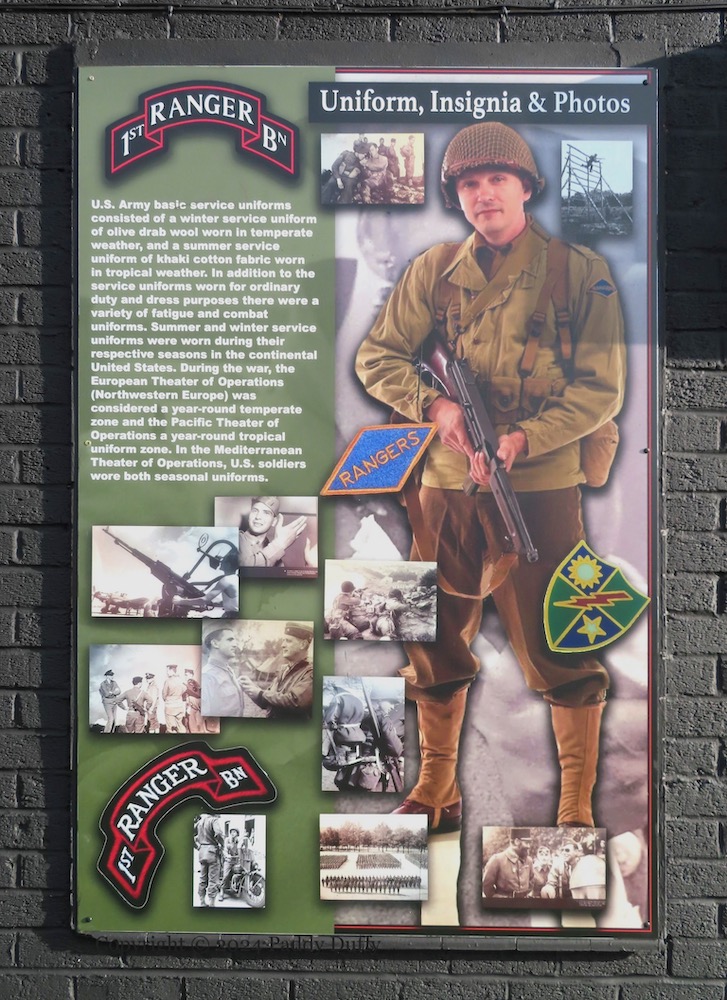
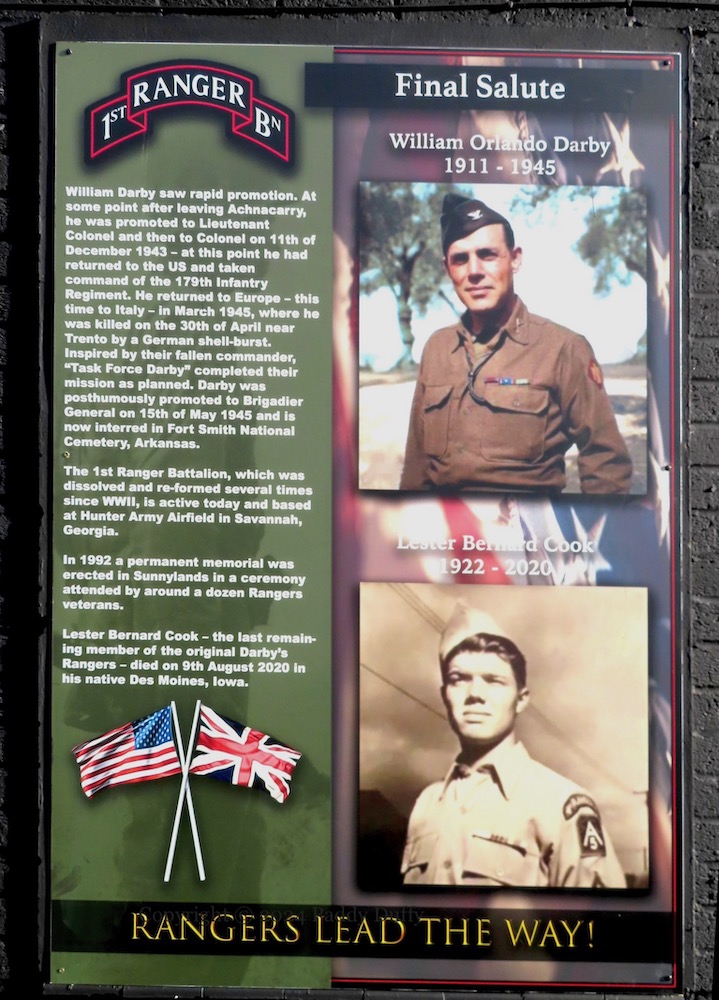
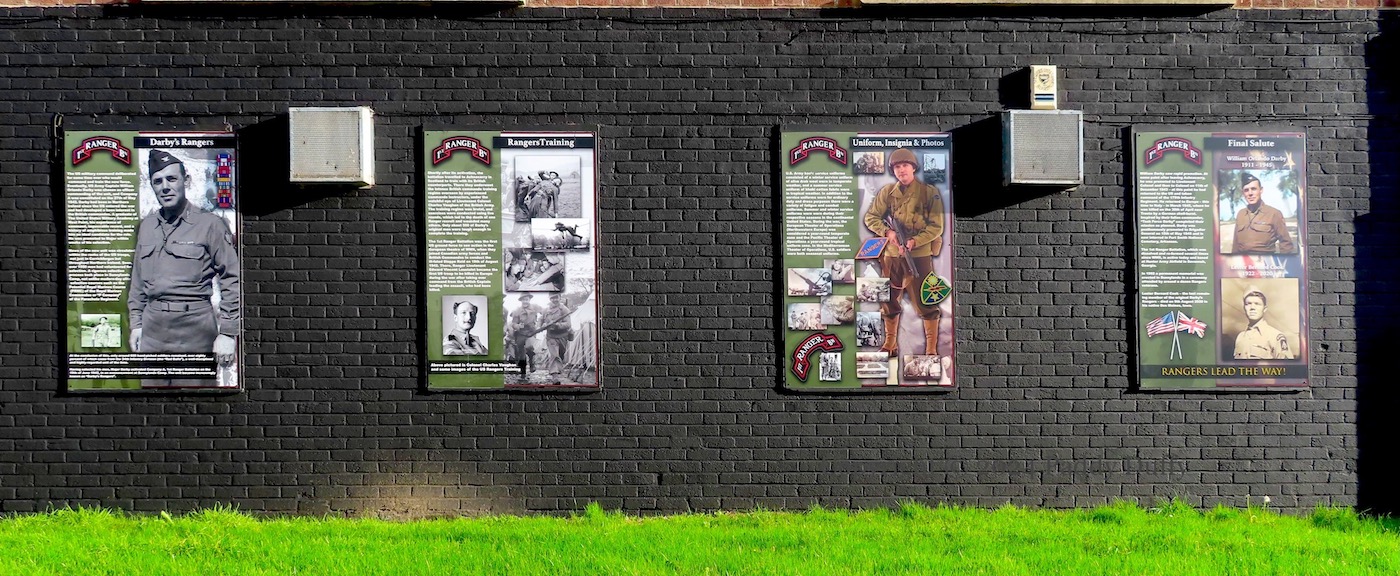
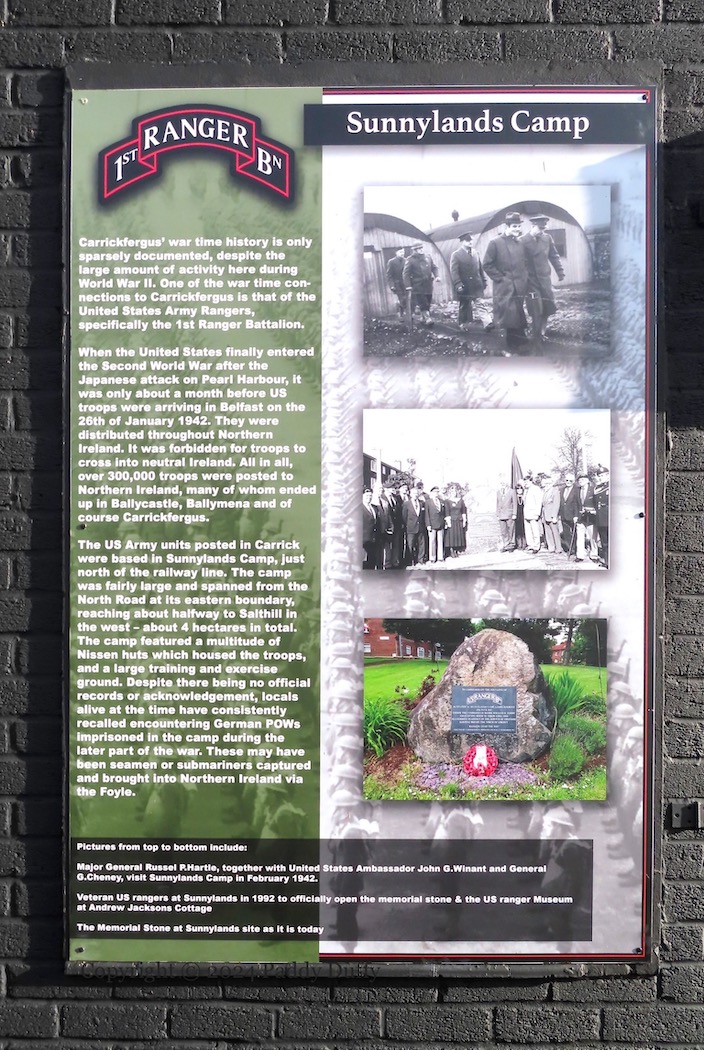
After its entry into World War II on the day after the bombing of Pearl Harbour, (December 7, 1941), troops heading to Europe were stationed in Northern Ireland. The army’s 1st Ranger Battalion — an elite, special-operations, infantry unit — was formed on May 27th, 1942, and 600 soldiers, mostly from the 34th Division, were chosen from 1,500 volunteers by Captain (and then Major) William Darby (WP); Darby is shown in the third board. The unit was activated on June 19th, 1942, at the Sunnylands Camp in Carrickfergus (Wartime NI). The Rangers trained with British commandos at Achnacarry, Scotland, before seeing action (WWII Rangers) – the commando monument there was featured in a Red Hand Commando mural in Rathcoole.

These informational boards are on the side of the Sunnylands shops. There is also a memorial stone (Atlas Obscura) at the junction of Sunnylands Avenue and North Road, where the gates to the camp were located.
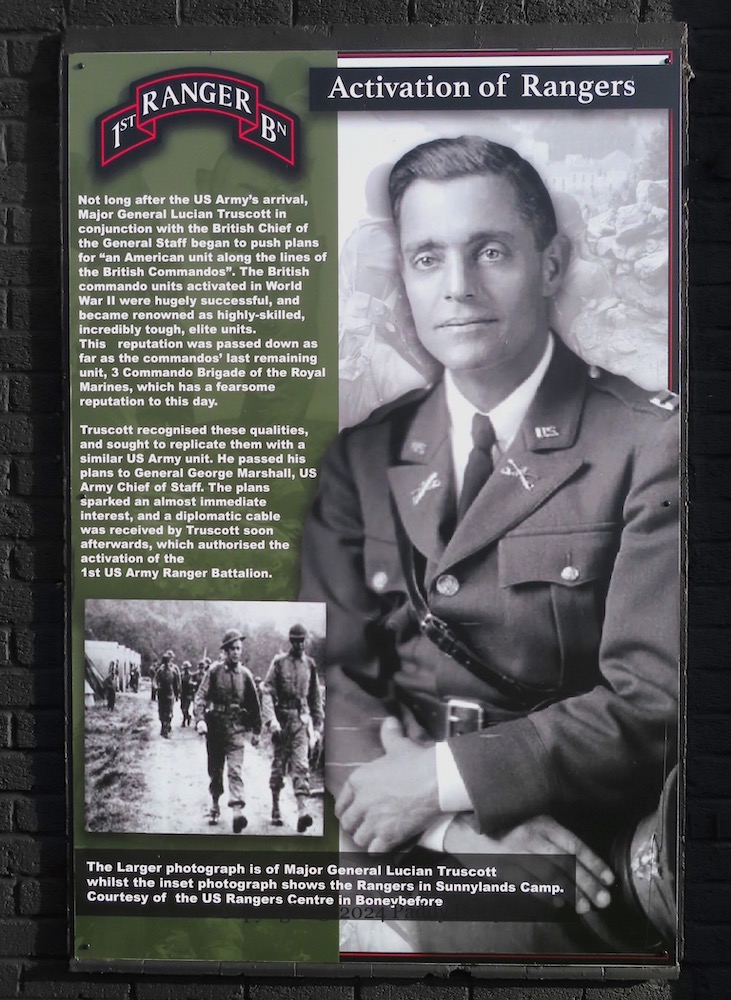
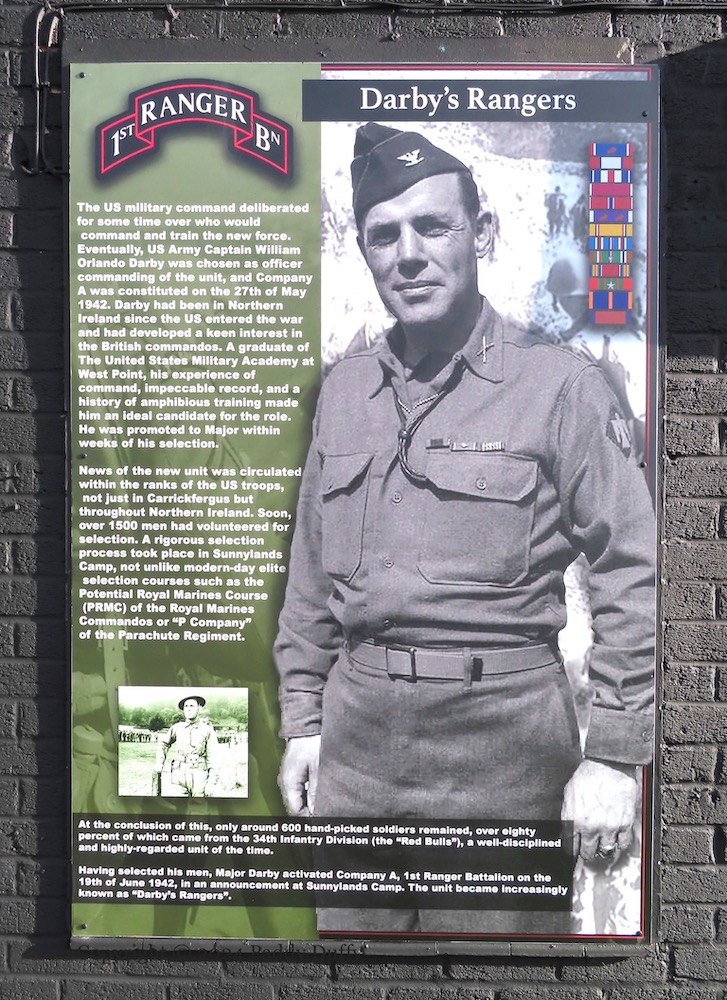
Click image to enlarge
Copyright © 2024 Paddy Duffy
T05850 T05851 T05852 T05853 T05854 T05855 T05856

Whitehead Temperance

Benjamin West painted The Battle Of The Boyne in 1778 and his composition – with William moving from left to right on a white horse and Marshal Schomberg dying in the bottom-right corner – has become the standard representation in loyalist culture, perhaps due to versions of it appearing on the covers of songbooks for the Orange Order and the Apprentice Boys soon after (Belinda Loftus 1982 Images In Conflict). It appears here on the wall of Whitehead Orange Hall, along with a board connecting service by Irish soldiers in British forces in WWI and Afghanistan (see previously: The Sacrifice Remains the Same in east Belfast).

Click image to enlarge
Copyright © 2024 Paddy Duffy
T05645 T05646 T05647

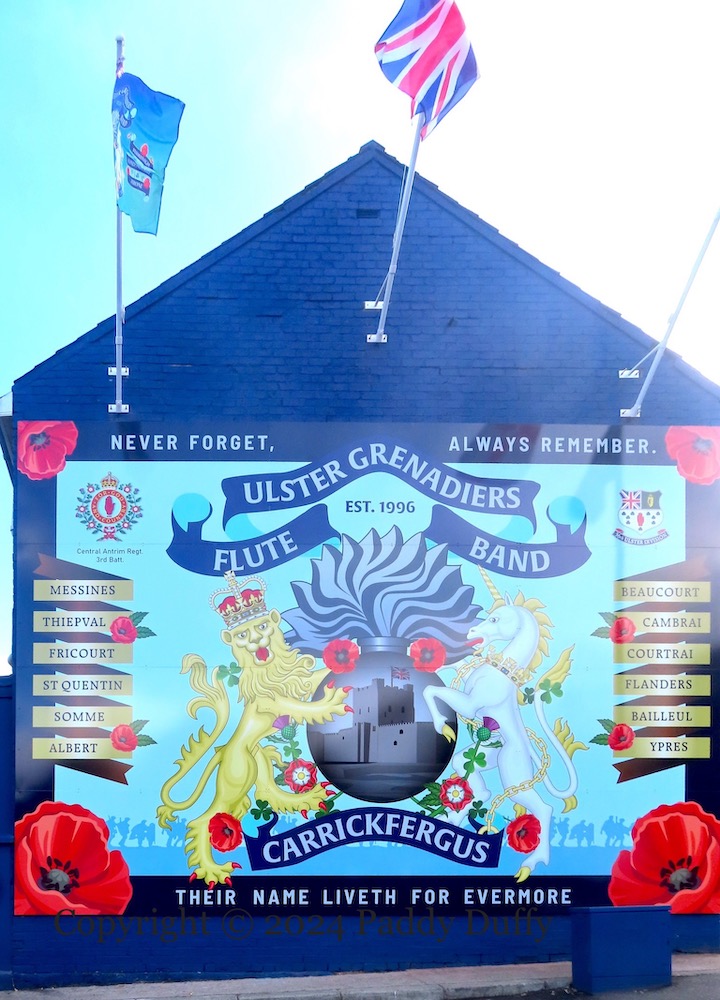
Never Forget, Always Remember

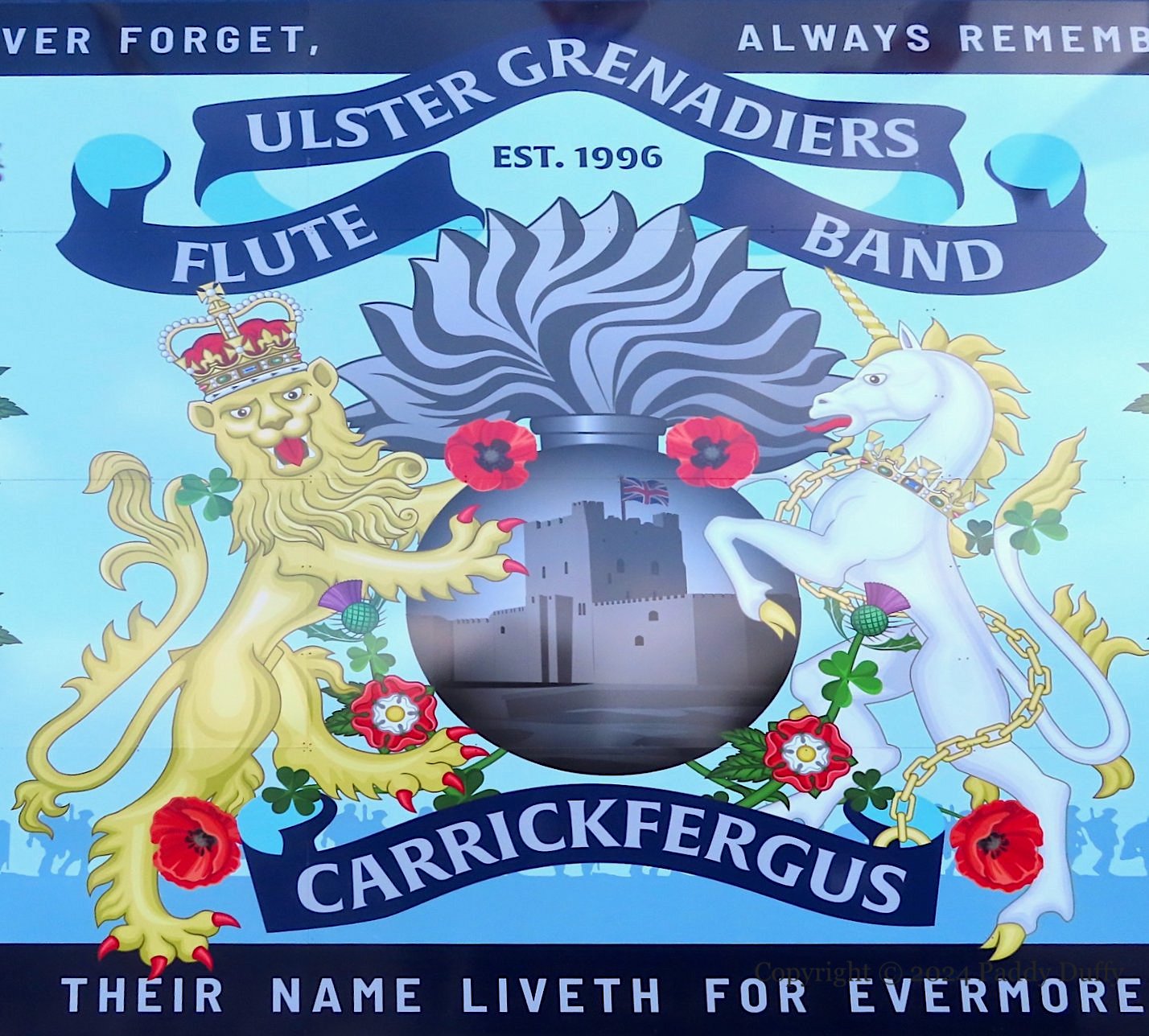
The grenade at the heart of the ‘Grenadier’ emblem is an old spherical grenade, with a spout of fire; the classic “pin-and-pineapple” design dates to 1915 (WP Mills Bomb). Various regiments then put a symbol on the surface of the grenade (see e.g. East Belfast Volunteers); here, the Ulster Grenadiers flute band (Fb) have added Carrickfergus castle flying a Union Flag to the grenade at the centre of a new board erected on June 7th, 2024 (youtube video of the launch).

The battles listed on either side of the central emblem are battles in which the 36th Division took part, though by that time, grenadiers were not a specialised unit and each infantry platoon (of about 60 men – Schilling) would have both hand-grenade and rifle-grenade sections (Reddit) equipped with 100+ grenades (The World War).

For the 3rd battalion of the Ulster Volunteers, see The Central Antrim Regiment.

St Bride’s Street, Carrickfergus, next to and dwarfing the community mural seen in Meditate – Don’t Medicate.

Click image to enlarge
Copyright © 2024 Paddy Duffy
T04952rc T04953 T04951 [T04954] [T04955] [T04956] JG Painting Papering

It’s Coming Back

“Welcome to Carrickfergus, a host town of “The Twelfth” 2024. It’s coming back to our home town. Join us on “The Twelfth” to help celebrate the 334th anniversary of The Battle of the Boyne.”

Carrickfergus was one of nineteen host towns for Twelfth “demonstrations” this year (GOLI); the parade went from the top of Sunnylands, through the town, and out to the grounds of the rugby club (GOLI). “It’s coming back” is perhaps in reference to the fact that Carrickfergus is the town where William III landed in 1690 before making his way to Belfast, Lisburn, and the Boyne – see June 14th, 1690.

Irish Gate roundabout, Carrickfergus

Click to enlarge
Copyright © 2024 Paddy Duffy
T04957 T04958

The Landing

The image above is of William III landing at Brixham in Devon, England, but the central panel (immediately below) and the fake “blue plaque” celebrate the 1690 landing of William at Carrickfergus. The postcard reproduced in the central panel, as well as an old Londonderry mural which also reproduced it, can be seen in the Peter Moloney collection. For details of the landing, and William’s subsequent travels to Whitehouse, Belfast, Lisburn, and the Boyne, see June 14th, 1690.

In Lancasterian Street, replacing a board marking the death of Prince Philip in 2022.

Click to enlarge
Copyright © 2024 Paddy Duffy
T04946 T04944 T04945 T04943

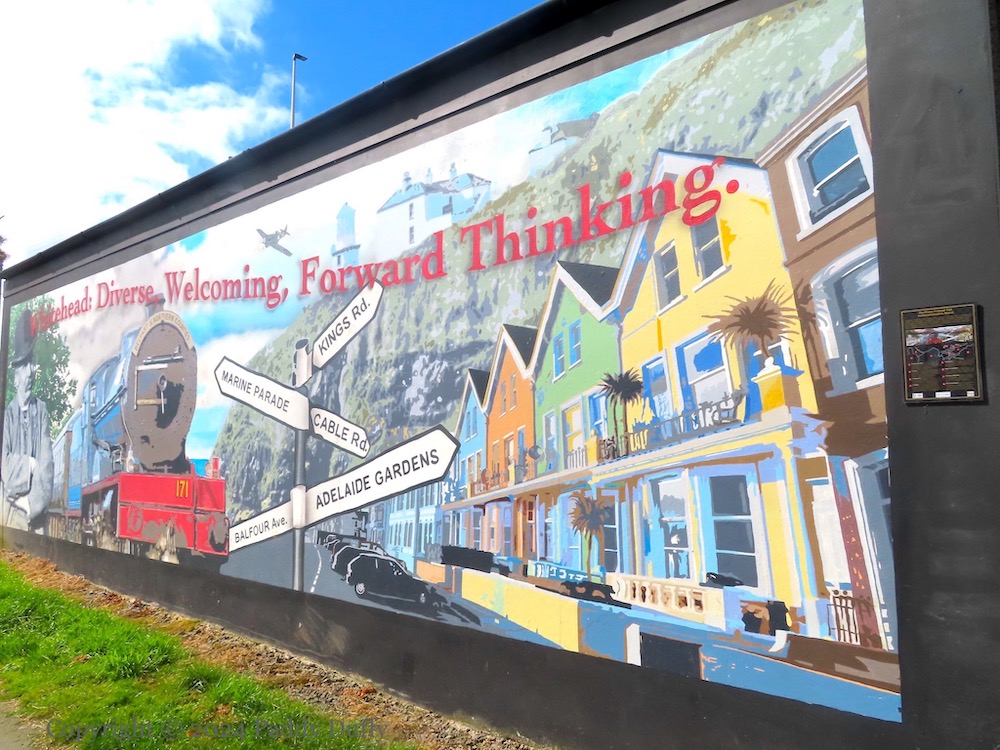
Signpost Of The Times

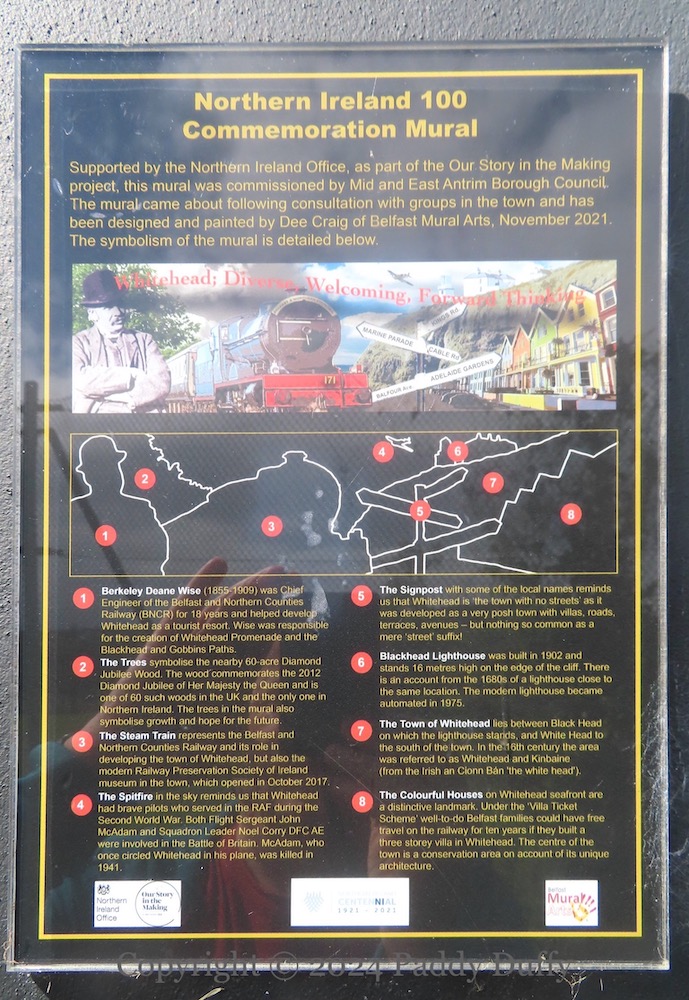
The centenary of Northern Ireland and the Our Story In The Making Project (web) provided an occasion for towns to revisit their pasts. Despite the title of the piece – Northern Ireland 100 Commemoration Mural – much of the mural pre-dates the centenary of the creation of Northern Ireland. Blackhead lighthouse opened in 1902; the Belfast & Northern Counties Railway company was founded in 1860 (web); Berkeley Wise, who helped develop the village of Whitehead into a tourist destination, died in 1909.

“Whitehead: Diverse, Welcoming, Forward Thinking – Northern Ireland 100 Commemoration Mural – Supported by the Northern Ireland Office, as part of the Our Story In The Making project, this mural was commissioned by Mid And East Antrim Borough Council. The mural came about following consultation with groups in the town and has been designed and painted by Dee Craig of Belfast Mural Arts, November 2021. The symbolism of the mural is detailed below … Berkeley Deane Wise … The Trees … The Steam Train … The Spitfire … The Signpost … Blackhead Lighthouse … The Town Of Whitehead … The Colourful Houses …”

At Bentra golf club, Whitehead. Also included (last below) is the emic (ig) piece “Time Waits For No One” at the club after beginning life in Larne (ig).

Also from “Our Story”: My Irish People | NI Beyond 100.

Click image to enlarge
Copyright © 2024 Paddy Duffy
T04891 T04892 T04893 T04894
T04890

Born For A Storm

The family of “Andrew Jackson 1767-1845”, seventh president of the United States, hailed from Carrickfergus (Discover Ulster-Scots | Carrickfergus History) and there is a period cottage that functions as a museum on the site of the home from which his parents and two older brothers departed (Discover NI).

There is a Visual History page on Ulster-Scots murals. A series of murals was painted, beginning in 1999, under the title ‘Pioneers To Presidents’, the last of which was of Andrew Jackson in the lower Shankill in 2007. Why he was chosen as the subject of this new mural in Pinewood Avenue, Sunnylands, Carrickfergus, is as yet unknown.

Click image to enlarge
Copyright © 2024 Paddy Duffy
T04413c T04414

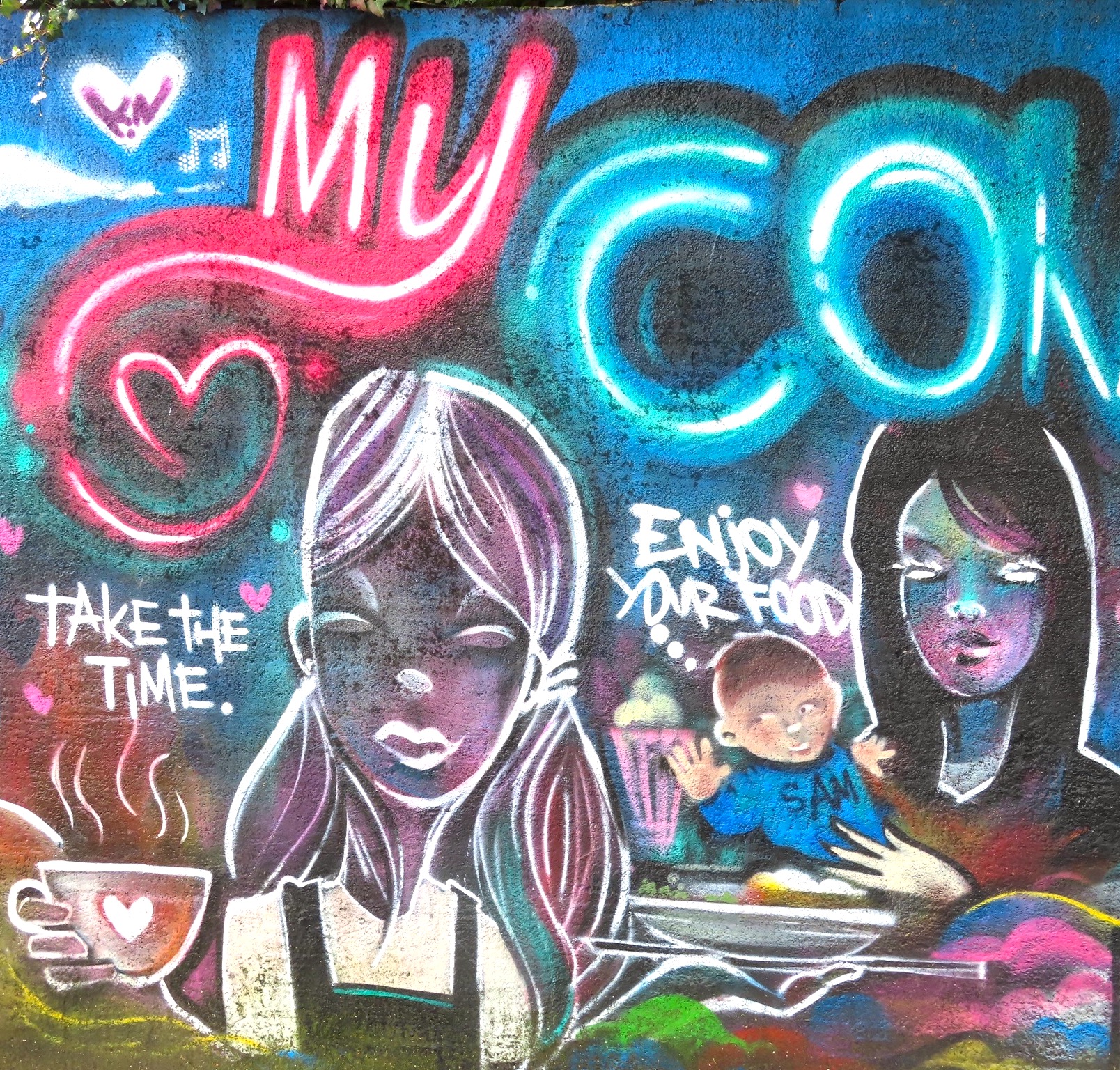
Meditate – Don’t Medicate

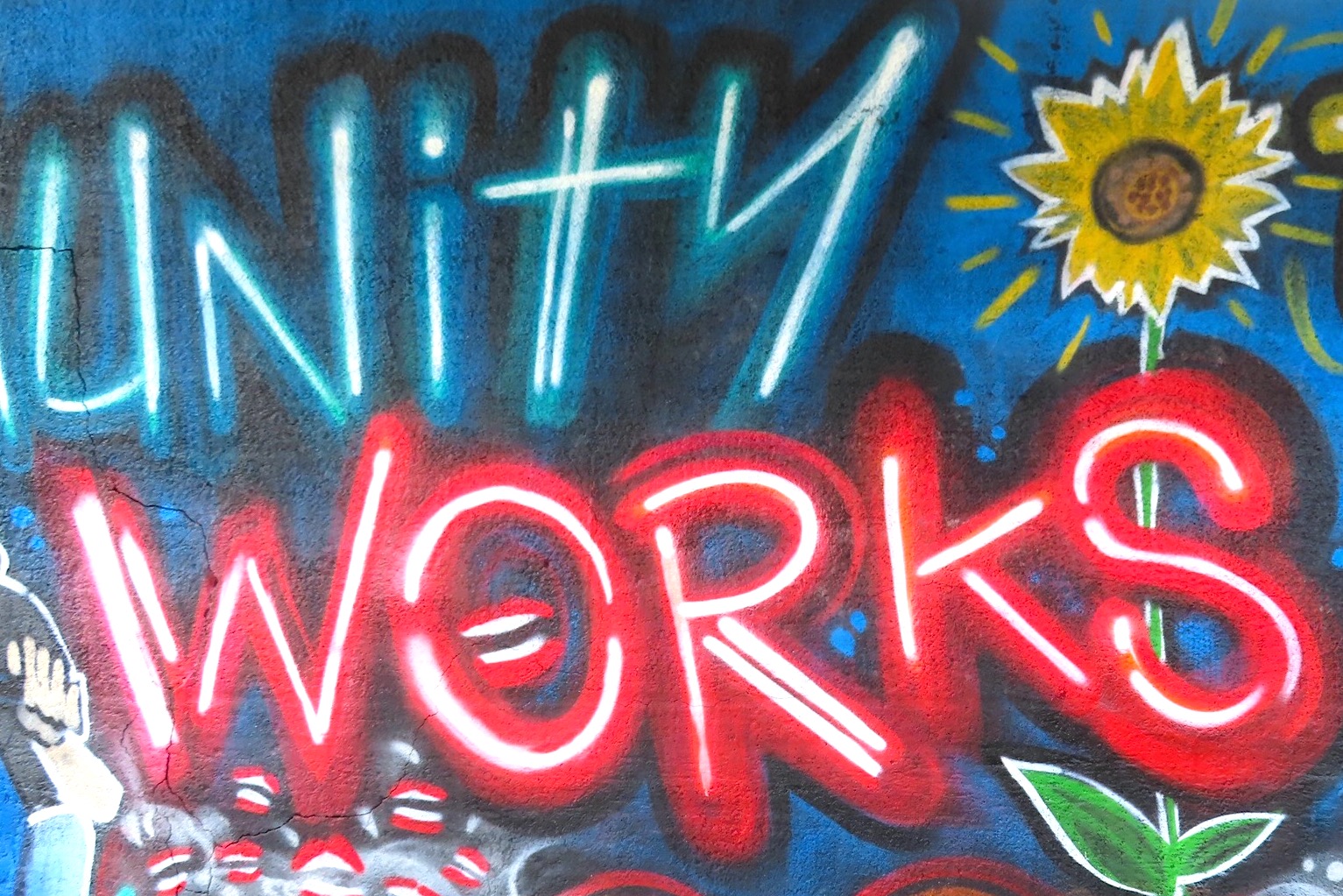
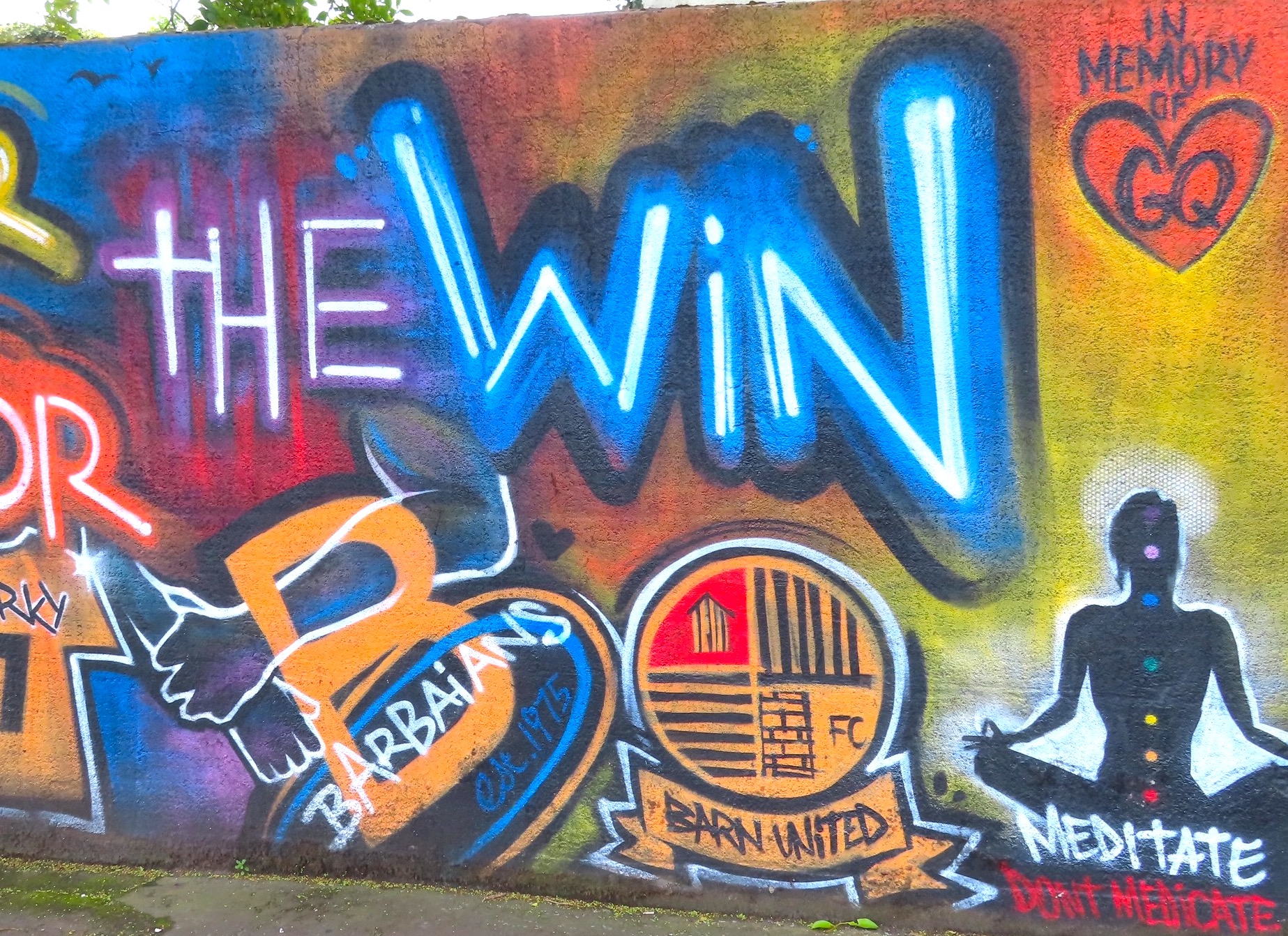
This mental-health mural is at the entrance to the car park off St Bride’s Street, Carrickfergus, with healthful reminders and tributes to local clubs (l to r): “My community works together for the win”, “Borrow another day”, “Take care”, “Take the time”, “Enjoy your food”, “Evolution” [boxing club] (Fb), “Barba[r]ians est. 1975” [wrestling club] (Fb), Barn United [soccer club] (Fb), “Meditate; don’t medicate”.

If you know the artist or initiative, please comment/get in touch.

Click image to enlarge
Copyright © 2024 Paddy Duffy
T04418 T04417 T04416 T04415

In The Service Of Our Country

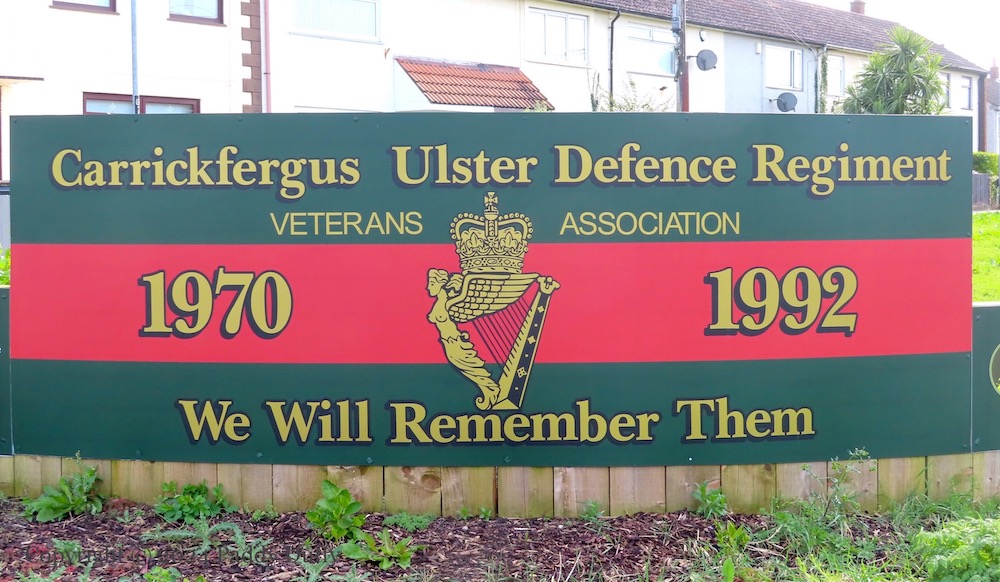
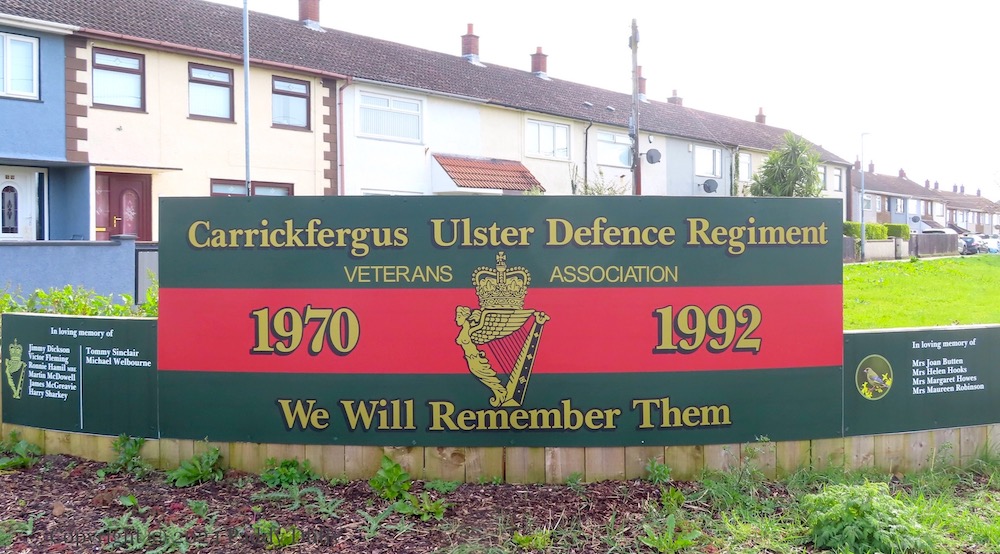
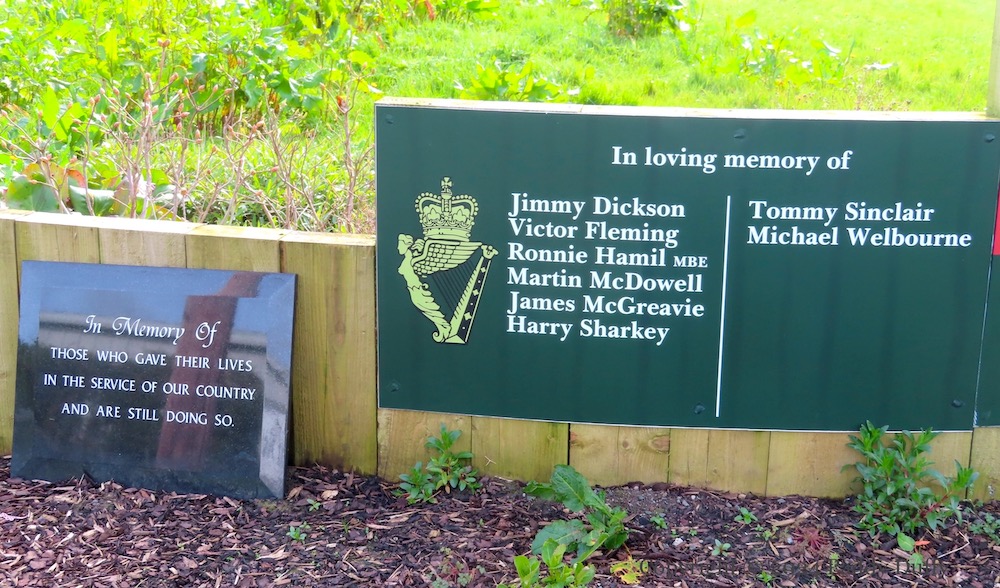
These are images of a new UDR [Ulster Defence Regiment] veterans association board in Woodburn Avenue, Carrickfergus (for the previous memorial plaques at this site, see M10770).

“In memory of those who gave their lives in the service of our country and are still doing so.”

At its peak (in 1973) the UDR had more than 9,000 personnel (Statista). The UDR was amalgamated into the Royal Irish Regiment in 1992 and a 2005 estimate put the number of its veterans at about 58,000 (Veterans Services NI).

Click image to enlarge
Copyright © 2024 Paddy Duffy
T04410 T04409 [T04411] T04412