When Death Flies Swift

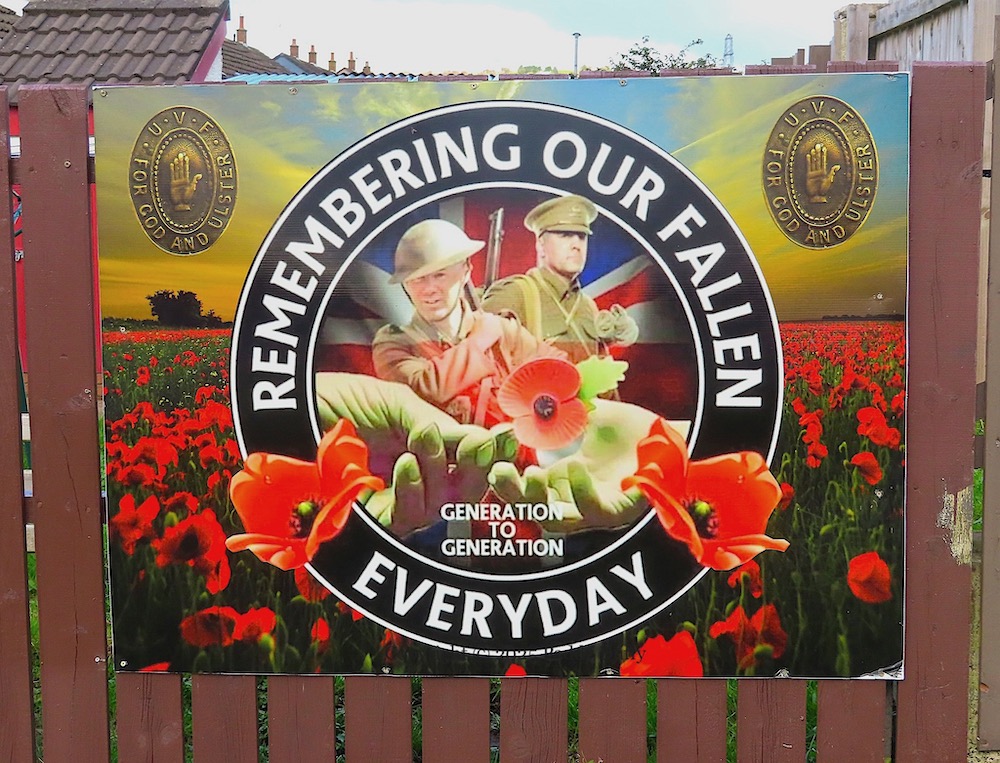
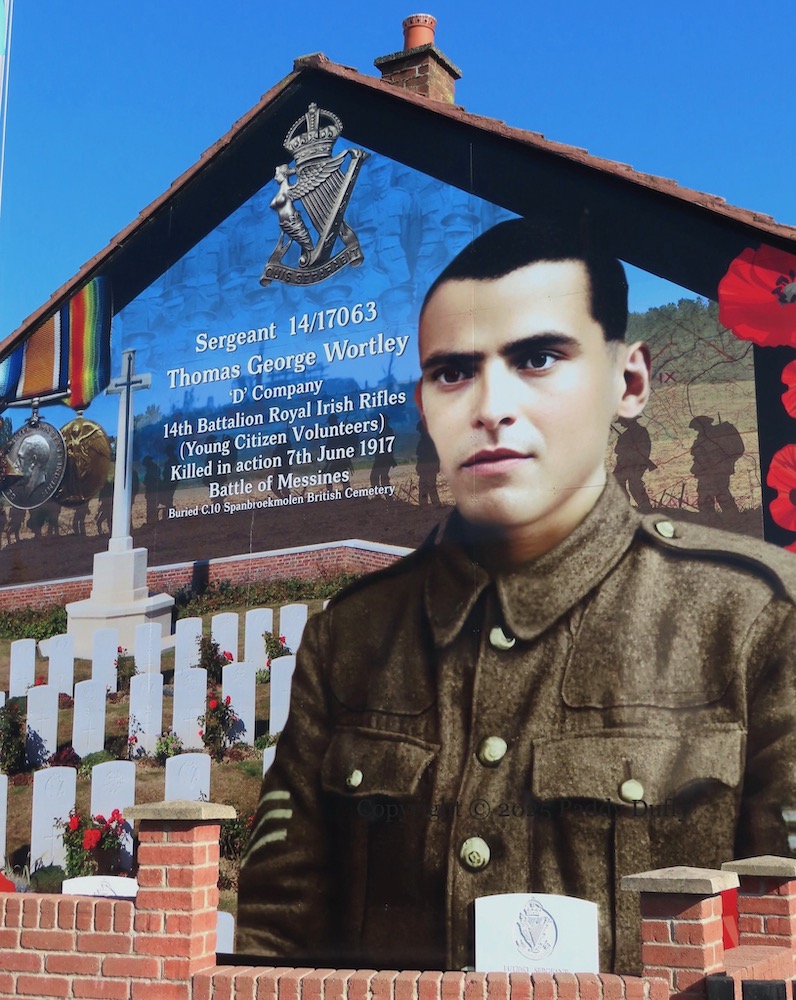
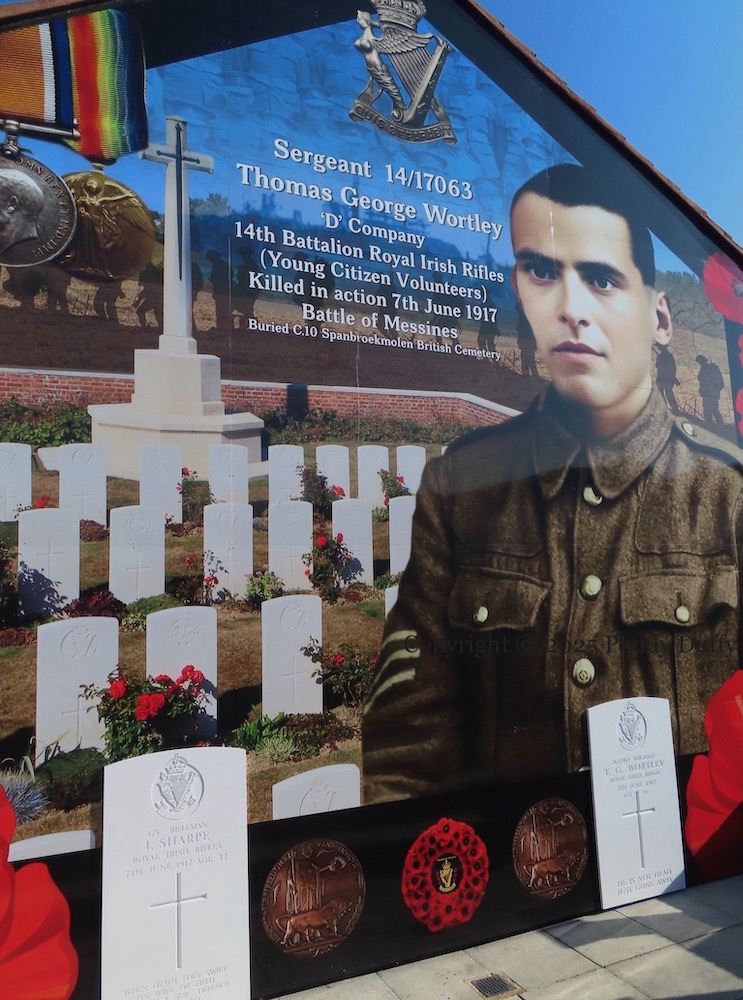
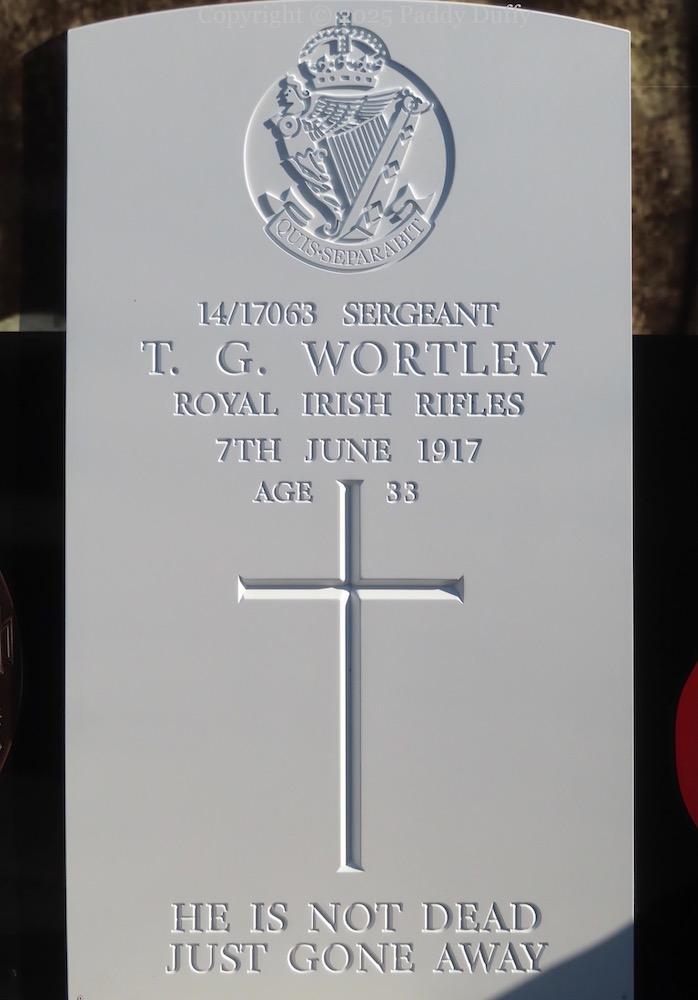
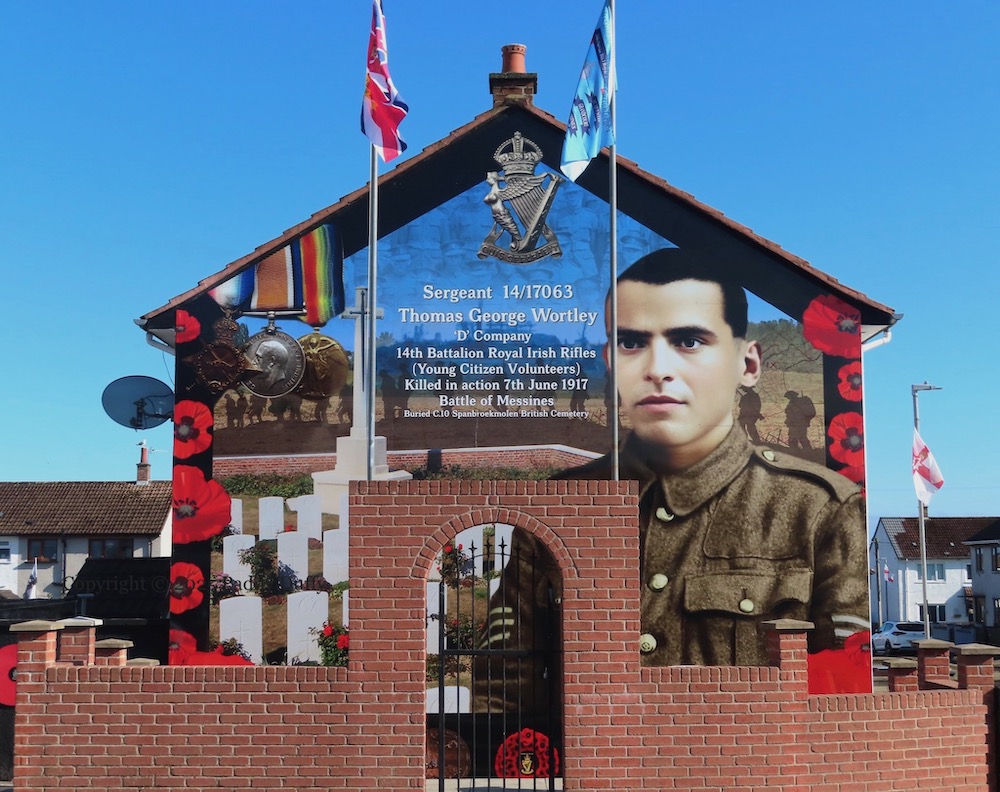
“Sergeant 14/17063 Thomas George Wortley ‘D’ Company 14th Battalion Royal Irish Rifles (Young Citizen Volunteers). Killed in action 7th June 1917 Battle of Messines. Buried C.10 Spanbroekmolen British Cemetery.”

Wortley was born in Carrickfergus and lived in Belfast. He (and James Sharpe, also from Carrick) was killed on the first day of the battle at Messines (findagrave) and buried in a small cemetery of British soldiers, many from the 36th (Ulster) Division, in Spanbroekmolen on the Ypres Salient in Flanders (WP) – shown in the mural. He is remembered in Carrickfergus with a parade each year on the date of his death (carrickfergusrollofhonour).

The medals in the top left are Pip, Squeak, and Wilfred (that is, the 1914 Star, for service in France or Belgium, the War (service) medal, and the Inter Allied Victory medal) (Identify Medals). The ‘Dead Man’s Penny’ memorial plaque (WP) appears next to the gravestones.

The Larches, Carrickfergus, replacing a painted version.

Click image to enlarge
Copyright © 2025 Paddy Duffy
T07130 T07133
T07129 T07134
T07131 T07132
T07128

Breaking The Siege

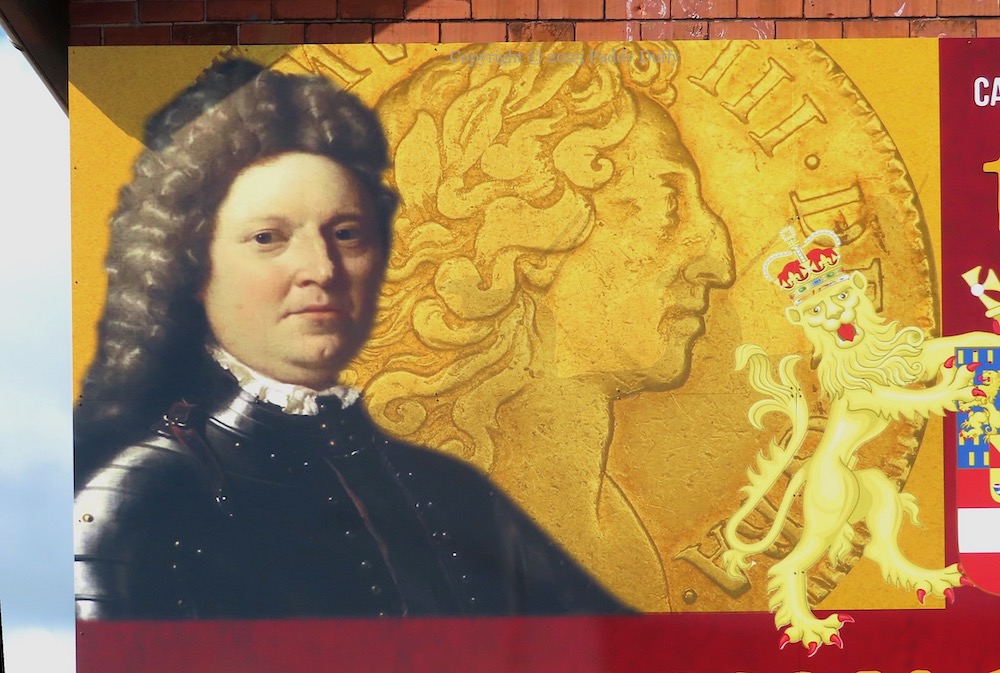
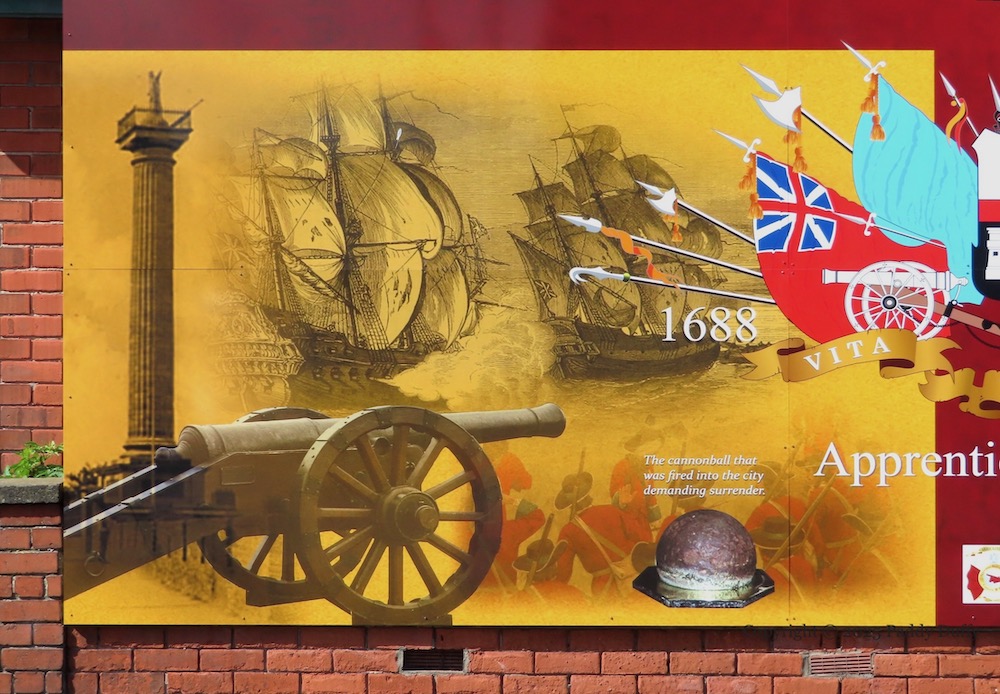
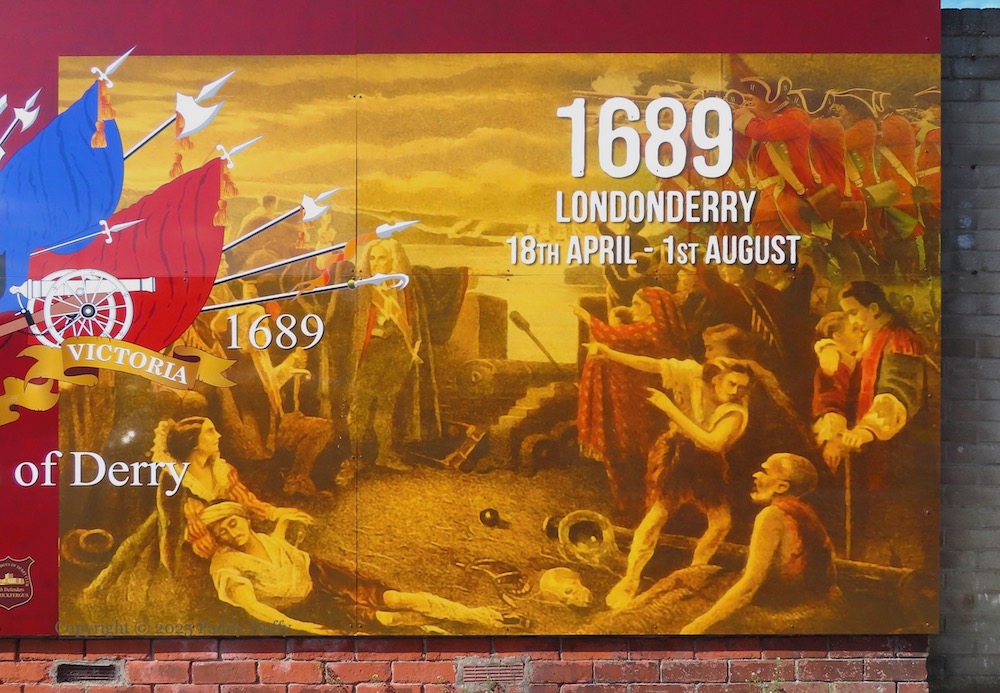
English forces under Kirke came to the aid of the besieged Protestants in Derry, “breaking the boom” across the Foyle and ending the siege at the end of July, 1689. The next wave of forces sailed for Belfast Lough, and together with the troops from Derry, set siege on August 20th to a garrison of Jacobite forces stationed in Carrickfergus castle, who soon began to run low on gunpowder, and surrendered. (WP | NIWorld)

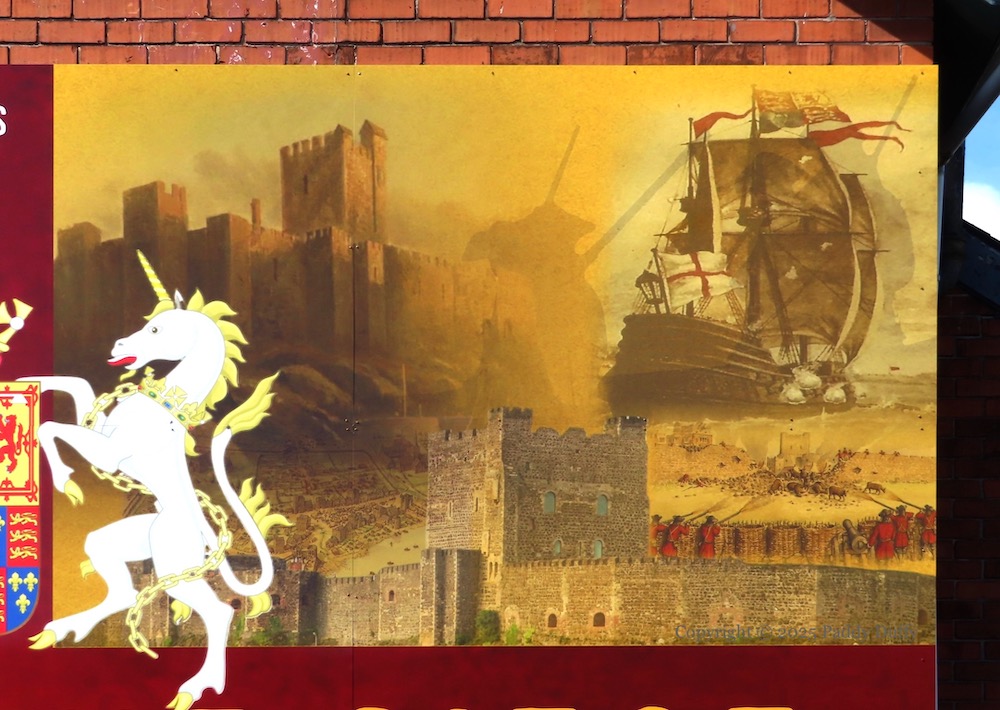
This new board in Davy’s Street, Carrickfergus, focuses mostly on the siege of Derry, though gives the dates of the Carrickfergus siege at the top. Schomberg appears in the top-left quadrant of the board – he would go on to die on at the Boyne in 1690; in the top-right is the Carrickfergus castle and the Mountjoy; in the bottom-left are Walker’s statue and the canon ‘Roaring Meg’; bottom-right is a painting of the Derry inhabitants celebrating the end of the siege; top-centre is the coat of arms of William and Mary; and bottom-centre is the Londonderry coat of arms.

Replaces a trio of small UVF boards.

Click image to enlarge
Copyright © 2025 Paddy Duffy
T06797 T06798 T06799 T06800 T06801 T06802 T06803

Welcome To My Castle

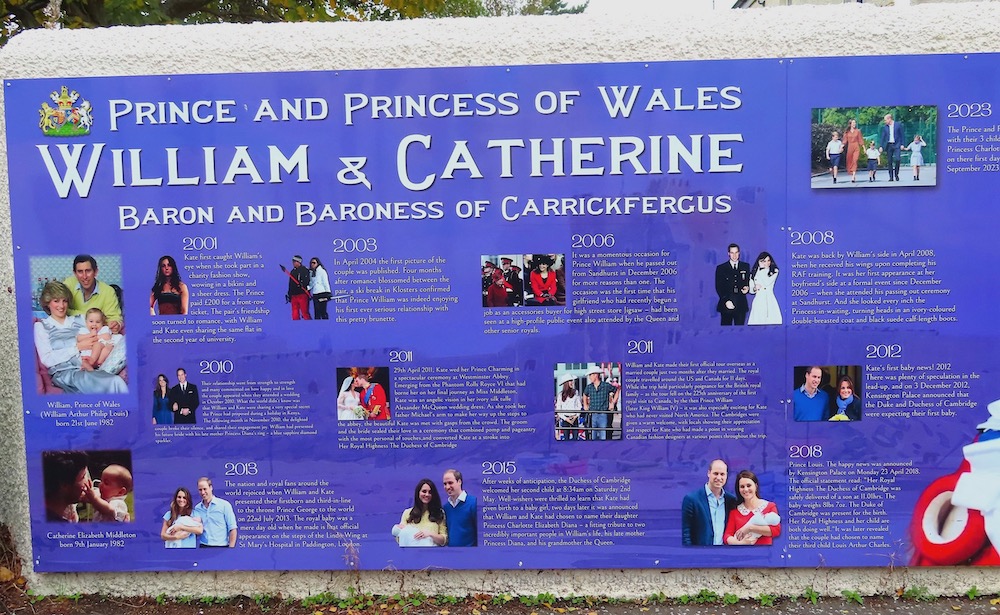
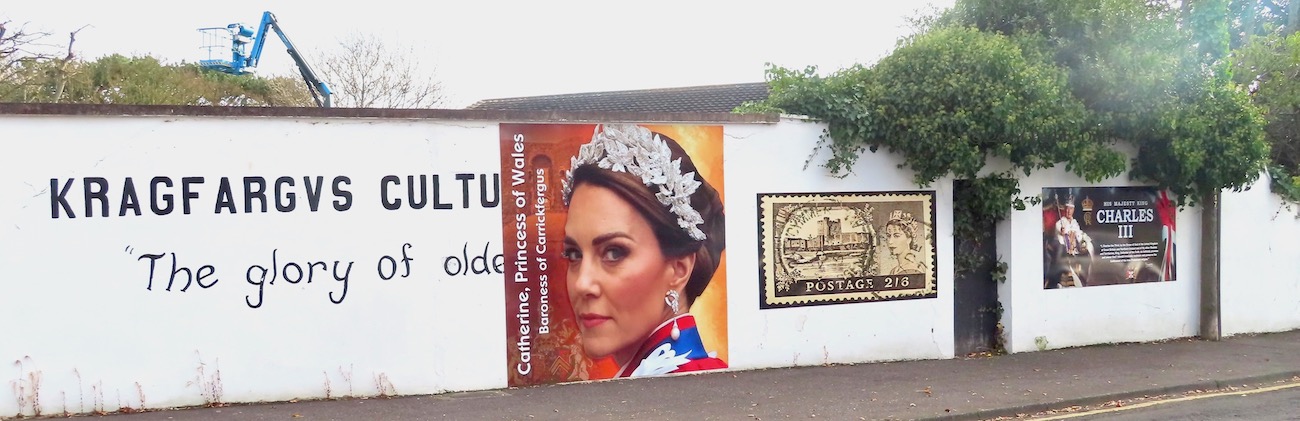
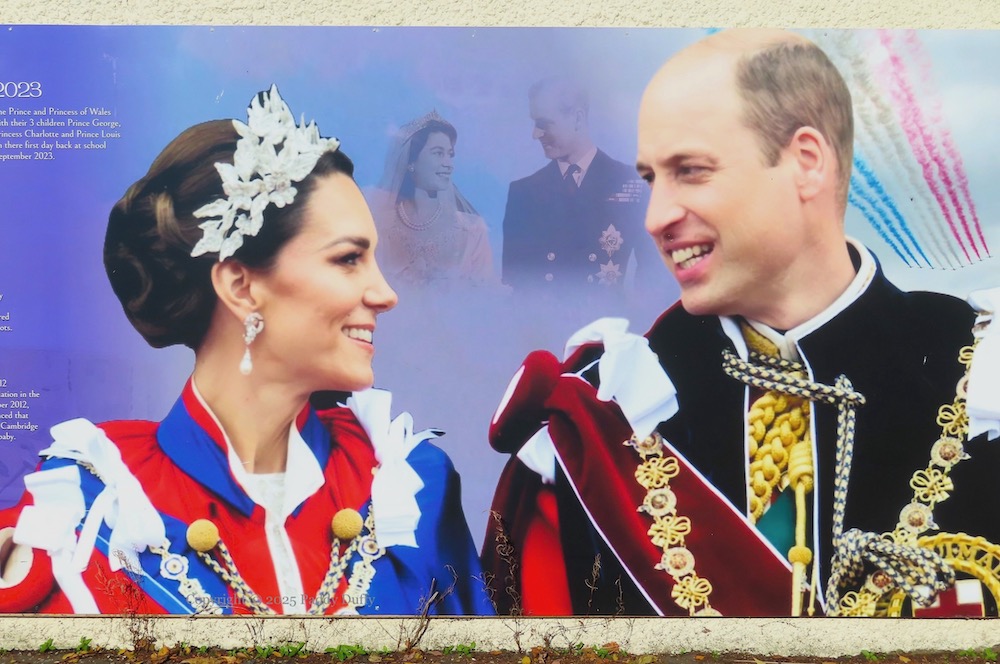
This entry updates the images seen in Kragfargus Cultural Corner, which now includes a portrait of Catherine (“Kate”) Middleton, Princess Of Wales and Baroness Carrickfergus (no “of”), alongside the tribute to King Charles III. The other person with a castle is Mr Tayto, who appears in the montage of famous faces on one of the NI 100 boards (fourth image).

Taylor’s Avenue, Carrickfergus

Click image to enlarge
Copyright © 2024 Paddy Duffy
T05866 T05861 T05862 [T05863] T05864 T05865 T05867 T05868 T05869

The Glorious Revolution

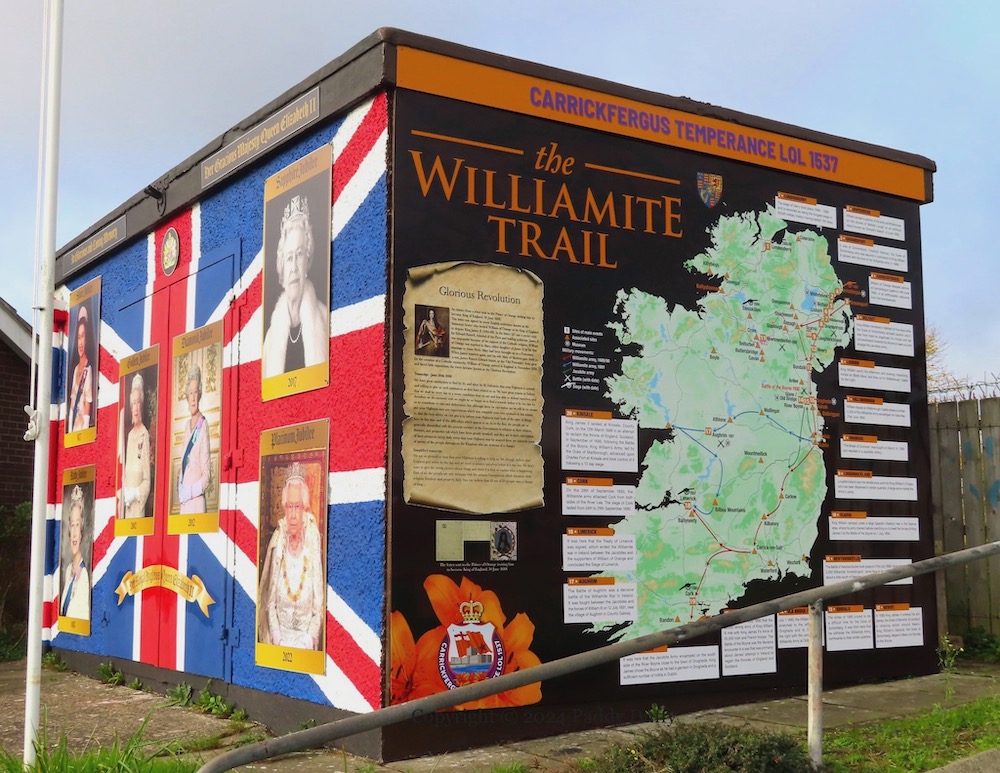
The story of William in Ireland has been a recent favourite in PUL displays (e.g. Newtownabbey | Carrickfergus | Shankill); this version is novel in adding a letter from June 30th, 1688, both in transcription and facsimile, under the heading of the “Glorious Revolution”. In it, the “Immortal Seven” tell William, the Prince Of Orange, that 95% of English people want a change in monarch. William arrived in England in November, 1688, and in Ireland in June, 1690.

The Williamite Trail (from October) joins an earlier tribute (June) to Elizabeth II on the years of her silver, ruby, gold, diamond, sapphire, and platinum jubilees (1977, 1992, 2002, 2012, 2017, and 2022).

For another combination of William and Elizabeth, see Elizabeth, Queen Of Orange.

This sub-station is the site of the infamous “Join The UDA” mural of 2015 (one | two).

Oakfield Crescent, Oakfield/Glenfield, Carrickfergus

Click image to enlarge
Copyright © 2024 Paddy Duffy
T05859 T05858 T05860 Carrickfergus Temperance LOL 1537 (Fb)

Forever

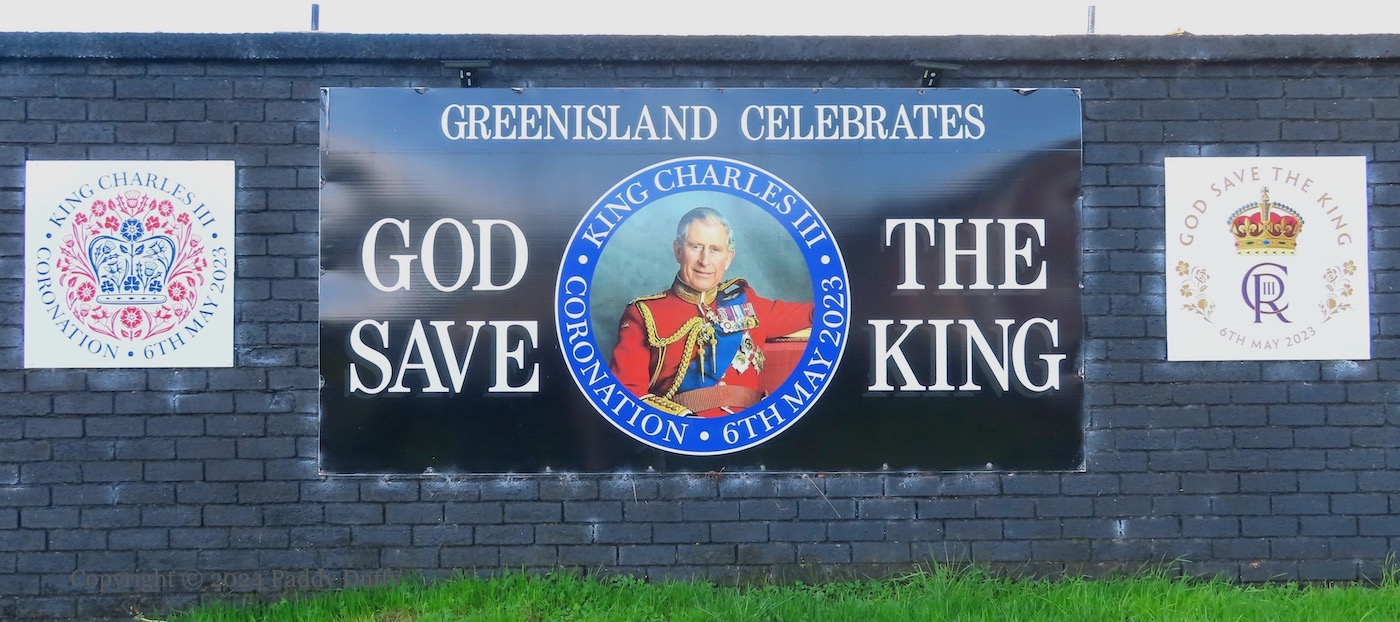
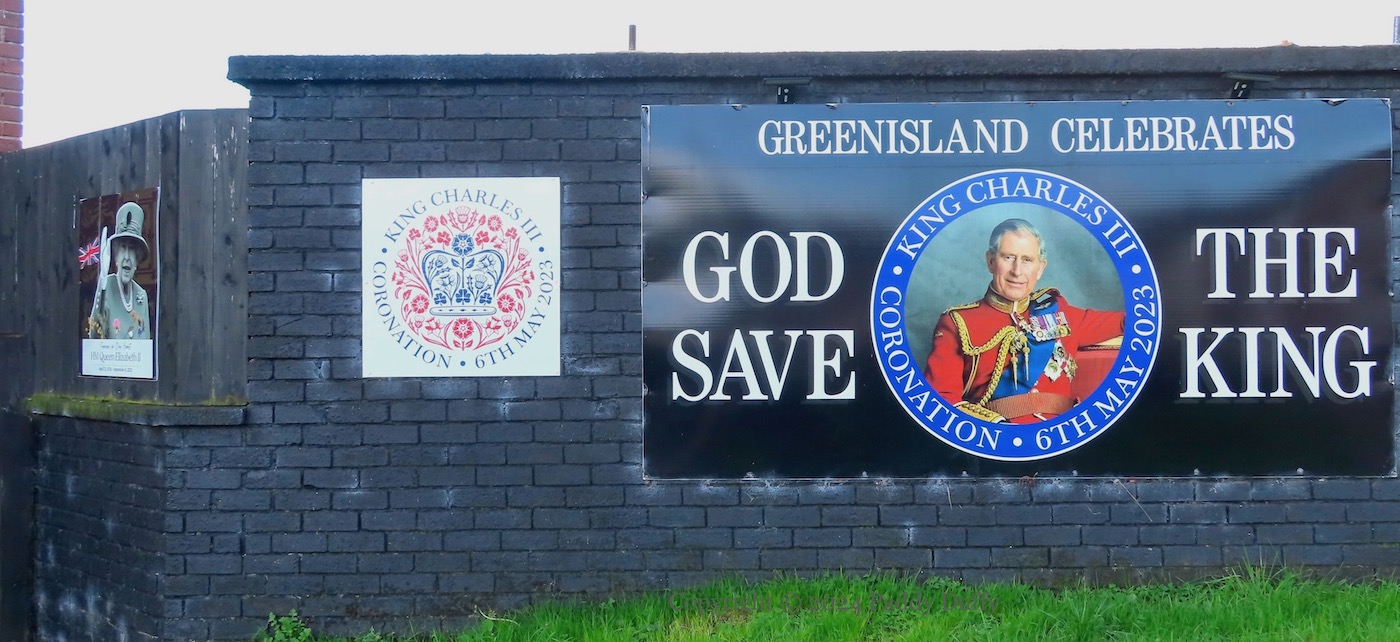
“Forever in our heart: HM Queen Elizabeth II, April 21, 1926 – September 8, 2022” and “Greenisland celebrates King Charles III, coronation 6th May, 2023.” Charles assumed (“acceded to”) the UK throne immediately upon the death of Elizabeth in September, in order to maintain the monarchy’s unbroken rule; it was not announced until the morning of the 10th (WP) and the coronation ceremony took place eight months later.

Glenkeen Avenue, Greenisland.

Click image to enlarge
Copyright © 2024 Paddy Duffy
T05870 T05871 T05872

1st Ranger Battalion

After its entry into World War II on the day after the bombing of Pearl Harbour, (December 7, 1941), troops heading to Europe were stationed in Northern Ireland. The army’s 1st Ranger Battalion — an elite, special-operations, infantry unit — was formed on May 27th, 1942, and 600 soldiers, mostly from the 34th Division, were chosen from 1,500 volunteers by Captain (and then Major) William Darby (WP); Darby is shown in the third board. The unit was activated on June 19th, 1942, at the Sunnylands Camp in Carrickfergus (Wartime NI). The Rangers trained with British commandos at Achnacarry, Scotland, before seeing action (WWII Rangers) – the commando monument there was featured in a Red Hand Commando mural in Rathcoole.

These informational boards are on the side of the Sunnylands shops. There is also a memorial stone (Atlas Obscura) at the junction of Sunnylands Avenue and North Road, where the gates to the camp were located.

Click image to enlarge
Copyright © 2024 Paddy Duffy
T05850 T05851 T05852 T05853 T05854 T05855 T05856

Whitehead Temperance

Benjamin West painted The Battle Of The Boyne in 1778 and his composition – with William moving from left to right on a white horse and Marshal Schomberg dying in the bottom-right corner – has become the standard representation in loyalist culture, perhaps due to versions of it appearing on the covers of songbooks for the Orange Order and the Apprentice Boys soon after (Belinda Loftus 1982 Images In Conflict). It appears here on the wall of Whitehead Orange Hall, along with a board connecting service by Irish soldiers in British forces in WWI and Afghanistan (see previously: The Sacrifice Remains the Same in east Belfast).

Click image to enlarge
Copyright © 2024 Paddy Duffy
T05645 T05646 T05647

Never Forget, Always Remember

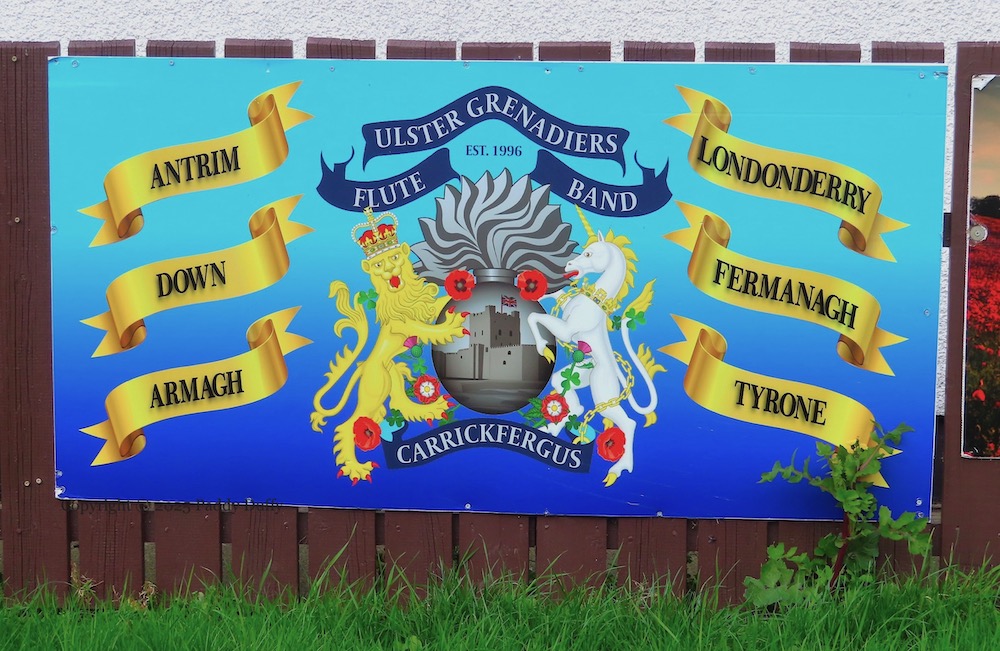
The grenade at the heart of the ‘Grenadier’ emblem is an old spherical grenade, with a spout of fire; the classic “pin-and-pineapple” design dates to 1915 (WP Mills Bomb). Various regiments then put a symbol on the surface of the grenade (see e.g. East Belfast Volunteers); here, the Ulster Grenadiers flute band (Fb) have added Carrickfergus castle flying a Union Flag to the grenade at the centre of a new board erected on June 7th, 2024 (youtube video of the launch).

The battles listed on either side of the central emblem are battles in which the 36th Division took part, though by that time, grenadiers were not a specialised unit and each infantry platoon (of about 60 men – Schilling) would have both hand-grenade and rifle-grenade sections (Reddit) equipped with 100+ grenades (The World War).

For the 3rd battalion of the Ulster Volunteers, see The Central Antrim Regiment.

St Bride’s Street, Carrickfergus, next to and dwarfing the community mural seen in Meditate – Don’t Medicate.

Click image to enlarge
Copyright © 2024 Paddy Duffy
T04952rc T04953 T04951 [T04954] [T04955] [T04956] JG Painting Papering