“In loving memory of Davy Wilsdon” – Wilsdon appears to have been a member of the Somme Memorial flute band (Fb) in Bangor. He died in January, 2022 (funeral service on youtube). The band sponsored a memorial bench in Wilsdon’s honour in the village of Mesnil-Martinsart, France (Fb | Street View | see also Ulster Tower). In addition, his portrait has been painted by London artist Olivier Roubieu (web) in Beatrice Avenue/High Street, Bangor, replacing the painting of Terry Bradley’s Don’t Look Back.
“In proud memory of Ryan McCosh [and] Chris Hamilton, North Down battalion, Bangor”. The memorial board was officially dedicated on November 10th but was in place a month previously (Fb).
To the right of the wide shot, writing on side-walls can be seen that reads “Bangor Protestant Boys F[lute] B[and]” and “Did they beat the drum slowly? Did they play the fife lowly?”. The latter lines are from Eric Bogle’s song “No Man’s Land” which is about a young man (“Willie McBride”) dying on “the green fields of France” in WWI. (Here (youtube) is the recording by Tommy Makem and Liam Clancy.) McCosh and Hamilton appear to have been members of the flute band, rather than members of the Ulster Volunteers or the Troubles-era UVF.
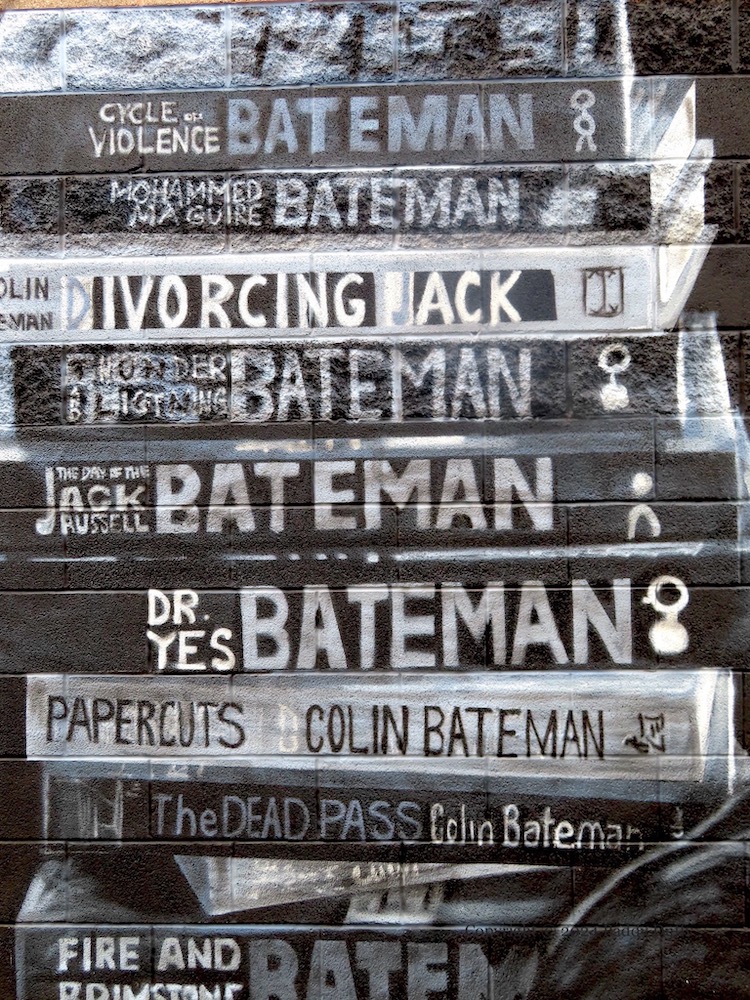
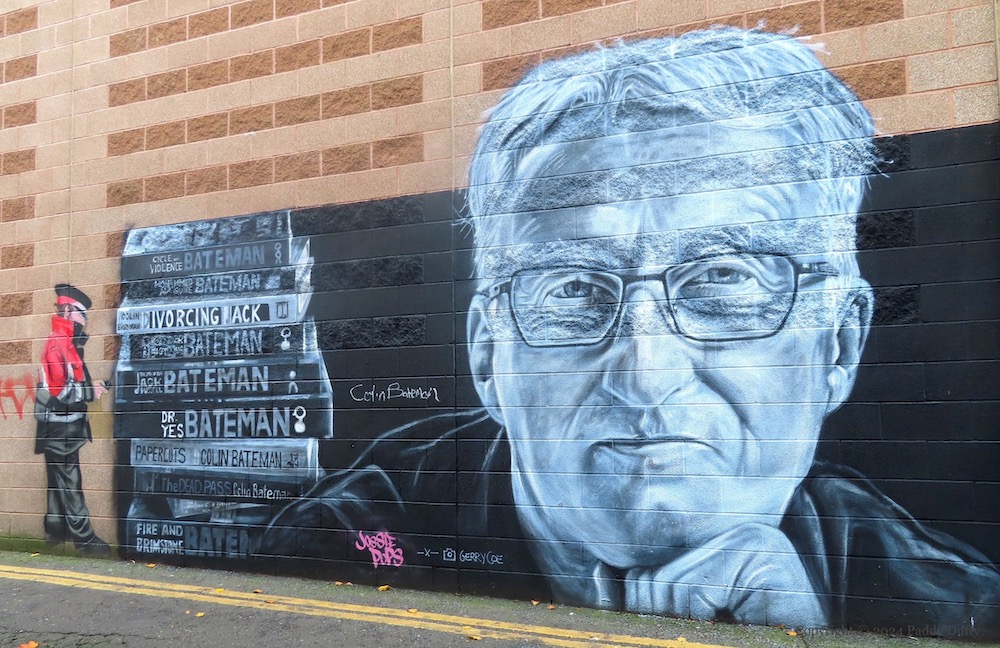
Bangor artist Jossie Pops (web) painted Bangor photographer Gerry Coe’s portrait (ig) of Bangor author Colin Batemen. Ten of Bateman’s books are stacked to the left, from 1995’s Divorcing Jack to 2022’s Thunder And Lightning.
Mill Row, Bangor, opposite irony’s ‘crab attack’ street art.
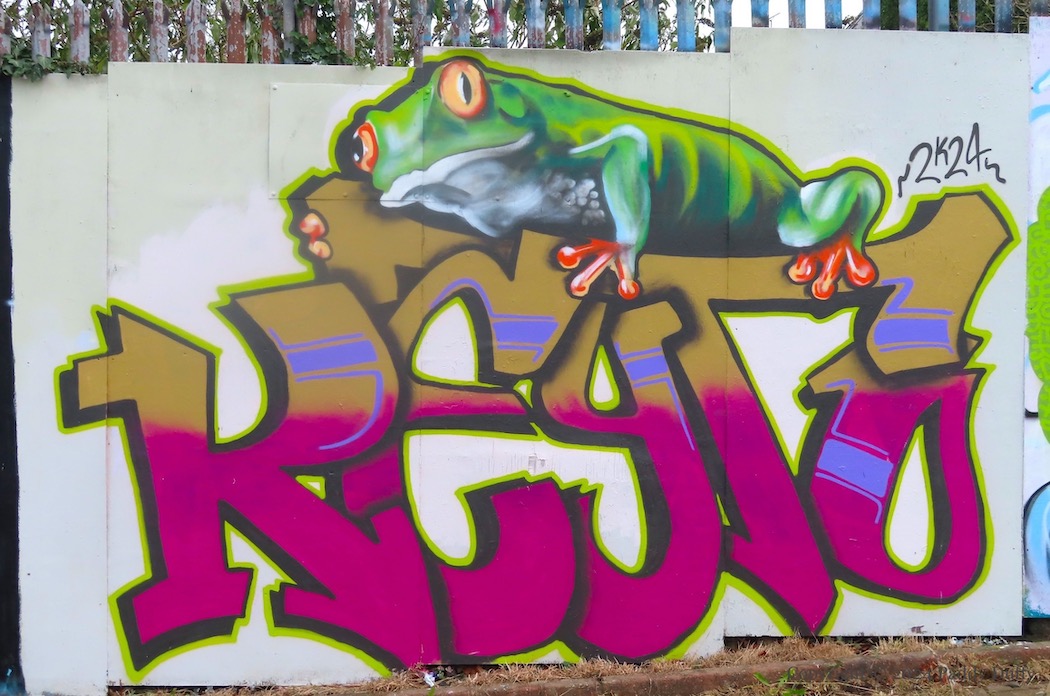
Here is a gallery of new street art on the ever-changing wall in the ‘Project 24’ space off Queen’s Parade, Bangor. Above is a tribute by Glen Molloy (Fb) to fellow sprayer JOHNDEN1; below is the piercing gaze of an eagle by Keyto (ig).
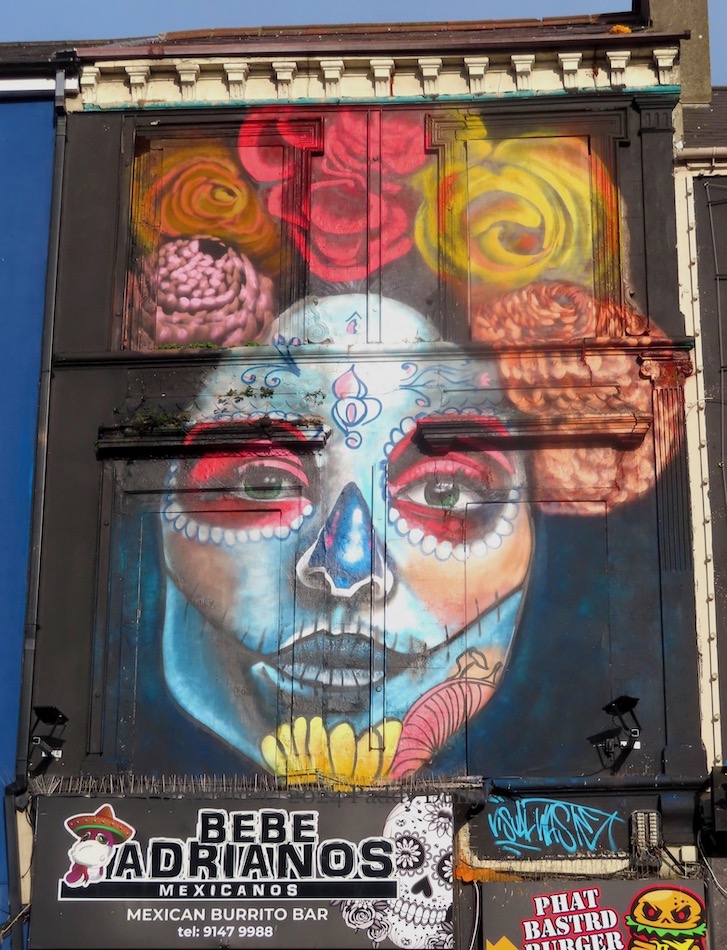
Painting one’s face to resemble a skull, and wearing flowers (particularly marigolds) in one’s hair is a modern tradition that stems from the sugar skulls that are part of the offerings that the living provide for the dead who – for the brief period around the ‘Day Of The Dead’ – are able to return from the underworld (Mexico Historico | Bachman)
This calavera catrina (“dapper skull”) was painted by Visual Waste (web) on the upper wall of Bebe Adrianos Mexicanos (Fb), a burrito bar in Bangor.
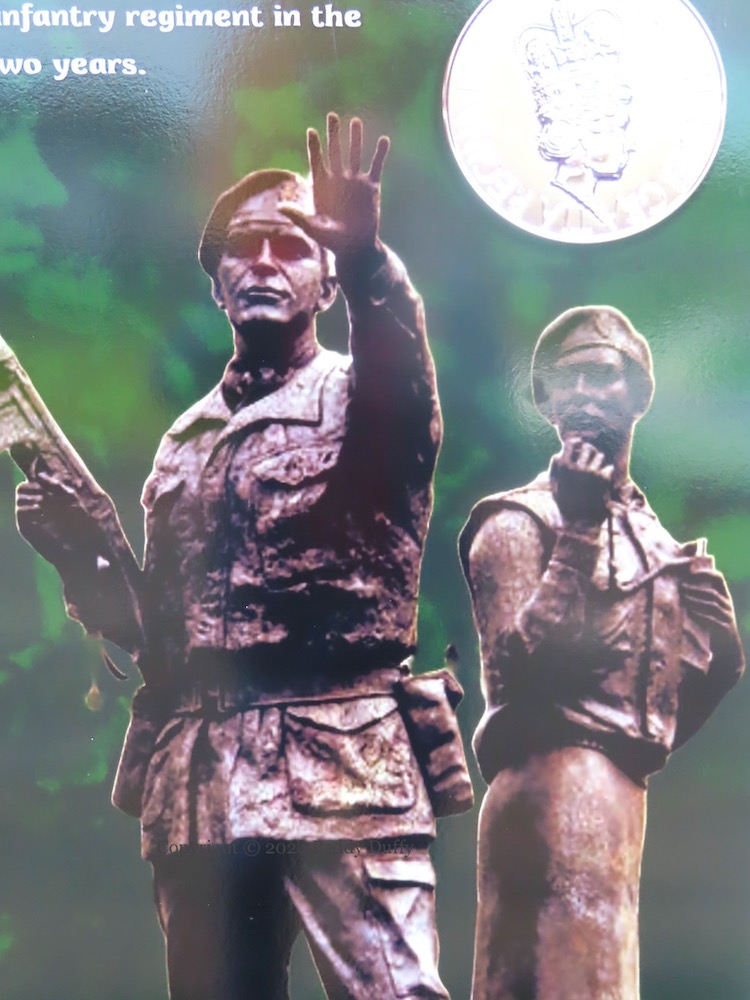
“The Ulster Defence Regiment (UDR) was an infantry regiment of the British Army established in 1970, with a comparatively short existence ending in 1992. Raised through public appeal, newspaper and television advertisements, their official role was the “defence of life or property in Northern Ireland against armed attack or sabotage” but unlike troops from Great Britain they were never used for “crowd control or riot duties in cities”. At the time the UDR was the largest infantry regiment in the British Army, formed with seven battalions plus another four added within two years.”
“The UDR Soldier: As poppy petals gently fall,/Remember us who gave our all,/Not in the mud of foreign lands,/Not buried in the dessert sands.//In Ulster field and farm and town,/Fermanagh’s lanes and drumlin’d Down,/An Ulsterman should live in peace//We did not serve because we hate,/Nor bitterness our hearts dictate,/But we were they who must aspire,/To quench the flame of terror’s fire.//As buglers sound and pipers play/The proud Battalions march away./Now may the weary violence cease,/And let our country live in peace. – By John Potter”. Potter (bio at Royal Irish) also wrote a history of the UDR called A Testimony To Courage.
The railway line running between Belfast and Lisburn opened in 1839 (WP) and in 1863 a bridge was built to allow passage over it. This bridge was known as “the Boyne bridge” after the legend that King Billy had travelled across a nearby bridge (the Saltwater Bridge across the Blackstaff) on his way to meet James II in 1690. The (railway) bridge was expanded in 1936 (Read The Plaque) and the Saltwater bridge was used as the foundations for the approach road from Sandy Row to the expanded bridge (WP).
The new Grand Central Station “Transport Hub” means that trains no longer pass underneath the bridge and its demolition was included in the 2017 plans, scheduled to begin in October of this year (2024). However, protesters lodged a legal bid to stop the demolition, under the auspices of the Ulster Architectural Heritage Society (BBC) but lost the case, though it is now not being “demolished” but “sensitively dismantled” and parts saved for “an art project” (Third Sector). A rally is planned for November 5th to “Save Sandy Row” (Boyne Bridge Defenders facebook group).
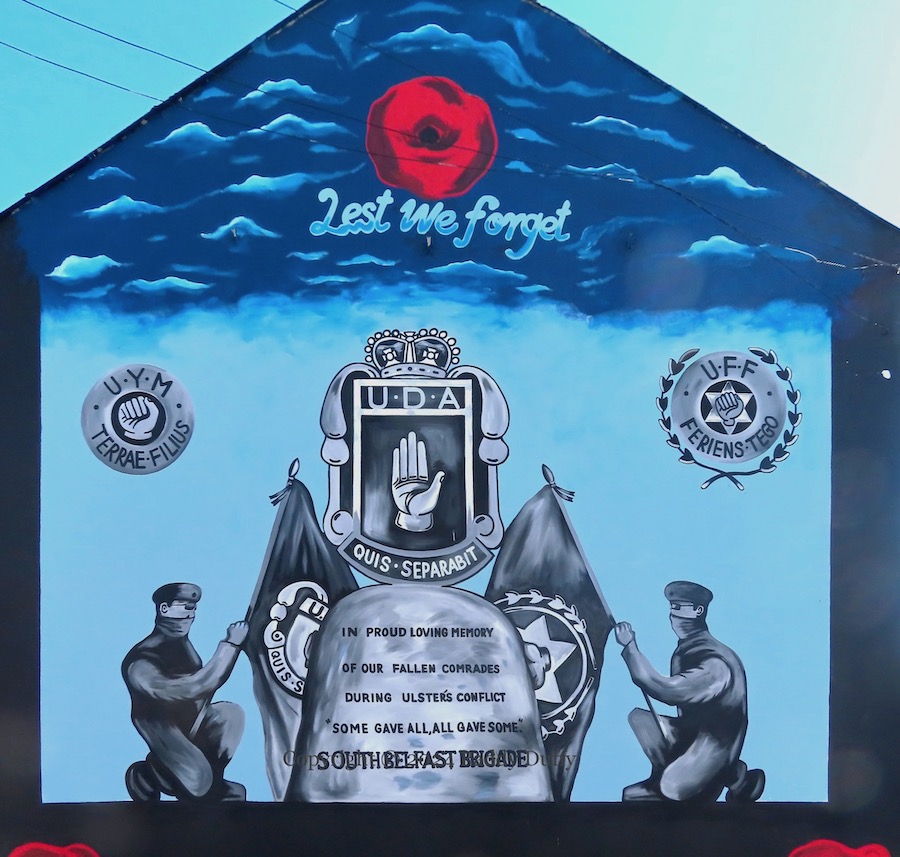
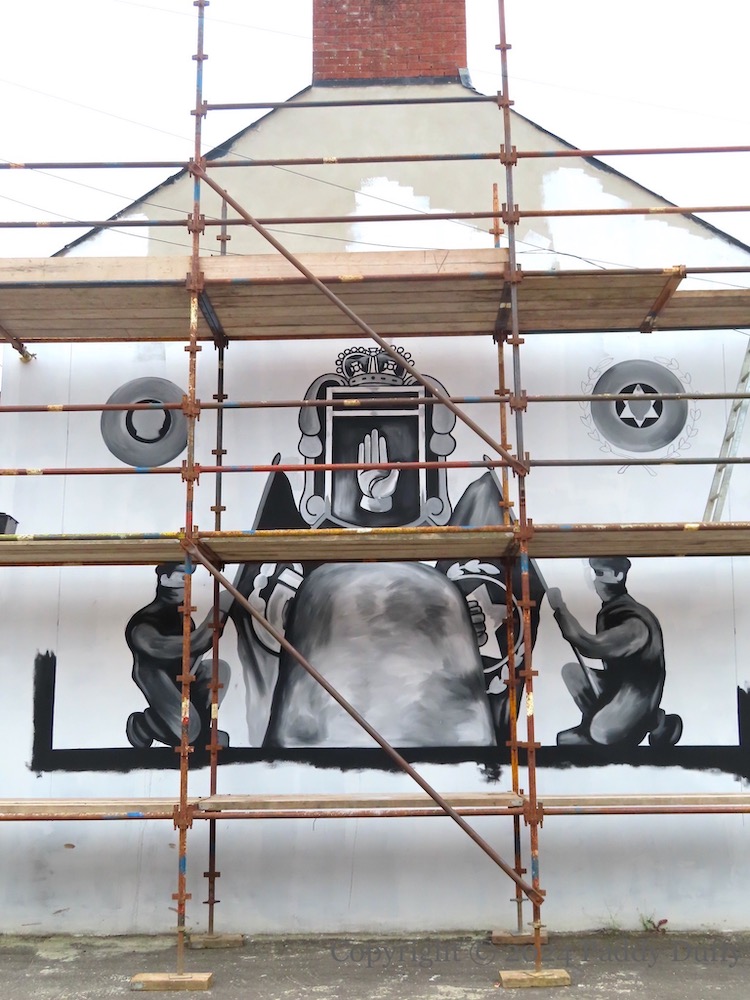
“In proud [and] loving memory of our fallen comrades during Ulster’s conflict. ‘Some gave all, all gave some.’ South Belfast Brigade.” According to Sutton, 91 UDA members died during the Troubles (CAIN).
The text on the side-wall reads, “Death is not an honour but a sacrifice and those who gave that sacrifice are remembered by those that followed. Quis separabit.”
This post updates an entry from January last year (2023) (Remembered As Of Yesterday) which showed the vandalised mural to the Tullycarnet flute band. It went for at least a year without being repaired but has now been repainted with a new central image showing instruments in three panels.














 Paddy Duffy Collection