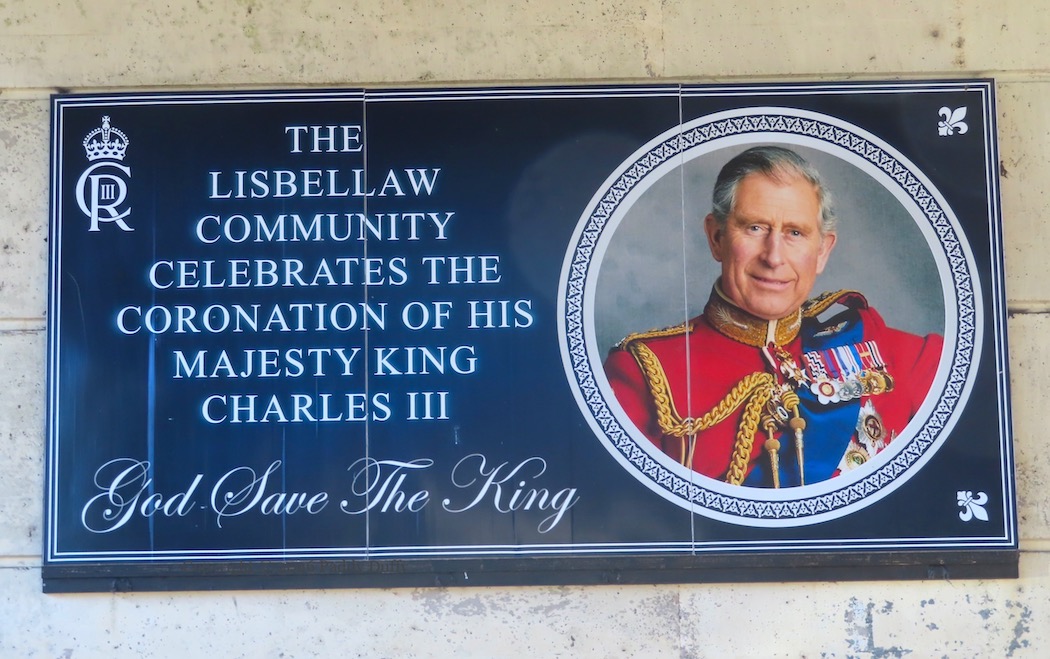
“The Lisbellaw community celebrates the coronation of his majesty King Charles III. God save the King.” Charles’s coronation was on May 6th, 2023, eight months after acceding to the throne upon the death of his mother, Queen Elizabeth II. He turns 78 this year (2026).
This is a large printed board in the Brook Street, Lisbellaw, below the A4.
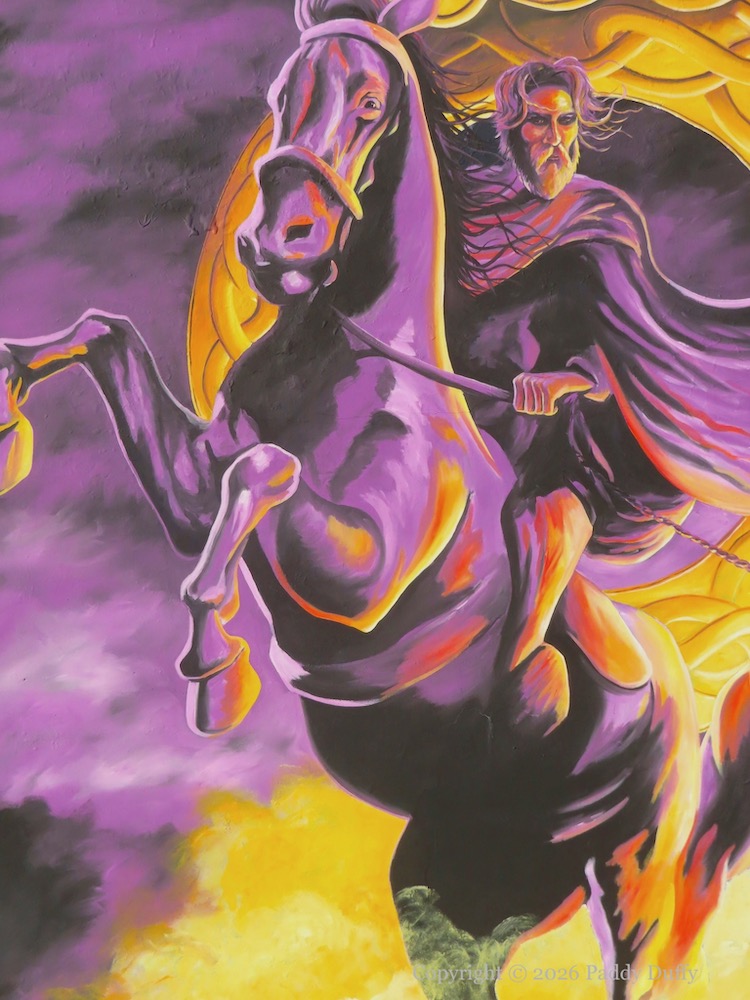
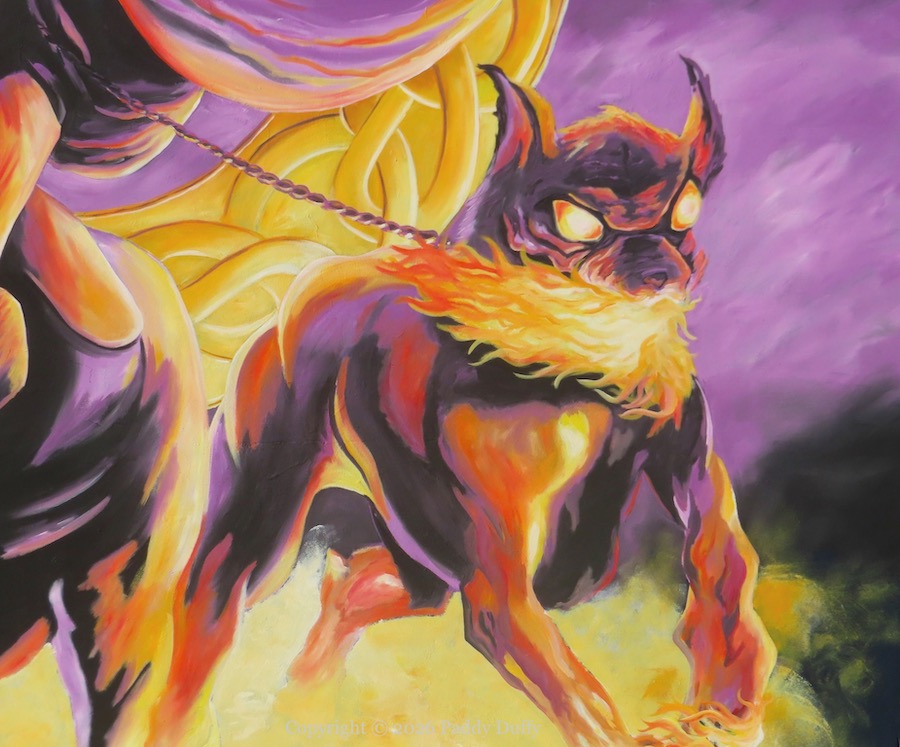
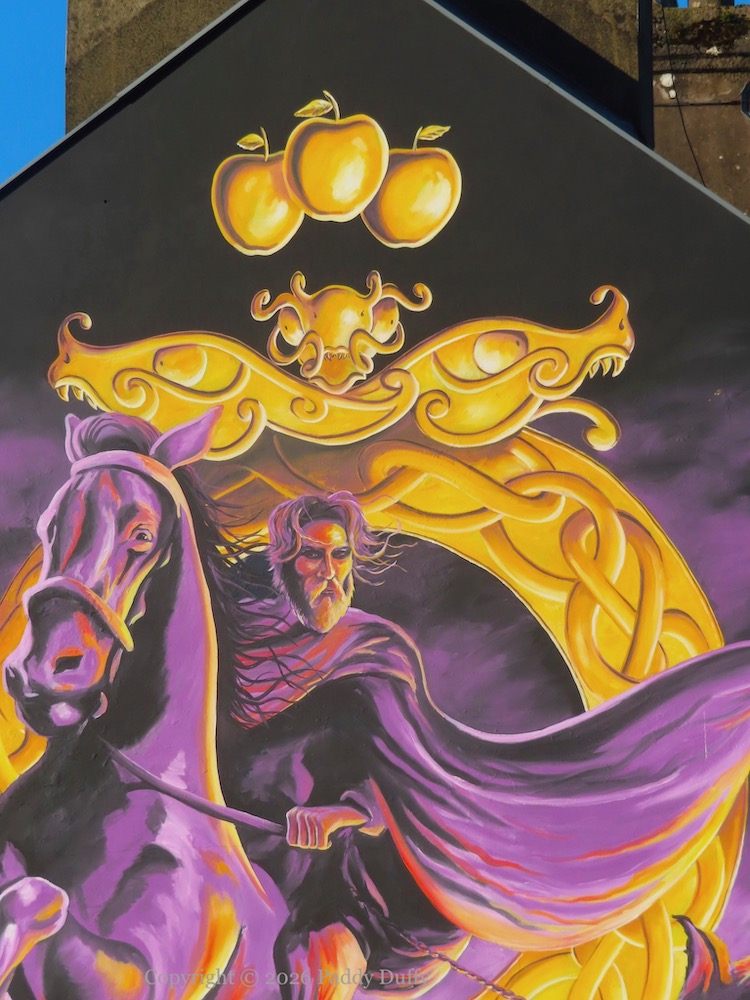
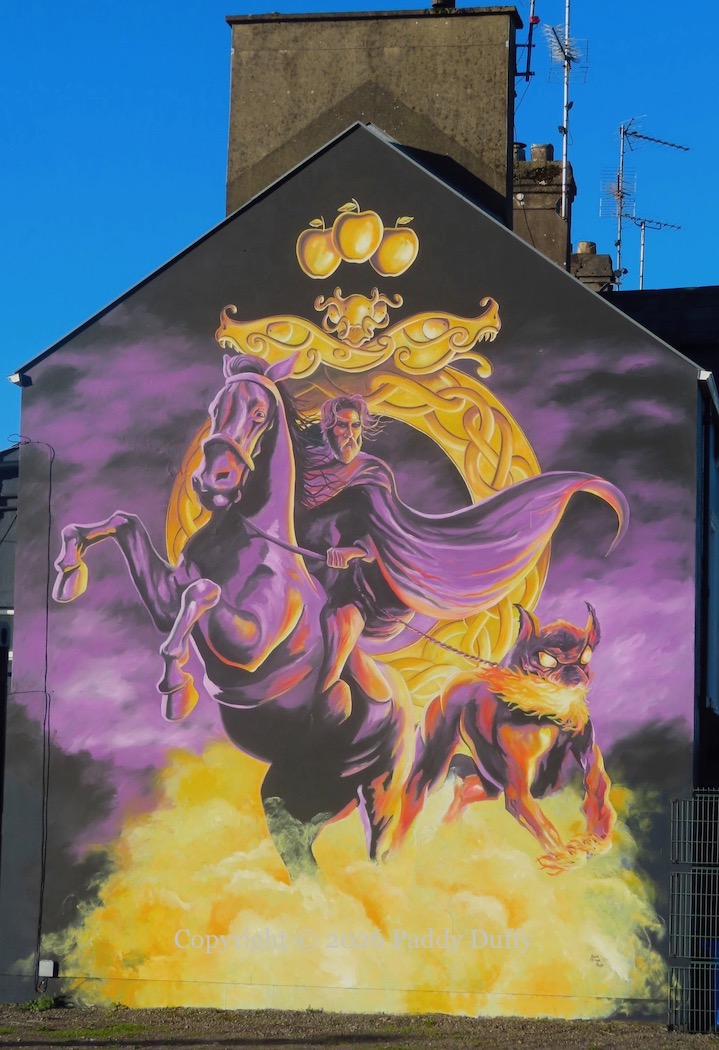
In the myth of the Golden Apples Of Lough Erne (Yeats), Conn-Eda is given a seemingly impossible quest by his step-mother: to bring back three golden apples, a horse, and a hound in the possession of the king of the Fir Bolg, who lives in Lough Erne.
Little does he know that the horse that accompanies him on his adventures is the king’s brother, who has been bewitched, but who is released by self-sacrifice and Conn-Eda’s compassion, thus securing his success with the king. Conn-Eda returns riding the steed, leading the dog, and carrying the three golden apples from the king’s crystal tree.
This interpretation of Conn-Eda’s triumphant return is by Kevin McHugh (web), with support from Enniskillen BID (web), in Forthill Street, Enniskillen.
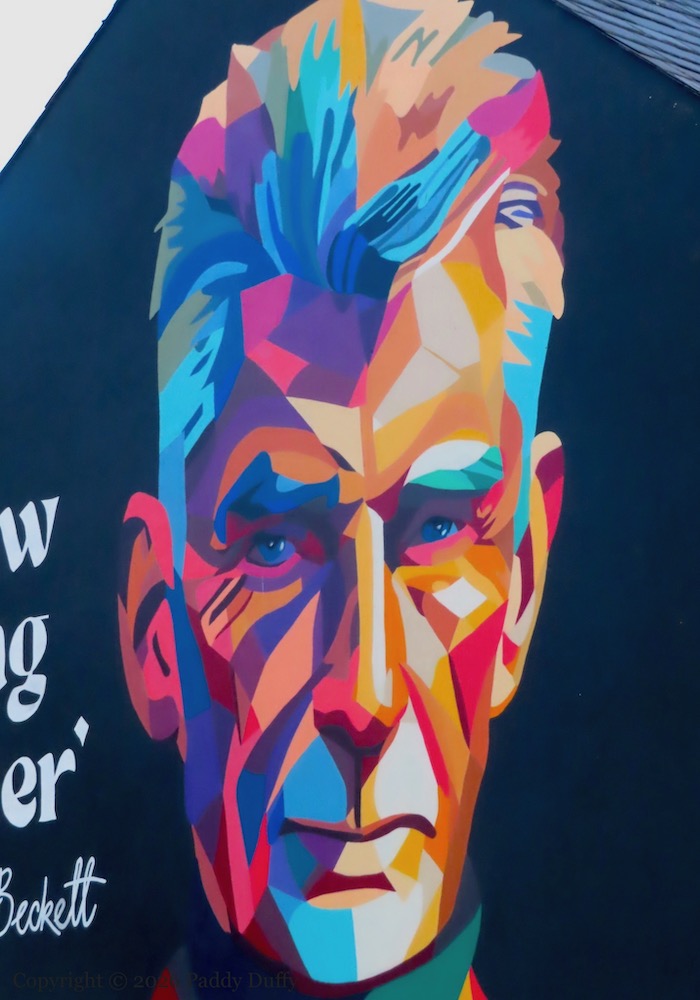
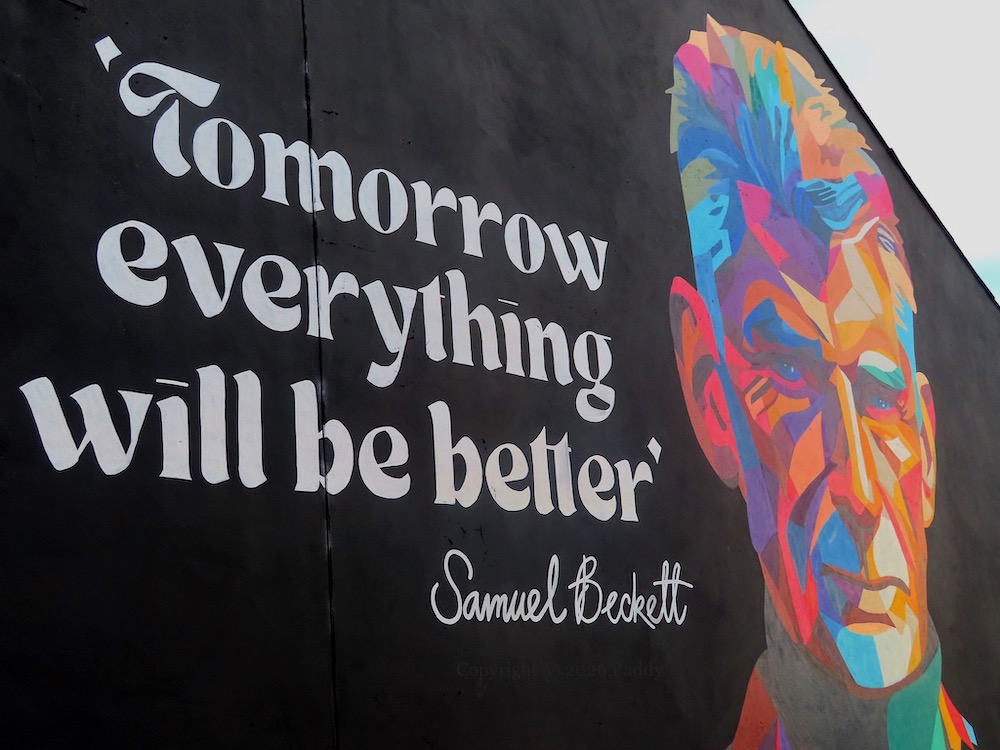
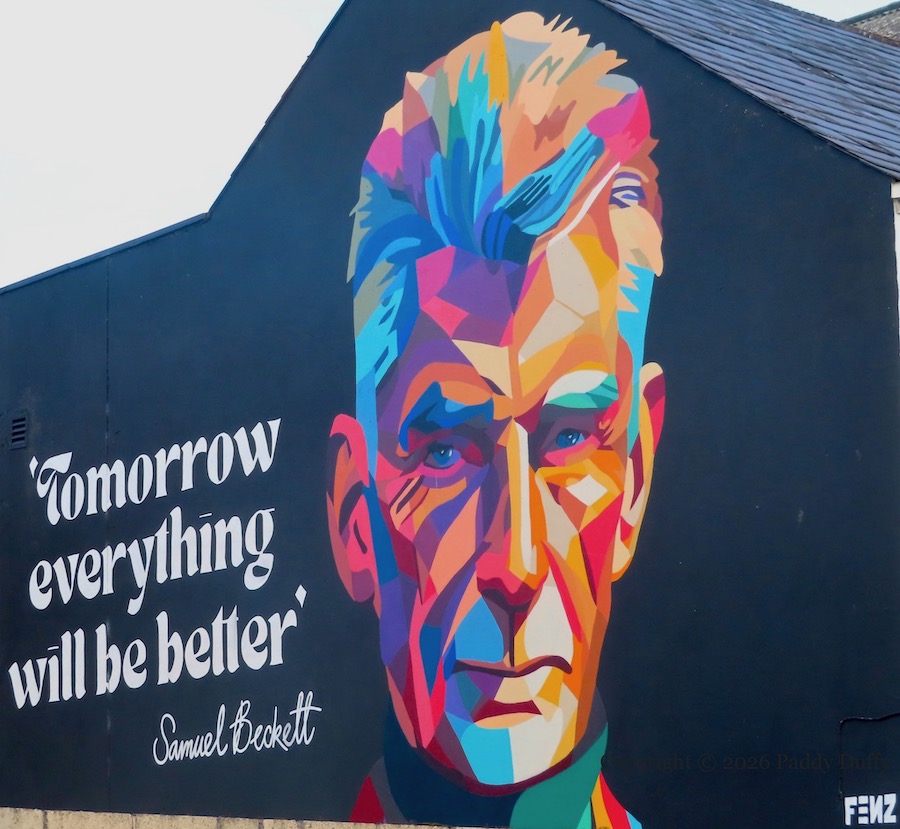
Samuel Beckett falls prey to the eternal optimism of the instragrammed mind. The quote – “Tomorrow everything will be better” –is from Act 1 of Waiting For Godot.
Street art by Karl Fenz (web) in Wellington Road, Enniskillen; Beckett attended Portora Royal public school (WP).
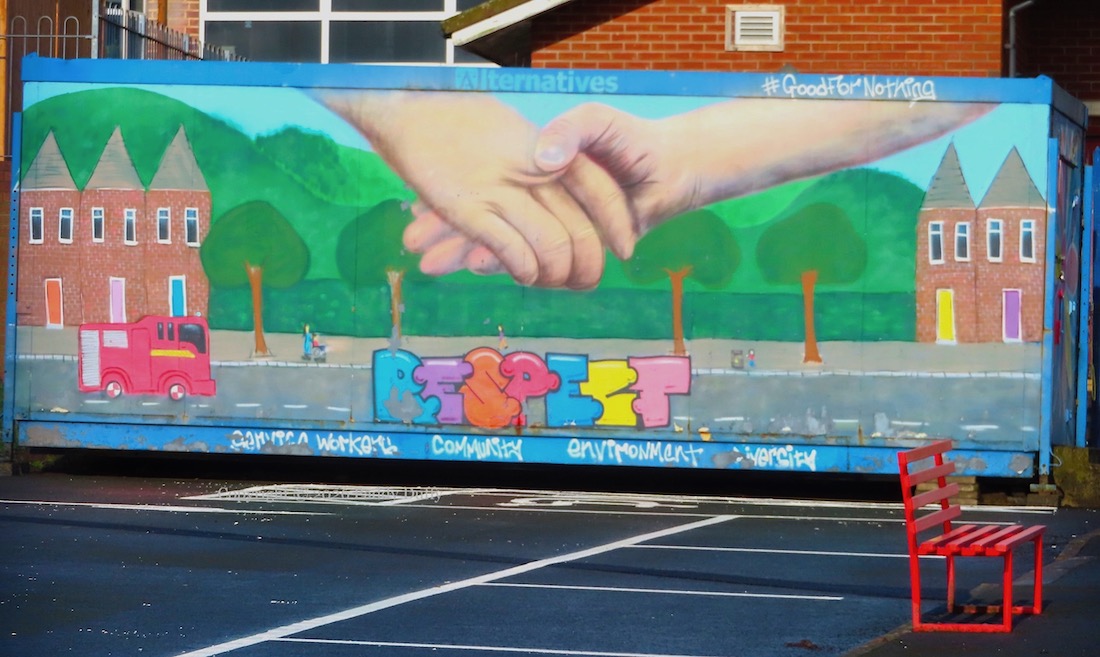
“Service workers – Community – Environment – Diversity”. The “#GoodForNothing” campaign, launched in 2015 (youtube), aimed to change common perceptions of young people by highlighting their volunteer work.
The piece is by emic (web) working with pupils from Wheatfield Primary school (Alternatives).
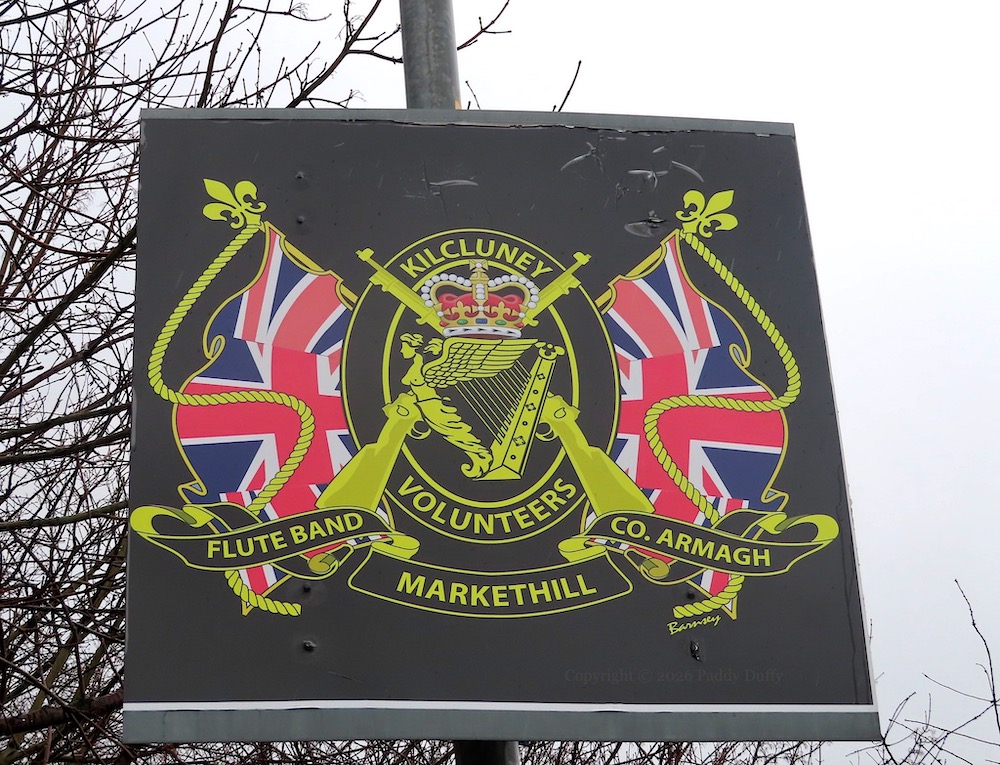
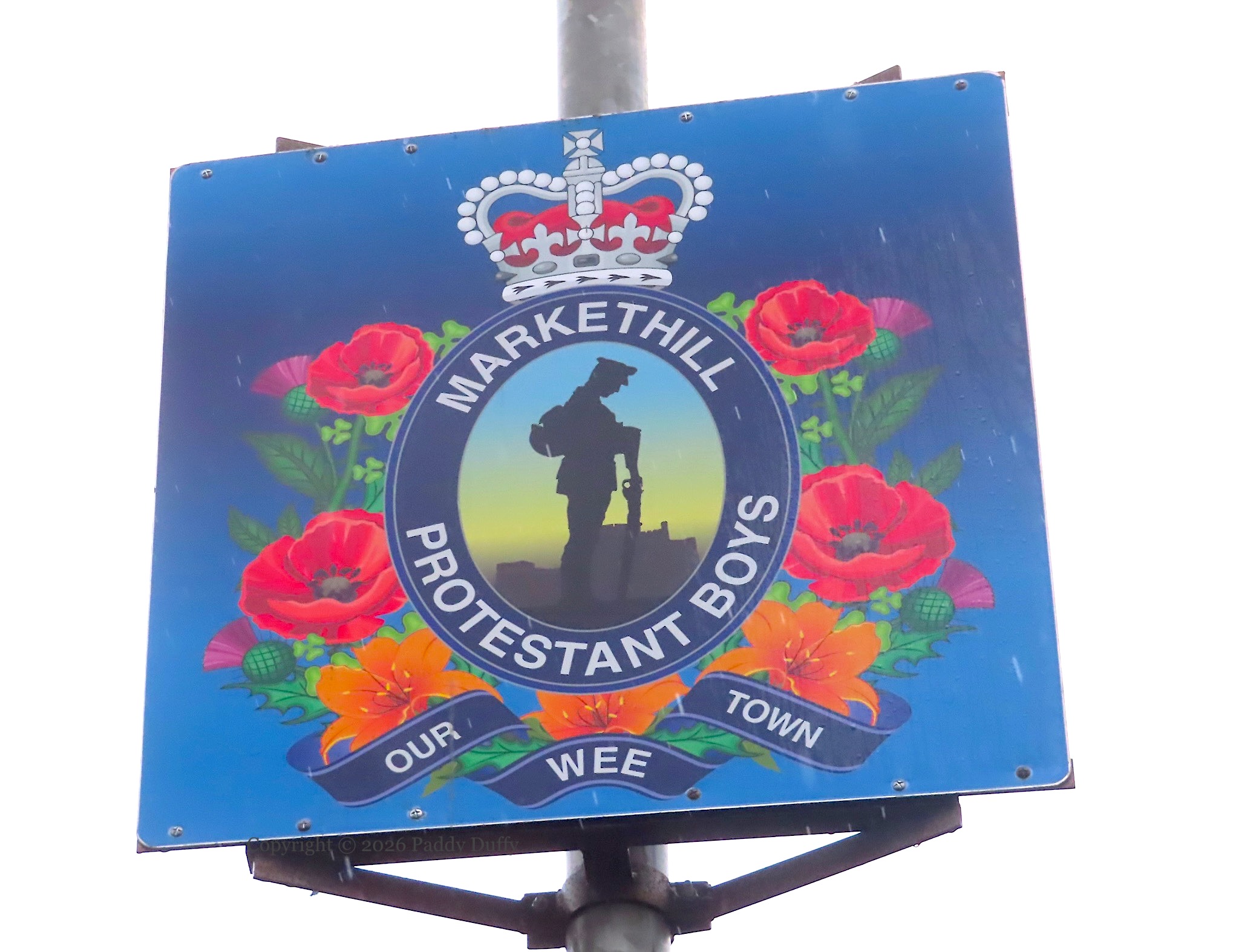
These placards for two local flute-bands are on light-poles in Markethill: above, the Kilcluney Volunteers flute band (Fb), below, the Markethill Protestant Boys (Fb). The crossed rifles and RIR emblem, and the graveside mourner and poppies, are WWI imagery; Markethill men joined the second battalion of the Armagh brigade of the Ulster Volunteers and (in the Great War) the ninth battalion of the Royal Irish Fusiliers. (See also UVF 3rd Battalion Armagh in Tandragee).
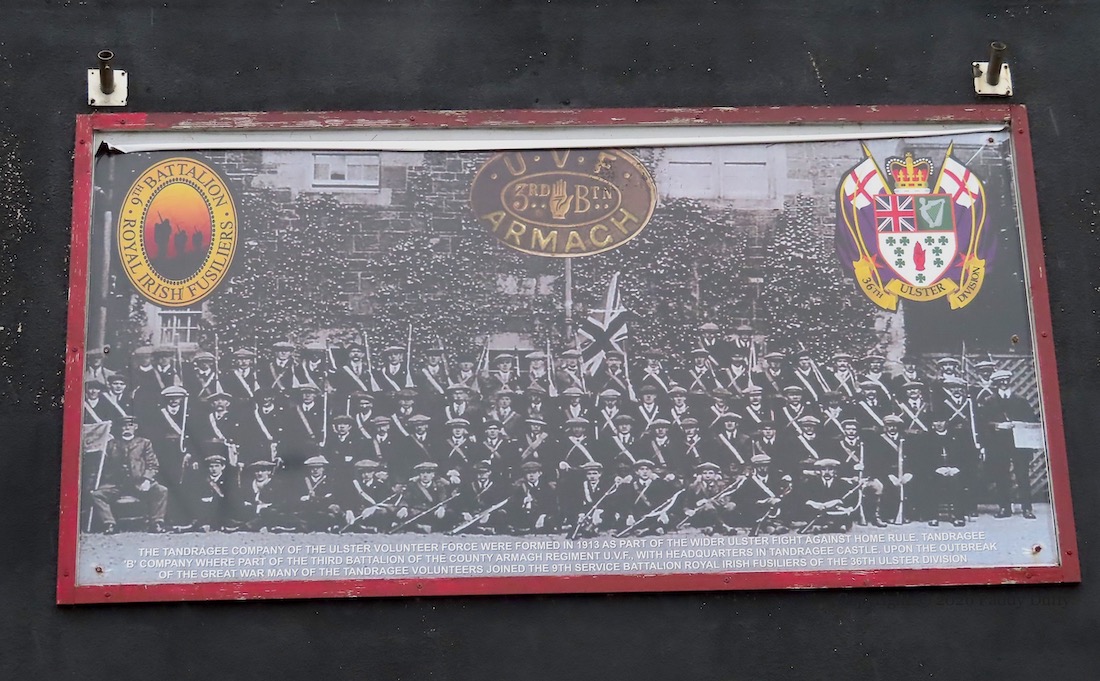
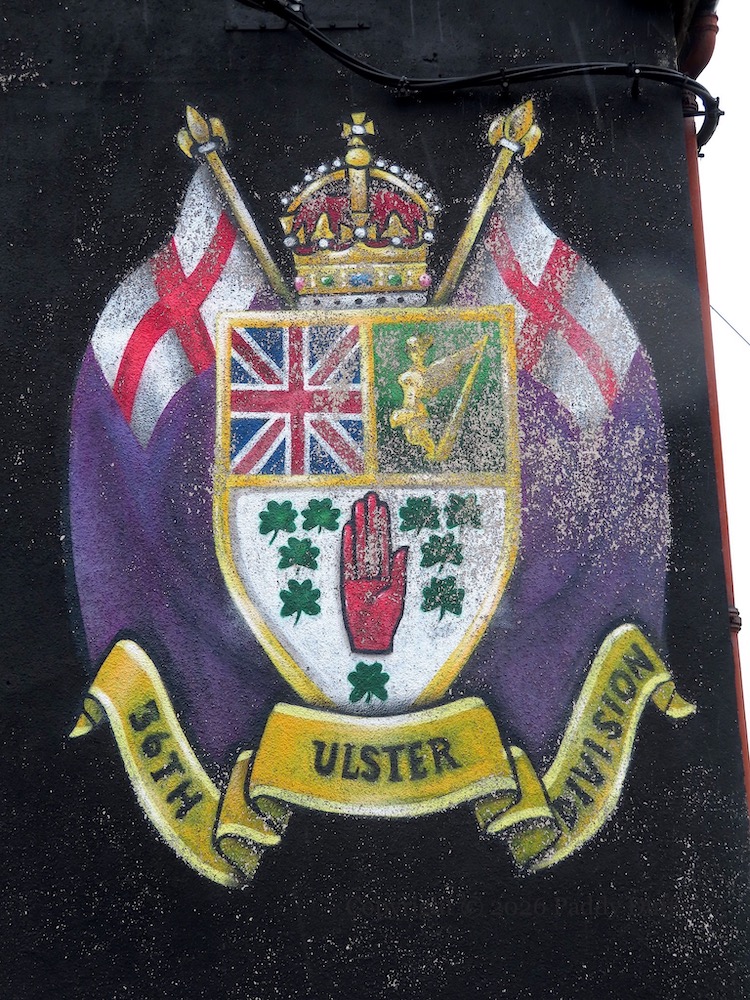
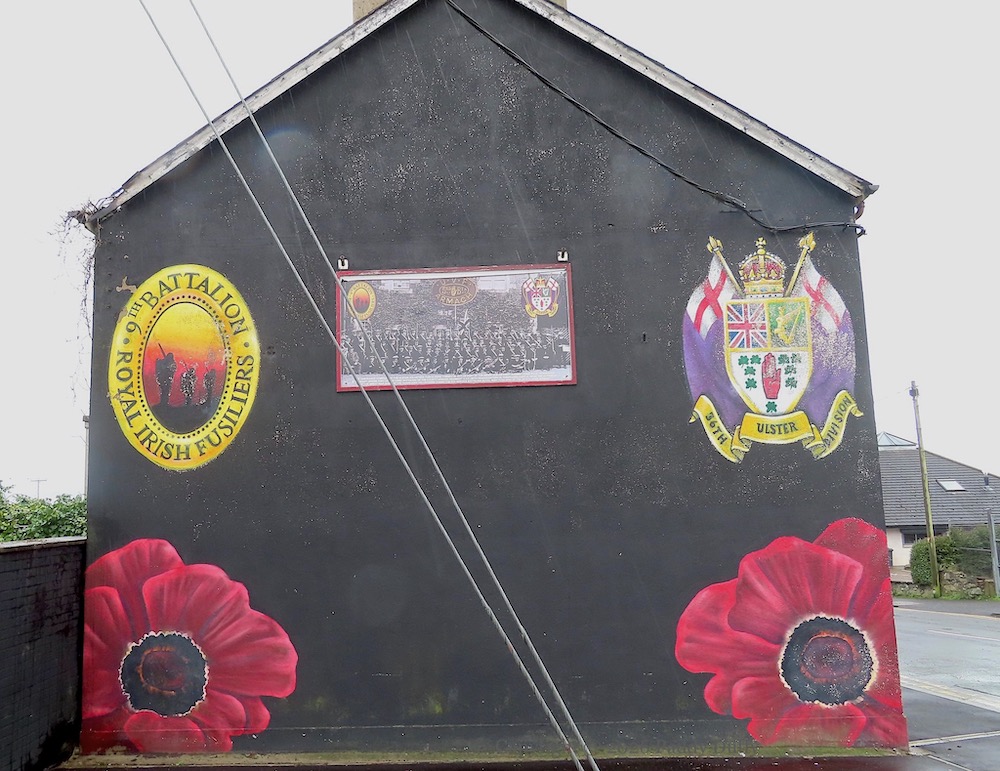
“The Tandragee company of the Ulster Volunteer Force were formed in 1913 as part of the wider Ulster fight against Home Rule. Tandragee ‘B’ Company where [were] part of the third battalion of the County Armagh Regiment UVF with headquarters in Tandragee Castle. Upon the outbreak of the Great War many of the Tandragee Volunteers joined the 9th Service Battalion Royal Irish Fusiliers of the 36th (Ulster) Division.”
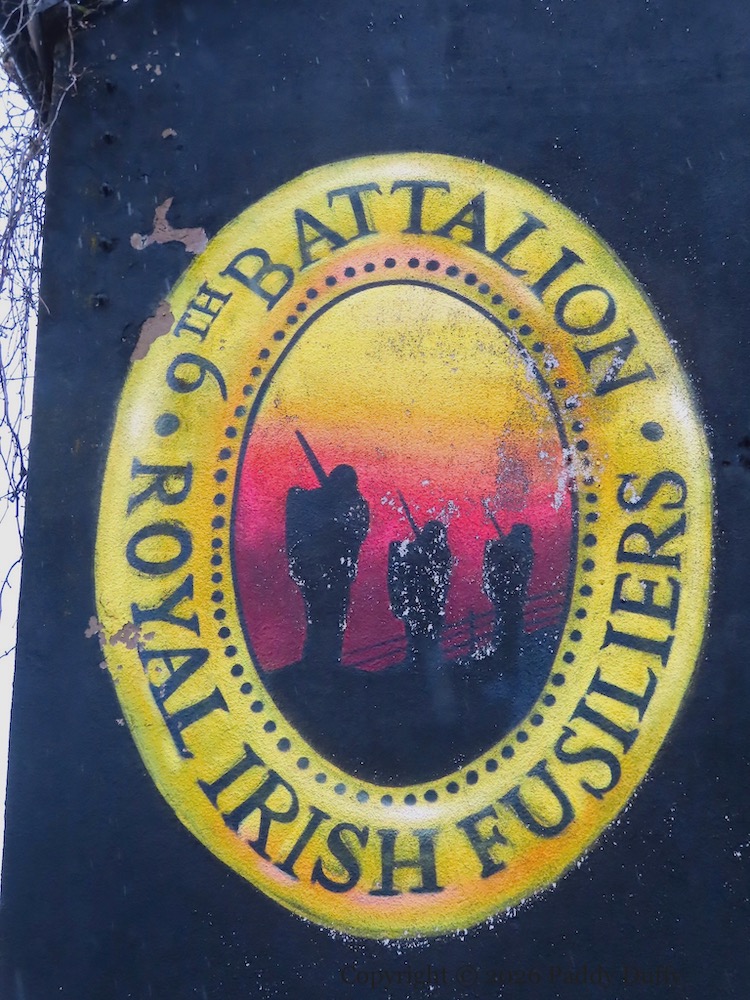
The 9th battalion comprised volunteers from Armagh, Monaghan, and Cavan.
For a fuller version of the photograph, see Cyberprod.
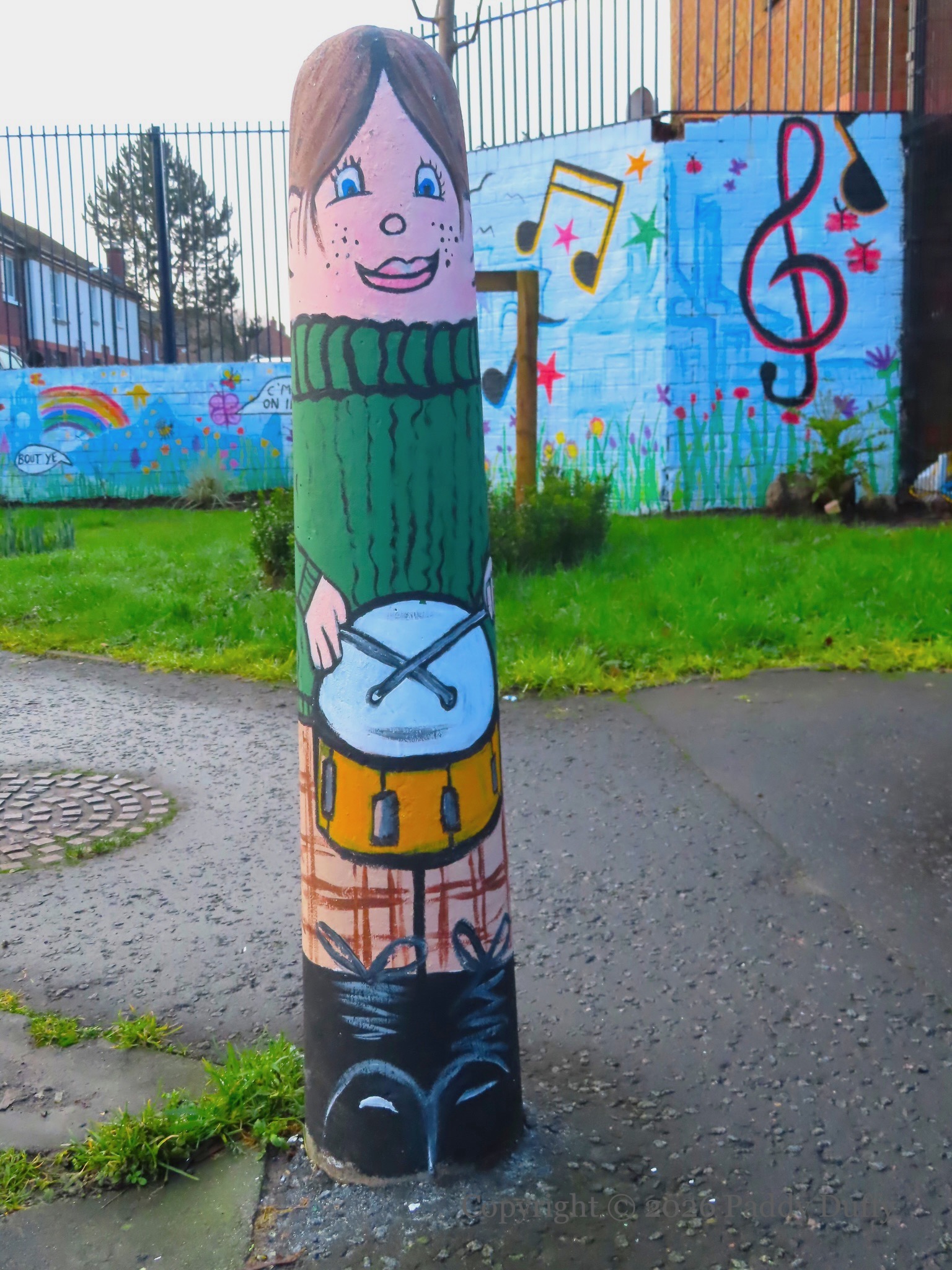
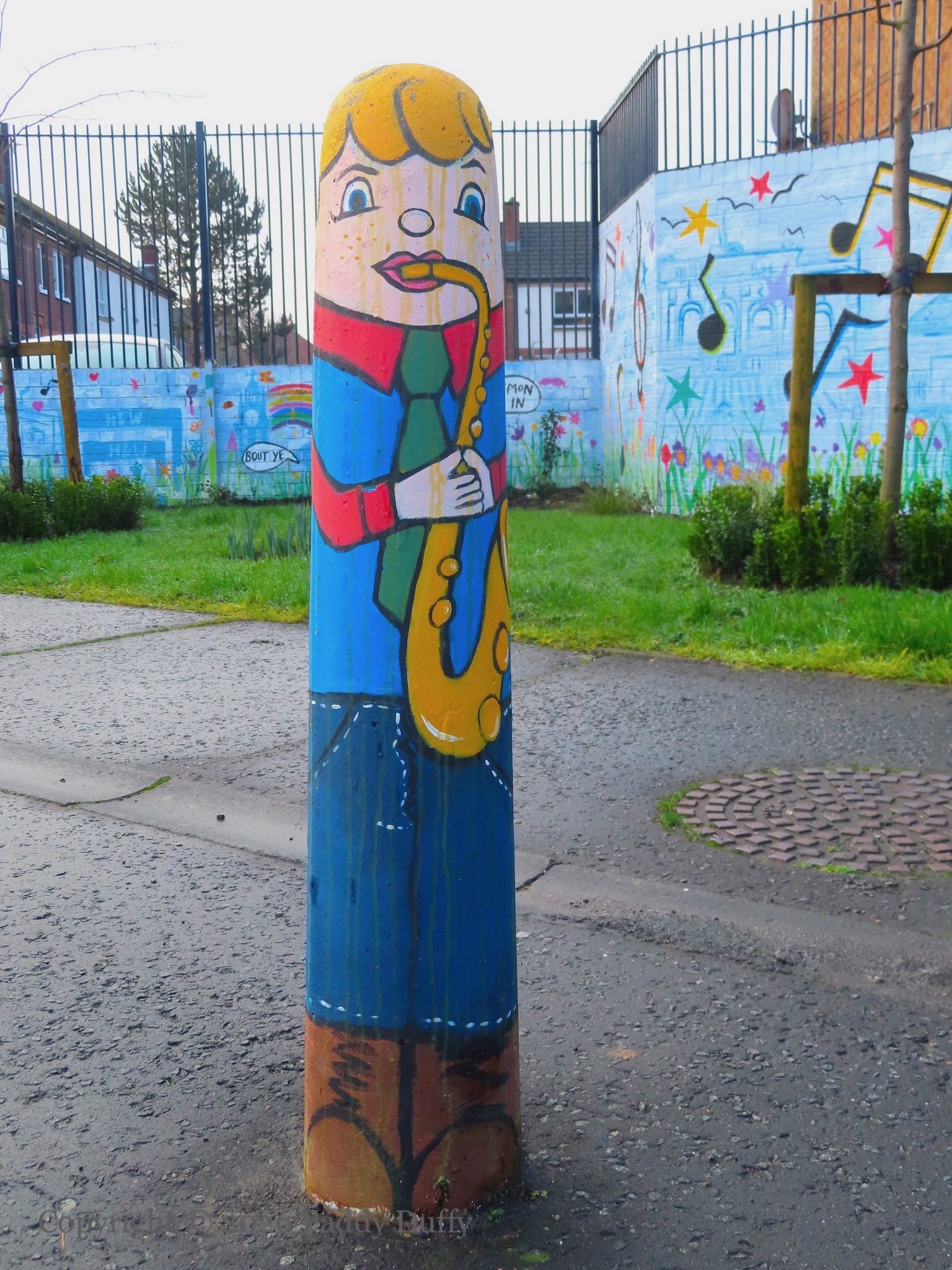
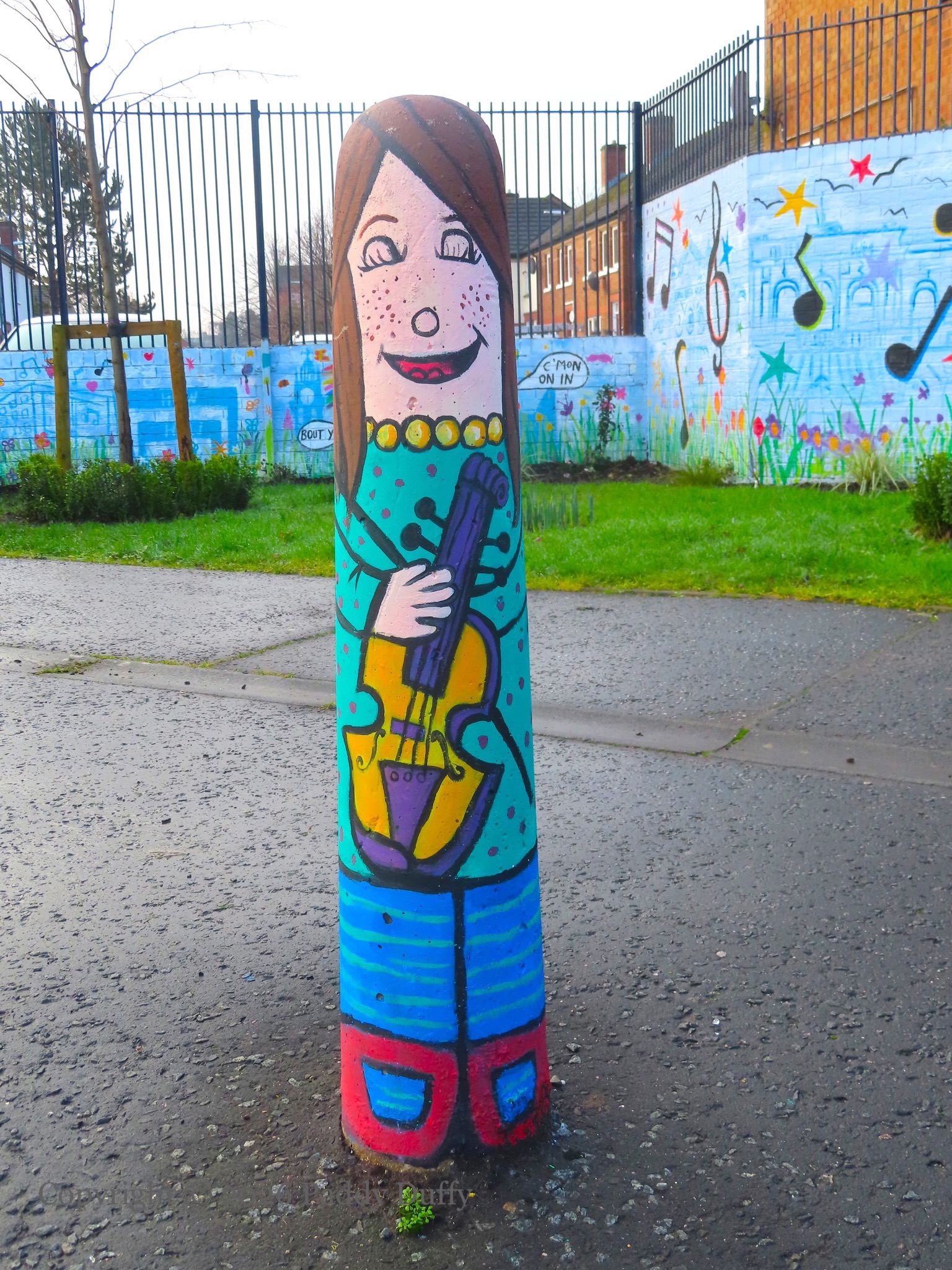
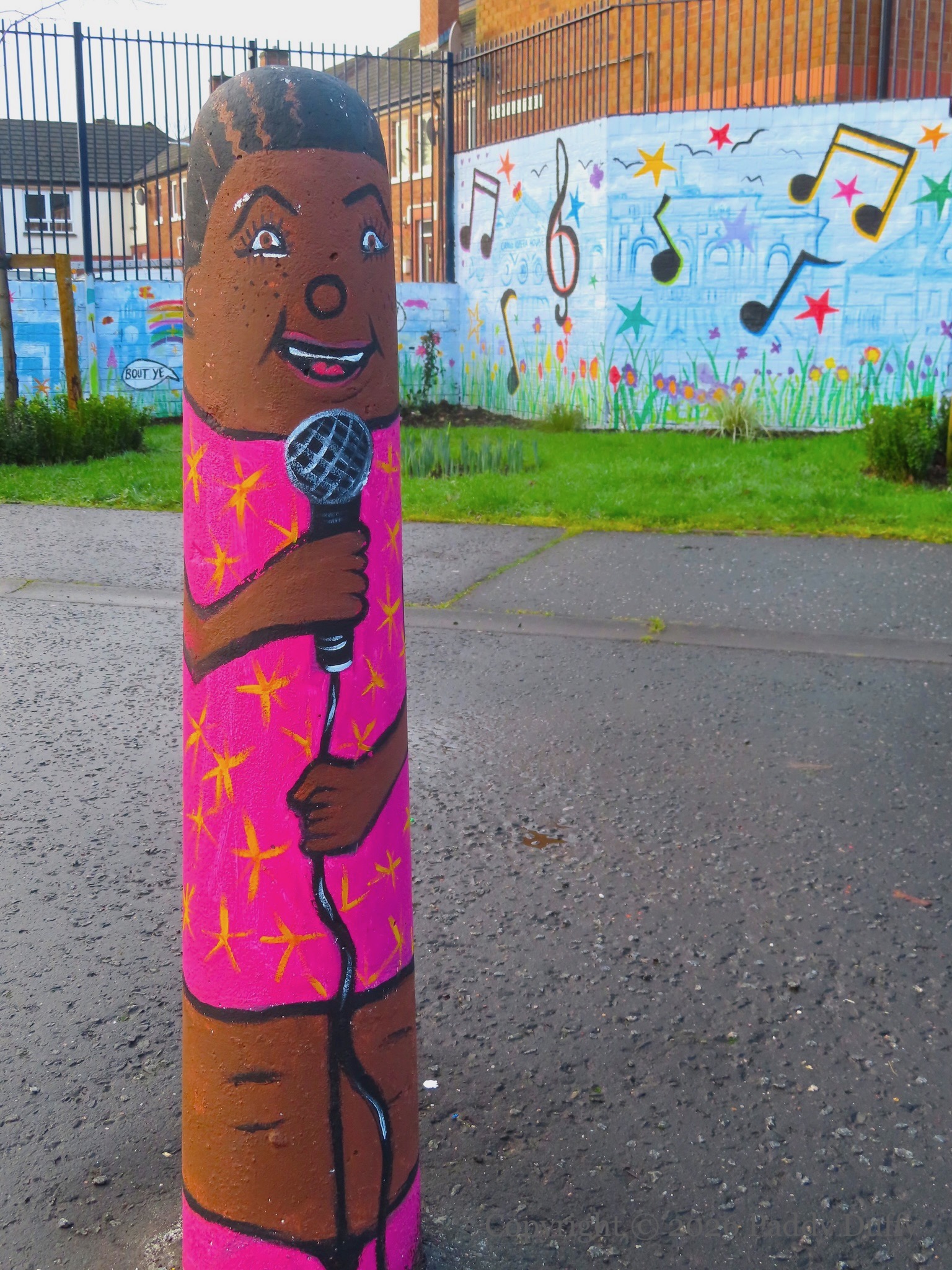
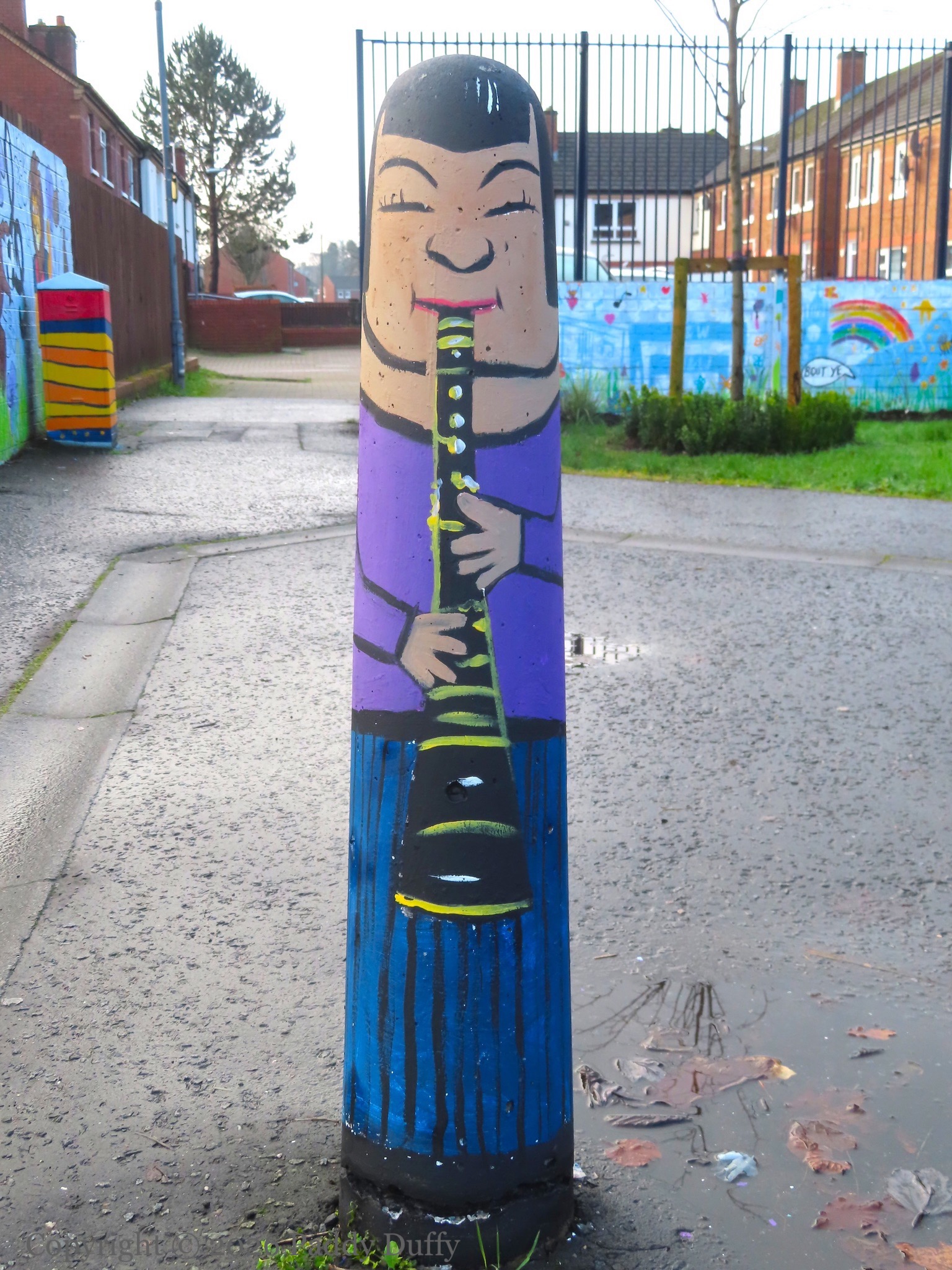
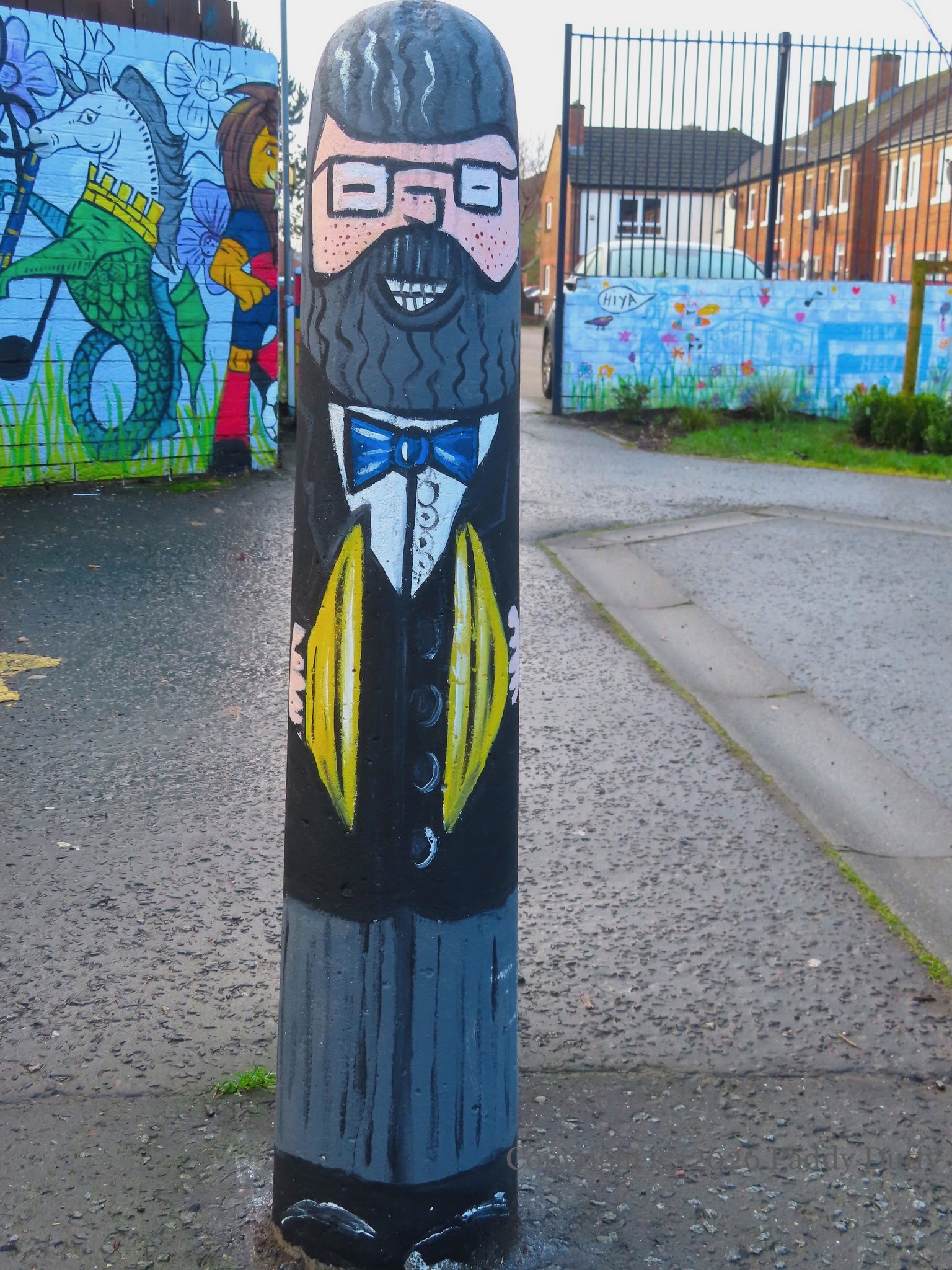
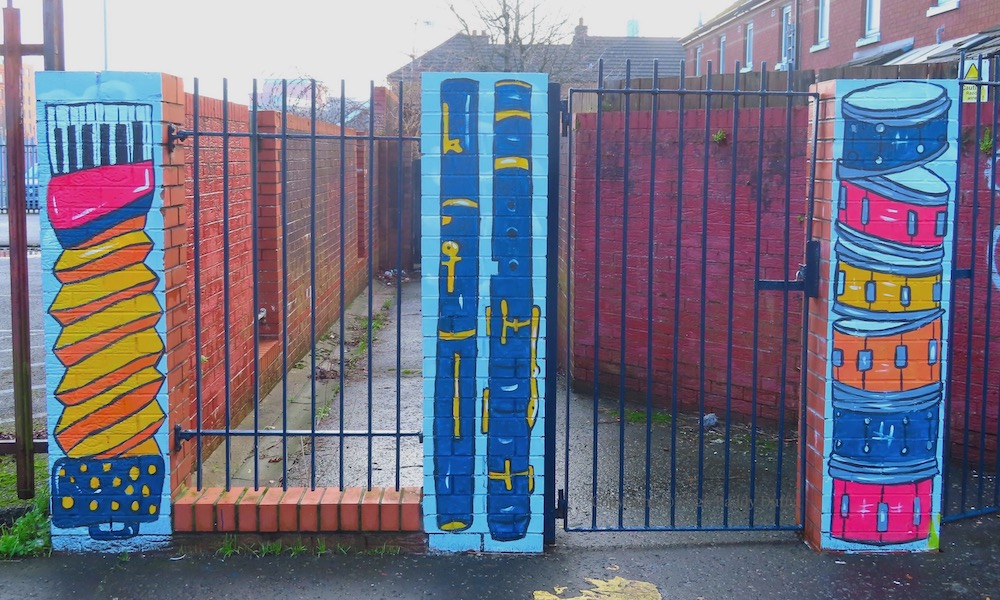
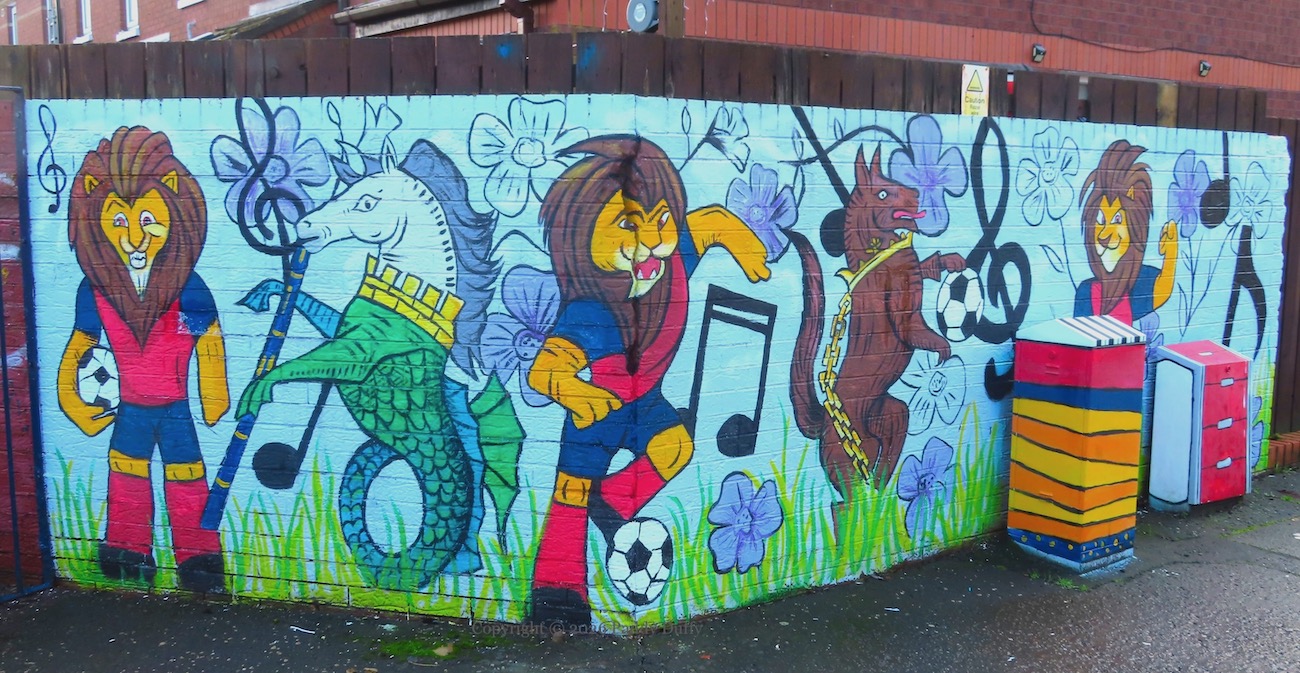
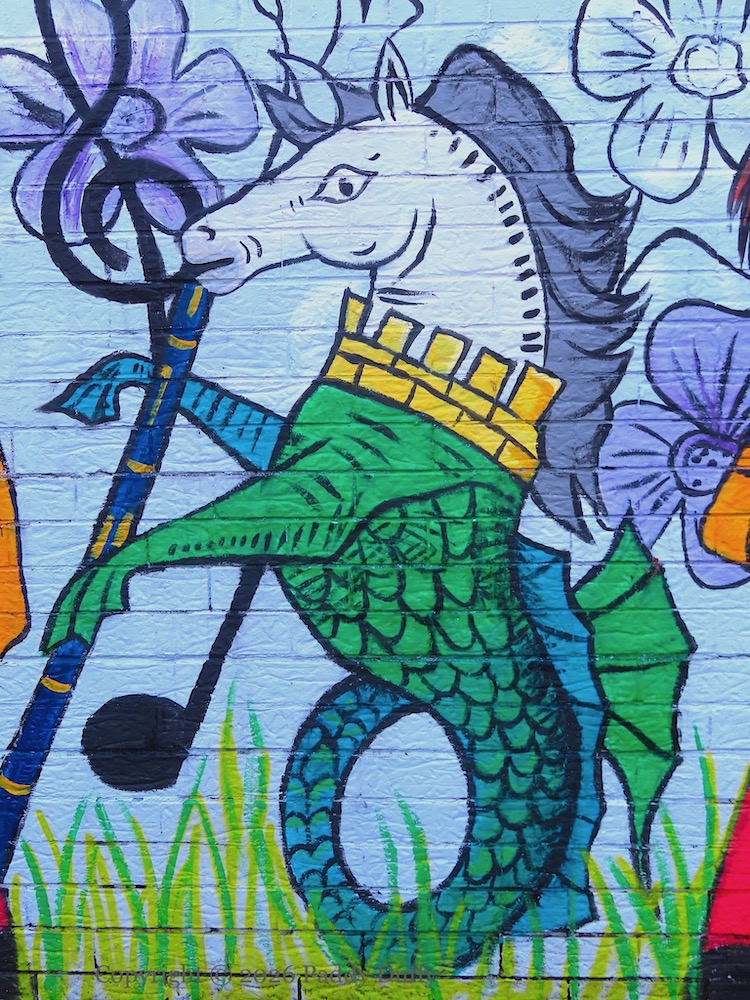
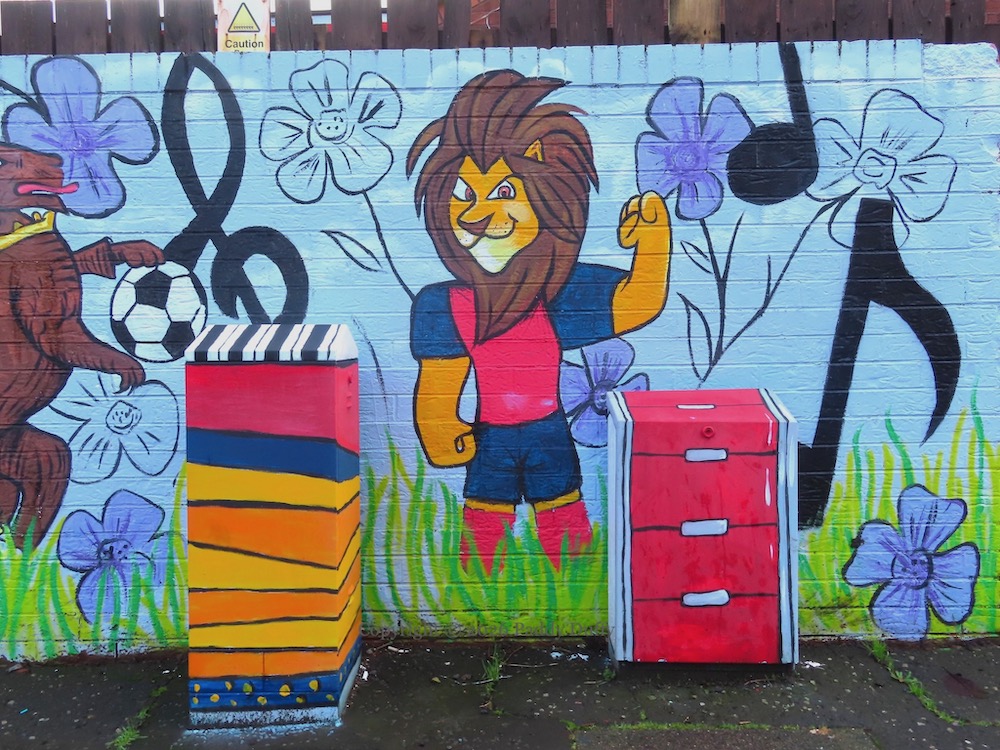
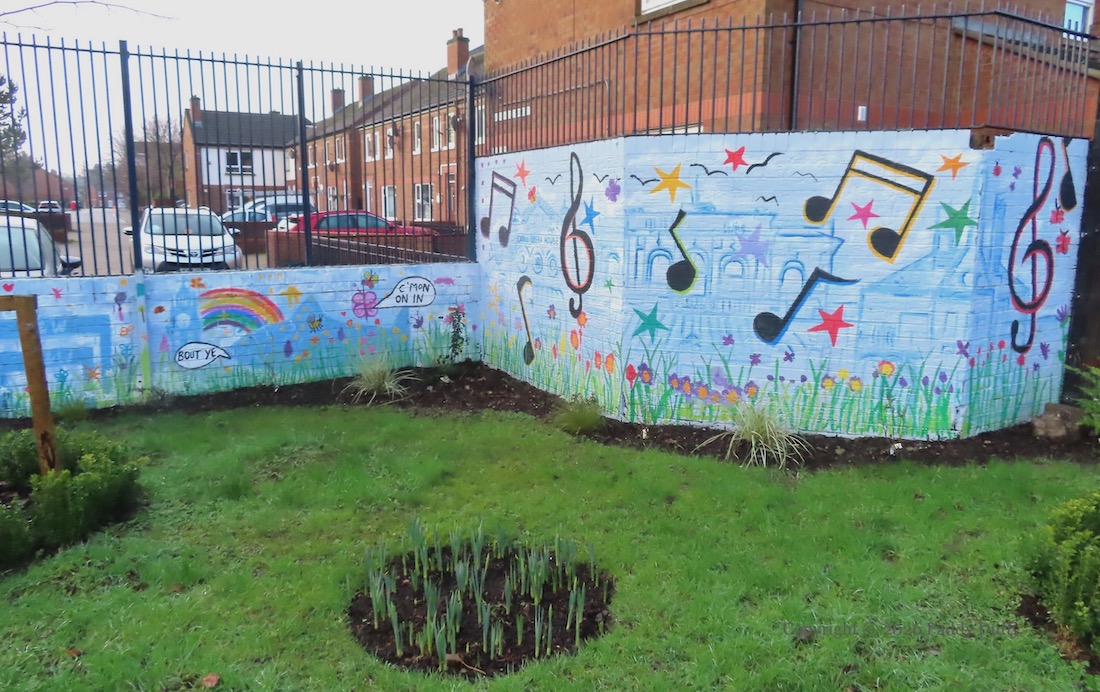
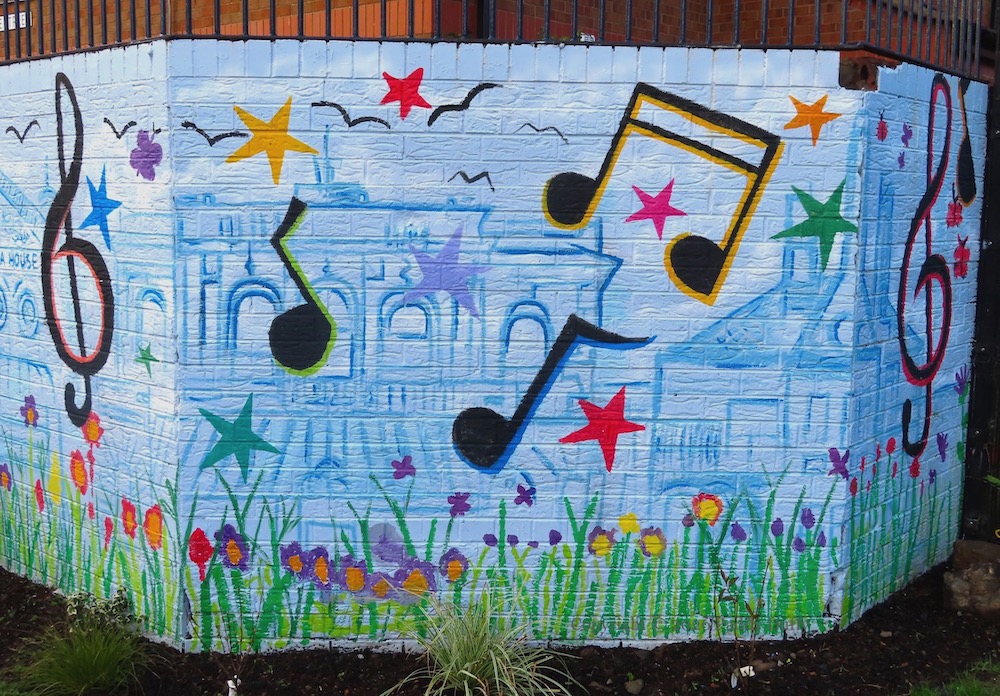
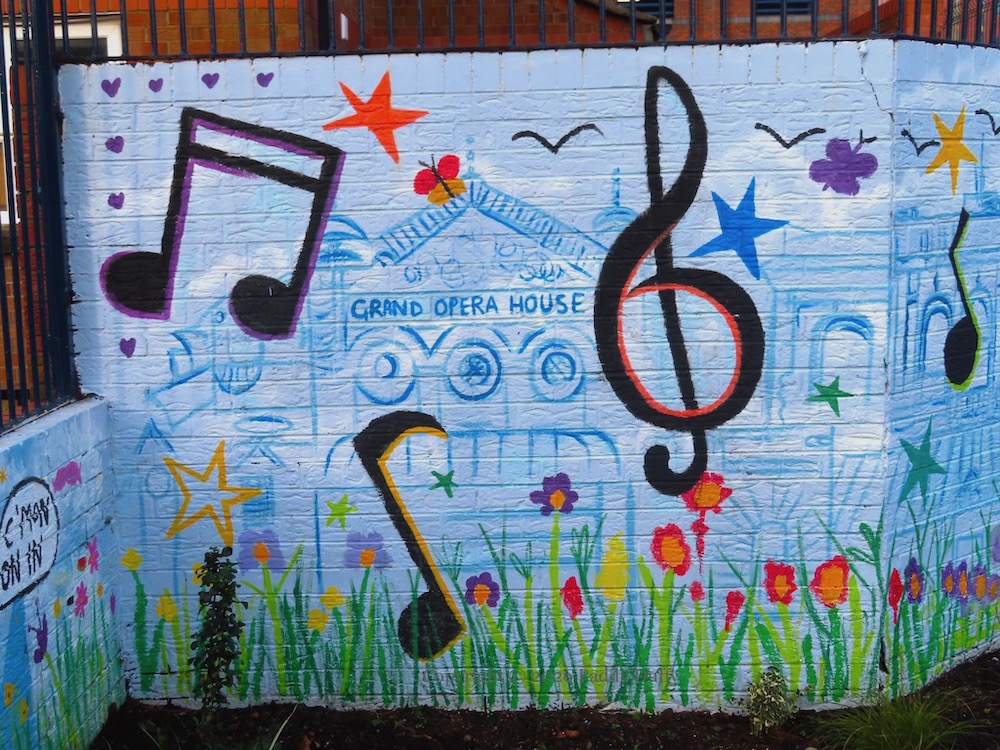
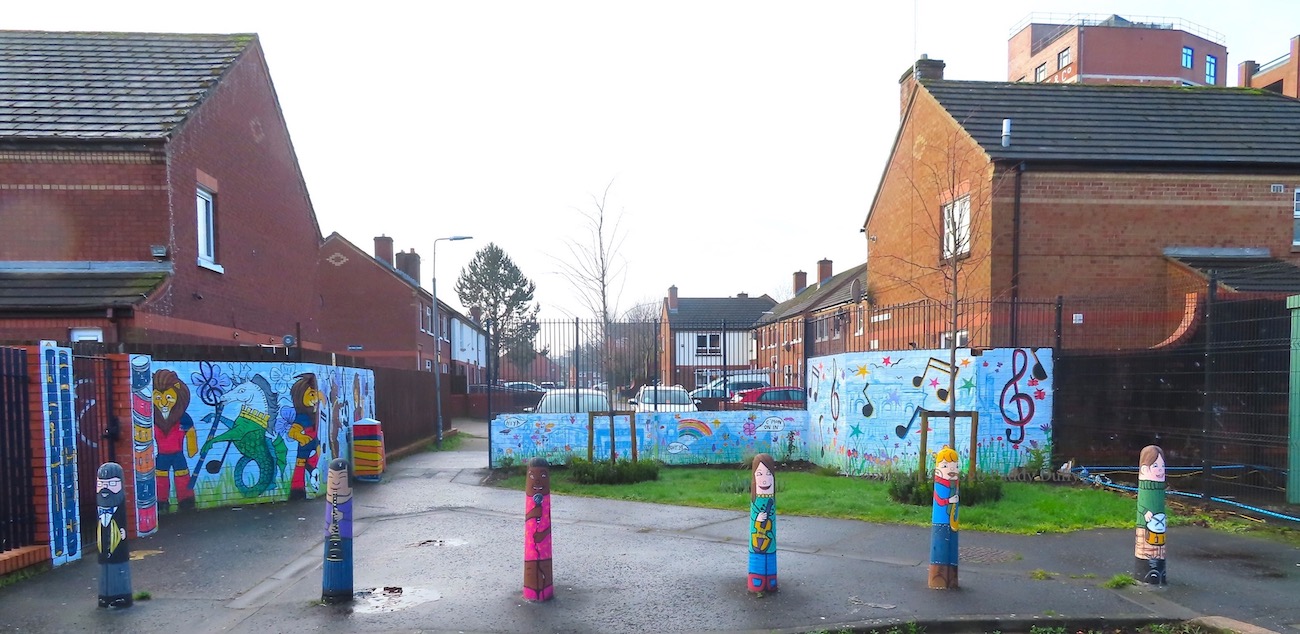
This entry updates 2025’s C’Mon On In, which showed the low wall with local landmarks. The new pieces on the adjacent wall, the six bollards and three pillars, have a musical theme. The wall to the side depicts a sea-horse and a wolf (from the Belfast coat of arms – see The Sea Walls) among soccer-playing lions against a backdrop of flax flowers.
As before, Carla Hodgson (ig) worked with local children to produce the art (Belfast Live).
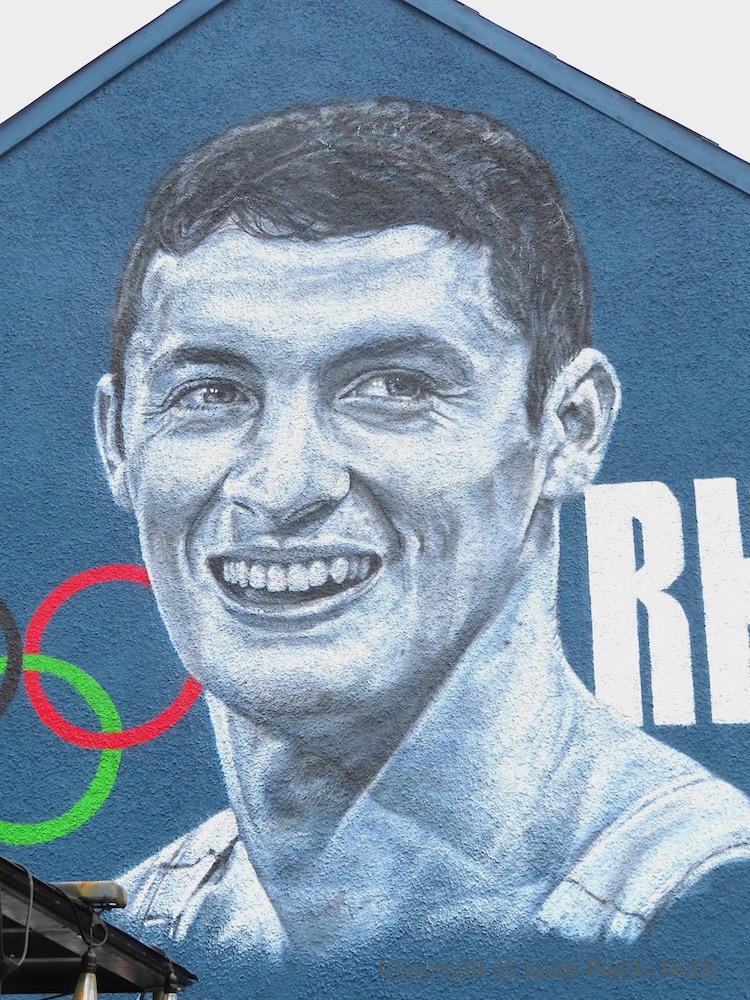
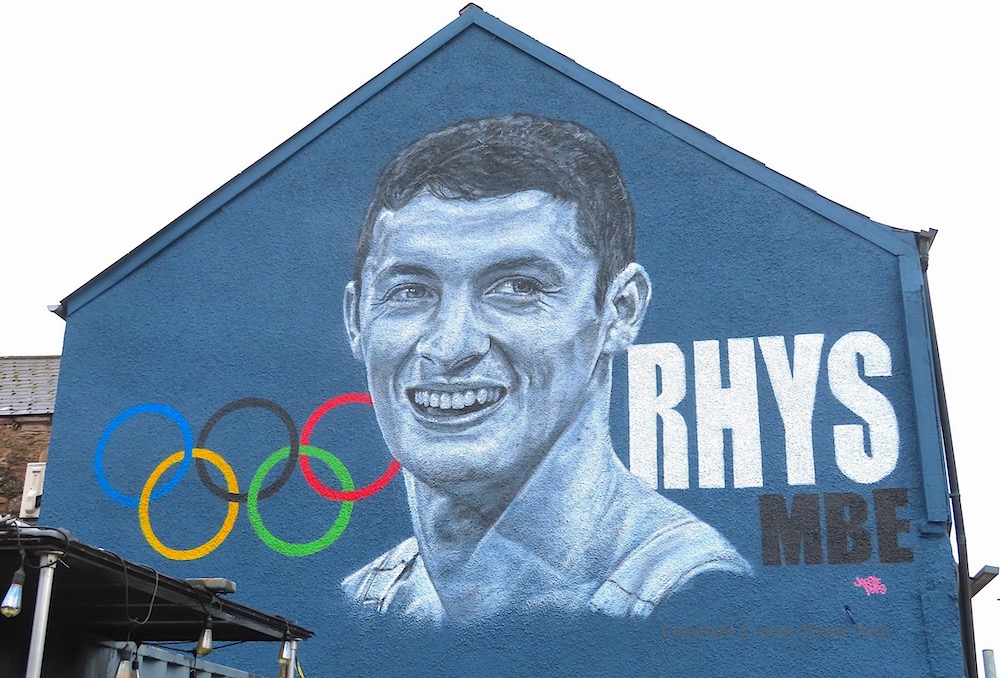
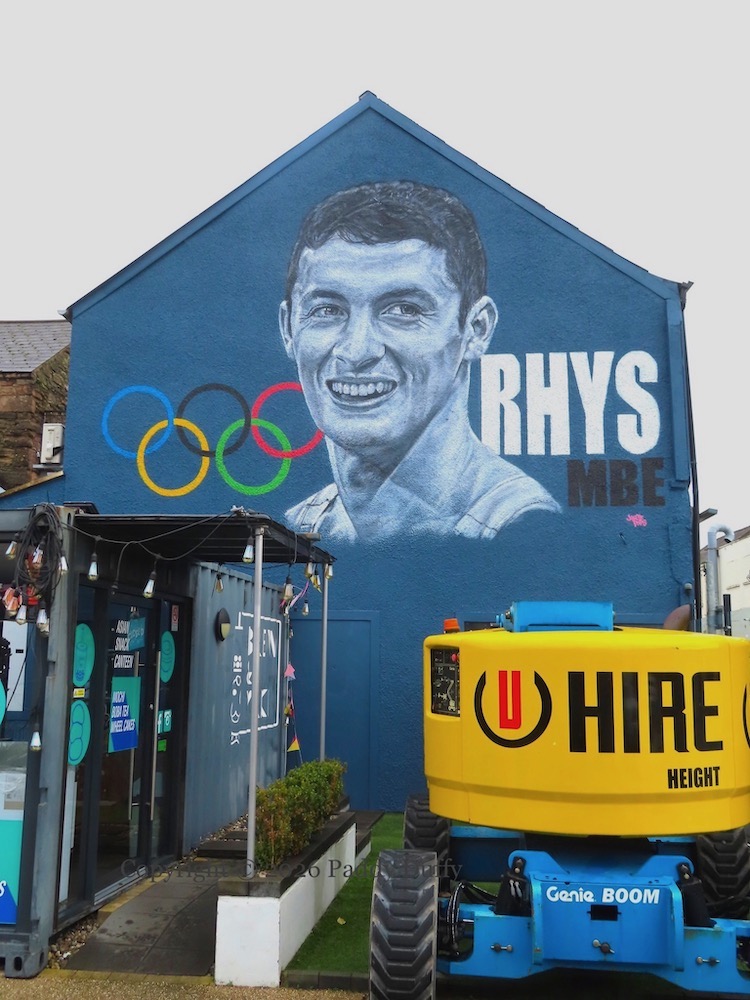
Gymnast Rhys McClenaghan is a European, World, and Olympic champion, competing in the pommel horse. He has been awarded both the BEM and the MBE, as well as receiving the freedom of the borough of Ards And North Down (News Letter) – McClenaghan hails from Newtownards.
This new mural, by Jossie Pops (web), is in South Street.
 Paddy Duffy Collection