“In memory of Brigadier Billy Wright (King Rat). ‘Greater love hath no man than this: that a man lay down his life for his friends.’ – John Ch15v13. Gone but not forgotten.” Wright became alienated from the UVF due to his opposition to the ceasefire and peace process (in 1994) and was finally kicked out in 1996 during the Drumcree dispute. The Portadown UVF under Wright formed the LVF [Loyalist Volunteer Force]; another LVF unit was formed in Ballycraigy, where this memorial can be found. (BBC | WP) Silhouetted graveside mourners have been added, compared to the 2009 image in the Peter Moloney collection.
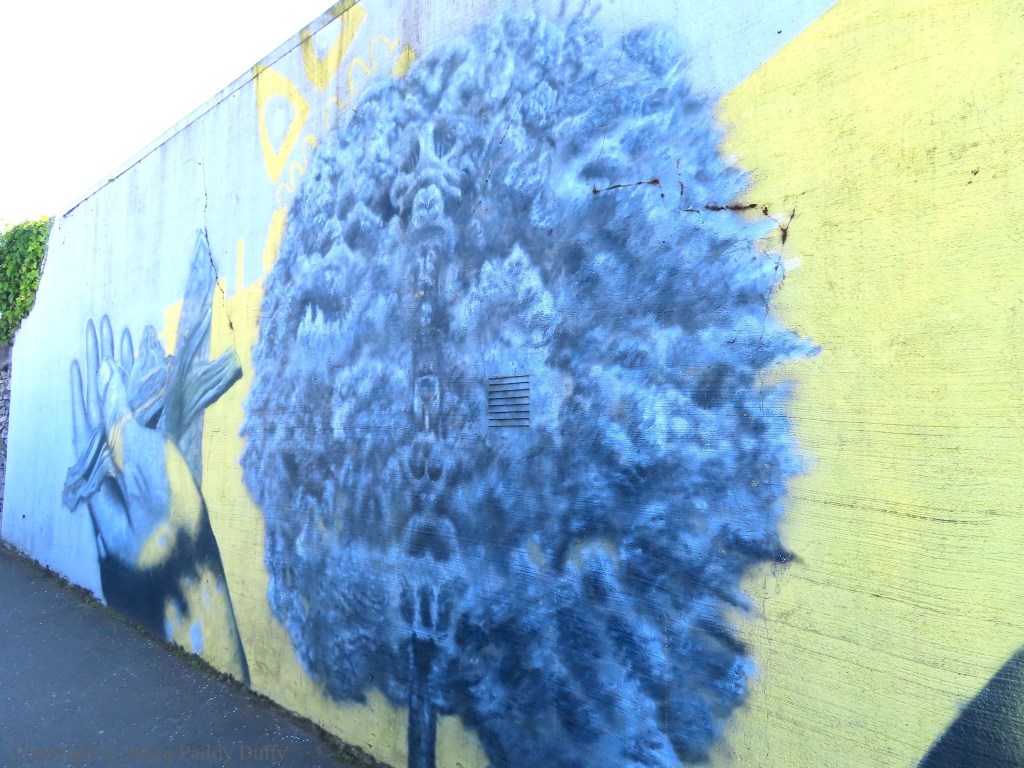
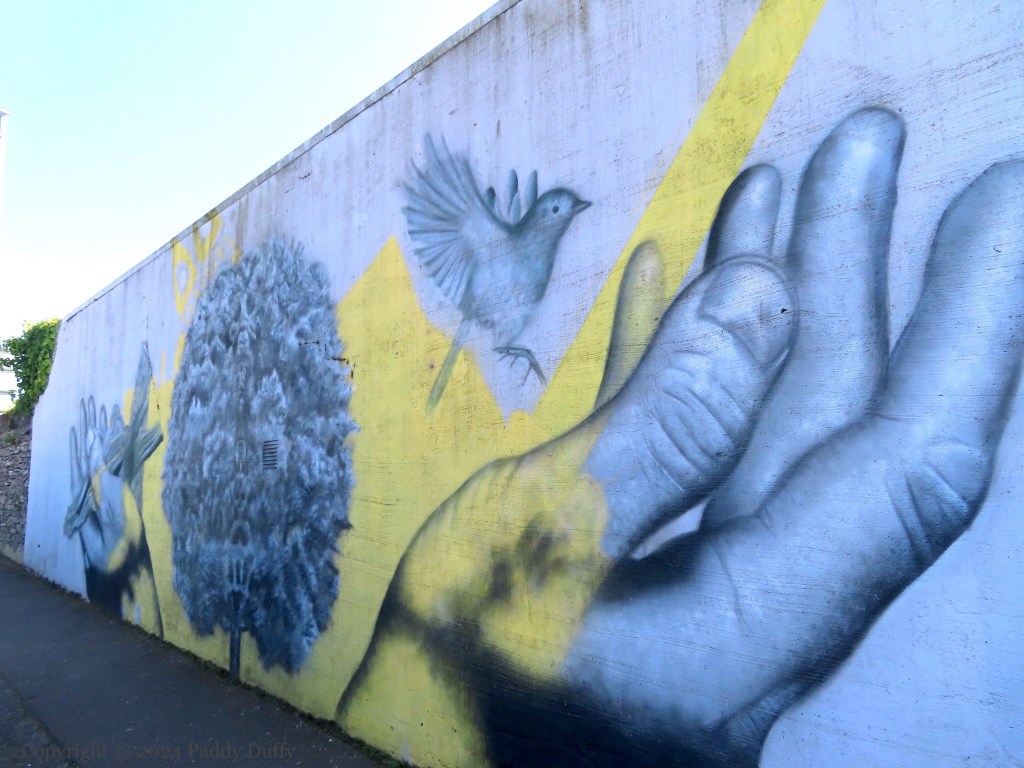
This piece of street art is by emic (web) (with the “Friday Folk”, a social group for retired women (Volunteer Now)) in Killyleagh Street, Crossgar, County Down. It appears to show the transmogrification of driftwood and rock (in the left hand) into a bird (in the right hand). Get in touch if you can supply a reference or better interpretation.
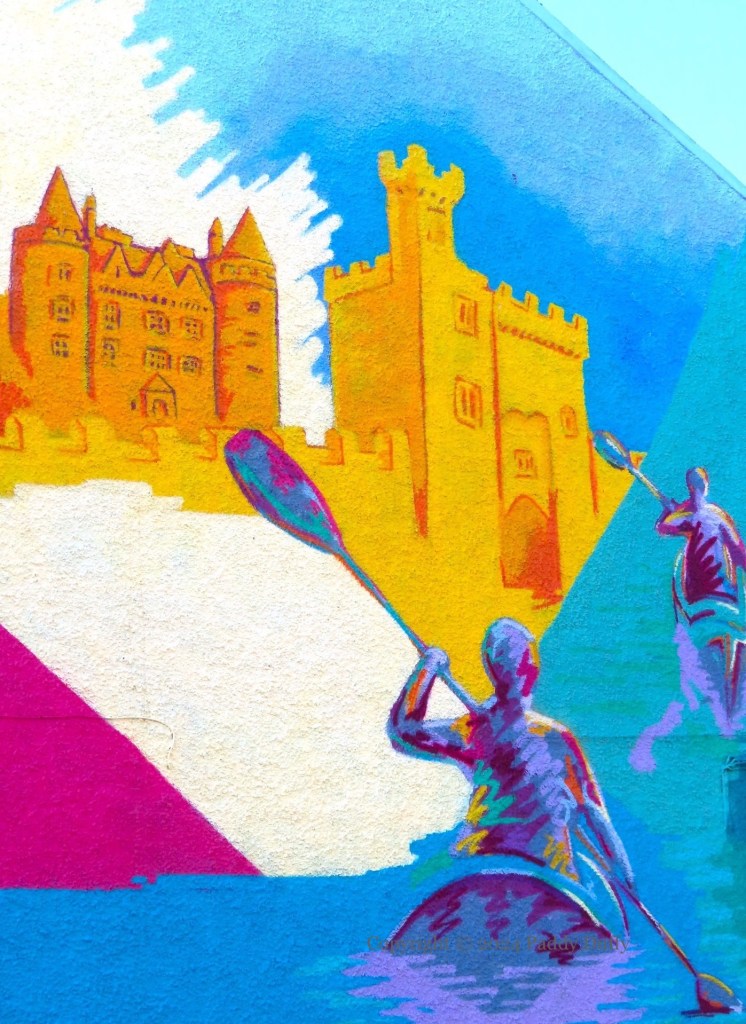
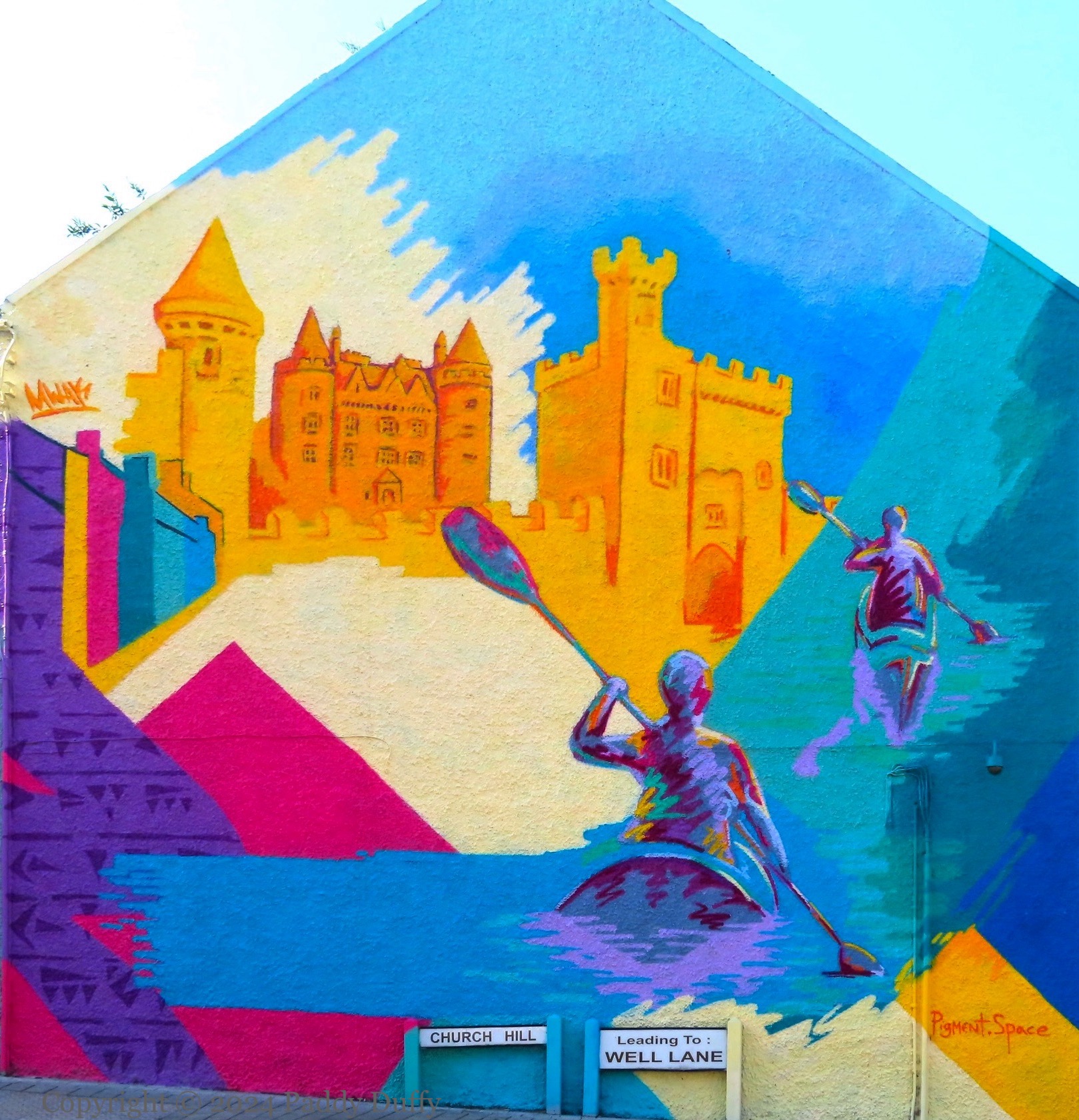
The distinctive turrets of Killyleagh Castle were added by Charles Lanyon in the mid 1800s, when the house – parts of which go back to the 1100s – was renovated (Castles World). There is no water around the grounds but Canoe NI has maps of trails in the Strangford Lough area that go past Killyleagh.
The art is by Pigment Space/MWAK (ig) in Church Hill, Killyleagh, on the side of the ‘Great Wall’ Chinese take-away.
Ireland’s first-ever gymnastics gold medal was won at the recent (2024) summer Olympics by Rhys McClenaghan, competing on the pommel horse (Reuters | Irish Times). The new art celebrating his victory is by Cha Cha (ig) in Meetinghouse Lane, in his home town of Newtownards. McClenaghan was also featured in a 2021 wall-painting in Dublin (Dublin Gazette).
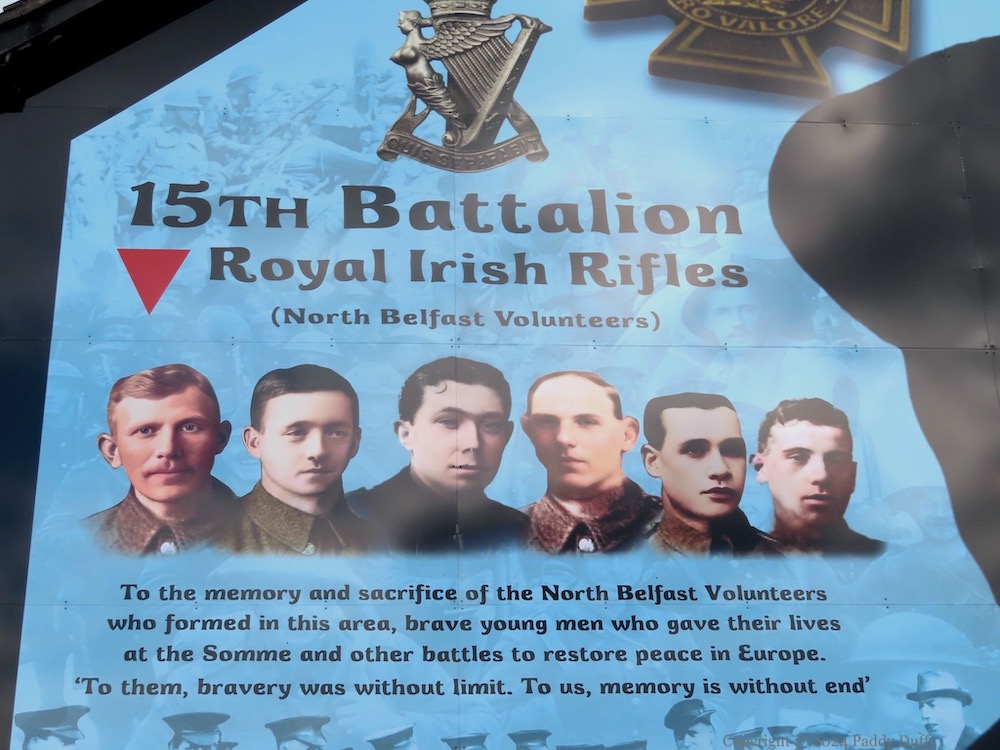
“15th battalion Royal Irish Rifles (North Belfast Volunteers). To the memory and sacrifice of the North Belfast Volunteers who formed in this area, brave young men who gave their lives at the Somme and other battles to restore peace in Europe. ‘To them, bravery was without limit. To us, memory is without end.'” Five of the six portraits were included in the previous mural (see Many Did Not Return): (1) Rifleman Forrester, (2) Rifleman Baird, (4) Sergeant Major Magookin, (5) Rifleman Templeton, (6) 2nd Lt De La Harpur.
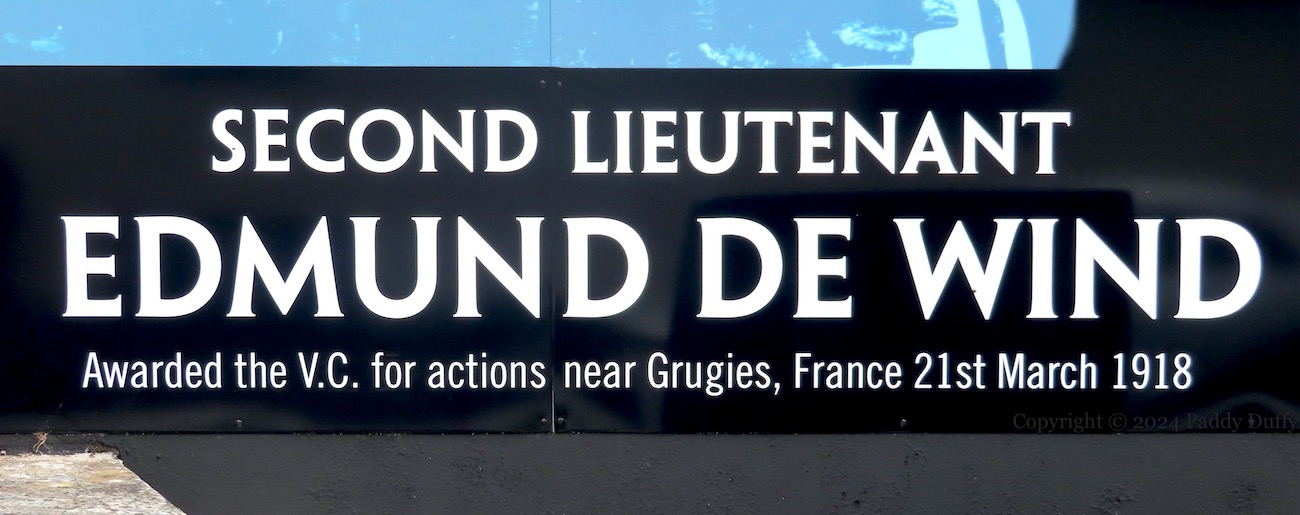
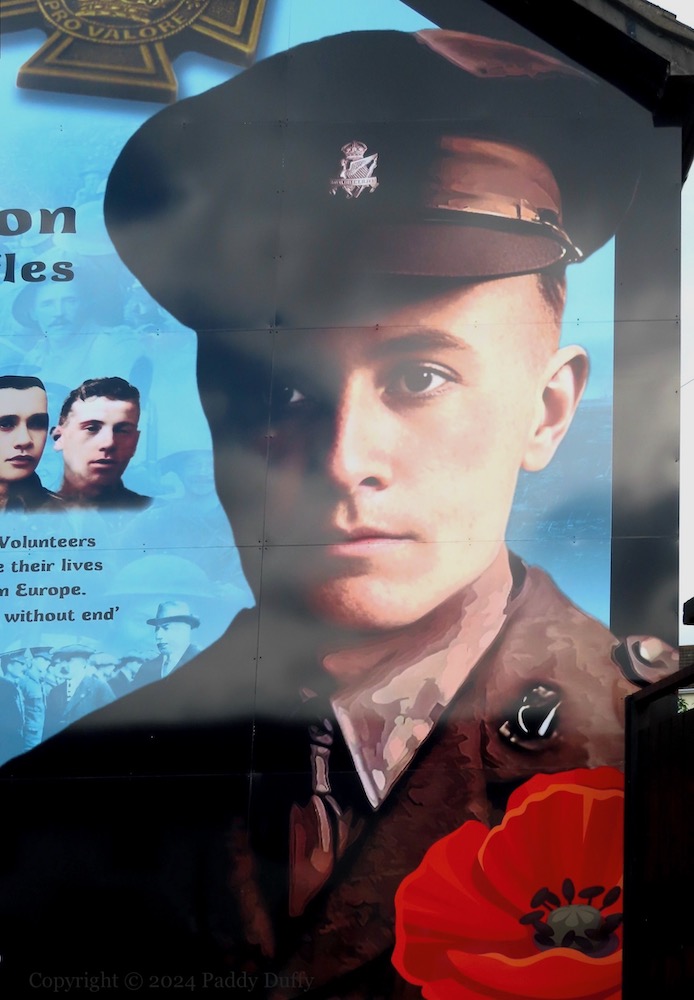
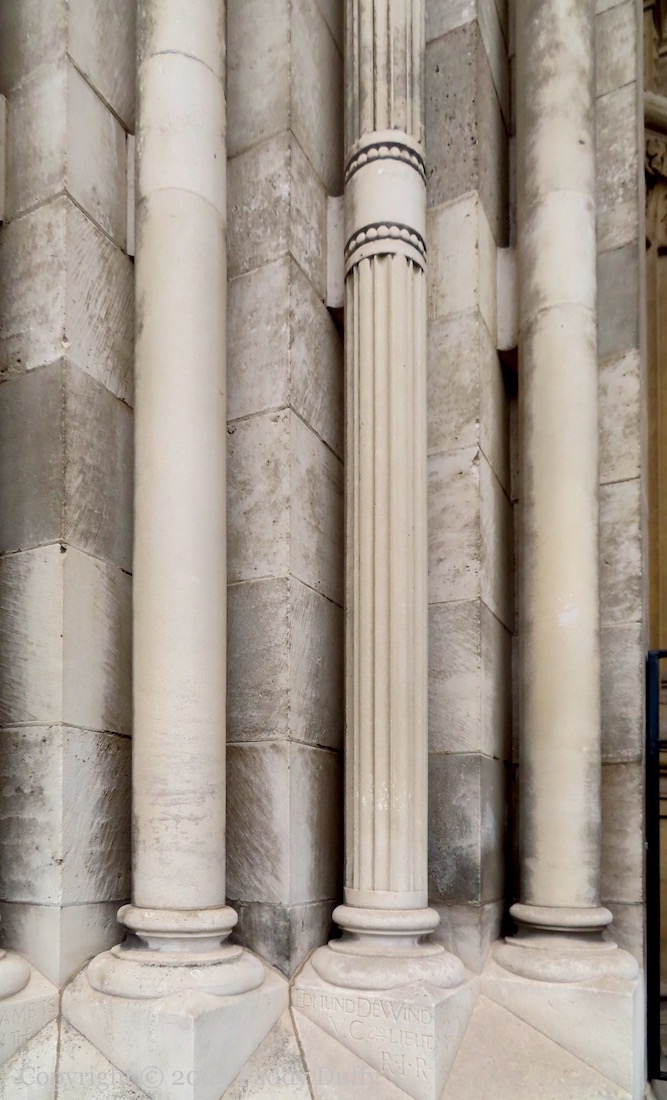
“Second Lieutenant Edmund De Lind. Awarded the VC for actions near Grugies, France 21st March 1918.”
De Wind was born in Comber but went to Canada in 1911. When the Great War began he joined the Canadian Army in Edmonton and fought at the Somme and Vimy Ridge. He joined the British Army and joined the RIR, the 15th battalion of which was originally drawn from the North Belfast Volunteers (War Time Memories). He died on March 18th, 1918, at St Quentin, near Grugies, in the Aisne. For his actions he was awarded the Victoria Cross; it is held in the Canadian War Museum, Ottawa. (CEF | Royal Irish | Legion | Ulster History | WP)
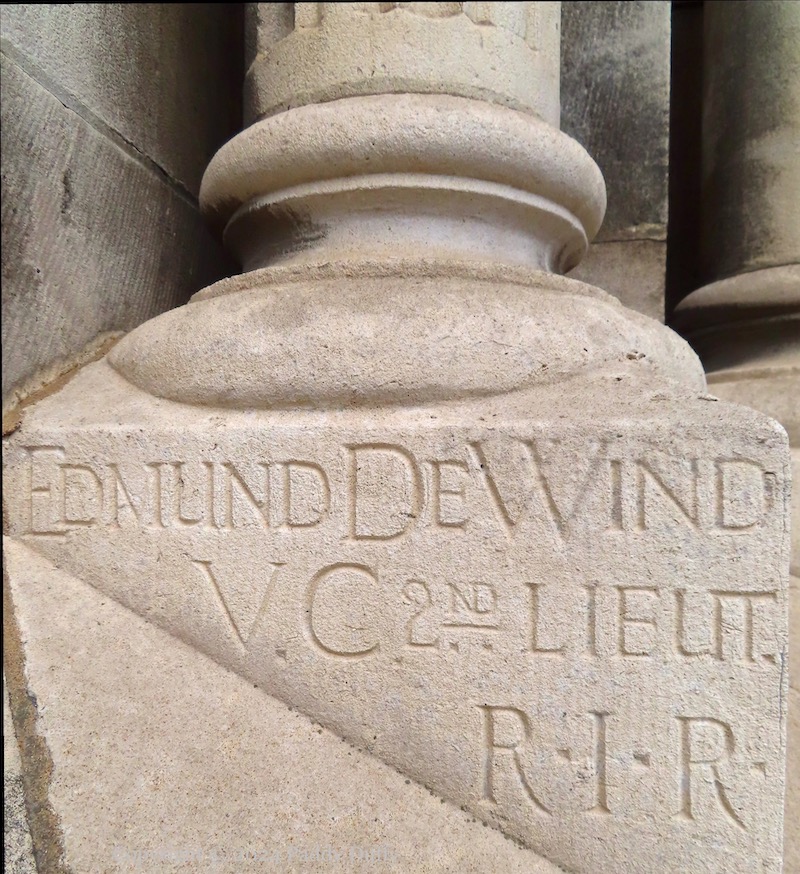
As is seen in the final two images, De Wind is remembered on one of the pillars outside St Anne’s in Belfast city centre.
The stone in front pre-dates this mural, though more names have been added since it was seen in Ghosts Of The Somme. “Rathcoole Friends Of The Somme roll of honour. Past member – lest we forget.”
Inniscarn Drive, Newtownabbey. Launched July 22nd, 2024.
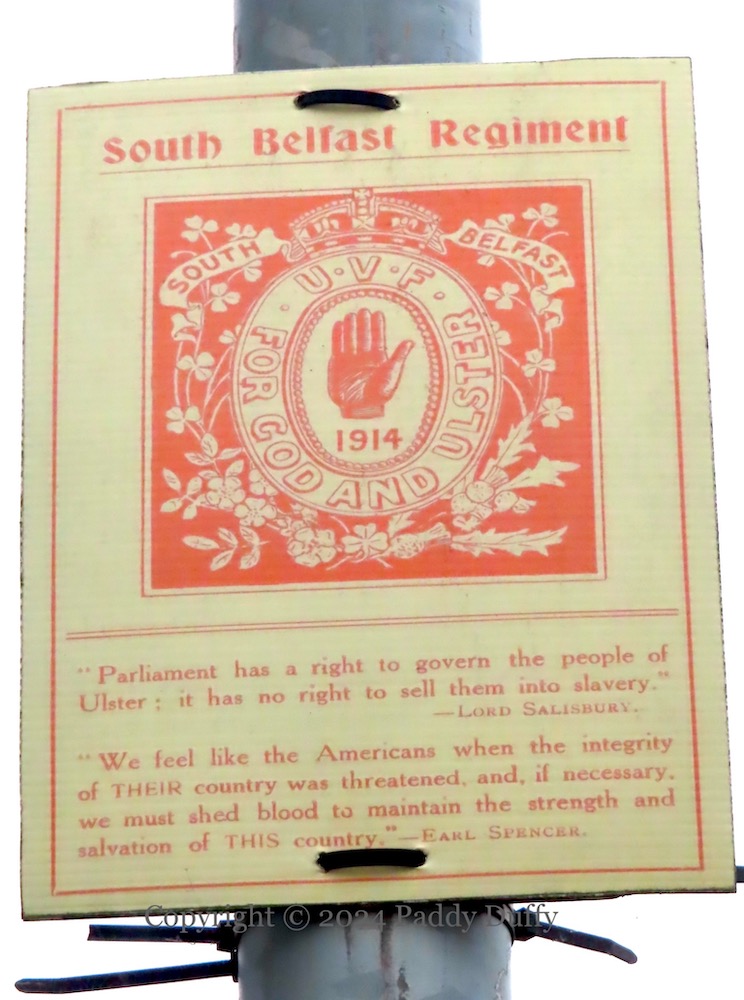
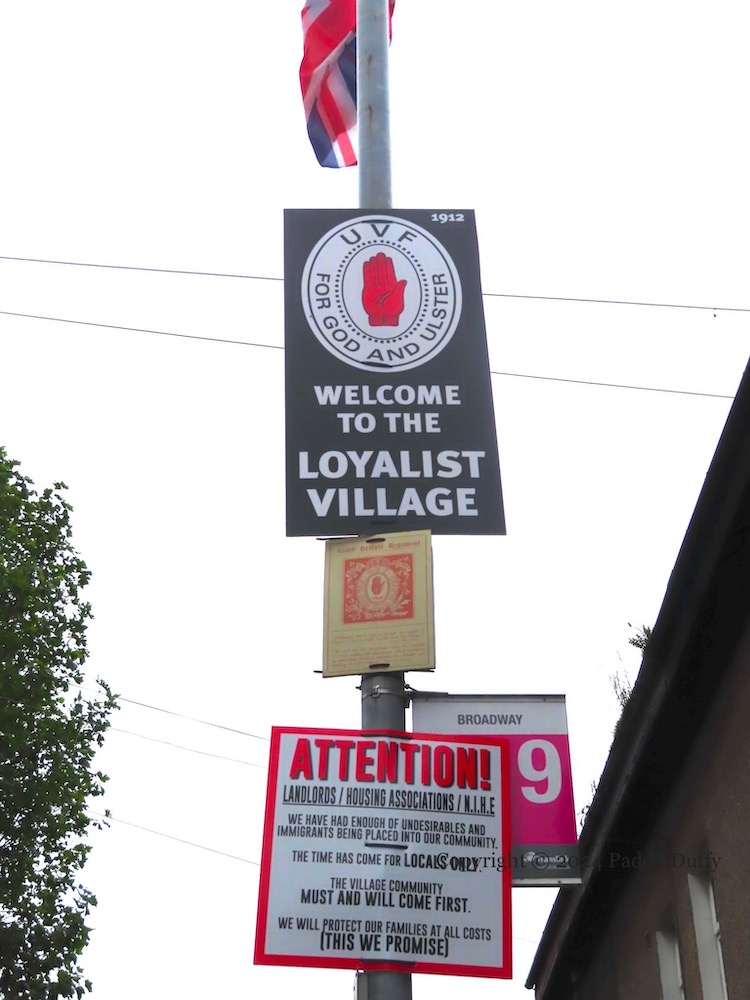
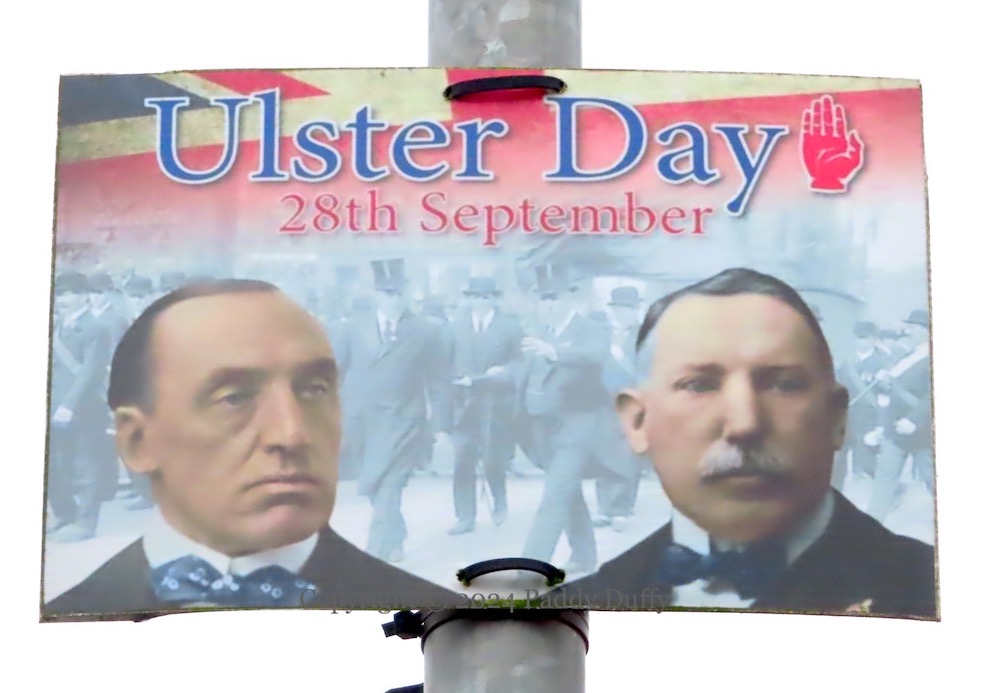
Here is a selection of placards from the Village in south Belfast, many on the theme of the fight against Home Rule in 1912 and the creation of Northern Ireland in 1921.
The most interesting is perhaps the small placard sandwiched (in the image below) between the UVF territorial marking (see e.g. Welcome To The Village) and the “warning” to landlords (see Not A Dumping Ground). The quote form Salisbury – “Parliament has a right to govern the people of Ulster; it has no right to sell them into slavery” – comes from a speech made in 1892 (Launceston Examiner) and Spencer was addressing the Lords in 1893 when he said, “We feel like the Americans when the integrity of THEIR country was threatened, and, if necessary, we must shed blood to maintain the strength and salvation of THIS country” (Hansard). Both statements, that is, were made in connection with the second Home Rule bill (of 1893) rather than the third as the “1914” crest of the “South Belfast regiment” of the Ulster Volunteers would suggest.
Below is a reproduction of a stamp featuring Edward Carson, described in the Notre Dame collection. These stamps were sold as a fundraiser; they were not used for postage.
Here are four species of bird flying in convoy through Belfast city centre. From left to right we see dunlin, lapwing, godwit (above), and Arctic tern (below). The art was painted by Annatomix (web), with support from Daisy Chain (web), as part of the “Great Expectations” project from the Linen Quarter Business Improvement District (web).
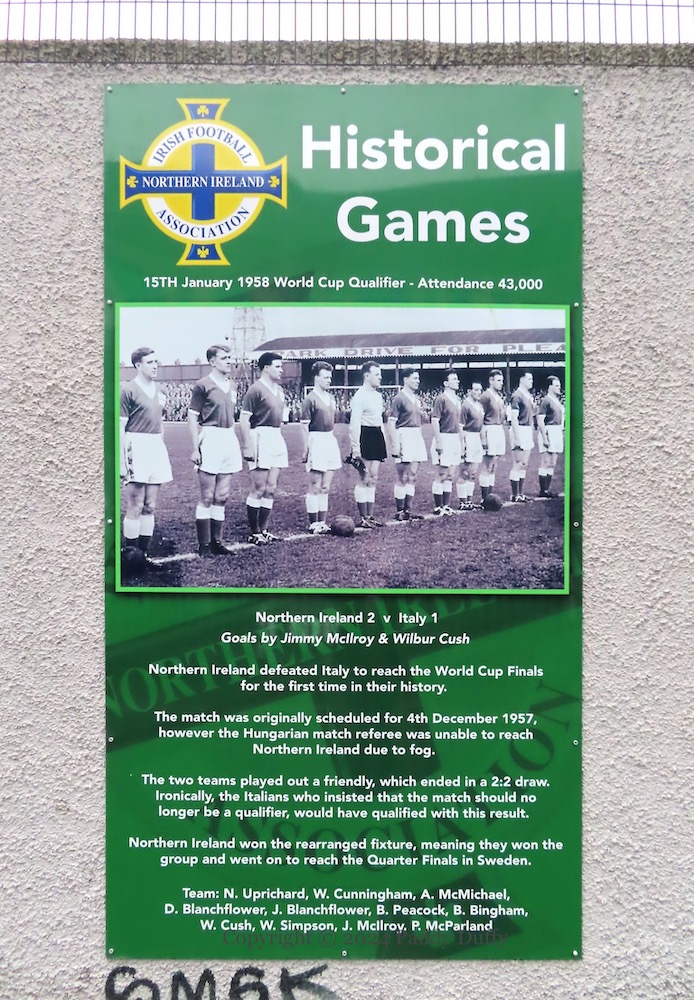
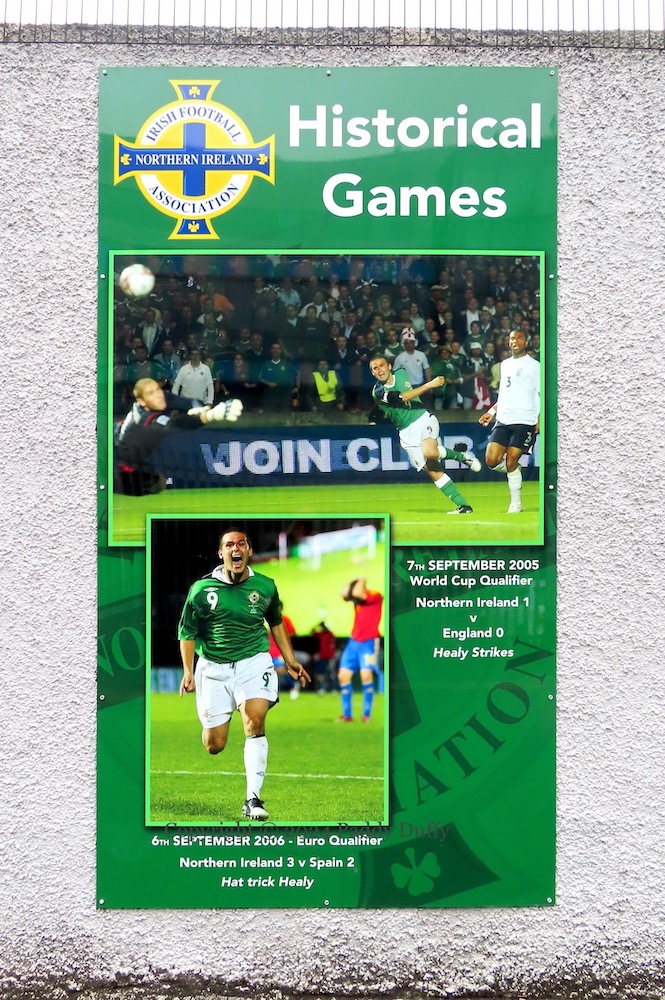
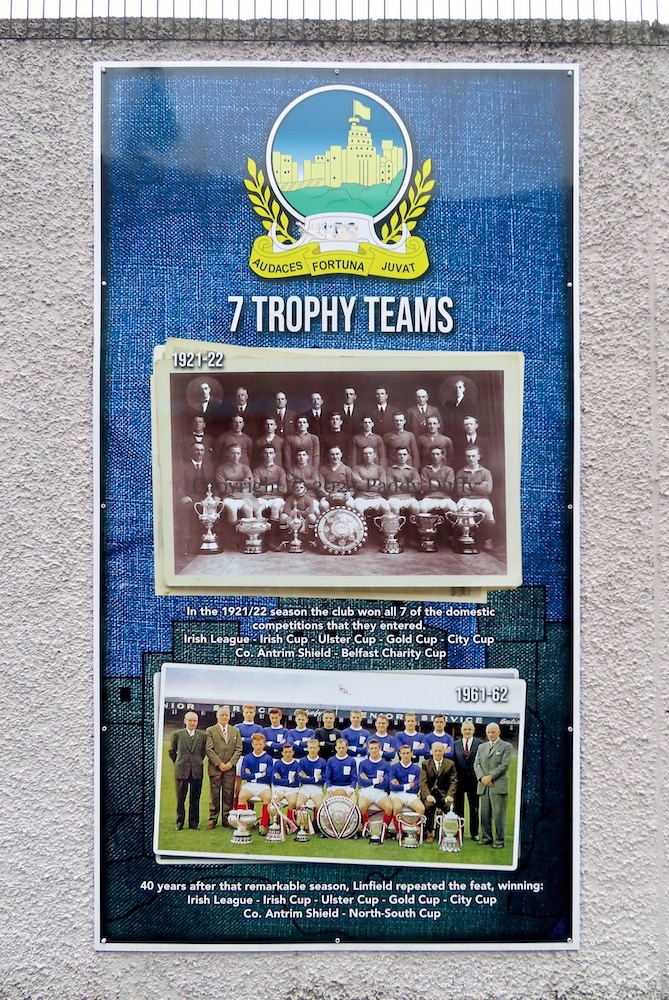
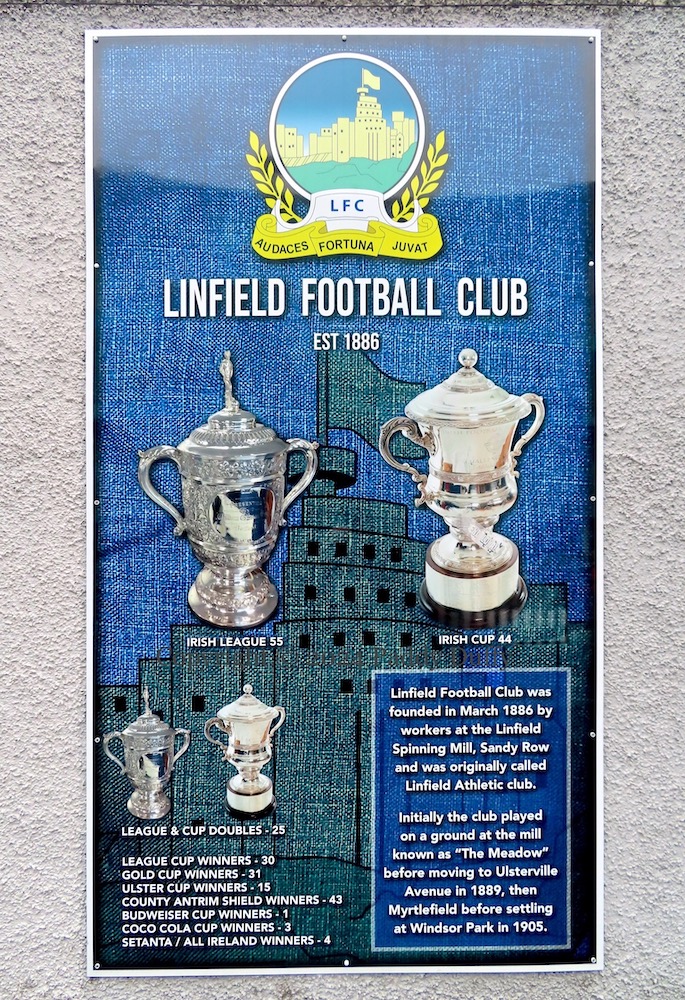
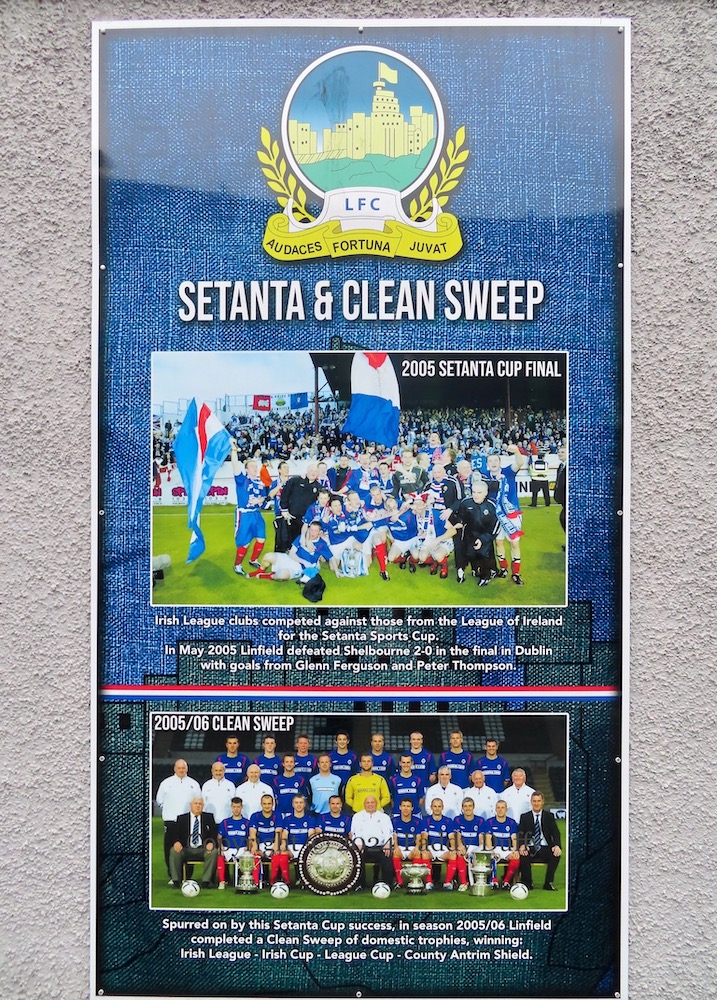
This is a gallery of the boards along the lane to the east of Windsor Park where Linfield and Northern Ireland play their soccer matches. Five describe “historical games” played by Northern Ireland at the ground (from 1958, 1975, 1981, 2005, and 2015) and five describe Linfield FC (the “7 trophy” teams of 1921 and 1961, ‘the blues in Europe’, a history of the club, the 2005-2006 season, and Captains).
To the left and right of these boards are the murals seen in Football For All.
“‘Creativity, like society, thrives when the individual elements fit within a bigger picture’ – Ernest Hemingway”
There’s no record of this statement being written or uttered by Hemingway. Instead, it appears to come from Will Gompertz’s 2015 book Think Like An Artist (wikiquote gives “Creativity, like society, thrives when the individual elements fit within, and add to, a bigger picture.”).
Hope Street, Belfast city centre, on the side of the Ginger Bisto on Great Victoria Street.
‘Football For All’ is a programme from the Irish FA Foundation aimed at stamping out discrimination and encouraging inclusivity among supporters (web). The new mural, above, is in the lane-way that runs down from Donegall Avenue to the footbridge. There are also reproductions of drawings by kids in the spaces below the footbridge.
Between the two are the boards about Linfield and recounting the role the ground has played in the history of the Northern Ireland team – see Windsor Park.