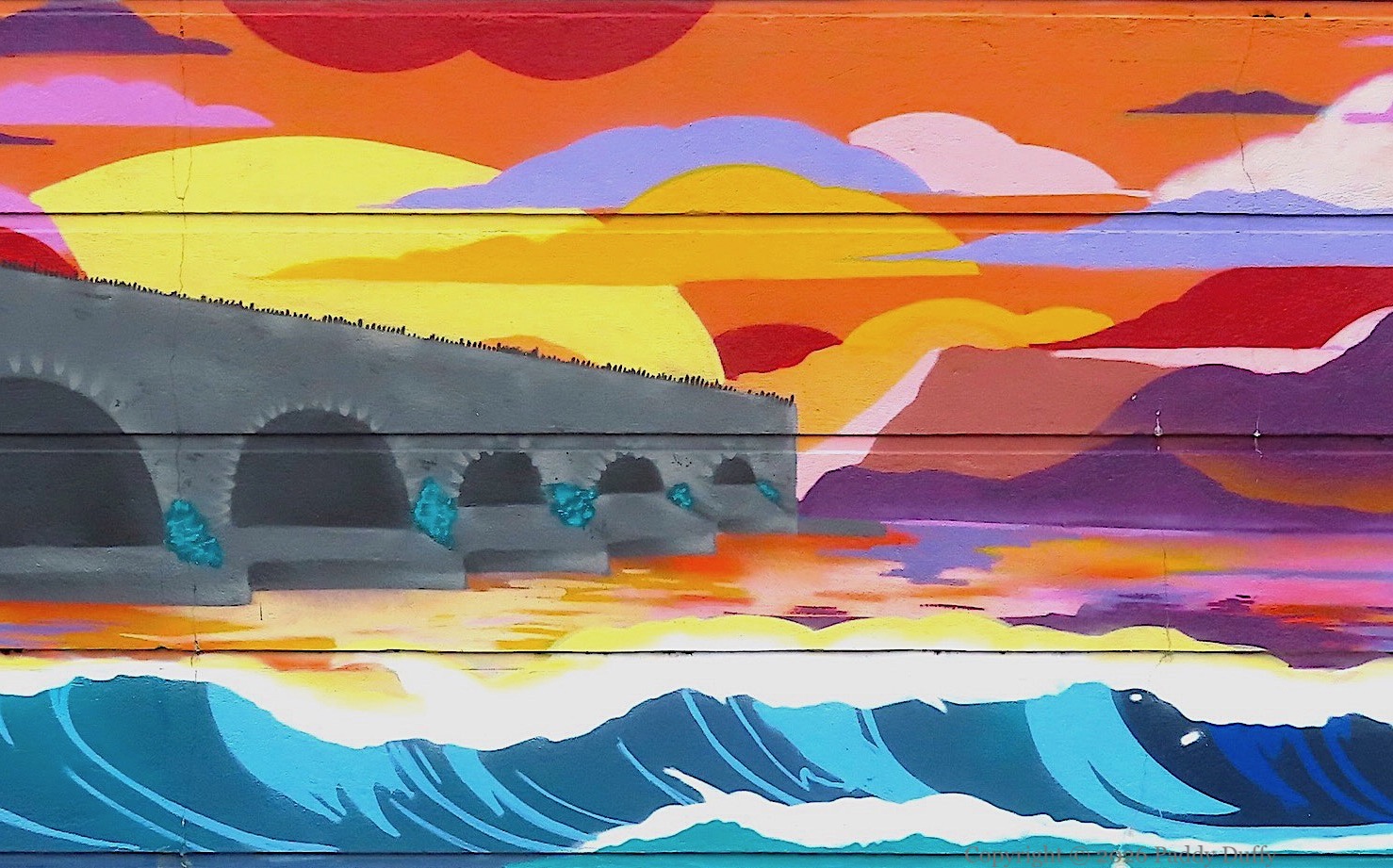
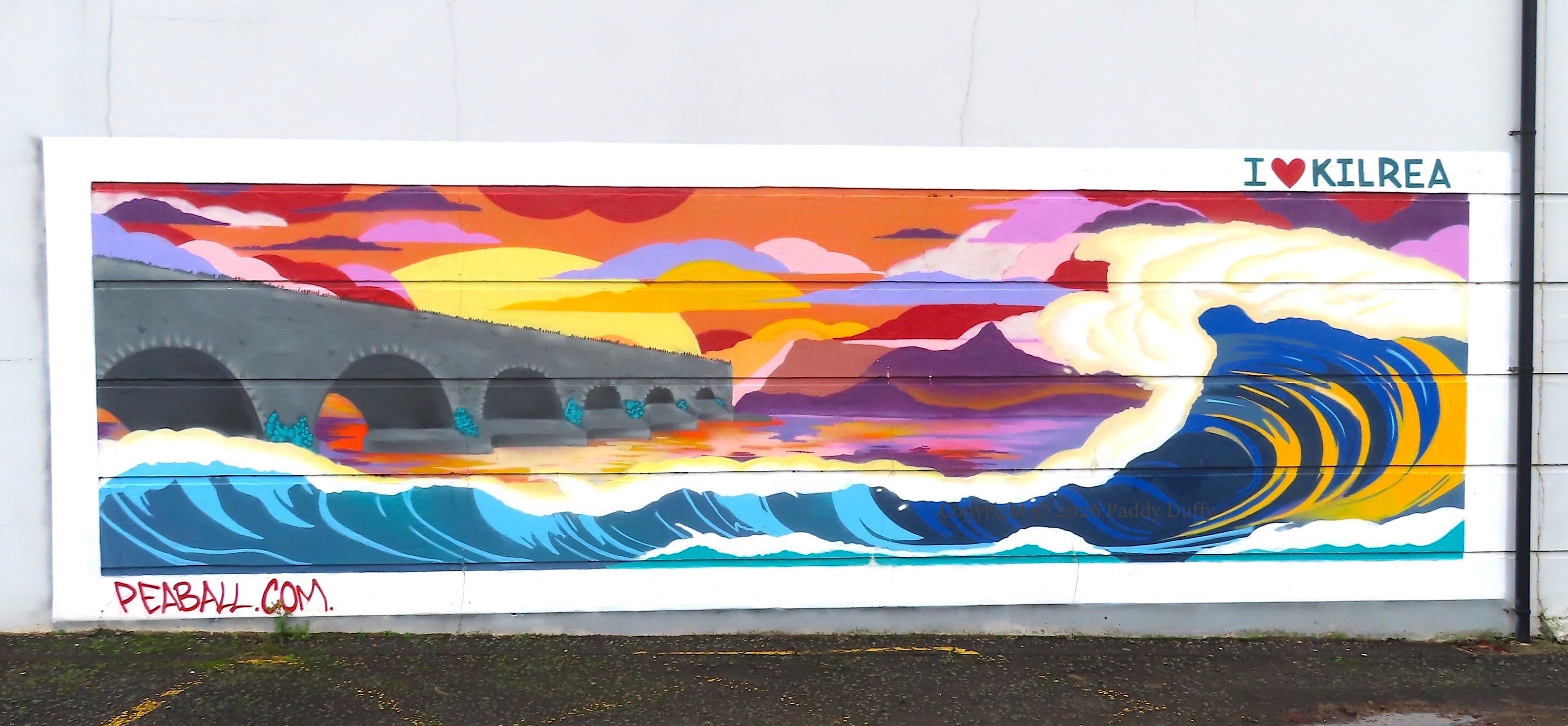
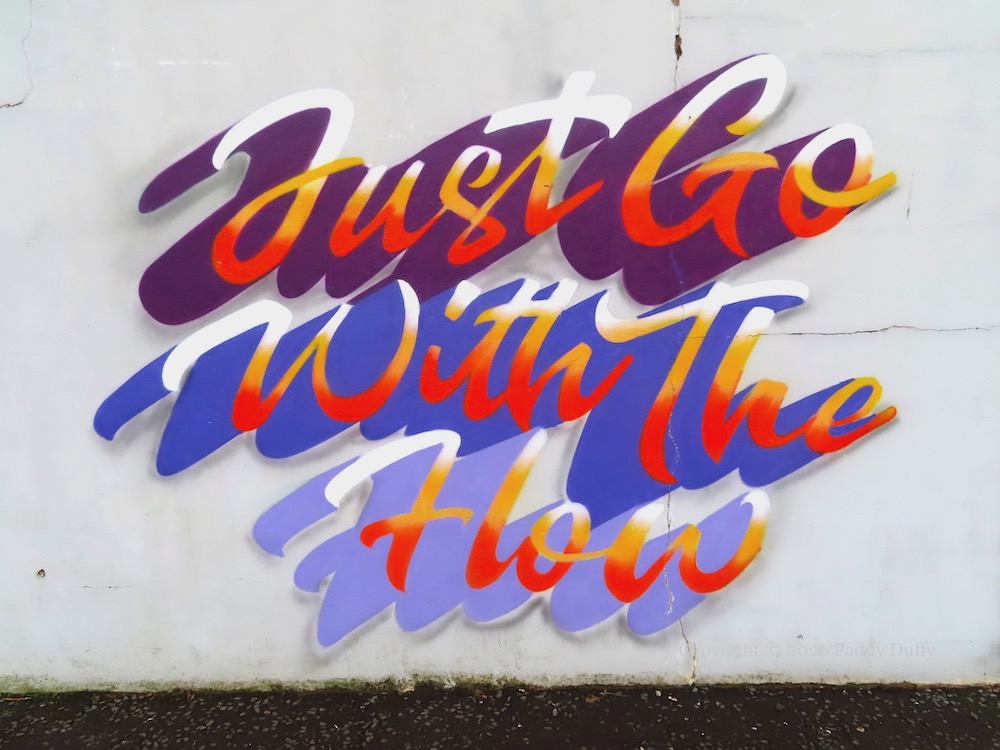
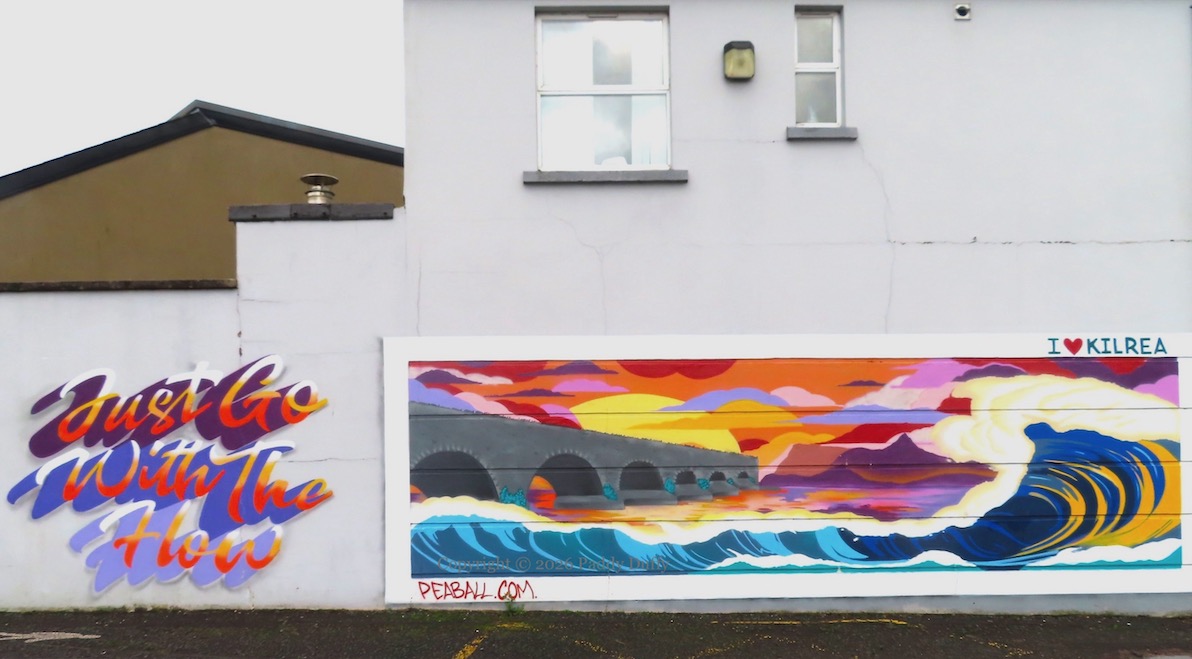
“Just go with the flow.” The river Bann rises in the Mournes and flows through the Lough and on towards the north coast. The lower Bann passes under nine bridges (WP), the oldest of which, just east of Kilrea, was built in 1783 (Derry Now). It features in this Kilrea mural, painted by Peaball (web) with local school-children at the entrance to the Maghera Street car-park in Kilrea, with support from Kilrea Community & Fairy Thorn Association (Fb) and funding from Donaghy Brothers (web).
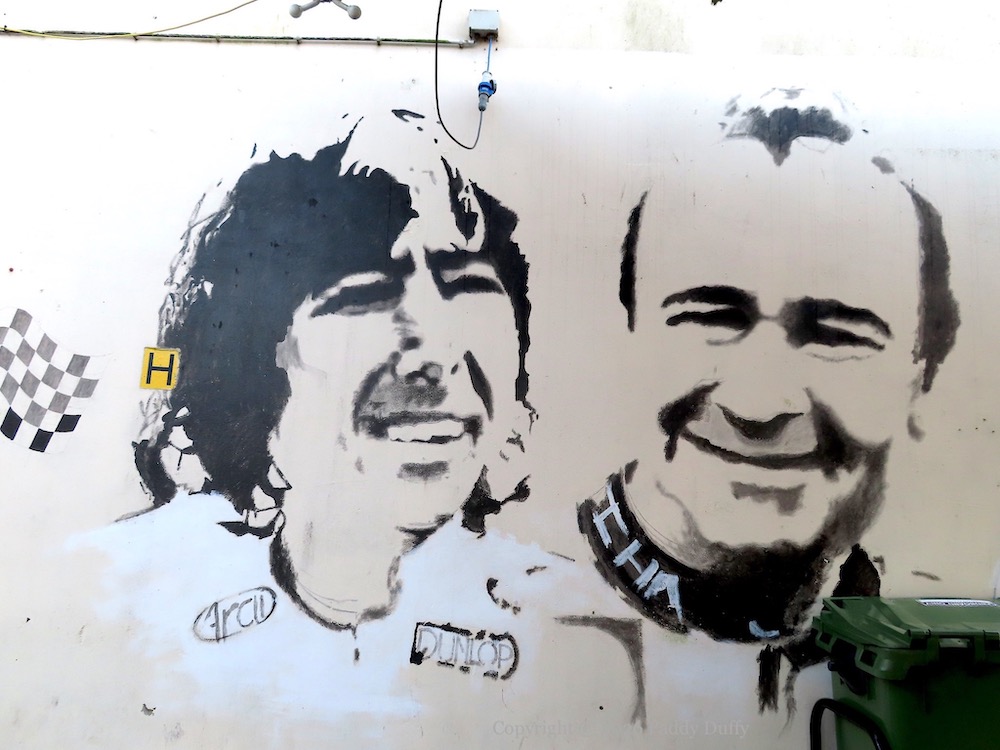
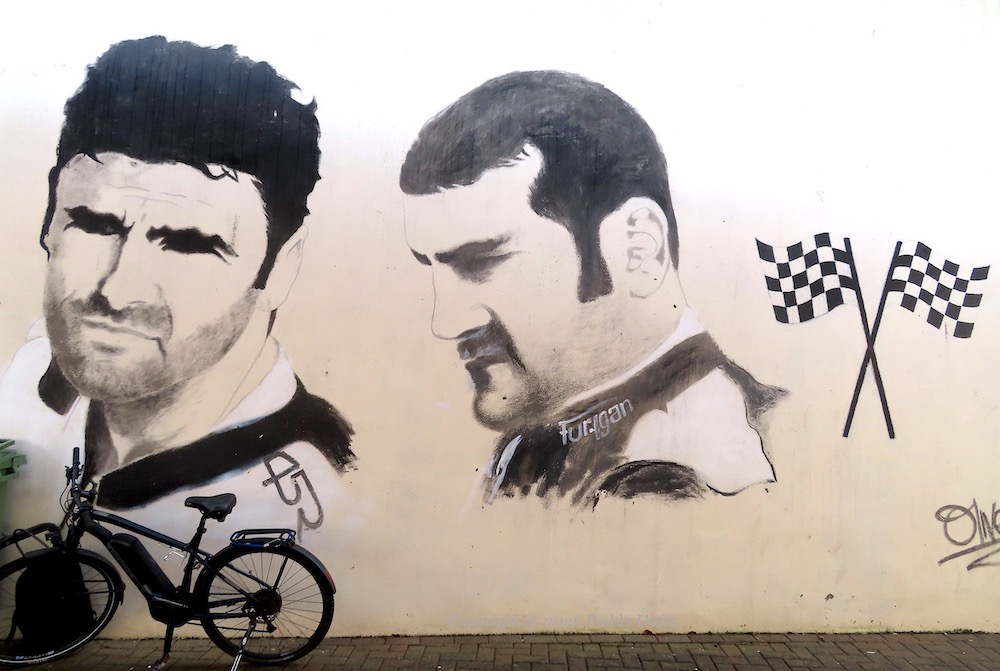
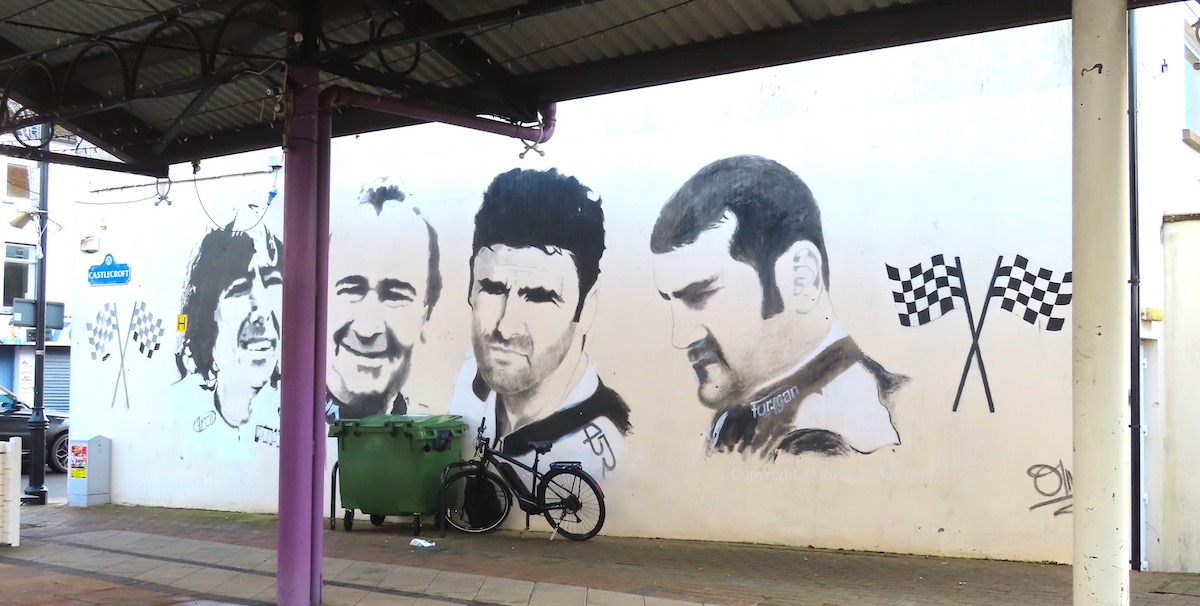
This Ballymoney mural celebrates and commemorates members of the Dunlop family of motorcycle racers. From left to right we see brothers Joey and Robert and then Robert’s sons William and Michael. Joey died in a race in Estonia in 2000; Robert died in 2008 of injuries sustained in a practice session for the North West 200; William died in 2018 in a crash during practice for the Skerries 100. Michael is still alive and currently aged 36; he was Irish Motorcyclist Of The Year in 2025 (BelTel).
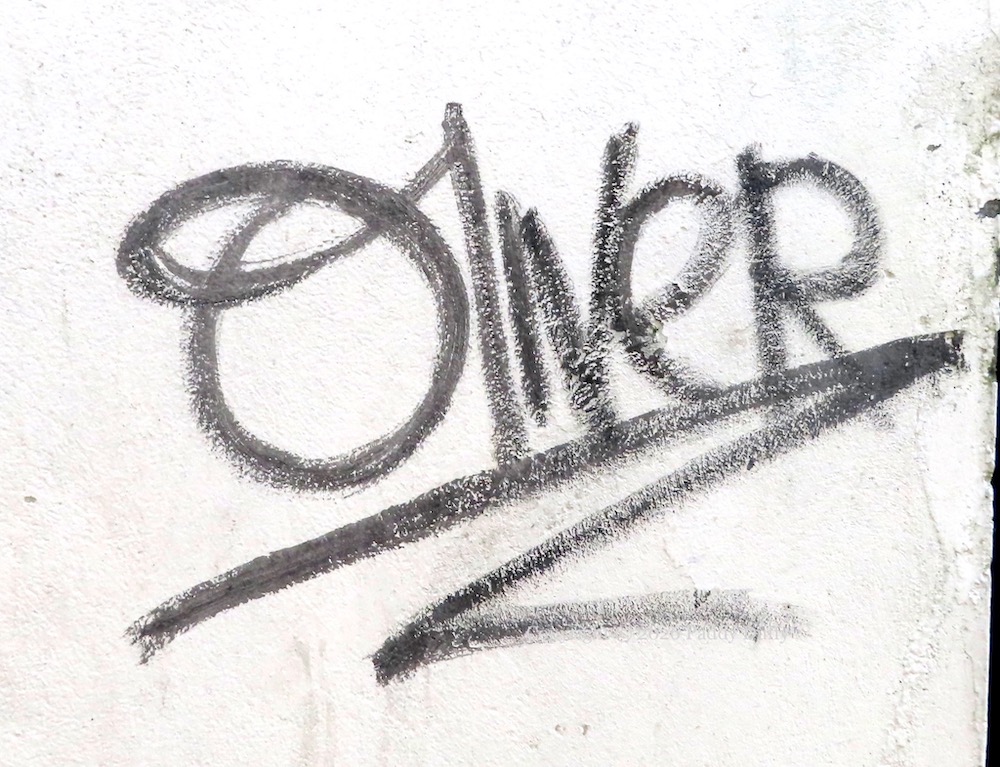
This mural was painted by Oliver McParland (web) in Castlecroft Square, Ballymoney.
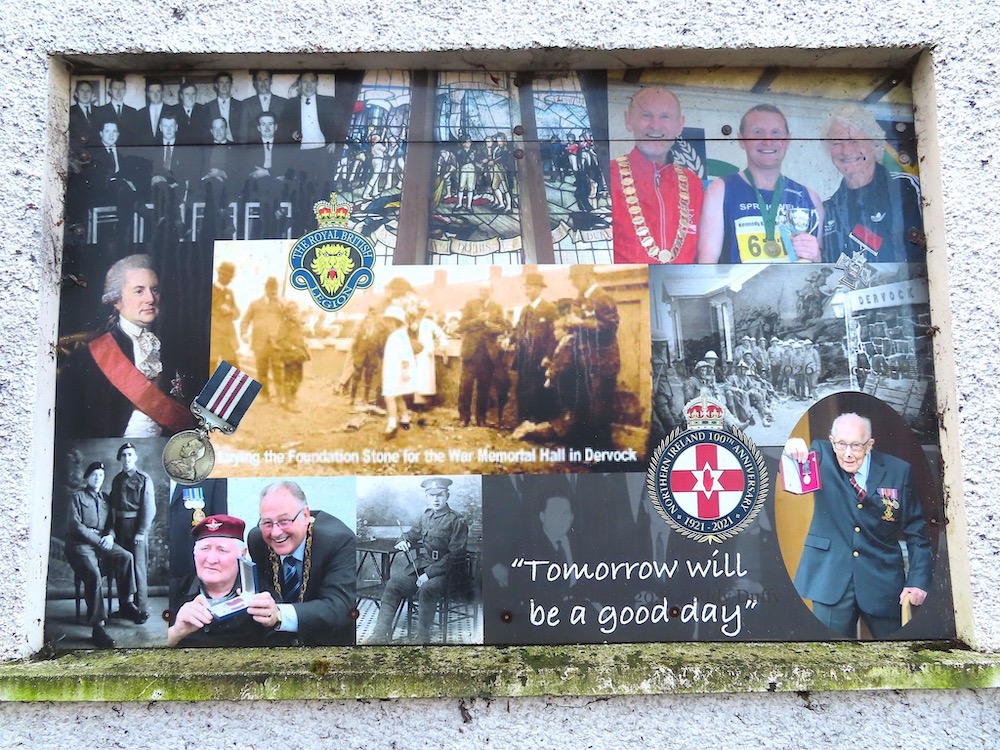
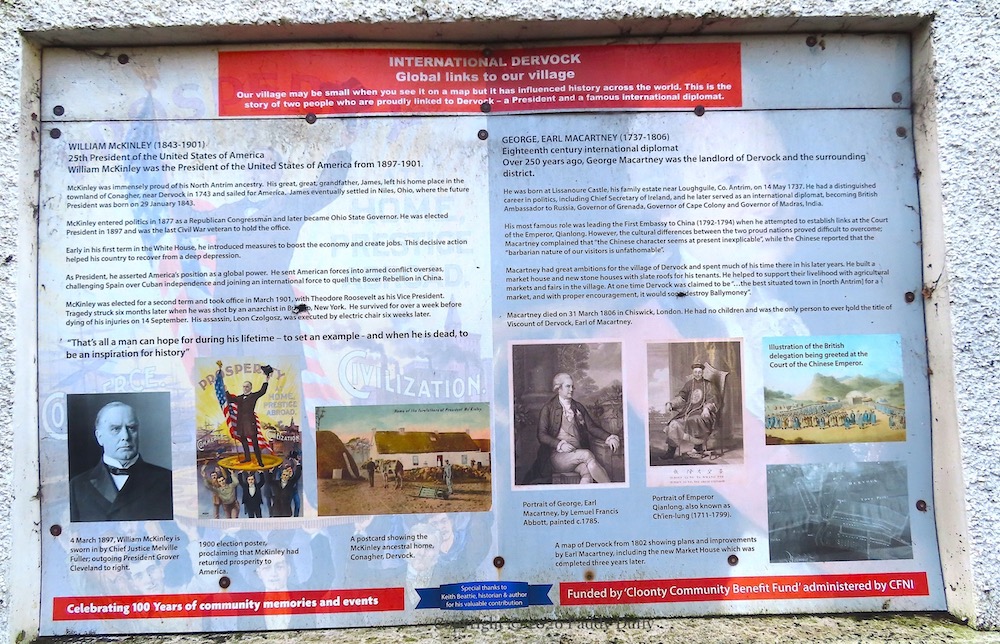
“Our village may be small when you see it on a map but it has influenced history across the world. This is the story of two people who are proudly linked to Dervock – a President and a famous international diplomat.”
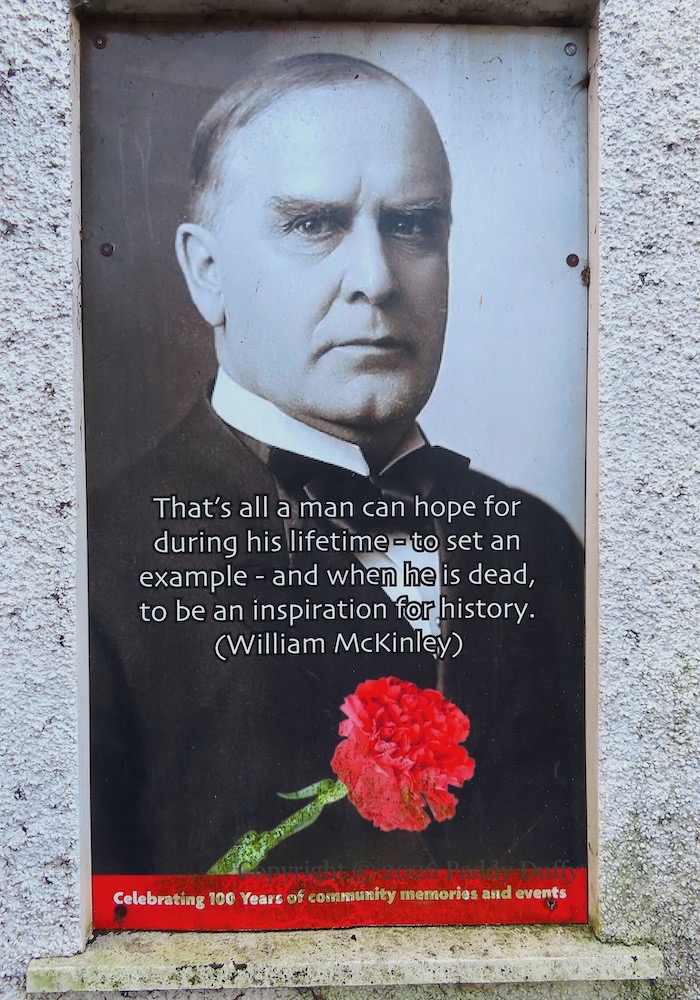
The President is “William McKinley (1843-1901) 25th President of the United States … from 1897-1901. McKinley was immensely proud of his North Antrim ancestry. His great-great-grandfather, James, left his home place in the townland of Conagher, near Dervock in 1743 and sailed for American. James eventually settled in Niles, Ohio, where the future President was born on 29 January 1843. … “That’s all a man can hope for during his lifetime – to set an example – and when he is dead, to be an inspiration for history.””
The second figure is “George, Earl Macartney (1737-1806) Eighteenth century diplomat. Over 250 years ago, George Macartney was the landlord of Dervock and the surrounding district. He was born at Lissanoure Castle, his family estate near Loughguile, Co. Antrim, on 14 May 1737. … His most famous role was leading the First Embassy to China (1792-1794) …”
Castlecat Road, Dervock
See also: the Visual History page on Ulster-Scots murals.
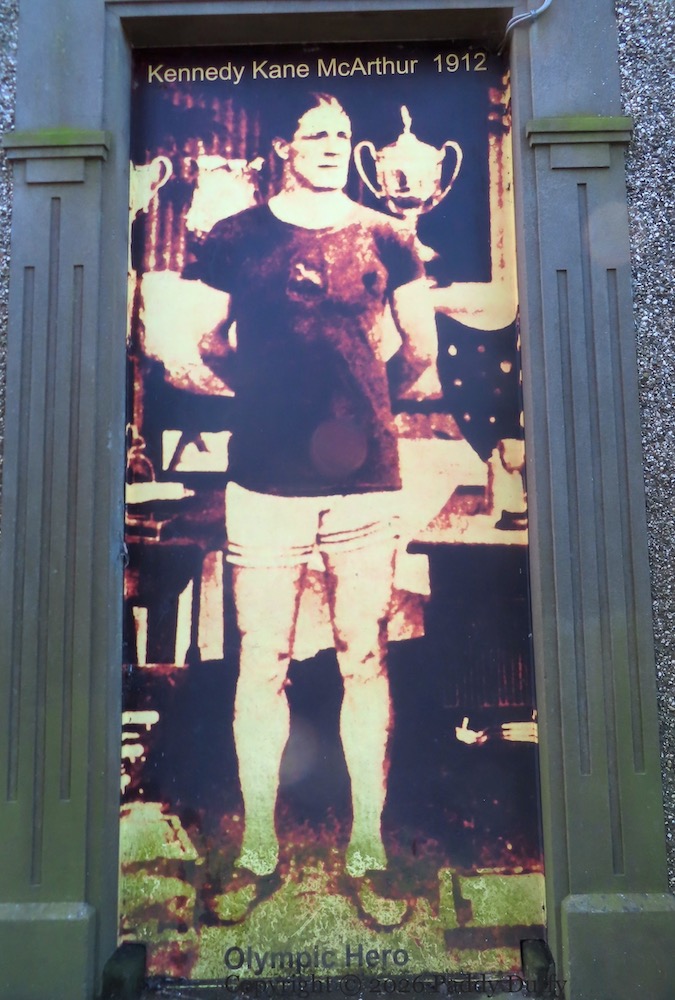
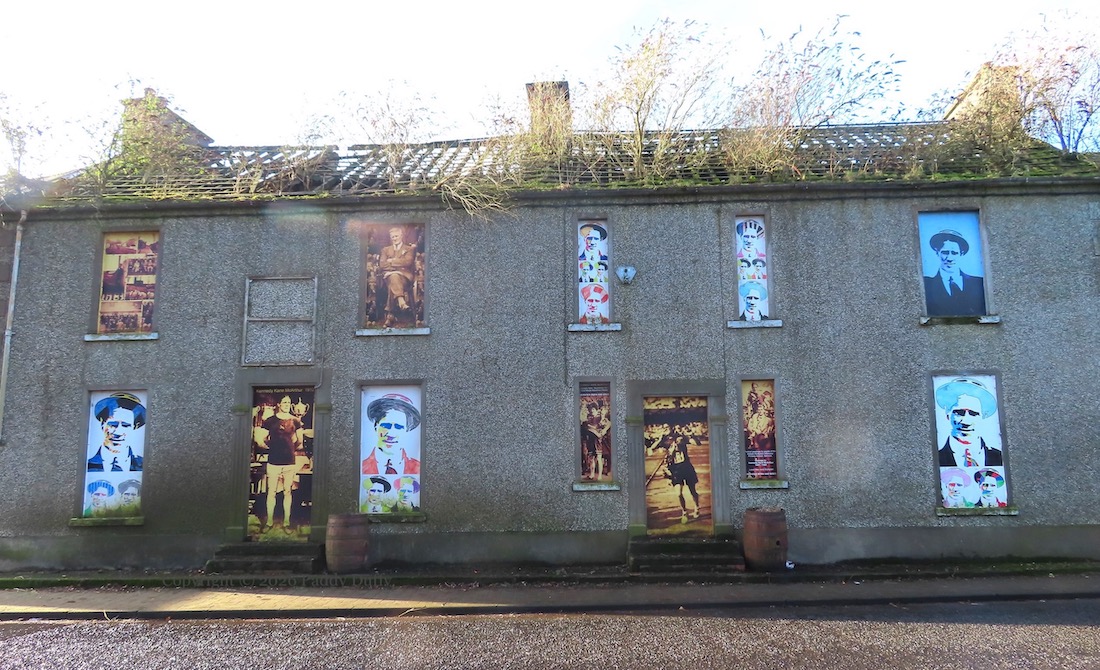
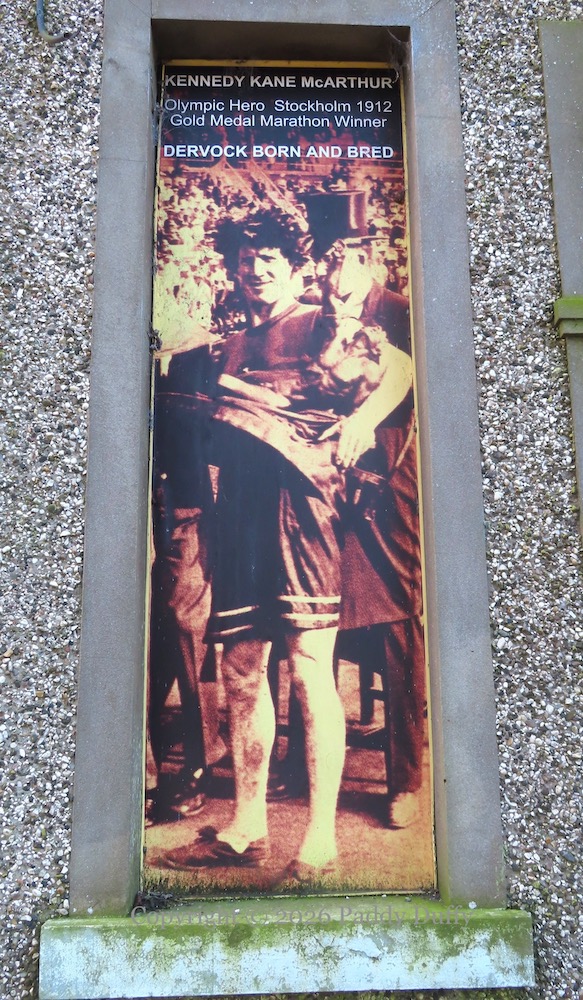
“Kennedy Kane McArthur, Olympic hero, Stockholm 1912, gold medal marathon winner. Dervock born and bred.”
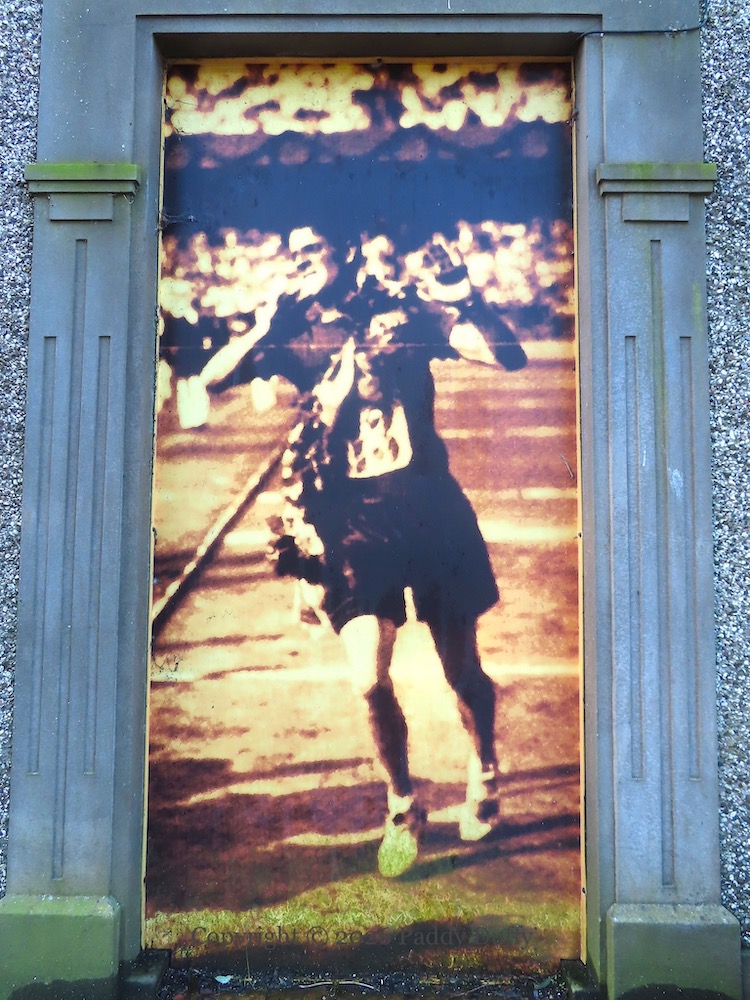
Ken McArthur emigrated from Dervock to Johannesburg, South Africa, at age 20 and ran his first marathon at 28. Four years later, he represented South Africa at the Olympics and was victorious in the marathon (WP). There is footage of the race at olympics.com.
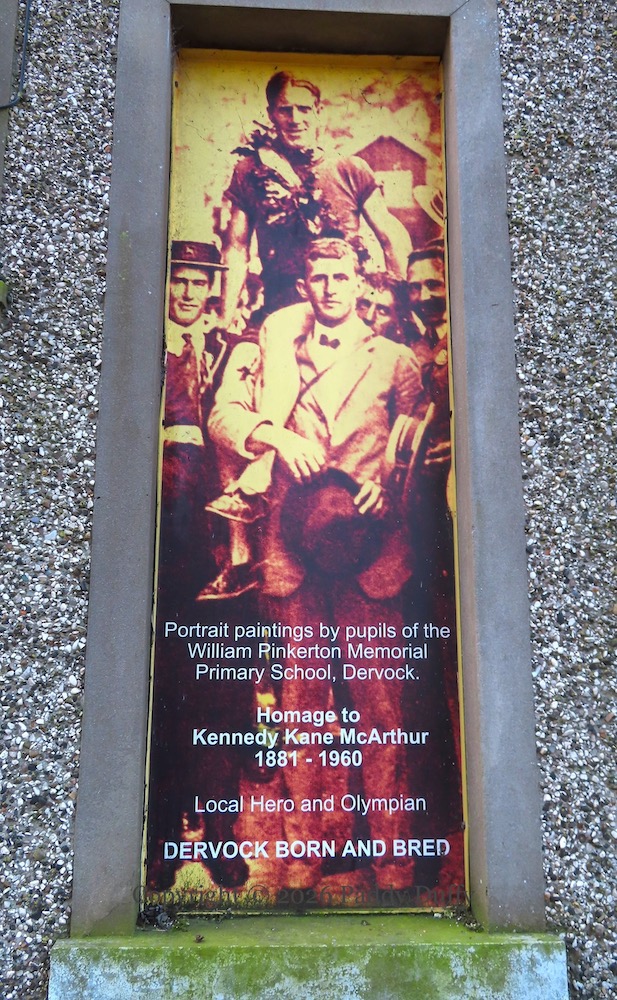
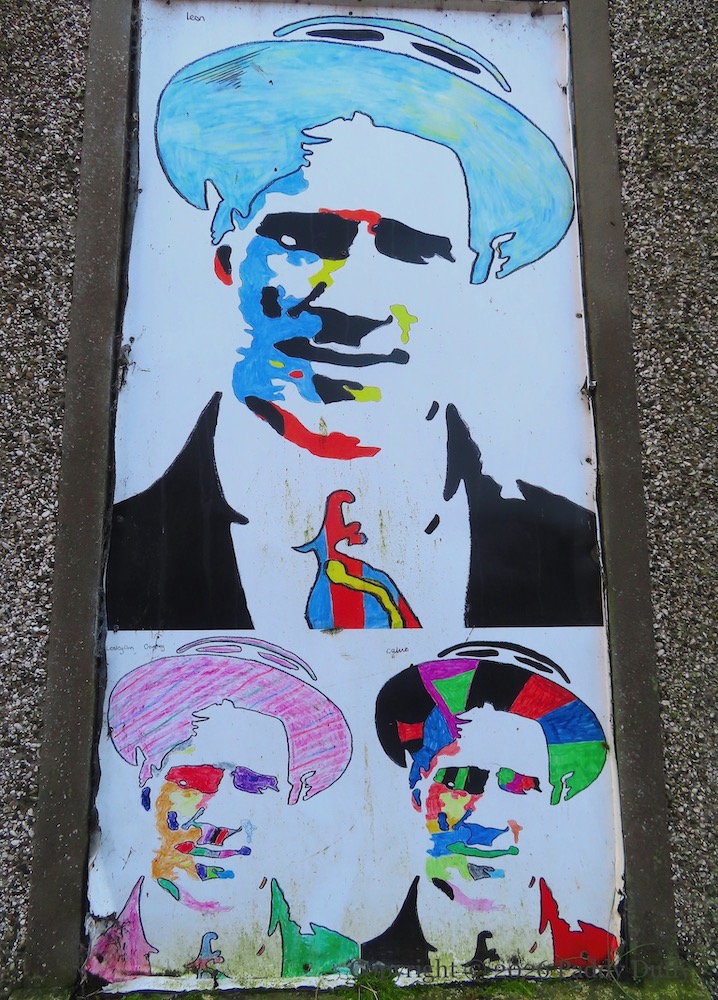
“Portrait paintings by pupils of the William Pinkerton Memorial primary school, Dervock. Homage to Kennedy Kane McArthur, 1881 – 1960, Local hero and Olympian. Dervock born and bred.”
Castlecat Road, Dervock
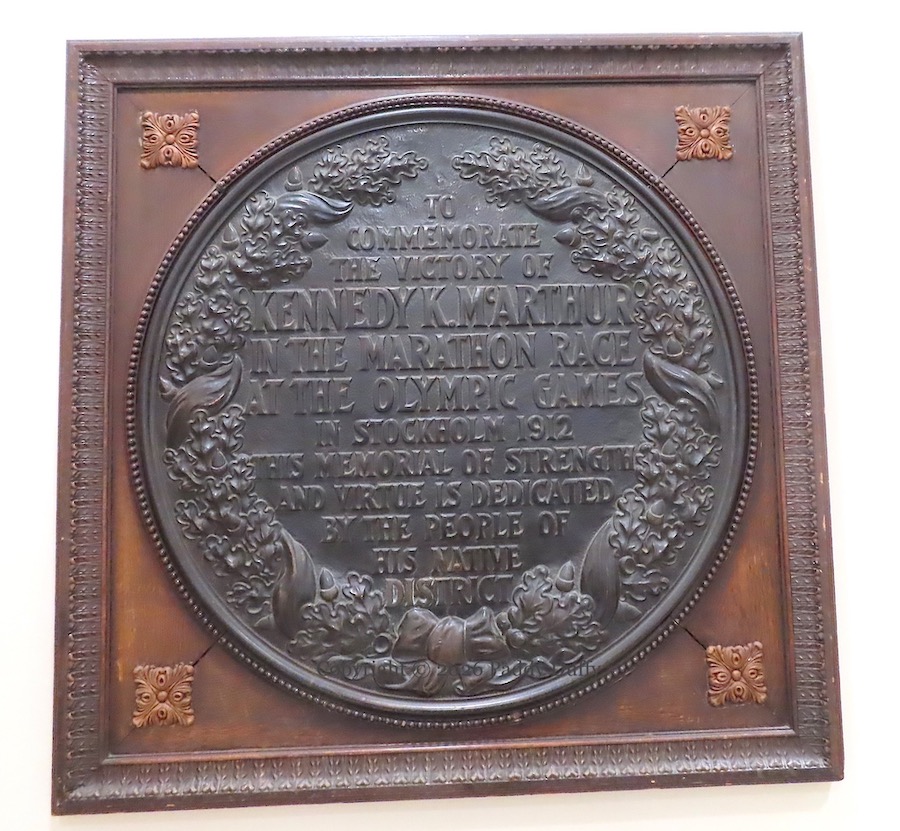
The large medallion is in the visitor centre in Townsend Street, Ballymoney. It reads, “To commemorate the victory of Kennedy K. McArthur in the marathon race at the Olympic Games in Stockholm 1912. This memorial of strength and virtue is dedicated by the people of his native district.”
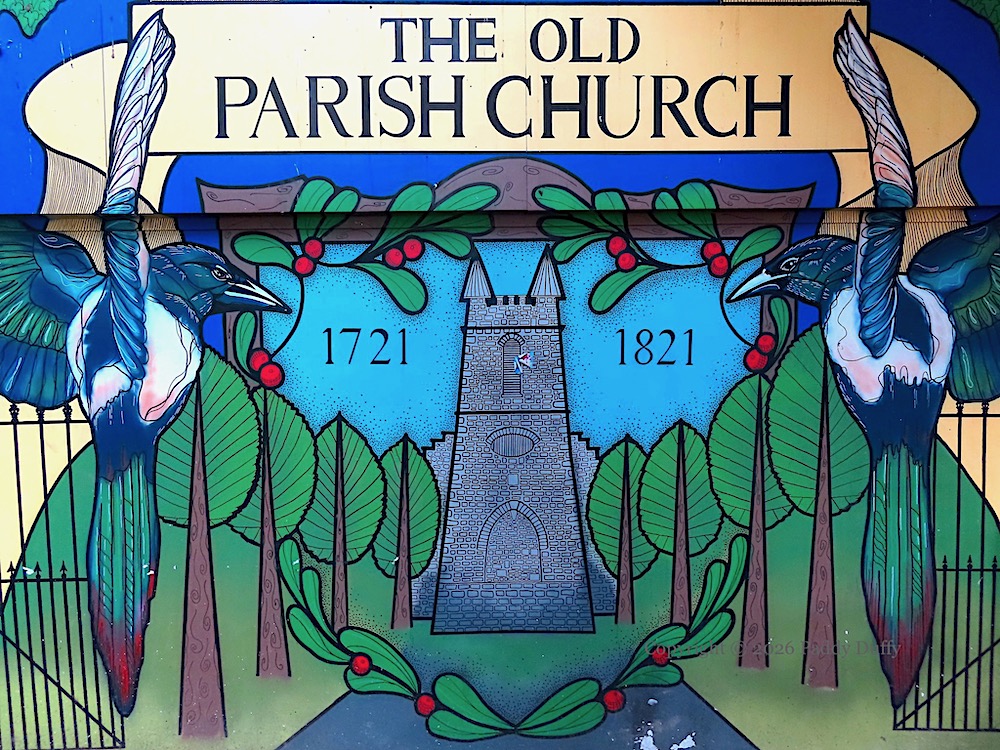
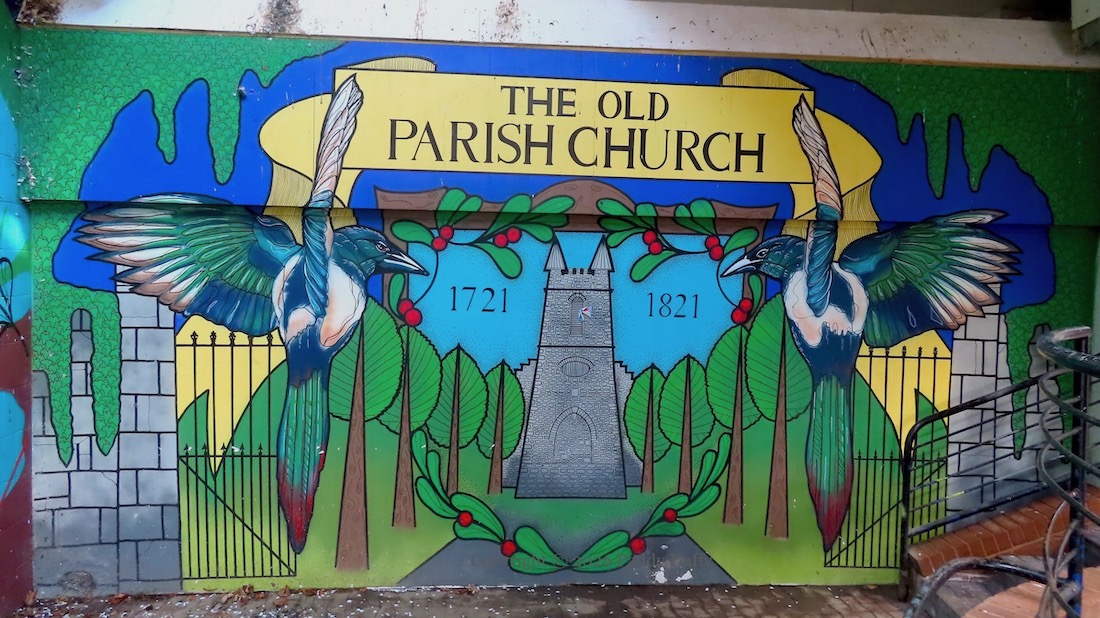
The Old Parish Church (Church Of Ireland) was consecrated in 1721, and a tower and gallery added in 1821. It was last used for a service in 1855 when it was replaced by St Patrick’s Church (Church History Trail youtube). Since then, the Old Parish Church has lain derelict.
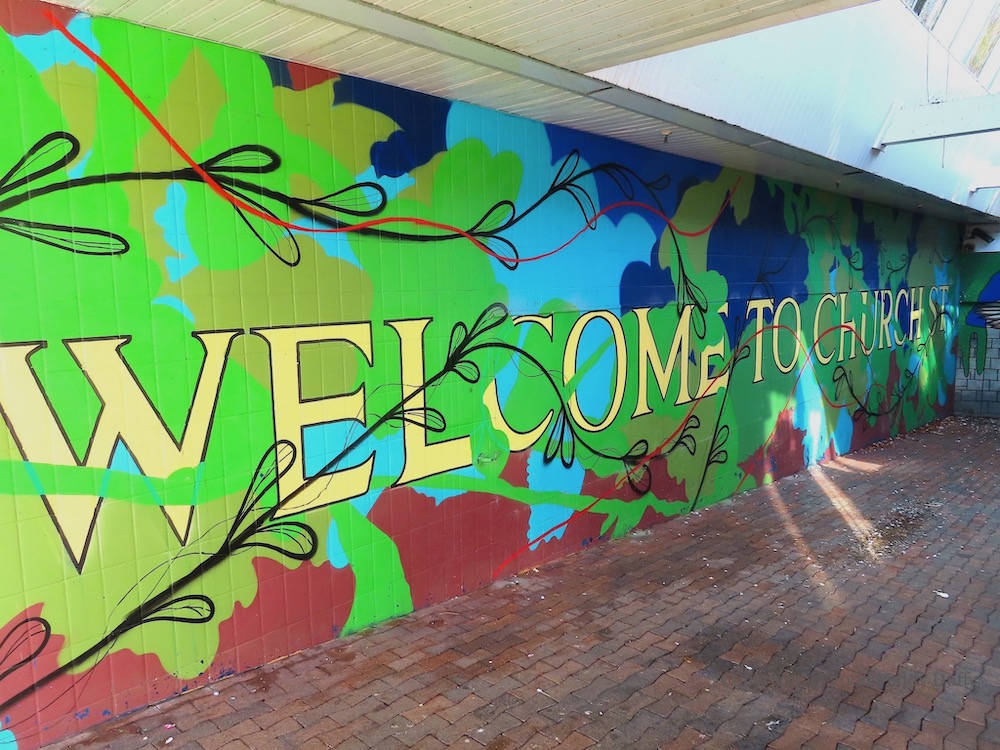
The wall-painting shown here is by Leanne McClelland (ig) in 2022 (Ballymena BID) in Church Street Arcade, off Church Street, Ballymena.
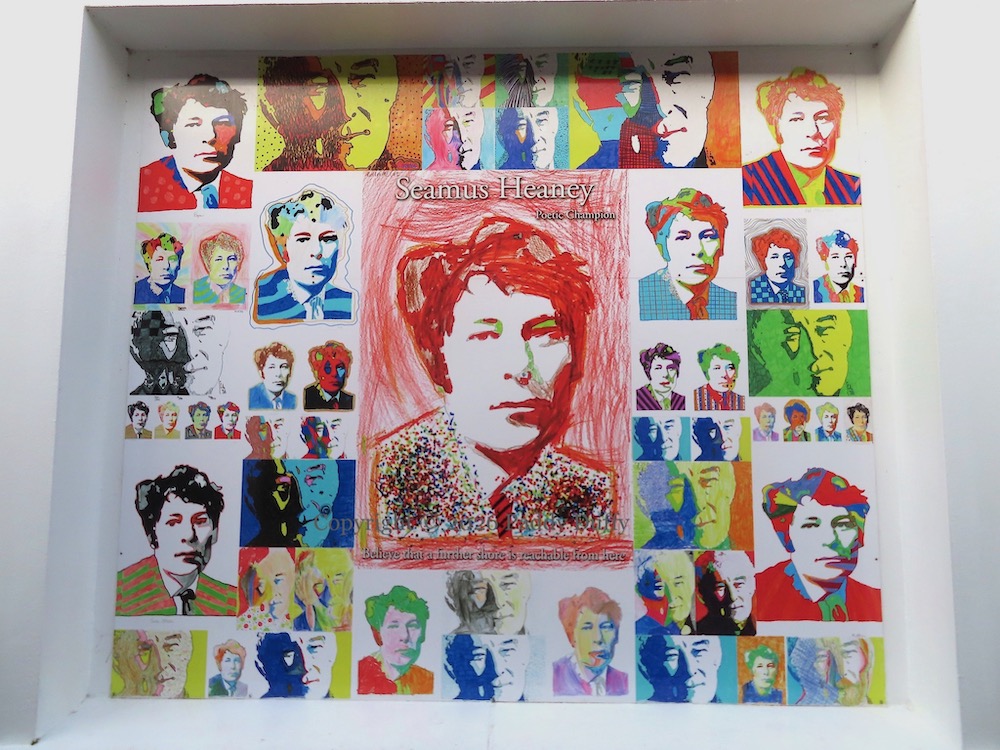
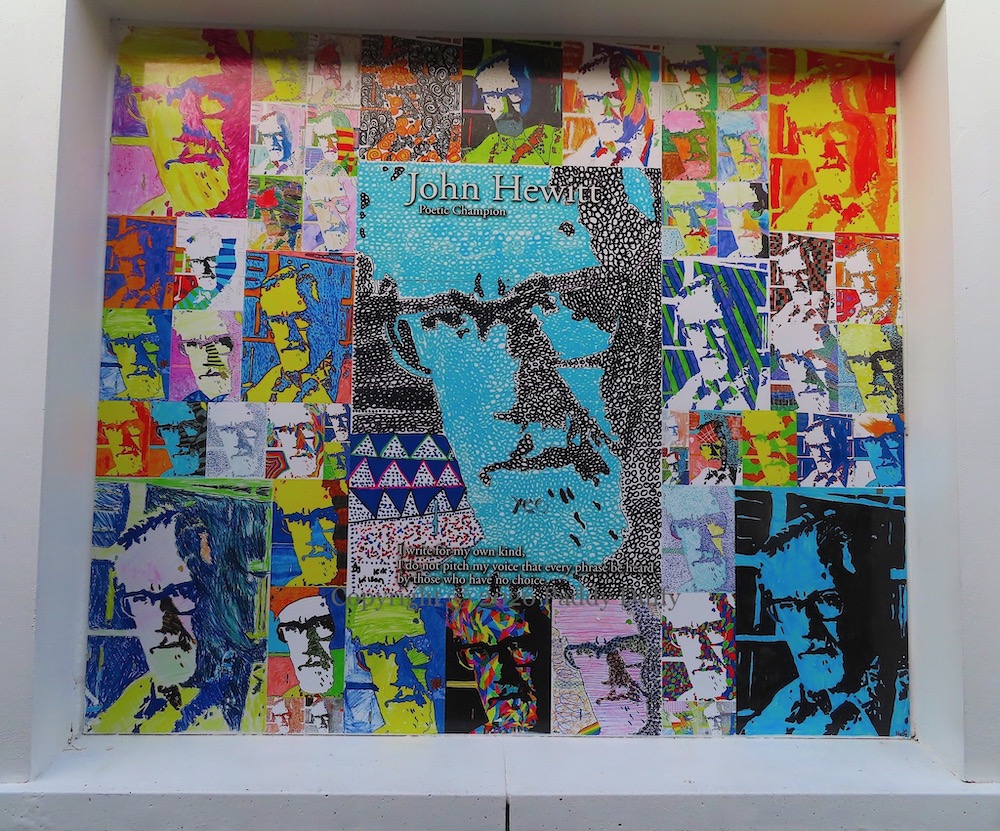
These two panels were created by Ross Wilson (web) along with children from four local Ballymoney schools (BBC | NI World). They portray two famous poets from Northern Ireland, Seamus Heaney and John Hewitt and include a line from a work of each:
Seamus Heaney’s “Believe that a further shore is reachable from here”, comes from The Cure At Troy (youtube).
The quotation from John Hewitt is the first line of the poem I Write For: “I write for my own kind, I do not pitch my voice that every phrase be heard by those who have no choice.”
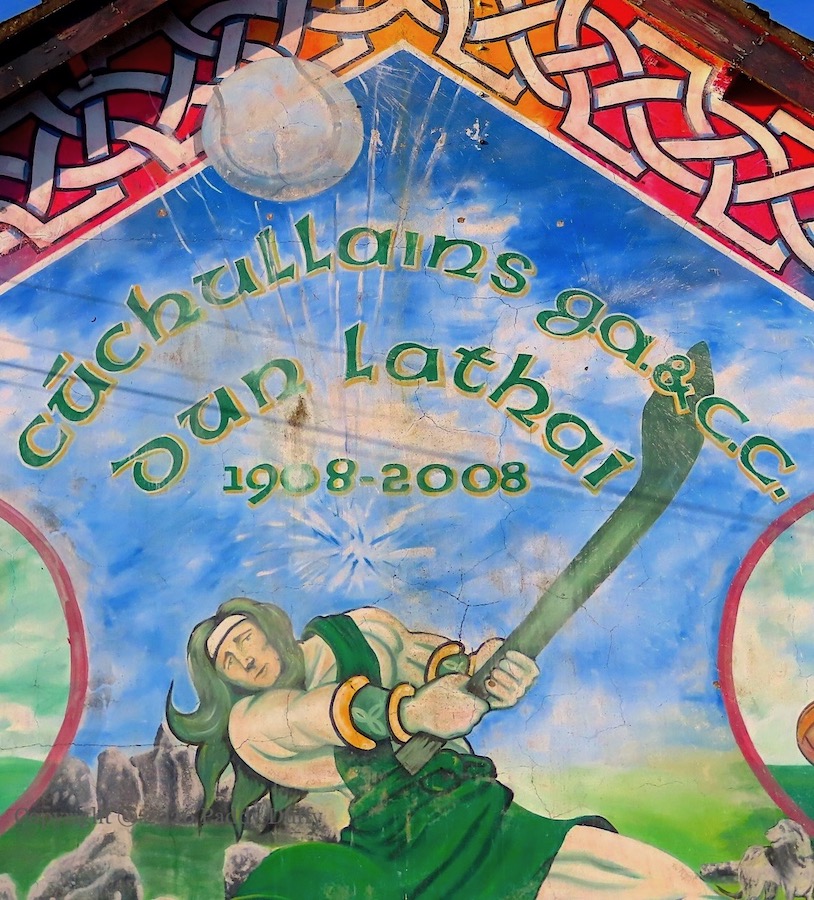
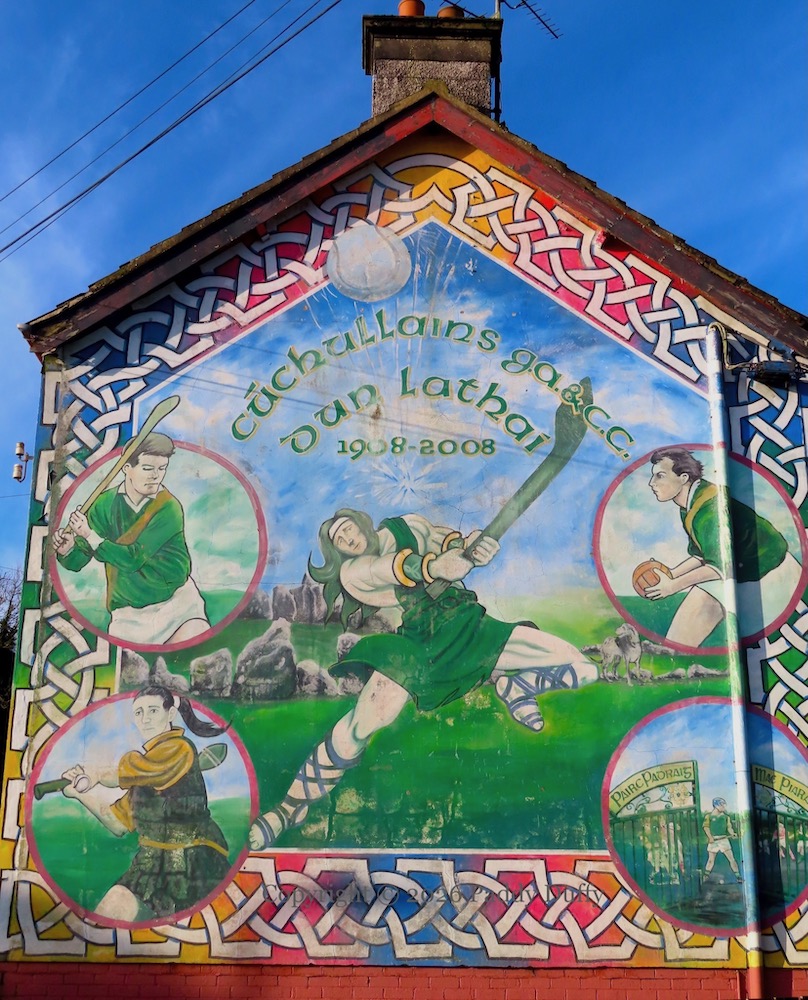
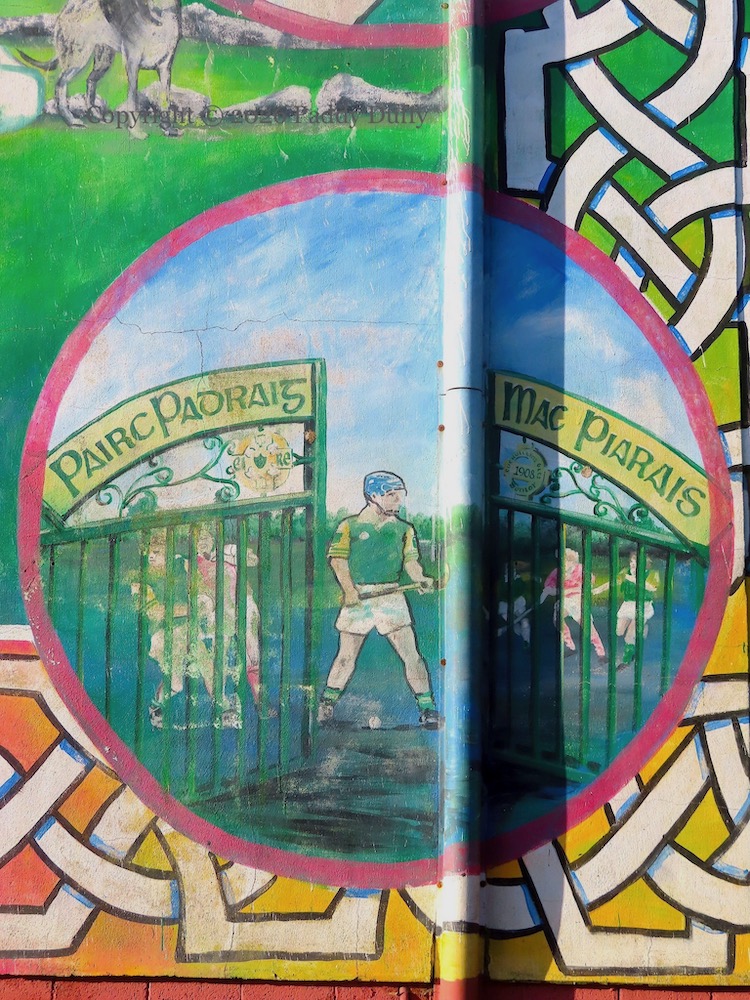
Dunloy Cuchullains (Fb) is a “GA & CC” [Gaelic athletic & camogie club] in Dunloy [Dún Lathaí], County Antrim. The club was founded in 1908 by Andy Dooey, Bob Black, Dan Boyle and Paddy McCamphill (NI Archive | GAA oral history). Home games are played at Páırc Mhıc Phıaraıs on Bridge Road. The club was Antrim senior football champions in 2025 (RTÉ).
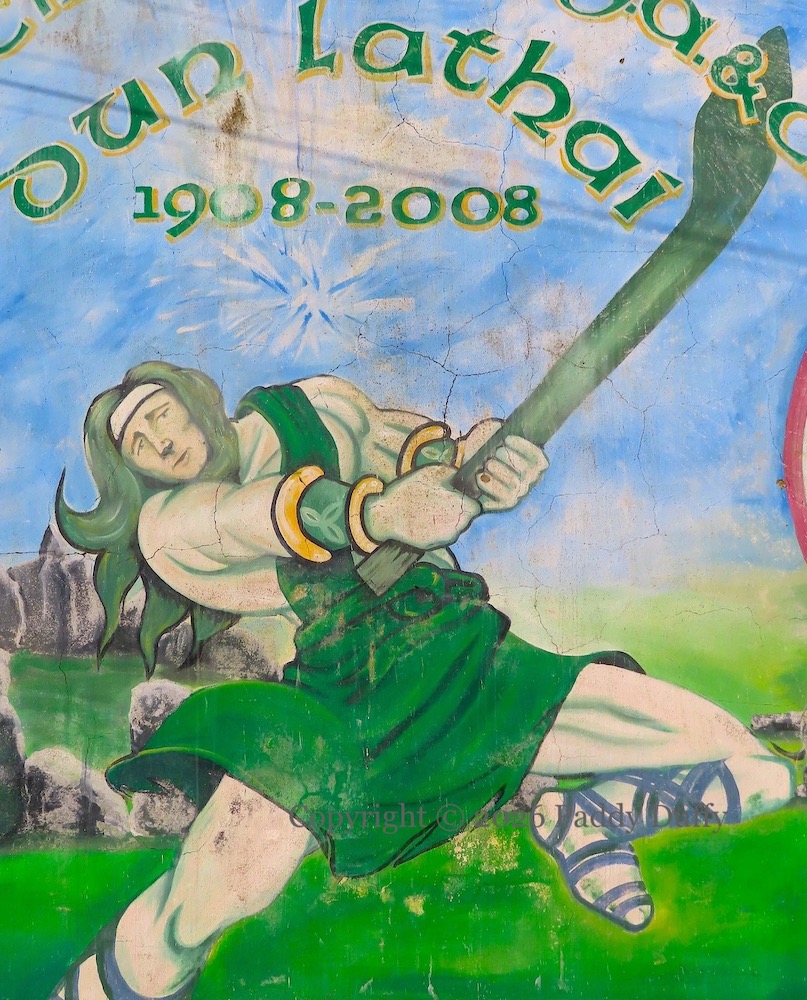
The mural was painted for the club’s centenary in 2008 on the gable of Lilac Terrace in Tullaghans Road in the centre of the village. The central figure is inspired by Jim Fitzpatrick ‘Hurling Match’ (Visual History).
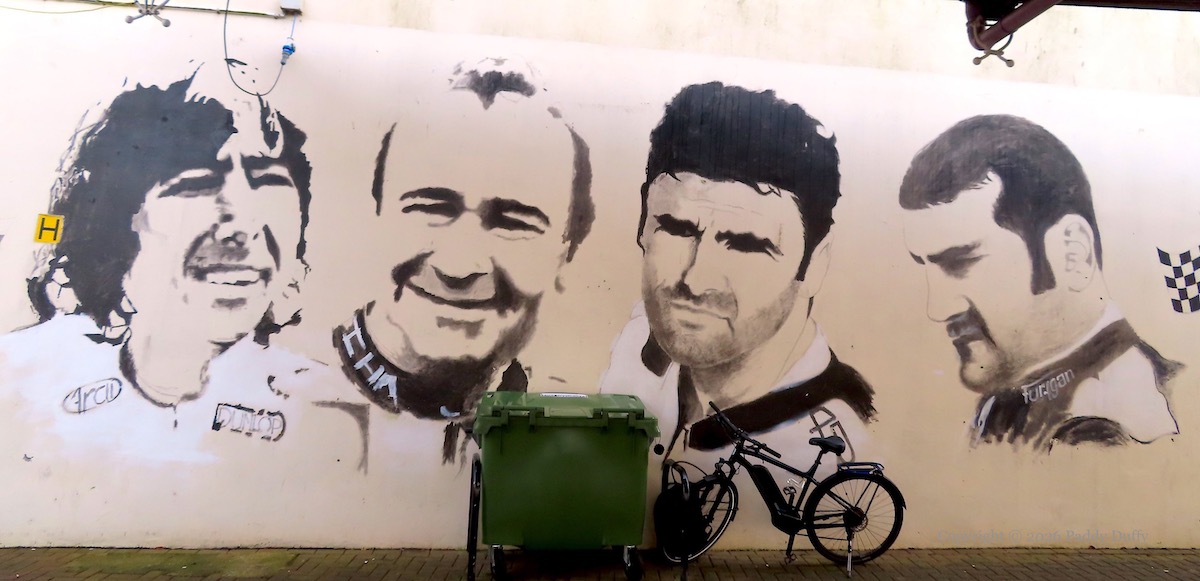
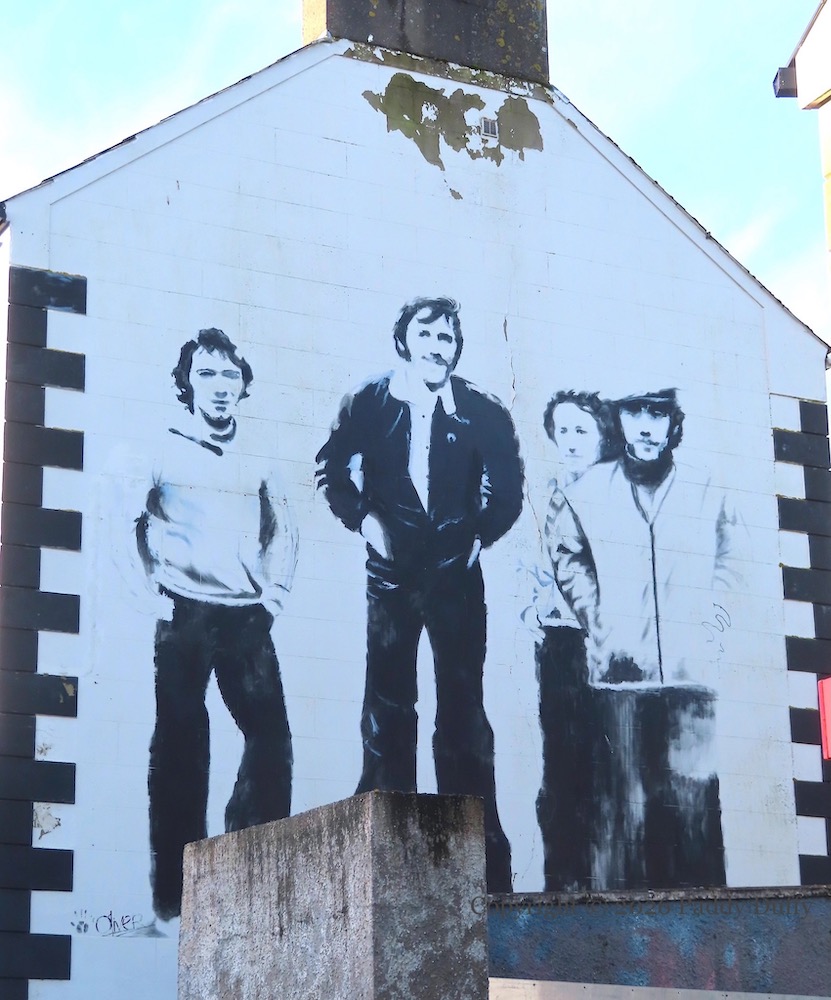
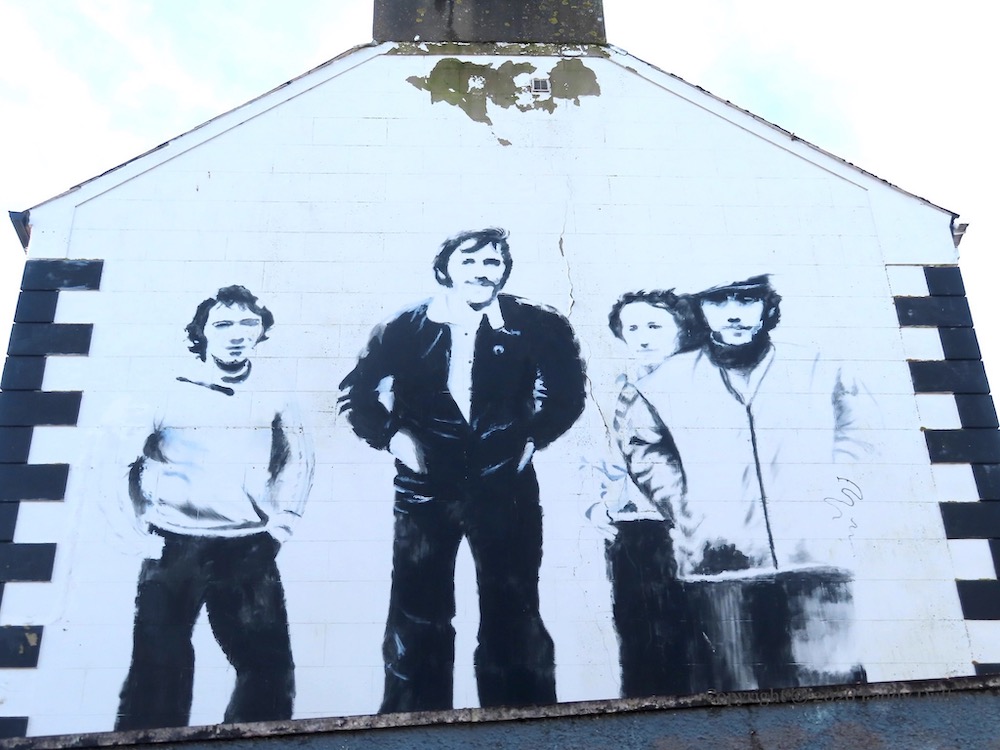
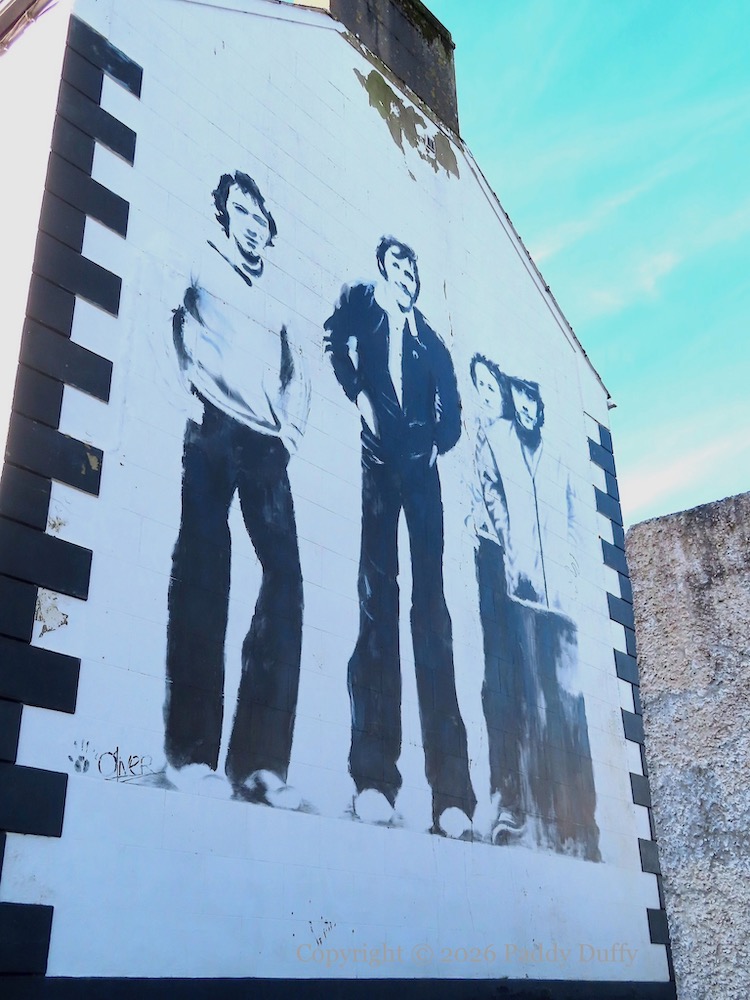
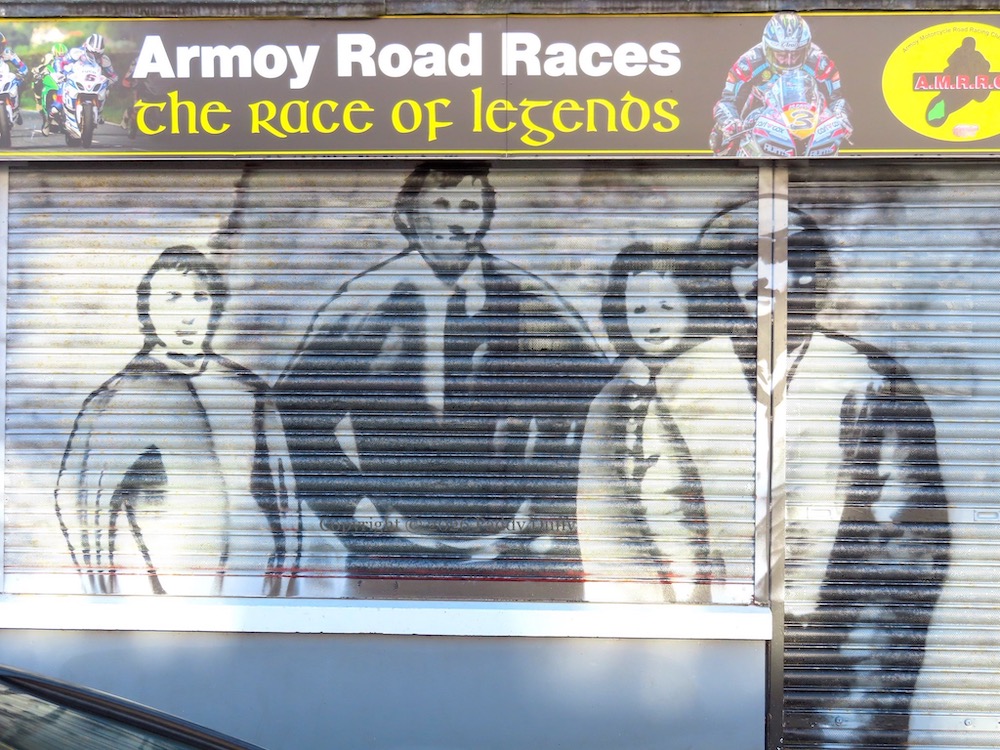
The “Armoy Armada” was (l-r) Joey Dunlop, Frank Kennedy, Jim Dunlop, Mervyn Robinson (AMRRC). The four formed a team of motorcycle racers from 1977 until 1979 when Kennedy was injured in the North West 200. In memory of the quartet, the Armoy Road Races have been held every July since 2009.
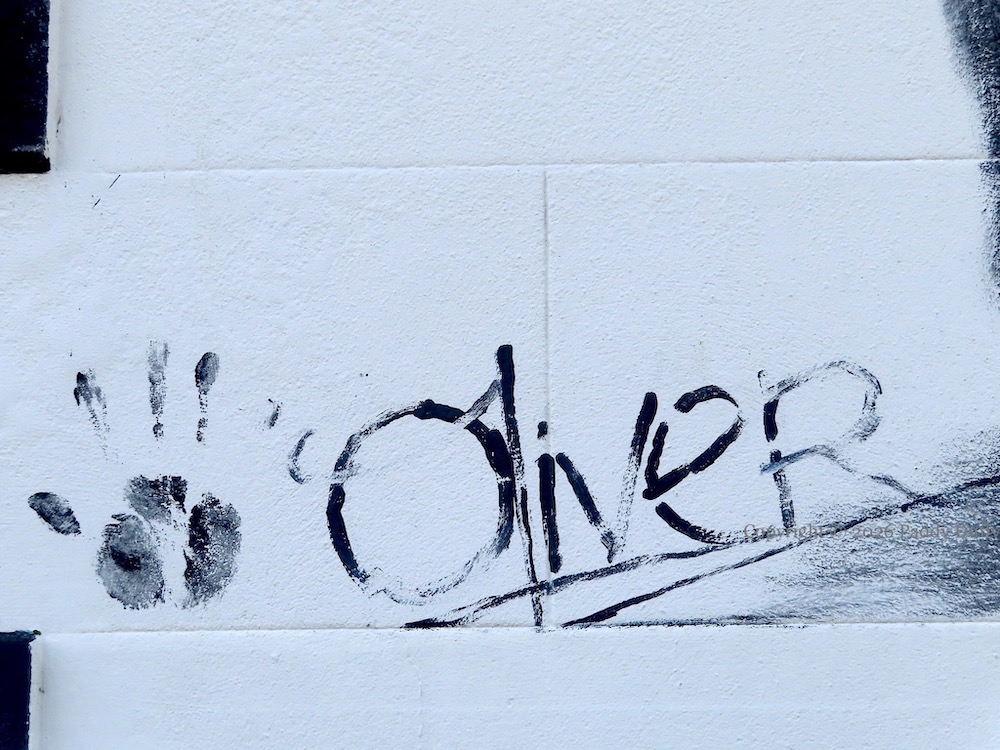
This mural was painted by Oliver McParland (web) in 2020 on a gable of a fast-food shop in Armoy. (For the original photograph, see Classic Motorbikes.) The cruder version in the final image, below, is also in Main Street, on the shutters of the Armoy Motorcycle Road Racing club.
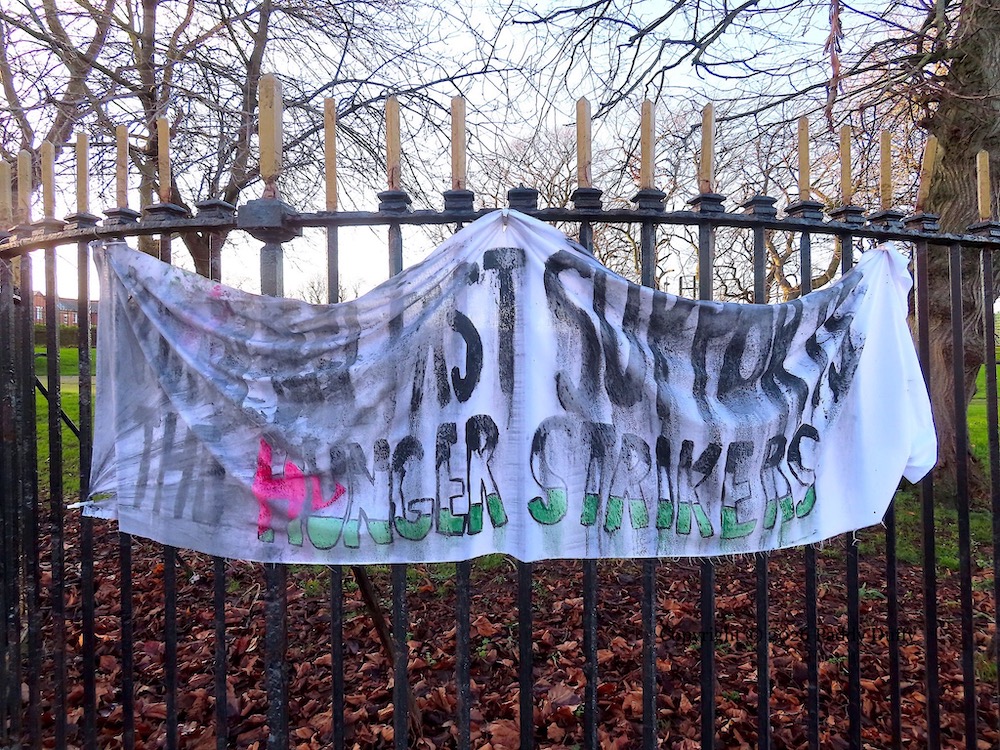
Many of the Palestine Action hunger strikers have called off their strikes, most recently Heba Muraisi, who resumed eating on the 14th (of January) after 72 days (BBC).
Umer Khalid stopped taking solids on January 9th (Al Jazeera) reduced has now begun refusing water. His life-expectancy is measured in days, if he does not reverse course (Guardian | Amnesty).
This washed-out banner is on the Antrim Road, north Belfast, on the railings of the Waterworks.
Update: Khalid ended his thirst-strike after two days (Al Jazeera).
 Paddy Duffy Collection