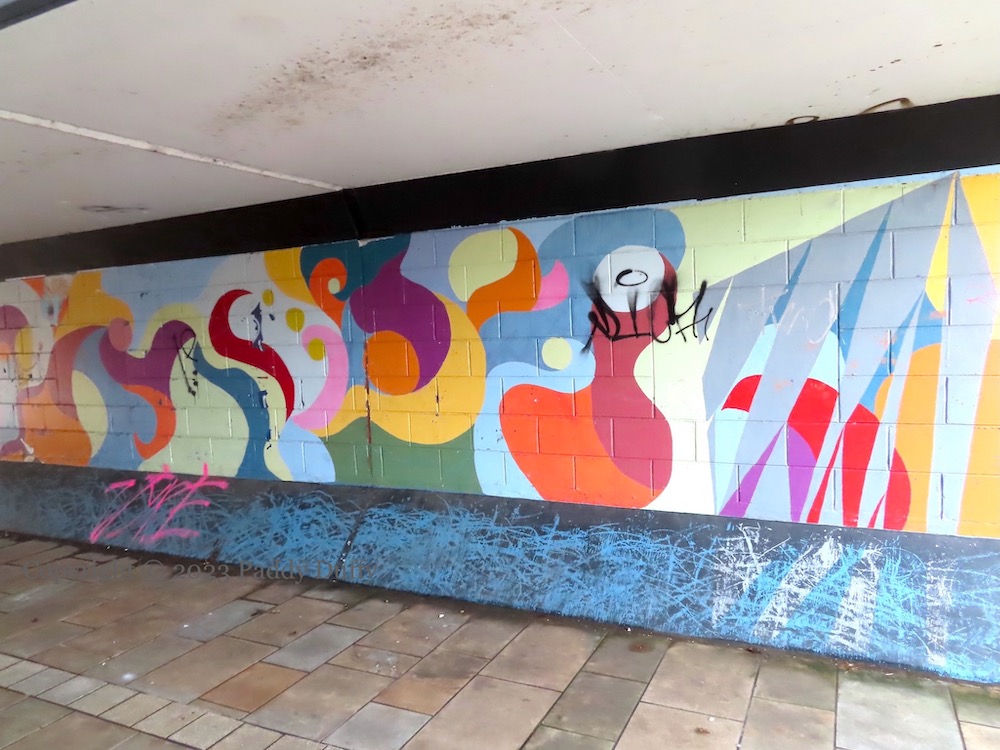
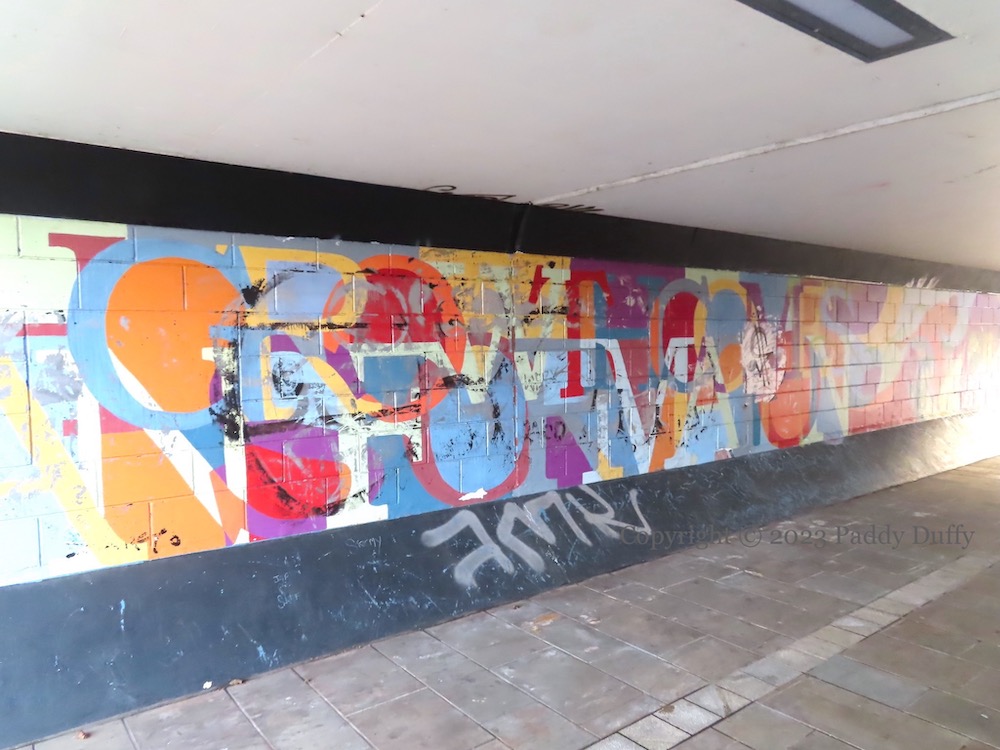
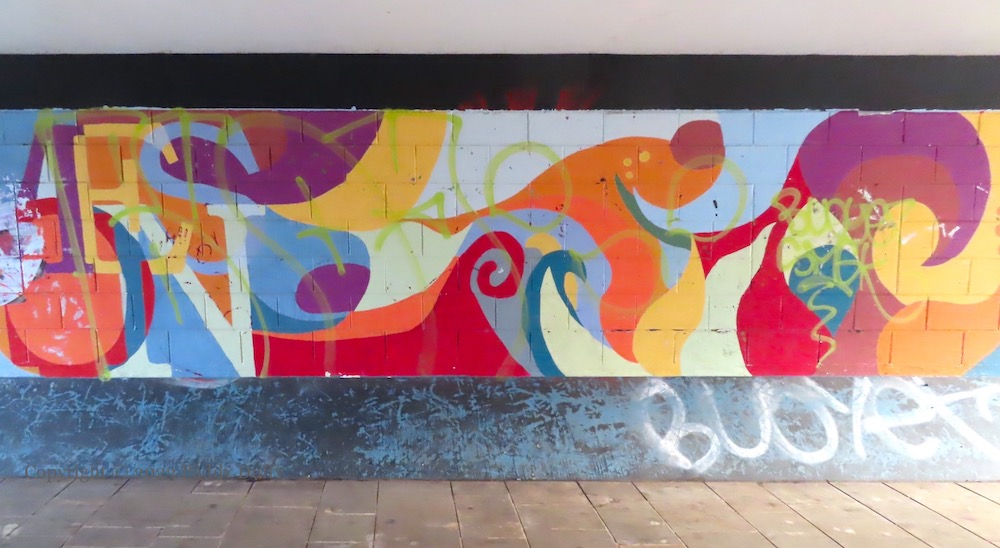
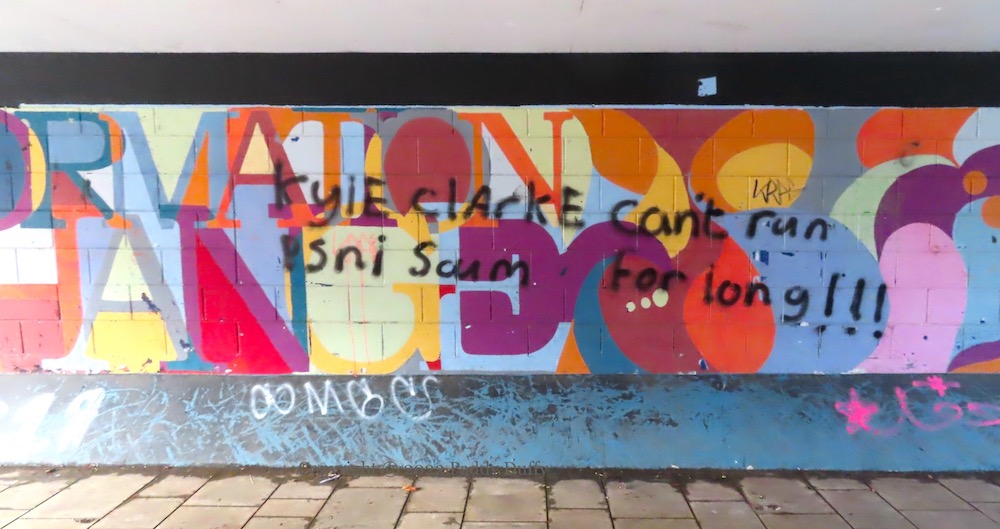
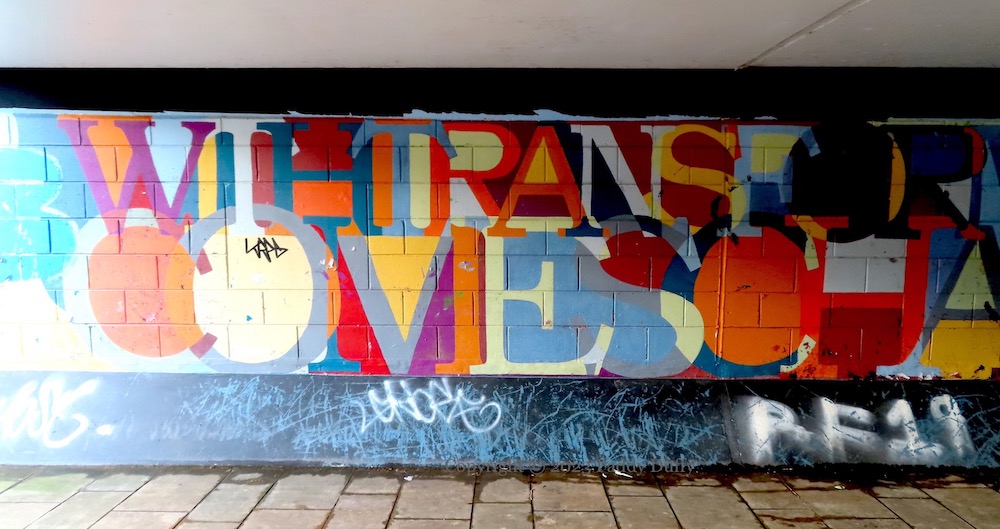
“With growth comes transformation, with transformation comes change.” This is a 2012 piece – now much the worse for wear – by Chuck Hoffman (Genesis Art) and a team of five students from Kansas (including Sam Fine) in the Bridge End tunnel (east Belfast).
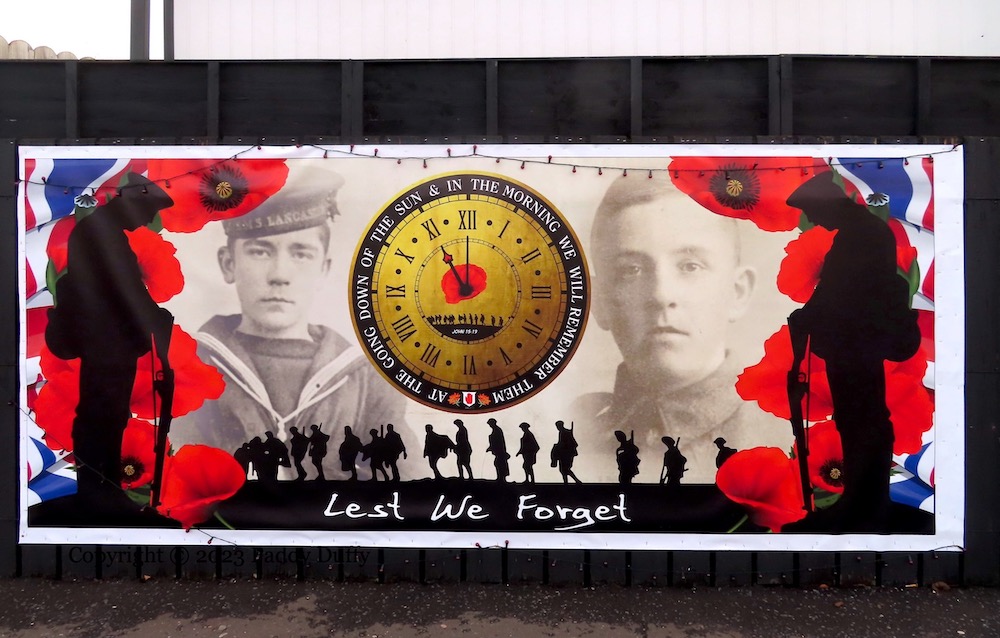
The portrait on the right is probably William McFadzean, familiar from murals such as in the Caw, Londonderry, and in Cregagh, Belfast (though the photo is unknown). The face on the left is John Travers “Jack” Cornwell, “the boy hero of Jutland”, who was awarded the VC for staying at his post as a sight-setter on the HMS Chester (the picture is from an earlier posting, on the HMS Lancaster) when it was hit by German light cruisers on May 31st, 1916. Cornwell died from shrapnel wounds on June 2nd (Mary Evans).
It’s not clear why Cornwell is included here, as he was from, and is buried in, east London, rather than Belfast or Ireland, and does not seem to be associated with the 36th Division. Please get in touch if you can explain his inclusion here. See also: Battle Of Jutland and HMS Caroline.
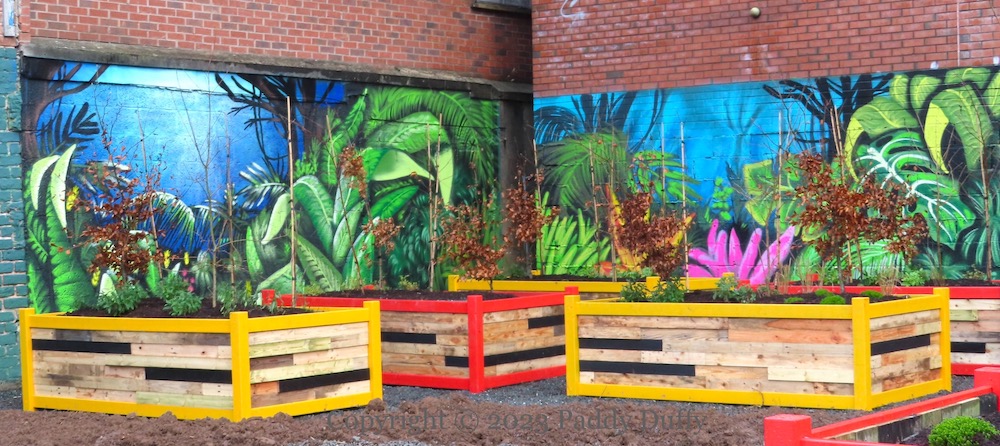
There are now nine planters and ten bird boxes, with a backdrop of tropical plants and birds, at the junction of Downshire Place and Great Victoria Street (Linen Quarter BID).
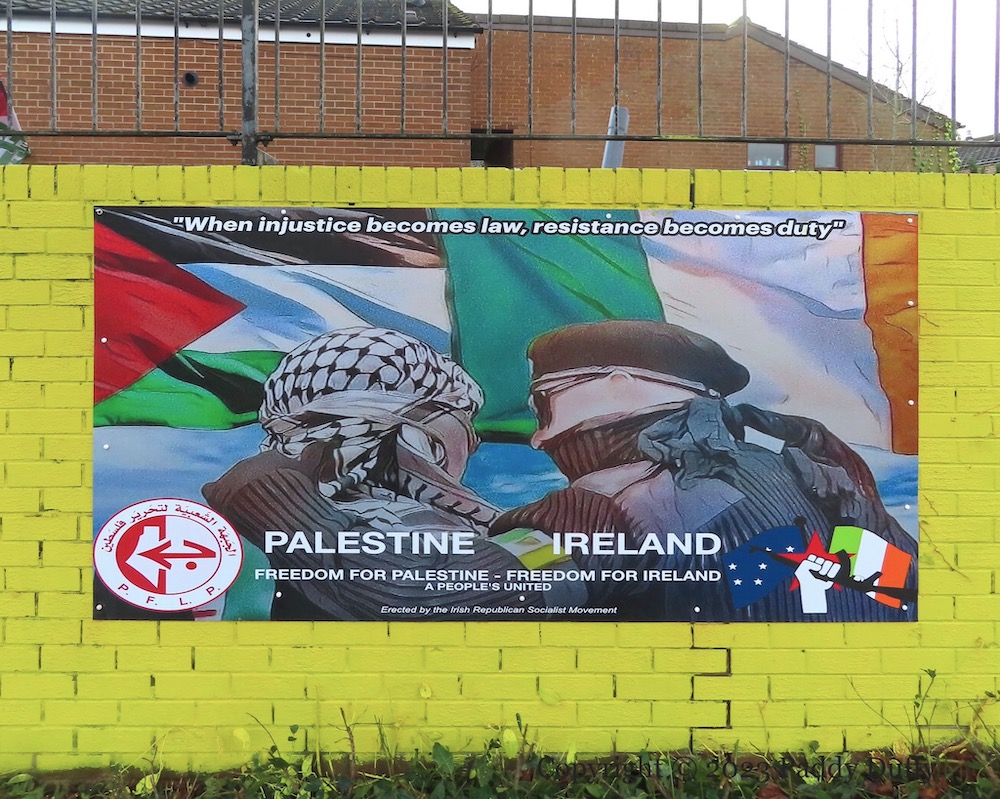
The slogan “When injustice becomes law, resistance becomes duty” has been used in loyalist responses to Brexit and the NI Protocol, in Lurgan, Ballyclare, and Moygashel (one | two). It is used here in reference to Israel’s treatment of Palestinians in Gaza and the West Bank. PFLP (in the bottom-left corner) is the Popular Front For The Liberation Of Palestine (WP) (seen previously in The Popular Front | Solidarity With Palestine | Resistance Is Not Terrorism and murals showing Leila Khaled); in the bottom-right is the emblem of the INLA – starry plough, red star of socialism, Tricolour, and fist holding an assault rifle.
Unlike the book of Lamentations (see Our Homes Have Been Given To Foreigners), the book of Jeremiah contains a promise that the peoples of Judah and Israel will return from Babylonian captivity and that the palaces of Judah will be rebuilt. In the New Living Translation, Jeremiah 33 v6 is rendered as, “Nevertheless, the time will come when I will heal Jerusalem’s wounds and give it prosperity and true peace.”
In addition to the Ulster Banner and Israeli flag (in the shape of hearts) we also see the emblem of the Israeli Defence Forces (IDF) – צבא ההגנה לישראל/Tzva Hahaganah leYisrael – and below that אי כניעה or “no surrender” in Hebrew.
“We are at war and we will win” was Benjamin Netanyahu’s response to the Hamas attack of October 7th (Times Of Israel)
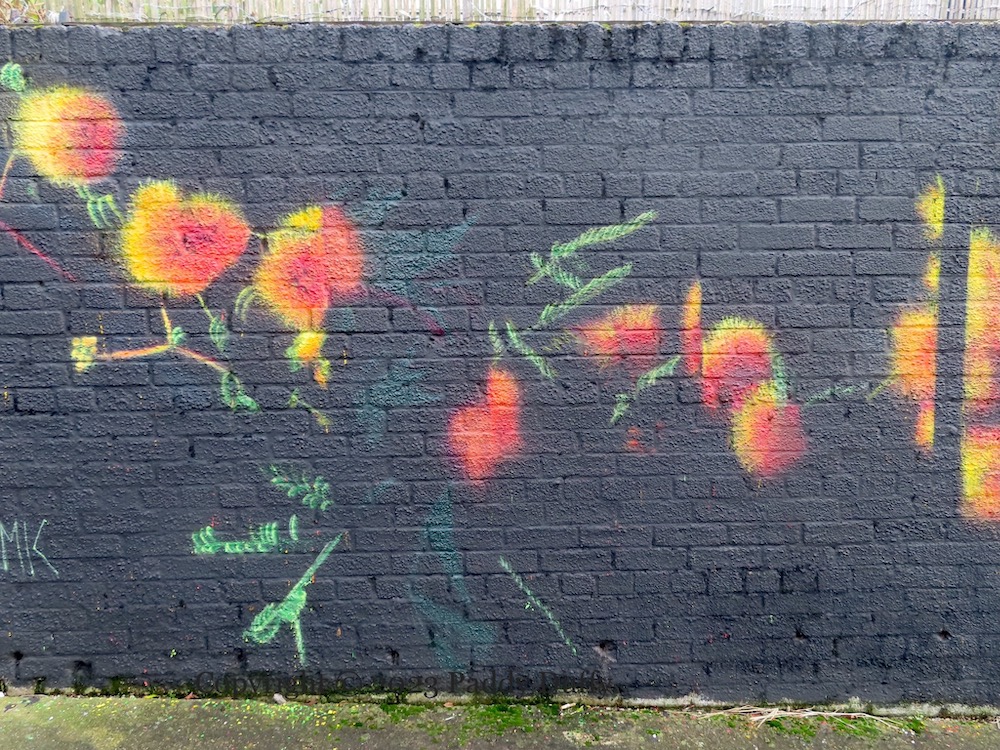
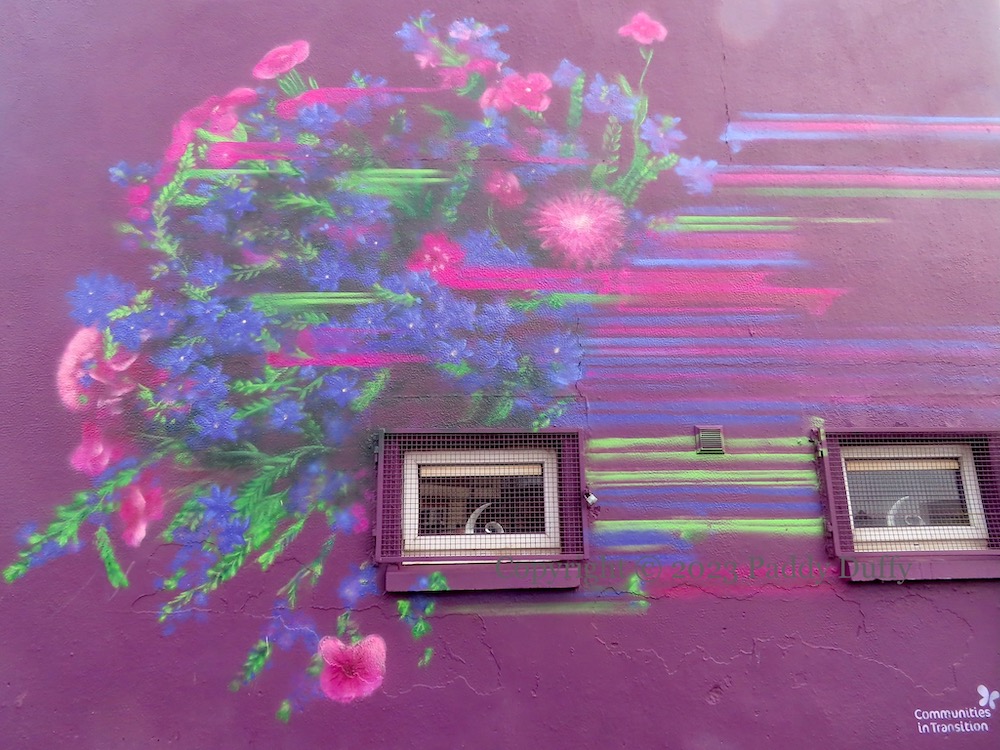
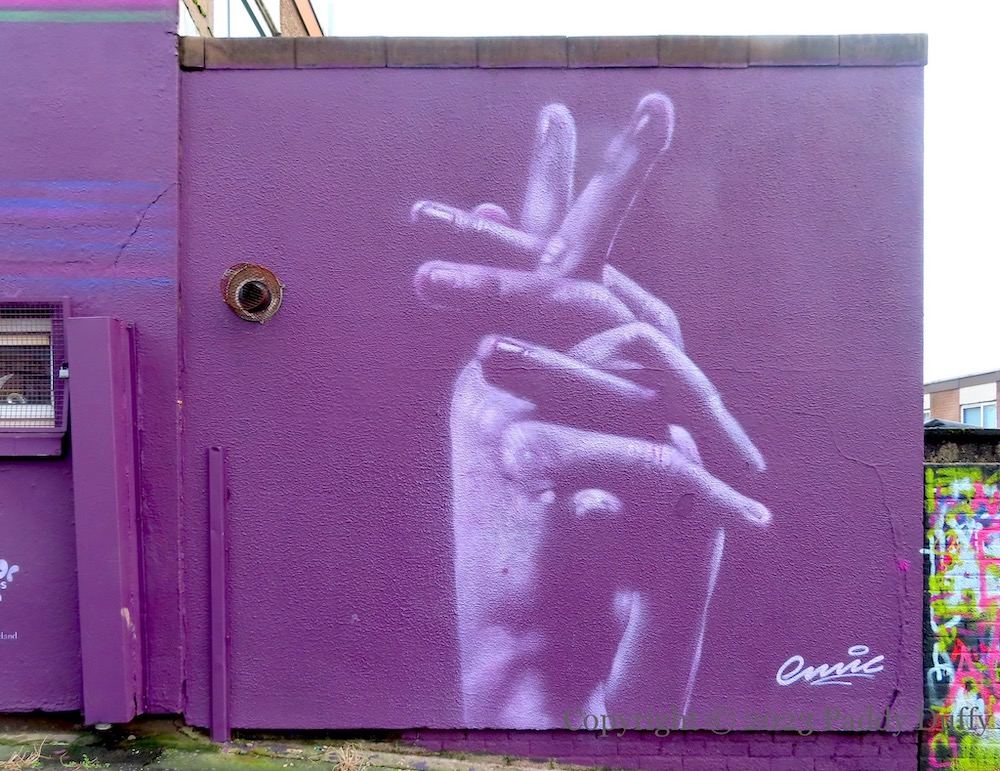
Here is a gallery of the flowers painted last summer (2023-06) in the New Lodge, with some details and some new additions (as compared with New Lodge Gardens), including a pair of hands by emic (ig).
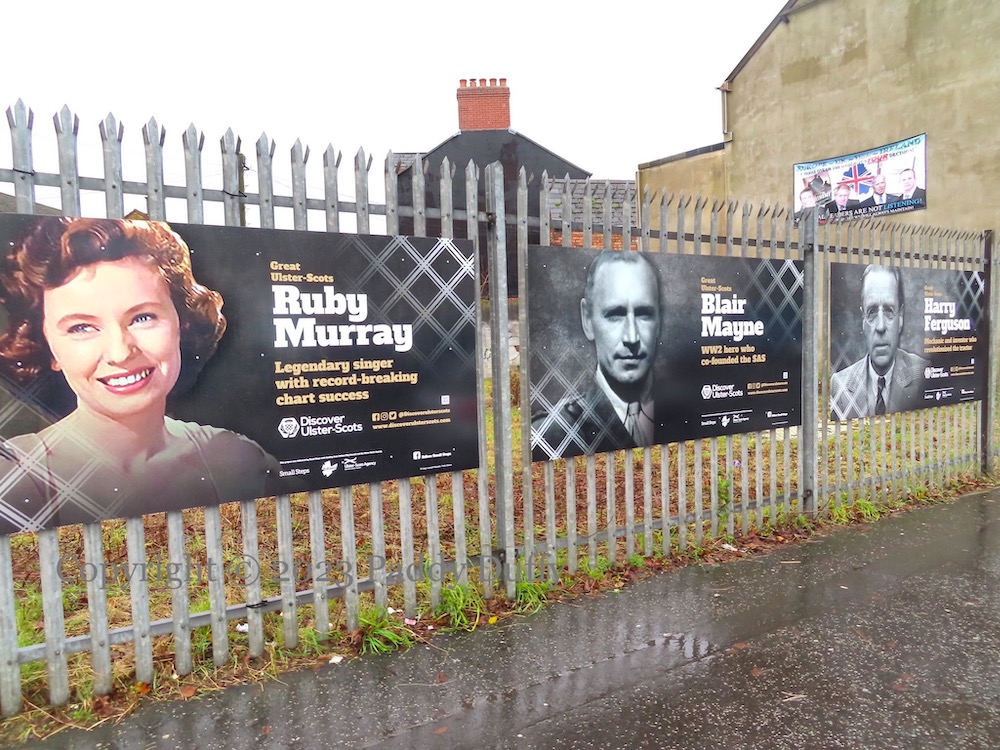
The name “Ulster-Scots” refers to the emigrants to North America from Ulster that had previously come from Scotland and the English borders, and most of the Ulster-Scots murals in the 2000s focused on emigration to America and on US Presidents with Scotch-Irish heritage (see the Visual History page of Ulster-Scots murals).
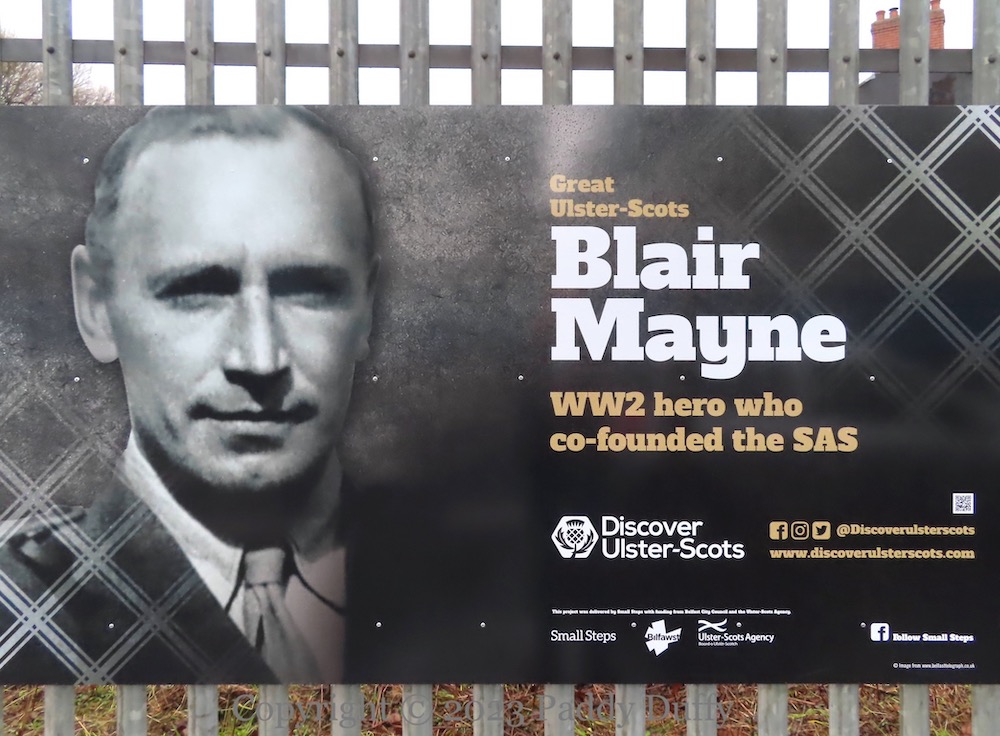
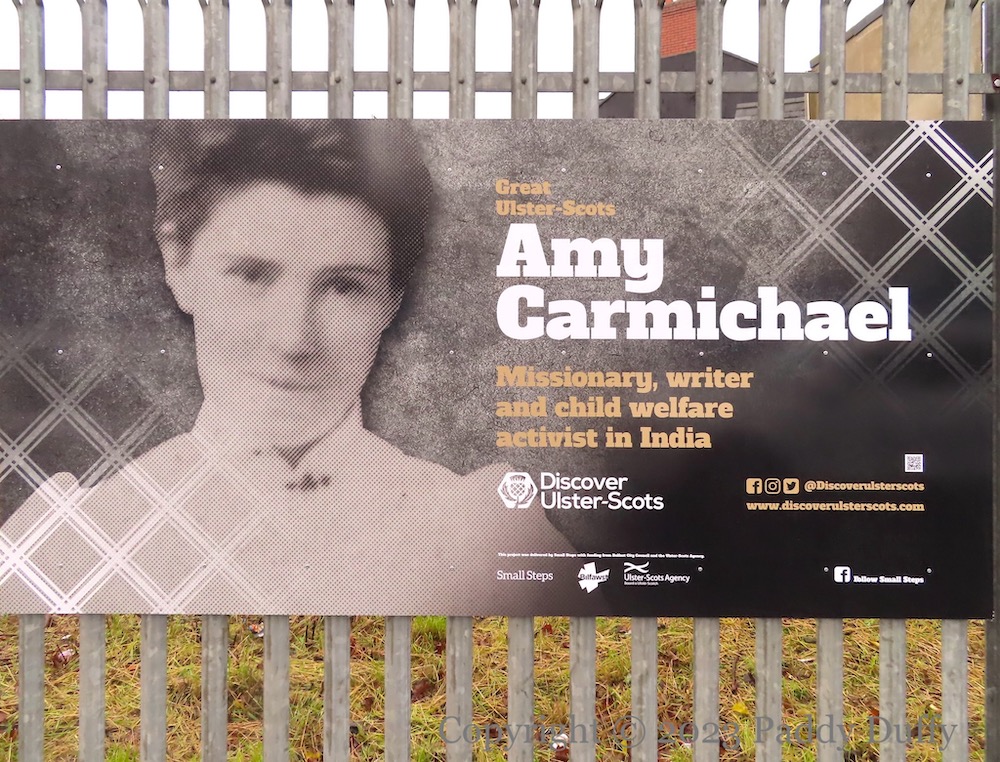
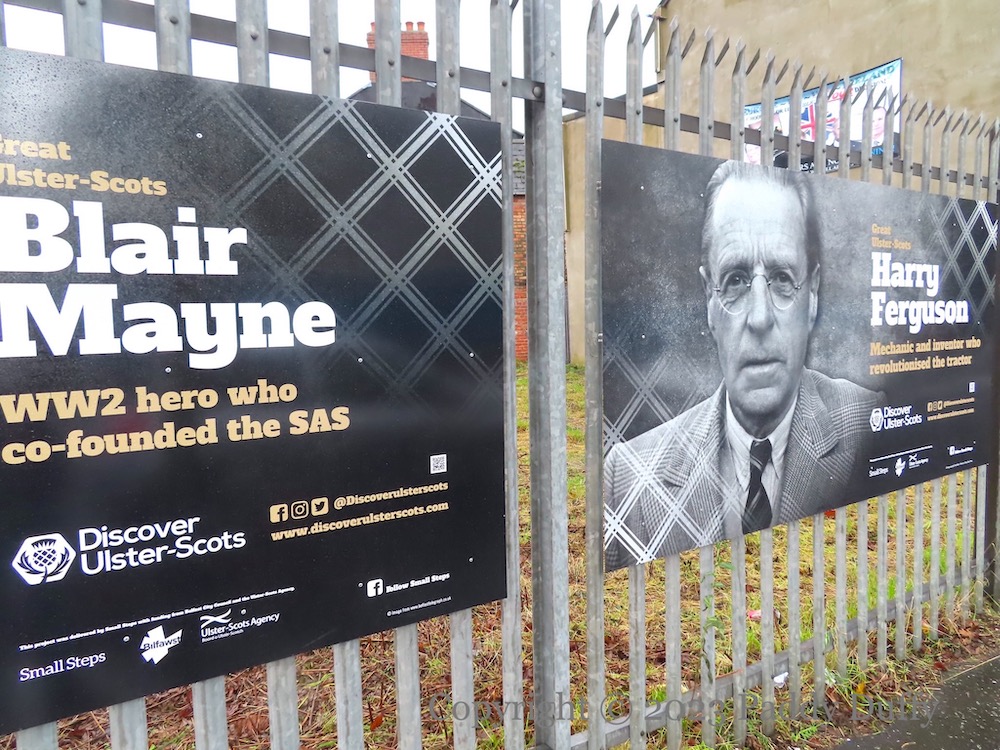
In 2017, a series of boards along York Street focused on industrialists in Northern Ireland with Scottish backgrounds: 13 panels in five posts: one | two | three | four | five. And this new collection of “Ulster-Scots” luminaries (which is 100 paces away) likewise presents figures who are associated with Northern Ireland rather than America. Modern folk such as those portrayed in these new boards presumably have Scottish heritage rather than Scotch-Irish. (The title of this entry – The Scots In Ulster – comes from a Discover Ulster Scots poster about the Scots who came to Ulster in the 1600s, regardless of whether or not they or their descendants later moved to America.)
From left to right, the people shown are as follows. (Links are to previous entries in the Extramural collection.)
Mountcollyer: motorcyclist Rex McCandless, author CS Lewis, physicist John Stewart Bell, song-writer Jimmy Kennedy, medical inventor Frank Pantridge
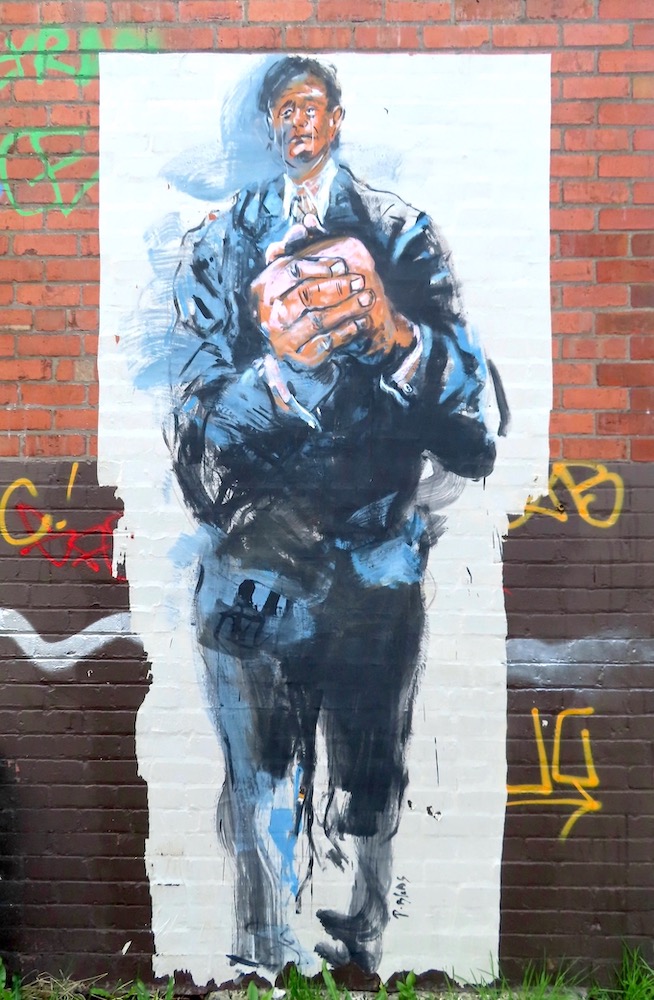
“Dorn san aer do na Gaeıl [a fist in the air for the Irish] Rónán Mac Aodha Bhuí 1970-2023”. Mac Aodha Bhuí joined Ráıdió Na Gaeltachta in the 1990s but was best known for his Rónán Beo@3 programme (which is inscribed on the ring on the first), which began in 2006. He was a passionate advocate for the Irish language. He died this past September after a four-year battle with cancer. (RTÉ | Irish Times | Donegal Daily)
The official launch of the mural will be at 2 p.m. on Friday (December 1st). Update: by the time of the launch a photograph of Mac Aodha Bhuí was added.














 Paddy Duffy Collection