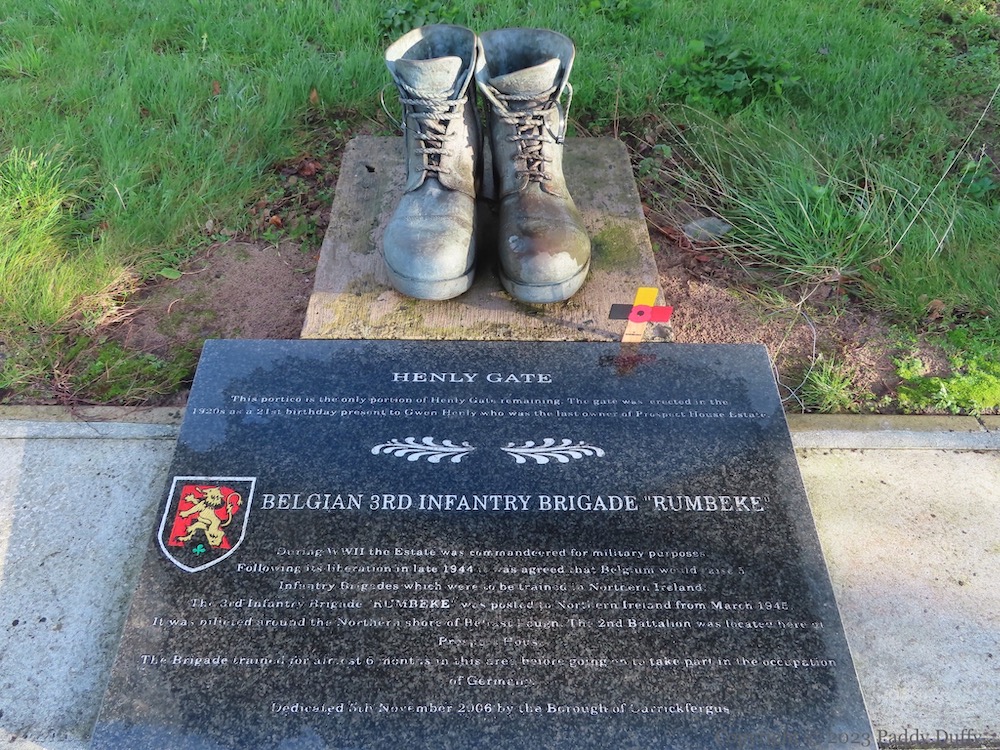
Henly Gate

Five Belgian brigades trained in Northern Ireland towards the end of WWII, as the Belgian Army rebuilt itself after the liberation of Belgium in 1944 (WarTimeNI). The 3rd or ‘Rumbeke’ brigade was raised in March 1945 and trained in six south-east Antrim towns, including Carrickfergus, where they were stationed at Henly House. After training, it took part in the occupation of Germany for about six months (BE Brigades). The boots and plaque are beneath the arch of what was once Prospect House.

The text on the plaque reads in full: “Henly Gate. This portico is the only portion of the Henly Gate remaining. The gate was erected in the 1920s as a 21st birthday present to Gwen Henly who was the last owner of Prospect House Estate. Belgian 3rd Infantry Brigade “Rumbeke”. During WWII the Estate was commandeered for military purposes. Following the liberation in late 1944 it was agreed that Belgium would raise 5 Infantry Brigades which were to be trained in Northern Ireland. The 3rd Infantry Brigade “Rumbeke” was posted to Northern Ireland from March 1945. It was billeted around the Northern shore of Belfast Lough. The 2nd Battalion was located here at Prospect House. The Brigade trained for almost 6 months in this area before going on to take part in the occupation of Germany. Dedicated 5th November 2006 by the Borough of Carrickfergus.”

At the junction of Woodburn Rd and Prospect Rd, Carrickfergus.

Click image to enlarge
Copyright © 2023 Paddy Duffy
T01827 [T01828]

The Greater Shankill

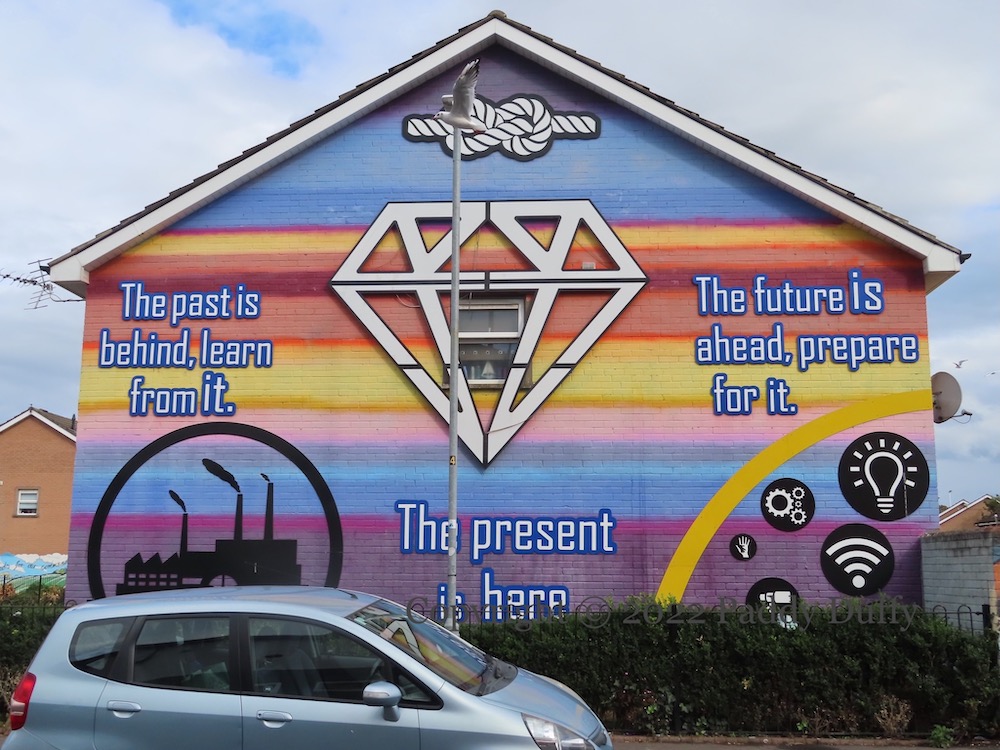
London street artist Dan Kitchener’s (web | ig) piece “Hope” features a Tokyo landscapes behind a geisha. “The wall is dedicated to Sandra – サンドラ. Sandra McCurry worked and owned Mikala’s Kitchen on The Shankill Road, Sandra worked tirelessly for the local community and sadly passed away” (Belfast Walking Tours Fb).

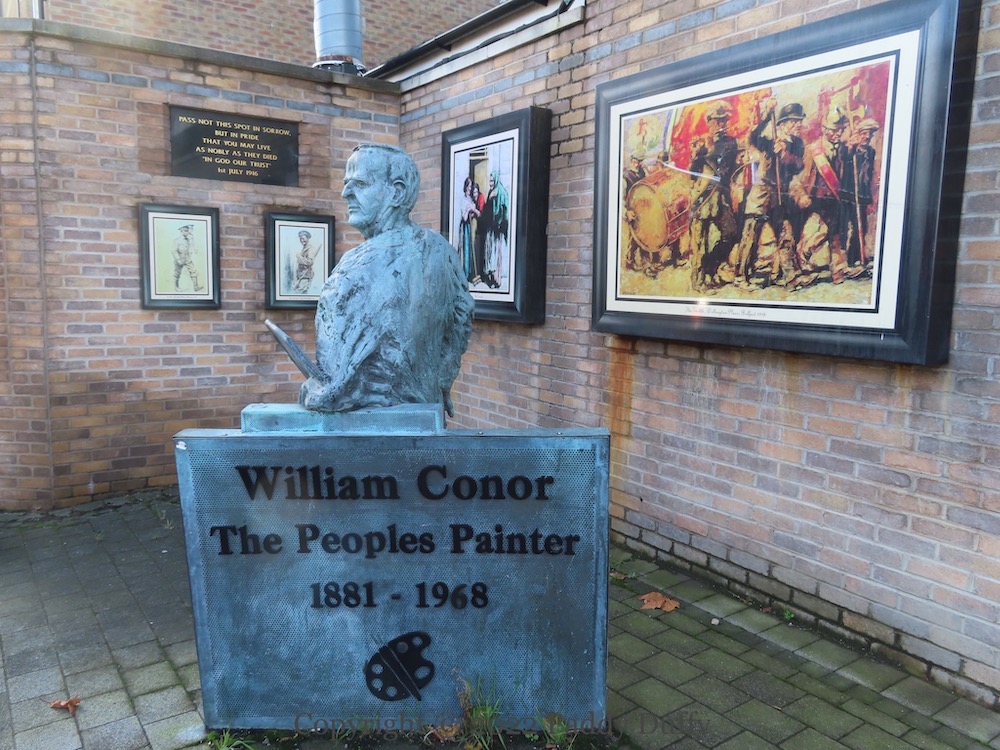
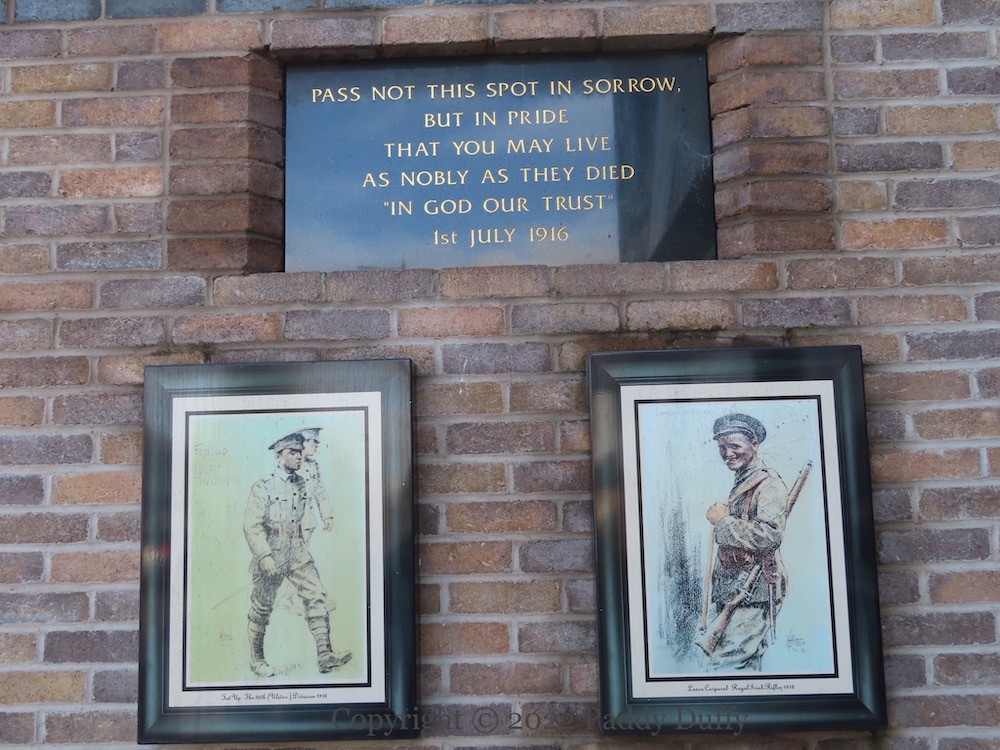
The geisha has (bizarrely) been situated above “Conor’s Corner”, where William Conor has been rendered in bronze by sculptor Holger Lönze and placed among a number of Conor’s paintings. (For images of the sculpture in progress, see Lönze’s site and the project’s Facebook page.) Connor (later Conor) was born in the Old Lodge area of Belfast (in 1881) close to the location of the new bronze statue shown in these images, which is at the corner of Northumberland Street and Shankill Road, replacing the UVF/Shankill Protestant Boys mural (see M02457).

The info board describes his methods in capturing the Belfast street scenes for which he is most famous: “Conor was developing a spontaneous drawing technique by recording quick impressions, and it soon became a habit for him to go out into the streets with a newspaper, which contained loose leaves from his sketchbook. When he saw anything of interest he leant against a lap post or wall, took out his newspaper as though he were simply reading the sports results and sketched away.”

For more info, see the project’s web site. For images of many of Conor’s paintings, see ArtNet.

Click image to enlarge
Copyright © 2022 Paddy Duffy
T01350 T01351 [T01352] T01353

Carving Out A Place In History

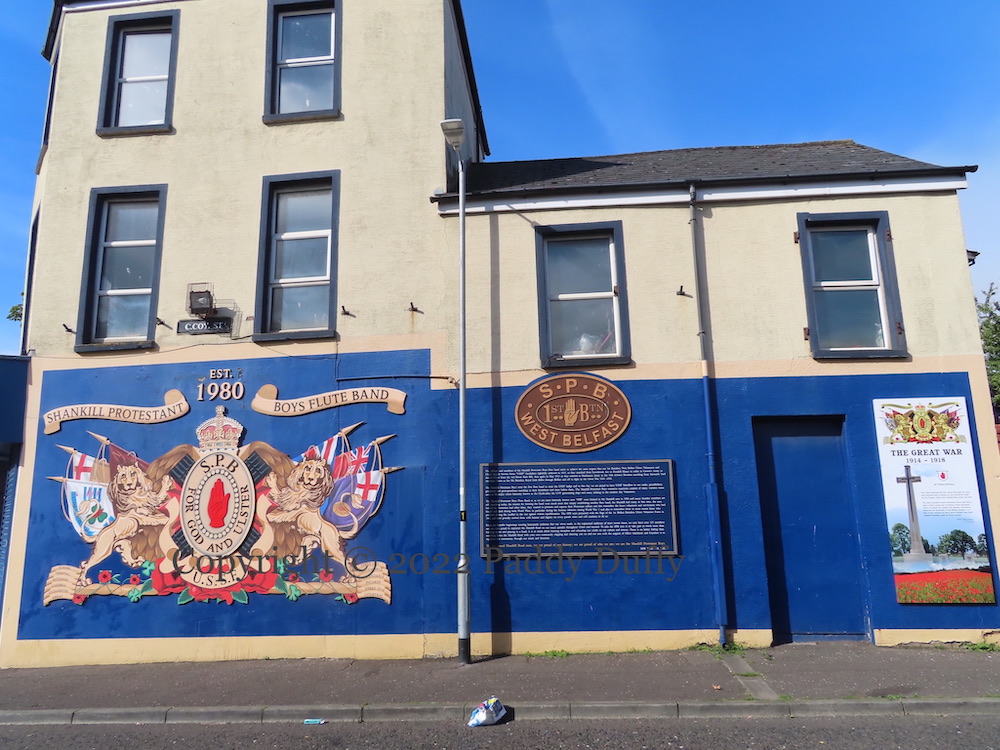
At first glance the piece above looks like a colourful mural but it is in fact a large painted carving of lions rampant on either side of the emblem of the Shankill Protestant Boys flute band, named for the Shankill Boys of the original Ulster Volunteers and the Ulster Special Service Force unit within it which was designed to be a unit of “first responders”, ready to react at short notice to action by republicans or British forces anywhere in northern Ireland (historyireland).

Click image to enlarge
Copyright © 2022 Paddy Duffy
T00909 [T00906] [T00907] [T00908]