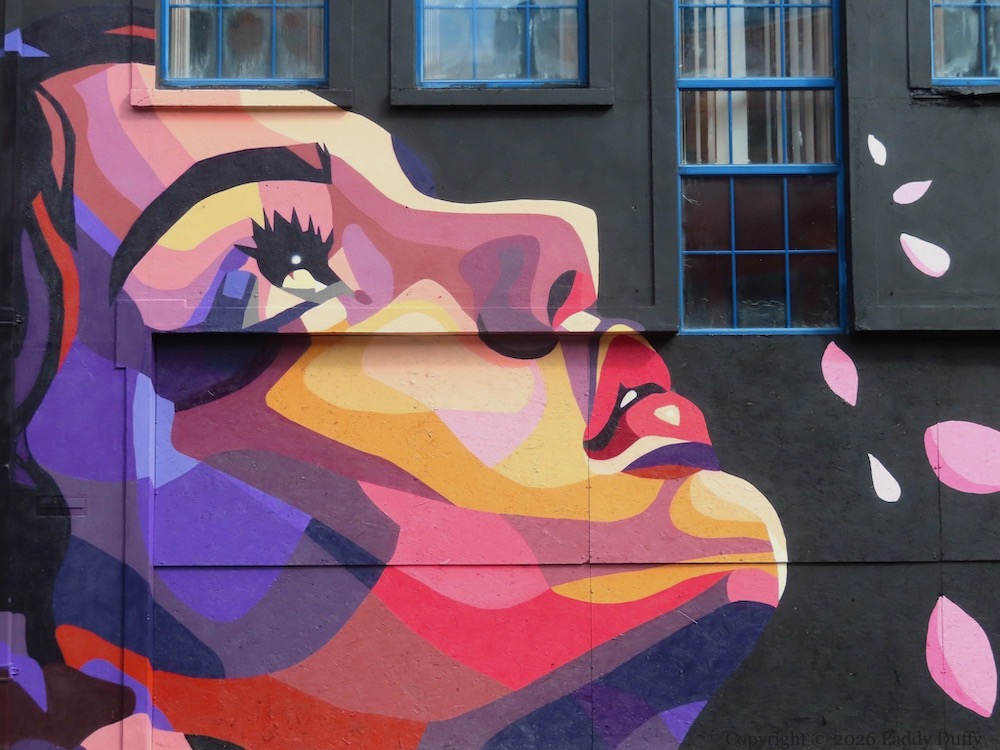
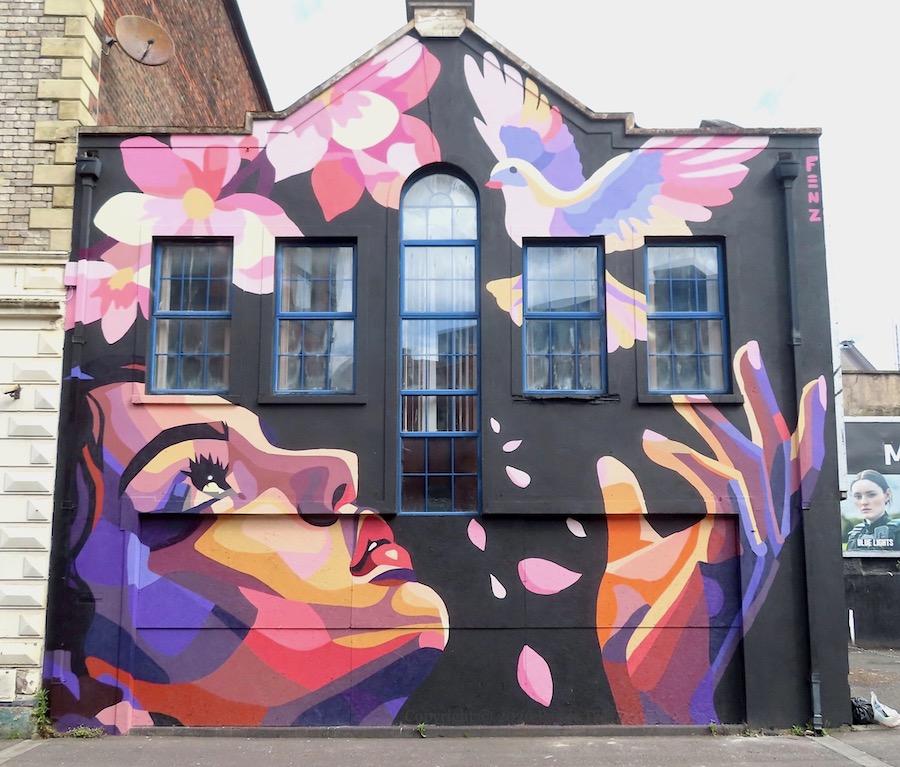
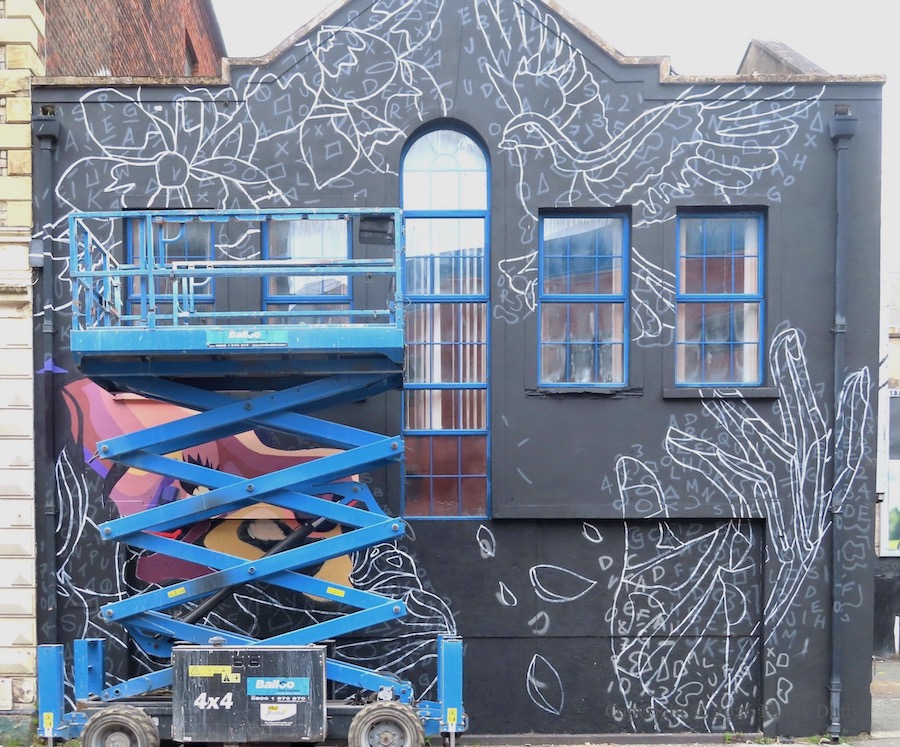
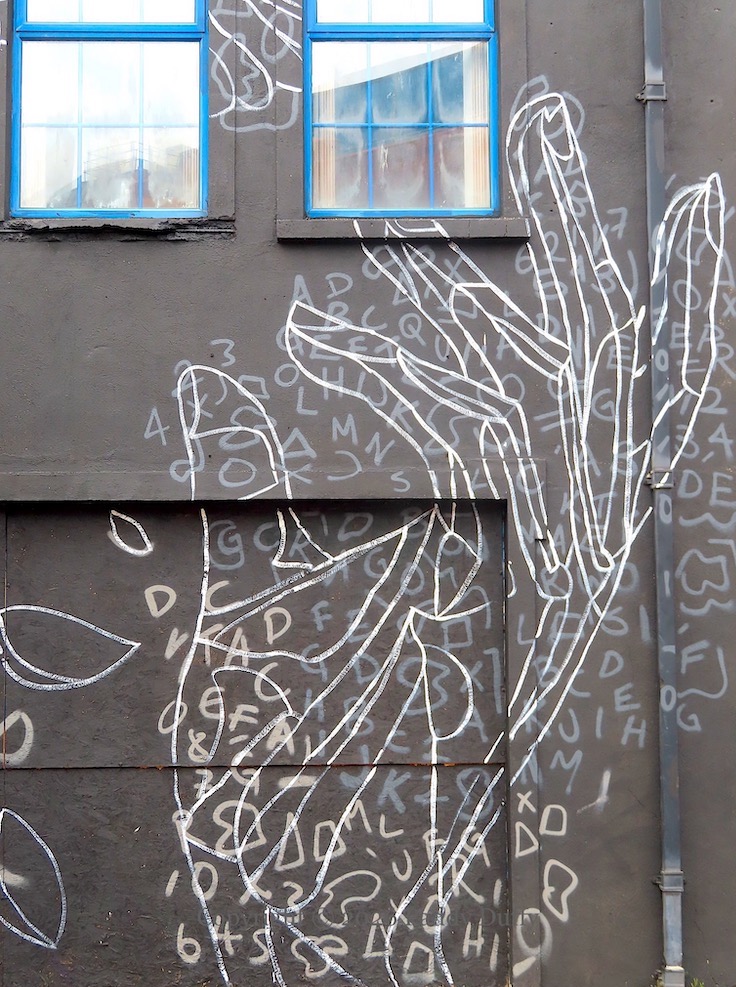
A dove takes flight and petals fall from roses in this new work by Fenz (web) for Hit The North 2026 on the shuttered offices of Rollins Insurance Brokers in Clarence Street.
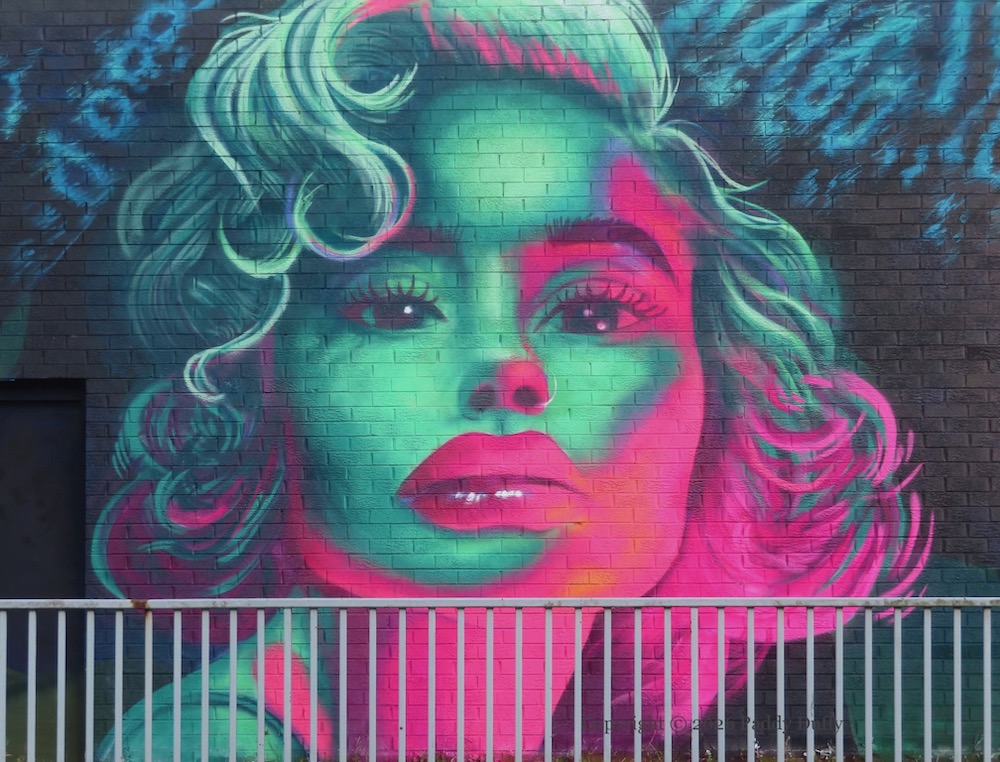
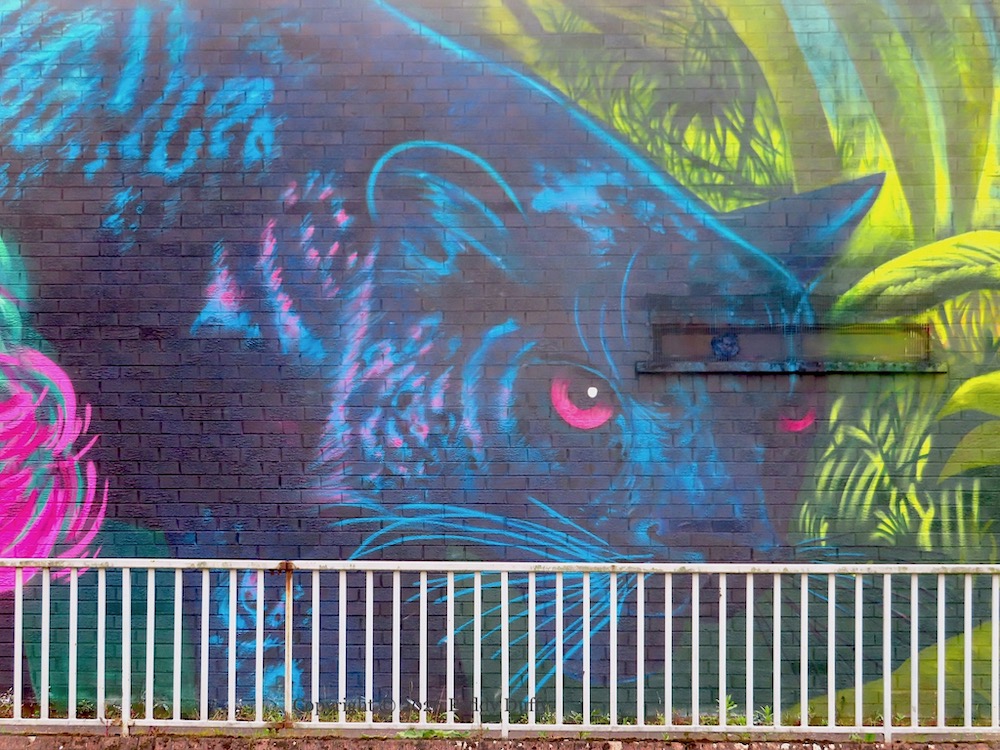
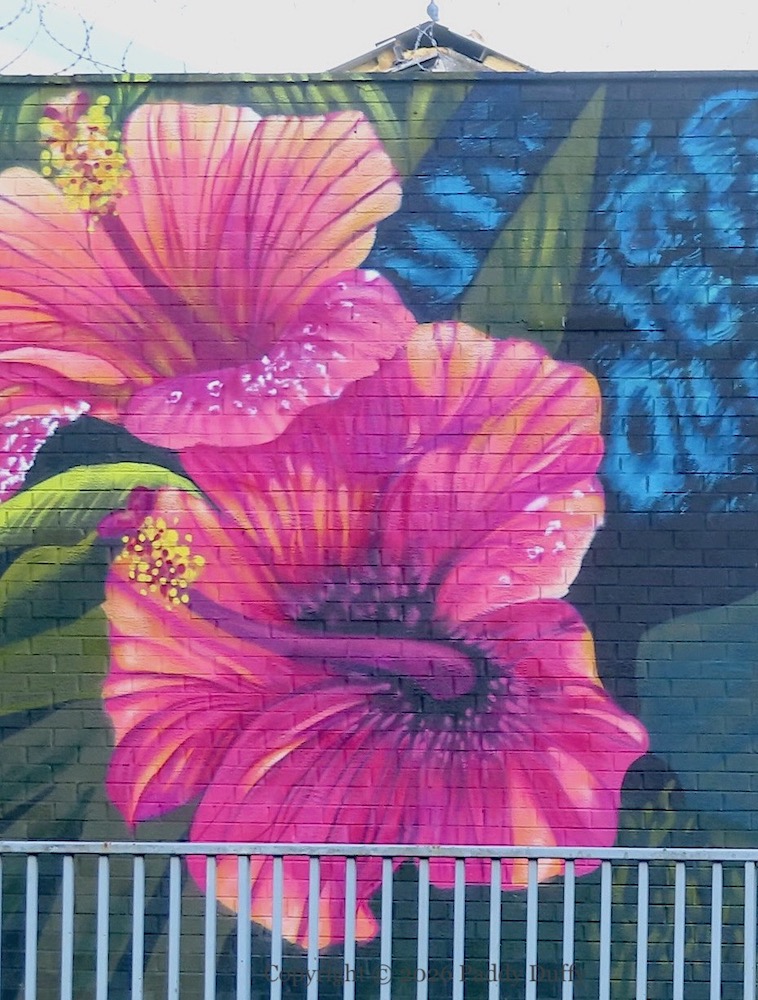
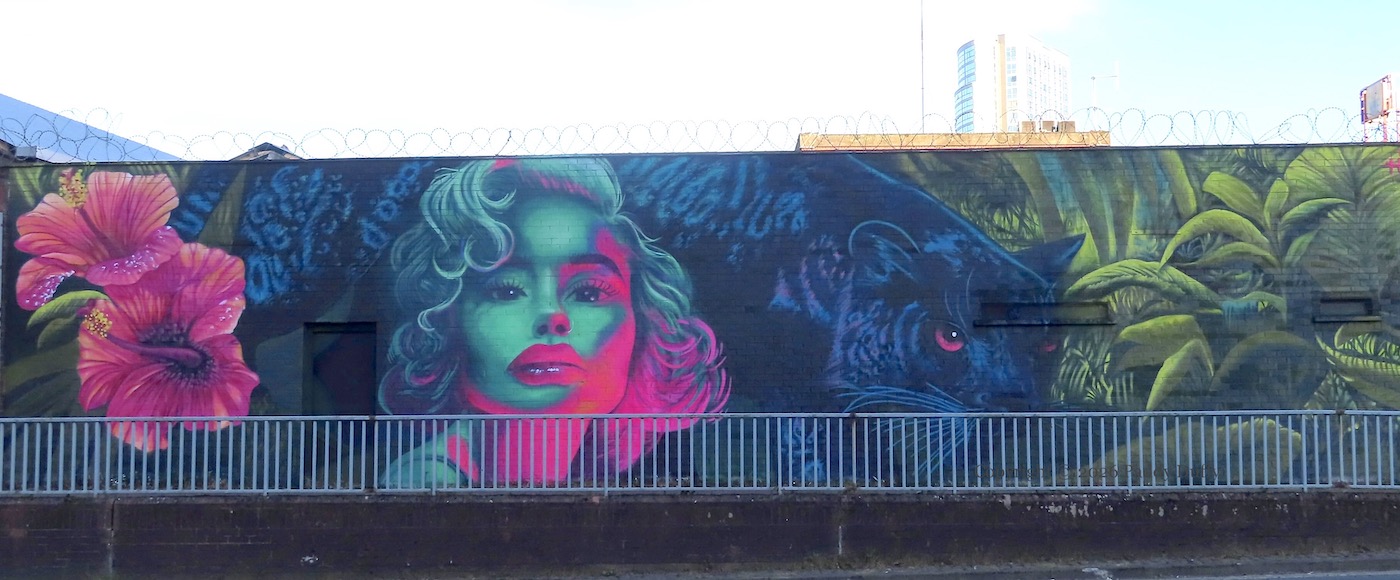
This new piece – placing a cosmetological beauty in a jungle scene of exotic plants and a black panther – was painted for 2026’s Hit The North street-art festival by HMC (web) in Nelson Street (near Great Patrick Street).
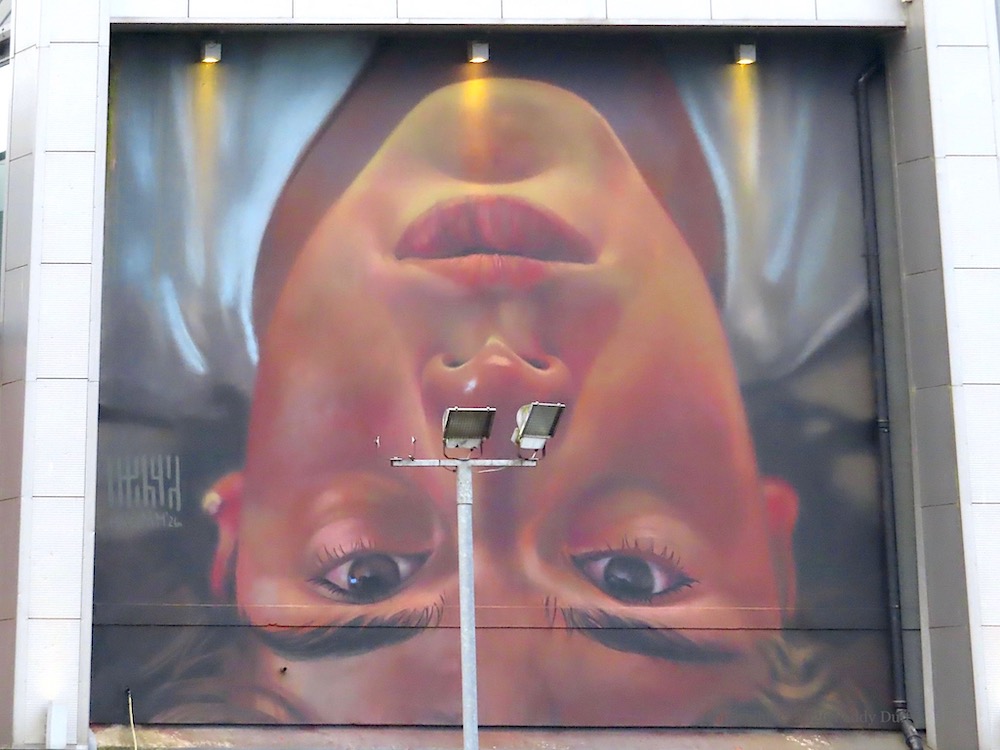
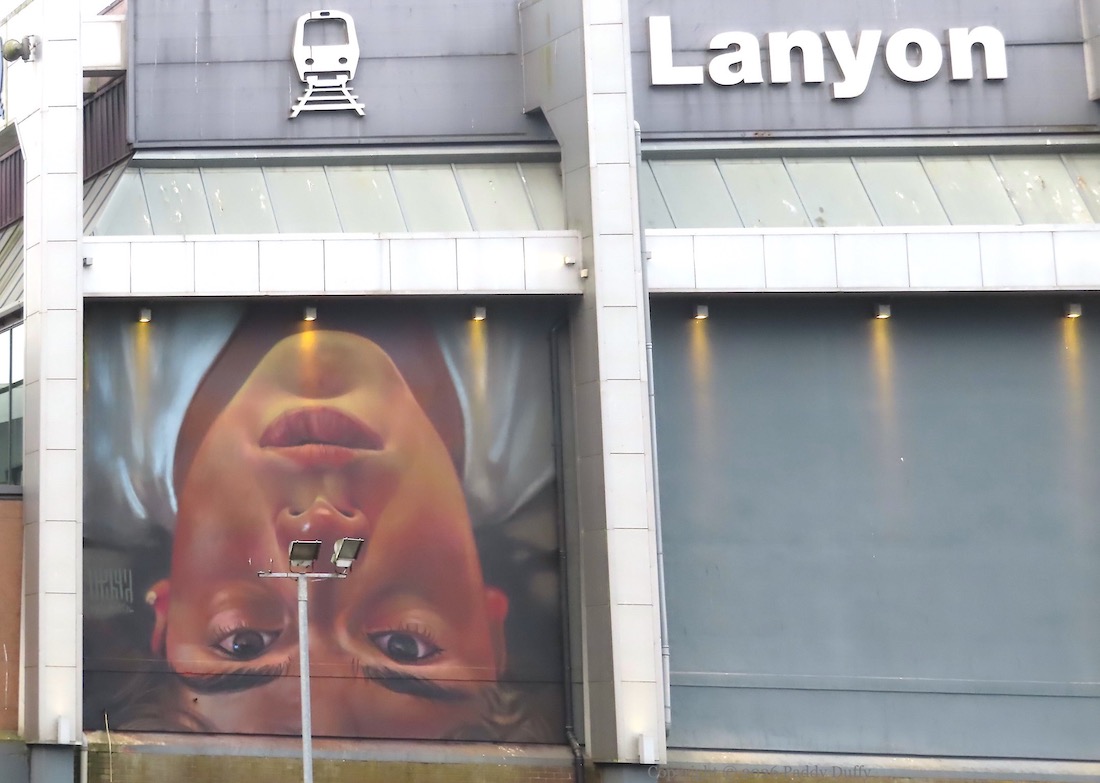
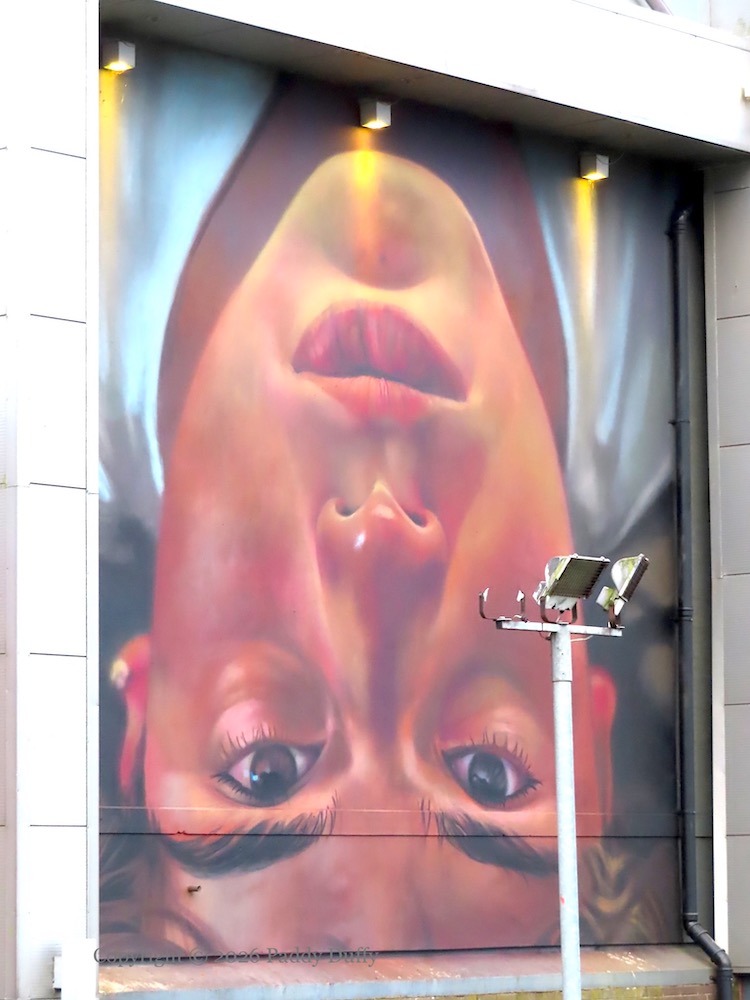
Frankfurt-based artist Case Maclaim (ig) was one of the international guests for Hit The North 2026 and painted this upside-down face outside Lanyon Place train station.
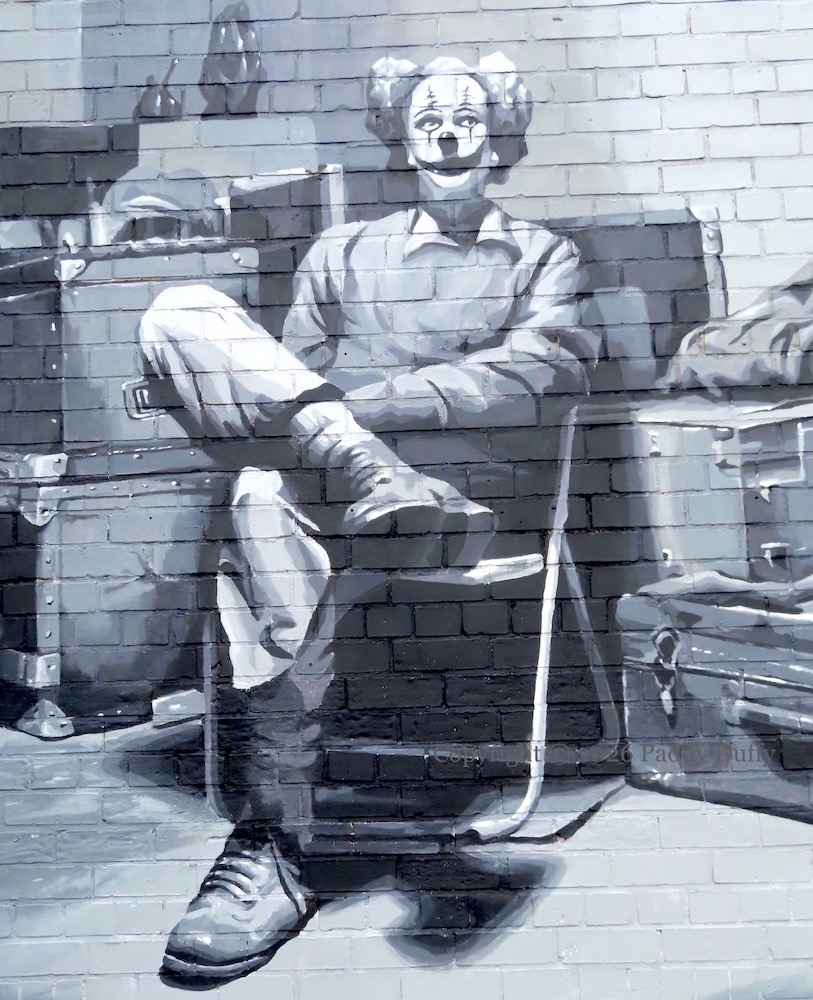
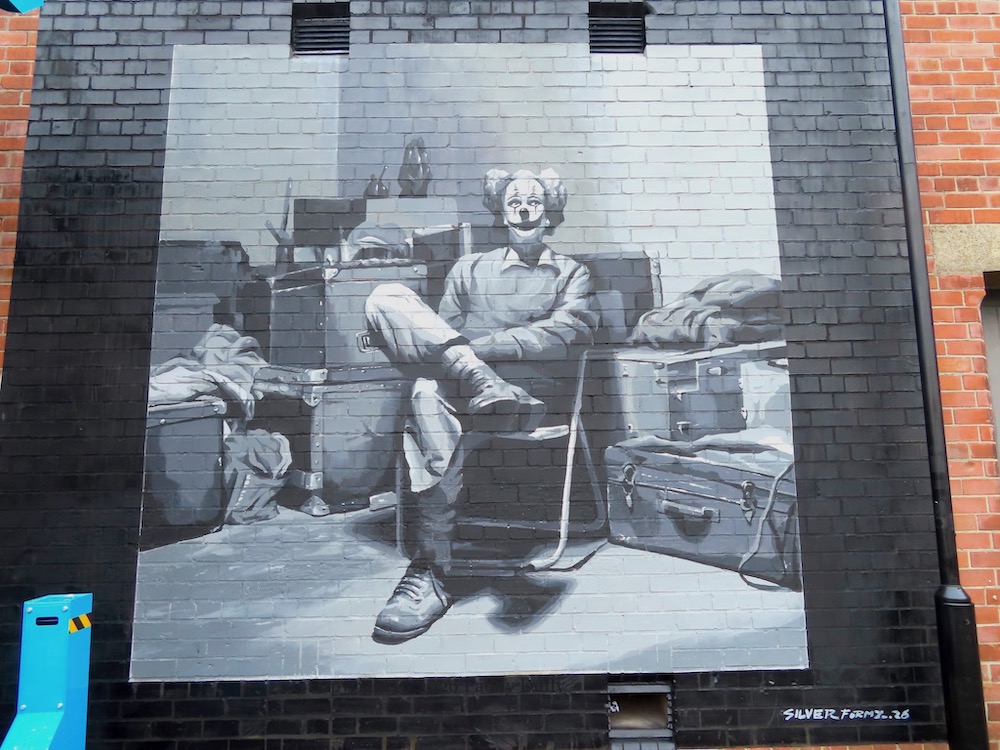
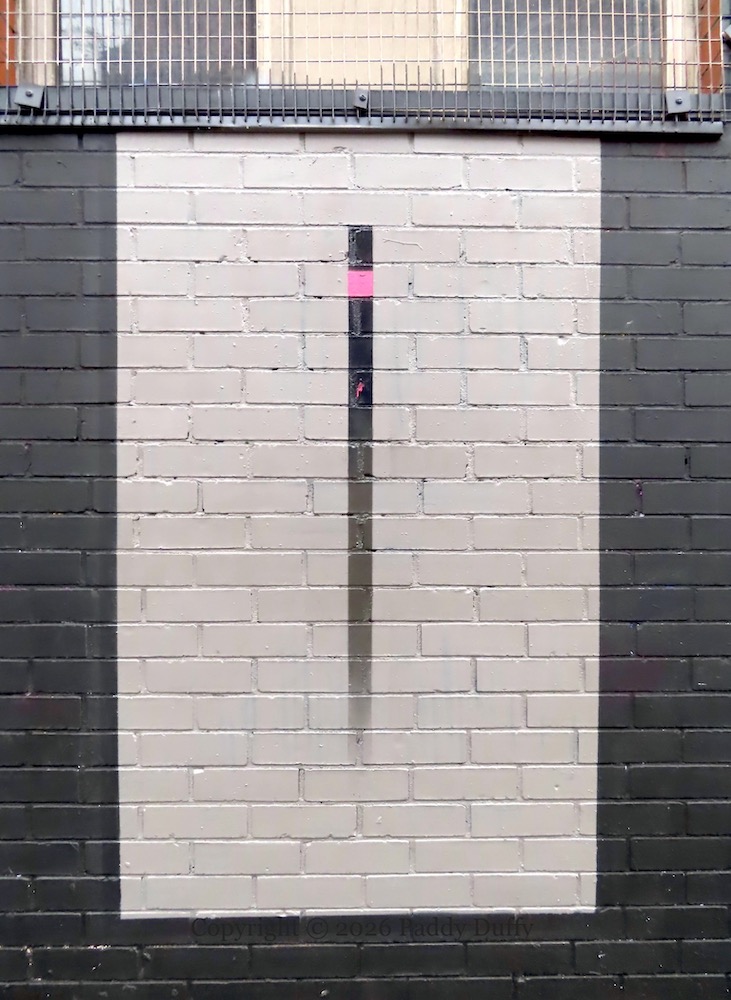
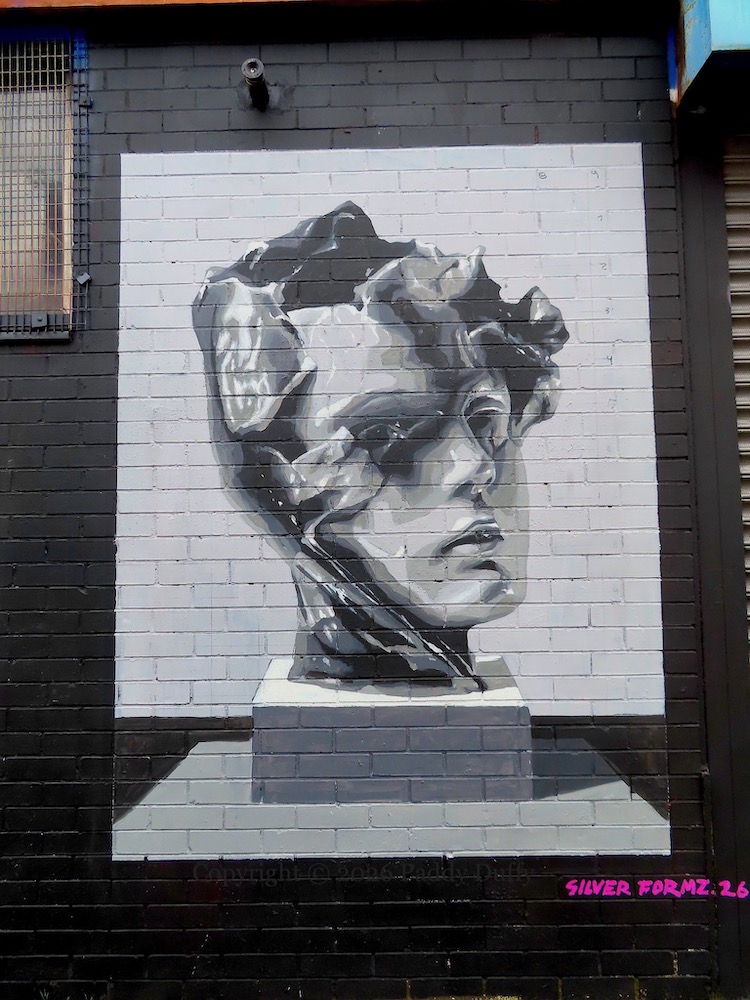
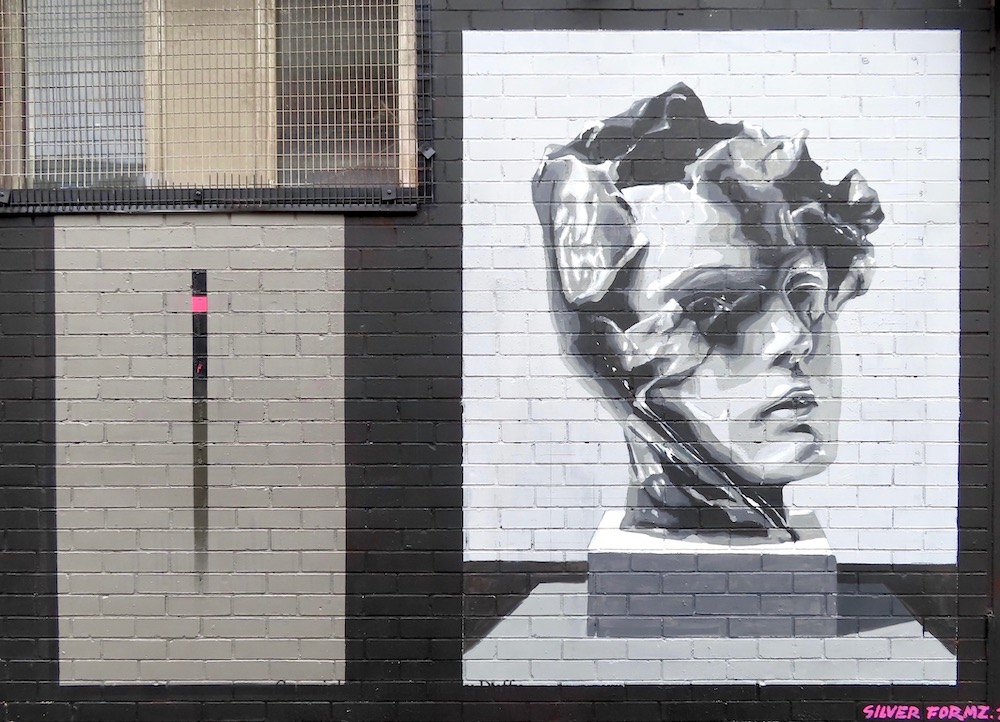
Here are two pieces by artist Silver Formz (ig) painted for this year’s (2026) Hit The North. The clown above and immediately below is in Dunbar Street; the distorted bust is in Union Street.
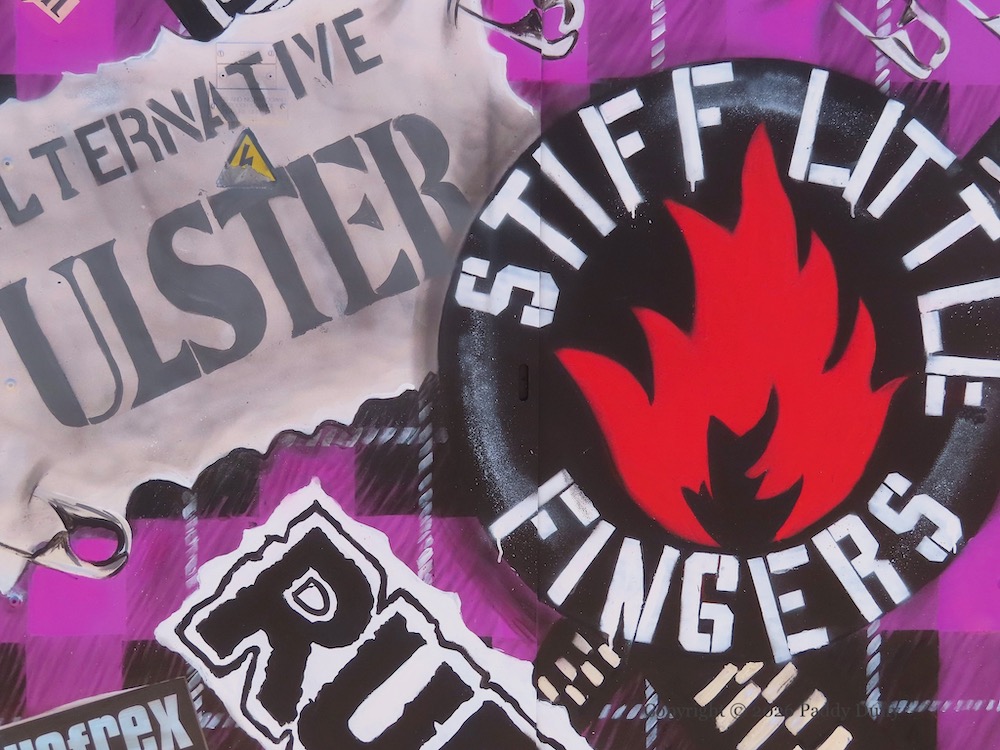
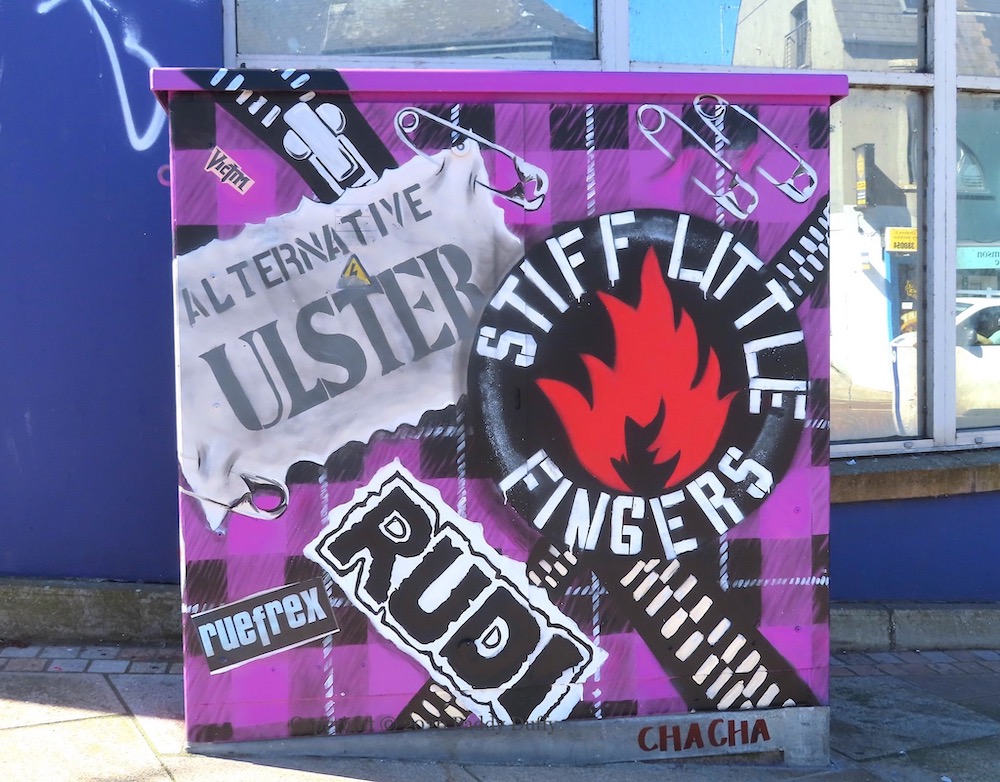
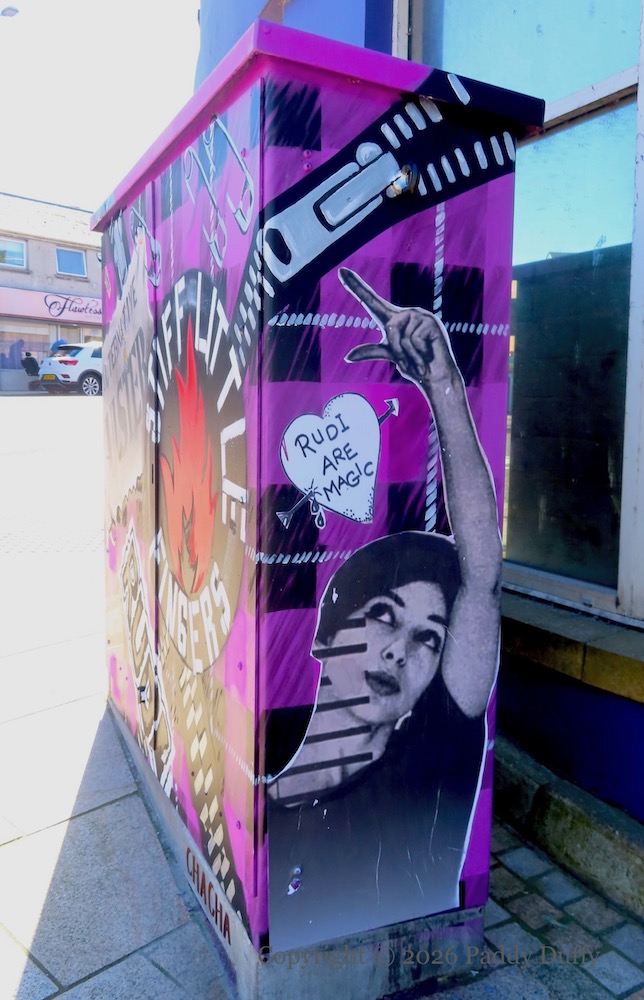
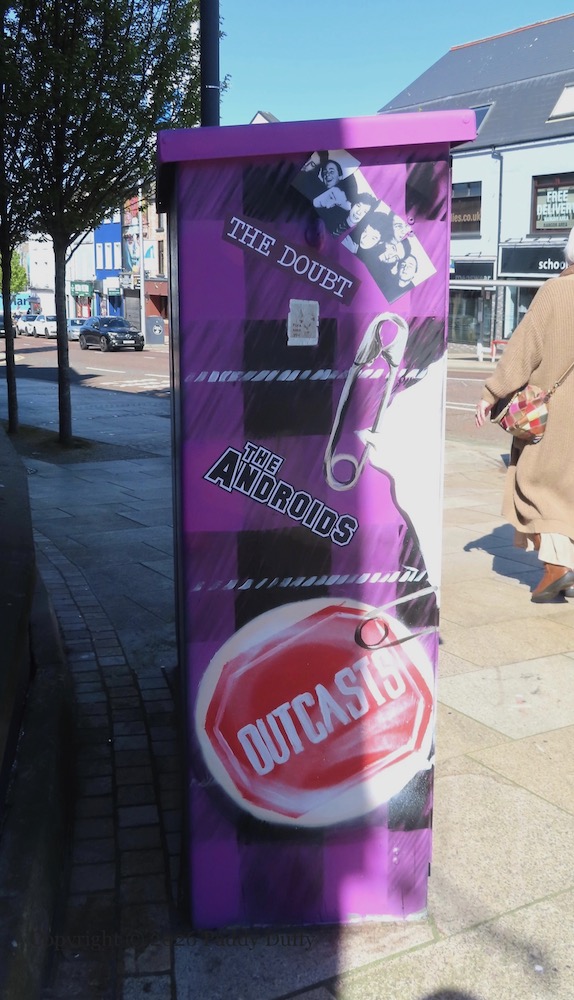
There is a ‘blue plaque’ outside the Trident bar in Bangor’s High Street, to commemorate its role in the punk movement of the late 1970s (BBC | Guardian). The bands listed on this painted electrical box are Ruefrex (web), Stiff Little Fingers (web), Rudi (Something Hard), The Doubt (Irish Rock), The Androids (Spit), The Outcasts (Faster & Louder).
The bar is referenced in the SLF song “Alternative Ulster” (lyrics). Despite the claim that “there’s nothing for us in Belfast”, there is a plaque remembering the punk scene outside the Harp Bar – see Belfast Has The Reason.
By Cha Cha (ig), one building up from the Trident (Wolsey’s), High Street, Bangor
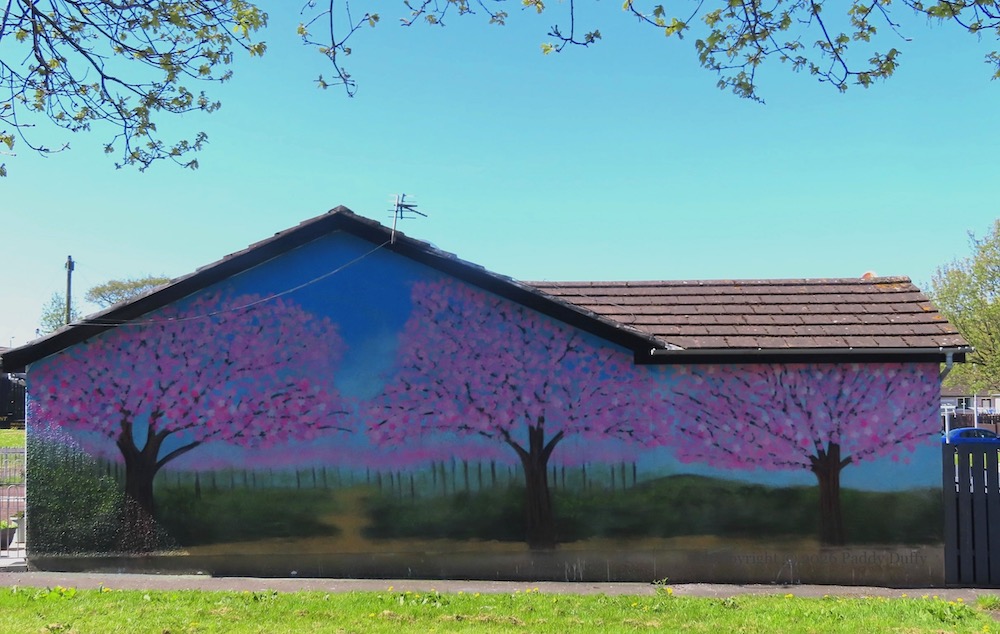
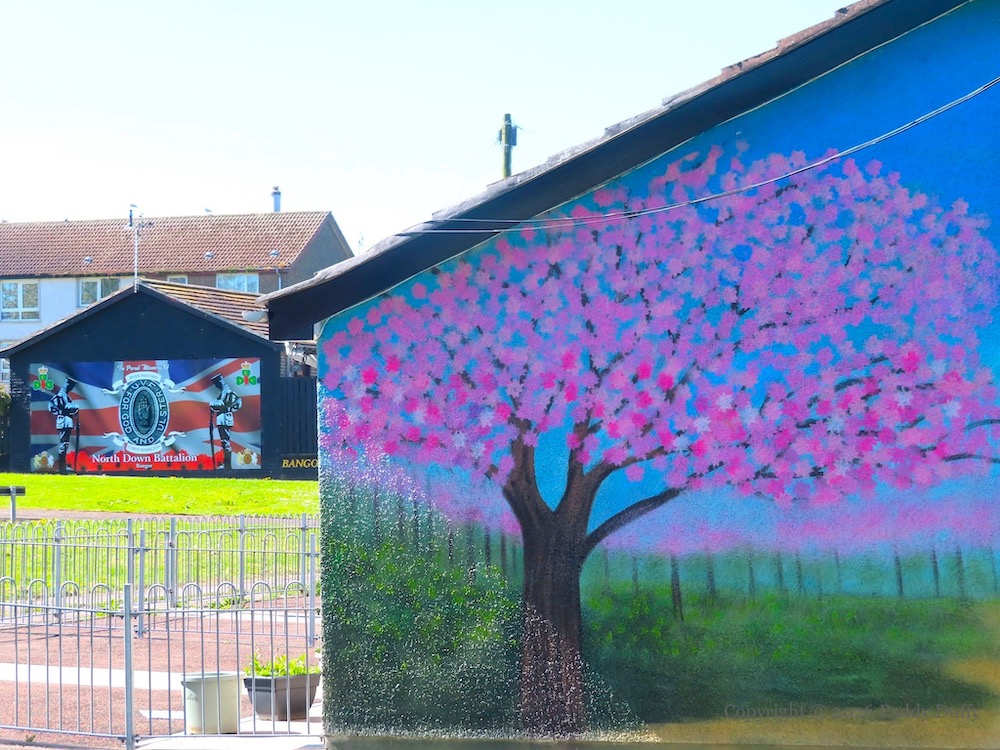
Cherry blossoms along Drumhirk Drive, Kilcooley, Bangor. For the UVF board to McCosh And Hamilton to the left of the wide shot, see The Pride O Oor Land Lie Cauld In The Clay.
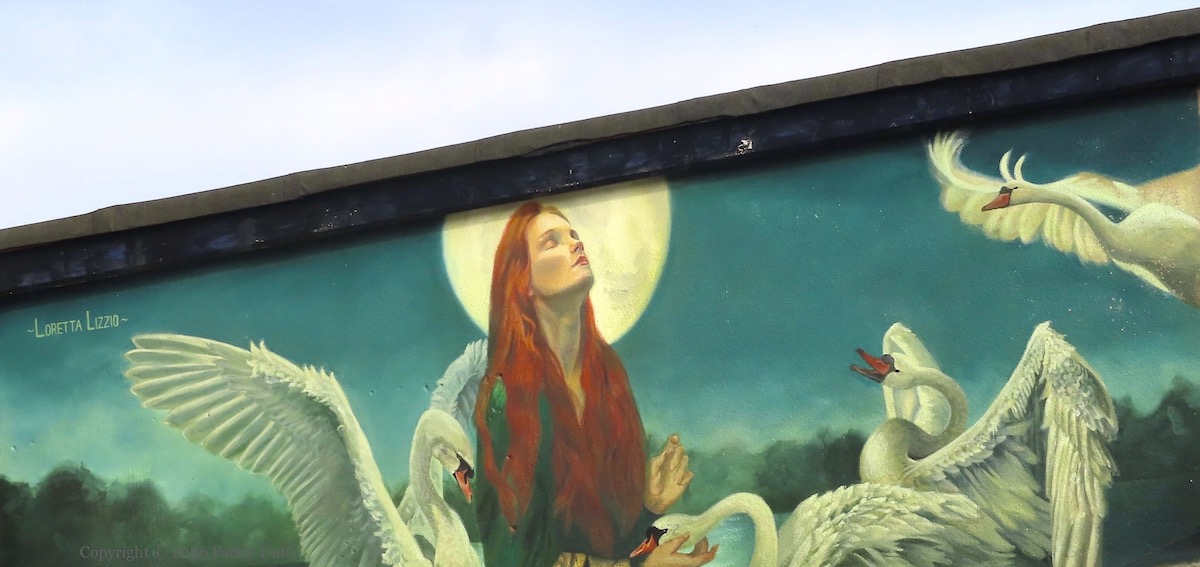
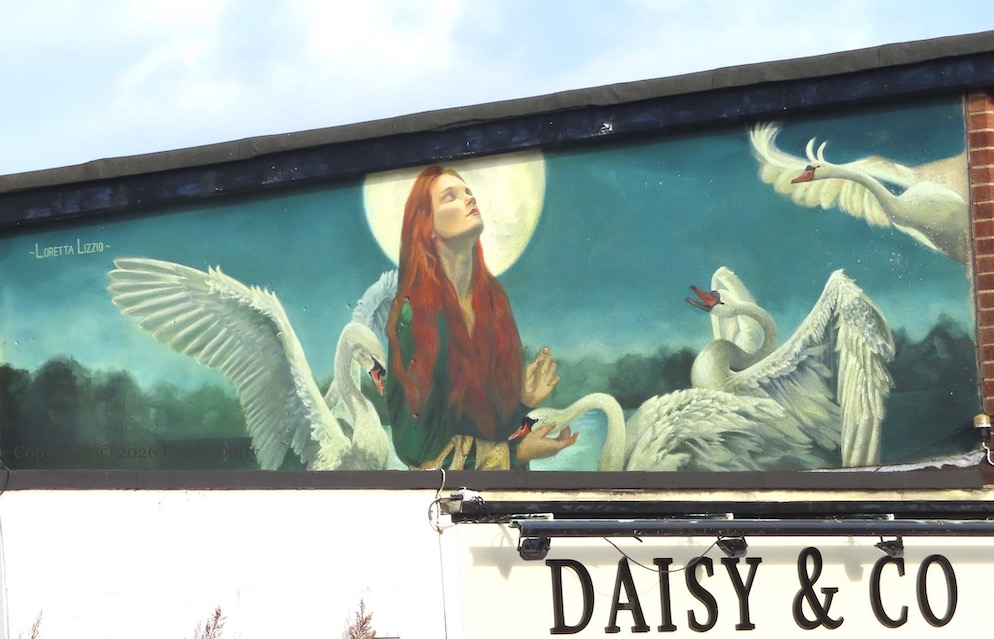
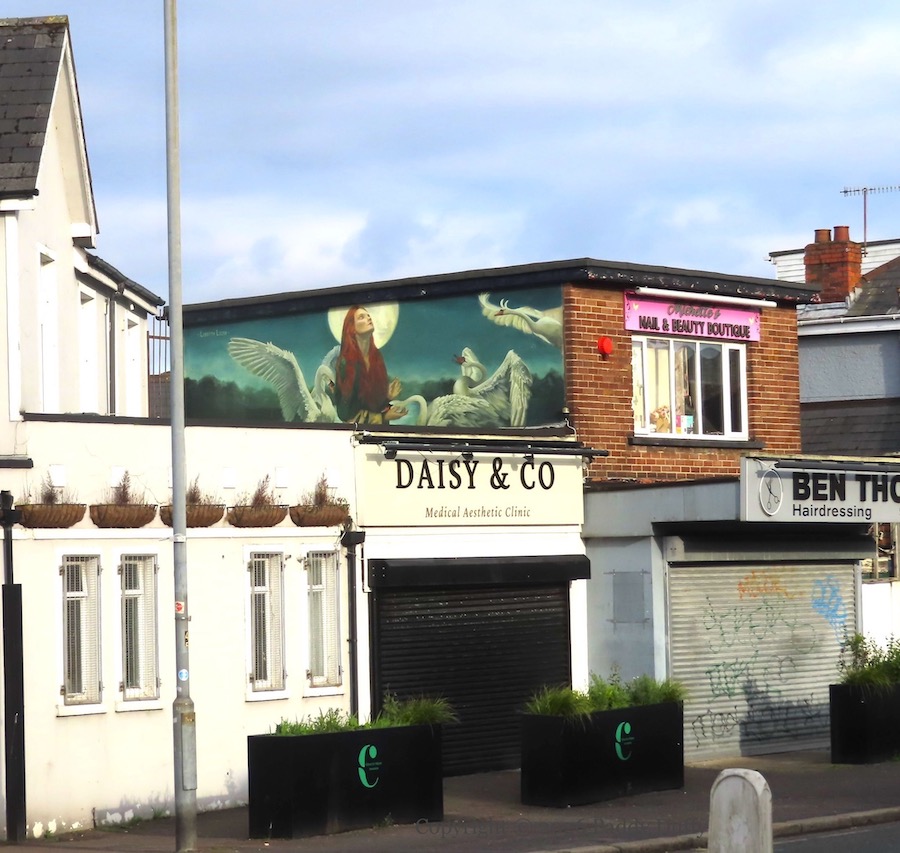
This scene from the story of Clann Lır (the Children Of Lear) appears to be the moment that Aoıfe casts a spell that turns her four step-children into swans on Loch Daırbhreach.
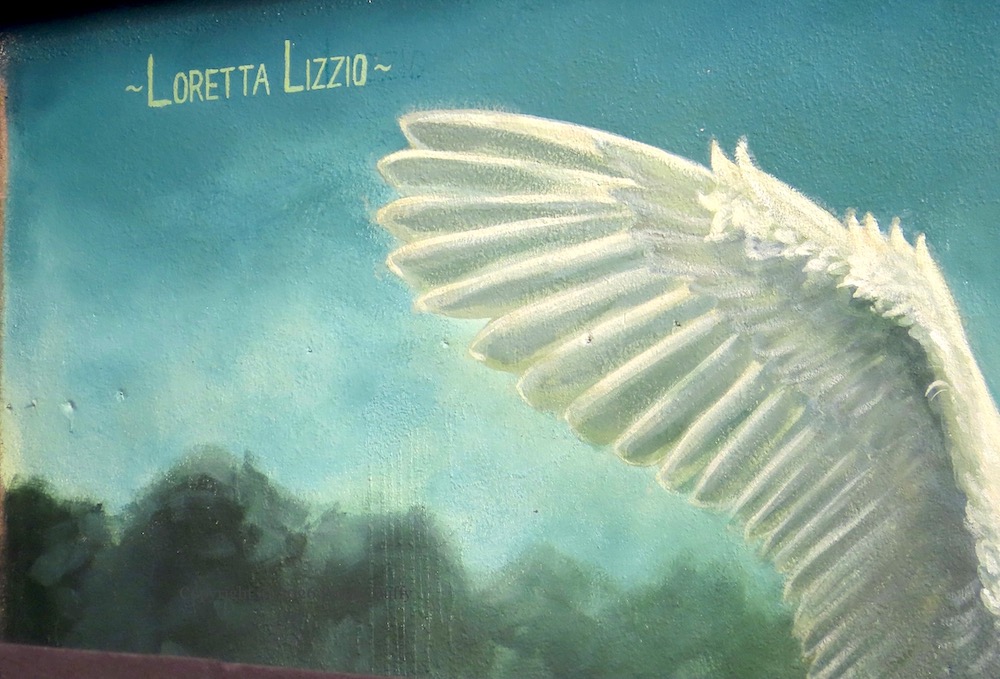
Painted by Loretta Lizzio (web) at the same time (2023-09) as her Dark Dreamer on the Oldpark Road, just below the first Cliftonville roundabout.
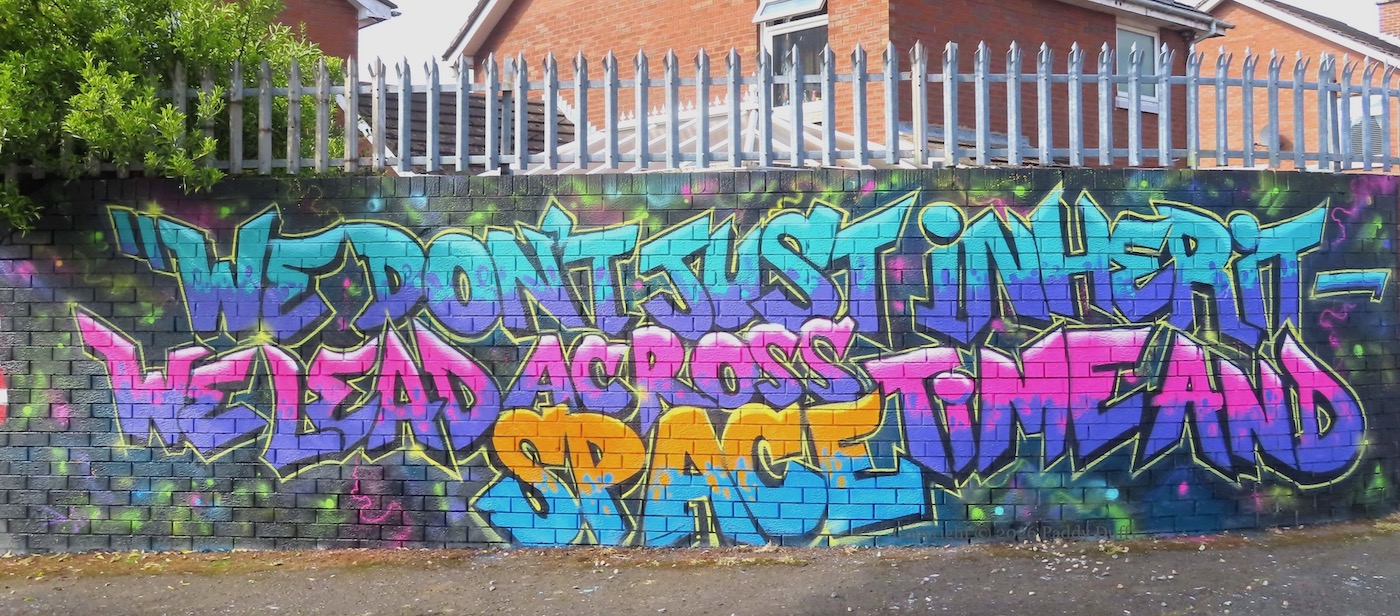
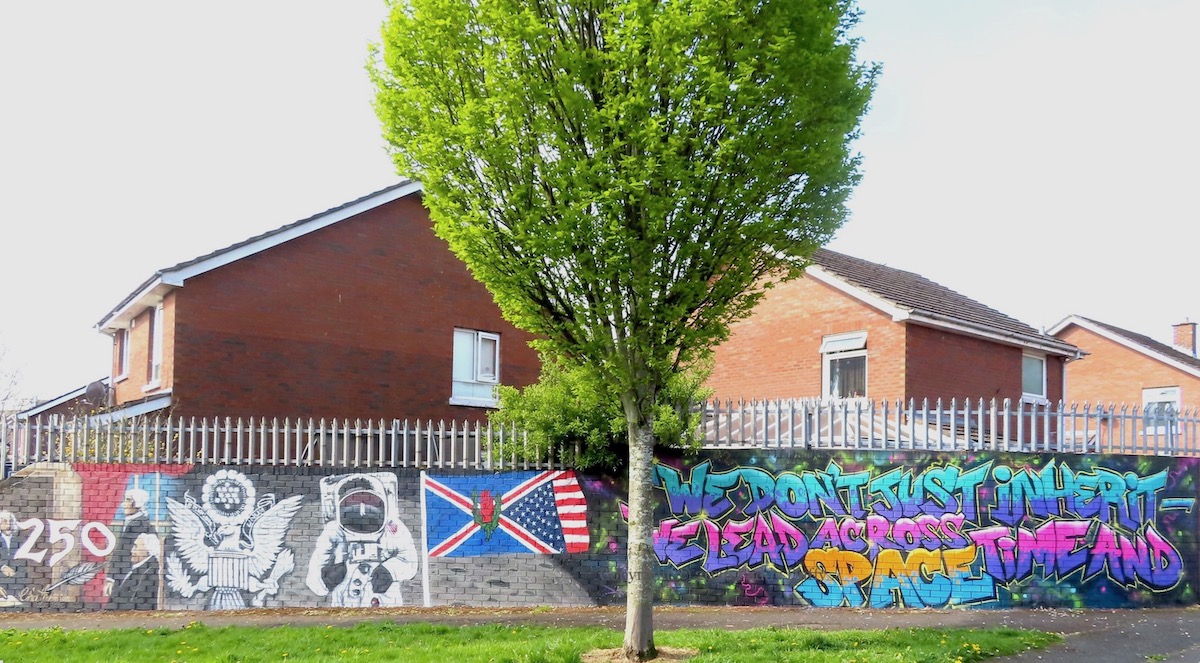
“We don’t just inherit, we lead across time and space.”
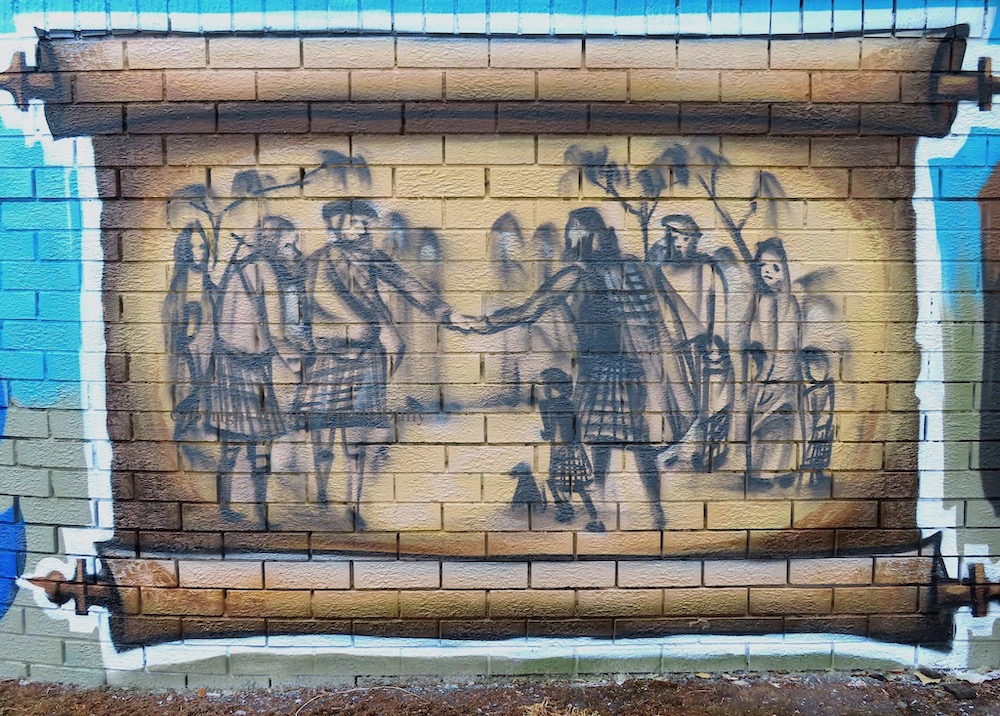
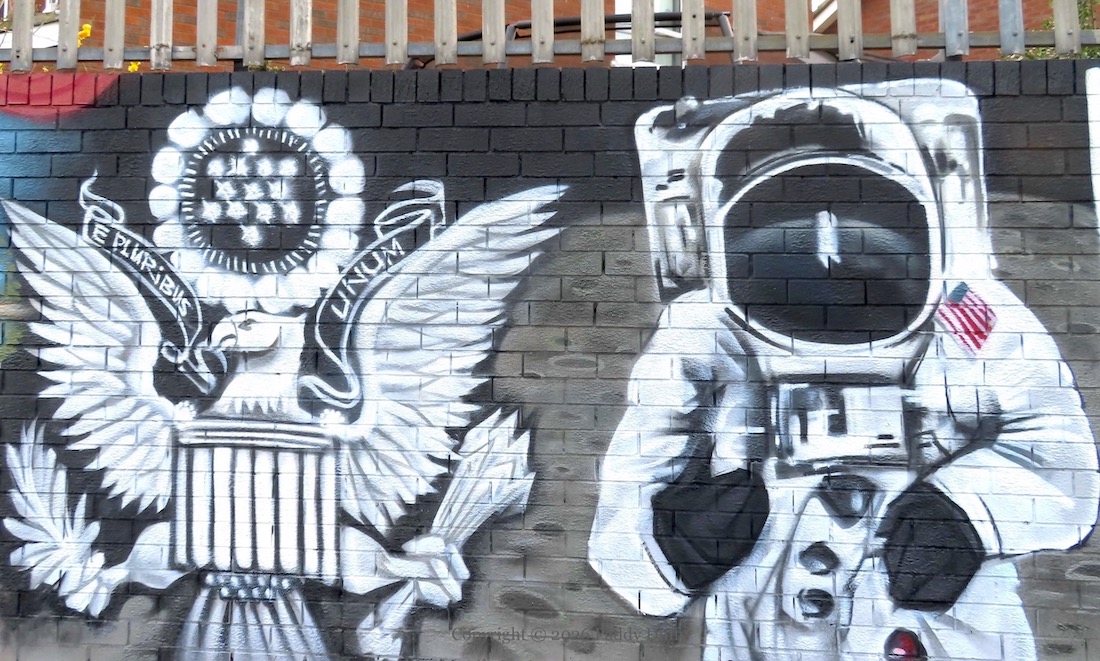
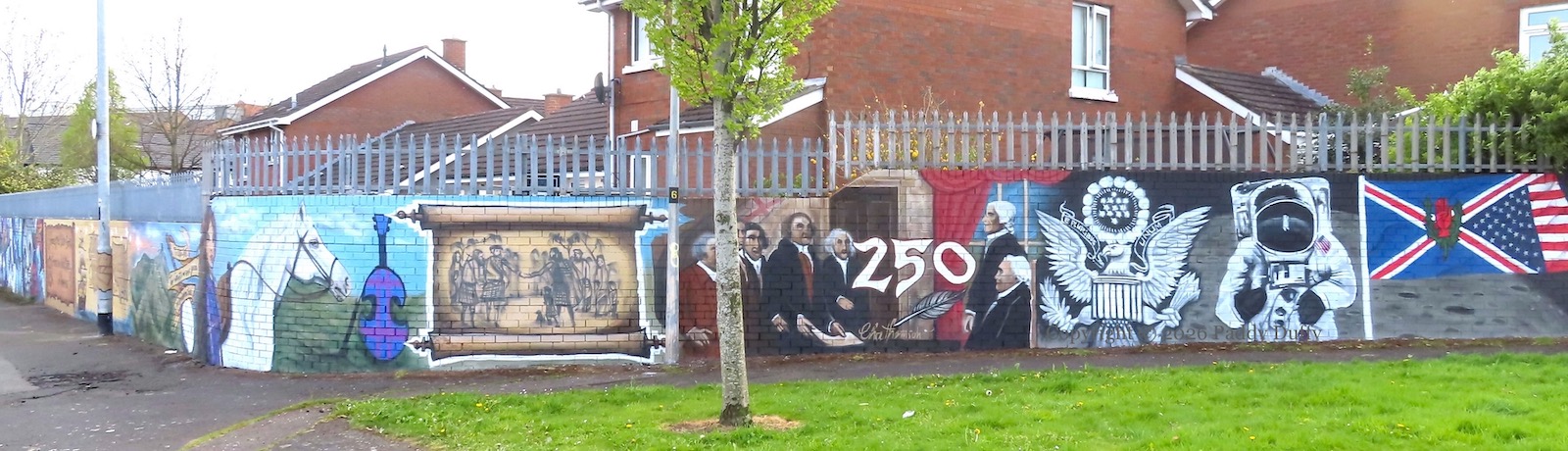
Here is the second half of the Ulster-Scots (Visual History) mural painted in North Howard Street and Fifth Street, continuing the work seen in Echoes Of The Ulster Scots, which took the Scotch-Irish from Ulster to the Appalachians.
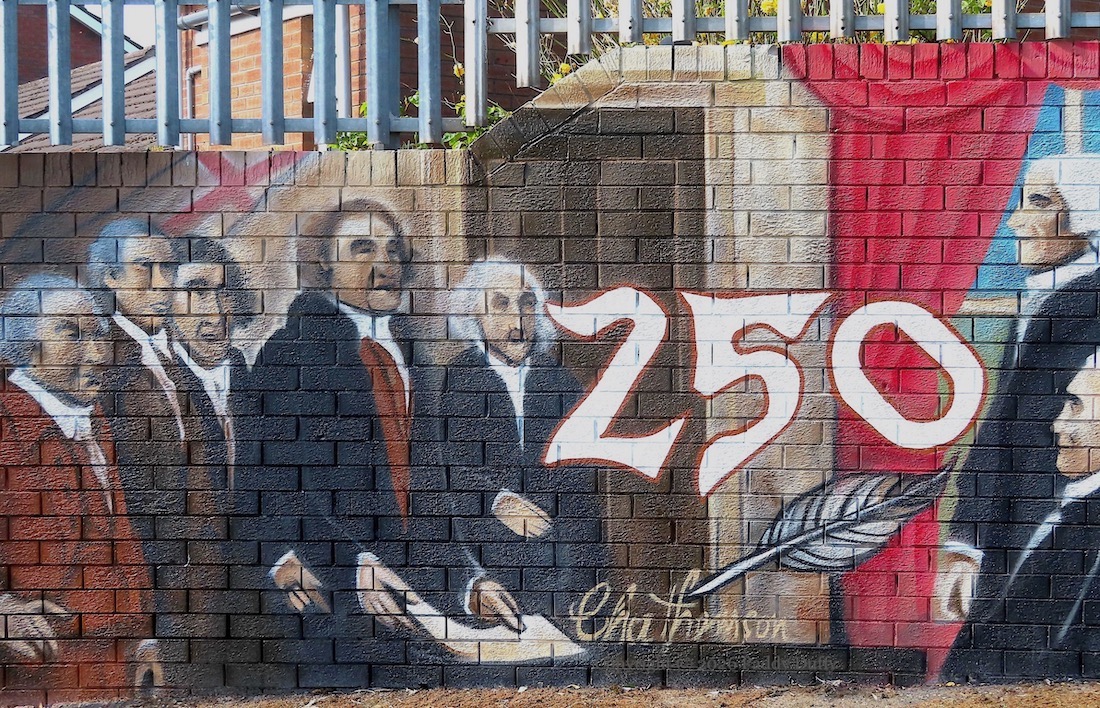
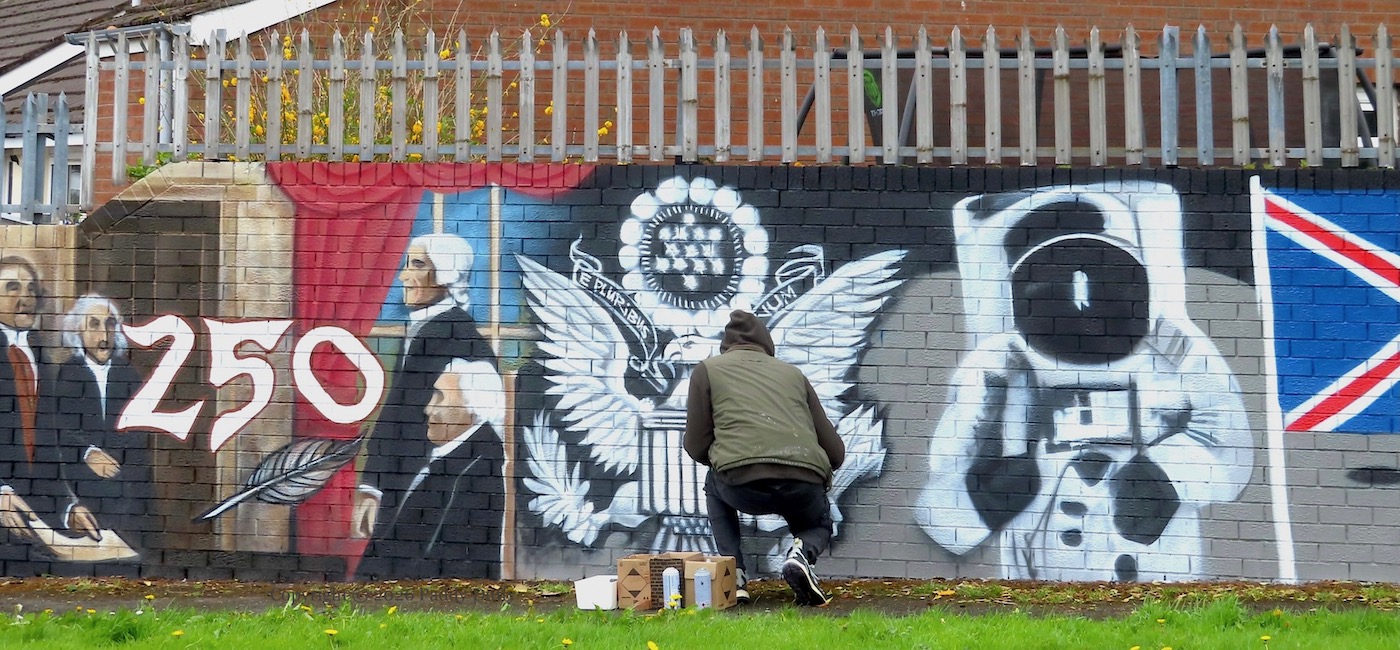
The new panels bring us from the founding of the United States in 1776 to the space age. The panel above is a rendition of John Trumbull’s painting ‘Declaration Of Independence’ (image at WP) along with (below the “250”) the signature of “Cha[rles] Thomson”, who was born in Maghera, served as Secretary of the Continental Congress, designed the Great Seal Of The United States (which appears next to the right), and signed the Declaration (Ulster Scots Agency pdf).
The person third from the left is Robert R. Livingston, one of the Committee Of Five that prepared the Declaration; he also negotiated the Louisiana Purchase in 1803 (Discover Ulster Scots).
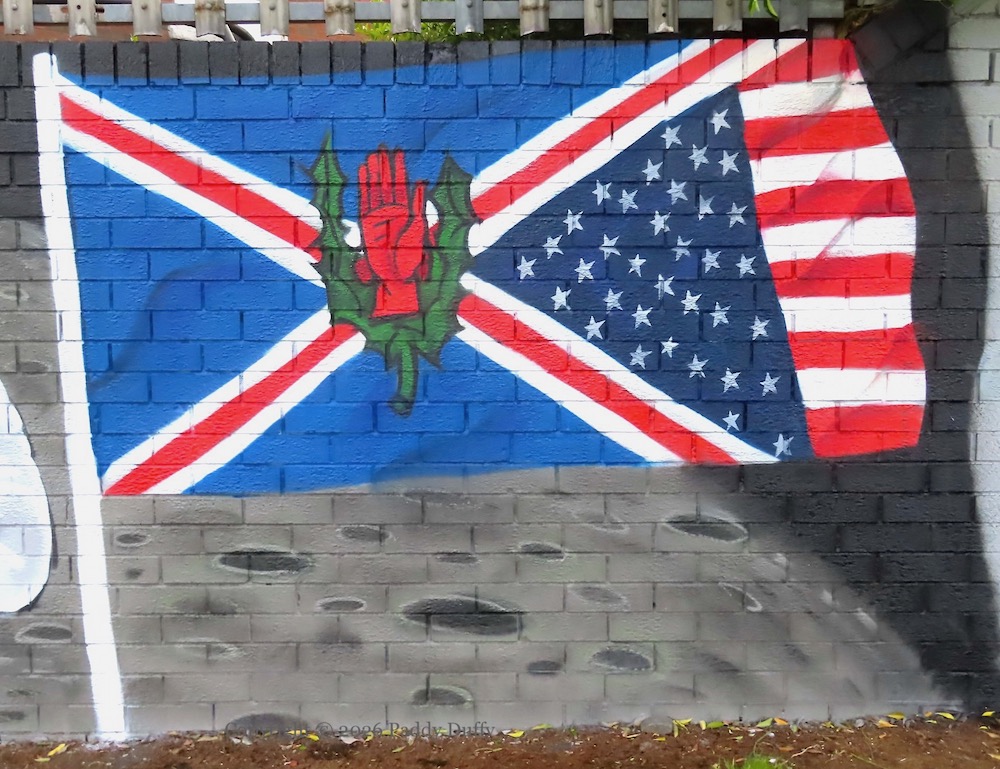
The flag is a combination of a proposed Ulster Scots flag and the Stars And Stripes of the United States.
North Howard Street/Fifth Street, west Belfast
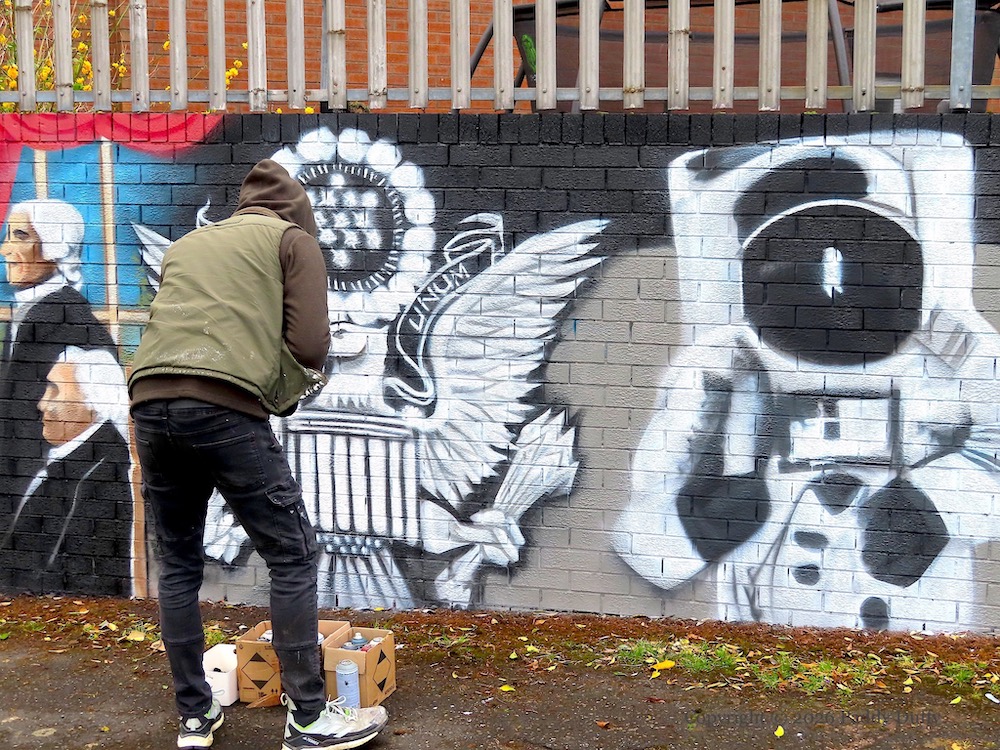
April 19th: Artist DMC at work on the second half of the mural.
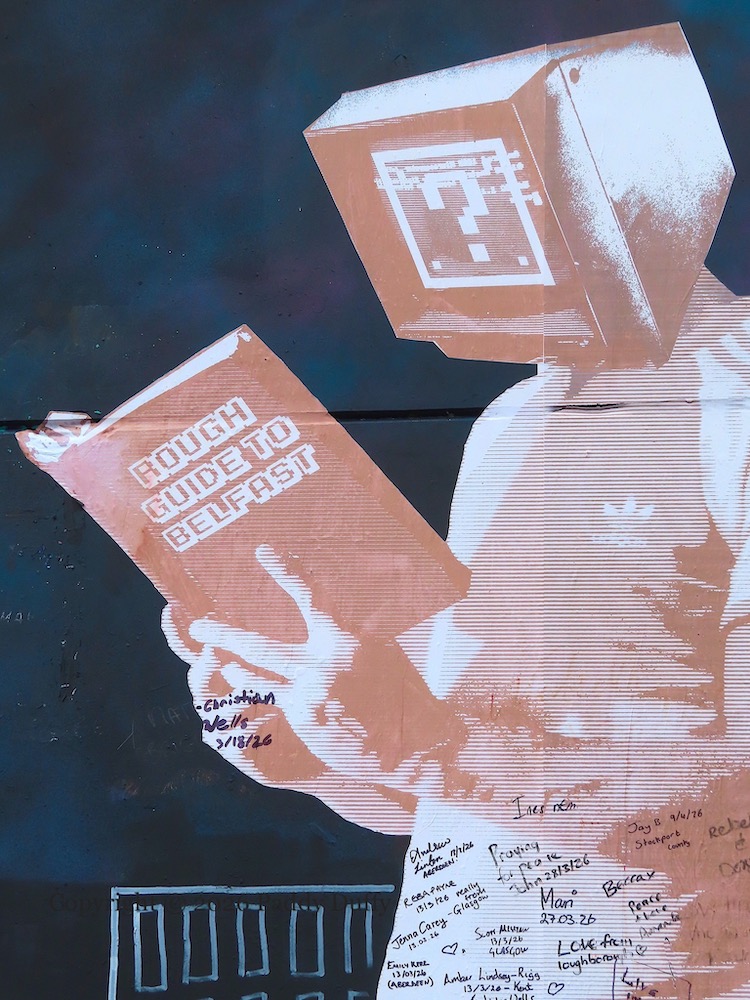
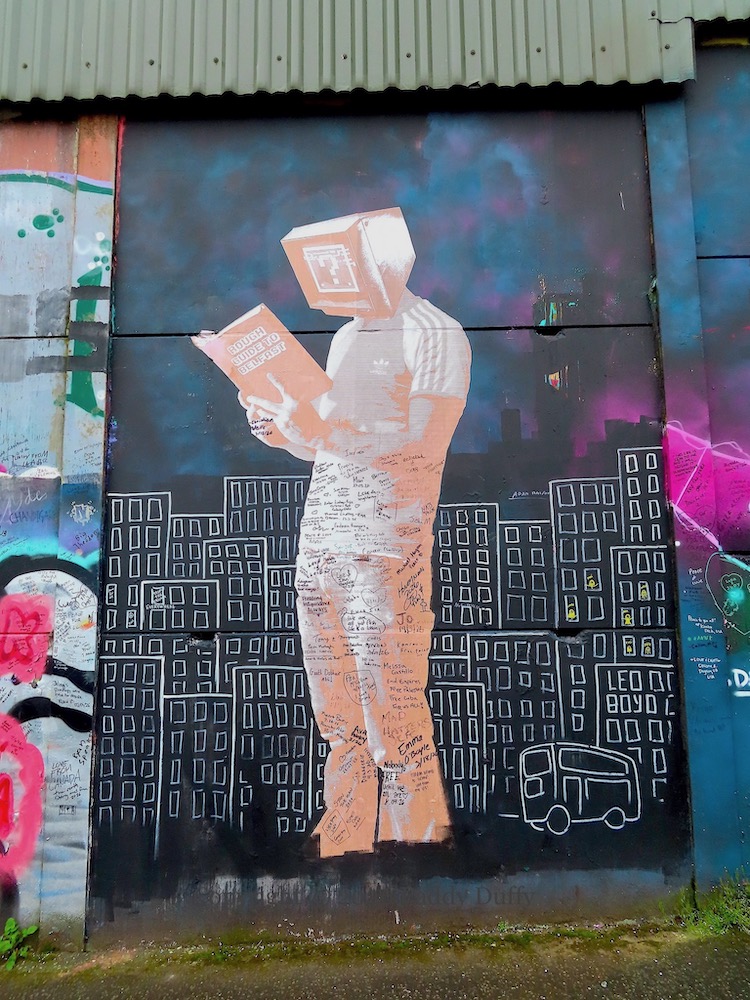
The wall is notable for the wild-style writing and other art painted on the Shankill side – including this paste-up by Leo Boyd (web) – but the wall itself, at 30+ feet tall, is the main draw, and tourists sign their names (and patronising slogans) on top of the art.
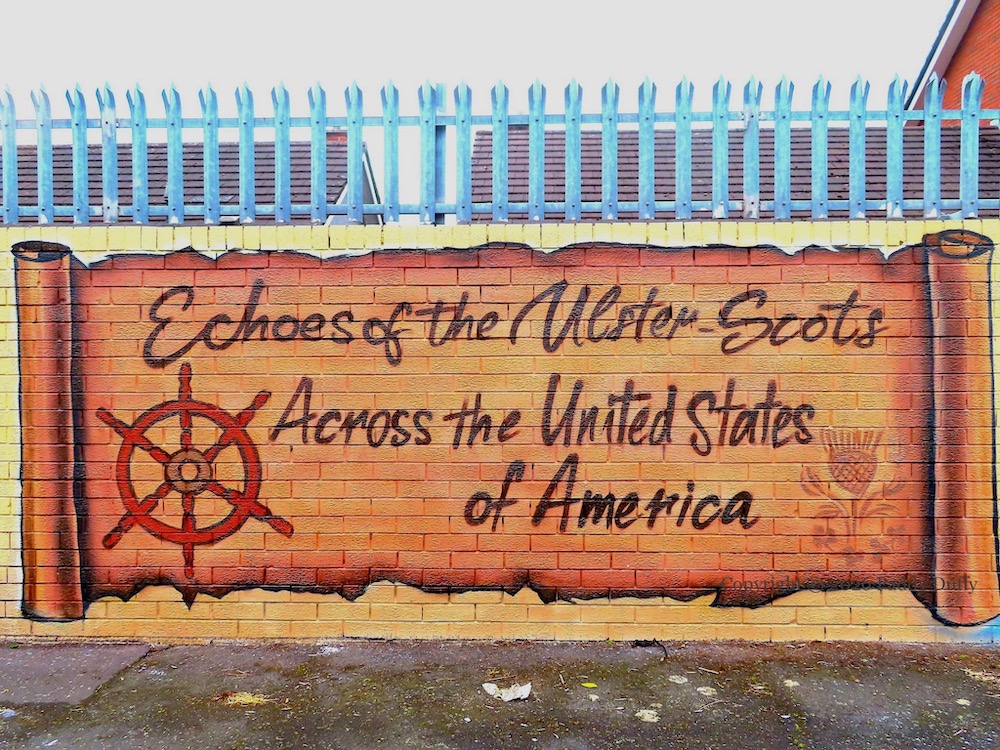
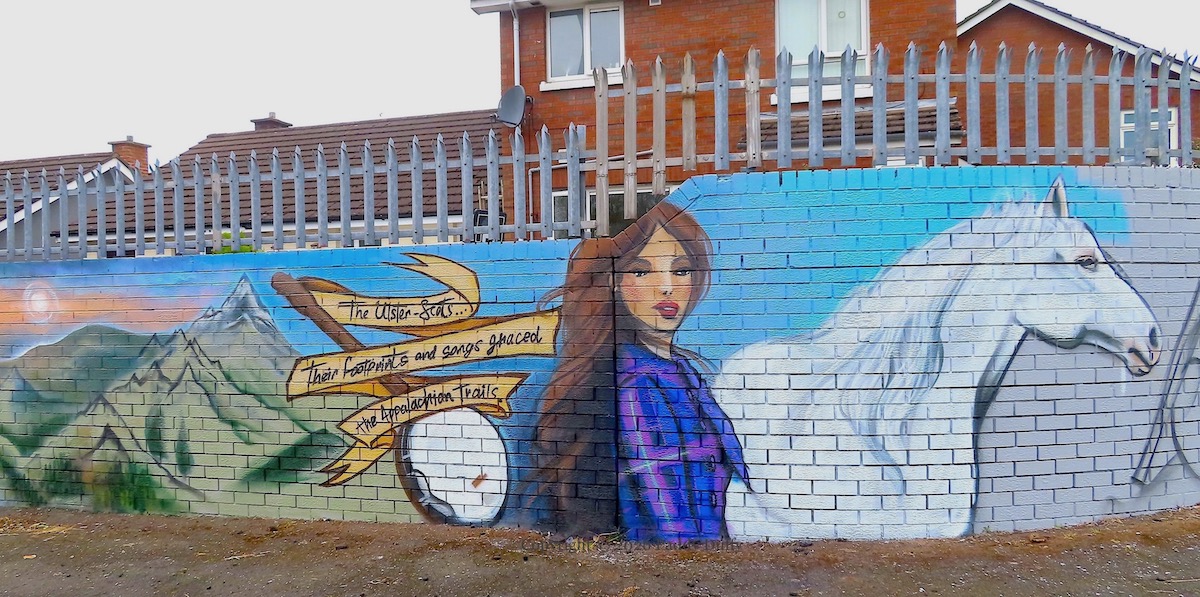
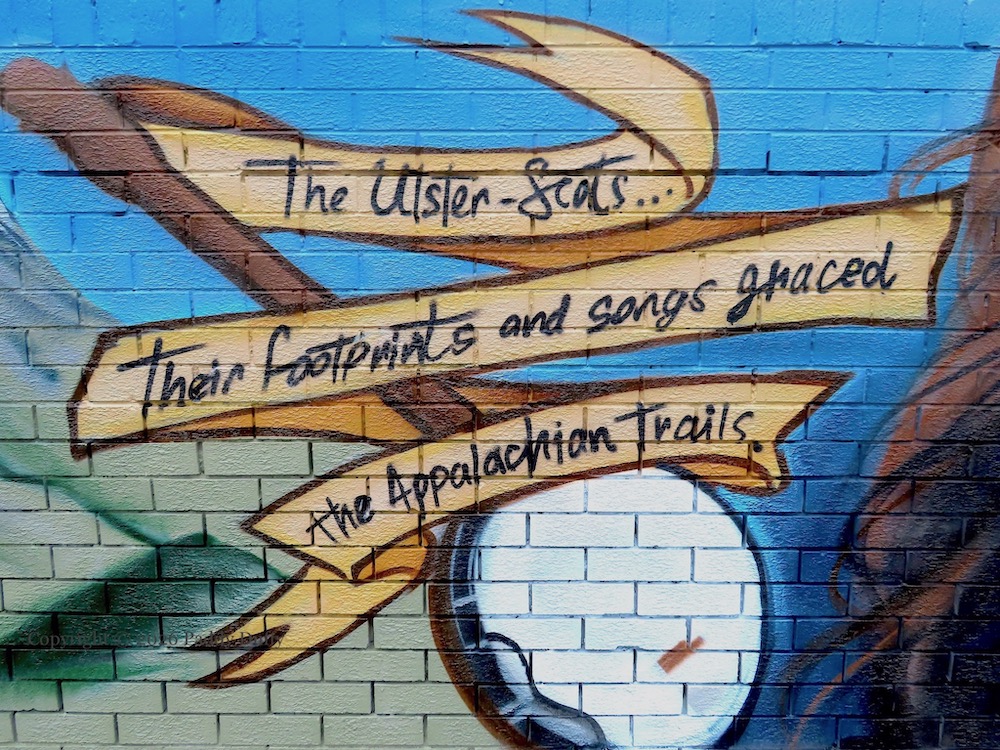
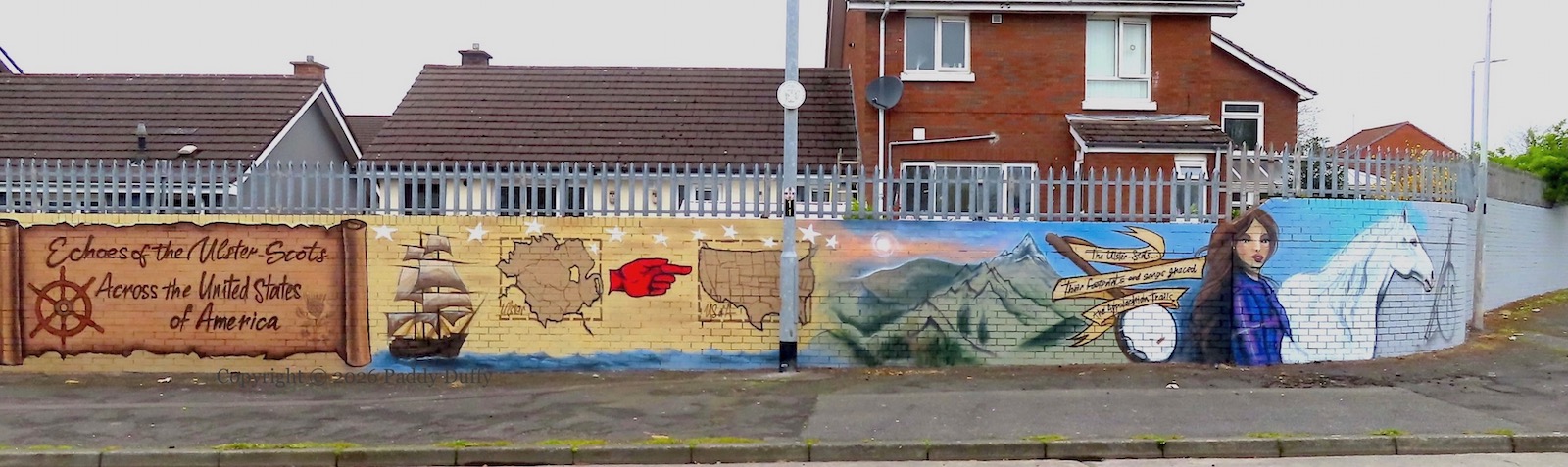
“Echoes of the Ulster-Scots across the United States Of America”, “The Ulster-Scots … their footprints and songs graced the Appalachian Trails.”
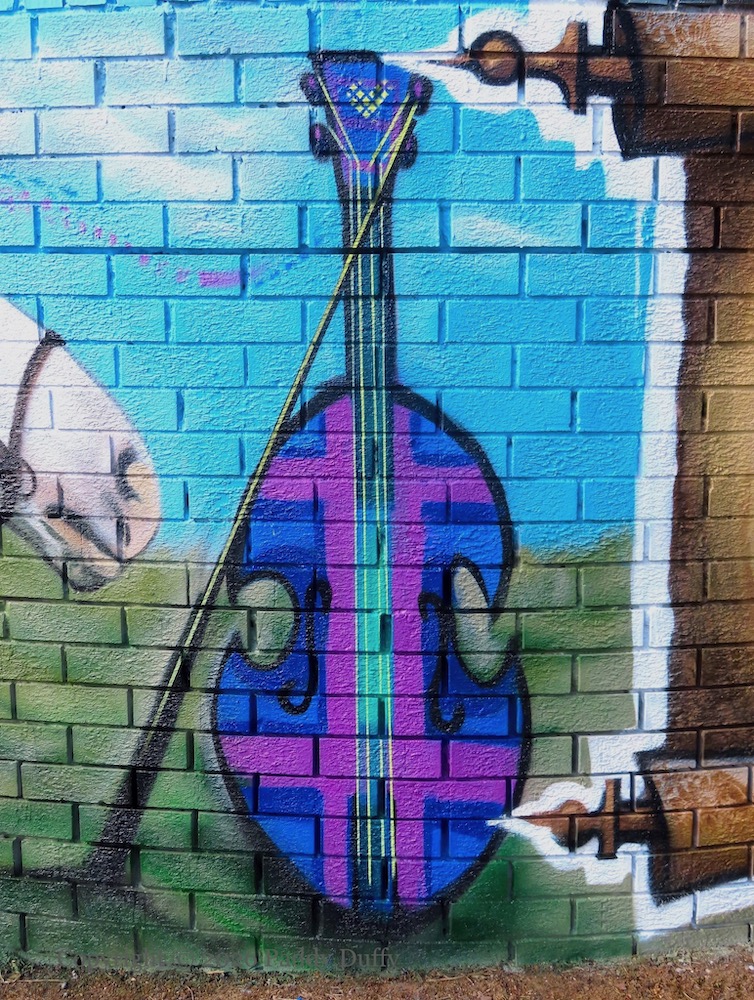
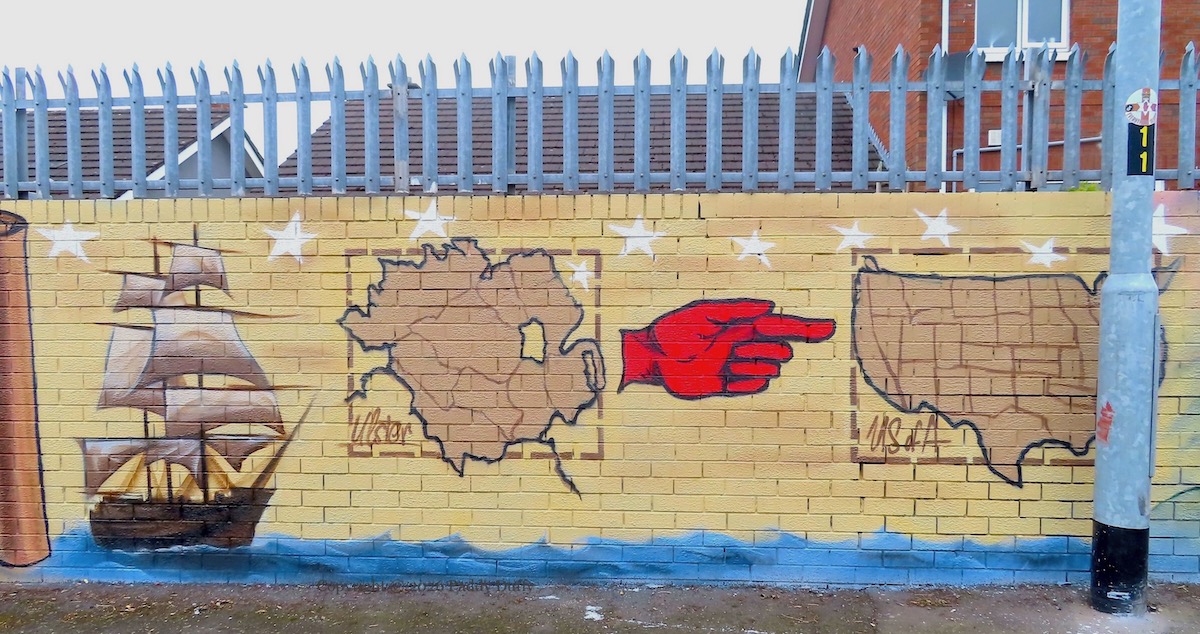
These four panels are the first stage of a longer “pioneers to presidents”-style mural (Visual History) on Ulster-Scots (or, Scotch-Irish) emigration in the 1700s to the British colonies that in time became the United States.
Upon arrival at eastern sea-ports, many of the Scotch-Irish headed west across the Allegheny mountains and down into the Appalachians. By 1790, it is estimated, 6% of the population (or almost 200,000 people) of the recently-created United States Of America were (ultimately) from (nine-county) Ulster, a combination of Scotch-Irish, Celtic-Irish, and English-Irish (American Historical Association).
These four panels are in North Howard Street, west Belfast. As can be seen from the wide shot below, the mural will soon be extended around the corner into Fifth Street. (Update: see We Lead Across Time And Space.)