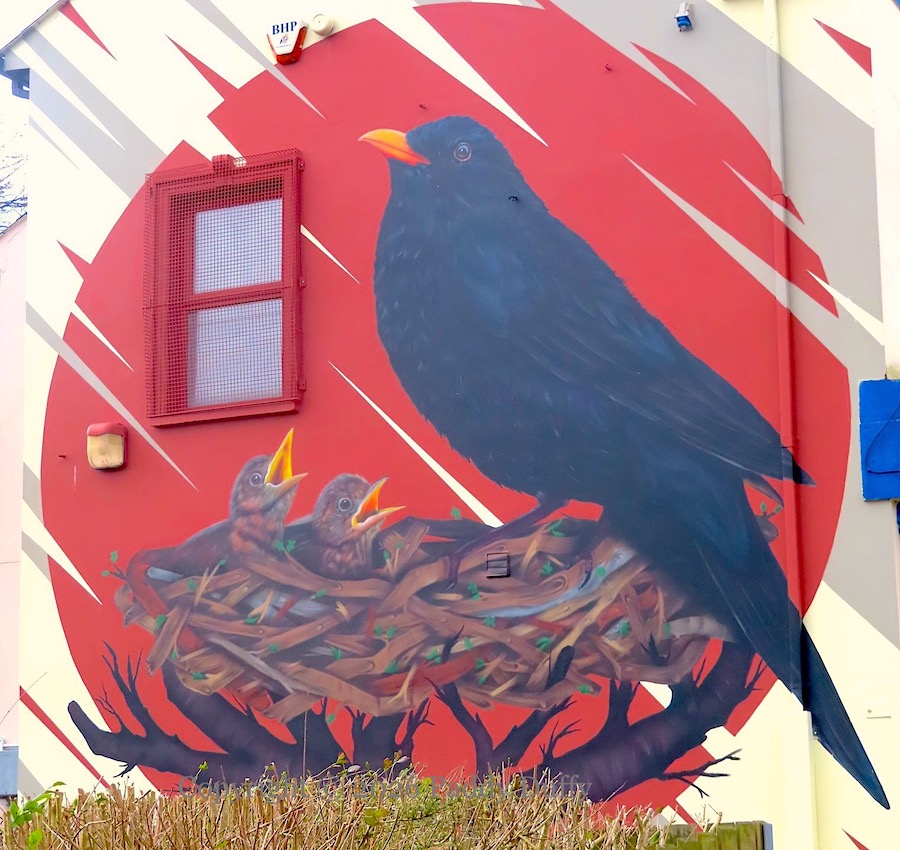
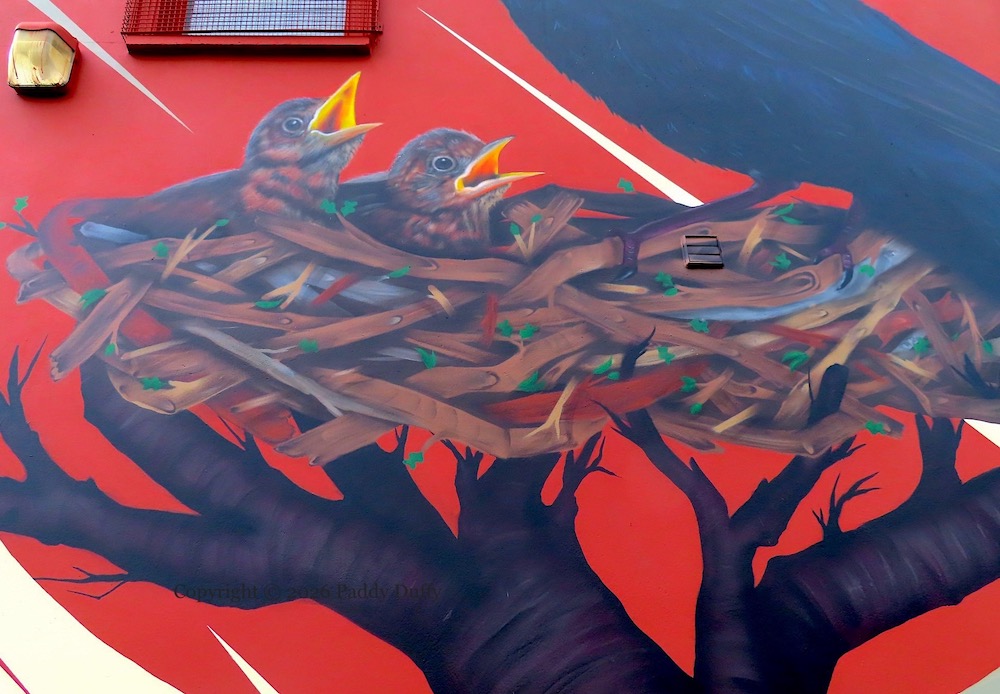
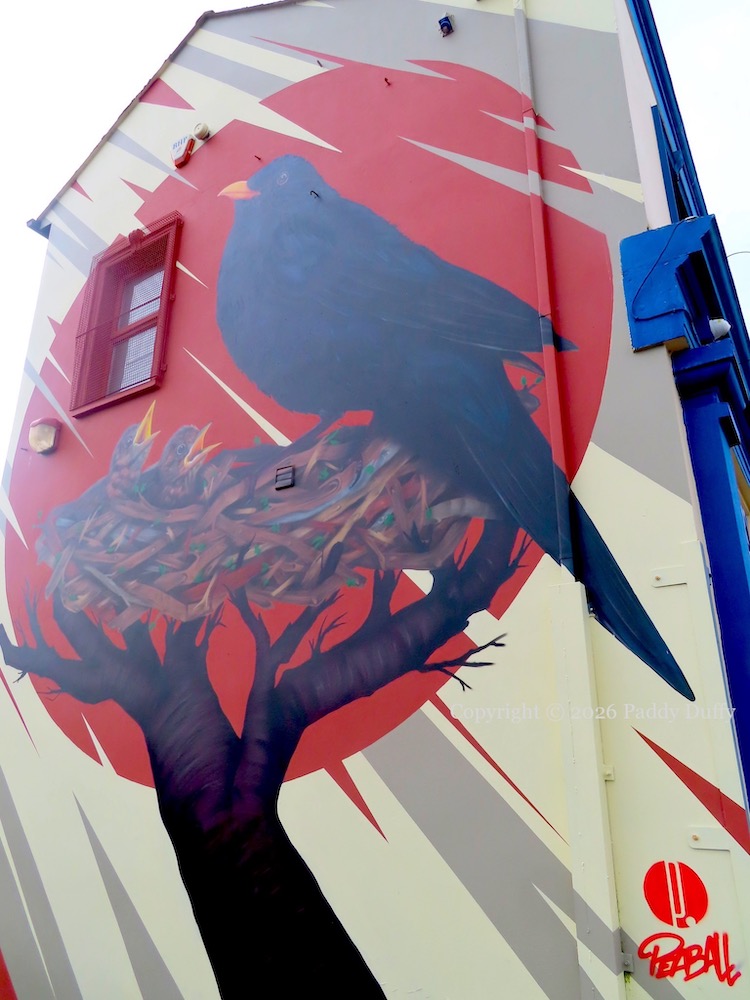
“The blackbird on the gable wall.” This piece of Peaball (web) art is on the side of the credit union in Main Street, Claudy, commissioned by Derry Credit Union to celebrate its sixty-fifth anniversary (ig).
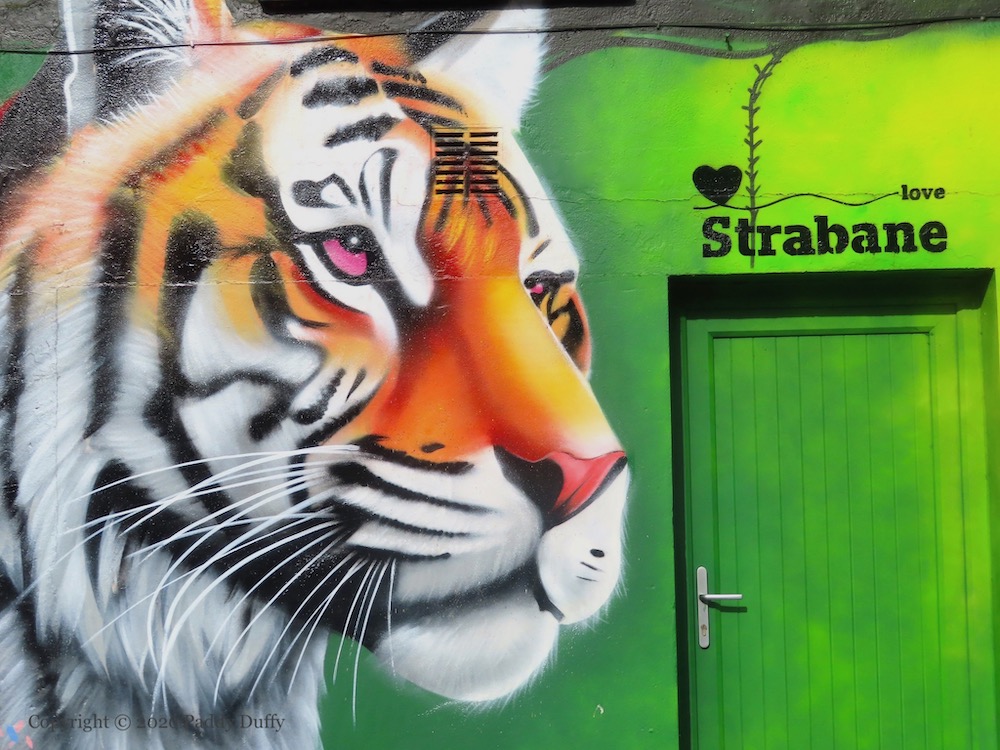
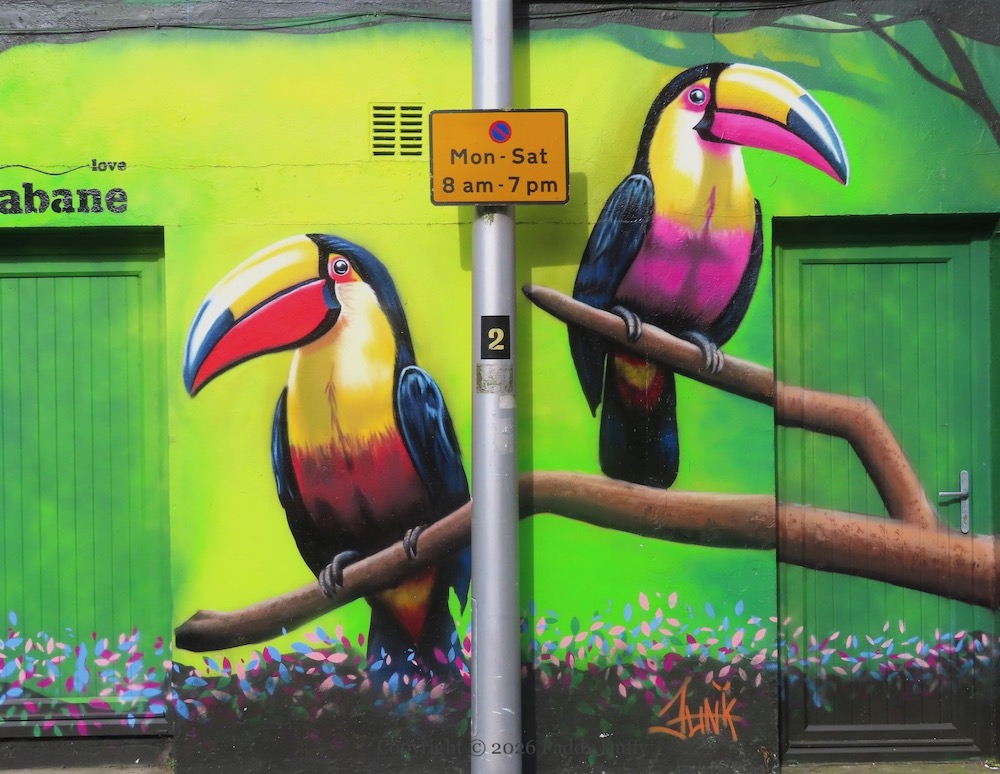
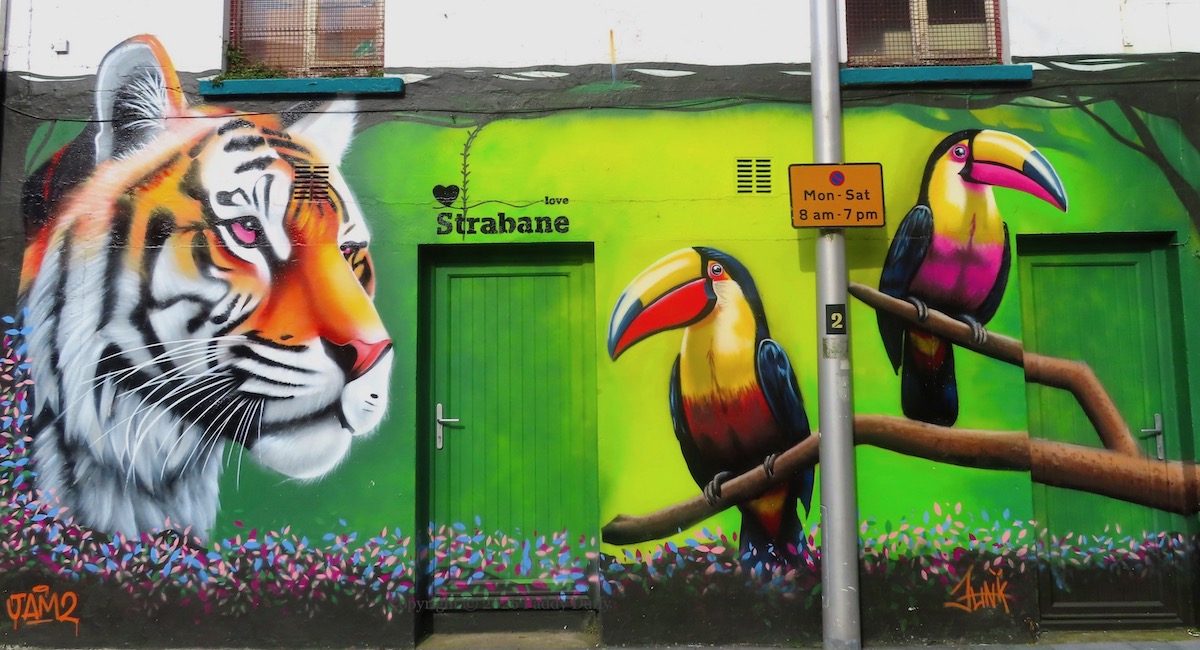
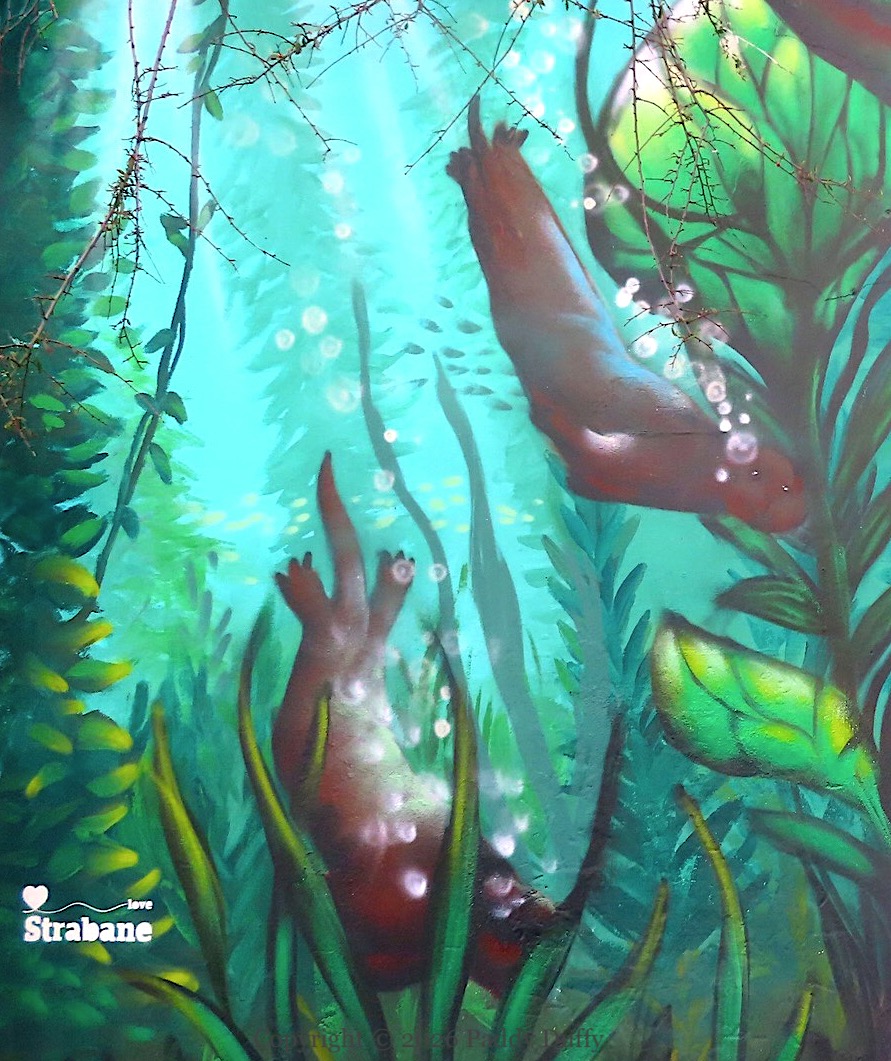
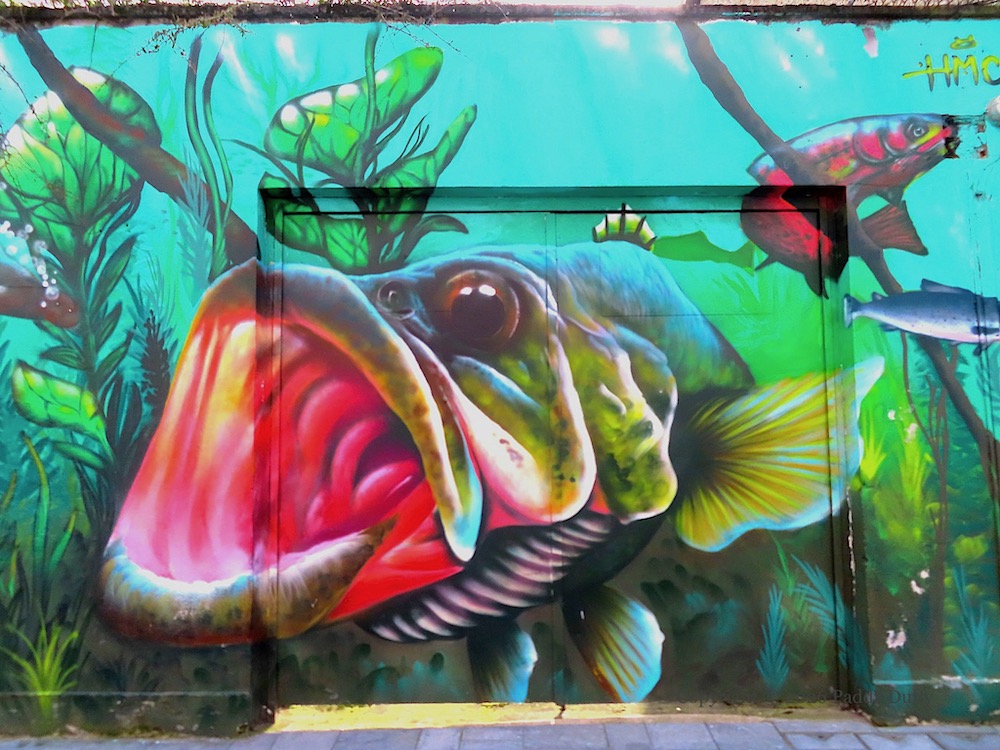
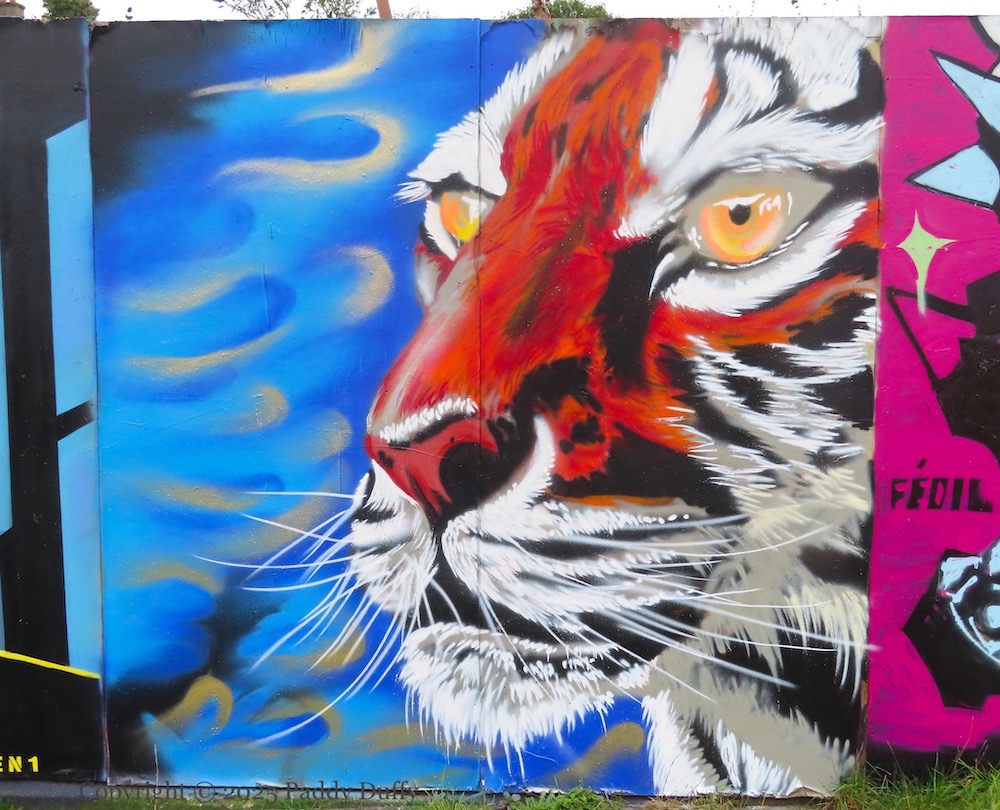
Here are a tiger from Jam2 (ig), a pair of toucans from Junk Graff (both from June 2025) and (on the other side of the street) seals and ?a largemouth bass? from HMC (web) in November 2025. None of the animals are native to the Strabane rivers or countryside, though there are sometimes seals in Lough Foyle.
Painted for Love Strabane (web) in Castle Place, Strabane.
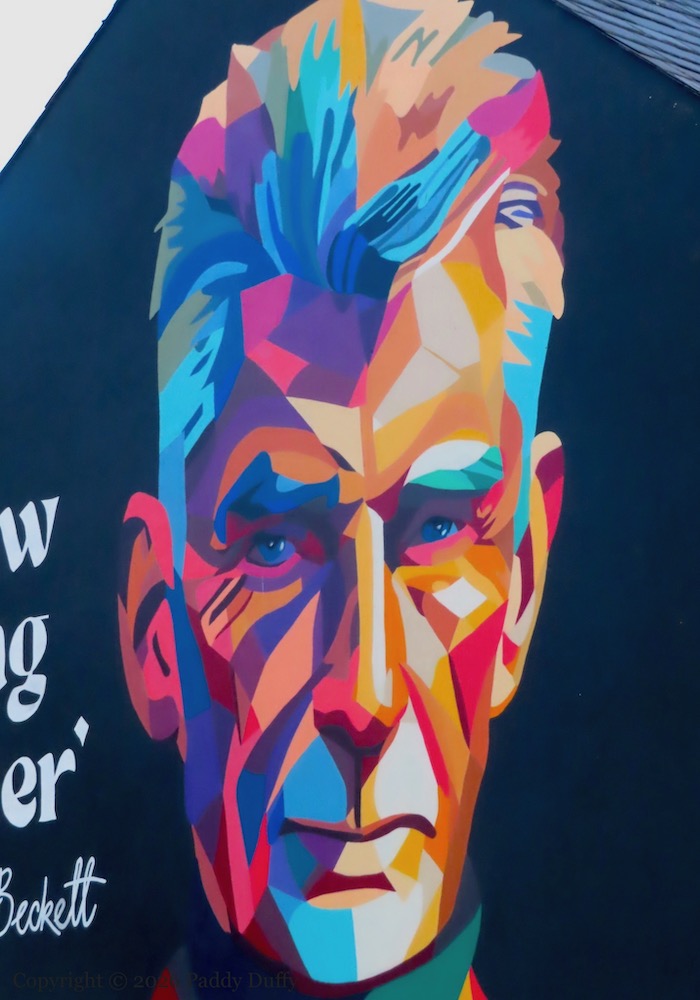
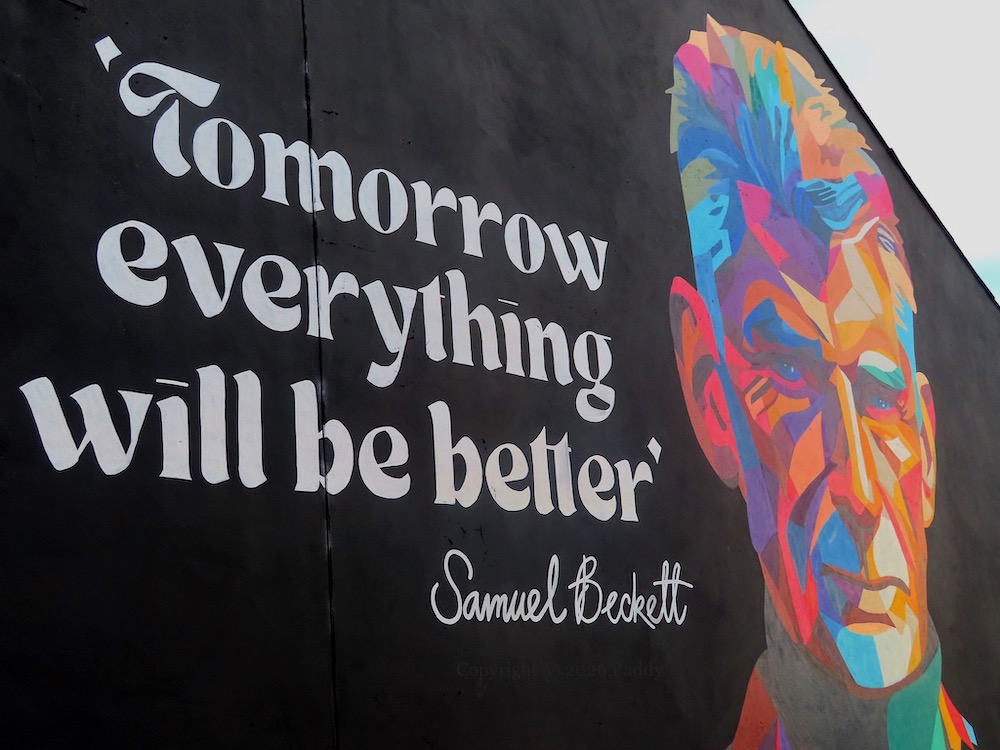
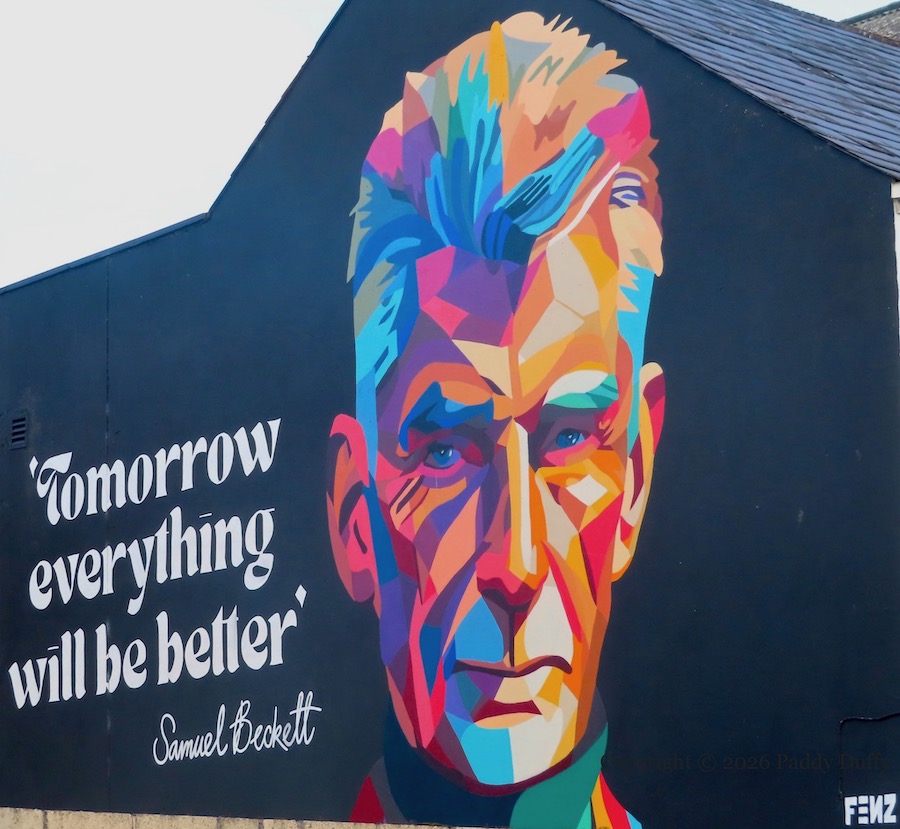
Samuel Beckett falls prey to the eternal optimism of the instragrammed mind. The quote – “Tomorrow everything will be better” –is from Act 1 of Waiting For Godot.
Street art by Karl Fenz (web) in Wellington Road, Enniskillen; Beckett attended Portora Royal public school (WP).
The town of Enniskillen – “Inıs Ceıthleann” in Irish – is named, according to a (modern) myth, for the (ancient) Cethlenn of the Fomorians, who attempted to escape a battle by swimming the Erne and made it to the island in the middle.
This street-art interpretation is by emic (web) on the back of Magee’s Bar on East Bridge Street, Enniskillen. It is perhaps inspired by the epithet “chraos-fhıaclach” or “gap-toothed”.
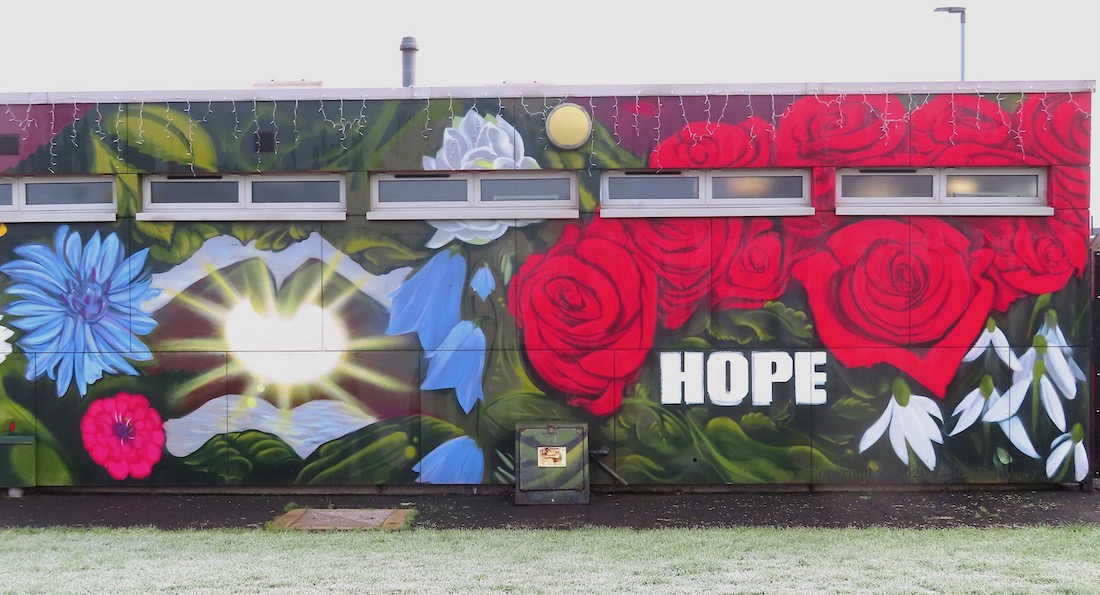
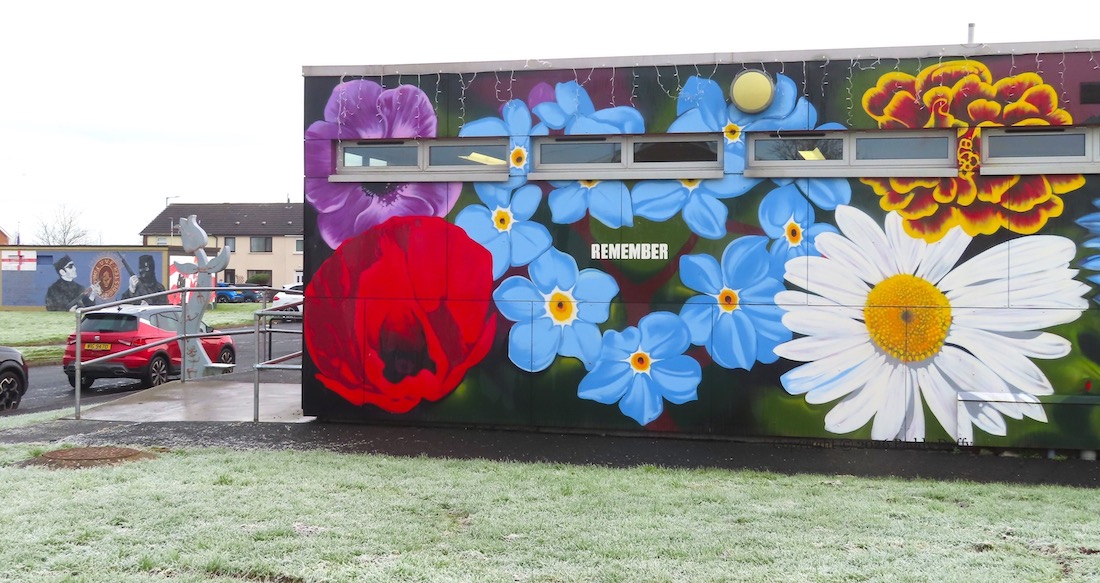
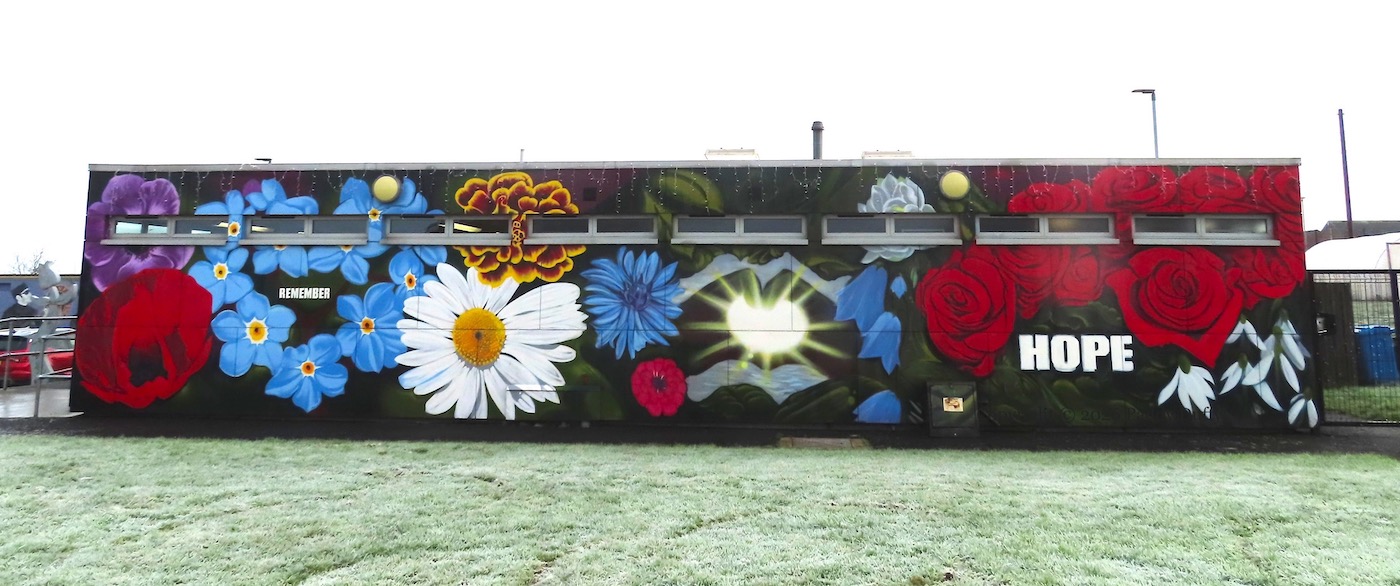
Or perhaps two separate injunctions, “remember” and “hope”. This is a new piece of street-art on a wall of the Ballyduff Community Centre (Fb), which is home to the Ballyduff Community Redevelopment Group (Fb).
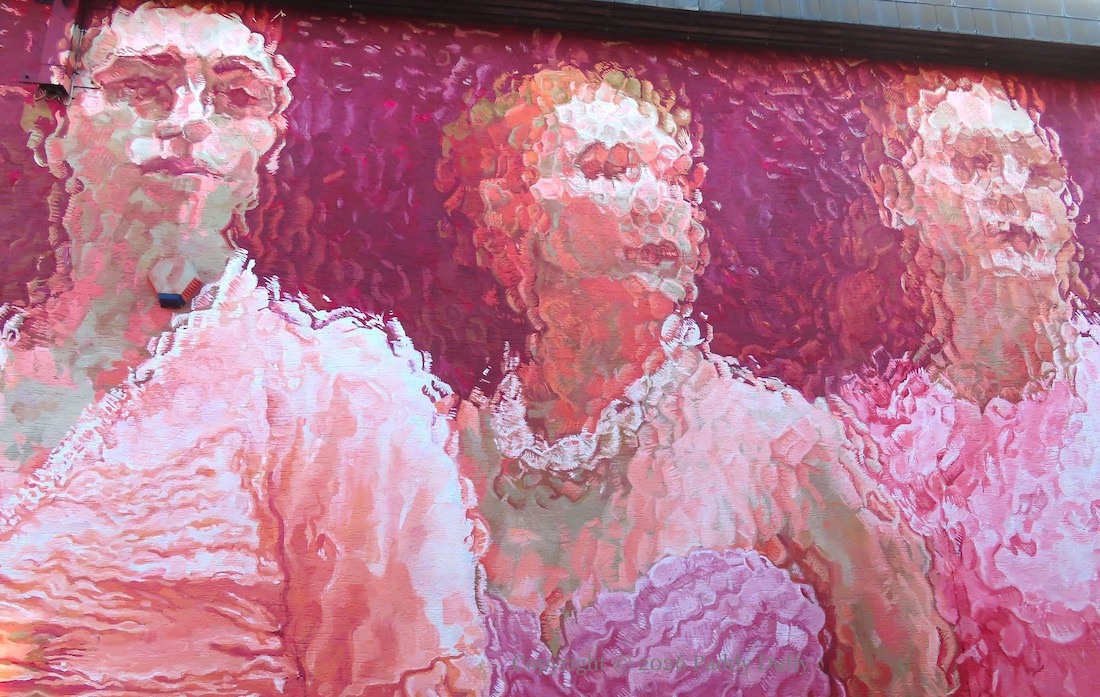
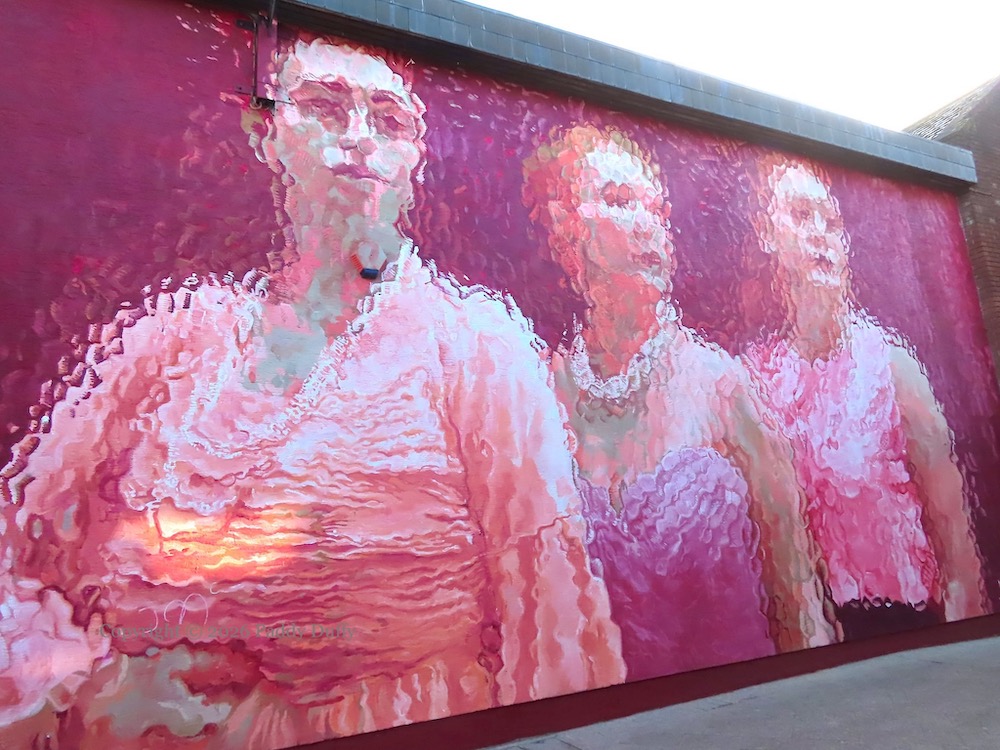
This is a piece of Fintan Magee street-art in the centre of Armagh, showing three singers at a 1950’s talent show in the Tontine Rooms (History Armagh). For the source photograph, see Magee’s instagram post. With support from Armagh City, Banbridge, and Craigavon borough council.
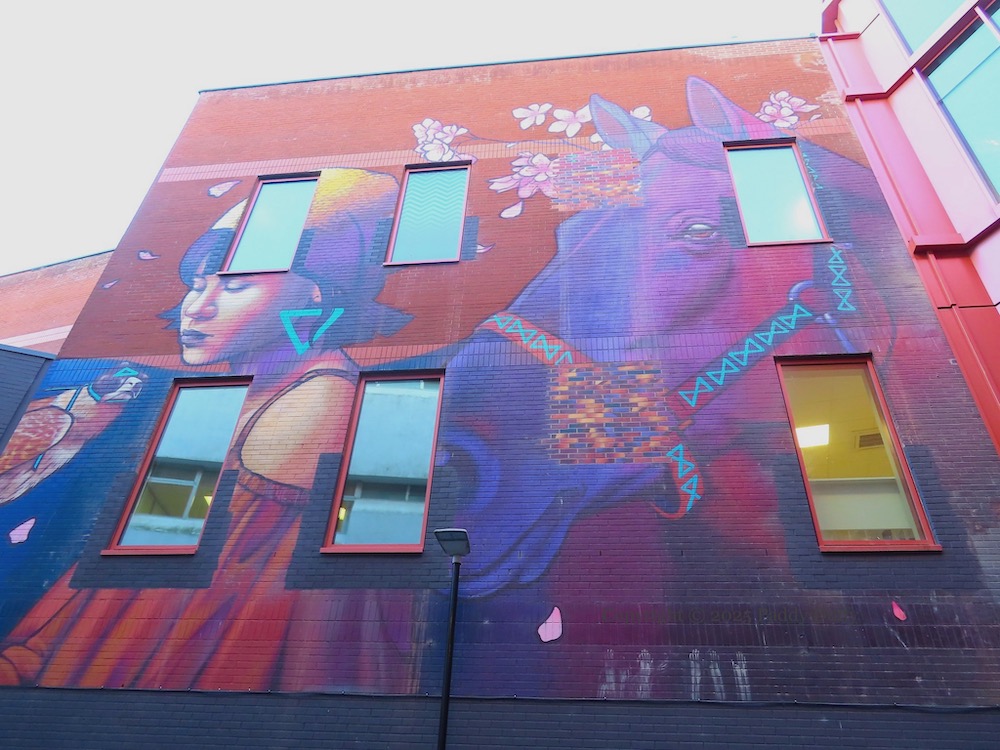
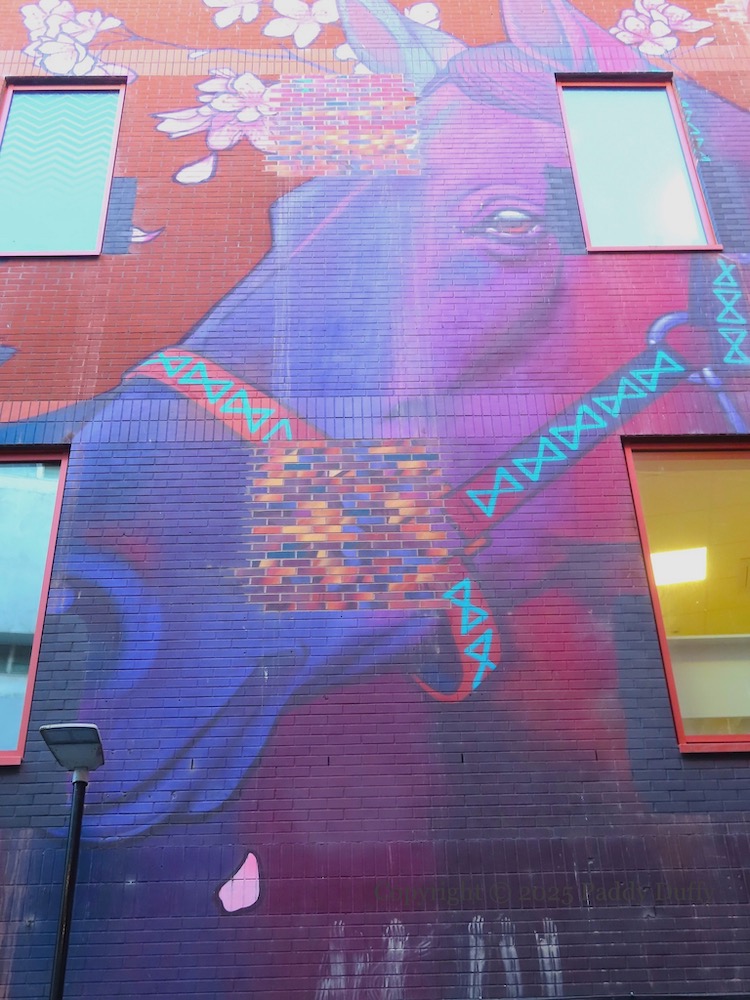
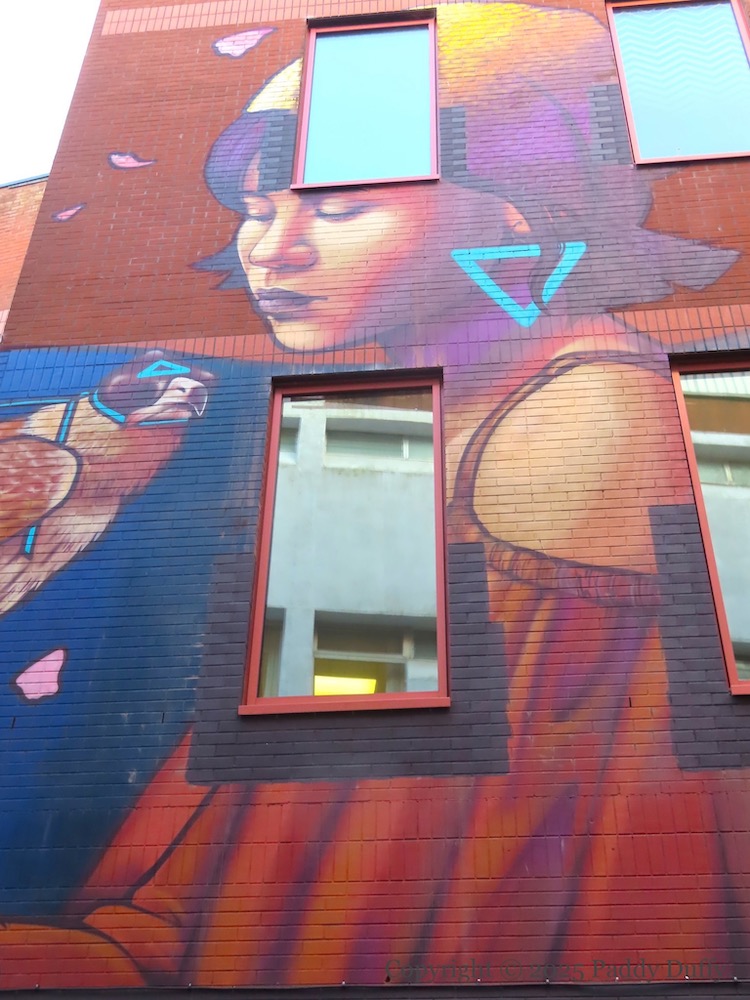
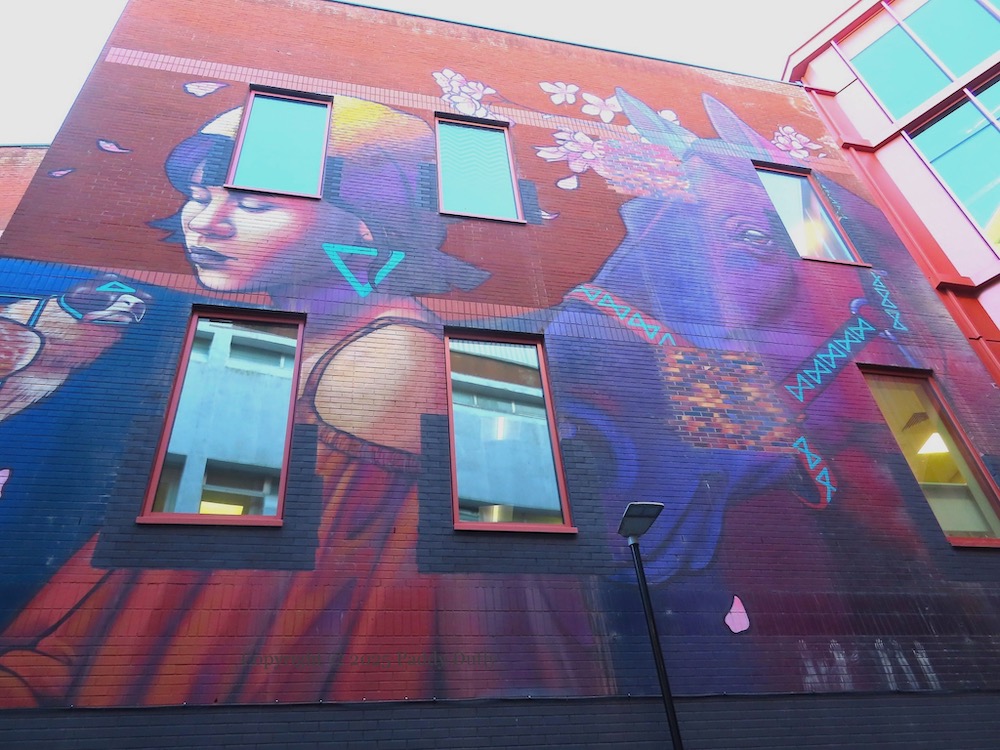
Work to the windows has been undertaken since this art was originally painted (in 2023) by Friz (web) and Gerry Norman (ig); two windows have been bricked up with multi-coloured bricks (best seen in the image immediately below), while others have been extended and narrowed, resulting in patches of black bricks (see the third and fourth images).
The piece is inspired by the seventeenth-century Belfast Castle. Castle Arcade is so-called because it is the site the original castle of Belfast, built by the Normans in the late 12th century and then rebuilt by Arthur Chichester in 1611. Chichester’s castle had “spacious gardens which extended from the river along to Cromac Woods and near Stranmillis” with “orchards, bowling greens and cherry gardens … fish ponds,” for “hunting, hawking, and other sports”. It was destroyed by fire in 1708, after which the area became commercialised as a market (ArchiSeek | Mary Lowry | BBC | Belfast Entries).

 Paddy Duffy Collection