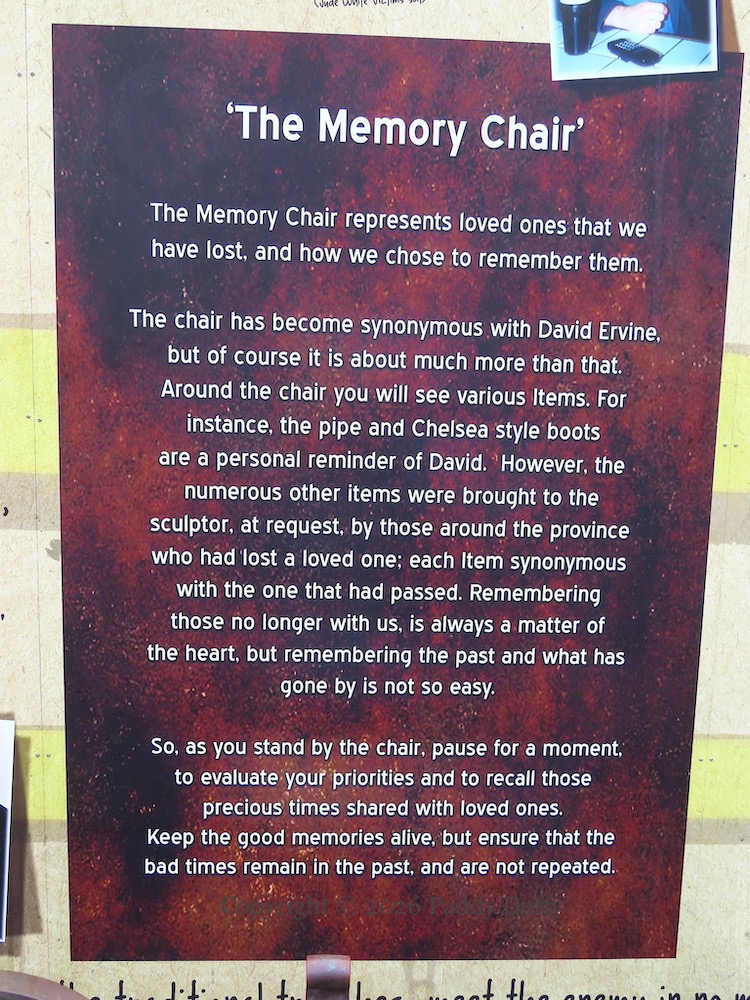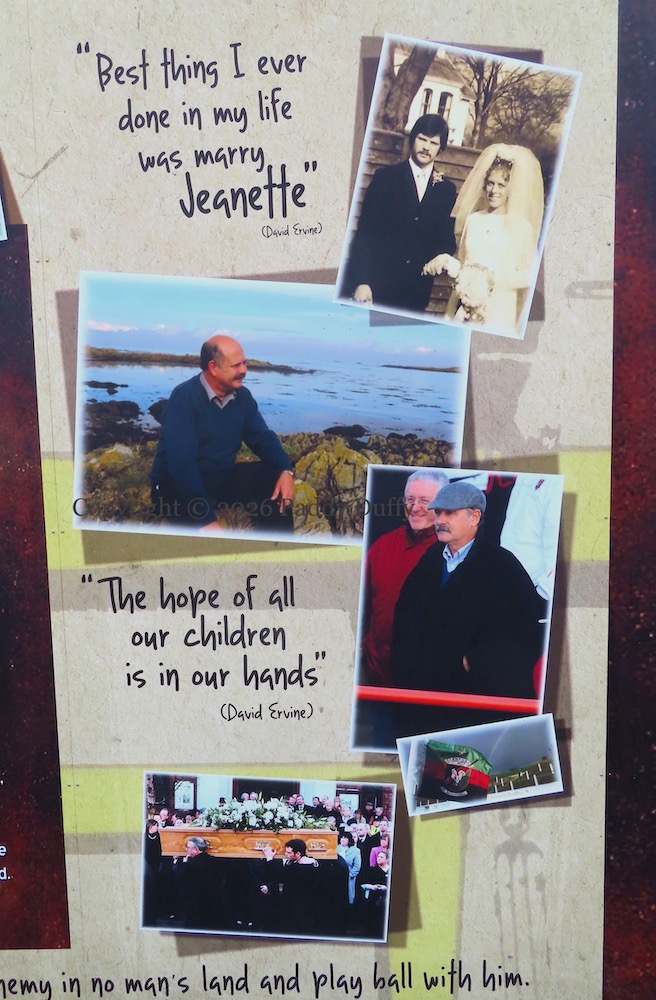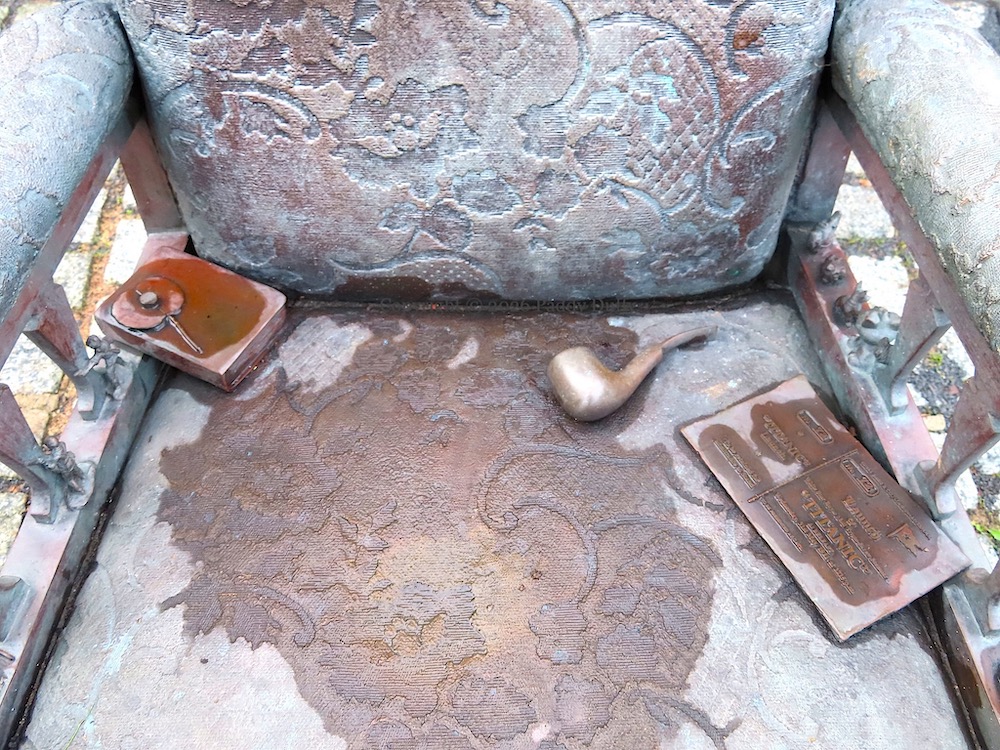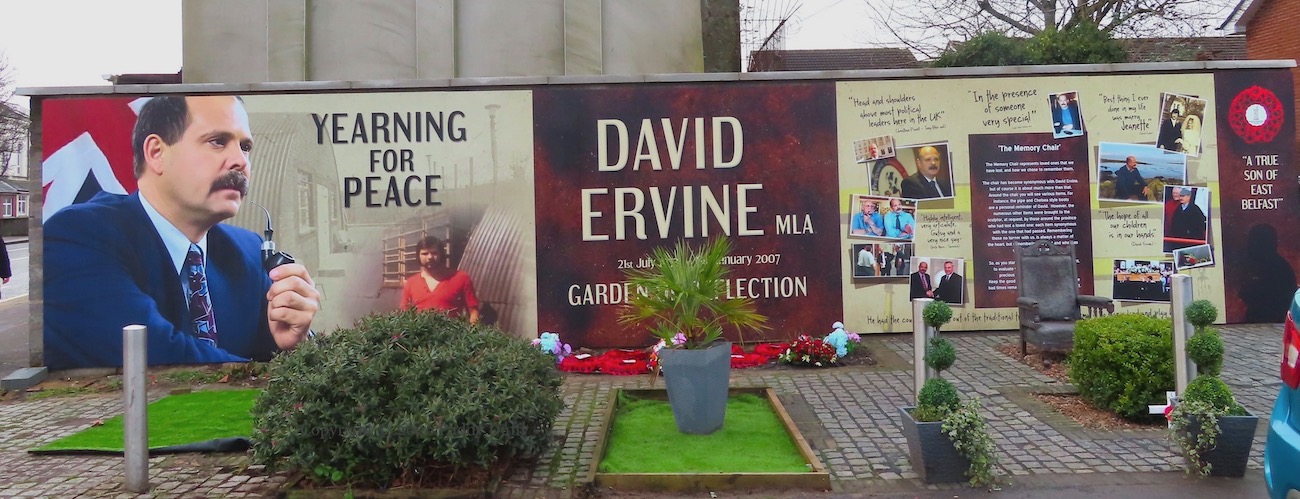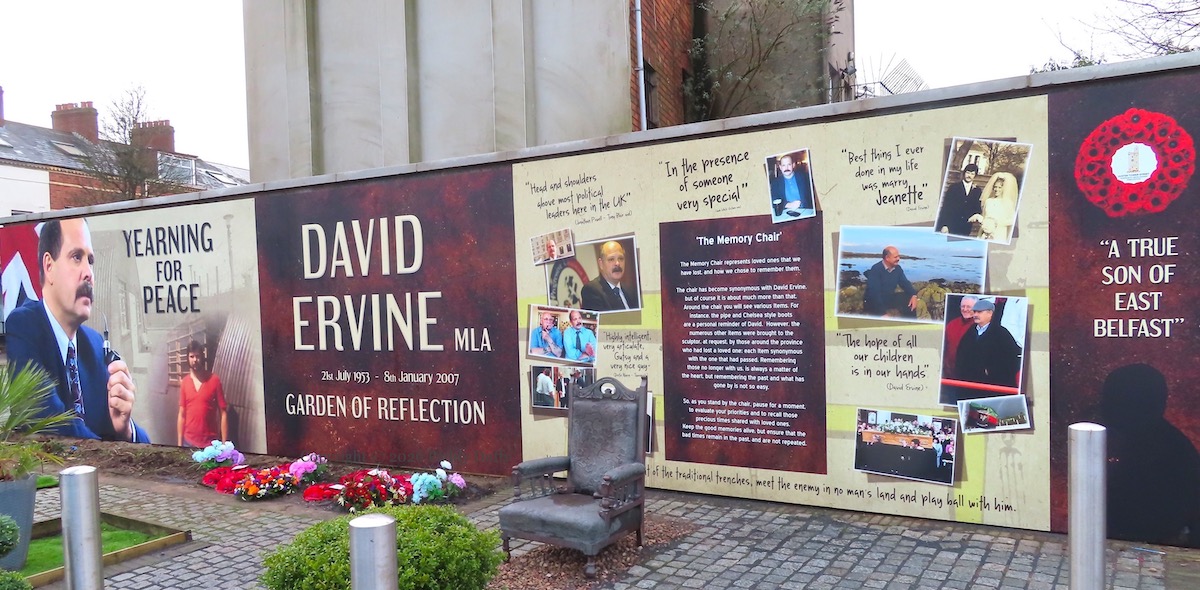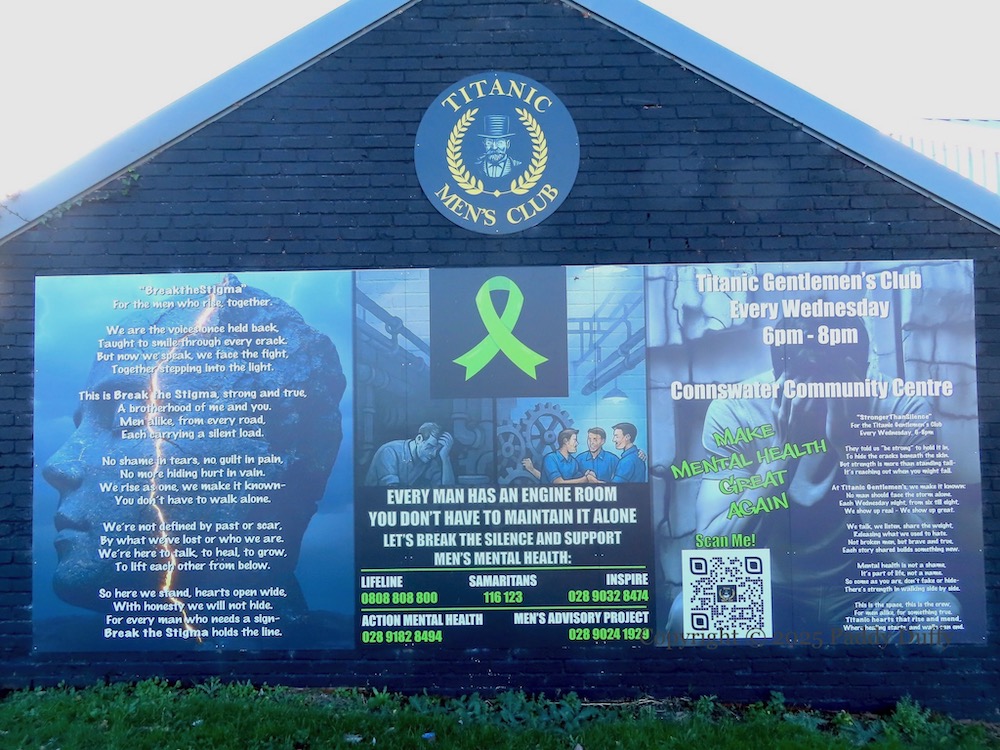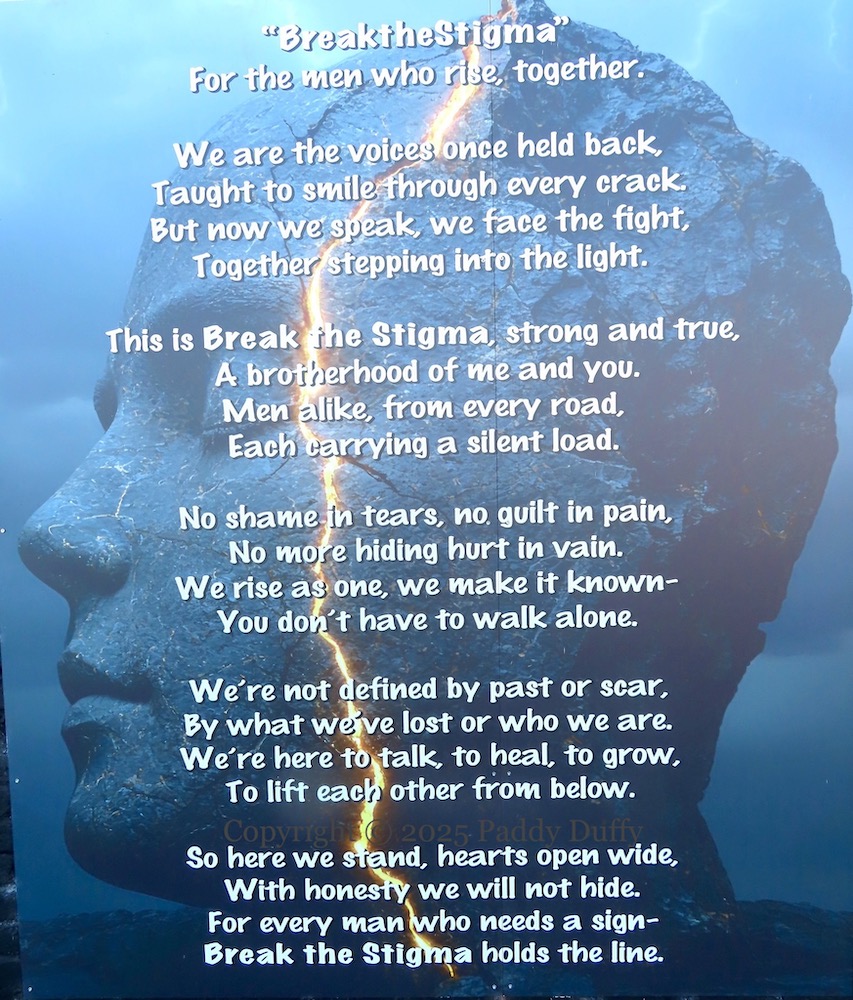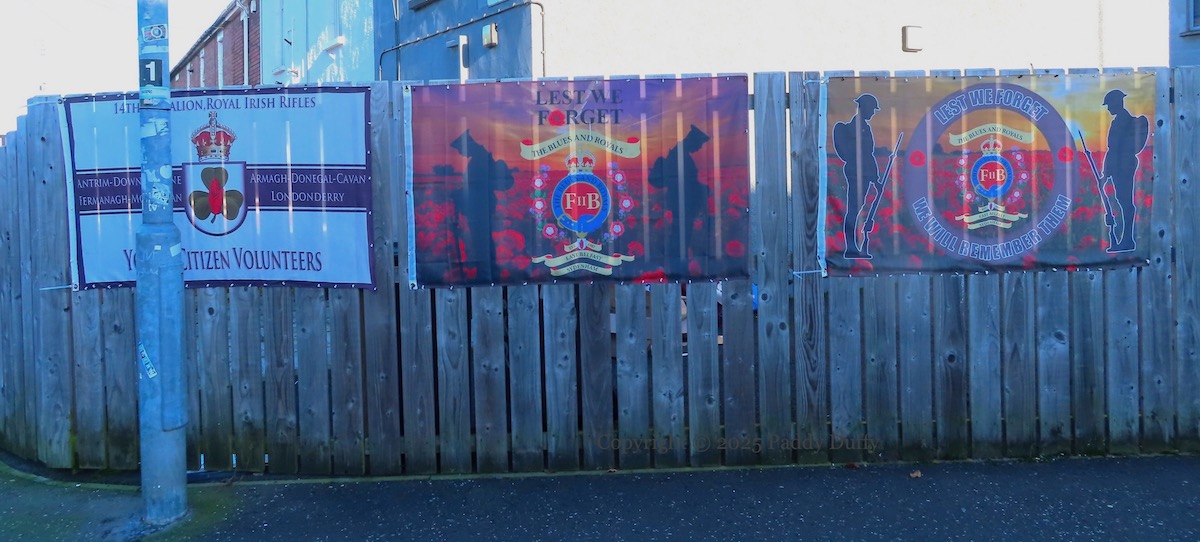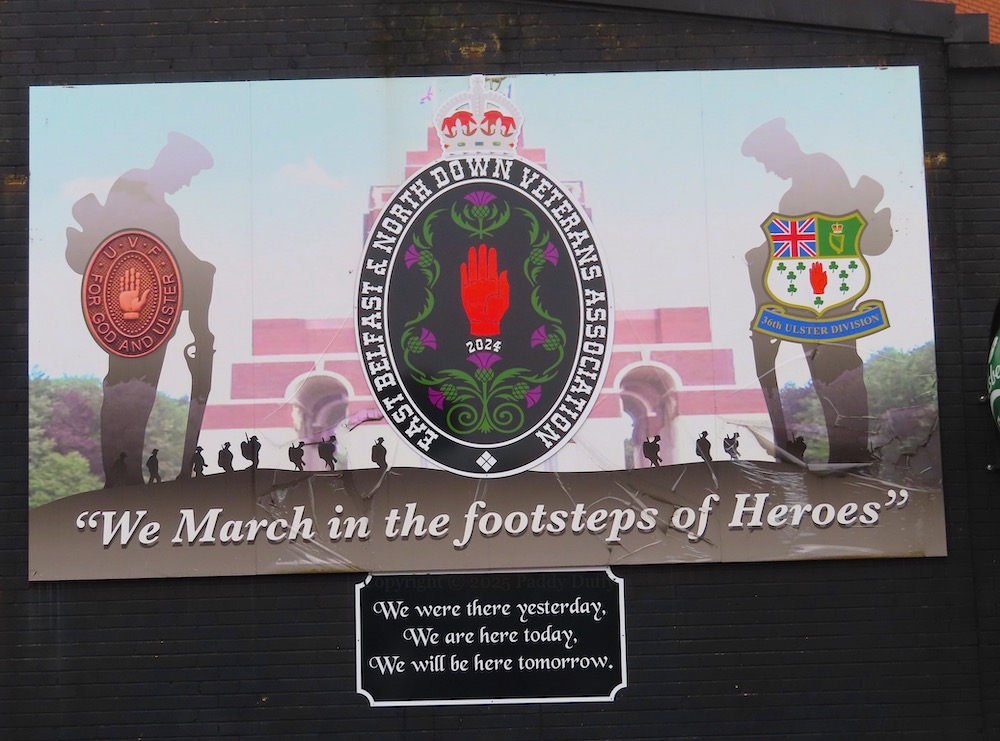
This is a new version of the board seen in 2022, in which the central emblem was of the 8th battalion of the Royal Irish Rifles, whereas it is now of the “East Belfast & North Down Veterans’ Association”.
Below, a small plaque reading “We were there yesterday, We are here today, We will be here tomorrow” has been added
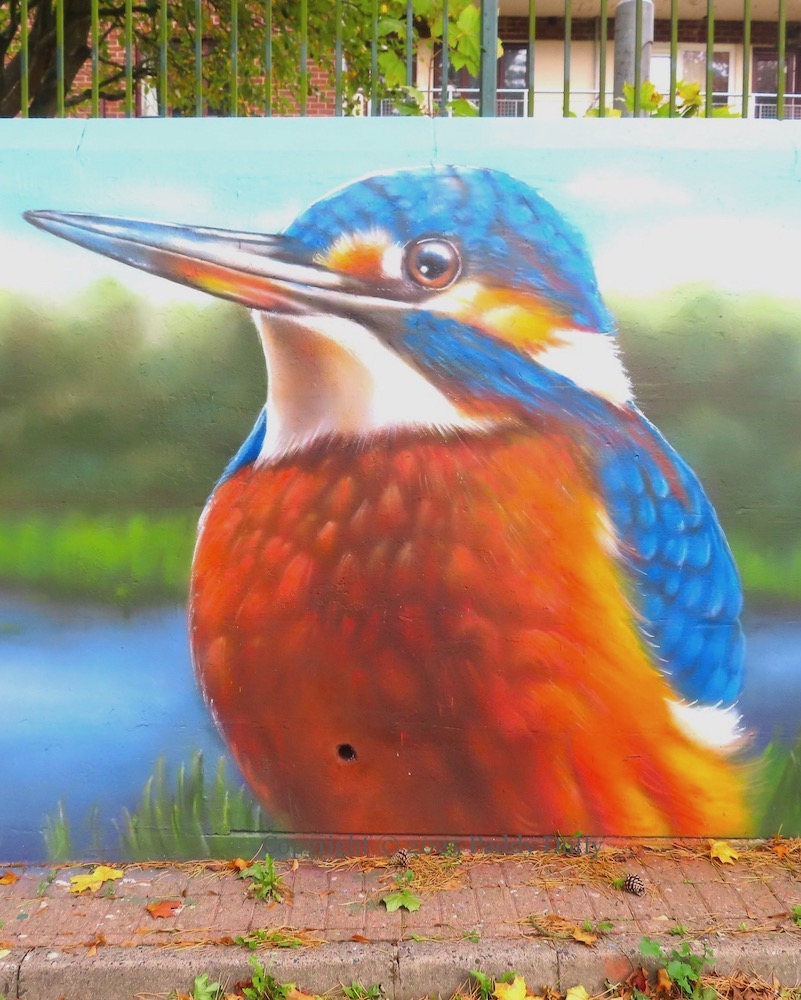
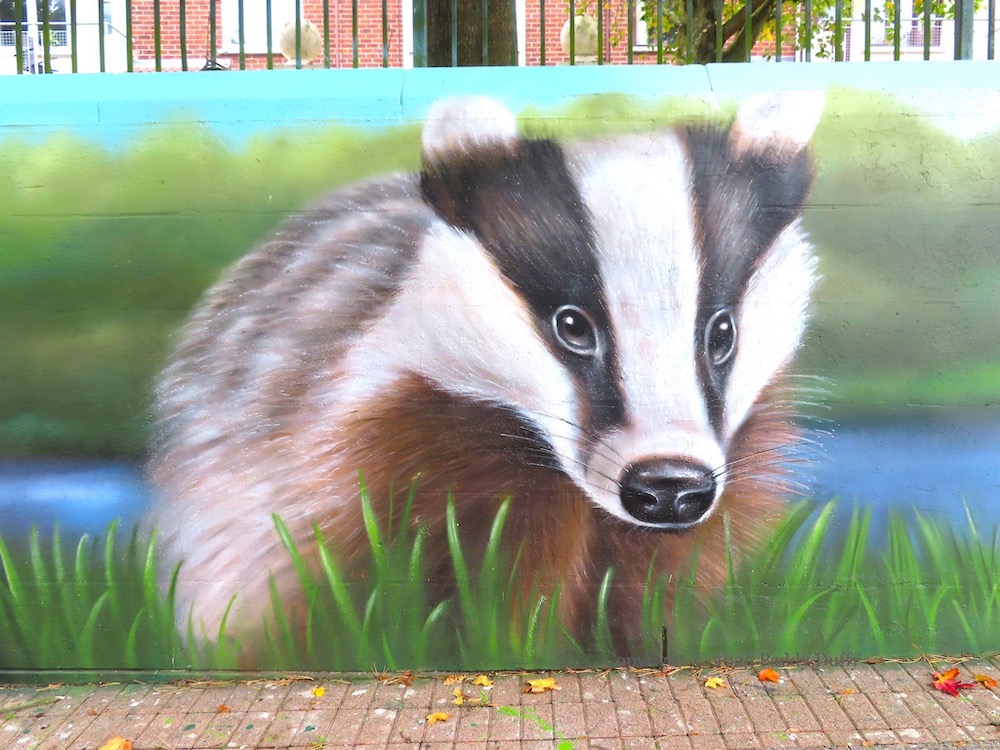
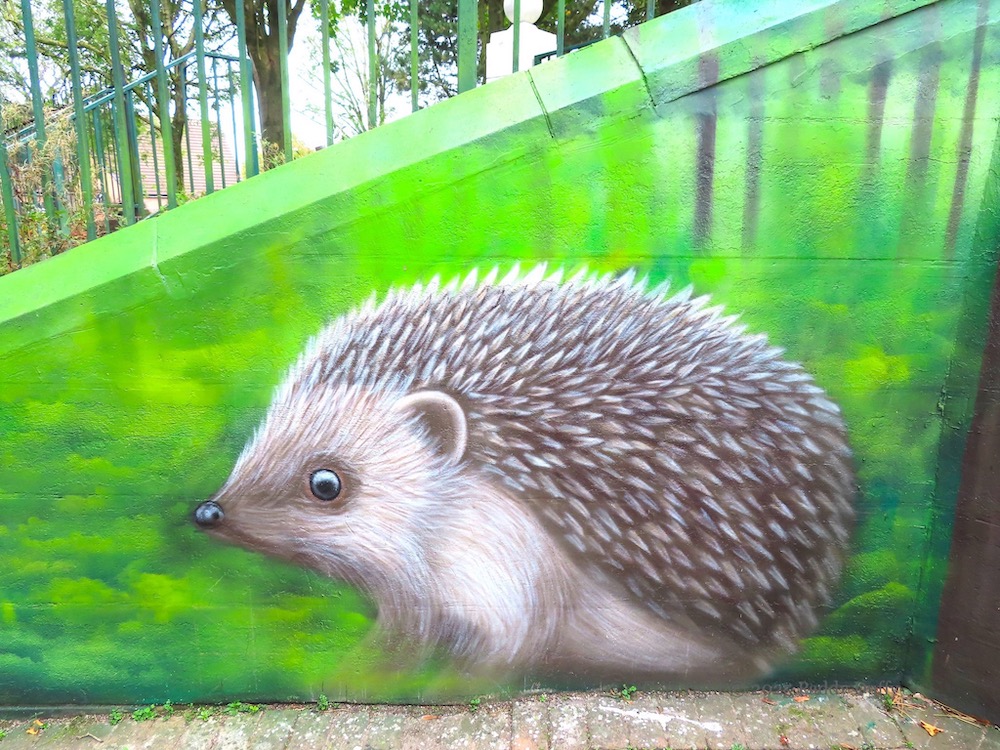
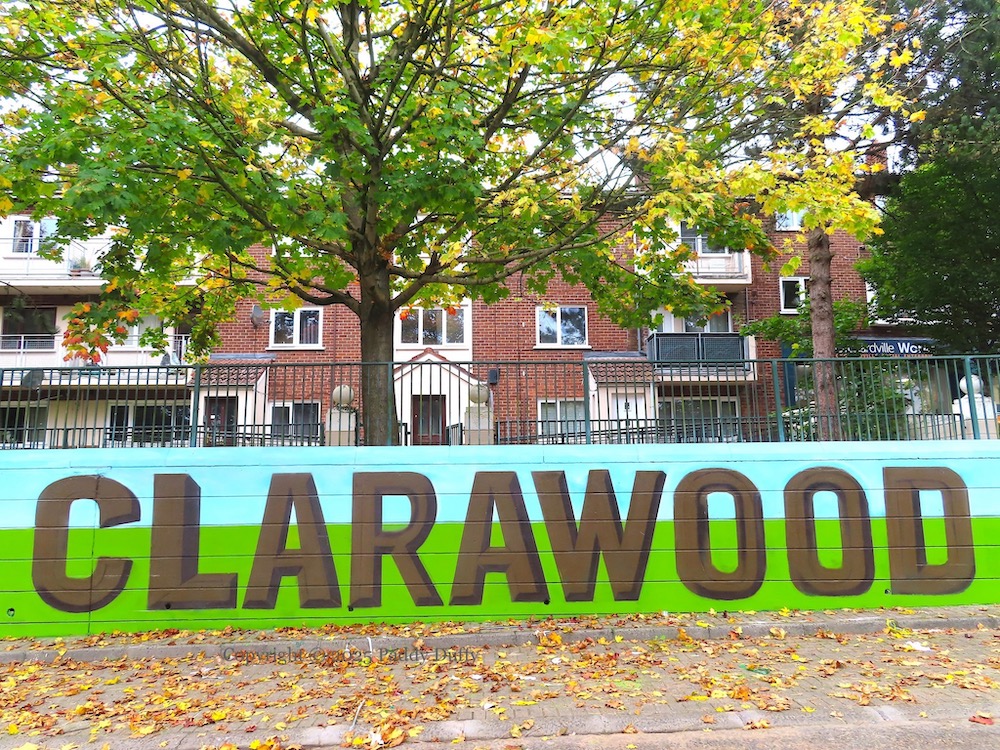
Here are a kingfisher, heron, badger, owl, squirrel, fox, and hedgehog by Glen Molloy (ig) in Knockwood Park, Clarawood, east Belfast. The closest place one might be able to see any of these creatures – particularly herons – is in the Marsh-Wiggle pond, along the Connswater (East Side Greenways).
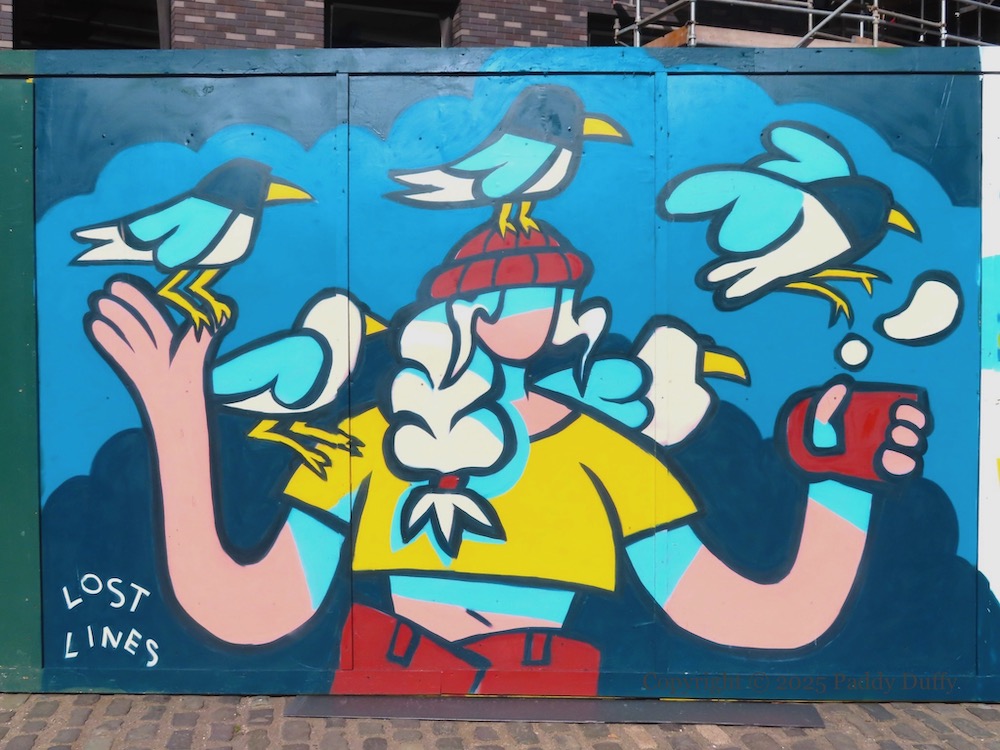
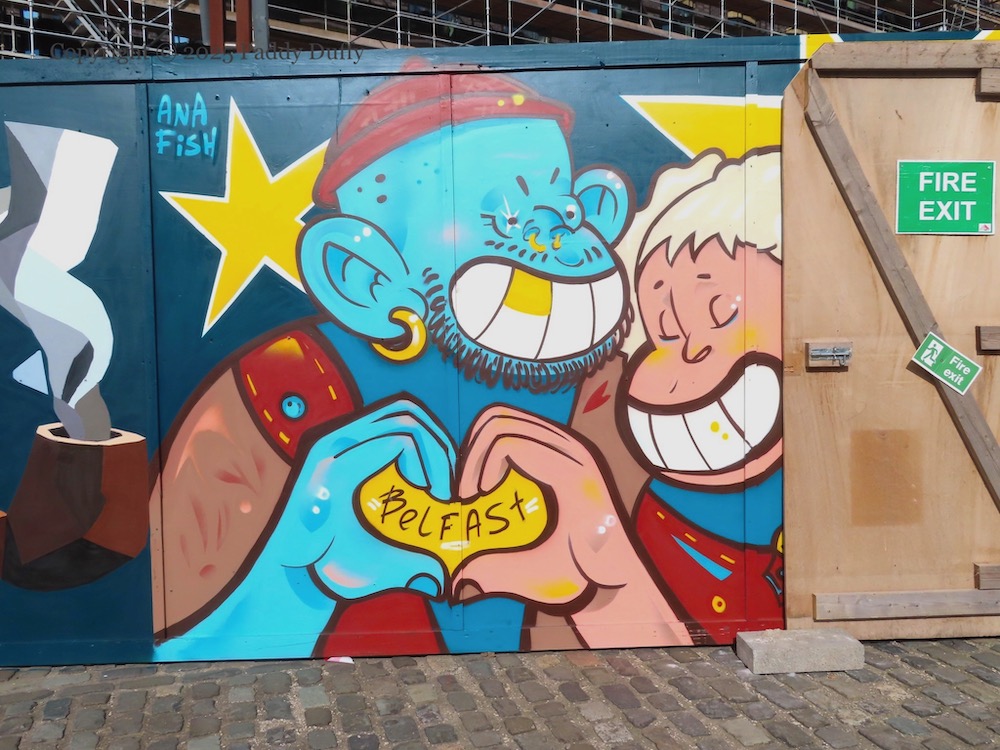
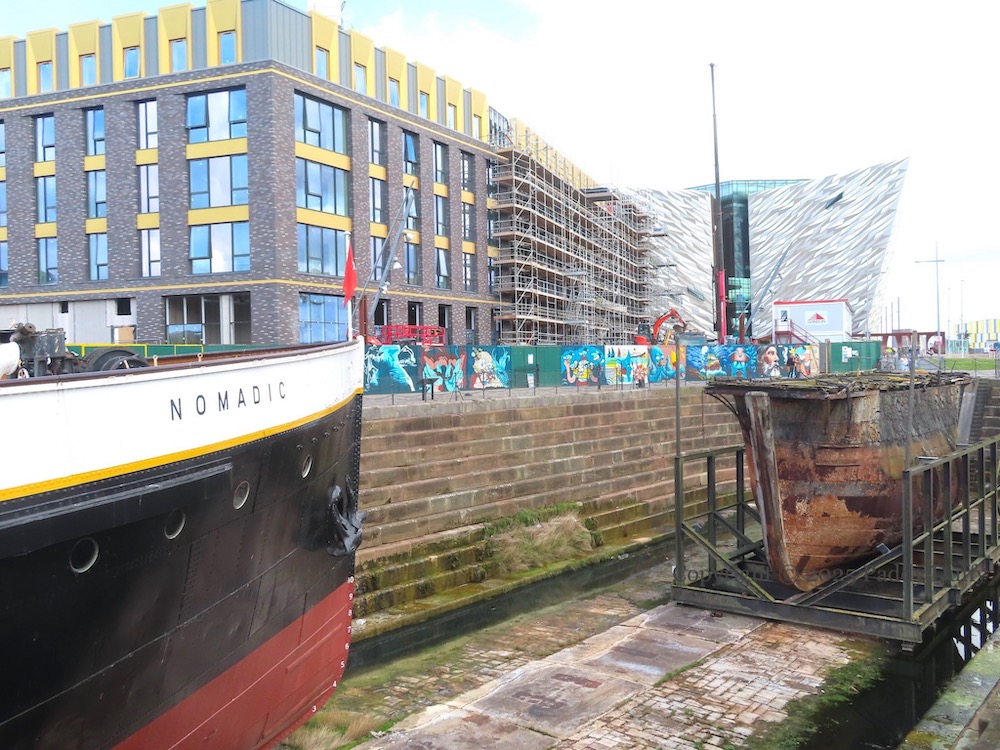
The Belfast Maritime Festival (web) included a paint-jam on a hoarding around one of the construction projects in Titanic Quarter (web), with work by (top to bottom, left to right on the hoarding) Conor McClure (ig), Zippy (web), Danni Simpson (web), Lost Lines (ig), Mo (Imogen Donegan) (ig), FGB (web), HMC (web), Karl Fenz (web), KVLR (web), Ana Fish (web)
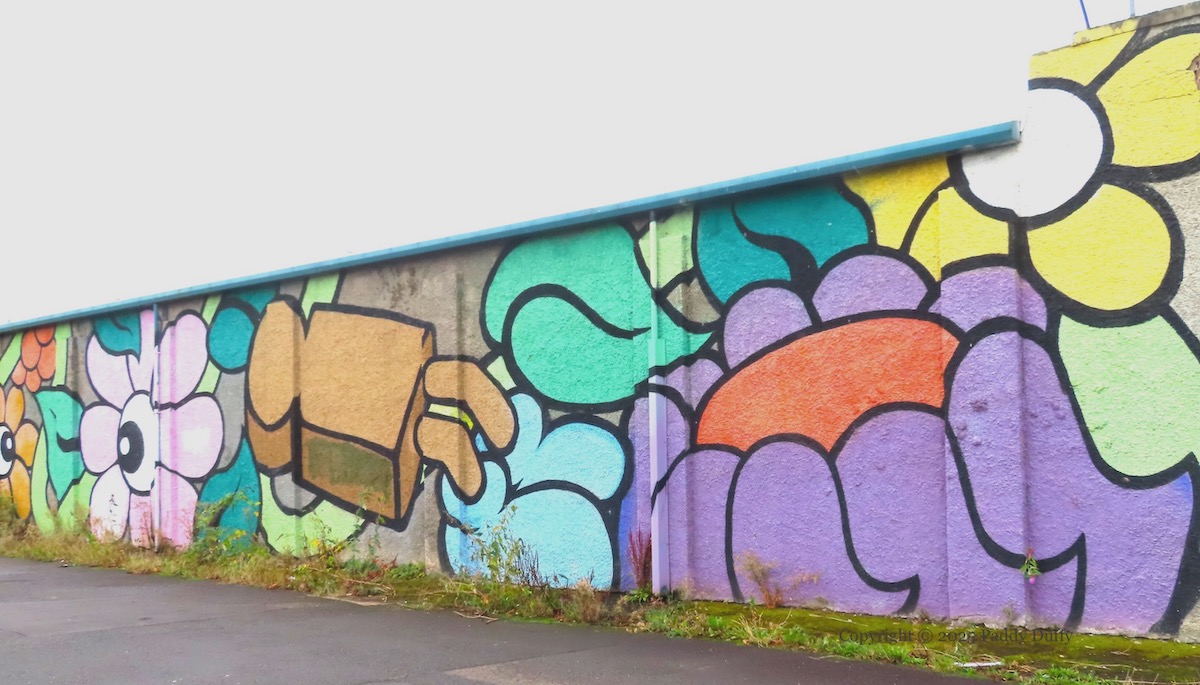
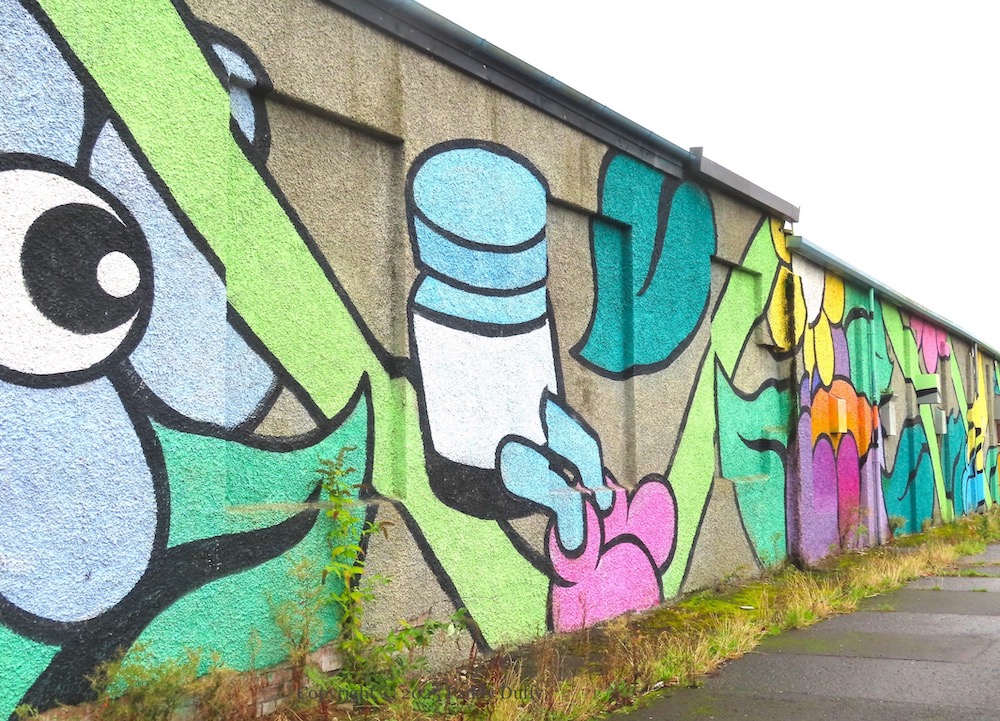
This is street art by Artista (ig) along the Comber Greenway (between Tamar and Severn streets). Both artists are from London. Sponsored by the Eastside Urban Partnership and Seedhead Arts.
This is a new tarp on Dee Street, east Belfast, in which a child asks a sleeping lion to “wake up”. Both are wrapped in the Union Flag. The (probable) context for the image is the idea that foreigners – and in particular, non-white, non-Christian, foreigners – have been moving to the UK and that over time their numbers have increased, without much notice, to such a level that English (or more broadly, the UK) people need to rouse themselves in order to notice and counter this.
We have a working principle that the level of investment in a piece’s production is an indicator of the extent to which the producer(s) believes it will be accepted (or at least countenanced) by the community in which it appears. This printed tarp is, as far as we know, the most sophisticated expression of anti-immigrant feeling so far (or at least, the most expensive to produce). Prior to this, there have been placards (One Big Clean-Up | Not A Dumping Ground | If Necessary We Must Shed Blood), a simple stencil (I Was A Stranger), a short-lived printed paste-up (Multiculturalism Is Genocide), and various appearances of “locals only” graffiti (2025 | 2024 | 2014 | 2014). According to a 2023 study from KCL, 32% of UK residents think the “Great Replacement” conspiracy theory is “definitely” or “probably” true, while 22% of Irish people (in 2024) think so (Gript/Electoral Commission).
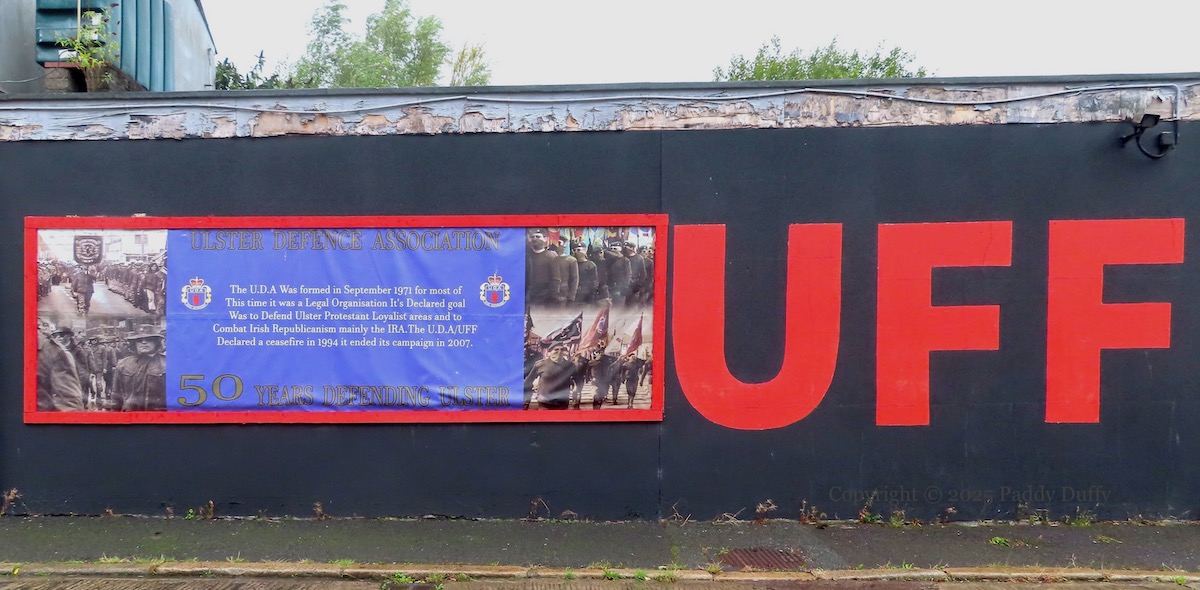
“Ulster Defence Association – 50 years defending Ulster. The UDA was formed in September 1971 for most This time it was a Legal Organisation It’s Declared goal Was to Defend Ulster Protestant Loyalist areas and Combat Irish Republicanism mainly the IRA. The UDA/UFF Declared a ceasefire in 1994 it ended its campaign in 2007.”
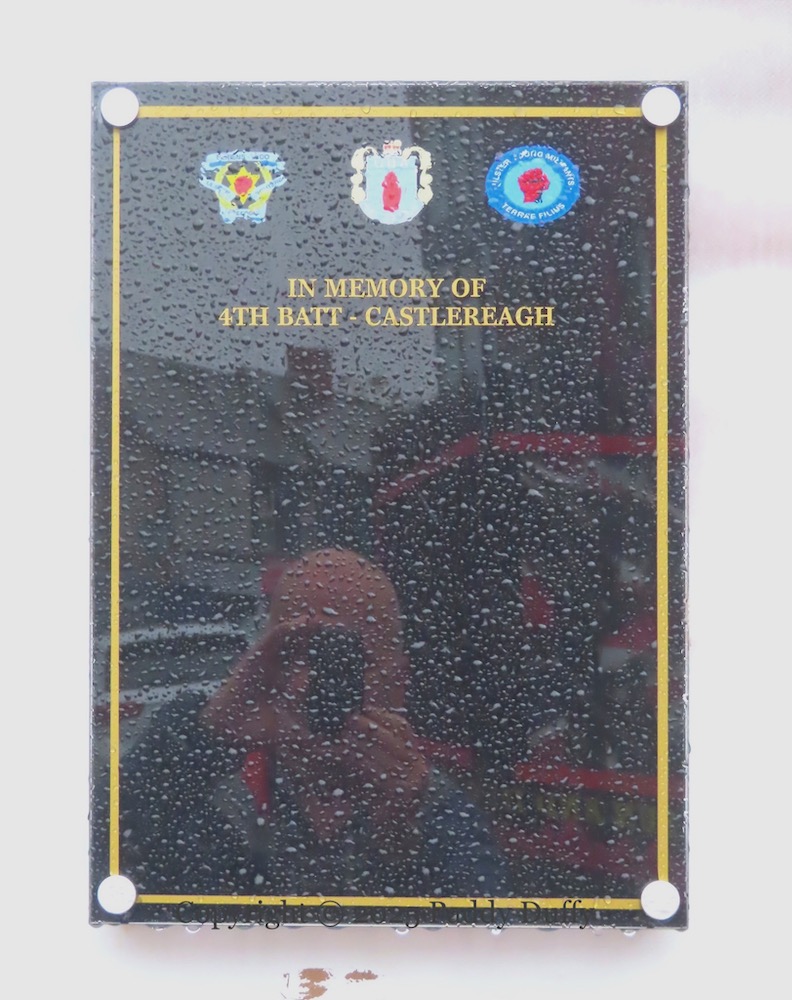
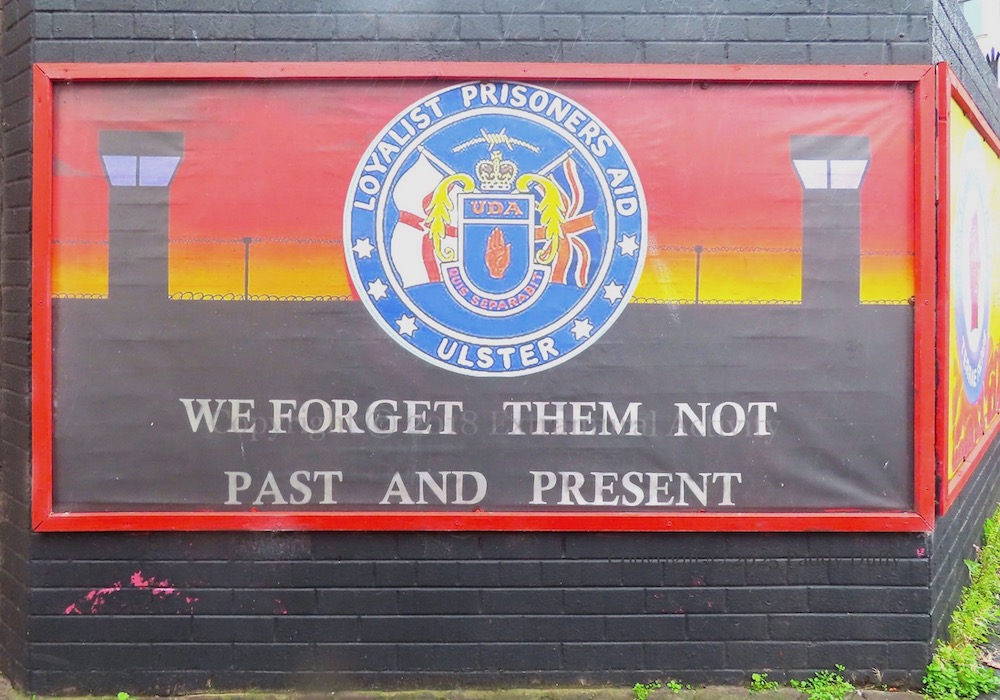
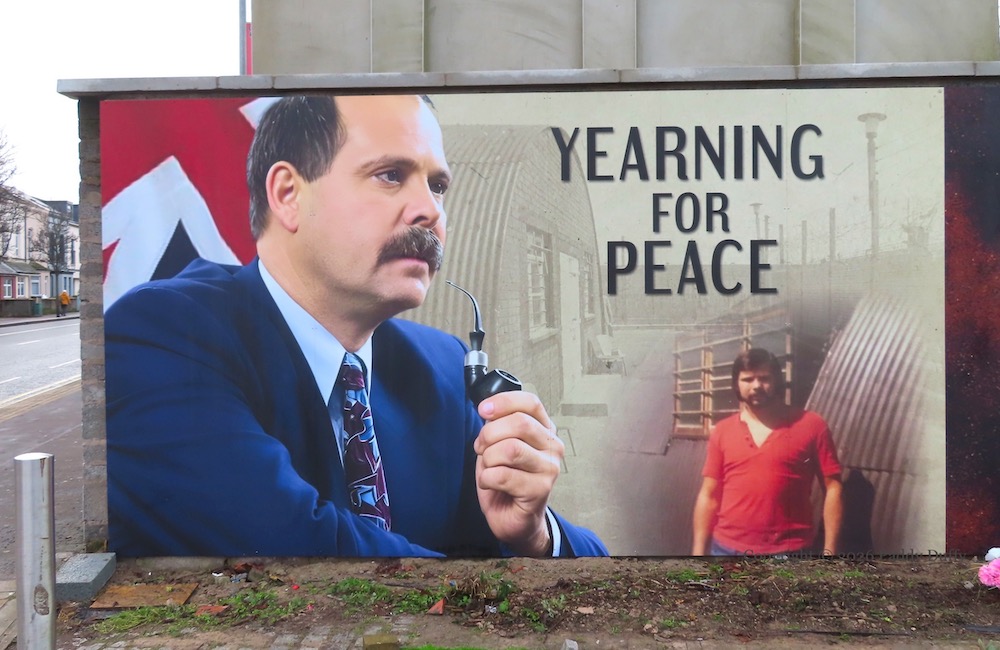
This entry updates 2022’s If You Want Peace, Prepare For War, which shows two hooded gunman next to the large “UFF” (as in the image immediately below) rather than a(nother) tarp giving a potted history of the UDA. Two black plaques have also been added in the memorial garden “In memory of 4th Batt – Castlereagh”. The one on the left lists “John (Jackie) McMaster, George Neil, Alex McAllister, Raymond (Bug) Stewart, John Kirker.”
This is an old mural still in reasonable condition after more than a decade in existence. It is along the walkway between Tamar and Severn streets in east Belfast. The East End Homing Pigeon club was (is?) at 51 Severn Street (Belfast Forum).
For the piece in better condition (in 2011) see the Seosamh Mac Coılle collection.
Tartan gangs were a short-lived phenomenon in the early 70s, bridging the gap between youthful trouble-making and para-militarism. The gangs as entities distinct from youth wings of paramilitary groups had largely disappeared by the late 70s, and the teens and young adults who were members then are now in their sixties and seventies and some have passed away (“No silence is louder, than the absence of a voice you used to hear every day. Semper recordatus”). This new (July 2025) board commemorates the camaraderie of the Woodstock Tartan in those early days: “We are young, we are one, we are tartan”.
The name “tartan [gang]” comes from the tartan clothing, particularly scarves, worn by the gangs. Gareth Mulvenna (2014 and in History Ireland) reports that the first pattern worn by the Shankill Young Tartans was in fact the Burberry tartan – a box of scarves was stolen during a trip to a Rangers match in Glasgow – but they later adopted the Royal Stewart tartan, which is predominantly red rather than tan. (It was made famous by motor-racer Jackie Stewart, who wore a tartan sticker on his helmet (Henry Ford).) The Woodstock tartan pattern (shown in the new board) is the ‘dress’ (white) variant of the Royal Stewart tartan.
The speakers at the board’s launch (Loyalist East Belfast on youtube) recall the activities (and fashions) of the Woodstock gang in the early 70s – building bonfires, attending matches, holding running battles with other gangs – and only obliquely mention the turn towards sectarian violence, ultimately joining the Red Hand Commando in 1972 in response to IRA attacks such as at the Four Step Inn (Mulvenna). In this 7-minute TV report about the Woodstock Tartans from May 1972 (youtube), an interviewee distinguishes the Tartans in east Belfast from gangs in England as defenders of their area: “when IRA mobs come out [from Short Strand] and attack this Protestant area, we have to beat them back, as the soldier don’t seem able to do this.” (See also this Time interview.)
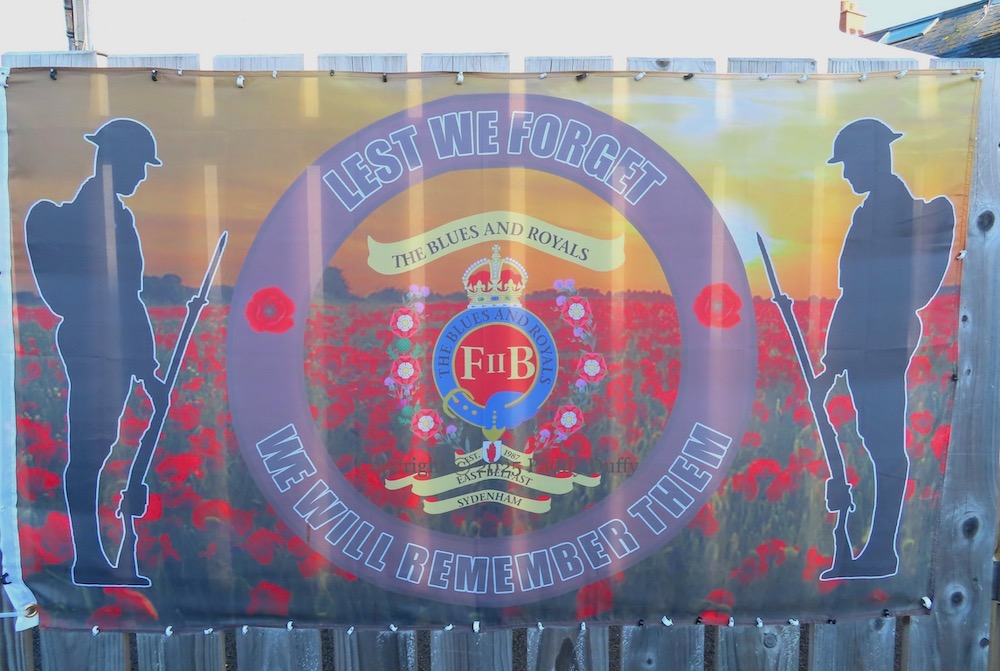
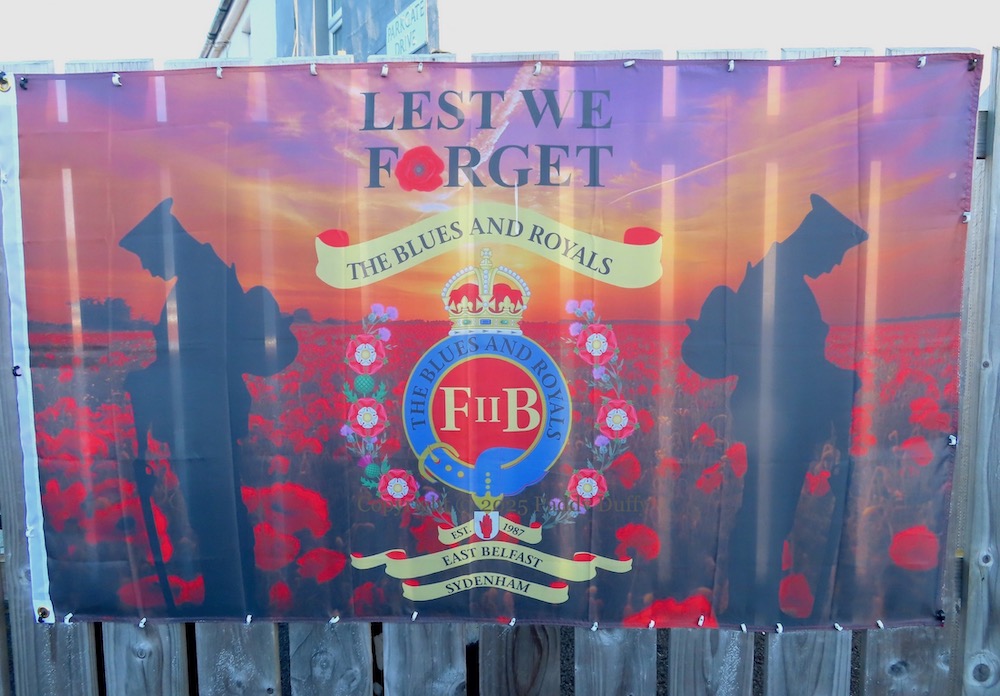
Above, a recruitment tarp for the Blues And Royals flute band (Fb).
Below, (and on the wall above the flute band’s tarp) a NI Centenary board using the St Patrick’s saltire in the background. The saltire is an Anglo symbol of Ireland and was included in the Union Flag when the union was between Britain and Ireland and thus – like the word “Ulster” – has been reduced to signifying Northern Ireland after partition.
The image of the Ulster Tower at Thiepval in (Ulster) Tower Street, east Belfast, has now faded beyond recognition (see 2022 | 2016) and so been covered over with a variety of flags affixed to the wall.
First is “The Ulster People’s Army – the Great War 1914-18”, then a graveside mourner, and then three along the bottom, two from a series of “British Armies In France” showing images of the Royal Irish Rifles (with, unusually, the leek standing for Wales in the quartet of national flowers) and these two flanking a third showing the East Belfast regiment of the Ulster Volunteers transformed into the 8th battalion of the RIR (107th brigade, 36th Division), marching past a throng on their way to fight “for King and empire”.