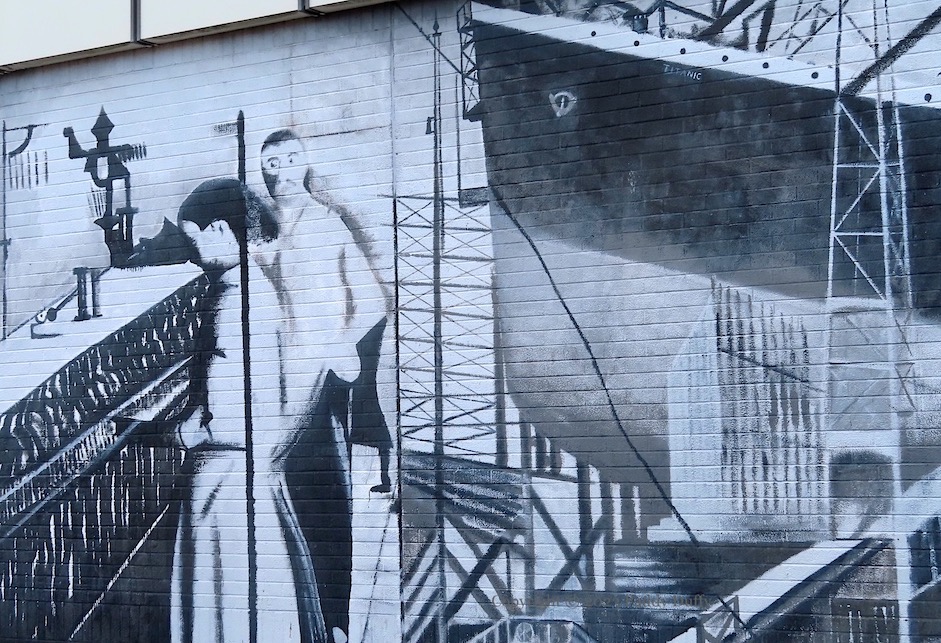
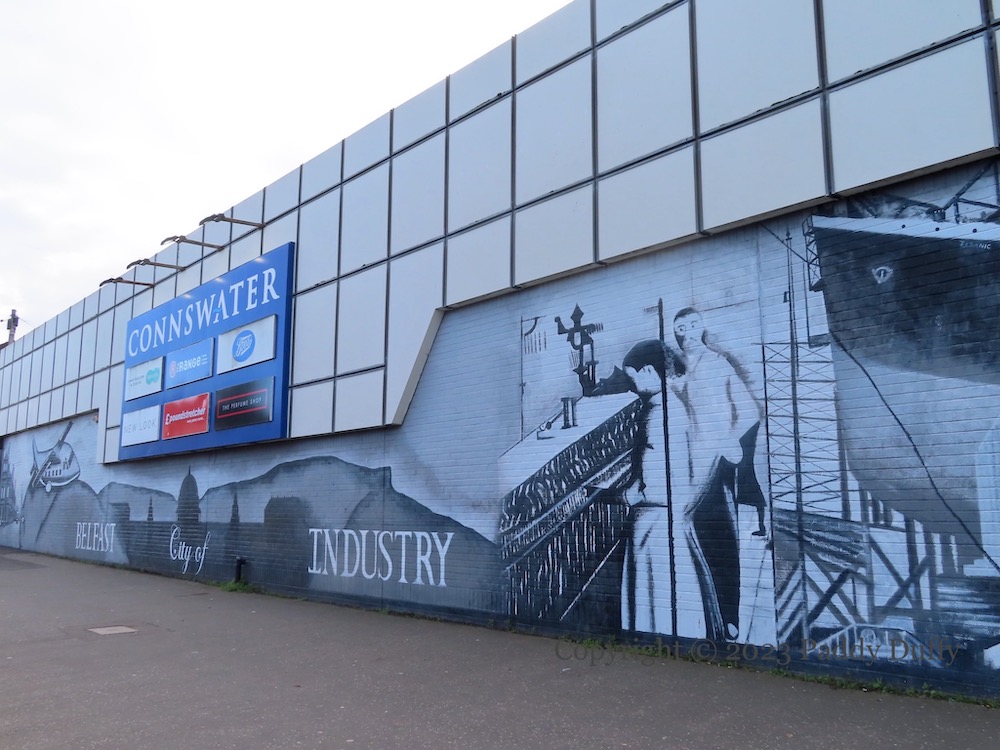
The industrial high-point of Belfast, according to this mural, would seem to be when people travelled on trams, cloth was woven by hand, and Titanic sat in dry dock. Only the Shorts-Bombardier aircraft confuses the nostalgia.
Connswater shopping centre, Bloomfield Avenue, east Belfast
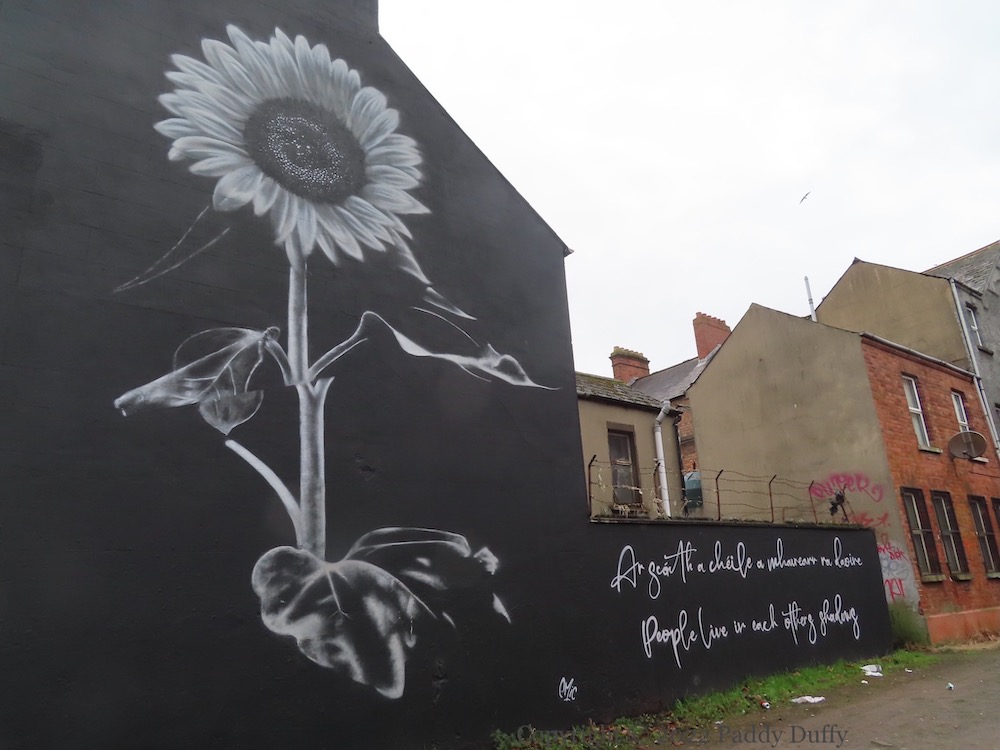
A Ukrainian woman in Heniches’k (just north of Crimea) (tw | with subtitles) became famous for berating an invading Russian soldier with the words “Take these seeds and put them in your pockets so at least sunflowers will grow here when you all die here.” Ukraine is the world’s largest producer of sunflower oil (WP) and since the Russian invasion began on February 24th, prices have increased – so far – by about 70% (Money Control), sending countries (especially India – Reuters | Bloomberg) and companies around the globe scrambling for alternatives, such as the replacement of sunflower oil by rapeseed oil in the making of crisps in Ireland (The Journal). The sunflower has become a symbol of solidarity with Ukraine, along with the Ukrainian flag. This giant sunflower was painted by emic (web | tw | ig) in Harrow Street.
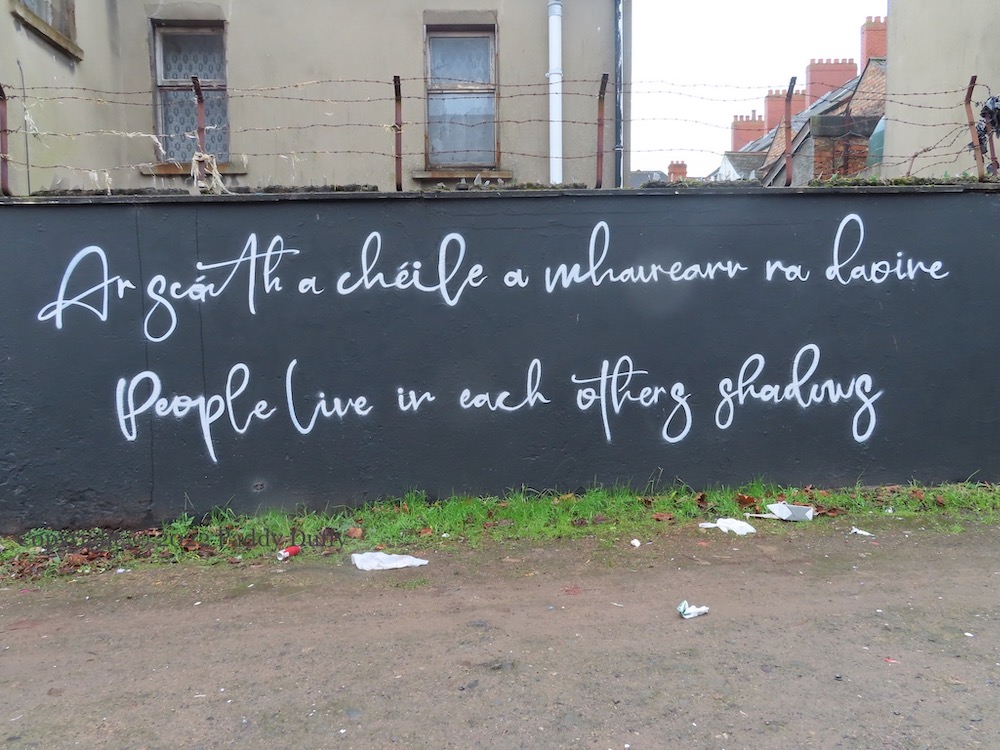
Update: added to the side wall “Ar scáth a chéıle a mhaıreann na daoıne”, here translated as “People live in each other’s shadows.”
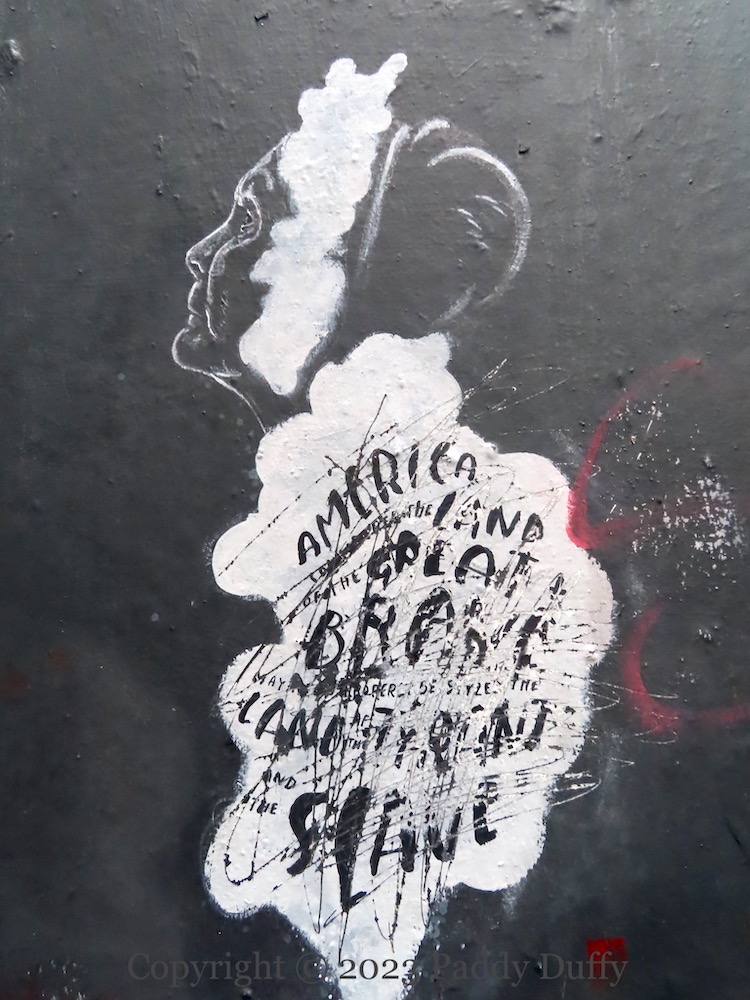
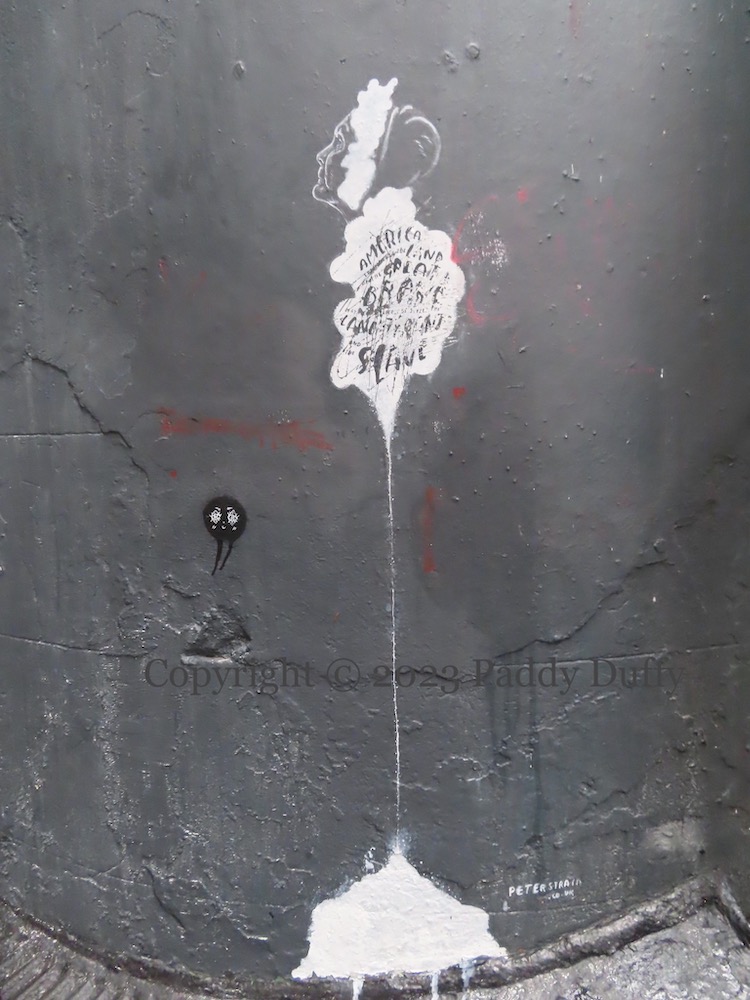
In a letter in 1859 to Dr Richard Madden, a fellow abolitionist (and historian of the United Irishmen), Mary Ann McCracken wrote, “America, considered the land of the great, the brave, may more properly be styled the land of the tyrant and the Slave.” (McNeill)
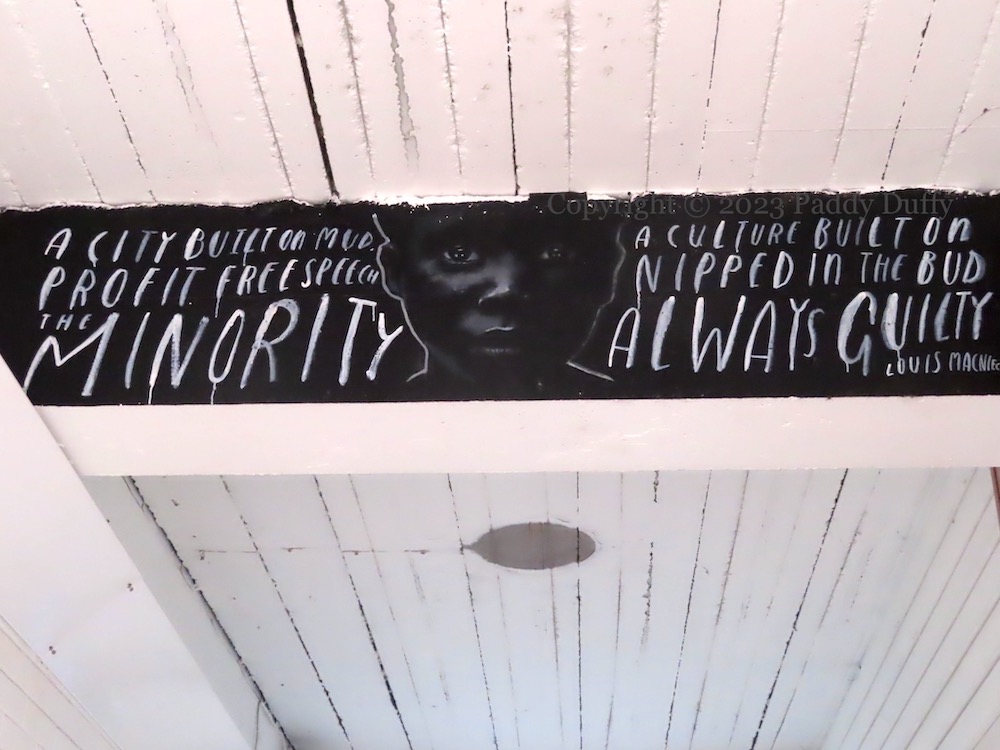
Also given an abolitionist bent are some lines from section 16 of Louis MacNeice’s Autumn Journal, describing Belfast as “A city built on mud; / A culture built upon profit; / Free speech nipped in the bud, / The minority always guilty. [Why should I want to go back / To you, Ireland, my Ireland? / The blots on the page are so black / They cannot be covered with shamrock. / I hate your grandiose airs / Your sob-stuff, your laugh and your swagger, / Your assumption that everyone cares / Who is the king of your castle. / Castles are out of date, / The tide flows round the children’s sandy-fancy; / Put up what flag you like, it’s too late / To save your soul with bunting.]
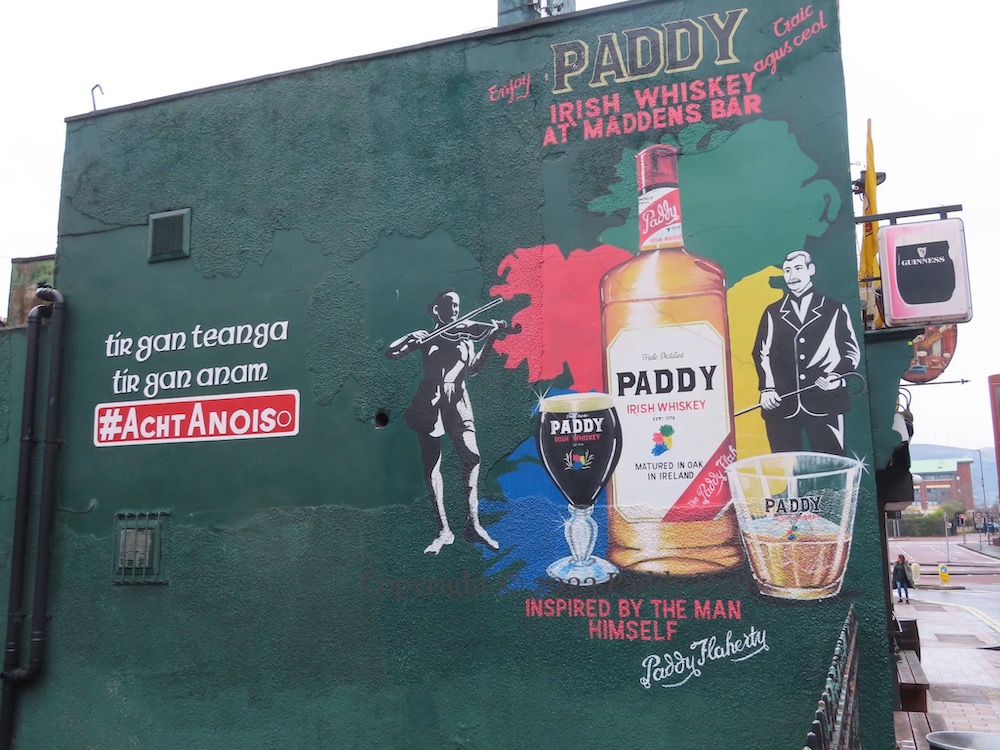
On the left: “Tír gan teanga, tír gan anam. #AchtAnoıs”. The quote (“a country with language [is] a country without a soul”) is widely attributed to Patrick Pearse. For the campaign to pass an Irish-language act, see An Lá Dearg.
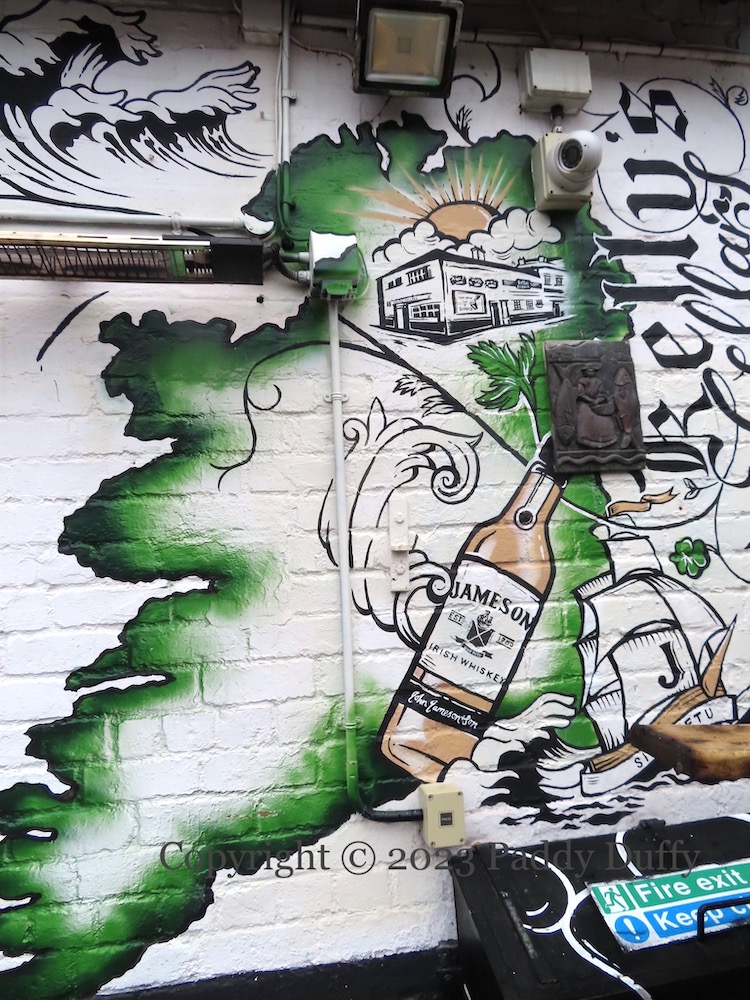
On the right: “Enjoy Paddy Irish whiskey at Madden’s Bar, inspired by the man himself, Paddy Flaherty. Craıc agus ceol.”
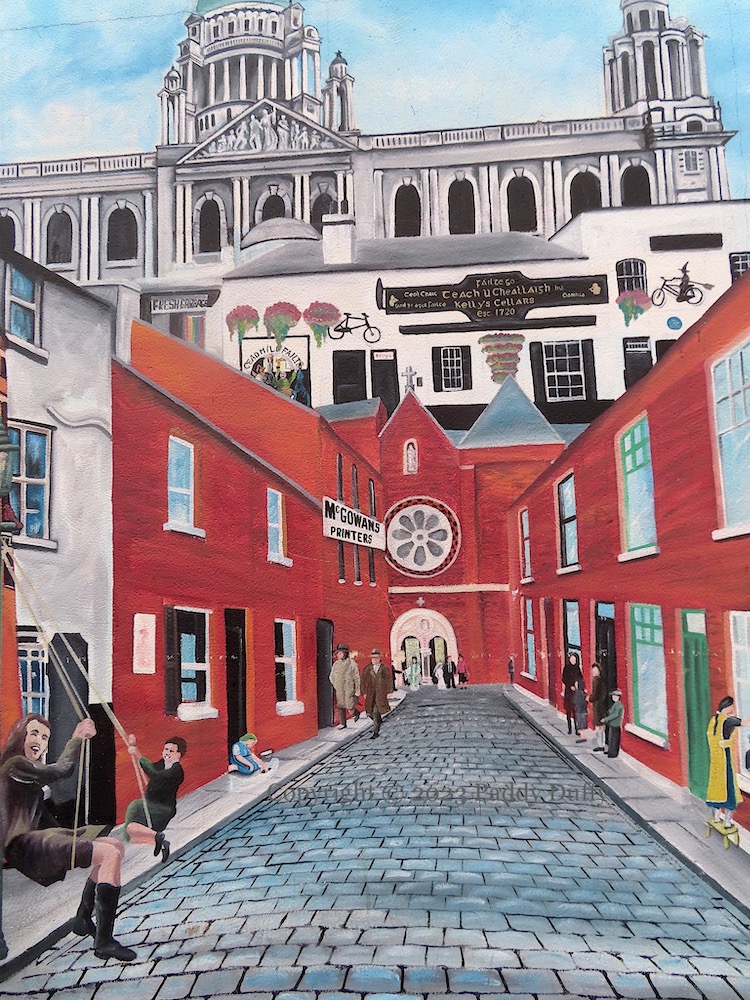
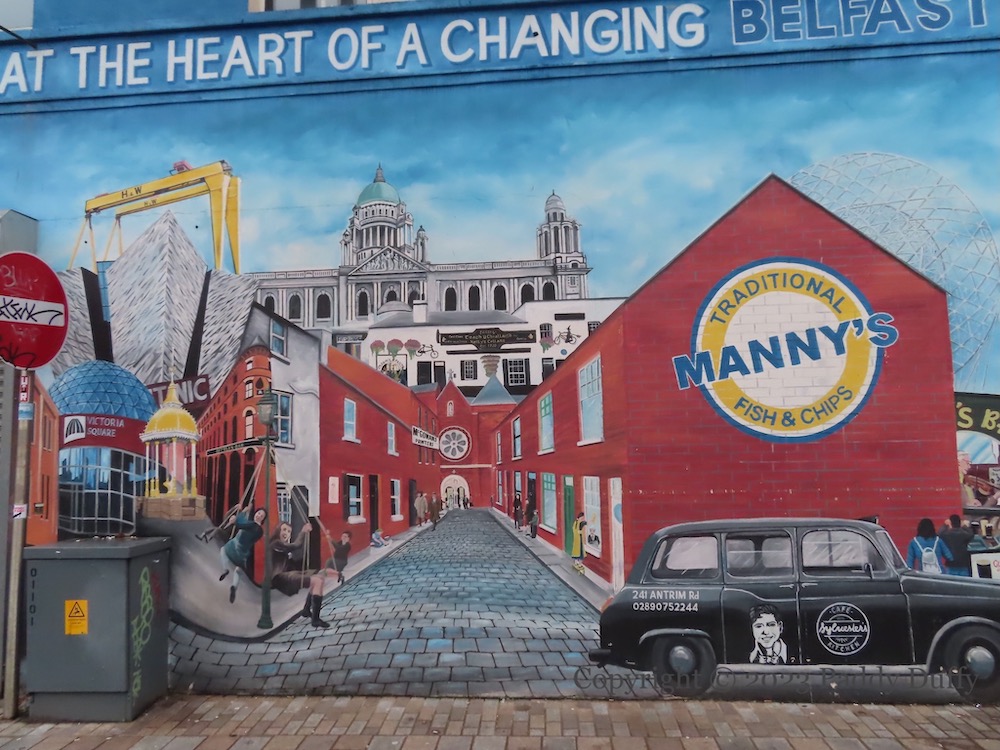
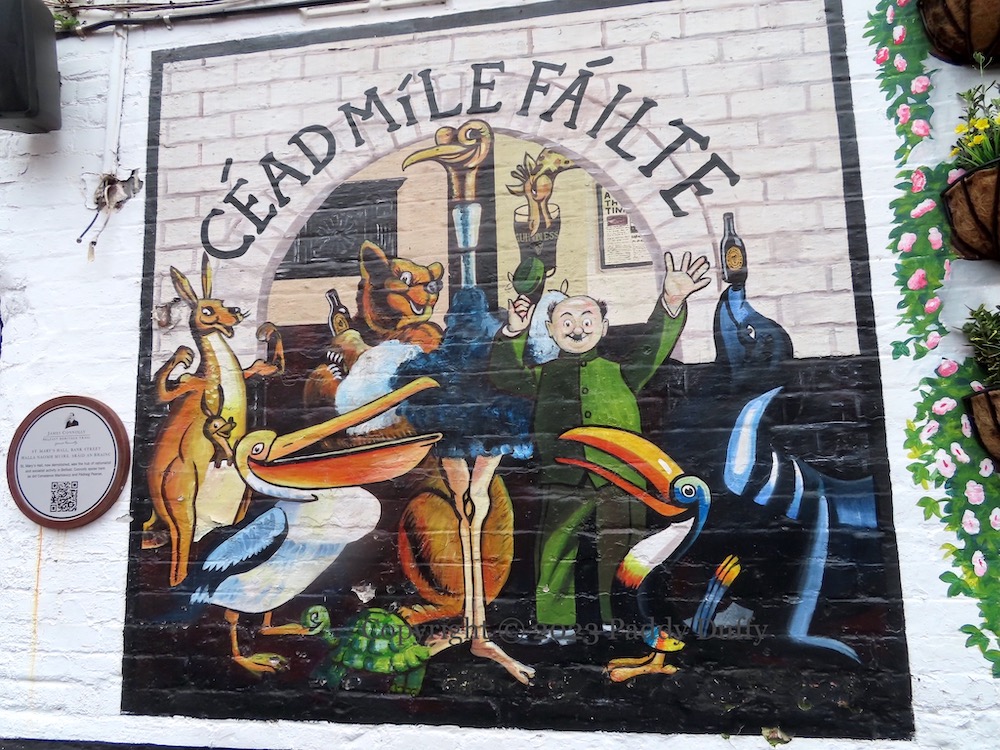
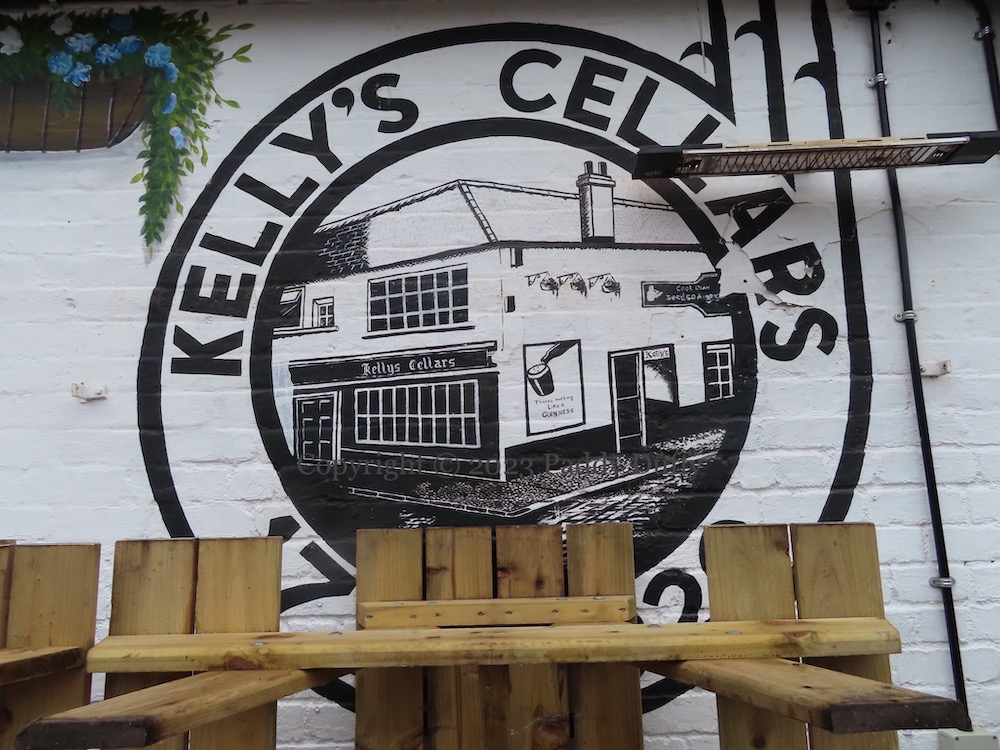
“At the heart of a changing Belfast.” The old Bank Street (looking towards St Mary’s, Chapel Lane) is recreated in a new mural outside Manny’s fish and chips, though with some liberties taken. (Here is the street in 1915 and in 1924.) Kelly’s Cellars, for example, should be off to the left, rather than hovering over St Mary’s Chapel Lane and below City Hall.
Landmarks such as the Titanic Centre, the H&W cranes, and An Chultúrlann can be seen in the wide shot.
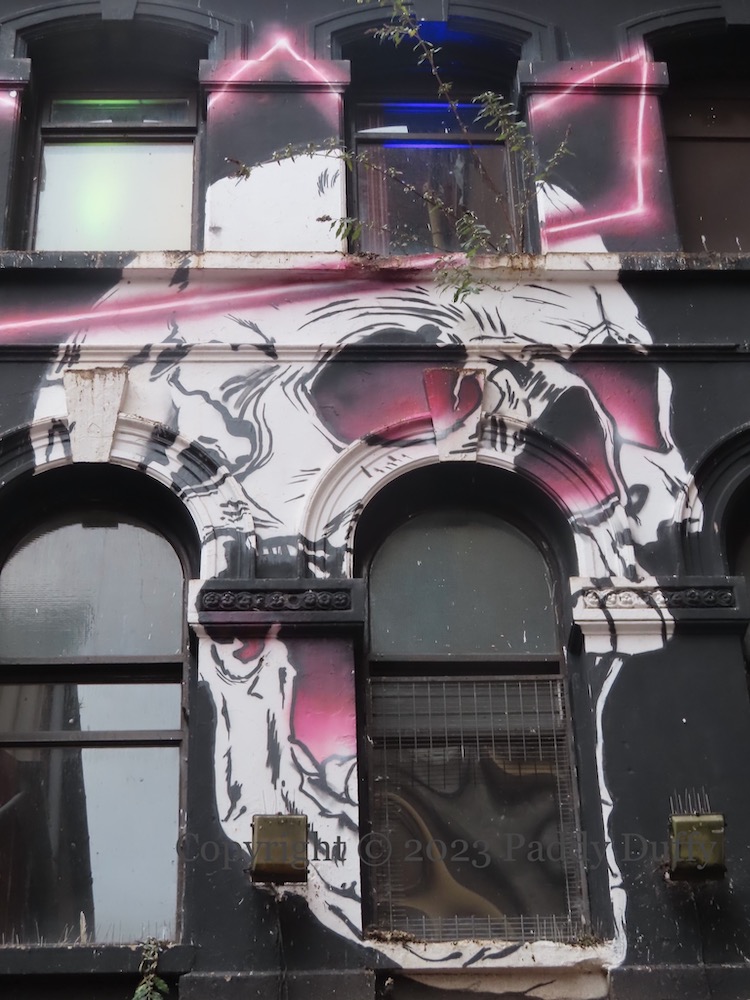
This skull is in Crown Entry, around the upstairs windows of the Paddy Power office. It is not clearly a part of the artistic renovation of the Belfast Entries (Visual History).
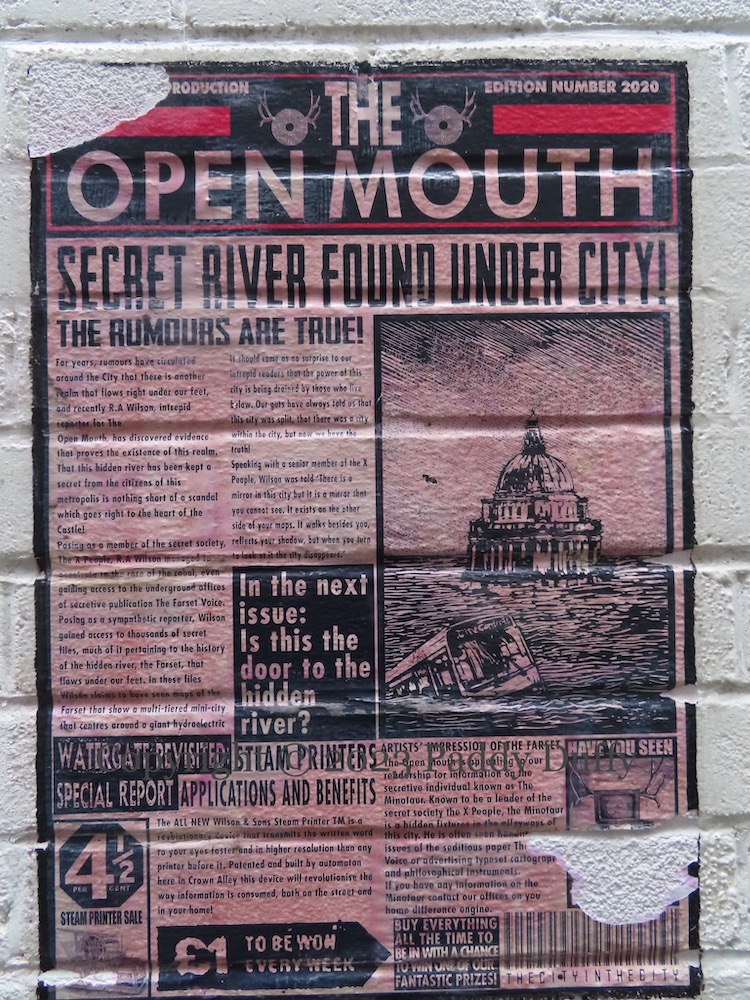
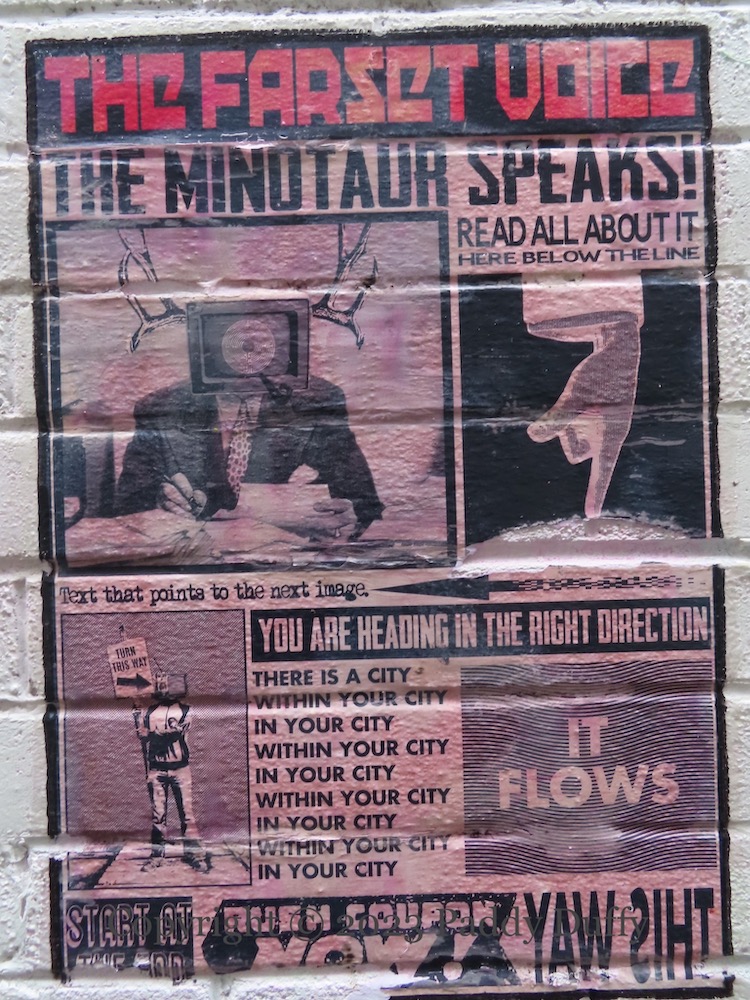
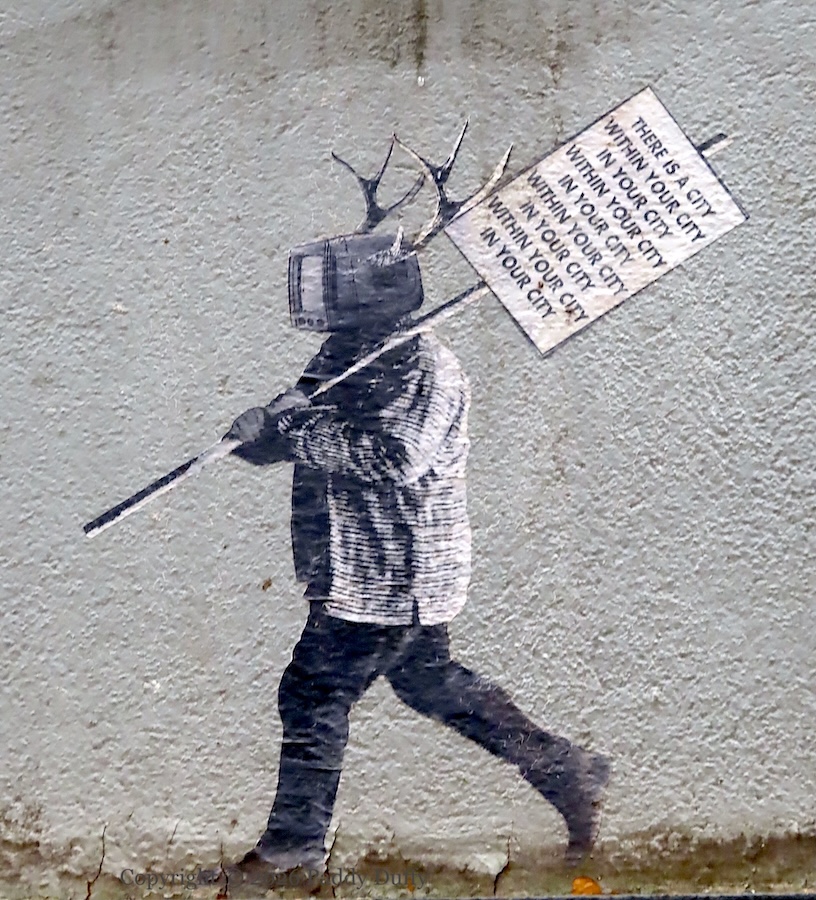
“There is a city within your city.” These three paste-ups allude to the fact that the river Farset, after which Belfast is named, still runs below the city, invisible since it was covered over in 1804. (You can read George Benn’s A History Of The Town Of Belfastat archive.org.)
Wilson’s Court and Winecellar Entry; presumably by Leo Boyd (compare with New Weird Order).